Lion dance as a hero that carries the legend to the present~ Kanpaku Shishimai 関白獅子舞

Date: First Saturday of August
Location: 667, Kanpaku-cho, Utsunomiya, Tochigi, Japan
Access: Bus from Utsunomiya.
Get off at Kamikouchi West Elementary School Entrance by city bus. 3-minute walk.
Take Kanto Bus bound for Tamao or Imazato, 30 minutes. 20-minute walk from Kamikawachi Jichi Centre.
Access
Buses are the best way to get there, but unfortunately they are extremely infrequent. If you are physically fit, we recommend cycling. Utsunomiya used to host Asia’s only road cycling world championships. There is a place in front of the station where you can rent a full-fledged sports bicycle. Of course, regular bicycle (including electric) hire places are also located close by. Once out of the city centre, the road is surrounded by greenery and not too much traffic, so it is recommended.
The journey from Tokyo to Utsunomiya takes around 50 minutes on the Tohoku Shinkansen.
If travelling by conventional rail, take the Ueno-Tokyo Line and change at Ōmiya or Akabane, then take the Shonan-Shinjuku Line; the journey takes around two and a half hours.
The Shinkansen fare is roughly double that of the conventional rail service.
ttps://www.city.utsunomiya.tochigi.jp/kurashi/kotsu/jitensha/1006123.html
prologue
A lion is a strange being. Sometimes they are treated as spirit animals, and sometimes they are beings to be exterminated. Originally, it was propagated from mainland China, but while the original Chinese version specialized in entertainment elements, in Japan, it was introduced along with Buddhism, which added many religious elements to it, and various other elements were added. In order to establish their own authority, each of the various lion dances established in various regions began to call themselves a school of their own, and even created a book of secrets not to be shared with anyone outside the school. As for the lion dance introduced here, it is called “Kanpaku style”. The lion dance in this article is called “Kanpaku-ryu,” but it is also called “Tenka-ichi,” which means “the best in the world” in Japanese. There is a reason for this, and it is said that the third shogun of the Edo period praised it as “the best in the country”.
legend
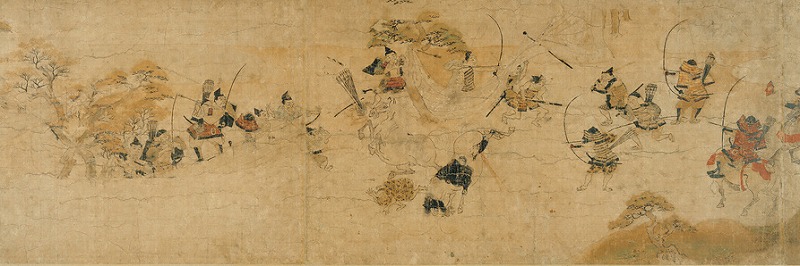
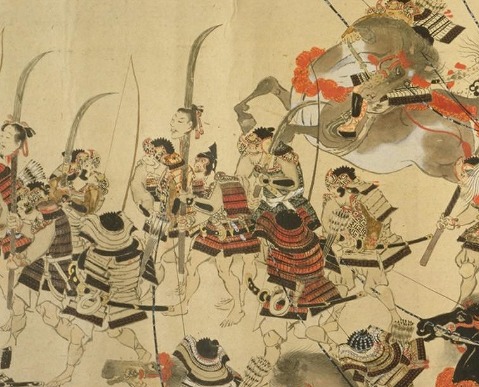
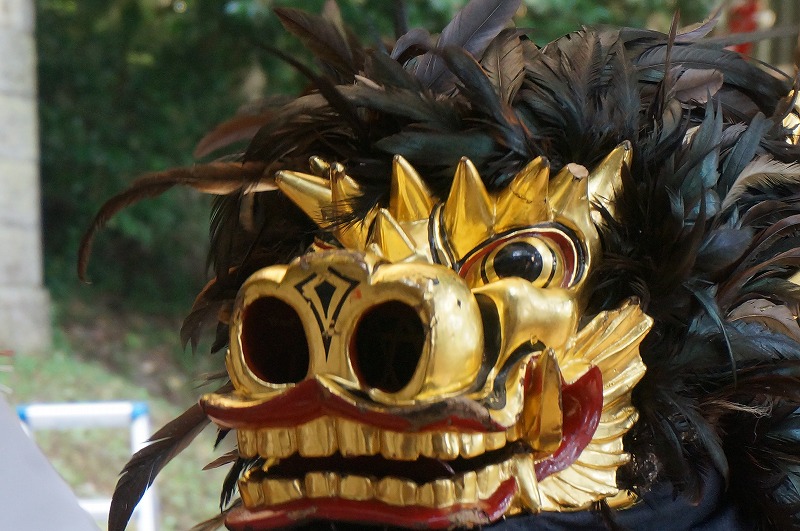
Long ago, bandits from the Tohoku region settled in this area. They robbed the residents of their money, goods, and grains. They also used the people like cattle and horses, and many of them died. The people repeatedly petitioned the capital to conquer the bandits, but received no response from the capital. However, in 911, a conquering army led by Toshihito Fujiwara 藤原利仁 finally arrived. The bandit army fought against the attack of elite troops from the capital, but finally abandoned the residence and retreated into the mountains. The government forces were unable to attack the mountain, but Lord Toshihito read the sky and predicted snowfall in the near future. He secretly sent out scouts to check on the enemy forces. When the snow fell as predicted, he took advantage of the enemy army’s inattentiveness and attacked them in one fell swoop. After fulfilling his role, Lord Toshihito suddenly became ill and died in this place as he was about to return home. His men, grieving, tried to bury him, but the sky suddenly became overcast and it was dark all day and night. After fulfilling his role, Lord Toshihito suddenly became ill and died in this place as he was about to return home. His men, grieving, tried to bury him, but the sky suddenly became overcast and it was dark all day and night. They made a golden lion’s head in the shape of a dragon by various curses and used thousands of bird feathers, which they put on the head and made it dance. Later, the Kanpaku 関白, the chief priest of the time, visited this place and erected a stone monument, claiming that it was the land of his ancestors. The village was then designated as Kanpaku Village.
About Shishimai
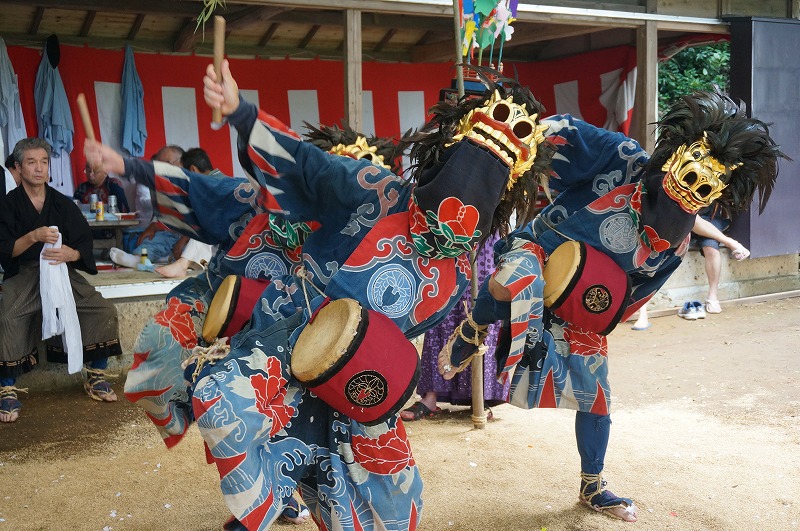
A person named Fujiwara Toshihito 藤原利仁 is a real person, not famous today, but who was once granted various legends. The lore is quite specific, and he may have actually conquered the bandits in this area. However, the lion dance itself must have originated much later, so it is assumed that it was probably created in the guise of a legend. However, there is a performance in which the lions exterminate demons, and this is certainly a rare performance that cannot be seen in other lion dances.
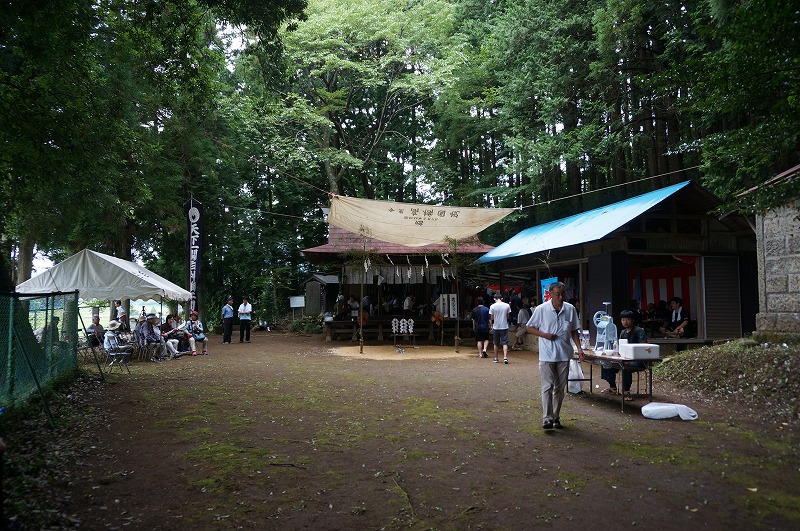
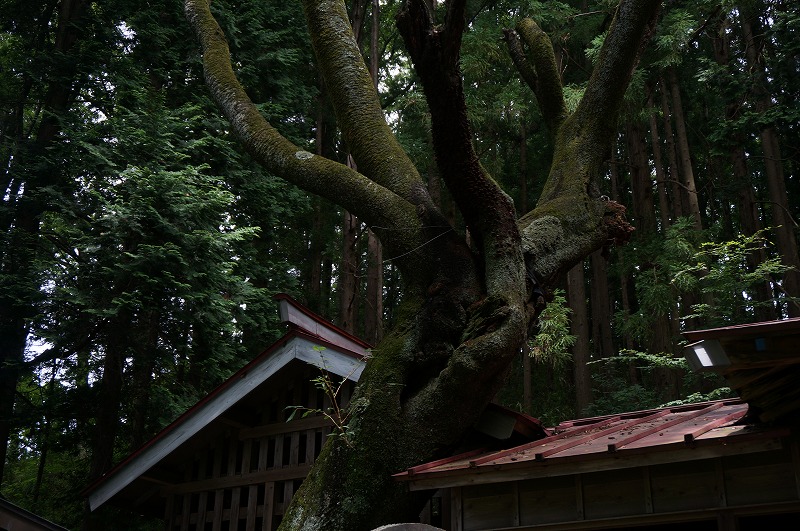
The shrine where the event is held is surrounded by mountains and is still somewhat dark during the day.
The shrine grounds are quite large, but the area for dancing is limited to one place, which is small. Okara (soy pulp) is laid out there. Hanagasa hats stand on all four sides. The hanagasa here are solid and carved out of wood.
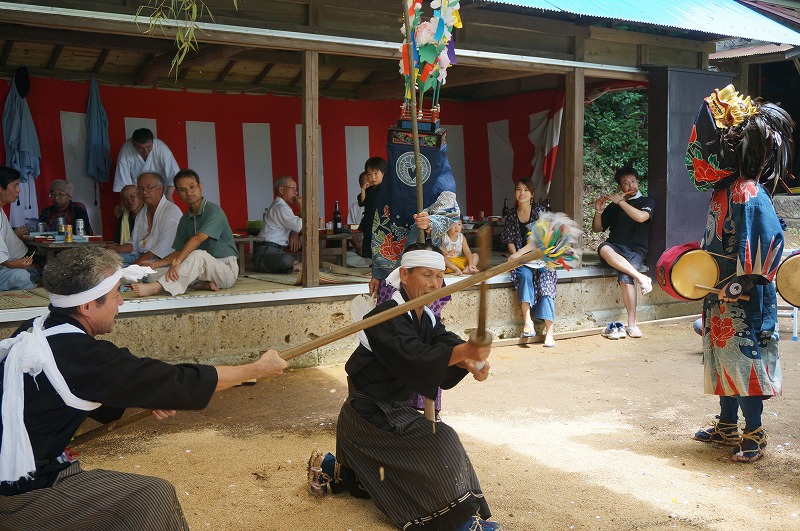
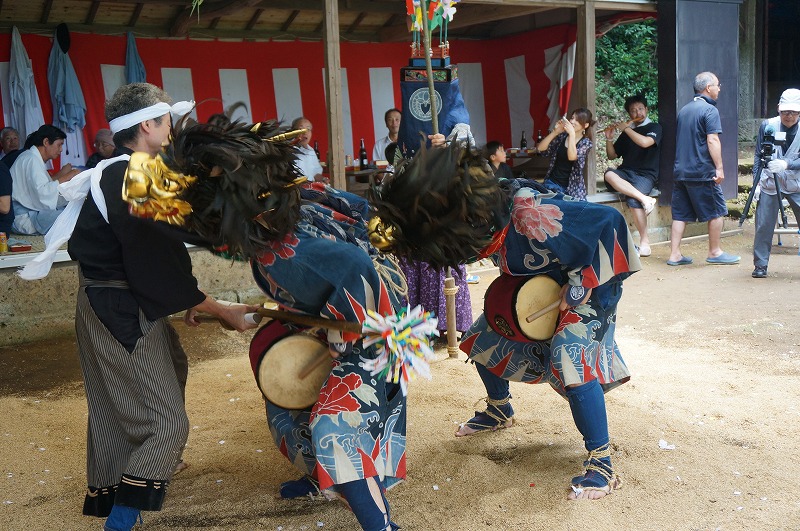
The first part of the performance always starts with a performance of swordsmanship with sticks. After that, the lions waiting in the background rush into the dance space.
There are other ways in which the lion dance here is different from others. For example, the main part of the performance, called Mejishi Kakushi (Female Lion Hidden), is a fierce confrontation and fight between two male lions over a female lioness. And yet here they search jointly, but do not confront each other afterwards. In fact, they even sleep together.
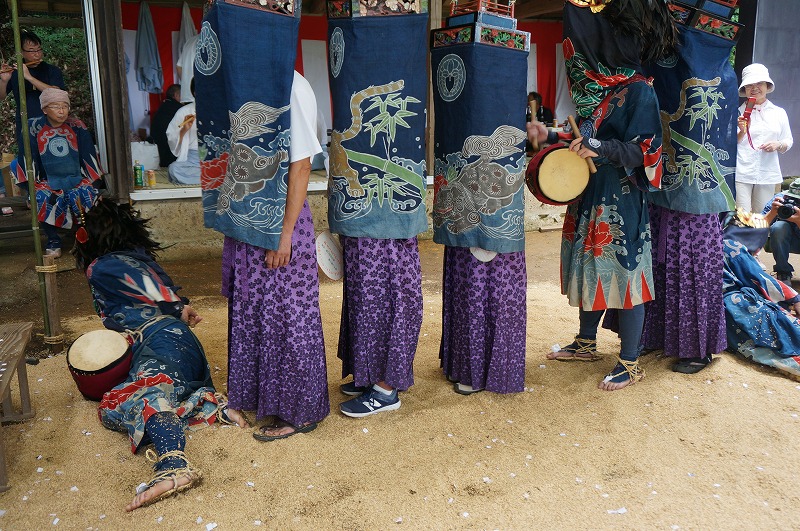
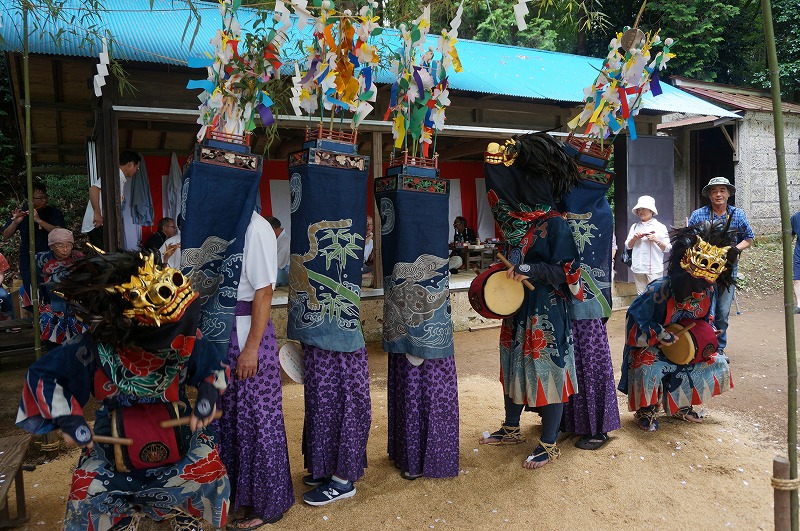
Exterminate Oni
The lion dance began at 11.00 am and the final and biggest highlight, the demon extermination, comes to an end at around 2.30 pm.
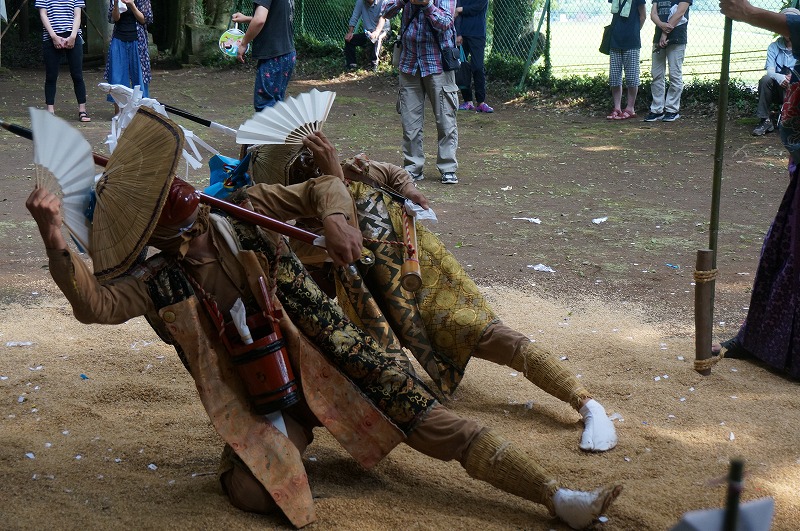
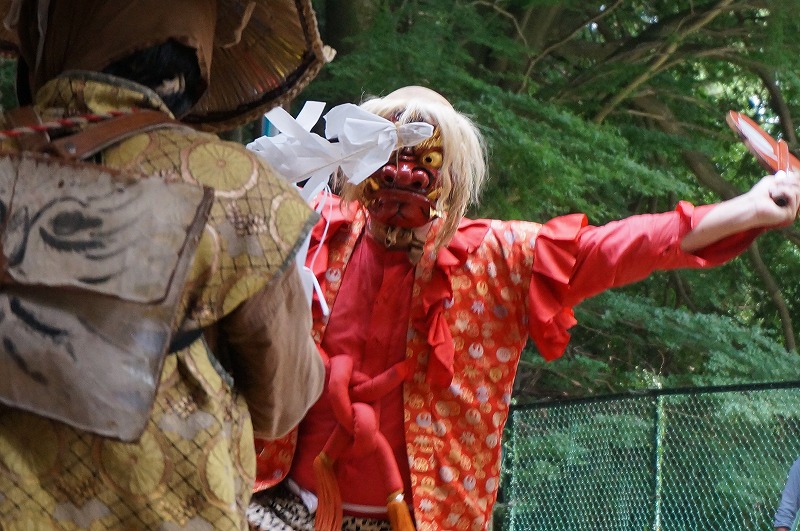
First, the two hunters appear. Then suddenly a demon arrives. This represents the bandits in the legend.
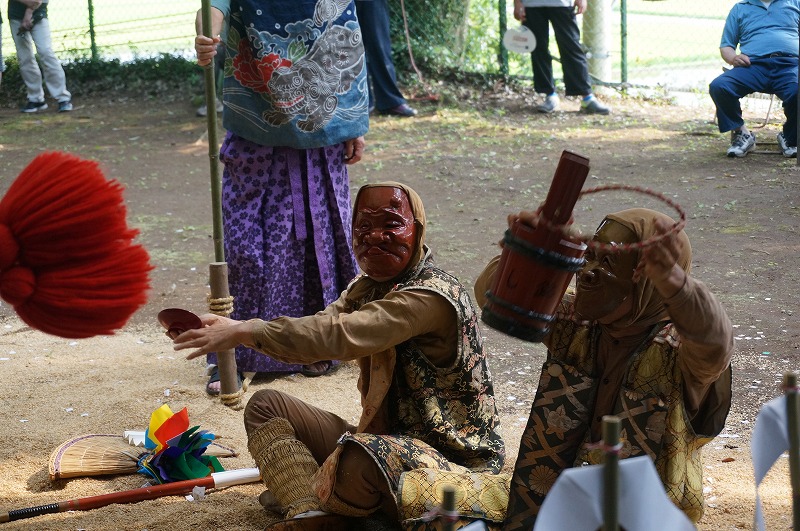
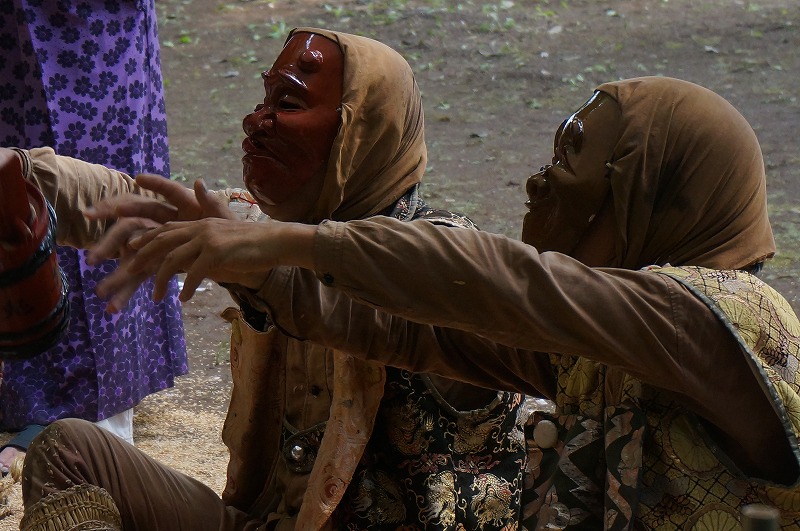
The two manage to get rid of the demons at least once. But then, for some reason, they start drinking. Still, they are good masks with a lot of flavour. The masks of the lion and the hunter seem to have been made by craftsmen of a certain calibre.
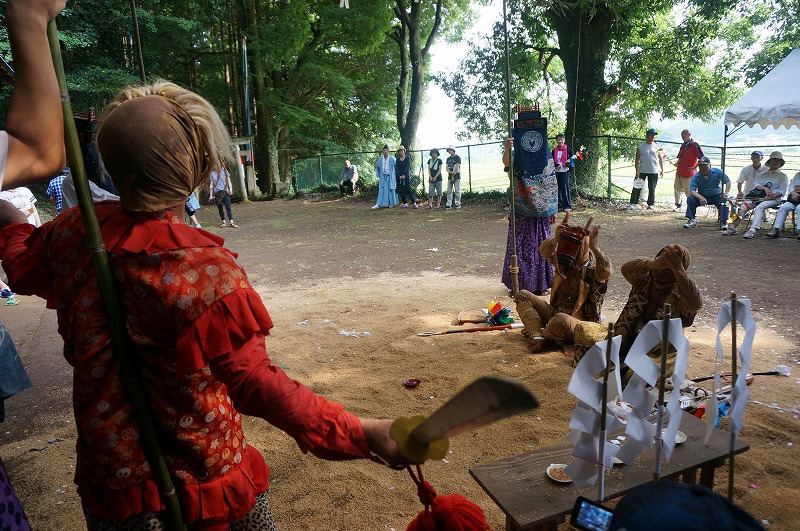
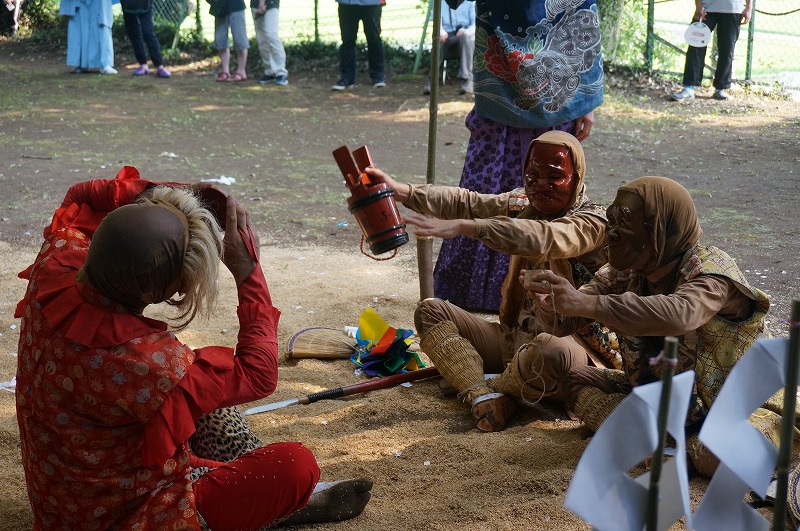
Then the demons, which were supposed to have been chased away, appeared again. Perhaps attracted by the smell of alcohol, they come peeping in greedily. The hunters notice this and invite the ogres to a feast. They drink heavily and start playing some kind of game.
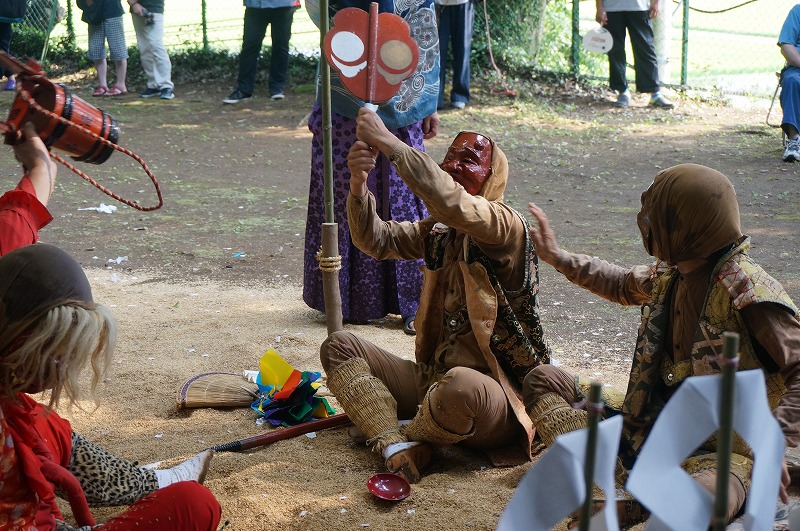
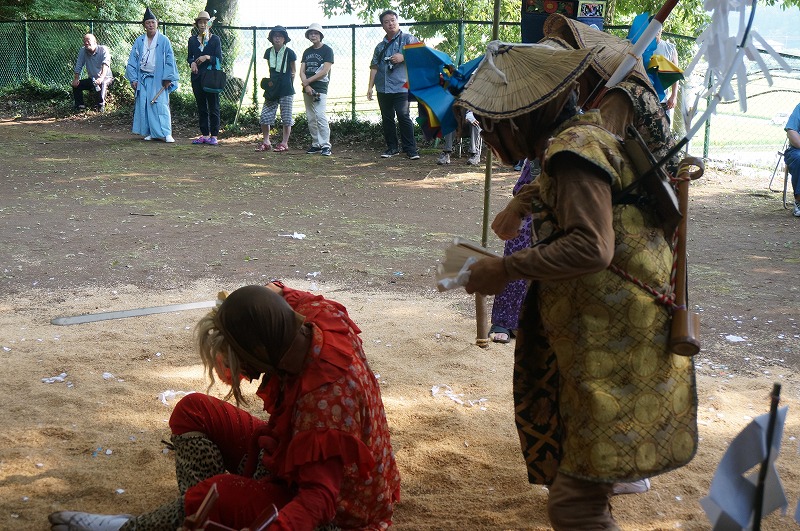
The two men take up the Oni’s belongings. So this was the aim. The two men quietly leave. The Oni falls asleep with a cask of sake. Then…
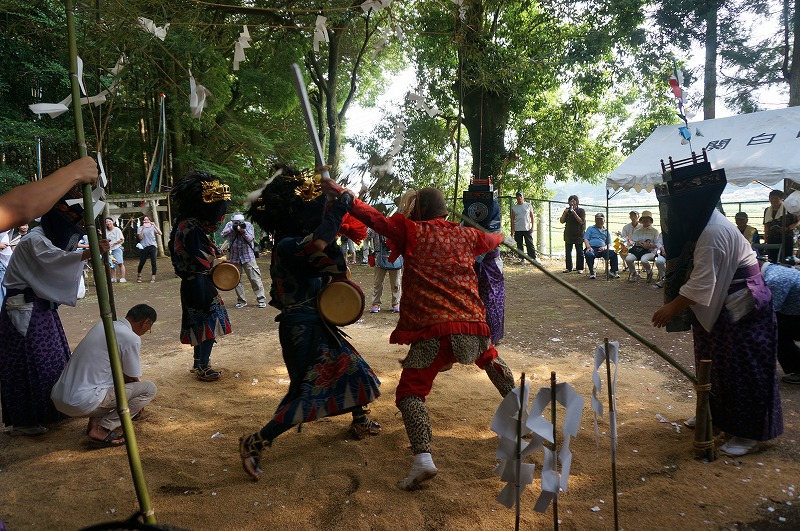
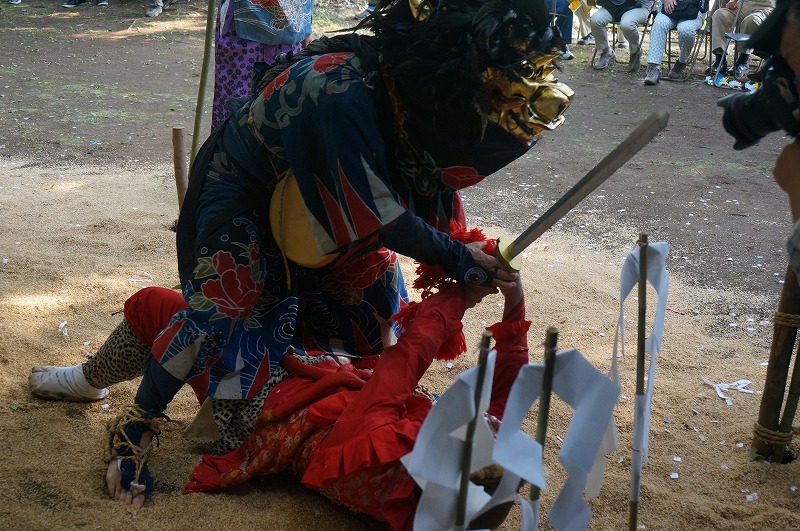
The Shishi army is coming. The Oni are no match for them, and a fierce battle ensues. In the end, the Oni meet their end with a single thrust from the Shishi. This performance alone lasts about 40 minutes. Only this performance is quite powerful because it leaves the dance arena and uses the entire place as a large area. Regardless of the authenticity of the legend, it is assumed that it was entertaining enough for people in the past.
The lion dance started at 11am and continued until about 3.30pm in the afternoon with a lunch break. A different kind of lion dance, if you get the chance.
Various other lion dances
This time we introduced the lion dance of Utsunomiya City, but in fact there are several similar lion dances performed in this area.
Kanpaku-ryu Lion dance (Gasoyama shrine)
Date; Every year on 23 September
Location; Gasoyama shrine 713 Iriwano, Kanuma City, Tochigi Prefecture
Access; Approximately 60 minutes by th *Ribus Iri-Awa-no-kami-Satsuki Line from Kanuma Station on the JR Nikko Line
Alternatively, approximately 50 minutes by the Ribus Iri-Awa-no-kami-Satsuki Line from the entrance of Shin-Kanuma Station on the Tobu Nikko Line; get off at ‘Ozaku-yama Shrine’ and walk for approximately 2 minutes *community bus
https://www.tochigiji.or.jp/event/e16030/
Tenkaichiryu-okami lion dance (Nakazato Nishigumi)
Date; Every year on 15 August
Location; Hakusan shrine 2059 Nakazato-cho, Utsunomiya City, Tochigi Prefecture
Access; From JR Utsunomiya Station, take the Kanto Bus bound for ‘Imazato’ for approximately 30 minutes, get off at ‘Nakazatohara Jumonji’, then walk for about 30 minutes
https://www.utsunomiya-cvb.org/event/detail_20040.html
Tenkaichi-kanpakuryu lion dance (Sakamo)
Date; Every year on 15 August
Location; Hakusan shrine 678 Sakagami-cho, Utsunomiya City, Tochigi Prefecture
Access; From JR Utsunomiya Station, take the Kanto Bus bound for ‘Imazato’ for approximately 25 minutes, get off at ‘Kakinoki’, then walk for about 10 minutes
https://www.utsunomiya-cvb.org/event/detail_20020.html
This Kanpaku lion dance is mainly found in Utsunomiya and Kanuma; in Utsunomiya it can be seen in August, whilst in Kanuma it takes place in autumn, from September through to October.