Take a dip in ancient times and ward off evil spirits~ Heian Shrine Ceremony

Date: 3 February every year
Location: 97 Okazaki Nishitenno-cho, Sakyo-ku, Kyoto
Access: From Kyoto Station, take city bus 5 or Raku Bus 100 for 30 minutes.
*This article is based on events in 2018.
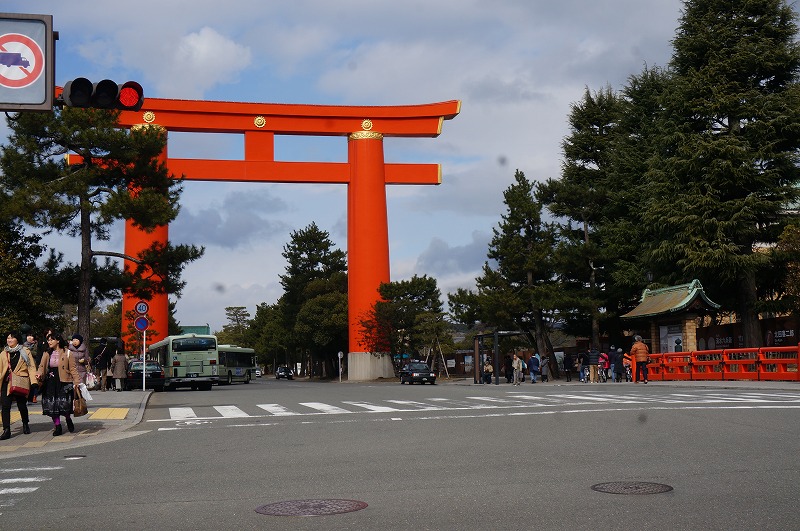
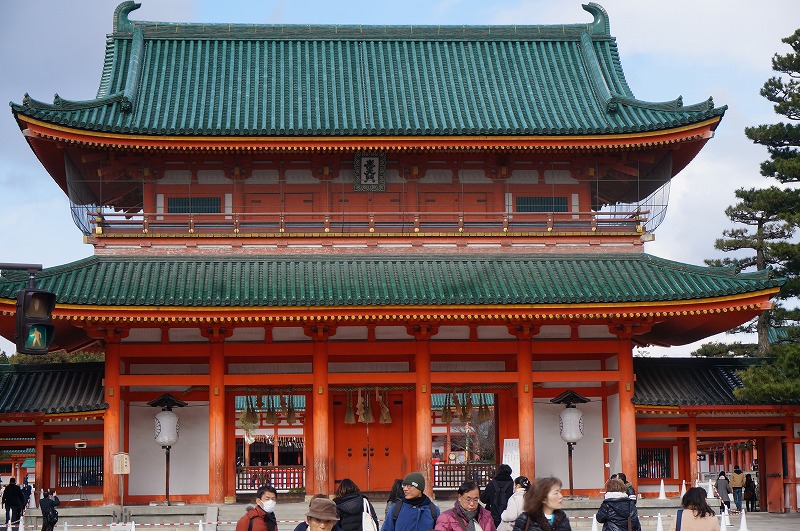
Heian Jingu (grand shrine) 平安神宮
Heian Shrine is one of Kyoto’s most popular tourist attractions. In fact, its history is surprisingly recent, having been founded in 1895. It was around the time when the samurai regime, the Tokugawa family, was overthrown and the new era known as the Meiji period began. For the people of Kyoto, a major event occurred. The emperor is gone. Or, to be more precise, he went to the new capital, Tokyo. There was considerable resistance to this at the time, so the new government was reportedly bitter and convinced people that the Emperor was only going to Tokyo for a visit. The emperor never returned to Kyoto after that, and no government has yet issued a formal declaration of the capital. Of course, this does not mean that Tokyo was not the capital. However, the Kyoto people, who had long been the capital of the dynasty, were disappointed. Against this backdrop, a movement arose to recreate the time when the capital was first established in Kyoto, and the Kyoto people built this shrine. This is a five-eighths scale replica of the central location established by the regime at the end of the 8th century, when Kyoto was declared the capital of Japan. It was called Heian-kyo 平安京, and later became the source of the term Heian period. It remained the political center for a long time until the early 12th century, when powerful warriors established their own government in Kamakura in the Kanto region and brought Kyoto under their control.
(ceremony of) driving out evil spirits ~Daina-no gi 大儺之儀
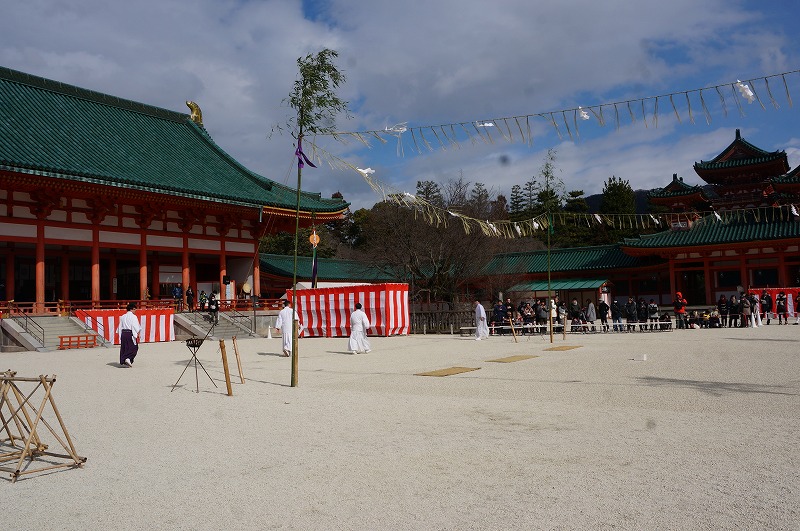
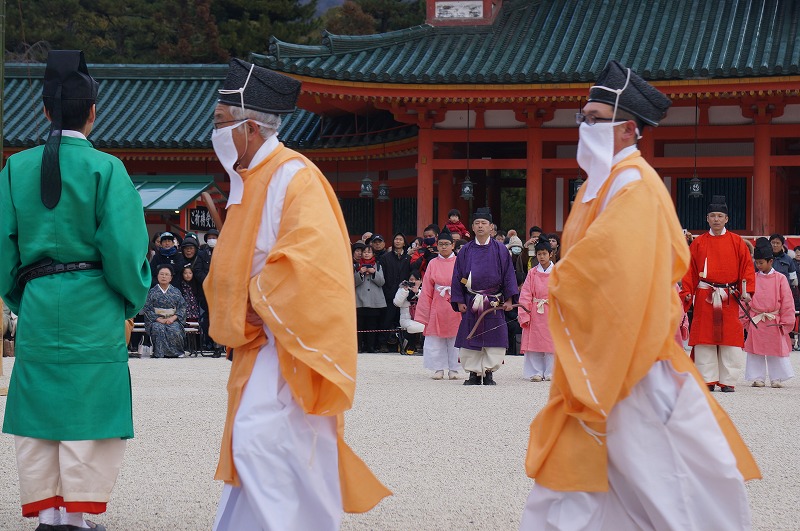
Rituals called Setsubun 節分 are held in many places around 3 February, but the ceremony here at Heian Jingu Shrine is different. Setsubun is a concept that originally came from China and refers to the division of the year into four parts, each of which is a turning point. And at the same time, it was mixed with a ceremony to drive away evil spirits called Tsuina 追儺 Ceremony. It used to be held at the end of the year at court. According to records of the time, it was solemnly held at 8pm with the Emperor in attendance and many nobles participating. The ceremony is called the ‘Daina-no gi’, which is held in the presence of the Emperor on a large scale. Dai” means big, “gi 儀” means ceremony. The Setsubun ceremony at Heian Shrine is a faithful adaptation of this ritual under the supervision of experts.
Onmyo-ji 陰陽師 and Houso-shi 方相氏
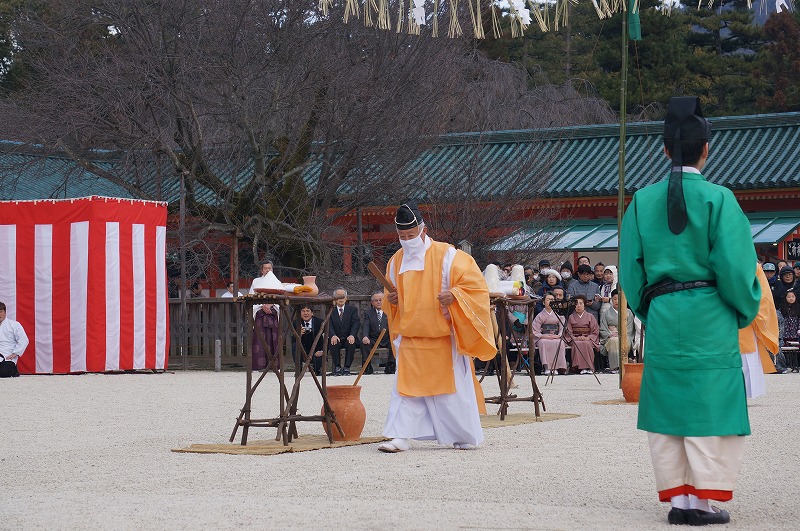
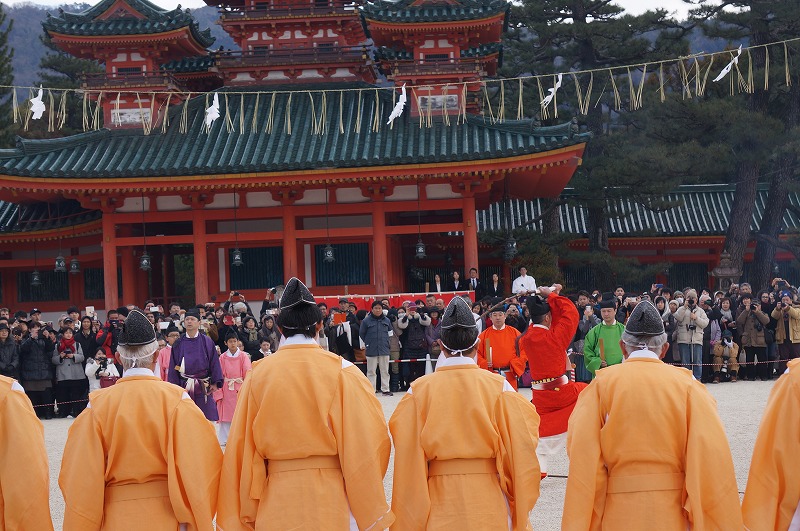
The ceremony begins with a gathering of people dressed in the clothing of the time. In the past, the emperor actually watched this, and it would have been performed in a more solemn atmosphere, as witchcraft was considered more important than it is today. The central figure in the ceremony is a person known as the ‘onmyouji’. The words ‘on’ and ‘myo’ stand for yin and yang. This is also a philosophy and science from China, which holds that the world is made up of the transitions of yin and yang. It was mixed with the idea that all matter in the world is made up of the five elements to form a single system of study. It was further developed in Japan in its own unique way, called onmyoudo, and onmyouji is the official in charge of it. Their work included astronomy and divination. The most famous Onmyo-ji (yin-yang master) was a man called Abe-no Kiyoaki 安倍晴明, to whom many legends have been attached. He is said to have been born between a fox and a man, or to have controlled at will a kind of yokai-like creatures called shikigam式神. Even today, he often appears in novels and dramas. The ceremony proceeds with this Onmyoji taking the lead. It involves using peach trees, shooting bows and arrows, and cutting hollows with swords. The bow, in particular, is believed to have the power to drive away demons with the sound of its strings alone, and can often be seen practised in other regions.
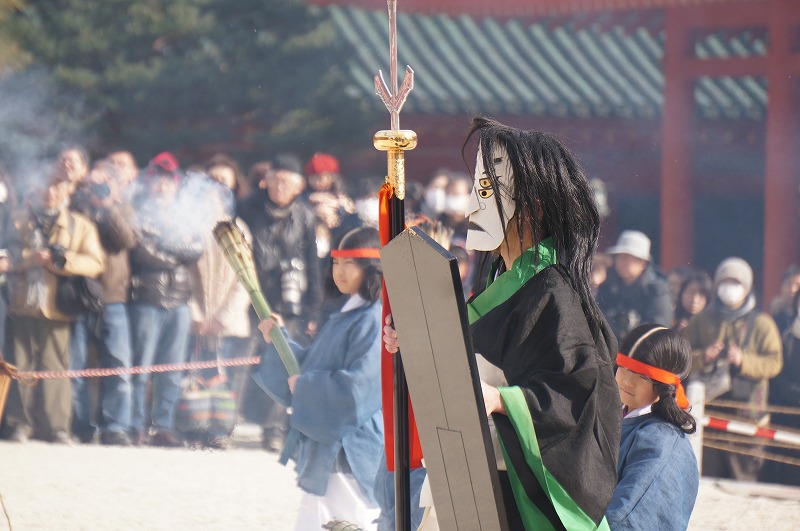
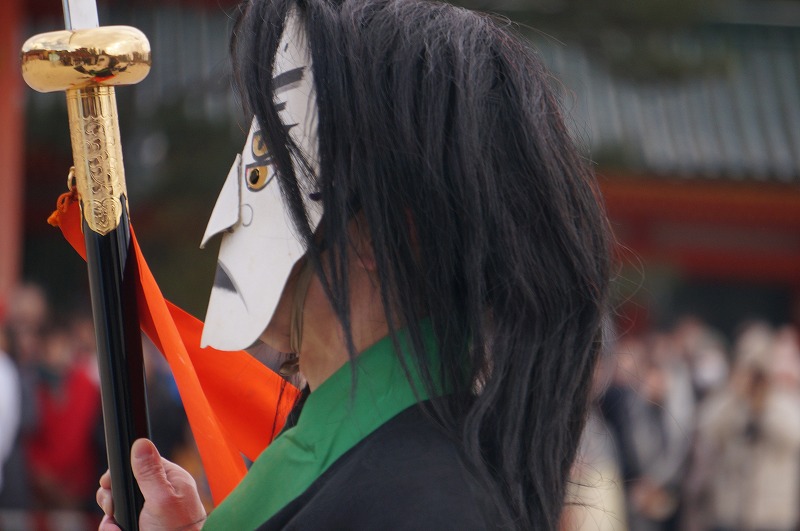
Another person who plays an indispensable and important role is the ‘Housou-shi’. This is a sorcerer with four eyes and the power to ward off evil. However, in later life, the four eyes are feared by people and eventually turn into demons.
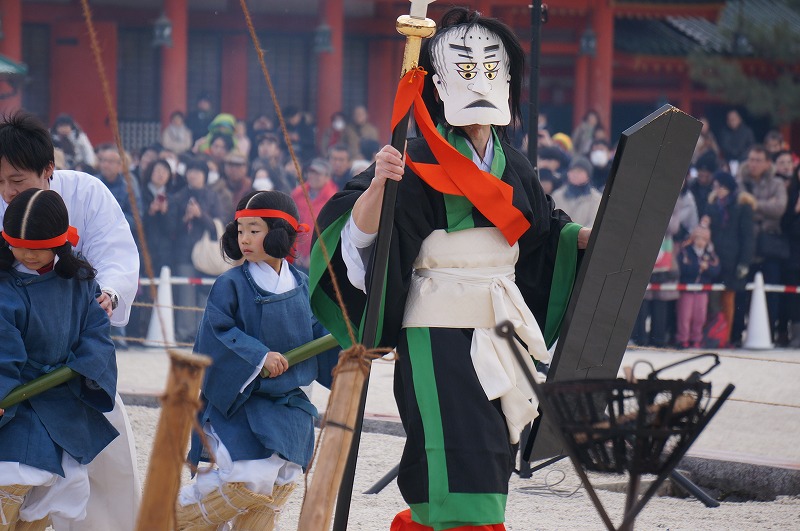
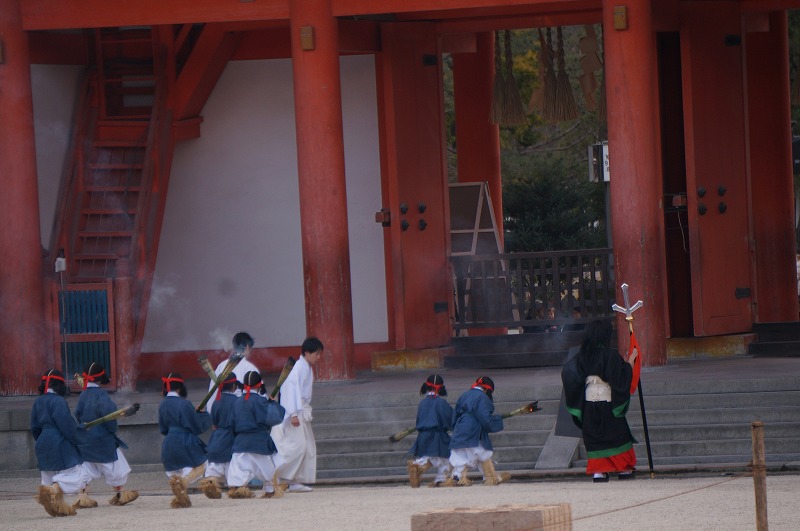
The ‘Hōsō-shi’ strike the shields they carry, and with the children in tow, they exit the premises, saying ‘We’ll drive the demons away’. By this time the large Jingu is full of spectators. This is the first part.
Scare off Oni demons with a bean
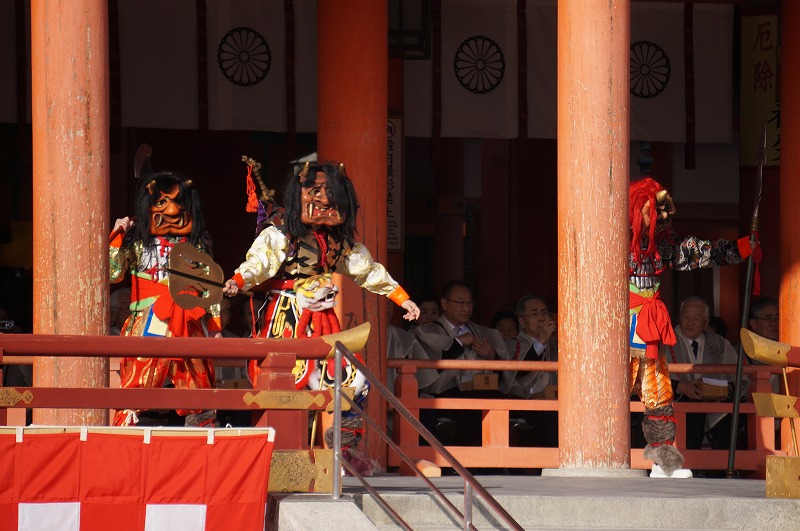
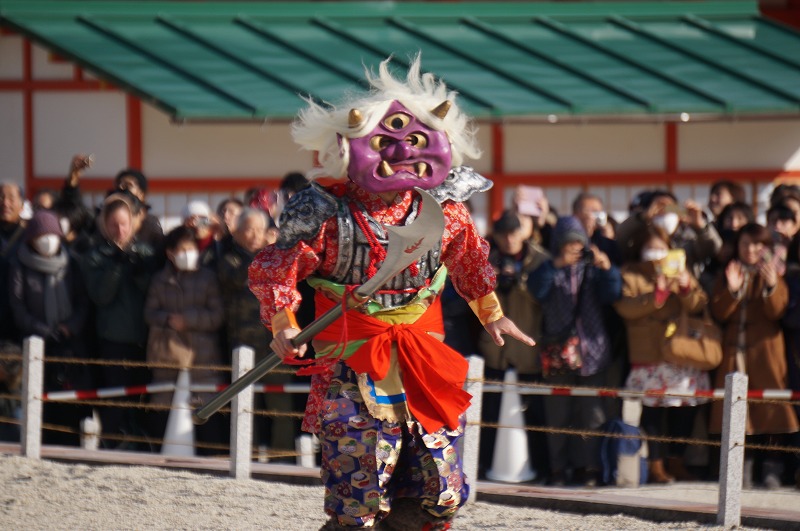
About 30 minutes of waiting. Suddenly the Oni demons that were supposed to have been chased away appear. This is a stage direction. After all, modern audiences are not convinced unless the Oni demons actually appear. Oni demons appear in the precincts or in the Daigoku-den Hall 大極殿 (Where emperors held political office in the past. Today, the main hall) and make strange noises to intimidate spectators. The Shigeyama 茂山 troupe, who specialists in kyogen, are in charge of the performance, so it is quite a powerful and interesting spectacle.
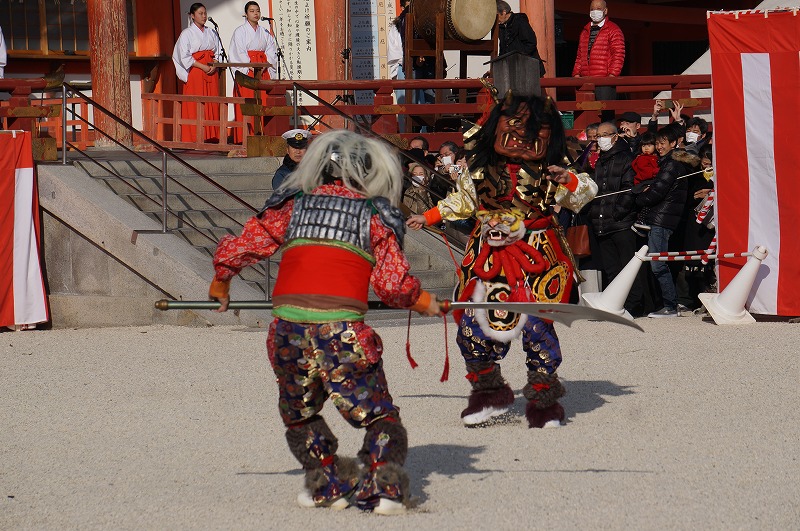
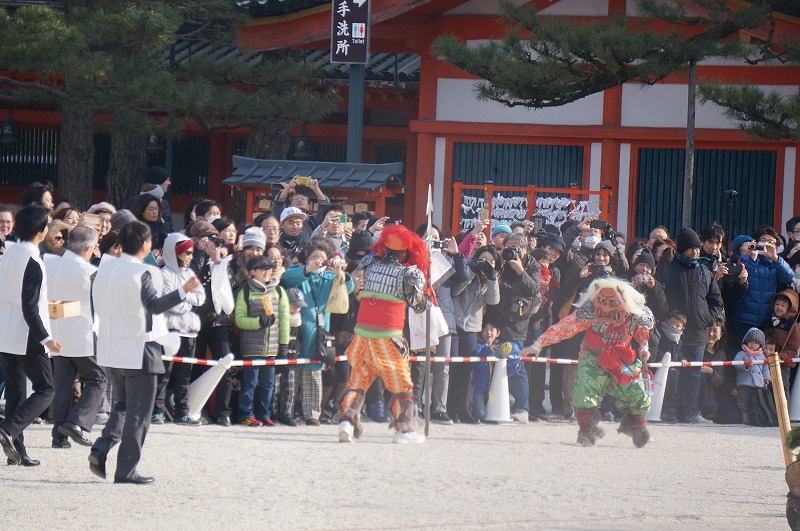
Eventually, the demons that went on the rampage are dispelled by the magical power of the beans scattered by the Toshi-otoko*. Afterwards, a bean-throwing event is also held for the spectators.
*Tosi-otoko 年男→In Japan, each year is named after an animal, followed by 12 more. The first starts with rat, the idea being that if you are born in the year of the rat, no matter how many years pass, the year of the rat is your year.
Places of interest nearby
Seimei shrine 清明神社 This is shrine dedicated to Abe-no Seimei.
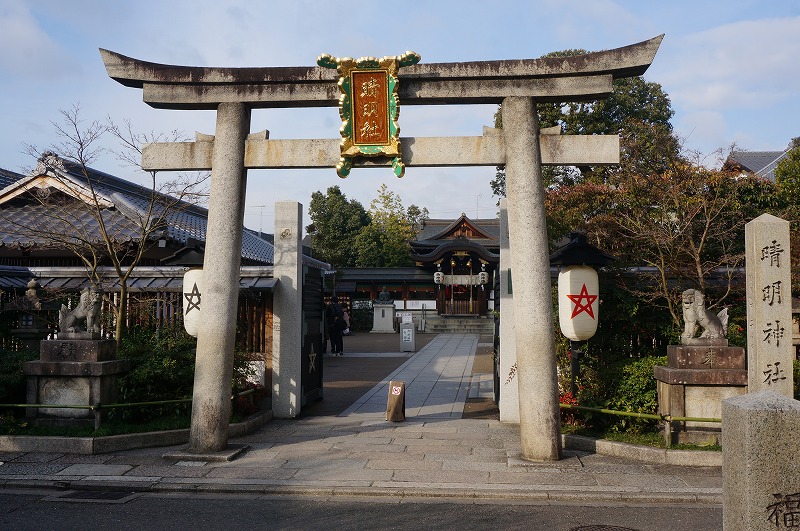
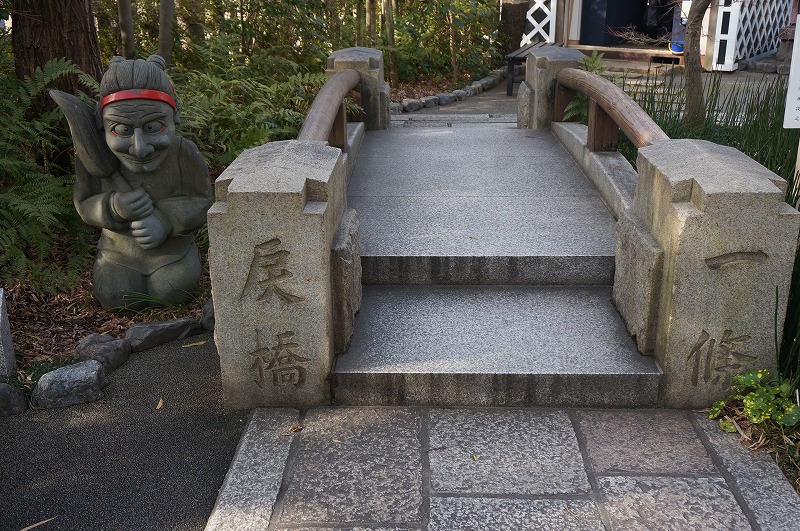
Although it is not a large shrine, the Ichijo-modori Bridge, where Seimei is said to have placed his shikigami (Tool of the sprits), has been recreated in the precincts of the shrine. The ruins of the actual bridge are also nearby. The bridge was believed to be a bridge between this world and the land of the dead, meaning a bridge of return. In recent years, figure skater Yuzuru Hanyu 羽生結弦, who won gold medals at two consecutive Olympic Games, has used a song based on the motif of Seimei, making it a popular destination for his fans.
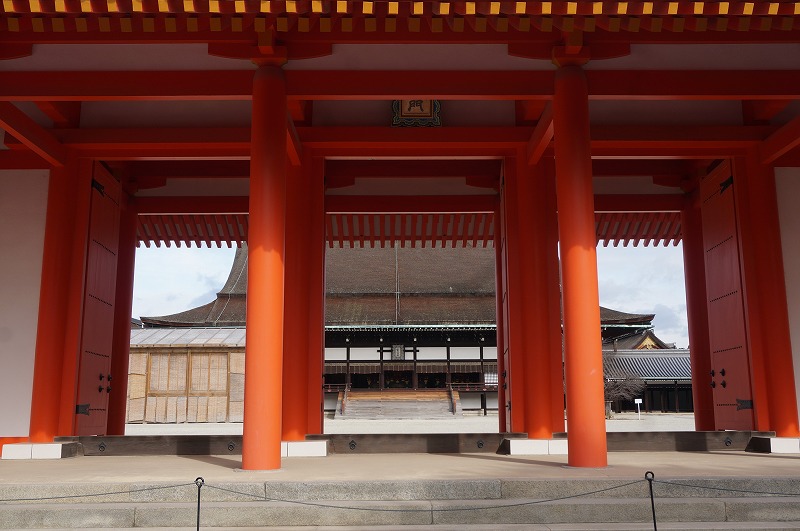
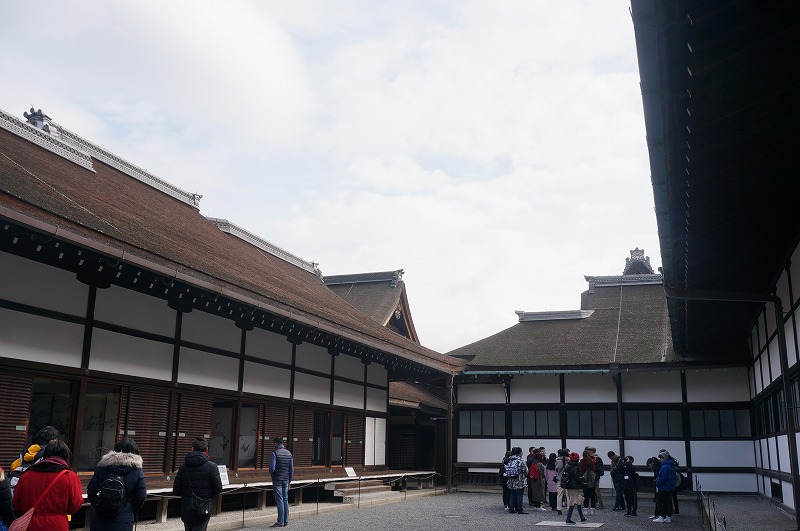
Kyoto gosho 京都御所
This is where the Emperor once actually lived when he was in Kyoto, and is now open to all to visit at any time.
cf.
Heian grand shrine http://www.heianjingu.or.jp/english/english.html
Seimei shrine https://en.japantravel.com/kyoto/seimei-shrine-in-kyoto/67855 etc.