Explore Japan’s Oni Legends at Taizanji Temple

Date: 7 January every year
Location: Taizanji-temple 太山寺, Zenkai-224 Ikawadani-cho, Nishi Ward, Kobe, Hyogo
Access: 10 minutes by Shinki 神姫 bus from Ikawadani 伊川谷, from where it is a 5-minute walk. However, there is only one bus every hour.
Or a 30-minute walk from Gakuen-toshi 学園都市.
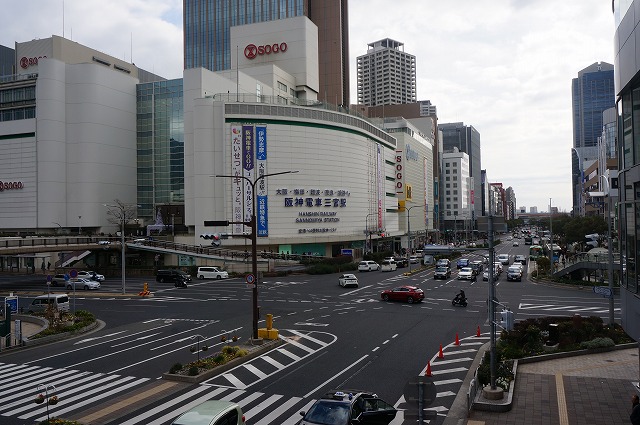
Both stations are about 30 minutes from Sannomiya 三宮 (Central shopping district of Kobe) by the Seishin 西神 Subway.
based on a visit on 7 January 2018
prologue
Nationally, Setsubun 節分, or Oniyarai 鬼遣らい (To drive away bad evil spirits represented by Oni demons), is a fixed date of 3 February. On this day, Oni demons appear in many parts of the country and beans are scattered to scare them away. Although it seems to have become less common these days, it is sometimes held in ordinary households with children, and you can find Oni masks in supermarkets.
Here in Hyogo Prefecture, however, events already start in January in various parts of the prefecture. There is a record that Oni yarai events were originally held at court on New Year’s Eve in the old days, so there is nothing wrong with going in January. Around 20 or more locations throughout Hyogo Prefecture. The latest is in May. This website reports on one of them today.
cf. http://kobe.travel.coocan.jp/shrine_temple/tuinashiki.htm
Taizanji-temple 太山寺
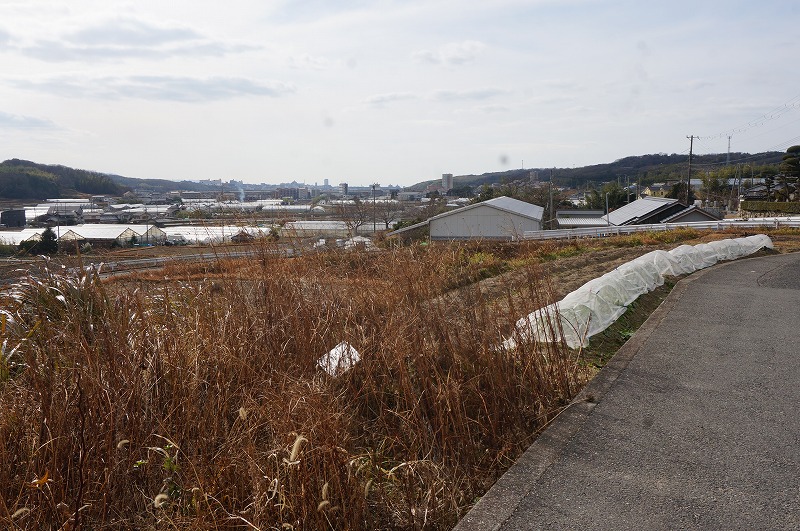
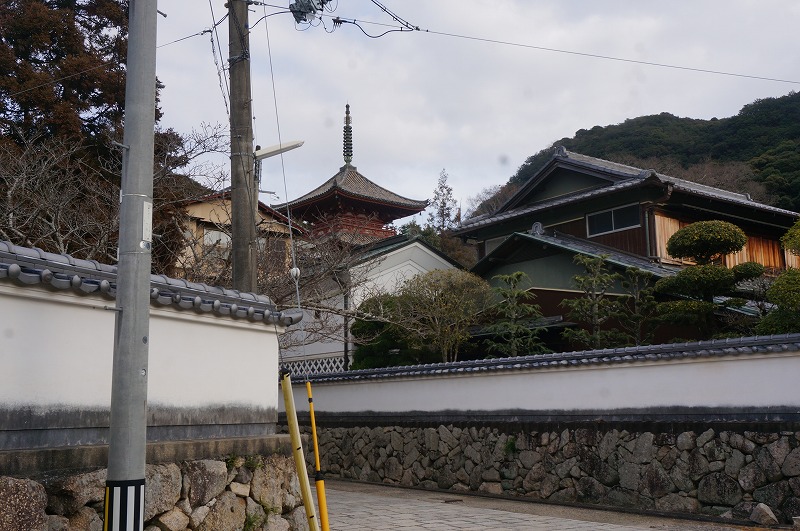
The venue, Taizanji Temple, is located in a mountain village far from the station. It is a 30-minute walk along a winter-dried road. The temple can be seen standing quietly. Although the temple has a quiet atmosphere now, it used to be a large temple with about 40 temples and halls. Founded in 973. It was later damaged by fire, but reconstruction began in 1293. For this reason, the main hall is the only one in Hyogo Prefecture to be designated a national treasure. Its main hall is filled with the enthusiasm of people on 7 January. The festival starts at 2pm, but by 1.30pm it is already full of people. Incidentally, there is no admission fee on this day. Conscientious management means that on days when there are events, it is free.
program of a ceremony
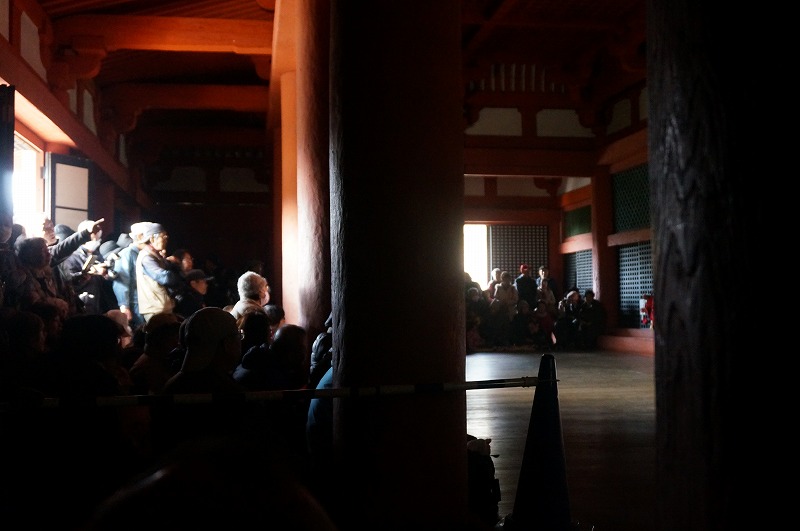
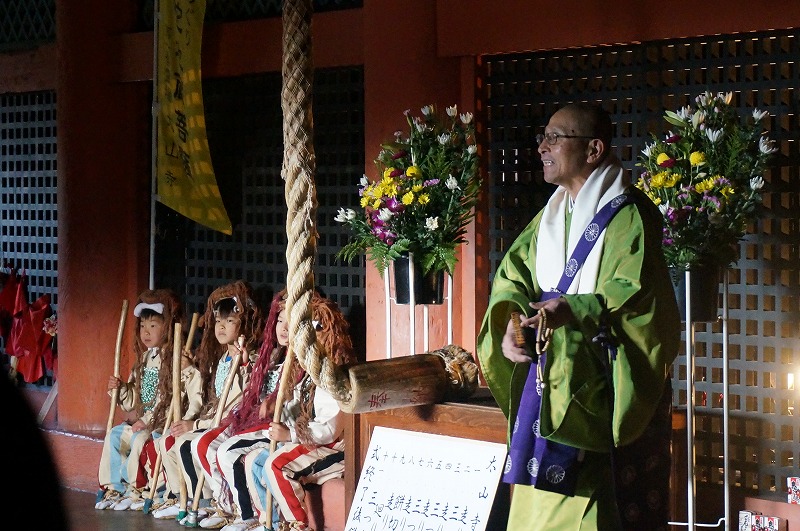
Starts at 2 pm. Before that, there will be a brief explanation by the resident priest. Then the people concerned will sprinkle water on the floor. The ceremony uses torches, so it would be a big problem if the fire spread. It is astonishing that this kind of event has been carried on for so long in such a situation.
There will be a total of four Oni demons. They are the Hashiri-Oni (Running Oni), the Taro Oni, the Jiro Oni and the Baba Oni. Of these, Taro and below appear in groups of three. Each one lasts about five minutes. This is repeated about 10 times in total. The only background music is the sound of Japanese drum. The doors of the main hall are closed when the performance begins, so it is pitch-dark inside. When the heavy bass drumbeats begin to resonate in the stomach, the Oni finally make their appearance.
hashiri Oni 走り鬼
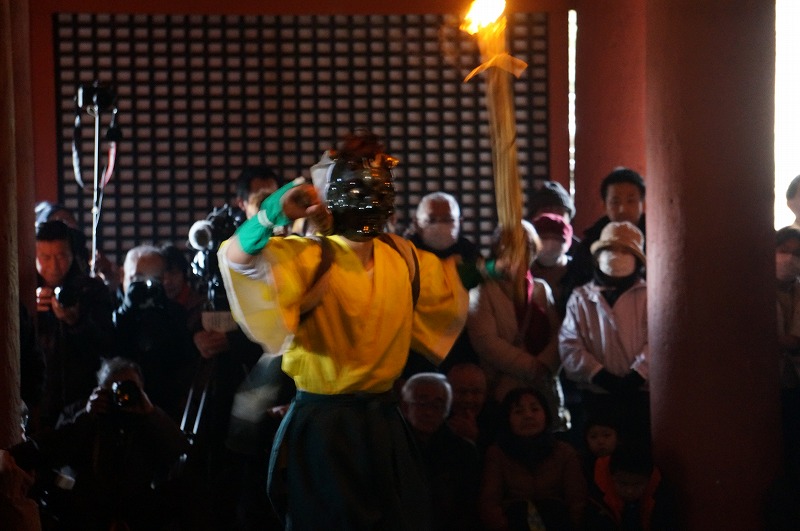
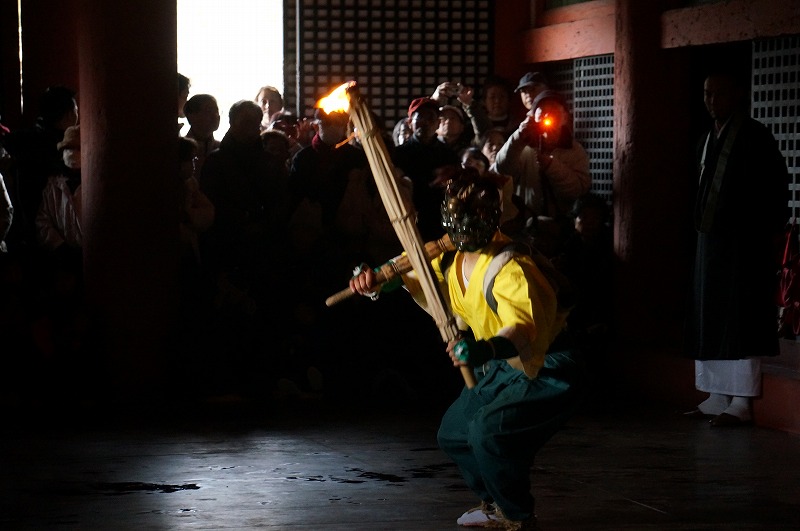
Running Oni appear alone. The person chosen to play the role of the Oni purifying themselves a one-day and performs water purification.
Three Onis, Taro, jiro, and Baba
When the running Oni is finished, three Onis appear. They are named Taro 太郎, Jiro 次郎 and Baba 婆. Taro and Jiro are (or perhaps it is more correct to say were…) typical Japanese male names. They seem to have lost much of their popularity nowadays). The first son is named Taro and the second son is named Jiro. The word ‘ro’ means man. Even so, Taro is still often used as the name of a shop or a robot.
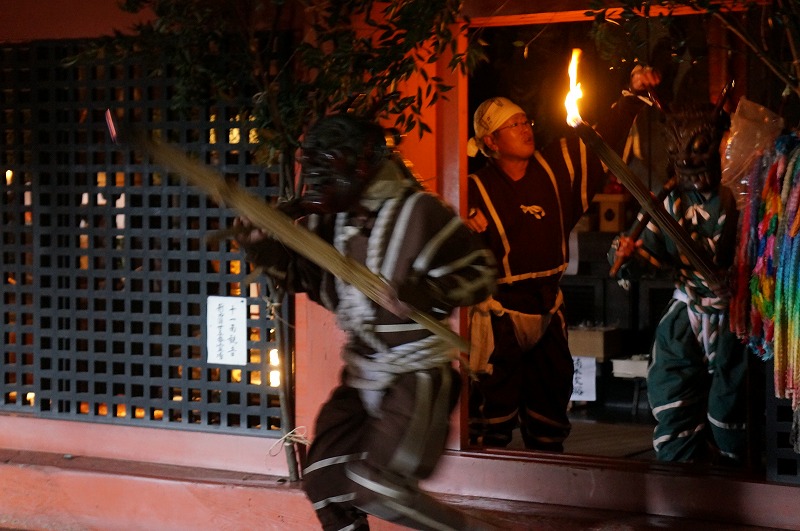
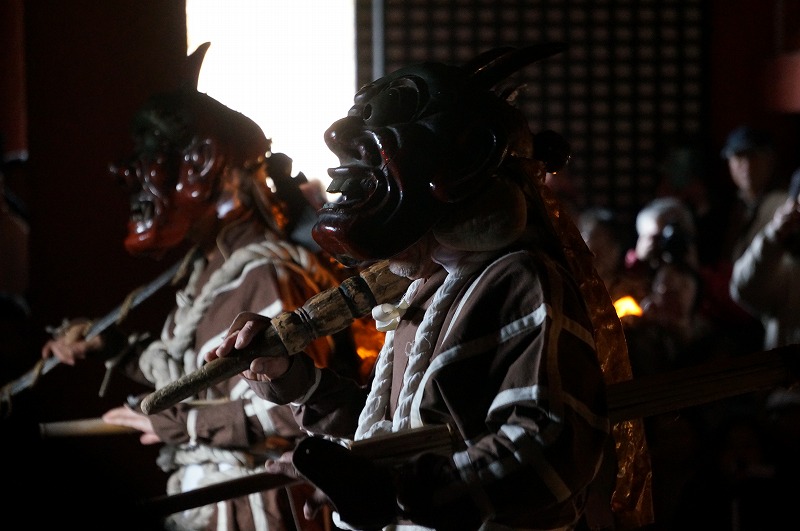
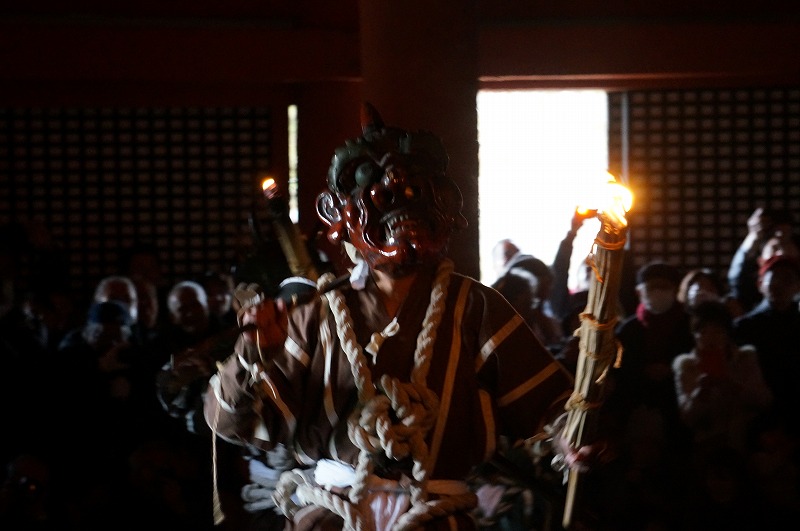
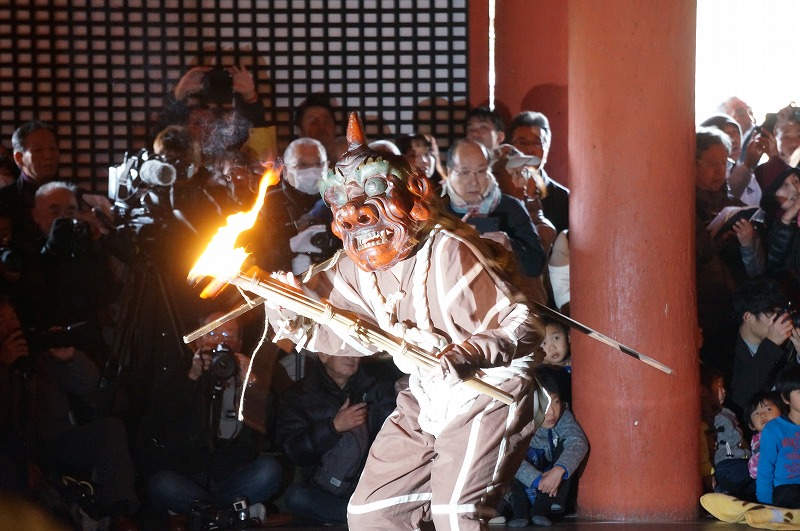
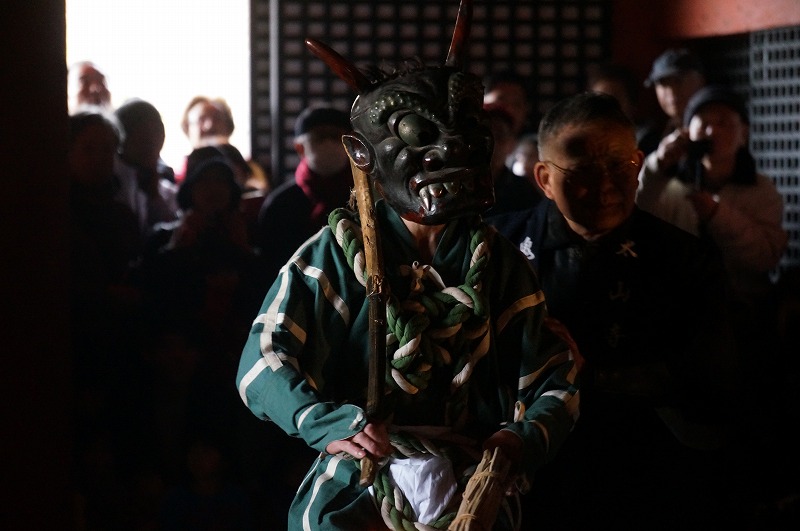
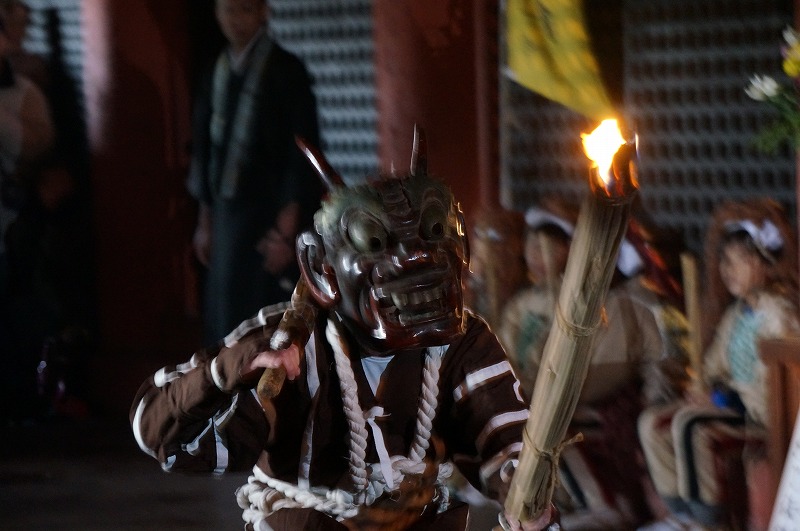
The masks are said to have been made by Unkei 運慶 (early 13th century), the most famous Japanese Buddhist master. In fact, it was not certain, and the resident explained that it was only an oral tradition with smile. The carving of the face is so superb that we can nod our heads in agreement when we are told so. The area is close to Kyoto and Nara, so there must have been many skilled craftsmen. On New Year’s Eve, the great religious city of Hieizan 比叡山 also holds a ritual to drive away demons, and the Oni masks that appear there are said to be modelled on those from here.
Ko-oni 子鬼
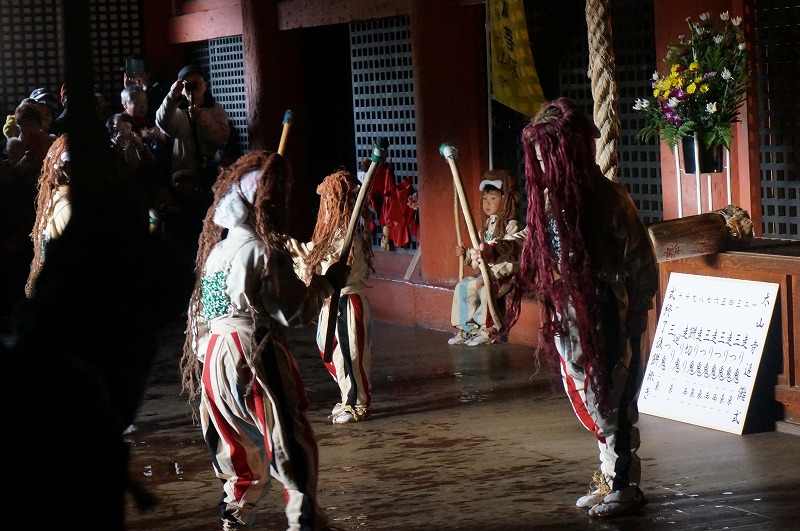
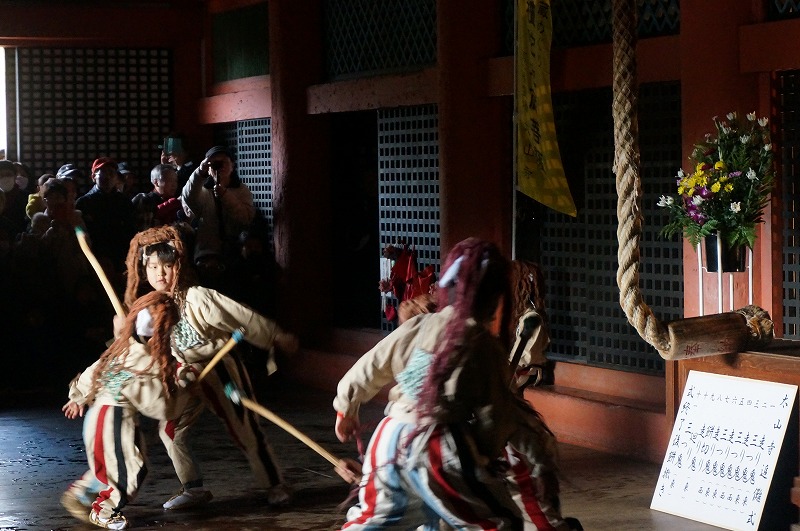
In between there are also child Onis by children. A moment’s peace of mind among the terrifying Onis. Their serious expressions are adorable.
The explanation is late, but the Oni here are not bad demons, but Oni that bring happiness to people.
Oni, forever
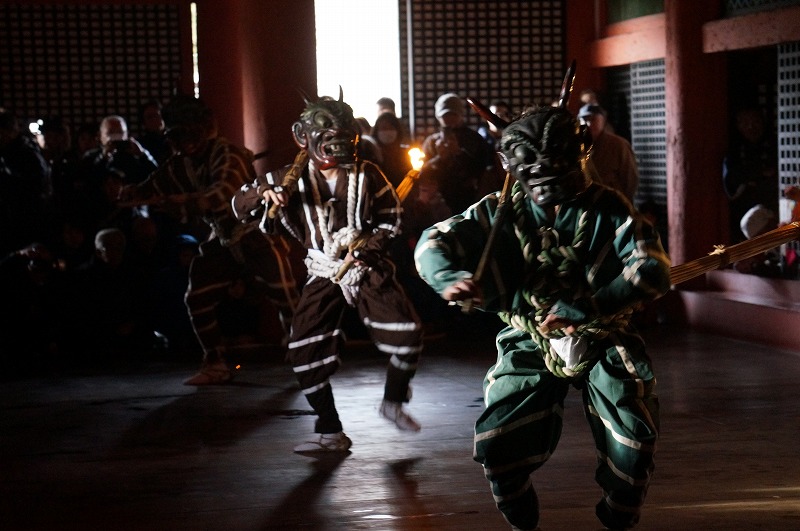
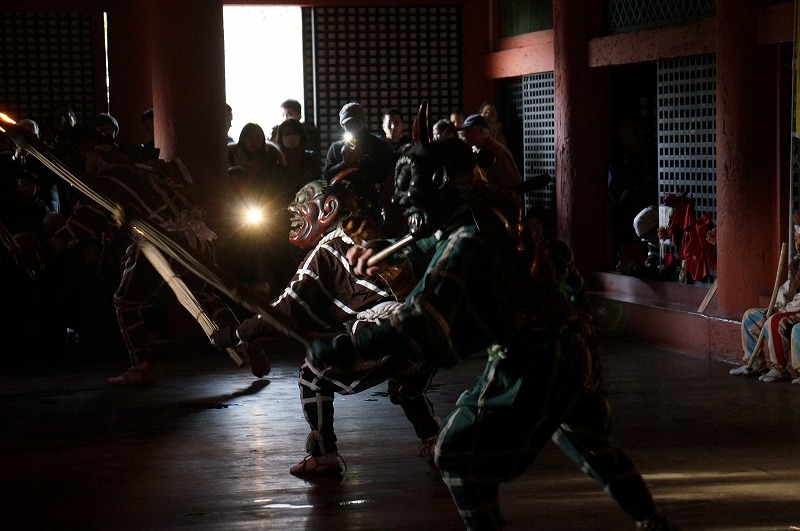
The direction in which the Onis appear changes each time, and they are called mountains and villages respectively.
The audience stands in the pitch-dark hall, lit only by the light of torches. All that can be heard is the deep, resonant sound of the Japanese drums and the stomping of the onis’ feet on the floor.
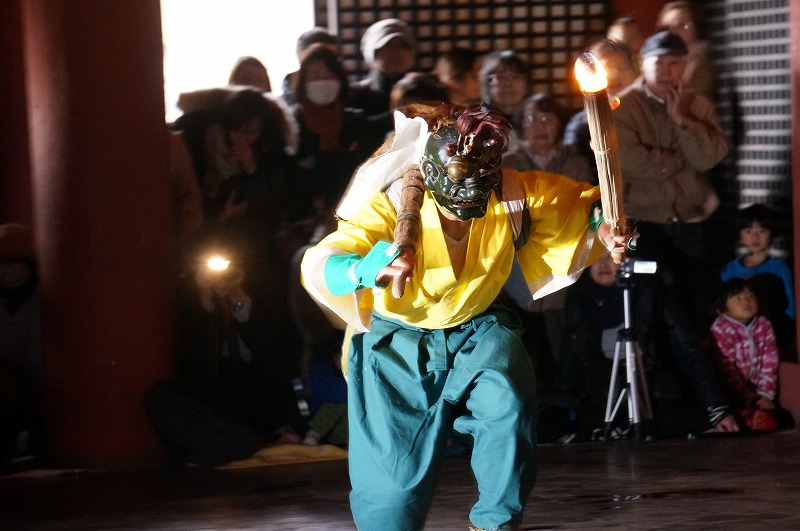
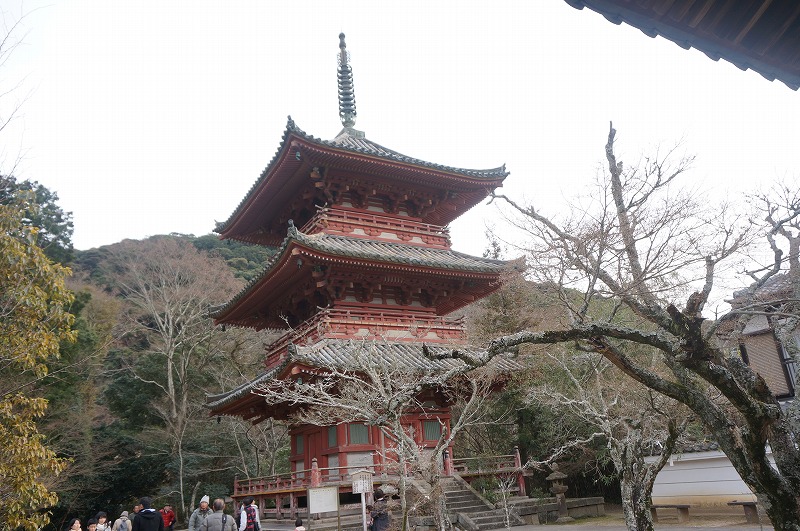
An hour and a half later, a rice cake throwing ceremony takes place at the temple, which has been opened to the public, and the visitors disperse in their own directions.
On the way back, one of the biggest cities in the Kansai region, Kobe, awaits.
https://www.feel-kobe.jp/column/taisanji/