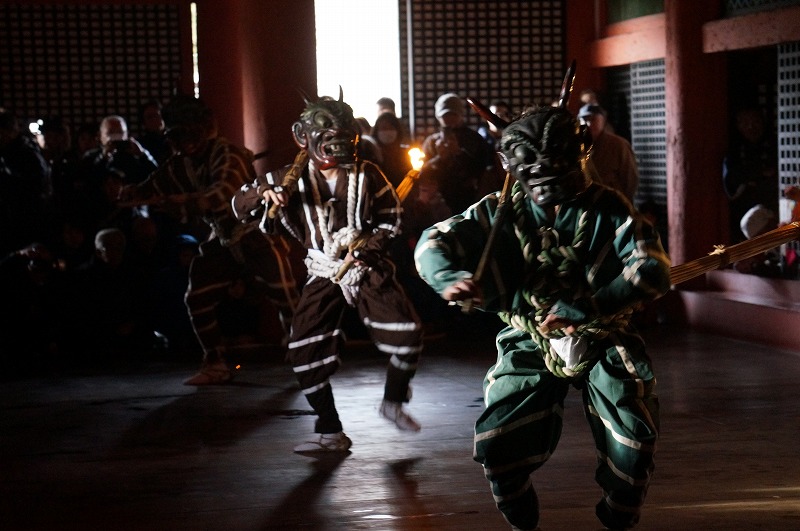
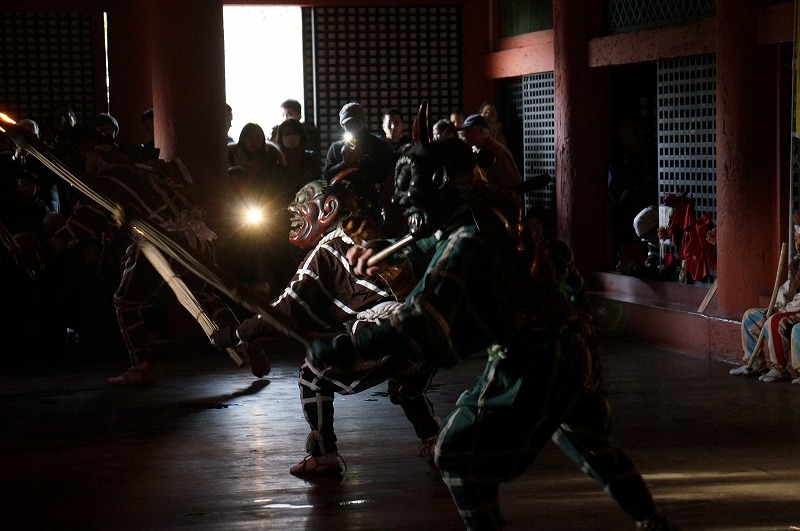
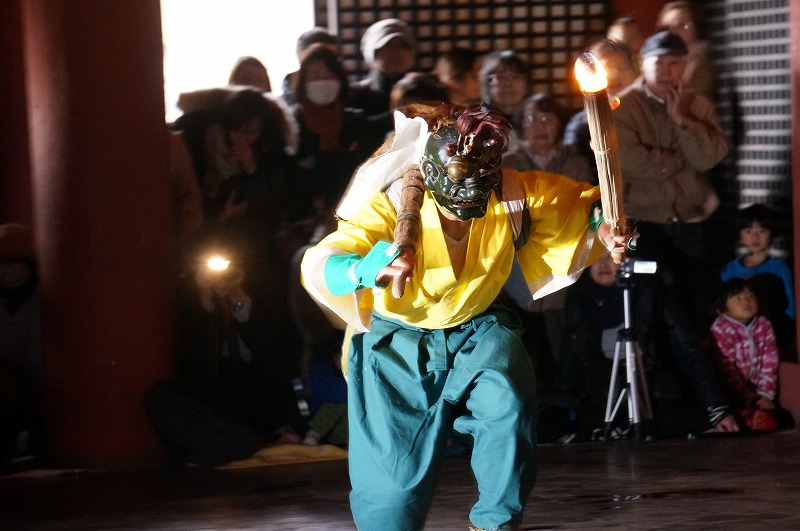
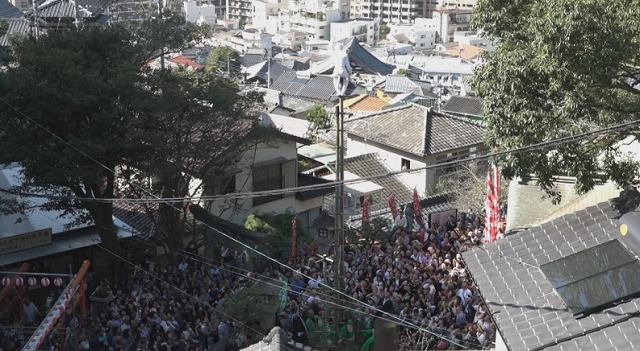
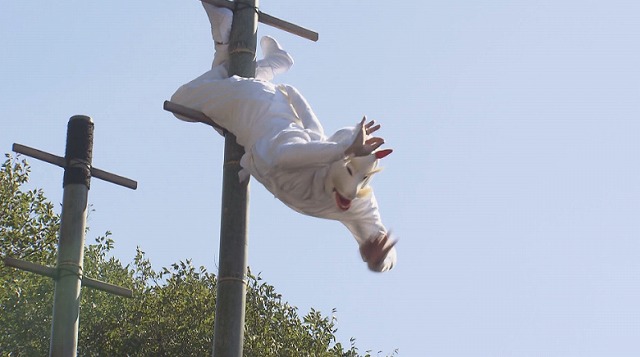
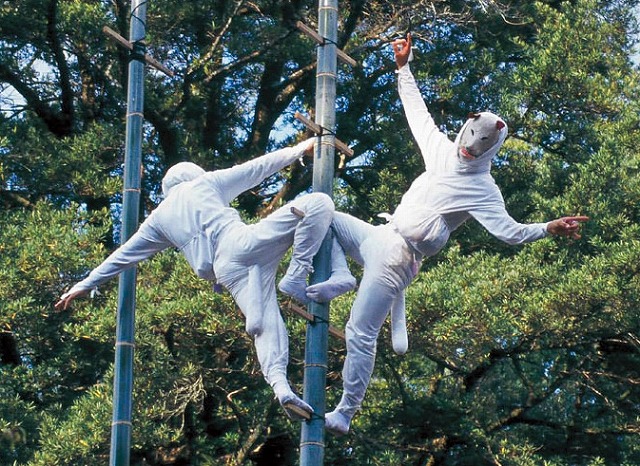
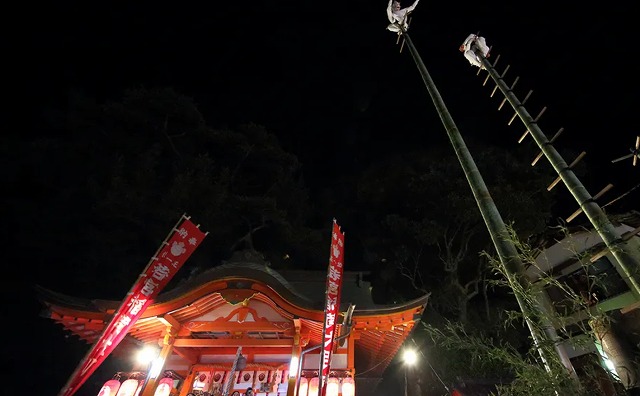
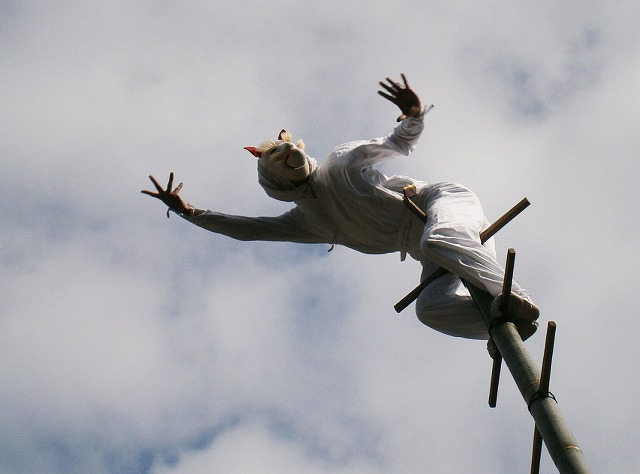
Nitayama and Hagino serow dance in Shinjo festibal


Date: 26 August, every year
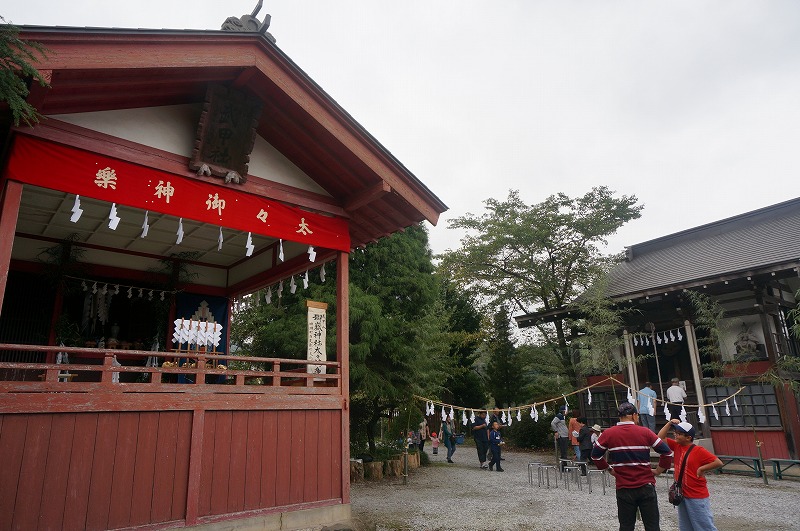
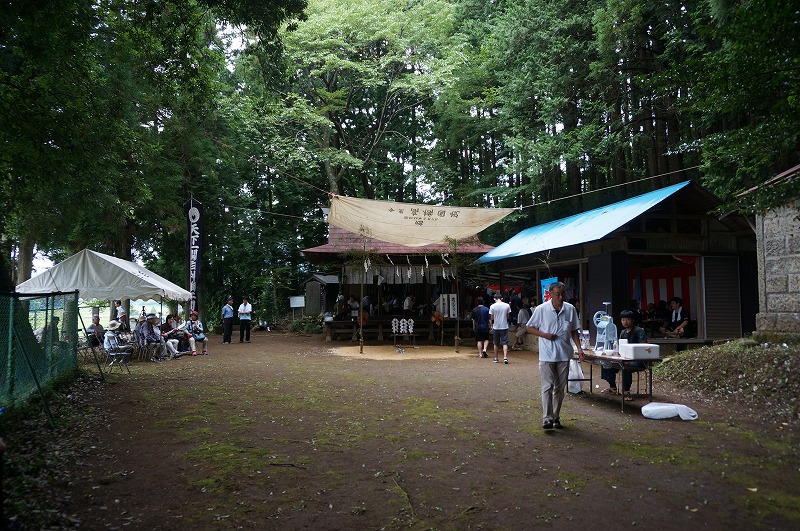
Location: 6-86 Horibatamachi, Shinjo, Yamagata 6-86 Tozawa 戸澤 Shrine Gokoku 護国 Shrine and Minami Honcho Crossroads
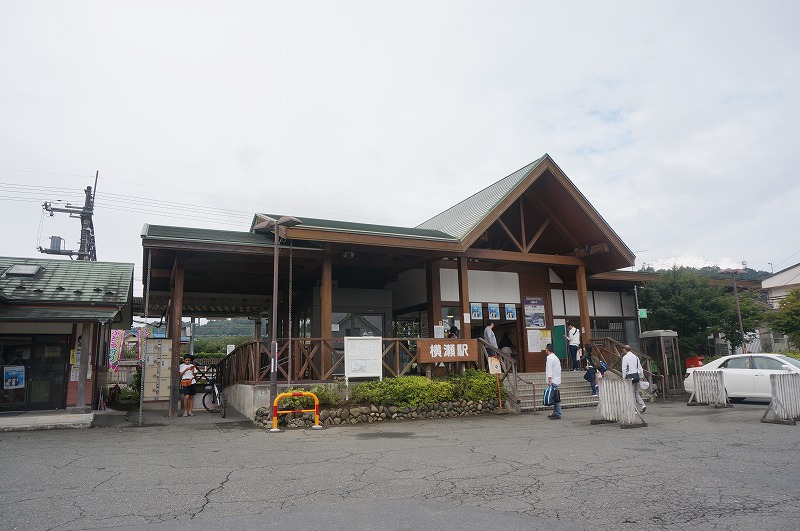
Access: About 1 hr 15 mins on the Yamagata 山形 Line from Yamagata.
3 hours from Tokyo by Shinkansen approx. 2+ hours from Sendai 仙台 (conventional line)
By air from Yamagata Airport and Shonai 庄内 Airport.
Highway night bus, etc.

Article based on reports from August 26, 2017

the other worldly creatures

People are always attracted to the other worldly creature. In Western paintings, angels always look the same, whereas demons are diverse and always fascinating. Legends of fairies and spirits are ubiquitous. The Japanese have used a very rich and varied imagination when it comes to such things. In Japan, ‘yokai’ is a major content. Most Noh plays, for example, consist of dialogues with ghosts and other forms. And it’s the same at festivals. At this moment, the deities, like monstrous creatures and like yokai are active.

Two distinctive Deer dance

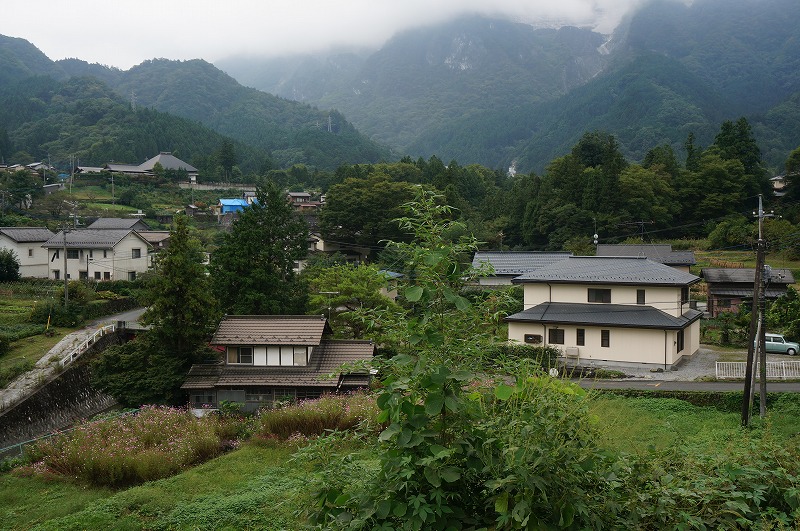
The deer dance presented here is from Shinjo, Yamagata Prefecture, in the western part of the Tohoku region. On the west side of Tohoku region, there are variety of Deer dances, which is different from the east side. Why have various dances been handed down in Yamagata Prefecture? The reason is the history of this land.

End of Mogami clan

Yamagata Prefecture region was once ruled by the powerful Mogami clan. The Mogami family is the hero of the Tohoku region, along with the Date family in the east. Unfortunately, however, after the death of the hero Yoshiaki, a succession problem arose and the Mogami family decrease their rank in the Tokugawa shogun system. After this, the Tokugawa family divided its vast territory into smaller feudal lords, so the performing arts were handed down in a more varied form than in the west (Iwate and Miyagi prefectures).

Features and visual
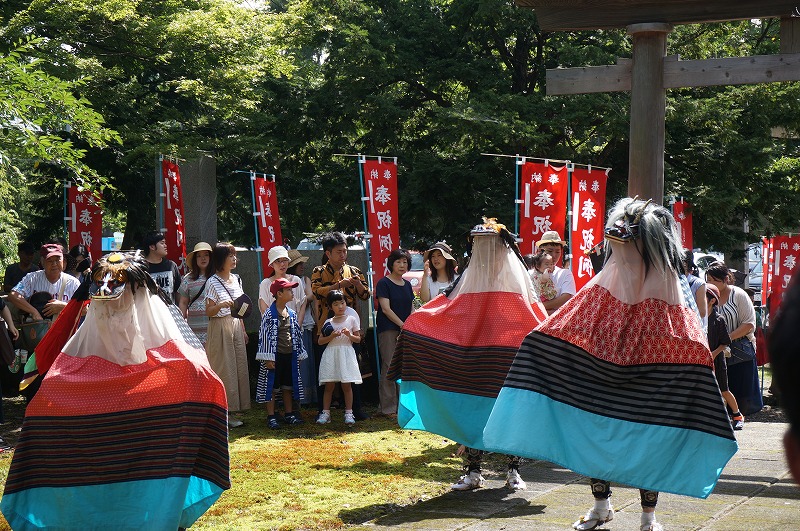
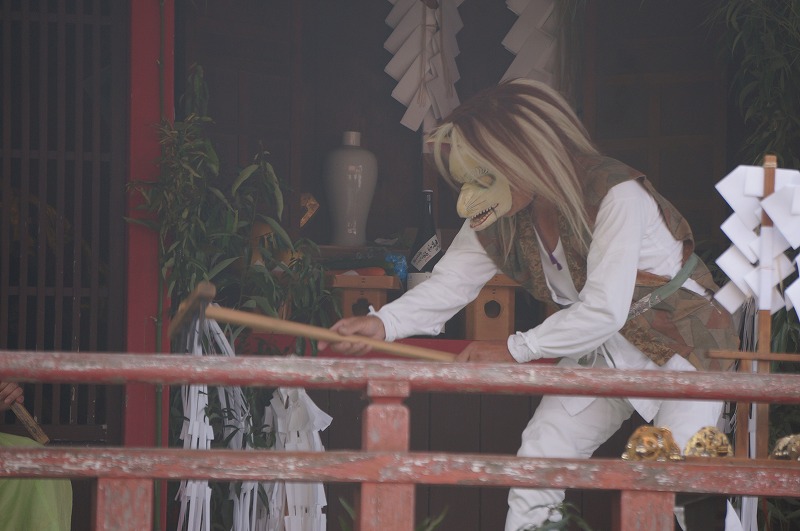
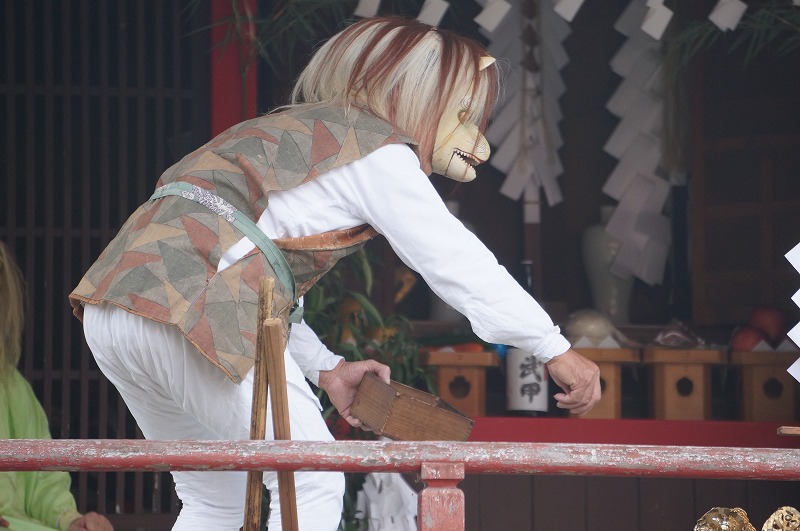
Nitayama 仁田山

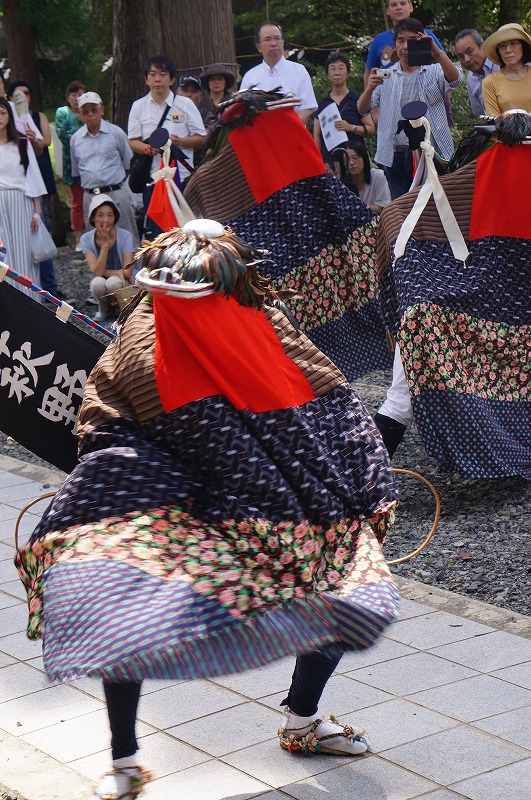
Hagino 萩野

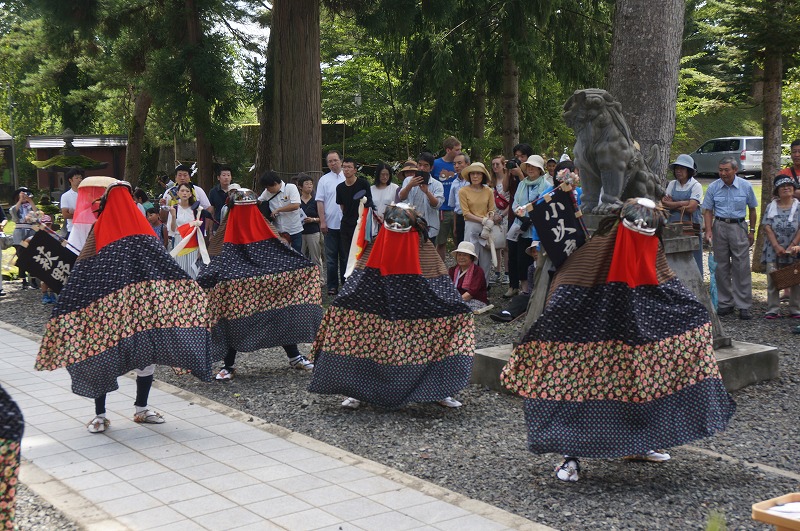
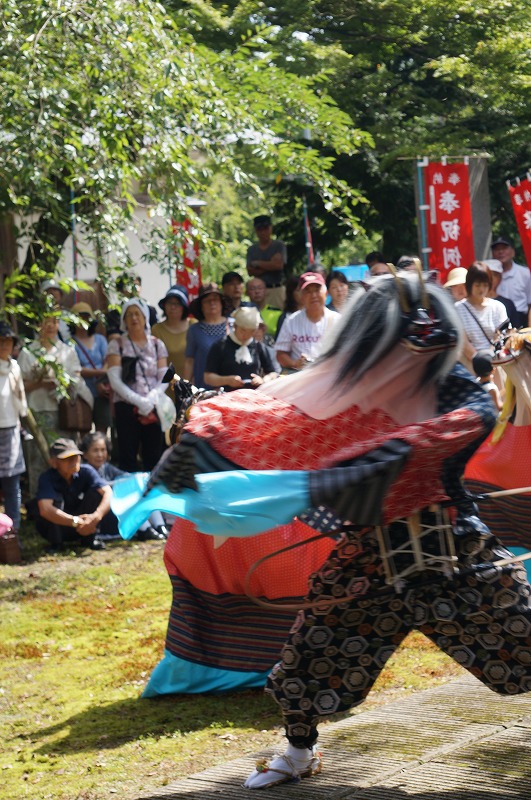
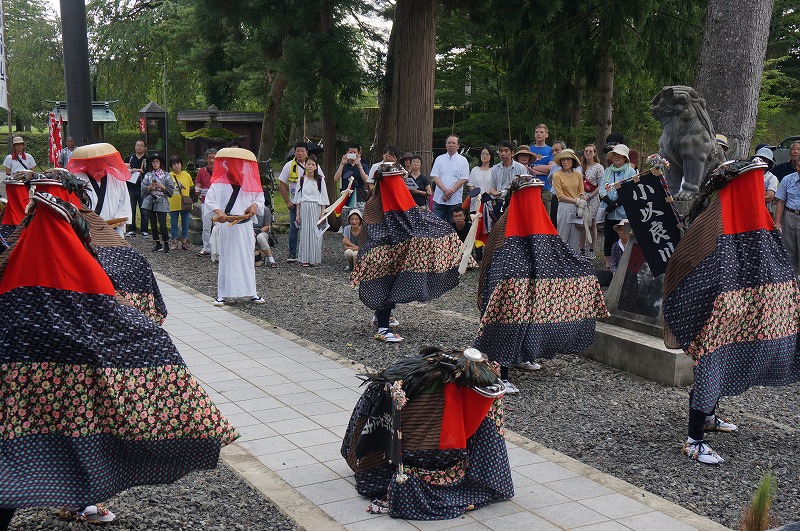
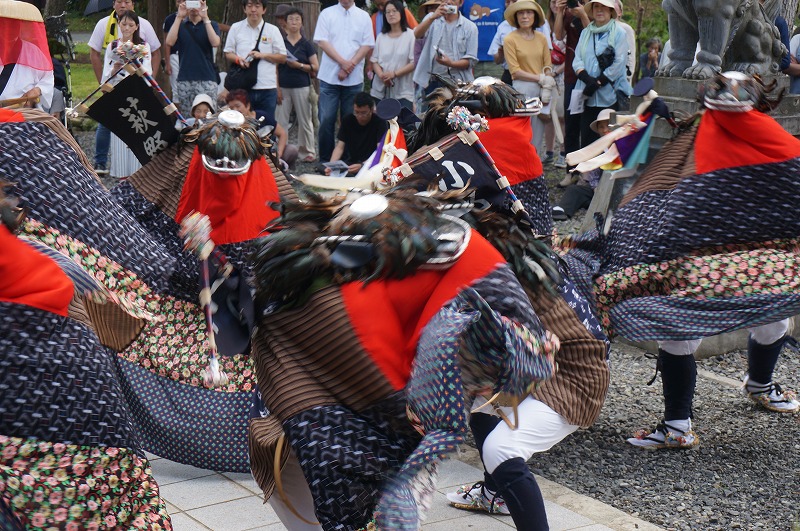
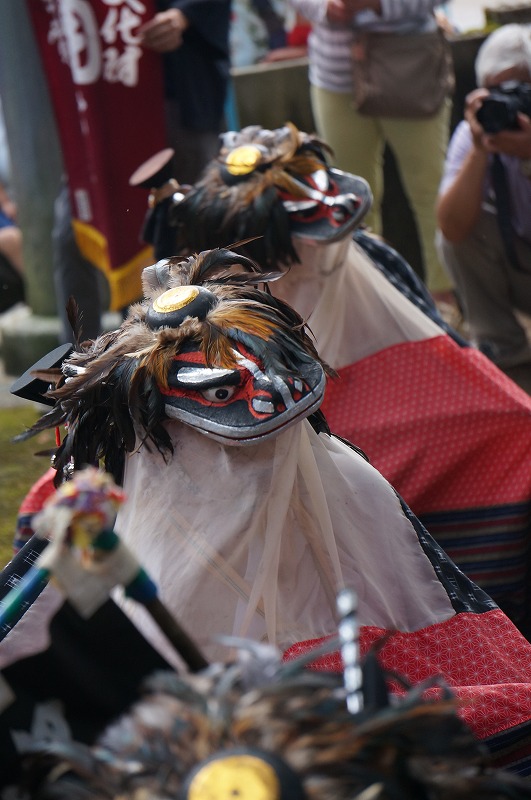
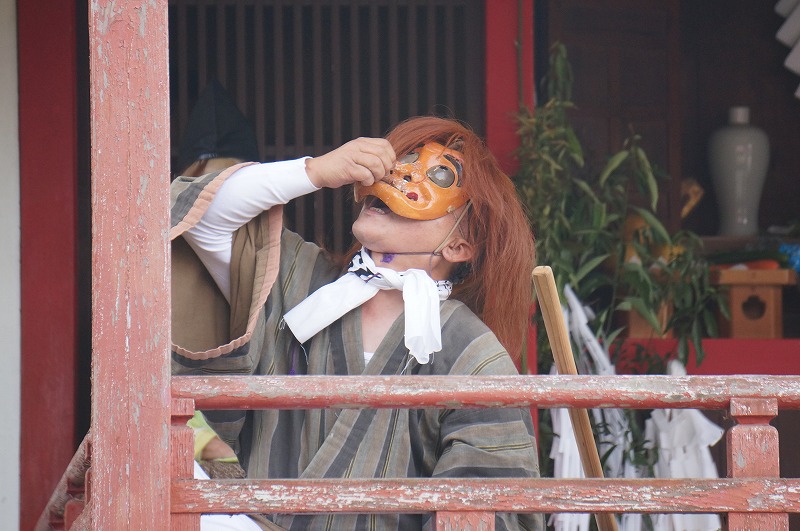
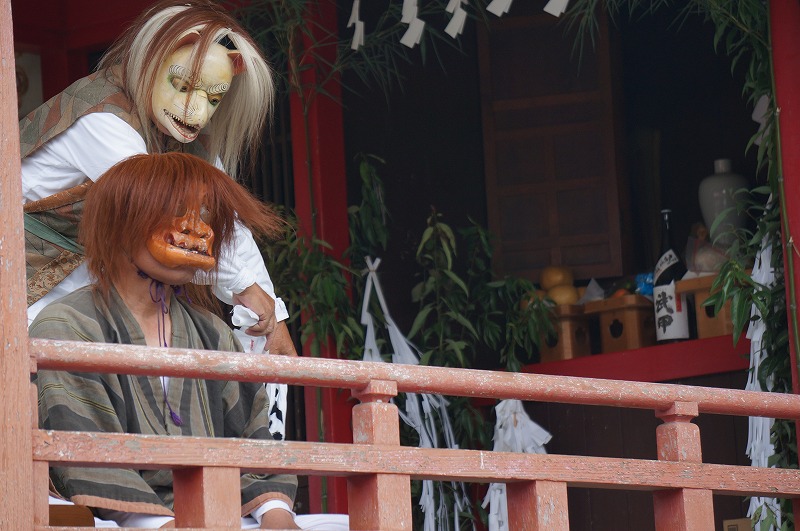
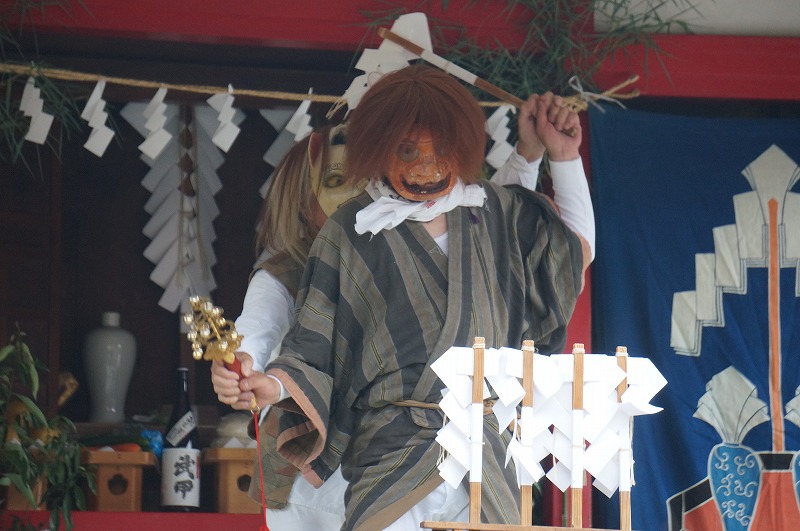
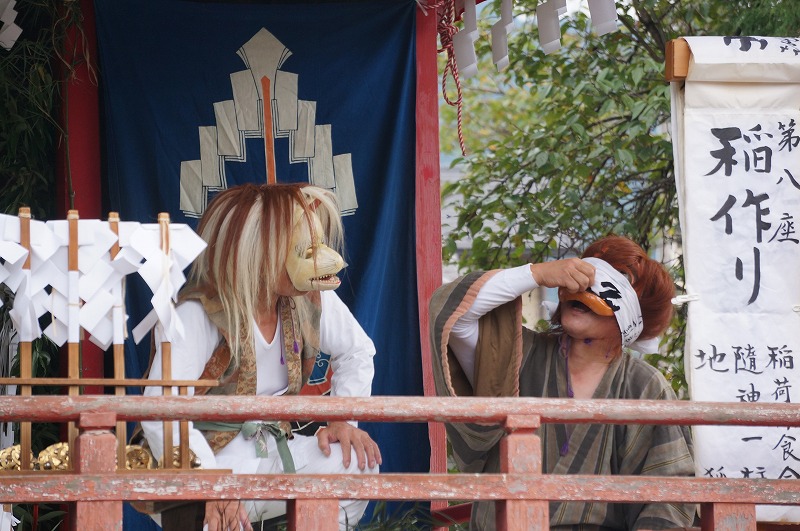
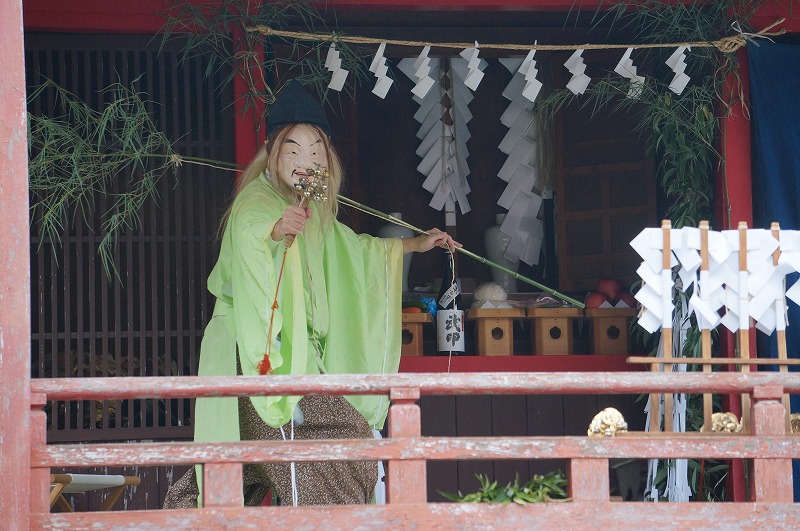
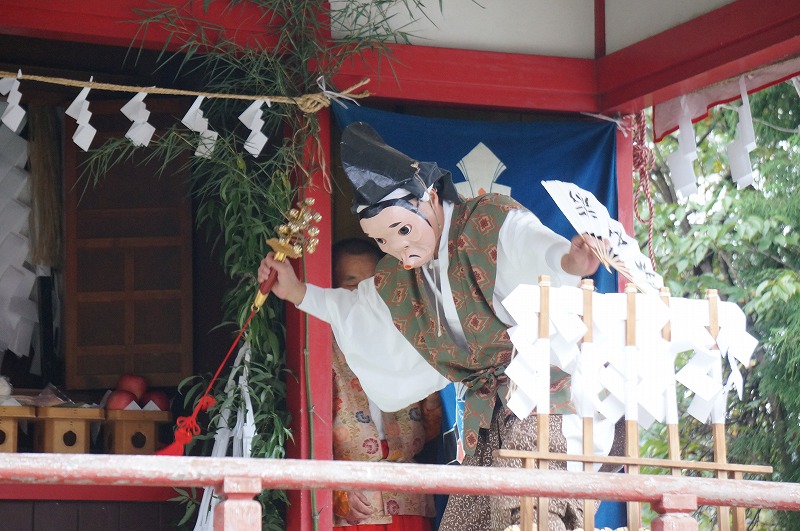
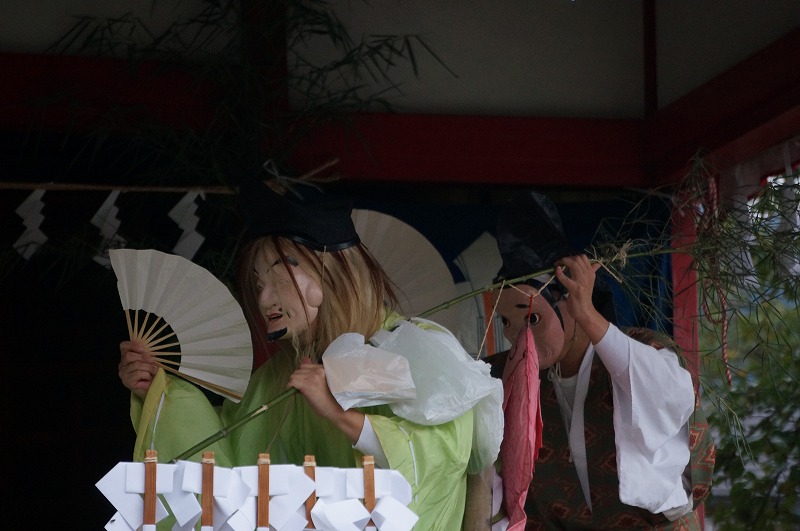
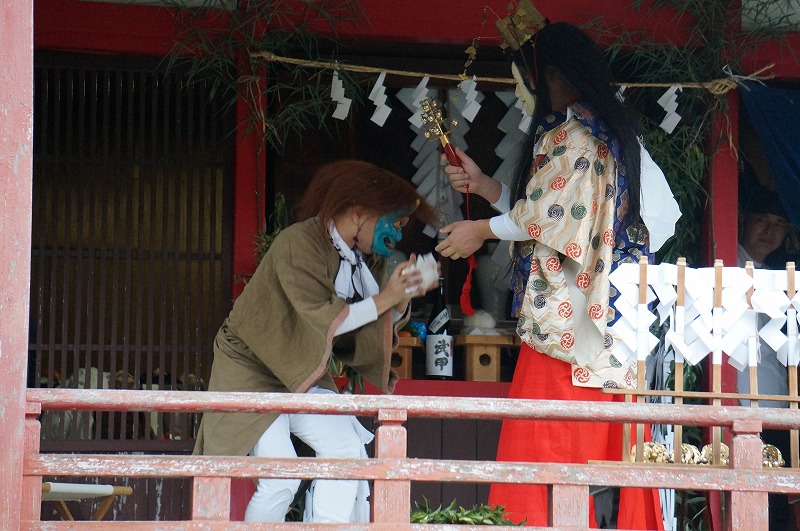
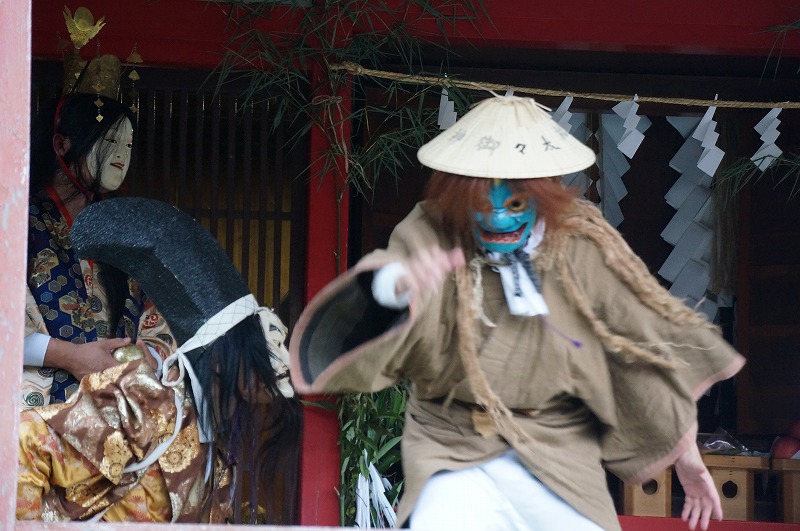
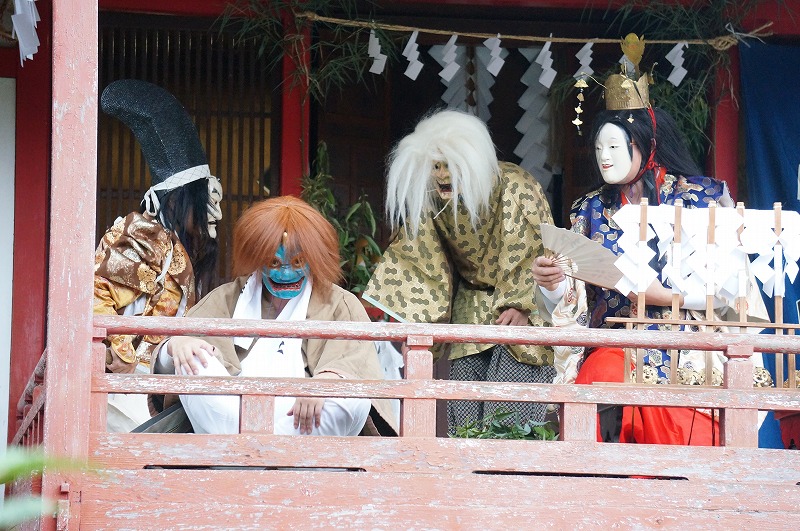
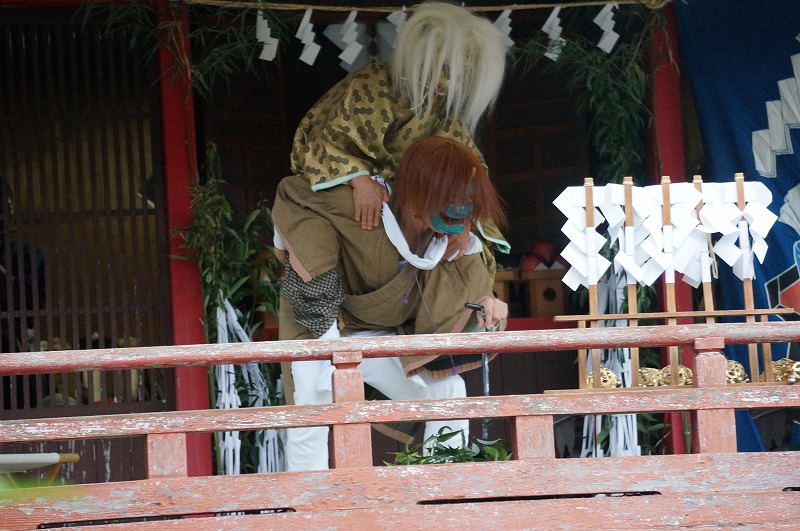
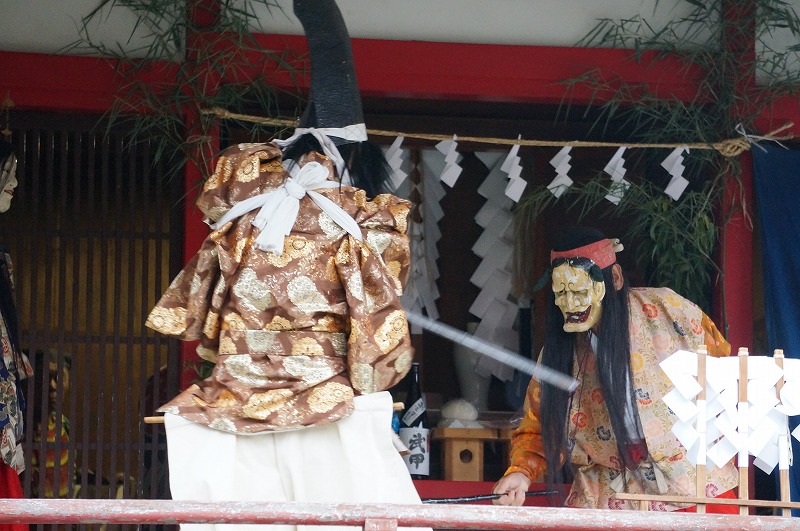
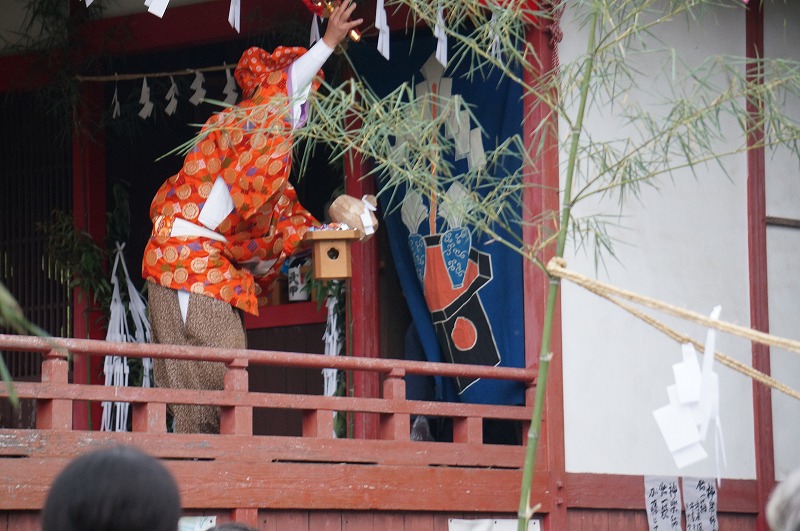
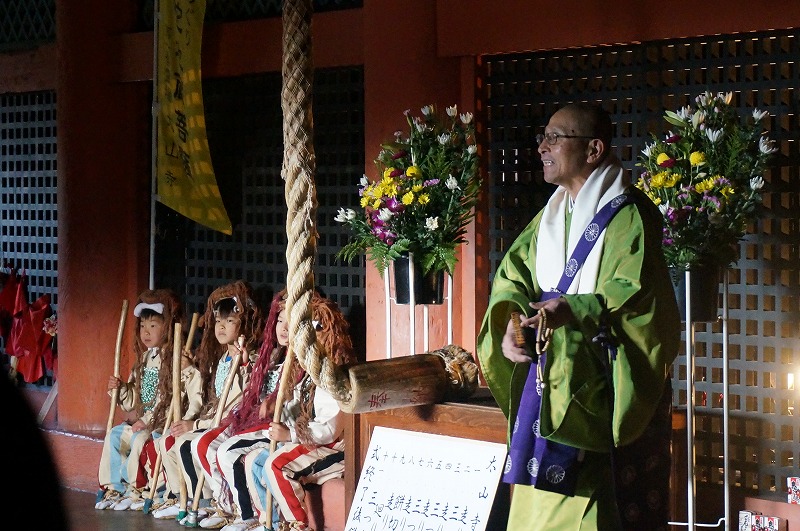
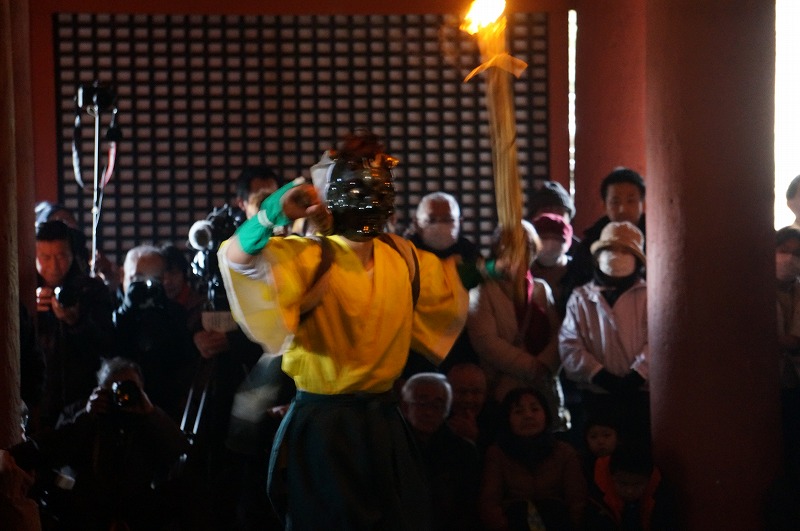
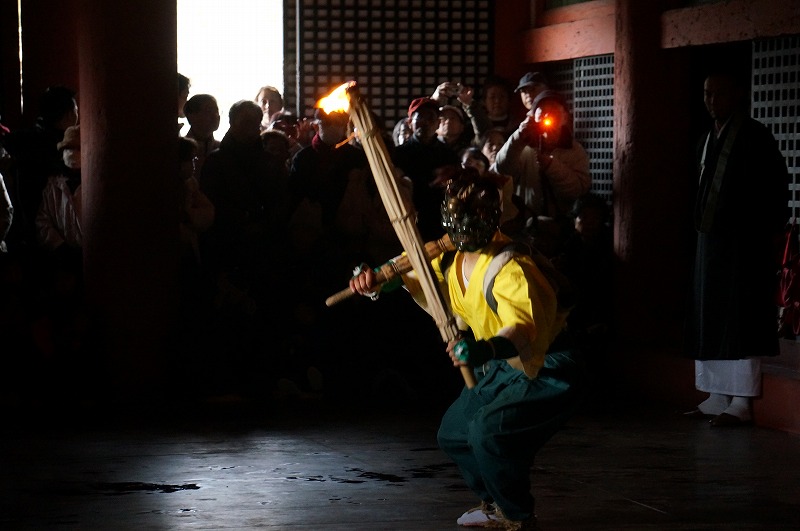
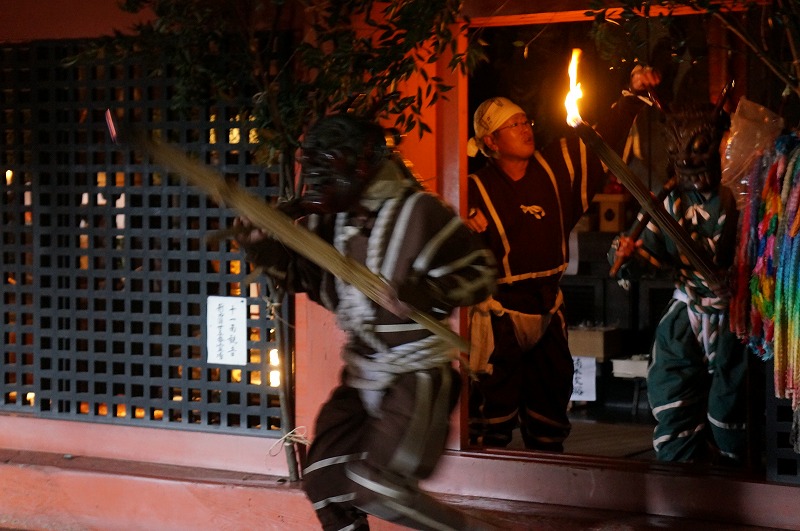
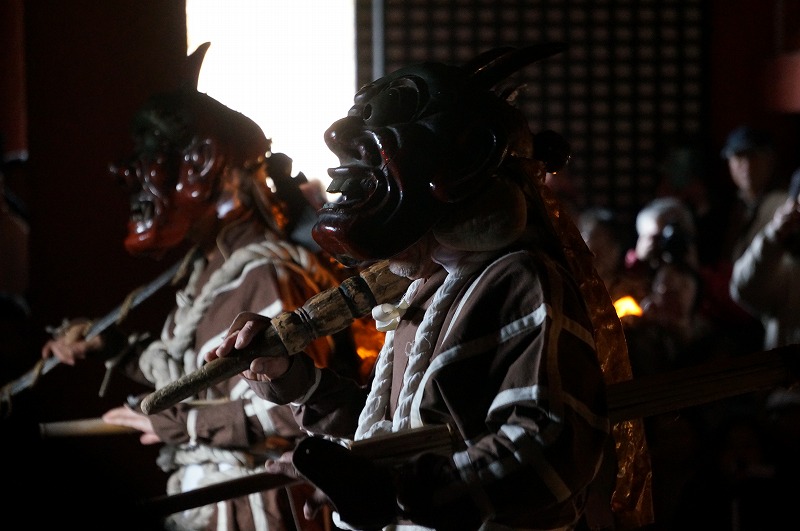
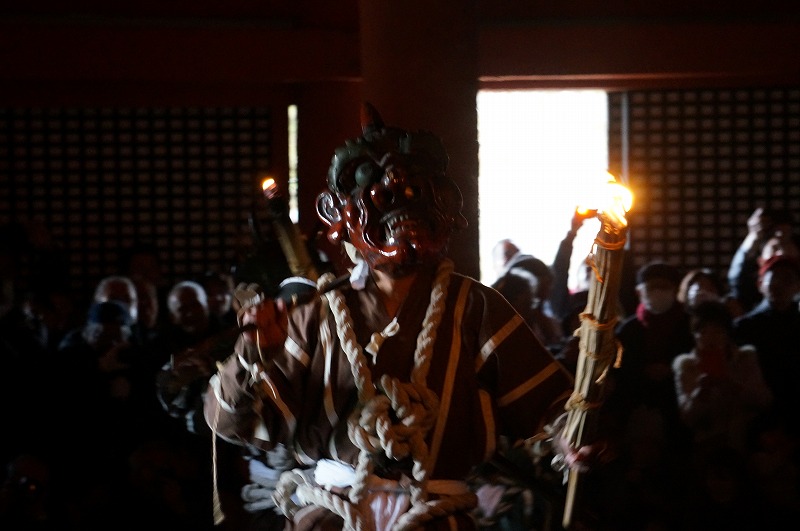
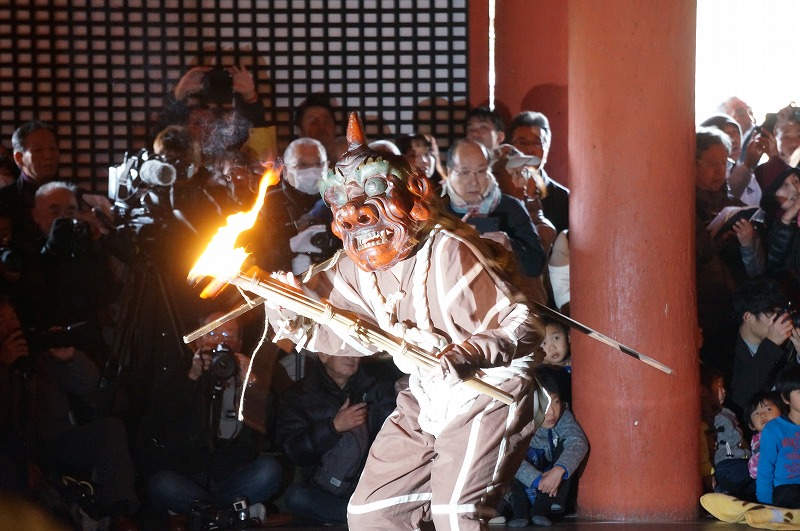
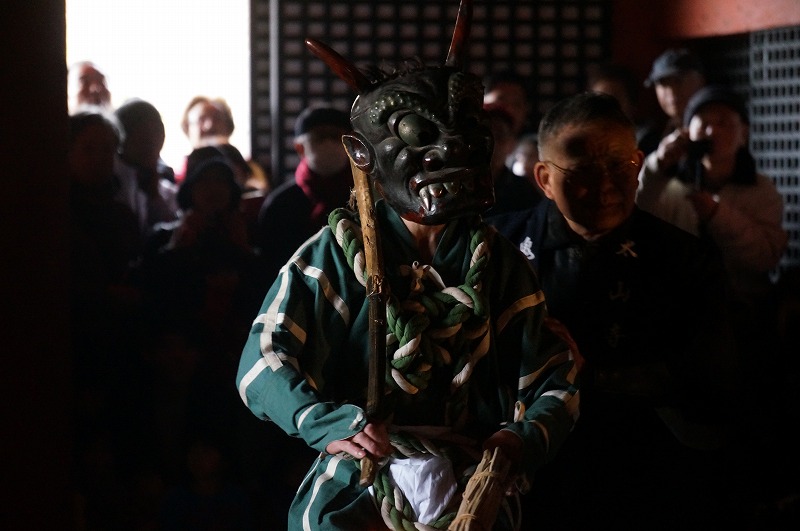
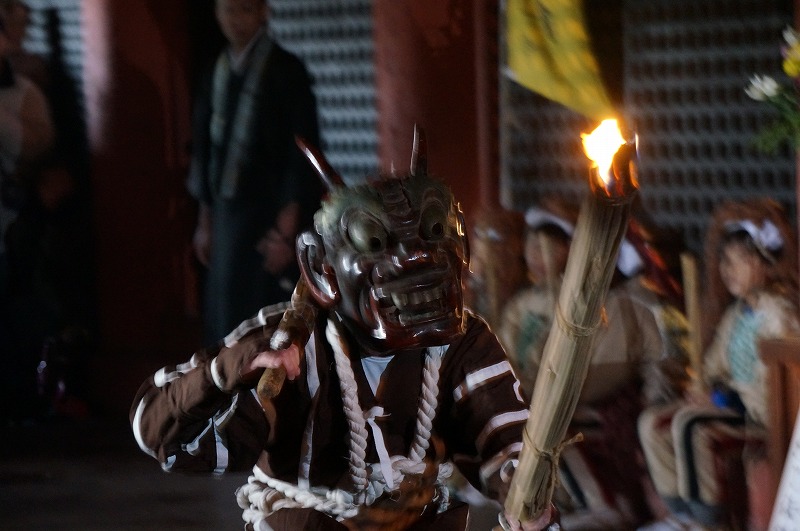
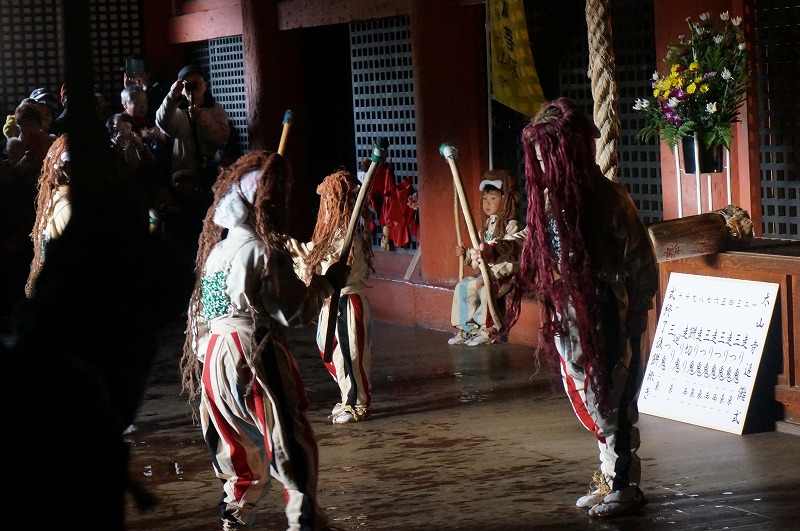
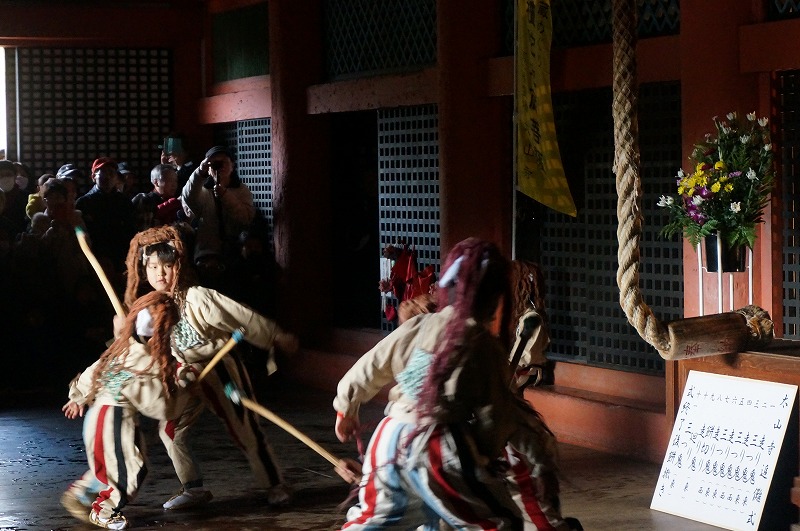
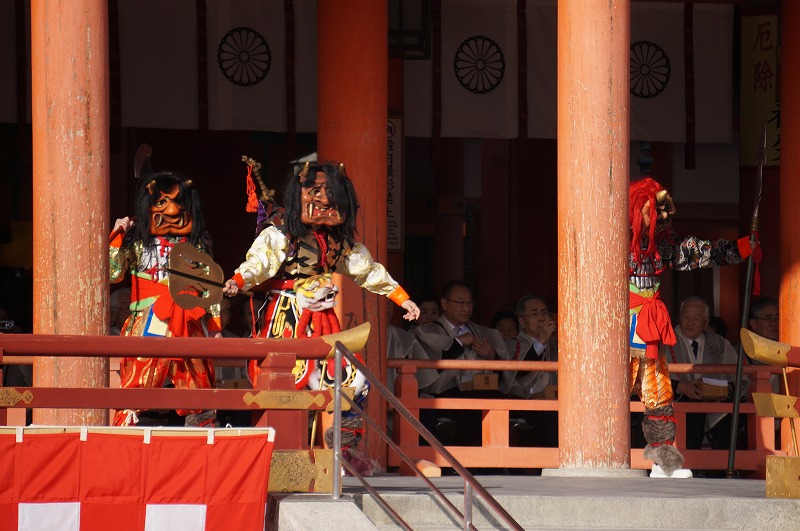
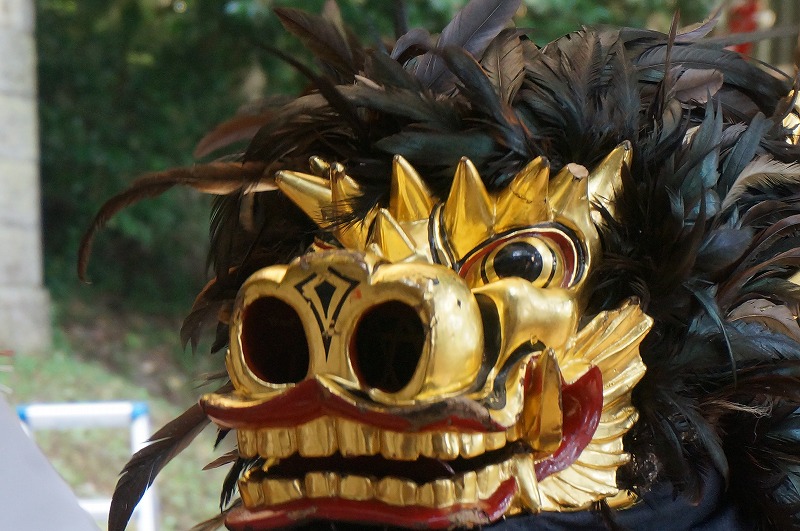
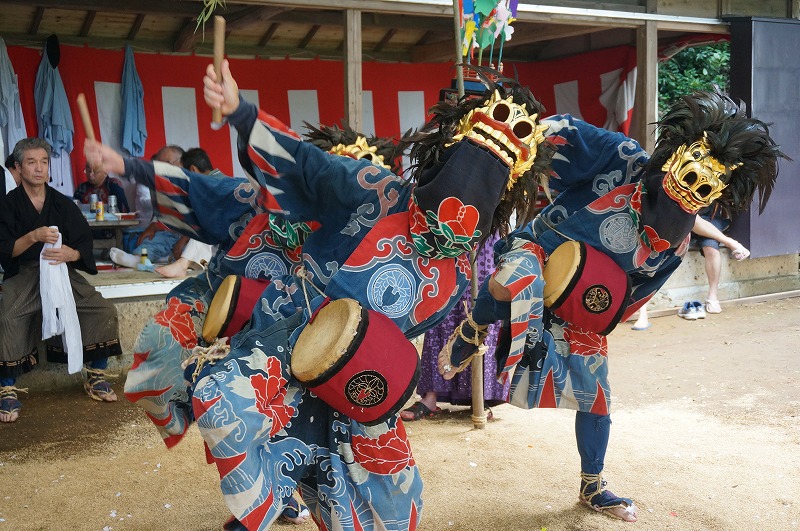
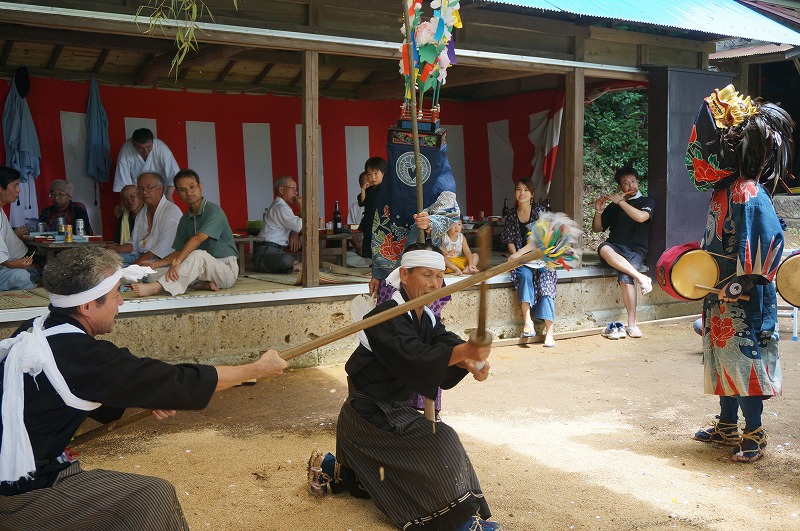
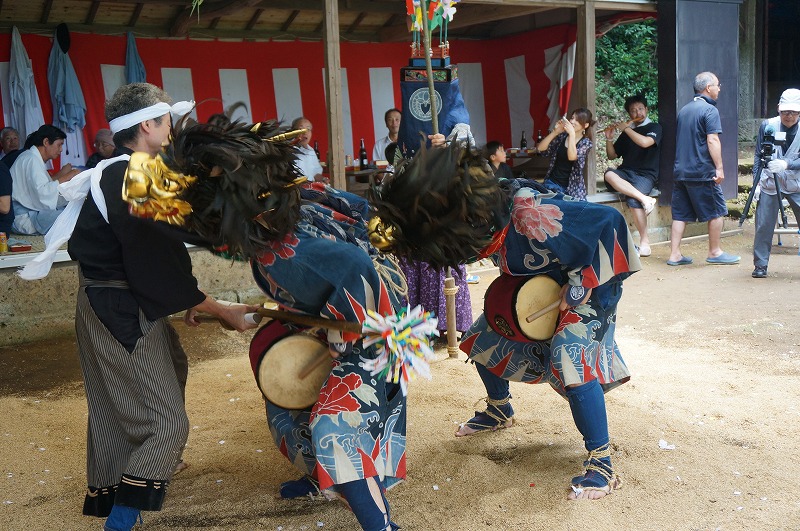
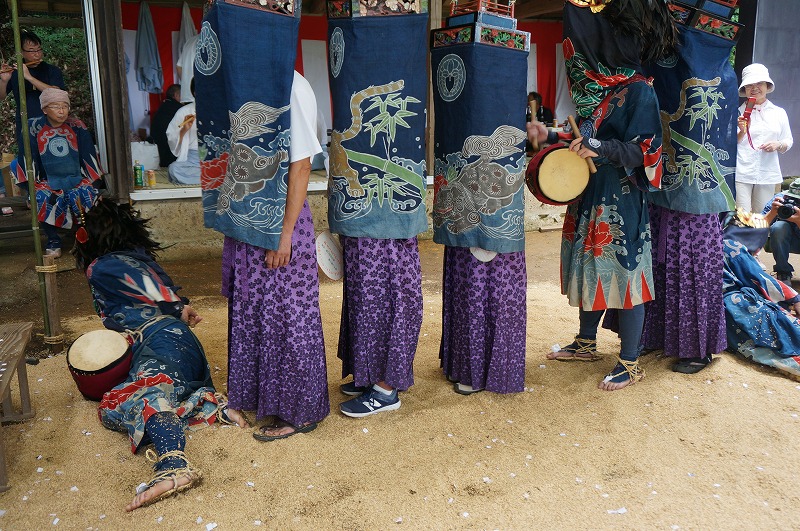
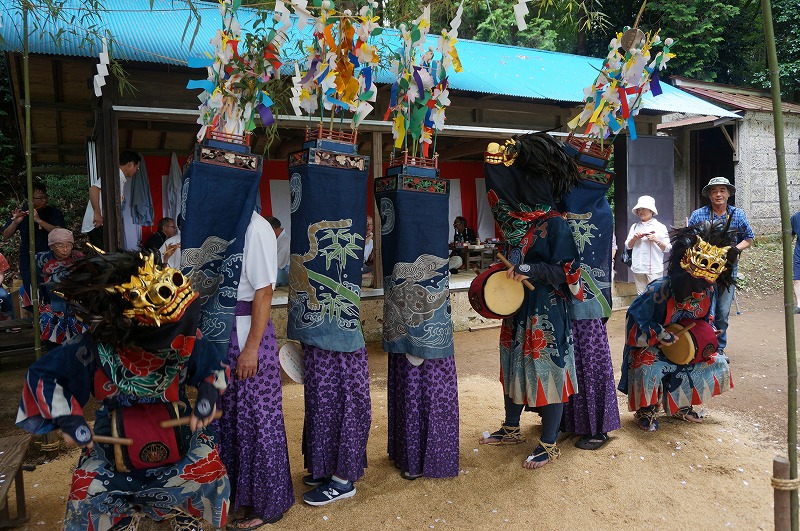
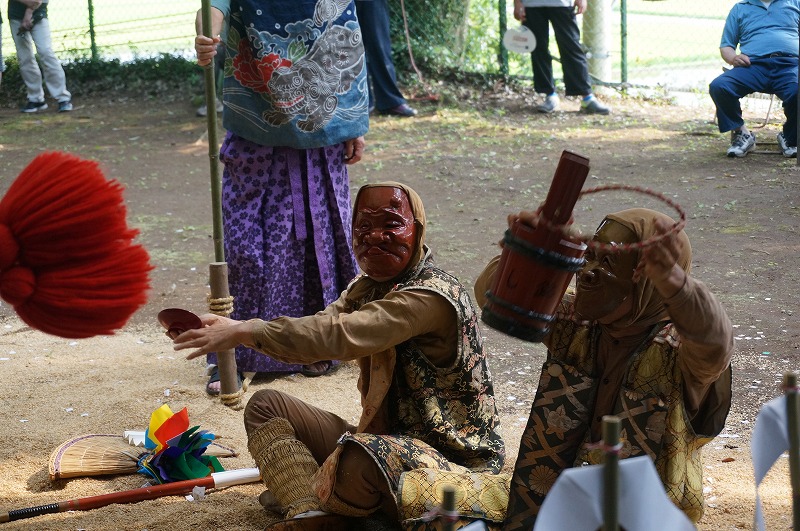
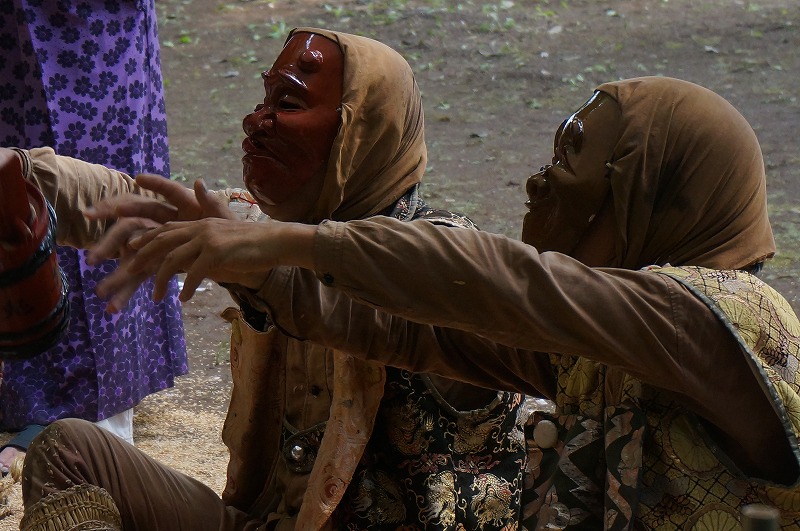
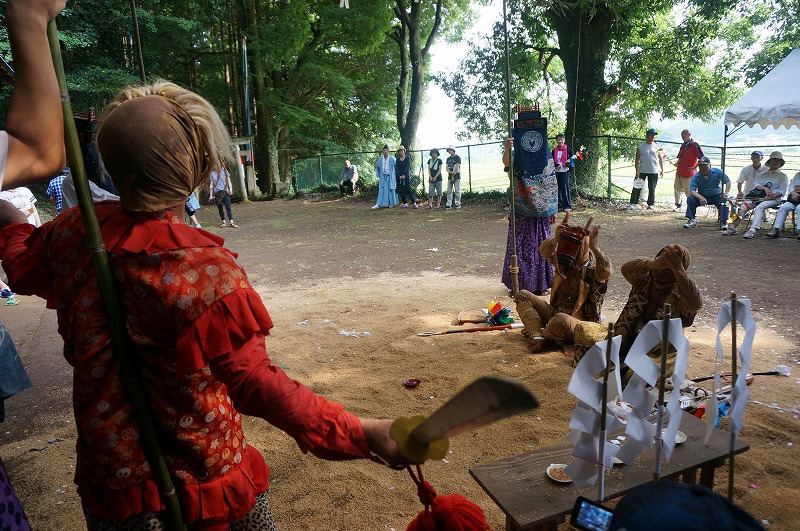
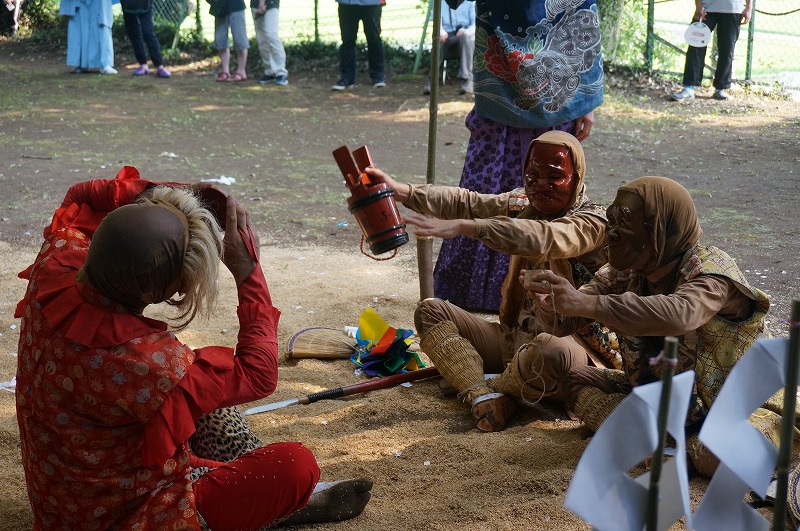
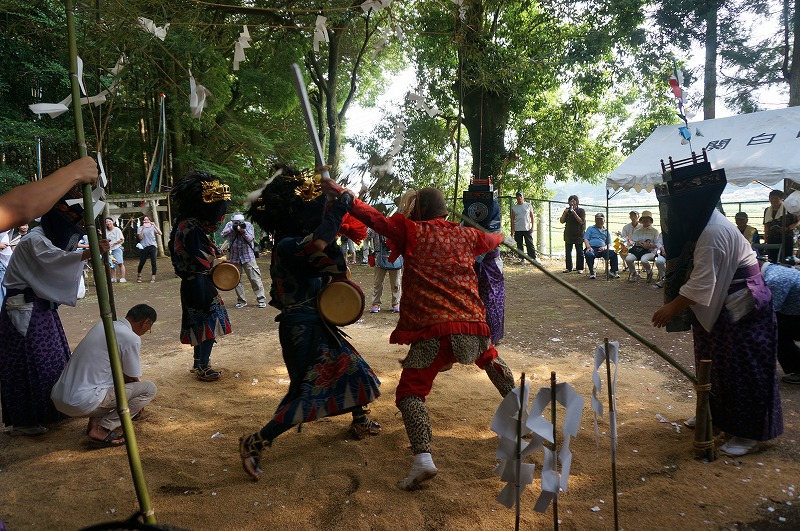
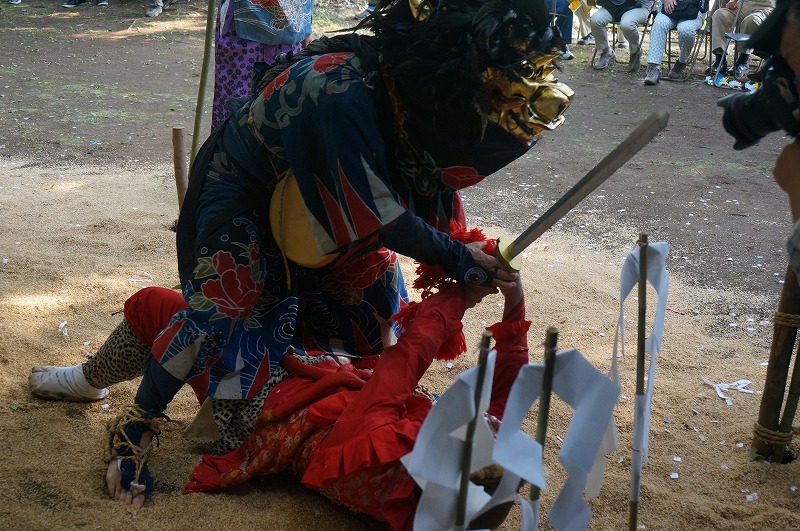
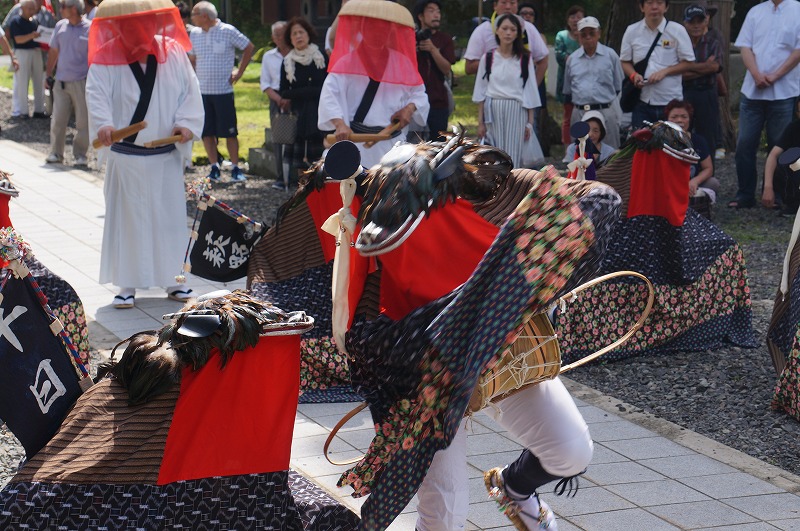
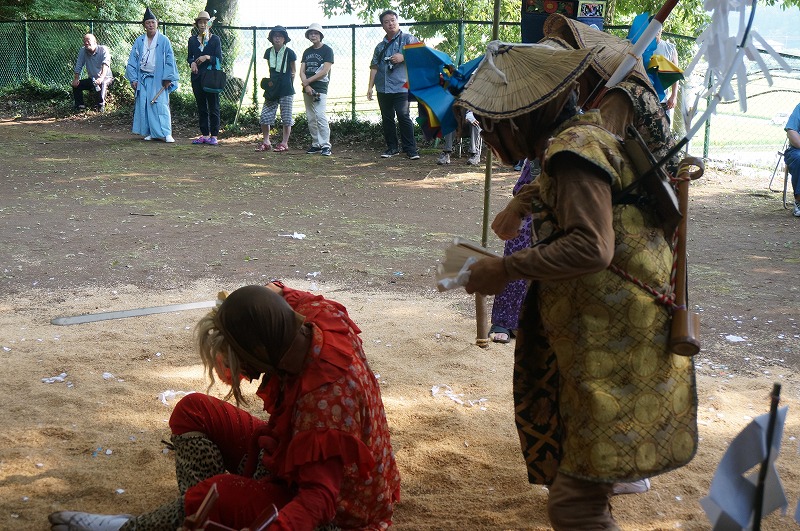
Nitayama and Hagino are neighbors in the same city of Shinjo. Since the area is adjacent, they are almost same, except for the costumes and the masks. Its appearance looks more like a deer, another creature rather than a lion. It is handed down in the region that it was modelled on a serow. While Nitayama’s costumes are more colorful, Hagino’s look more folk-like. In particular, the black cloth that protects the feet reminds us of those worn by travelers in the past. Even today, sometimes agricultural workers wear them. The performer covers his entire body with a thin curtain and beats a small drum on his belly. The drum has a long arm-like object. The group consists of seven members, one in the middle is the leader, and the other six members are divided into three on each side.
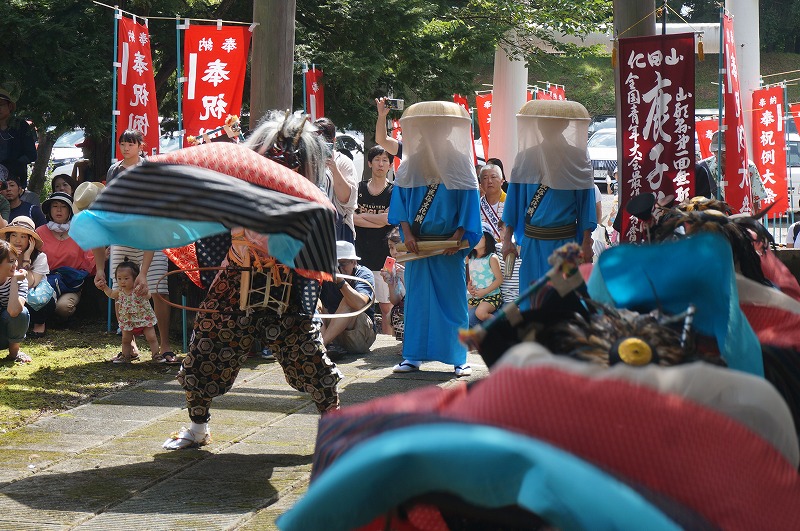
Two singers stand with umbrella-covered at the rear. They have an instrument called sasara.

The other two members have sasara, an instrument made of bamboo that is rubbed together to produce a sound, and are in charge of singing. The lyrics of the song are the same in both groups. They also have a banner on their backs with the name of each place. Others have the words ‘five days of wind’ and ‘ten days of rain’ dyed on them. This comes from the legend that when each of these occurs, a good harvest will result.

Flow of performance
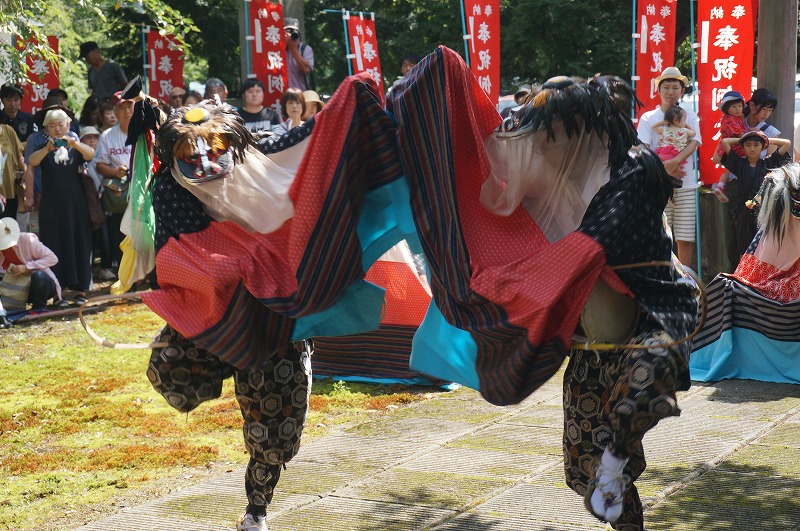
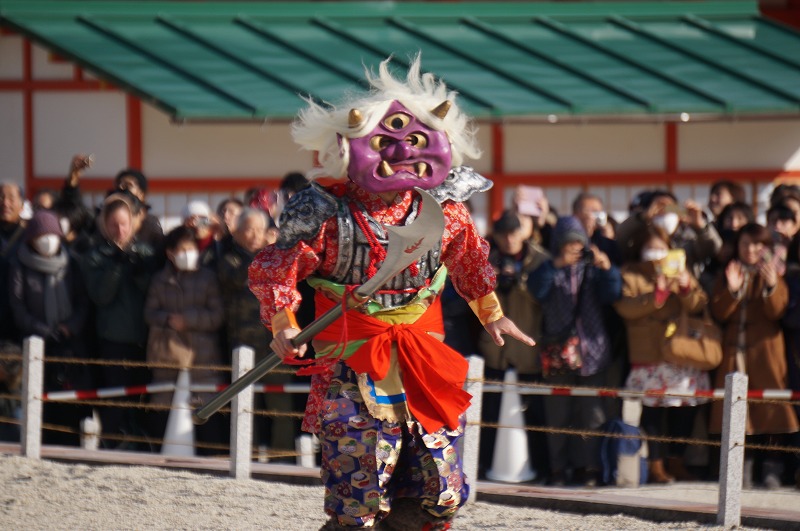
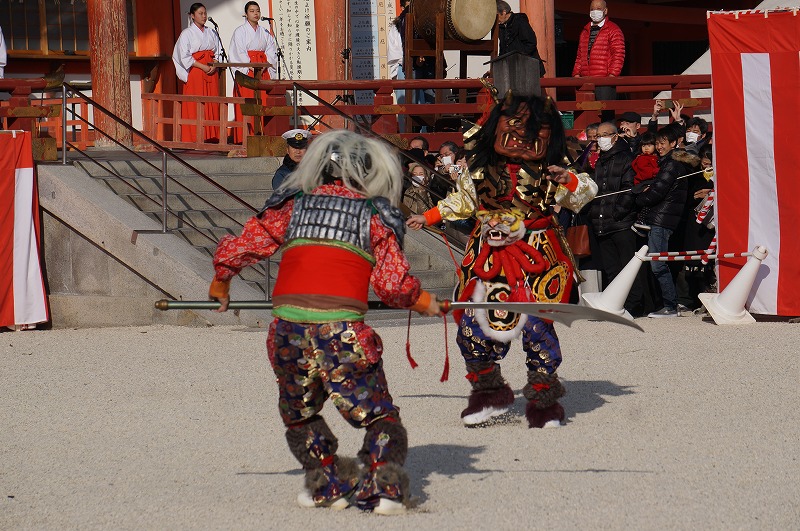
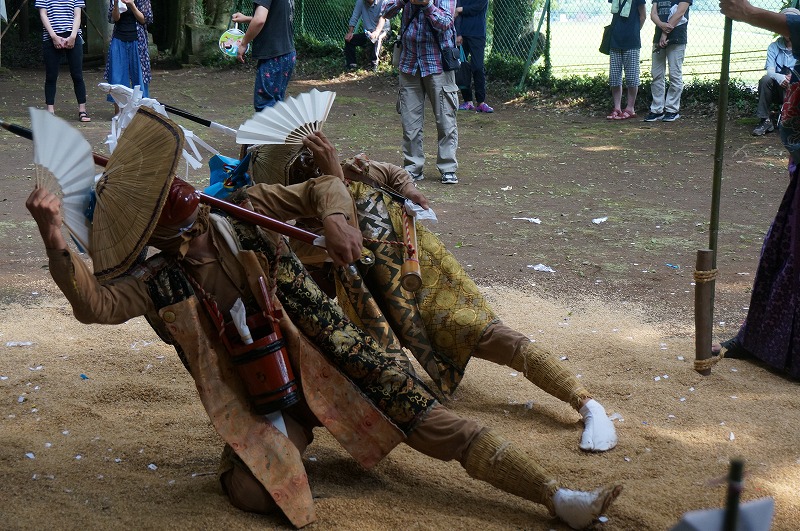
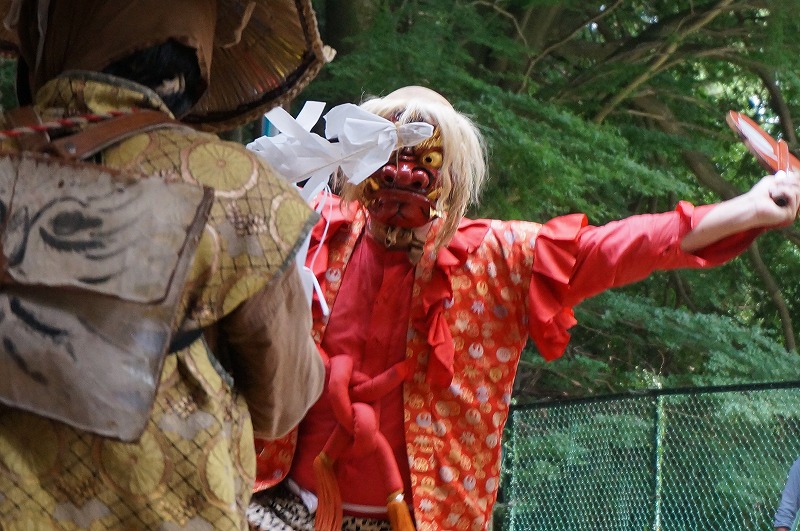
The flow is almost the same for both. The first part of the performance is the entrance. They praise the garden. This is an expression of respect to the house that invited them. Next follows a scene of fighting over a doe. It is difficult for the audience to tell which is the doe. However, the intense fight scene is a highlight. Then comes the fierce fighting between the doe, followed by a dance of gratitude for the congratulatory gifts received. The performers then leave the hall. However, the existence of what appears to be a doe is not clear, and it is difficult for the audience to understand whether it is a struggle over a deers in a clear-cut way. One person from each of the left and right rows comes out to fight, and then everyone joins in and things get exciting. The leader comes out at the end to settle the dispute, so it seems as if the henchmen start a fight and the bosses arbitrate it, perhaps because their appearance reminds them of an old *yakuza family.
*yakuza ; Old gambler. They were mainly gamble. Although they were part of the underworld, they were also the unofficial face of the town and did not always have a bad image; some of them corrected corrupt officials on behalf of the common people.
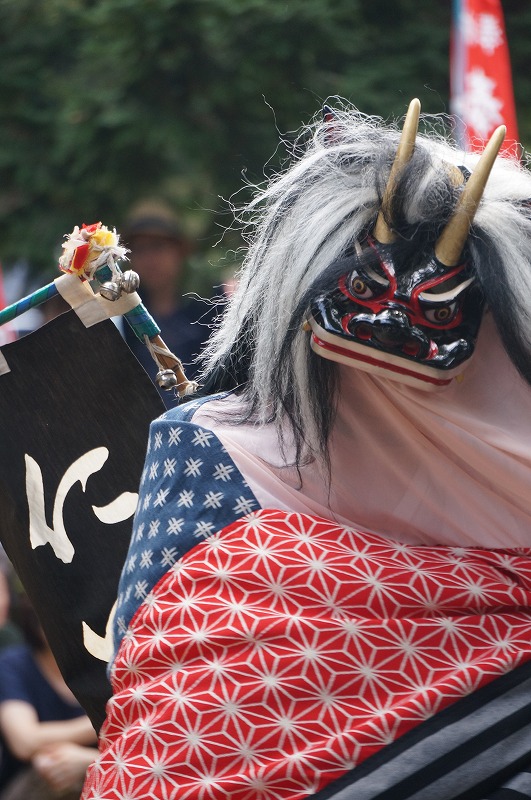
A leader of Nitayama

an image of old gambler and traveller

Hey, you guys. Can’t you keep it down? You look disgusting in front of everybody. Today is the Shinjo Festival. You disgrace the Hagino family, don’t you?…. I can’t help thinking he’s going to say something like that.

Tradition

Their appearance is unusual, not unlike lion dances or deer dances anywhere else. It is said that this is actually an image of a serow. It is said that they imitate the way serow herd and play in the mountains near here. There is a more detailed legend about Nitayama. In the past, this area was seen by the central government as an object to be conquered. Then a great general came from the center. They defeated the armies of the region and ruled. At that time, they governed the people so well that the people, who were at first afraid of them, soon became accustomed to their rule. One day, when the general was returning to the capital, he asked the residents to organize a dance to commemorate the occasion. The inhabitants were annoyed, but one of them devised and performed a dance in which the skeletons of serow and deer were placed on their heads and covered with straw and grass. The general was so impressed by this that he had him rewarded with a prize.

Hagino has this episode. It is said that when Yoshiaki Mogami, referenced earlier, gathered all the deer dances in the territory together, he praised the one here as the best. This is evidence that by that time (the second half of the 16th century), the dance had already taken its present form. Later, another feudal lord came, but he also liked it best. After the Meiji Restoration (late 19th century), the clan leader moved to Tokyo. And when they visited his grave, they again watched the dances, but only one other than Hagino took part. The clan leader wished that the dance would be preserved for a long time because it was his family’s dance. And Hagino is the only one that has remained to the present day.
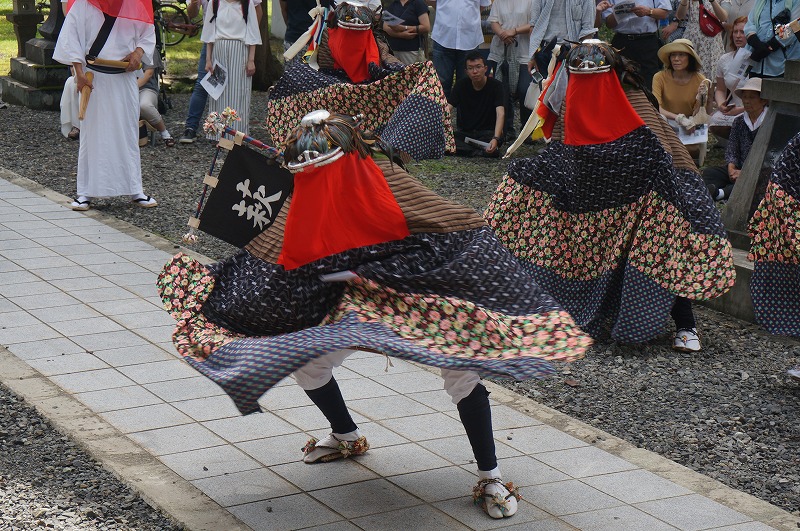
Hagino again
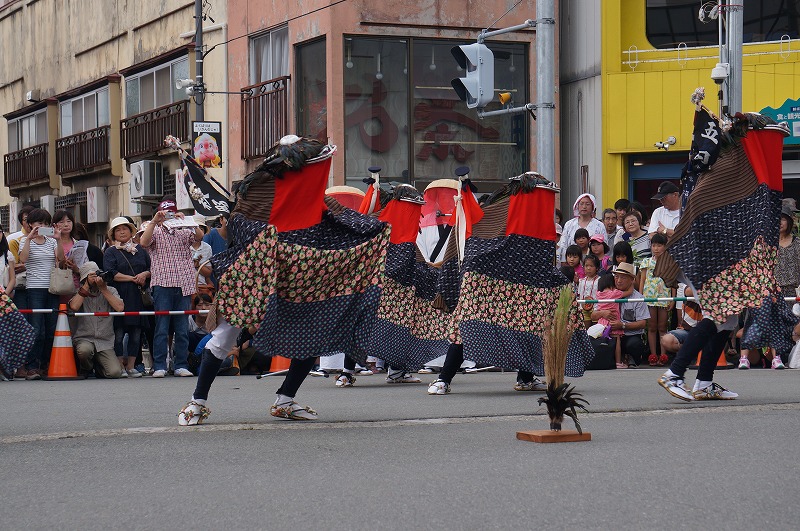
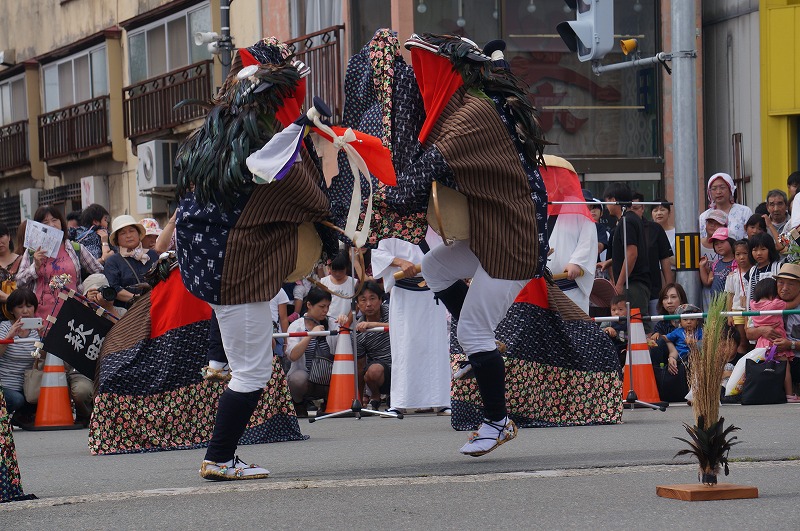
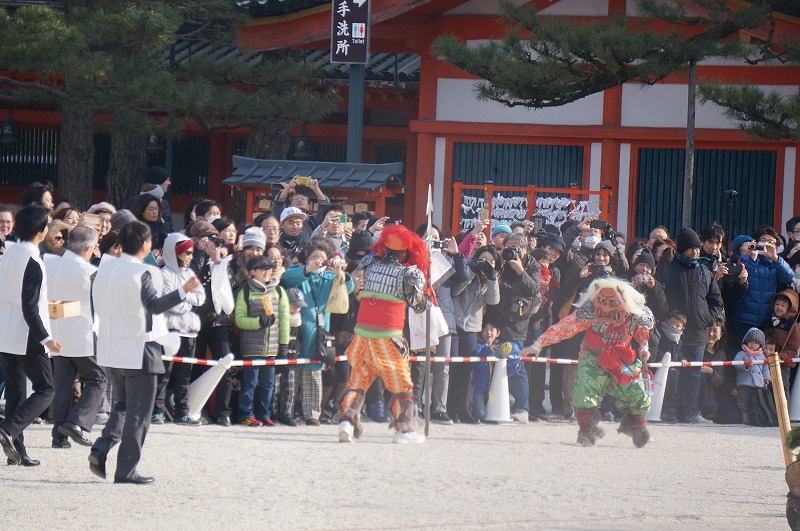
Two deer dances performed at two neighbouring shrines in the morning, but only Hagino has the opportunity to see them again during the day. This time, the dance is performed in front of a larger audience in the town’s central quadrangle. The content of the dance does not change, but the festival audience takes up positions on all four sides, so the audience feel more enthusiasm and the dance is more spectacular here.

Shinjo festival
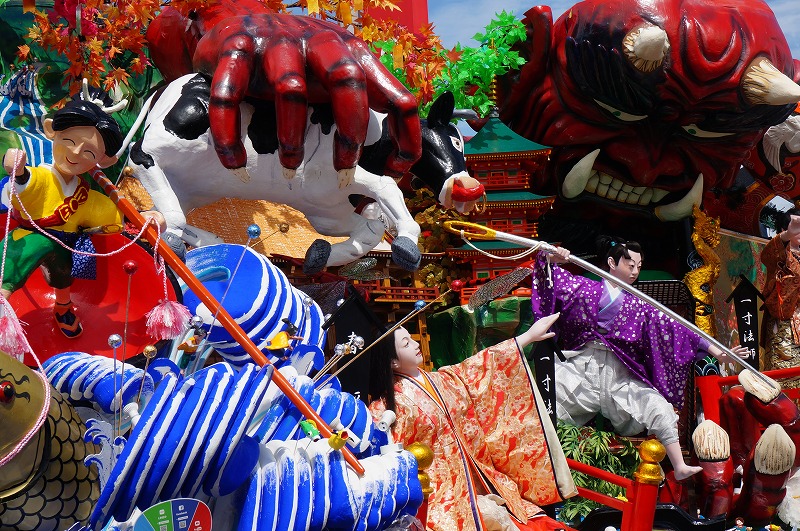
To begin with, these two deer dances are at the Shinjo Festival. The Shinjo Festival has been held in the area for about 260 years and has been inscribed as a UNESCO Heritage Site because of the magnificent stalls. The festival lasts for three days, the eve of the festival, the main festival and the post the festival.
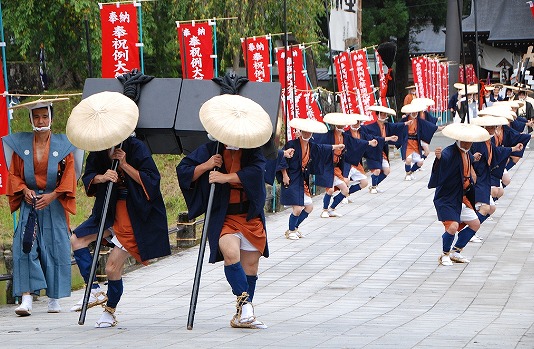
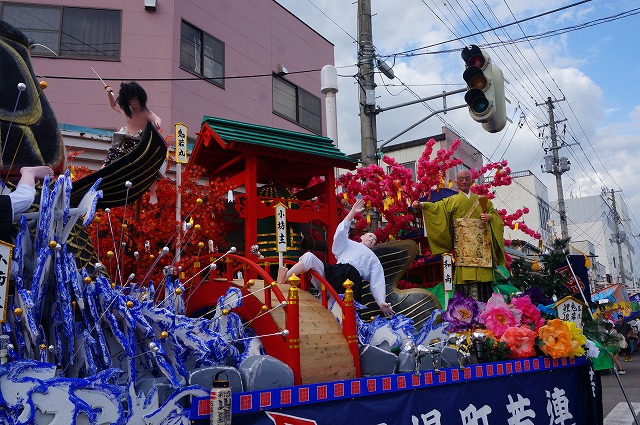
The main attraction is the decoration of the floats, which are made by people from each township in their spare time from work. The floats are beautifully decorated with scenes from history, Kabuki and stories, and parade through the town. On the second day, a total of 200 citizens re-enact the procession of the feudal lords of the past.

On the third day, after the Deer Dance, all floats gather for a disbanding ceremony at around 3pm.
The Shinjo Festival allows visitors to enjoy three things at once: floats, historical picture scrolls and traditional performing arts. It is worth a visit.

https://yamagatakanko.com/en/festivals/detail_2991.html

https://www.instagram.com/shinjomatsuri


The lot of an employee is a hard one~Enjoy the rustic kagura at Titibu village .


Date: 15 April and 1 October every year
Location: 649 Oaza Yokose, Yokose-cho, Chichibu, Saitama, Japan
Access: Take Seibu Ikebukuro Line, change at Hanno 飯能 and walk 20 minutes from Yokose 横瀬 on Chichibu Line. It takes about one hour from Tokyo to Hanno, transferring at Ikebukuro 池袋.

*This article is based on October 1, 2016.

The kagura introduced here is typical Kanto kagura, which has been handed down to the villagers. It takes about two and a half hours by train from Tokyo. In addition, it is a mountain village about 20 minutes’ walk away. Even at the tourist information centre near the station, nobody knows anything about Kagura. All they have is trekking information. Nearby is a mountain called Mt Buko 武甲山. This is a lime mining site and there are a number of cement factories dotted nearby. Kagura has been passed down quietly in such places. The first half is a ritualistic dance based on mythology. The second half gradually becomes more informal in a typical style that is more accessible to the common people.

Although the start time is 10.00 am, a priestly ceremony takes place from 10.00 am. This lasts for less than an hour. Then, at around 11:00, it finally begins somewhat as everyone settles into place. This looseness is one of the good things about the Sato 里 (village) kagura.

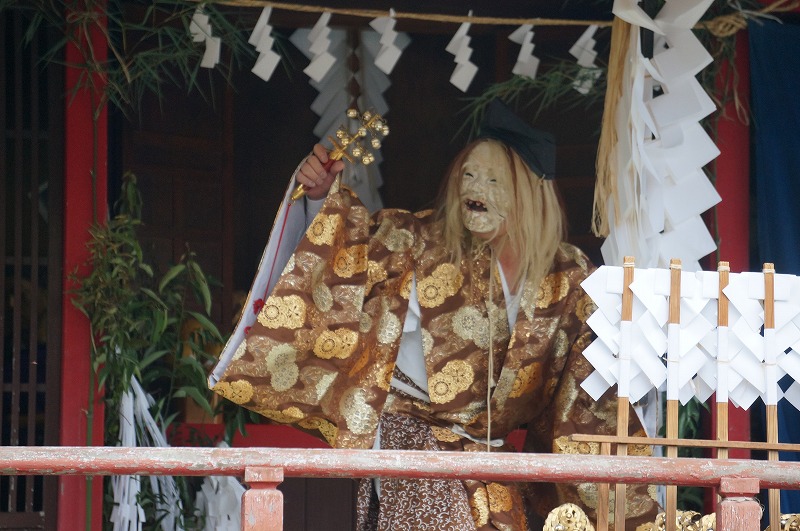
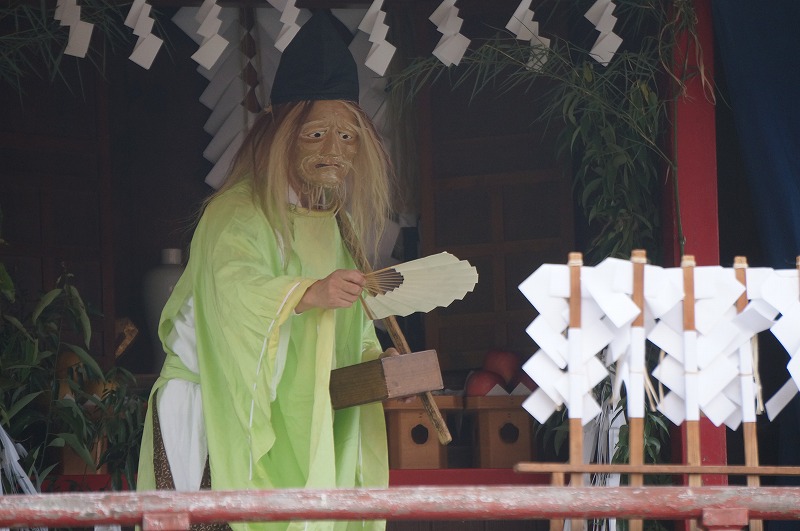
The first stage begins with a purification dance on the stage. This is followed by a dance without masks, and then the masks of the old men appear. The Okina 翁 (old man) mask has a special aspect that is treated as a sacred mask in Noh plays.

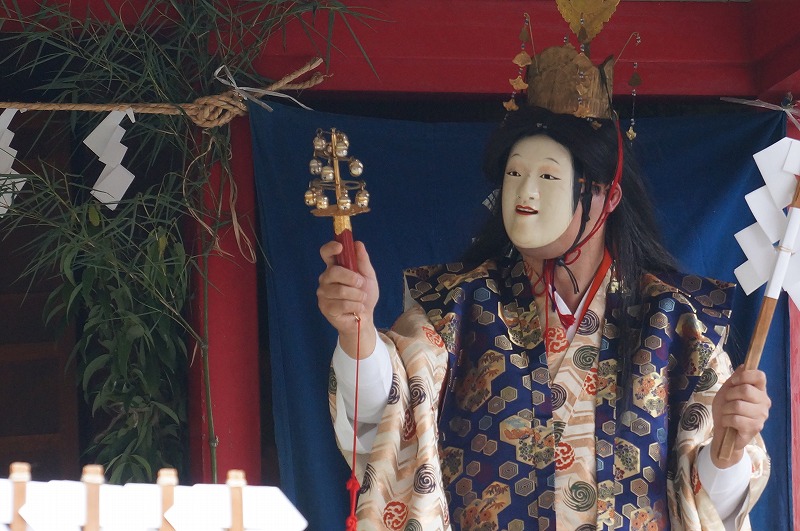
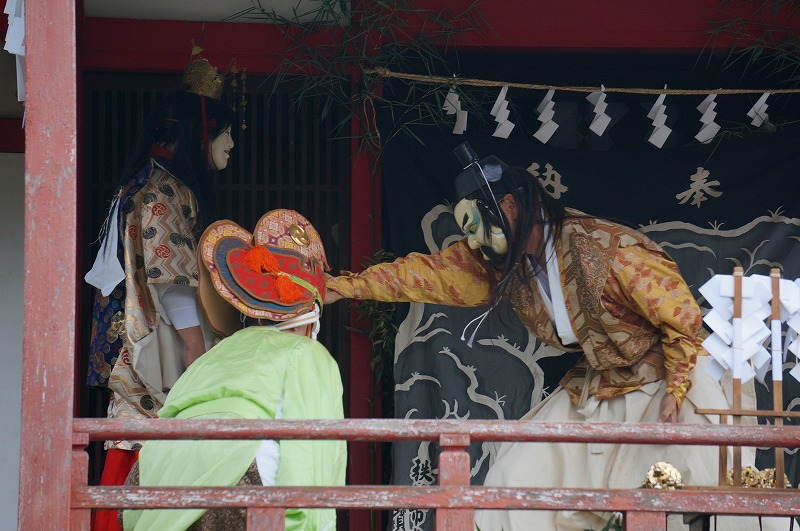
Next to this is the dance of a woman called Ameno-uzume. Ameno-uzume was a deity who played an important role in summoning the sun goddess Amaterasu when she went into hiding, and she often appears in kagura.

Loyal fox serving the boss

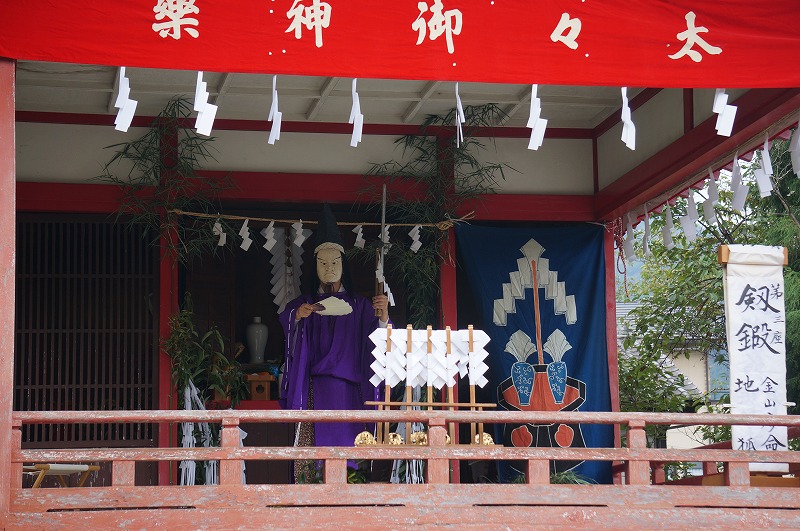
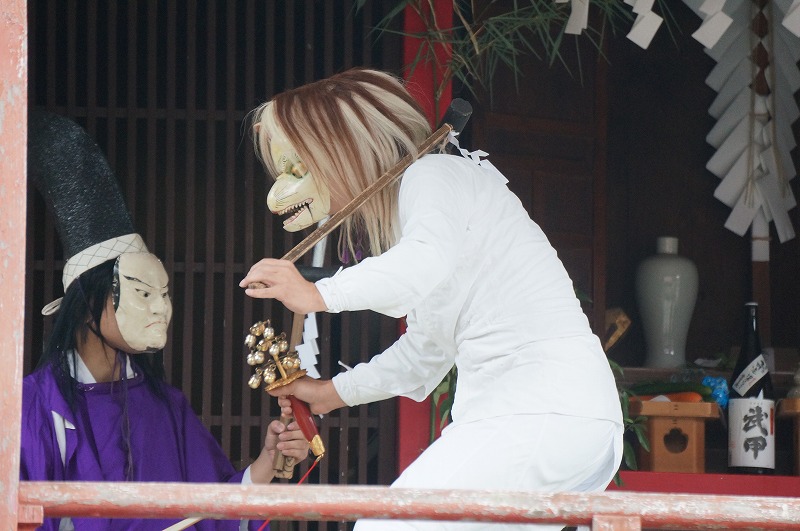
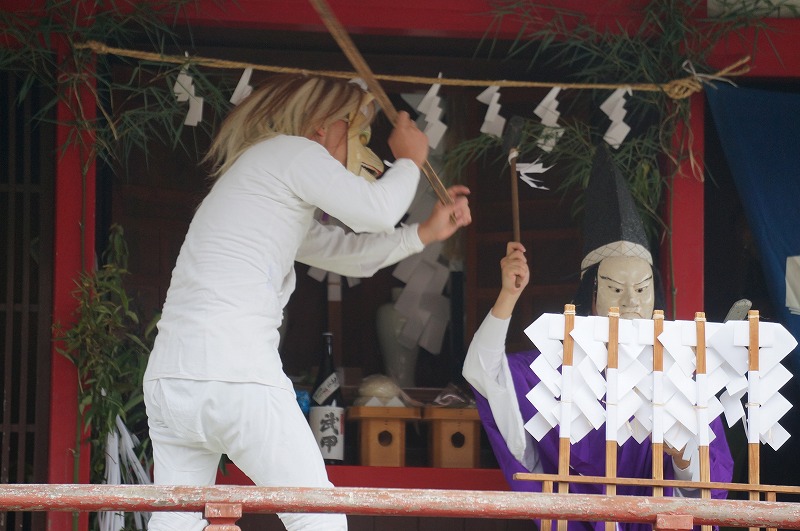
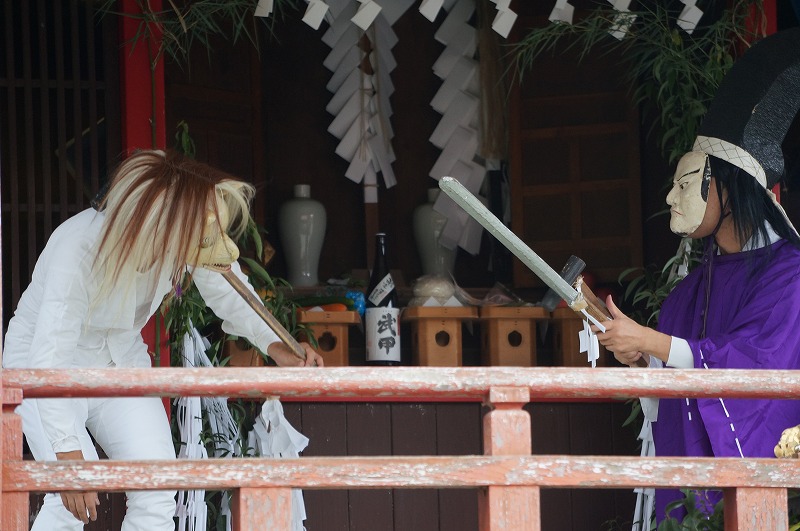
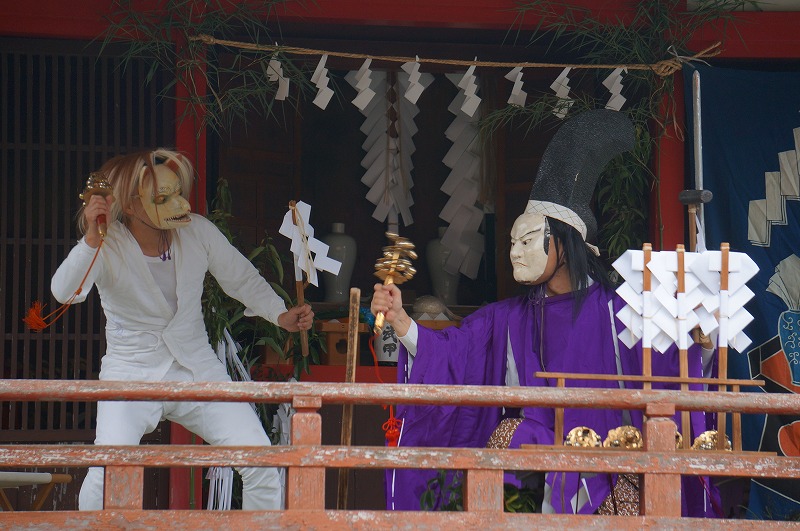
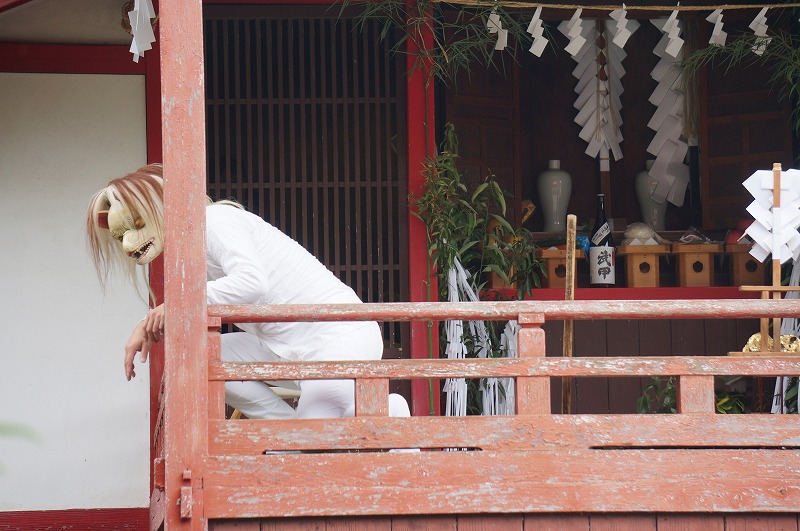
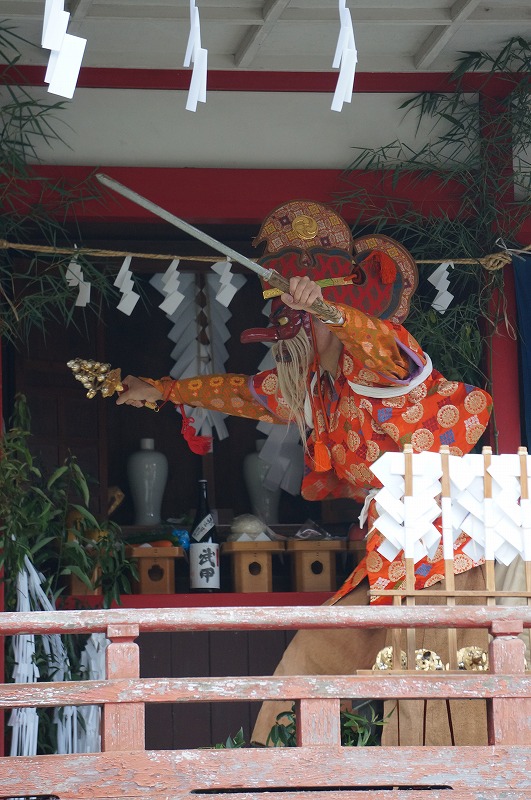
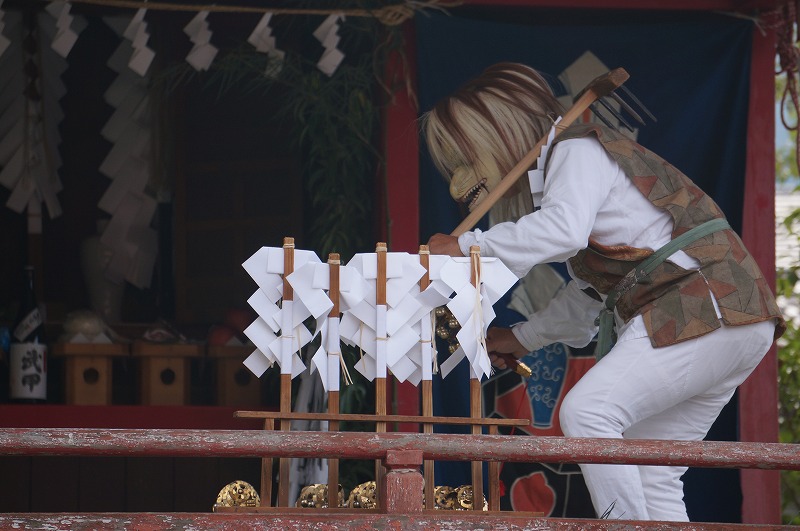
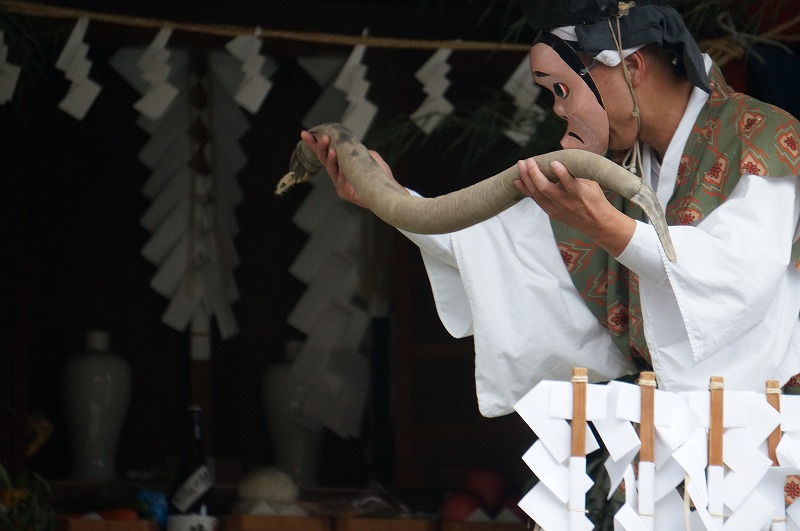
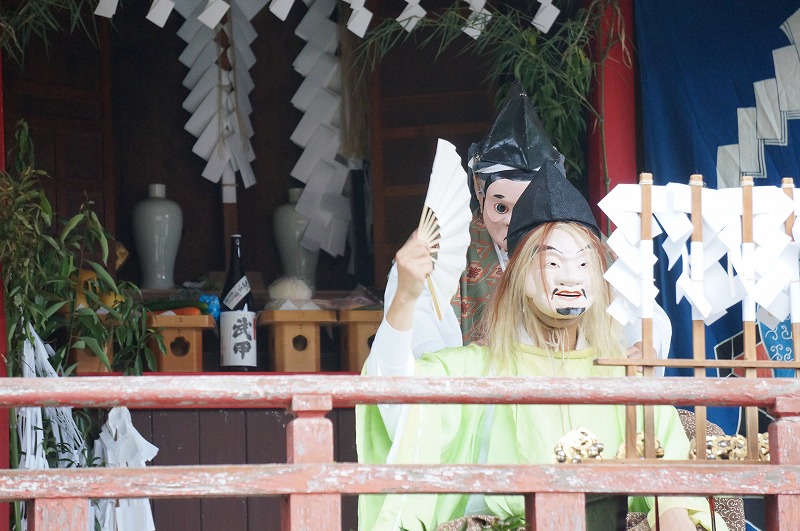
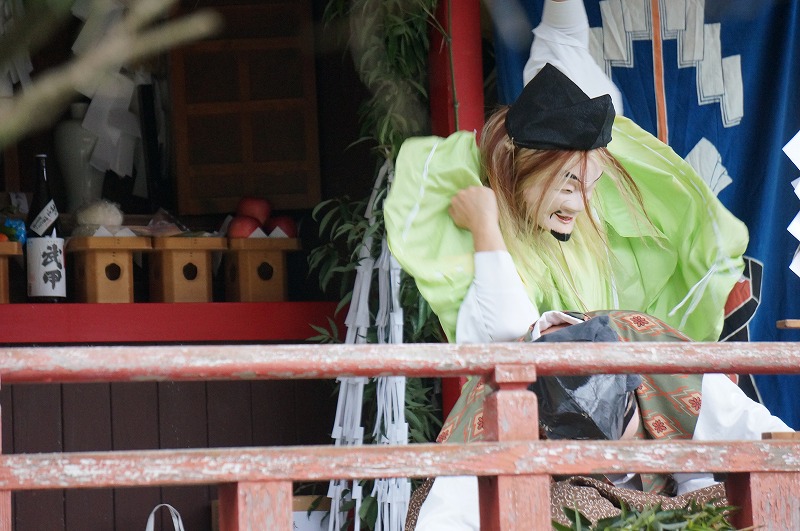
Next program is Kanayama-hiko 金山彦, the god of blacksmithing, who does not play a particularly significant role in mythology but often appears in kagura. It is likely that these gods were more appreciated by the common people than the formation of a large state. The fox appears there as a subordinate. The fox is a familiar character who often appears as a messenger of God. Here, he has a dubious shape with mesh in his hair. Kanayama-hiko immediately begins to make a sword. The fox also helps with the forging. After a while, Kanayama-hiko looks sullenly at the finished sword. The fox looks at it with him, but Kanayama-hiko is still not happy with it and starts to strike again. The fox also helps. A fox who has no choice but to conform to his boss’s self-serving behaviour. There is a reason why it looks like that. The expression and gestures of the fox resting near Kanayama-hiko, who is dancing with the finished sword, seem to be saying, ‘Oh dear’.
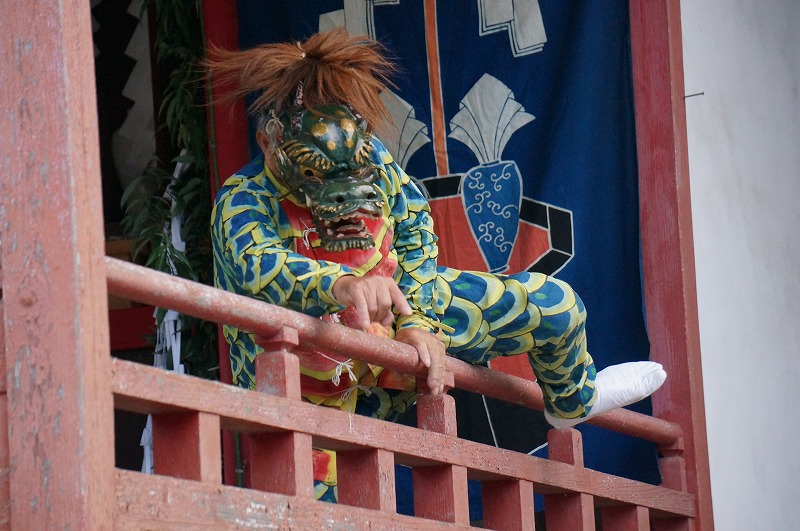
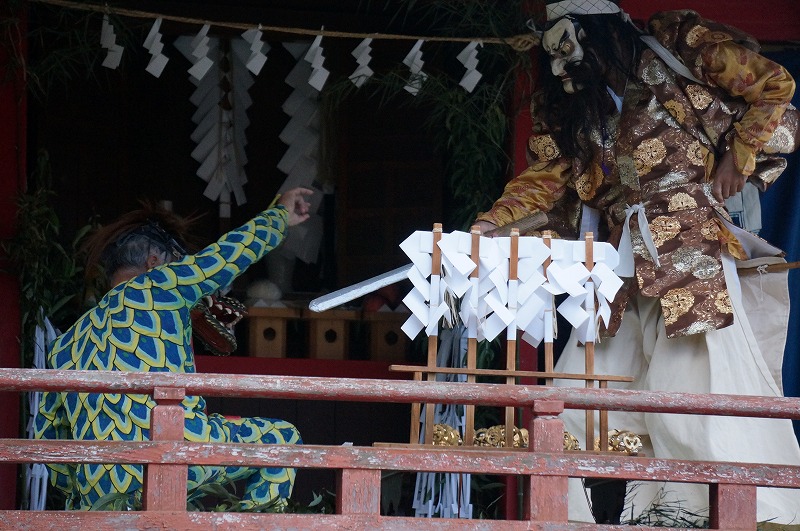
A breathing fox who seems to be saying, “Oh, I’m so tired.”

And later, the fox also dances with him, but always one step behind, changing position to the left and to the right to match the movements of his master. When the dance is over, Kanayamahiko leaves. The fox rests at the side of the stage, huffing and puffing. However, as if to say that this is unacceptable, the music suddenly changes and he hurriedly follows his master out of the theatre. This sequence of events seems to focus on the difficulties of employee. it’s tough to be in someone’s service. It is always hard to be a palace worker.

This is followed by the Sarutahiko dance and other activities before a lunch break.

After lunch break

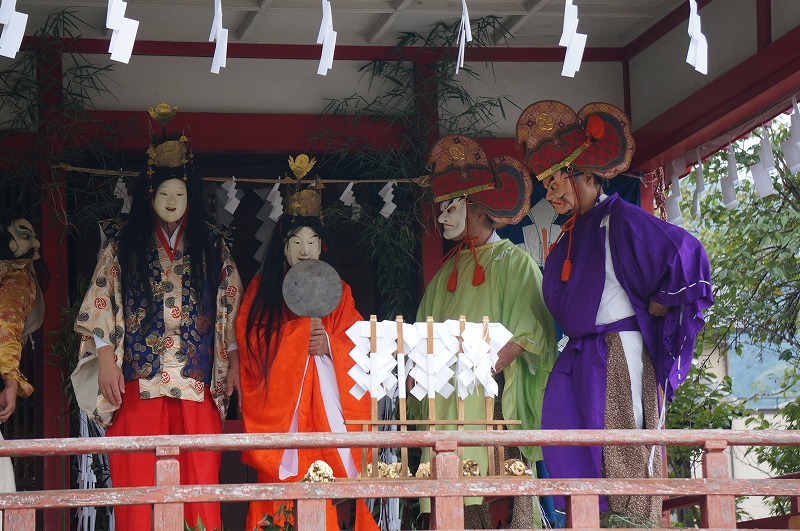
After lunch, a series of iwato-opening ceremonies, also common in kagura in the Kanto region. This event is one of the biggest highlights in Japanese mythology. To put it simply, the sun goddess Amaterasu goes into hiding and the world goes dark. The troubled gods then confer, and as a result, hold a banquet and make a great fuss. Amaterasu becomes suspicious and opens the door to drag her out. The main characters are Ameno-uzume, who enlivens the banquet, and Tajikarao, who boasts of his power to open the rock door.
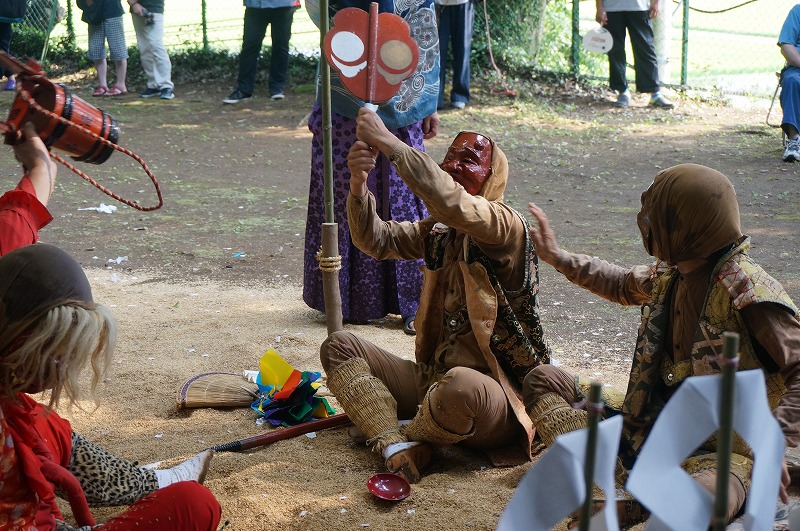
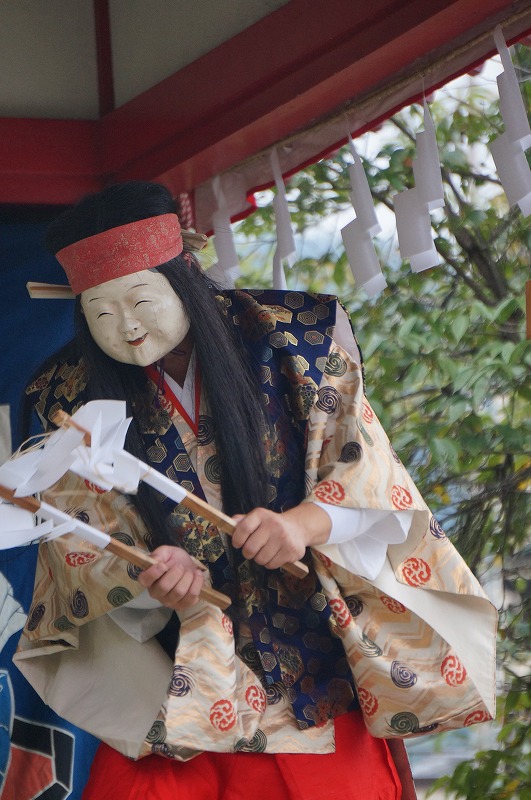
Although the first name is Amenouzume, here it is also Otafuku. The names Okame and Otafuku are often applied to aspects of common women. Because of her plump and puffy cheeks, Mumps is sometimes called Otaffor cold.

Open the rock door for the world

Amenouzume appears again. Usually, the Otafuku face is used as Amenouzume, but here the rather pretty face is used. Next come the gods. Then Tadikarao comes out strongly. The blue shading on his face represents a big villain in Kabuki, but here it is used to emphasise his strength. The kagura of the common people is influenced everywhere by Noh and Kabuki.

It’s tough being an employee Part 2

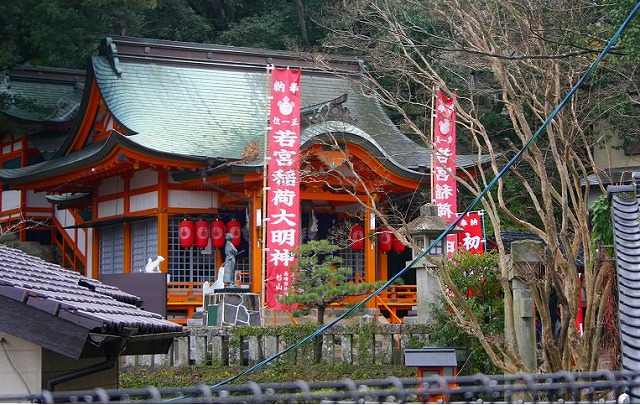
From here, the kagura moves a little away from mythology again. Inari, the god of agriculture, appears. This was more familiar to audiences at the time. And the famous messenger of Inari is the fox. So there are often statues of foxes at shrines dedicated to Inari (e.g. Fushimi Inari in Kyoto).

And what does he do? He is the god of agriculture, so naturally he grows rice. But the Inari God just sits there. It is the foxes who do the work. He holds the hoe, sows the seeds and ploughs the fields. Foxes, along with Tanuki (Japanese raccoon dogs), are famous as animals that bewitch people, but, off course, foxes that can be used by gods are different. They are loyal to their masters and work without complaint. They cannot say they are tired.

This imagines the beginning of agriculture, so people appear. The fox has to teach the human to grow rice as well. But he is a bastard and eats the seeds he receives. This scene shows us that kagura was a form of entertainment in those days.

The foxes tie up their mouths so that human beings cannot eat them and hands-on teach him step by step and polite manner but…. It is also very hard to be available to God.

Ebisu and attendant ~Maybe it’s easier this way

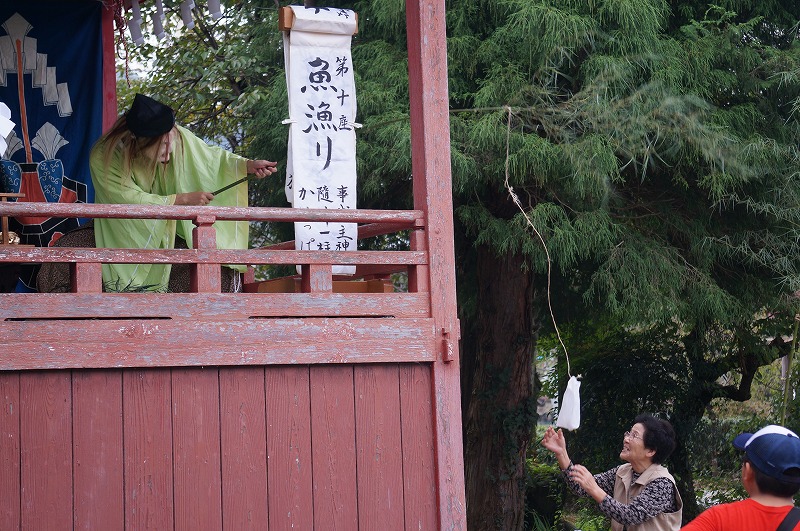
The gods of the common people are Ebisu and Daikoku. Ebisu is famous as a god who fishes all the time and is also a symbol of prosperous business. An attendant appears here as well, but he is not quite the same as a fox. They do not appear to be so loyal to their duties. Yebisu fishing immediately. When he catches his catch, his followers praise him for his skill. However, he soon starts fishing himself, and eventually catches something strange.

Evisu is tired and asks for a shoulder rub. So far so good, but when Evisu falls asleep in a good mood, attendant does it with Ebisu’s buttocks. So Ebisu is quick to do the same thing back. This kind of relationship between boss and subordinate may be what is needed today.
At the end of the day, they caught the bream safely and left carrying it together. Happily ever after.

Others ~Oroch and Oni

A number of performances follow. There is not space to introduce them all, but I would like to mention two.
One is called ‘Tamatori’, a performance that can sometimes be seen in Kanto kagura. The content is simple: an evil Oni, enchanted by a ball in the princess’s possession, comes to take it away. The main plot, however, is that the warrior deitiy soon exterminate them. However, there is a further development here. The ogres have a magical cloak and hat that allows them to disappear, making themselves invisible to the warrior gods. The ogres could have just run away, but for some reason they start tickling and messing around with Takejin. decides to take matters into his own hands and brings the demon’s mother with him, telling him: “If you don’t show yourself to me, I’ll show your mother to you instead.

The fact that Oni has a mother is a surprise, but it also takes off its own straw hat and cloak for her and allows itself to be beaten by the warrior gods. The story ends as a sad humanistic tale, with the Oni finally exiting with his mother on his back. The fact that the prototype has been handed down in such a modified form gives some indication of the temperament of the villagers of the time.

The extermination of demons is easy to understand and there are others. But what is noteworthy is the extermination of the Orochi. Compared to the spectacular and entertaining western Japan, which is strongly influenced by *Iwami kagura, the Kanto treatment is not so big, and although it has its own innovations, it is somewhat cheap. →

There were 16 performances that day, and it was nearly 5pm when it was over. It is not necessary to see them all. But sometimes it’s not bad to see a kagura performance that touches the hearts of the villagers.

Official site https://www.town.yokoze.saitama.jp/shisetu-bunka/bunkazai/710#

Chichibu attracts many hikers. This is because it is home to numerous shrines and temples, including Chichibu Shrine, and is also a region rich in natural beauty. Despite this, it’s conveniently located just an hour and a half from Tokyo. In particular, the pilgrimage to the 34 sites of Chichibu continues to attract many visitors to this day. While experiencing the nature and culture of Chichibu, it might be a valuable opportunity to experience the local kagura if the chance arises.

Chichibu Tourism Association https://www.chichibuji.gr.jp/