Report; Simple, powerful Oni dance~at Hata Choukoji-temple
Date; Every year on May 5
Location; Hata Chokouji-temple 畑朝光寺、 609 Hata 畑, Kato City, Hyogo Prefecture
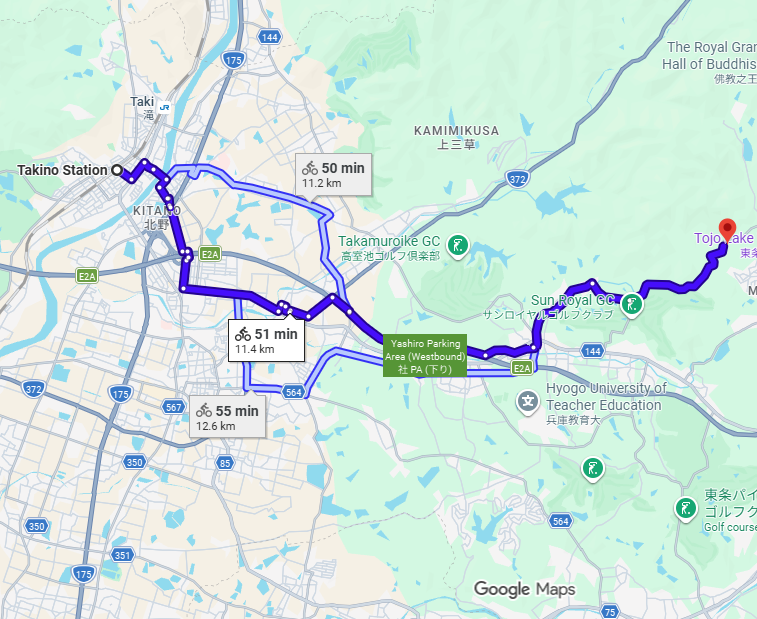
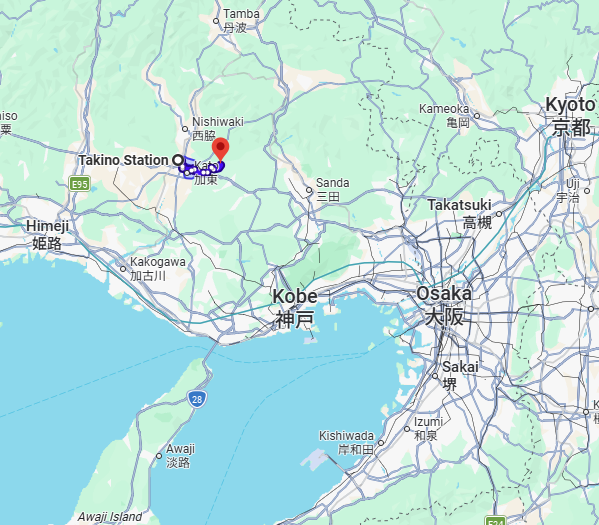
Access; The nearest stations are Takino or Yashiro. It is about 12 kilometers from there.
There is a tourist information center at Yashiro Station, and bike-sharing services are available at both Yashiro 社 and Takino 滝野 stations (Next to Yashiro Station), which anyone can use.
It takes about 40 minutes (one train per hour) from Kakogawa to Yashiro or Takino Station via the Kakogawa Line. It takes about 1 hour to get to Kakogawa from Osaka.
*visited on May 5, 2026
Prologue
Kato City in Hyogo Prefecture isn’t exactly a well-known town. When people think of Hyogo, they usually think of the port city of Kobe in the east, or Himeji in the west, home to the World Heritage Site Himeji Castle. Kato City is an inland town located roughly halfway between the two. In a rather remote part of that town stands a temple designated as a National Treasure, where a “Demon Oni Dance” is said to gather many people. What’s more, they still use “Oni” masks that were crafted over 400 years ago. I wondered exactly what kind of dance it was. I felt I had to go and see for myself, so I set out on a trip.
Let’s watch the “Oni” dance
Schedule
The monks will enter at 1:00 p.m., and the Oni dance will begin at 1:30 p.m.
Stage
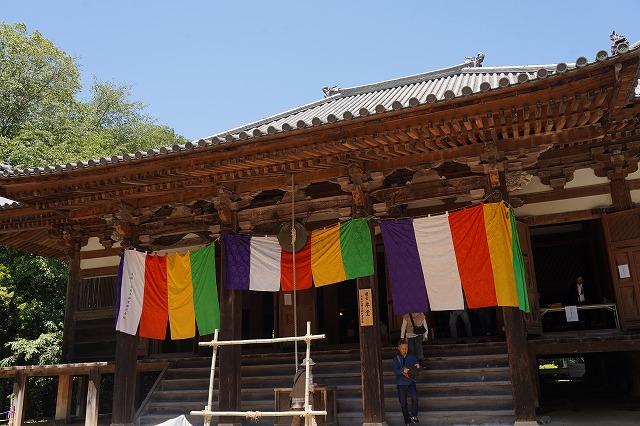
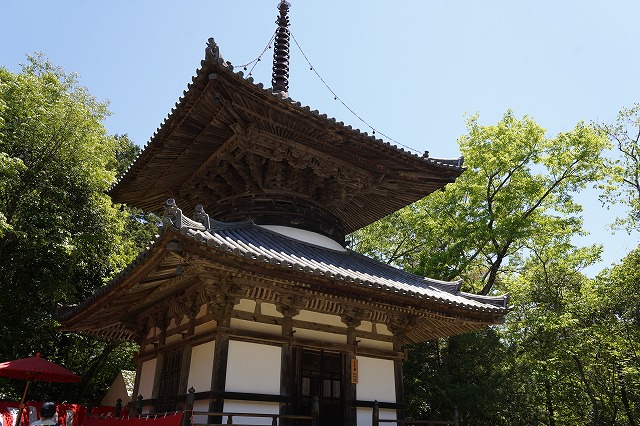
According to tradition, Chōkō-ji Temple was relocated to this site in the 12th century. The main hall, which records indicate was built in the early 15th century, is designated a National Treasure, and the bell tower is an Important Cultural Property.
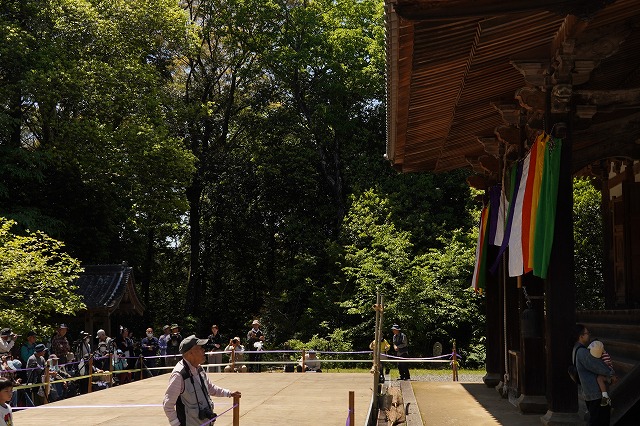
A large crowd has been eagerly waiting for over an hour, as if every moment counts. Most of them appeared to be locals.
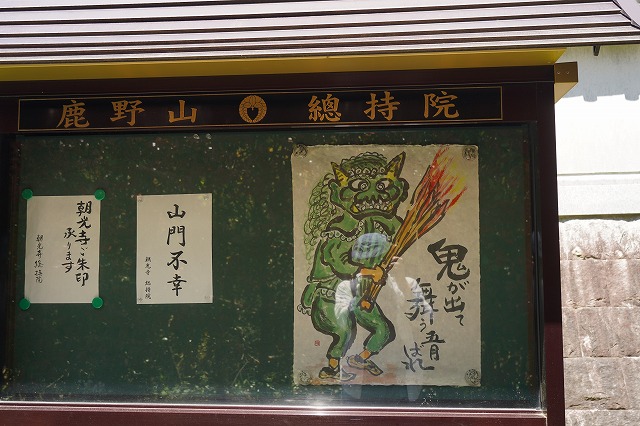
A stage has been set up in front of the main hall, and the audience is waiting, surrounding it on all sides. The poster of the “Oni” on the bulletin board also gets crowd exited.
It’s finally time to begin
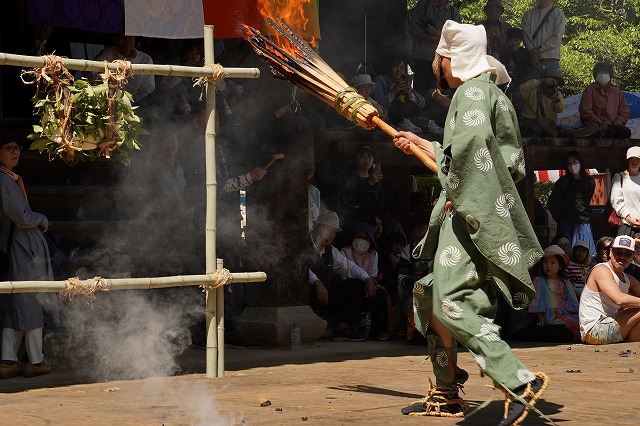
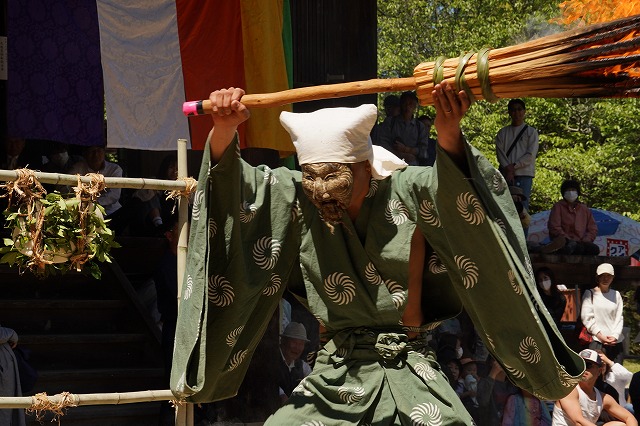
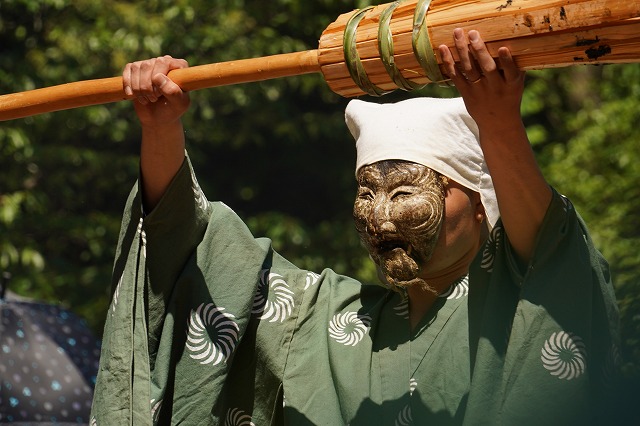
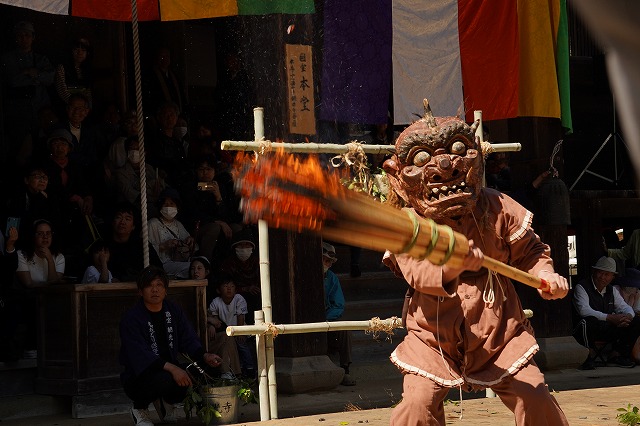
The dull, distinctive sound of a temple gong rings out. The first character to appear is “Okina.” While ‘Okina’ literally means “old man,” here he serves as a sort of harbinger of things to come. He comes out twice, holding a torch.
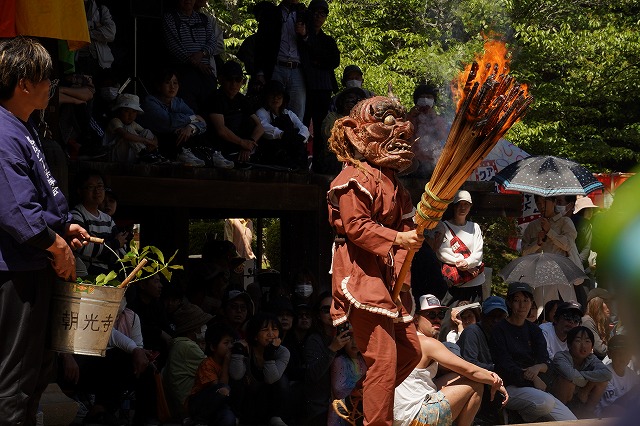
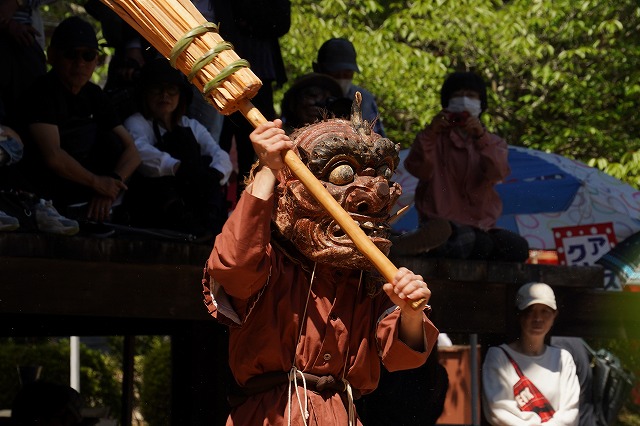
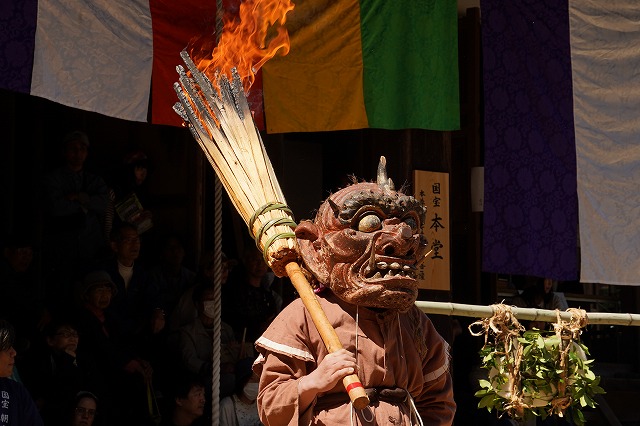
And then, finally, the “Oni” appear. At first, they come one by one. First, a red Oni holding a torch.
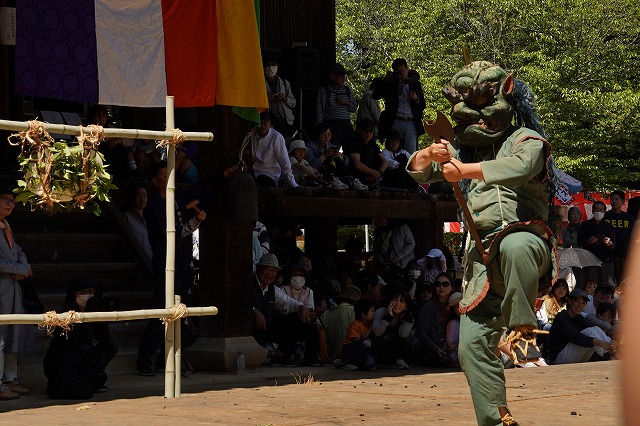
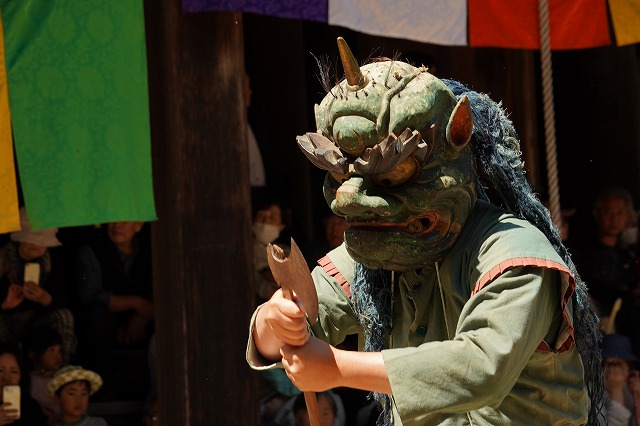
Next up is the blue Oni wielding an axe. All the Oni stomp their feet powerfully on the ground as they approach.
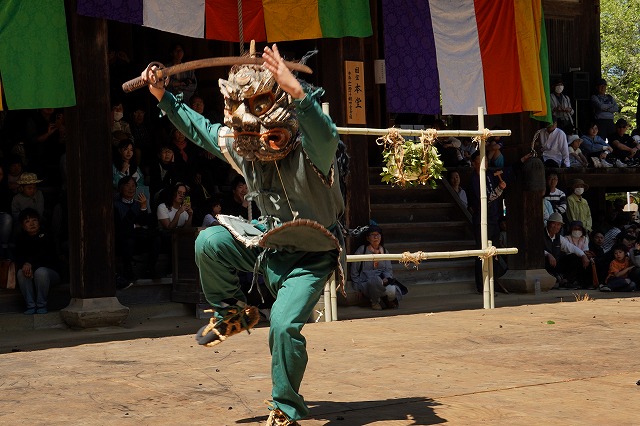
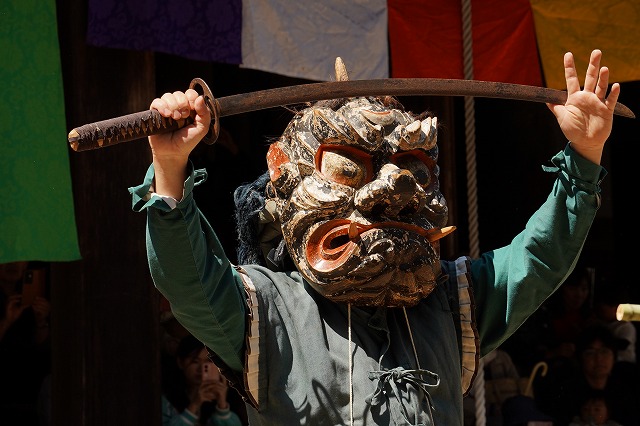
Finally, Oni wielding a long sword appears. All of the masks look quite old. That’s because they are still using the original masks, which were made around the 14th century. Although they would ideally like to create replicas, those involved say it would be far too costly.
One’s movements are simple. They just walk, jump, and leap while changing direction. They simply stomp the ground powerfully, thud, thud. This originally had the meaning of driving away evil spirits from the land by stamping one’s feet firmly on the ground.
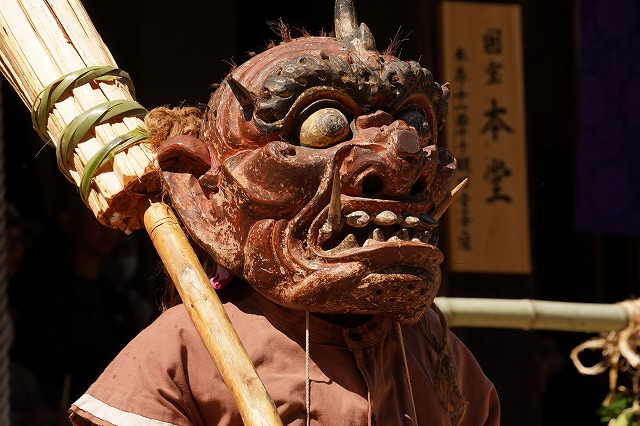
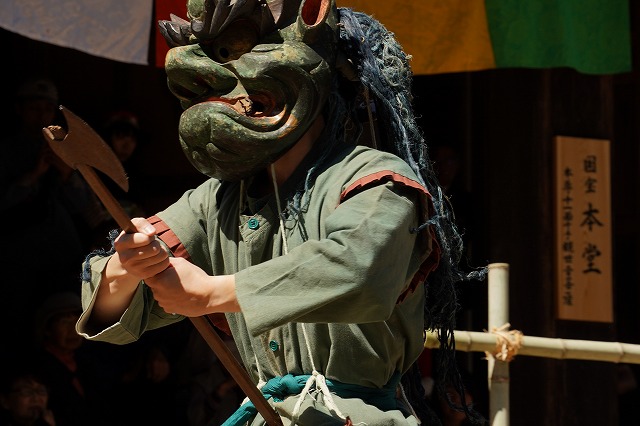
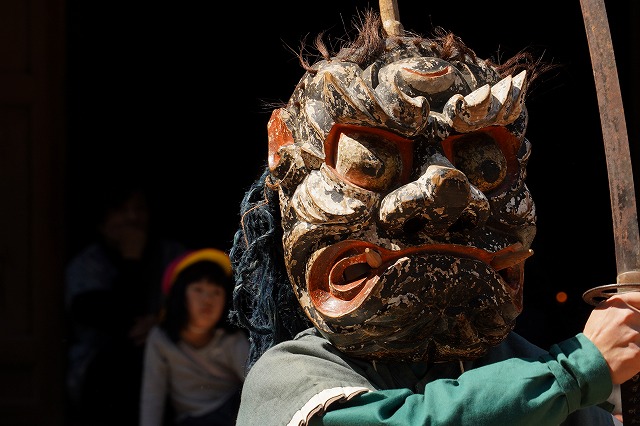
Unfortunately, although there are supposed to be four characters, only three appear this time. That said, each one exudes the distinctive aura of a traditional mask.
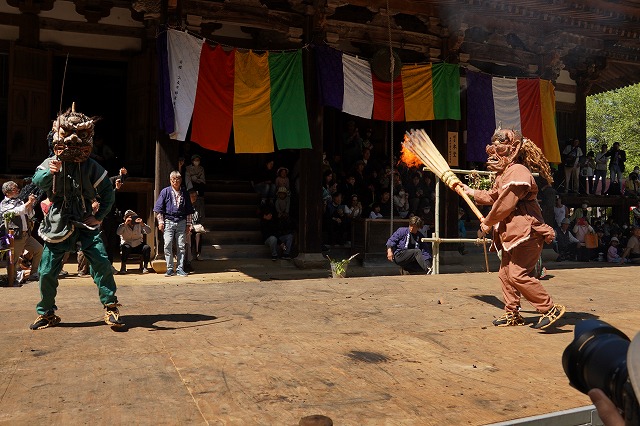
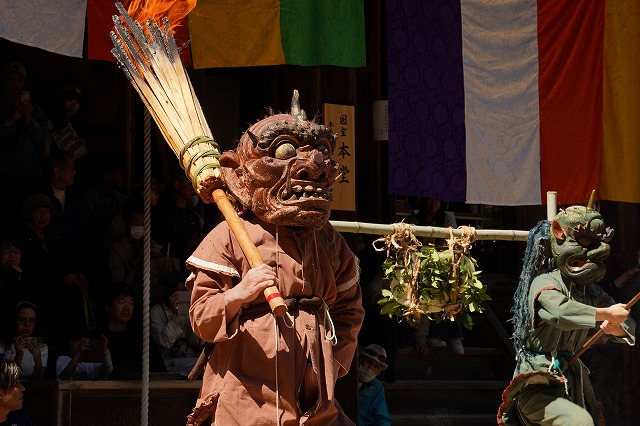
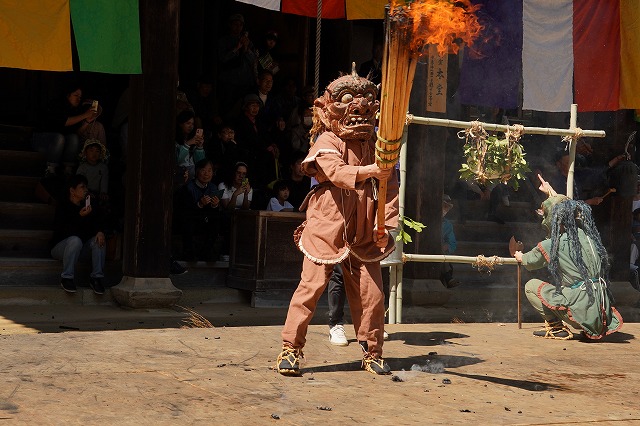
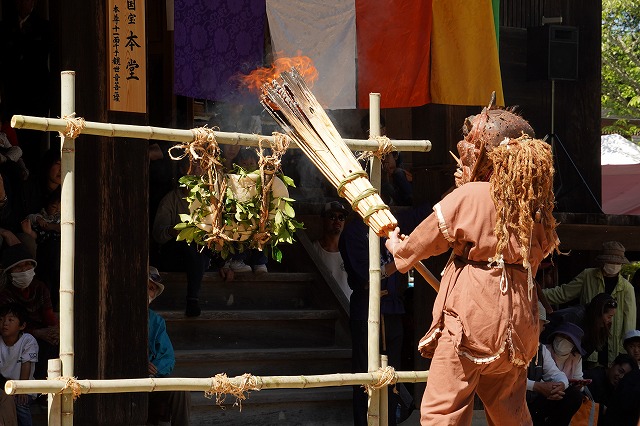
Next, the three of them appear together and cast curses on the rice cake displayed in the center. This lasts about 40 minutes and ends around 2:10 p.m.
Afterward, the rice cake is cut into small pieces and distributed to anyone who wants some.
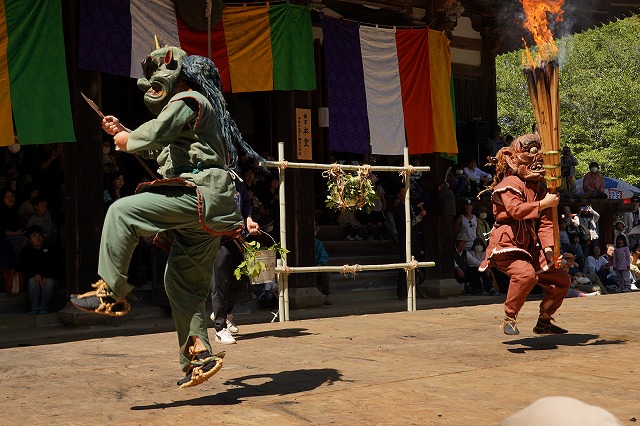
Impression
As for sound, there is nothing but the monotonous clang of a gong. The movements are equally simple: walking, stomping, and leaping. Yet despite this simplicity, the space has a mysterious quality that seems to be imbued with a divine presence. Perhaps this is due in part to the power of the ancient masks, or perhaps it stems from the weight of a tradition that has been passed down for hundreds of years. How one evaluates this experience can only be left to the impressions of those who have actually been there.
Incidentally, among the spectators surrounding the area, none of those seated on the steps of the main hall had set up tripods. Perhaps there is some unspoken rule.
Heading to Hata Chōkōji Temple
How can tourists visit the temple?
The only public transportation option for getting to the nearest station is the Kakogawa Line. However, the Kakogawa Line is a single-track local line with only one train per hour. Therefore, to make it on time, you need to leave Osaka shortly after 8:00 a.m. and transfer from the Kobe Line to the Kakogawa Line at Kakogawa Station. It’s quite inconvenient. The main event is scheduled to start just after 1:00 p.m., but just in case something comes up, you can safely assume that the 9:00 p.m. Osaka time is the latest you’ll need to be there. Additionally, even though it’s more than 10 kilometers from the station, there’s no public transportation. Tourists would have to go by bike or on foot, but since walking isn’t a realistic option, a bike is the only choice. Fortunately, however, there are bike-sharing services available at Takino Station and Yashiro Station. The bikes can be rented cheaply with a simple registration process. Yashiro Station also has a tourist information center, so while it’s a bit farther from the temple, it’s convenient for tourists who aren’t familiar with the area.
So, I actually went there
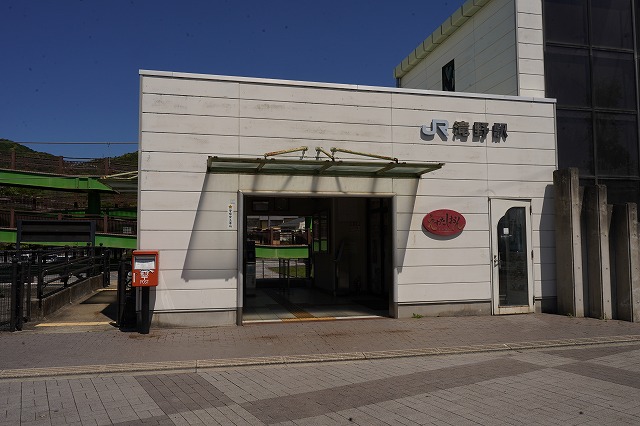
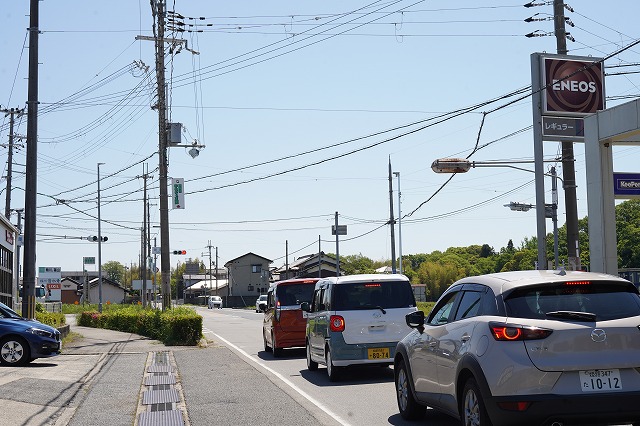
This time, I brought my folding bike. I set off from Takino Station around 10:30 a.m. For a while, I rode along busy city streets, but…
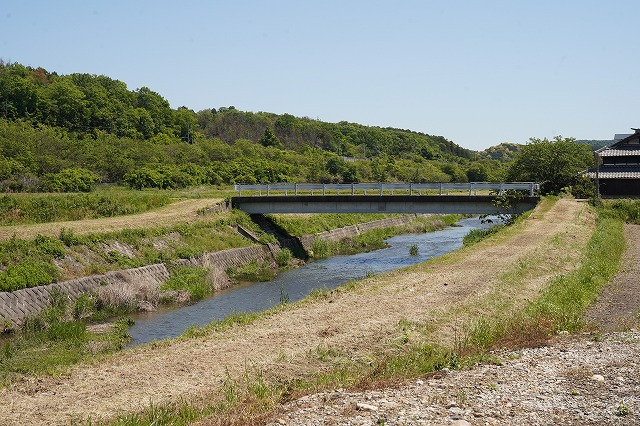
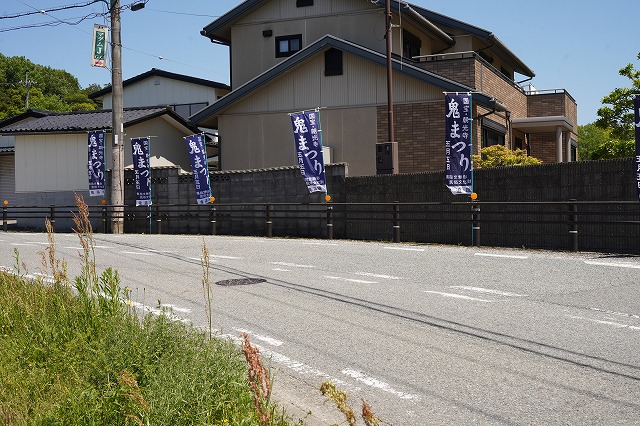
Soon the road turns into a peaceful country lane, and once you see the banners, the temple is just around the corner. The path is mostly flat, so it’s not tough going.
There are convenience stores dotted along the road for about 5 kilometers, and there’s one near the temple as well, so you can pick up just about anything there. Even taking it easy, I arrived just after 11:30. It took a little over an hour.