Tracing the Origins of Kagura in the Holy Grounds of Izumo ~1. Odochi Kagura
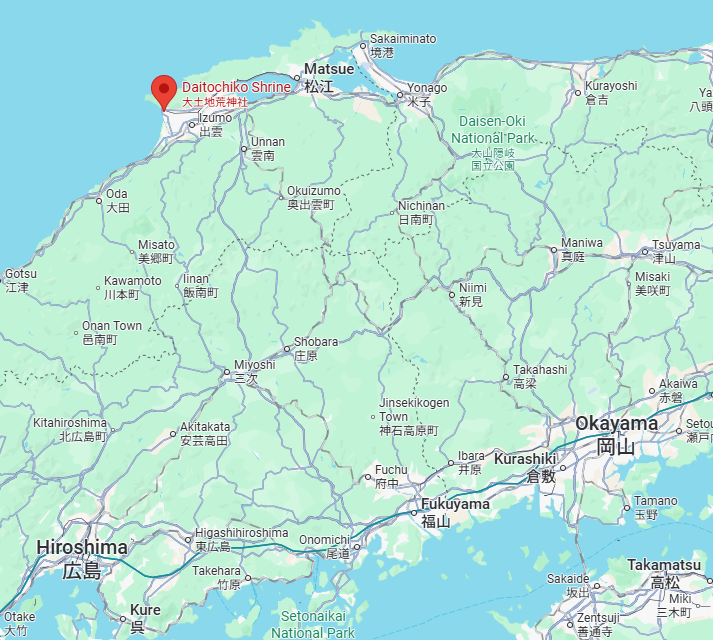
*Google Maps lists it as “Daitochi,” but the correct name is “Odochi”—it’s a mistake.
Date; One day during the Golden Week period in May: Kagura Dedication Ceremony at Izumo Taisha
Saturdays from late May to early June: Evening Torchlight Dance at Inasa Beach
The Friday and Saturday closest to 25 October
Location; Odochiko shrine 2425 Kizuki-Nishi, Taisha-chō, Izumo City, other
Access; About 1 kilometer from Izumo Taisha-mae Station, a 15-minute walk
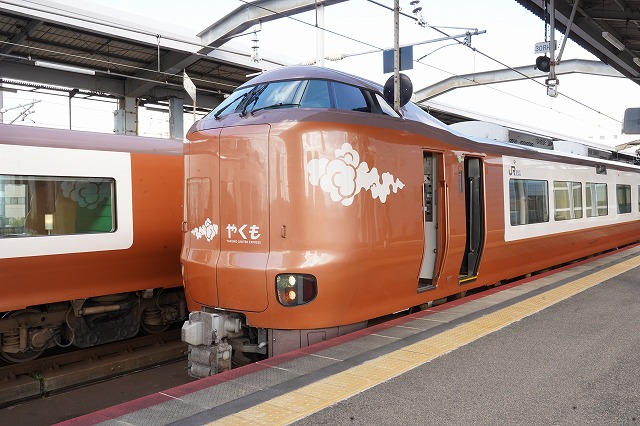
To get to Taisha-mae Station, take the Limited Express Yakumo from Okayama to Izumo City Station. From there, take the local line.
There are other overnight trains departing from Tokyo, but they’re as popular as concerts by famous singers, so it’s very difficult to get tickets.
This article is based on 24th October, 2025
The Land called Izumo
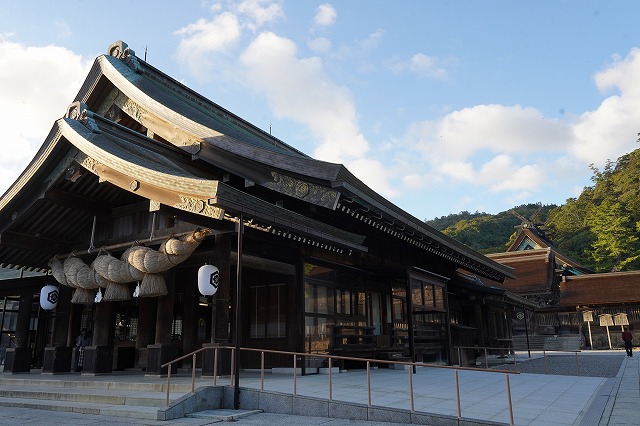
Shimane Prefecture is famous for Iwami Kagura. However, Iwami is in the western part of the prefecture, while in the eastern part—Izumo—there is another style of kagura known as Izumo Kagura. This article introduces the Odochi Kagura, one of the Izumo Kagura traditions.
Many Japanese people dream of visiting Ise and Izumo someday. These are the locations of Ise Grand Shrine and Izumo Grand Shrine, two of Japan’s most iconic shrines, and they are revered as Japan’s most powerful spiritual sites. In particular, Izumo Taisha is renowned as a shrine dedicated to the god of matchmaking, which is why it attracts so many visitors. Izumo is also a region where many ancient mythological tales have been preserved. It is also famous as a place where gods from all over Japan gather once a year. In other words, the land itself is imbued with divinity.
Looking for the Origins of Modern Kagura
In fact, Izumo is not only the land of mythology, but also the birthplace of kagura.
Although it is said that the origins of Kagura date back to mythological times, the form we see today took shape hundreds of years ago.
The most famous of these is the Sada-shin noh at Sada Shrine, which is said to have been created by incorporating Noh theater techniques learned in Kyoto. Because it was of such high quality, it is said to have influenced many forms of Kagura in the surrounding areas and throughout the Kanto region.
And here is another form of kagura that is considered to be one of the origins of the tradition: the Ōdochi Kagura.
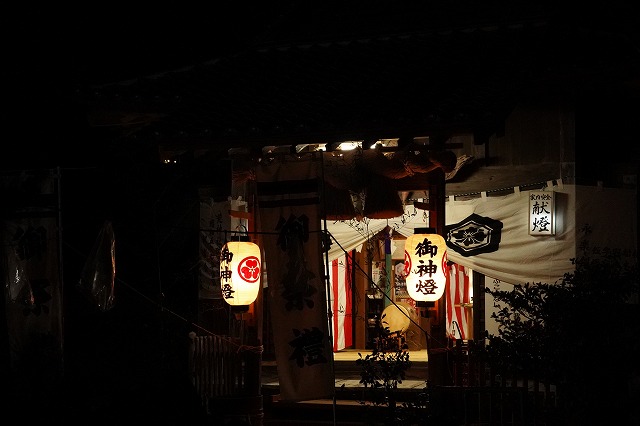
Odochi Kagura
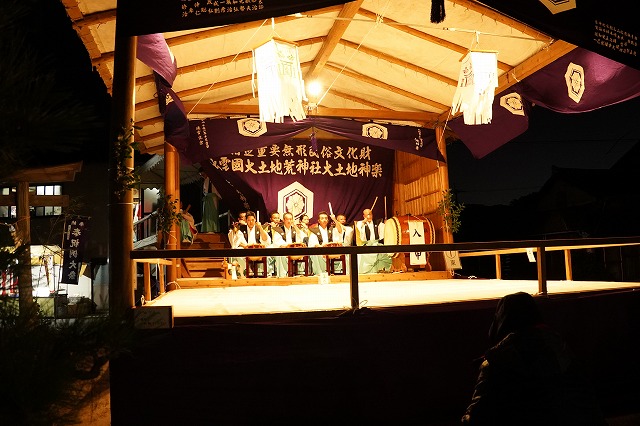
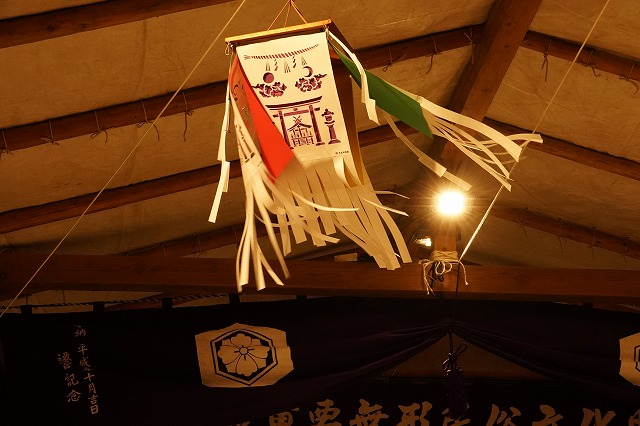
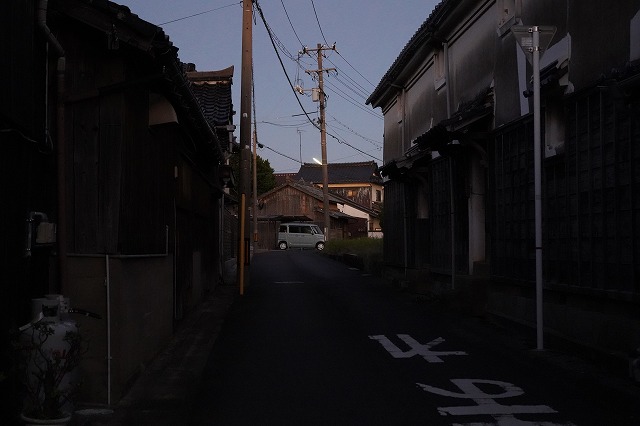
With winter fast approaching, the days are getting shorter. After walking for about 15 minutes through the old town as dusk falls, you’ll come to Ōdochi-ko Shrine. Actually, this Kagura performance is scheduled to start at 6:00 p.m. and end at 2:00 a.m.! (For questions like, “How am I supposed to watch it with so little time?”—I’ll explain that later, so please check that section.)
It’s such a small place that you’d never guess it’s a shrine that passed down the famous Kagura tradition. There is a stage in front of the shrine. As the surroundings grow completely dark, the audience is drawn to this spot, as if they had wandered into another world.
Overview of Odochi Kagura
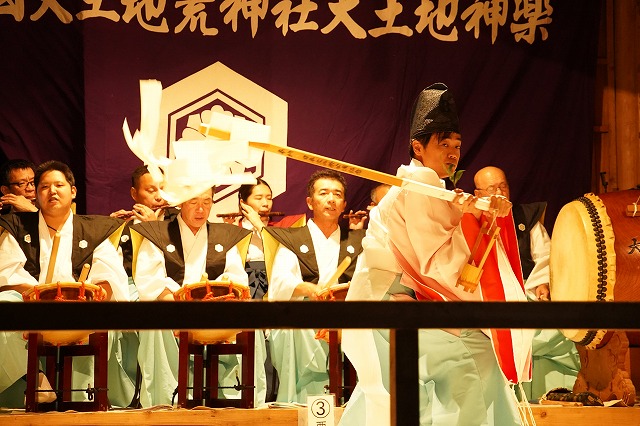
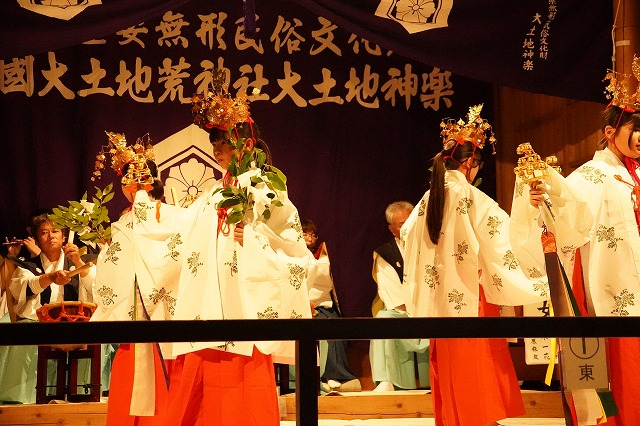
A total of 17 performances were presented that day. The program was particularly ambitious, featuring the revival of the Sarutahiko performance, among other highlights. Looking at the overall flow, the performance begins with ritualistic segments (which are performed without masks), and gradually becomes more theatrical as the children and the masked performers interact.
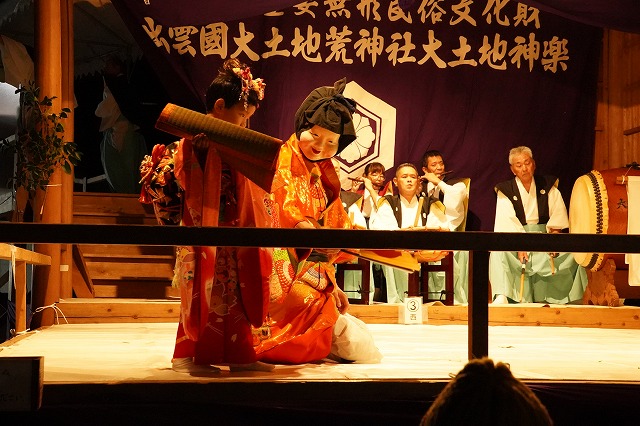
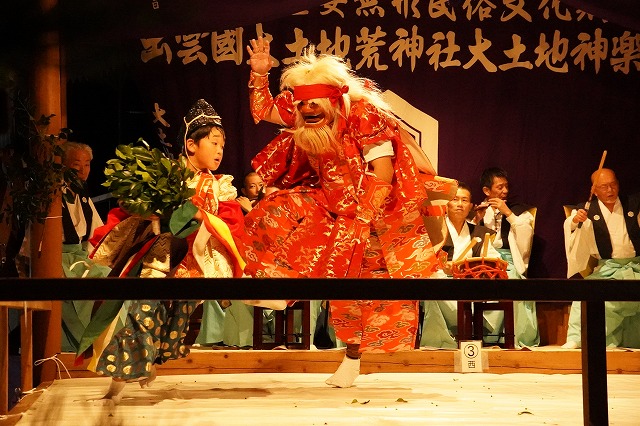
Headline Performances
Tamura
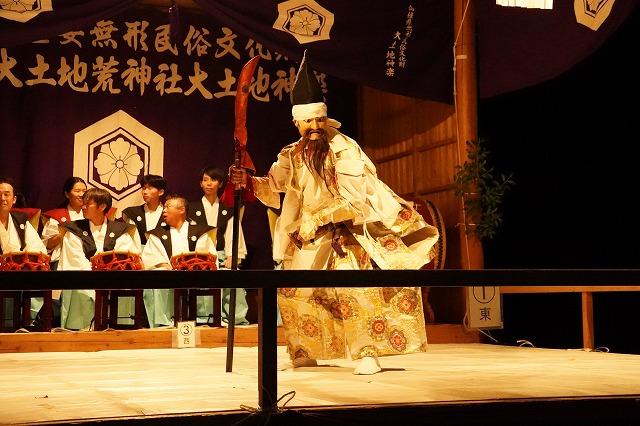
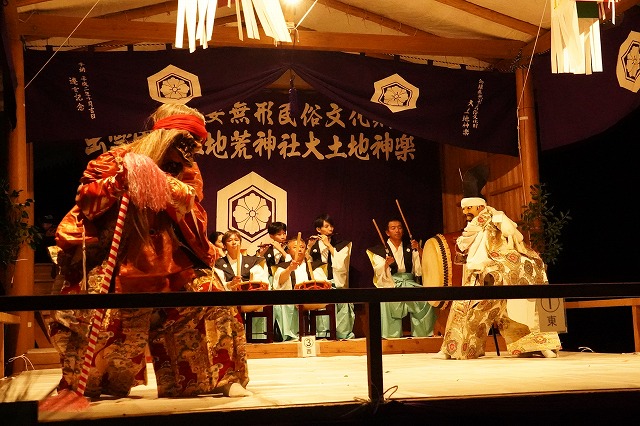
This is the story of a general named Sakanoueno Tamuramaro who fought against bandits entrenched in the mountains.
General Tamuramaro was a real historical figure who, acting on the orders of the emperor who established the Heian period (8C~12C), subdued the Tohoku region. He was the first person to be appointed general, and although he was a skilled warrior, he is said to have been deeply compassionate toward his enemies, which has made him very popular.
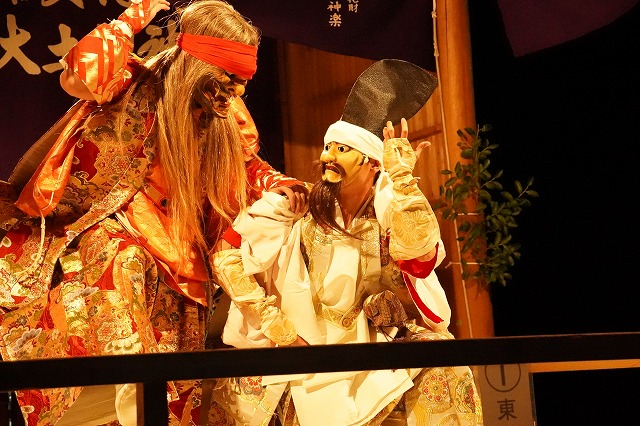
Sankan
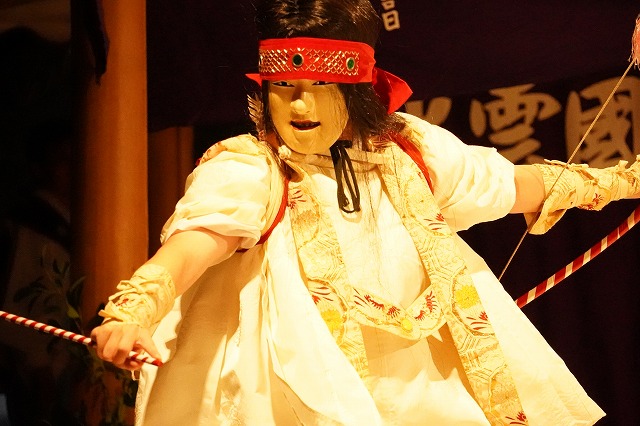
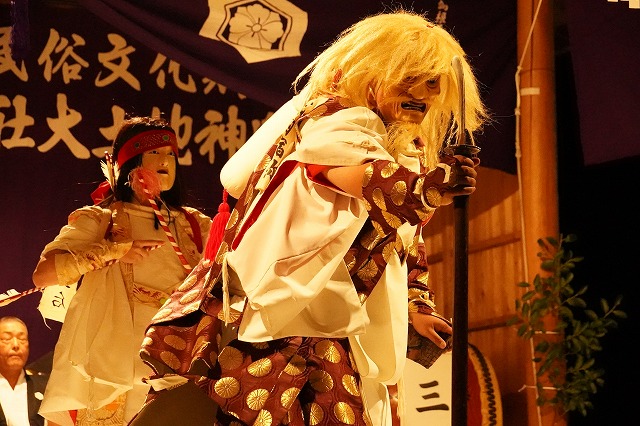
A play based on the legend of Empress Jingū* and her loyal vassal, Takenouchi no Sukune, who conquered the three kingdoms of the Korean Peninsula. One of the most popular performances in this kagura.
*Empress Jingu →Empress Jingu was also a real historical figure. Since she appeared during a time when the line between myth and reality was blurred, little is known about her in detail. However, despite being an empress, there are many stories about her, and her expedition to the Korean Peninsula is one of them. Furthermore, the fact that the Emperor is referred to using the character for “god” makes him a special Emperor, and the use of that same character for her, as Empress, is deeply mysterious.
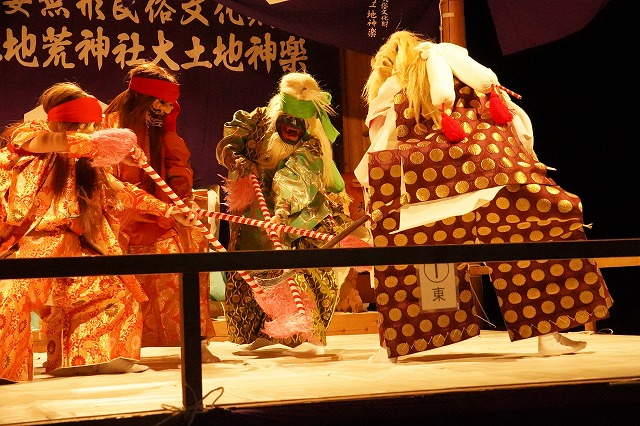
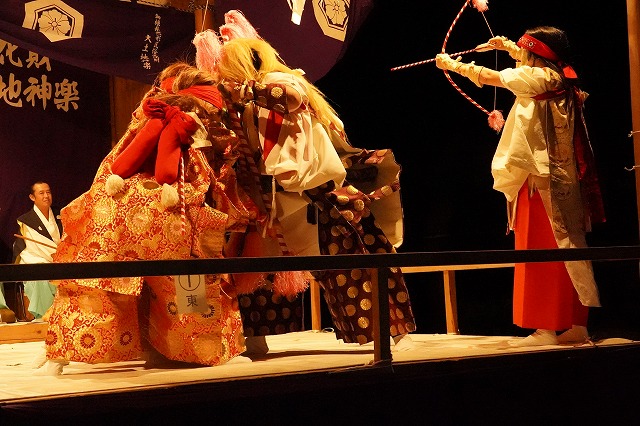
Just when you thought Empress Jingu was simply standing in the background…
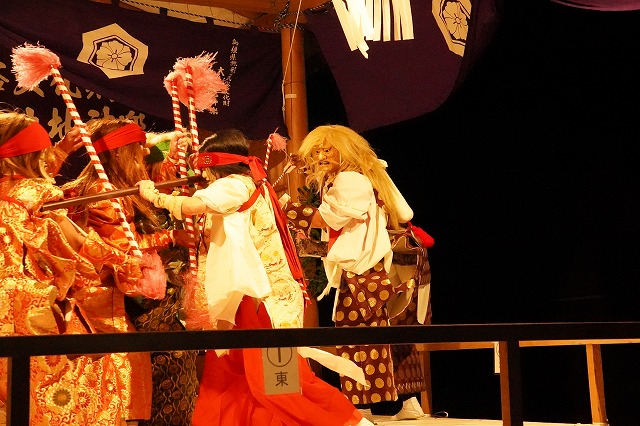
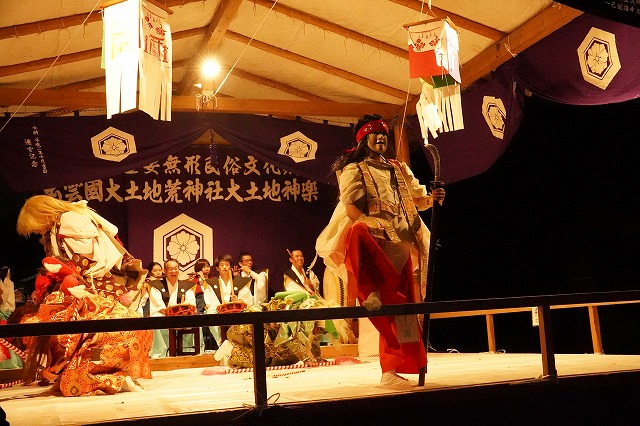
(Empress Jingū) as soon as she saw that the Sukune were at a disadvantage, rushed out herself and defeated all three of them in one fell swoop. Her gesture, as if to say, “How about that?” to the audience, was just like something out of professional wrestling. The audience couldn’t help but get excited.
Kojin
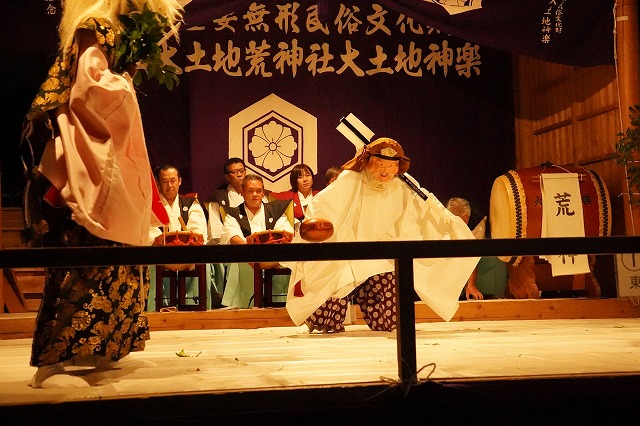
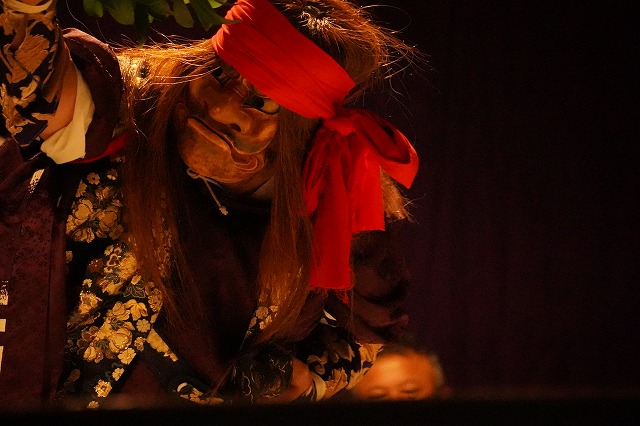
Messengers from Amaterasu came many times, but each time, Okuninushi remained loyal to her. Finally, Amaterasu sent a warrior named Takeminakata to subdue Okuninushi. However, her son refused to accept this and challenged them to battle, only to be defeated and forced to flee. This play is based on that myth.
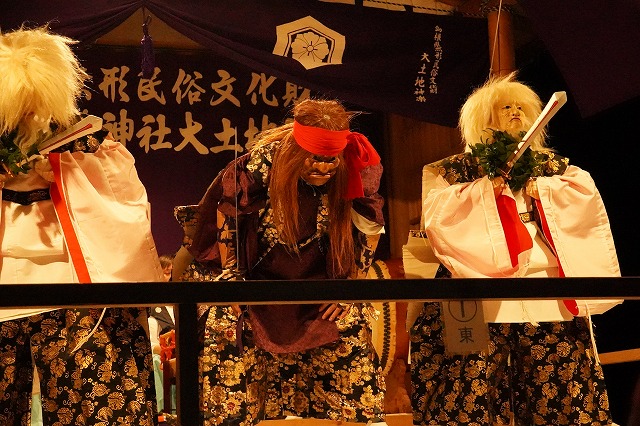
Yachihoko
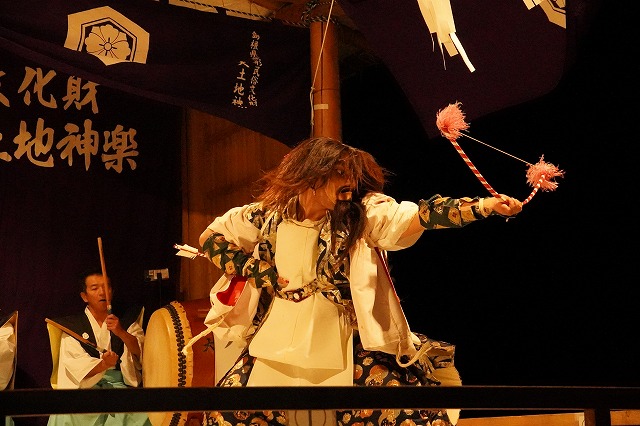
This story is about the younger days of Okuninushi, who appeared in the previous performance. It tells the tale of how he was bullied by his brothers but eventually defeated his wicked older brothers and built a peaceful country.
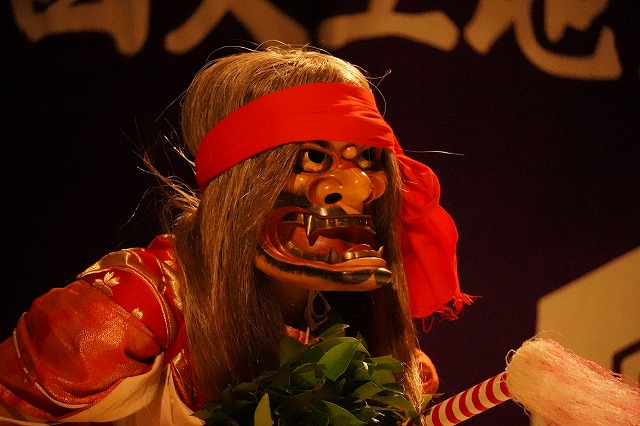
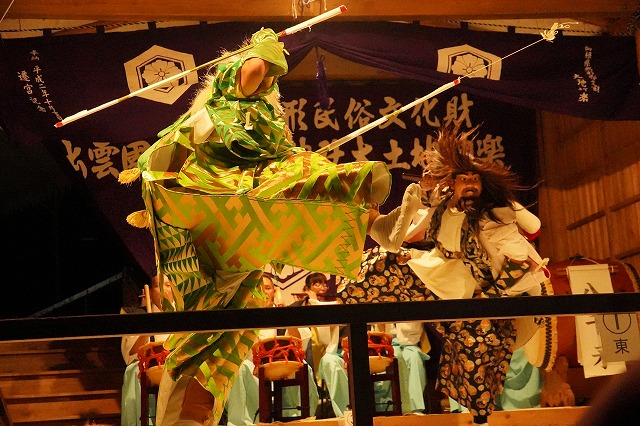
Yato
This performance depicts one of the most famous episodes in mythology: Susanoo’s battle against the (Orochi) eight-headed serpent. In a sense, this performance best exemplifies the defining characteristics of this kagura.
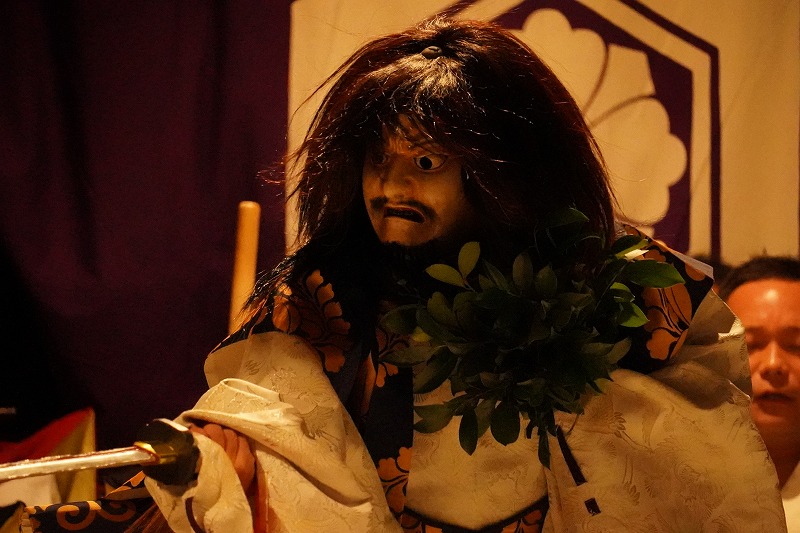
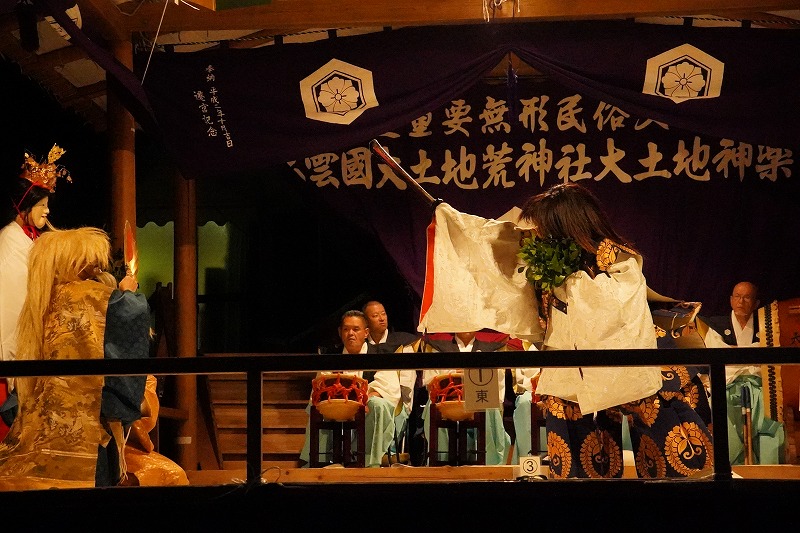
To briefly summarize the story: When Susanoo arrives in this land, he notices a parents and daughter crying. The father explains that every year, Orochi comes and they are forced to offer their daughter as a sacrifice. He adds that this year it is the turn of their eighth and final princess. Then Susanoo devises a plan and successfully defeats Orochi—that is the story.
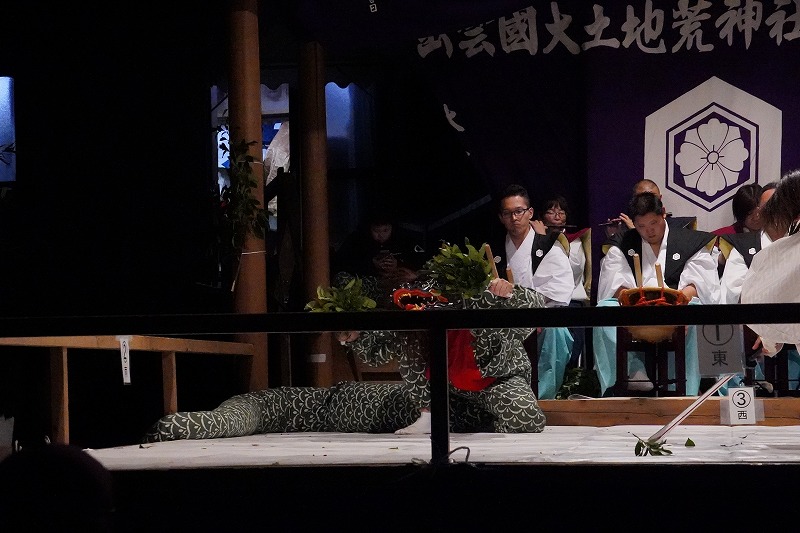
In recent years, in western Japan, the influence of Iwami Kagura—which originates in the western part of Shimane Prefecture—has been significant. In particular, the depiction of Orochi, the giant serpent coiled in a spiral, can be seen widely from Kyushu to Okayama.
However, here, the figure is simply depicted with a human-like body and a tail. This is a form commonly seen in Kagura performances in the Kanto region. Since it was introduced to the Kanto region before the Meiji era, it still retained this simple form at that time. And this kagura, too, continues to preserve its ancient form.
https://discoverdeeperjapan.com/2022/10/05/entertainment-by-the-name-of-iwami-kagura/
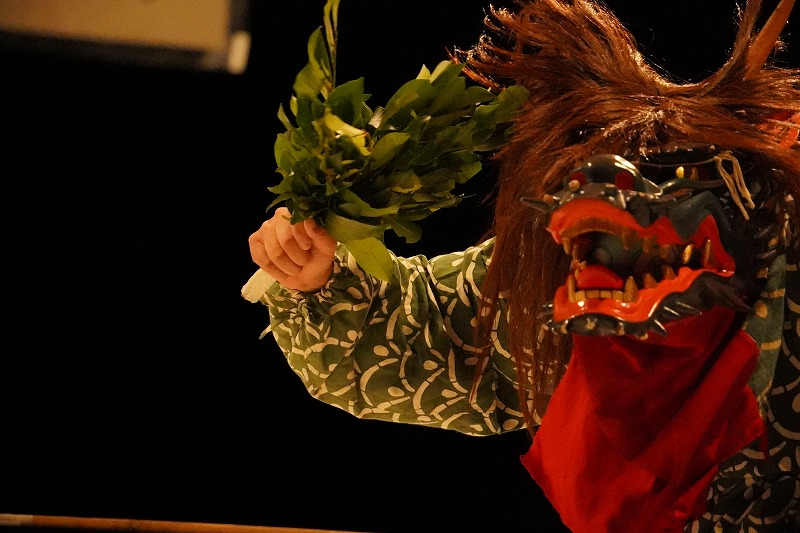
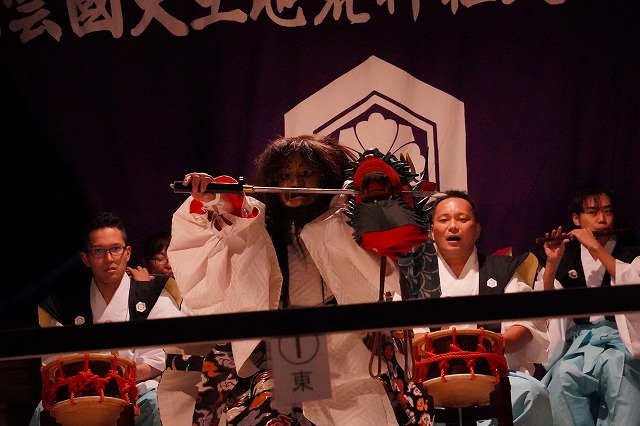
But putting that aside, it’s simply a fascinating form of Kagura to watch. The unique movements, the chants, and the lavish costumes reminiscent of Noh—everything is filled with a power that leaves the audience in awe. If you ever get the chance, you definitely won’t regret seeing it live.
Additional information ~What to do at 2 a.m.?
The Kagura performance ends at 2:00 a.m. as scheduled. While locals may be fine, what are tourists supposed to do?
1. Of course, there are several places to stay near Izumo Taisha. However, since it’s a tourist destination, prices tend to be high.
2. Option 2: Stay near Izumoshi Station. There are more accommodations near Izumo shi Station. However, it is more than 8 kilometers away from Taisha-mae. Since it’s late at night, there is no public transportation. In such cases, I recommend using a bike-sharing service. You can rent a bike for a low fee, and it’s available even late at night. It’s also convenient because there are cycle stations at both Izumo-shi Station and Taisha-mae Station. The tourist information center at Izumo City Station will explain how to rent one.
For those who feel it’s a waste of money to stay at a hotel late at night, there’s always the option of a 24-hour café near the station. While it’s not as comfortable as a hotel, you can still take a nap in a private booth.
reference https://yuien-sharecycle.jp/en/
Shimane official https://www.kankou-shimane.com/en/
Tourist information center https://izumo-japan-travel.com/travel-tips/visitor-center/