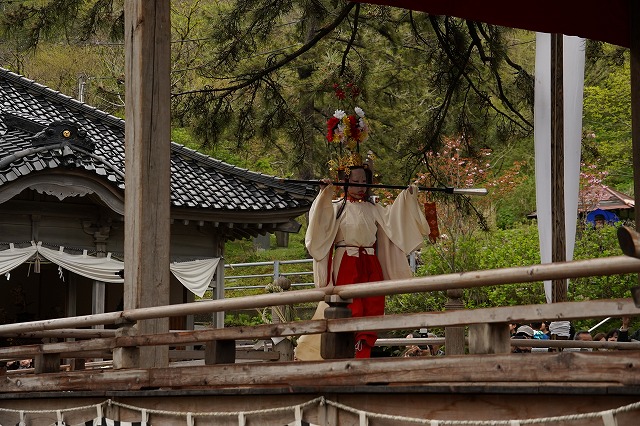
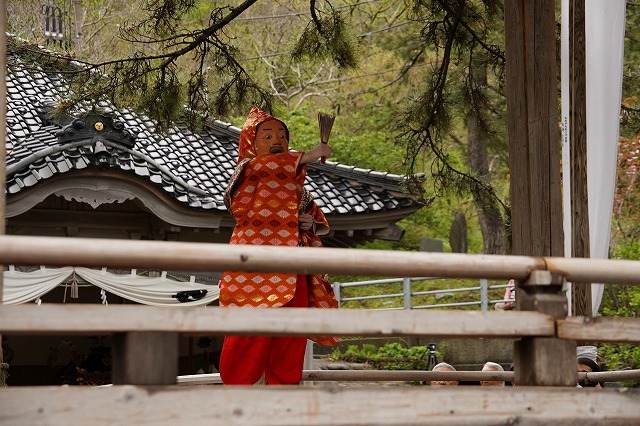
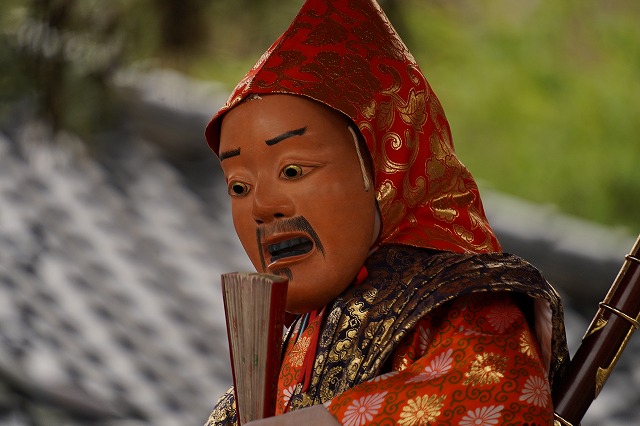
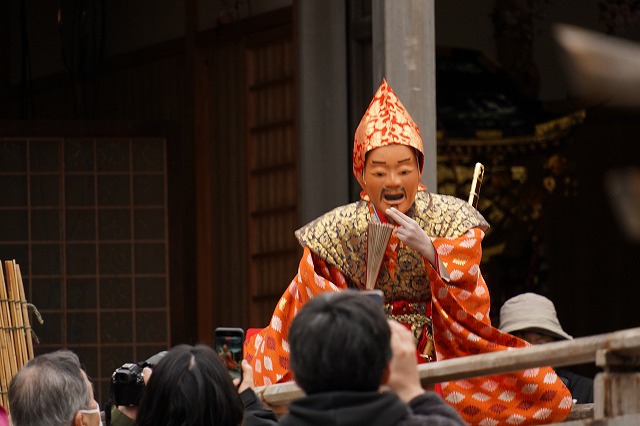
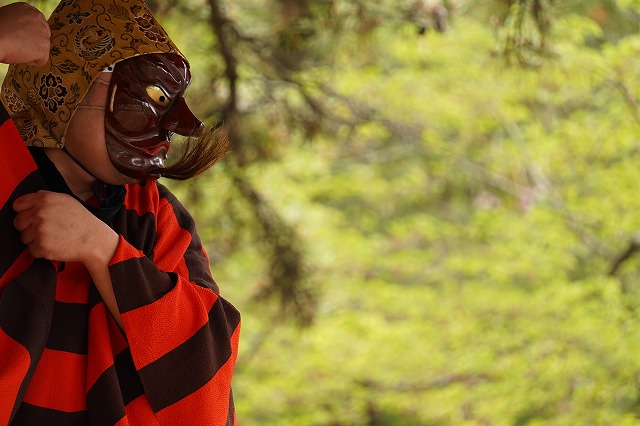
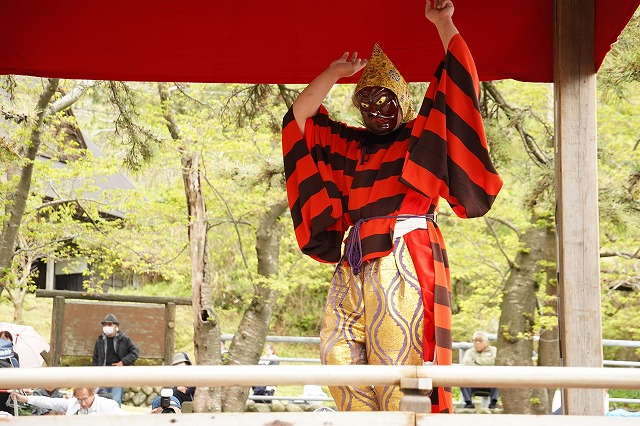
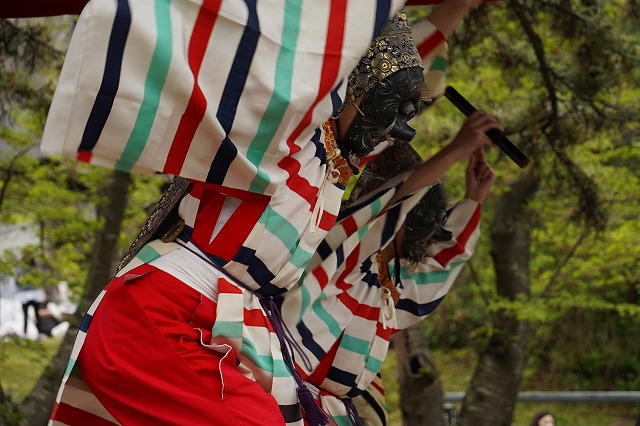
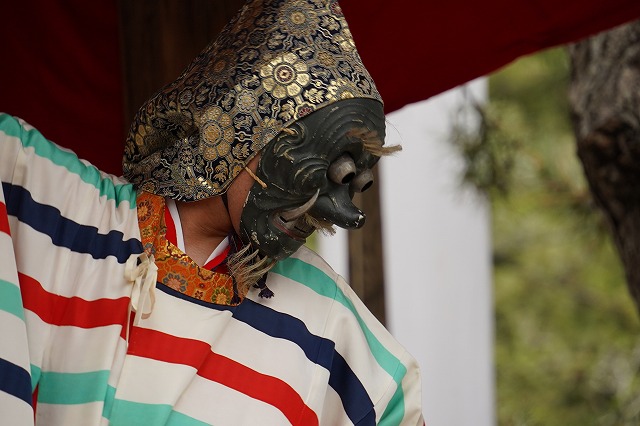
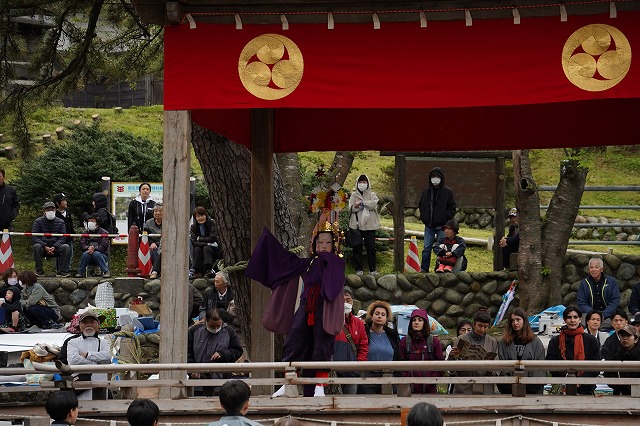
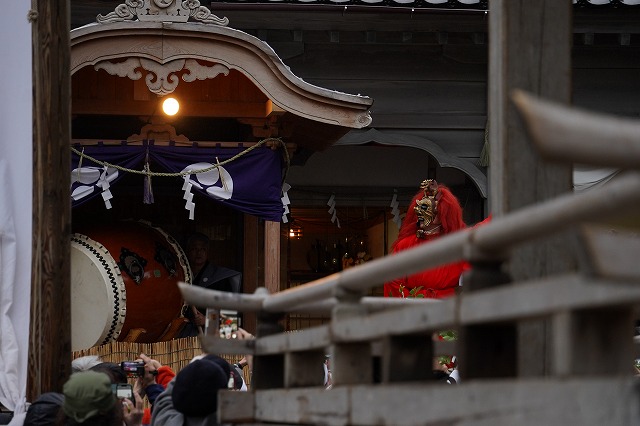
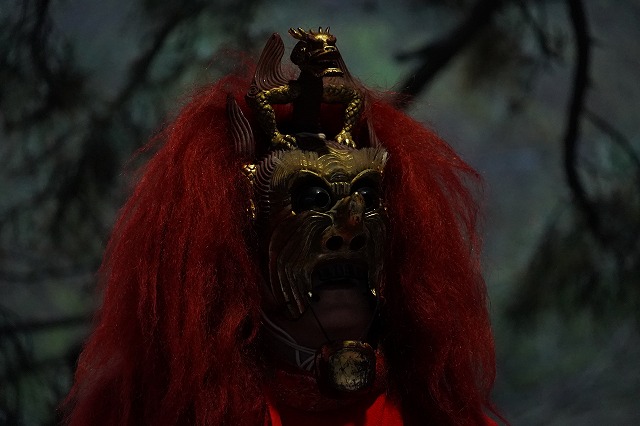
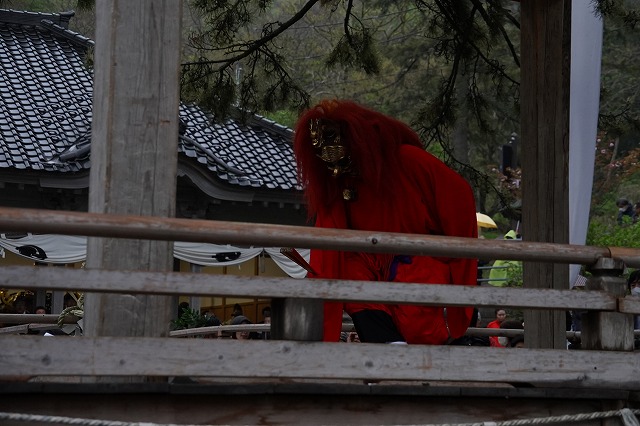
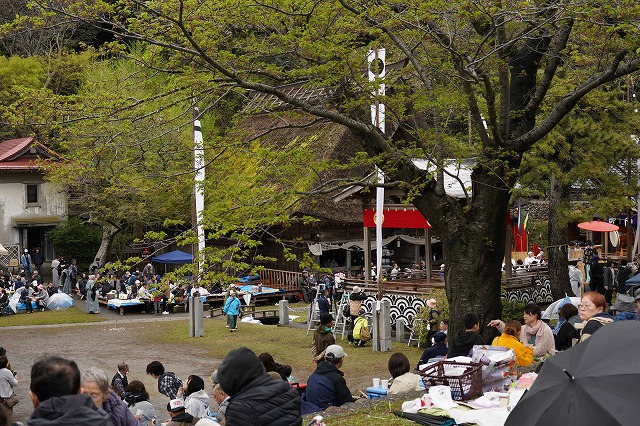
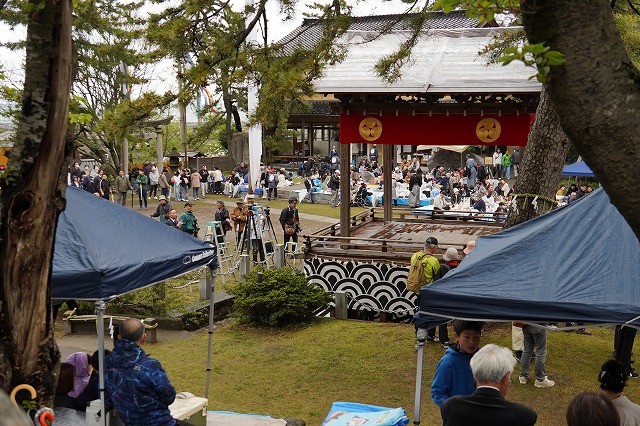
The Island Where Demons Dance~Oni-daiko (Ondeko)
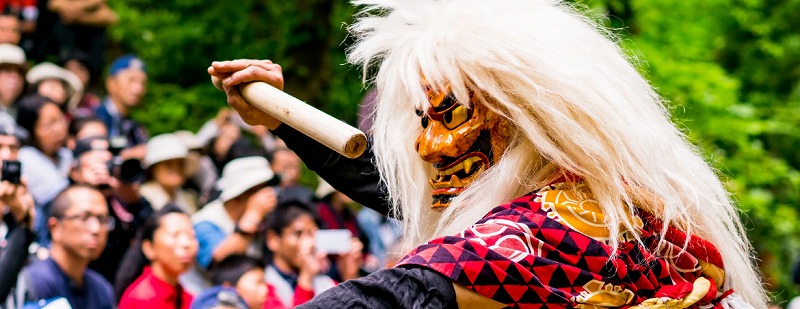
Date: Spring through fall (peaks in April and October)
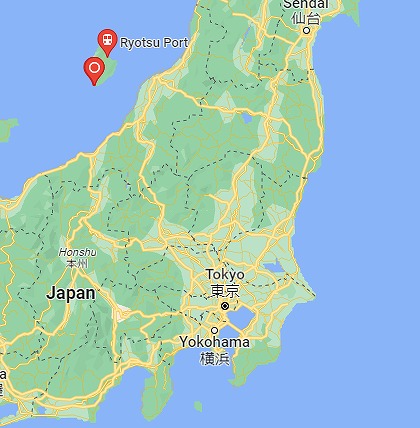
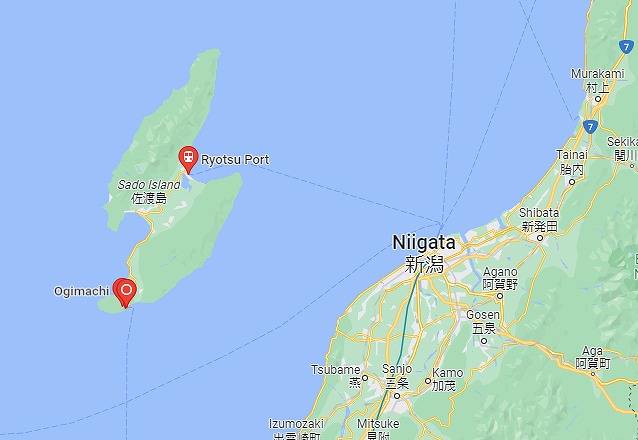
Location: Sado 佐渡 Island City, Niigata Prefecture
Access: From various locations to Niigata 新潟 Station or Niigata Airport. From there, take a bus to Niigata Port, from where there are steamers to Sado Island. From Tokyo, it takes about 2.5 to 3 hours by Shinkansen to Niigata Port. There is also a way to get there from Naoetsu 直江津 via Naoetsu Port. From Niigata Port, you can go to Ryotsu 両津 Port, and from Naoetsu, you can go to Ogi 小木 Port, which are different arrival points.
There is an island where groups of drummers go from house to house. And they are demons, no less.
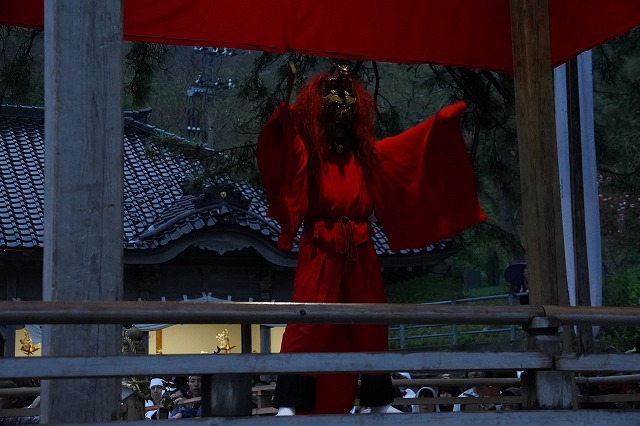
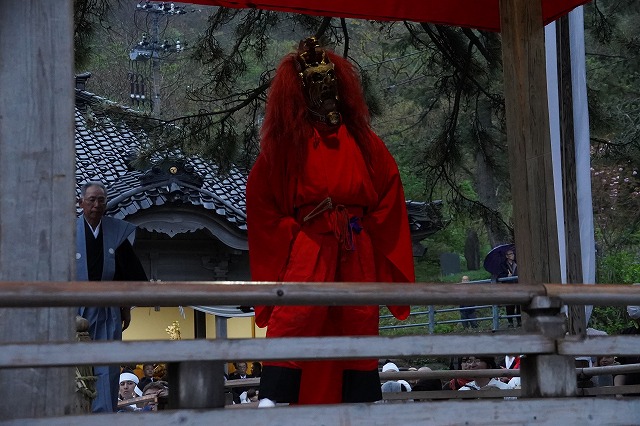
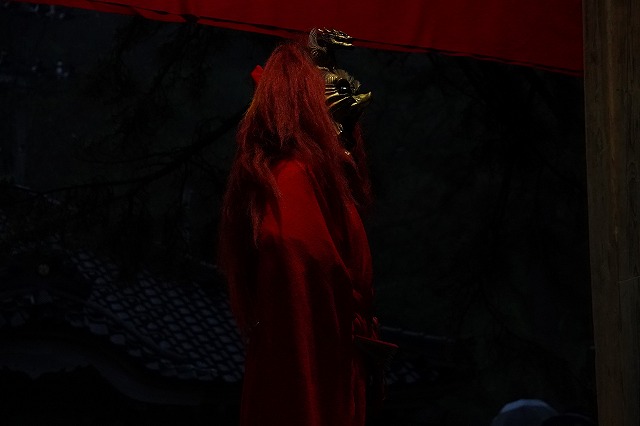
That name is Sado Island. Across from Tokyo lies Niigata Prefecture. From there, it’s another 30-minute to one-hour boat ride. It is the second-largest island in Japan, after Okinawa. There is a day on that island when demons visit every home. And the people look forward to it with anticipation. They say the demons are messengers of the gods. They are called oni, and the act of them beating drums is known as “Oni taiko (ogre drums).”People say this island is a treasure trove of performing arts. Among them, the most representative is this “Oni Taiko.” The locals also call it “ondeko. From spring to fall, the sound of taiko drums echoes throughout the island, and Oni dance in the air. There are more than 120 of them. It is true that the island is as large as the 23 wards of Tokyo, or about half the size of Osaka, but there are still many of them. Let’s take a look at what kind of Oni-daiko the islanders love so much.
Festival outline or “Kado-zuke 門付け”
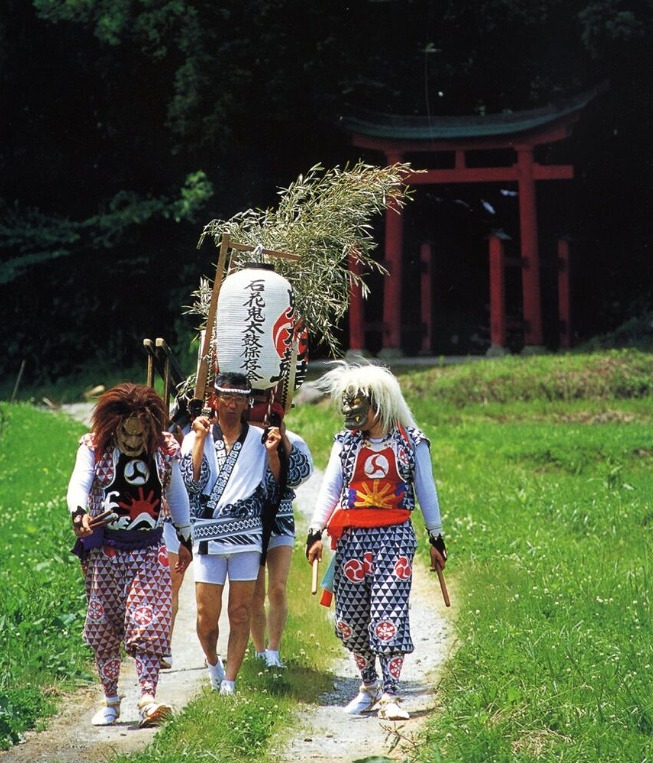
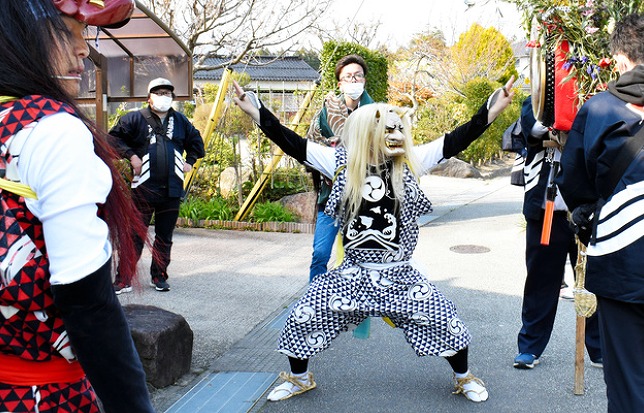
Oni-daiko is an extremely simple art form consisting of a single drum, a drummer, and a dancer, the Oni. Oni Taiko festivals do not have a mikoshi (portable shrine) or pull a dashi around as in regular festivals. Instead, they do something called kadozuke 門付け. Kado means gate, and tsuke means to drop in, which means to visit each door. This is an old custom in which performers go from house to house to bless their families and in return receive a reward. In the past, many performers earned their money that way, but nowadays, the main purpose is to walk around blessing each house as God’s representative, rather than for remuneration. There is Ise Kagura centered in Mie Prefecture and a group of kagura performers who still travel over a wide area in Iwate Prefecture in the Tohoku region. Therefore, even if you go to the shrine on the day of the festival, there is nothing there. After the first and last dedication at the shrine, the group goes out to the community.
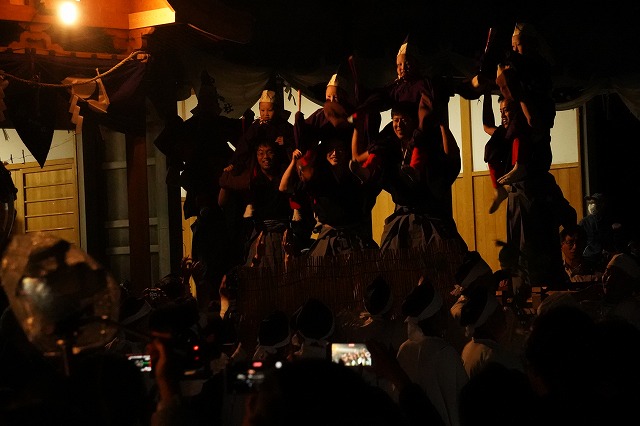
A day at Oni Taiko starts early in the morning. First, the group heads to a shrine. There they dedicate first formal dance. After that, they go to the village and perform the dance from door to door. Sometimes there are more than 100 houses in a village. When a group of taiko drummers arrives, people entertain them by preparing hospitality. If requested, a designated dancer other than oni may also dance. In addition, the masks may be displayed there for a time in the house where the original masks were made, or a special dance may be performed. After visiting all the houses, they return to the shrine to perform the dedication dance. It is not unusual for the dance to end around 10:00 p.m. This is why young people are always needed for the physical strength of the dancers.
Types of Oni-daiko
https://sado-geinou.com/history/shishimai Right also
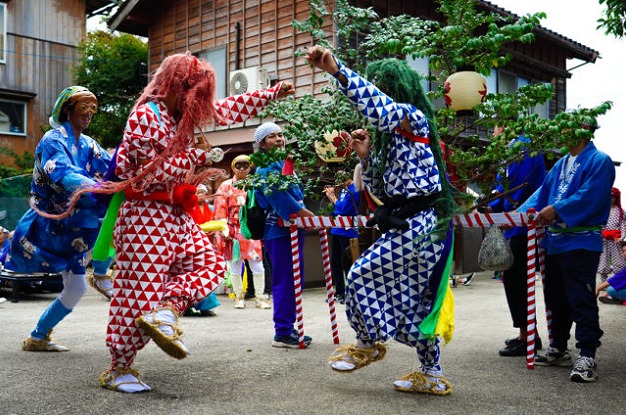
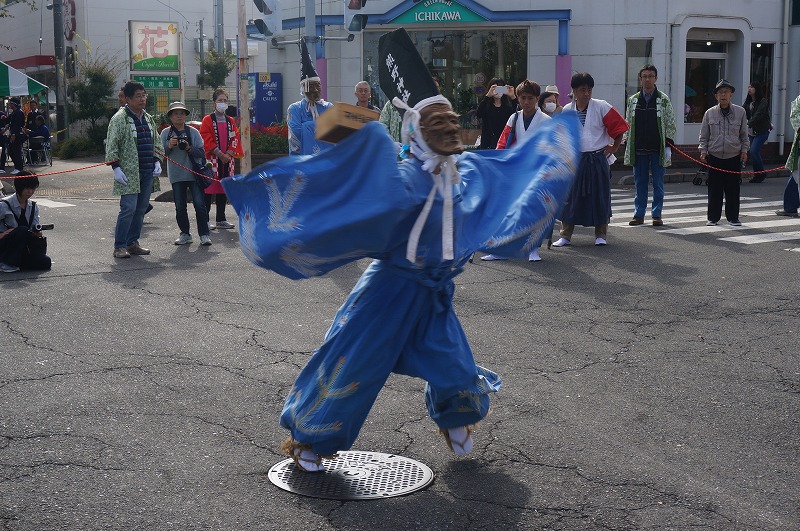
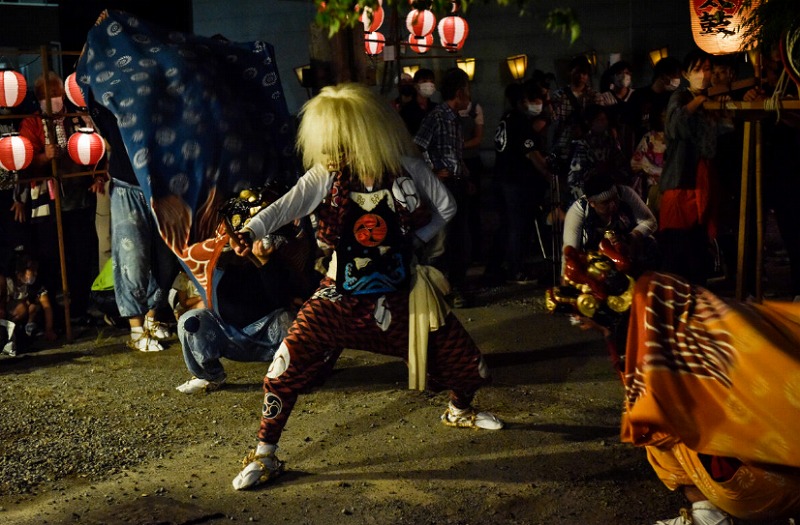
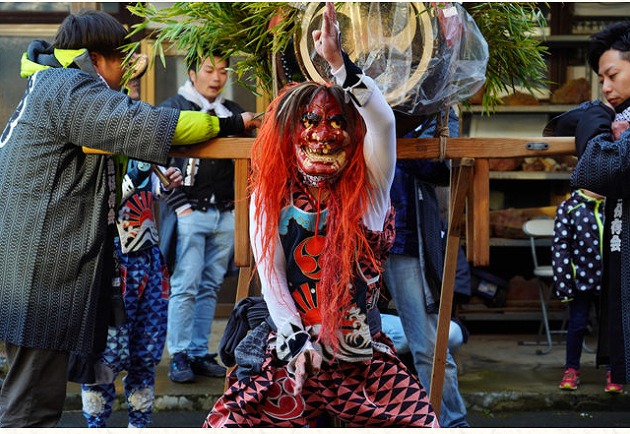
There are several classifications of oni taiko according to the way it is performed. There are three major categories, and five more detailed categories are often used. In order to avoid complications, we will inquire about three types. Types include the Maehama type, Aikawa type, and Kuninaka type, named after the region.
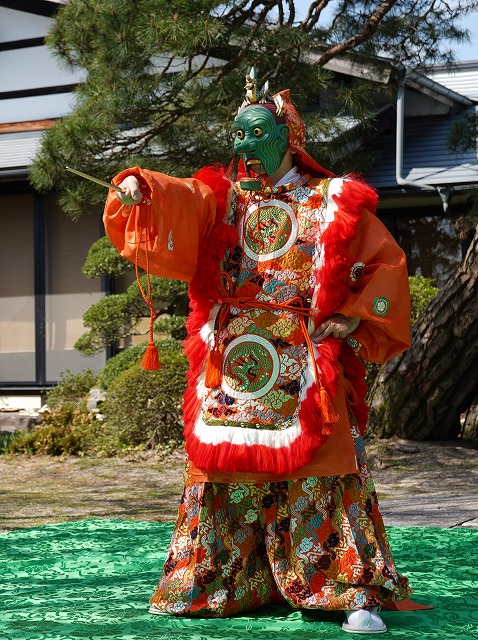
The most commonly seen is the Kuninaka type , in which two Oni, A (open-mouthed, not “ei”) and Um (closed-mouthed), dance alternately. This type is about 60% of the total. It is a form that was adopted by masters who learned Noh in the past. Therefore, the basic movement is to use a slip. The dance is also characterized by the intensity of the “A” and the quietness of the “Um”. Sometimes Shishi ( lions) is involved, which makes the dance more dynamic.
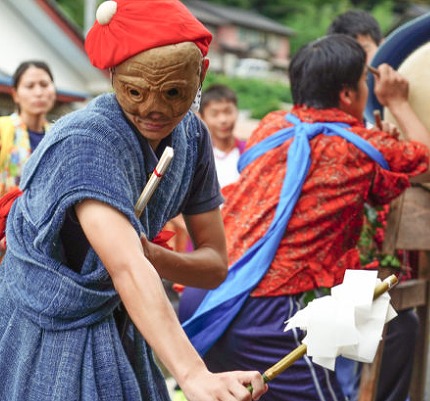
Maehama type is two oni facing each other and dancing. Sometimes a dancer wearing a mask with only the upper half of his face, called Rouso, joins them. The roso is the highest-ranking dancer in the group.
And the Aikawa type is often seen in the northwestern part of the island. Here, oni appear but do not dance. They just stand there with a spear. Instead, a dancer wearing an old man’s mask dances with a square to hold beans.
Representative Oni-daiko
Niibo-funashimo(新穂舟下)
There are four shrines with the same name, Hiyoshi Shrine, in the Shinbo area, and oni taiko drums are dedicated to one of these shrines at a festival on April 13.
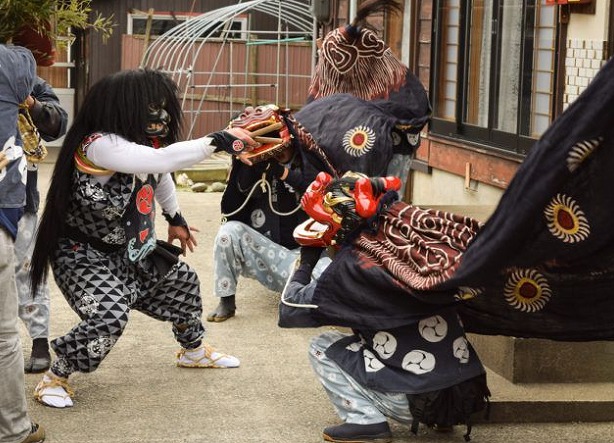
Kuninaka style with two oni dancing with their mouths open “a” and mouth closed “un”. When the drums are set up, they begin to beat the drums from the back side. One by one, oni dance to the rhythm of the taiko drum, with their steps based on the rhythm of the drum. The oni tries to beat the drum, but two lions appear as if to prevent them from doing so. The oni calm them down, brush them off, and move toward the taiko drum.
Ryotu-Iwakubi(両津岩首)
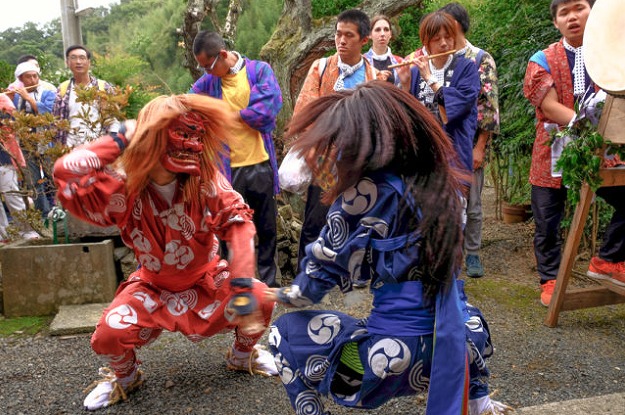
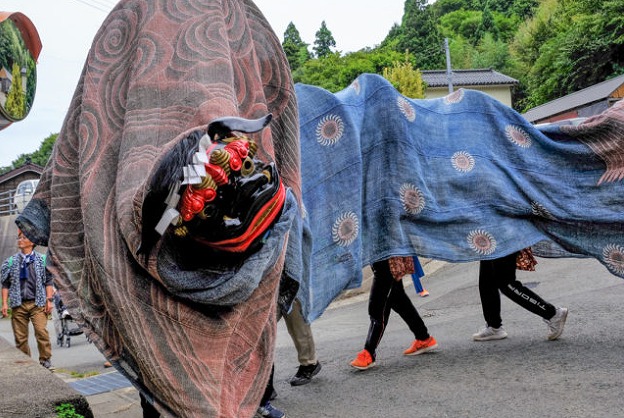
It is dedicated to the autumn festival of Kumano Shrine in the district located facing the mainland. The Maehama style features two oni, one red and one blue, dancing relative to each other at the same time. A lion also makes an appearance, but it is a large lion that can hold seven adults. In addition, there is an instructor named Roso, who wears a mask with only the upper half of his face. Roso sometimes dances, and sometimes looks down on the whole group to keep it together.
It goes around all the houses and comes back to the shrine again at the end, and the lion’s climb up the stairs that takes place at that time is worth seeing. Not only do they climb up, but the front tries to go up while the back tries to go back down. The lion’s hesitation is what makes the performance so powerful.
Aikawa Maturi(相川祭り)
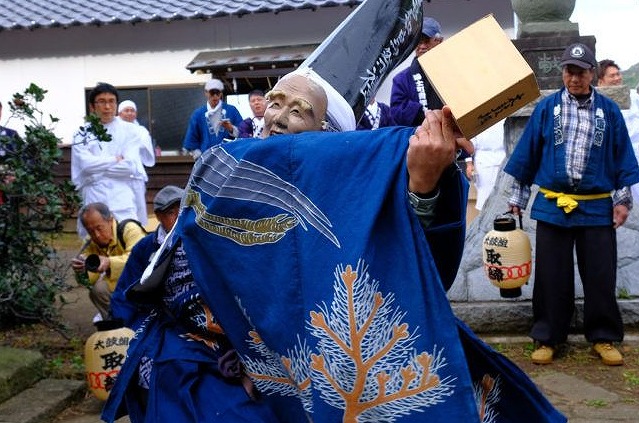
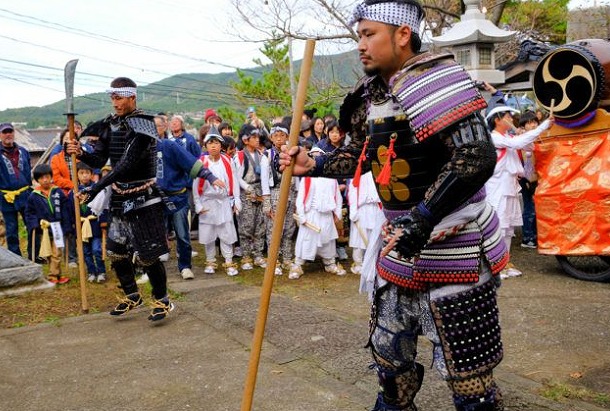
The Aikawa style of Onidaiko, which began in the Aikawa district, is named Onidaiko, but despite the name, the Oni (demons) do nothing. Or, not even Oni. The main actor is an old man (a virtuous old man), holding a bean-throwing square in his hand, which can often be seen in Setsubun 節分 (a ceremony held in February to drive away evil spirits). For example, in the Aikawa district, the birthplace of the festival, two people holding long swords simply stand there. Only the ogo (master) dances to the rhythm of the taiko drums.
Kita-Kawachi Matsuri (北川内祭り)
In addition, there are composite style festivals. For example, in the Kitakawachi district, three lion dancers appear before a bean-throwing Okina. The three lion dances are no different in content from the lion dances that can usually be seen mainly in the Kanto area.
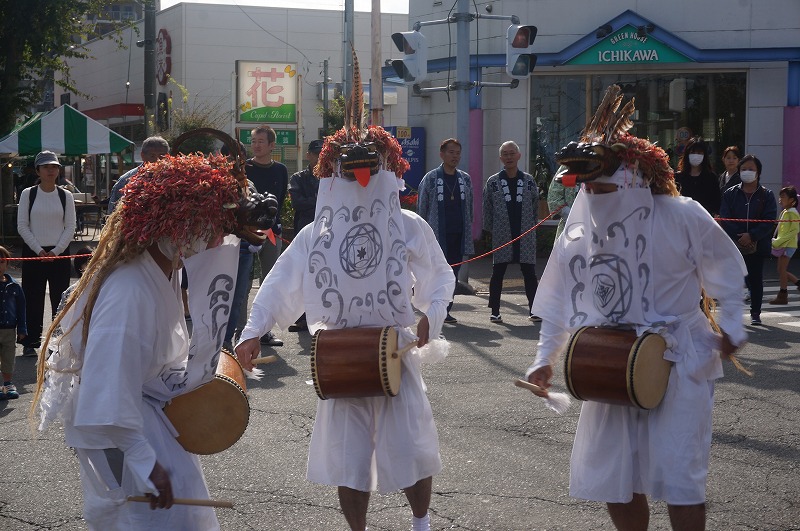
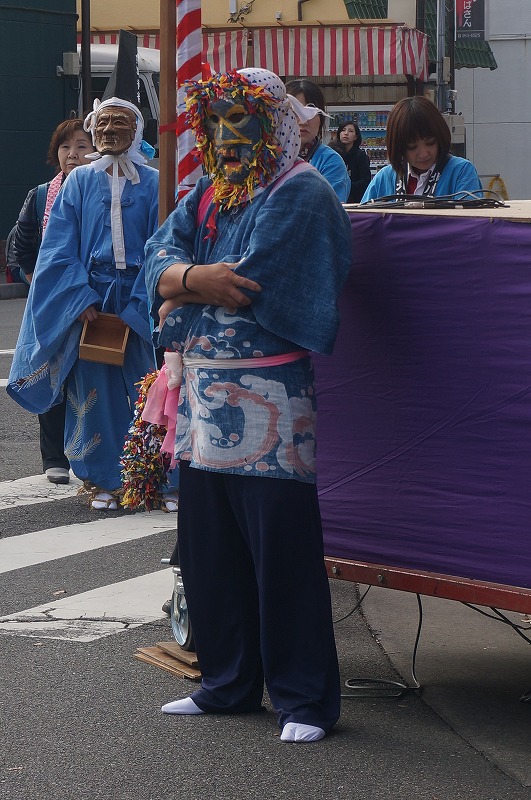
Add to that the mysterious mask of “Tsuburo”. Tsuburo appears between the lions. After that, the old man makes his appearance.
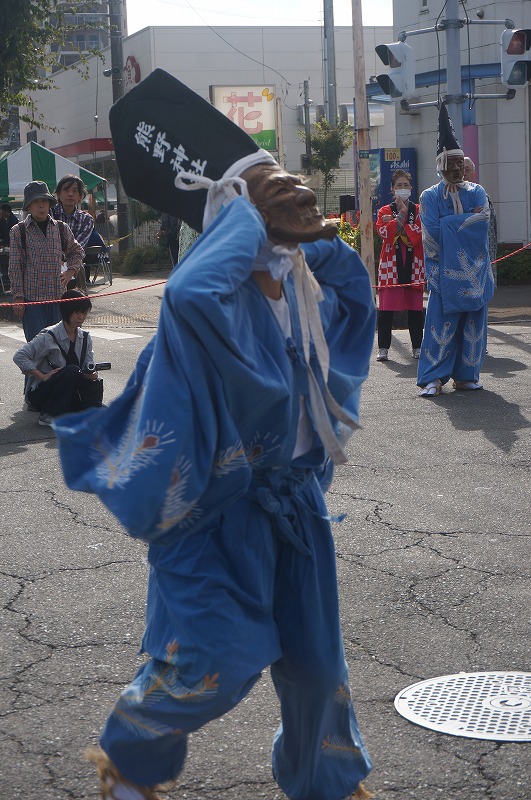
There are many other types of oni taiko with distinctive characteristics, such as the one-legged dancing style. It is no exaggeration to say that there are as many different oni taiko as there are districts and festivals. Sado is also a region that has handed down a variety of performing arts, not only oni taiko. Every year at the end of May, a festival is held to bring together all of Sado’s performing arts. Sado is an island where old Japan can be seen everywhere, and it is well worth a visit.
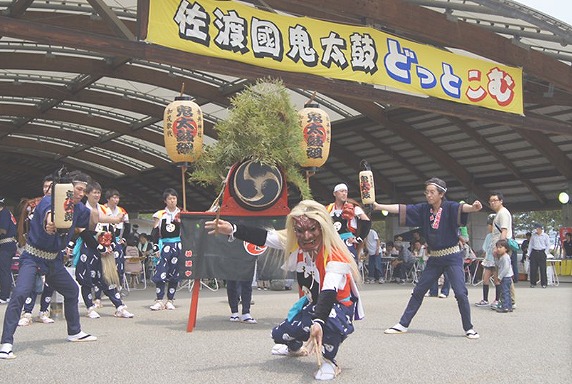
https://niigata-kankou.or.jp/event/2145
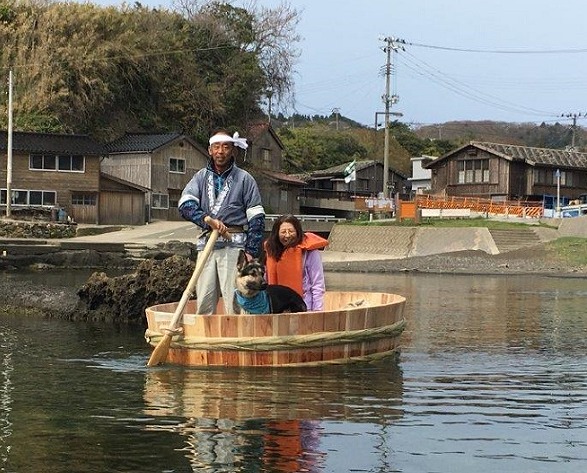
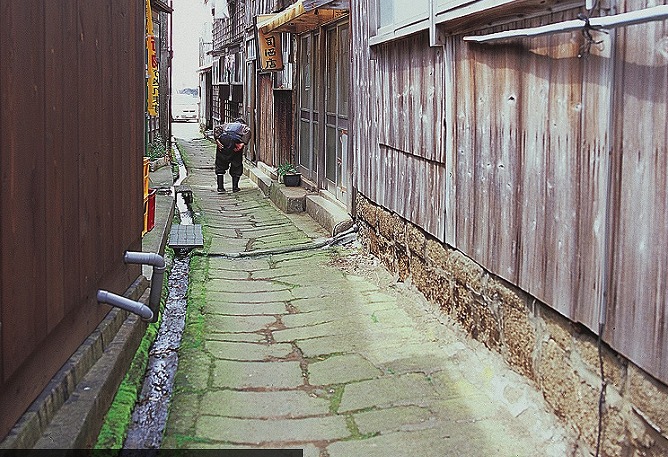
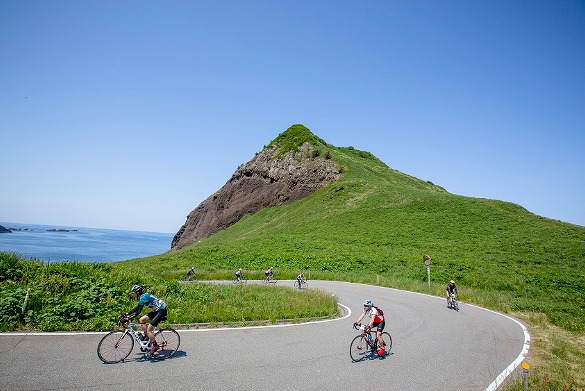
https://sado-biyori.com/feature/sadolog/11502/
Sado Ondeko dotto komu : An event that brings together all the performing arts of Sado Island https://niigata-kankou.or.jp/event/2145
Sado long ride : A cycle event with several thousand participants on a 210 km up-and-down course that circles the island at its longest point.
https://sado-biyori.com/feature/sadolog/11502/