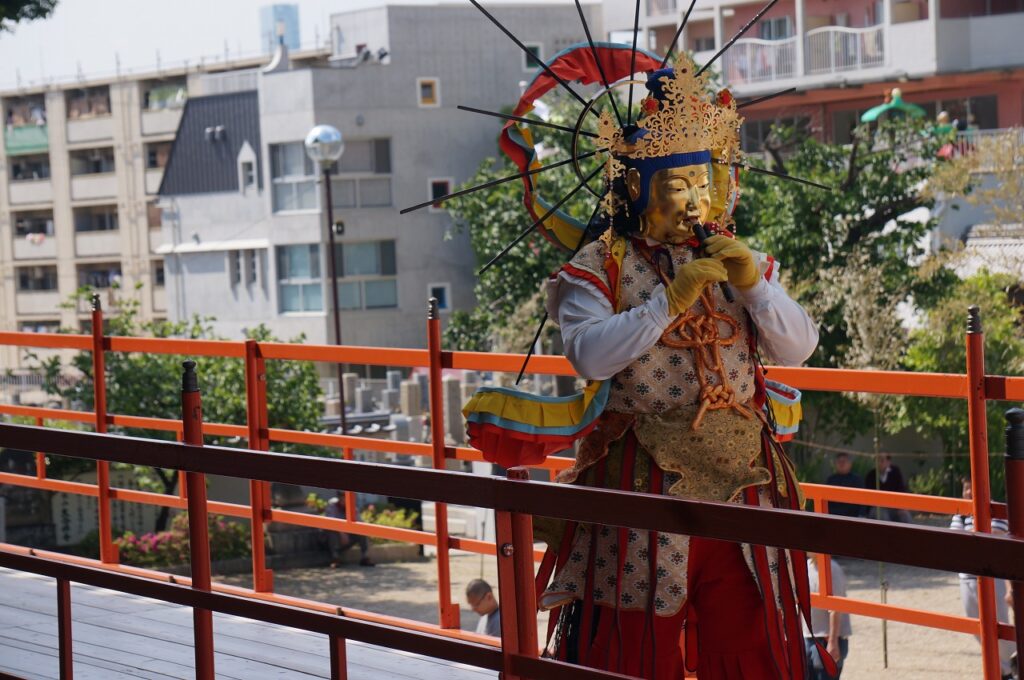
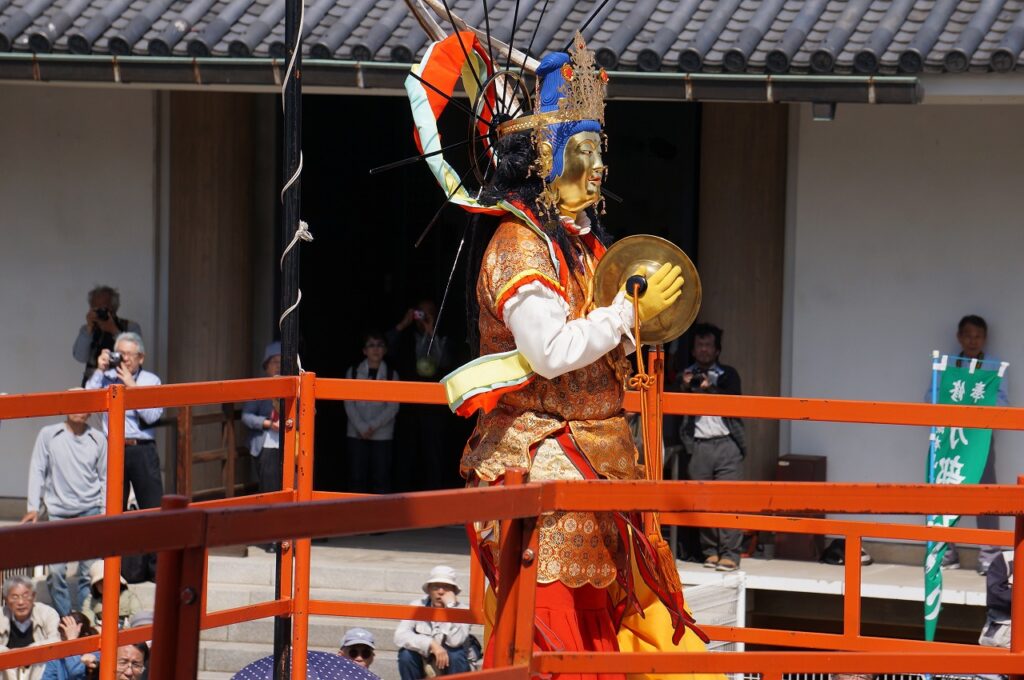
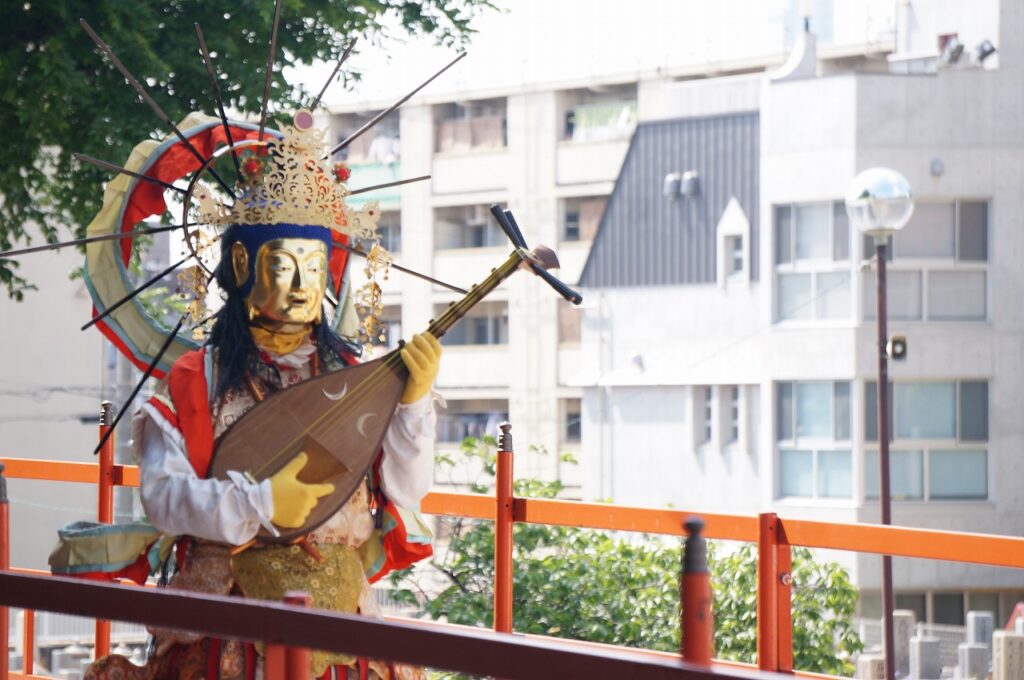
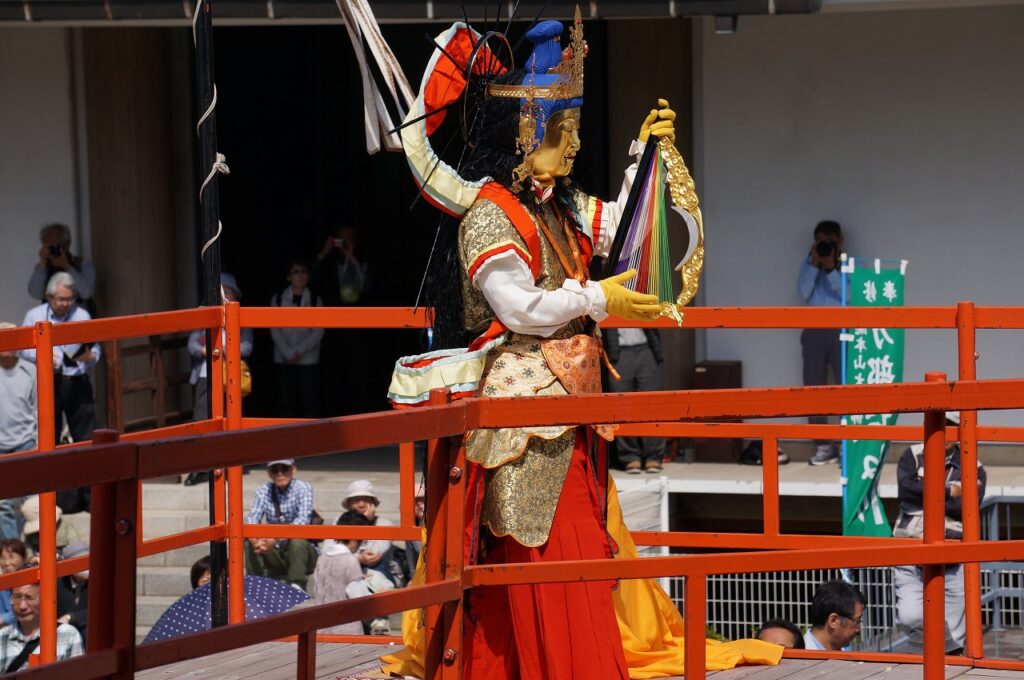
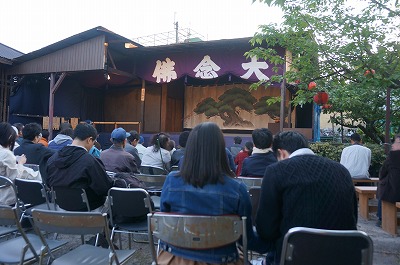
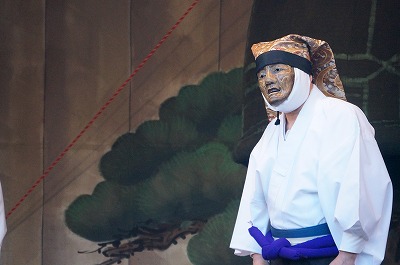
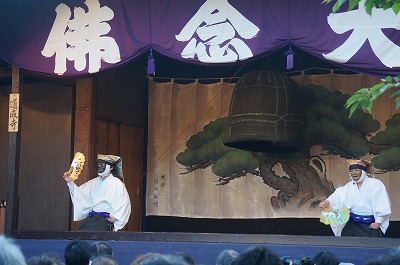
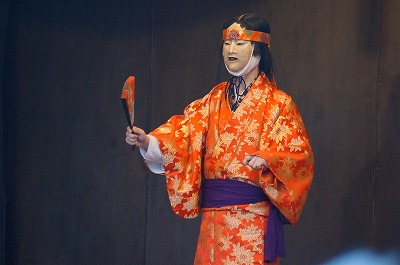
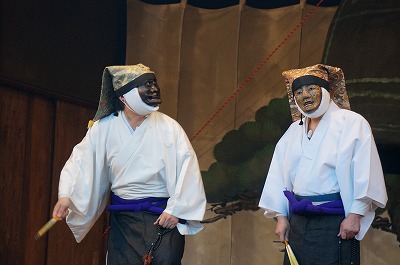
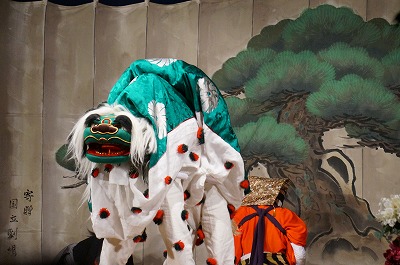
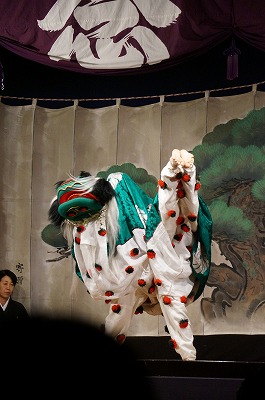
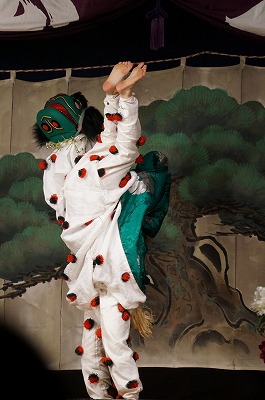
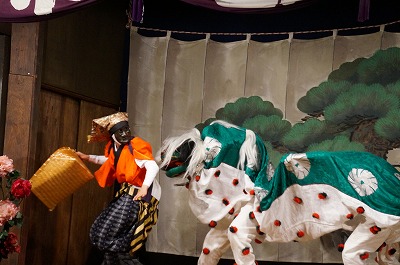
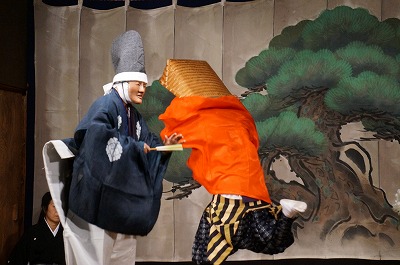
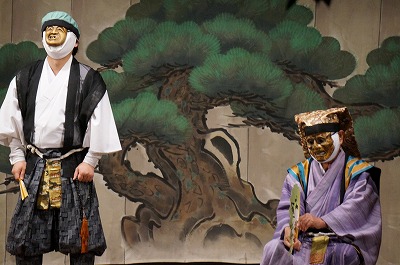
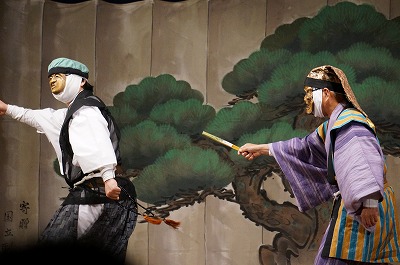
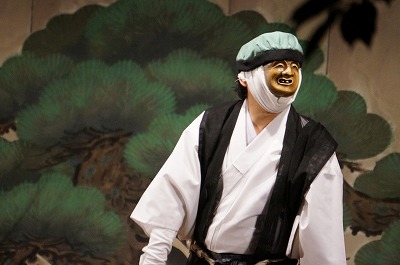
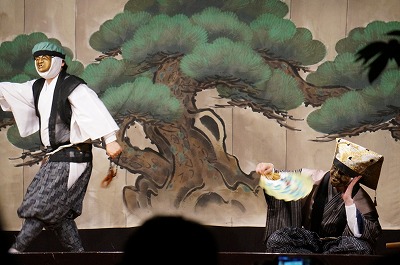
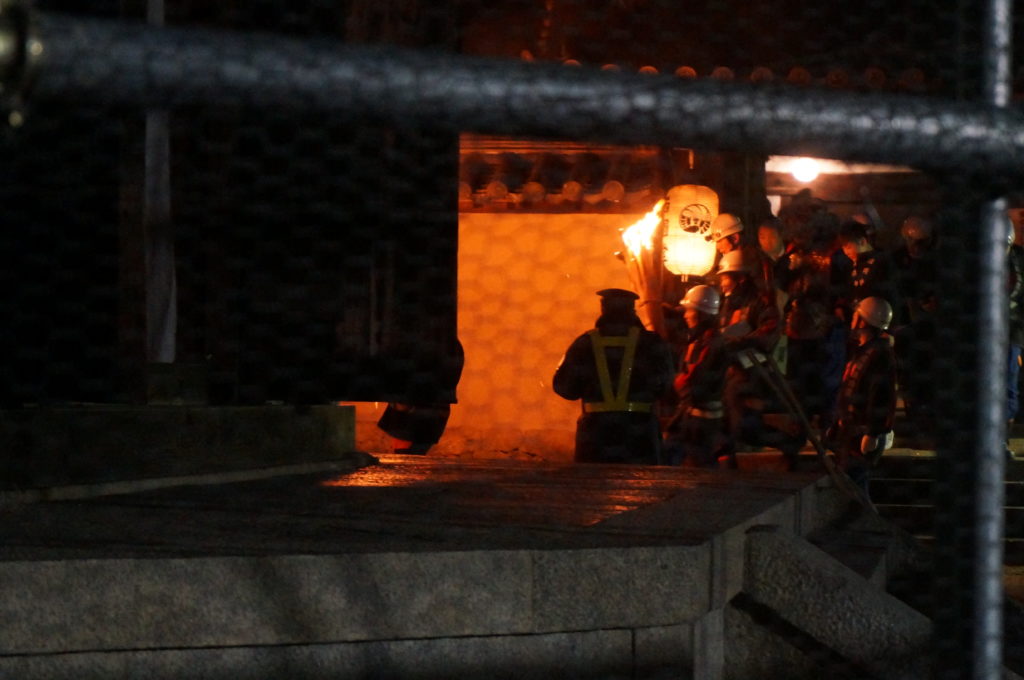
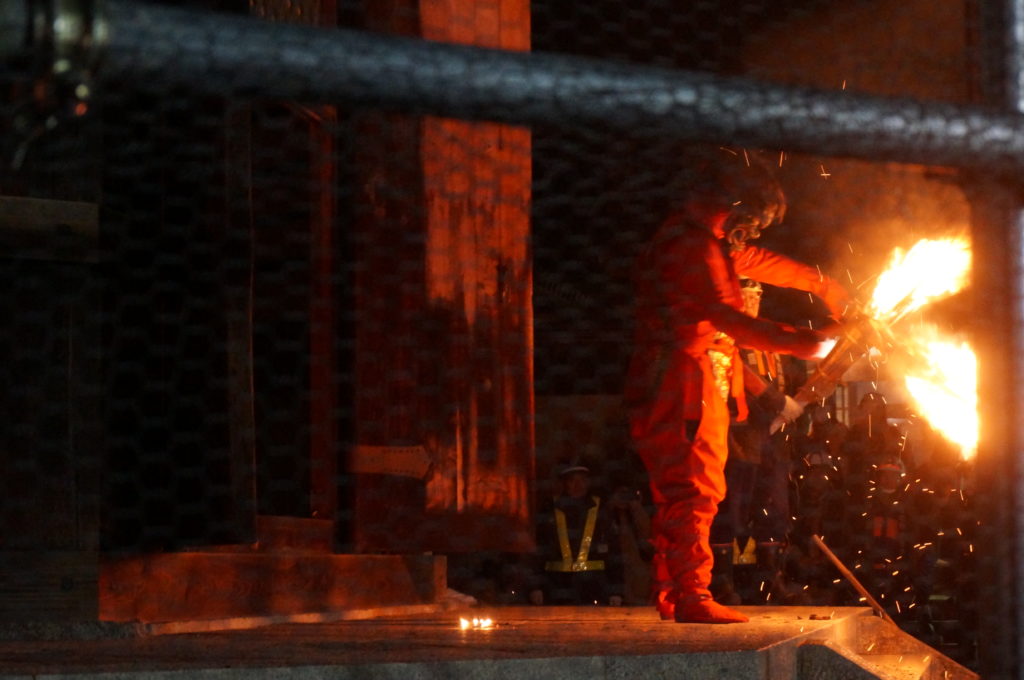
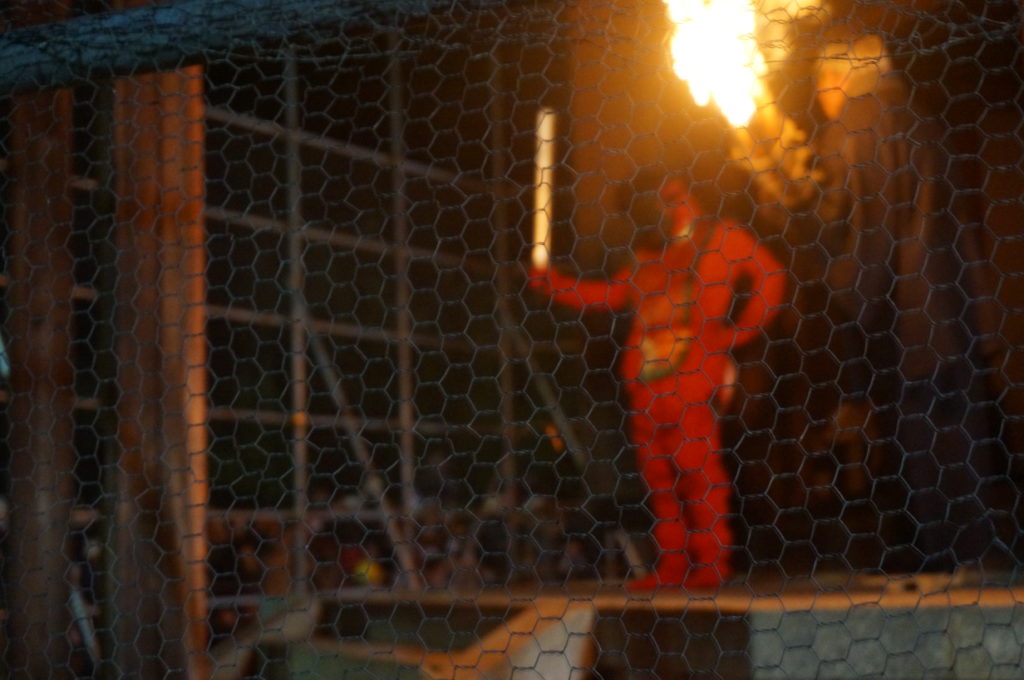
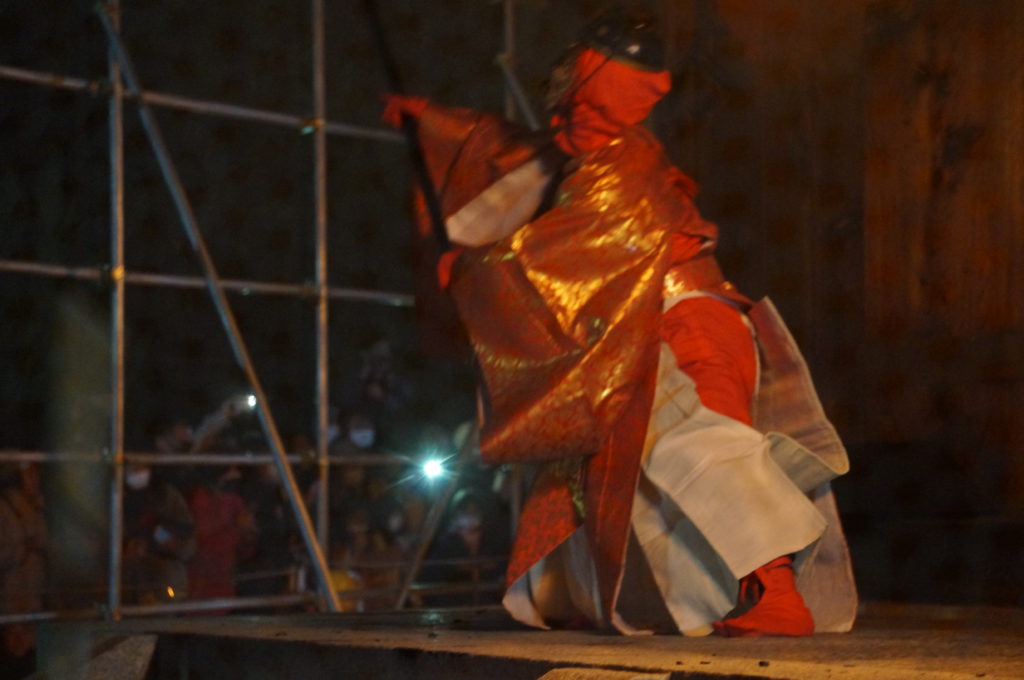
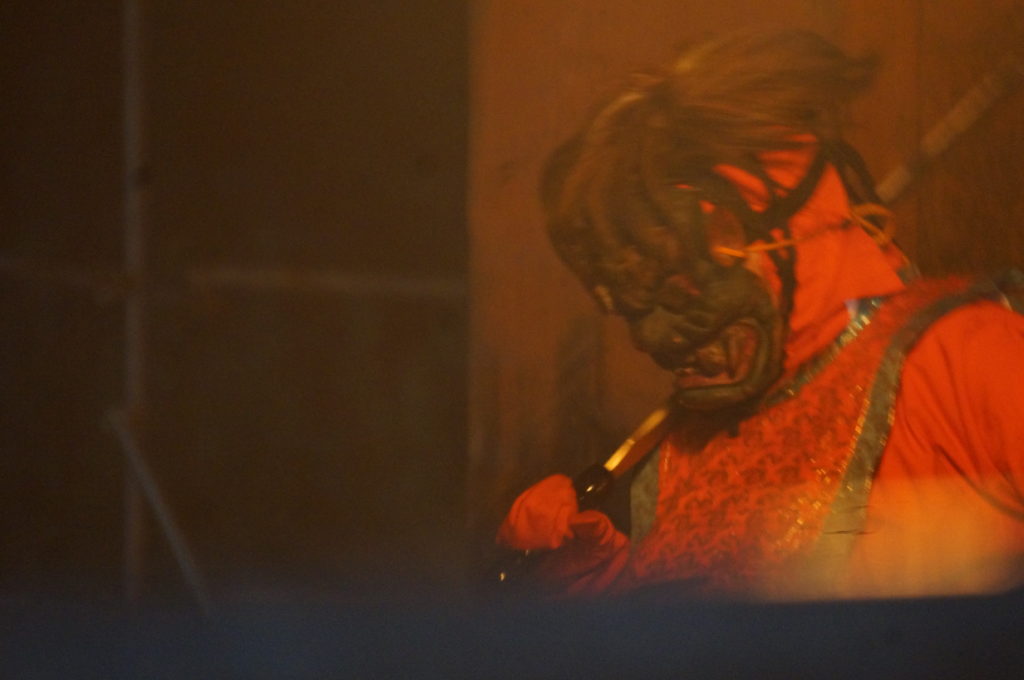
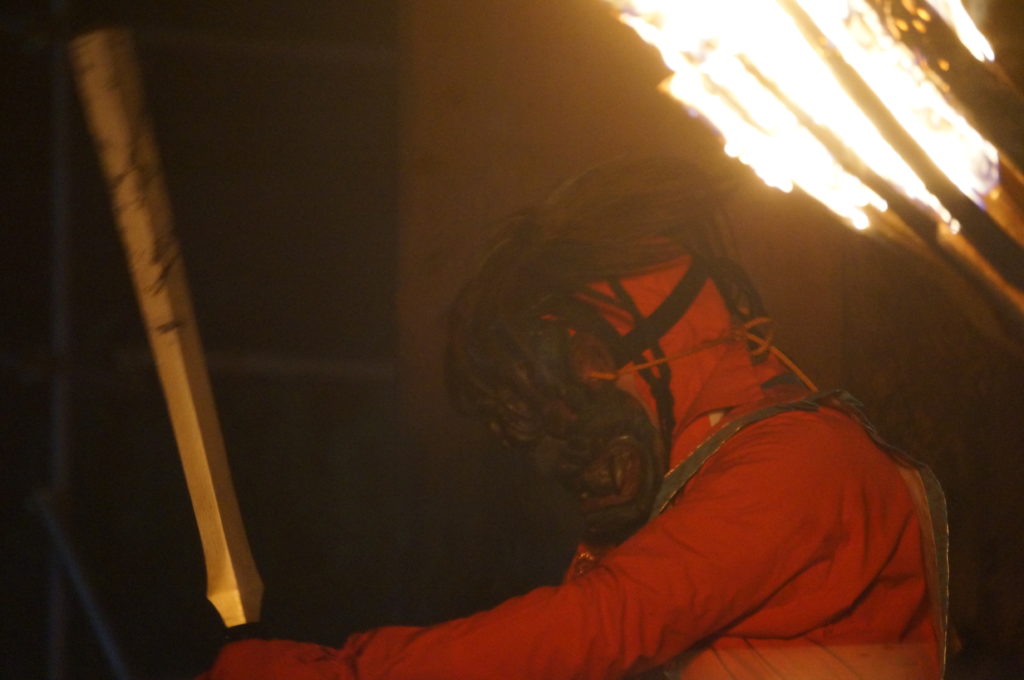
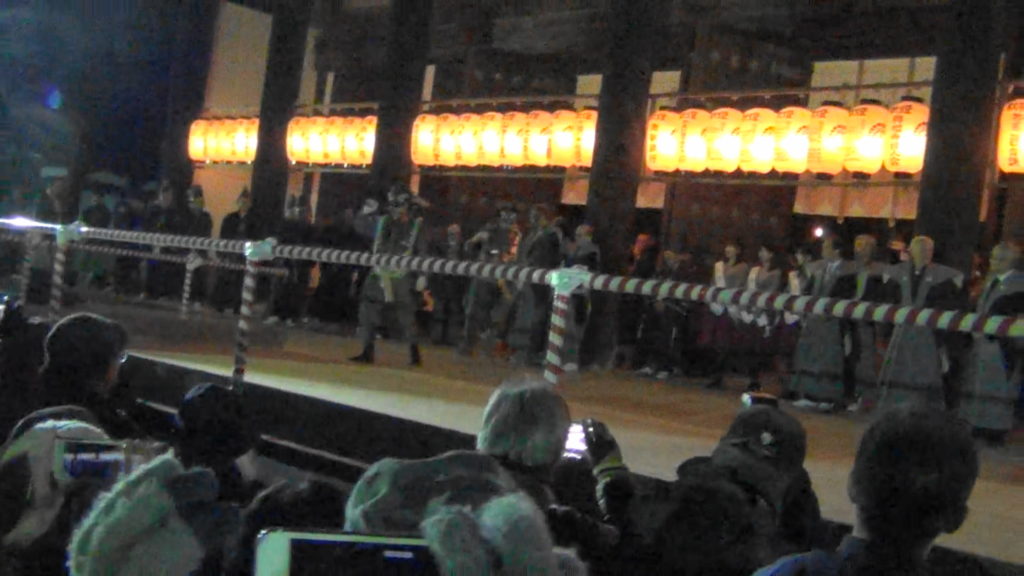
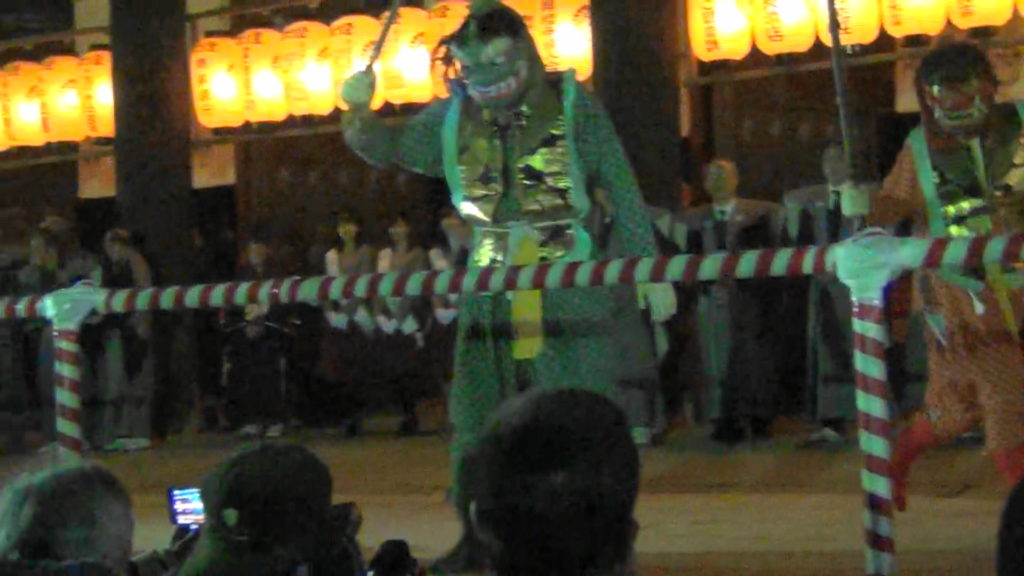
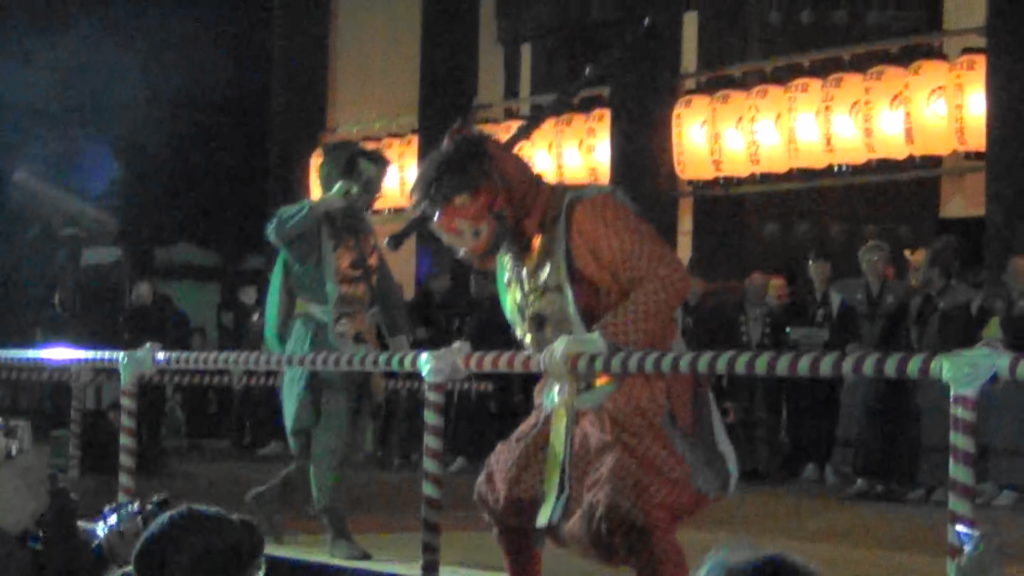
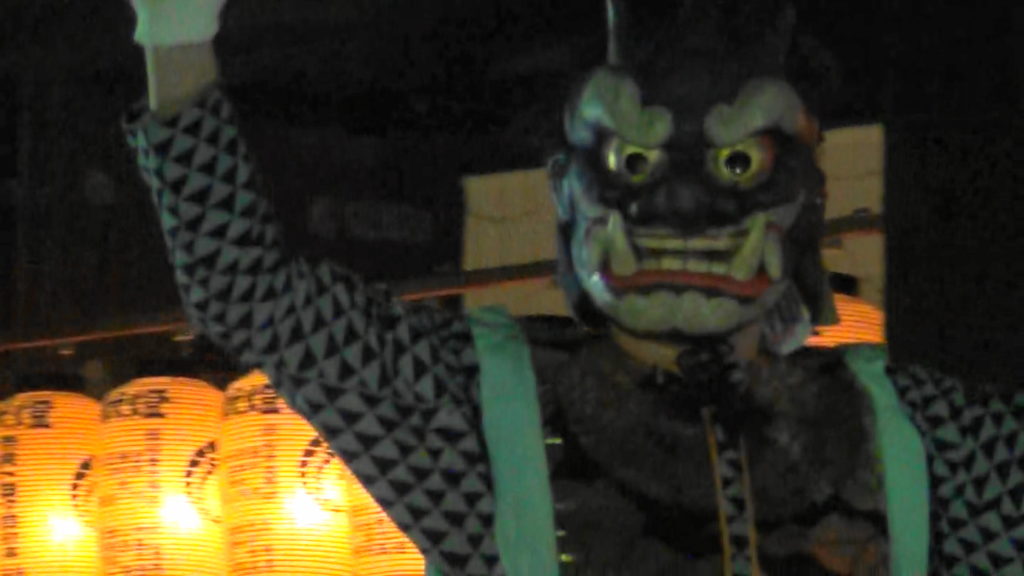
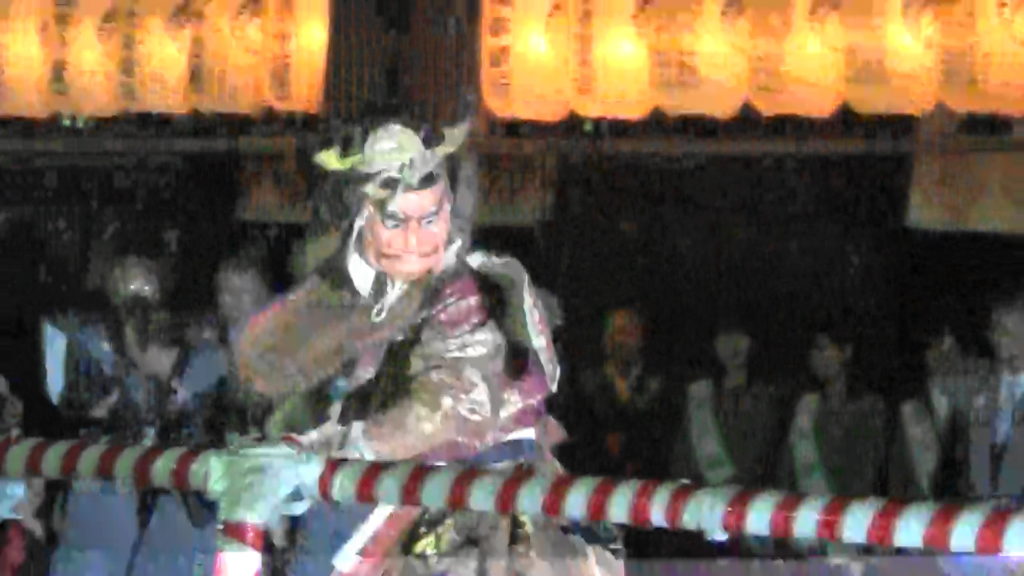
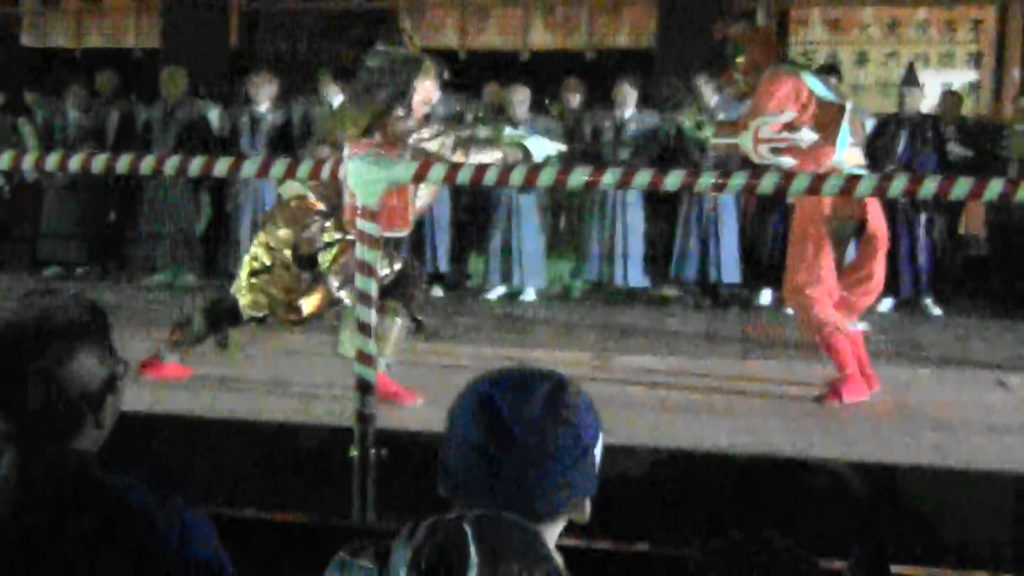
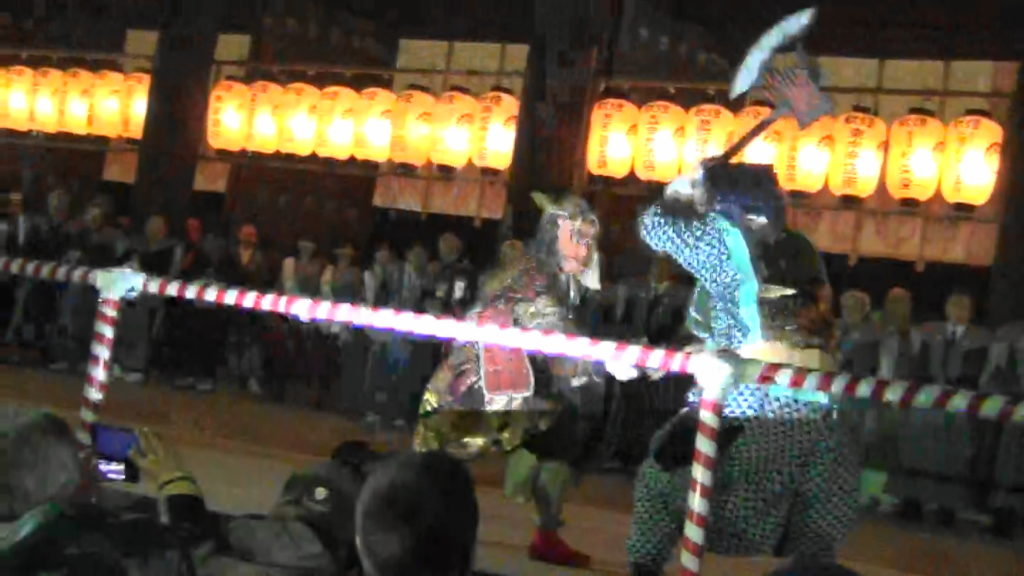
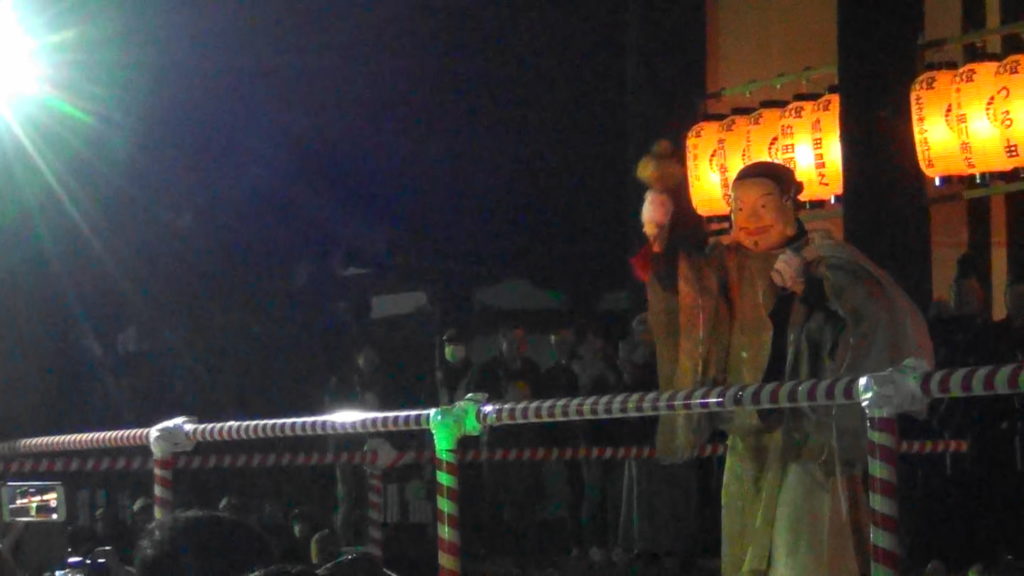
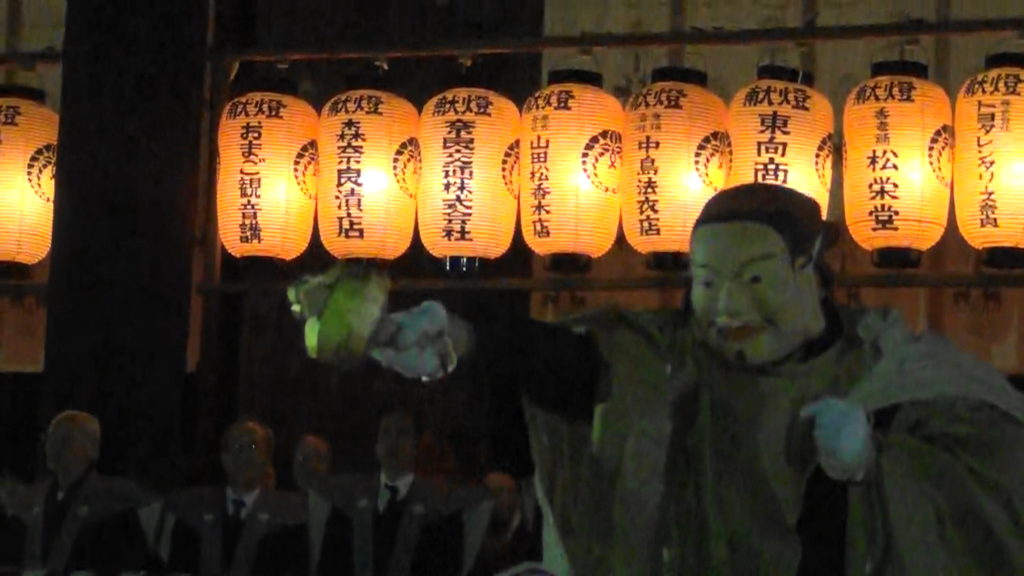
Dadaoshi at the Hasedera temple

Date: February 14th, every year
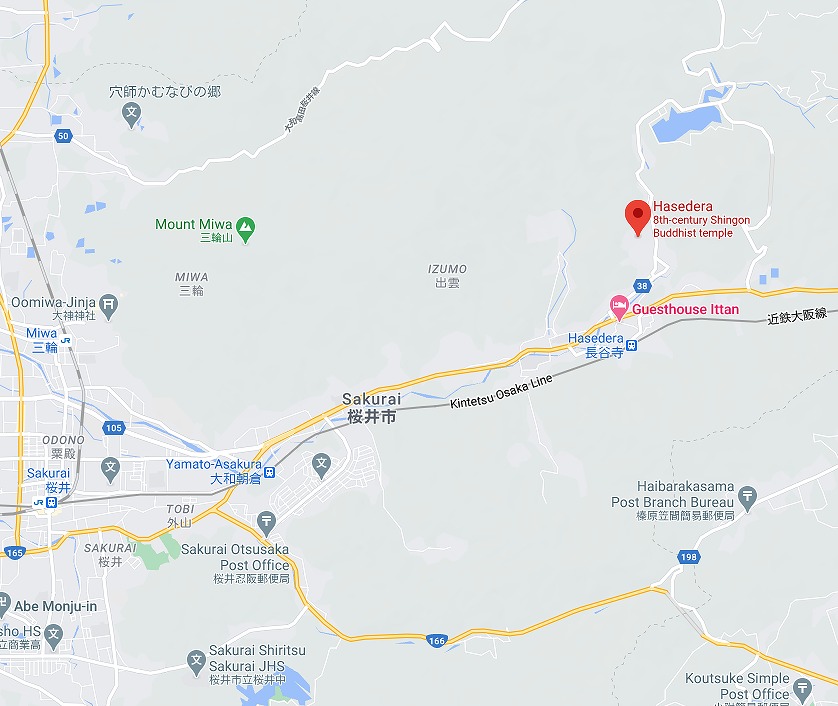
Location: Hatsuse 731-1, Sakurai city, Nara prefecture
Access: A 15-minute walk from Kintetsu Hasedera Station. Or take the JR Manyo Mahoroba Line to Sakurai Station. From there, take the Nara Kotsu bus to Hasedera Sando-guchi. It is a 10-minute walk from the bus stop.
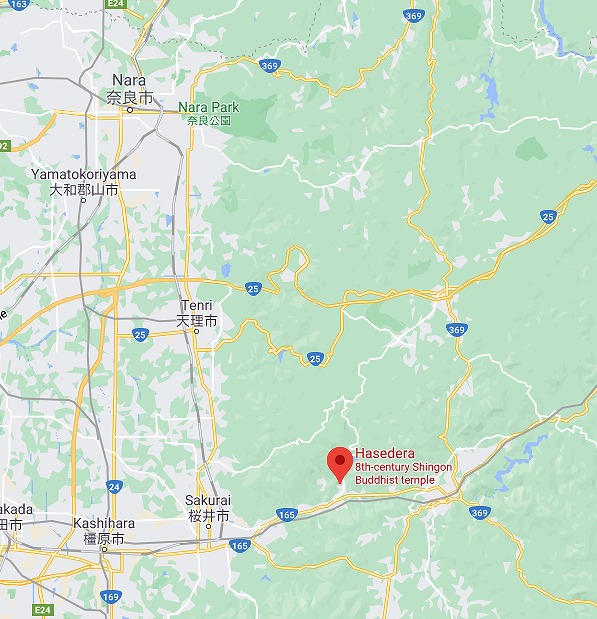
奈良から長谷寺へ
from Nara

桜井から長谷寺へ
around Sakurai city

Hasedera temple is located in a slightly out-of-the-way place in Nara. The temple was founded in 686. It is a very old temple. There are many temples and shrines like this in Nara. Todaiji temple, famous for the Great Buddha, was built in 741, so it is older than that. If Todaiji Temple is famous for the Great Buddha, Hasedera temple is famous for the Kannon (Goddess of Mercy), which is said to have been created in 727, but was destroyed by fire several times, and the current statue was rebuilt in 1538.

だだおし 長谷寺公式サイト
https://www.hasedera.or.jp/free/?id=531

Dadaoshi” is the final stage of the annual event, called “Shunie 修二会” hel-d at this temple in February to drive out demons.
Shuni-e is a Buddhist ritual that began in the Nara period (710-794), where people repent before the Buddha for the sins they have committed during the year without knowing. It is held in various places, but the most famous one is at Todaiji Temple. The ceremony, commonly called “Omizutori,” is held for two weeks from the first day of March, the most famous being the 13th. The most famous ceremony is held on the 13th, which usually lasts about 10 minutes, but lasts 45 minutes on this day. Because of the large number of spectators, admission is sometimes restricted. I won’t go into detail about it here, so please confer another site.
Cf.→https://www.japan-guide.com/e/e4110.html
Now, even though it’s not that big, the most famous one is “Dadaoshi”.

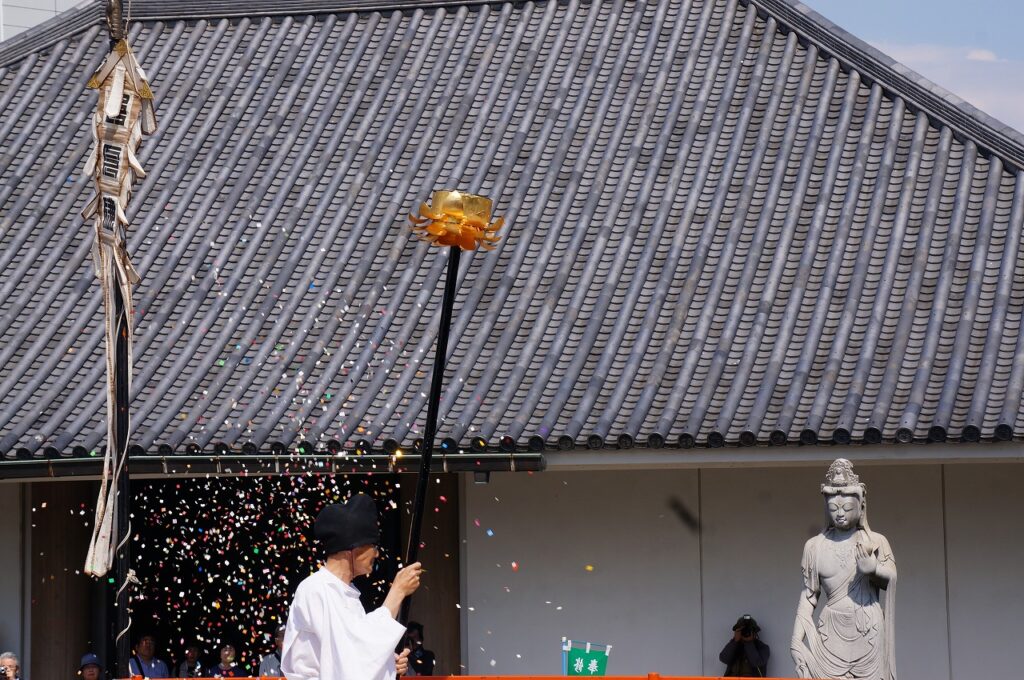
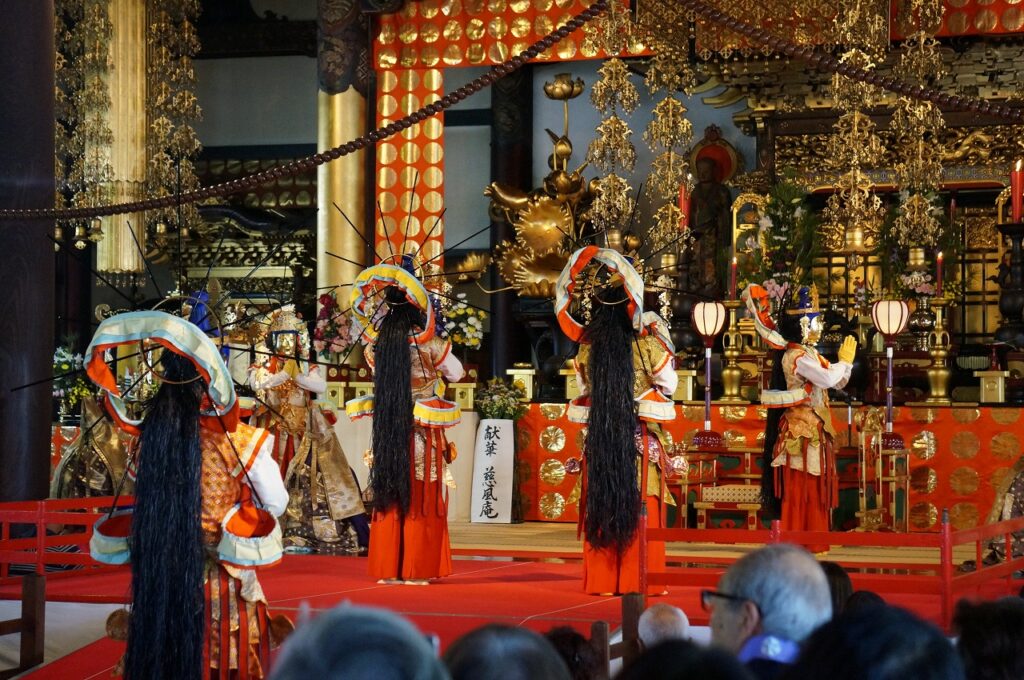
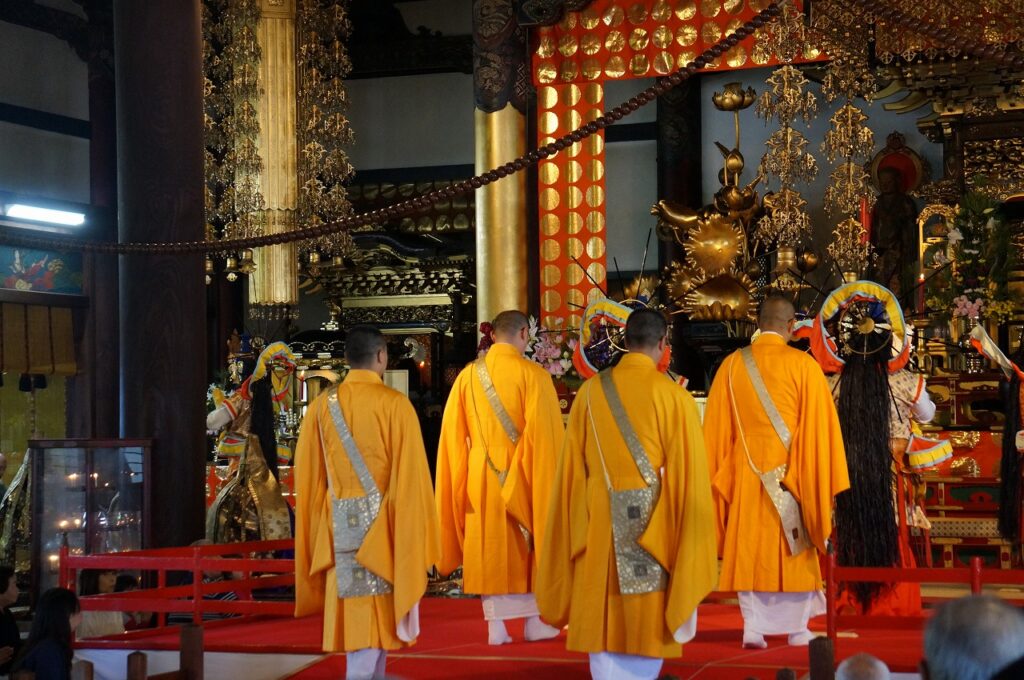
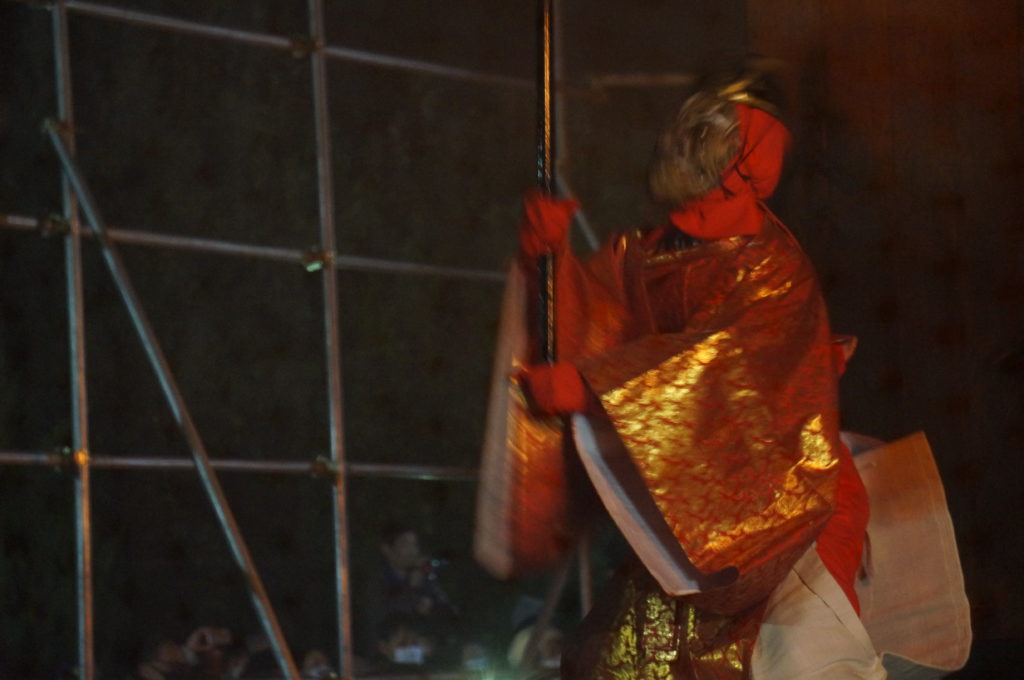
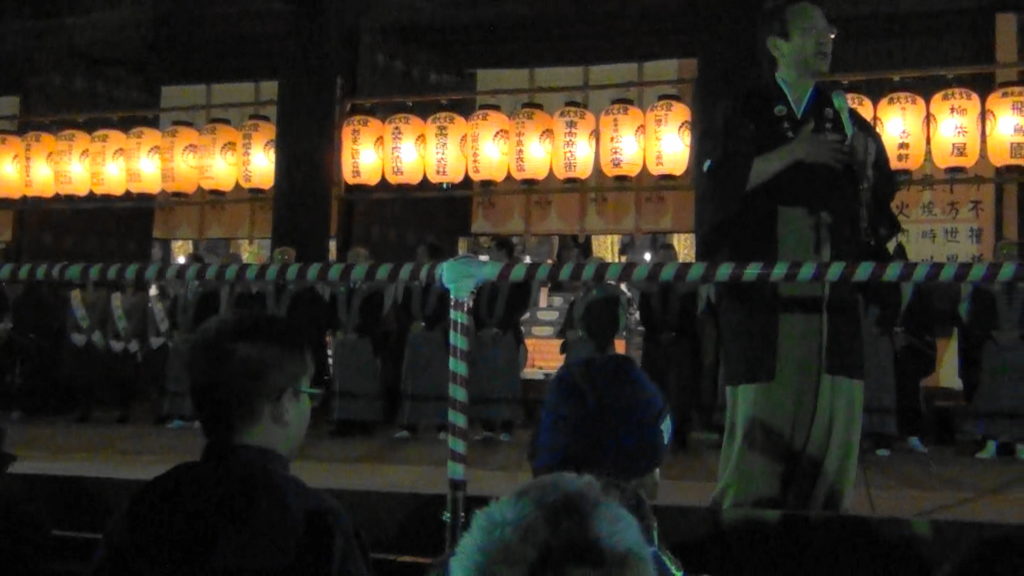
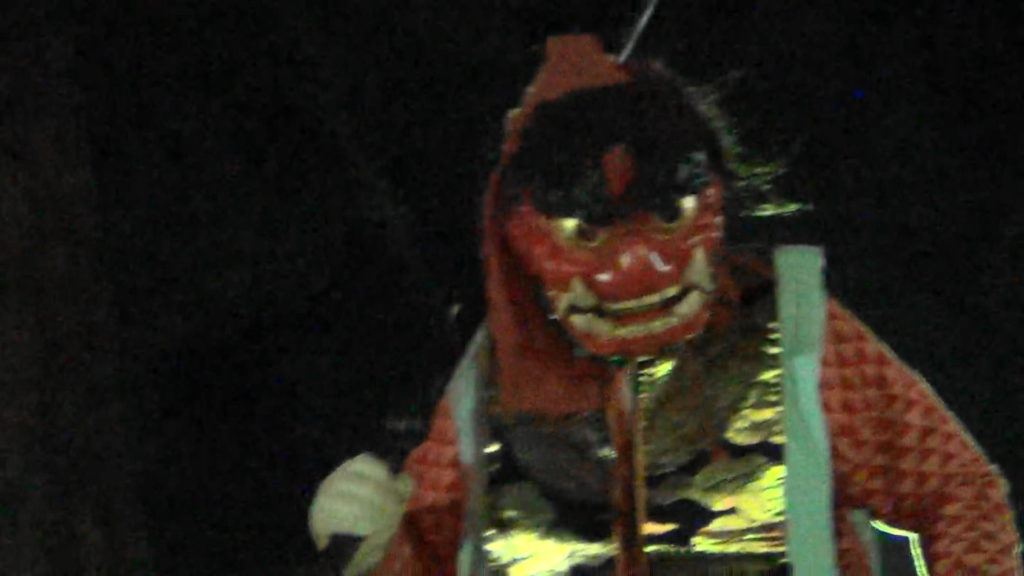
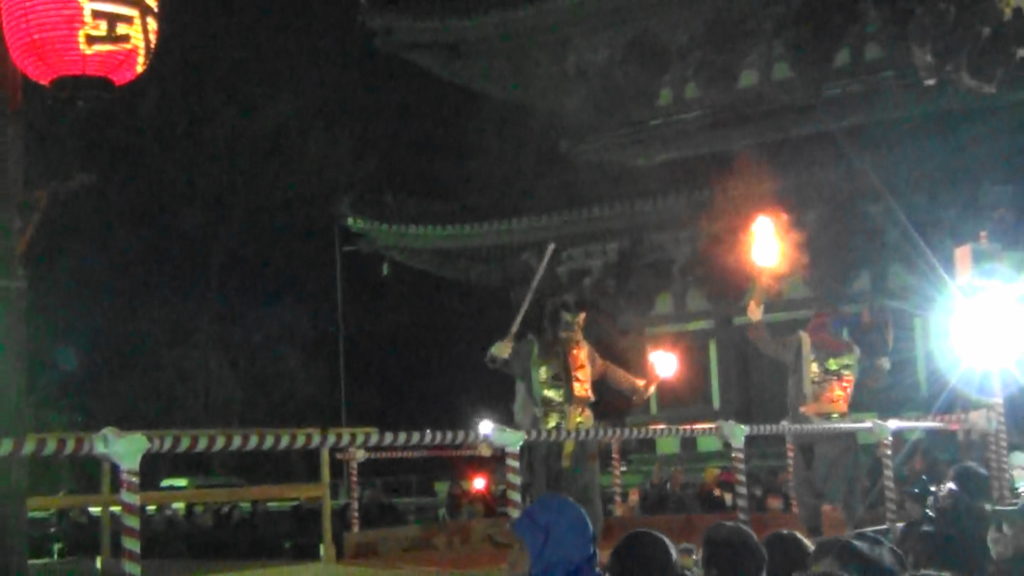
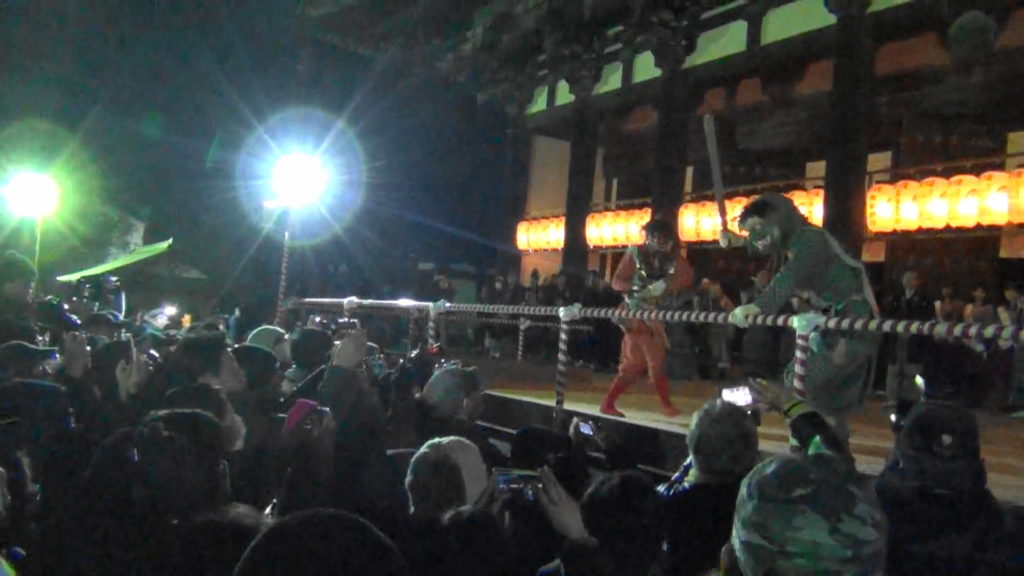
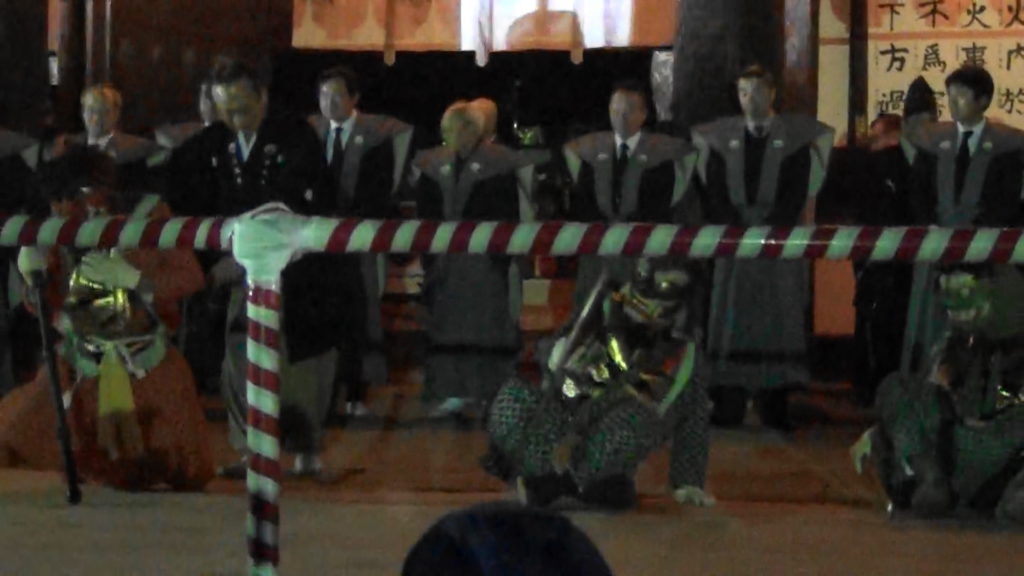
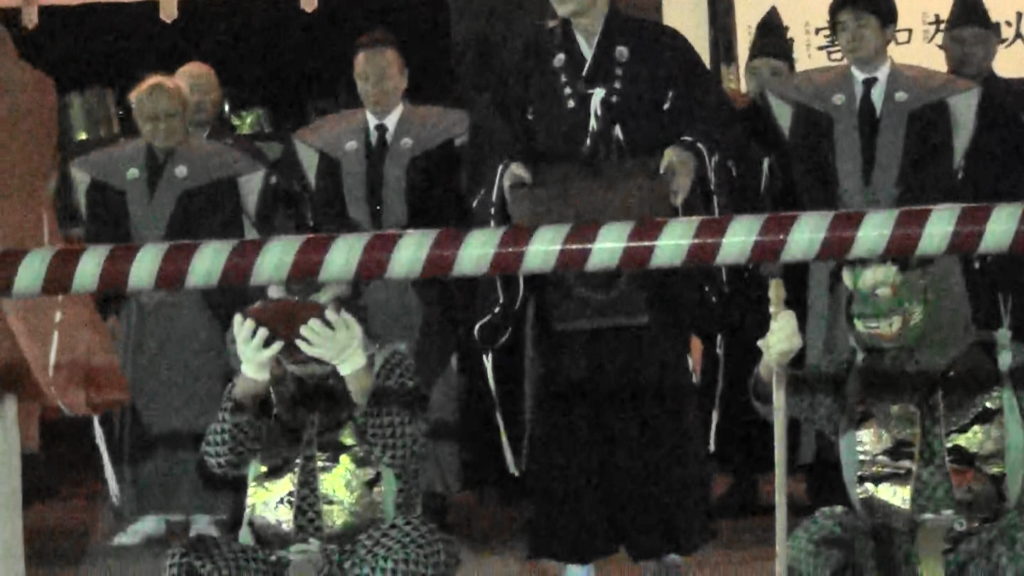
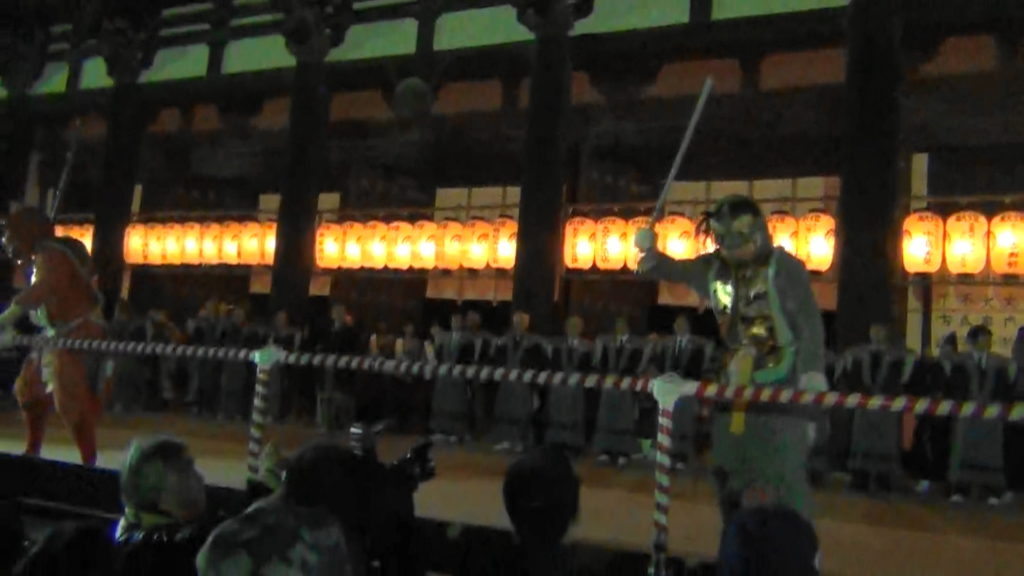
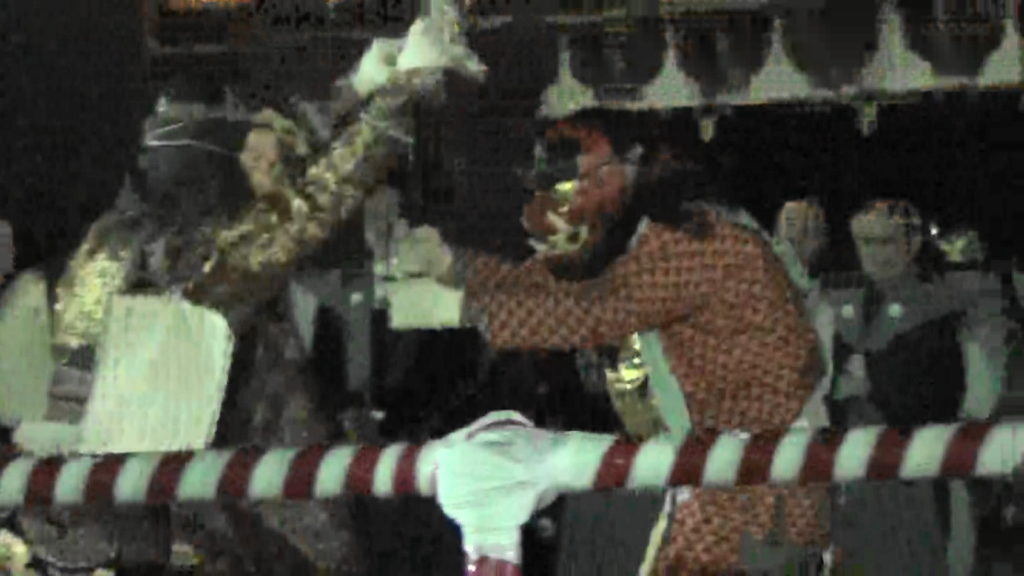
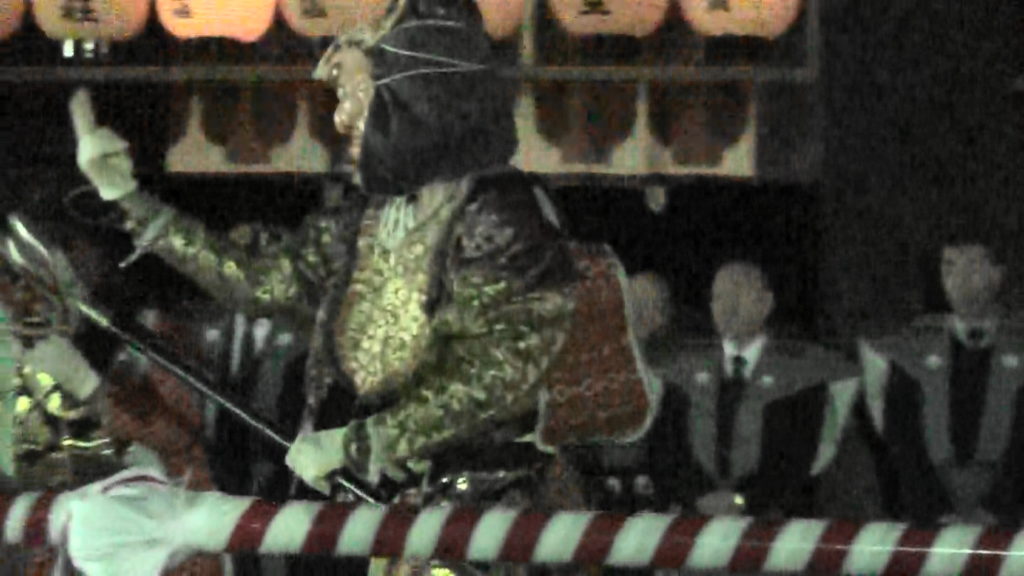
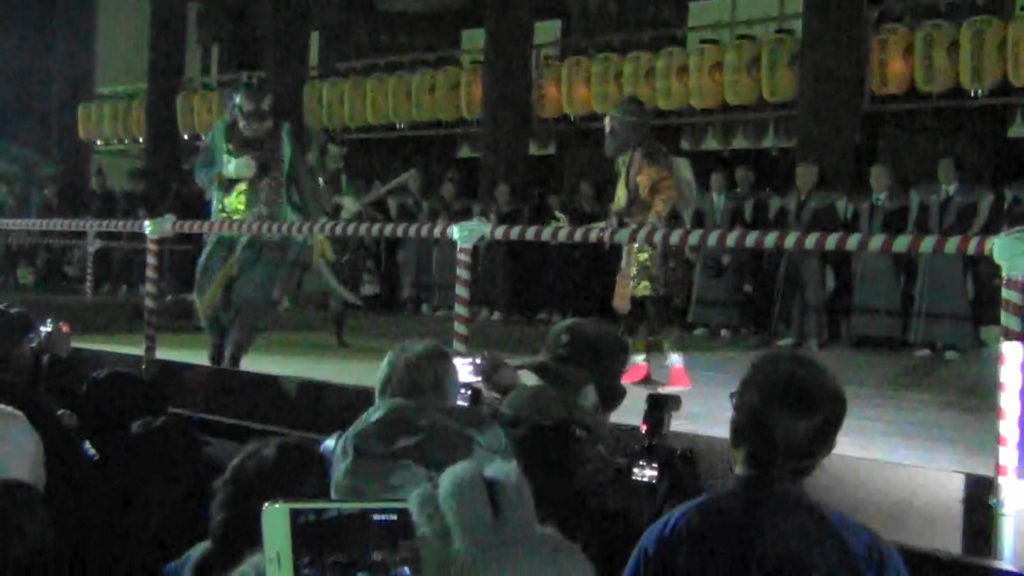
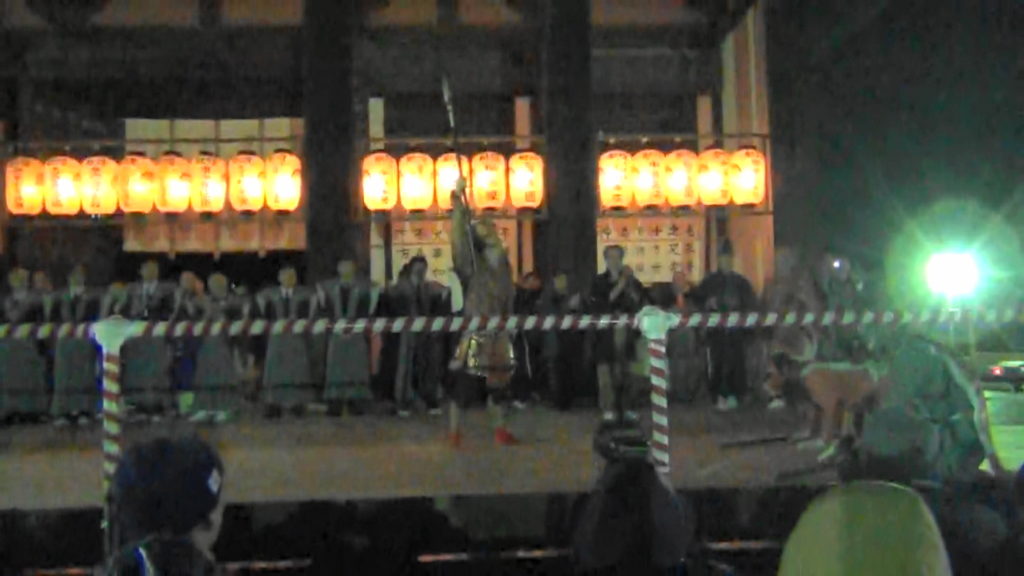
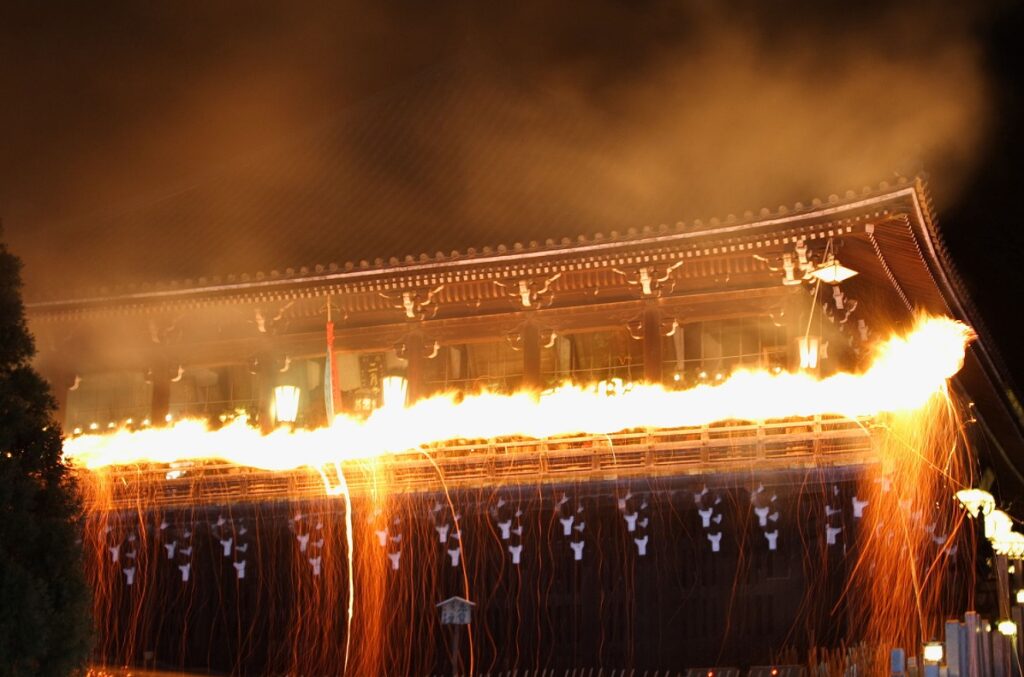
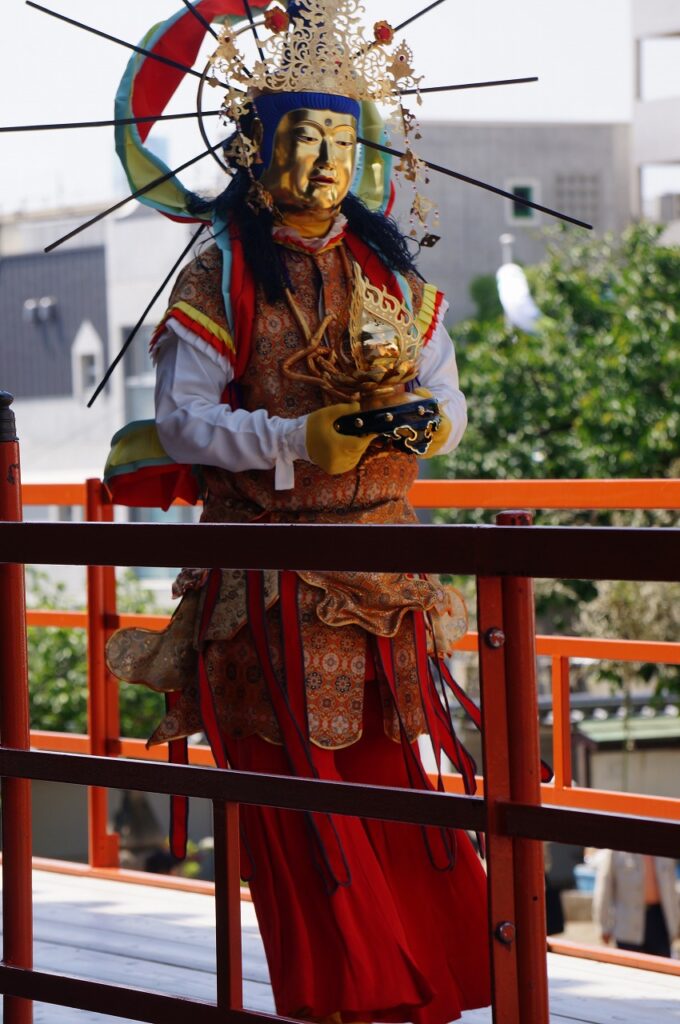
The Shuni-e at this temple started about a week ago, and the last day will be on the 14th. Around 3:00 p.m., monks bring the seven treasures in the main hall and the ceremony begins. The monks run around the hall and so on. This does not mean they are being idle, nor are they pressed for time. This ritual is supposed to take place in the virtual world of the Buddha, called “tosotsuten,” where things move hundreds of times faster than in the human world, so they are trying to catch up as much as possible. After four o’clock in the afternoon, the last treasure, called “Gofuda,” is taken out. This is the most powerful talisman that the founder of the temple received from Enma, the king of hell, a long time ago. When it appears , the demons (ogres), who have finally lost their patience, come running out.

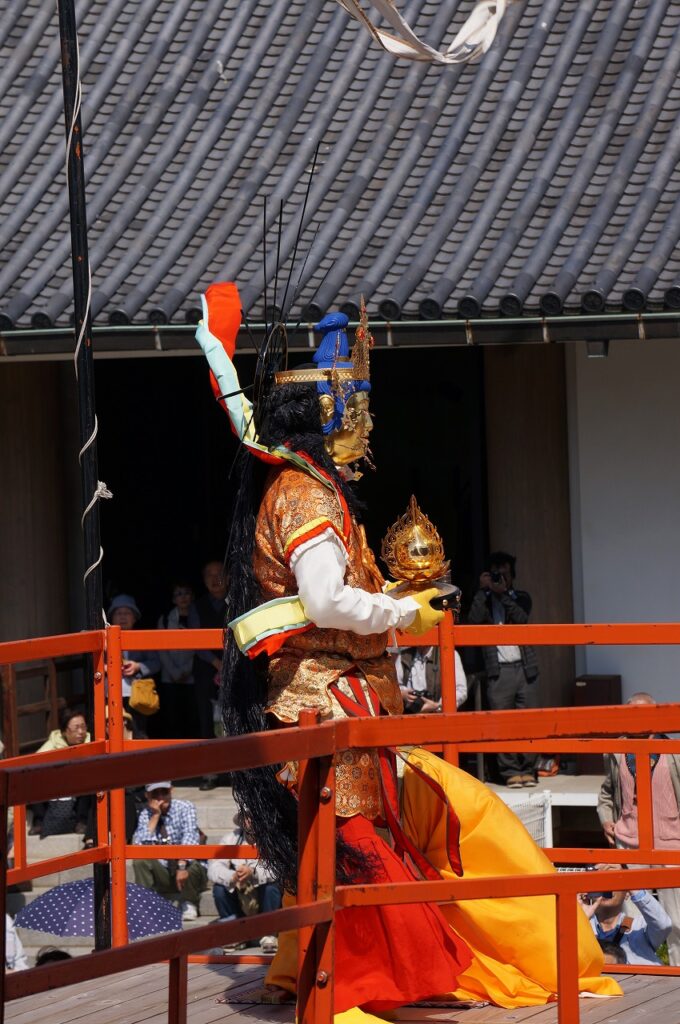
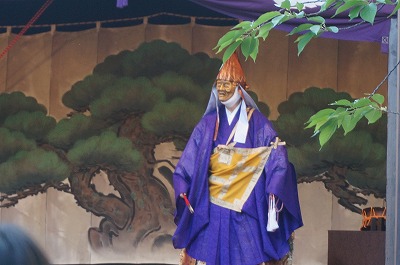
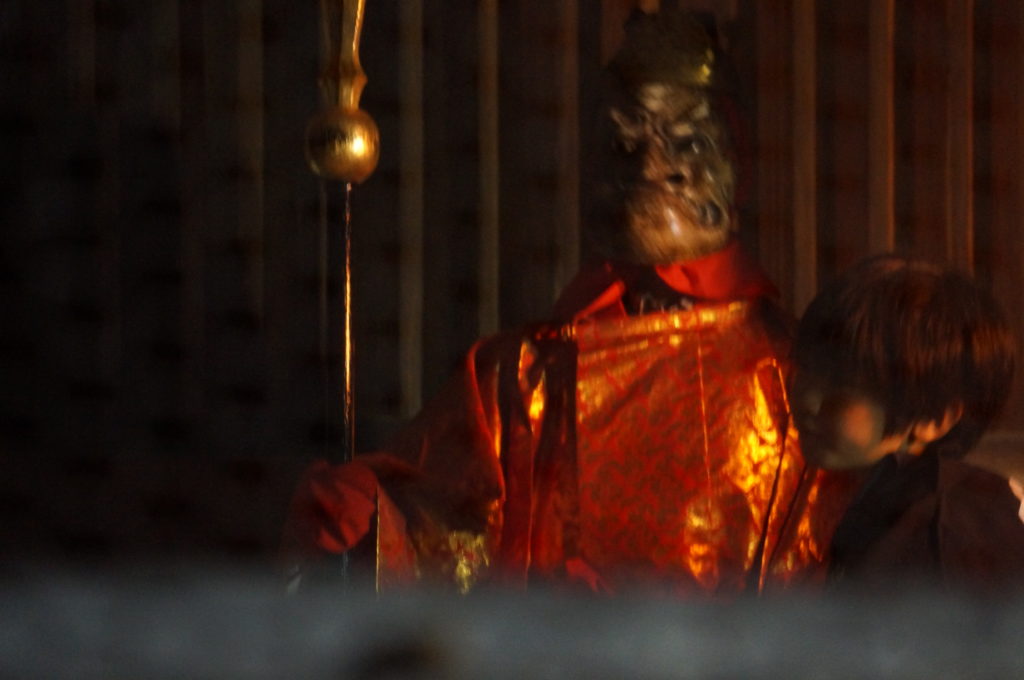
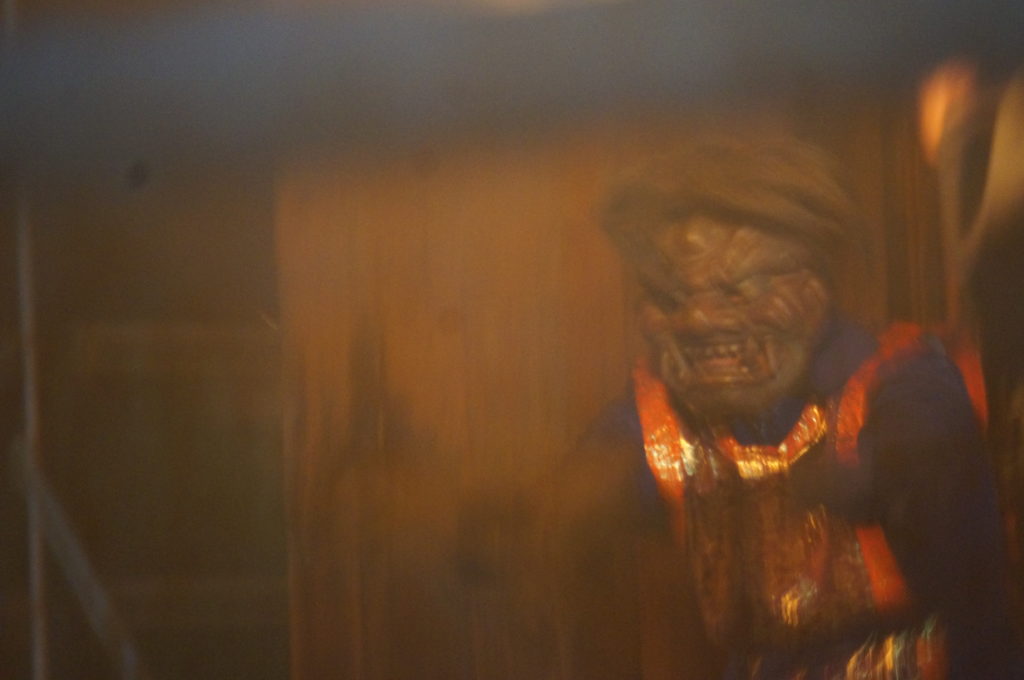
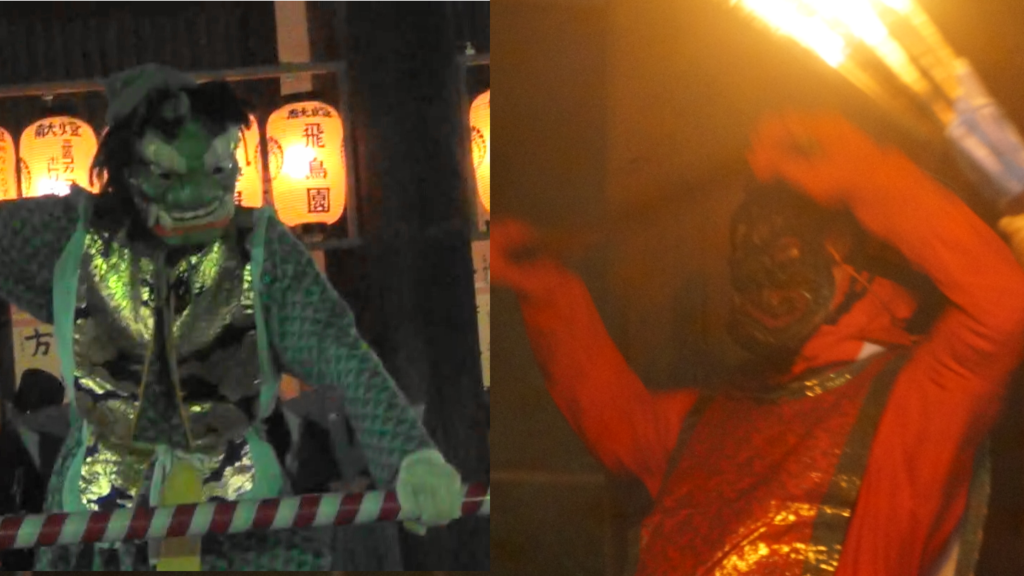
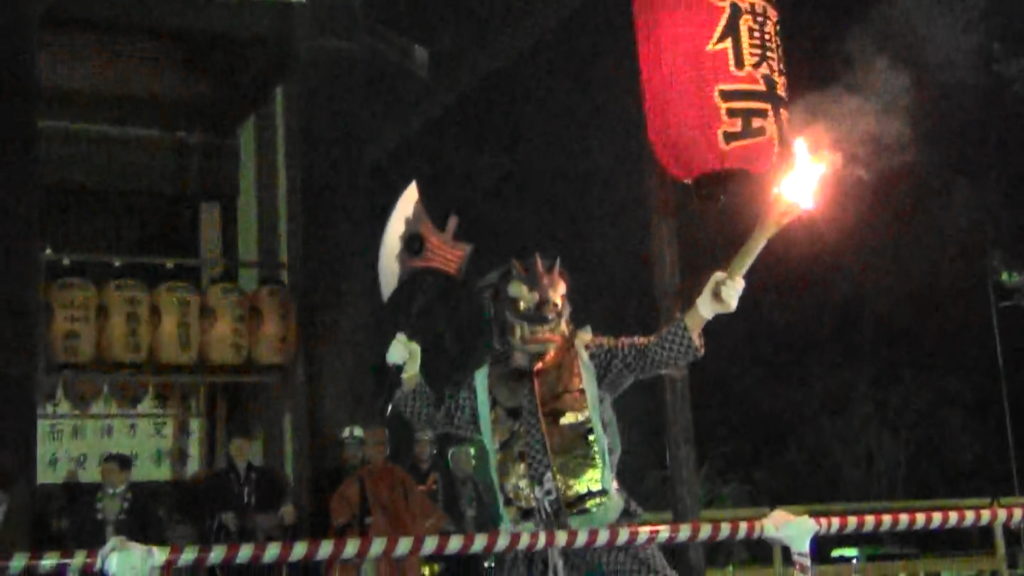
There are a total of three types of ogre masks. The blue and green masks are relatively recent, but only the red mask was made in the Edo period. The red mask is different from the other masks in terms of power. The red mask represents this event, so it is often seen on the posters. It is not only different in size, but also in carving technique and outstanding expressiveness.

Then, the Buddhist monk presses something called a “danda-in” on the forehead of the attendant. At this point, the demons, unable to take it anymore, run out toward the cloister. This Danda stamp is said to be the origin of the word “Dadaoshi.

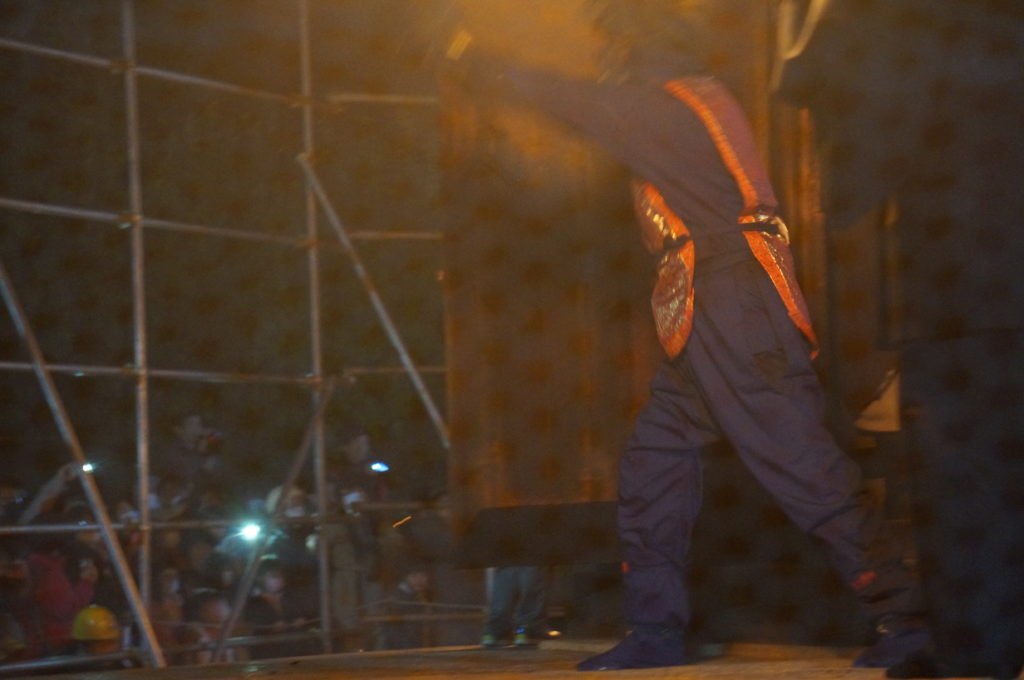
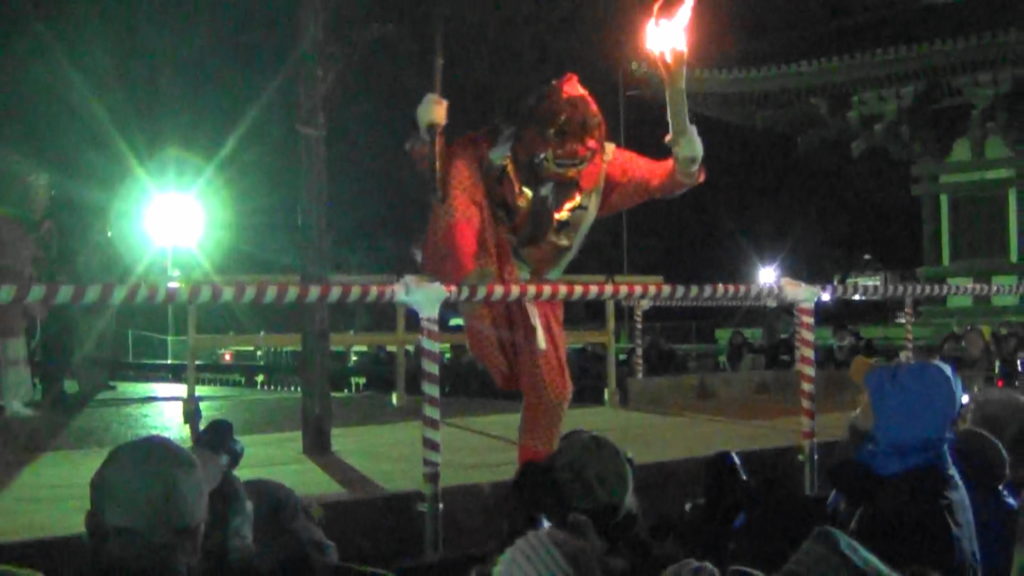
The most powerful part is the big torch that follows behind the ogres. A large torch is said to weigh more than 150 kg, and it takes four people to carry it. As a result, the torches swing left and right, and fire sparks fall on the audience each time. It is said that being exposed to these fire sparks will keep people healthy, but it is necessary to be very careful about how you dress. So, a firefighter sprinkles water right behind torches and chases after them. These can be viewed outside the hall, on the cloister side, for an entrance fee only, or you can watch the ceremony inside the hall by applying for a paid Goufuda.

And finally, the red ogre, the last boss, comes out. The people playing the role of the demons are said to have drunk sake to cheer themselves up before appearing on stage, so they wander around the corridors, scaring people.
The rhapsody lasts about 15 minutes. By 5:00 p.m., it was all over. After that, everything goes back to normal in an instant. People take the burnt-out torches home as a souvenir. When this ceremony is over, spring will soon arrive in the area.

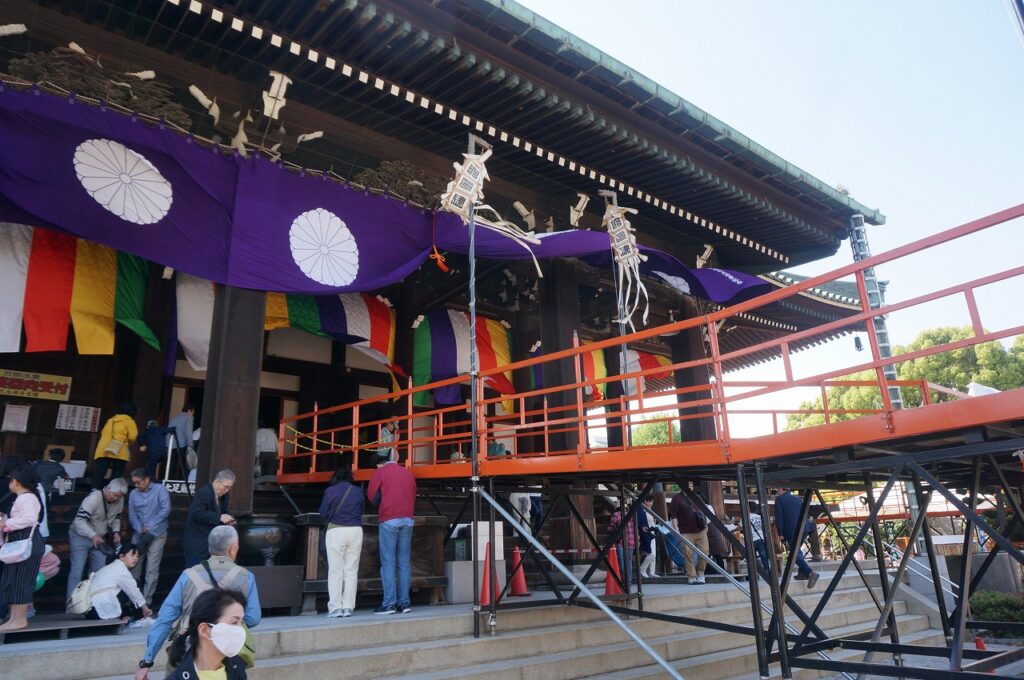
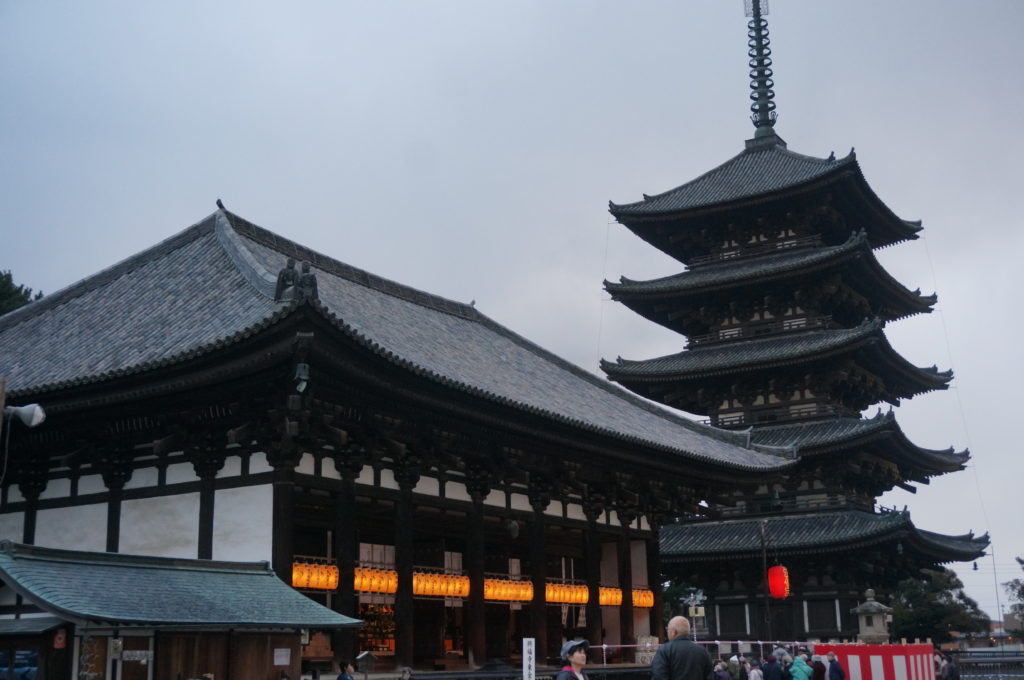
Surprisingly, this main hall is actually a national treasure. Hase Temple is also dotted with various other facilities such as a five-story pagoda, and it is also a temple of flowers where seasonal flowers bloom all year round. The long staircase leading to the main hall is the most beautiful part of the temple. It’s worth taking a short walk to see. A different kind of Nara. A different kind of Japan. That’s what you’ll find here.


Report: Manbu oneri~The Luxurious World of Buddha at Dai nenbutu ji-temple

Date: 1~5th, May, every year
Location: Uemachi 1-7-26, Hirano district, Osaka city, Osaka prefecture
Access: Take the Midosuji subway line from Shin-Osaka or the JR Loop Line from Osaka to Tennoji. From there, take the subway Tanimachi Line or the JR Yamato Line to Hirano. It takes about 5 to 8 minutes to walk from each station.

Introduction~ In Japan, if ogres dance, so will Buddha

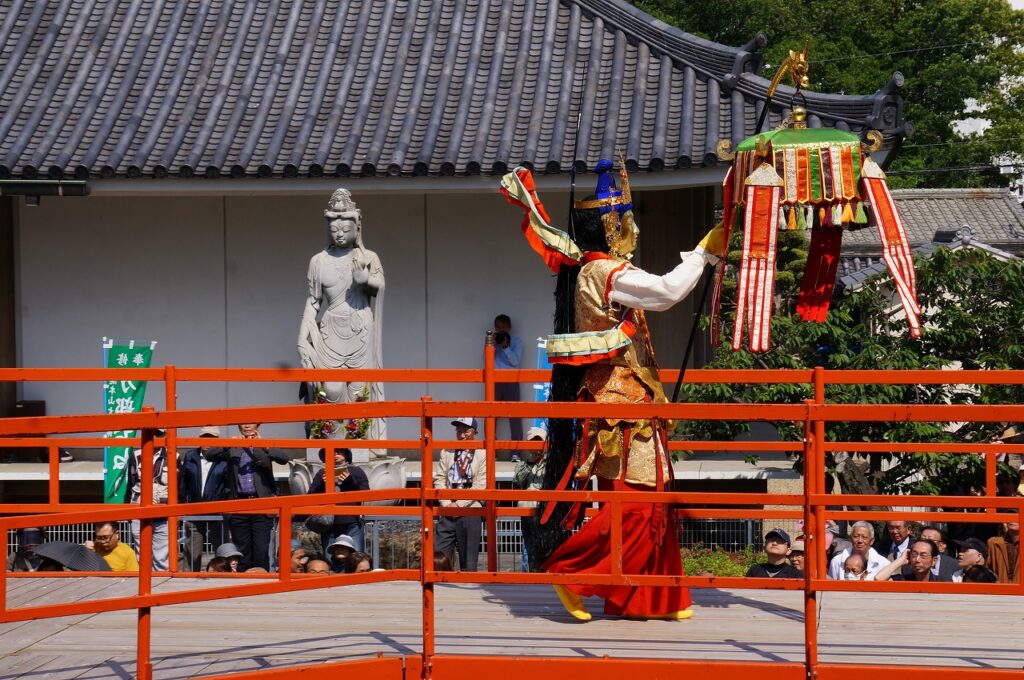
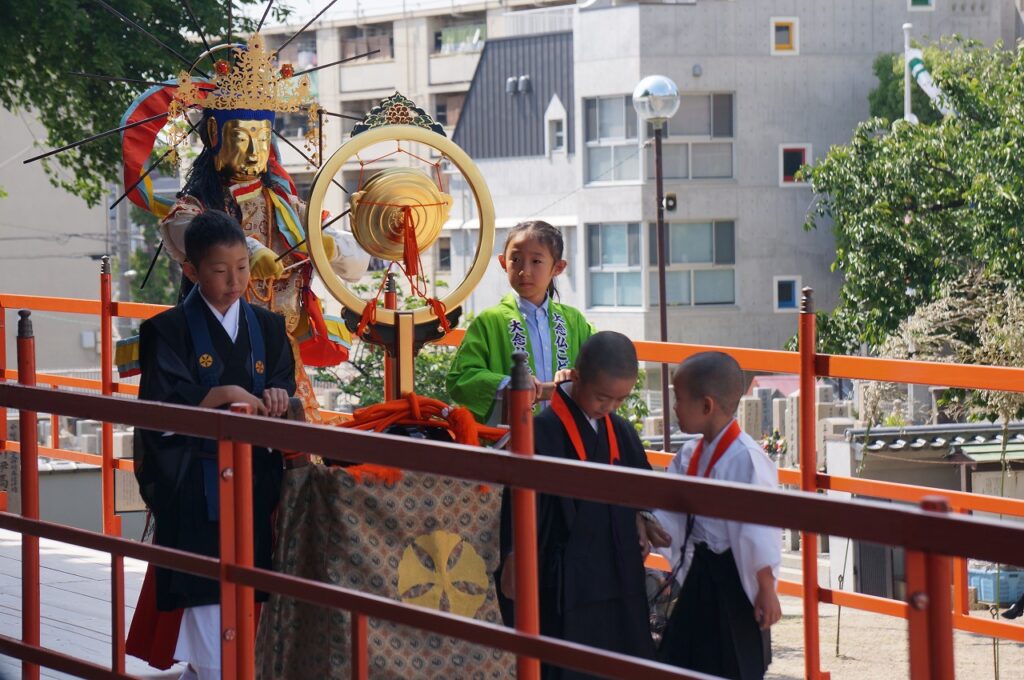
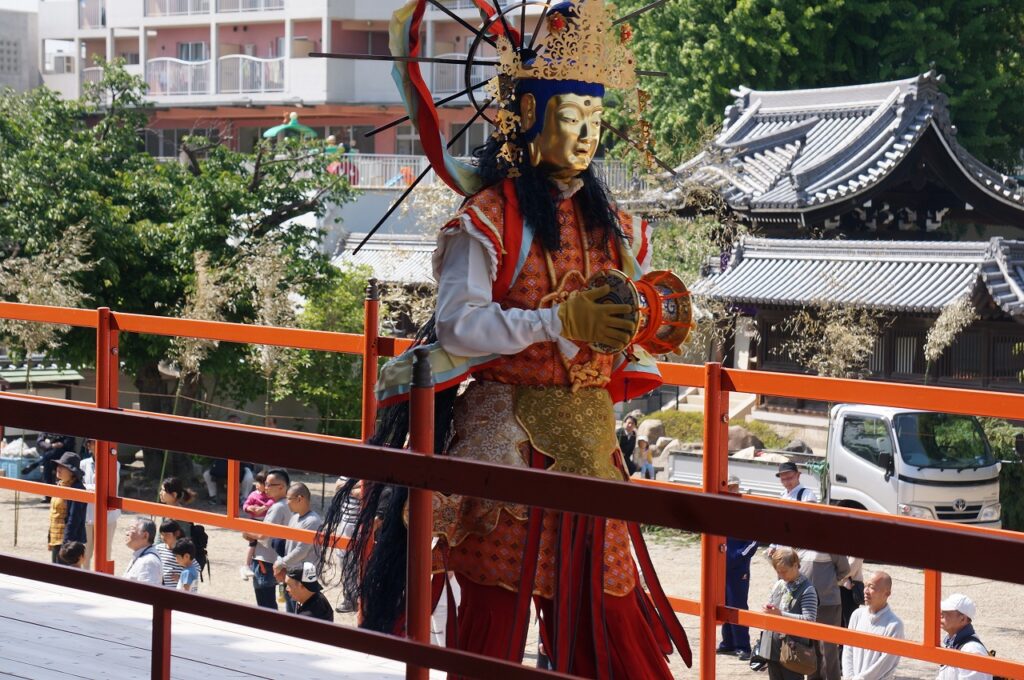
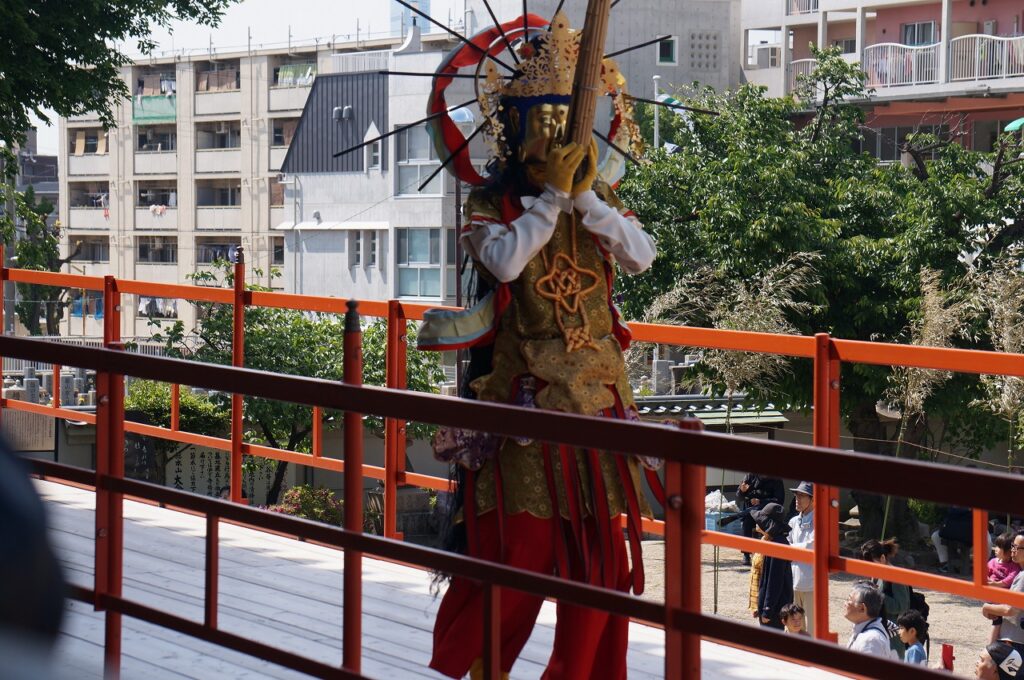
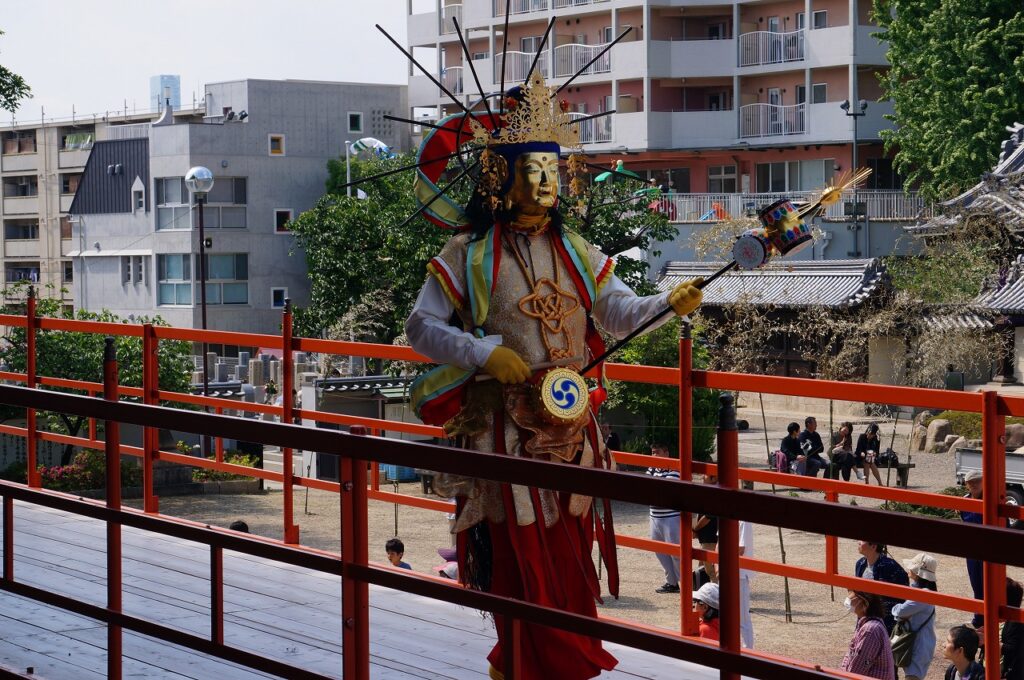
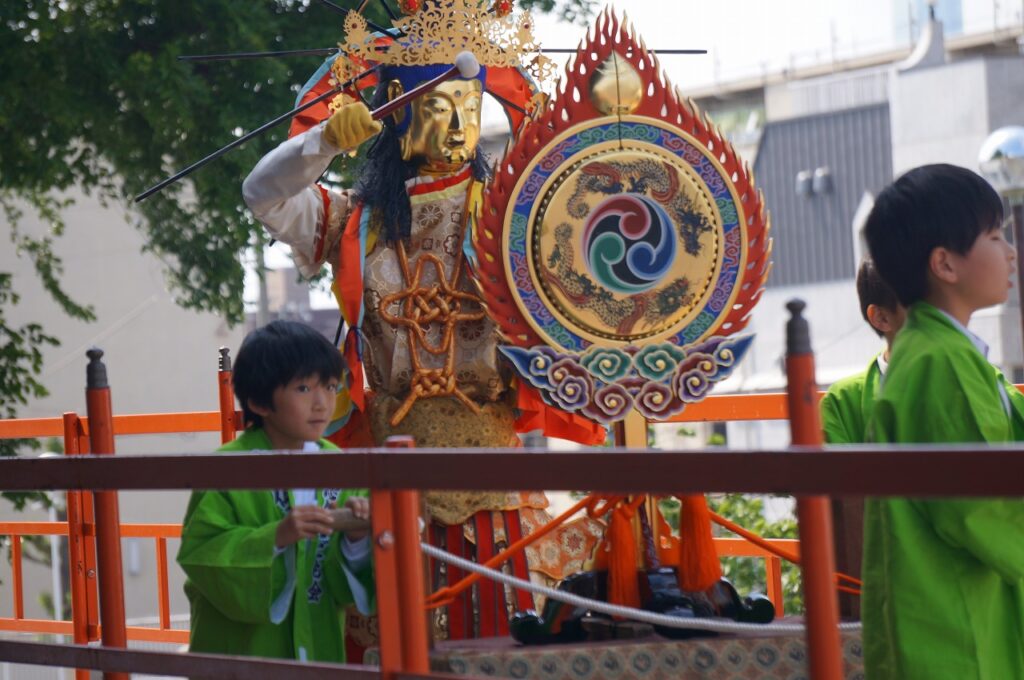
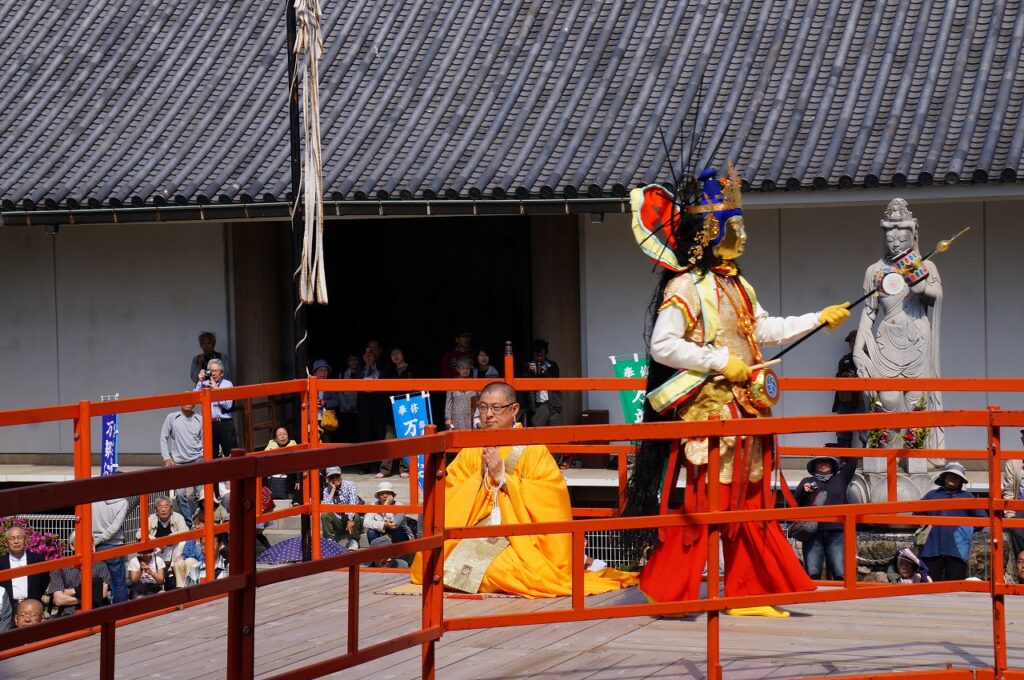
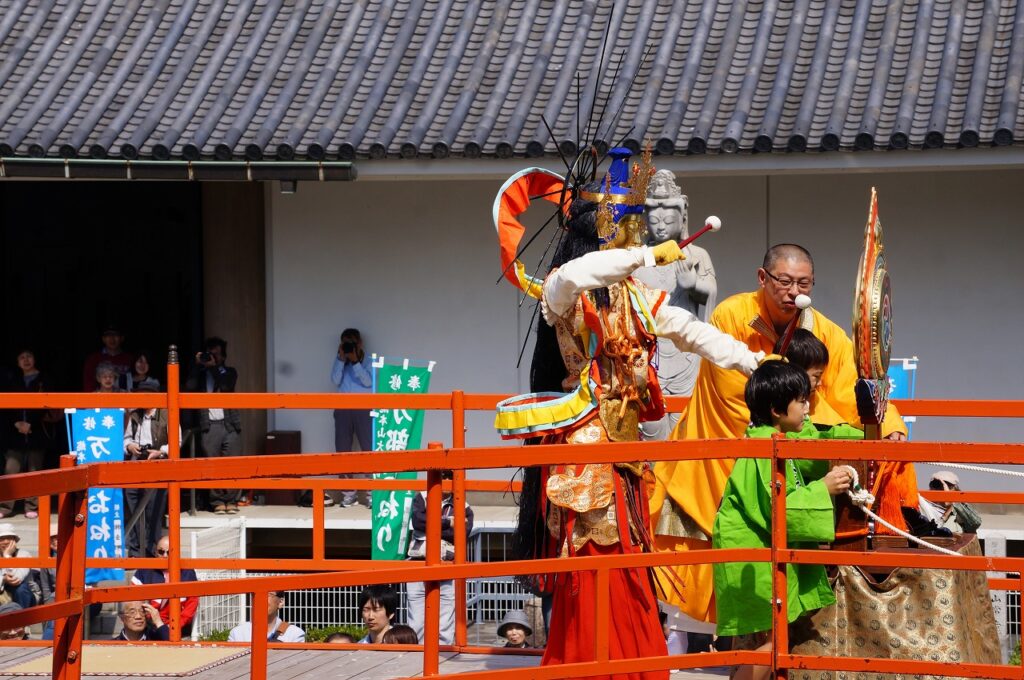
 In Japan, when ogres dance, Buddhas also dance. Although fewer in number than the ogres, there are also events in which Buddha appears.
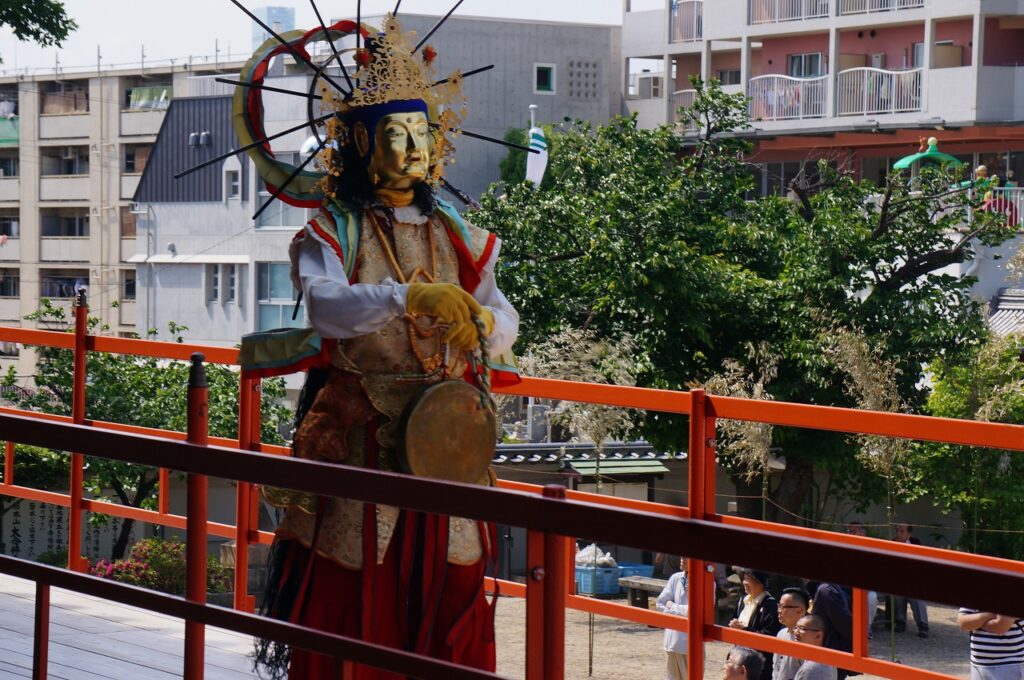
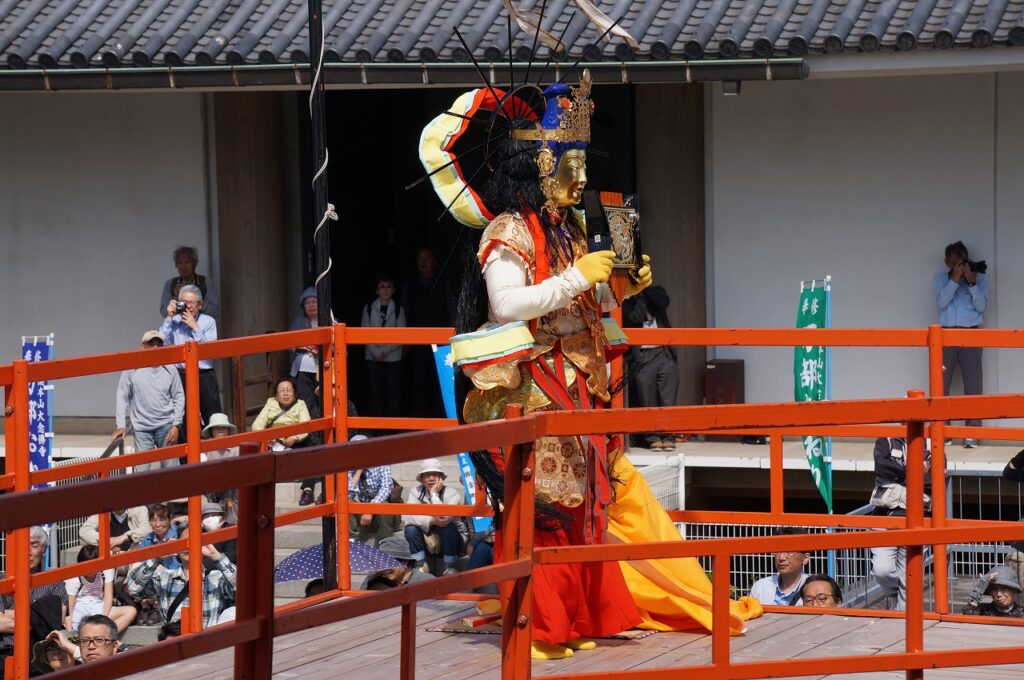
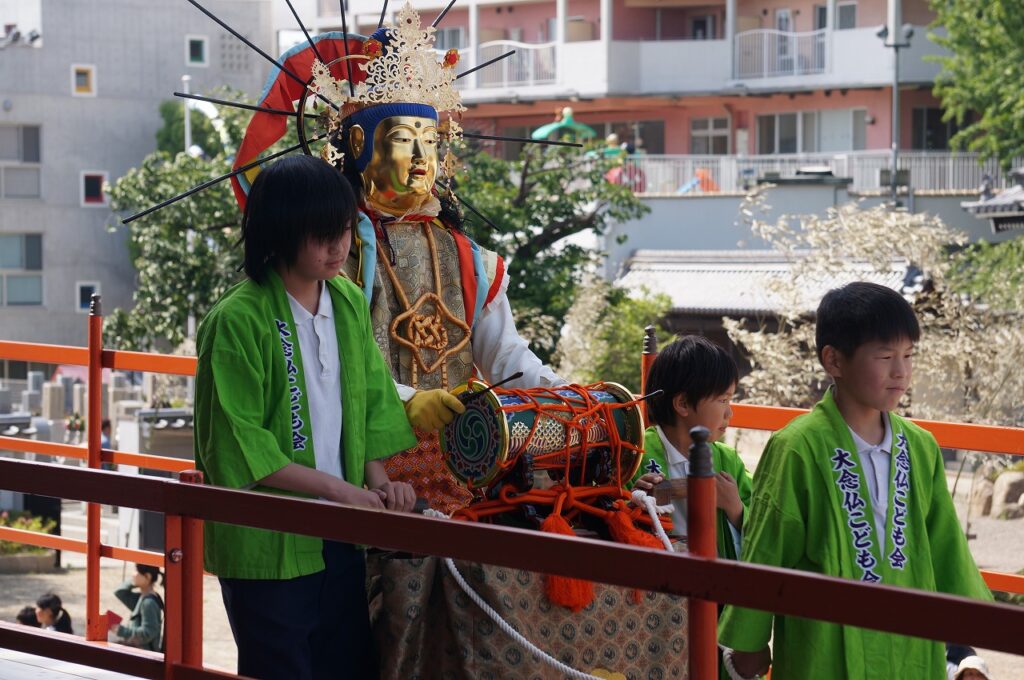
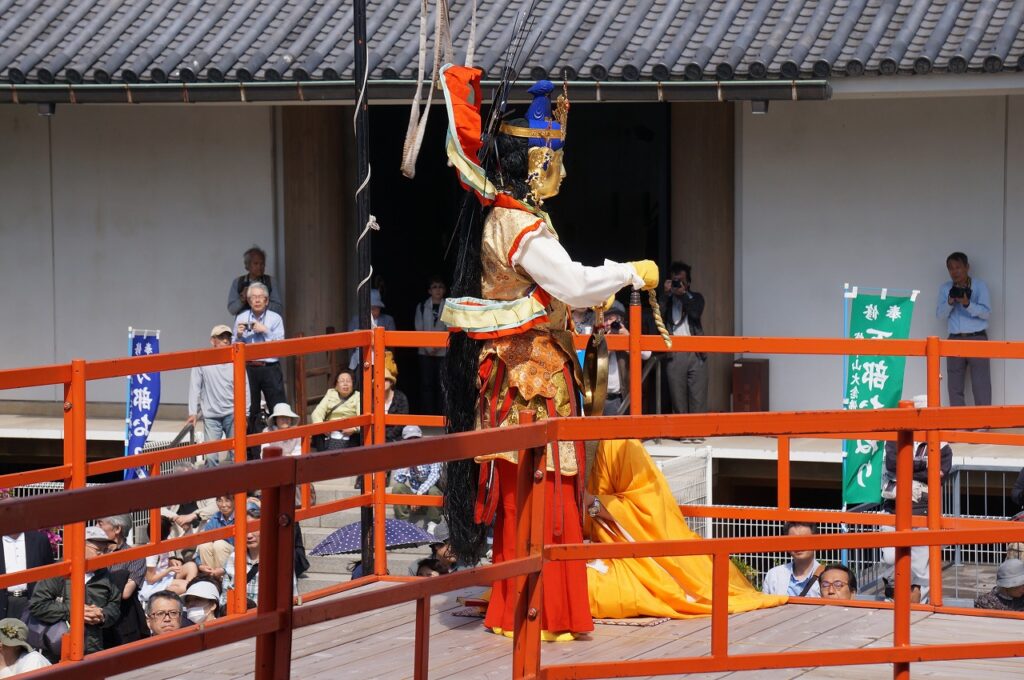
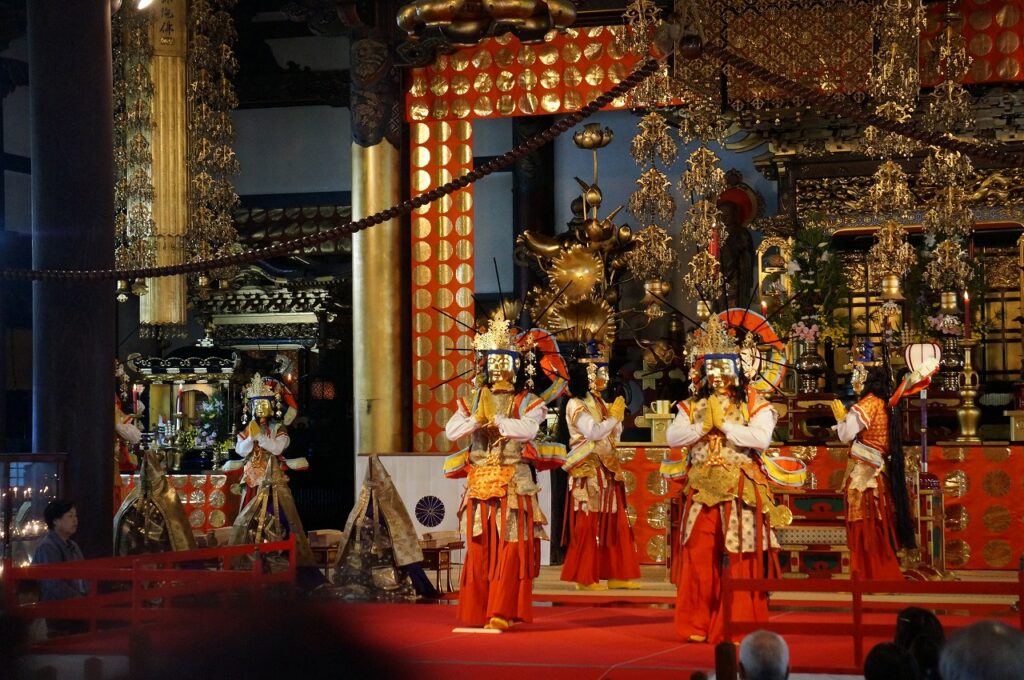
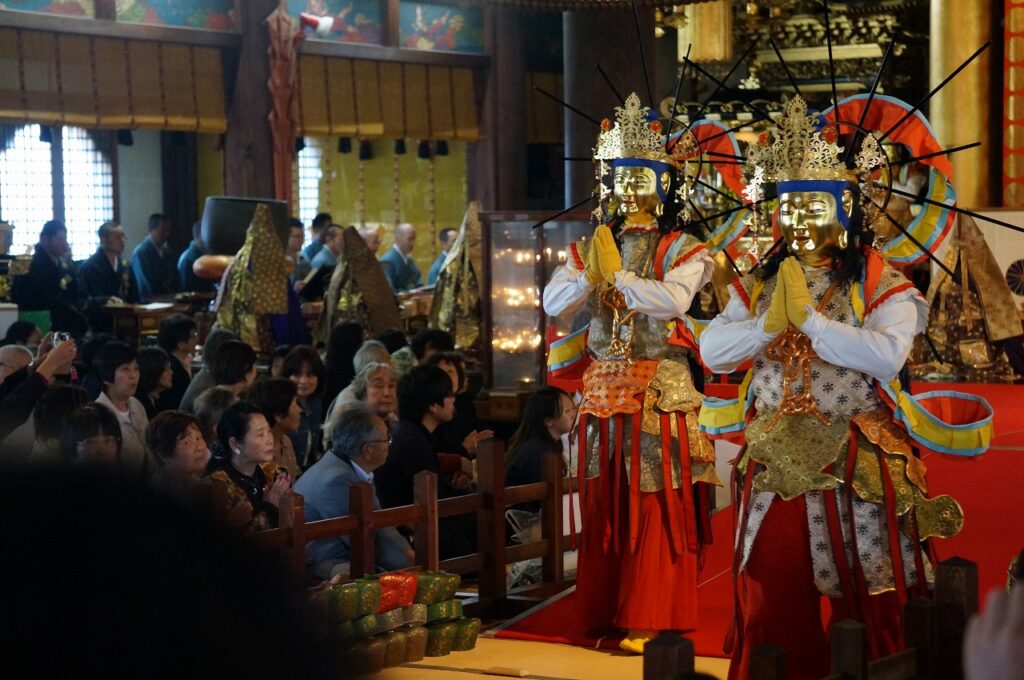
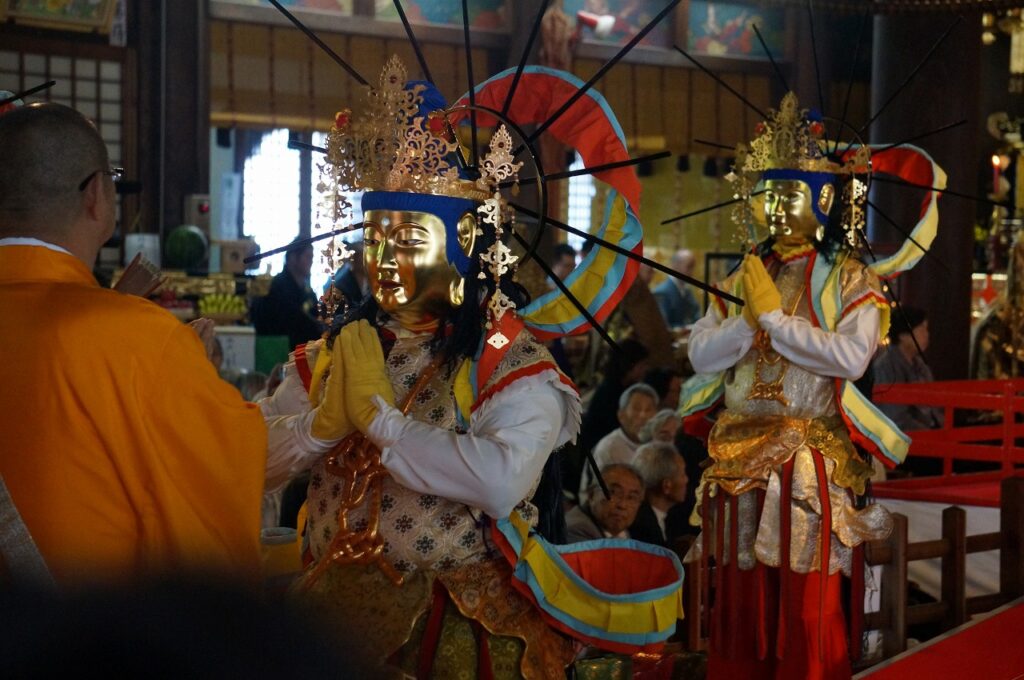
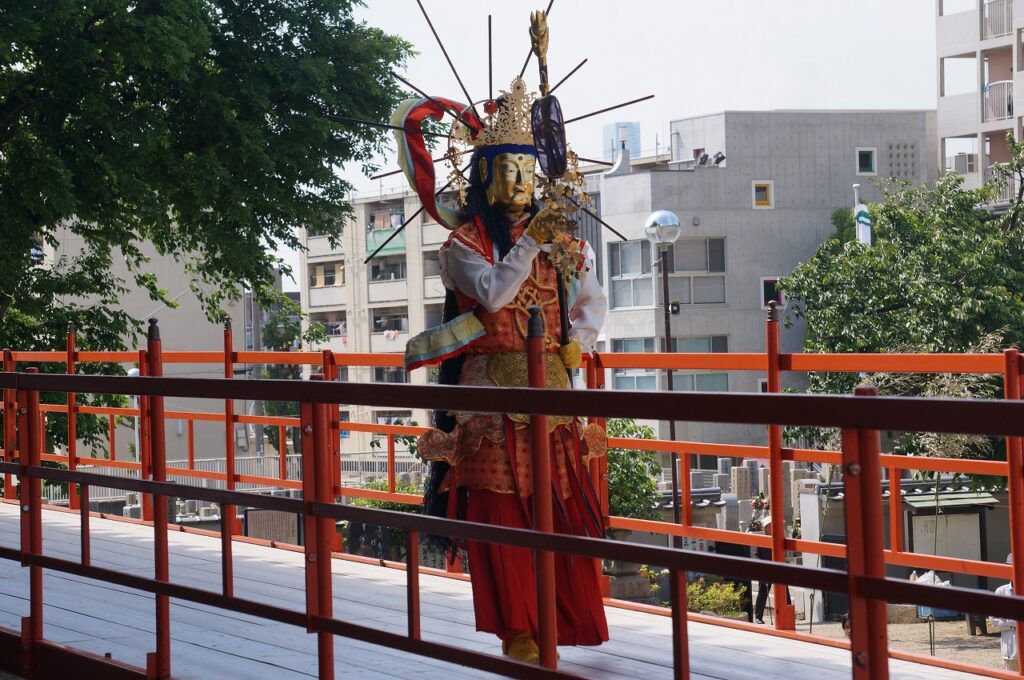
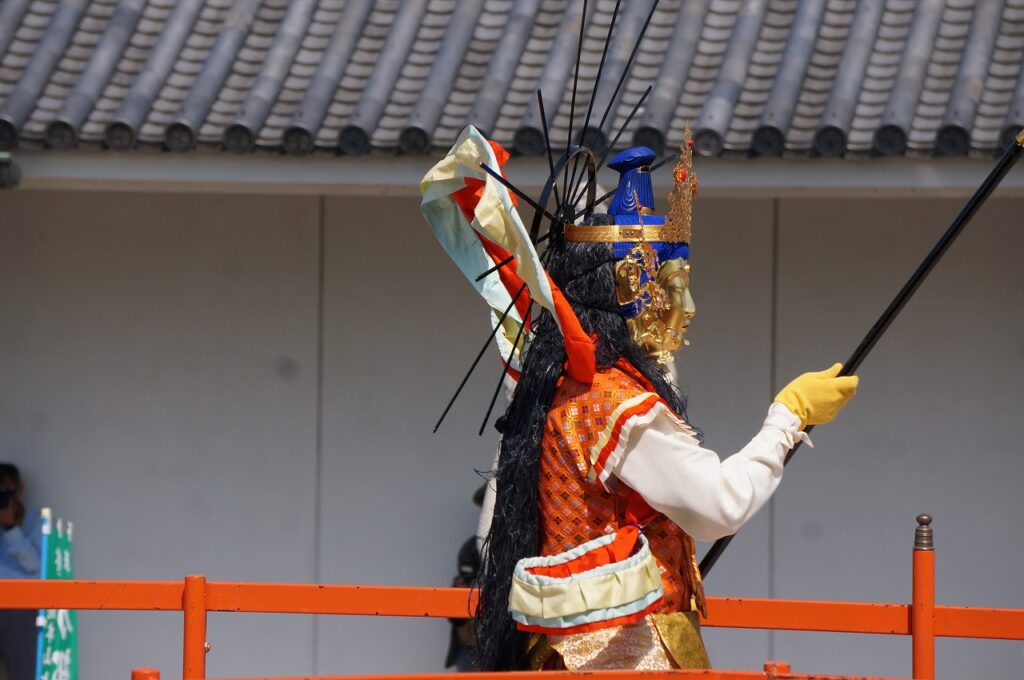
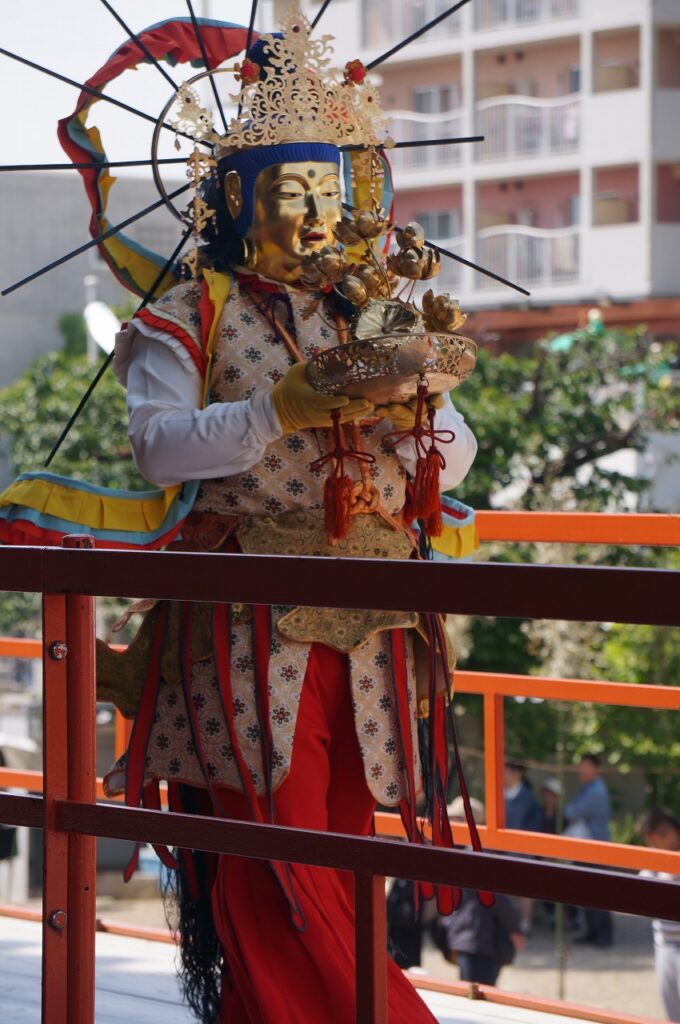
The most representative of these is the “25 Bodhisattva Parade”. From the middle of the Heian period (794-1185), the belief in the Pure Land began to flourish. It was believed that the period of 10,000 years after the death of the Buddha was the “the Latter Days of the Law” and that the Buddha’s way of life would be disturbed. As a result, people began to yearn for the afterlife. The Pure Land teachings taught that if people recited the Nembutsu diligently, they could go to paradise. This is the Pure Land faith. And just before death, the “25 bodhisattvas” come to greet us with the Buddha. The “25 Bodhisattvas Parade” is an attempt to recreate that scene.

Interesting Japanese paintings reappear

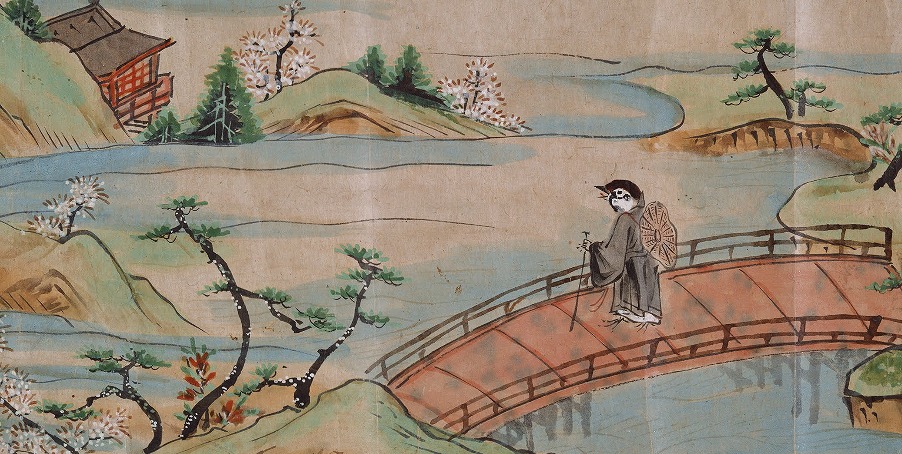
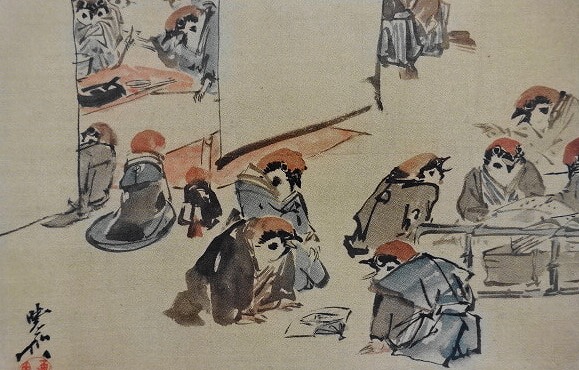
By the way, this site has previously introduced a strange painting called “Choju Giga” (Caricatures of Birds and Animals), and And there are many other wondrous paintings that seem to be the genealogical descendants of this. Now, in such a world of wonder, we may be able to see something like the following scenes. So, let’s go and see the world of Buddha with the characters in those scenes (the sparrows in the wondrous paintings).
Sparrow Kotota: Mr. Owl, I heard that ”Manbu Oneri” is held in Osaka, so I’m thinking of going there for a while.”
Mr.Owl: That’s a good point. Faith will save you.

Sparrow Kotota: Oh, that must be Dai Nenbutsuji-temple.

Source: “Suzume-no Kotota (sparrow Kotota’s story) 雀の小藤太” (16C) cf: https://www.suntory.co.jp/sma/collection/data/detail?id=635

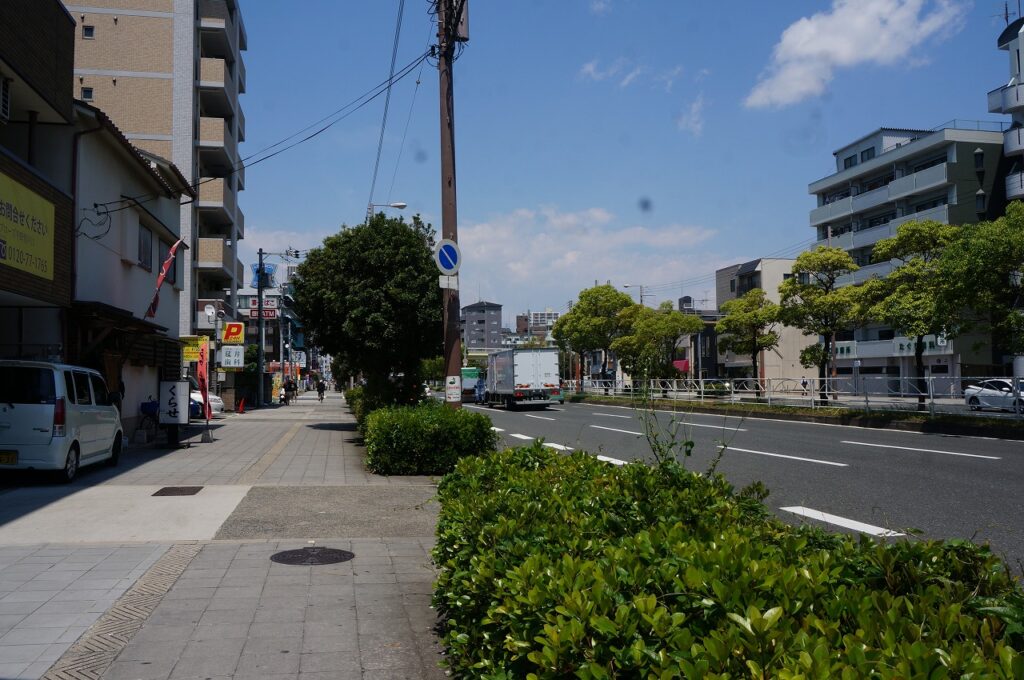
寺周辺
actual scene around the temple

大念仏寺に雀たち

Dai-nenbutsuji-temple 大念仏寺

 The end of April and the first half of May in Japan is known as “Golden Week” because of the concentration of holidays, and people move around a lot. Seasonally, it is the transition from spring to summer, with good weather and the mildest climate. After this time, the rainy season arrives a month later. After mid-July, the summer season begins. Therefore, there are many events and activities. But it’s not all good. Unfortunately, the cost of transportation and accommodation goes up.
The procession of the Dainenbutsuji Temple will be held during this period. The temple was founded about 900 years ago, but it is said that the hall was built in its current location about 400 years ago. However, the procession itself is said to have been held about 700 years ago.

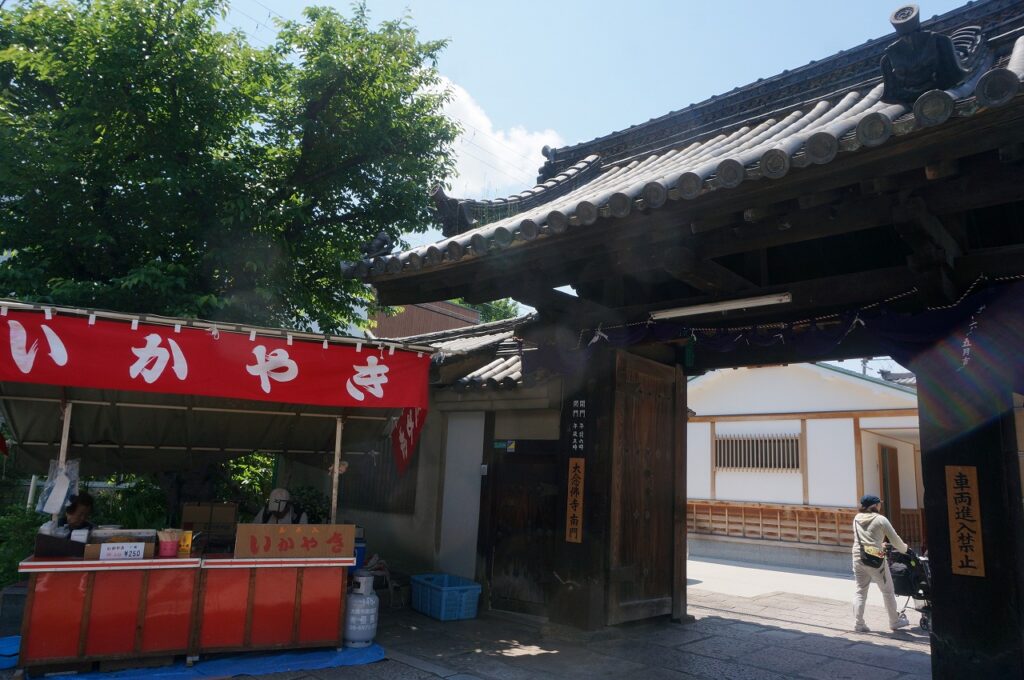
寺、脇門
a sub gate

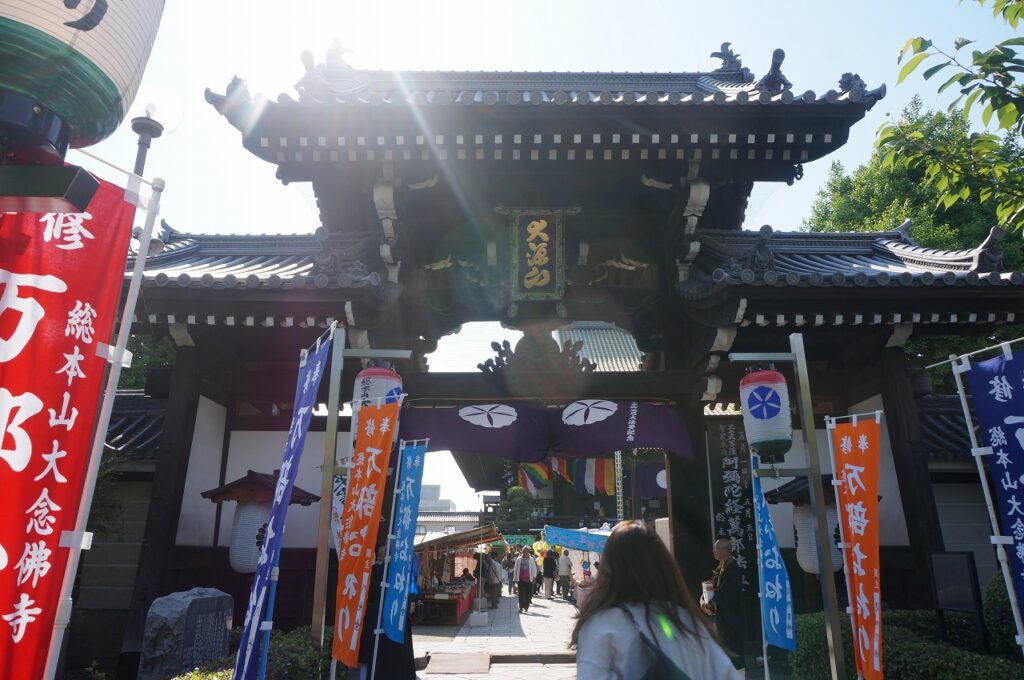
寺、正門
the main gate

境内
the precinct of the temple

本堂

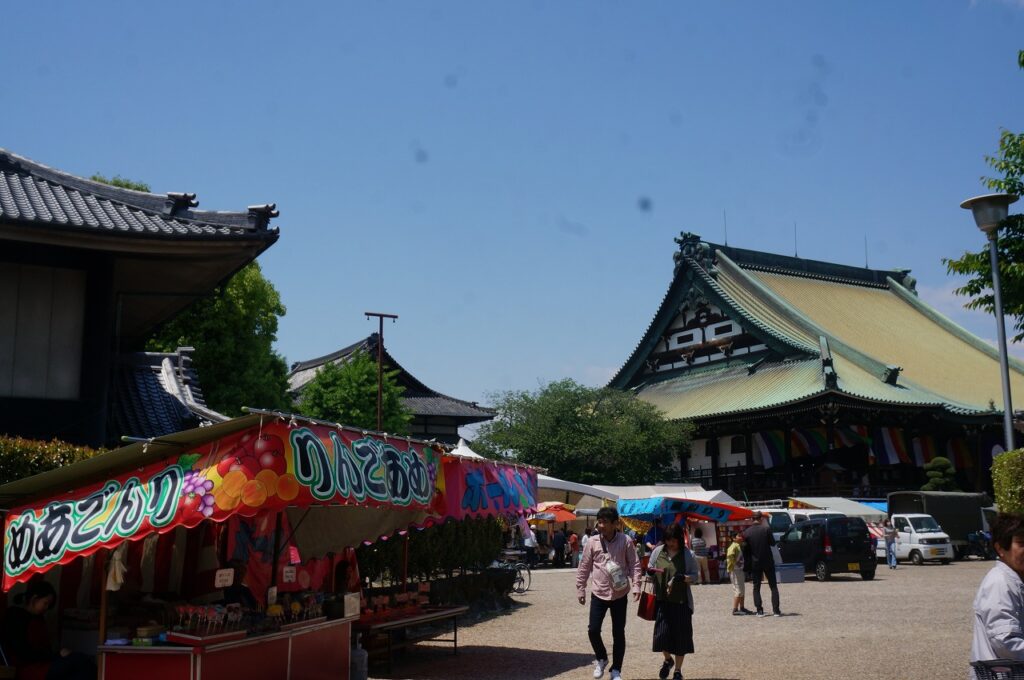
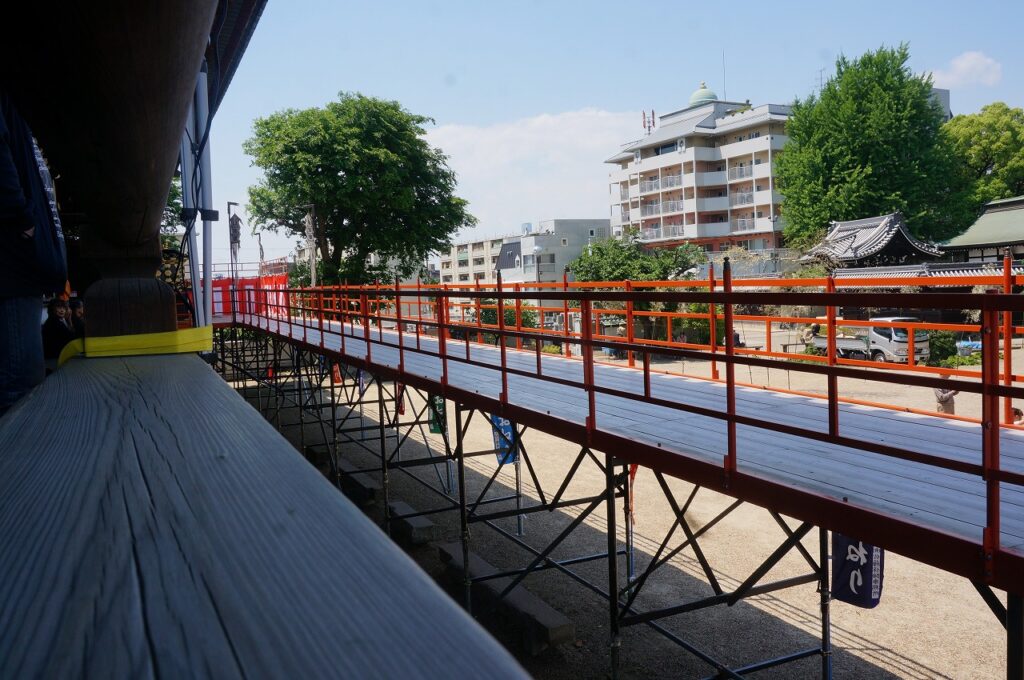
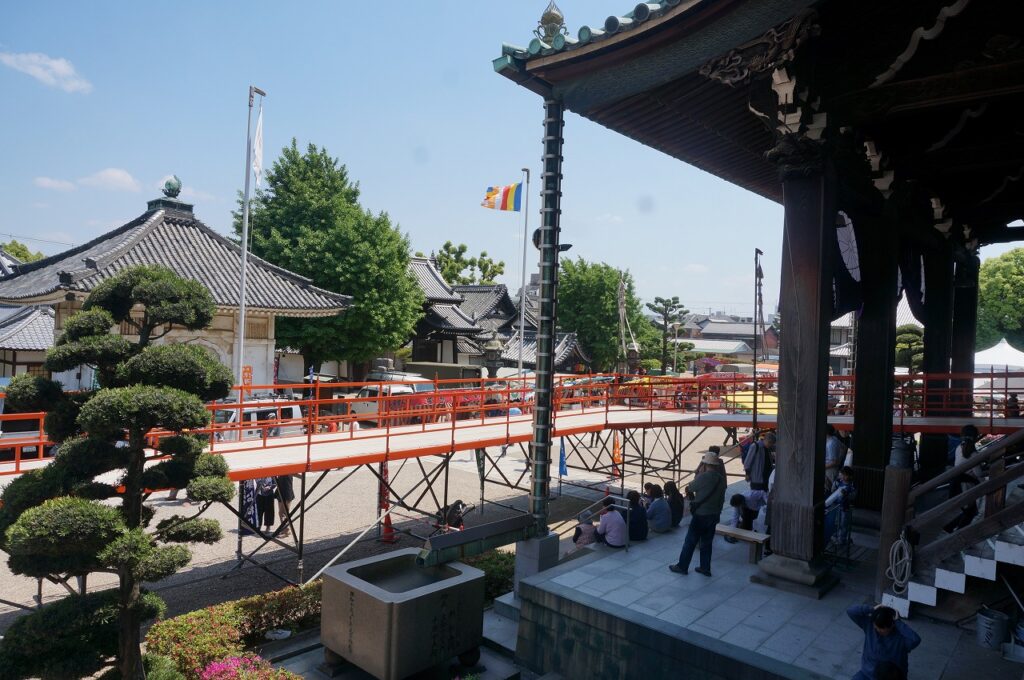
Because of its long history, the precincts are large. A vermilion-lacquered corridor circled around the main hall. This is where the Bodhisattvas go around. Inside, food stalls lined the streets, adding color to the festivities.

It’s been less than an hour. I think I came a little too early. Oh, there are people gathering around the main hall. Let’s take a look there.
The sky is clear in May. It’s a bit windys, though.

How crowded is this event?

廻廊
the corridor

廻廊と本堂入り口
the entrance of the main hall

Excuse me, I’d like to stay here for a moment.

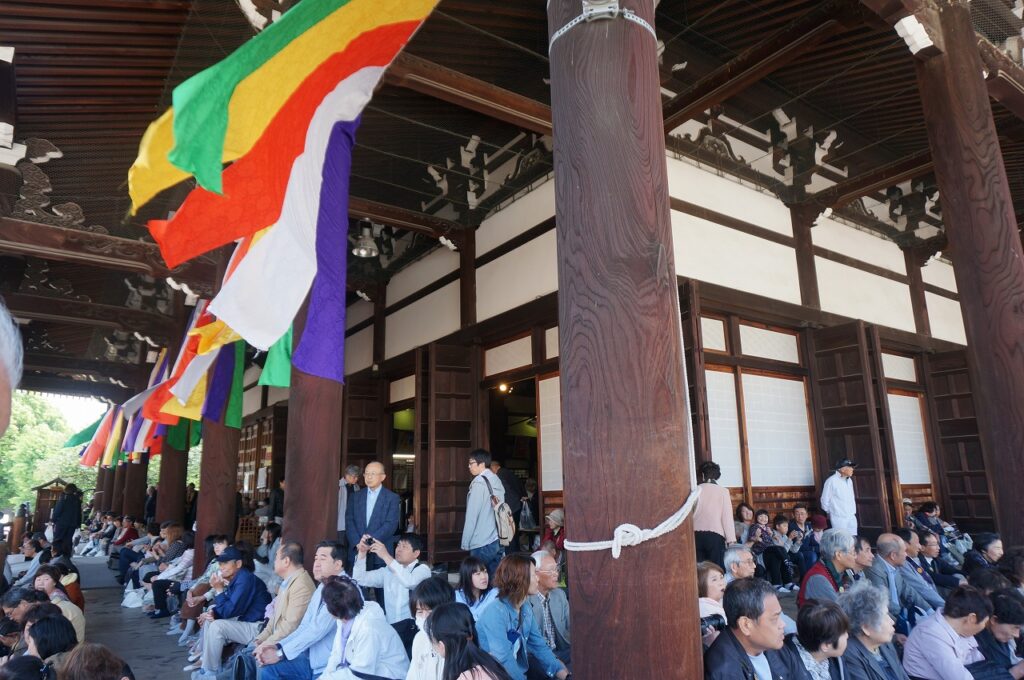
本堂内廊

雀の書画会
hurly-burly

Please, come in. Sit down. It’s free.

There are quite a few people here.
The festival lasts for five days, so it won’t be too crowded. Take your time for a while.

Oneri (Procession)~The Buddhas Walking

It’s almost one o’clock. Oh, the music is starting to play.

It’s the gagaku. It is one of the oldest musical forms left in Japan.

始まり

女性たち

僧と須弥壇

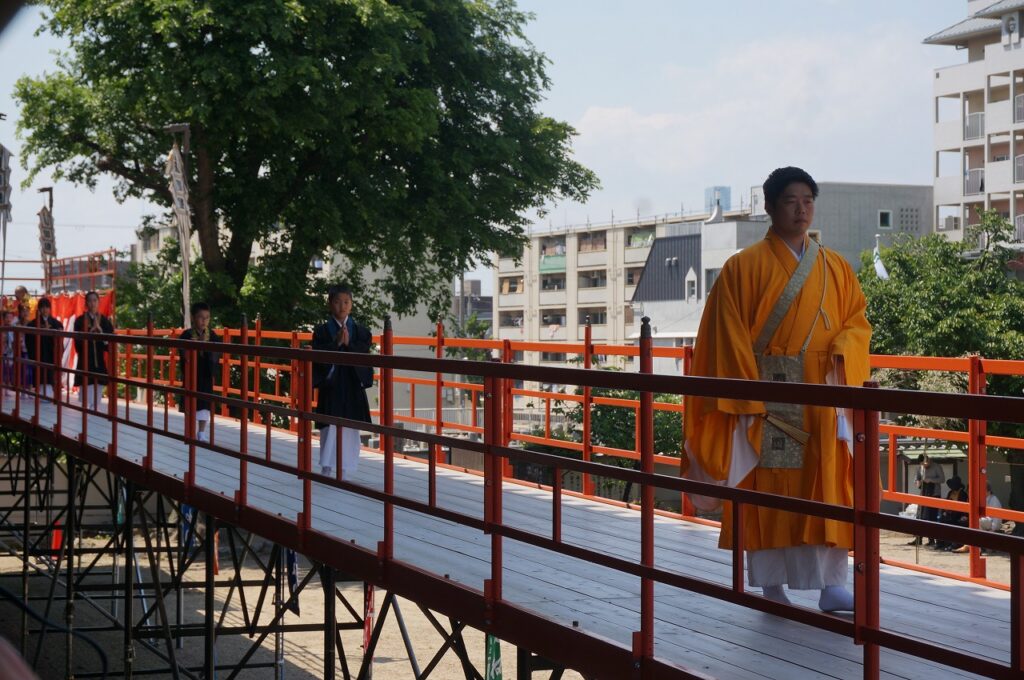
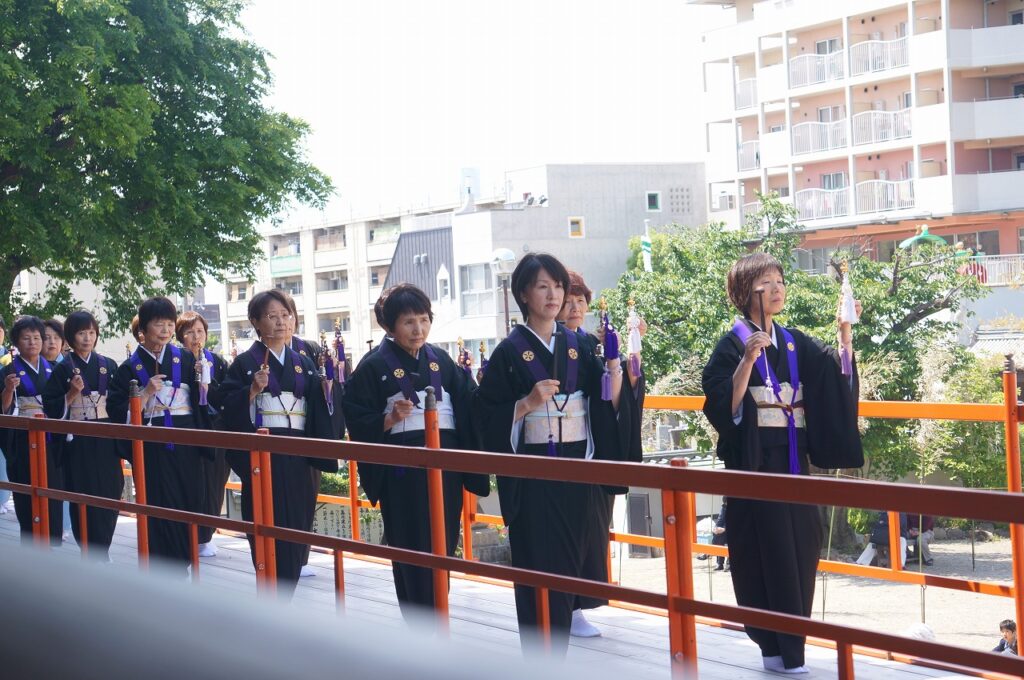
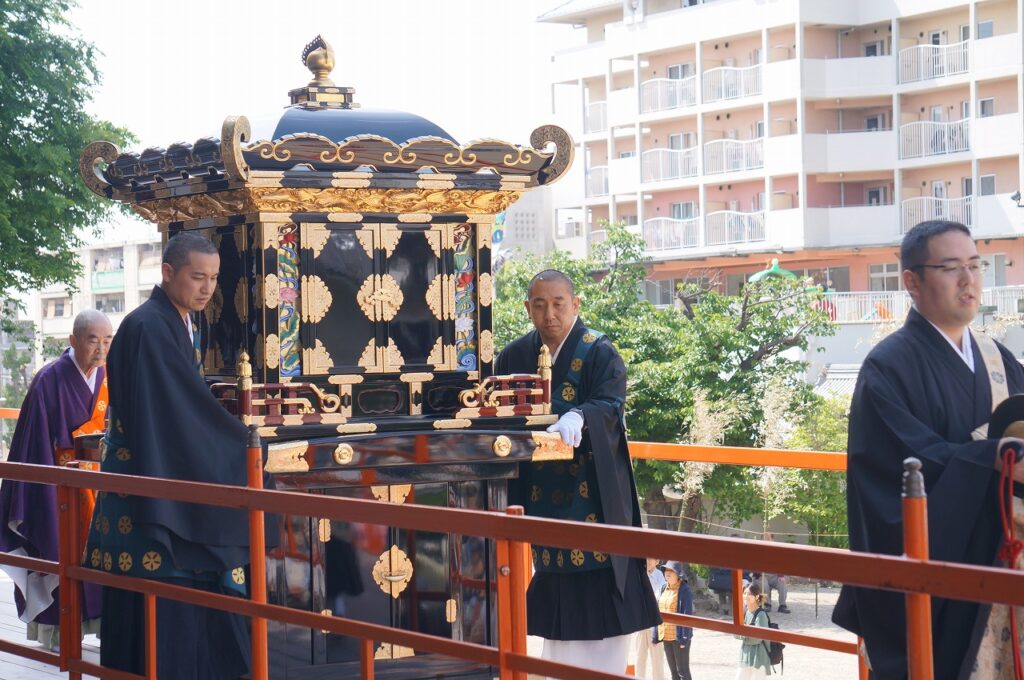
You don’t have to lean over so much, it’s still okay. At first it’s just the monks and parishioners walking by.

It takes about five minutes per lap.

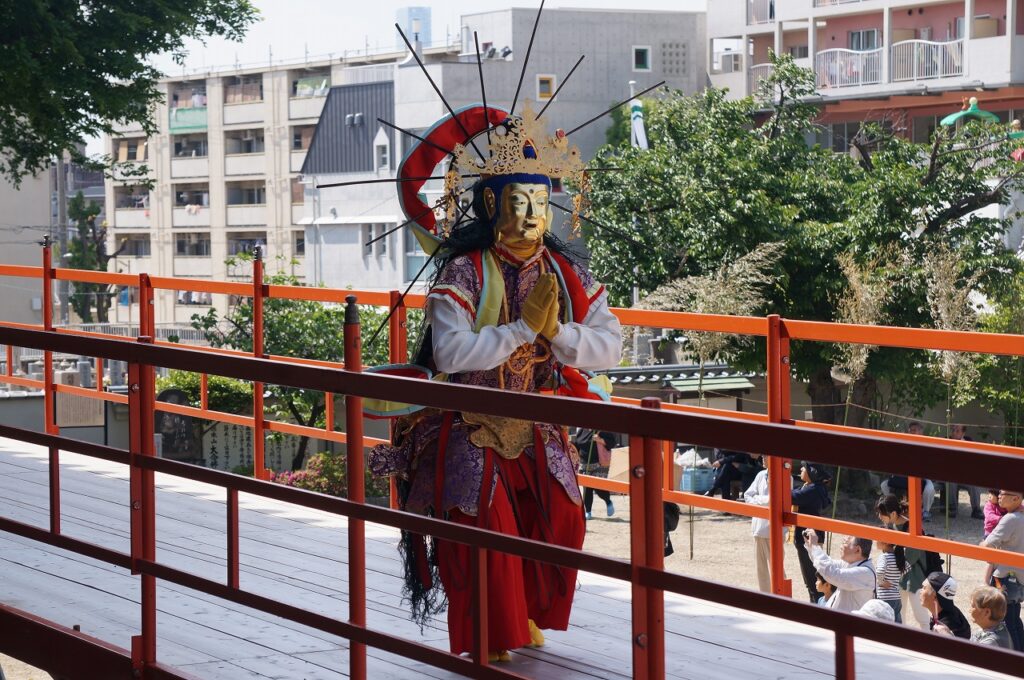
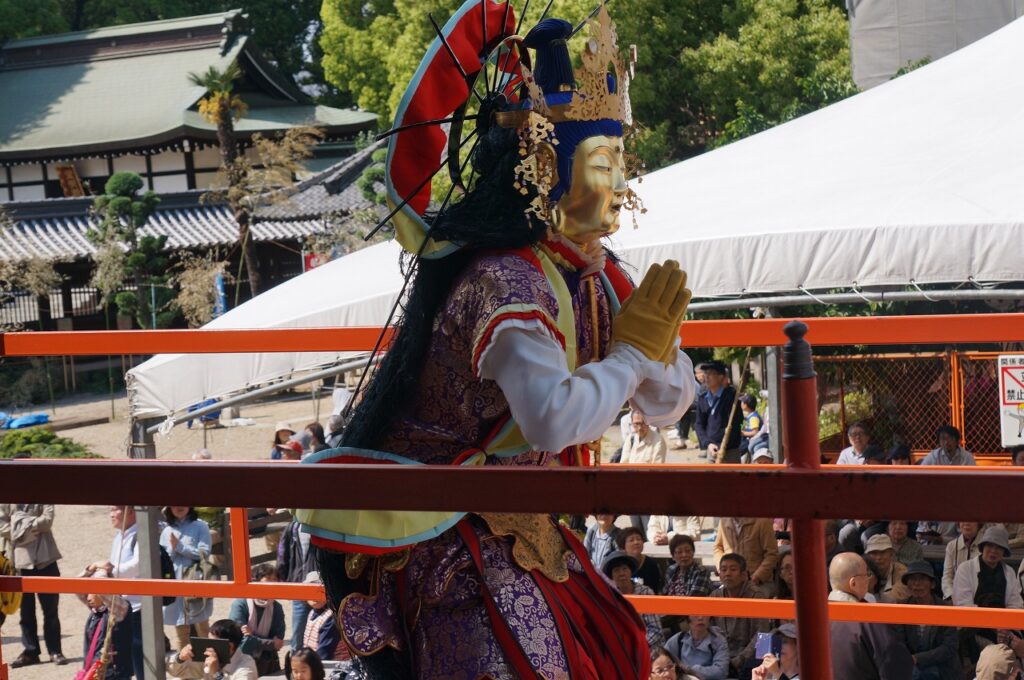
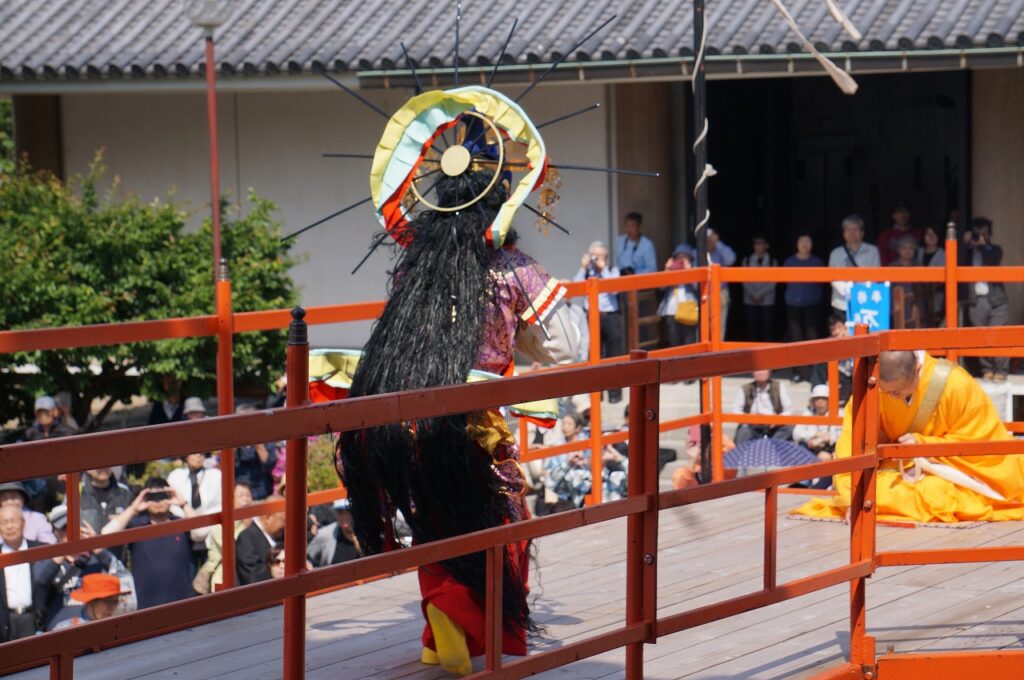
It’s 2:00. It’s about to start. Here comes the first Bodhisattva

きらきら

最初の菩薩

Fast. Much faster than before. It is so fast that I don’t have time to listen to the explanation, isn’t it?

最初の菩薩 横

最初の菩薩 後ろ

There are twenty-five bodhisattvas, so I guess they would have to do this in order to make it in time.

But this parade is the main event.

That’s it. There are such circumstances in the world of grown-ups, aren’t there? It’s complicated, right?

In this way, I guess the faces of the Bodhisattvas are all the same, just with different possessions.

There doesn’t seem to be a broad scope of imagination when it comes to thinking about Buddhas and angels and other sacred things, does there?

Finally, the monks came out again.

That’s the end of the Bodhisattva procession, that was about half an hour.

Everyone is getting ready to leave.

If you have time, you can take a peek inside the main hall a little more. You can see the paradise.

Is that all right? I wouldn’t mind to peek in.

I doubt we’ll be able to get inside, but you can at least peek through the door. It’s a wide entrance.

Thank you very much.

Paradise inside the main hall

Kotota went to the door of the main hall as the former guest had told him earlier, and a number of people were peeking in. Inside, devotees are sitting and watching the ceremony. In the space where very beautiful and graceful music is echoing, he can see all the Bodhisattvas from earlier.

本堂内の菩薩たち

Here emerged a scene of the Buddhist paradise that the people long ago had imagined.

菩薩を見る信者たち

僧から受け取る菩薩

It seems that the Bodhisattvas are receiving something and carrying it over there, handing it back and forth….

帰って行く菩薩

僧侶たち退場

終了後

It was already three o’clock. I’ve come in contact with Buddha today. I gained some good deeds and karma. Let’s have a look around Osaka and go back home. Or I’m not sure yet, should I go to Kyoto or Nara? Oh right. I’ll have to buy a souvenir for Owl.

In this way, Kotota went home satisfied. Happily ever after.

Reference

Dai-nenbutsuji-temple https://www.dainenbutsuji.com/oneri/

You can travel from Osaka to Kyoto and Nara within one hour by train. https://matcha-jp.com/en/1918

Paintings source:

雀の小藤太 旅立ち

雀の小藤太 旅

Suzume-no Kotota (sparrow Kotota story) 雀の小藤太” (16C) https://www.suntory.co.jp/sma/collection/data/detail?id=635

A picture scroll of the story of Sparrow Kotota, where he lost his child and became sad, but various birds gave him comfort, and finally he became a priest.

河鍋暁斎 「雀の書画会」
Suzume no shogakai 雀の書画会” by Kawanabe Kyosai 河鍋暁斎 (1831~1889)
https://tokyo.digi-joho.com/attractions/arts-culture/7-kawanabe-kyosai-museum.html

歌川国芳「里すずめ、ねぐらの仮宿」
”Satosuzume negurano kariyado 里すずめ、ねぐらの仮宿” by Utagawa Kuniyoshi (1798~1861)
https://www.fujibi.or.jp/en/our-collection/profile-of-works.html?work_id=9737
https://otakinen-museum.note.jp/n/na972c0728883


Report: Shall we watch a sketch comedy in Kyoto? ~Senbon Enma-do Dai Nenbutsu Kyogen 千本ゑんま堂大念仏狂言

 This time, we will go to Kyoto. One of the most popular cities in Japan. The No.1 sightseeing place that most tourists from other countries want to go to. I guess Kyoto is a kind of symbol of old traditional Japan. There are many tourist spots, temples, shrines, castles and old streets. Today we’ll talk about another special sight. This sight introduces traditional folk performing arts with masked characters.
 There are three sketch comedies with masked characters, named “Nenbutsu Kyogen”. “Mibu Kyogen”, “Saga Nebutsu Kyogen” and “Senbon Enma-do Nenbutsu Kyogen”. “Kyogen” is performed in the intermission of Noh performances. In contrast to Noh, they tend to be comedic. It means just a play, too. And “Nenbutsu” is a Buddhist invocation. So, “Nenbutsu Kyogen” is a play in which stories are based on the daily lives of average people to propagate Buddhism. Two of these, “Mibu Kyogen” and “Saga Kyogen” are pantomime, but only “Senbon Enma-do Kyogen” has dialogue.
*Reference

 Mibu Kyogen 壬生狂言
Date: 3rd February, 29th April~5th May, 3 days around 10th October
Location: Mibudera-temple
refer→https://www.discoverkyoto.com/event-calendar/may/mibu-kyogen-mibu-dera/ discover Kyoto

Saga nenbutsu Kyogen 嵯峨念仏狂言
Date: 1st Sunday & 2nd Saturday & Sunday April, The Sunday nearest 26th October
Location: Seiryoji-temple
refer→http://www.greentour-kyoto.net/events/saga-kyogen/ green tour Kyoto

 Senbon Enma-do Kyogen 千本ゑんま堂狂言
Date: 3rd February & 1st~4th May
Location: Senbon Enma-do (another name, Injoji-temple)
refer→https://kansaifinder.com/event/senbon-enma-do-nenbutsu-kyogen/ Kansai Finder

  First, let to introduce today’s guide

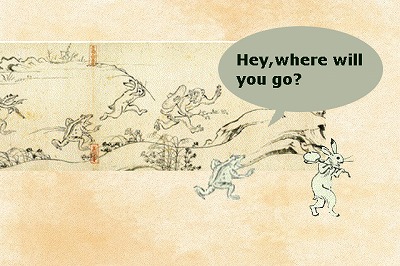
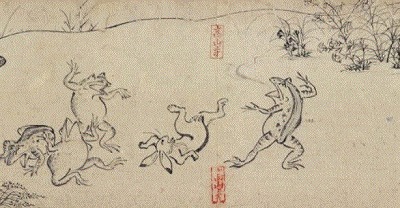
 Now, I’ll call today’s guides. They are the most popular characters in Japanese National artwork treasures.

a part of National treasure
a part of National treasure “Chojyu-jinbutsu-giga”

 They seem to have come.

two characters come out from picture roll

Hi, I’m a rabbit.

And I’m a frog. But, why have we come here today?

To guide “Senbon Enma-do kyogen”.

Why?

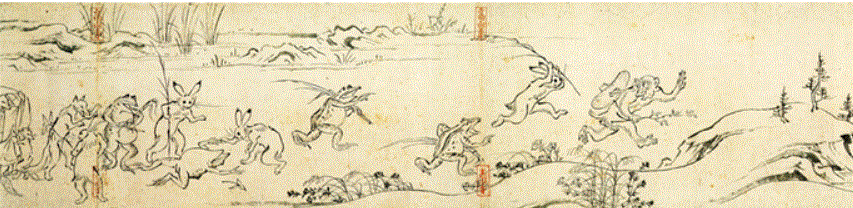
Because we are born in Kyoto. Oh, we should introduce ourselves before we guide people. We are characters appearing in “Choju-jinbutsu-giga”. “Choju” means birds and animals. “Jinbutsu” means people. And “Giga” means “caricature” in Japanese. It has nothing to do with the capacity of a hard disk, “gigabyte”.

I didn’t know that at all.

Didn’t you know even though you are the important character? Oh,well. Anyway I’ll teach you, listen to me carefully. This is a picture roll which was painted only Sumi (Chinese calligraphy ink) without colors. It is said that this roll was painted about 800 years ago and the painter was Toba-sojo”. But that hasn’t been investigated in detail. The contents are caricatures. Especially, in the first volume, many animals are active like humans. People say this is the beginning of Japanese cartoons (Manga). So, this roll is the most popular in Japanese National art treasures. The Kozanji-temple in Kyoto stores it. So, we know most about Kyoto’s history from 800 years ago. Now, let’s go to Senbon Enma-do.

  Now, let’s go to the venue

*This article is written based on writer’s experience at 4th, May, in 2018 and a booklet.

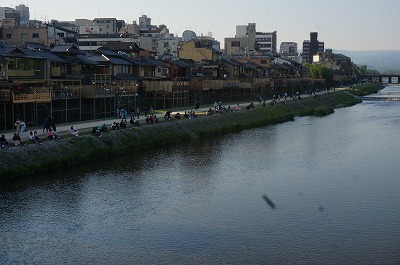
Kamo river
the Kamo river

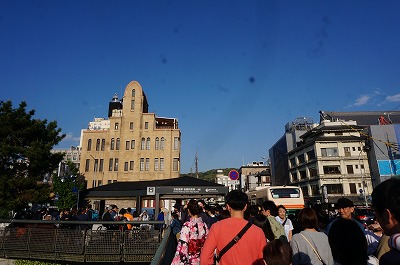
crowded in the city
the center of Kyoto city

There is the Kamo river. It always makes me feel good.

The center of the city is always crowded lately. Especially this week (from the end of April to the first of May) has consecutive holidays in Japan. There are many Japanese in addition many tourists from other countries. Hurry up. I can’t stand here.

Won’t you go to any sightseeing places? Kinkakuji-temple, Kiyomizu-temple, or Fushimi Inari shrine.

Where have you been? Are you a tourist? We have lived in this city for 800 years.

I think this is some nice occasion….

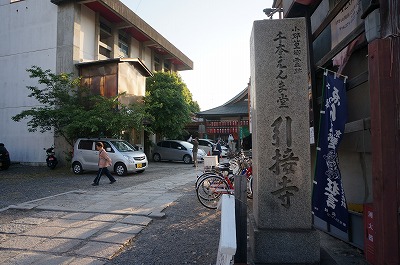
Injoji-temple
the entrance of the temple

the venue
the venue

This is the Injoji-temple, and another name is Senbon Enma-do.

What are we going to do? We have no money.

Don’t worry. It’s free.

Free? Sounds good. A little boy and a little girl are walking around people. What are they doing?

They are selling a description booklet for \ 500 (as of 2018).

I want one.

I’ll buy you one.

Oh, why do you have money? Why did you pay \1,000?

The reason why I payed more than \ 500 is to make a donation. I want to support them. Oh, it’s six pm. The first program will begin tonight.

This booklet has a description in English, too.

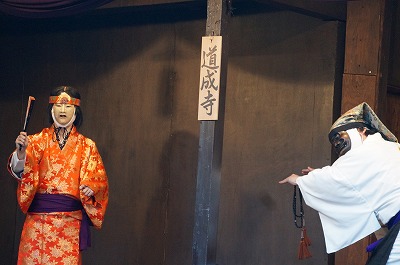
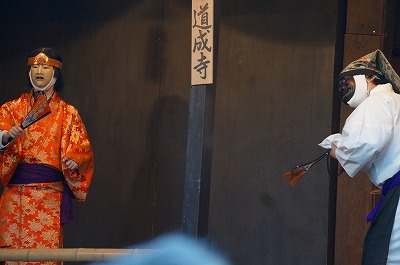
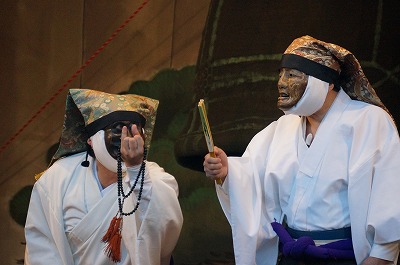
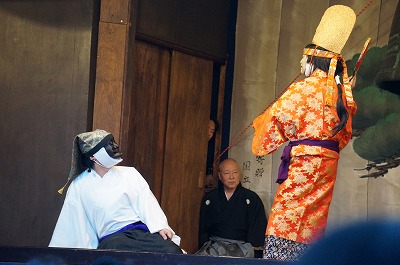
“Dojoji-temple”

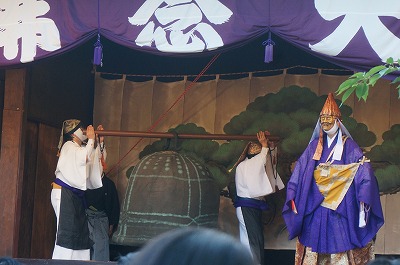
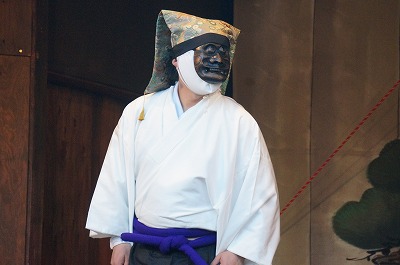
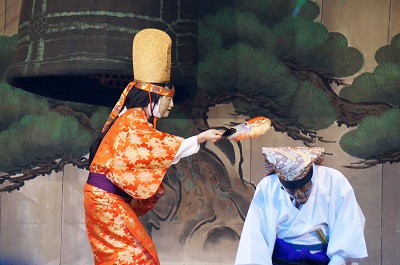
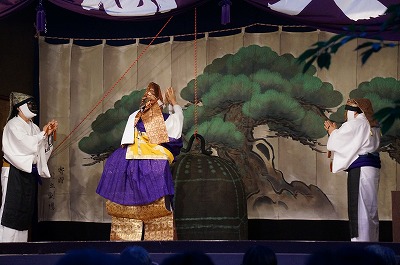
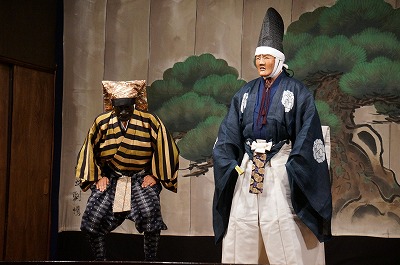
I am a monk of this temple. I shall hold a memorial service with a bell. So, I tell my apprentice monks to carry a bell here. Ichiro-bo and Dabutsu-bo, come here. Are you here?

Here we are.

Here we are. This bell is too heavy.

I’m pleased that you came so quickly. I have not held a memorial service with a bell for long time. So, I want to hold the ceremony. Then, there is something important I have to tell you. Women can’t come here. Do you understand?

Yes, my master.

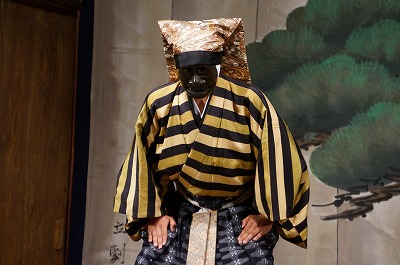
Dabutsu-bo
Dabutsu-bo

Ichiro-bo
Ichiro-bo

Why did the master tell us that we must never invite any women?
I don’t know. But we must be obedient to my master.

Ichiro-bo and Dabutsu -bo
silence

Shirabyoshi
Shirabyoshi (dancer)

Is anyone home?

Ichiro-bo had Dabutsu-bo get up

Shirabyoshi asks Dabutsu-bo

Hey, Dabutsu-bo, get up. This is no time for sleeping. There is someone behind the door. Go check quickly.

Who will come at such a time? May I ask your name?

Sorry for contacting you at this late hour. I am a shirabyoshi dancer and I live near. I have heard a memorial service with a bell. I was wondering if it would be possible for you to dance for a bell?
he surprised at looking at her

he told that beautiful woman is there

Oh, what should I do? Hey, dear Ichiro-bo.

You are noisy. What happened?

There is a shiradofu at the door!

Shiradoufu? What?

Do you happen to know shiradofu? It’s a dancer.

Stupid. If you said that, it would be a shrabyoshi.

Oh, my mistake. That is shirabyoshi. She is there.

No. We can’t invite any women.

But have you met a living Amida?*( like an angel in a sense)

Mmm…If you insist. If would be fine if dancing was all, but we have to return her as soon as possible after dancing.

She began to dance

and beautiful sounds

Oh, my gosh! What happened?

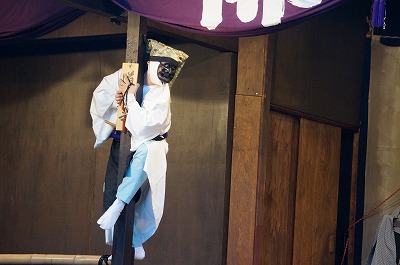
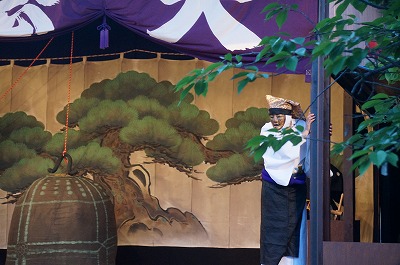
Oh, no. The bell has fallen down. Where has she gone? We have a situation! Go for Shisho-bo.

We have a situation

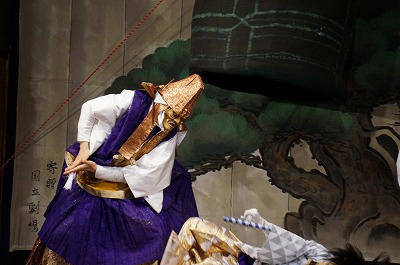
Shisho-bo prays

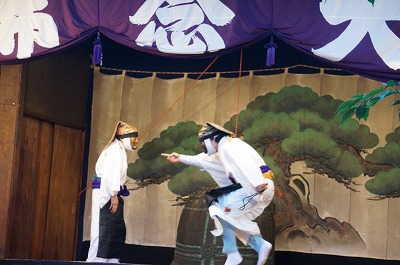
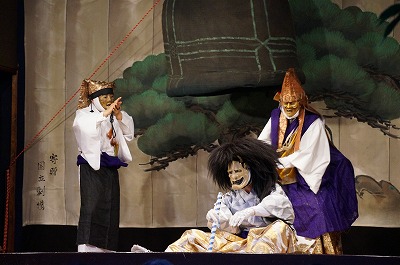
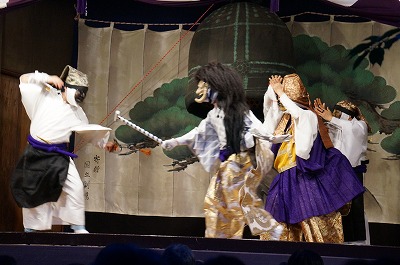
I thought so. The reason why I told you not to invite any women is that this bell is cursed by an ogre. Probably, The woman is an incarnation of an ogre. I shall break the spell.

an ogre has appeared

a master charms

Wow! An ogre really has appeared.

Help me Buddha!

An ogre! Drive it away!

a master is praying

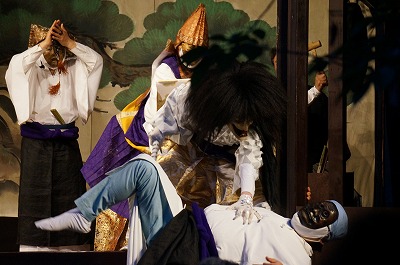
an ogre has come

Oh,no! An ogre has come here. Help me!

ending

Help me!

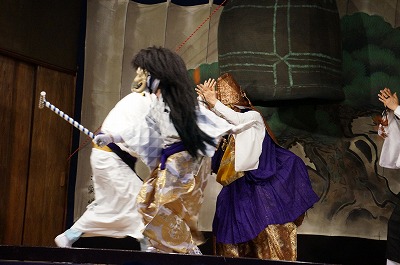
Go away! Namu, Buddha.

Please Buddha! Namu Buddha! Namu ami dabutsu….

I won’t let you go. Yarumaizo! Yarumaizo!

“Botan-jishi” (Peony Lion)

Daimyo and Taro-kaja

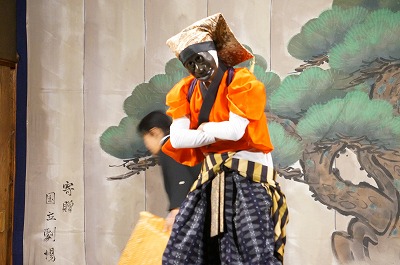
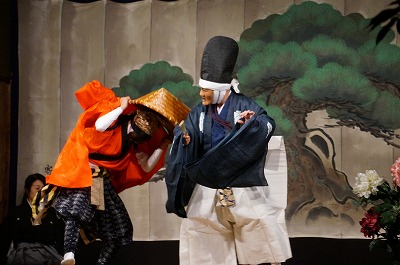
I am a Daimyo (Lord) living around here. Recently, I am in trouble because a Shishi (Chinese lion) has damaged the peonies in my garden. So, I will call my retainer, Taro-kaja and make him crush the Shishi. Are you here?

I am here.

I’m pleased that you came so quickly. Look at this garden.

How beautiful the peonies are.

Yes. But a Shishi came here and damaged the peonies. Catch the lion.

Yes, my lord.

Taro-kaja is thinking

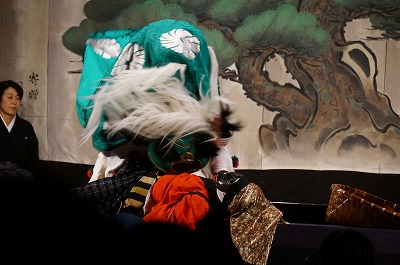
a Chinese lion

This is difficult. I have to be patient.

a Chinese lion

a Chinese lion acts

It is stronger than I thought.

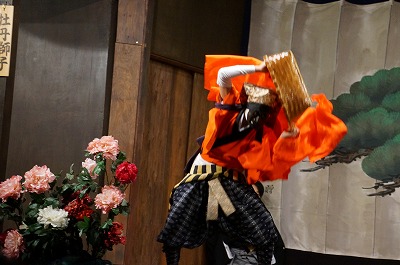
Taro try to catch a lion

a lion damages Taro

Yes. I’ll try to catch the lion with this device. Oh, it is stronger than I thought. I’m no match for a Shishi.

This is Taro thinking

Taro imitates a Shishi

Well, I wonder what am I going to do now? OK, I’ll try to imitate the Shishi.

Taro and his Load

A Load is in trouble

I wonder if he can catch the Shishi. How did it go, Taro-kaja? What are you doing? Why are you imitating the Shishi? Oh, no! Stop, this is me!

I won’t let you go. Yarumaizo! Yarumaizo!

Intermission

It has gotten quite dark. It still gets chilly at night although it is May.

How about the play?

Although the characters say lines, it is easy to get the basic idea. It is the same as a pantomime. But what does “Yarumaizo” mean?

This words mean “I won’t let you go” or “Anyone can catch him.”. It is set phrase in a Kyogen play.

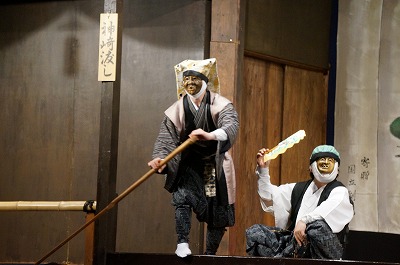
“Kanzaki watashi” (Kanzaki river ferry)

a tea house owner

A monk  drop in a tea house

I am a tea house owner living around here. Would you like a cup of tea?

I would like to have a cup of tea. Anyway, is this the right way to go to Sakai?

Yes. You should take a boat on the Kanzaki river just ahead.

I have little money. How can I escape from here?

a monk tries escape

a monk

Hey! Where will you go? Wait! Yarumaizo!

I’m sorry. Please forgive me….

Do you have enough money? How will you cross the river?

I will walk around or swim across the river.

No. That river is not easy to swim across and it is very deep. OK. I’ll teach you how to ride on the boat for free. The boatman loves cleverness and Waka (Japanese poems). So, you may say to the boatman that so and so…..OK?

That’s good to know. Huh? Oh no! I have forgotten the words. Things will work out. Hey, may I ride on the boat please.

I can’t give a ride to such a poor monk.

I am with 3,000 people. Let’s go! Thank you.

Are you alone? Where are the rest of the 3,000 people?

I told you that I am with 3,000 people, it means I’ll pay for 3,000 people. Right?

I see. All right.

Then, Mr. boatman. What do I see over there?

Ah, those are the human bones of people who didn’t pay for the boat ride.

I got myself into a mess….

What will happen to the little monk?

It’s going to be a surprise. Please watch and see for yourself. The next program is the last.

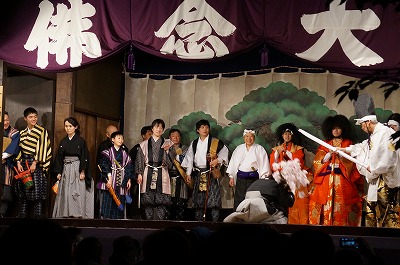
“Sennin-giri” (Saving a Thousand souls)

The last program is the conclusion. This is the end of this four day program.

  Well, let’s start getting ready to go home

It was interesting. It’s already half past eight. Shall we stay in the city?

No. Don’t you know how much it costs to stay in a hotel in Kyoto city this week? The capsule hotel usually costs about \ 3,000, but it costs over \ 7,000 this week.

What is a capsule hotel?

It is a kind of the lodging facility. It called a capsule hotel because the rooms are very small like capsules. Usually 2 capsule bed are loaded vertically and many of them are placed in a row. Only curtains or blinds separate the rooms from the corridor. It’s a simple hotel just for sleeping.

I didn’t know. Where do guests put their bags?

In the corridor in front of their bed.

Aren’t their bags stolen?

No. If you worry about this, you should not stay there. Bedclothes, a light, alarm clock and radio are supplied in each capsule and the shower room is in another place, too. Anyway, if possible, I recommend you should stay in Nara city. Nara is within one hour by train from Kyoto, the accommodation cost doesn’t change even in this week.

Nara! Sounds good. It’s an older city than Kyoto. I want to go to Nara.

You’re stupid. We live quite near. Let’s go home quickly.

I think this is some nice occasion….Arrogant. Just you wait.

a part of National treasure
a part of “Chojyu-Jinbutsu-Giga”

Two guys!
We’re looking forward to you being our guide again if we have a chance. See you next time, bye!

  *Refer
Kozanji-temple
You can see the scroll “Choju-Jinbutsu-giga” (Unfortunately, it is a replica, though. The original is stored in Tokyo and the Kyoto National museum.) and you can get many copies of these paintings. And, this temple is famous for its beautiful autumn leaves.
Access: It takes about 50 minutes from the center of Kyoto by bus, and 15 minutes on foot from the bus stop.


Report: ~ceremony to drive out evil sprits in Nara~In the case of Kofukuji-temple and Horyuji-temple Part 2

   Horyuji-temple ‘s case

2. Horyuji-temple’s case

Introduction

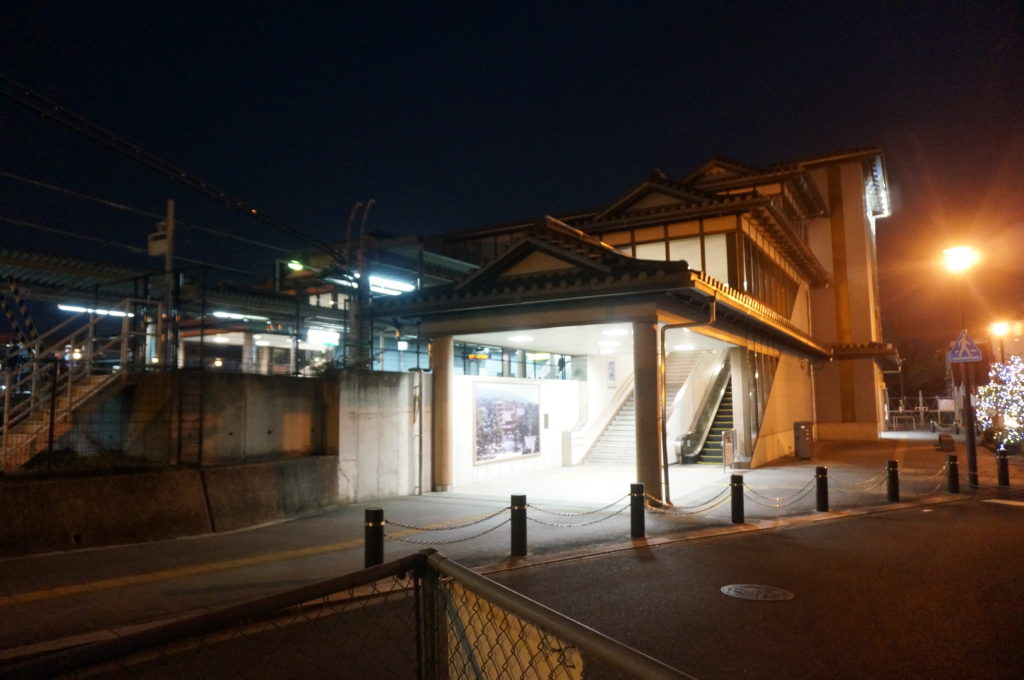
 Horyuji-temple is in a slightly remote place from the center of Nara. The nearest station is “Horyuji station” (JR line). It takes about 10 minutes from Nara by train. From Osaka, it takes about one hour. But, unfortunately, this station is for away from the temple (about 1.5 kilometers. It takes eight minutes by bus, over 20 minutes on foot), besides, the bus does not run after about 5 pm. The event begin at 7:30 pm every year. If you want to watch only this event, you should use the next station “Ouji” and you should take a bus.

Horyuji station
Horyuji station

a town around Horyuji-temple
around the temple

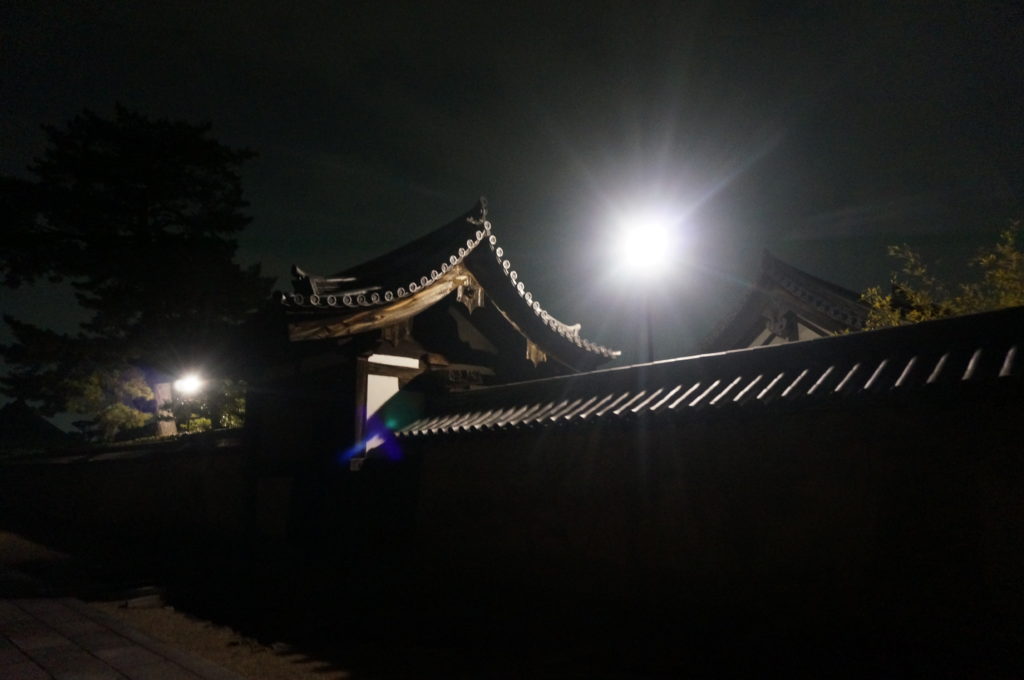
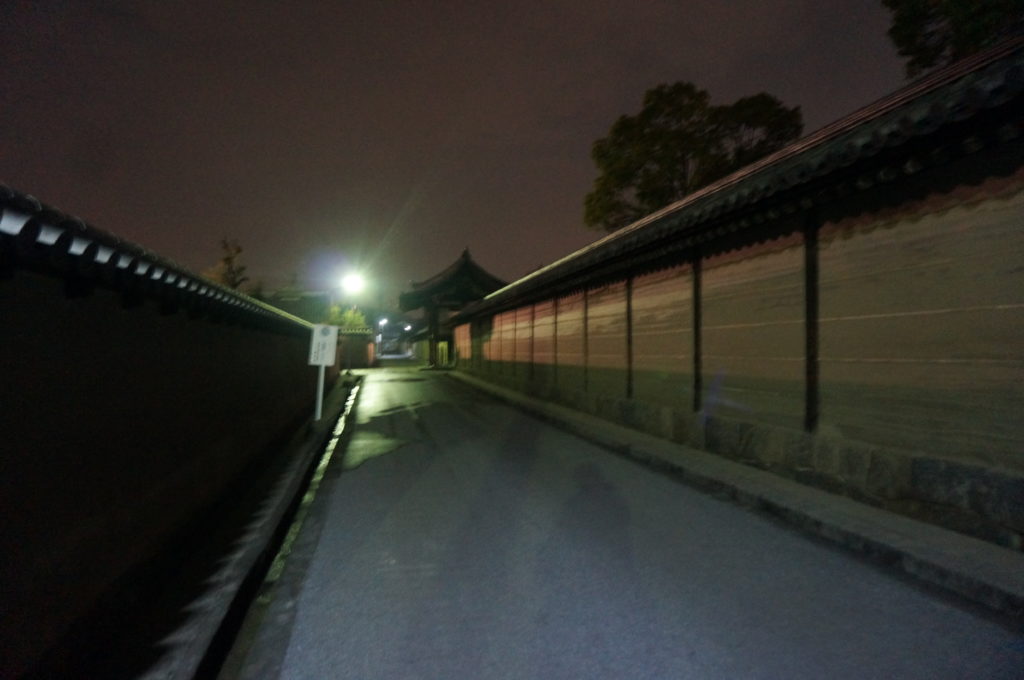
 In this season, when it passes 5:00 pm, the sun goes down. When you arrive at this temple, you will stand in deep darkness without many people. There are several Buddhist monasteries and long wall.
 When I arrived there past 6:30, I saw that scene. I felt lonely, I thought I had better returm. Because I guessed that probably the ceremony would not to be performed for some reason that day. When I decided to return, I saw that several people came there. They seemed a family. So, I turned back and walked little and then several more people came in sight. They seemed to be waiting for somebody. It seemed there was a misunderstanding. This temple looked very quiet. The state was greatly different from Kofukuji-temple. I presumed the reason there was no ceremony. Of course, nobody got gifts. Perhaps this temple in a remote place. I didn’t know whether this was right or not.

Horyuji-temple

Horyuji-temple

Ogres and Bishamonten come out

 The event was held in front of “Seien-do hall 西円堂”. This hall is on the left side of the main hall and Five Storeyed Pagoda.
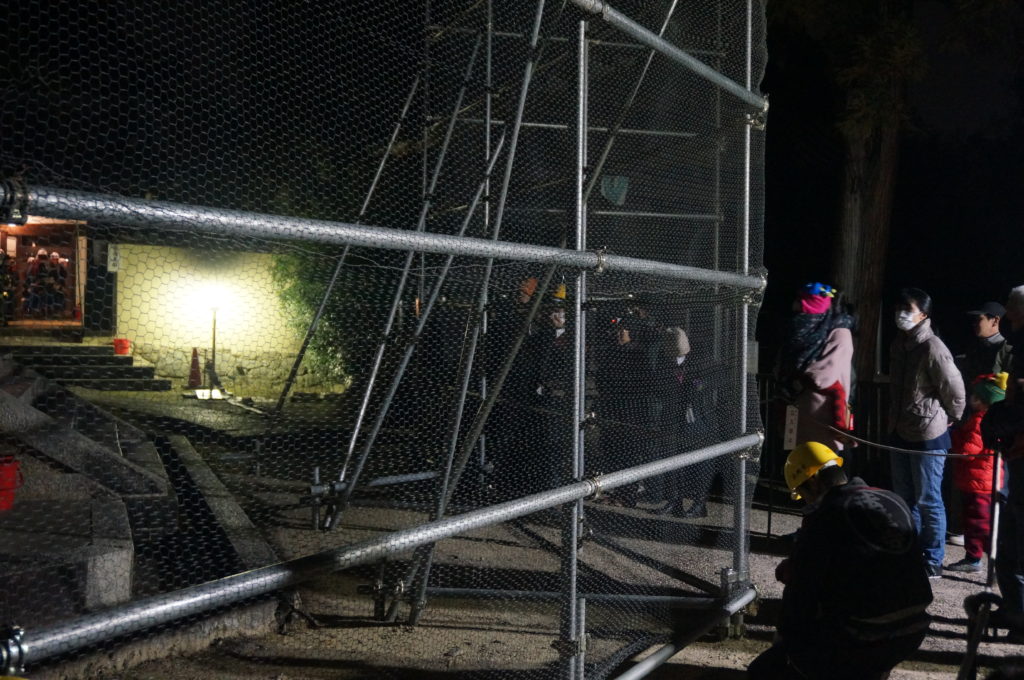
 After 7:00, it was not crowded. A fence was built sorounding the hall, people had been waiting in front of it. Just before it start, people finally gathered. There were fewer it than I expected. At 7:30 pm, it started.

ogre holds fire

ogre holds fire

ogre in Horyuji-temple
Ogre

bishamonten drops out evil
Bishamonten

 Three ogres and Bishamonten got on the stage. This style was the same as Kofukuji-temple’s. A defferent is that the ogres and Bishamonten did not fight each other. Basically, nothing much happened. Ogres came out one by one from the right side of the hall and took torches. An ogre swung the torch and it powerfully to the fence. He did this three times. The next ogre did the same action.

ogre's face

ogre's face

ogre in Horyuji-temple

ogre throws fire

 After the third ogre, Bishamonten came on a stage, he stuck a long sword out powerfully seversl times, shouting “Yah, Yah, Yah”. This action meant throw out evil spirits. They went around 3 times.

bishamonten dop out evil

beity in Horyuji-temple

ogre's face

ogre is walking

 When the sparks spread, people cheered. Sometimes, a torch flew over the fence. However, generally it was silent without the voices of cheering and Bishamonten. No announce, no commentary, no noise. There was only some cheering and the sound of fire sparking.
 Before 8:00, the event was over. As soon as the ogres and Bishamonten left, several fireman got on stage.

end of ceremony

five storeyed pagota

Horyuji-temple

Horyuji-temple

 When I turned back on my way to the gate, only the Five Storeyed Pagoda soared high in the soundless night like an illusion.


Report: ceremony to drive out evil spirits in Nara~In the case of Kofukuji-temple 興福寺 and Horyuji-temple 法隆寺

about two famous temples

 In Japan, there is a ceremony called “Tsuina-shiki 追儺式” or “Oni-yarai 鬼やらい”. This is the ceremony to drive out evil spirits. In many cases, it is performed by throwing to send ogres away. People had originally performed this ceremony at the end of the year, it gradually changed to a day “Setsubun”. Setsubun’s “Setsu” means seasons, and “bun” means separate in Japanese, so a day of Setsubu originally came four times in a year. But today, “Setsubun” is the beginning of spring. It is on February 3rd. On this day, we can see many ceremonies all over Japan. In these events, ogres often appear. People throw beans at ogres to drive out evil spirits, shouting “in with fortune! out the demon!”. This time, I will introduce two temples’ ceremonies of Setsubun in Nara. These are “Kofukuji-temple 興福寺”and “Horyuji-temple 法隆寺”.

ogres in Kofukuji-temple and Horyuji-temple

 These temple are the most famous sightseeing sots and represent the old building of Nara. Of you open some guide books about Japan, you will see these names by all means. These two temples seem to similar, but their characteristics are considerably different.

Five Storeyed Pagoda in Kofukuji-temple
Kofukuji-temple 興福寺

Kofukuji-temple
Horyuji-temple 法隆寺

 The Kofukuji-temple was built over 1,300 years ago by the Fujiwara clan. The Fujiwara clan had monopolized an aide of the Emperor from generation to generation, and had continued ruling this country for 1,000 years. This temple was to protect the Fujiwara clan. So, it had very large territory and vast property for a long time. They sometimes refused the demands of the goverment. KOfukuji-temple is such a temple.

 On the other hand, Horyuji-temple is about 100 years older than Kofukuji-temple. The Buddhism is ardent, without a Buddhist transmission interval, it was built for the intention of believing in “Shotoku-taishi 聖徳太子 (he was a cousin of the Emperor and assisted her. At that time, the Emperor was a woman). Even if there was a fire afterwards, it was reconstructed by stubborn faith and continued up to the present day. Above all, it’s story Five pagoda is said to be the world’s oldest wooden building.
 These temples each have the ceremony of “Tsuinashiki”, that styles are quite different. One is flamboyant and noisy, the orher is calm and quiet. I have seen both, Kofukuji-temple in 2018, Horyuji-temple in 2020. I will report about these based on those, but each program is the same year.

Kofukuji-temple’s case

 The ceremony starts at 6:00 pm every year.
 Kofukuji-temple is located near Near Nara station. It takes five minutes from Kintetsu Nara 近鉄奈良 station (20 minutes from JR Nara station). Nara is about one hour from Kyoto by train. If you want to watch the ceremony from start to finish , you must arrive at least one hour before at least. In my cas, when I arrived at 5:00, there were already approximately 3 lines of people nearby the center, and approximately one line on right and left. Many people came early because they wanted to get lucky beans or rice cakes. At the end of the ceremony, the chosen people threw many beans and ricecakes with lucky numbers. If you are lucky, you can get a ticket for the gorgeous hotel and so on. When you arrive in front of main hall, you get a ticket for entrance int o the area partitioned ropes. An area is proved for the prevention of danger. The main hall is big. If you are behind ropes, you can watch the ceremony.

the stage

ogres on the stage

 When it is 6 o’clock, priests entered the hall and the ceremony started. However, the audience only heard the voices of the sutra-chanting. A person came out before long and explained the flow of the event. He made the audience laugh using witty talk. H said, for example, “some people are laud to cheer up ogres, but don’t cheer for ogres please. You will support a bad in yourself because ogres represent evil spirits. The audience laughed. Yes, he was right.

ogres on the stage

ogres on the stage

ogre's face

ogre's face

 At 7:00, three ogres got on the stage holding long sticks. It seemed their mask were rather new looking. They walked around the stage crying loudly and sometimes threatened the audience with by leaning over the banister.

ogres on the stage and Five Storeyed Pagoda

ogres on the stage~Japanese culture  Setsubun

 It was a very attractive scene of ogres rushing wildly against the backdrop of the Five Story Pagoda.

ogres on the stage~Japanese culture  Setsubun

ogres drink sake~Japanese culture Setsubun

 They sat down when they acted violently and they were tired. It was here, a commentary explained without interval. “They required some liquor.” Three people carried sake bottles. The ogres drank with joy, and walked around the stage again.

ogres on the stage~Japanese culture Setsubun

ogres are walking ~Japanese culture Setsubun

ogre holding a torch~Japanese culture Setsubun

ogre holding a torch

 This time, a commentator talked to the audience to call a “Bishamonten 毘沙門天”. And people joined in, so he got on the stage. Bishamonten is a deity of battle who protects Buddha. He wears armor and holds a long sword.

bishamonten (masked character)

bishamonten's face (Japanese masked character)

bishamonten vs ogre

bishamonten vs ogre

 On the stage, the fight began with Bishamonten and the ogres.

bishamonten vs ogre

bishamonten (Japanese masked character)

 I felt it was like a stunt show for adults. They seemed like children’s popular characters on TV. Bishamonten was overwhelmingly strong. If the ogres attacked all at once, Bishamonten pushed back them lightly. Still the ogres challenged to fight many times without being discouraged. I understood the feeling that people wanted to cheer up the ogres in this situation.

bishamonten vs ogres

bishamonten's victory

Ending (Daikokuten) of Kofukuji-temple’s ceremony

 After about 10 minutes, the ogres gave up finally and they prostrated themselves before Bishamonten. So, Bishamonten drove them away and they left.

daikokuten~Japanese deity of fortune

daikokuten~Japanese deity of fortune

 Then, Daikokuten 大黒天 (he is a deity giving fortune) got on the stage. He held a mallet. People know this mallet will bring fortune good. So, the audience called for him to give a fortune. Daikokuten walk around the stage, he swang a mallet everywhere to give a fortune.

 After Daikokuten left, people began to throw-beans at the stage. These people were born in a year with the same sign of the Chinese zodiac as the current year*.After this portion, you can choose to stay or leave. Me ? I left quickly.

 This is all of the state of the ceremony at Kofukuji-temple.

*The twelve zodiac signs of Chinese astrology make a circuit by 12 years. The 12 zodiac signs are represented by 12 animals. The order is as follows, the Rat, the Ox, the Tiger, the Rabbit, the Dragon, the Snake, the Horse, the Ram, the Monkey, the Rooster, the Dog, and the Boar. 2020 is the year of the Rat.

    This article continues with Part 2 Horyuji-temple case