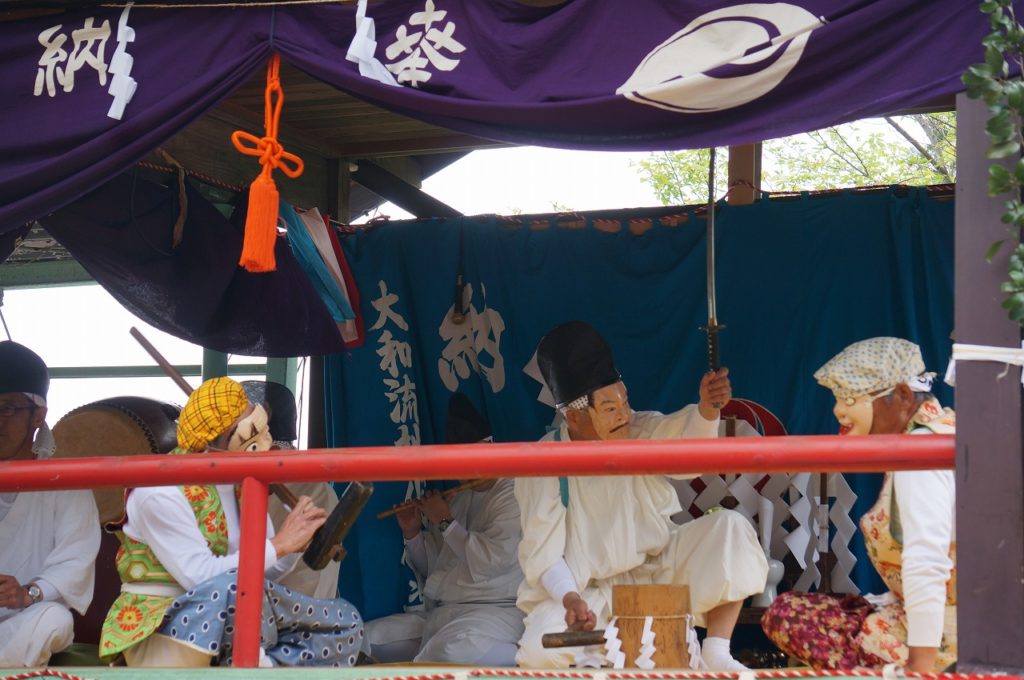
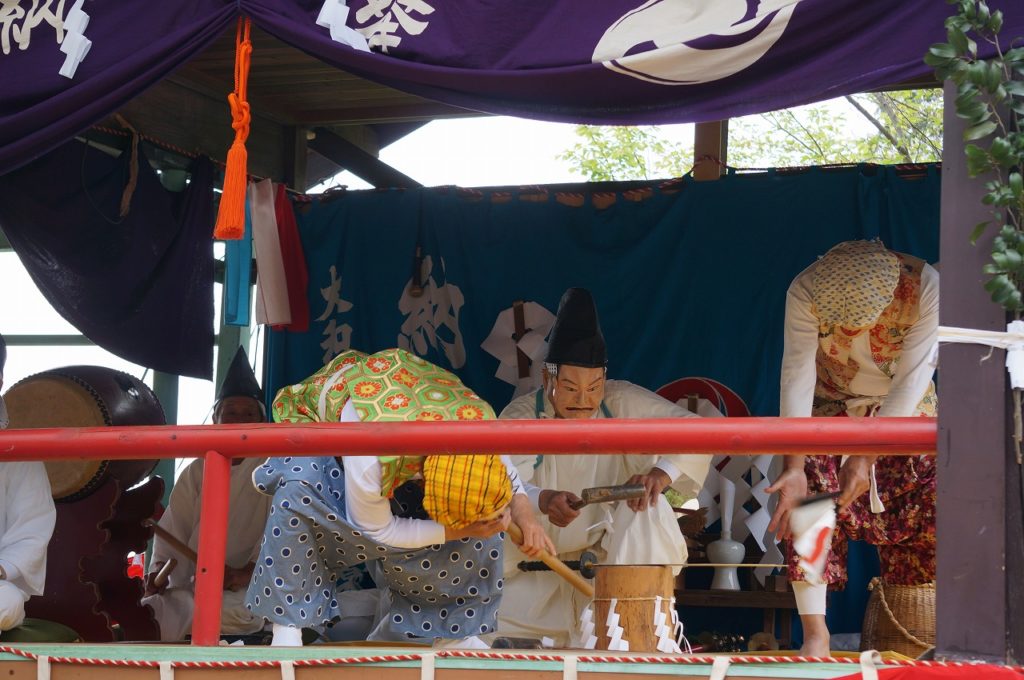
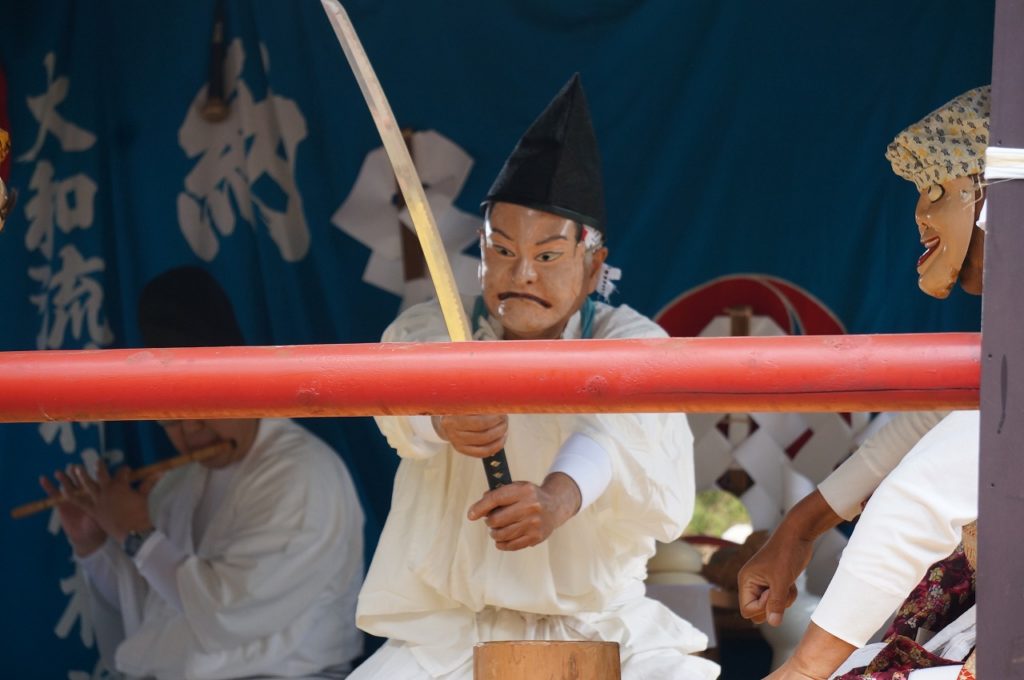
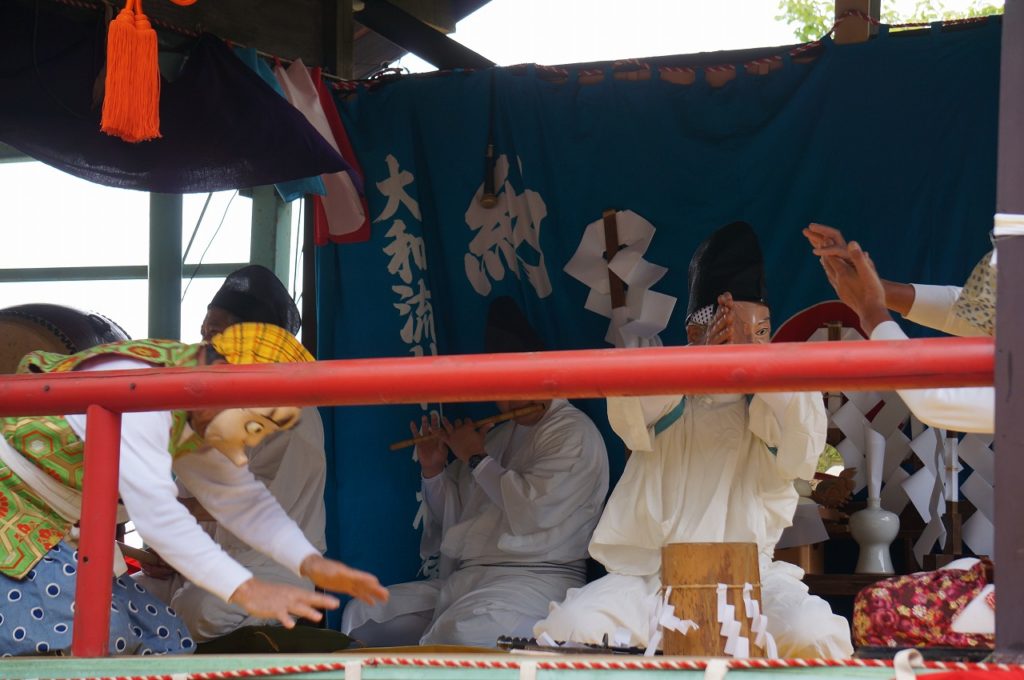
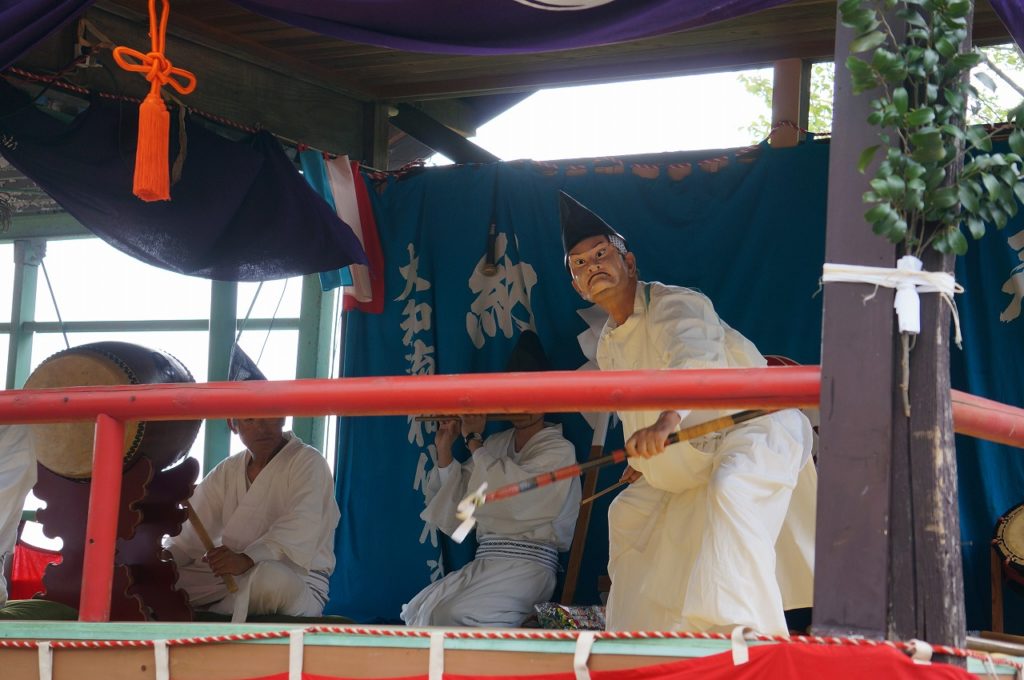
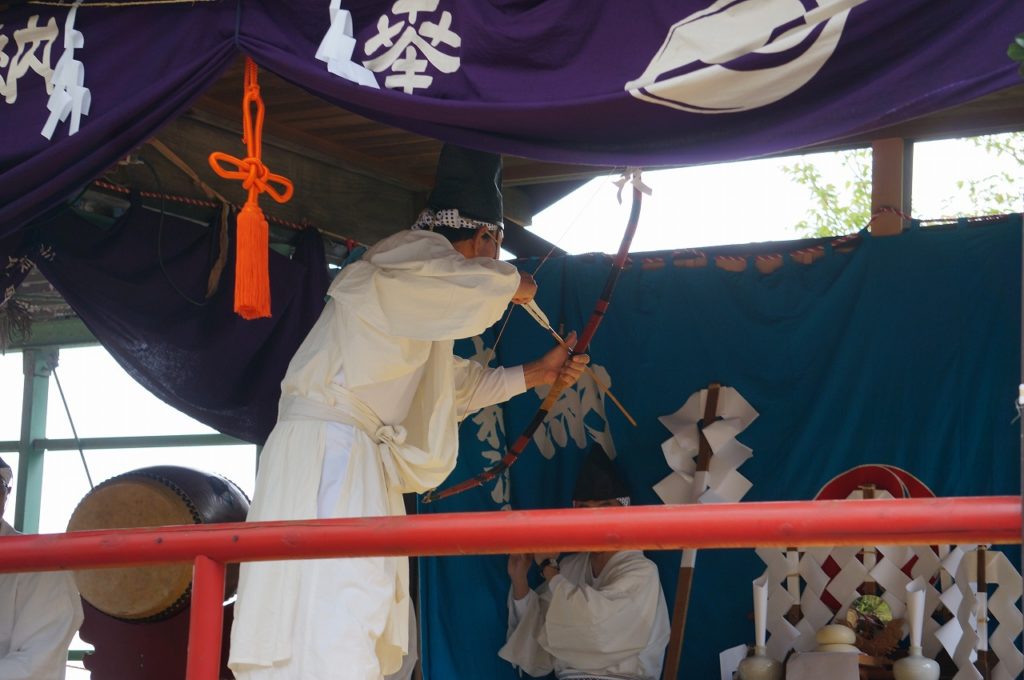
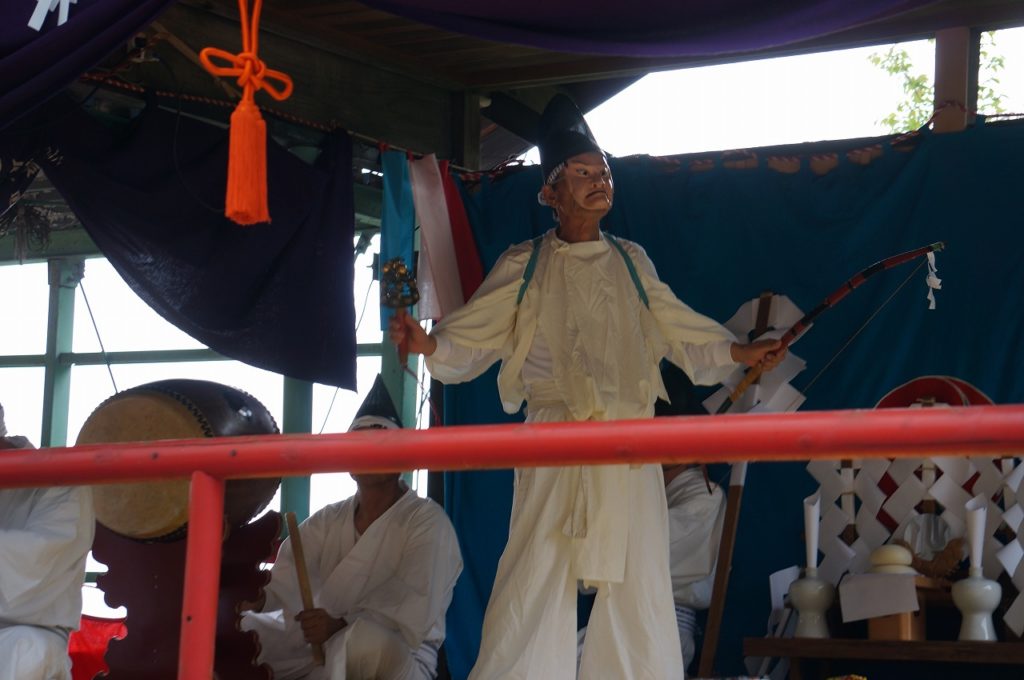
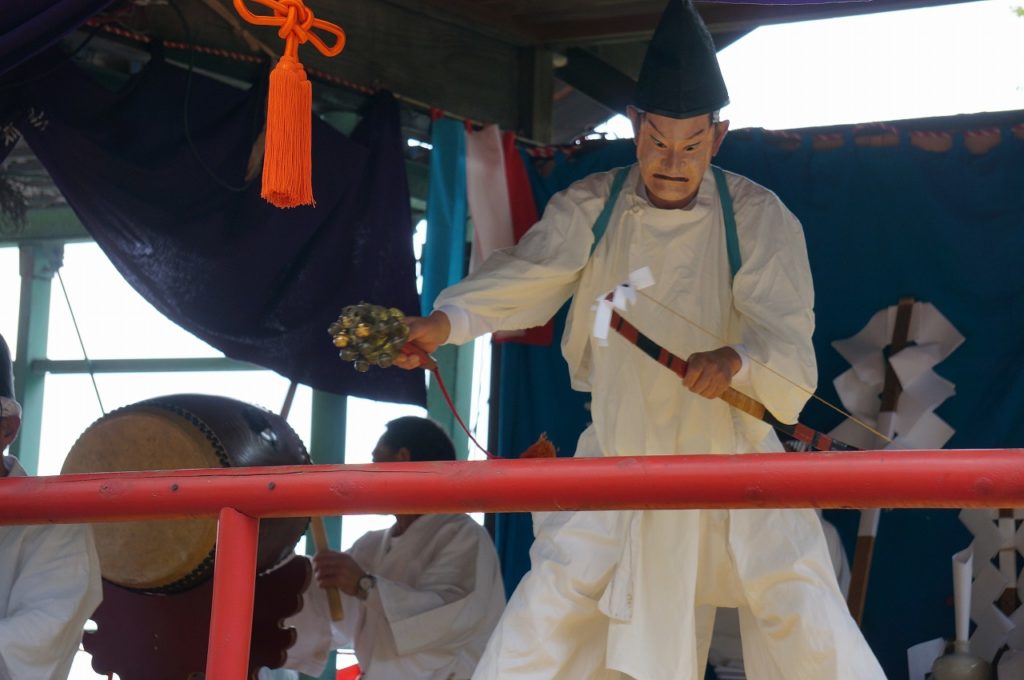
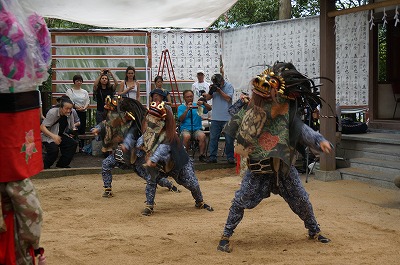
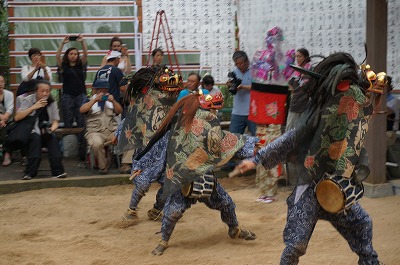
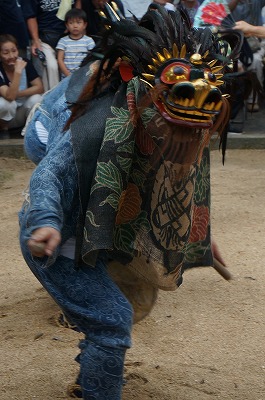
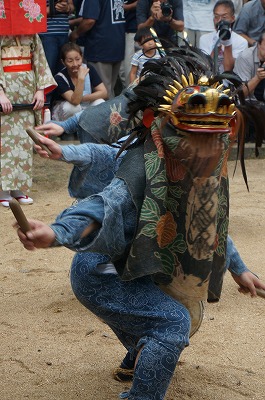
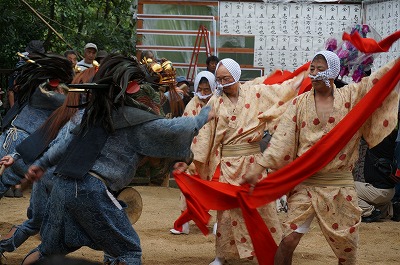
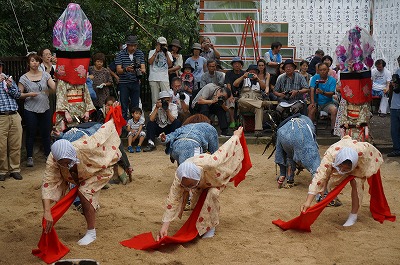
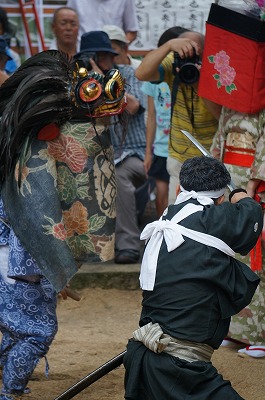
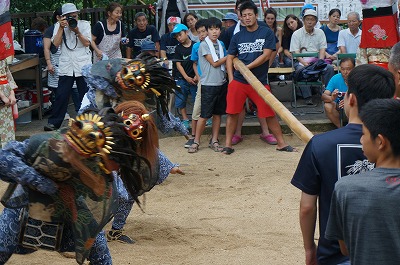
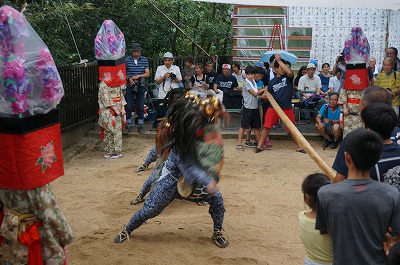
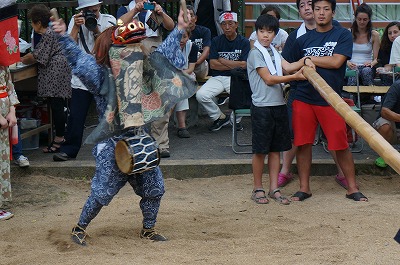
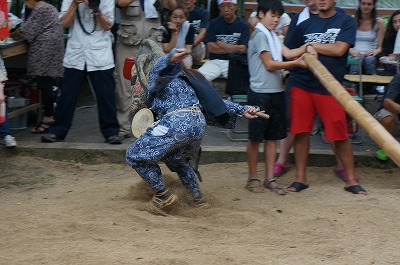
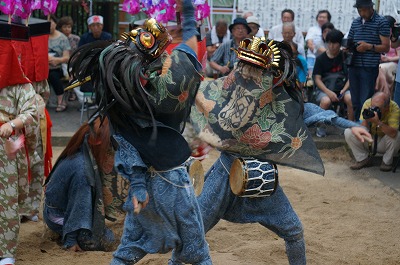
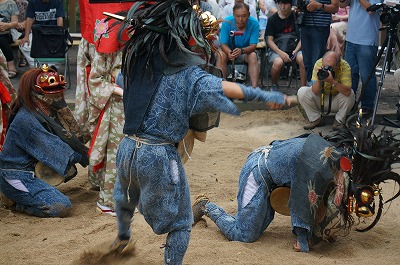
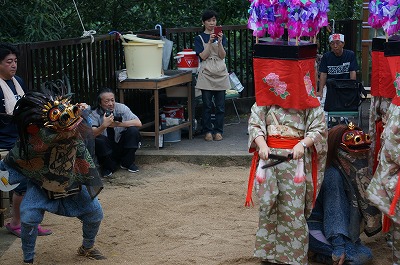
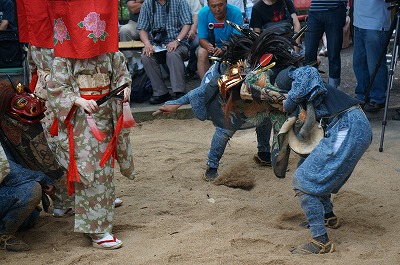
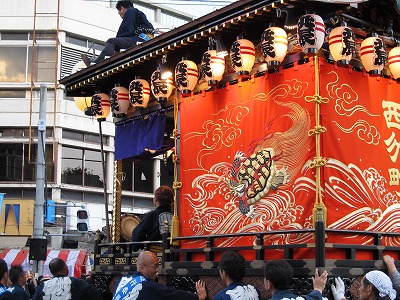
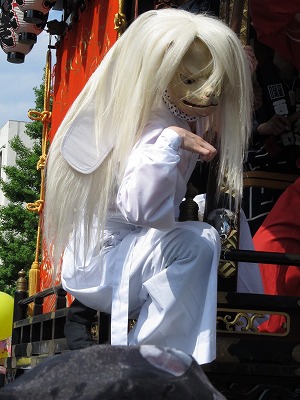
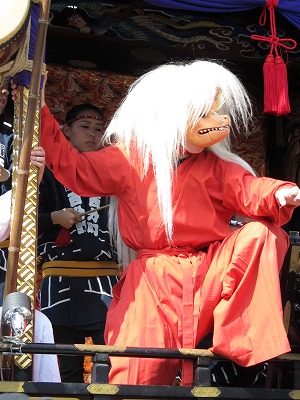
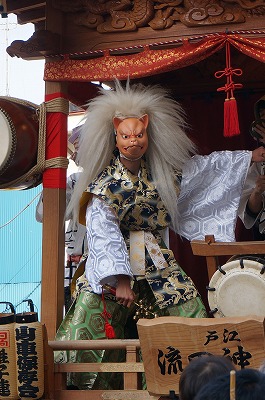
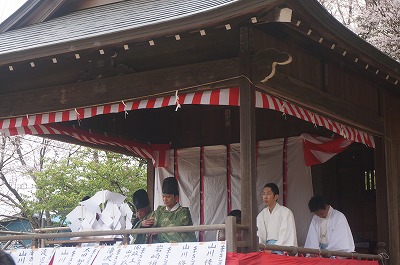
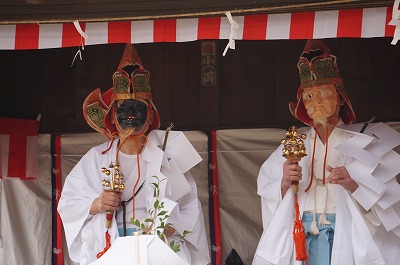
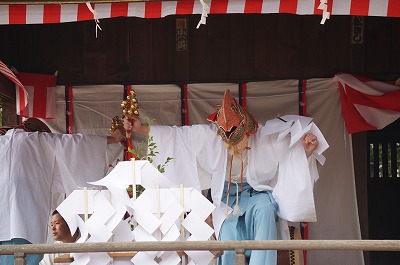
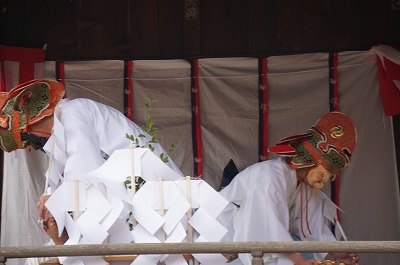
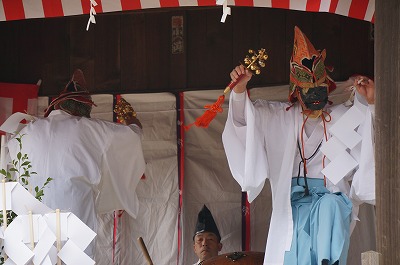
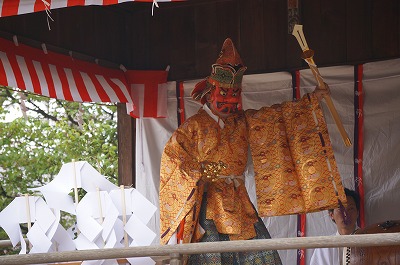
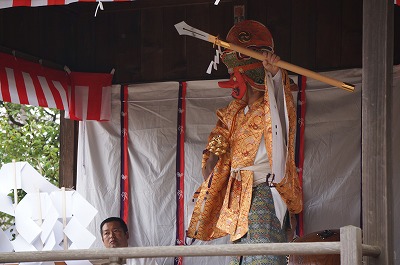
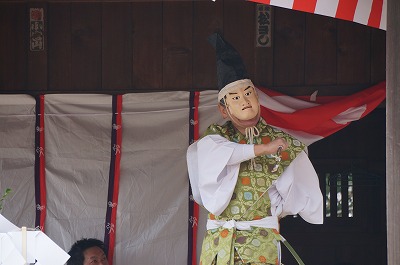
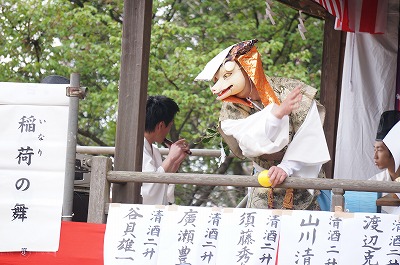
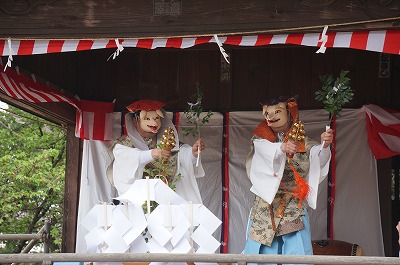
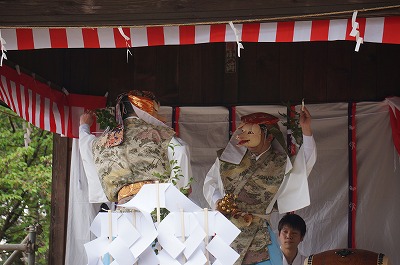
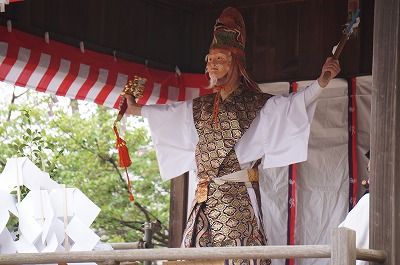
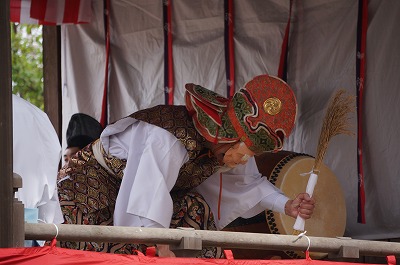
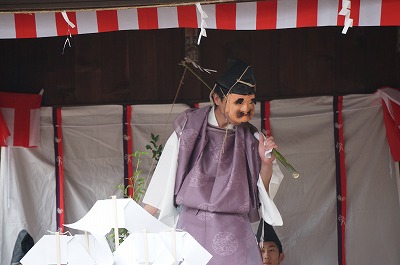
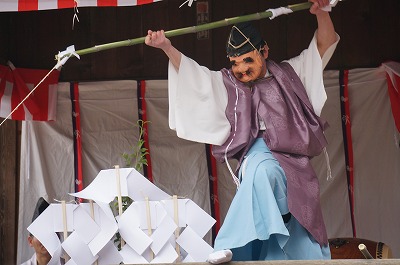
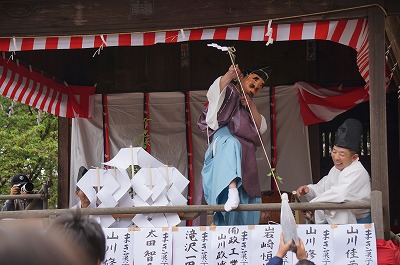
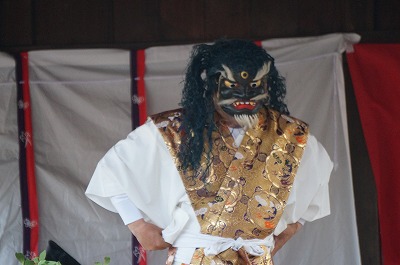
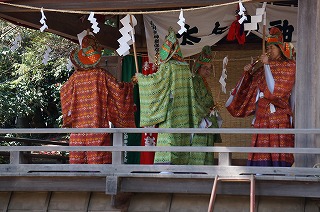
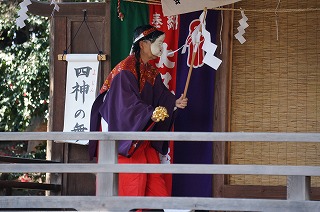
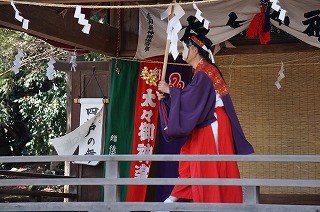
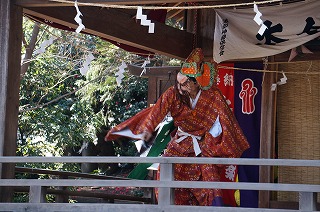
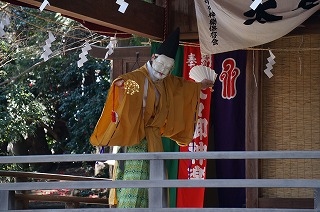
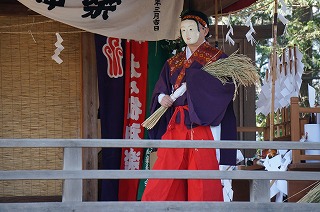
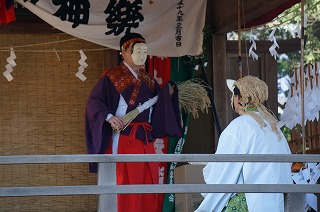
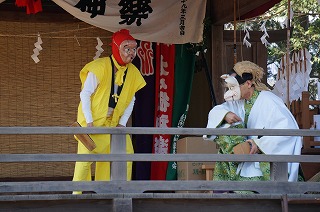
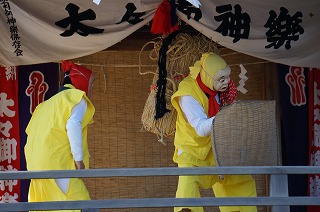
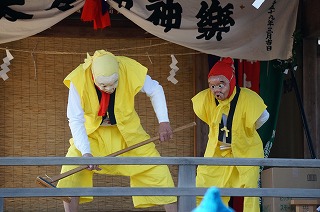
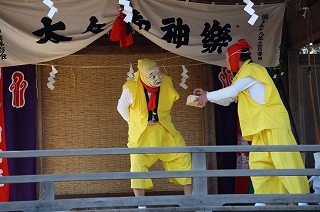
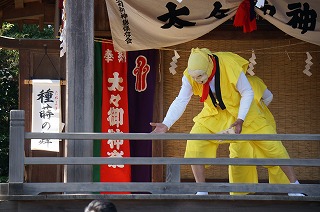
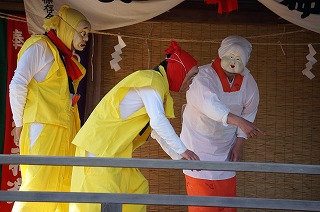
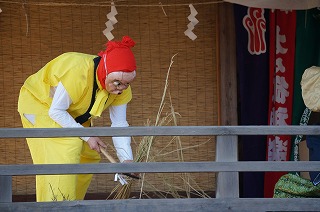
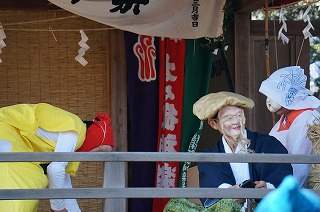
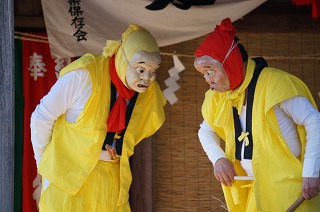
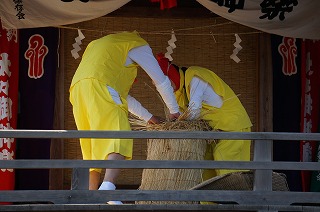
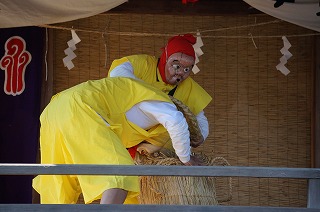
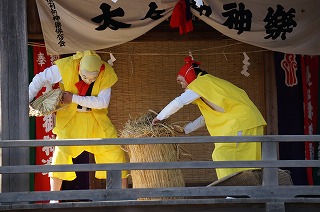
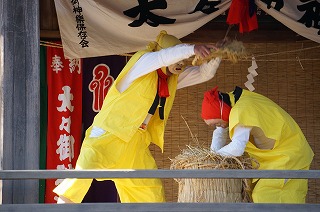
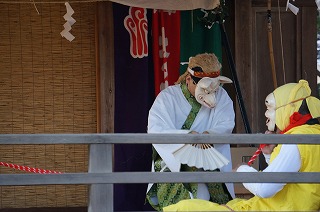
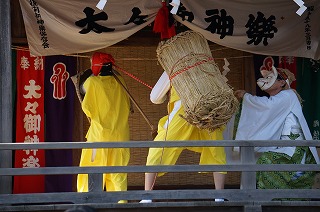
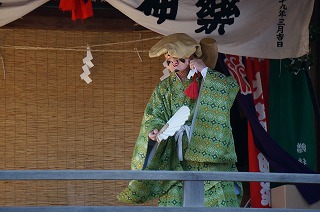
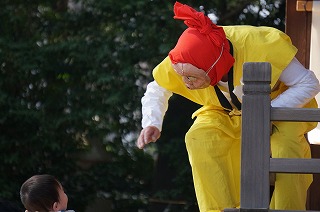
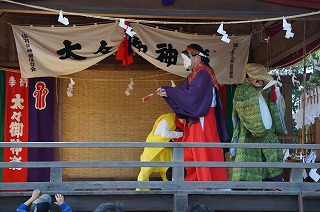
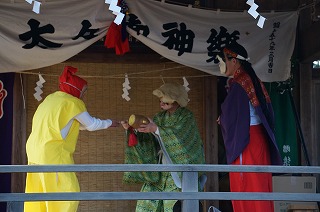
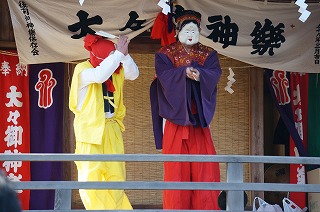
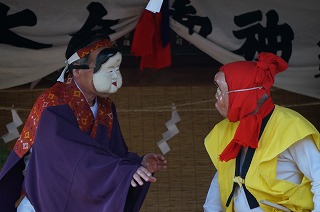
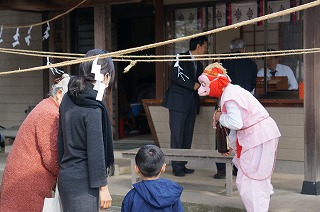
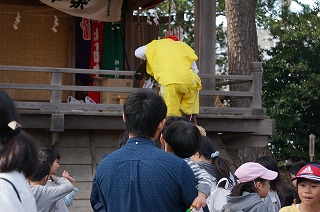
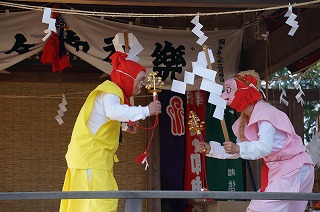
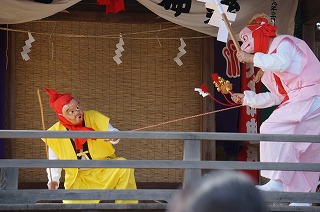
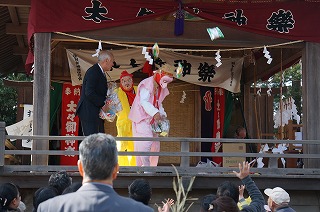
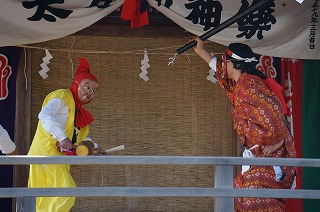
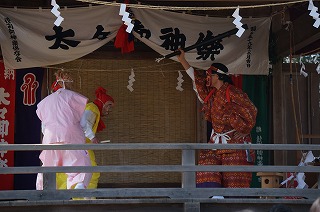
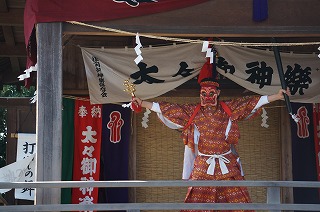
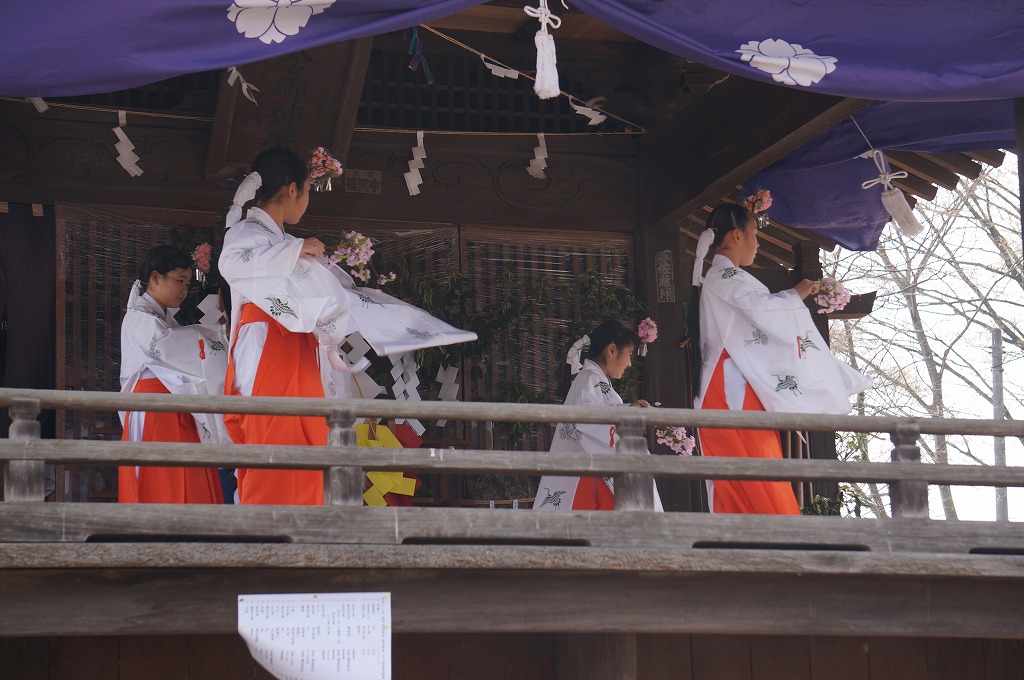
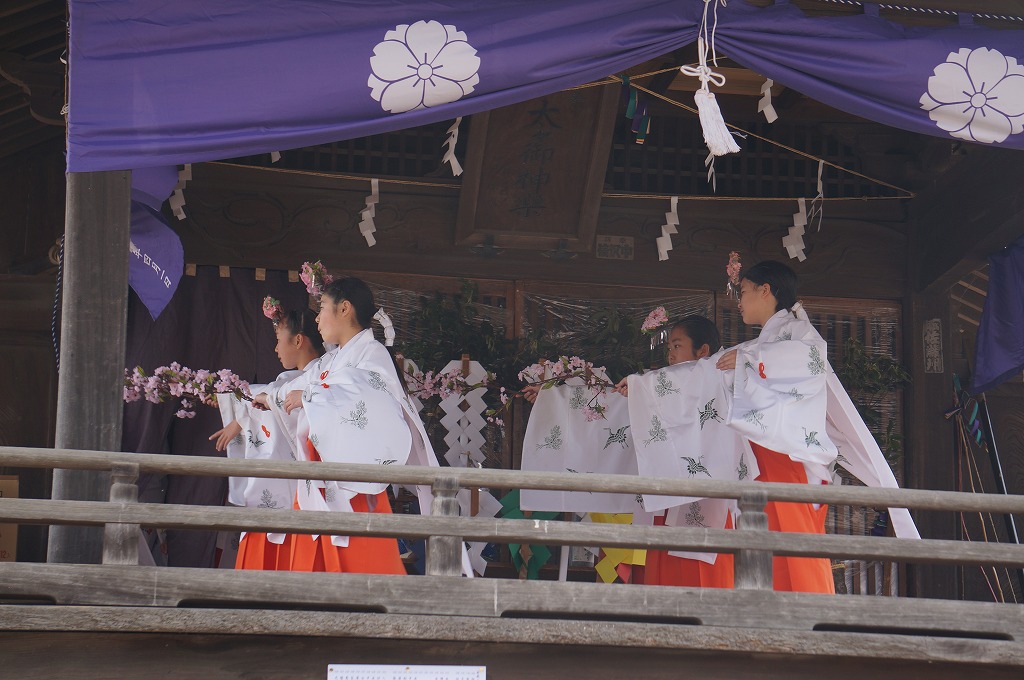
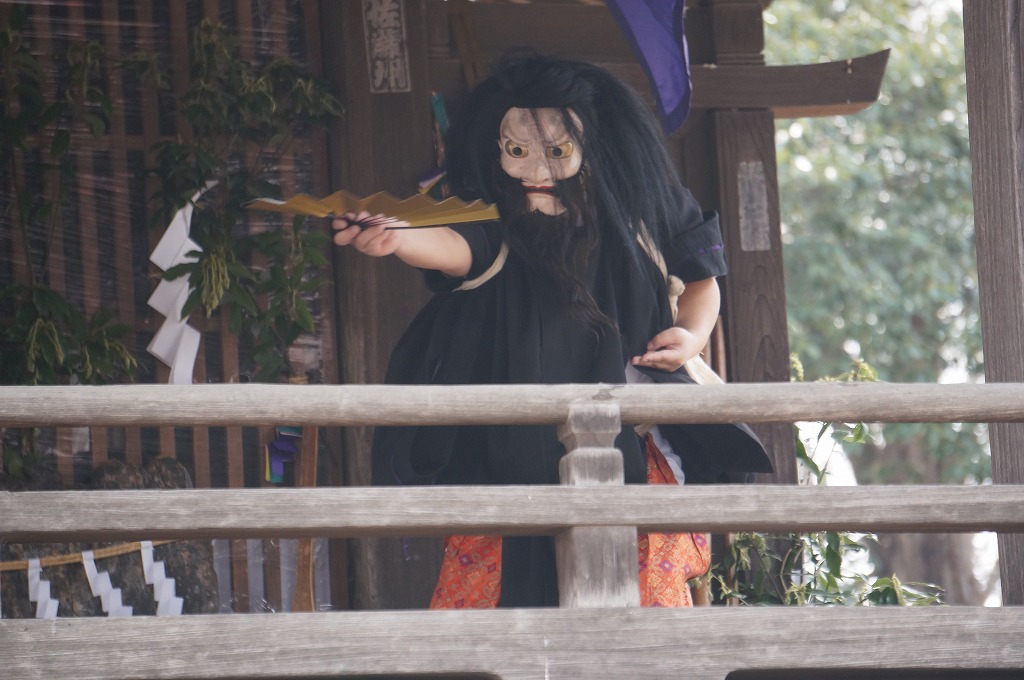
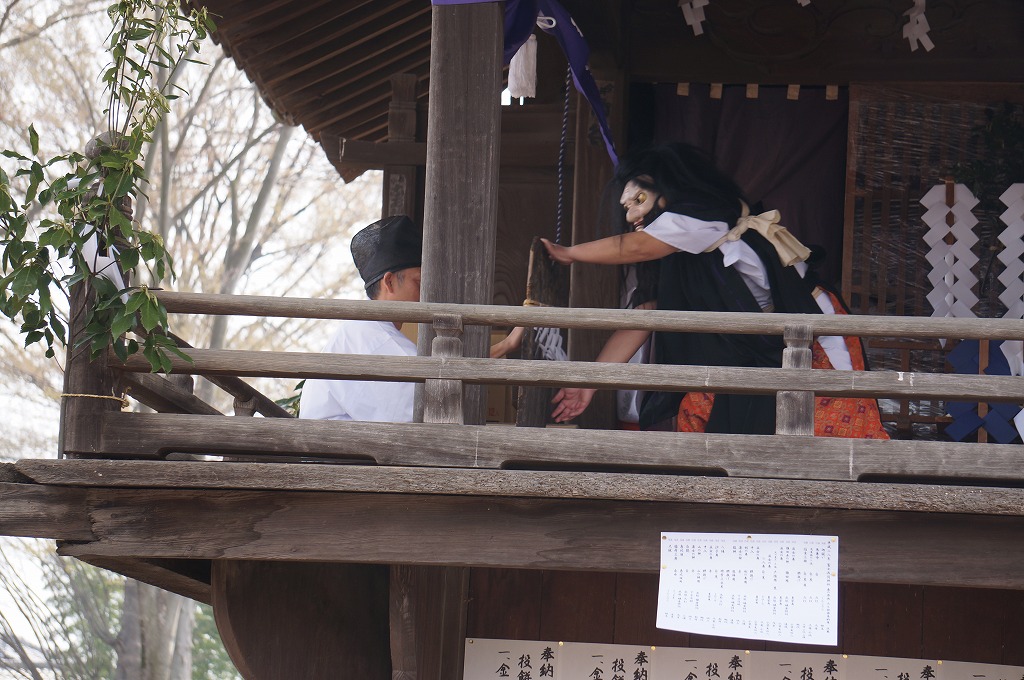
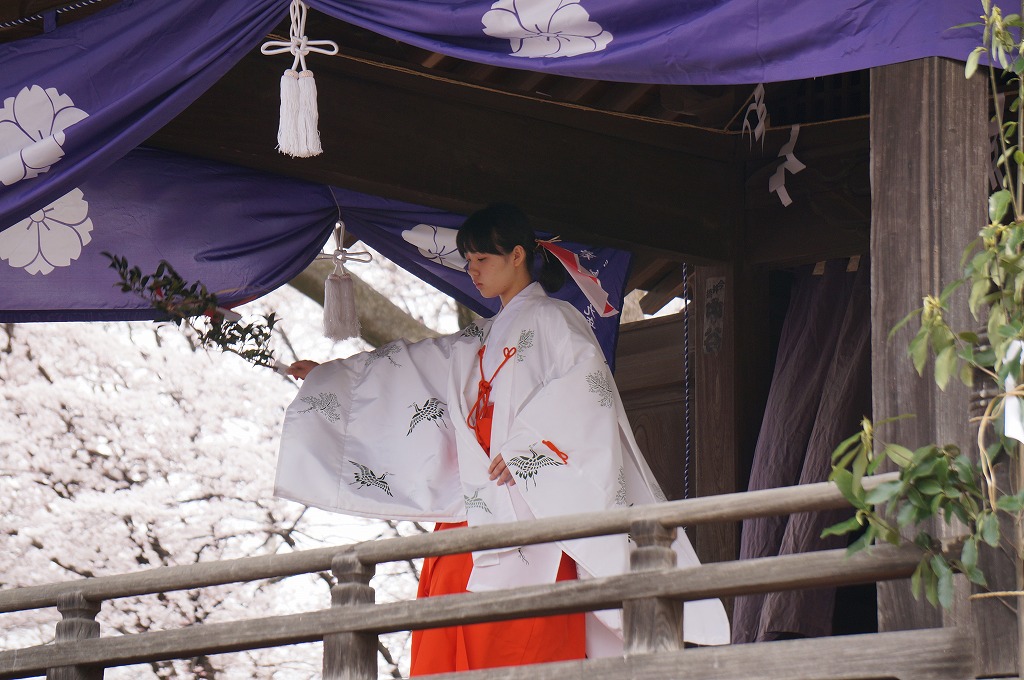
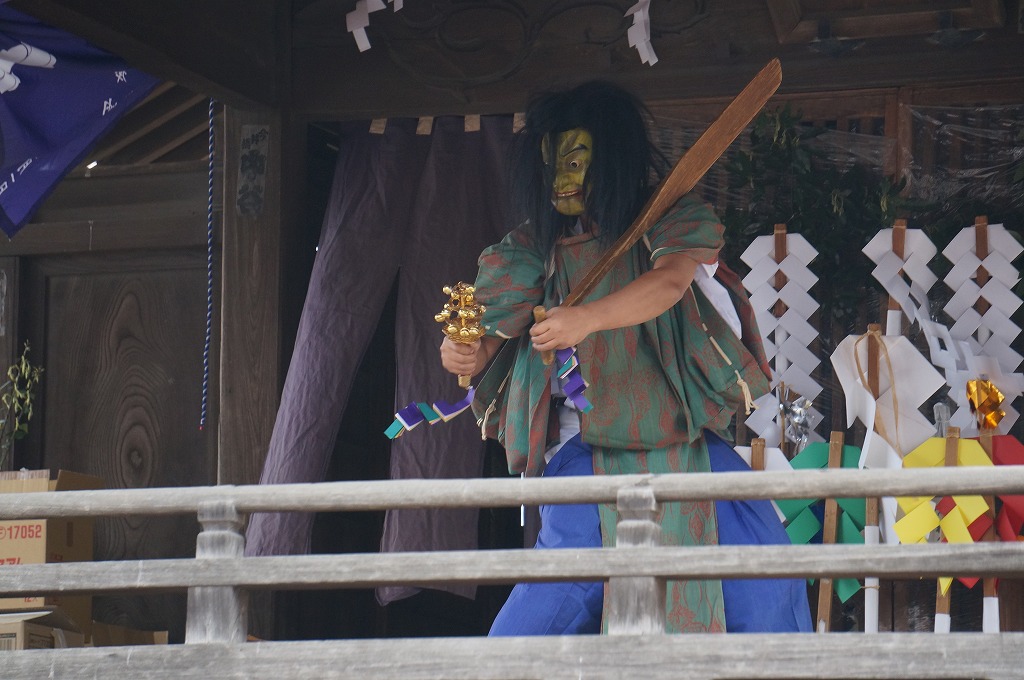
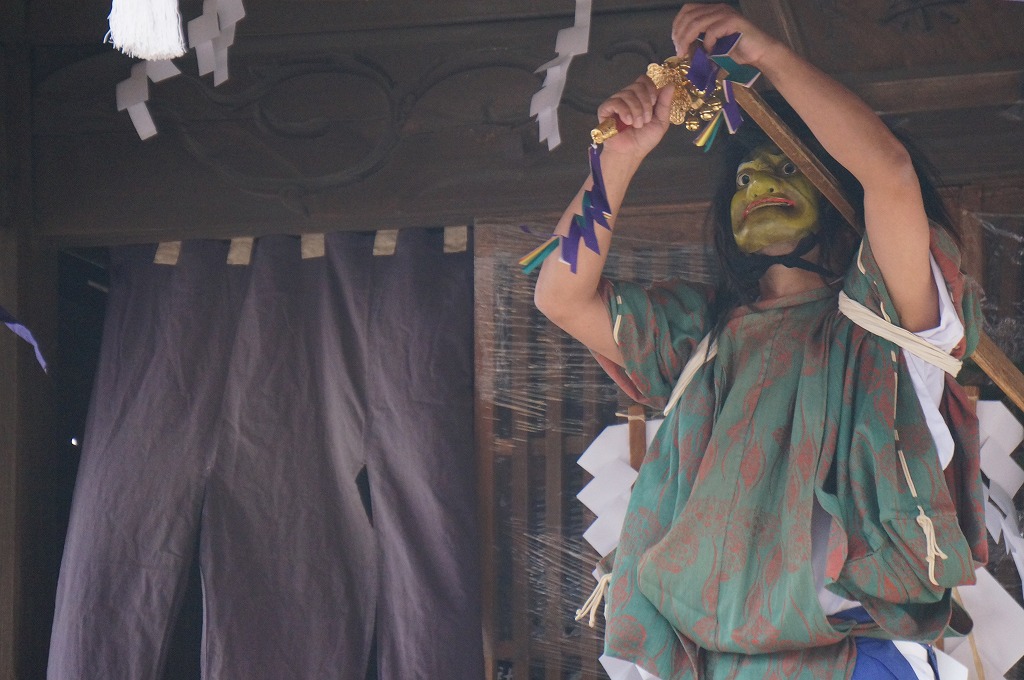
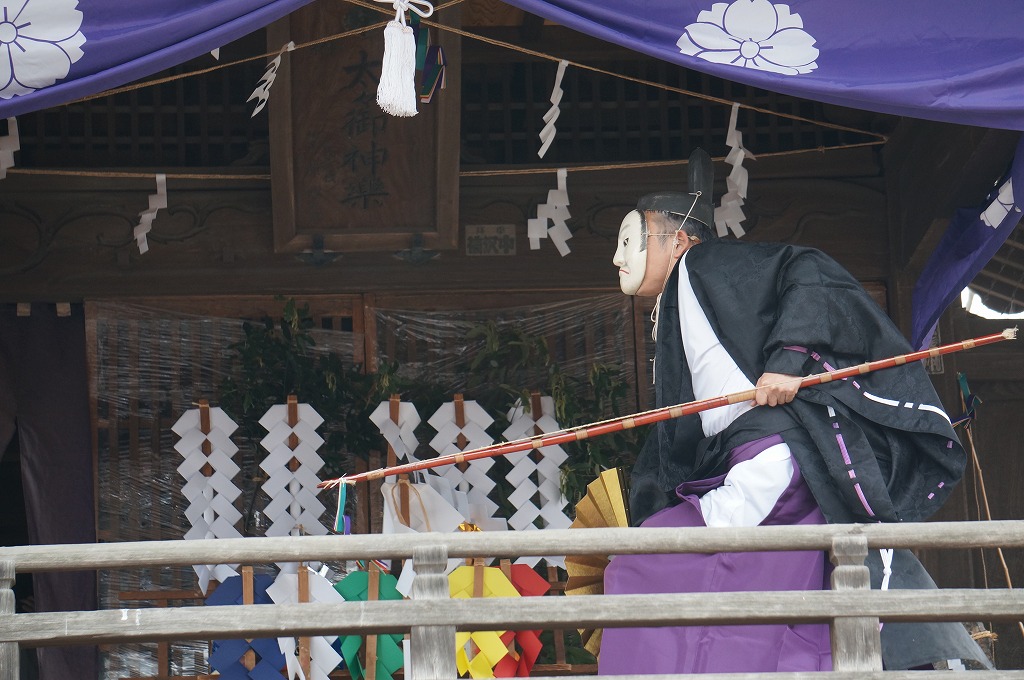
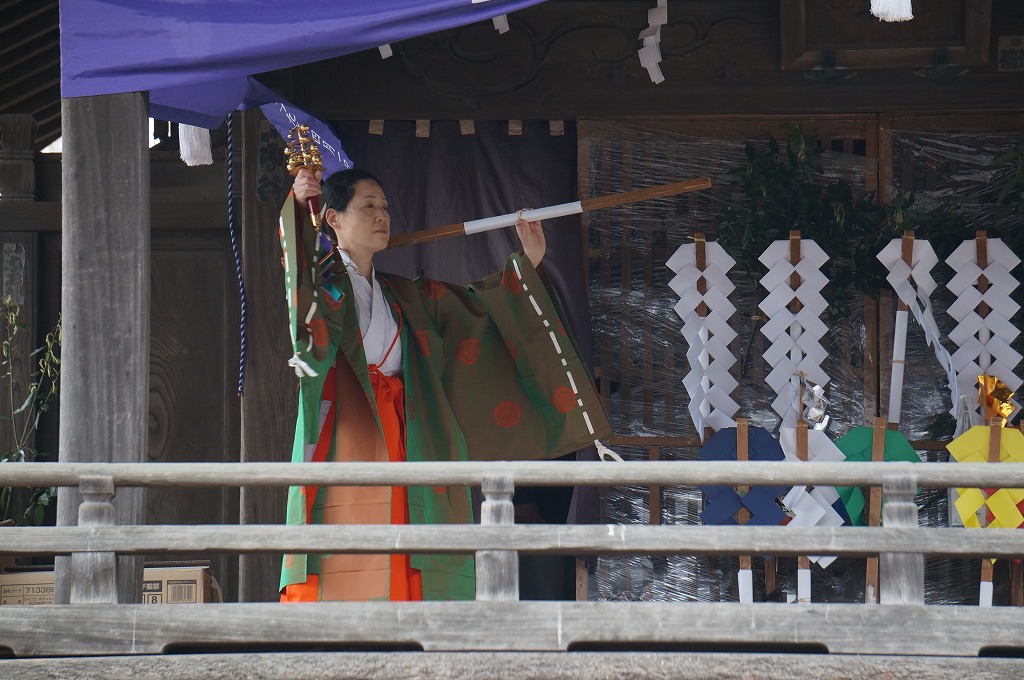
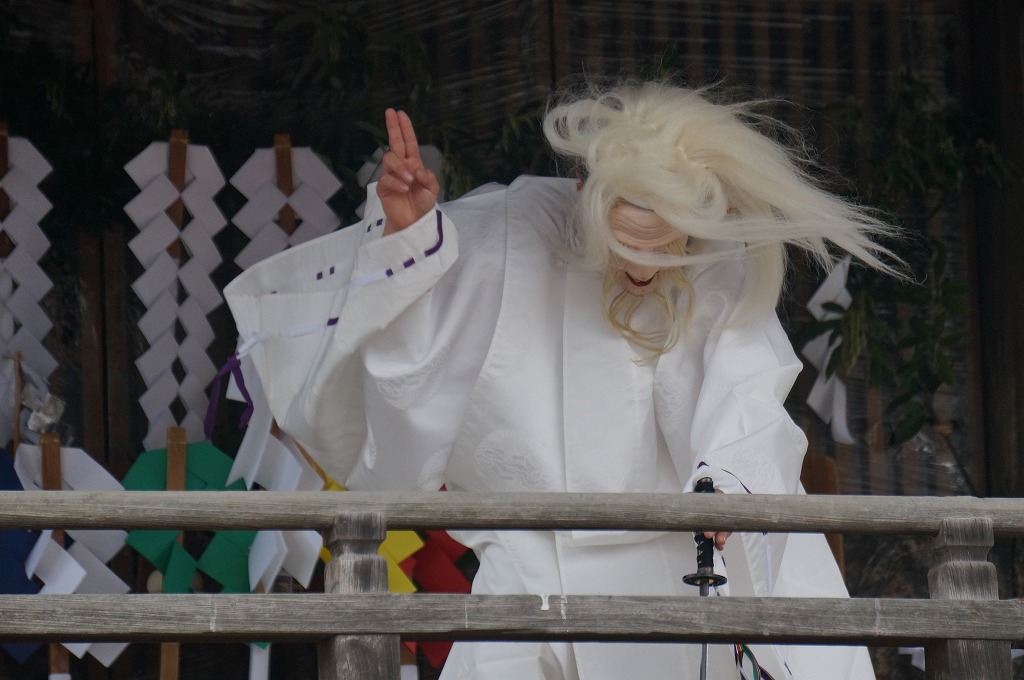
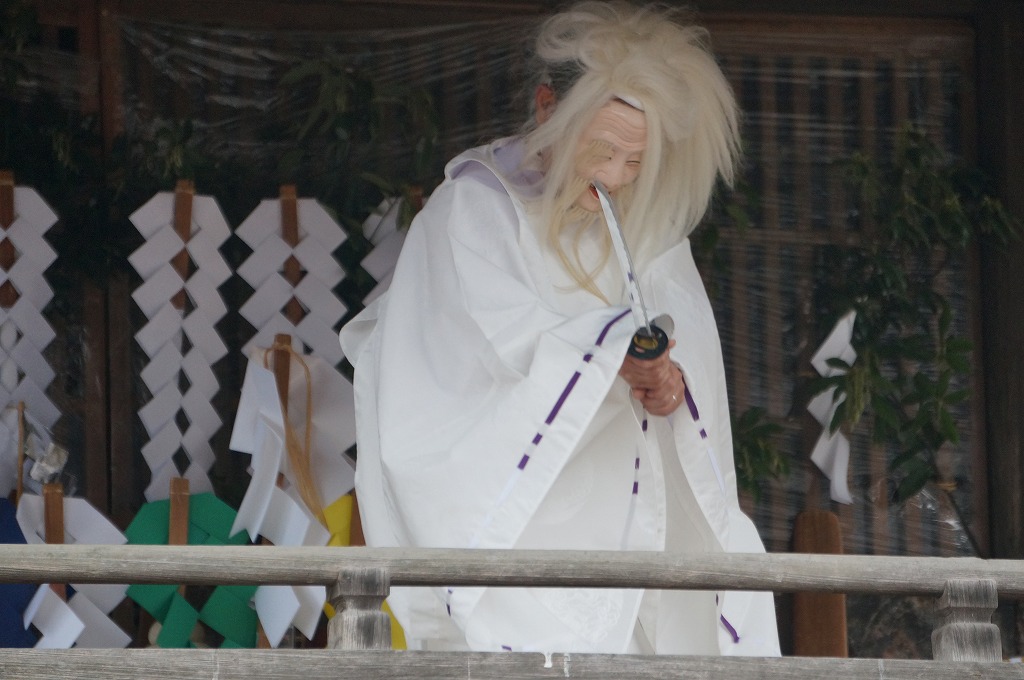
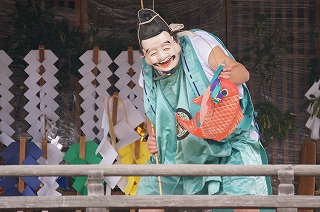
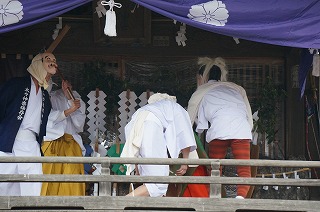
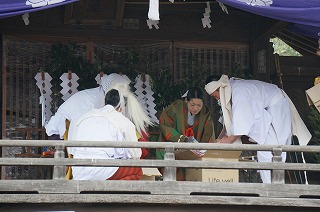
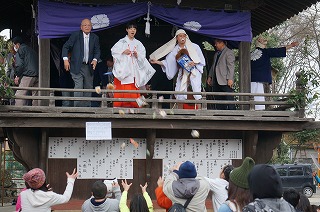
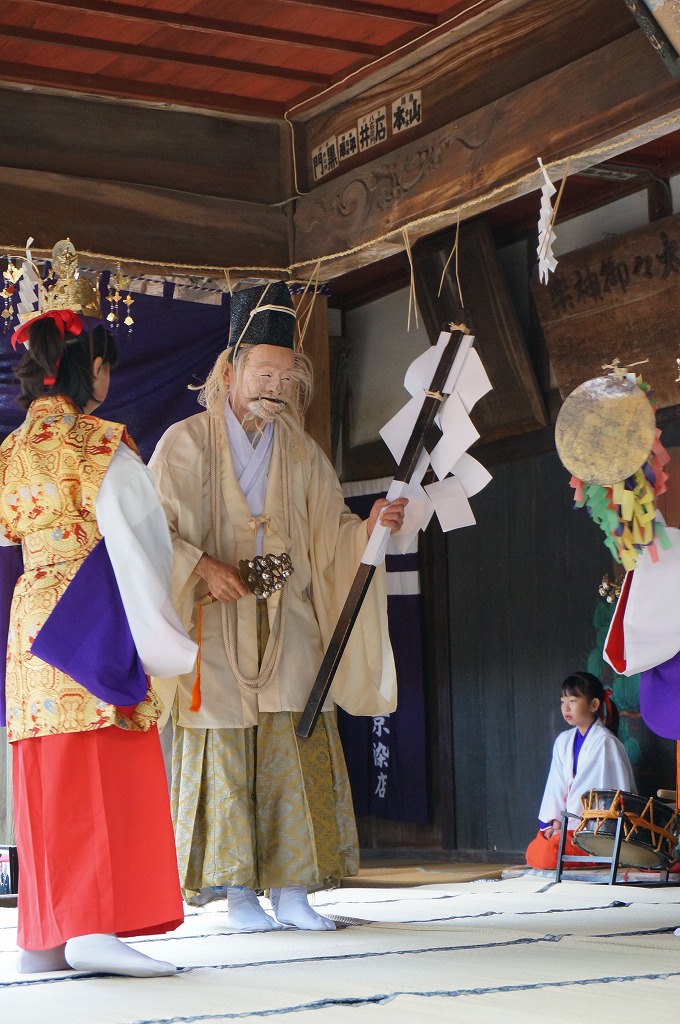
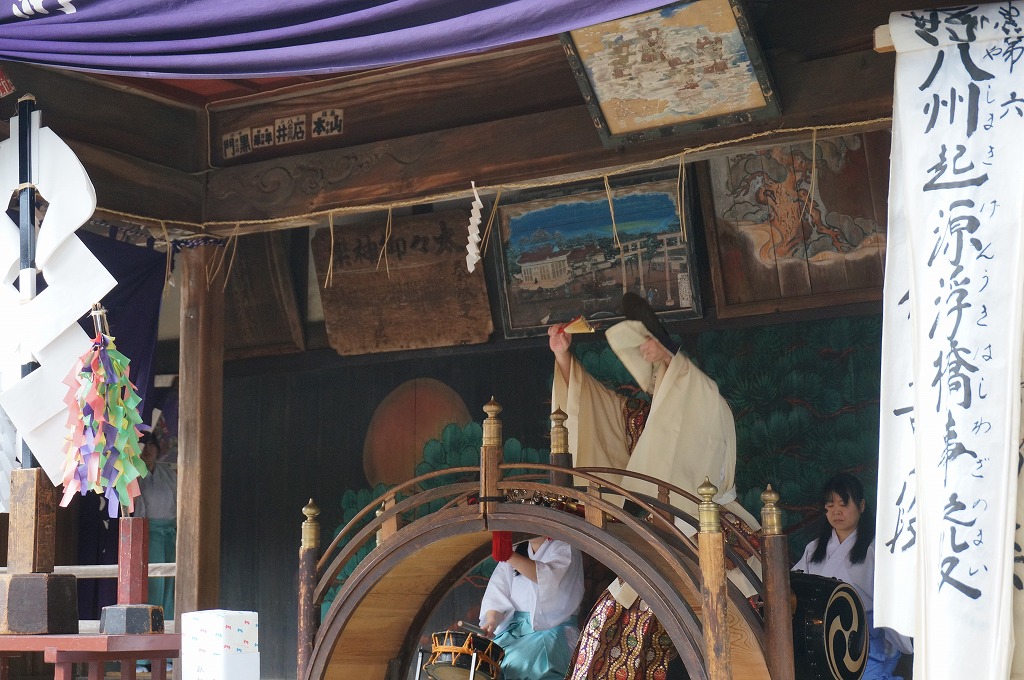
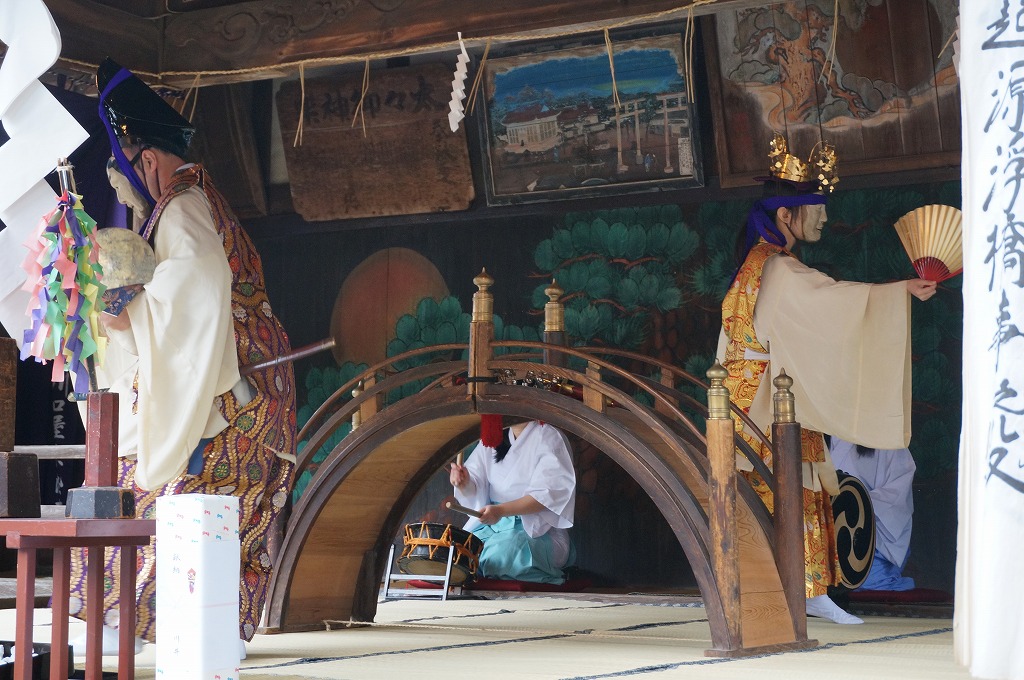
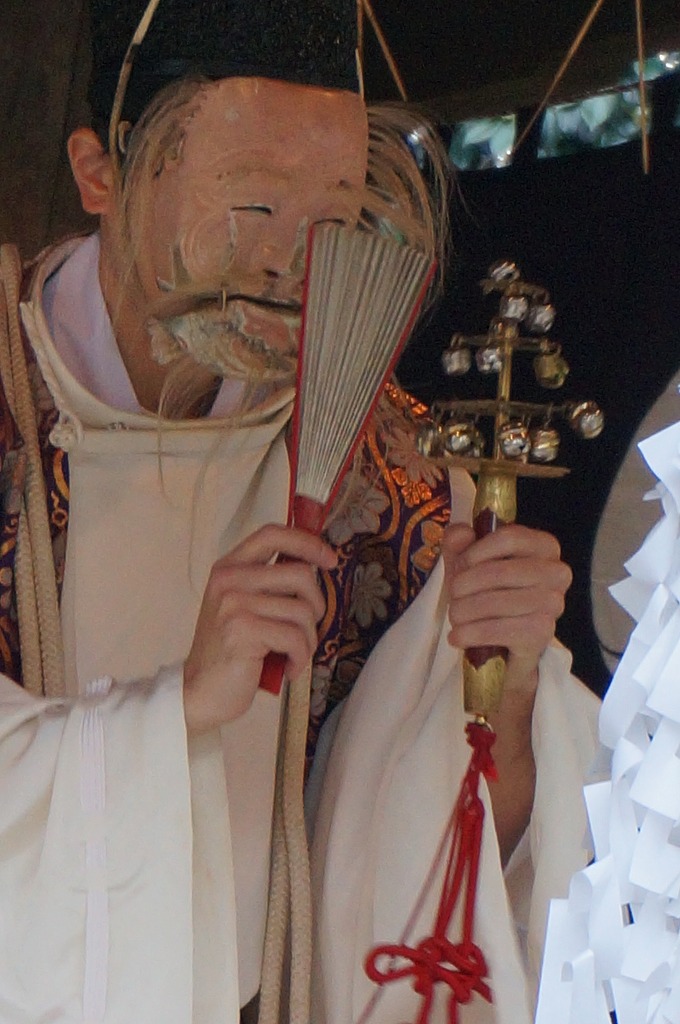
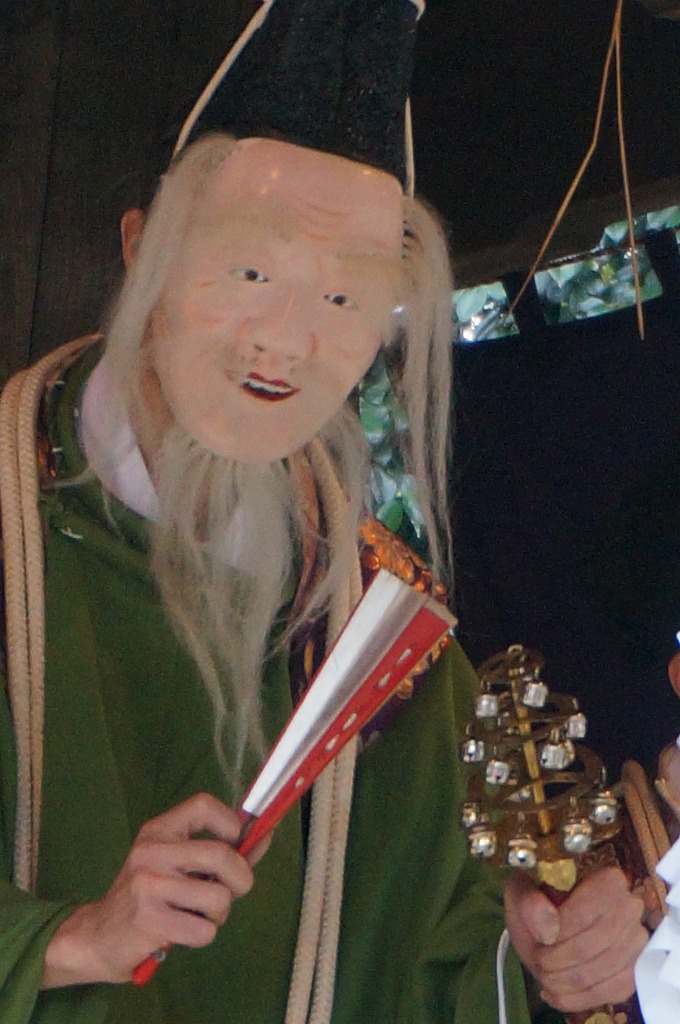
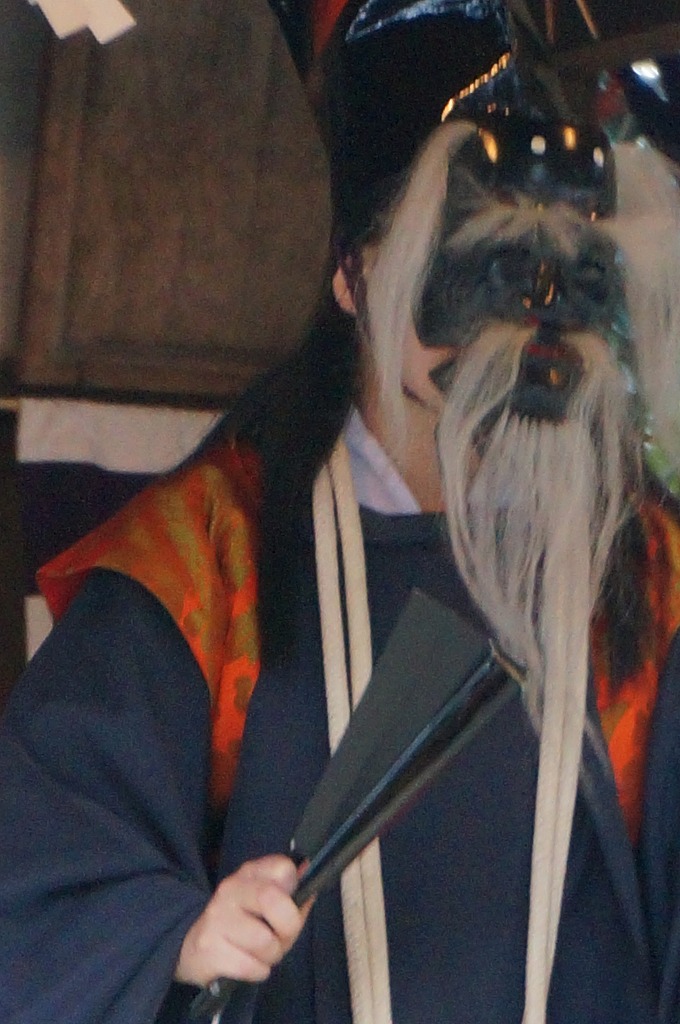
Report: Hakone is more than just hot springs – the lion dance of Miyagino

Date: 15 July every year (Date fixed)

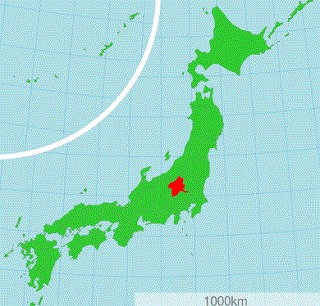
Location: Suwa shrine, Hakone town Miyagino 719, Ashigara county, Kanagawa prefecture

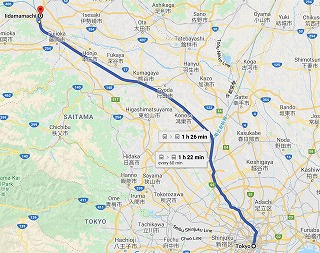
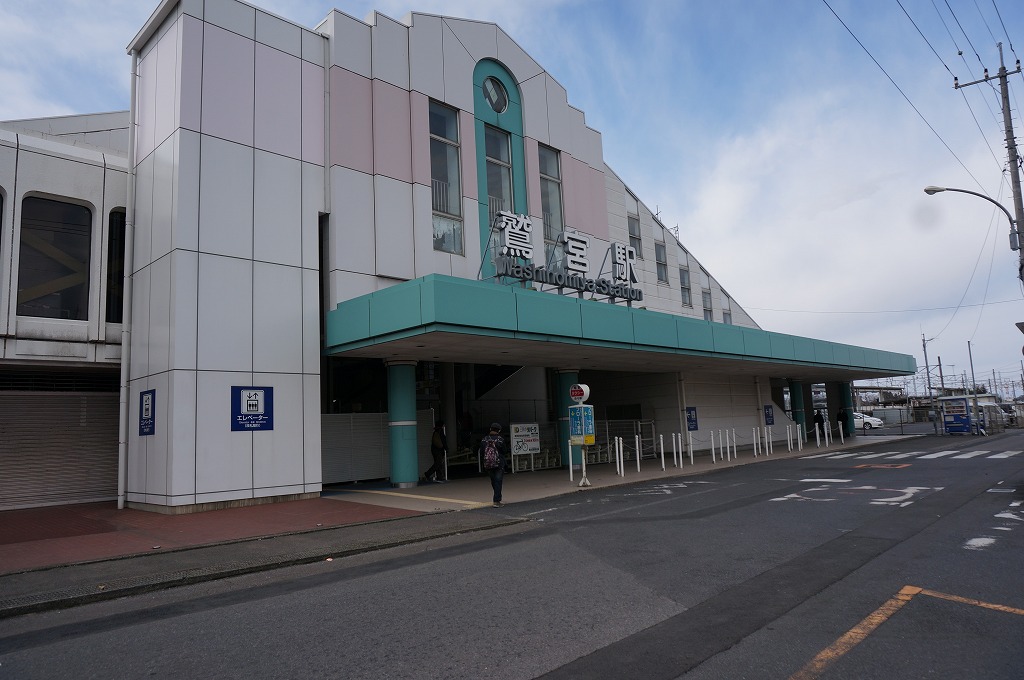
Access: from Odawara (JR) or Hakone Yumoto (Odakyu line or Hakone Tozan line) take Bus (bound for Tougendai 桃源台), at Miyagino Eigyosho 宮城野営業所

Introduction

 In the past few years, the number of overseas tourists visiting Japan has really increased. In the past, the number of visitors to Japan was so small that it is almost impossible to say that Japan was not interested in the tourism industry; the number of visitors finally reached 5 million in 2003, but it took about 11 years to reach 10 million. Recently, however, the government has made a serious effort to increase the number of visitors to Japan, and the number of visitors has reached w14 million in just three years.
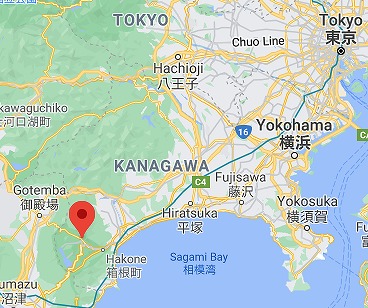
箱根
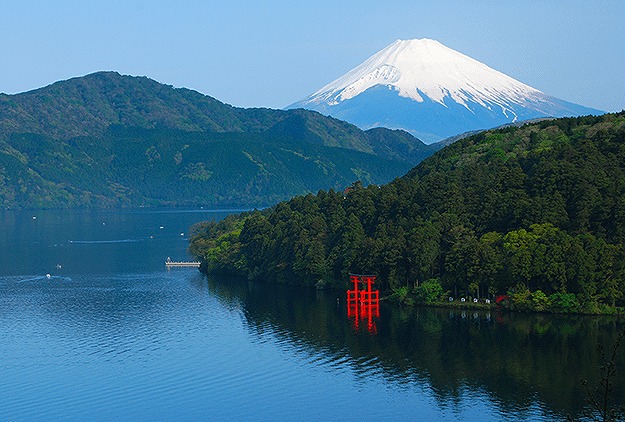
Hakone (from Ashino lake to Mt.Fuji)

神社の位置
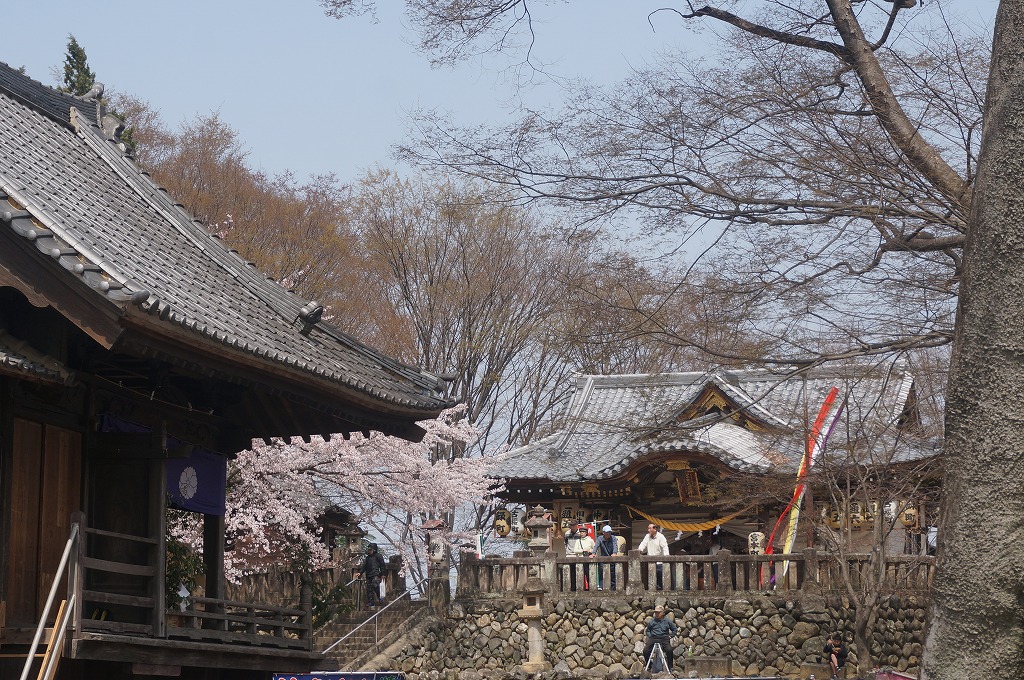
Miyagino Suwa shrine

 In Japan, there is a tourist route known as the Golden Route that connects Tokyo, Hakone, Mt. Fuji, Nagoya, Kyoto and Osaka.
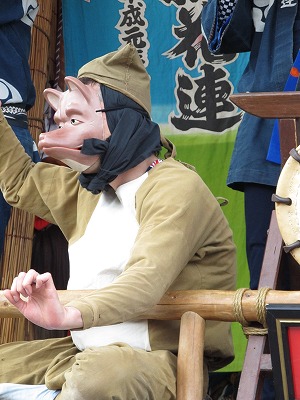
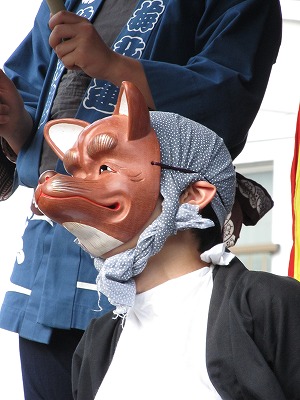
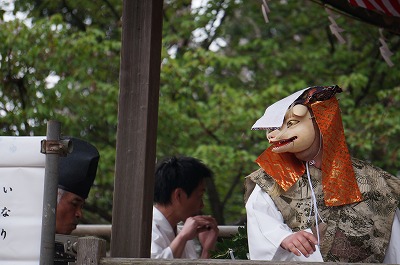
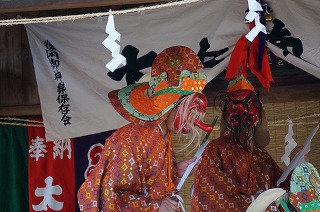
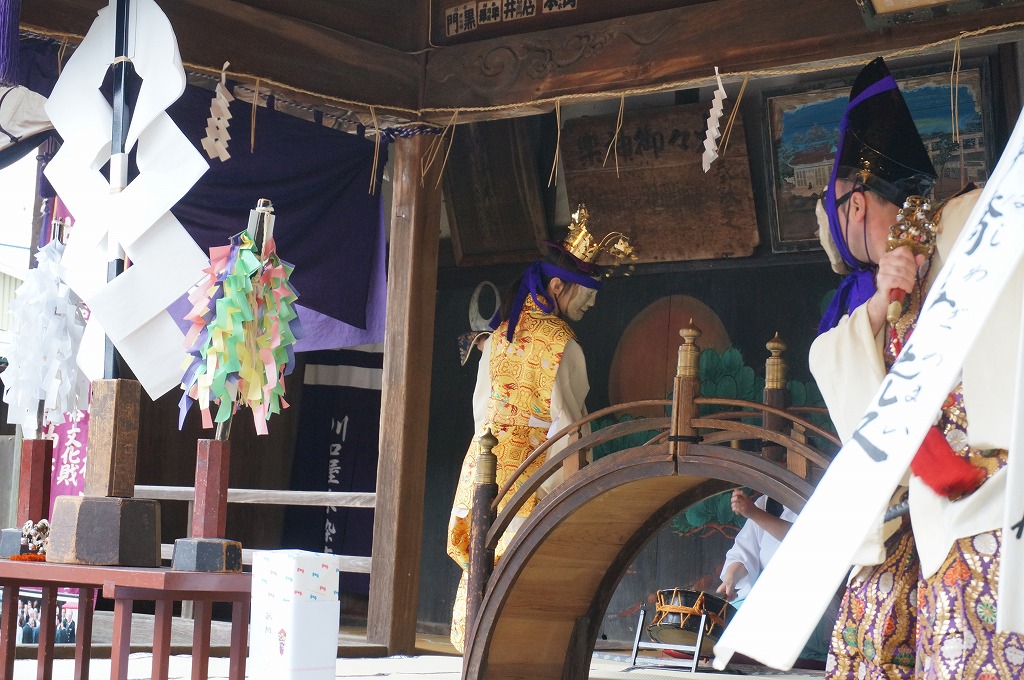
One of them, Hakone, is known as a hot spring resort in Japan, and is also a destination for school trips in elementary and junior high schools from neighboring areas. It is also one of the most important stations on the Tokaido 東海道 Highway, connecting Tokyo and Kyoto. The Tokugawa Shogunate, which was based in Edo (present-day Tokyo), designated Hakone as the final defense point to stop enemies attacking from the west, and it was also famous for the rigid checkpoint. However, even in such Hakone, lion dances are quietly preserved: at Sengokuhara (仙石原) in March, at Kintoki (金時) Shrine in May, and at Miyagino (宮城野) in July.
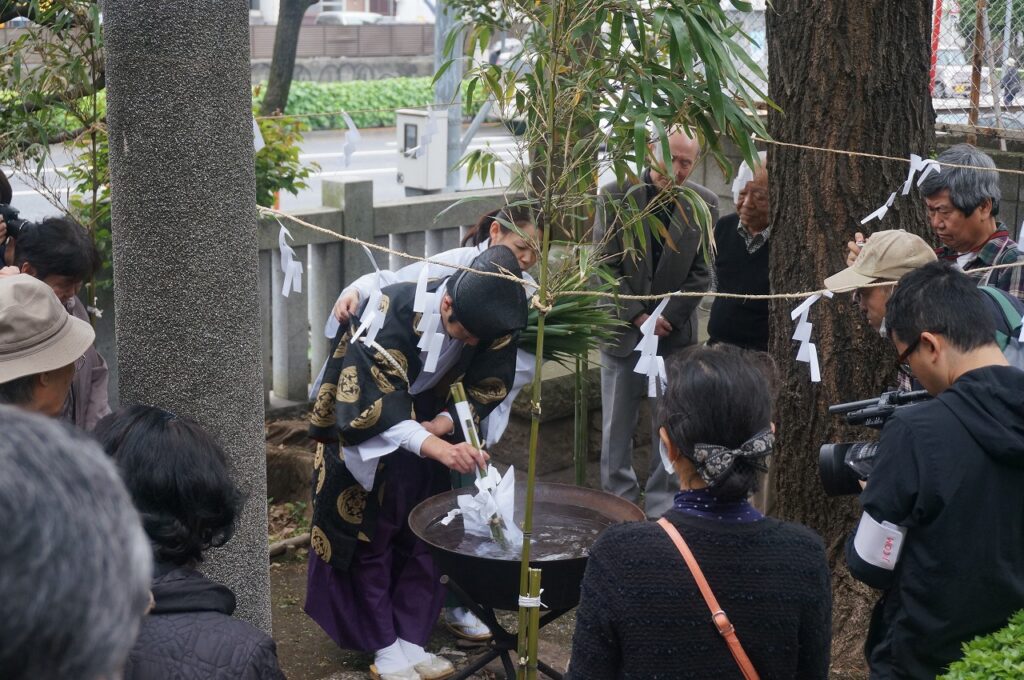
湯立て(天祖神社)
“Yutate” Shinto ritual

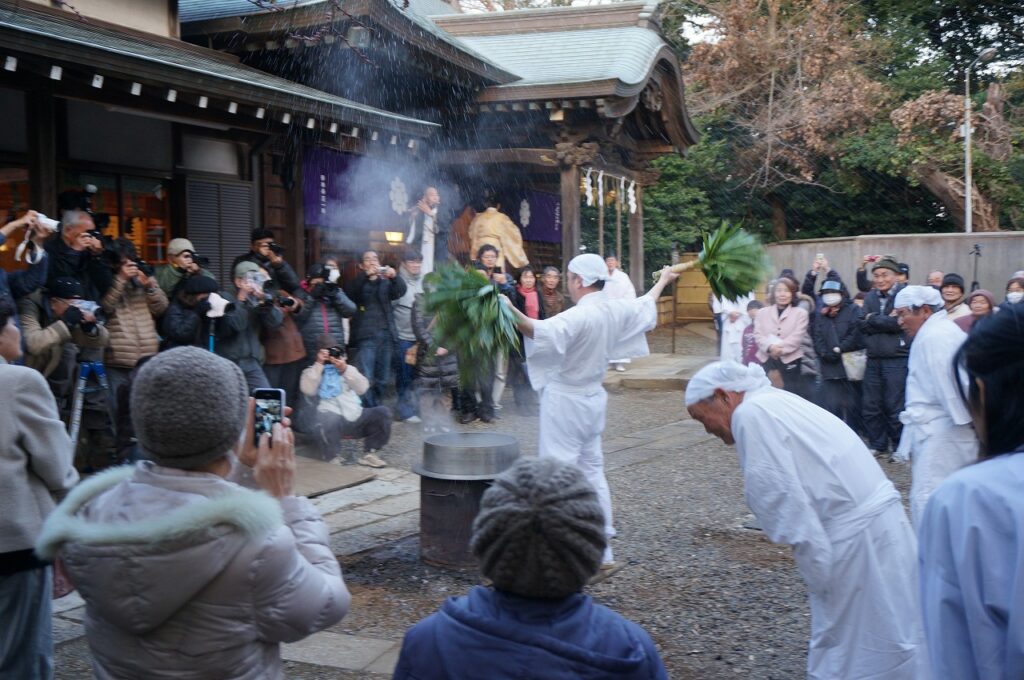
湯立て(子安神社)
“Yutate” Shinto ritual

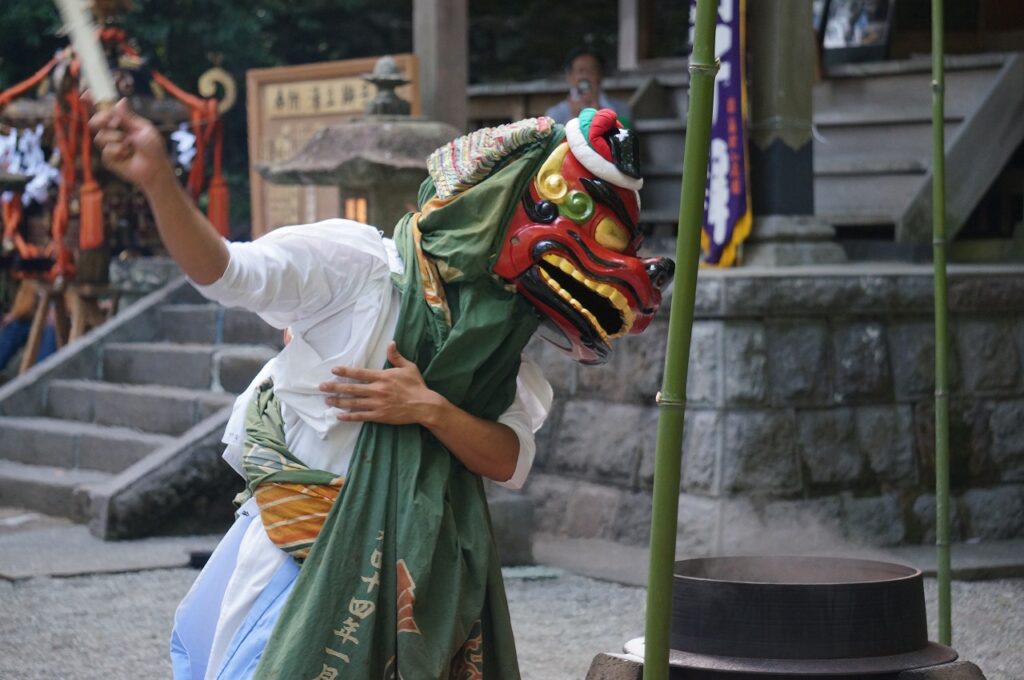
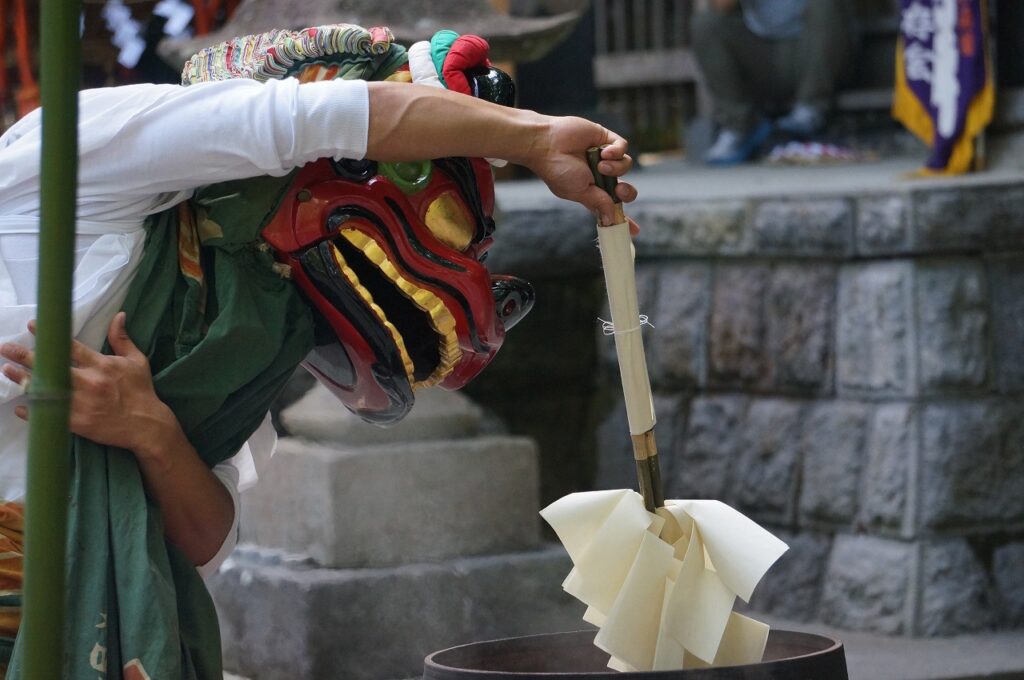
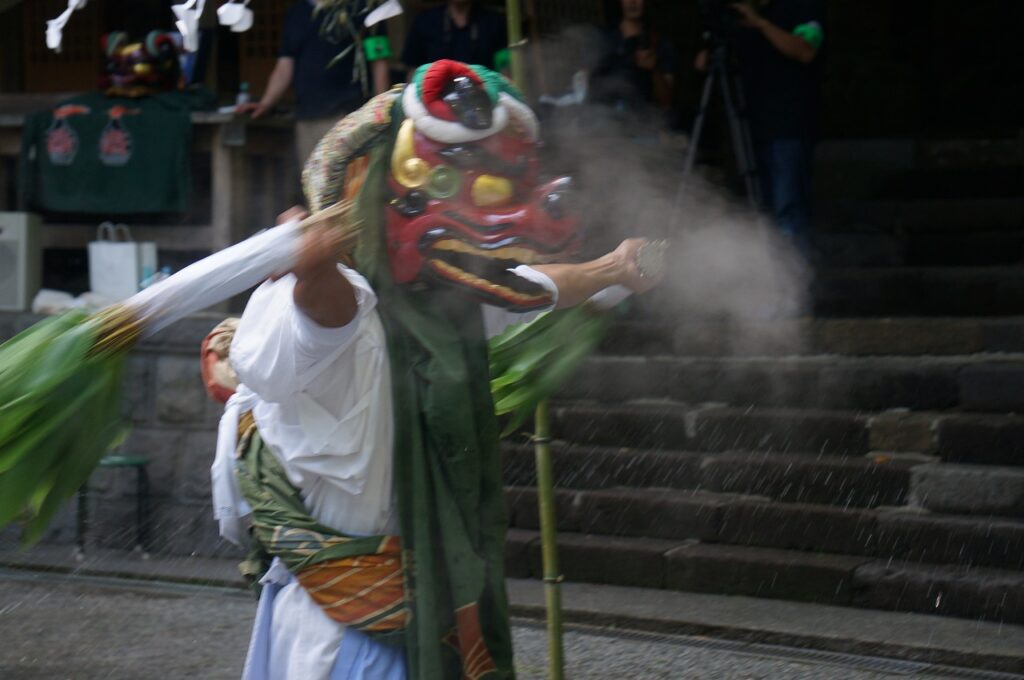
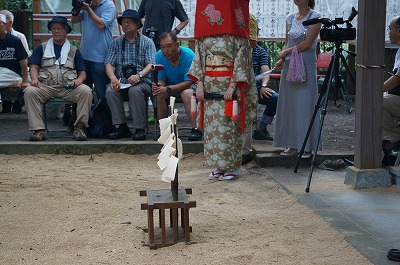
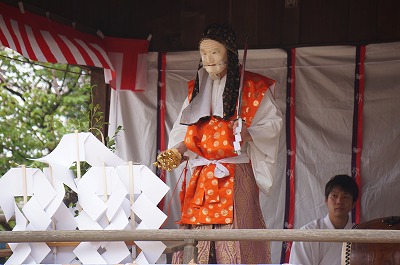
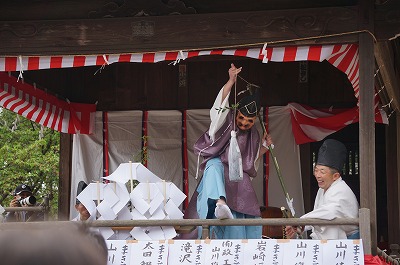
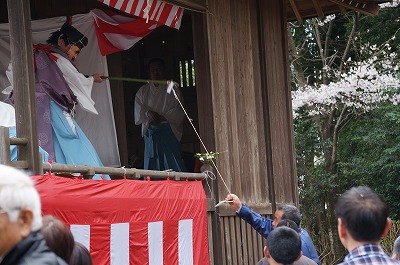
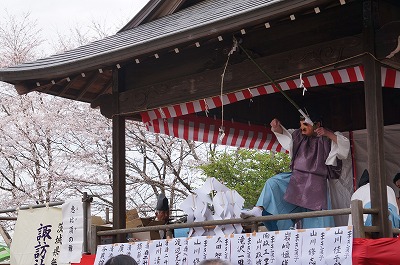
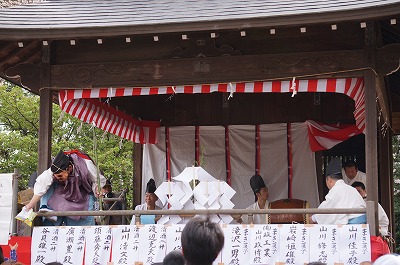
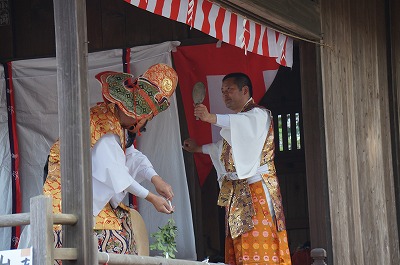
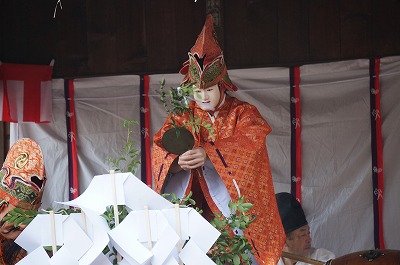
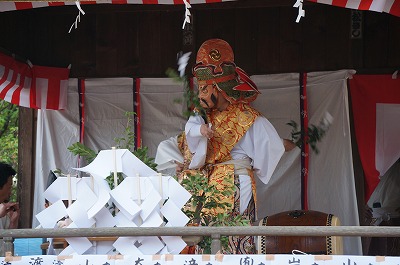
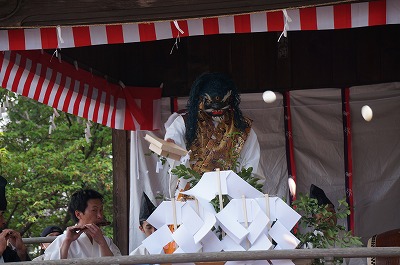
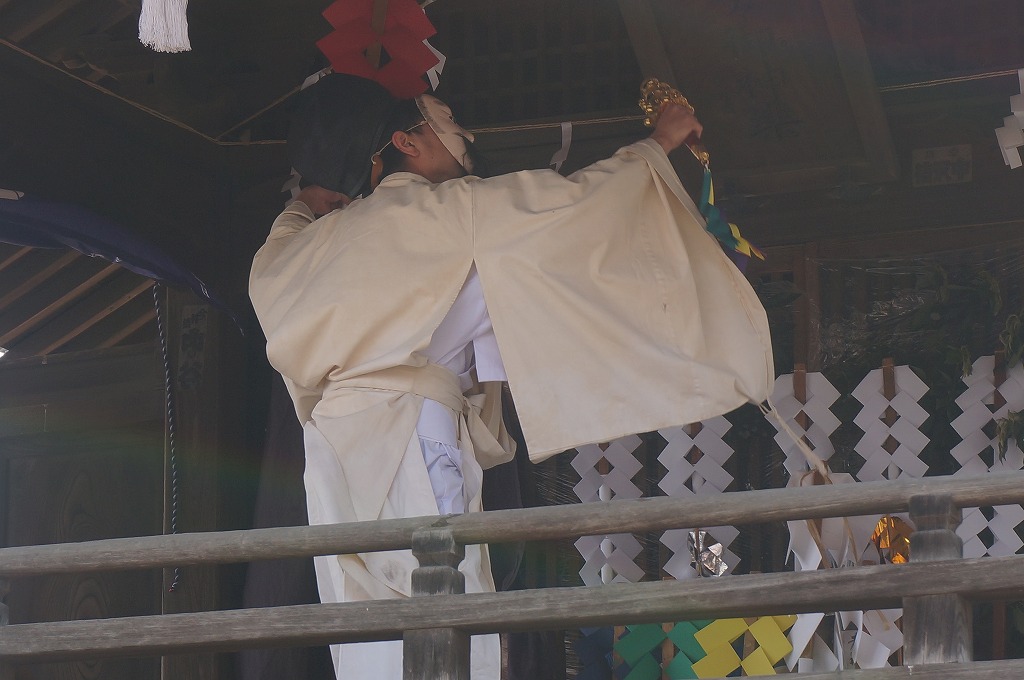
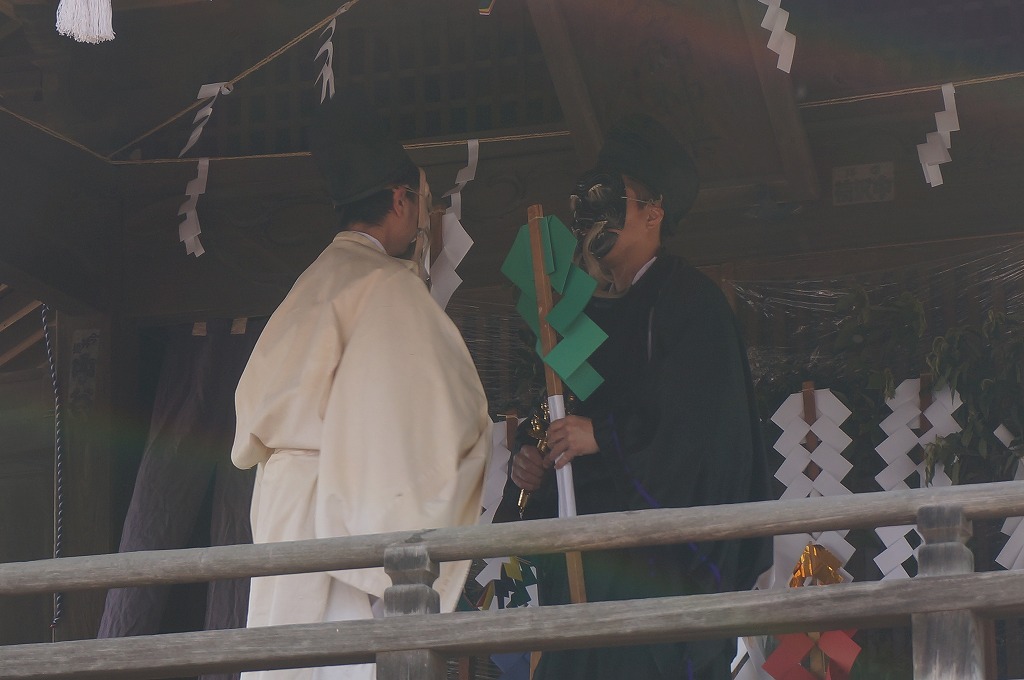
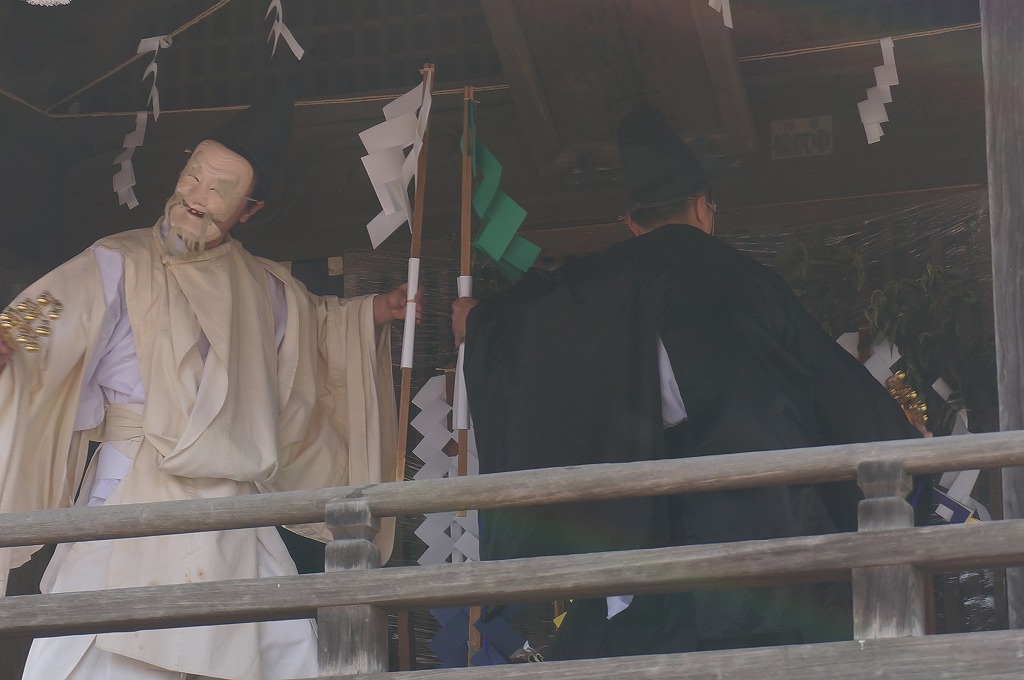
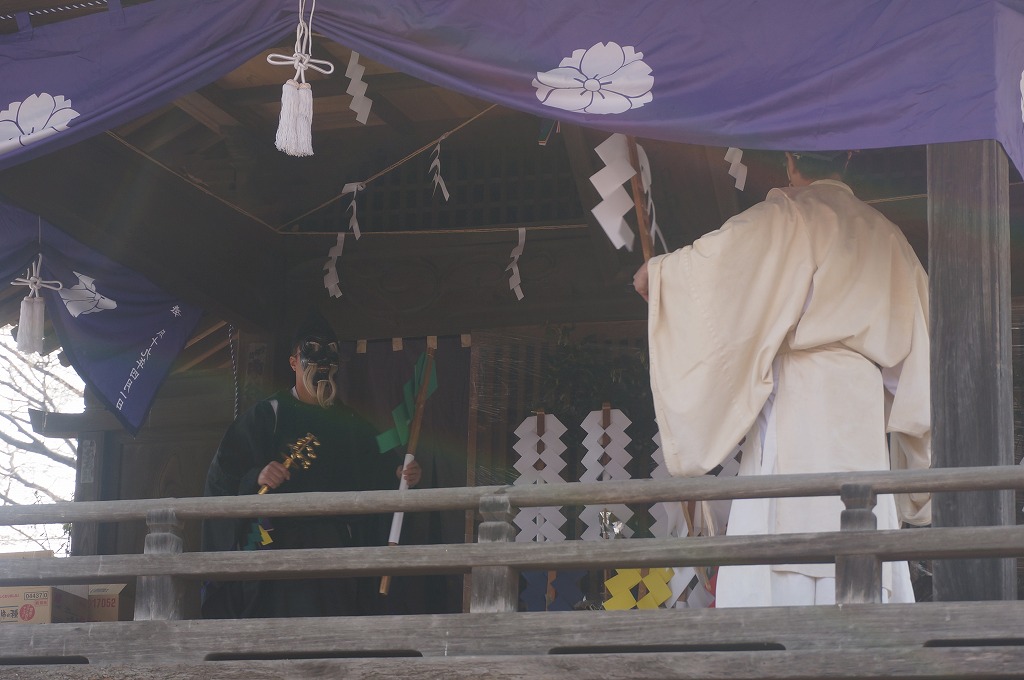
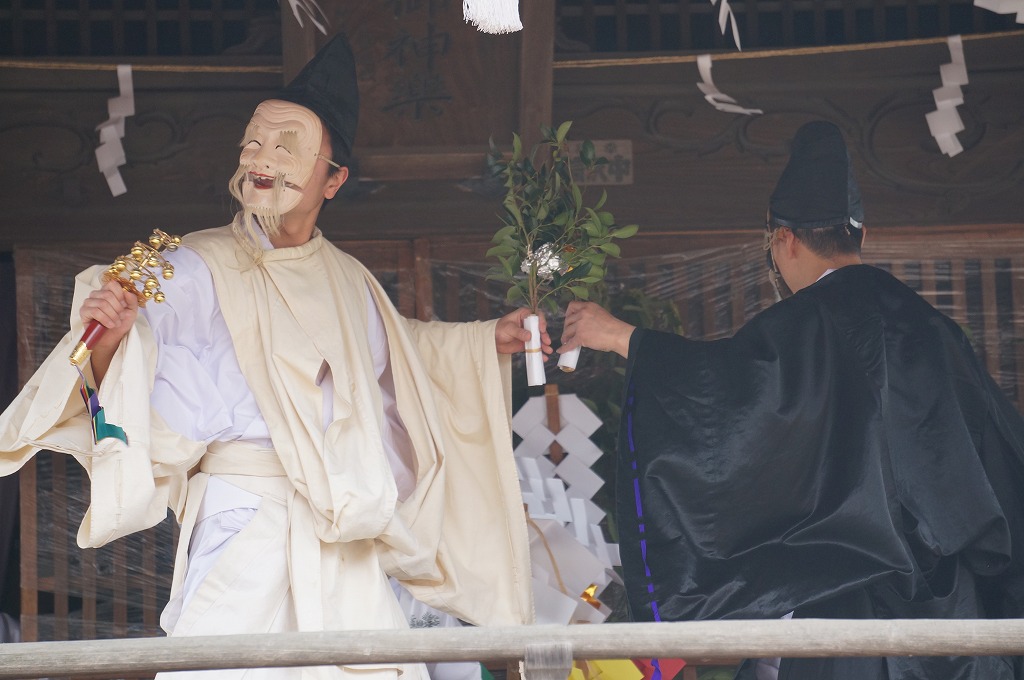
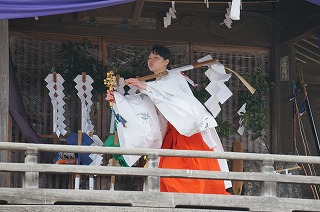
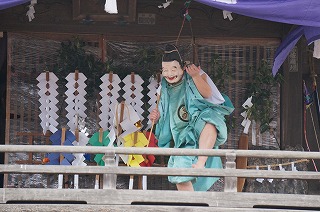
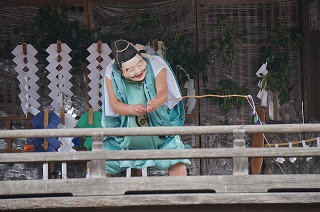
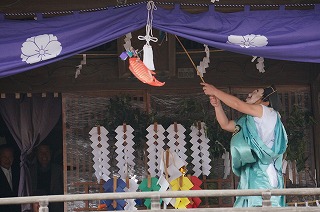
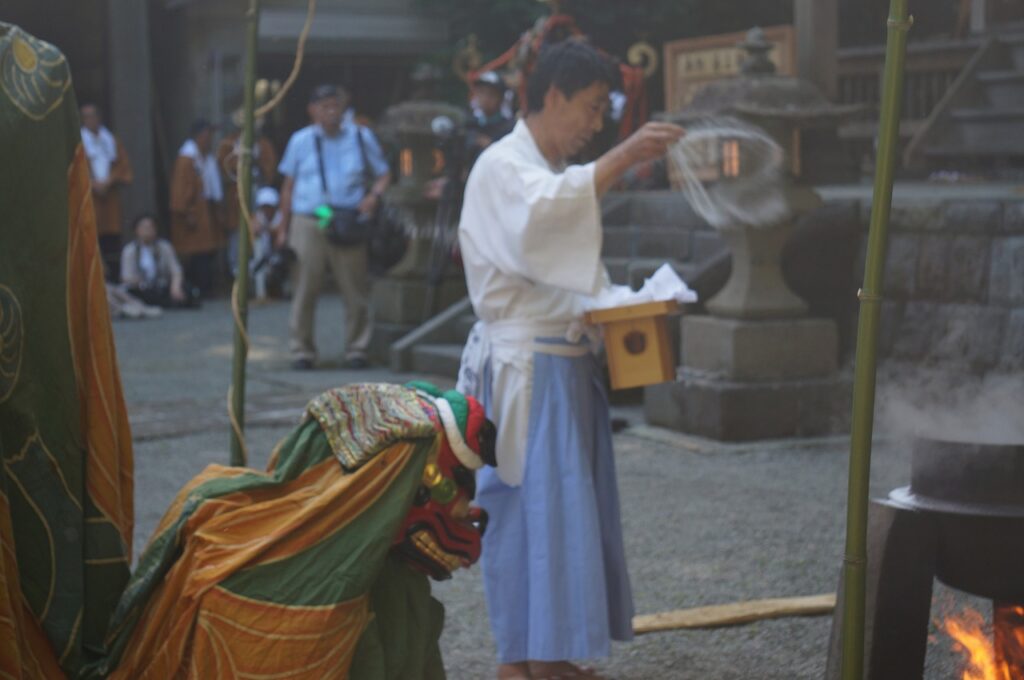
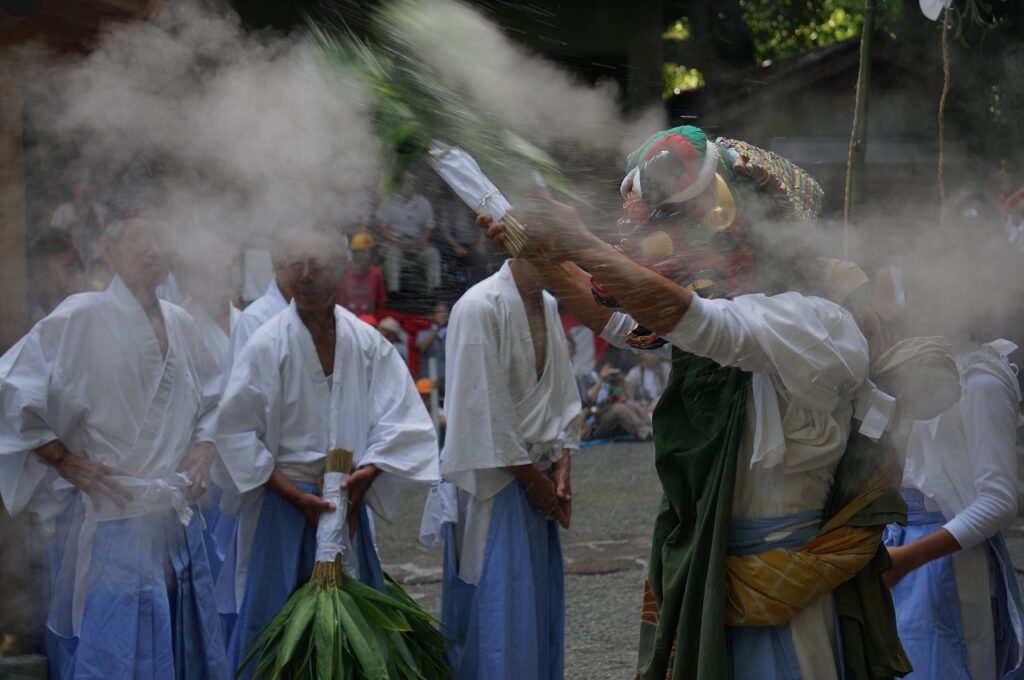
 These shishimai (lion dance) are called “Yutate” lion dances and are very rare events in Japan. “Yutate” is a ceremony, in which a large cauldron is set up in the festival site to boil water, a shimenawa rope to create a boundary surrounded around the cauldron, the surrounding area is decorated to welcome the gods, and the purified water offered to the gods. At the end of the ritual, one of the Shinto priests dips a sacred staff with strips of paper and bamboo leaves attached in the hot water and sprinkles it around.

Going to the shrine
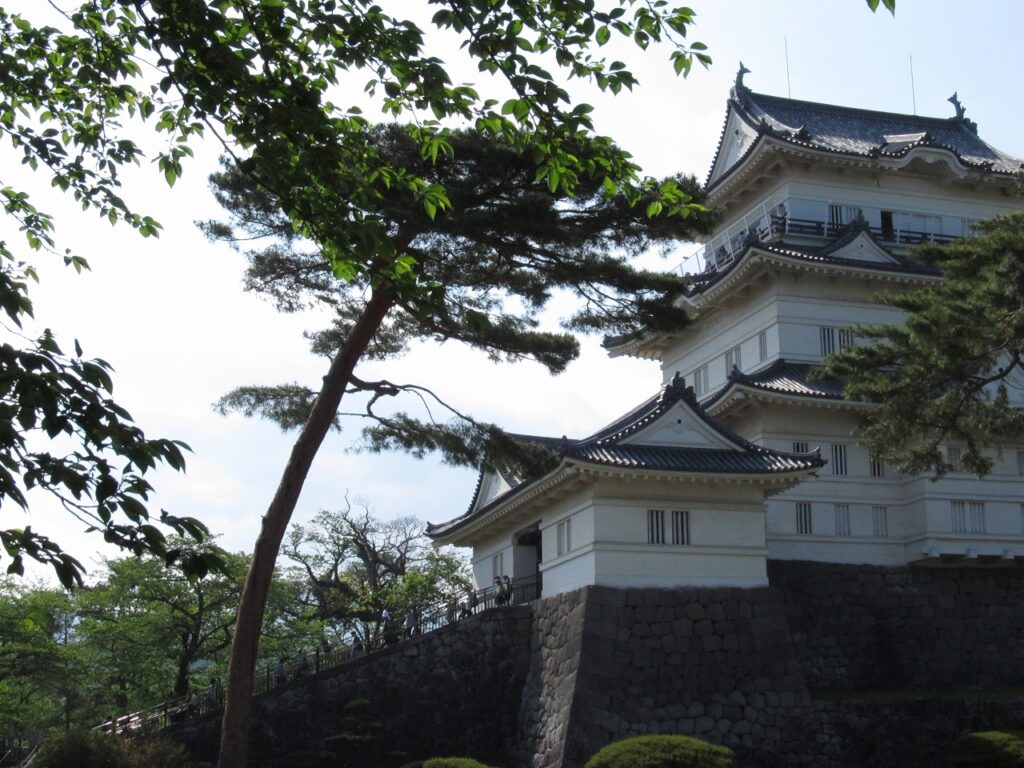
小田原城
Odawara castle

登山バス

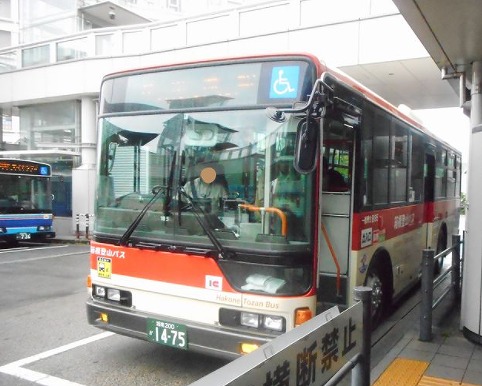
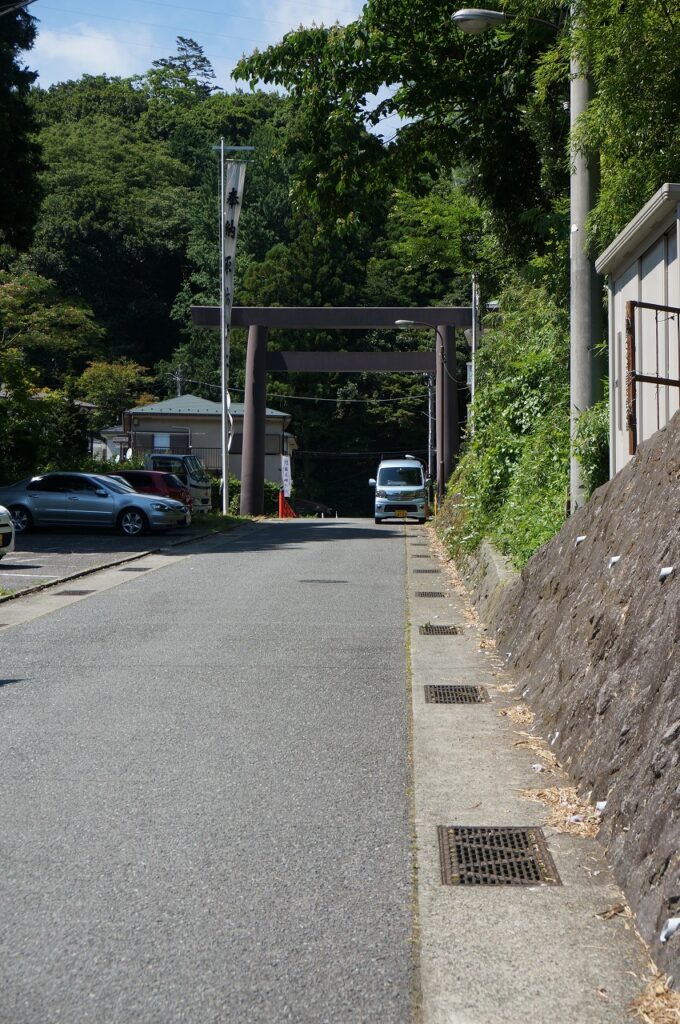
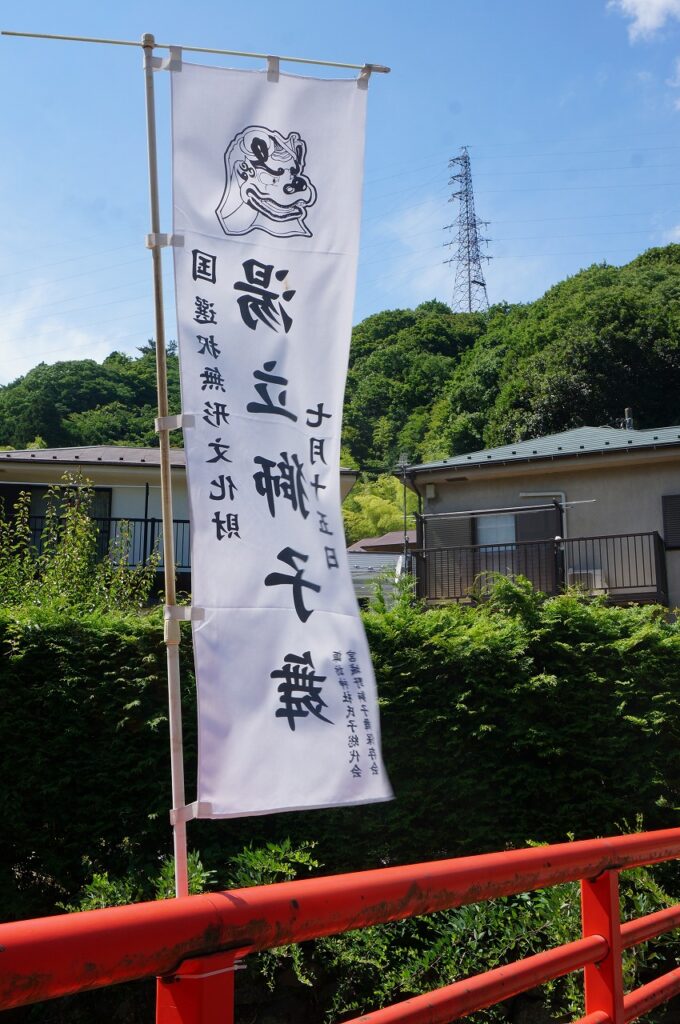
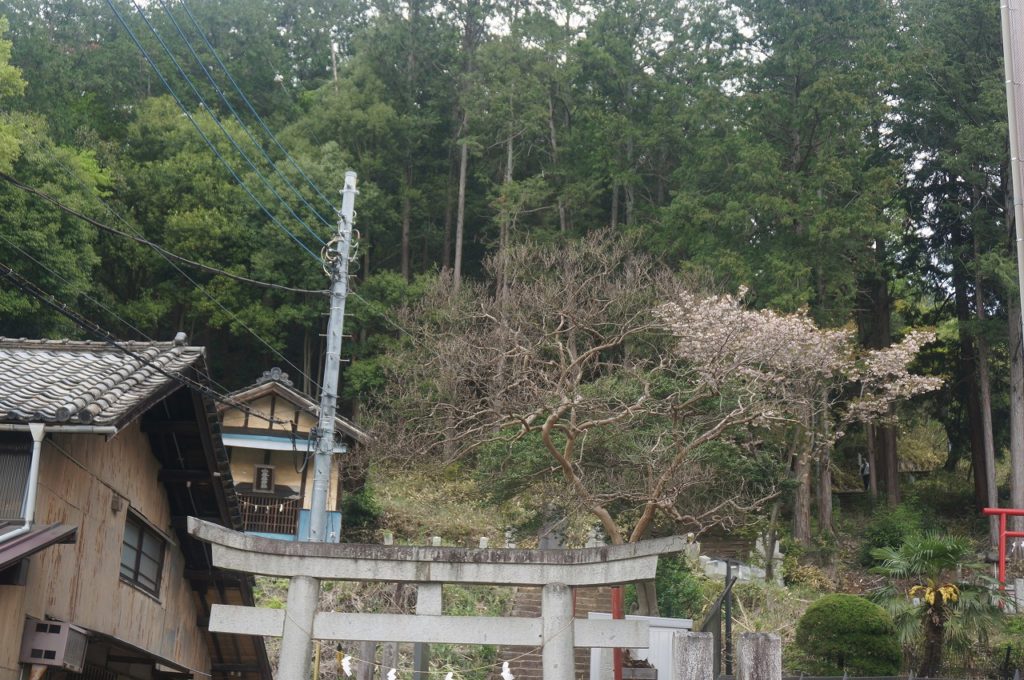
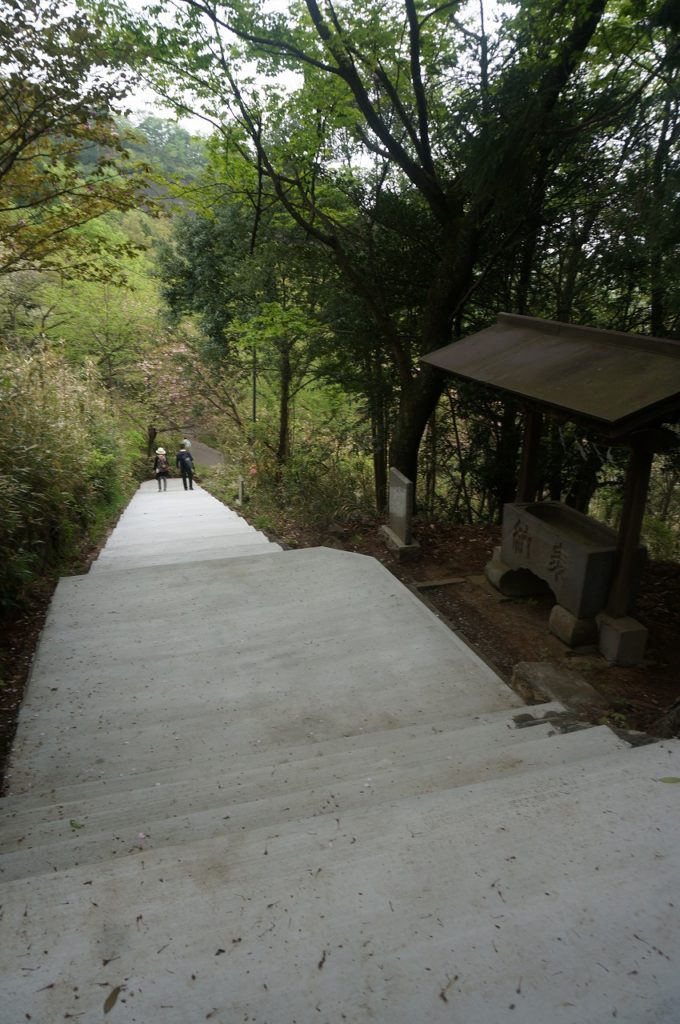
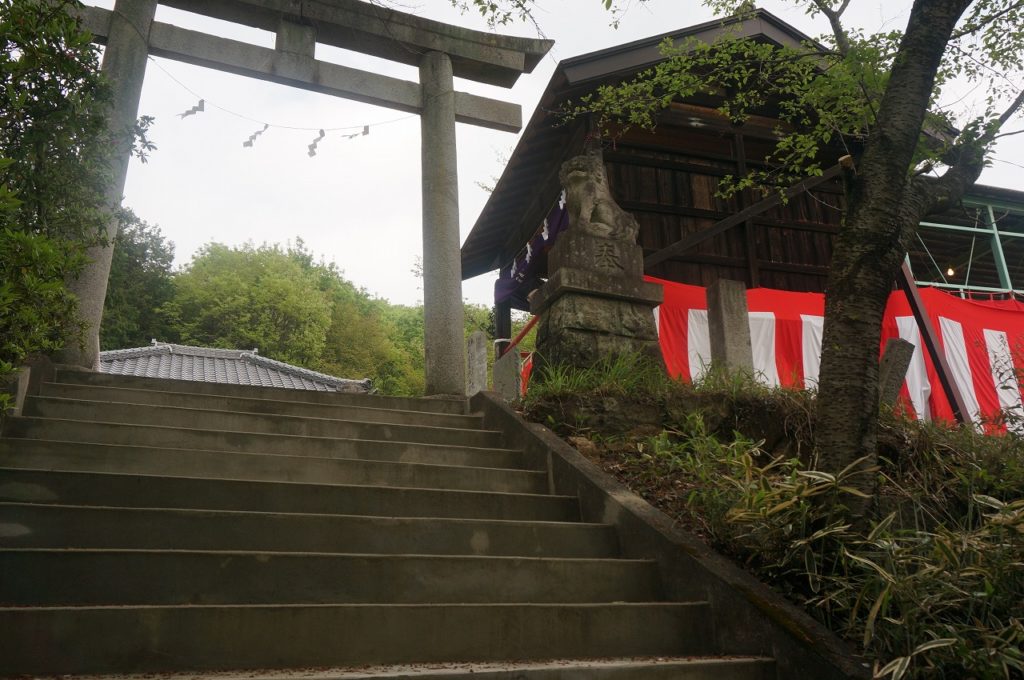
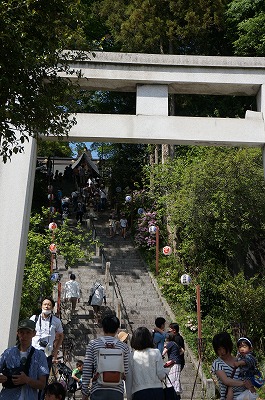
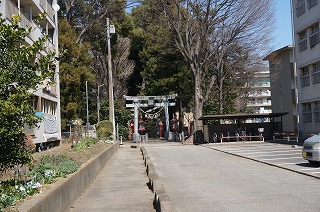
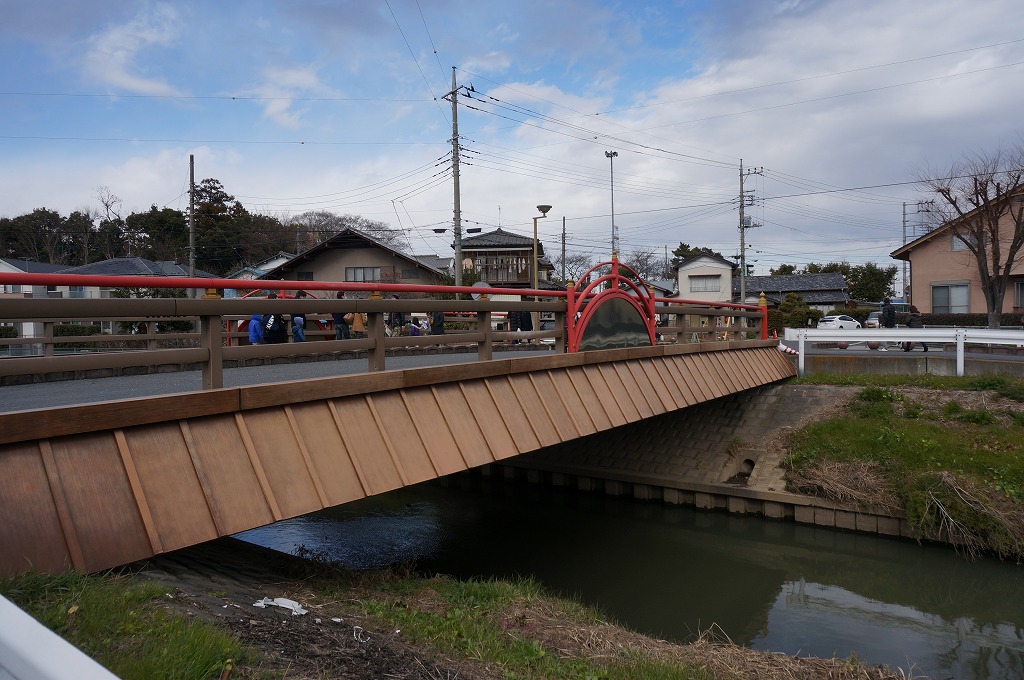
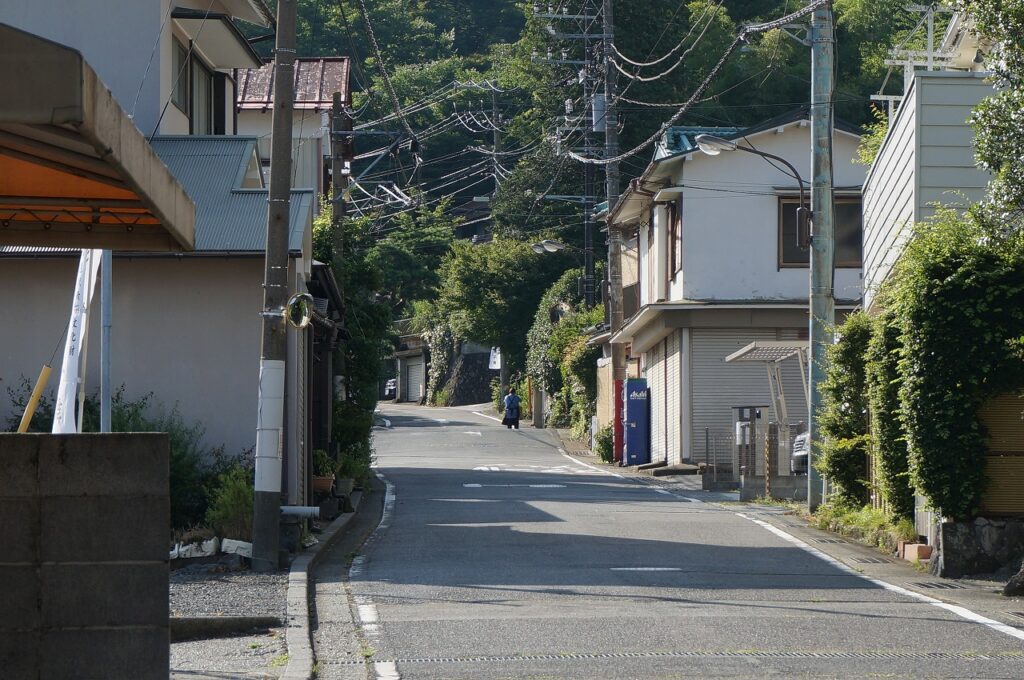
 This time, I took a bus from Odawara. Odawara was not only the gateway to Hakone, but also a stronghold of the feudal lords who once ruled the Kanto region, and you can see the castle from the station (although it is a restored one). However, most surprisingly, almost all the passengers were tourists from overseas. There were only a couple of Japanese passengers, and all the passengers on the bus spoke English and French. We Japanese felt small. The bus enters the mountain road halfway up the winding road. When you get off the bus, there are banners announcing the Shishimai everywhere, so it’s easy to find your way. After passing through a residential area, you walk up a gentle slope for about ten minutes. When you see a bridge with a red railing, the shrine is just around the corner. There are two paths, called Otoko-zaka (the slope for men) and Onna-zaka (the slope for women) respectively. The slope for men is steeper and the slope for women is gentler, but either way, the climb is inevitable.
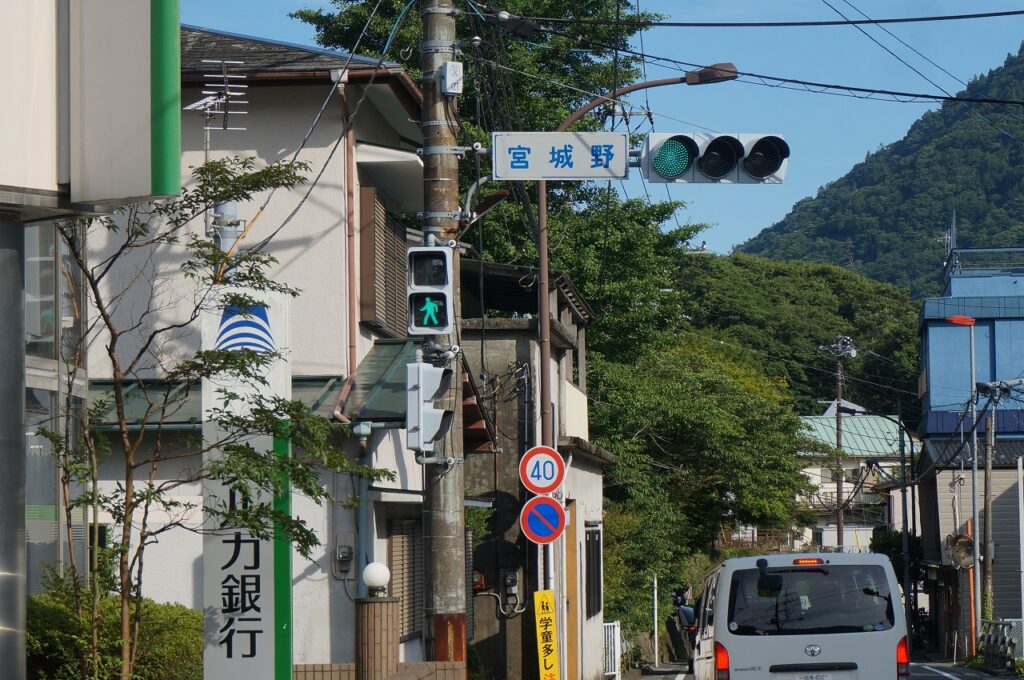
バス停付近
around the bus stop

神社への道のり
way to shrine

神社入り口

橋

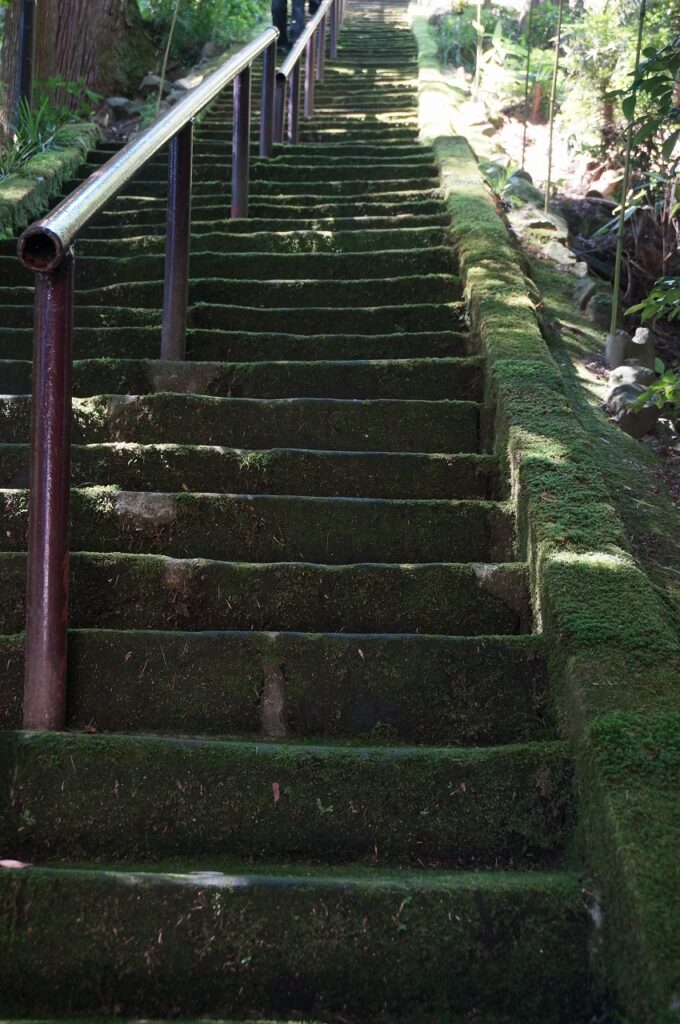
神社への階段
the long steps to the shrine

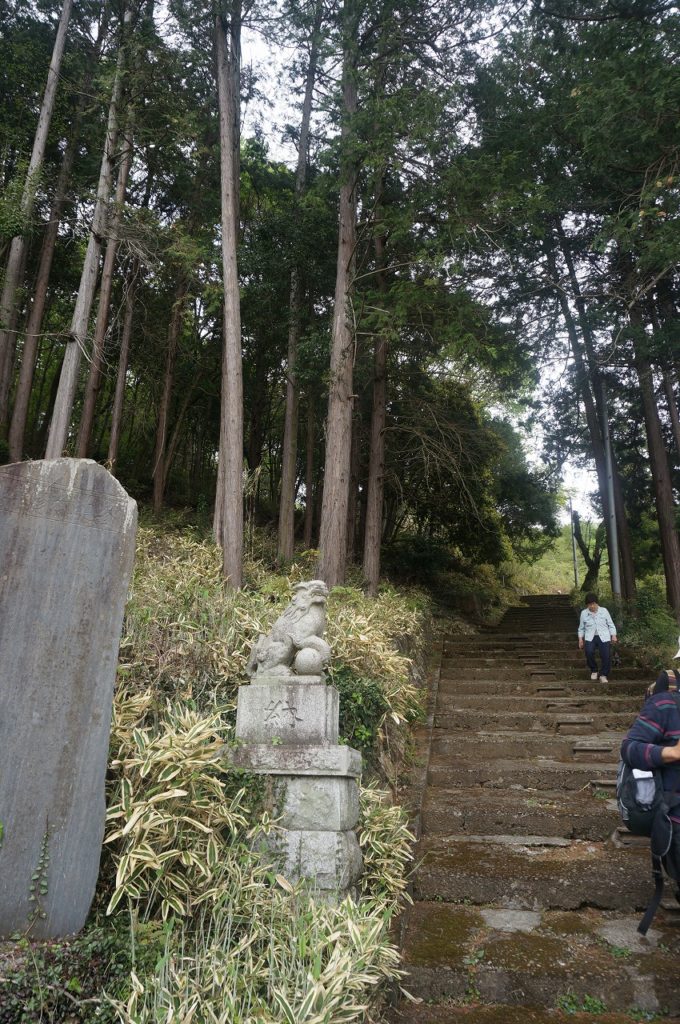
 From there, the shrine is at the top of the last long flight of stairs. It is the height of hot summer. Summer in Japan is hot and humid. The sun is shining and the heat will make you feel exhausted. However, when I reached the shrine, one of the staff of the ceremony said, “Thank you for your hard work,” and handed me a sports drink. This was a nice present.

Ceremony

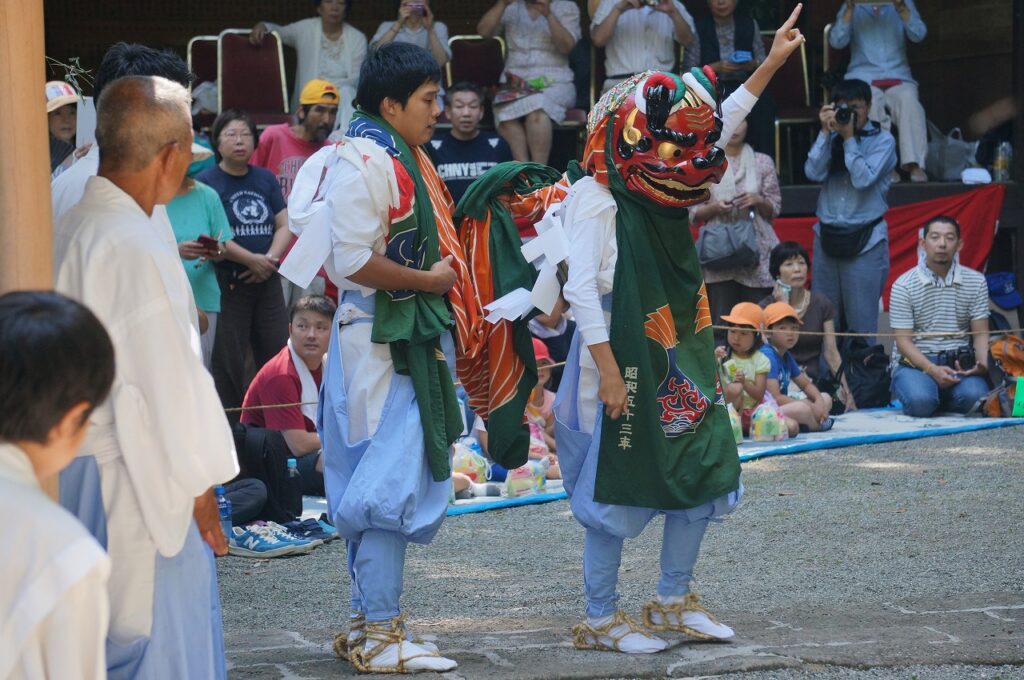
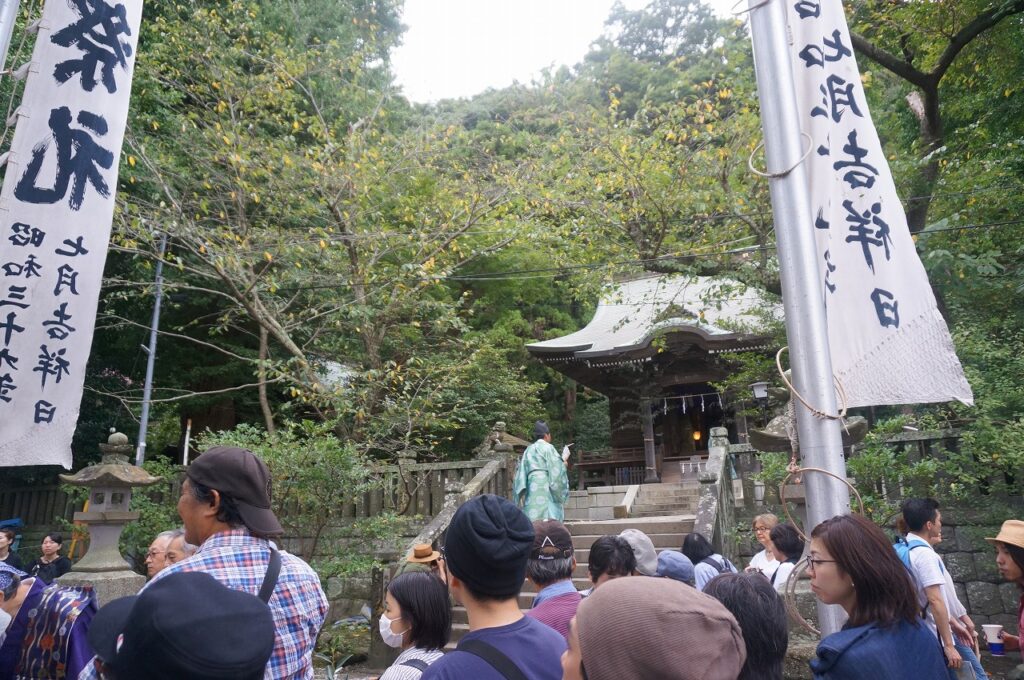
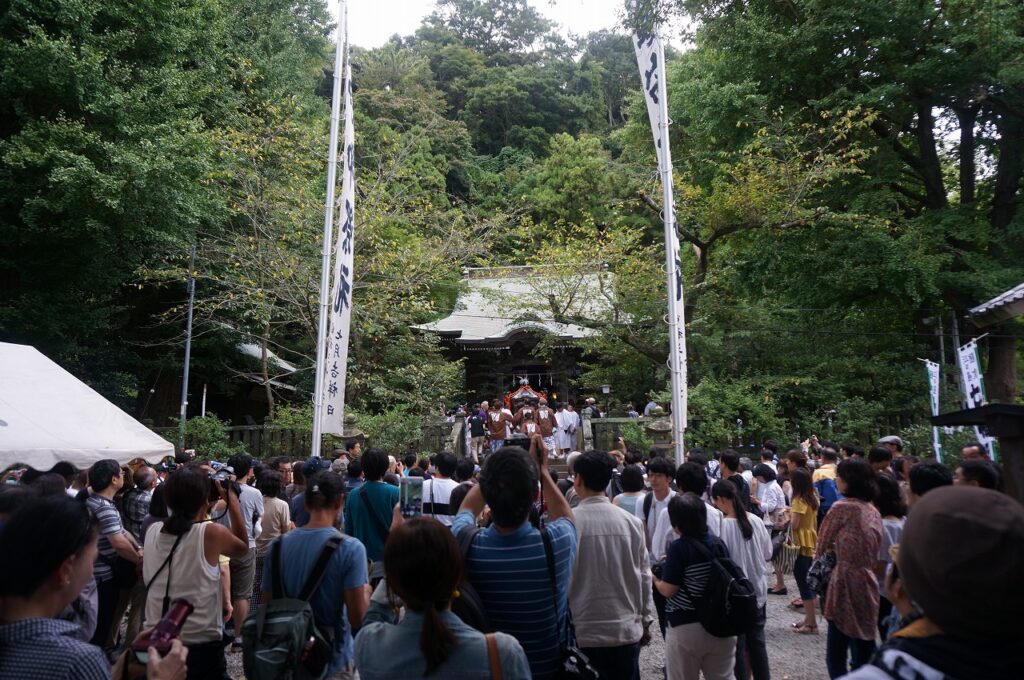
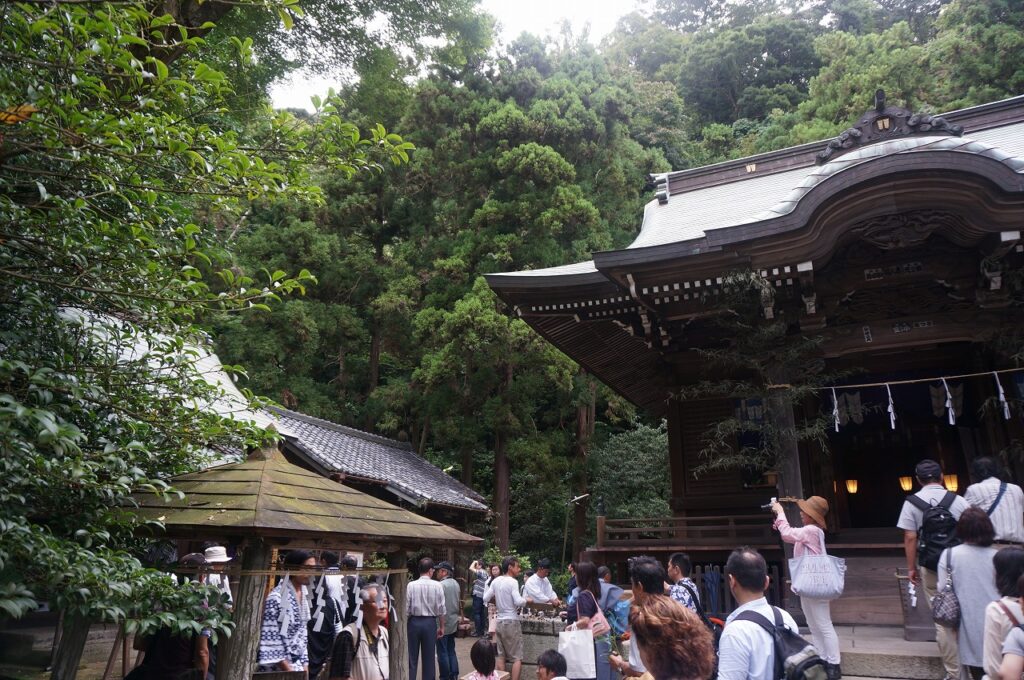
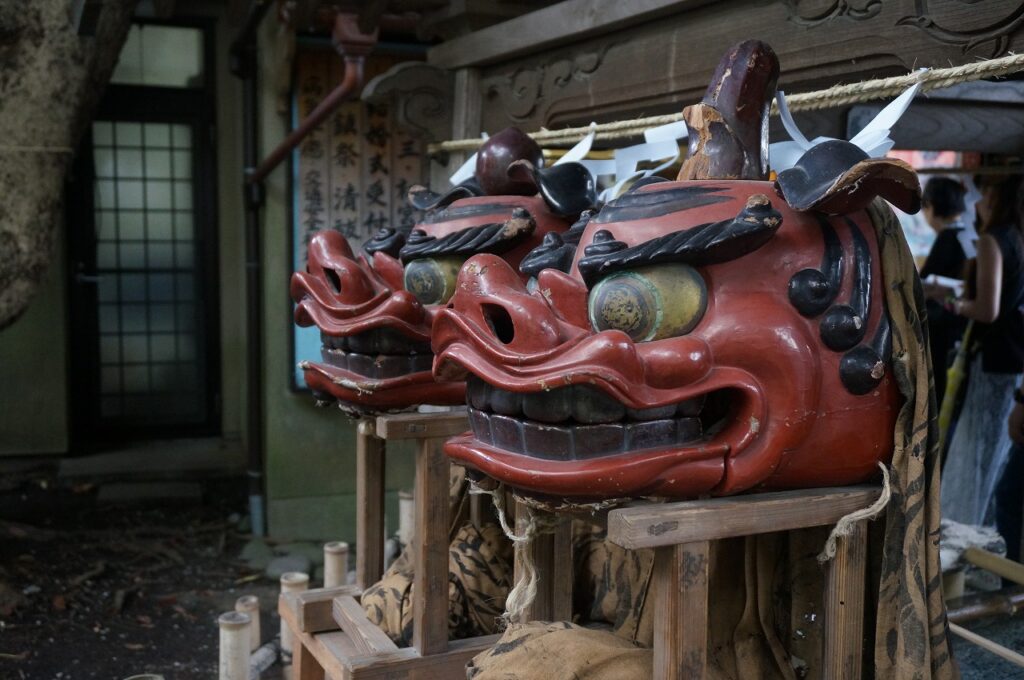
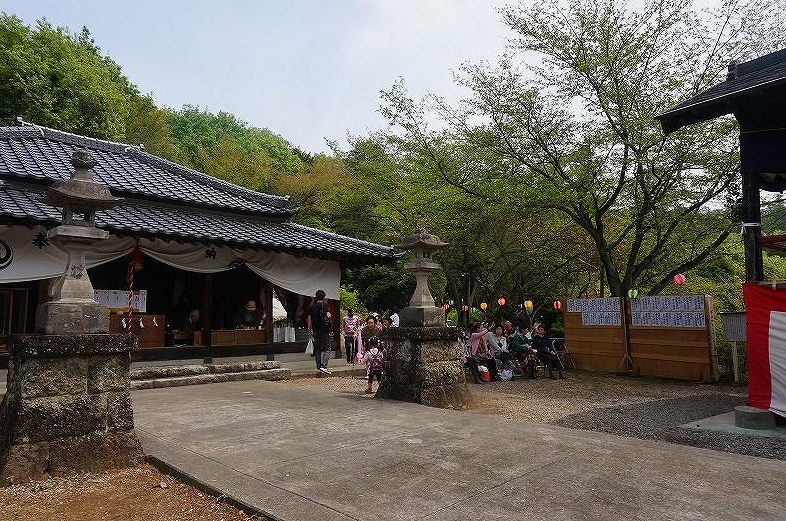
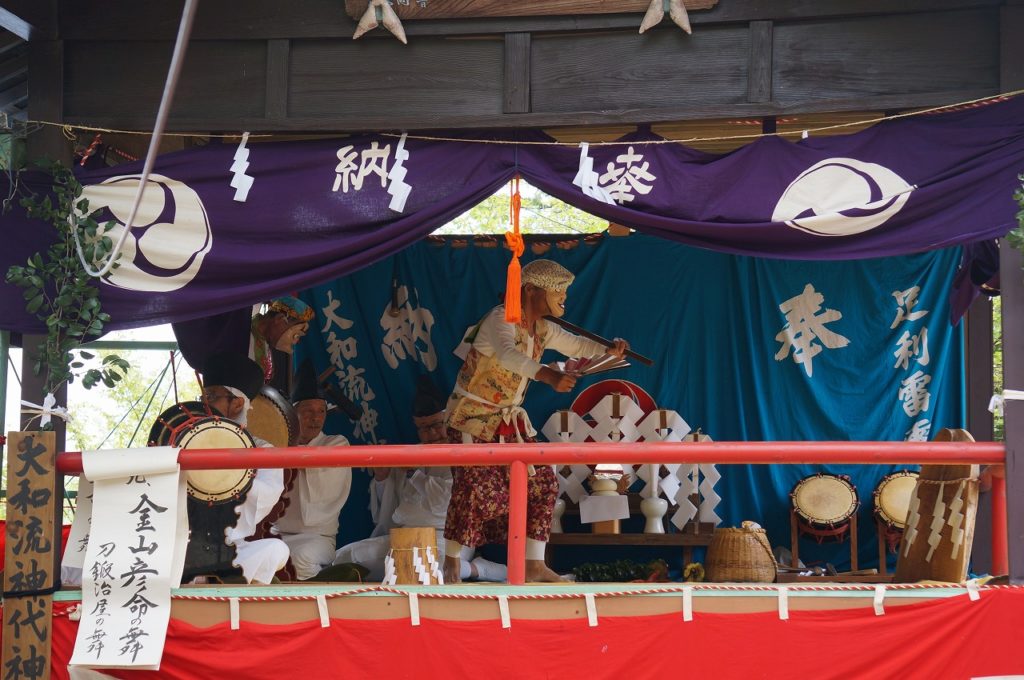
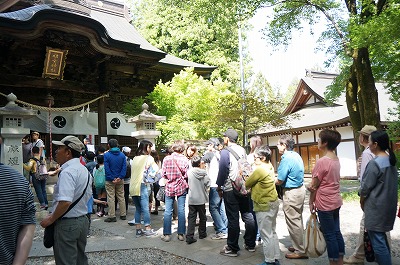
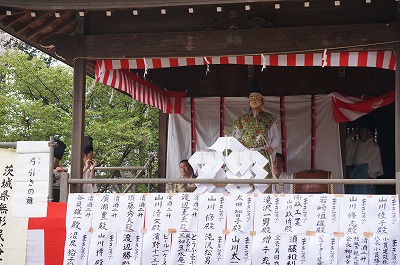
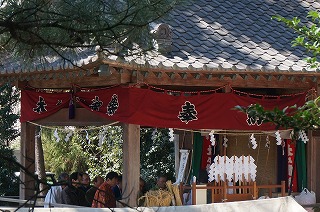
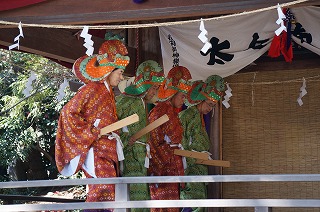
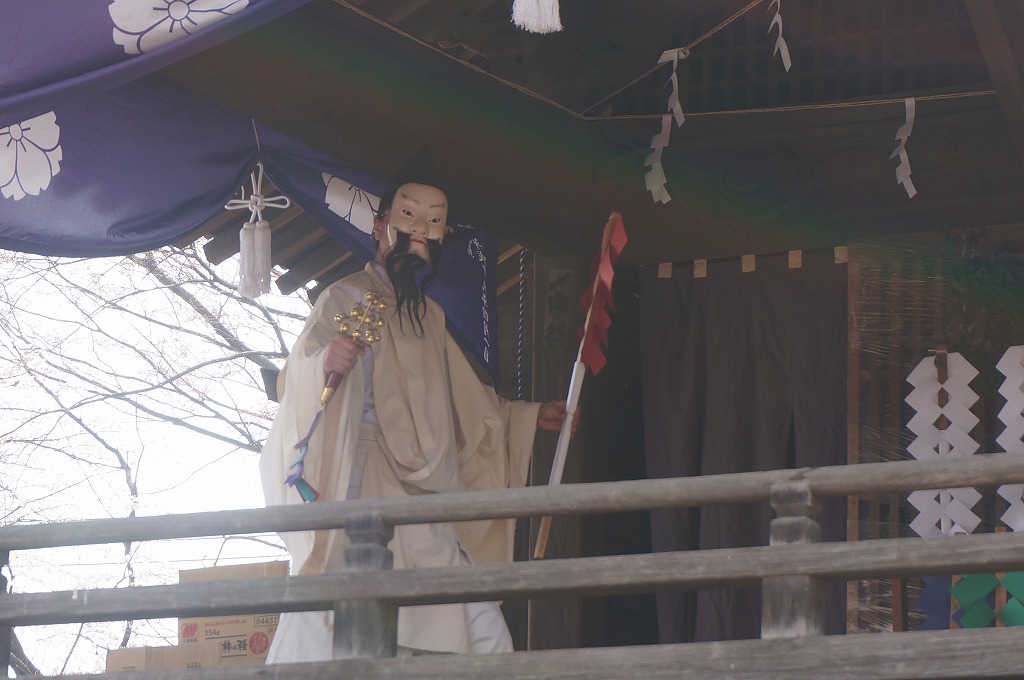
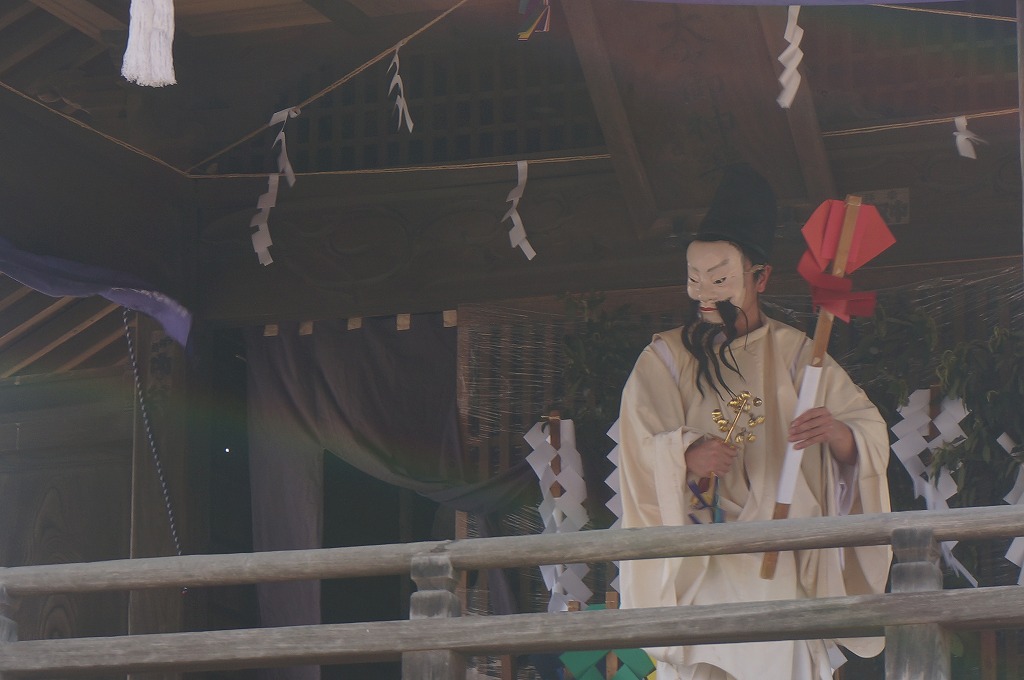
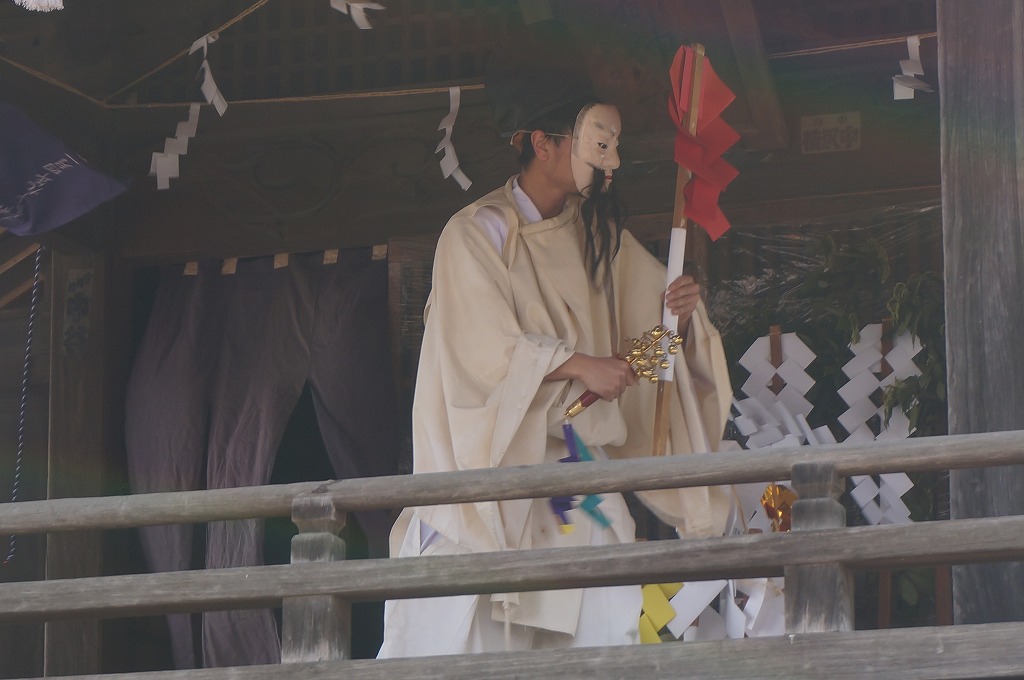
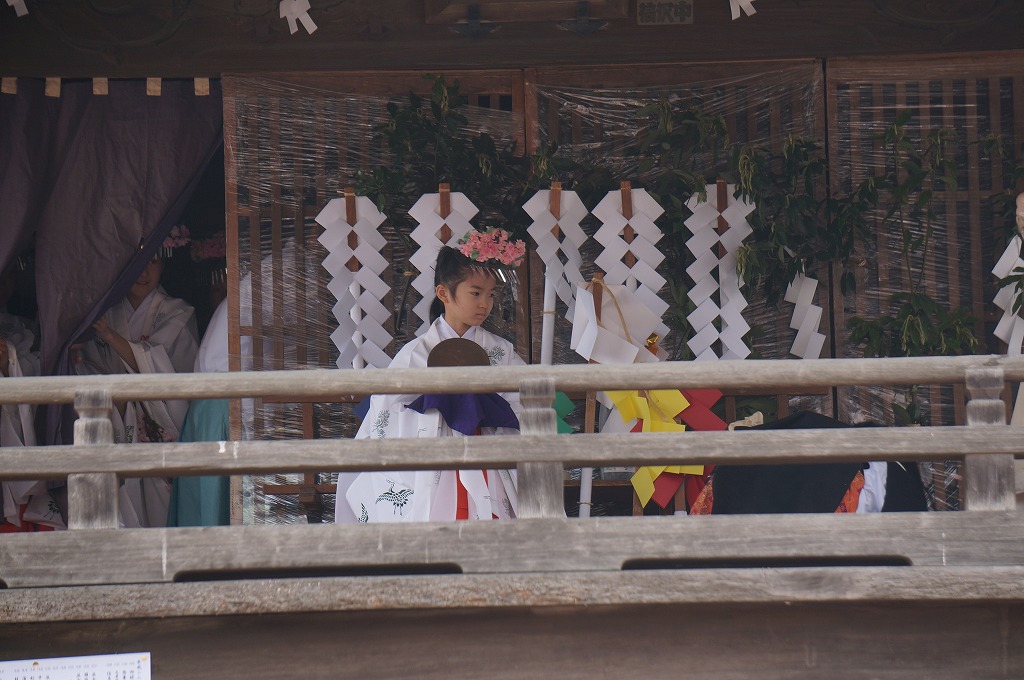
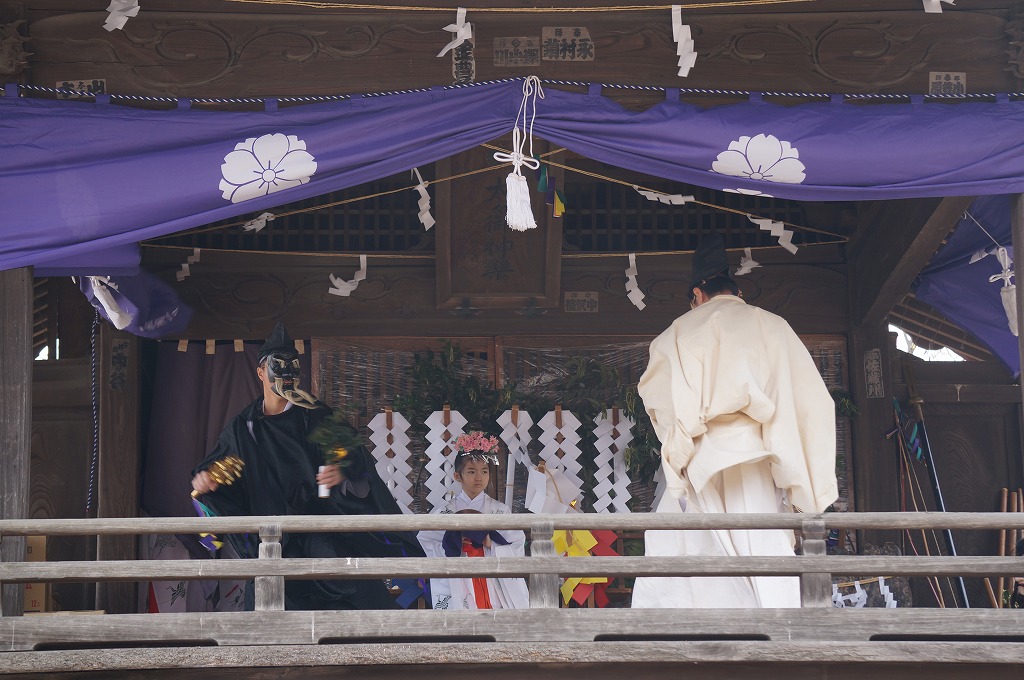
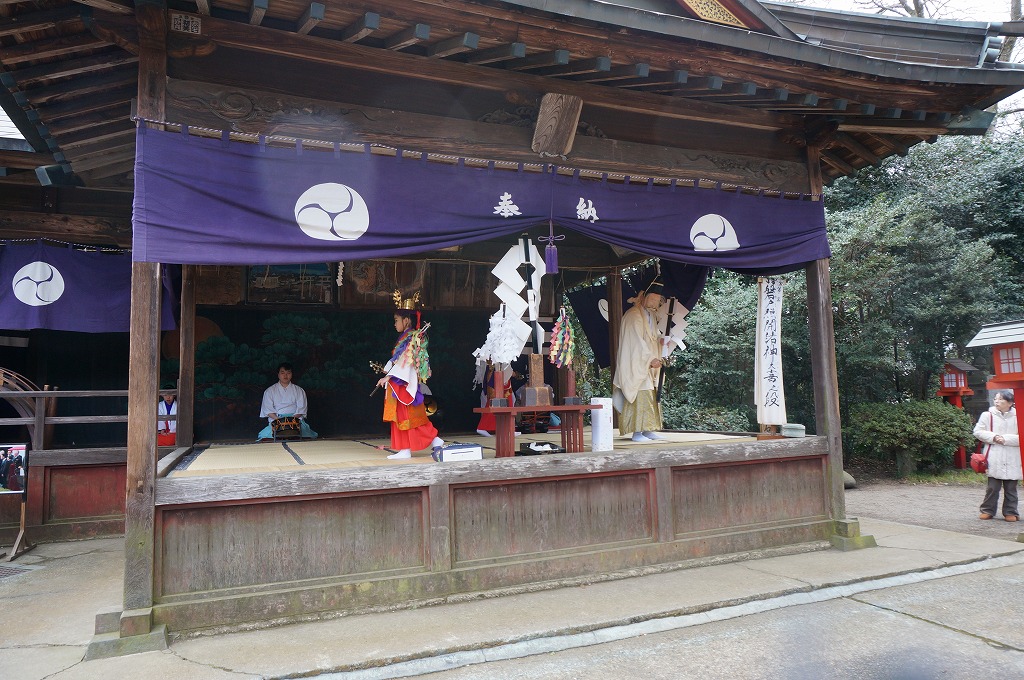
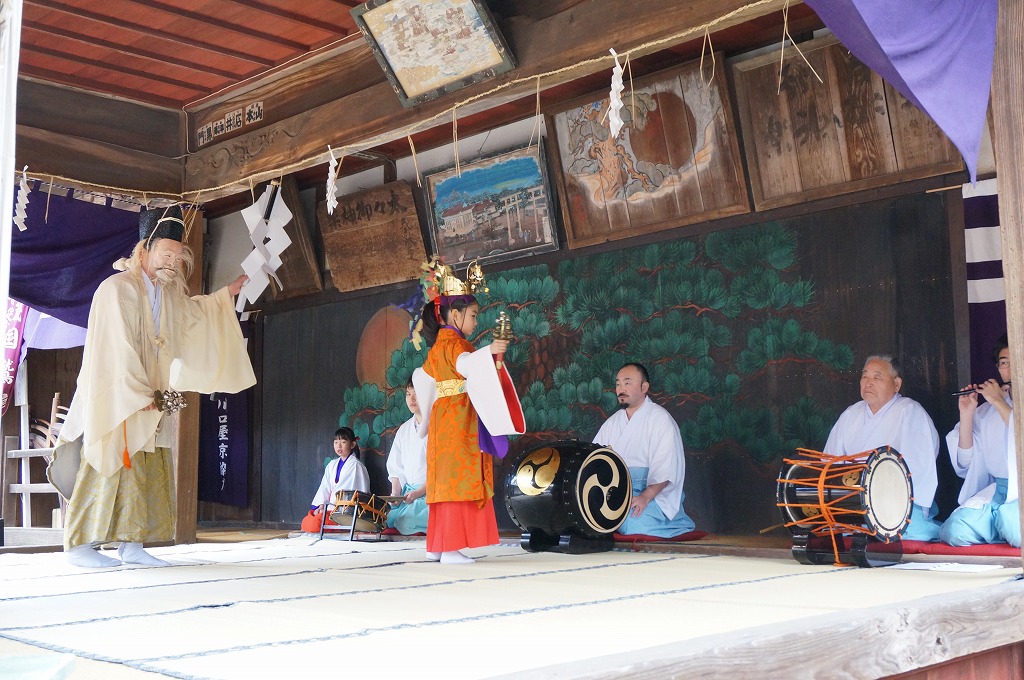
The time was 2 p.m. The event had just begun. It begins inside the shrine. There are spectator seats on both sides facing the main shrine. The left side is covered with chairs, and the right side is covered with blue sheets. All other areas are separated by ropes, making it a sacred area. In front of the left side of the room, kindergarteners are accompanied by their teachers. In front of the main shrine, the lion’s head and the names of today’s performers are displayed. In fact, the biggest difference between this one in Miyagino and the other one in Sengokuhara is that the main performers are junior high school students. And all the adults play supporting roles.
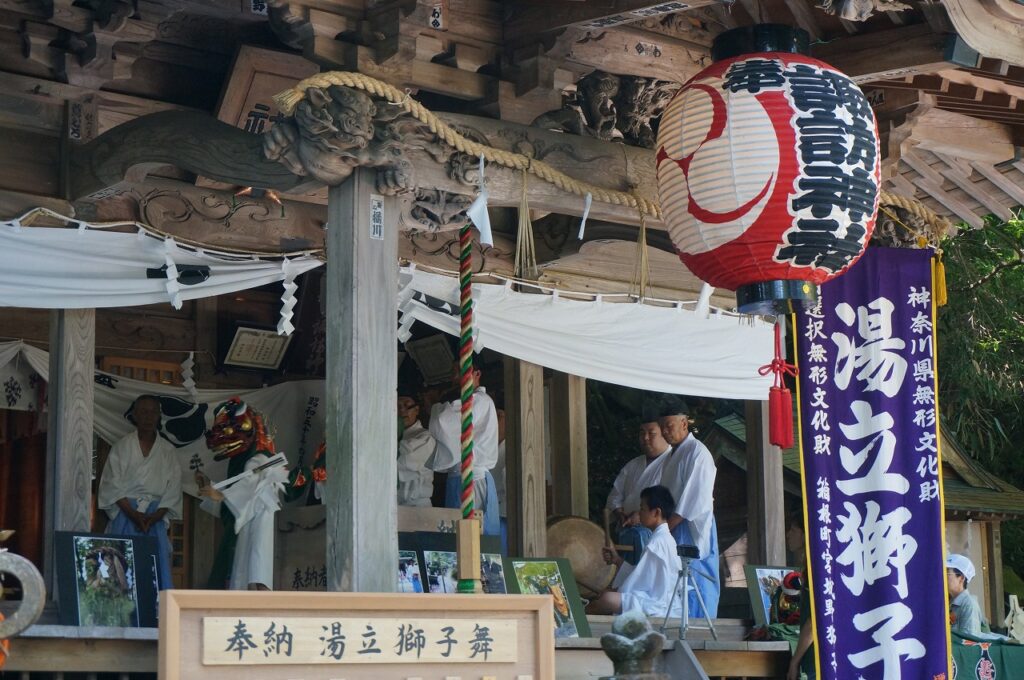
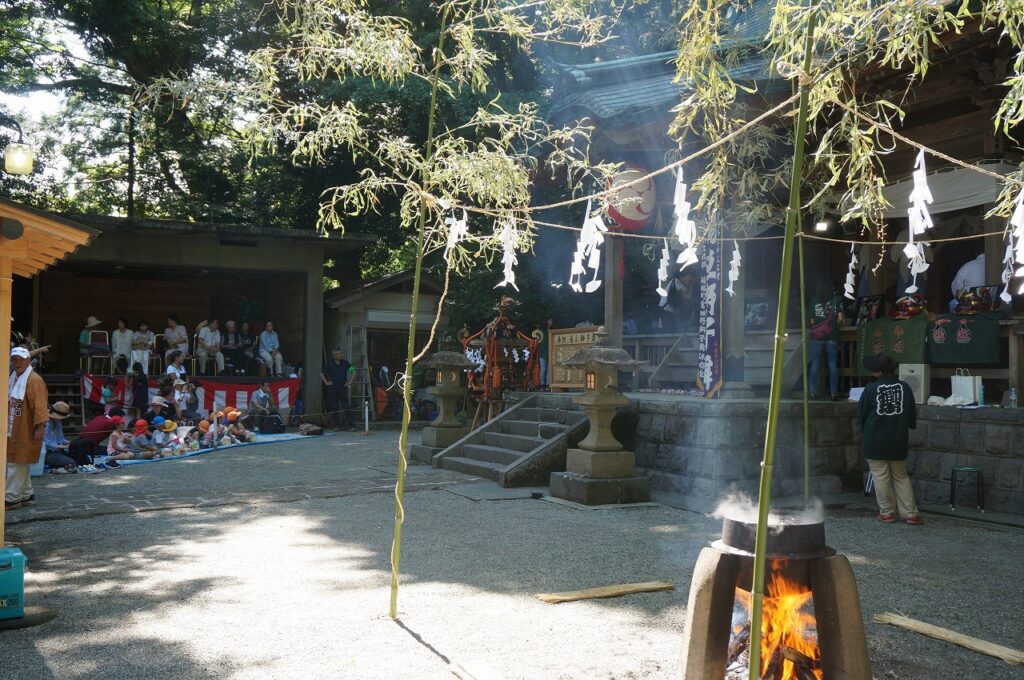
神社本殿

全体図

Before the ceremony

The lion dance begins at 2:00 p.m., but it actually starts on January 7. On this day, the first rehearsal is said to begin. And the real practice starts a week before. In the evening of the day before, everyone gathers at the shrine and goes to the waterfall to bathe in water to purify themselves. This is repeated 12 times, and then at midnight a dance called “Tsuji-jime” is performed at several places in the village. This is a spell to ward off evil spirits. At dawn, when the dance is over, they go to the twelve designated shrines to pay their respects. Only after all of this is done, the lion dance comes back to the shrine.
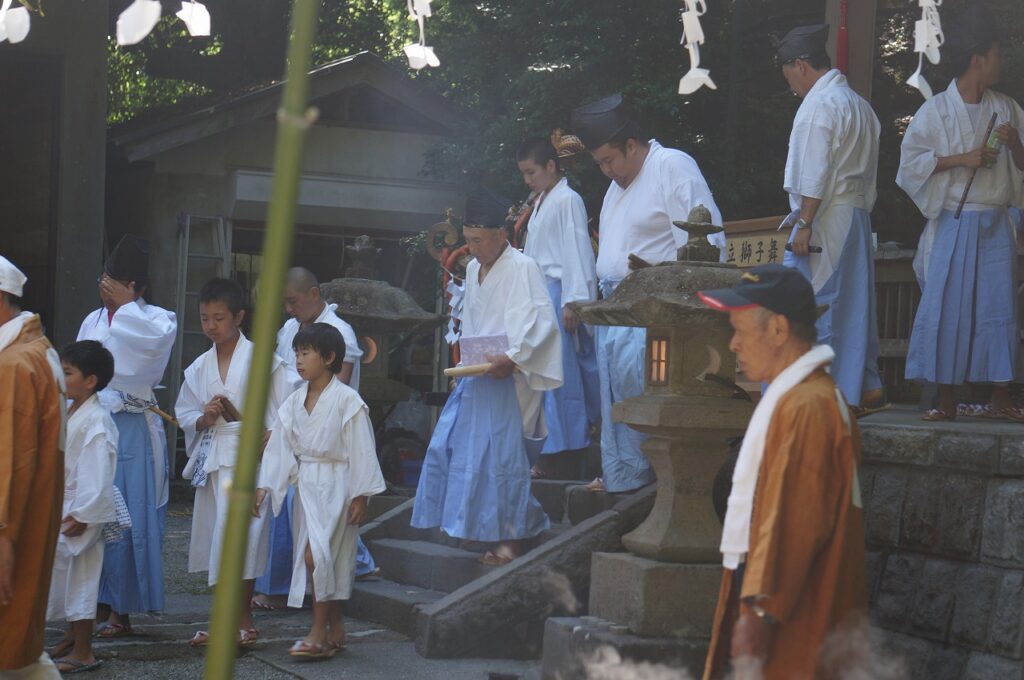
降りてくる関係者たち

獅子が境内に

Down into precinct

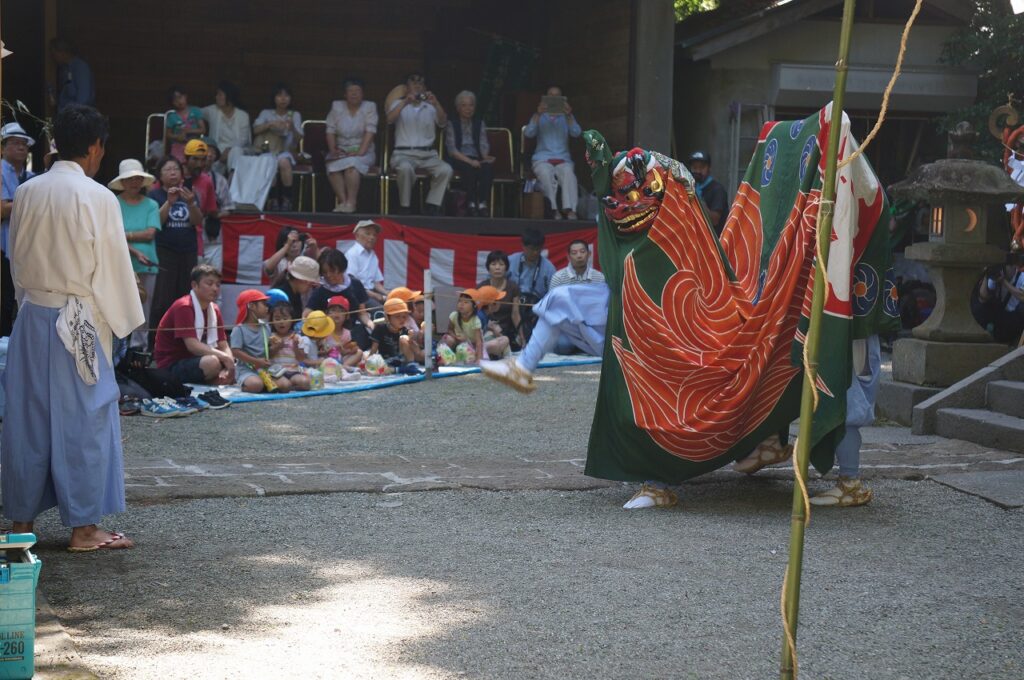
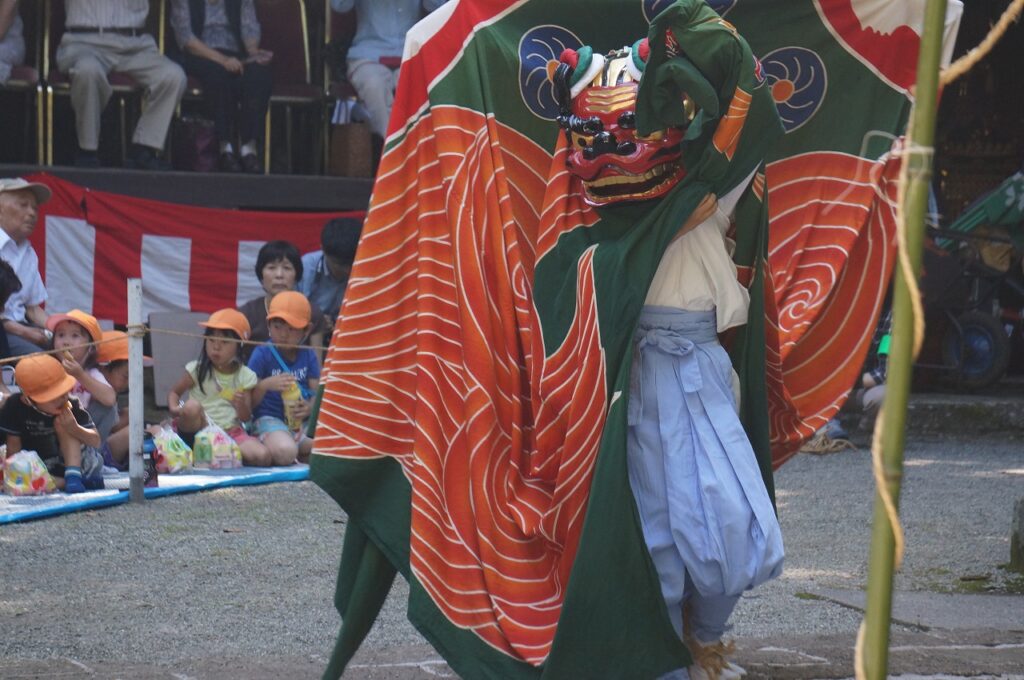
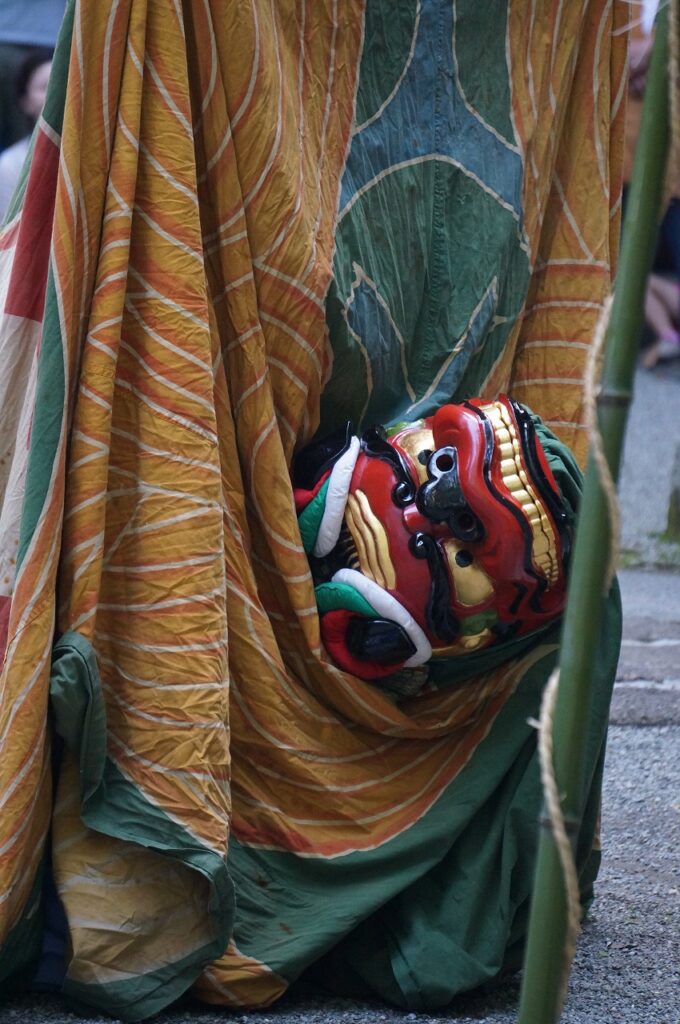
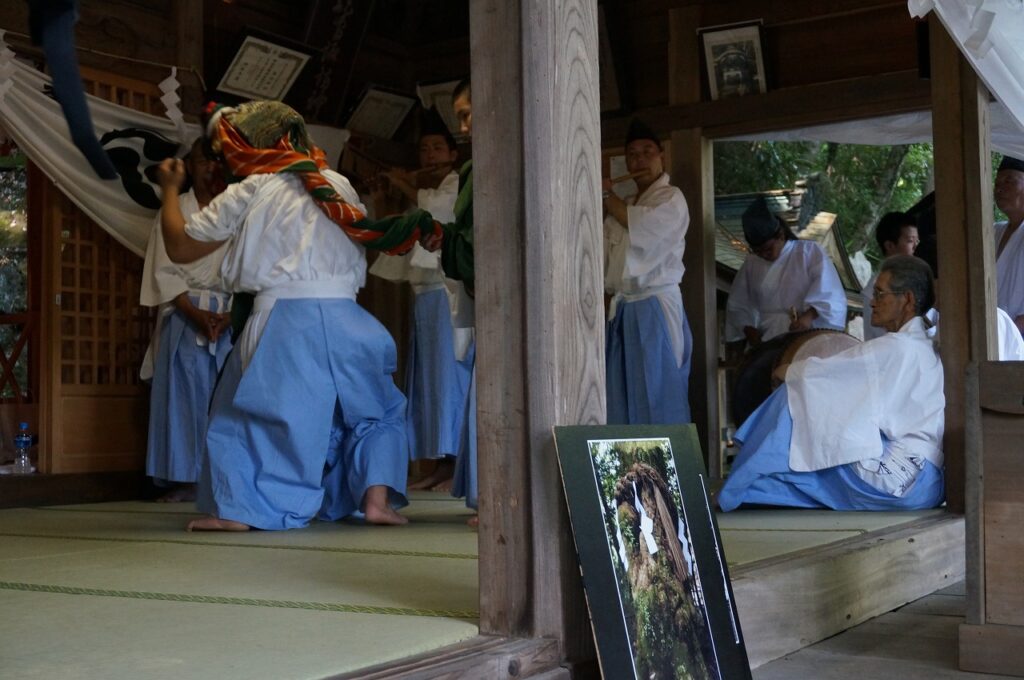
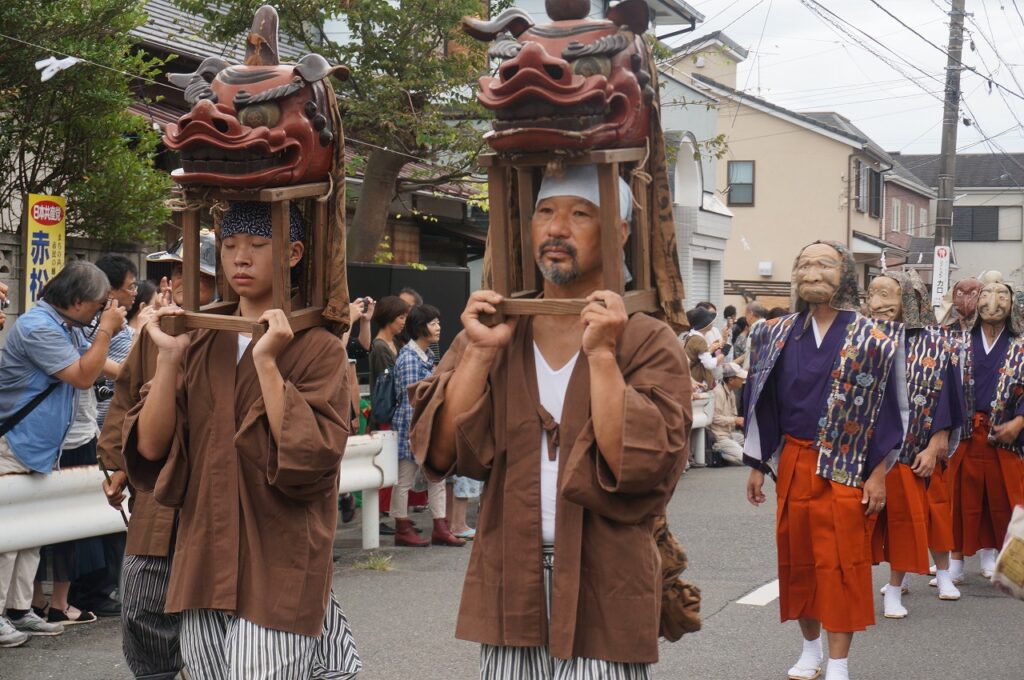
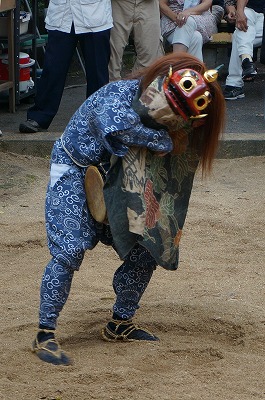
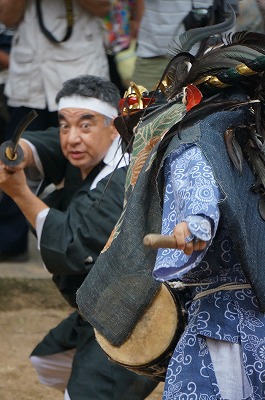
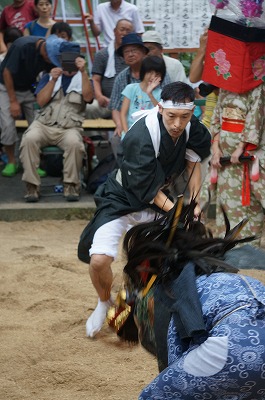
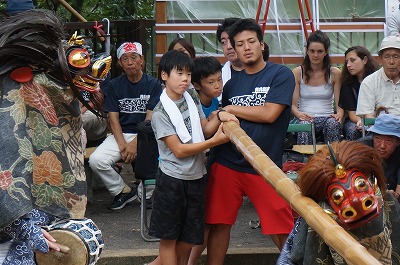
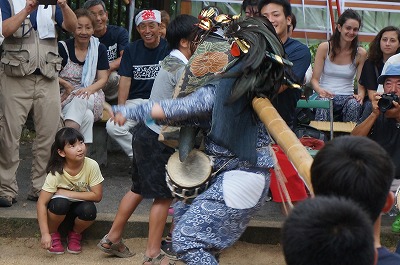
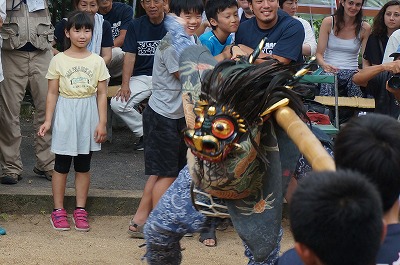
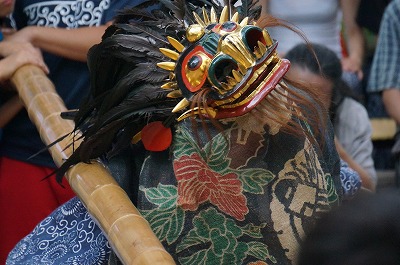
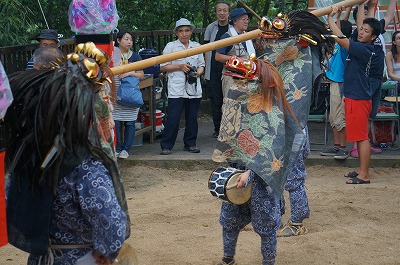
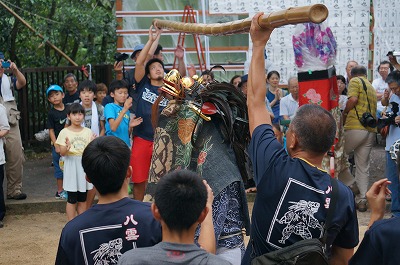
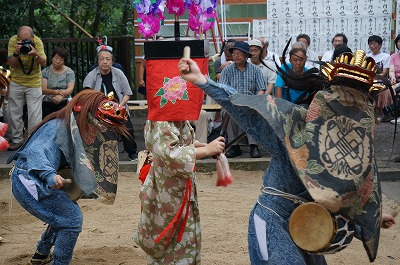
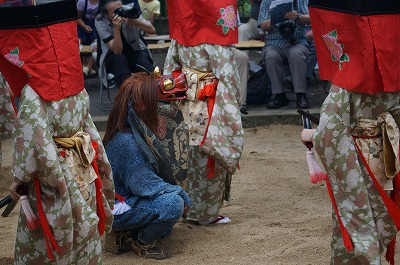
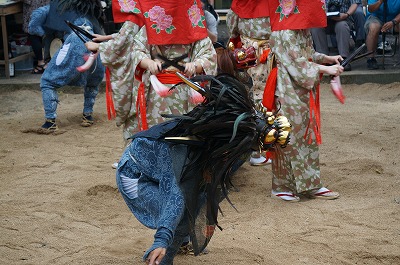
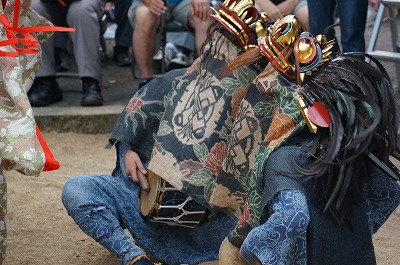
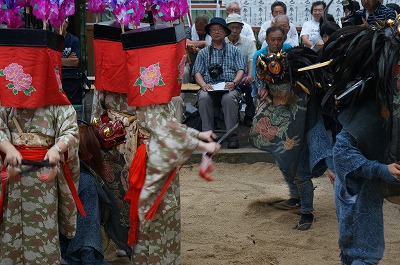
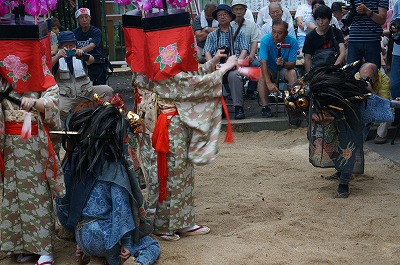
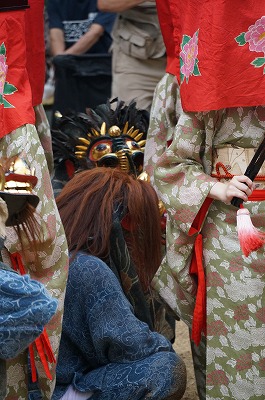
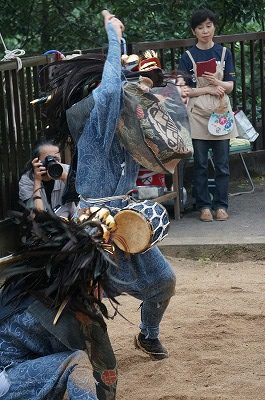
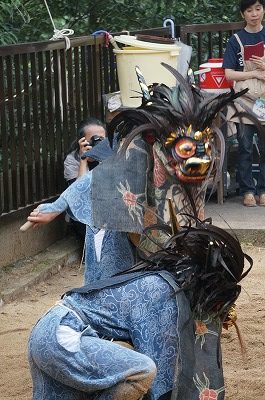
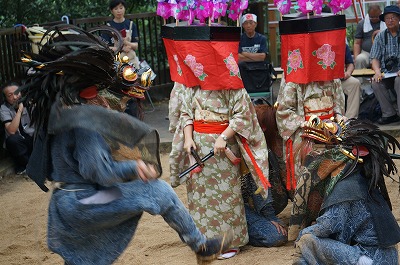
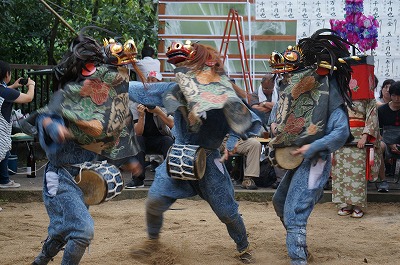
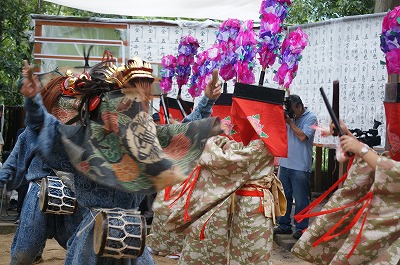
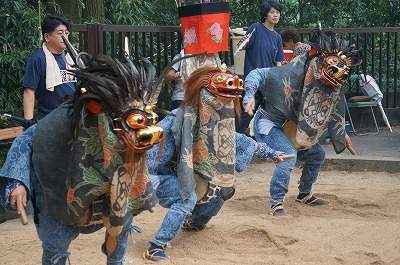
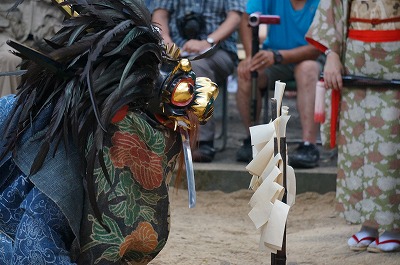
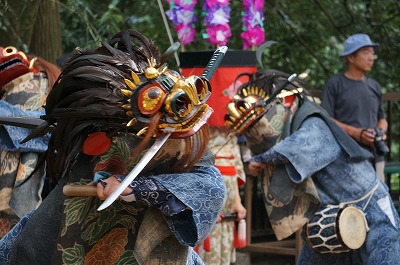
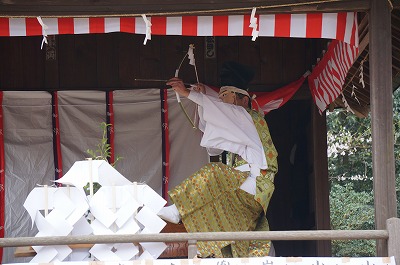
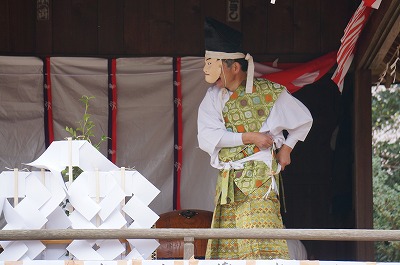
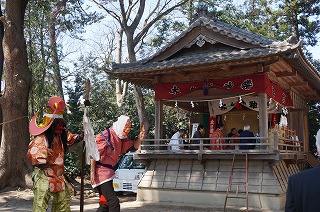
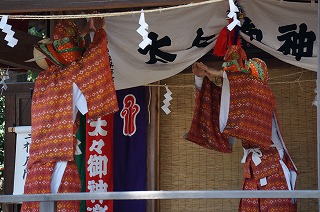
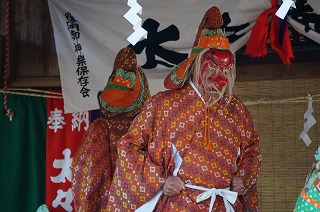
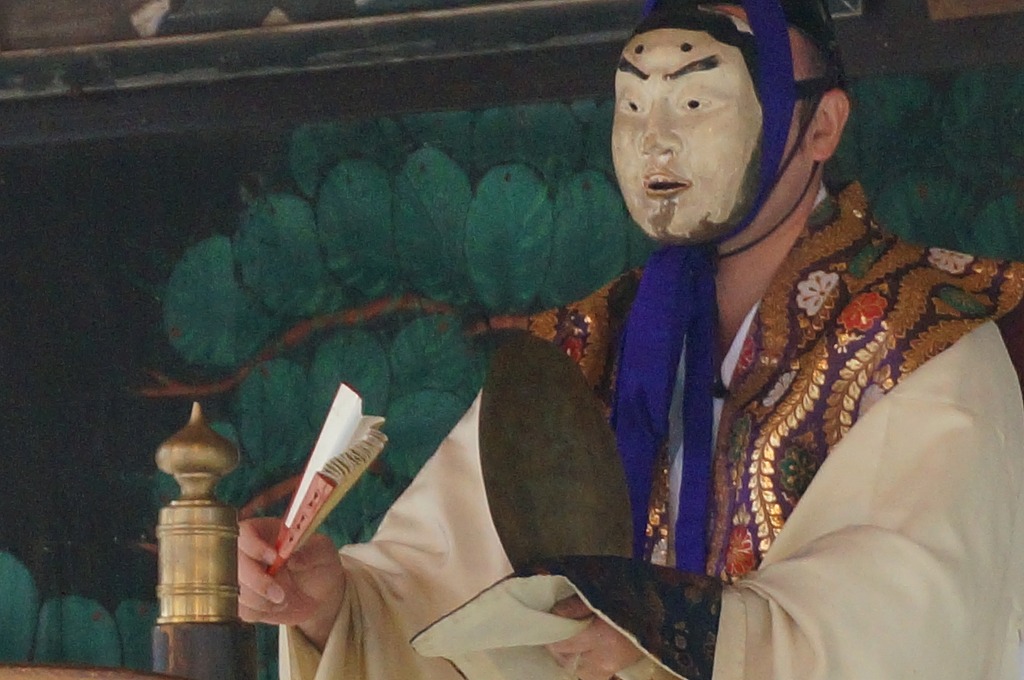
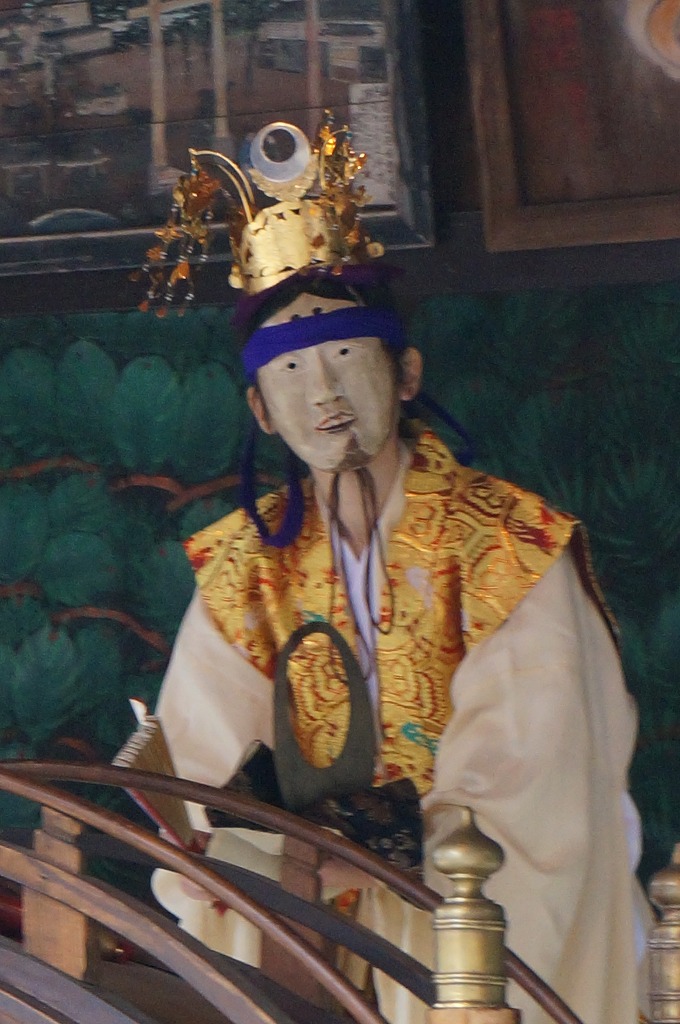
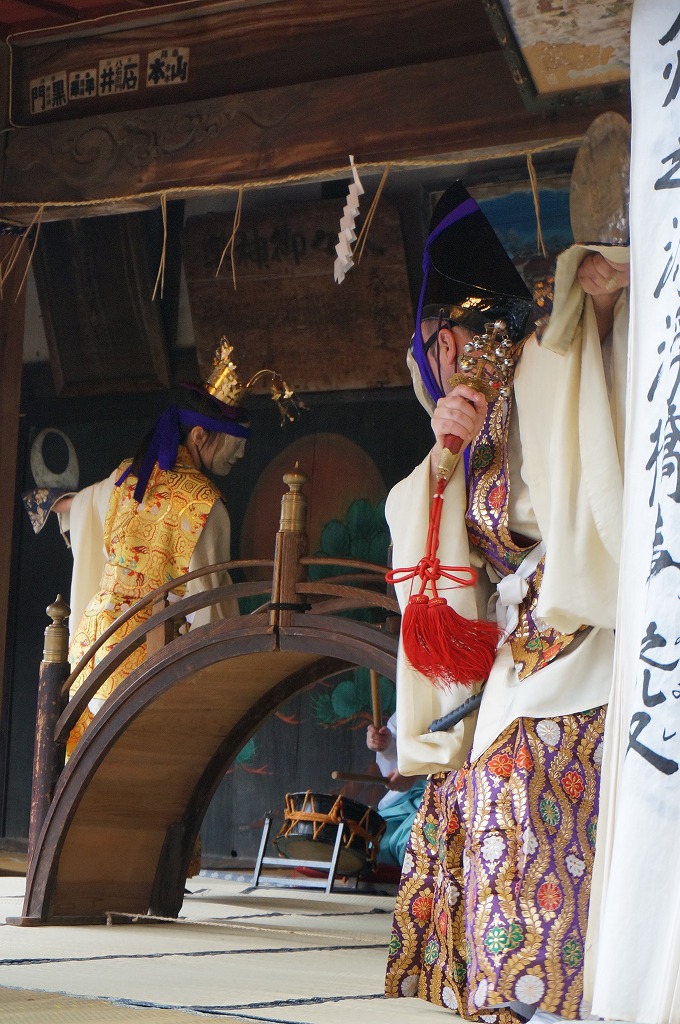
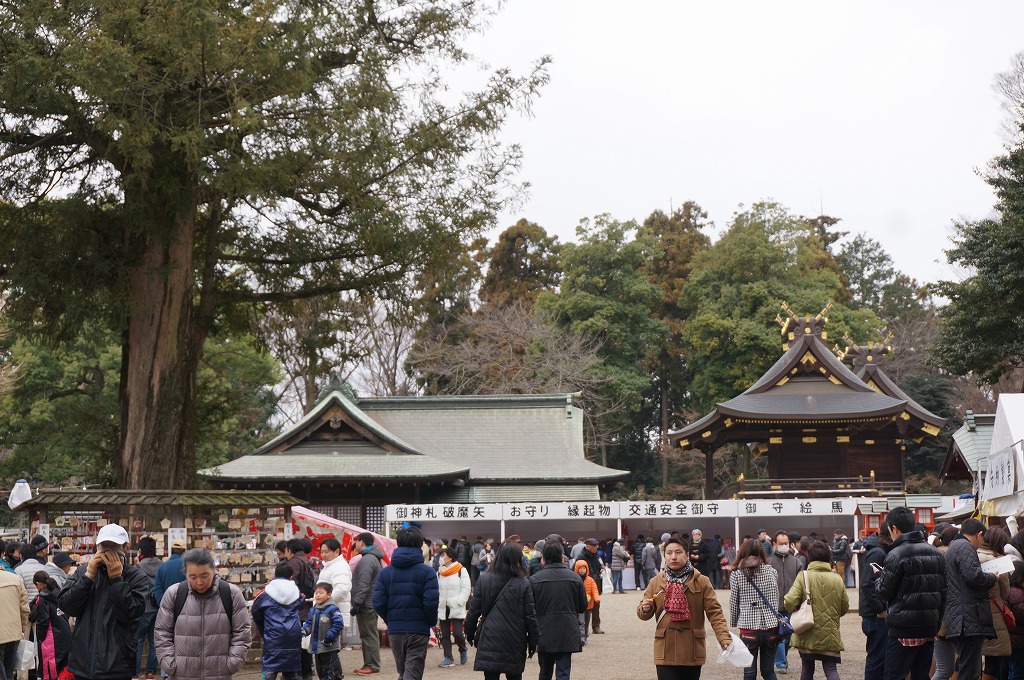
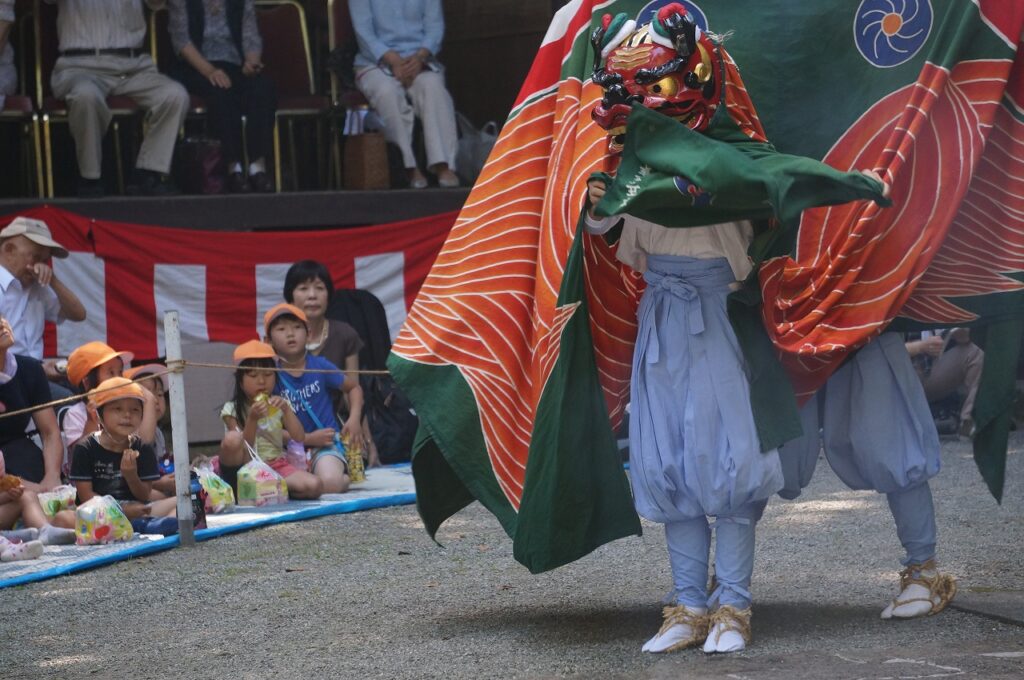
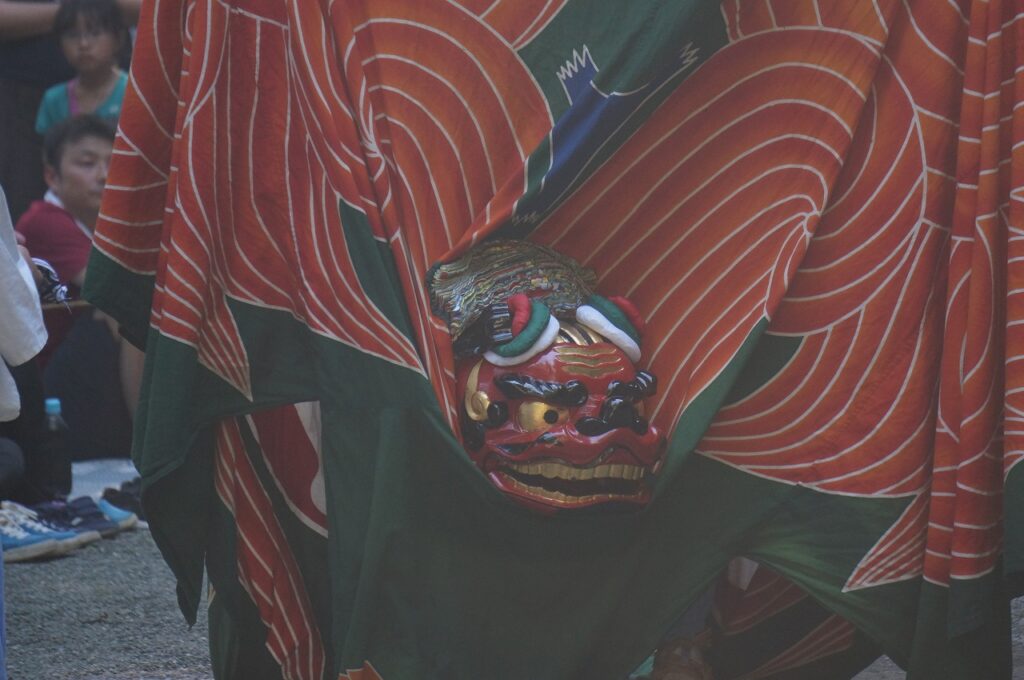
 After dedicating the dance inside the main shrine for about half an hour, the lion finally descended towards the shrine grounds. The lion wears a large curtain and has four legs, one in the front and one in the back. This is the basic form. In some cases, the performer in front holds the head with his or her hands, in another case, the performer wears it on his or her head.
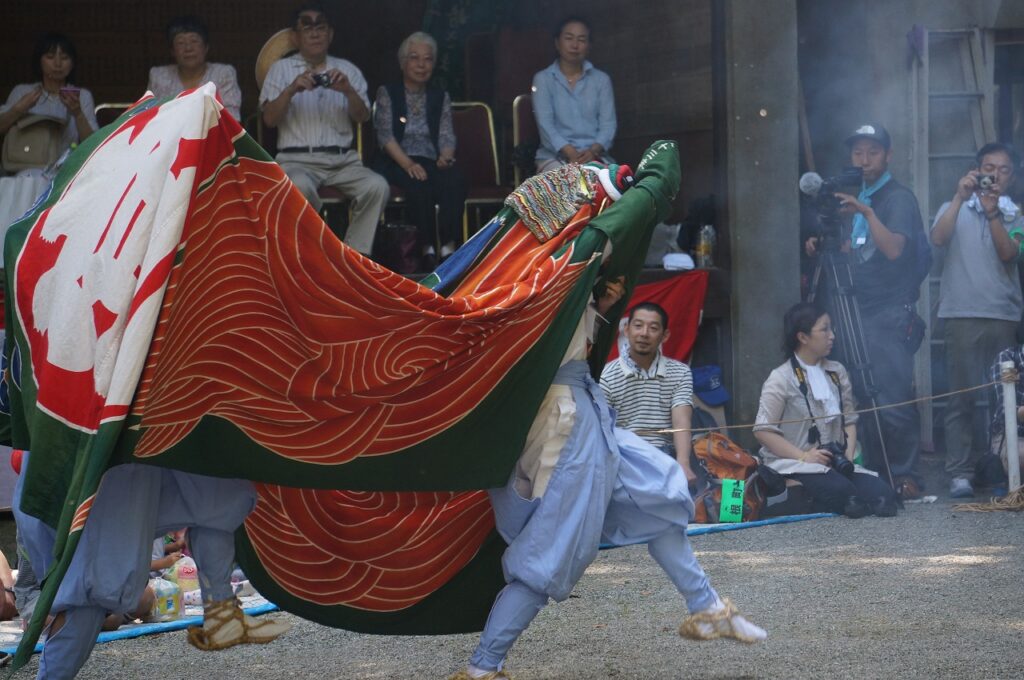
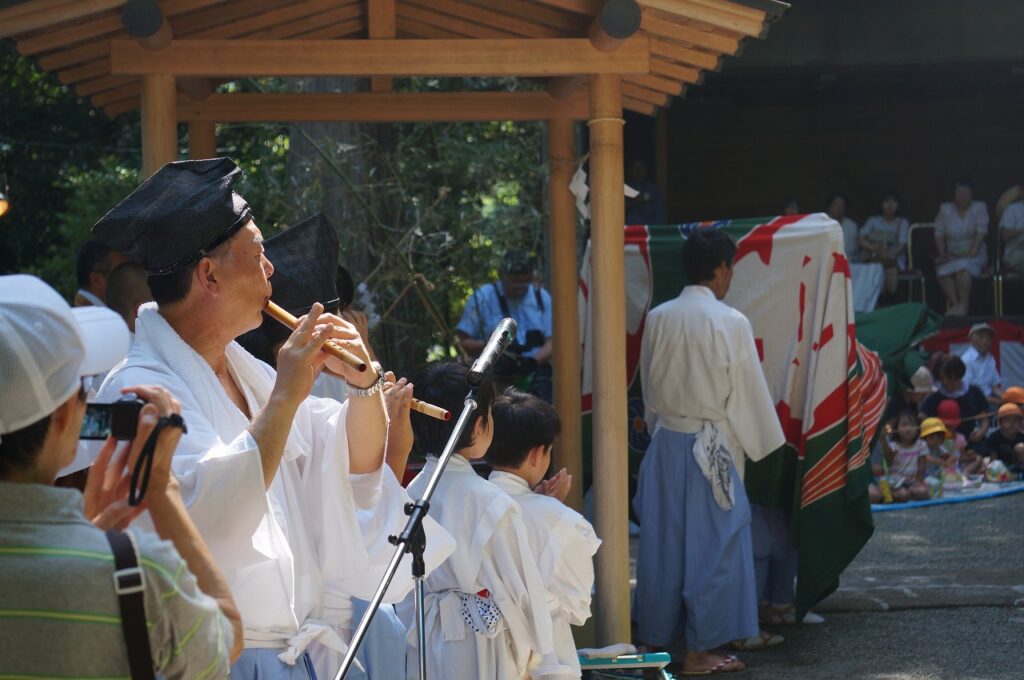
のし歩く獅子

お囃子連

ステップを踏む獅子たち

獅子

 In the lion dance, every movement is strictly regulated. For example, the number of steps to be taken is fixed, and those who stand in front and those who stand behind must walk in unison through the shrine grounds. 
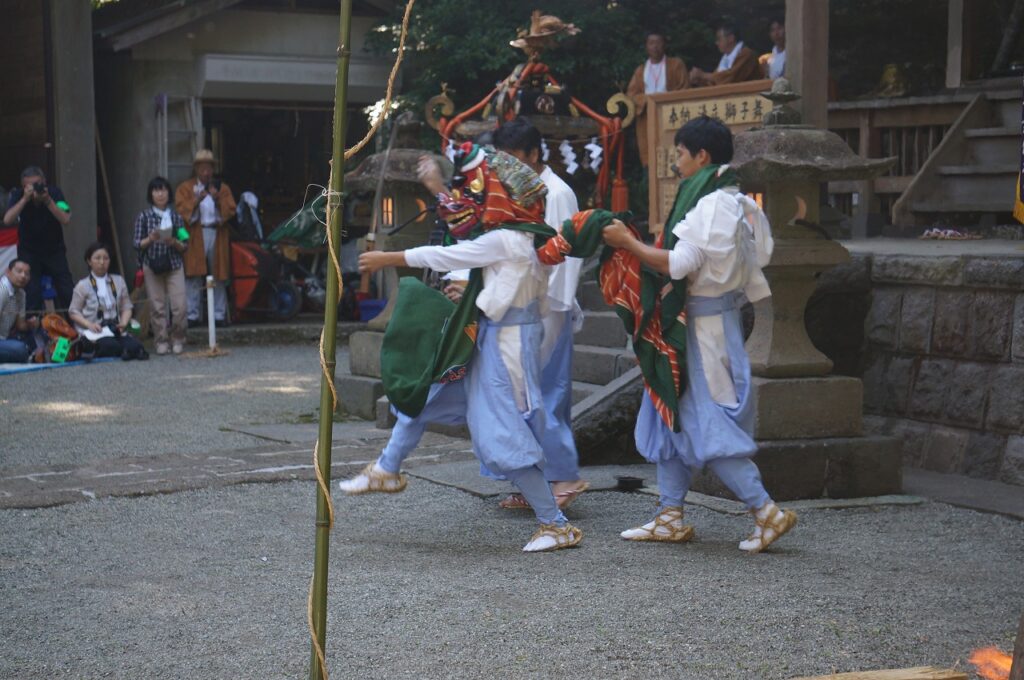
独り立ちとなって歩く

独り立ち、祠巡り

 Eventually, those behind step out of the curtain and roll the curtain to ease the burden in front. The performer in the back is slightly older than the one in the front. It is as if the older person is watching over the younger one. In this way, the lion stands alone and tours the small shrine (which is made of stone) within the shrine.
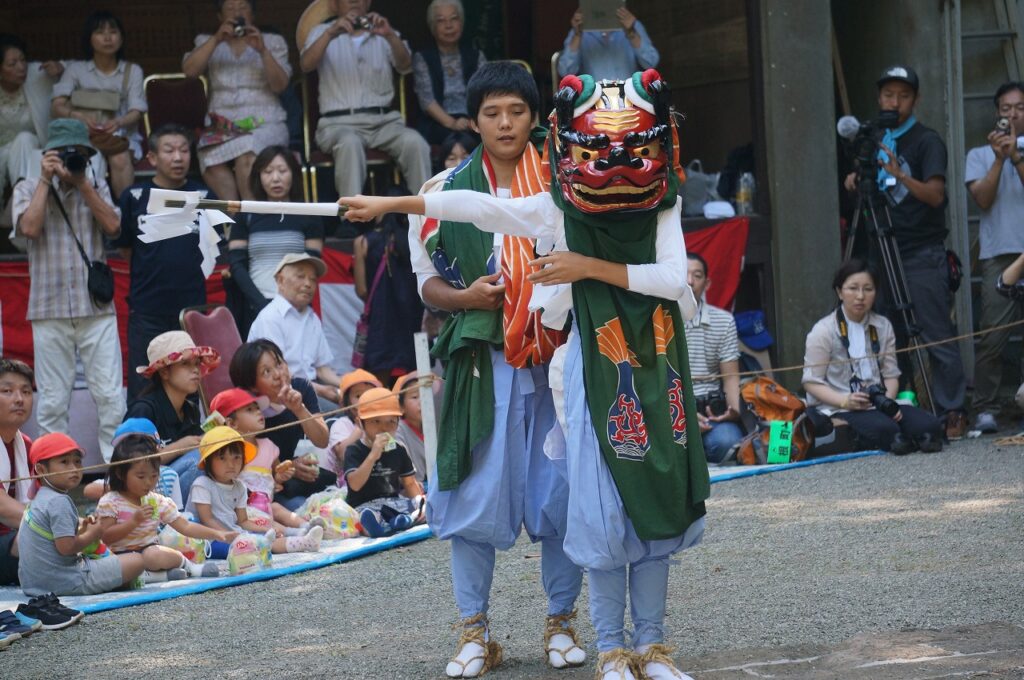
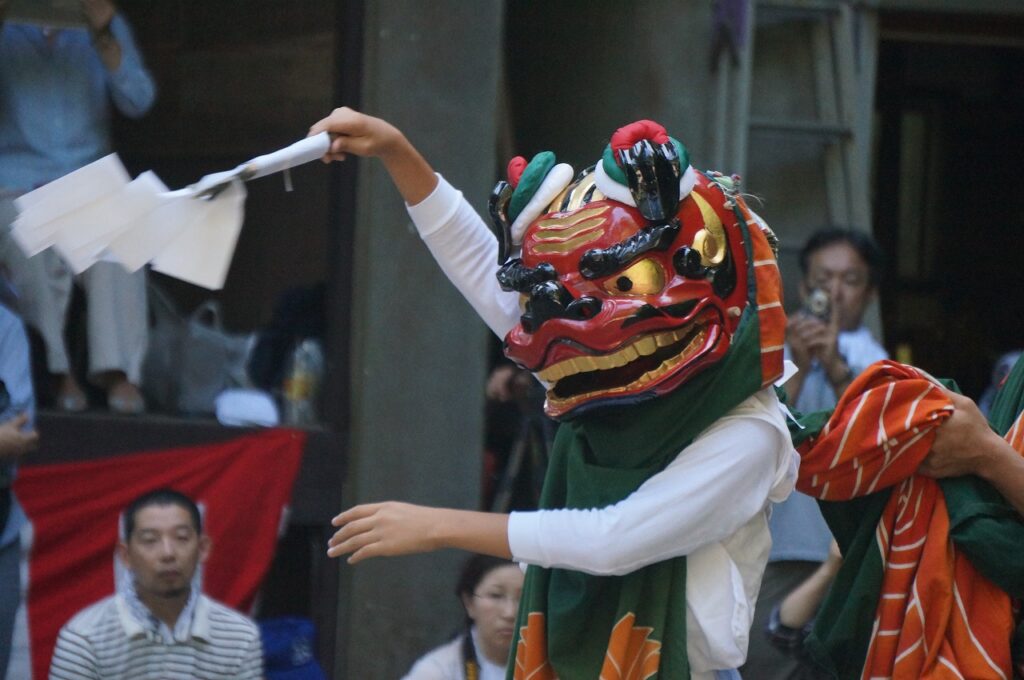
獅子
Shishi (lion) walks holding “Gohei”

獅子

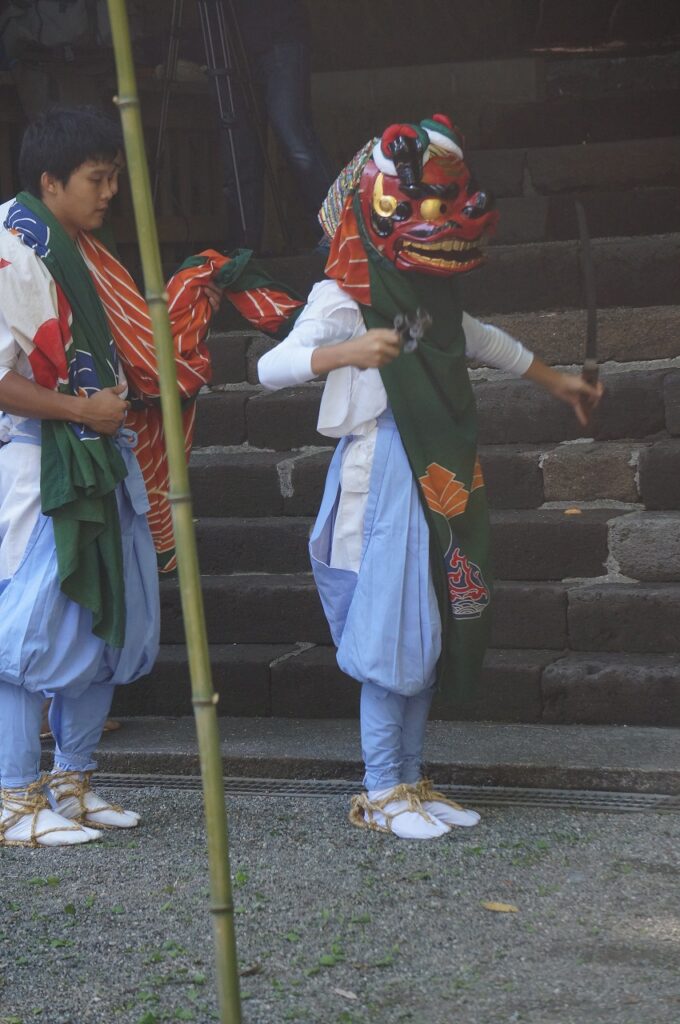
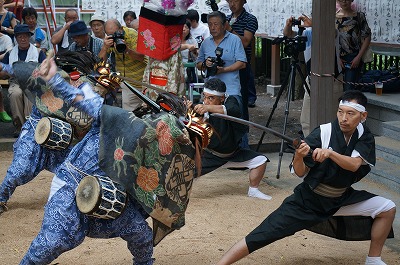
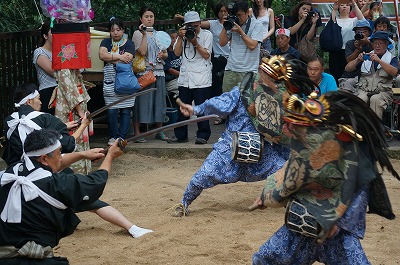
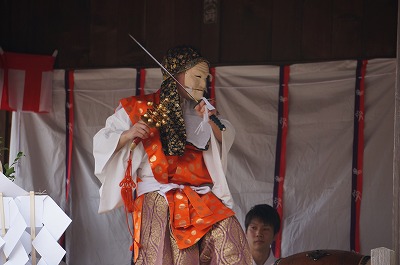
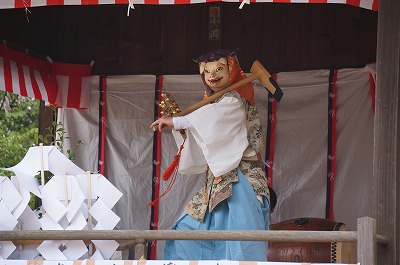
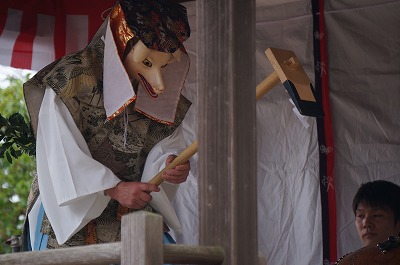
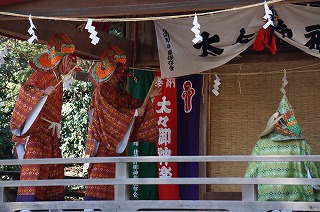
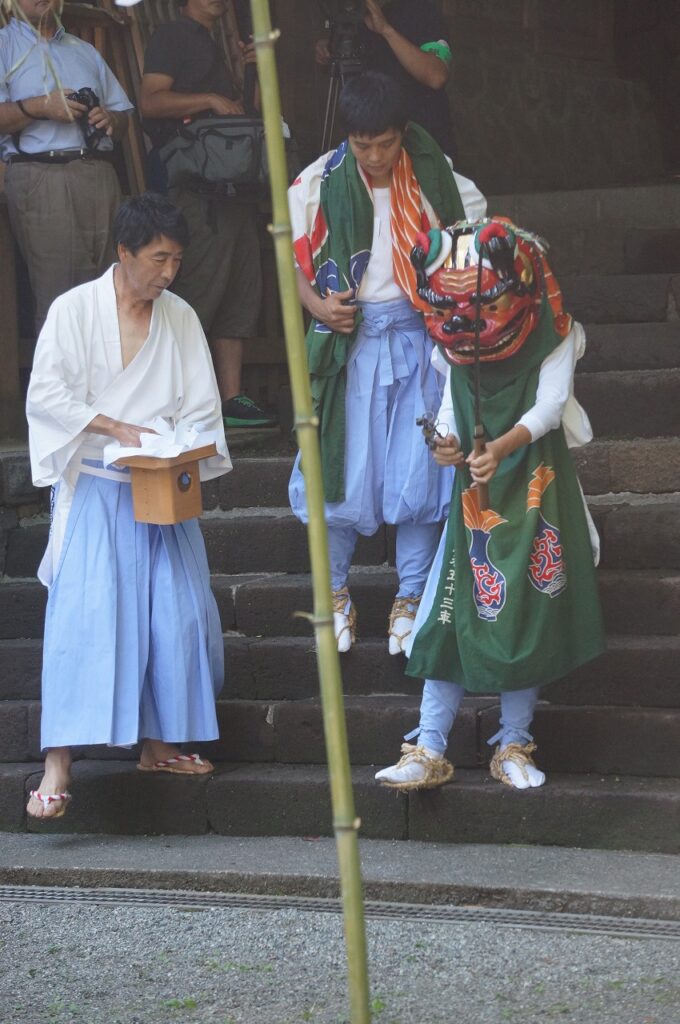
 At first they go to a small shrine to receive the “Gohei” (a wooden ritual wand with pair of white zigzag paper streamers) and repeat the same movements as before. After that, the lion takes a bell and a sword. The number of steps at this time seems to be all fixed, and the boy behind the lion counts “one, two, three” as they walks.
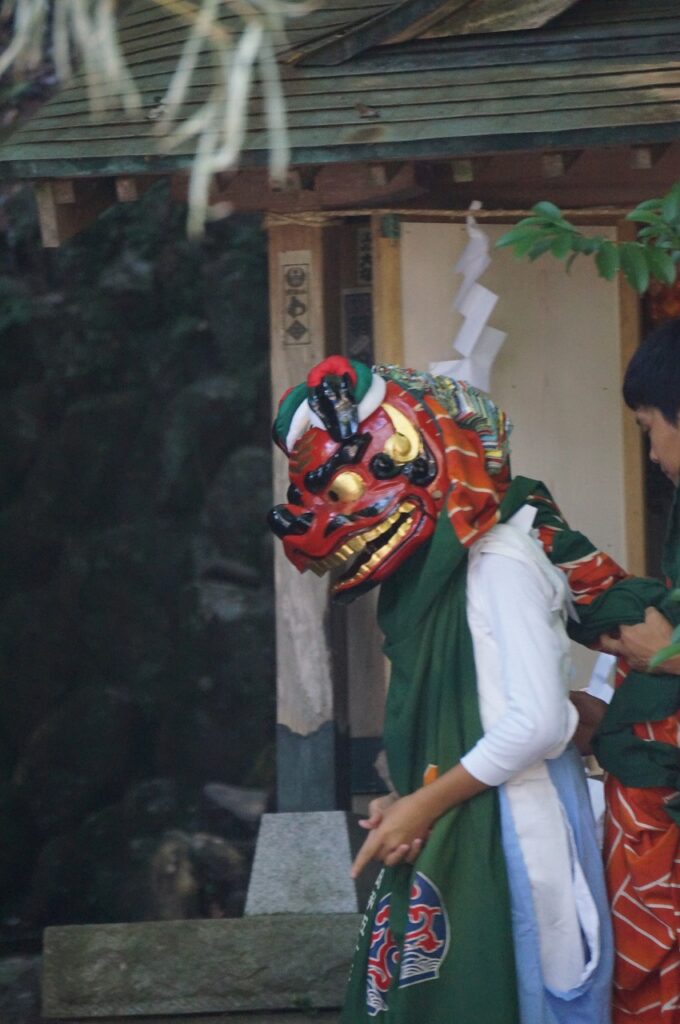
祠より戻る獅子

階段を降りる獅子

剣を持つ獅子

 The imbalance between the stern lion’s head and slender limbs. The boys’ expressions are still young, but they are all serious. For them, this is a once-in-a-lifetime moment. The people involved, and the audience, watch over them tenderly. The ceremony takes a short break.
獅子舞

塩をまく

Ceremony Part 2

 Three o’clock in the afternoon. After a short pause, the lions stand in pairs again, this time going around the large cauldron. The people concerned in the ceremony sprinkled salt. The climax was approaching. Here’s something to add, salt is not just a seasoning. Salt means to ward off evil, people often use it in various rituals. For example, when people come back from a funeral, it is customary for those of the house to sprinkle salt on those who return before they enter the house. There is also a belief that if salt is sprinkled in front of the house, it will become a purified barrier, preventing evil to enter. In sumo, one of Japan’s most popular sports, it is common to see sumo wrestlers sprinkling large amounts of salt. Since sumo originally originated as a Shinto ritual, this custom still remains.
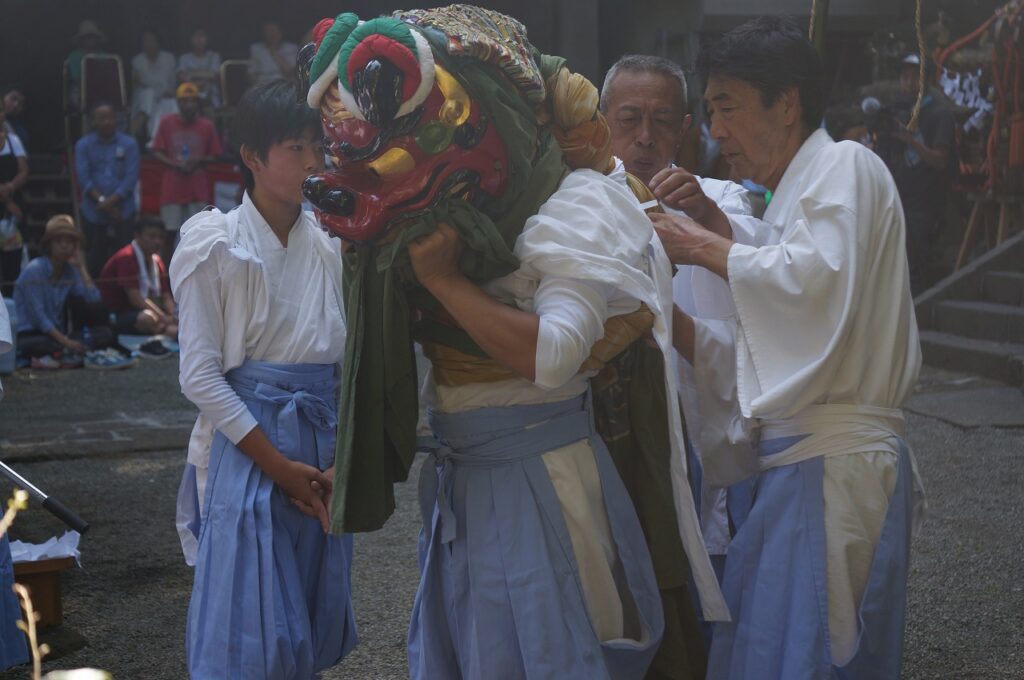
獅子は湯釜へ

いよいよ独り立ち

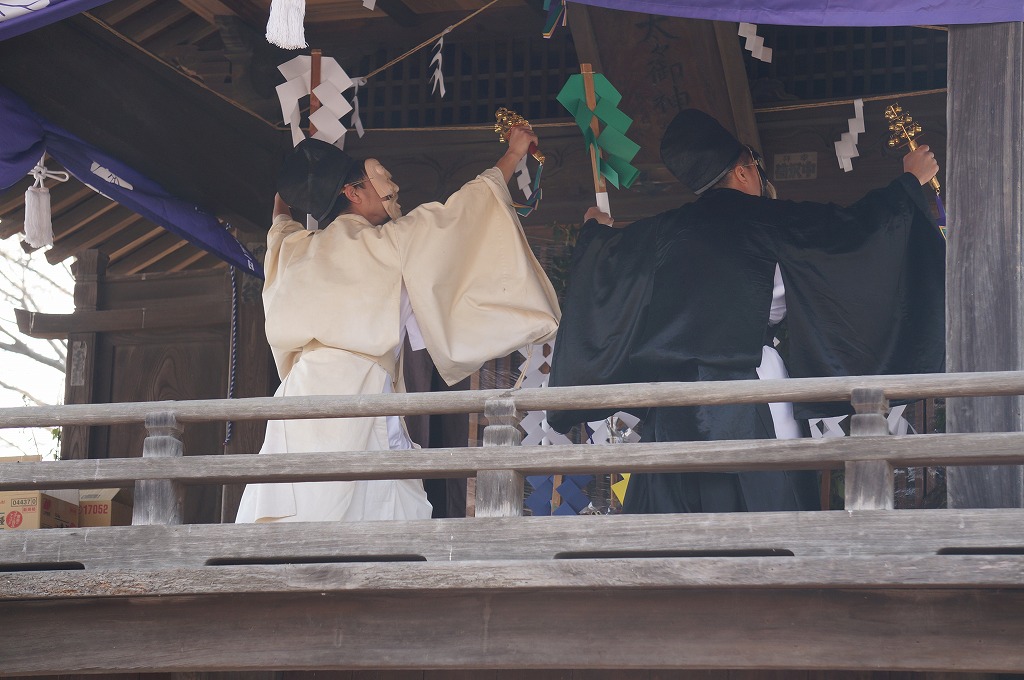
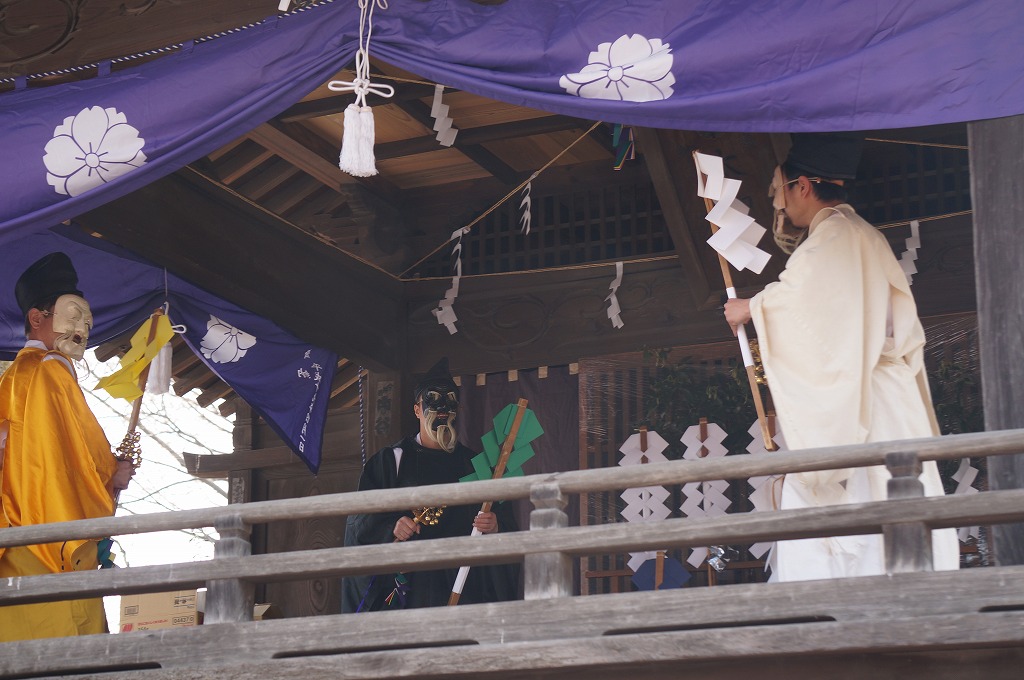
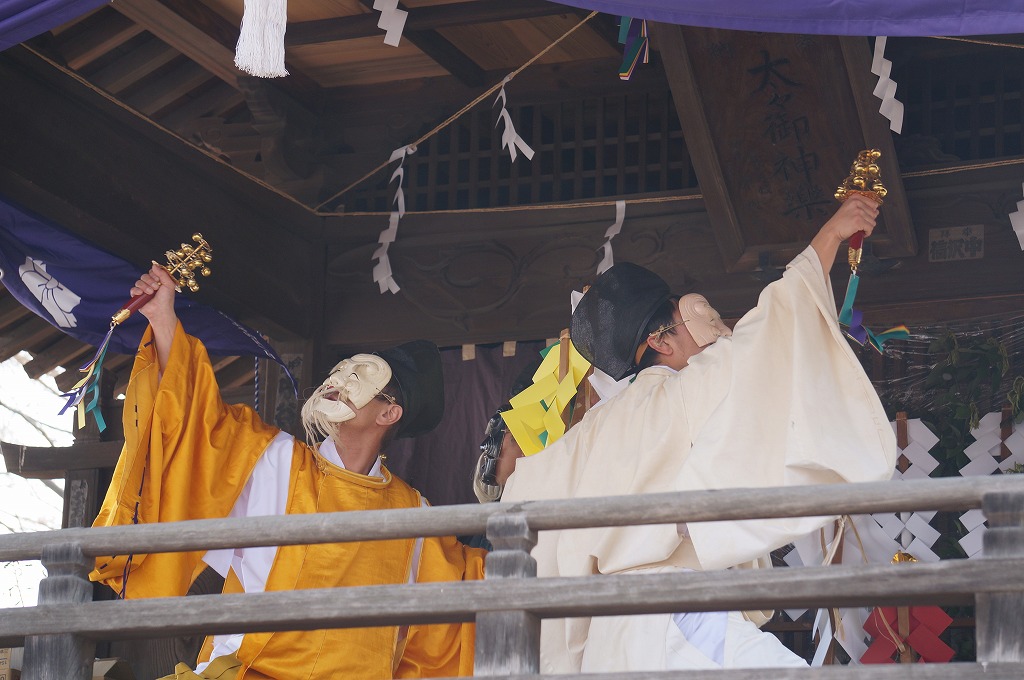
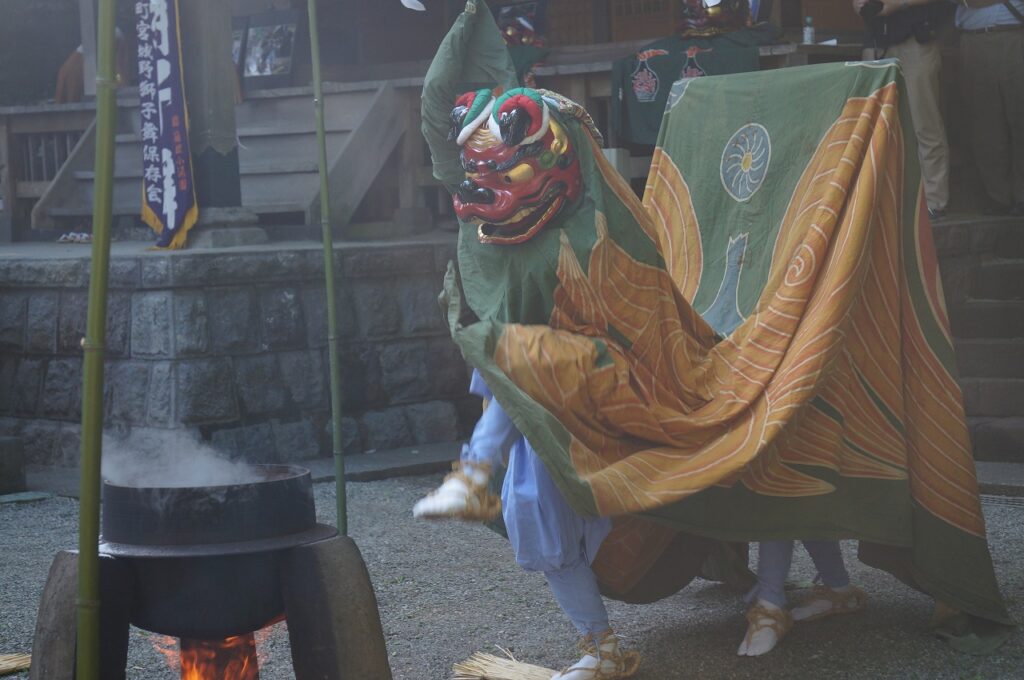
 After a series of walks around the cauldron, the lion stands finally all alone. The performers in the back are completely out from the lion and the curtain is rolled up. The complete lion man, with his head ia lion, but his body human, stands here.
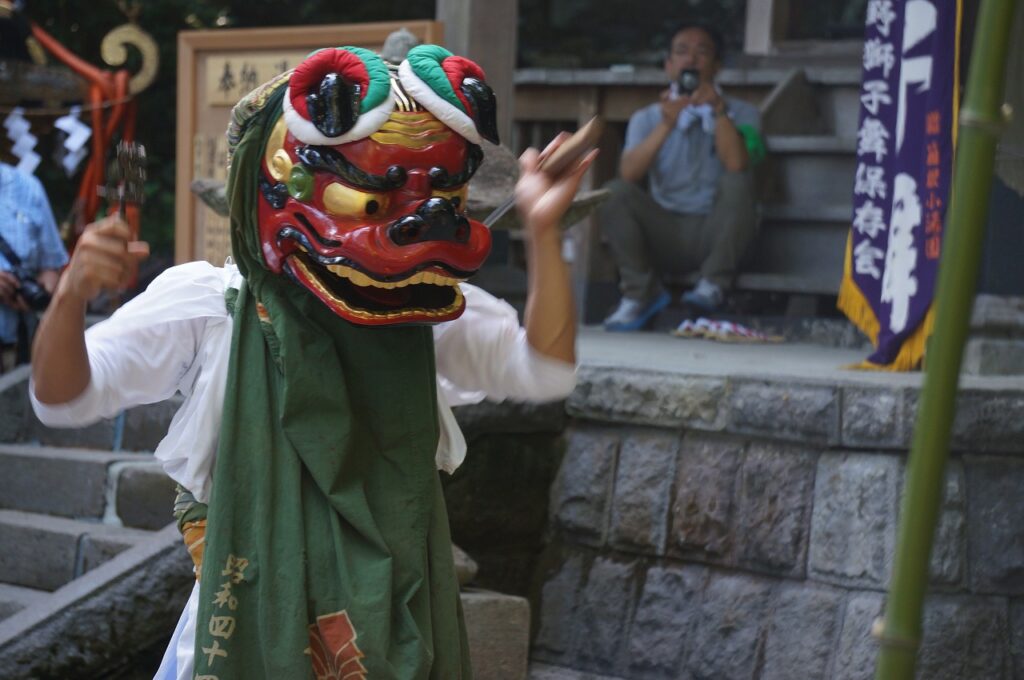
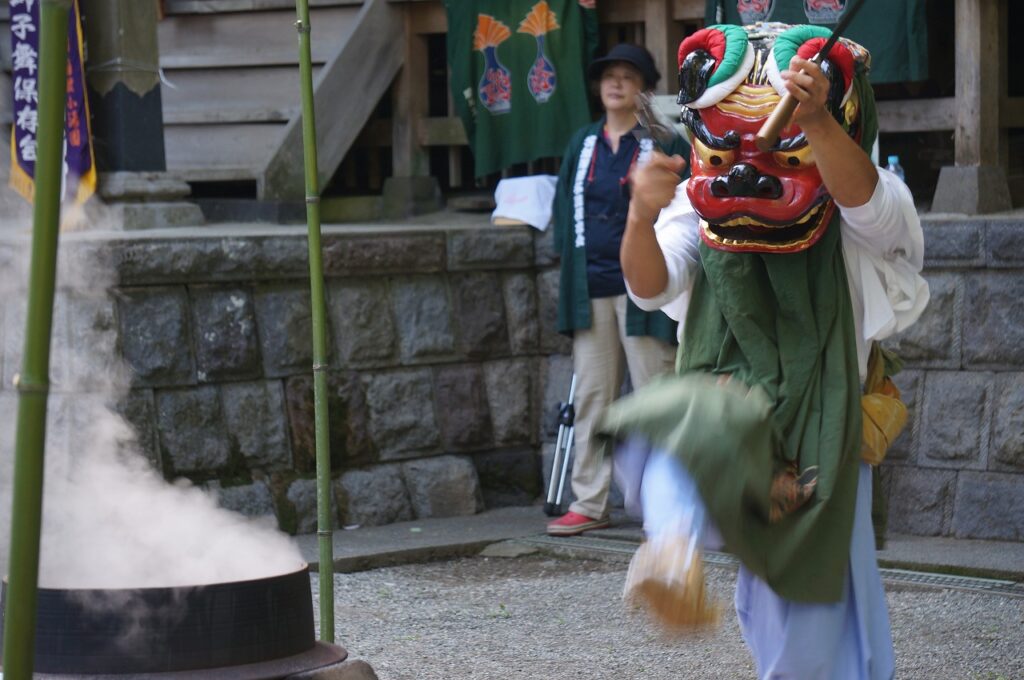
剣を採る

湯釜を回る

剣を湯釜へ

御幣を湯釜へ

Offering “Yubana”

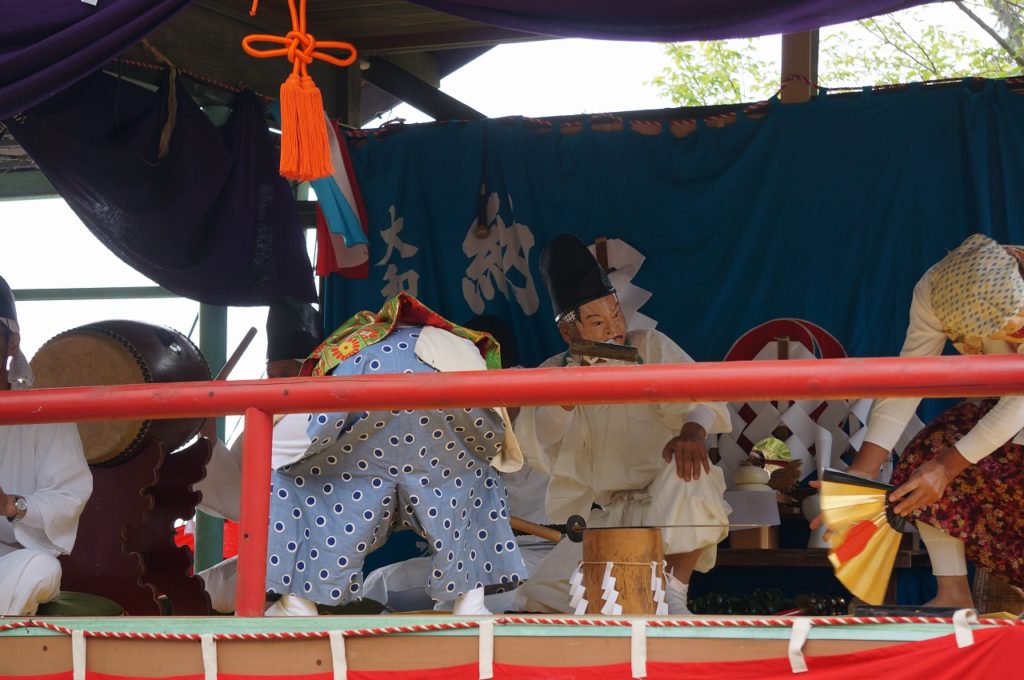
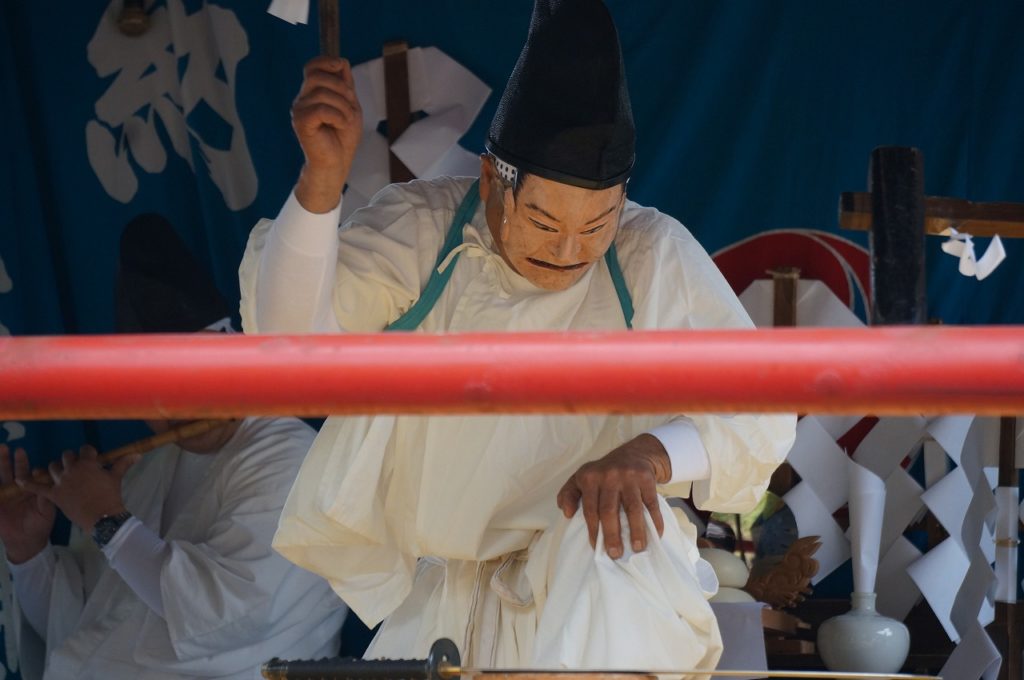
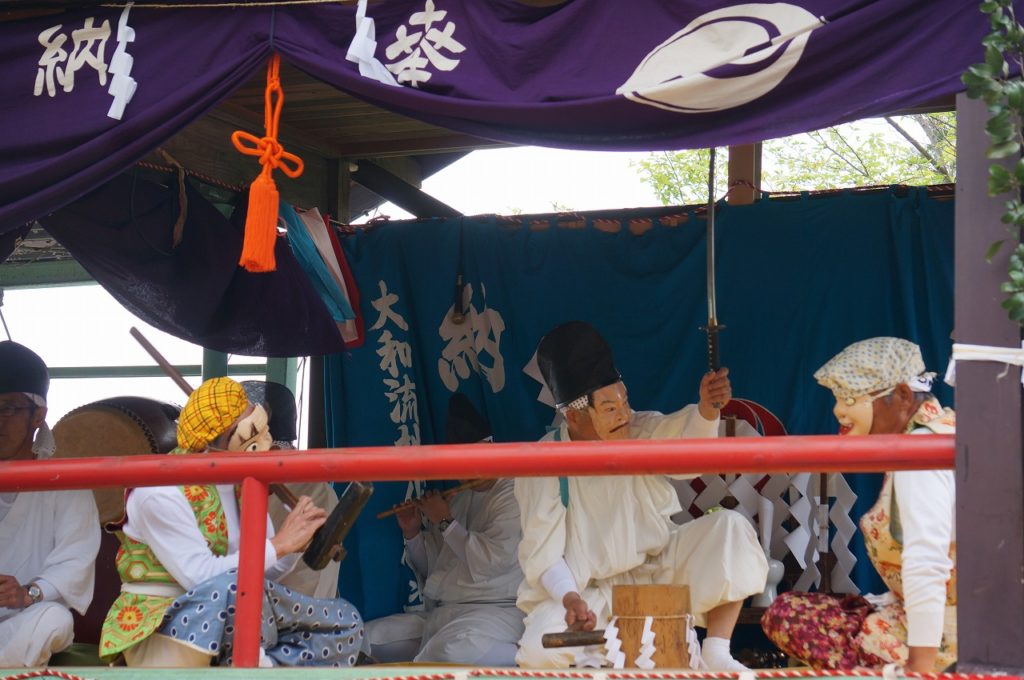
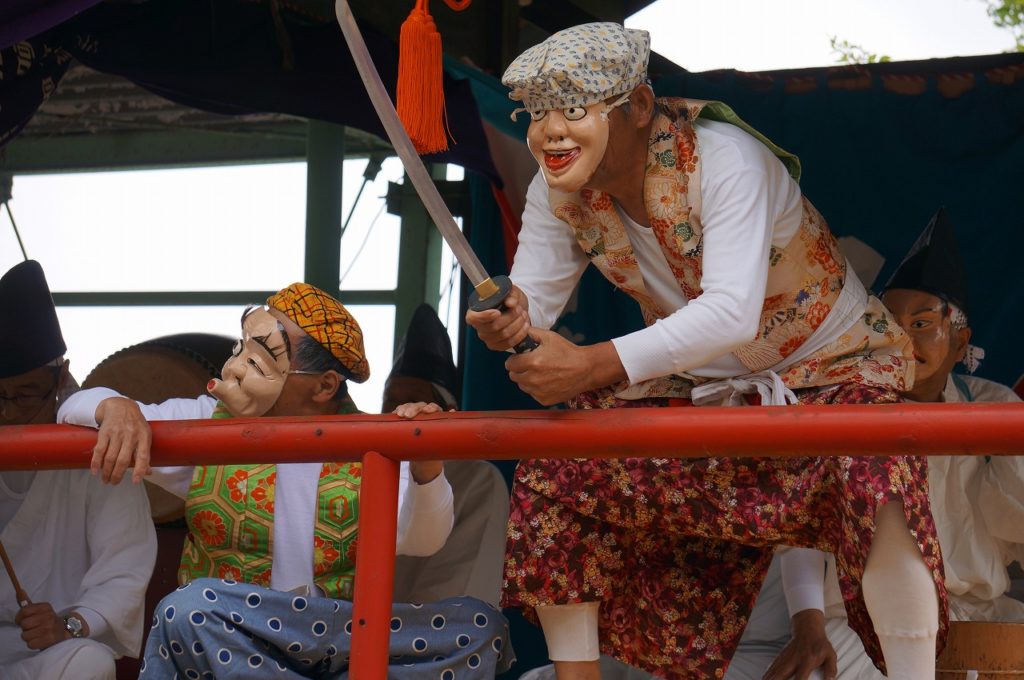
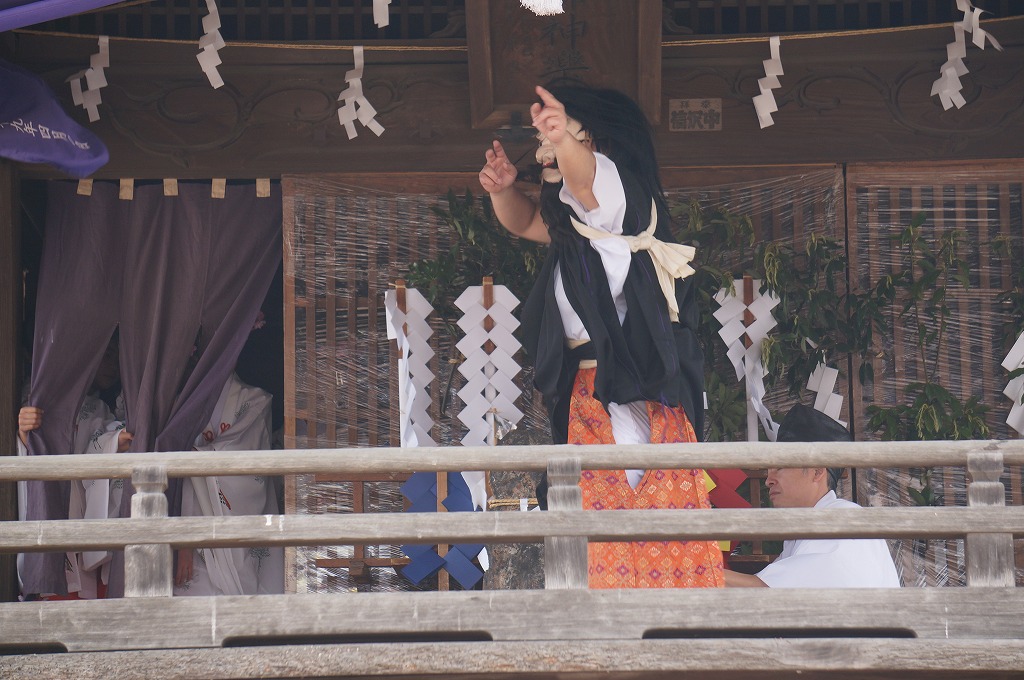
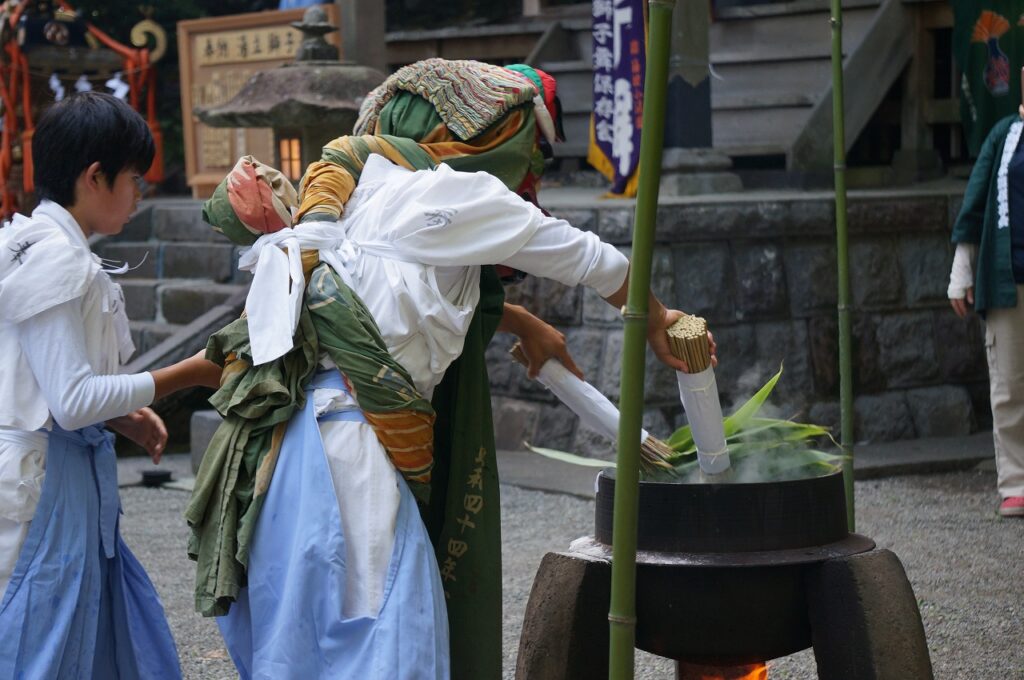
 The lion, now alone, goes through the final series of rituals. By this time, the fire in the cauldron is blazing hot more and more and the water is bubbling and boiling. At first the lion man takes a sword. The sword is used to purify the water in the cauldron. The next is the “Gohei”. He puts it into the boiling water and stirs it. The surrounding people chant and watch. The lion performer feels the heat and frantically performs, grasping the lion’s head with his own mouth
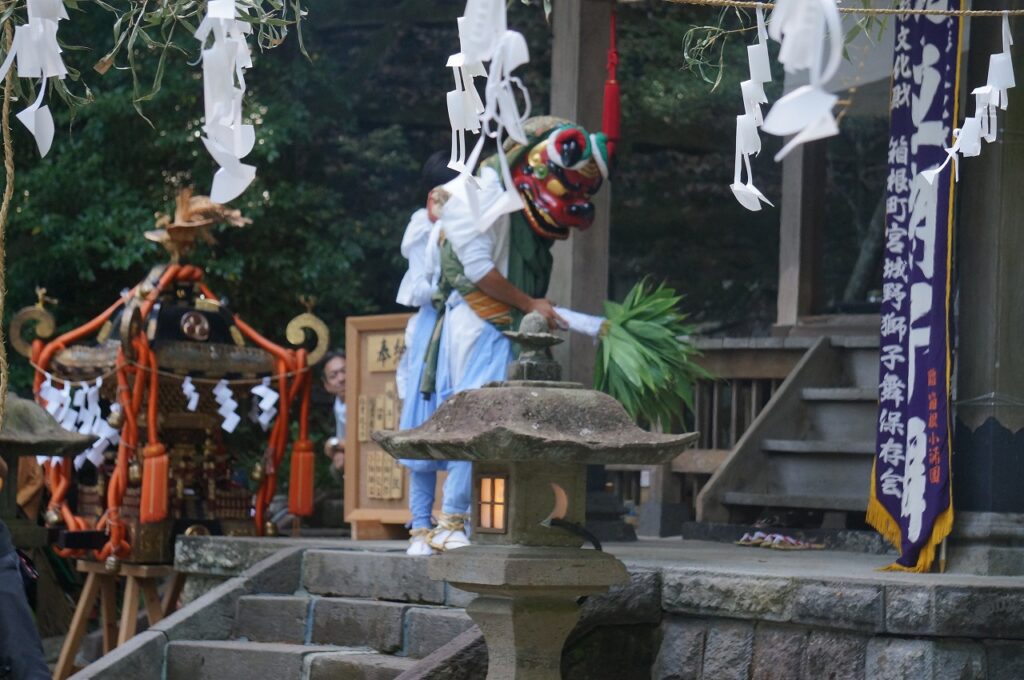
神社へ湯花を献じる

熊笹を湯釜へ

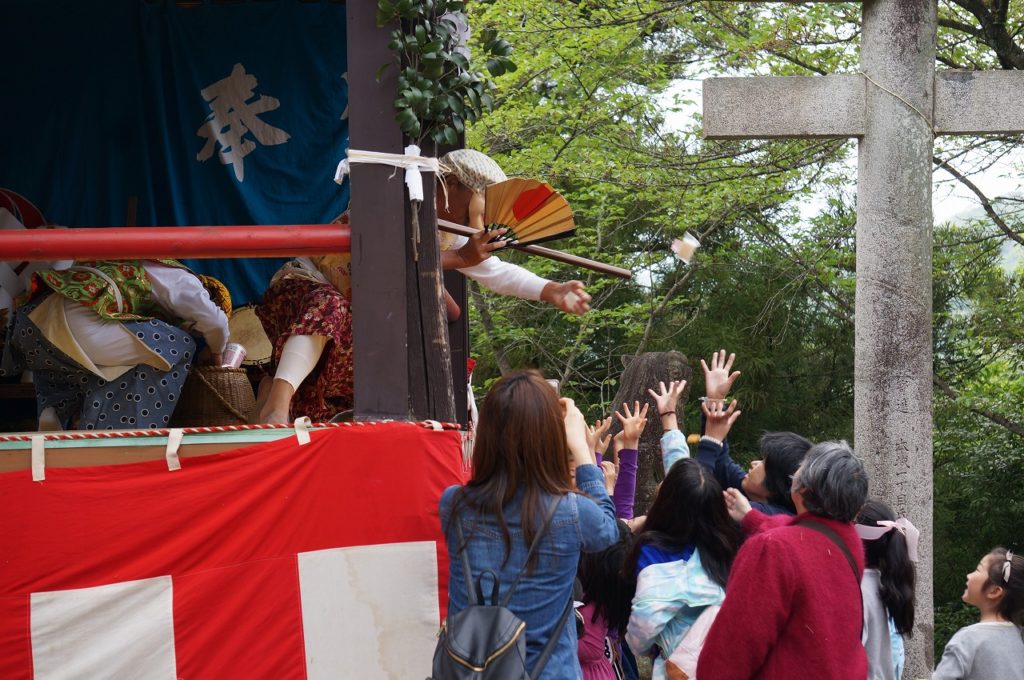
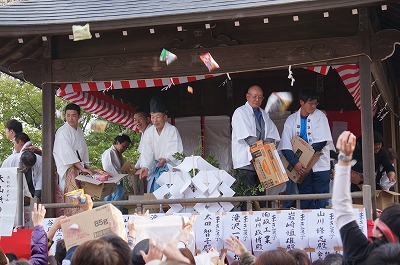
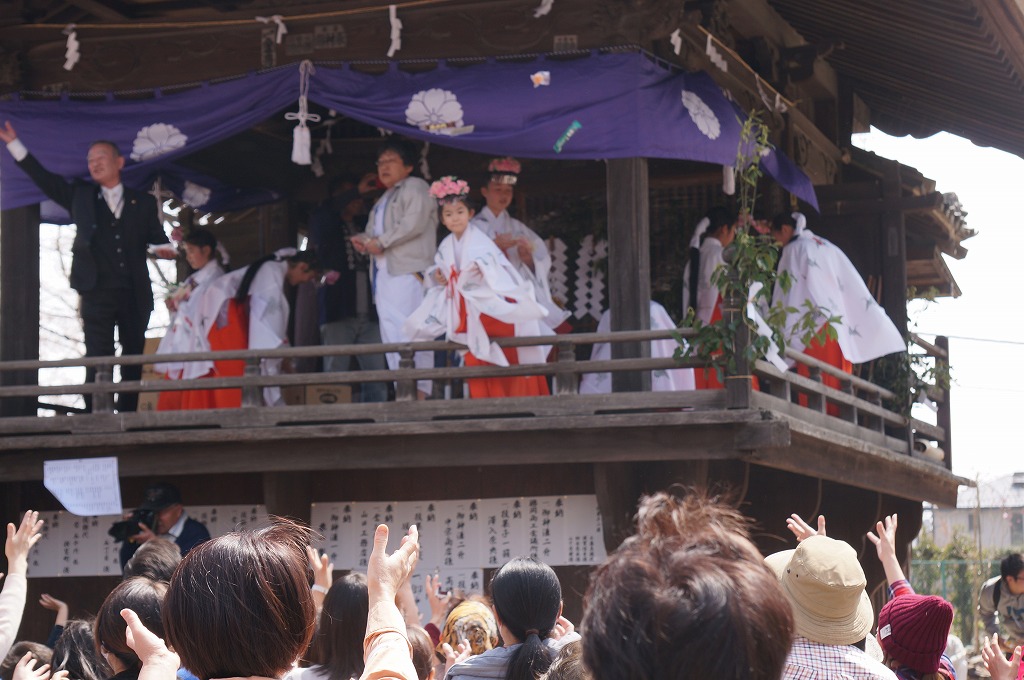
 Finally, he takes the bamboo leaves and goes to the shrine first. And finally, at last, he sprinkles boiling water (yubana 湯花) around as much as he can. The hot water (yubana) falls like a cloud mist over the heads of the audience, and the air around them is filled with steam. Strangely enough, nobody feels the heat when they catch the hot water. It is said that if people are covered by it, they will have good health for a year.
湯花を散らす

Final

 After this, the lion once again turns into a four-legged creature and performs a trick, and the whole process in precinct is over. At this point, many of the audience begin to prepare to leave. But the ritual still continues inside the main shrine. They perform the lion dance again.
 

 It is all over at 4:00 PM. The heat is still on.
“Phew! I’m finally done!”
These were the words that came out of the boys’ mouths. That’s what they must have honestly felt after the long, long ceremony that started in January. They had been forced to live a life of inconvenience due to their devotional purification, and had endured rigorous training. They must have felt a lot of tension. However, after completing the ceremony, they have grown stronger and stronger, and will pass it on to the next generation, just as their predecessors have been protecting them for hundreds of years.
 

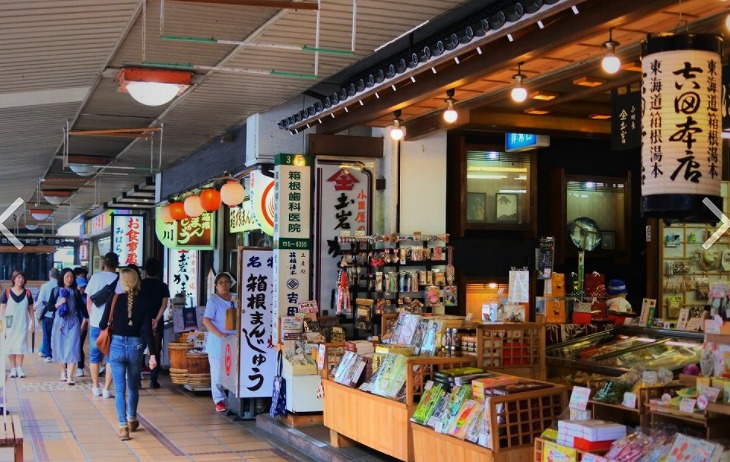
 Don’t worry, there are plenty of buses to take you home. Just to Hakone-yumoto. This is the gateway to Hakone, so the town is full of souvenir shops. From there, we take the regular JR line home.
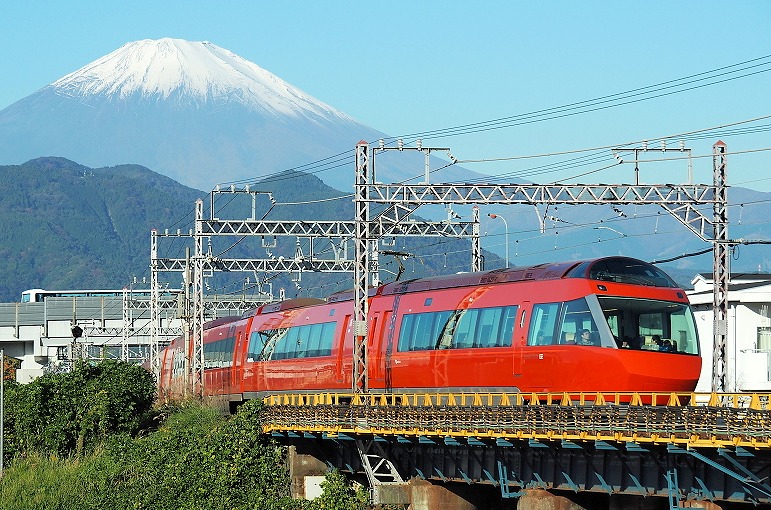
However, if you can, I recommend the Romance Car express train between Shinjuku and Hakone, although it is a bit more expensive. The first carriage has a special structure where the driver’s seat is on top of the train in order to realize the all-glass windows. It’s a great way to experience the feeling of traveling. It is also a favorite of children. I was no exception, but I have yet to ride on one for various reasons. These days, I feel that I should have at least one longing left. I ignore the voices that say, “You don’t really have money, do you?”

Information: https://www.hakone.or.jp/5725


Report: “Yokai” parade in Kamakura~”Menkake procession”


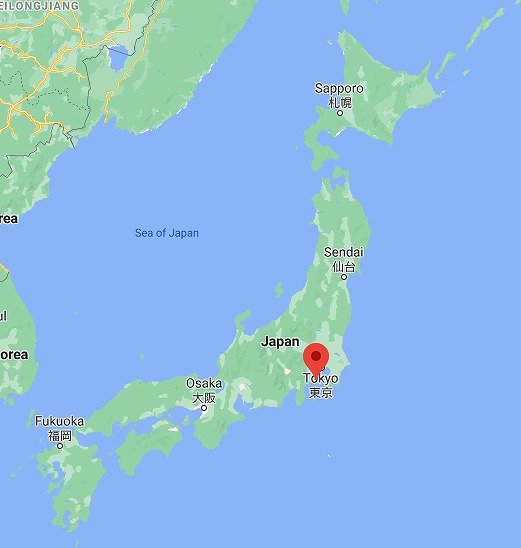
鎌倉 地図
Kamakura’s location

Date: 18, September every year
Location: Sakanoshita 4-9, Kamakura city, Kanagawa prefecture (Goryo shrine)
Access: From Kamakura station, take Enoshima line (Enoden) to Hase station and take a five-minutes walk. Kamakura is about 1 hour from Tokyo by JR line.

There are many “Yokai” in Japan.

 In Japan, there are things called “Yokai”. Many people often translate it as “spirits”. This is not a mistake. However, since Japan is basically a polytheistic country, people sometimes perceive the deities as “spirits” as well. So what is a “yokai”? If you look at the letters (if you know “Kanji”), it means “something strange” or “something suspicious”. This given name is relatively new, and people originally called them “oni (ogre)”. The word “oni” comes from the old word “onu,” which means “hidden thing”. The people believed that there was another world besides the one they lived in, and that those who lived in that world sometimes appeared in front of the people (for example, at night). They also believed that wars and droughts were all their doings. Otherwise, people could not cope with the absurdity of everyday life. In addition, the idea that objects become monsters after a hundred years of use arose, and the variety increased even more. Already around the 7th century, paintings of oni were drawn. As the spread of Buddhism progressed, paintings of ogres began to appear more frequently to teach the lesson that people who did not believe in Buddhism would go to hell.

12世紀の怪物画
image of a monster (12C)

地獄絵図
image of Ogre (12C)

付喪神
objects become monsters (16C)

百鬼夜行図
All monsters parade (16C)

https://www.edo-tokyo-museum.or.jp/s-exhibition/special/10309/%E7%89%B9%E5%88%A5%E5%B1%95%E3%80%8C%E5%A4%A7%E5%A6%96%E6%80%AA%E5%B1%95%E3%80%80%E5%9C%9F%E5%81%B6%E3%81%8B%E3%82%89%E5%A6%96%E6%80%AA%E3%82%A6%E3%82%A9%E3%83%83%E3%83%81%E3%81%BE%E3%81%A7%E3%80%8D/

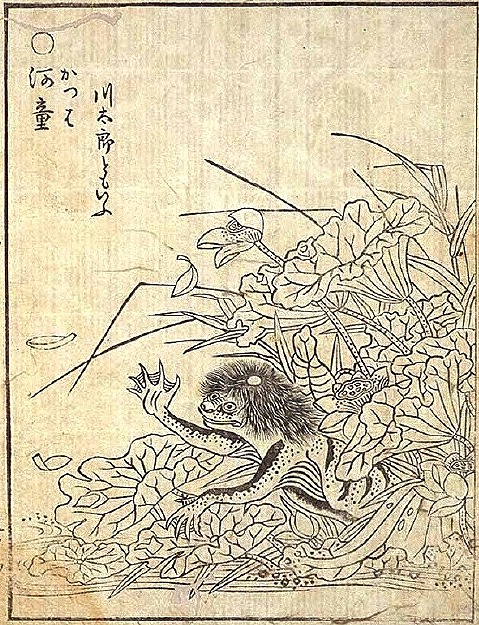
 However, it was during the Edo period (17th C~early half of 19th C) that “yokai” were most developed. In this period, people enjoyed various kinds of yokai as objects of entertainment and also used them as tools to criticize the government. This is how “yokai” continues to be used today. People say that when they feel insecure about the times, a “yokai” boom occurs.

石燕 カッパ
Toriyama Sekien 鳥山石燕 painting

国芳 骸骨
Utagawa Kuniyoshi 歌川国芳 painting

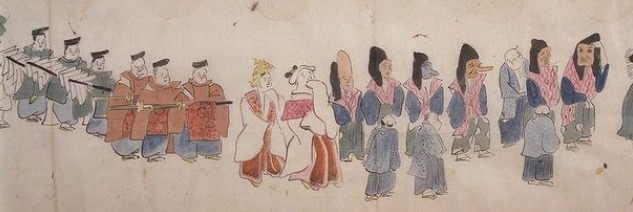
 This is how Japanese people have come to know yokai. In the Heian period (794-1185), people often met a procession of yokai at night.
There is an event in Kamakura that is evoking the procession of yokai. That is the “Menkake Procession 面掛行列”.

面掛行列

 The place is Goryo 御霊 Shrine in Kamakura. Kamakura is one of the leading tourist destinations, known as one of the three ancient capitals of Japan. Among the many shrines and temples, few people usually visited this shrine, and it is a quiet place that seems to have been forgotten. But not every September 18. The area around the shrine is closed to traffic, and many people line the streets. The reason is to see the strange procession.

Origin of the parade

Hachimangu 八幡宮

Kamakura Gongoro in Kabuki theater

https://www.yoritomo-japan.com/gyoji-maturi/hatiman-saireigyoretu.html

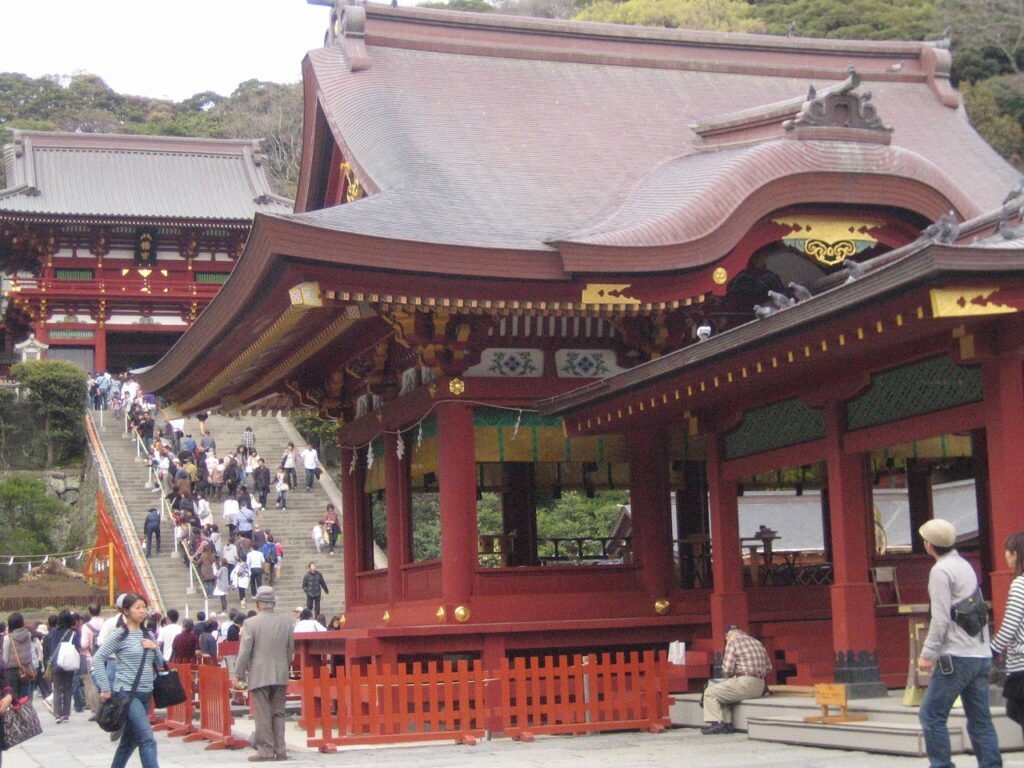
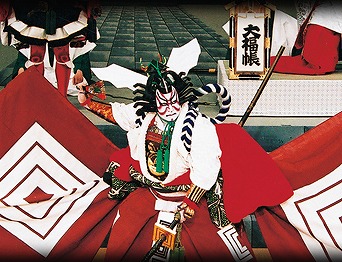
 The reason why this day is in September is because it is said to be the anniversary of the death of Kamakura Gongoro, the god enshrined in this shrine. Gongoro was a warlord who was active in the 11th century, and was known for his bravery and courage. In Kabuki, he appears as hero. But the procession has nothing to do with Gongoro. There is a record that the procession was originally held at Hachiman Shrine, the center of Kamakura. According to the legend, Yoritomo, the founder of the Kamakura Shogunate, got a woman other than his wife pregnant. Some say that the family joined the procession to protect Yoritomo, while others say that they were allowed to join the procession on this day only without formalities. In any case, this family was of low status, so they wore masks to hide their faces. However, because these are just legends, no one knows exactly what the truth is.

Going to see


星の井通り
Hoshinoi street

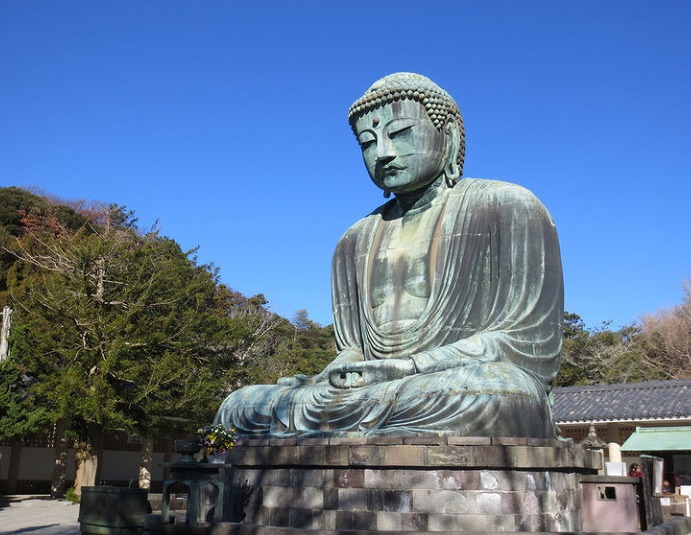
 Kamakura is a small town. It is possible to walk from Kamakura station to the shrine, as it is only about 2 km. The surrounding area is lined with Zen temples, and the ocean is located nearby. If you want to take the train, transfer from JR Kamakura Station to the Enoden 江ノ電 train right next door, which takes about 5 minutes. Get off at Hase 長谷 Station. On weekends and holidays, it is as crowded as Shinjuku Station, the busiest station in Japan, but since Hase Station is the closest to the great Buddha (Daibutsu), many people get off the train, so don’t worry. The procession departs from the shrine and goes back and forth along “Hoshi-noi-dori 星の井通り” just in front of it. It’s a modest distance, so it’s easy to find a spot without rushing.

Procession

子供たちが引っ張る
柏の木

役人?

太鼓

下にぃ、下にぃ

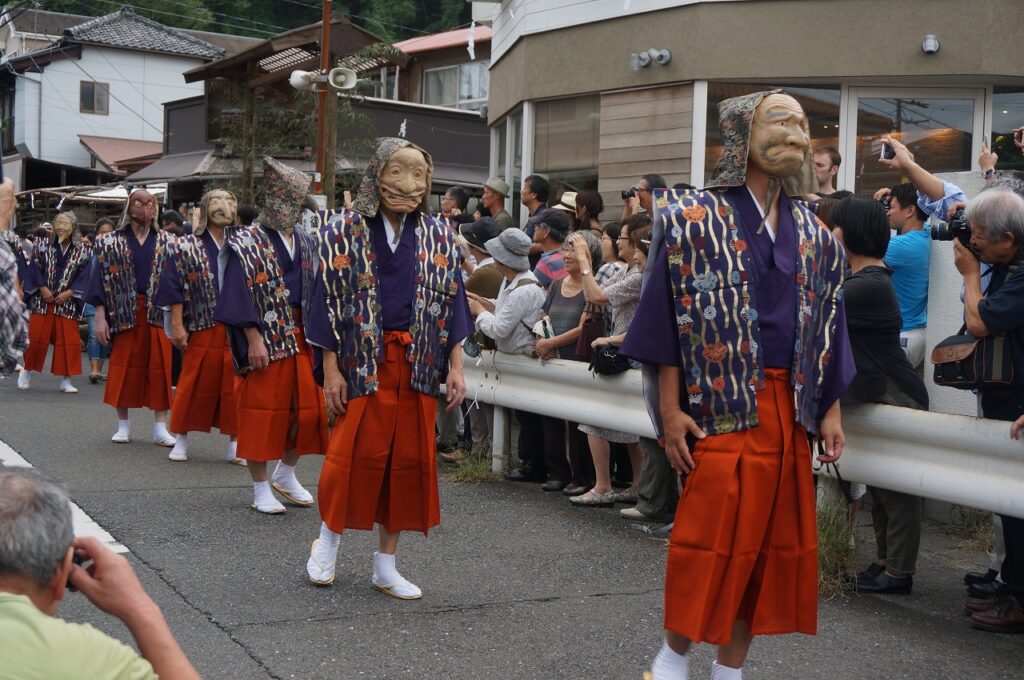
 When it was time to go, the sound of flutes and drums would be able to reach us. Finally, the procession begins. The masks don’t come instantly. Things that you can’t really understand unless you ask them about their origins are coming one after the other. The person leading the way looked like an Edo-period official. The people are carrying the portable shrine (mikoshi) quietly without any vigorous shouting. The musical accompaniment was also somewhat elegant. Children walked in with what looked like red streamers attached to the end of long sticks. People are wearing kimonos and hakama (Both are ancient Japanese folk costumes). The scenery is reminiscent of the illusion of an old samurai procession. Of course, no one has ever seen the real thing, but there are many reenactments of daimyo processions at festivals around the country.

公家風
武士風

猿田彦
Sarutahiko

In the meantime, the tengu-faced Sarutahiko (*1) finally arrives. It is a common sight to see him leading a festival procession, since legend has it that he led the way at the time of Ninigi’s descent in mythology(*2). In his tall geta (Japanese wooden clogs) and long ”Shakujo (monks staff made from metal) attire, he walks leisurely with a sound ting-a-ling.
*1 https://discoverdeeperjapan.com/2020/06/07/the-most-detailed-japanese-traditional-mask/
*2 https://discoverdeeperjapan.com/reference/japan-mychology-and-history/

異形の集団

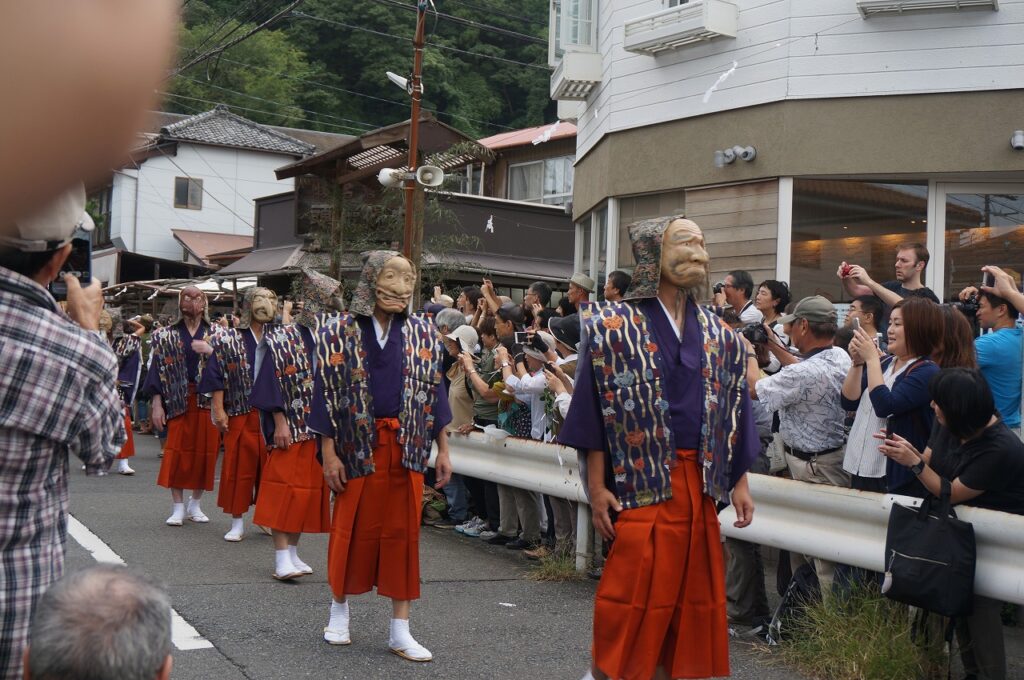
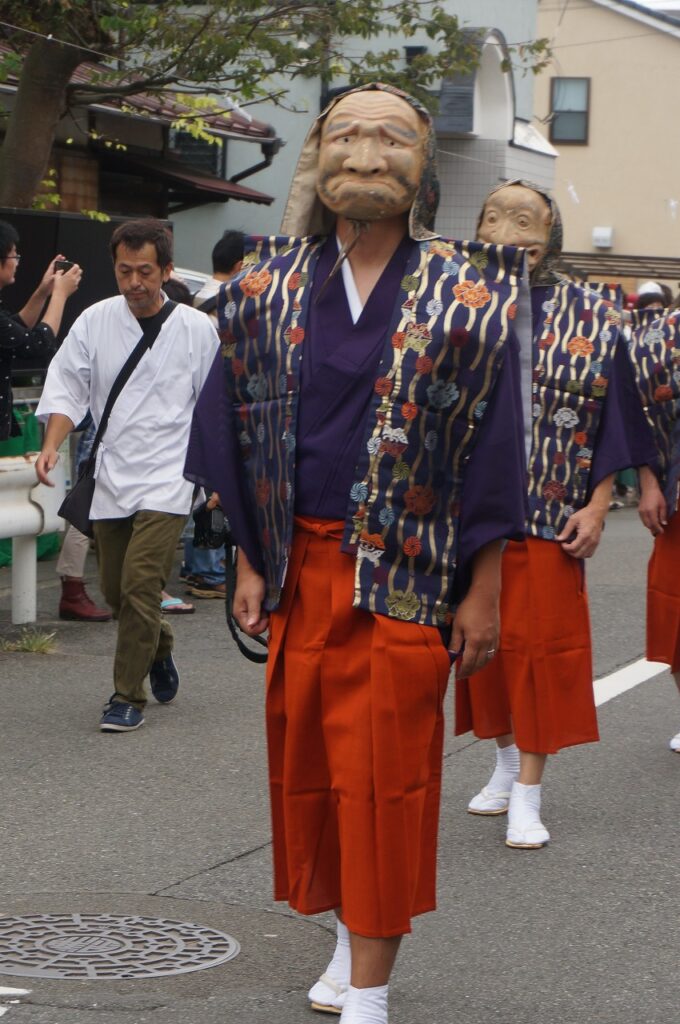
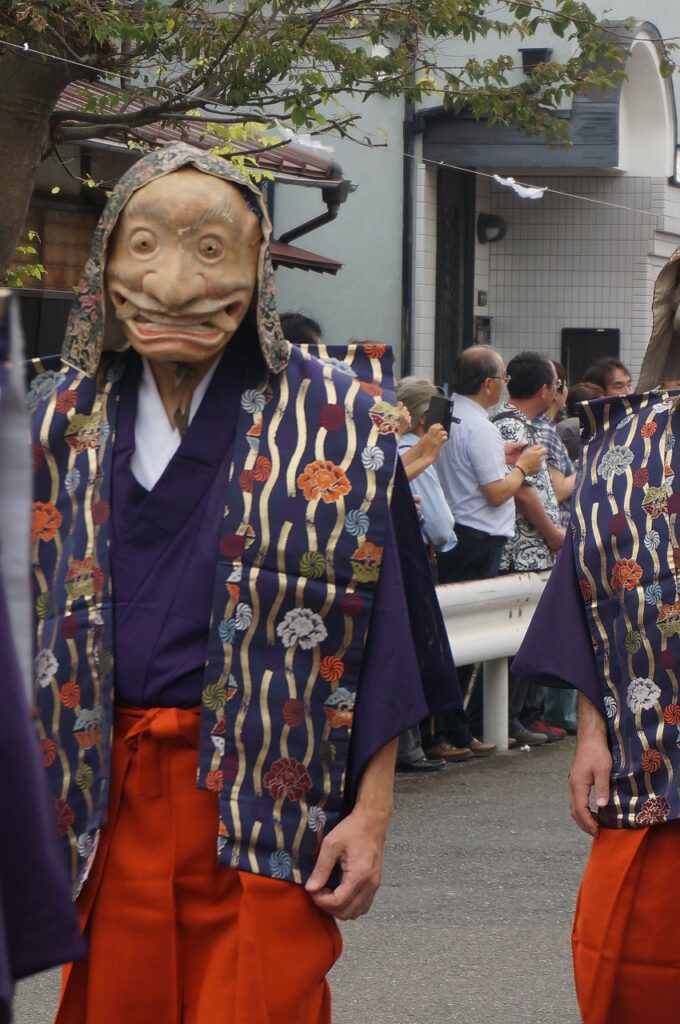
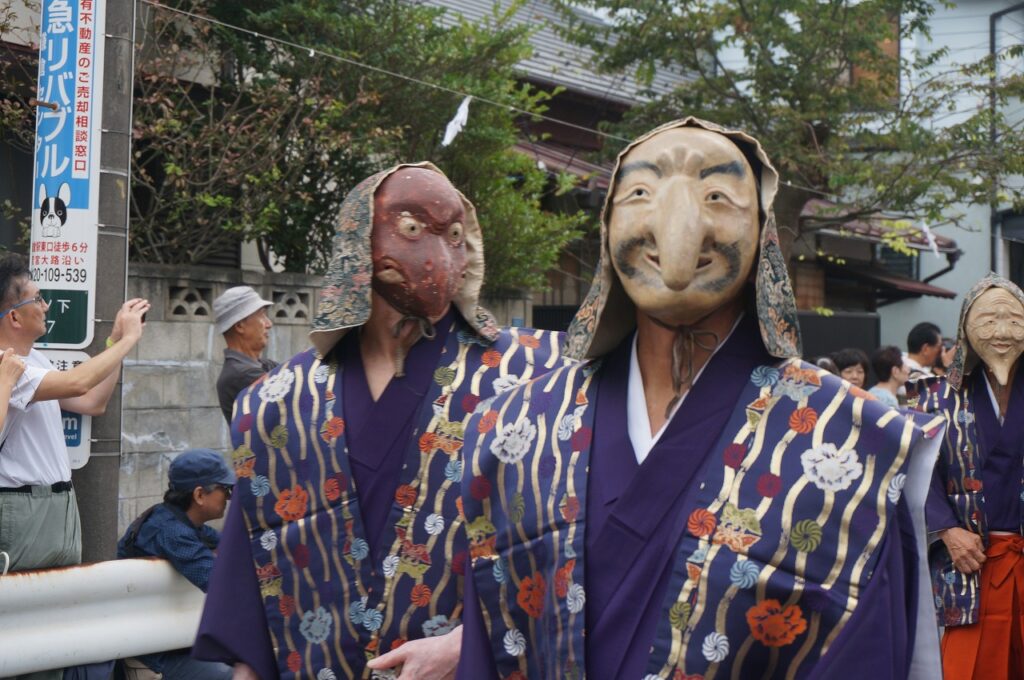
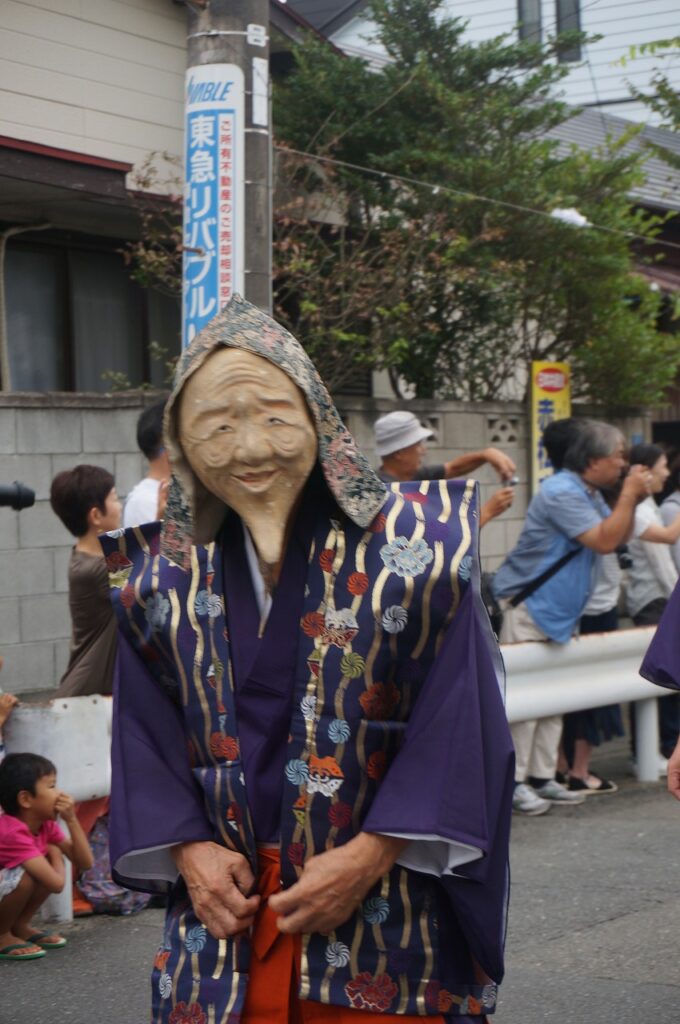
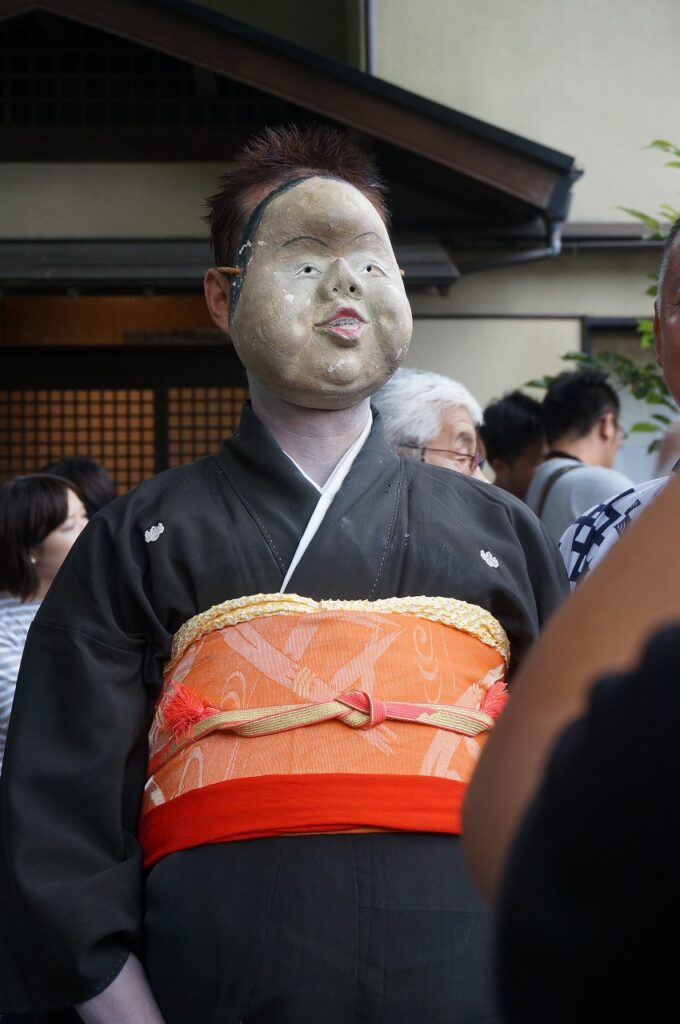
 The lion comes next, but instead of wearing a mask like a normal lion, it is placed on top of the head. It’s a little different in every way. Finally, in the middle of the procession, a group of oddly shaped people wearing the masks we were looking for arrived. The excitement of the people is at its peak. Dressed in matching outfits, the “yokai” parade through the streets in broad daylight. Ten in all. Each of them is as unique as the other members of the group. They paraded through the streets without looking at anyone in the eye at all.

Masks

爺
Jijii

鬼
Oni

異形
Igyo

鼻長
Hananaga

烏天狗
karasu-tengu

翁
Okina

火吹き男
Hifuki-otoko

福禄
Fukuroku

取り上げ
Toriage

おかめ
Okame

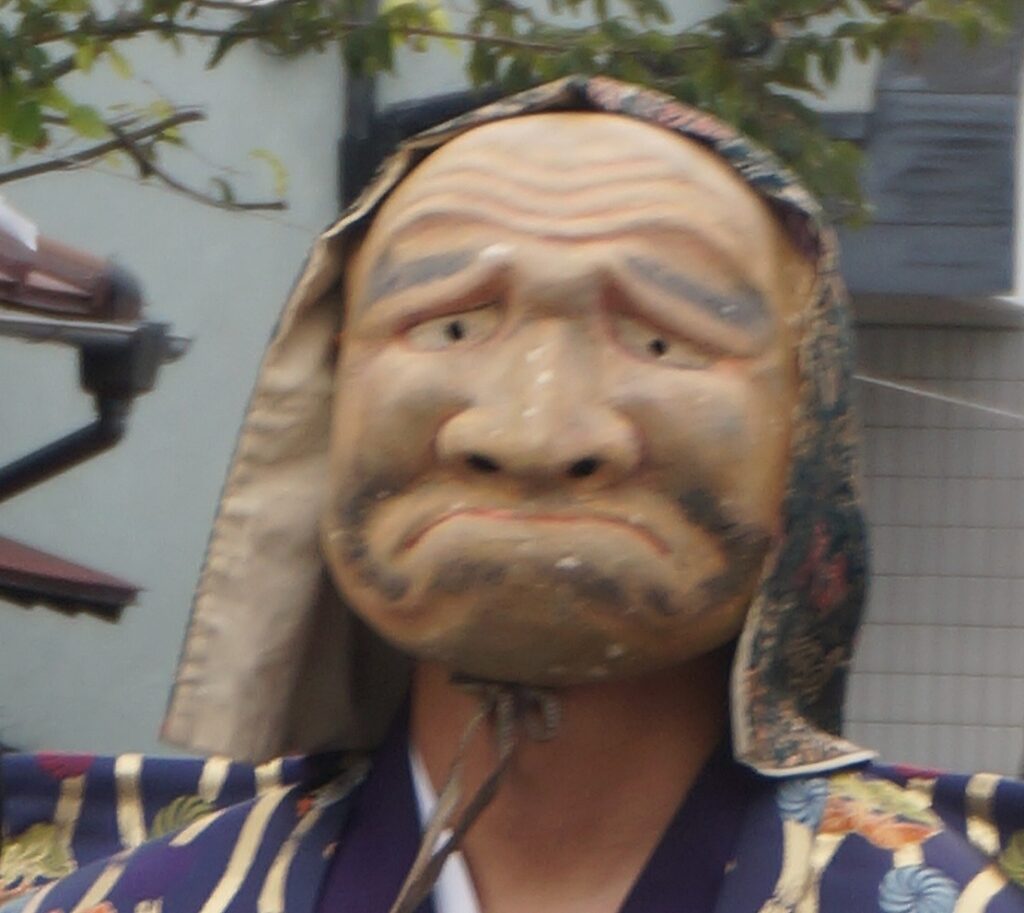
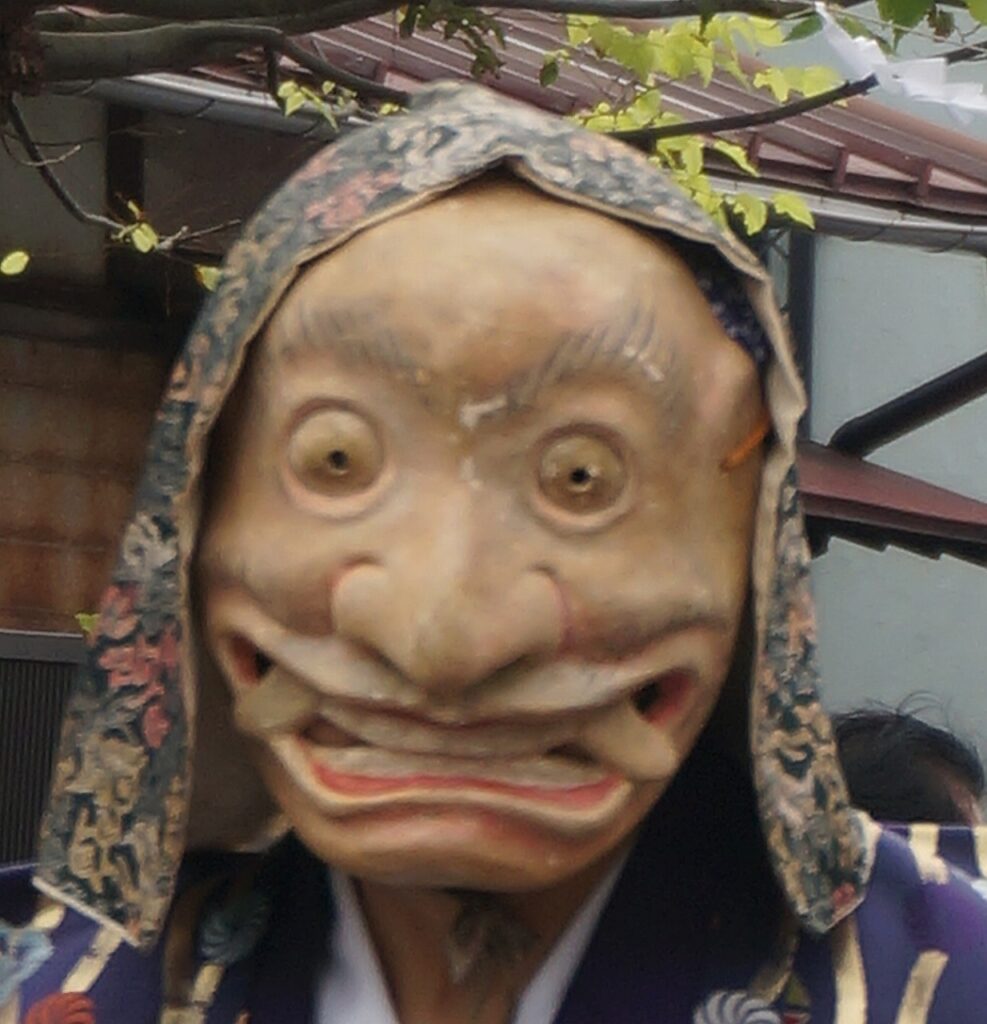
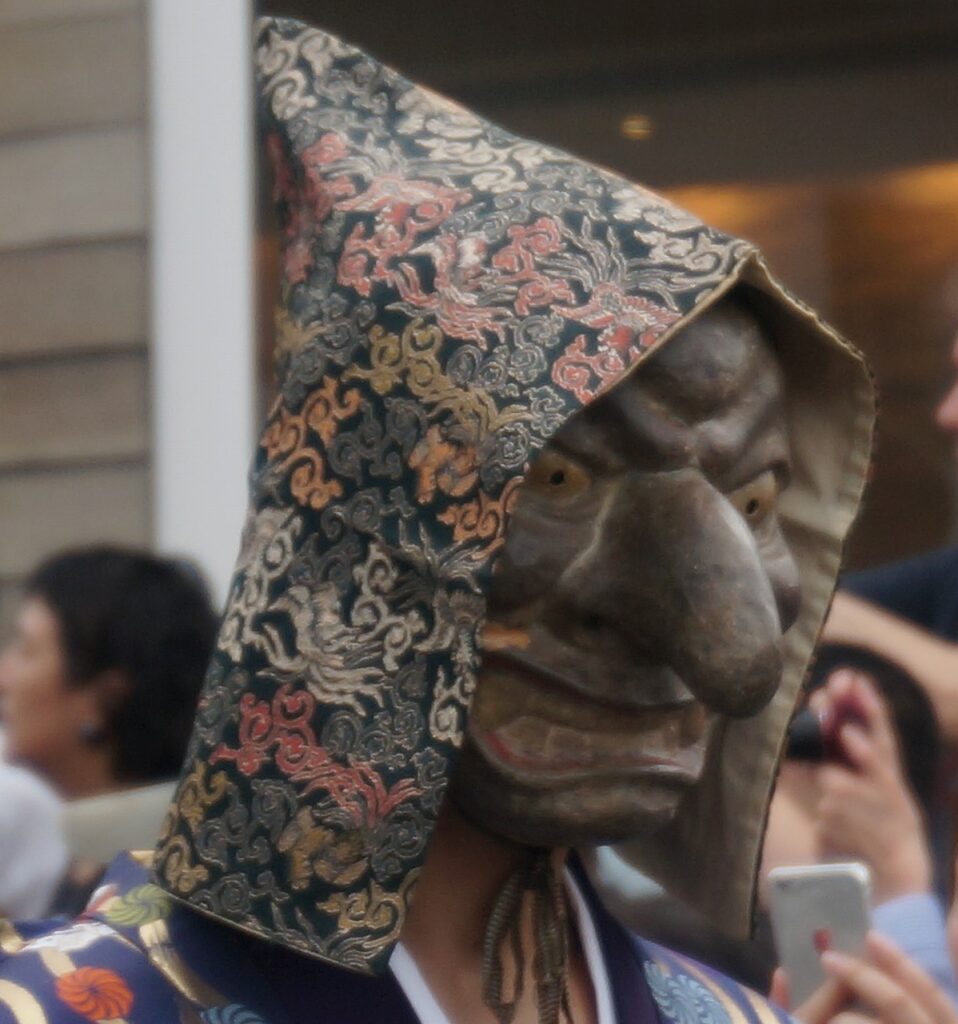
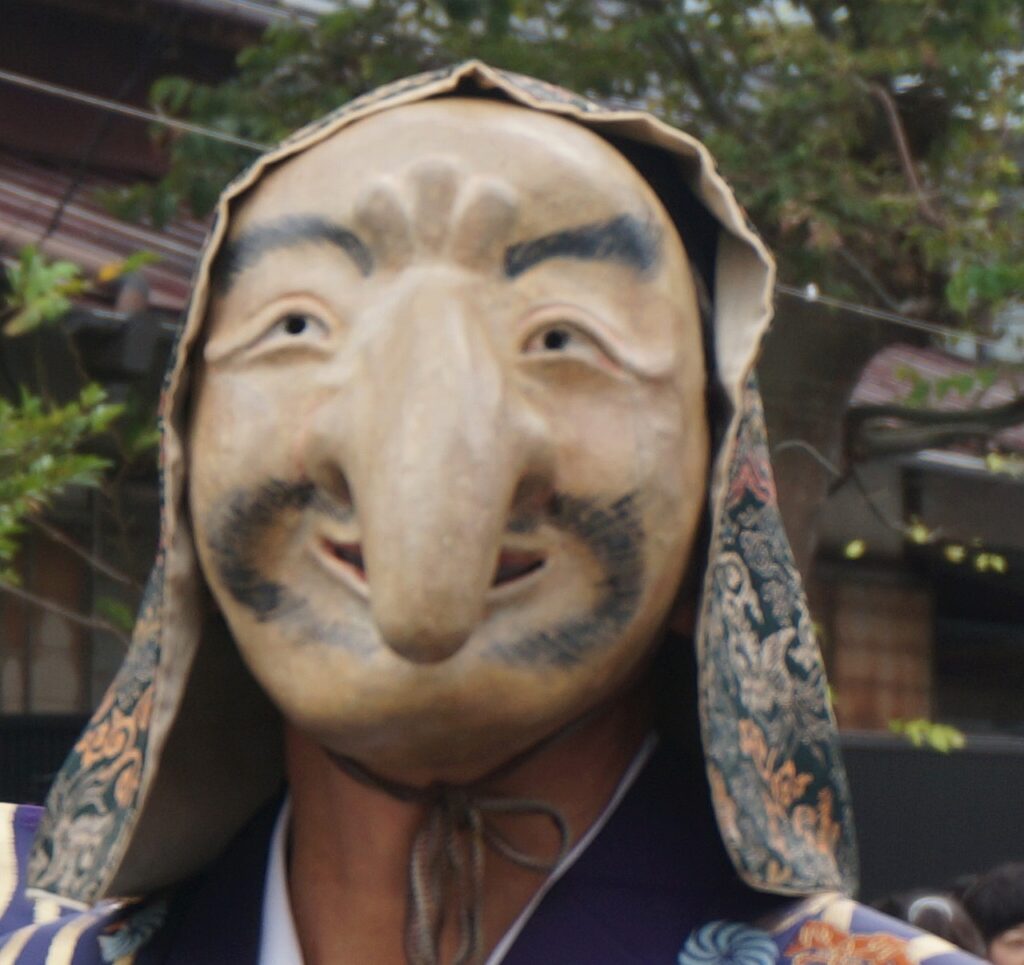
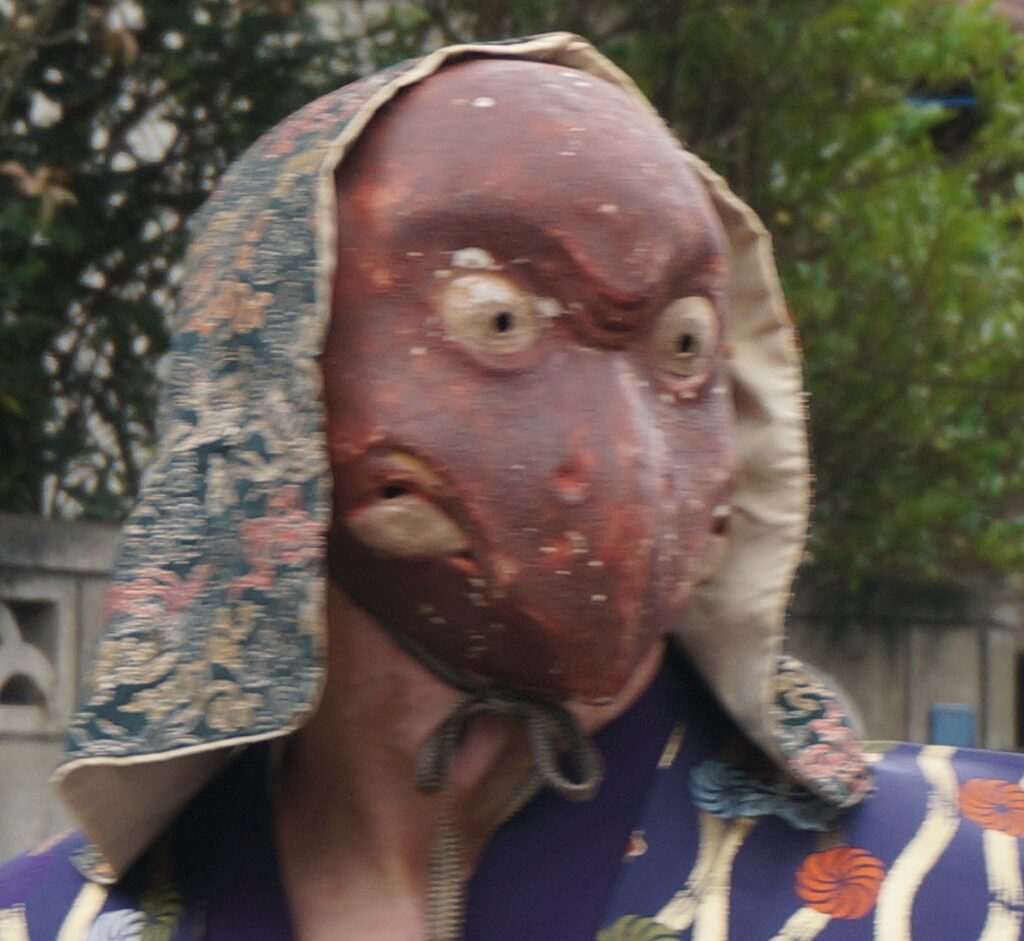
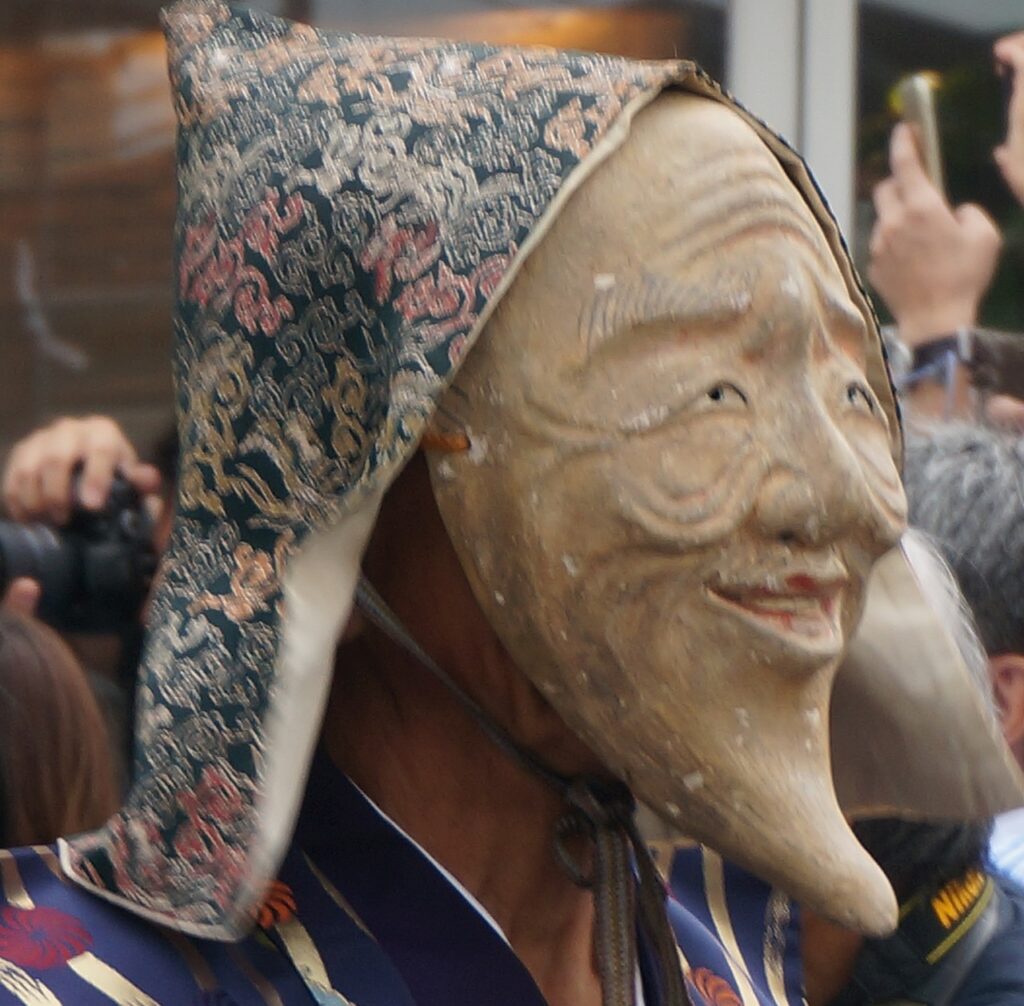
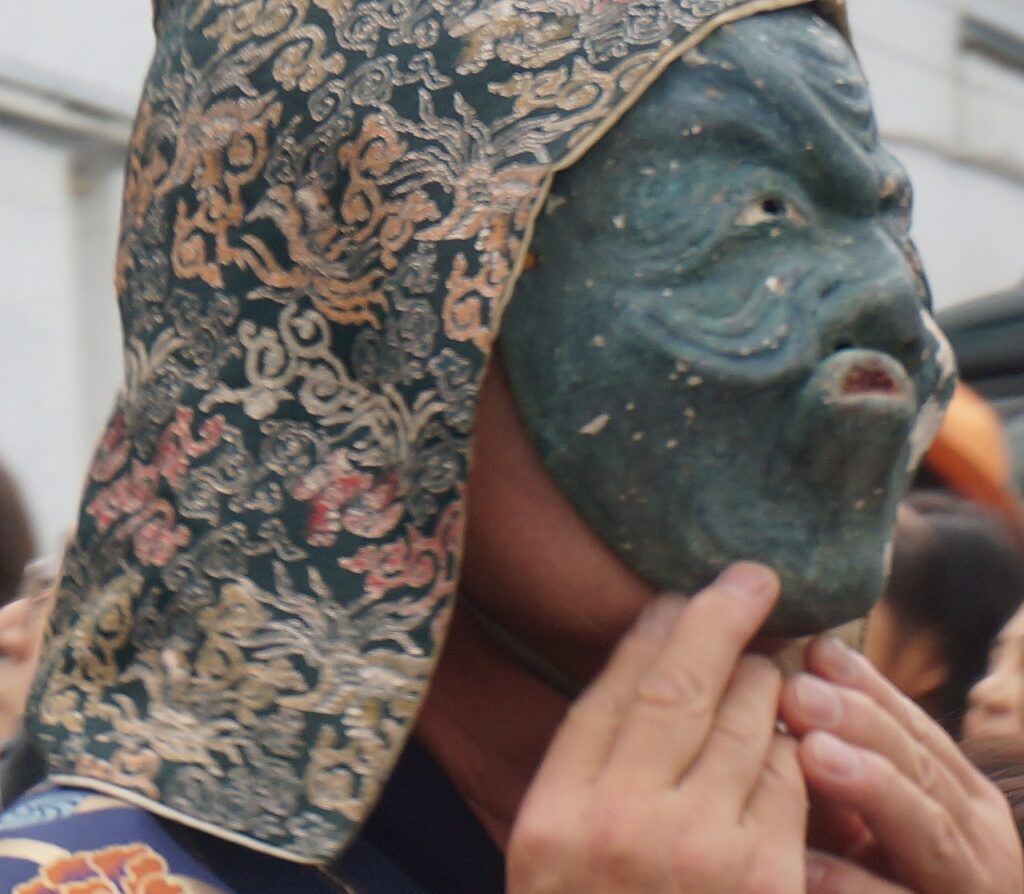
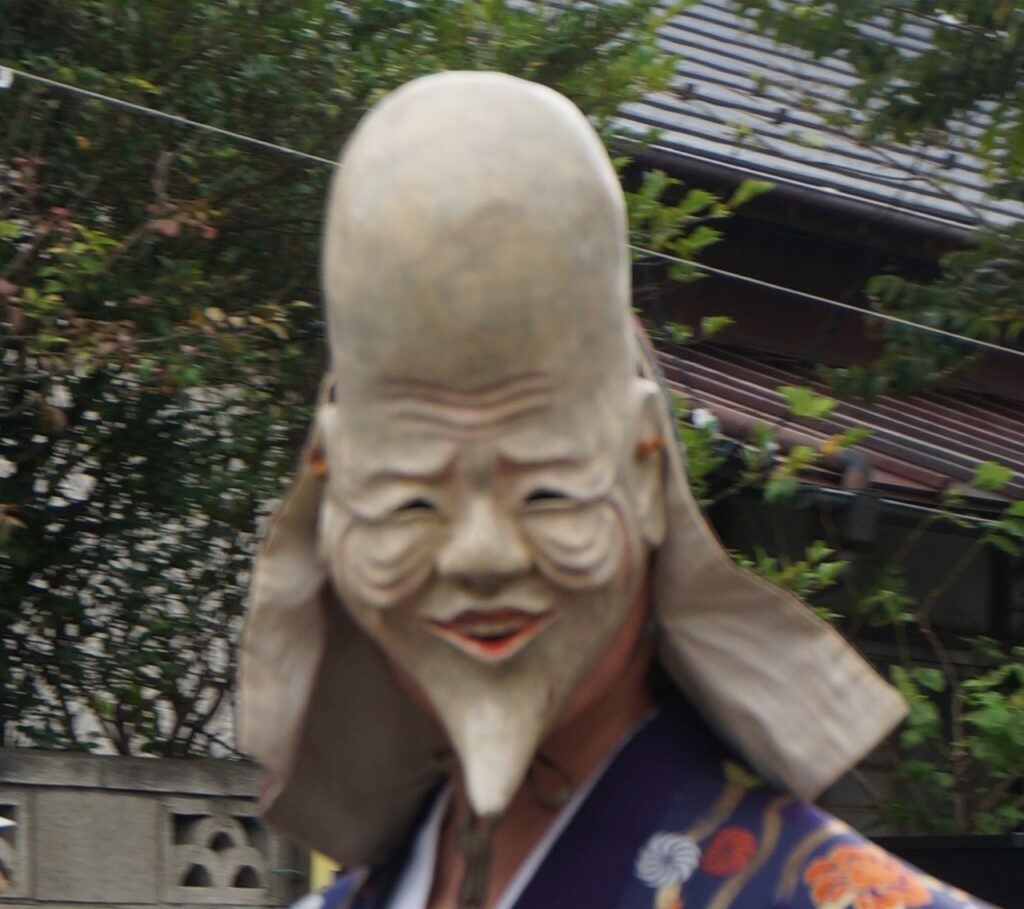
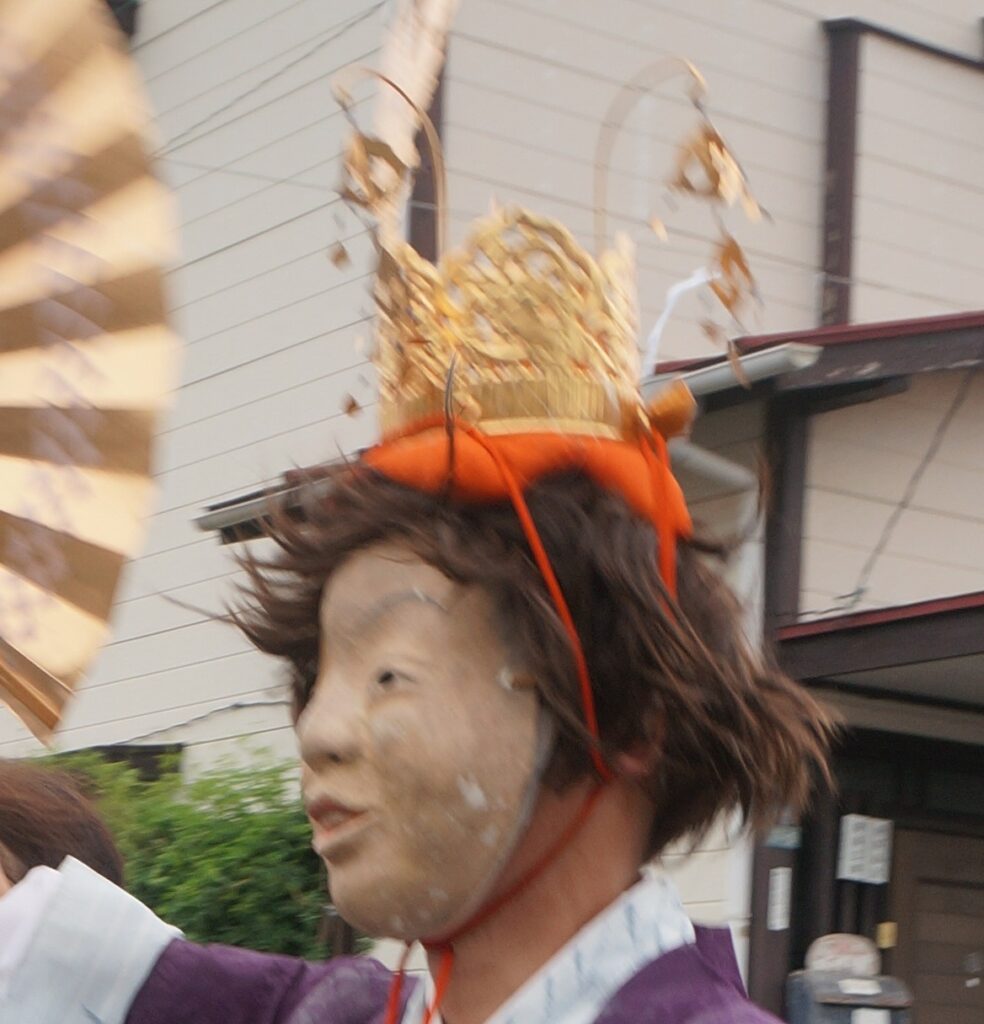
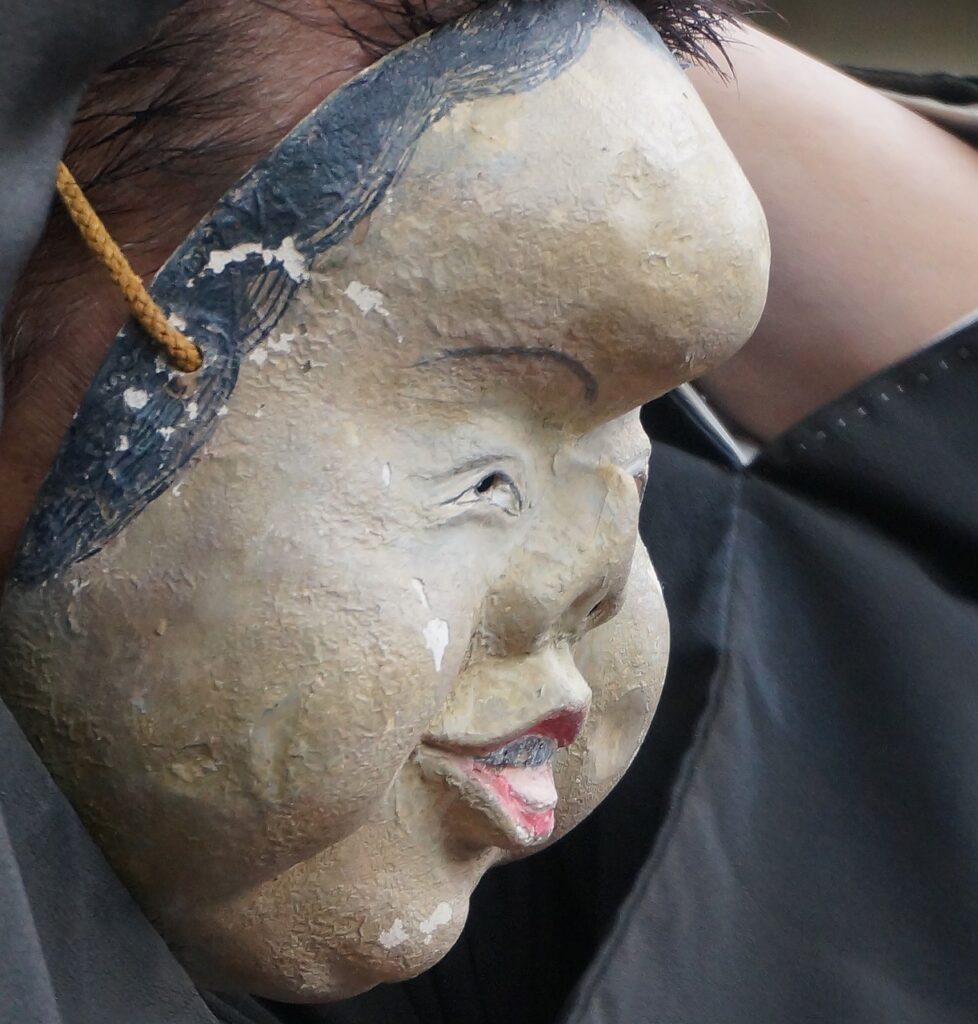
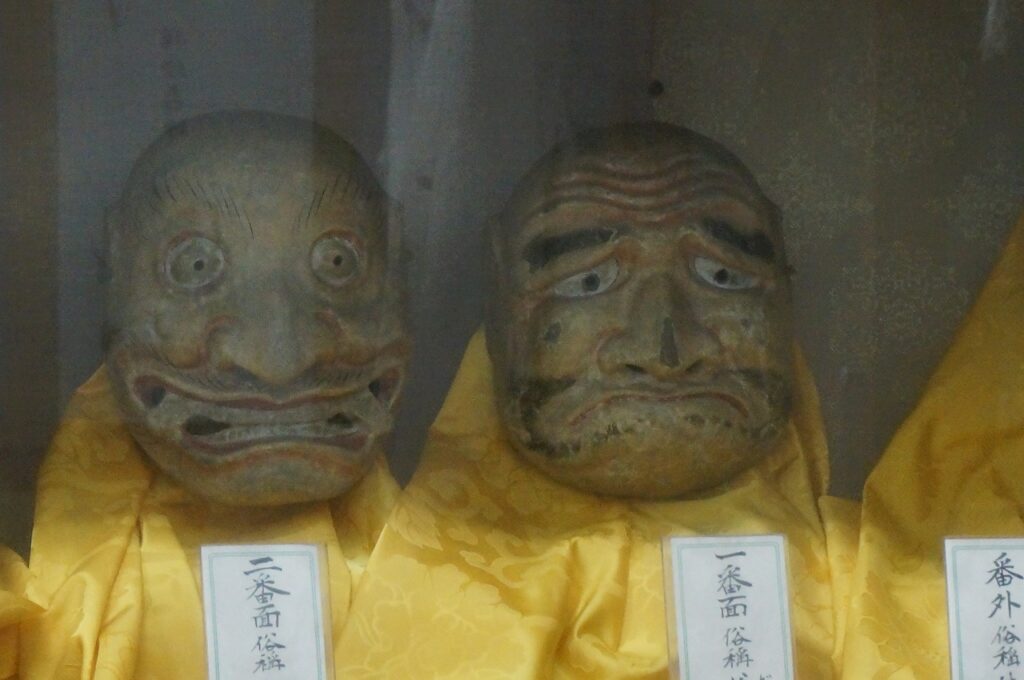
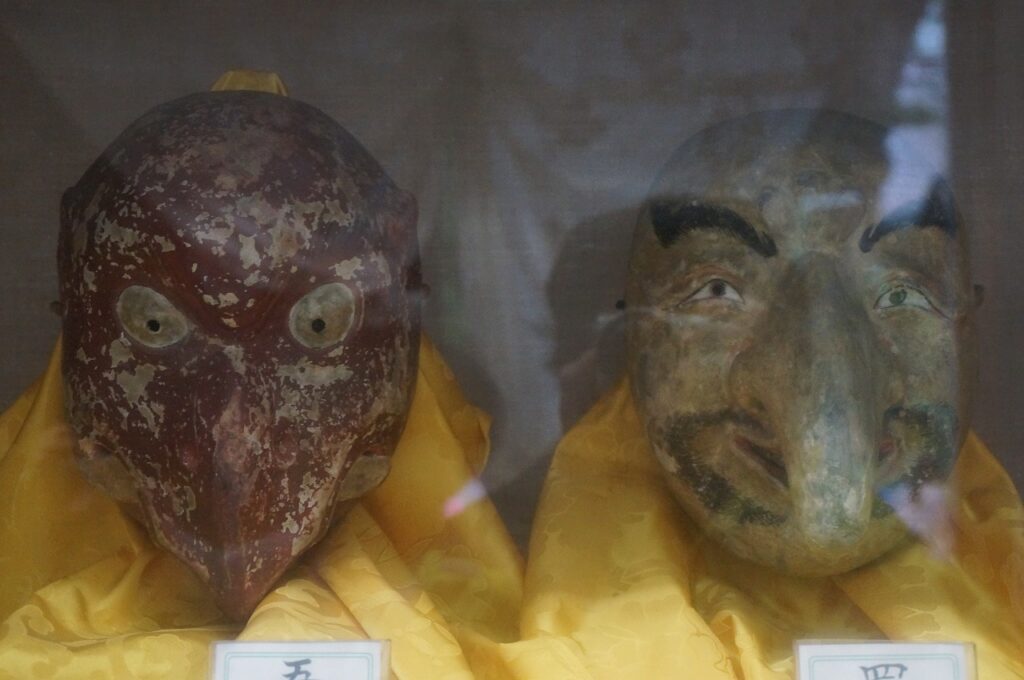
From the top to the bottom, there’s “Jijii 爺 (old man),”Oni 鬼 (ogre)”, “Igyo 異形 (variant)”, “Hananaga 鼻長 (long nose)”, “Karasu tengu 烏天狗 (crow billed Tengu)”, “Okina 翁 (aged man)”, “Hifuki-otoko 火吹き男 (fire breathing man), “Fukuroku 福禄 (prosperity and long life)” and “Toriage 取り上げ (midwife)”, “Okame おかめ (woman)” who is the main characters of the day.

爺

鬼

 Why these masks were chosen is a mystery. Still, it is a strange sight to see again and again. The specters walked the streets as if they owned the place, while the humans played a supporting role. They pass by in silence. However, when I look at them like this, I feel as if I can hear their voices.

烏天狗と鼻長の会話

Karasu-tengu: It was usually quiet as I walked at night, but there were a lot of people walking around during the day.

Hananaga: You are so loud. Quiet down and walk.

翁の挨拶

Okina: Thank you all for your hard work standing in line. It’s a pleasure to meet you all.

火吹き男ぼやく

Hifuki-otoko: Hmm. Are we really that rare? Say hello to me, too.

待っているおかめ

取り上げの呼びかけ

Toriage: Hey, wait a minute. You’re a little quick for a pregnant lady, aren’t you?

おかめのつぶやき

Okame: I’ll keep waiting without your telling me. I’m a star, people won’t let me go.

福禄のつぶふき

Fukuroku: Hey, what? You’re ignoring me?

猿田彦

帰って行く行列

取り上げ後ろ姿

 They go to Hoshinoi Street and come back again. But the madness doesn’t last long. People don’t allow them to occupy the town all day long. After about 20 minutes, they return to the shrine. People follow them, trying to bask in as much of the afterglow as possible.

記念撮影

神社へ
神社

 The portable shrine is quickly dismantled and the oddly-looking group disappears. They were kind enough to put their masks back on and take pictures with us. But that was only for a short time. The lion’s head returns to its original position, and daily life returns.

神輿と神社

余韻

獅子頭

獅子頭と江ノ電

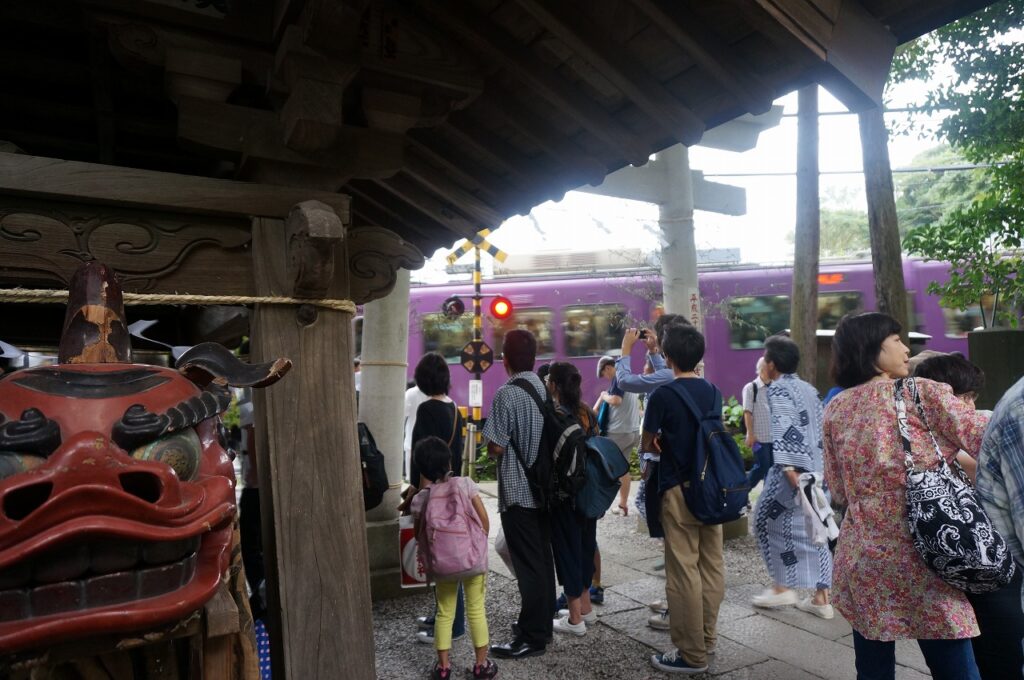
 The masks are in the collection of the Gallery of Treasures, so you can see them if you wish. But, they are just quiet and silent.

古い面

古い面

Reference: https://youkosonihon.com/2018/03/17/menkake-gyouretsu-menkake-parade-kamakura/
Contact information: http://www.city.kamakura.kanagawa.jp/visitkamakura/en/


Report: Watching Kagura in historical town ~Ashikaga Raiden shrine Kagura

a map

a map 2

Date: 4th Sunday, April (Spring festival) & 4th Sunday, October (Autumn festival)
Location: Honjo 1-1562, Ashikaga city, Tochigi prefecture
Access: From Tokyo, take the JR Ueno-Tokyo Line to Ueno. From there, change to the Joban Line and go to Kuki. From there, take the Tobu Railway to Ashikaga-shi Station. It is about 4 km from there. About two hours from Tokyo.

*This article is based on my visit in April, 2016.

introduction

This time, we had the same guides as before. If you want to know who they are, please read this article.

Long time no see. I hope you are well

Really. I was looking forward to seeing the Kagura with you again for the first time in a while.

Today, I heard that we are going to visit the Raiden Shrine in Ashikaga City, aren’t we?

That’s right.

By the way, do you know that Ashikaga City is a very historic city?

Yes, I did.

Then do you know why it is so?

No, not that much…

Ashikaga city’s history

I thought it would be something like that. I’m going to give you a brief explanation, so you’d better listen up.
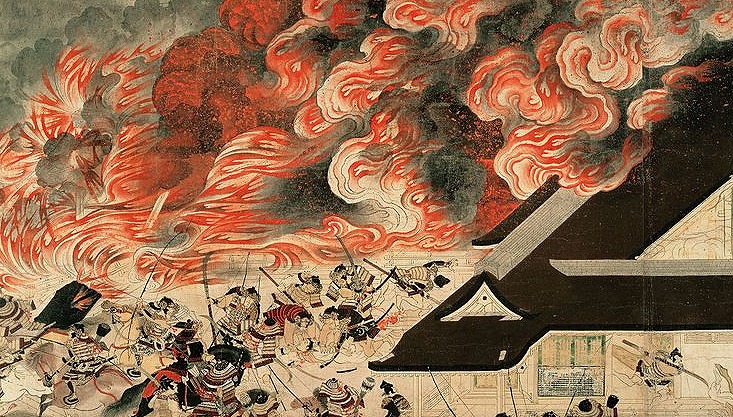
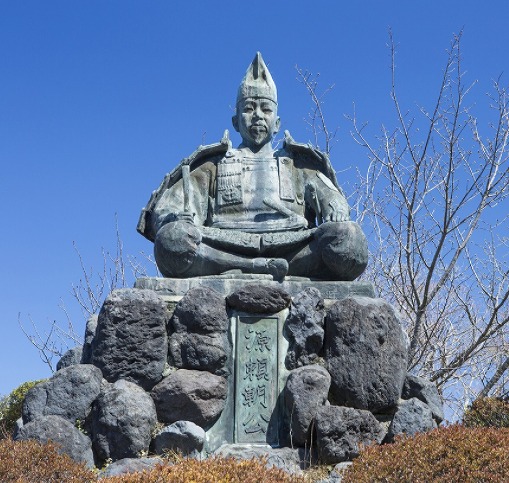
In the beginning, this country was ruled by the emperor, and the nobles held the actual power of politics. But then the samurai came to power. Originally, the samurai were only a kind of bodyguard to protect the aristocrats’ territories. However, as they gradually gained actual power in the countryside, battles between samurai began to occur. Their power was not to be underestimated, and the struggles between the nobles needed their help. Eventually, powerful leaders emerge to unite them. The two major groups were the Heike (平家) and the Genji (源氏). The two sides faced off and Yoritomo, the leader of the victorious Minamoto clan (Genji), created the first ever samurai government.

nobles

battle

戦乱
battle

 源頼朝
Minamoto no Yoritomo (first shogun of Kamakura shogunate)

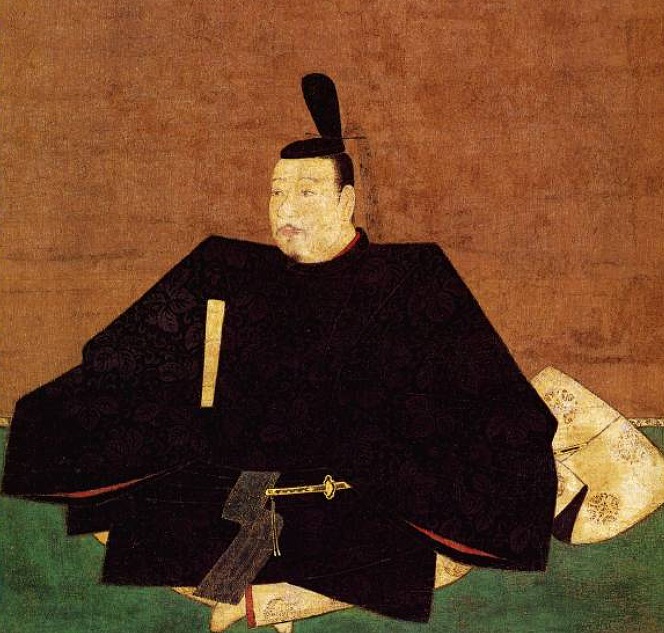
From then on, the power of the samurai prevailed over that of the nobles. This was called the Kamakura (鎌倉) Shogunate, around the 12th century. However, around the 14th century, the forces that held the power of the shogunate became increasingly despotic rulers, and a rebellion finally broke out. They overthrew Kamakura shogunate and established a new government in Kyoto. This was called the Muromachi (室町) Shogunate, and the Ashikaga (足利) clan was the one who created it. The Ashikaga clan’s original hometown is here in Ashikaga.

足利尊氏
Ashikaga shogun (the first)

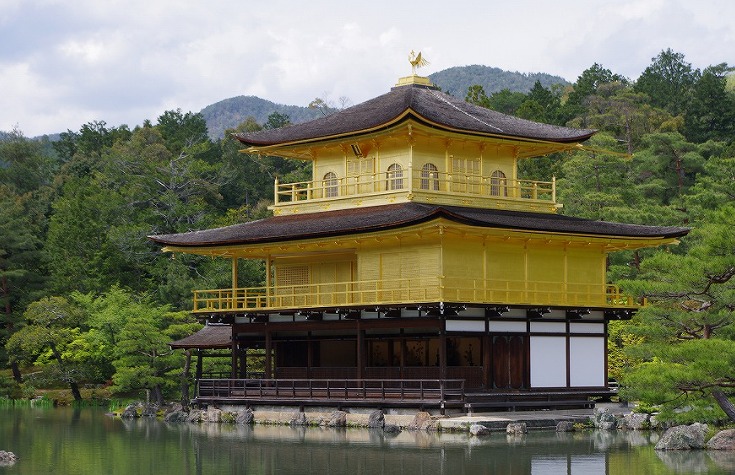
金閣寺
Kinkakuji-temple (Kyoto)

The Kinkakuji-Temple, one of the most famous tourist attractions in Kyoto, was built by the Ashikaga Shogun.

Come to think, I just talked to an old man who was looking into the shrine and he said he was a descendant of the Ashikaga clan. It’s a town with a long history.

By the way, will you be able to make it to Kagura?

It starts around 11:00, so you’ll have plenty of time to get there.

*Actually, it turned out to be a terrible mistake. This is the author’s actual experience.

But it’s far, isn’t it? I can fly there.

There are bicycles for rent at Ashikagashi Station, so I’ll take this.

Again?!

Well, let’s go!

Let’s go to shrine

Ashikaga city
Ashikaga city

the photo is an image
The photo is an image.

the entrance of Raiden shrine

long stairs

la long stairs

There are so many steps…

We humans have to go up here to meet deities.

That sounds good. You should feel the greatness of our deities.

the entrance of shrine

Ashikaga Raiden shrine

Whew. We’re finally here.

We’re right in the middle of a ritual. Hasn’t the kagura started yet?

It’s past eleven now, so it should start in a little while.

But wait. The sign says that the next one starts from the 8th program. I thought it’s already started.

Oh, my God! I think I misunderstood that the Shinto ritual started at 11:00 and the Kagura started at 11:00.

*The actual start was at 9:00.
It’s no use crying over spiled milk. Let’s get ourselves together.

8th program “Kanayamahiko”

Look! your colleagues are coming out here. They are always noisy, aren’t they.

This is what we do, you know. It’s what we’re so called “mode makers”. But, everyone misses us when we’re not here.

It’s a perfect day for forging sword. Now, let’s get started.

We’ll do our best to help you, sir.

*The following dialogues of the characters are only imaginary. The actual Kagura is performed entirely in pantomime.

But the principal character of the show is this one. It’s Kanayamahiko. He’s the deity of the blacksmith’s ancestors.

He seems so strait-laced.

In the old days, the ability to work metals, whether copper or iron, was the cutting edge of technology.

It looks like it went pretty well, don’t you think?

We agree with you completely, sir. It looks great.

Kanayamahiko is looking at the finished sword, and Hyottoko are saying things like, “It’s pretty good,” but do they really know what makes a sword good or bad?

No, I doubt they don’t understand at all. It’s all okay. That’s our role. We are here just to make it lively.

No, not quite enough.

Yes, it is. (Good grief. Isn’t that enough? )

Yeah, it turned out pretty well.

As we expected of you, Sir. Kanayamahiko. You always do such a great job. It was worth our while to help you.

While this was going on, Kanayamahiko left the stage, as if he finally had a sword that he was satisfied with.

9th program “Ebisu”

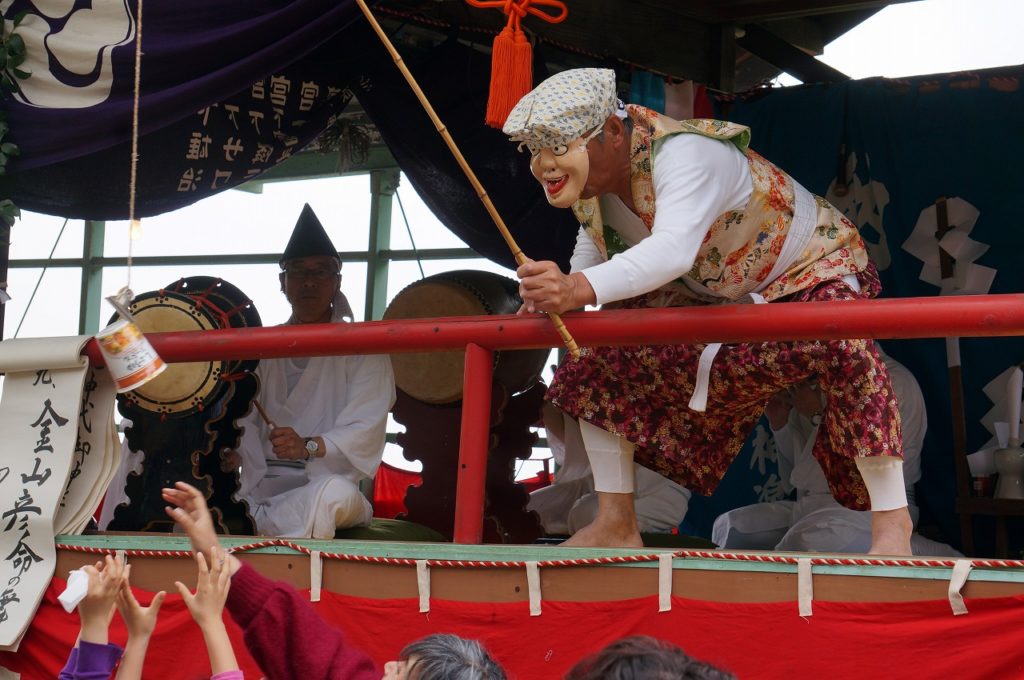
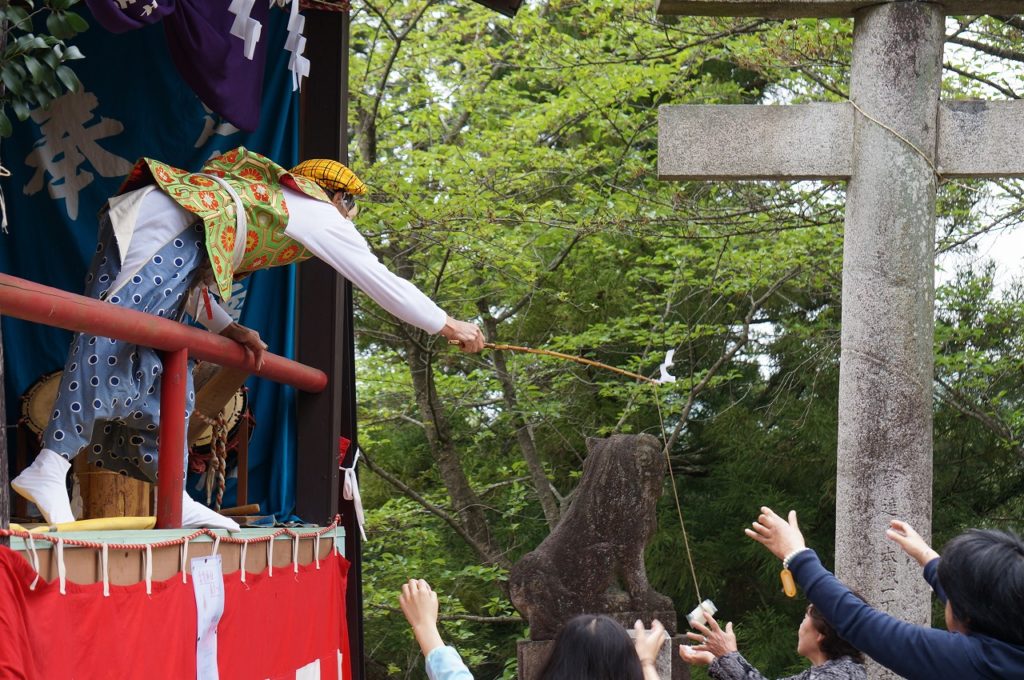
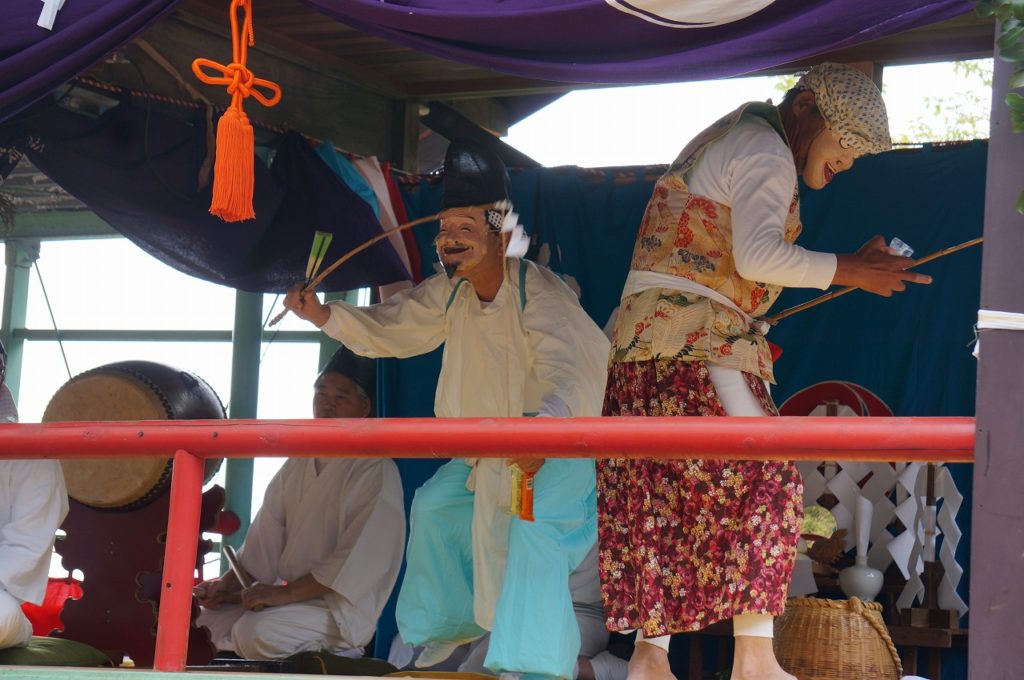
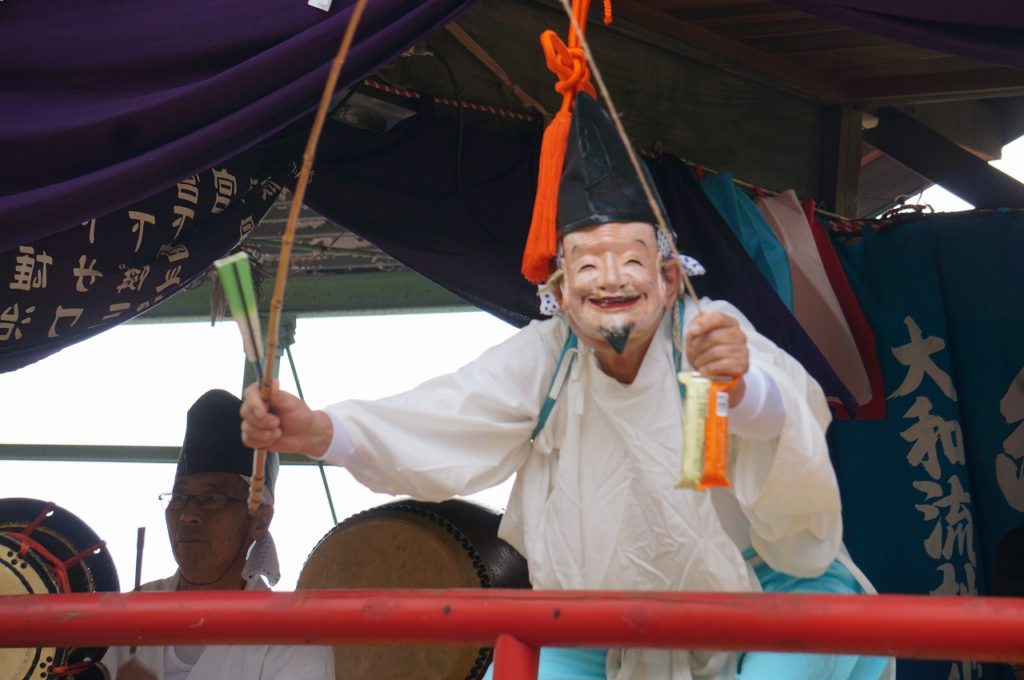
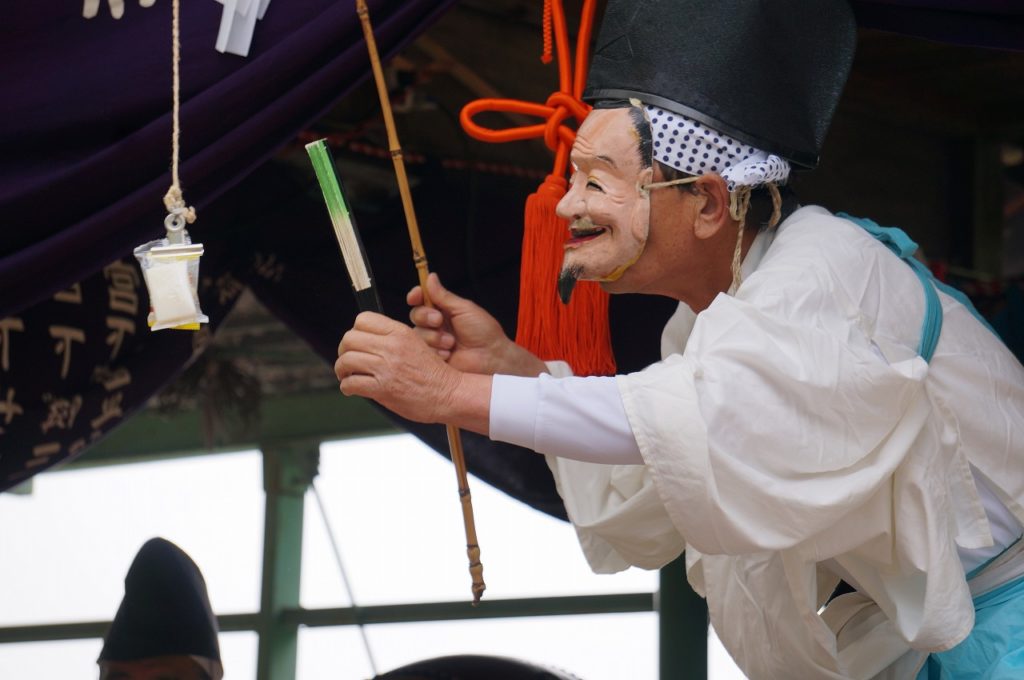
Well, they abruptly started fishing, what a surprise without interuaption?

So, it’s that deity again,

I’ve been waiting for you! The crowd is already in an uproar. Most of the bait are practical things like cup noodles.

The adults were more fascinated than the kids. Is that okay?

*Here’s a little additional explanation. Ebisu is the deity of fishing and also the god of prosperity. He is known for always carrying his fishing gear and a sea bream.

恵比寿の釣り

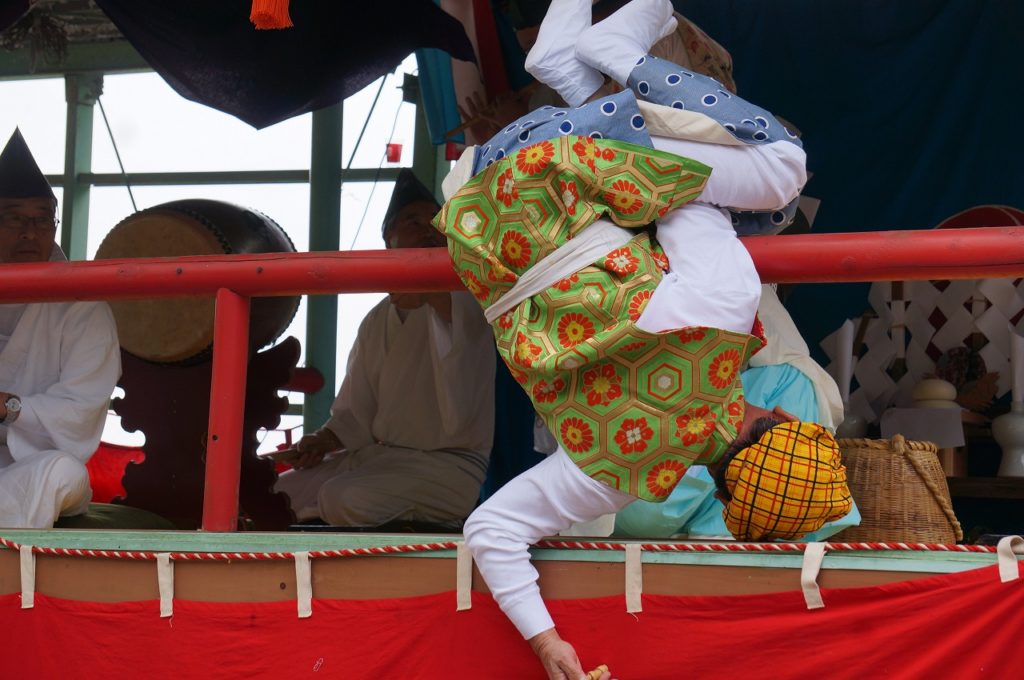
アクロバティックなひょっとこ

Here’s an amazing tactic coming up.

I mean, he’s not just a mood maker. He is truly an entertainer.

恵比寿

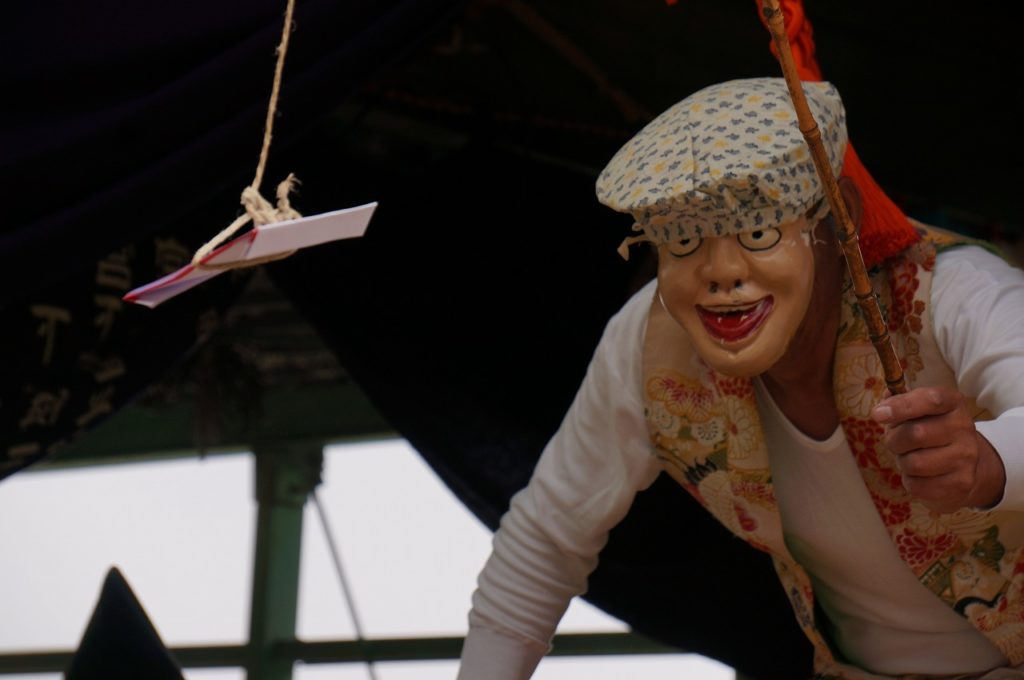
ひょっとこがご祝儀を釣り上げる

With rice cakes and cup noodles, they can fish for gift money all they want. This is the true *Ebisu face!.

*Ebisu face means smiling face. It is often used to describe the smiling faces that people make when something good happens, especially in business.

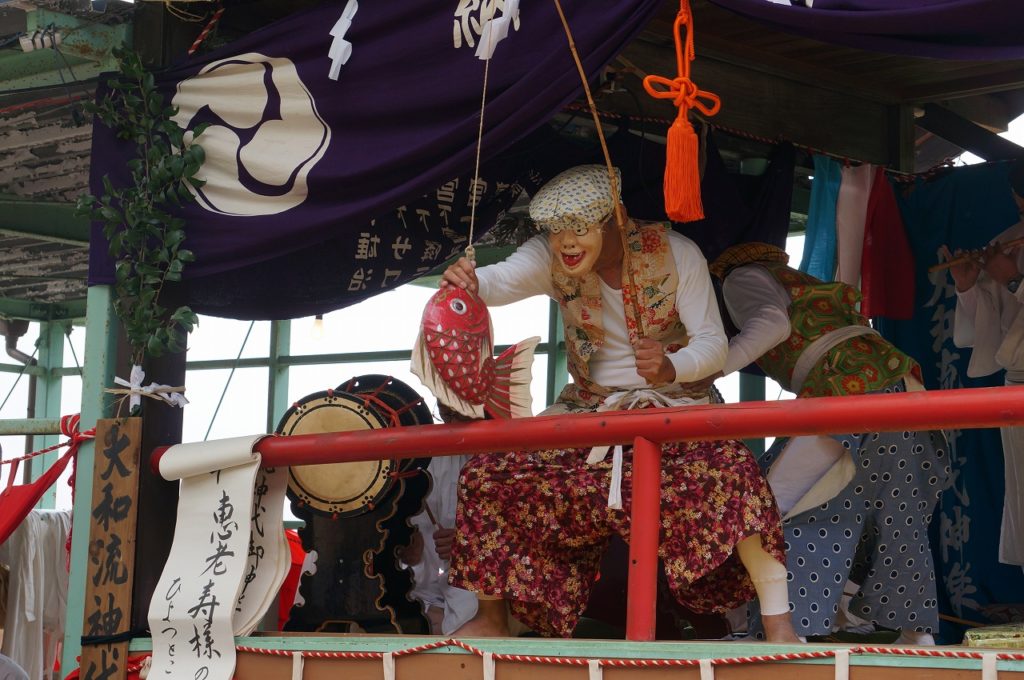
ひょっとこ、鯛を釣り上げる

ひょっとこの舞

Oh, it’s rare to see a Hyottoko fishing for sea bream instead of Ebisu, isn’t it?

Intermission

中入り

中入り

It’s your favorite time of the day.

This is the best part of kagura. In addition, yakisoba noodles are 300 yen, and a plastic bottle of tea is 50 yen. I bought one for you.

Is it really that cheap? It’s already past midday.

10th program “Daikoku”

大黒

大黒

When Ebisu comes out, Daikoku is supposed to be next. It says in the brochure that he carries a hammer and a fan and sprinkles gold and silver around the country.

Where’d you get a brochure like that?

A person concerned gave it to me because he said I was eager to see even though I wasn’t a local. He said “I hope you will spread the word about this kagura”.

*This is a fact. I would like to express my sincere gratitude to all those involved.

練習する少年

見守る人々

Look at that. That’s a kid learning to play the flute.

Oh, I’m so glad that the next generation is interested in it and passing it on.

“Inari and White foxes”

two foxes

Inari and foxes

a fox, servant of Inari

Inari, a deity

This is another standard of kagura. This program is the deity “Inari” who cultivates rice with his servants, the foxes.

foxes are dancing

Foxes are dancing

Speaking of foxes, they jump. But it’s hard to play the fox.

Even the role of Inari, which looks so easy, is not easy because you have to show your dignity and integrity.

“Hachiman”

The brochure says that this “Hachiman” is a dance to exterminate evil spirits with a bow.

The Hachiman is the deity of war, and warlords have worshipped since ancient times. In Kamakura city, which was the center of the Kamakura Shogunate, Hachiman Shrine, which enshrines the Hachiman deity, is still an object of worship for the people.

Ending “Sanjin”

The fact that “Sanjin” is out there means it’s over. Oh, I didn’t expect the rice cake throwing.

Finally, the Kagura people greeted us. By the way, where’d that guy go?

Hehehe, I’ve gotten a lot of them.

You, when did you…?

The number of audience has decreased after the intermission, so the competition had gone down a lot. After all, there’s good fortune in leftovers. Good things come to those who wait. Everybody has to see the kagura until the end.

What a guy.

I’ll give you a piece of candy. The time is 2:30. Isn’t it just the right time for a snack? Now, let’s go home. I’m looking forward to the next kagura. I look forward to seeing you again.

Mmmmm……

After this, I heard they went for a walk around Ashikaga City.

reffer→Ashikaga City Tourist Association site


Report: The Lion dance (Shishimai) in Sawai, urban Tokyo

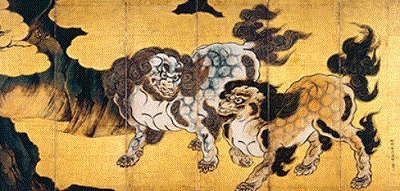
 It is impossible to talk about folk performing arts in Japan without discussing “Shishimai”. Although Shishi means lion, this is not a real lion. The original source is said to have come from India, so it is said that a real lion had been an object of worship there. However, as it spread throughout the West, China, Korea and Nepal, it became an imaginary spiritual animal. Some say that Chinese emperors had lions, so it’s possible that they knew about the real lion up to that point.

唐獅子図屏風
Kara jishi (Chinese imaginary lion)

                  収蔵作品詳細/唐獅子図屏風 – 宮内庁 (kunaicho.go.jp)

Date: Sunday closest to July 25 (Most often the fourth Sunday of the month)
Place: Yagumo shrine, 2-902 Sawai, Okutama town, Tokyo

Access: A few minutes walk from Sawai Station on the JR Oume Line. It takes about one and a half hours to get to Sawai from either Tokyo or Shinjuku.

Shishimai (lion dance)’s history

 It is said to have been introduced to Japan around the 6th century, at the same time as Buddhism. In 752, when the Great Buddha was built at Todaiji (東大寺) Temple as a national project, the lion dance was performed. It is said that half of the population of the time was involved in the construction of the Great Buddha, and about 10,000 people gathered for the unveiling of the statue. It is said that this is how the lion dance spread across the country.

 However, there are various routes as to how it had been introduced to Japan, and thus a variety of lion dances have been born. It is said that there are now about 8,000 of them active.
Shishimai can be divided into two main groups: Ise-Daikagura (伊勢太神楽) style and Furyu (風流) style. The Ise-style dance is performed by two people, while the Furyu-style dance is performed by one person holding a small drum called Kakko. However, it is so diverse that there is naturally a mix of these as well. The Ise-Daikagura-style is distributed in western Japan, while the Furyu-style is mostly distributed in eastern Japan.

Introduction of the Lion dance of Sawai

 This time, this site is going to introduce Shishimai in Tokyo. The main style in Kanto region (including Tokyo) is three units of “one-man shishi dancers” comprising one group.
 Nevertheless, there is a variety of lion dances in Kanto, and even in Tokyo there is diversity. This time, I would like to take a look at one from the Okutama area first. The Okutama area may be the closest vacation spot for those living in Tokyo. It has ravines, waterfalls, mountains, and scenic beauty. It can be reached from the center of Tokyo in about an hour by train. An area that many people visit in summer to cool off. There are groups that practice canoeing on the river, and many groups enjoy hiking and camping. It is precisely because of such an area that the cohesion of the community is rather strong and there are many performing arts that have been passed down.

沢井駅

神社への道

 As we pass Ome (青梅), we start to see mountains around us, and the atmosphere starts to change. As most of the passengers are backpackers, the Okutama (奥多摩) area is just around the corner. There are reasonable hiking trails, mountain climbing trails, and ravines around the area, and the passengers get off at their desired destinations. When you get off the train, you find yourself in a quiet village surrounded by summer mountains, where the bustle of the city has disappeared. In the middle of the village, there is a small shrine. It looks just like an ordinary house. You would feel as if you are visiting a neighbor’s farmhouse. It’s Sawai Yagumo (沢井八雲) Shrine. This is the stage for today’s lion dance. As you walk up the stairs, you find a sandy stage about 10 meters square, surrounded by the shrine in front and audience seats on either side. The lion dance starts at 8:30 in the morning. But in the morning, the main activity is walking around the village. They walk around street by street performing their dance. This is not just to present themselves in public, but to celebrate the prosperity of the village and drive away the evil spirits.

沢井の獅子舞

沢井の獅子舞

 After lunch, they return to the shrine around 1:30 to perform a variety of acts. There are three lions. Two males and one female. The male lions are the elder and the younger. And four Hanagasa join them. This is the basic style. There are many theories as to why this style was adopted, but here in Sawai, it is said to represent the sun, moon, and stars. In Sawai, it is said to represent the sun, moon, and stars, and the four flower hats represent the four heavenly kings who protect the Buddha in Buddhism. The three lions are called ”Oh (elder)” lion, “Waka” (young) lion, and “Me (female)” lion.

大獅子
the elder lion

若獅子
the young lion

雌獅子
the female lioness

 Hira-gurui 平狂い

 The first performance is called “Hira-gurui”. In lion dance, a violent dance is often called “Kurui (mad dance)”. As the name suggests, this is also an intense dance. The age range of performers is wide, and this basic dance is usually performed by junior high to high school students. However, the ground below is soft sand. It’s like dancing on the beach, and we can imagine how exhausting it is.

 It’s the height of summer. It’s hot. There is an electric fan running in front of the building, but it doesn’t help much for cooling. So, if there’s a pause in the middle or at the end of the dance, there are people who fan the dancers.

 Kurenai-gakari 紅がかり

紅がかり

紅がかり

 The next step is “Kurenai (deep red) gakari”. The lion dance often has a performance with this name. The word “kakari” seems to be used in the sense of relating to or showing interest in the subject. As the name implies, three rogues with deep red cloths come out and play with the lion. The lion’s interest in the red reminded me of a Spanish bullfight.

 During the breaks, the famous local sake “Sawanoi” is served, and pickles are passed around. It was all very thoughtful. It doesn’t matter if you take it or not. In the plaza below the shrine, simple meals and beer are sold at a reasonable price, but if you want to eat well, it is best to bring your own food. There are no big stores or convenience stores nearby.

 Tachi-gurui 太刀狂い

太刀狂い

太刀狂い

太刀狂い

 As the name suggests, a lion is entangled with a sword (Tachi means sword). Most of the swords are imitation, here they use imitation swords too. However, it was just barely enough to shave off 20%. They are almost serious about it. That’s why there is a sense of urgency in the air, as if a slight mistake could be made. It looks as if a lion and a man are engaged in a tense battle. As in any other performance, this one requires special training. The power of the lion dance can be seen in such a way.

太刀狂い

太刀狂い

 Sao-gakari 竿掛かり

竿と三匹獅子

竿と三匹獅子

雌獅子と竿
Let’s go !

雌獅子
I’m still afraid.

若獅子

竿と若獅子
There’s no wall that we can’t cross.

若獅子と竿

若獅子越え

竿と三匹獅子

竿と三匹獅子

 The lion dance sometimes has a representation of life. The same is true of this program. A pole (sao) is passed in the center. The lions are interested in the pole. But they are too scared to go over it. They try again and again, but each time they run back. They return with their hands behind their backs, as if they are expressing their fear with their whole body. And it is the female lion who is the first to cross the pole. The performance varies from each group of lion dance , but it is usually the female lion who is the first to cross the pole. And the elder lion is the one who hesitates until the end. It’s as if women are quicker to make decisions in life, and men who have too much stuff they don’t need are slower to adapt to change.

 Mejishi-gura 雌獅子蔵


雌獅子

雌獅子隠れる

 There is a performance in which a female lioness is hiding in every lion dance. I’m even wondering if that’s the reason why there are three lions two male lions and a female lioness. Simply put, it is a love triangle.

探す大獅子

探す大獅子と若獅子

It starts out with the setting where the lions are on a journey. Eventually, the fog gets thicker and only the lionesses disappear. The two males panic and look around for her. They decide to split up and search for her. So far, there are no problems. After this, the young lion finds the female lioness first, but does not tell the elder lion. The elder lion is desperately searching for her. Eventually, he finds the two lions.
He says, “Oh, I didn’t know they were here…
Naturally, he was very angry. The young lion doesn’t even apologize, and a fierce battle ensues. This fight is one of the highlights of the story.
 

獅子と花笠

大獅子が見つける

大獅子と若獅子 戦い

大獅子の怒り

While they were fighting, the fog thickened again and the lioness disappeared. This is no time to fight. Once again, the two animals split up to look for her.
This time, the elder lion finds the lioness first. If you get hit, hit back. The same thing happens again.
 

再び消える雌獅子

探す二匹

大獅子と雌獅子

大獅子と若獅子

大獅子と若獅子

大獅子、若獅子を蹴る

喧嘩をやめて

花笠と獅子

 This fog thickening of fog is expressed by the densely packed Hanagasa hats on all sides. And finally the hanagasa return to their original positions, and the lions dance together as if nothing had happened.
I always wonder. Why did the old people create this kind of performance? Is it a warning or an irony? In any case, the person who created the original must have been quite a connoisseur.

Gokito 御祈祷

三匹獅子

御幣

御幣と獅子

刃を咥える獅子たち

 The final performance is called “purification. At the end of the day, evil spirits are driven away, the place is cleansed, and the dance is concluded.


背中の獅子

帰り道

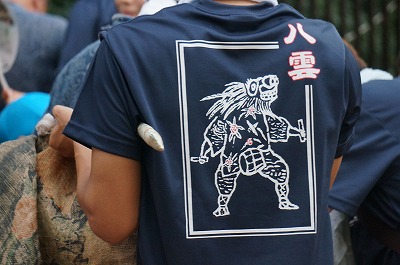
It ends at five in the evening. The Okutama area is a little cooler than the city center. The lion dance depicted on the back of stuff is dancing proudly. And so, one by one, summer comes to an end. You may look back at the road your came from, feeling as if the sound of lion dance drums and flutes are still echoing, but all you see is a quiet village that has regained its daily life. The fog in the mountains seemed to have lifted. The day is long. Let’s go home slowly.


Report: Let’s go to see the festival in Tokyo~Ome grand festival 青梅大祭

Date:   2nd & 3rd May
Location: Ome city, Tokyo prefecture
Access: It takes over 1 hour from Shinjuku by JR Chuo line

Tama tourist official https://at-tama.tokyo/lang_en/tourismtopics/ome-city-ome-grand-festival/

The feature of Japan Festival

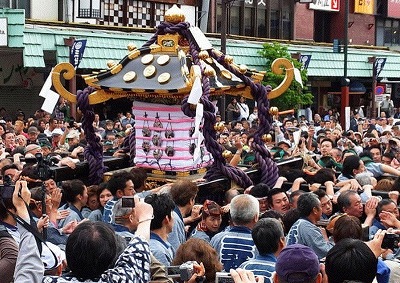
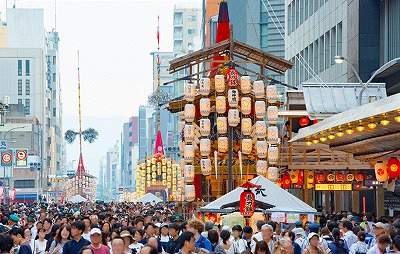
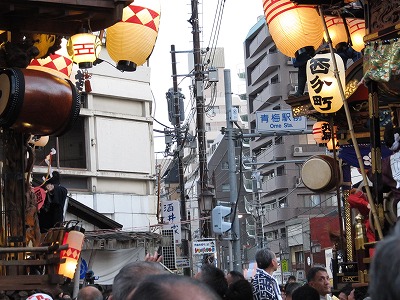
 Do you know how many festivals there are in Japan? In one theory, it is said there are three hundred thousands. In Japan, if you ask a Japanese what is your image of festival, most people would answer “Mikoshi” or “Dashi (or Yatai). An exemplary “Mikoshi” festival is “the Sanja festival” at Asakusa or “the Kanda Myojin festival” at Kanda in Tokyo, and an exemplary “Dashi” festival is “the Gion festival” in Kyoto or “the Nebuta festival” in Aomori prefecture.
 *What is “Mikoshi” and “Dashi”? Both a means of transportation for a deity. Dashi is no different from Mikoshi in terms of being a vehicle. Mikoshi is a portable shrine and people carry it on their shoulders. Dashi is a float decorated with various objects for a festival.

Mikoshi  the Sanja festival
“Mikoshi”the Sanja festival
https://matcha-jp.com/jp/4257 MATCHA

Dashi  the Gion festival
“Dashi” the Gion festival
https://souda-kyoto.jp/blog/00740.html そうだ京都行こう

Departure

 We can often see masked characters on Dashi in festivals. So, this time, we will go and see the Ome festival in Tokyo with our guides. Oh, where have they gone? Hey, it’s your turn!

Yellow and Red

Yellow and Red

What are you carrying?

We are going to Tokyo, aren’t we ? So, I wondered if I have to bring back gifts for our colleagues.

Stop being like a country bumpkin. We just get to Tokyo within 2 hours by train. (*They live in Gunma prefecture.)

But…

No! Let’s go!

*Who are they? If you want to know about them, please confer the article https://discoverdeeperjapan.com/2020/04/26/part-2iidama-shrine-daidai-kagura/

What a surprise! There are so many people in Shinjuku station!

I can’t take it. Shinjuku is the busiest station in Tokyo (and the world) ahead of Shibuya station and Tokyo station. Tokyo Metropolitan Government office is in Shinjuku,too.

Ome is a town full of retro culture

 Ome city is located in western Tokyo and is the major gateway of excursion into the Chichibu-Tama-Kai National park.

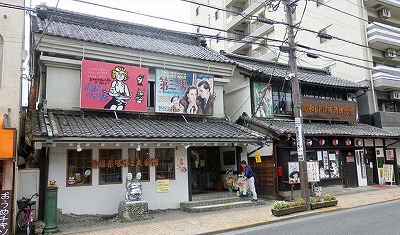
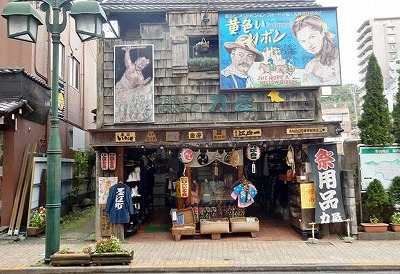
 Ome is usually a calm town. There are still quite a number of vintage houses and many vintage film billboards. But only during the two days of the festival, this town changes.

They has come Ome city

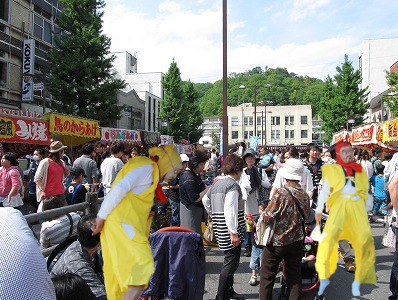
So many people!

You were right. It’s better not to carry a big bag.

It is said that this festival gathers about 150,000 people. There are too many people that we can hardly move.

Welcome to Festival

"Dashi" a float decorated

"Dashi" a float decorated

Oh, a big vehicle is moving.

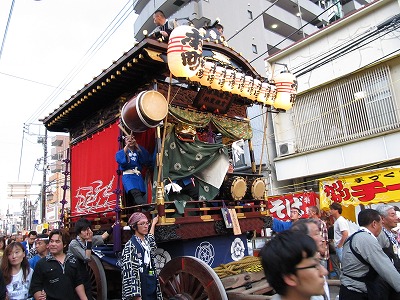
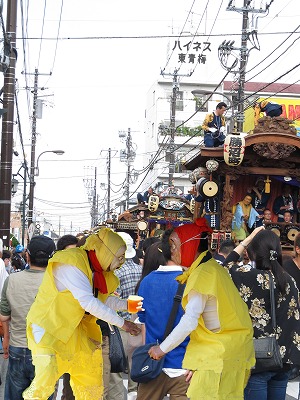
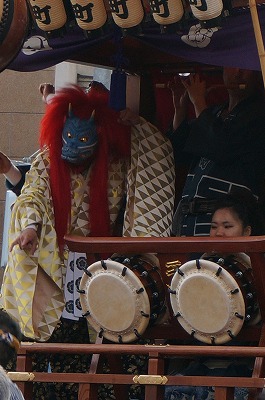
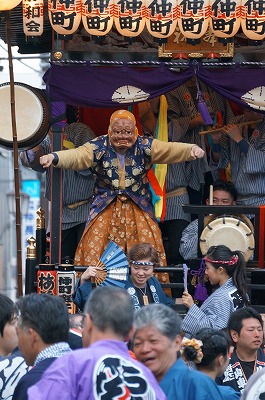
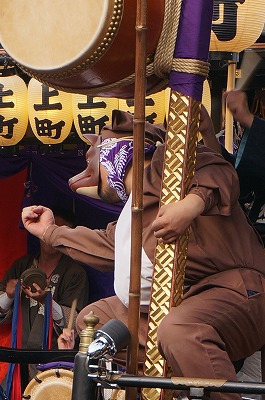
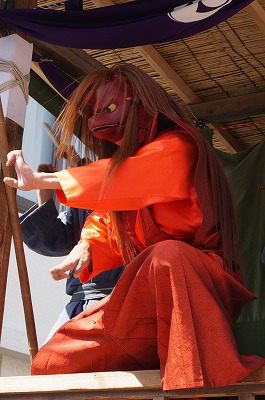
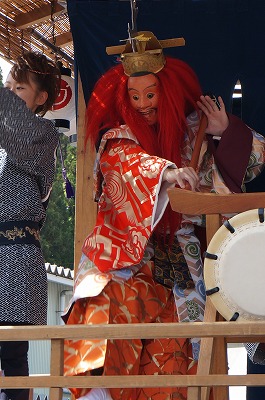
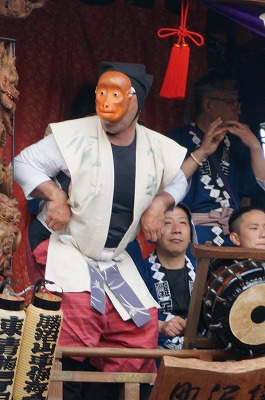
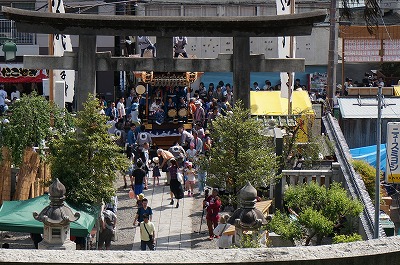
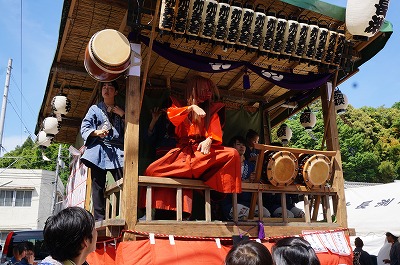
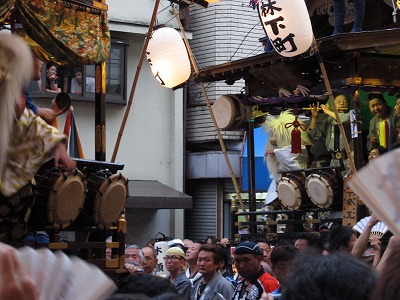
This is a “Dashi”. Each town in Ome city has a “Dashi”. There are 12 in all. There are various designs and decorations applied. These floats are so gorgeous that they are sometimes even described as a “mobile art museum”. To see each design of the Dashi is part of the attractions of enjoying this festival.

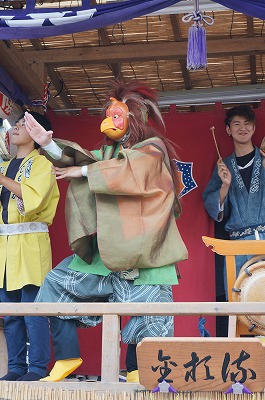
a white fox is on the Dashi

a red fox is dancing

dancing fox on the Dashi

First, foxes greet us.

Even foxes come in various kinds.

Yes. We will be able to find many masked characters on the Dashi.

Can we find other animals in addition to the fox?

Maybe. Not only animals, many various masked characters will be dancing on Dashi. This is not “Pokemon Go”, it’s “Maskman Go”. How many can we find them?

You OK?
Oh, on the Dashi, several musicians are playing traditional flutes and drums.

Ohayashi and dancer

ohayashi players are on the Dashi

They are playing music called “O-hayashi”. Especially O-hayashi played in festivals is called “Matsuri-bayashi”. It is designed to be performed with festival events and as such, the shape of performances and performer’s costumes can vary depending on the nature of the events. And an interesting point of this flute for festivals is that the musical scales don’t conform to either Japanese or Western music, because the finger holes are equally spaced to make it easier to make as well as to play.

many Dashi are in a low

many Dashi are in a low

With so many Dashi like this, I’m worried they might collide into each other. Oh, Dashi are coming from both sides.

two Dashi collide

a battle of ohayashi

People call the situation when two Dashi collide “hikkawase”. “Hikkawase”‘s “hiku” means to pull Dashi, and “awase” means to have them collide. It is the highlight of the festival. The time when more than two Dashi collide brings more excitement. This time is announced on the leaflet before hand or real-time on microphone. The leaflet is provided at the station free of charge. This leaflet tells the kind of each Dashi and where the Dashi will pass.

Battle of “Ohayashi” is worth seeing.

Let’s walk around a little.

Along the street

stall shops

Dashi passed in front of stall shops

stall shops in the festival

Many shop stalls are in a row along the road. What are they selling? Should we take a look?

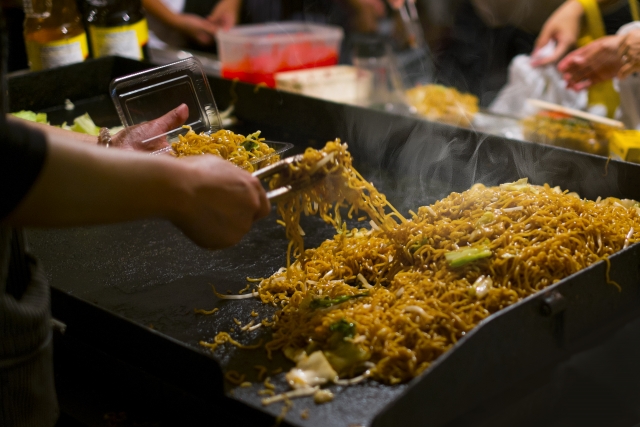
Foods, drinks, Japanese cheap sweets and toys are on the shop stands. “Yaki-soba“, “Tako-yaki“, “Okonomi-yaki” are traditional old-timers of all the stalls at the festival. In addition, there are grilled corn, “Yaki-tori” and so on. I guess Yaki-tori and Tako-yaki are some of the famous Japanese cheap foods. Yaki-tori is grilled chicken skewer, like kebab. Tako-yaki is a flour based snack baked in the shape of little round balls containing pieces of octopus. Okonomi-yaki is a dish of thinly sliced cabbage mixed with batter made of flour, eggs and water and cooked on an iron grill. Yaki-soba is stir-fried noodles. Yaki-soba, Okonomi-yaki and Tako-yaki are added with Japanese salty-sweet sauce. Each costs about \4~500.

Everything looks tasty and smells good. I want to eat all of them.

Me, too.

What? Have you heard a strange voice from heaven?
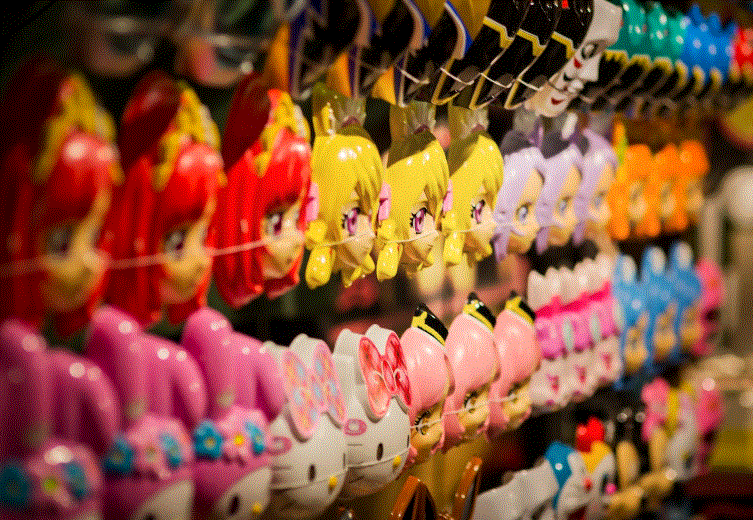
…And, many toys are very colorful.

These are for children. But, most adults are excited to remember their childhood. These colors, smells, tastes and sounds. Every element enlivens people. I wonder if most festivals have such elements all over the world.

That hits the spot! Red pickled ginger goes with yakisoba and beer.

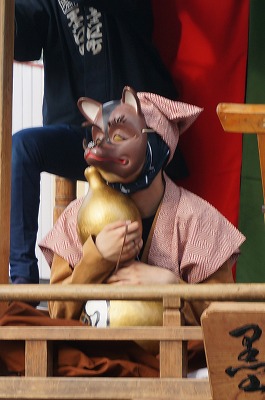
raccoon dog drinks sake
“Woo, sake tastes so good“

two modokis are arguing

the monkey
“It looks great”

You! Before I knew it. You are drinking alone.

many people walka in front of Dashi

many people is walking at the festival

Dashi is turning

many people is pulling Dashi

Every “Dashi” is moved manually, isn’t it?

It is the greatest highlight scene to turn the Dashi. For example, “Kishiwada danjiri (it is held at Kishiwada in Osaka) ” is famous. At this festival, the highlight is to turn the Dashi around with breakneck speed.

Mask collection

By the way, what kind of masked characters are there?

Let’s go to look for them.

What a great variety of masks there are. There are not only a fox but a raccoon dog and a bird.

These variety of masks all derive from Noh, Kyogen and Kagura*,and so on. They represent a deity, people or animals.
*Noh, Kyogen and Kagura are traditional performing arts since medieval times. Especially, Noh uses a lot of masks.
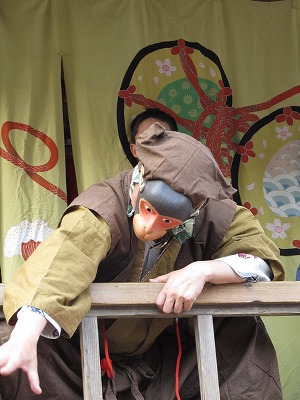
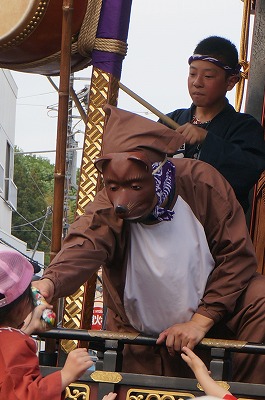
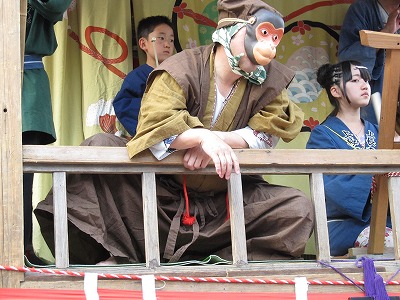
Foxes, raccoon dogs, or monkeys are active characters in folk tale. In stories, foxes and raccoon dogs bewitch people. In addition, foxes are messengers of the deity of rice planting.

a monkey
a monkey

a raccoon dog
a raccoon dog

a raccoon dog
a raccoon dog

Hey, raccoon dogs and monkeys are looking at us. I’m worried I might be bewitched.

Worship at shrine

This festival is for the deity of Sumiyoshi shrine. We go to shrines to worship.

Long steps….

How long the line is.

Hey! Don’t reach for sweets. It’s for children. Quit making a fool of yourself.

Sorry. I can’t resist sweet things. Anyway, what is this?

This is “Ibayashi”. It means they play “Ohayashi” without moving. In this period, they play and dance not only on the Dashi, but also on the stage like this. They are set along the road.

How long is the festival?

Until what time is this festival held?

On the 2nd of May, it is held from 3 pm to 10 pm. On the 3rd, it is held from 9 am to 10 pm. On the 2nd, the Dashi only moves in each town. So, I recommend to go on the 3rd.

The festival is still going on…

“Take care. Come back again anytime.”

I am a little tired. We are almost out of time. Let’s go home.

Yes. Let’s drop by Shinjuku to have a quick drink on our way home.

That’s just like you I know. Let’s go!

*Reffer https://www.japanistry.com/event/ome-grand-festival/


Report: Would you mind spending a calm day at a place away from urban noise ? ~Part 4 Yuki Suwa shrine Daidai-Kagura~

 Finally the special feature article, “Let’s go to the city to watch local Kagura during beautiful cherry blossoms season”, this is the last of the series. Two guides who took you to various kagura till now will take and guide you this time too. Hey, two guys, are you ready? OK, let’s start!

*If you want to know who they are, read the article, part 1.

Date; 3rd April
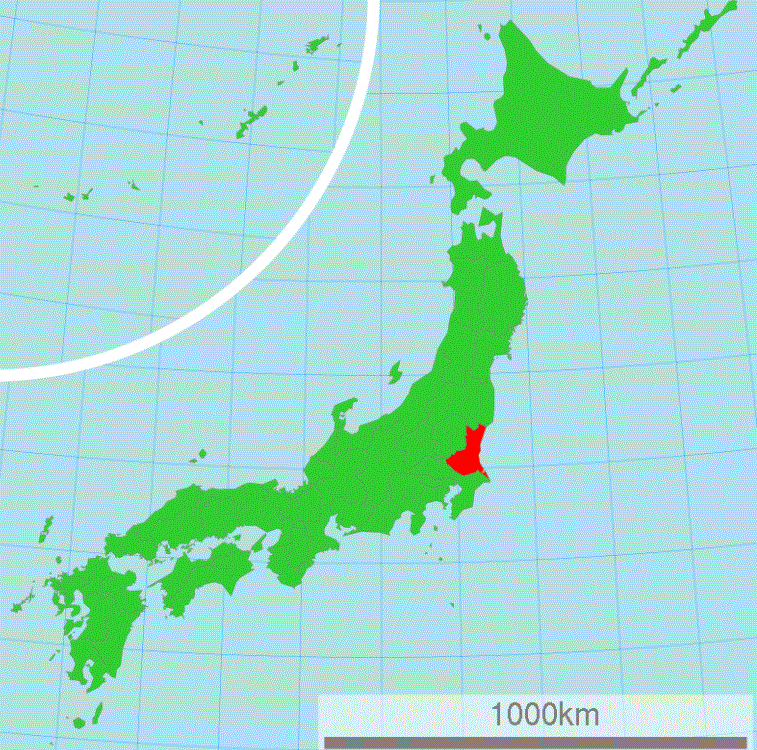
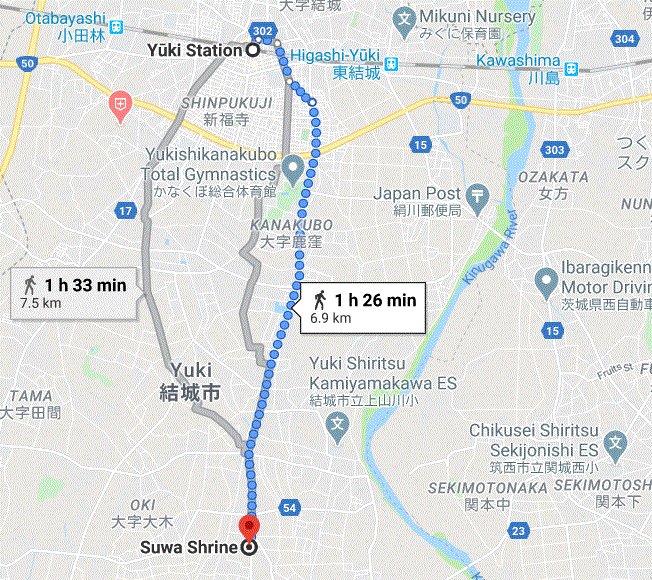
Location; Kamiyamakawa 160, Yuki city, Ibaraki prefecture
Access; about 7 kilometers from Yuki 結城 station. To get to Yuki from Tokyo, you take Ueno-Tokyo line(JR line, bound for Utsunomiya. It takes 1.5 hours), and change at Oyama, for Mito line (JR). It takes 15 minutes.
Ibaraki prefecture
Ibaraki prefecture

access by train from Tokyo
from Tokyo to Yuki

cycling
image is for illustration purpose

Oh,no! 7 kilometers is a long way to walk. I can’t walk.

Don’t worry. In this station, there is a corner to rent a bicycle. You pay \500 and \1,000 for deposit, you can rent a bicycle for a day. When you return it, the \1,000 deposit will be refunded to you. (as of 2020)

Bicycle? Certainly, it’s a good deal (cheaper). But I didn’t expect you to suggest riding a bicycle.

Is there something wrong for a deity to get on a bicycle? It takes about 20 minutes by bicycle.

OK,OK. Anyway let’s just go.

Introduction

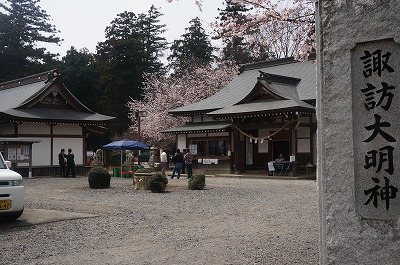
the shrine

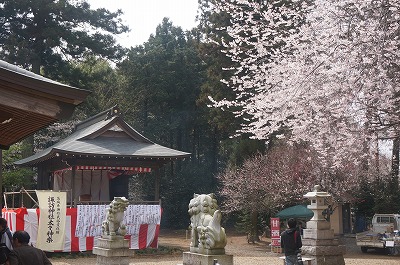
the kagura-den and cherry blossoms

Isn’t this shrine cozy and modest? Cherry blossoms seem to bless the festival. The kagura-den is dressed up today. Oh, several booths by local people sell some food and drinks. Shaved ice, Yakitori (Japanese kebabs), steamed potatoes and Amazake (a sweet fermented rice drink). What time does kagura start?

You are really greedy. I wonder if it is too early to sell shaved ice. Well, the Shinto ritual starts at noon, so kagura will start in 45 minutes.

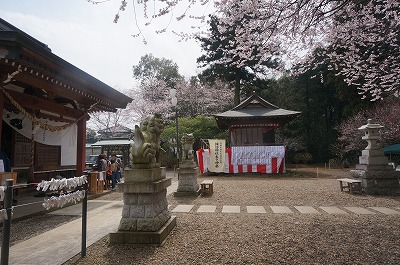
a precincts

Shinto ritual

1.”Dance of Gogyo”

two cancers

two dancers dance symmetrical

two dancers dance

two dancers are on the stage of kagura(Japanese traditional folk performing art)

Kagura’s first program has began. The program board says “Dance of Gogyo”… What does “Gogyo” mean?

This name comes from the two principles of ancient Chinese. One is the philosophy of “Yin and Yang”, another is the thought of “Gogyo”. “Yin and Yang” is negative and positive. The ancient people thought that the universe had derived from Yin and Yang. Apart from that, they also thought that the universe consisted of five elements, that is, wood, fire, earth, metal, and water. Finally, they reached the conclusion that these thoughts made it possible to explain everything. These philosophies were introduced to Japan in the 6th century, and had had a great influence. Do you understand?

I guess I understand the outline. So, black and white dancers appear in this program, don’t they?

Yes. Although this story may seem difficult, this thought has affected the lifestyle of Japanese until today. For example, when Japanese decide on the date of weddings, they set a date based on this theory.

I thought better of you. You are a genuine deity guide.

Aha!

2.”Sarutahiko”

Sarutahiko

Sarutahiko dances

That’s dance of Sarutahiko. I was waiting for him. It’s about time!

Moves of this dancer’s Sarutahiko have the same feature in Kanto area. It’s a very magical action to expel evil spirits from the stage.

3. “An archer”

an archer

an archer holds arrow

He is handsome.

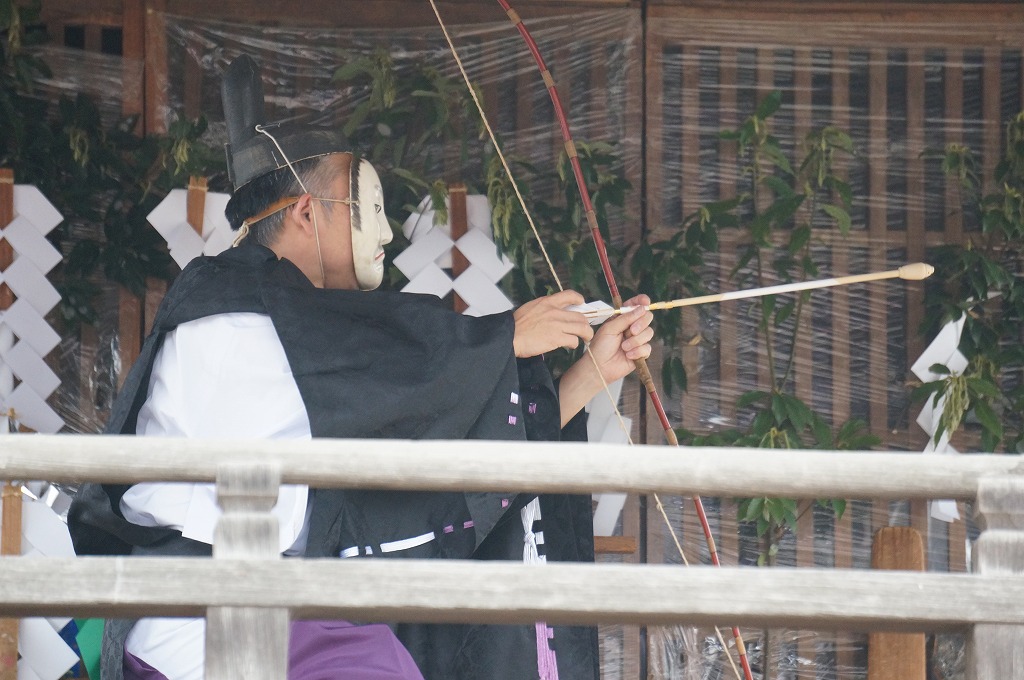
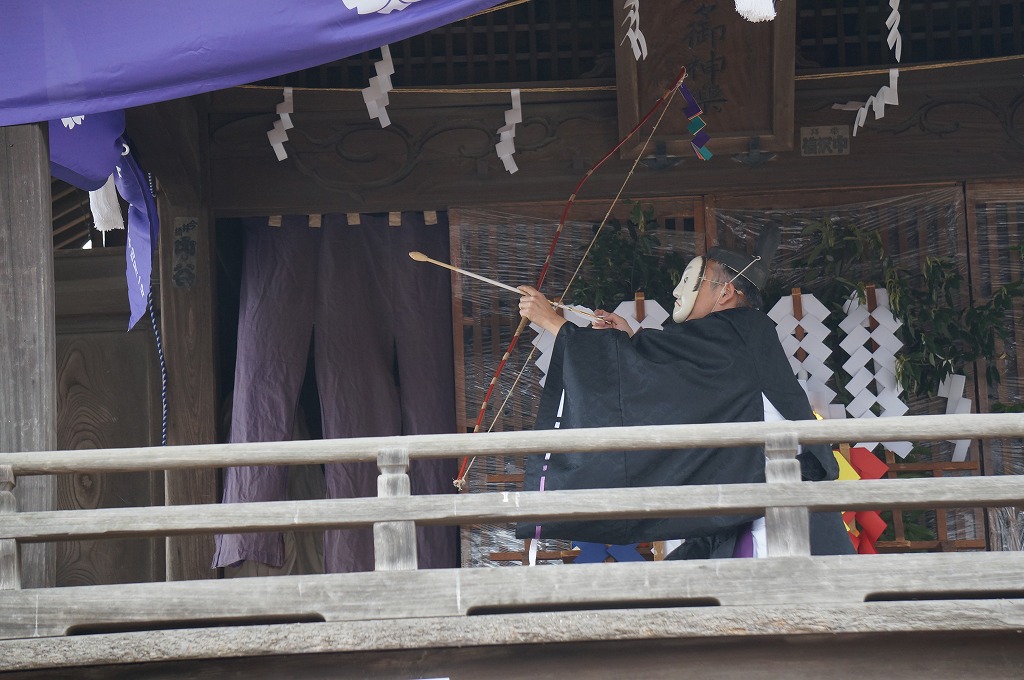
He is a deity of an archer. He shoots an arrow to drive away evil spirits.

an archer

an archer is on the stage of kagura (Japanese traditional folk performing art)

Look at the papers in front of the stage. Many names are on the papers. What do they mean?

They are the names of sponsors. They offer sweets, liquor, money and so on.

Many sweets! I can have high hopes for “mochinage (the throwing-many-things ceremony to celebrate).

I knew you would say that.

4. “The old man holding a sword”

an old man holds a sword

an old man holds a sword

He is not an old man. His old face shows thoughtfulness and consideration. His name is “Omoikane”. Do you remember this name?

Yes. He is the most intelligent deity. When “Amaterasu” had hidden behind the Iwato, he was the key deity to devise the plan to bring her out. Is that right?

Good! →*see “Reference”/Japanese mythology, “Iwato biraki”, please

5 & 6. “Inari (man and woman)”

a fox as messenger

a fox ia working

These foxes are good looking and their clothes are classy.

They are the messengers of the deity for planting rice. They are not just foxes.

a fox

a fox throw a thing

That fox is going to throw something here…Oh, no. He threw it in a different direction. He is pretty clever!

Aren’t they male and female according to the title?

Maybe..This program, as you would think, took 15 minutes, nevertheless, others just took 10 minutes.

7. “Rice harvesting”

this is an old man

rice harvesting

8. “Ebisu”

The audience has gathered before I knew it. That’s Ebisu. He is popular. At once, he is going to fish something.

Oh, sake! It looks heavy.

Oh, did you look at that? That’s money!

That is gift money.

You only mention him getting things, but actually he does a lot of giving too. He is a deity who “gives fortune”.

He finally has fished a red snapper. Look at his triumphant expression. But why is a red snapper auspicious in Japan?

It’s a simple reason. When people want to express congratulation or happiness, they say “medetai” in Japanese. “Tai” means red snapper. It’s a pun or word play. In addition, this fish’s color is red and looks good. Red is considered to protect us from evil.

How simple-minded Japanese are.

You, too. Don’t forget that you are figments of their imagination.

9. “dance of Uzume”

dance of Uaume

dance of Uzume

“Ameno Uzume” is coming. When it comes to “Uzme”….

“Iwato biraki” or “Tenson-korin”. →*please see “Reference”/Japan mythology

Yes. Now she comes out on the stage, Iwato-biraki is to come.

10. “Tajikarao~Amano Iwato-biraki”

Ameno Tajikarao a deity is the most powerful

Tajikarao takes the Iwato off

Uzume welcomes Amaterasu

Tajikarao was pleased

Here comes Tajikarao. This is the scene of “Iwato-biraki”. He took off the Sakaki (species of ever green) branches at the corner. This represents “Iwato”.

So does that mirror represent “Amaterasu”?

Yes. The direction of kagura like this can often be seen all over Japan. Amaterasu is a deity of the sun. A mirror is a symbol of the sun in Shintoism.

11. Ending~”Ohyamatsumi”

He has three eyes! Is he a yokai creature?

No, he is a deity named “Ohyamatsumi”. He often comes out towards the end of Kagura in the Kanto area. When it comes to Ohyamatsumi, it is the end in no time. The ending of kagura in Kanto area is…..

ending of kagura (Japanese traditional masked folk performing art)

How many things there are! People throw things which were carried in relay by humans a while ago. Those things are not only sweets but also cup noodles and some foods. It’s great.

Many gifts which were piled up as a mountain are vanishing one by one. Are human beings greedy or generous? I’m not sure which is right.

That’s human!

Anyway, we went around many kaguras in Kanto area. What do you think of them?

I am getting to know the form of kagura in this area a little. They have a certain form but each has different features. I want to go to many different kagura. Didn’t you introduce a kagura of Ohmiya Sumiyoshi shrine you belong to?

Yes. There are many kaguras that I haven’t introduced yet in this area.

I want to watch the others as many as I can.

Sounds good! But, to be honest, you just want to get many sweets, don’t you?

You get it!


Report: Would you mind spending a calm day at a place away from urban noise? Part 2~Iidama shrine Daidai kagura~

Date;   1st Sunday April, every year
Location; Hirose town 2-2-8, Maebashi city, Gunma prefecture
Access;  It takes 20 minutes from Maebashi station (JR) on foot
Maebashi is 1 and half hours from Tokyo

Gunma prefecture
Gunma prefecture

Introduction

access from Tokyo
Iidama shrine from Tokyo

 This time, we will introduce “Iidama shrine Daidai kagura”.
 This Kagura event is held at the Iidama shrine every spring. “Daidai” is a word usually used in the event in the Kanto area and means “bigger and bigger”. Tears ago, kagura was sometimes held for people to get their wishes. The stronger the people’s wish was, the bigger the scale of the kagura became, because they paid a lot of money. So, the name of the kagura became “Dai kagura” from merely “kagura”. Dai means big. Finally, it is said to have come to be called “Daidai” kagura, according to some views.

 This period (from end of March to the begining of April, about two weeks) is one of the best season in Japan. Many cherry blossoms bloom all at once and Japan is covered with the color of pale pink. So, if you go to this event, you would see beautiful scenery all over this area.

a road to the shrine
around the shrine

Kagura-den
the Kagura-den

 This kagura is performed at lunchtime from about 11 am to 3 or 4 pm every year.

 *This article was written from the writer’s experience visiting in 2017.

Sarutahiko and Modoki visit the shrine

 This time once again two men (Modoki and Sarutahiko) seem to be ready to guide you.

Here we are. This is Iidama shrine.

This shrine is in the middle of a residential district, isn’t it?

Yes. Well, what time is it now?

It’s about 11 am, just on time for staring. But the kagura event does not start yet, does it?

Such things happen. I would use this spare time effectively to introduce the feautures of this kagura. This is the kagura typical in Kanto area. The first half is very ritual and the second half becomes comical.

Do people like me get on the stage?

Yes,. Performing only a refined and sophisticated program would make the audience bored.

 20 minutes later.

The first program seems to be starting.

First half~ritual part

 At first, two deities come in. “Sarutahiko“

two Sarutahiko in kagura (Japanese traditional culture)

two deities in kagura (Japanese traditional culture)

two deities (masked characters) is dancing in kagura (Japanese traditional culture)

two masked characters in kagura (Japanese traditional culture)

Are they Sarutahiko?

Yes, we often get on the stage at first because we are guides for all deities.*→Reference/Japan mythology, please

This is a rare program. Two men are playing.

Right. It’s rare in Kanto area. But four men get on the stage in Okayama area.

Really? In addition, one mask has black beard and mustache and the other has white ones. And they have long eyebrows! They look like whiskers.

THey are my colleagues. Don’t quibble about deities’ face. This is the refined program.

 Next program “Four sieties“. Four men without mask are dancing slowly.

four men are dancing in kagura (Japanese culture)

four men are dancing in kagura (Japanese culture)

I guess that the moves of this dance are simple but skilled.

You come to understand kagura at last.

Thank you.

But stay focused and study even harder.

Oh, are you giving me a lecture again?

 Next “Uzume or Okame”. One dancer is holding Gohei (staff with plaited paper streamers in Shinto) and a bell comes on stage. THe feature of this dance is a slipping like movement.

player as ameno Uzume in kagura

ameno uzume is skipping

Uzume looks like she’s having fun.

The face of the mask has small eyes, long -slit and narrow eyes, and slender face with large jowls. This is for Okame.

It means funny face?

Although it may vary according to the time, this face is characterized by stylized beautiful woman figures.

Different times, different minds.

 Intermission from 12:20 pm to 1:00 pm.
 Next program, “Tajikarao“. He has a staff like a shield.

tajikarao ~in kagura

he plays kagura as a deity

Have you heard his name?

Of course. I am a humble member of kagura. When Amaterasu had hidden behind Amano-Iwato (a door by rock), he took it off.

Yes. He is the most powerful deity.

Tajikarao's face

Tajikarao ~kagura

He has long eyebrows, too. And what is that? Long hair like a beard grows from under the eyes. It is an eyebrow or beard?

Shut up and look at his action. It seems to raise the wind!

Sure. It is getting a little cold from the wind.

He is coursing the wind by his power.

No way!

 Next program; “Ameno Koyane“. One person wearing white old man mask comes on the stage. He is holding a bell and a white fan.

Ameno Koyane ~a deity of kagura (Japanese traditional folk performing art)

a deity is dancing in kagura (Japanese traditional folk performing art)

Have you heard his name?

No.

He is a clever deity. At an affair of “Iwato-biraki”(Amaterasu behind the rock door. →Reference/Japan mythology), he took measures with Omoikane (a deity of the cleverest). And he is the founder of the Fujiwara clan. The Fujiwara clan has reigned this country for 1,000 years as the aide of emperor.

He looks gentle and elegant. He doesn’t like he has political power. A man can’t be judged by his appearance. Shoot! not man, yes deity.

 Second half~comedy part

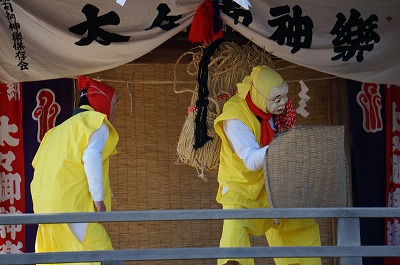
 At 1:30 pm. “Tanemaki”. It means sowing seeds. A fox appeared following an woman holding rice plant.

an woman as messenger

the messenger woman  and the fox

Is she a deity of agriculture? I considered a deity of agriculture an old man. It is rare case.

Probably I guess she is a messenger of Inari.

a man and a fox

the fox teaches planting to a man

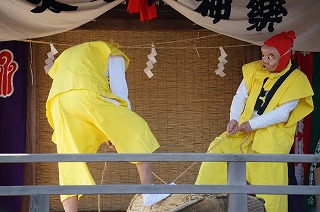
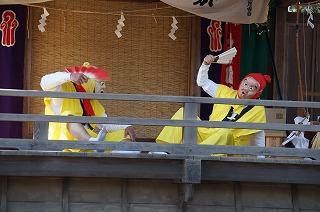
 A fox is jumping crouching position. This is a popular image of a fox in kagura. A woman gave some rice plant and has left. Following, two men appear. They both wear a yellow cloth and one man wears a red towel on his head.

Hey, omg! Finally our colleague comes on the stage.

I’m sure that he might cause an incident,too.

red is working

red is working

red is working

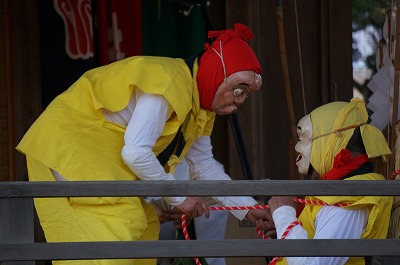
 Unexpectedly, he is competent. After being taught how to plant form the fox, he started working easily and joyfully. When he is planting seeds just like dancing, another man comes in. He wears a yellow cloth and yellow towel on his head. He is bringing a big basket. After he puts the basket down, a man with red towel begind to teach him how to plant the seeds.

yellow comes out

red teach how to work to yellow

Oh, I see. They are vaudeville actors. The man with the red towel is a straight man and the man with the yellow towel is the comical character.

Aren’t they the same role?

Yes, but they are two of a kind.

So, teach me what they are talking.

Yes, it’s easy.

 *Following the conversation is Modok’s fictional transration.

do as I do

do as I do

Do as I do. At first you hold this tool, you break up the ground.

Why?

I don’t know. After you break up, throw these beans as I do.

What these?

I don’t know either.

a woman teach them

red is working

 While they were doing this, one woman appears. She wears a cooking coat. She is called “Okame” or “Otafuku”. She begins to take care this and that.

These are seeds. If you throw on the ground, these will grow up into rice.

Inari comes out

red and yellow hyottoko

 Following Okame, an old man appears.

He is not just an old, he is a great deity, “Inari”.

Really? Thankful and fortune for humans like us.

 Nevertheless, the Inari did almost nothing. He just smoked a long pipe while looking over spring scenes.

Why does Inari do nothing?

He is a deity. A deity will be a such a being. Anyways, what are they doing?

red and yellow comical scene

okame is woryirng

Ah, they have tied their each hands though they wanted to tie straws. This is a typical comedy style.

red holds a tool

okame teaches how to use
Okame teaches them how to use the tool

Inari doesn’t get fazed by anything. That’s a deity.

He looks only lazy to me.

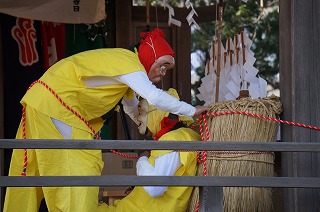
 After all, Inari and Okame left. Two of Modokis begin putting rice into a big straw bag.

they are putting rices

red puts yellow's head

Ouch! Stop. You are putting my head into bag together with rice.

I’m sorry. I got to absorb in doing this.

Really?

they are putting rices

yellow revenges

And now, keep doing it. I’ll keep open the bag.

OK, I’ll try.

Ouch!…

What are they doing?

This is Modoki. (laughing)

 Two Modokis managed to finish. Next, they have to bring it.

they are tieyng

they are tired

Well, sit down there. I’ll help you carry the bag.

they try to bring

they try to bring

 Red finished tying. Yellow wants to stand but cannot. Red helps him to carry the rope.

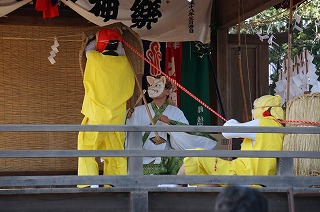
 Then, fox comes out again.

It’s too heavy. It wouldn’t budge.

the fox care for them

they carried the bag

WHat are you doing? You are tying the rope to the pillar.

No wonder it’s heavy.

Pull yourself together. Cheer up!

Aren’t they hasty and careless?

That’s Modoki.

 They are left finally with the fox. This program takes over 30 minutes.
 Next program “Daikoku’s mallet”.
 Daikoku is a deity of fortune. He always has a little mallet. The little mallet is a famous staff which people imagine as soon as people hear the name “Daikoku”. Daikoku swings the mallet, then a lot of treasures appear immediately.

Daikoku
Daikoku as a deity of fortune

modoki and audience

People have gathered again, haven’t they?

Most people know when Ebisu or Daikoku appears, happy time is coming.

Daikoku gives things to modoki

what is this?

The Modoki with his head covered by a red towel comes out again. I don’t think this program is going to end well.

Really?

what is a thing how to use?

he gives a thnig to audience

Look at the stage. Daikoku gives modoki something.

He seems at a loss. Ah, he has given the staff to the audience.

okame comes out

daikoku gives a mallet to modoki

 Daikoku gave a bell, mirror, and the mallet at last and he has left the stage.

okame teaches how to use
Do as I do

okame and modoki
It’s an important roll.

Okame comes out and teaches how to use the mallet to modoki.

cheer up
Hey, cheer up.

okame is ahasty?
Okame is a hasty,too?

Daikoku swings the mallet to bring out some treasures but….What does his swinging the mallet make appear? I still doubt whether this program is going to end well.

he swings the mallet

what appears?

 Modoki swung the mallet and a strange being has appeared. It wears an all-pink clothes and has a pink face.

Pink monkey appears

Who are you?

What is that?

I don’t know. I guess he or she is a monkey from the face.

modoki teaches dancing

pink being has vanished

 Anyway, modoki ties the monkey-like creature to a pillar. Modoki starts dancing in front of the monkey-like creature but it has vanished without noticing.

like-monkey is walking around

they are coming back to the stage

What happens? The monkey-like creature has come to the audience.

He is greeting the audience. Modoki is upset and brings the monkey-like creature back to the stage.

modoki teaches to dance

it seems monkey dance

After all, what does red modoki try?

I guess he will try to teach dancing.

Modoki holds a rope, and the monkey-like creature is dancing. He is like a monkey trainer.

mochinage

Suddenly the mochinage ceremony starts! Iwasn’t expecting that!

a strange ogre appears

he throw out them

Look at that. Once again, a strange man with a red face has come. Who is he?

I’m not sure. Maybe he looks like an ogre. There are too many strange happenings.

This is because Daikoku left all his work to Modoki. He is responsible for all the happenings.

Oh, are you angry?

this is ogre

ogre is dancing

 At last, Daikoku, Modoki, and the monkey-like creature drive away the ogre by throwing beans and all the cast have left.

What on earth has happened. Your guess was right.

Maybe they wanted to represent throwing away bad things and wishing for happiness. But I can’t explain this program in more detail.

 ”Zougi and Taihou” Two deities talk to each other, and wish for happiness.

two deities in kagura (JApanese traditional folk performing art)

 ”Kagutuchi“

a deity of fire

a deity of fire

Do you know who this deity is?

I don’t know.

He is a deity of fire. He can burn out everything.

Oh my God! That’s scary.

a deity of montain

ending

 The last program. The blue face comes out holding a bell and a plate. He dances and throws many sweets or rice cakes and the program is over.

How about this kagura?

Although this kagura had some difficult parts to understand, I got many sweets. That’s right. All is well that ends well.

You are greedy till the end, deplorable!

 to be continued to Part 3


Report: Would you mind spending a calm day at a place away from urban noise ? ~4 kaguras in Kanto area in spring~ vol.1

 Toiday, I’ll introduce 4 kafuras which is held in the most beautiful season of blossoming cherries within 2 hours from Tokyointroduce.

introduce four kaguras (Japnanese traditional folk performing art) in cherry blossoms blooming season

 If you ask some Japanese which season is the best to visit, most people will answer that it is for the blooming cherry blossoms.
 In this season, cherry blossoms begin to cover Japan starting from the south region and moving up north for two months. The bolssoming status in each region is reported on TV or radio. Many people go out, dressed a new in spring clothes upon hearing such.
 The mountains, the rivers, the towns all views change from dark color to pale pink.

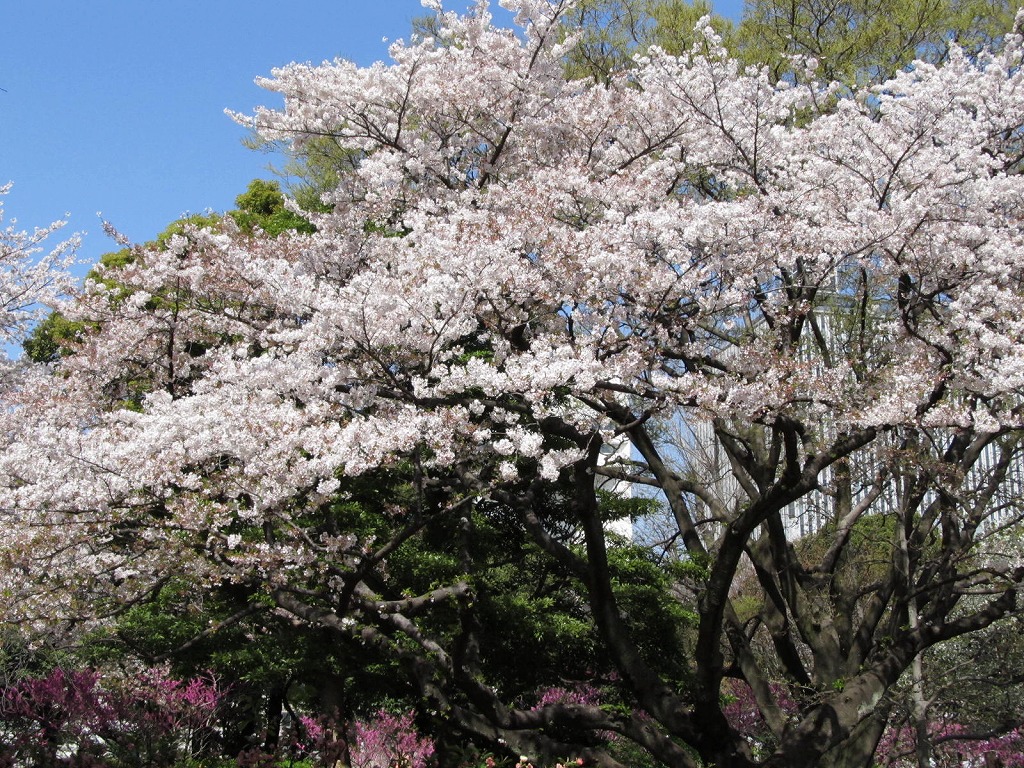
a shrine with cherry blossoms in Kamakura

cherry blossoms cover Tokyo

 Through out history, people have loved cherry blossoms. One famous poet composed the poem (waka 和歌) which reads “Hopefully, I will die under the blossoms in the spring time.” And another poet said;
“If it were not for/ cherry blossoms in the world/ How peaceful and calm/ The heart in spring could be.”
 confer ; http://dharmaechoes.blogspot.com/2010/04/heart-in-spring.html
 The cherry trees has had strong influence on Japanese lifestyles. The cherry trees represent, so to speak, Japanese culture itself. In this season, if you see traditional kagura 神楽, you can grasp the whole Japanese culture in one day.

 The following 4 kaguras will be taken up here today. Every kagura is held in April.

・Fuji sengen shrine Daidai Kagura on the 1st Fujioka city, Gunma prefecture
・Iidama shrine Daidai Kagura on the 2nd Maebashi city, Gunma prefecture
・Yamanashi oka shrine Daidai Kagura on the 4th Fuefuki city, Yamanashi prefecture
・Kamiyamakawa Daidai Kagura on the 5th Yuki city, Ibaraki prefecture

 I guess that each kagura is worth watching. You can feel Japanese culture, besides you can get a lot of good luck fortune. THis is not metaphor. Of course, you can get a mystical feeling in a shrine. Moreover, you can get many “good luck” items. This is why “mochimaki” is held while kagura’s at all these shrines. What is “mochimaki” ? Please read the following text if you wish know more about it.

Sarutahiko and Modoki visit a  Fujisengen shrine
Modoki (Hyottoko) and Sarutahiko

 These two people seem ready to guide you, this time. Then, could you two introduce yourselves, please ?

Sarutahiko is my name, from Ohmiya sumiyoshi kagura in Sakado city, Saitama prefecture. And let me tell you first of all , I am not human being, I am a deity, OK?

My name is Modoki, sometimes I am called Hyottoko. I am often called the comic or clown in festival.

 Well, let’s go to watch kagura with them.

1. Fuji-sengen shrine Daidai kagura

Date; 1st, April
Location; Fujioka town 1152, Fujioka city, Gunma prefecture
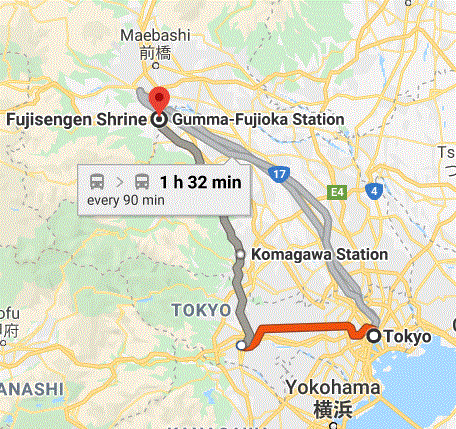
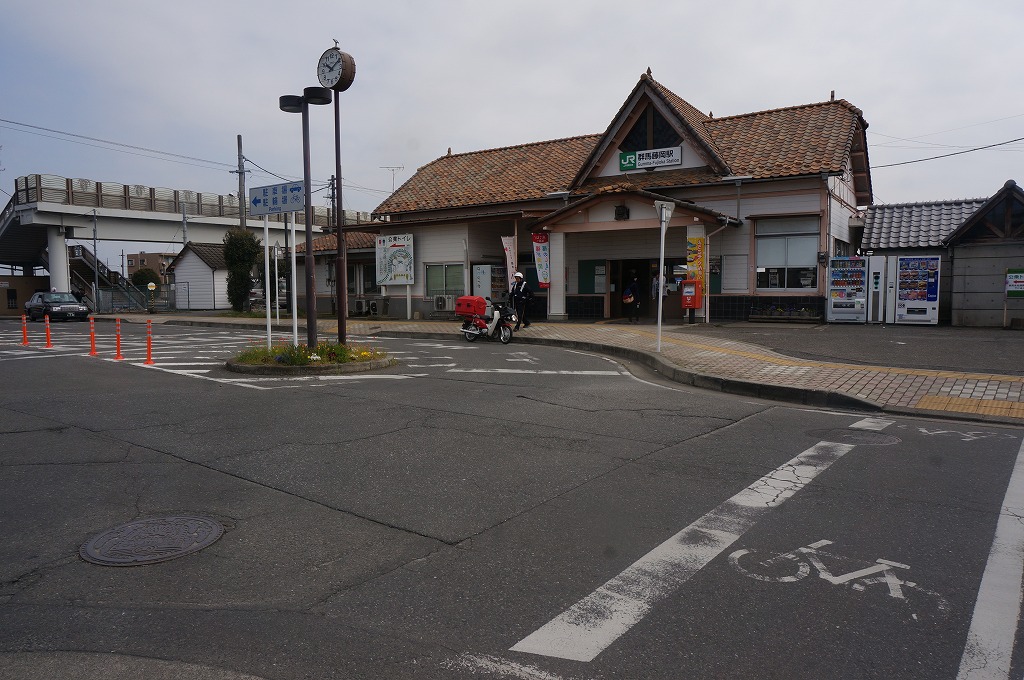
Access; 10-minutes walk from Fujioka 藤岡 station (JR line), To get to Fujilka from Tokyo, you take Ueno-Tokyo line (JR line, bound for Takasaki), and change at Kurakano 倉賀野 for Hachiko line 八高線. It takes about 2 hours.

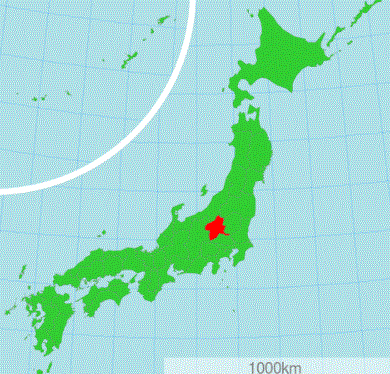
Gunma  prefecture location map
Gunma prefecture

access to Fujioka city map
from Tokyo to the shrine

 *This article is written based on the experience when the writer visited the place in 2016. The program procedures are basically the every year.

Fujioka station
Fujioka station

Fujioka city's street

cherry blossoms on the street

the entrance of shrine

How beautiful the cherry trees are!

There are few cherry blossoms trees in the precinct Shinto shrine..

Why?

People often plant evergreen trees because these are thought to live forever just like deities. But, in this shrine, the entrance area has many cherry blossoms, the beauty of which delights visitors.

So I guess the cherry trees were thought superior to faith?

shine's view
the view from the Hon-den

First half

Hon-den of shrine
the Hon-den

 The precinct is wide. Main hall (Hon-den 本殿) is at the center. This building is on a hill which overlooks the view of whole precinct. This hill is old grave. This kagura-den 神楽殿 (hall for playing kagura) is right in front of the main hall. This building has two stories, the stage is on the second floor. You can watch from under the hall or from the main hall. which is a little away.
 The kagura starts at 11:30 am on schedule.

Quite a few people gathered more than I expected. Especially the number of children stood out.

I guess the reason is because they are in spring holiday.

Spring holiday? We, all deities, work without holiday.

Omoikane(masked player) ~Japan culture~kagura first program 1

Omoikane (masked player)~Japan culture~kagura first program 2

Omoikane(masked player)~ Japan culture~kagura first program 3

Omoikane (masked player)~Japan culture~kagura first program 4

 First progarm is “Omoikane“. The player white cloth dances alone, holding a bell and staff of pleased paper stream.

What is the thing the player holds?

This is “Gohei (paper streamer)”, which Shinto priests often use at ceremonies. We can often see this from. They that the deity lodges in these things temporally.

And players take the same action at four corners. Why?

It means that it is significant to appease the earth. The feature of this kagura is very ritual and hardly any dramatic elements. So, players sometimes turn back to the audience because they play not the audience but for the deity.

I’m sorry to say there is no part for me in this scene.

 Second program is “two Koyanes“. Two players are on the stage. They were white and black mask of old men. They dance bisymmetrically with paper streamer and bells, too.

Japan culture~kagura second program 1 masked players

Japan culture~kagura second program 2 masked players

Japan culture~kagura second program 3 masked players

Japan culture~kagura second program 4 masked players

How are programs named?

The names of programs are named on each deity. For example, “Koyane” is named after the called “Ameno Koyane”.

 Third program is “three deities of Sumiyoshi“. Three players appear on the stage who each wear cloth of different colors, white and yellow. They dance symmetrically with great skill amis falling of paper of pale pink prtals.

Japna culture~kagura third program 1 maske players

Japan culture~kagura third program 2 masked players

Look at that. I think that you can feel fundamental elements of Japanese culture. Cherry blossoms falling and watching kagura. It is hard to get such feeling from another event.

I see.

 Every program is short which lasts within 10~15 minutes.
 Toward the end of this program, people gather around the kagura-den.

More people have gathered. Do they love this program?

No. They are human as well as you.

 Many people appered on the stage, and began to throw many things.

Japan culture ~kagura in a shrine

What is going to being?

This is “mochinage” ceremony. “Mochi” means originally Japanese rice cake. But, recentry, “mochi” changed to various other things, like sweets. This is a congratulation present. Of course, all are free. Most of the audience gather to get this present. Anybody can get this. There is no limit numbers. You can get many sweets by yourself.

That’s good.

But what you must not forget is that these are presents of fortune for everybody. Not only for you? OK?

I see, I see.

Japan culture~kagura in a shrine

Japan culture~kagura in a shrine

 After the ceremony of mochinage, the program starts again.
 Next program is “Miko mai“. “Miko” is a shrine maiden consecrated to deity. Miko-mai is a type of dance performed by “miko”. The way to dance is different in every region. Here, four elementary school girls are performing. This is shorter than other programs which lasts within 5 minutes.

 ”Sarutahiko“. One player weares red and long-high nose mask and holds a bell and long sword in his hands.

Sarutahiko (masked player) ~Japan culture ~kagura program

Sarutahiko (masked player)~Japan culture ~kagura program

Oh, he is my colleague. We are oroud guides for our fellows deities. (Reference/Japanese mythorogy)

He looks more powerful and stronger than you.

Darm it. Your eyes are kortholes.

Japan culture~kagura in a shrine girls players

Japan culture~kagura in a shrine girls players

 ”Miko-dance” again.

Tajikarao (masked player) ~Japan culture ~kagura

Tajikarao (masked player)~Japan culture ~kagura

Tajikarao (masked player)~Japan culture~kagura

two kagura players in kagura (Japan culture)

 ”Iwatobiraki” →please refer to “Reference”→”Japanese mythology”
 One player wears black clothes red “hakama” and holds gold folding fan. “Hakama” is Japanese skirt for formal wear. He is deity named “Tajikarao 手力男”. He plays the role of removing “Iwato”. In this kagura, a blackboard represent it. He takes it off, exposing a little girl traditional wear of “miko”. She represents “Amaterasu”.

kagura's players in shrine ~Japan culture

Japan culture kgura's players

 After the first player leaves, “Miko-mai” plays again. And two players wearing black and white clothes and mask of old man bisymmetrically. At last, the first player “Tajikarao” appears again.

girls dancers in kagura Japan culture

girls dancers in kagura ~Japan culture

 At last, mochinage ceremony is held again, and there is a lunch break. It is about 20 minutes.

Second half

Hey, get up. Kagura started again.

?? Oh, I seemed to have dozed off without realizing. Spring weather makes us sleepy.

Stop being so idle and get to work !

powerful player in kagura (Japan culture)

powerful player in kagura (Japan culture)

 ”A sword dance” One player has a mask of surprising and long hair. He walks powerfully swinging a sword.

His action signifies cutting evil. We can usually see the action in kagura.

You know so well.

That’s because I am a deity !

a girl dances kagura (Japan culture)

“Miko-dance” one player.

It’s beautiful !

It looks like spring of cherry blossoms come together to make one female figure.

You sometimes are so poetic despite your appearance, aren’t you?

Hey, don’t judge people by appearance.

Ryujin (masked player) in kagura(Japan culture)

Ryujin (masked player) in kagura (Japan culture)

 ”Ryujin (deity of dragon)“

 Mochinage again.

deity of battle in kagura (Japan culture)

deity of battle in kagura (Japan culture)

 ”Hachiman” This is a deity of battle and war. He drive out evil spirits to shoot a bow.

two deities in kagura (Japan culture)
Sago-mai

After”Sagomai” and “miko-mai“, 15 minutes intermission

a player dnace in kagura (Japan culture)
Miko-mai

It is getting cool. I feel the cold wind.

Three more programs. Be patient.

Aren’t you feel cold?

Noway, I am a deity.

old deity in kagura (Japan culture)

old deity in kgura (Japan culture)

old deity in kagura (Japan culture)

 ”Hakuhatsu (deity with white hair)”

a girl dances kagura (Japan culture)

I guess that this program is to wish for longevity. He has long white hair and wears mask of old man.

deity of fishing in kagura (Japan culture)

deity of fishing in kagura (Japan culture)

 ”Ebisu“

I like this program.

Why?

He is fishing. And this program is often the sign of mochinage voming.

You are so greedy !

But, it os one of the most popular programs from old times. Hey, mochi is falling down again.

 Ebisu finally caught a sea bream as expected and got off.
 Finally, people were throwing sweets splendidly and all programs ended. It was 5 pm.

deity of fishing in kagura (Japan culture)

a deity of fishing in kagura (Japan culture)

Ending

many players

many players

end of kagura (Japan culture)

This kagura went on schedule. I think it is rare.

Yes, I hardly see something like this.

I am pleased to get many sweets. Let’s visit here again.

 to be continue to vol. 2


Report: 1/35 of the most important of the folk performing art Haji Ichiryu Saibara Kagura 土師一流催馬楽神楽

Date:   1st January, 14th February, 10th April, 10th October, and day of “Tori” in December, every year
Location: Washinomiya shrine Washinomiya, Kuki city, Saitama prefecture
How to get there: It takes 10 minutes from Washinomiya station (Tobu Isezaki line)

 ※This kagura is consisted of 12 programs.

 ※This kagura is one of 35 an important Intangible Folk Cultural Heritage by Japanese national government.

two maked dancers

Introduction

 This kagura is called “the source of Kanto kagura” (Kanto is located in center of Honshu which is main island of Japan, and is the generic name of seven prefectures). In addition, this is one of the country designation important intangible cultural asset which there is 35.
 ”Sada shinno” originally started in Shimane prefecture. A Shinto priest of Sada shrine learned Noh in Kyoto about the beginning of 17th Century, and made a new kagura (so called Sada Shinno) baced on the Noh style. This kagura is known for a distinctive element. That’s the dancer is holding thing (bell, sacred staff with cut paper (heisoku 幣束), or a sakaki leaf and so on). This style of kagura started to be called “Izumo style ” and spread out in the whole country before long. This shrine is where Izumo style was accepted first. So it is called “the source of Kanto kagura”.
 But the first document of the kagura in this shrine was recorded in about the middle of 13th century. We don’t know whether this kagura is the same kagura of today.

washinomiya station
Washinomiya station

around the shrine

 I went to Washinomiya shrine on 1st January, 2015.
 Kuki city is located in Saitama orefecture, population of about 150,000. It is not very big town. It takes about 1 hour from Tokyo by Ueno-Tokyo lune (JR), changing at Kuki to Tobu line, next station being Washinomiya station.
 Washinomiya shrine is about a 10 minute-walk from Washinomiya station. We cross a red bridge on the way to the shrine. It like a cnnection between the sacred place and the regular world.

animation costume player

the stage

 The shrine became a holy ground of animation films in these days. so we can see many persons who wear costumes of animation characters. We can find a middle-aged man who puts on a blond wig wearing sailor uniform (high school girls style ) and skirt among them. You guess that it is quite a surreal scene. Even if it is not so, this shrine is the core of faith in this area. The number of people that gathered exceeded 400,000 in there days. The shrine is quiet in usual times, but only for three days, it becomes really crowded.

First half

 On those days, people make a long lines to pray, I passed by them and ran to the hall (kagura-den) where kagura was being performed.

first program on the stage (Japanese traditional performing art, kagura

 the kagura was going to start about 10 or 10:30. When I arrived at about 11:00. The kagura had already started. The kagura-den is front of the Hon-den (main hall). So many people were there, but nobody was looking at the kagura. The audience seemed to be no more than 20 persons.
 On the stage, there were one masked man and two girls. The mask showed an old man smiling gently. He dance slowly holding a bell and sacred staff with cut paper (heisoku 幣束). This kagura’s feature was in a ceremonial manner with hardly any dramatic representation.

a masked chracter

a masked character

on the stage

a girl on the stage

 I guessed from the title that this program represented at the famous scene of Japanese mythology, “Amano iwato biraki” (see to “Reference/Japan mythology). In “Amano iwato biraki” all deities are pleased when “Amaterasu” (she is a deity of sun) comes out from where she was hidden in a big door of rock. But, it is difficult to understand such a state only by seeing it. It is significant to appease the Earth in every direction by the swinging the bell. This program took about 30 minutes.

a masked character in front of a bridge

 Next program is “Hakagura“. This program is where two girls dance swinging a bell. When this program is played, people sitting on the stage play music “Saibara”.”Saibara” is a popular music in Heian period (9~10 C). When we listen to these music, we don’t feel such elements. The oldest music is called “Gagaku”. I feel this music like “Gagaku”faster in tempo. I don’t know if these music remain completely at the time, but I am filled with deep emotion. I think it worth listening to once at least because you would feel the life of ancient Japanese.

two masked players

Izanagi
Izanagi

Izanami
Izanami

two people are playing kagura(Japanese traditional folk performing art)

 Next program is based on Japanese mythology, too. This mythology says in the beginning of time, two deities, named “Izanagi” and “Izanami” gave birth this country. So, a mobile bridge is set on a stage and two players dance across the bridge. The male deity dances powerfully, the female deity dances with grace.While changing their positions they dance around a stage. This program ended at about half past 12. Then there was an intermission.

Intermission

the shrine

 There were many food stalls in the shrine precinct. After I ate lunch, I found a place where people were being fire using metal barrel. This area was surrounded by a double fence, and some people were direct cuttlefish. I thought it was a good system. Only people who bought, direct dried cuttlefish could enter in front of the fire. I saw quite a lot of people buying cuttlefish.

Second half

 Meanwhile the kagura started again at 2 o’clock.
 First program, two little girls were dancing hoiding a bell. It was short.

two girls are dnacing

 Next program was based on mythology,too. When the grandson of “Amaterasu (a deity of sun)”, “Ninigi” goes down from his country “Amatsu kuni” to this earth, two deities got married with the meditation of “Ninigi”. One is a chaperon of Ninigi, named “Ameno Uzume“, and is a deity who had waited Ninigi’s group and led this coutry to safty, mnamed “Sarutahiko“.

two players are on the stage of kagura (Japanese traditional folk performing art)

masked player of Kagura
Sarutahiko

masked player of kagura (Japanese traditional folk performing art)
Ameno Uzume

ameno uzume

sarutahiko

 So, two dancers enter the stage. One wore a red face mask with long -high nose, and another wore a female mask. The dancer with the red mask is “Sarutahiko”, and the other is “Ameno Uzume”. Sarutahiko held a pike, and Ameno Uzume held a big staff which red pieace of paper. Two dancers faced each other across the bridge, changing their position like the program of “Izanagi and Izanami”. This kagura basically consists of such dancing.
 It ended at 2:20.

3 players onthe stage of kagura (Japanese traditional performing art)

a maske player

a maske player

a masked player

 After short break, next program started. Three dancers each wore a mask of “okina” (old man) with long mustache and beard. They each held fans, and danced slowly making a circle. It is said that it is to express a prayer for a peace of the world.

 After 30 minutes, the whole program for today ended.
 If you are interested in old style kagura, I recommended to watch this “Saibara kagura”. You can definitely see a noble and elegant dance program.

     For more information
 This kagura is held at “Washinomiya shrine (branch shrine)”, 15th April. It is at “Hachiho, Washinomiya town”.