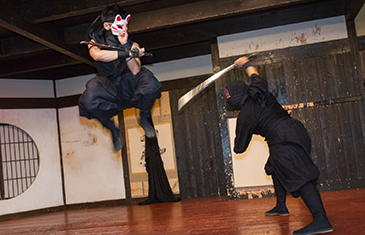
Watching the “Oni” dance in Kashima City ~2 “Menburyu” at Otonari district 音成面浮立
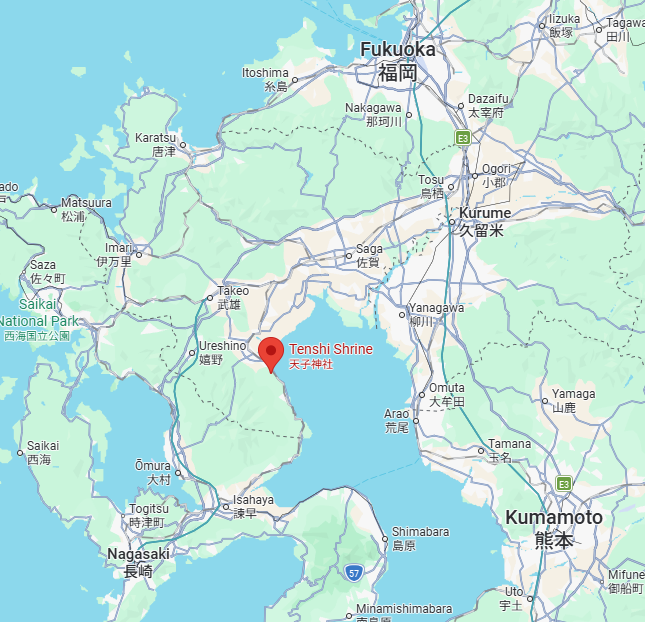


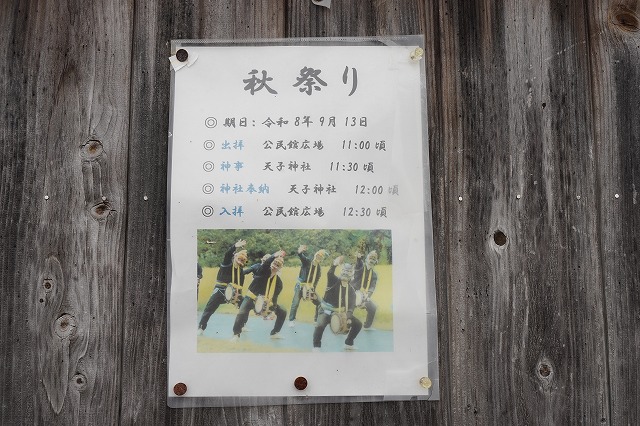
Date; The second Sunday in September
Location; Tenshi Shrine, Otonari, Nanaura, Kashima City, Saga Prefecture
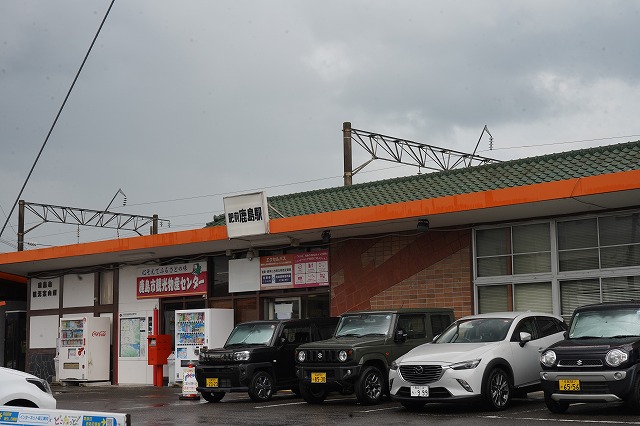
Access; If you’re taking the bus, get off at Hizen-Nanaura Station; if you’re taking the train, it’s about a 10-minute walk from Hizen-Nanaura Station.

Kashim city official https://saga-kashima-kankou.com/feature/1870

Part 1 Hougaura https://discoverdeeperjapan.com/2026/09/17/watching-the-menburyu-dance-in-kashima-city-1-hougaura-%e6%af%8d%e3%83%b6%e6%b5%a6%e9%9d%a2%e6%b5%ae%e7%ab%8b/

*Although the place name is “Otonari,” this traditional performing art is often referred to as “Otonashi,” a name derived from an older place name.
This article is based on a visit on September 13, 2026.

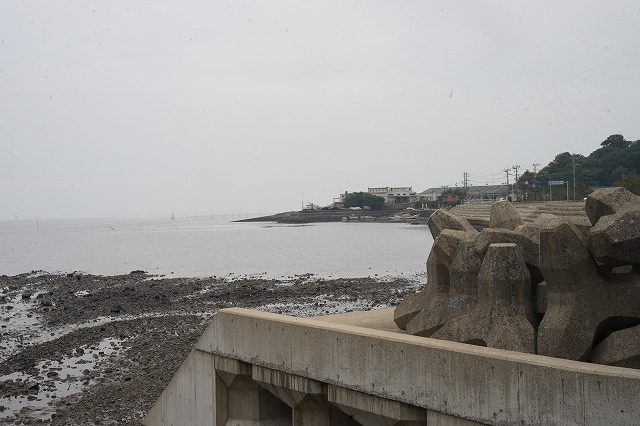
The Tidal Flats of the Sea of Ariake

On this day, various Menbryu events take place throughout this area. Starting in the morning, three events—in Iida, Hougaura, and Otonari—are held at staggered times. The reason for staggering the times is apparently because the Shinto priests serve at multiple shrines simultaneously.
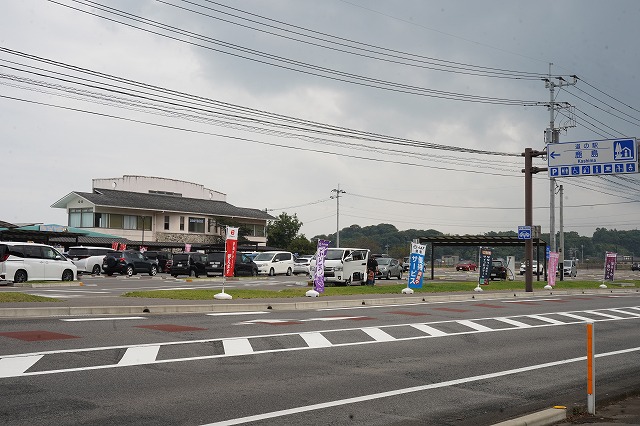
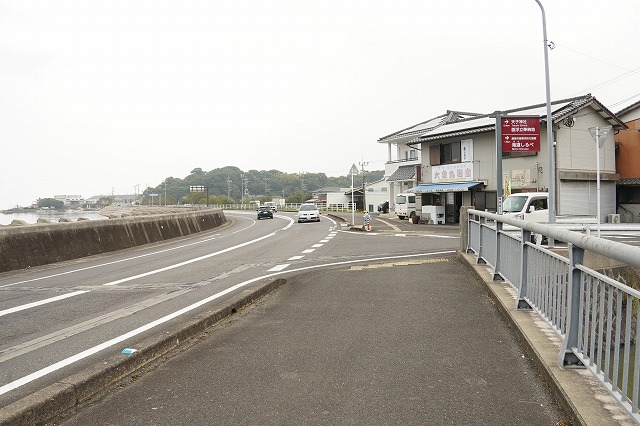
Roadside Station Kashima

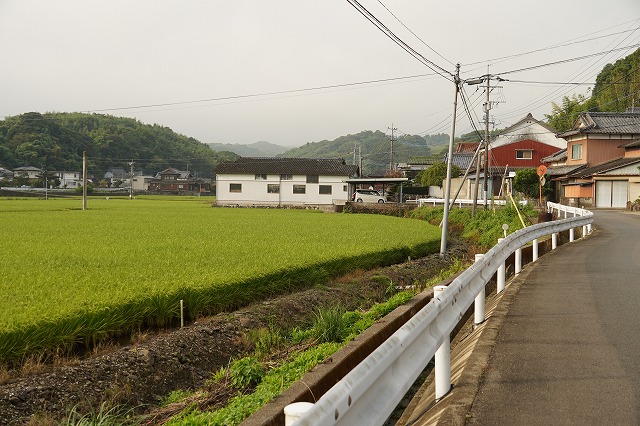
After visiting Hougaura, I walked toward Nanaura Station and headed to the next area, Otonari. It takes about 30 minutes on foot. Following the coastal road with a view of the tidal flats, I came to the roadside station “Kashima.” The Otonari area lies just beyond that.

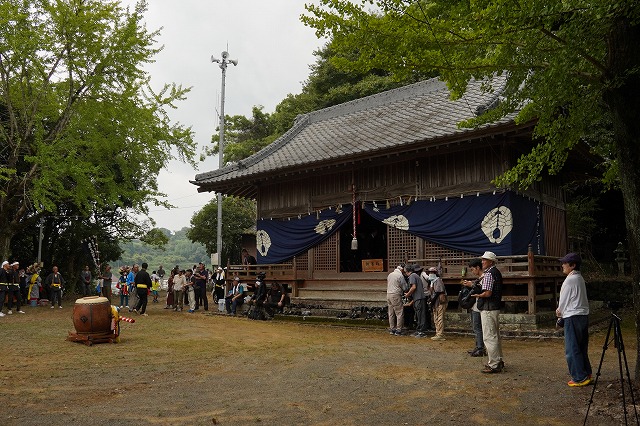
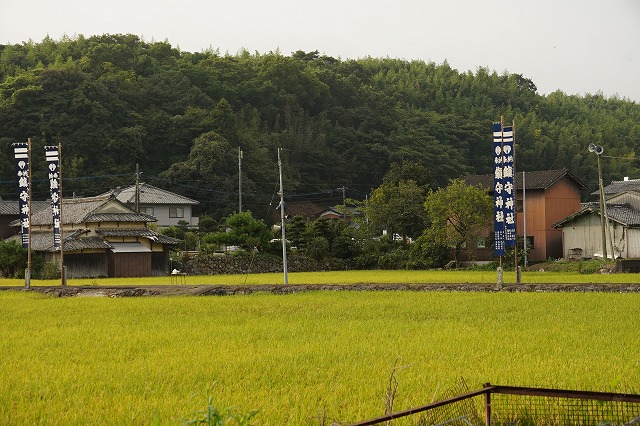
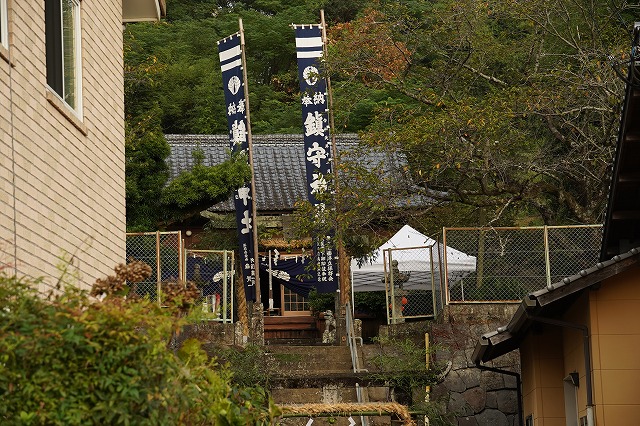
In the plaza below the shrine
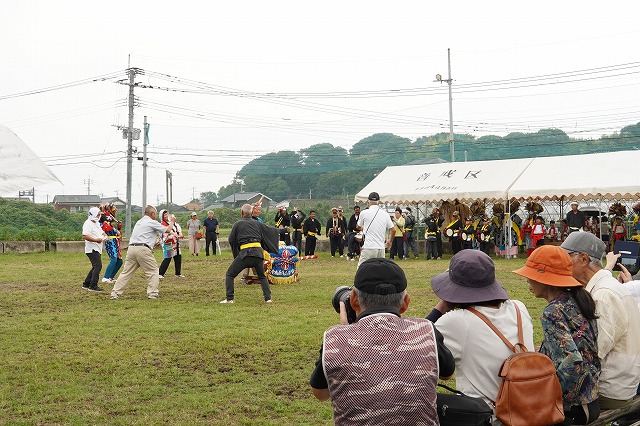
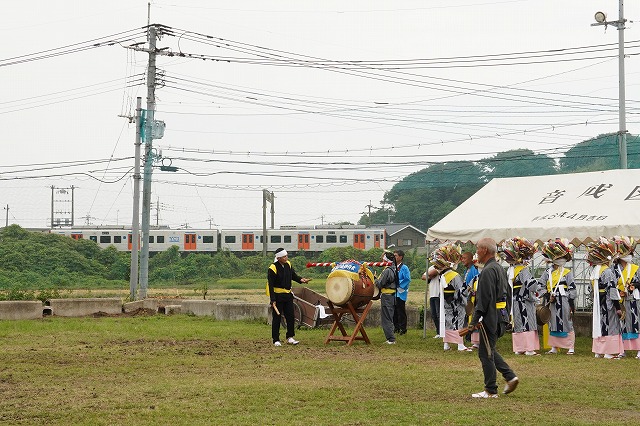
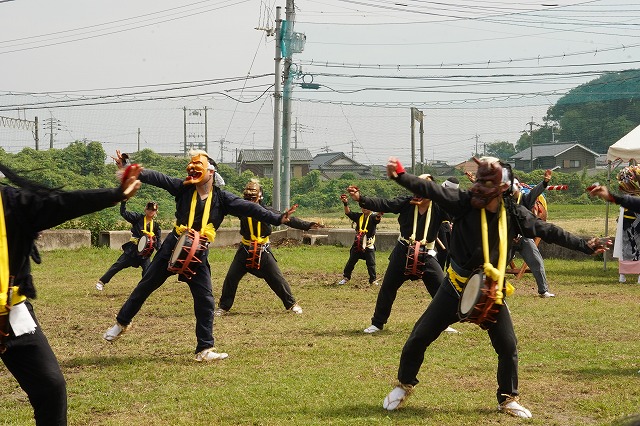
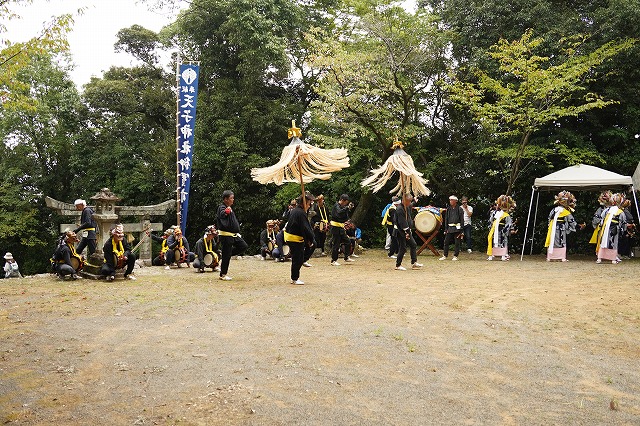
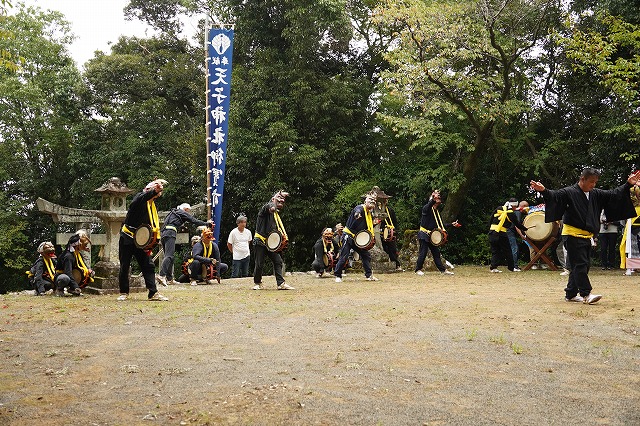
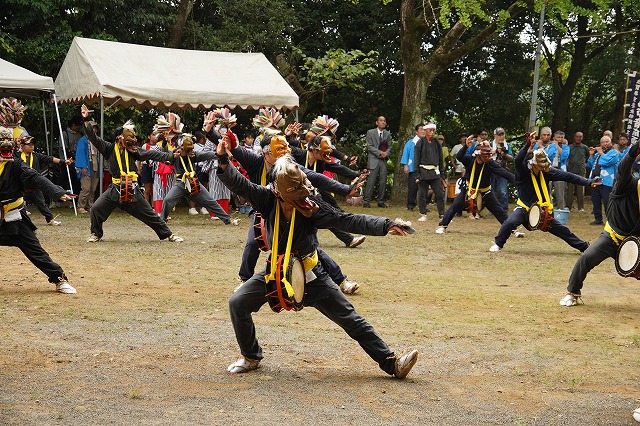
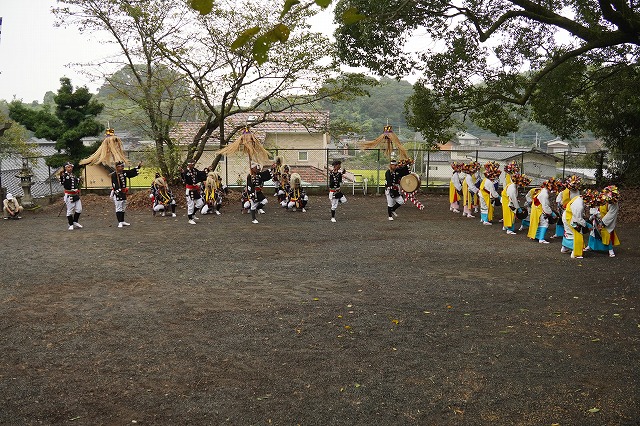
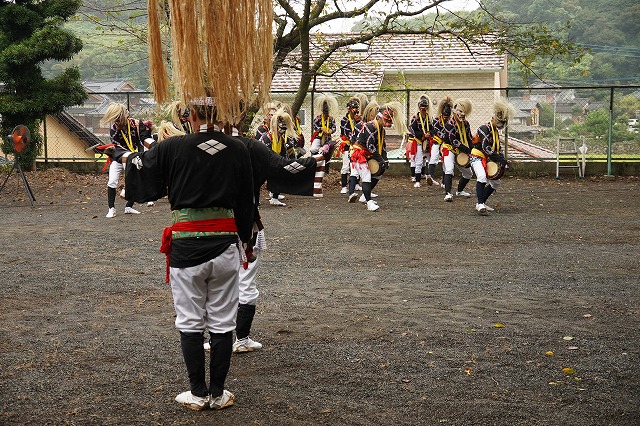
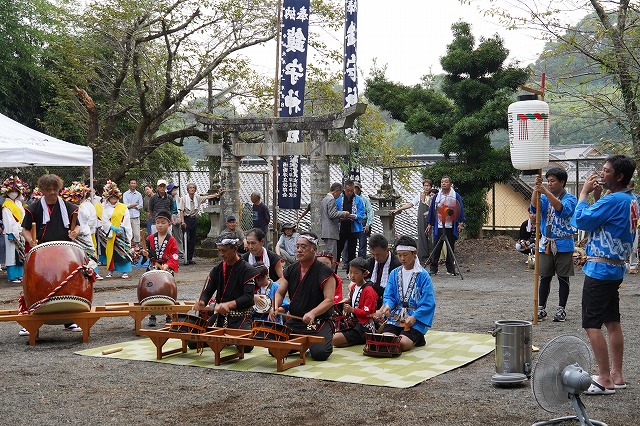
Fortunately, the rain that had been feared didn’t fall, and preparations for the performance starting at 11:00 a.m. are complete in the spacious plaza.
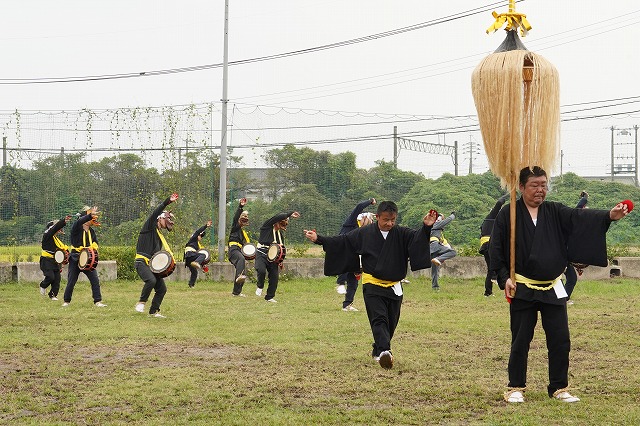
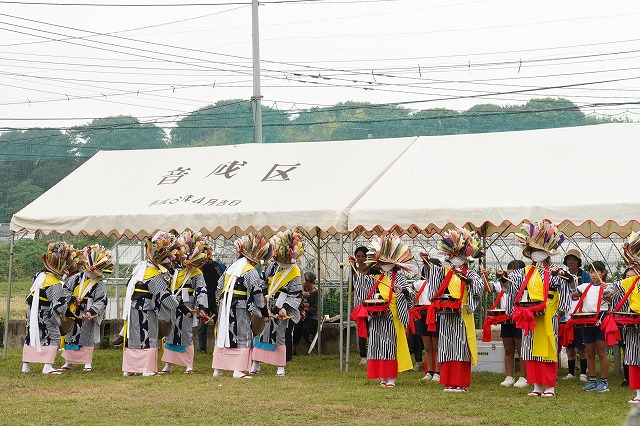
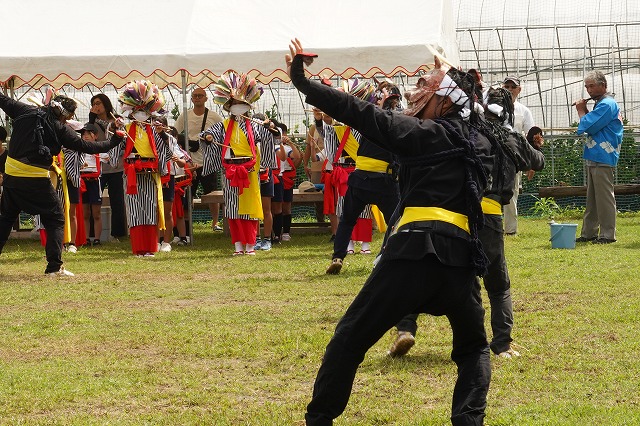
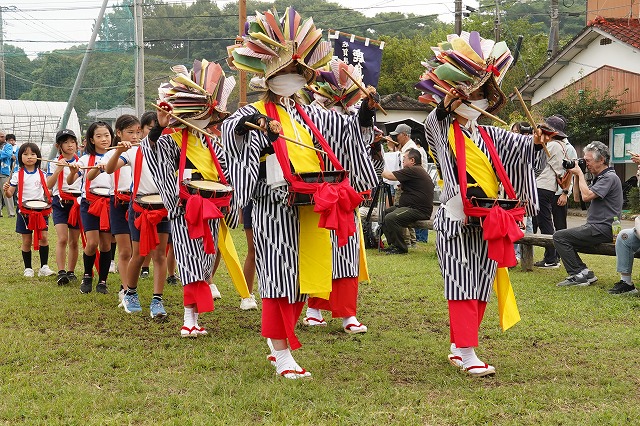
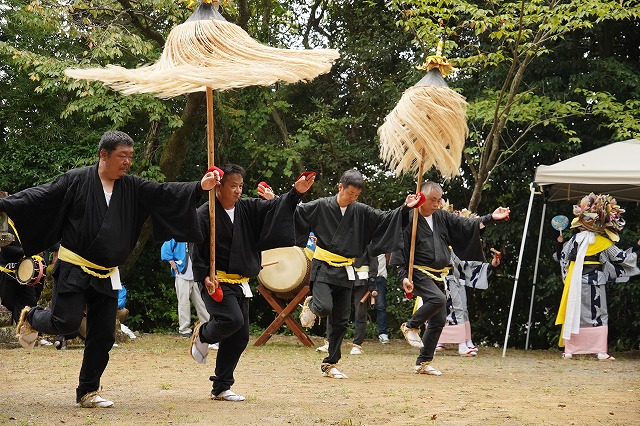
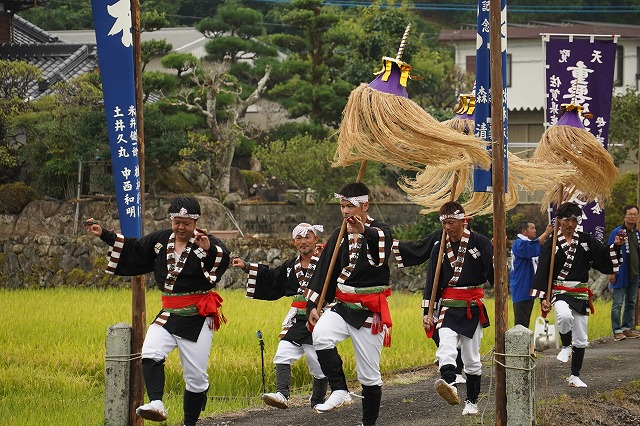
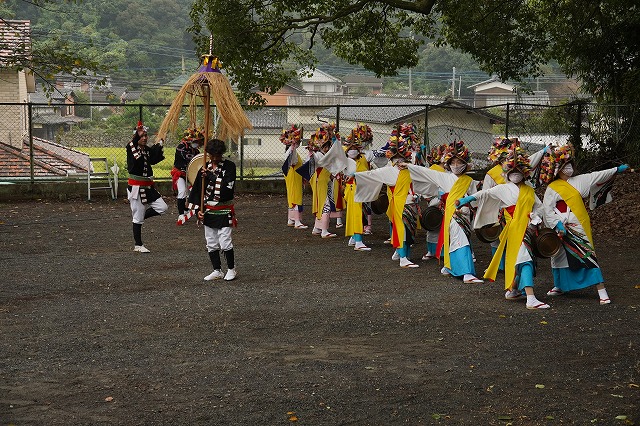
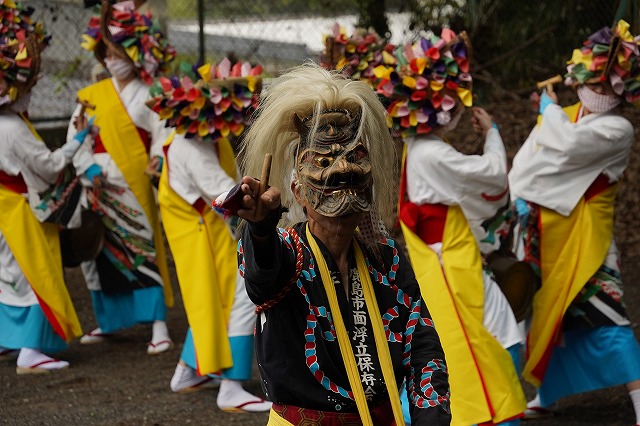
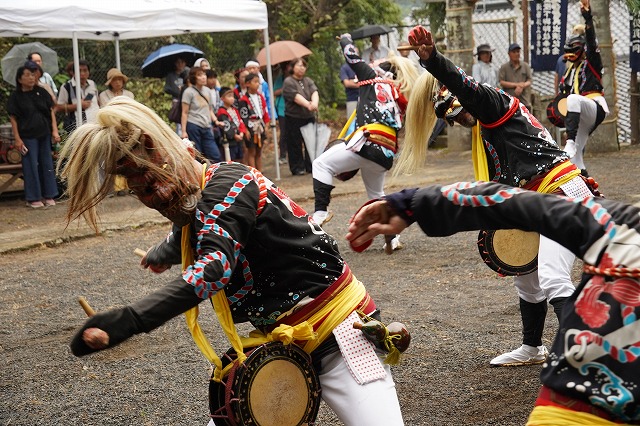
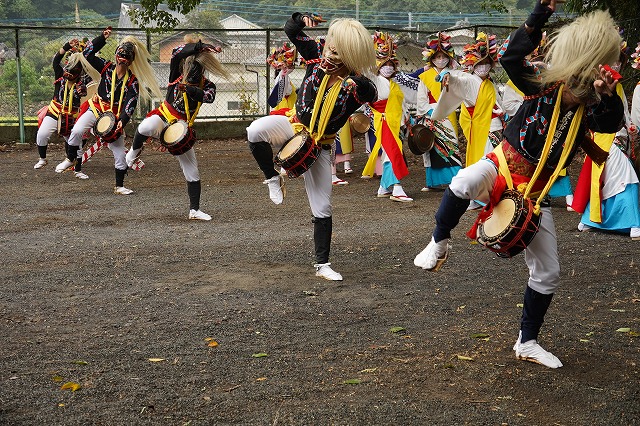
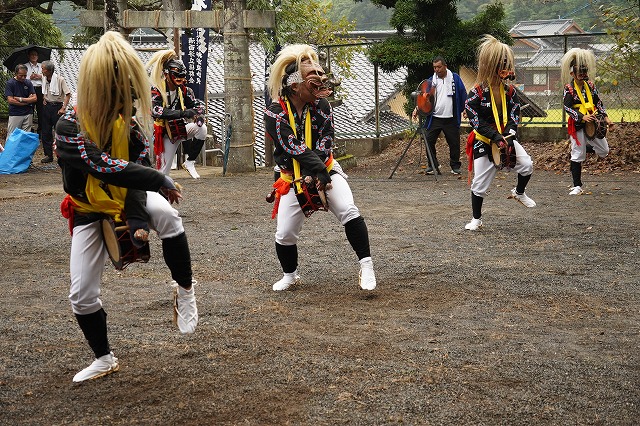
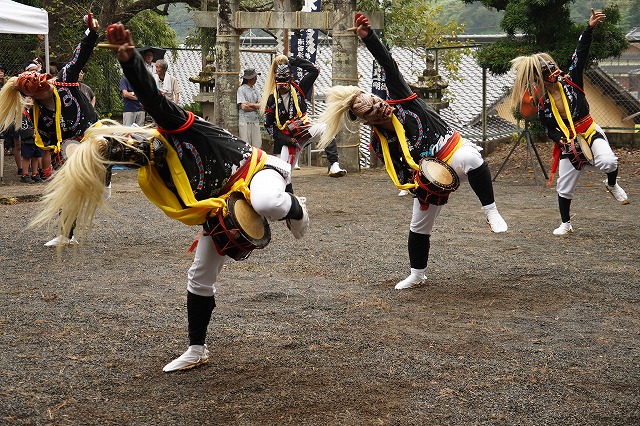
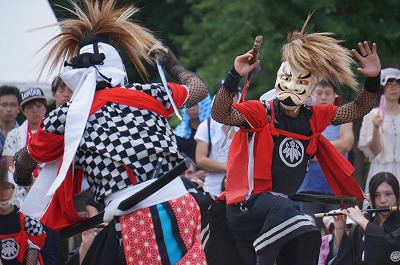
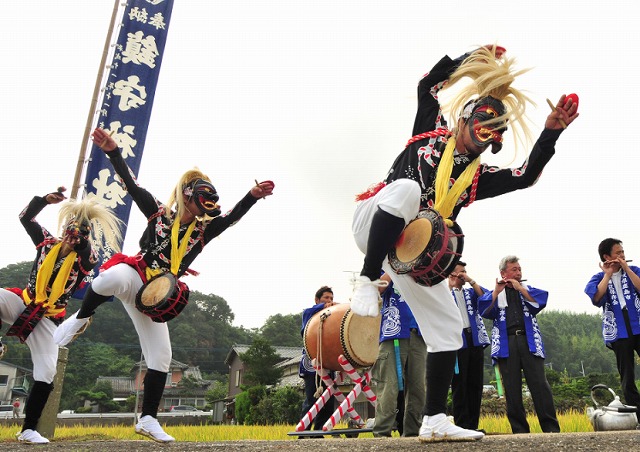
Just as in the “Hōgaura” performance, a group called the “Torige” performs first, while women known as the “Kaneuchi” stand on the sidelines.
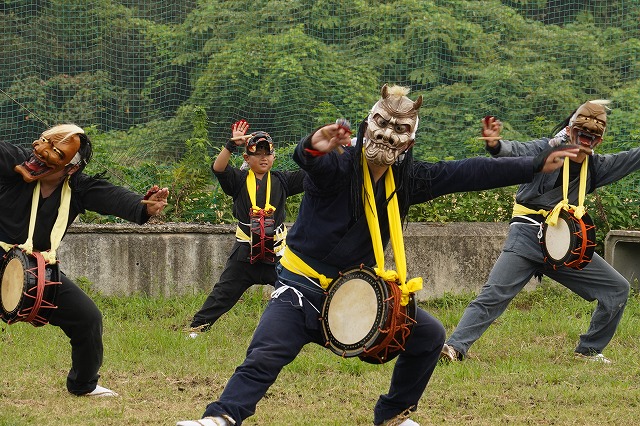
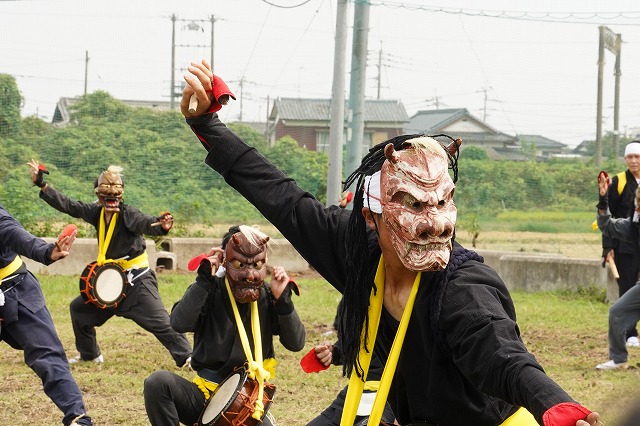
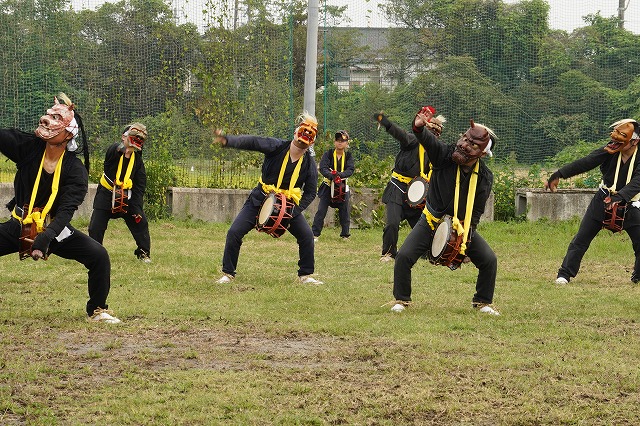
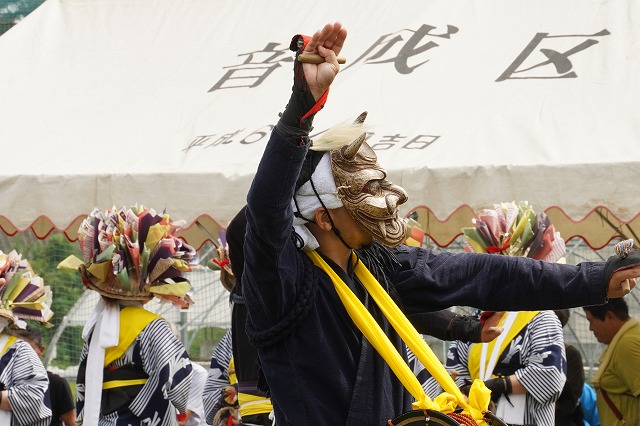
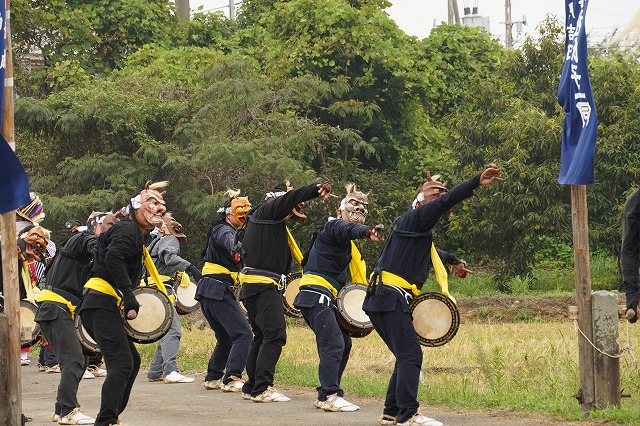
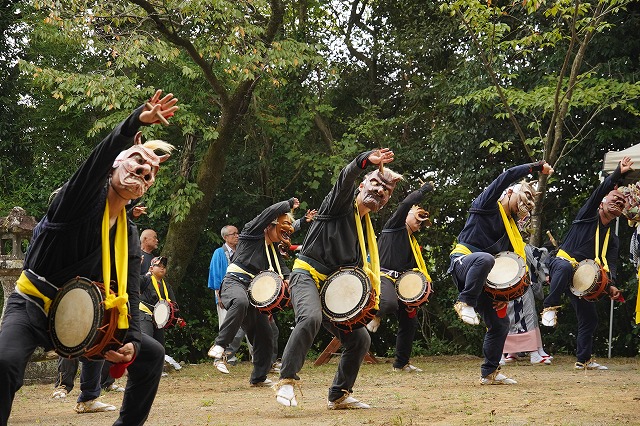
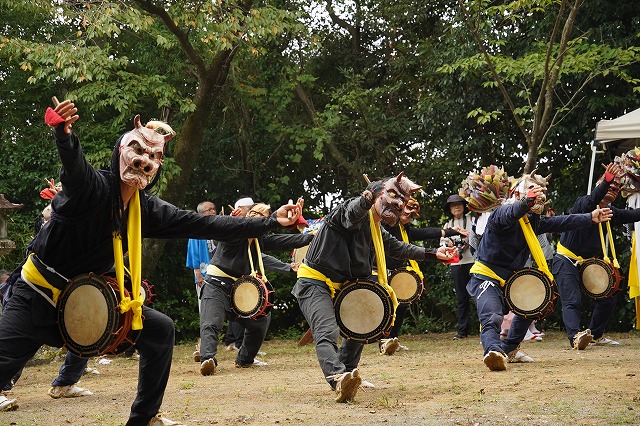
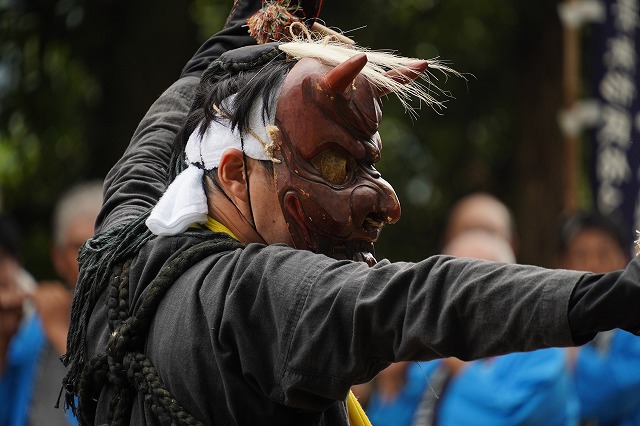
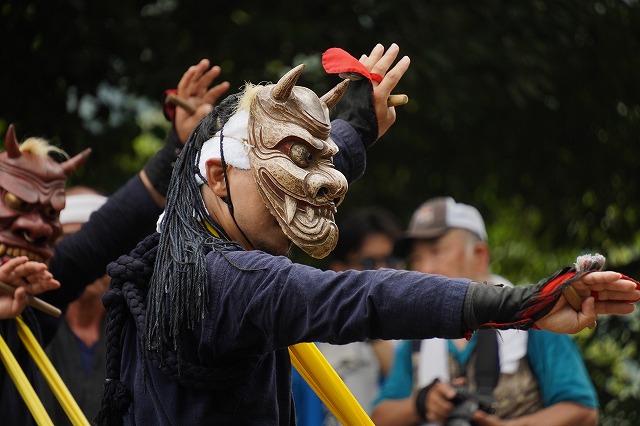
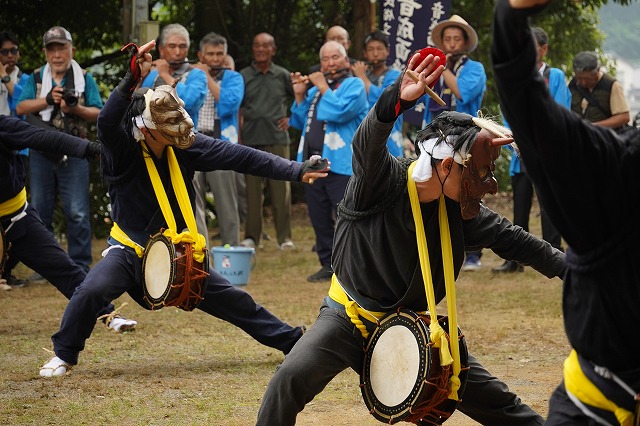
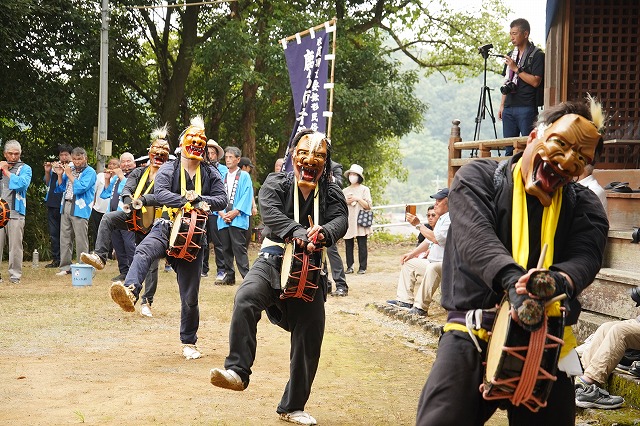
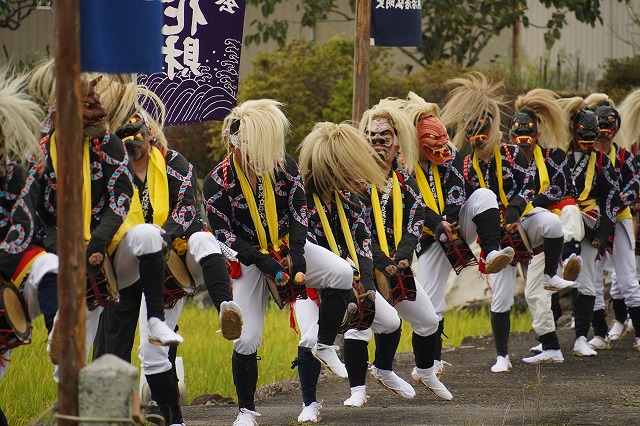
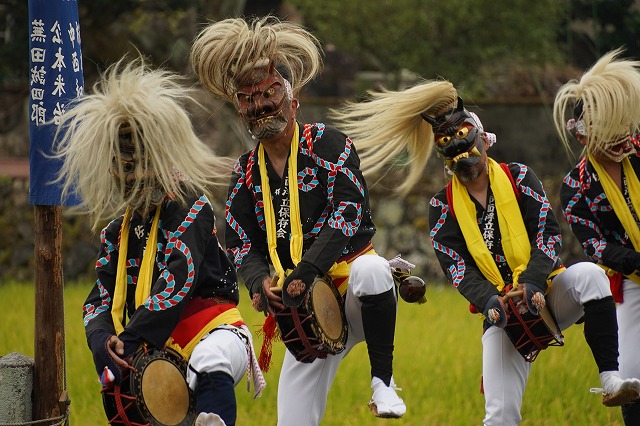
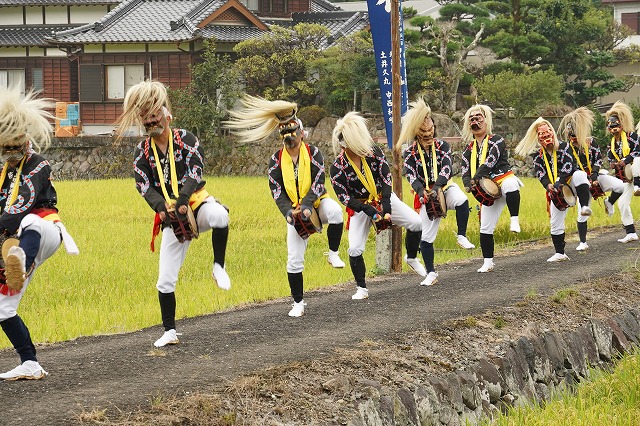
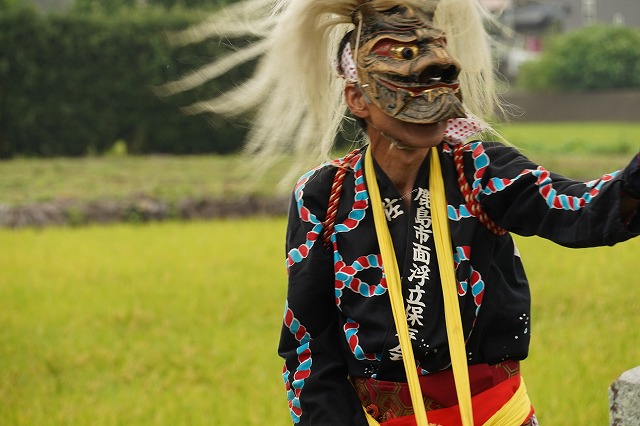
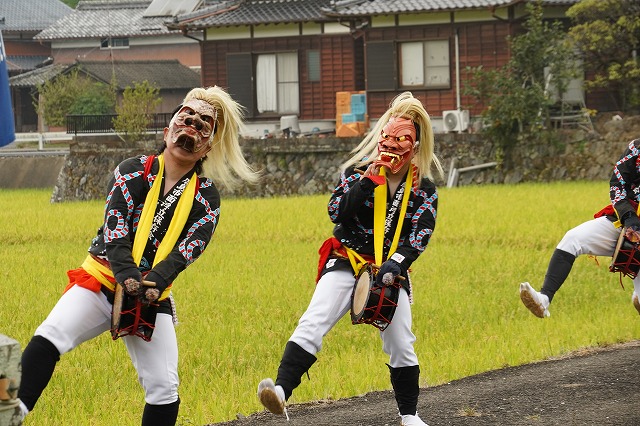
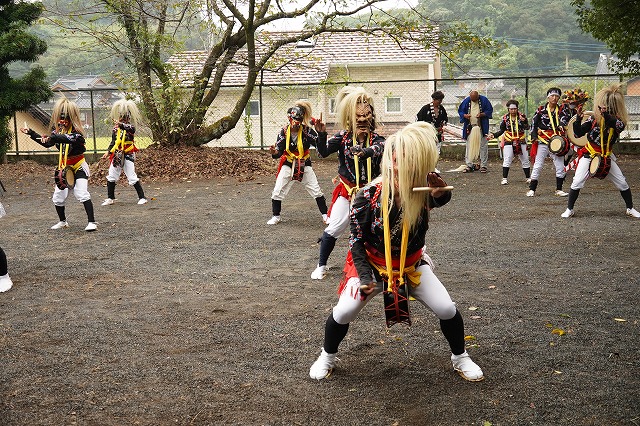
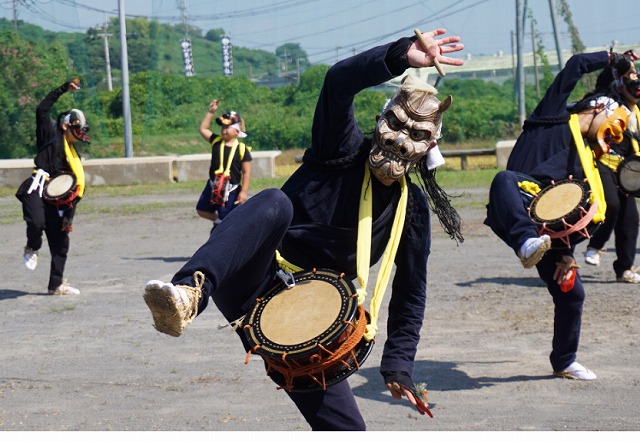
Compared to Hōgura, the costumes are all black and subdued, and the music occasionally becomes quieter, giving the performance a very solemn atmosphere. It is said that this version is closer to the original form.
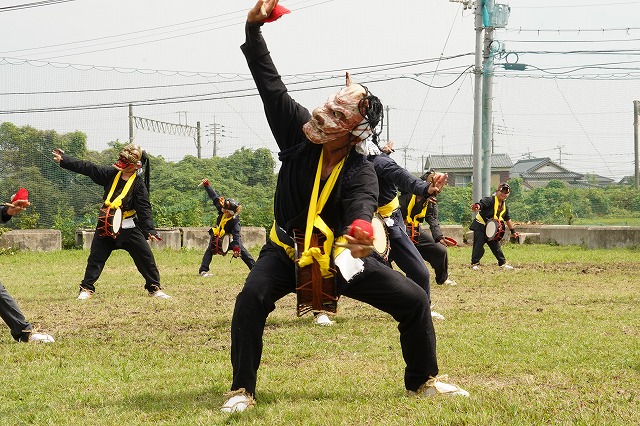
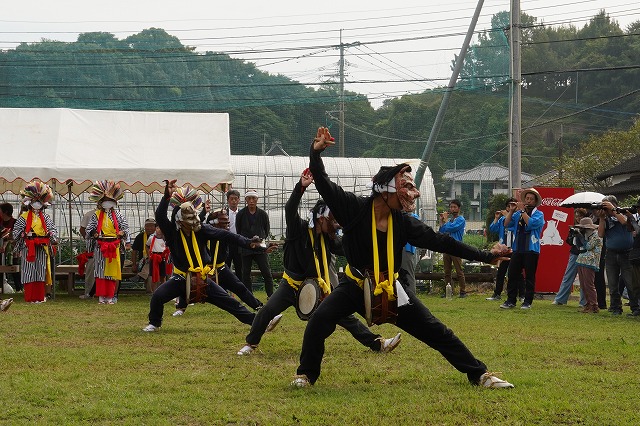
Going down the road ~”MIchiyuki”
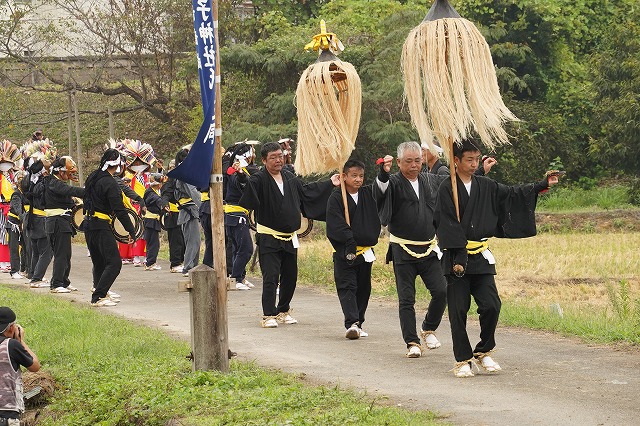
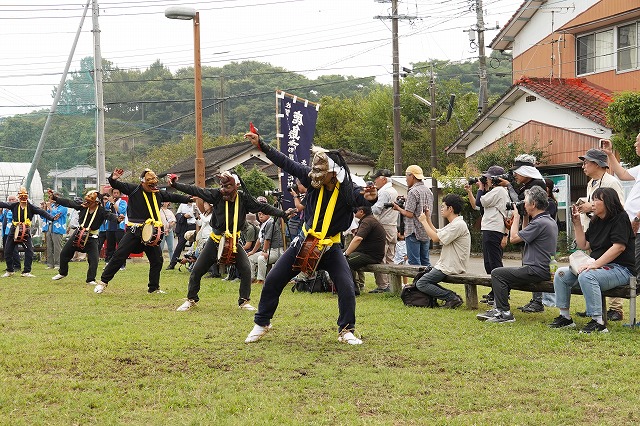
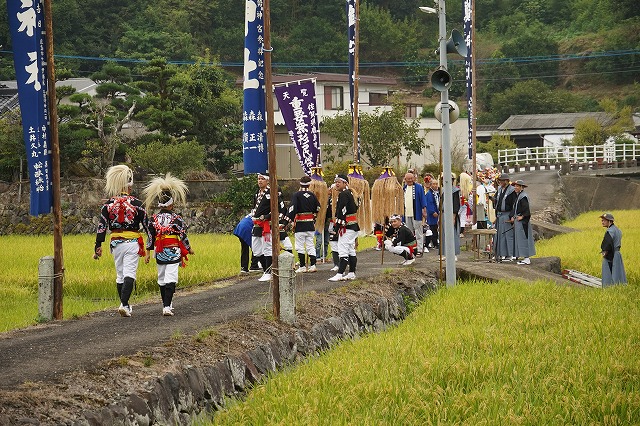
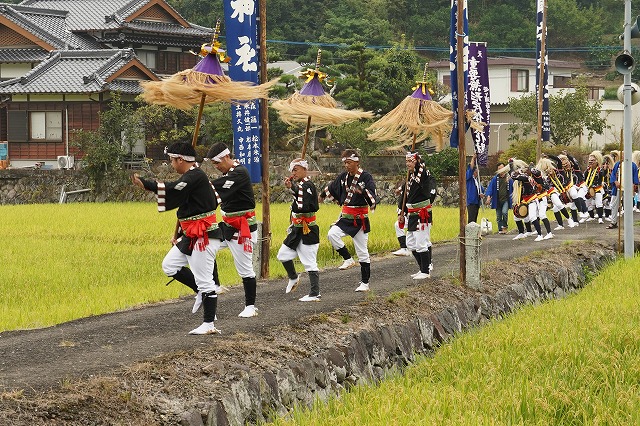
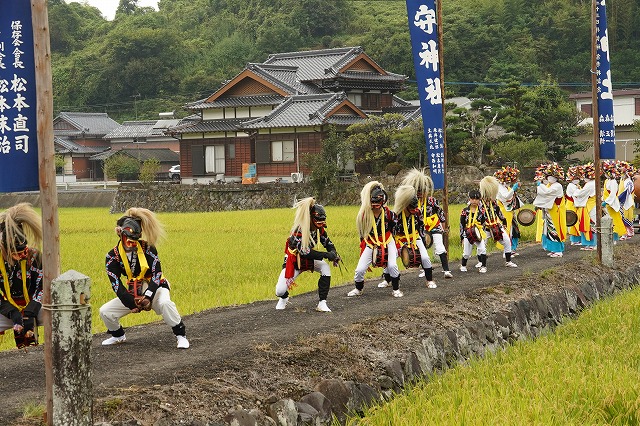
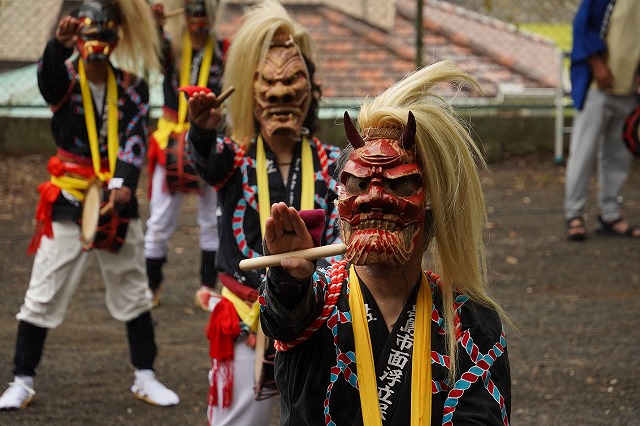
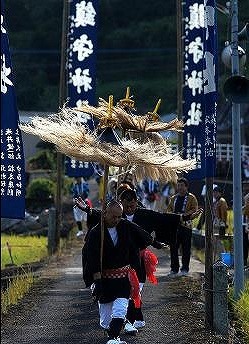
“Michiyuki” could be considered, in a sense, the highlight of the Menburyu performance. The group proceeds along the path leading to the shrine. According to one scholar’s theory, this represents the advance of the Oni (ogres) who challenged the gods to battle.
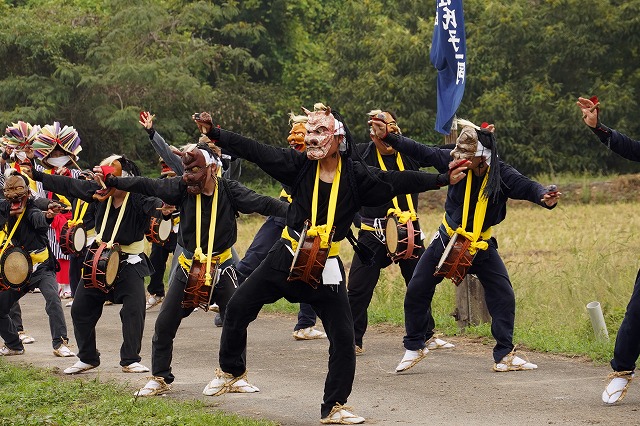
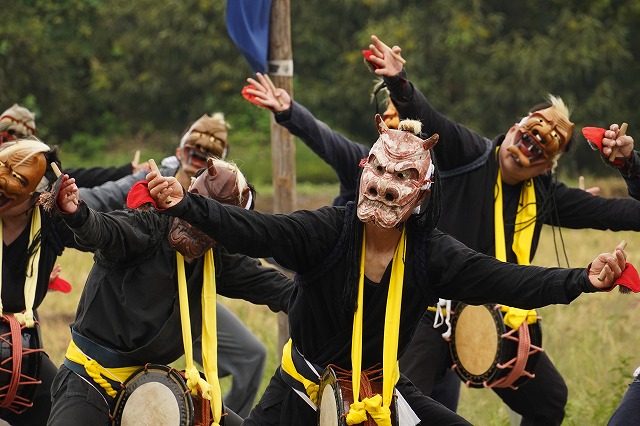
Demons making their way along a narrow path between the fields. There’s simply no way to truly experience the atmosphere of this scene except by seeing it live. It’s no wonder it’s so popular with photographers. About 15 minutes.

They moved back to the shrine grounds. It was past noon.
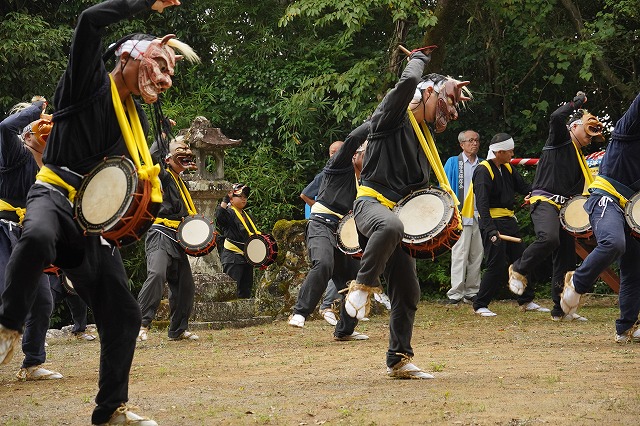
It took about an hour, with a break in between. Although the days of intense heat were already behind them, the dancers were drenched in sweat. It was 1:00 p.m. After this, they would perform one more time to bring the festive day to a close.

Although “Hōgoura” is currently written as “Mother Sea,” it is said that in the past, the character for “treasure” was used, and it was read as “Hōgoura.”
And here in the Sea of Ariake, it is said that the ecosystem is beginning to change because the bay has been closed off. Although local residents are opposed to this, the government remains unmoved. In any case, I can’t help but hope that this place will remain a treasure trove of the sea for as long as possible.
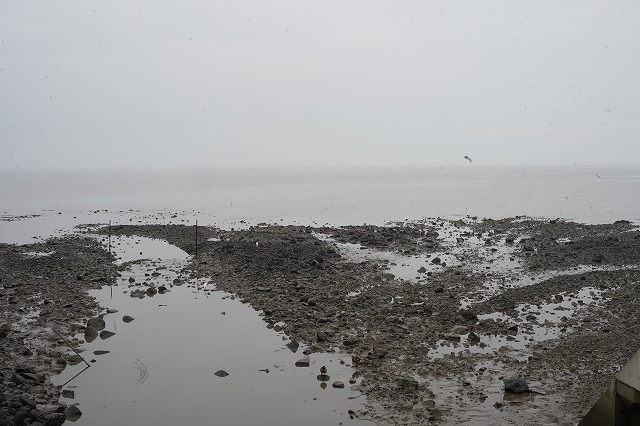
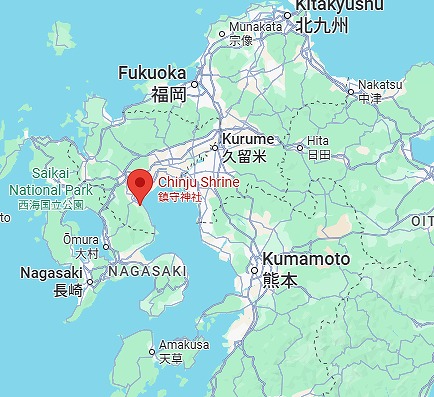
At Roadside Station Kashima, you can experience the tidal flats


Watching the “Oni” Dance in Kashima City 1 ~”Menburyu” at Hougaura 母ヶ浦面浮立


Date; The second Sunday in September every year
Location; *Otonari, Kashima City, Saga Prefecture 849-1323
Access; Take a bus bound for Oura or Takezaki from the Hizen-Kashima Station Bus Terminal; the ride takes about 20 minutes, and get off at Nishiha. It’s a 10-minute walk from there. Hizen-Kashima is about 40 minutes from Saga by local train and about 20 minutes by limited express. Trains run about once an hour, and buses run about the same frequency. By train, it’s about 2.8 km from Nanaura Station.

Kashima city official https://saga-kashima-kankou.com/event/2069
This article is based on information as of September 13, 2026. Please note that times and other details may change from year to year, so please check directly for the most up-to-date information. https://www.city.saga-kashima.lg.jp/main/4040.html#

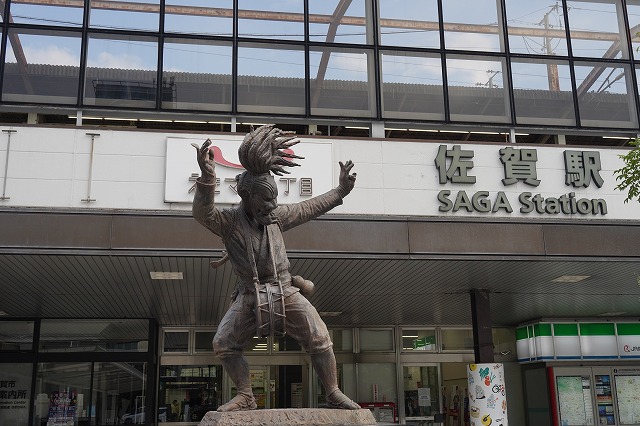
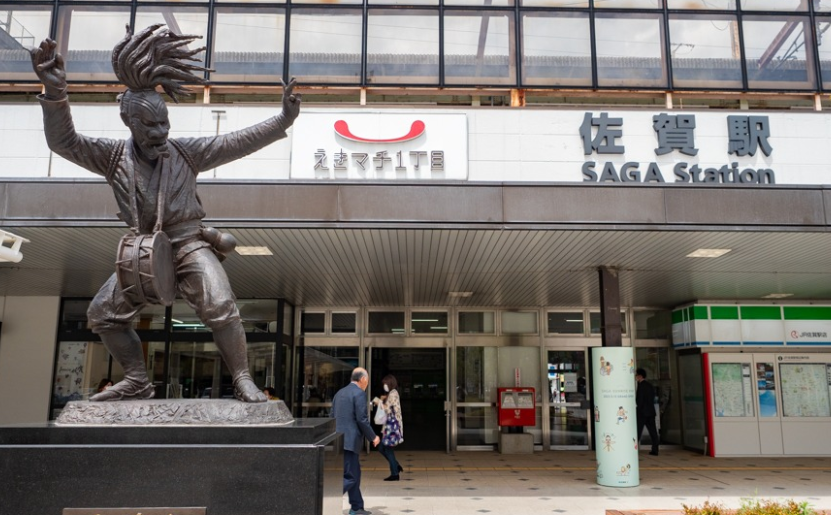
The performing art known as “Menburyu” is representative not so much of Kashima City as of Saga Prefecture as a whole. Even though the art form is centered almost entirely in Kashima City, there is a bronze statue of it standing in front of the train station in Saga City—a city where the art is not even performed.
Menburyu appears at various events and festivals throughout the year. However, September is the highlight.
In this article, we’ll introduce products from the “Hougaura” and “Otonari” districts, which are the most representative of these areas.

Unfortunately, Kashima City isn’t exactly well-connected by public transportation. The nearest train station is Hizen-Nanaura Station, but since it’s a bit far, it’s more convenient to take a bus from Kashima Station.

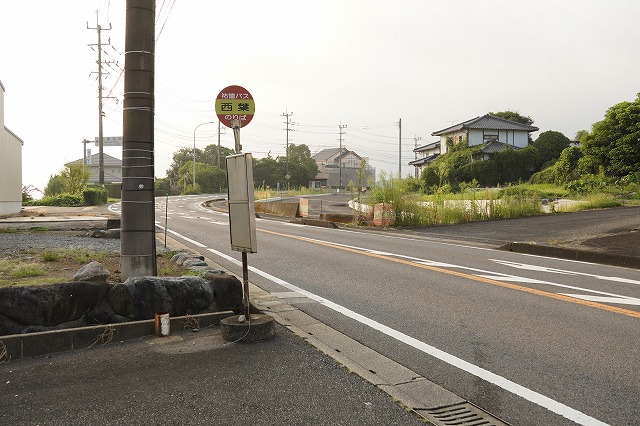
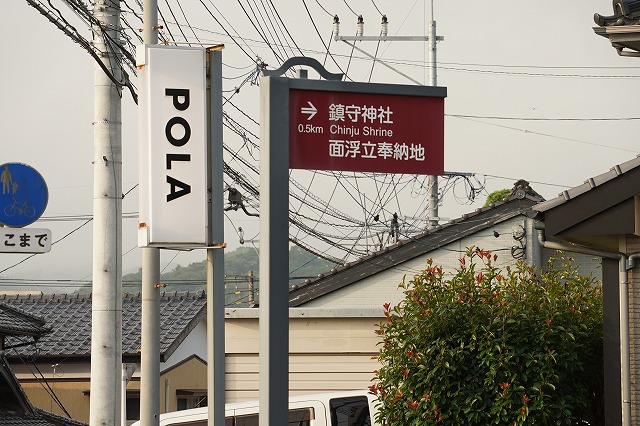
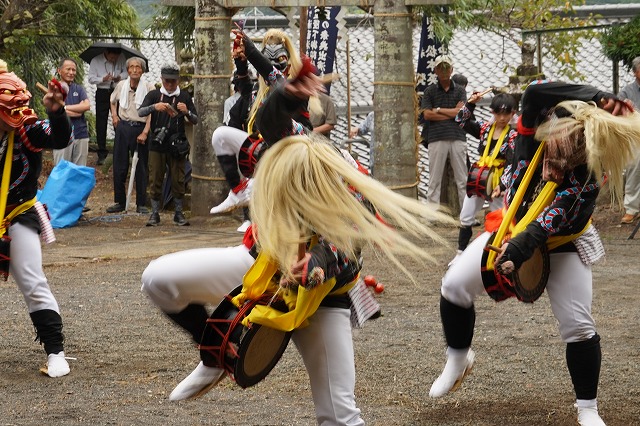
Get off at the “Sae” bus stop and walk a short distance toward Nanaura; you’ll see a sign on your right that reads “Menburyu Dedication Site” and “Chinju Shrine.”

In front of a very small shrine, a single path leads out into the rice fields. The group gathers there. At 8:20 a.m., the procession finally begins.
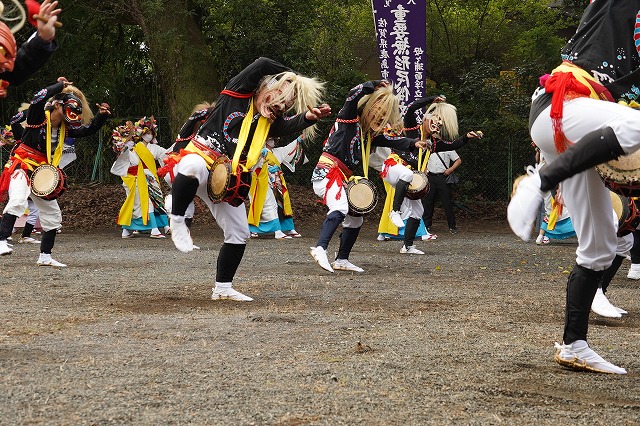
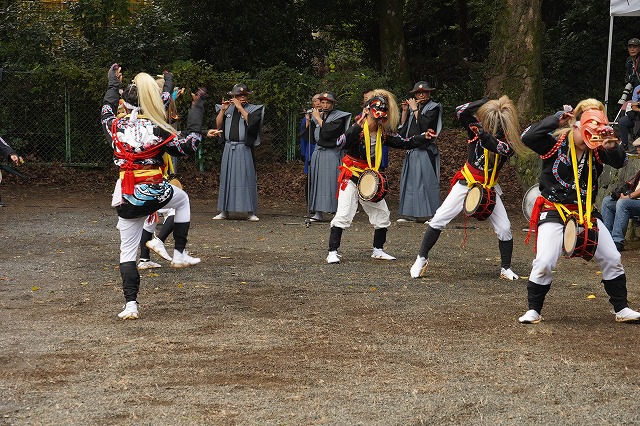
The *Yakko-san are leading the way. Following that, the Oni Mask finally launches into action.
*Yakko: People who used to accompany samurai processions in the past. a samurai’s attendant

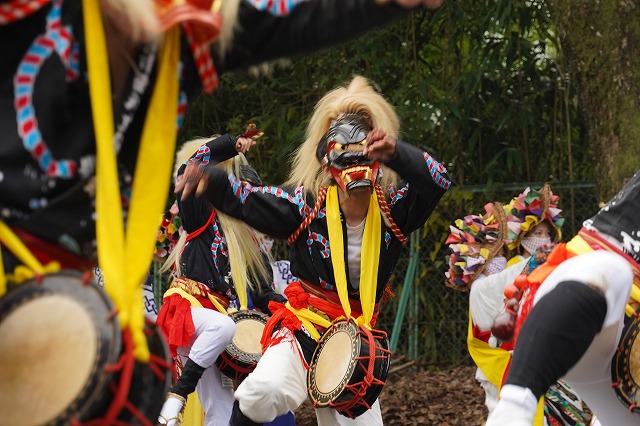
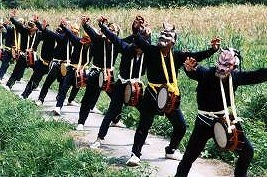
Stamping their feet heavily on the ground and beating small drums, they march forward as if to drive away the evil spirits of this land.

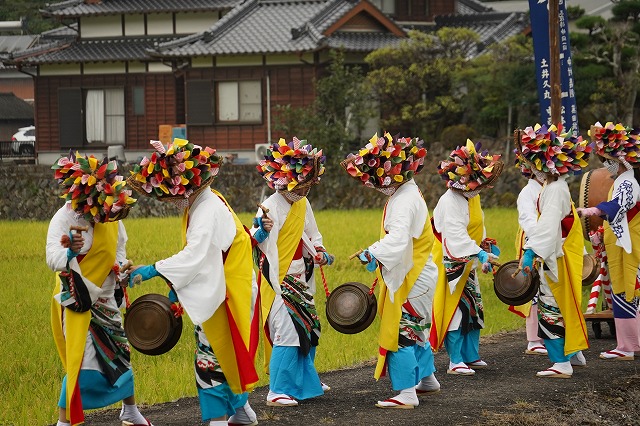
Adding a final touch of color are the elaborately dressed women who strike the gongs and, at times, cheer on the procession. About 15 minutes.

Next, moving to the shrine grounds, they performed the dance once more.

The dancing is so intense that by the time one routine ends, the dancers are panting heavily. Throughout the performance, messages of thanks for the congratulatory gifts are read aloud.

Finally, they left the line one by one. It ended around 9:30 that day.

One can see pride in his back

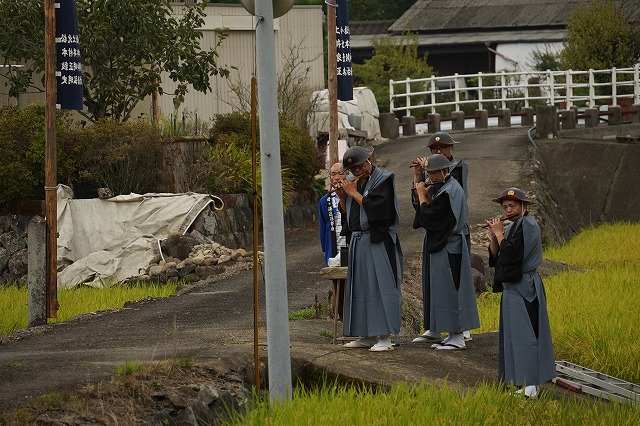
Afterward, another traditional performance from the same area is presented, bringing the Hougaura Autumn Festival to a close.


Men-buryu ~Kyushu’s representative Oni dance

What is the Furyu dance?

Oni-kenbai 鬼剣舞

Mem-buryu is popular in Saga Prefecture in Kyushu, especially in Kashima city. In this article, we will focus on the Nanaura 七浦 area of Kashima city, where it is most active.
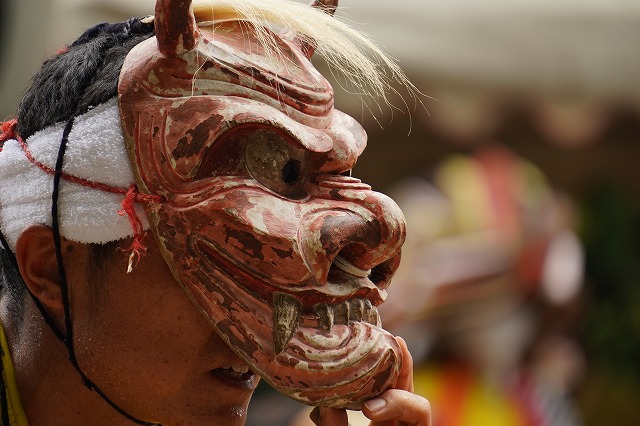
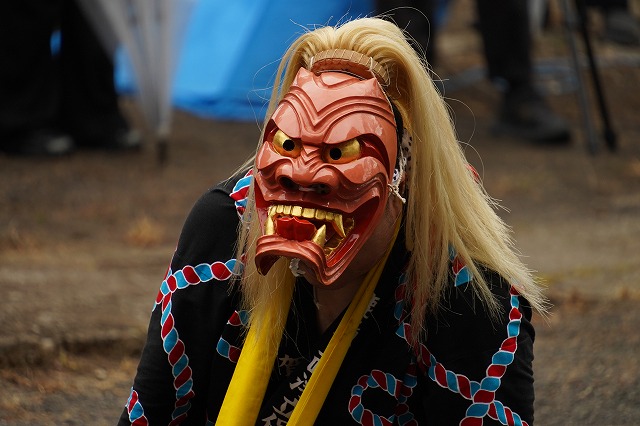
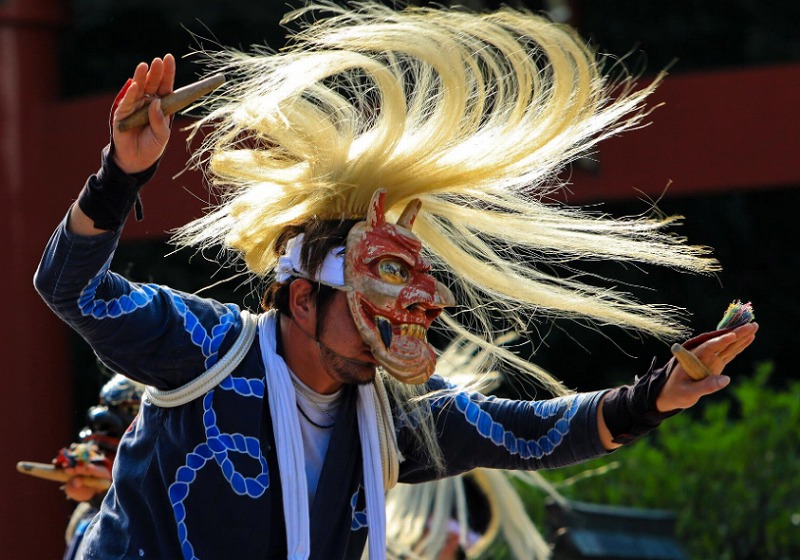
Men-buryu wear Oni mask. Speaking of group dance with a mask of Oni, Oni-kenbai in Iwate Prefecture is famous, but Mem-buryu is an entertainment comparable to Oni-kenbai in the north.

The Mem-buryu is a kind of Furyu dance with Oni mask. Furyu dances is difficult to define. Because there are all over the country and each has its own characteristics. In very simple terms, it is a dance in which the dancers wear conspicuous costumes and beat drums and other instruments.

Furyu dance

*In case you are interested, here is how the Japanese Agency for Cultural Affairs defined it when it applied to UNESCO.
“Embodying the spirit of ‘fūryū’ 風流(浮立) (gorgeous and eye-catching), the folk arts are performed to the accompaniment of songs, flutes, drums, gongs and other instruments. Folk performing arts that embody the spirit of ‘fu-ryu’, or elegance and attractiveness, and are performed to the accompaniment of songs, flutes, drums, gongs and other instruments. People perform these folk arts performing to pray for disaster prevention, memorial services for the dead, good harvests, rain harvests, etc. The dance is a symbol of people’s wishes for a peaceful life, including prayers for disaster prevention, memorial services for the dead, bountiful crops and rain-making. Participated in by more than one generation of local people on occasions such as festivals and annual events.
Local people of all ages participate on festivals and annual events.”

Men-buryu 面浮立  group composition

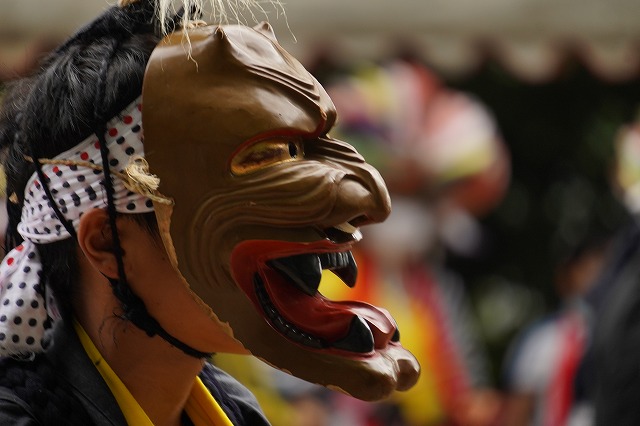
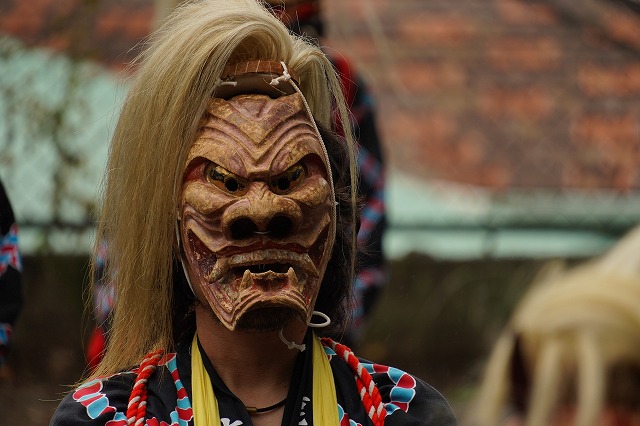
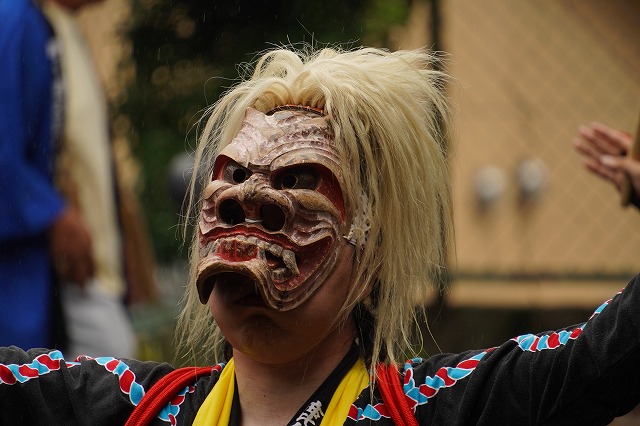
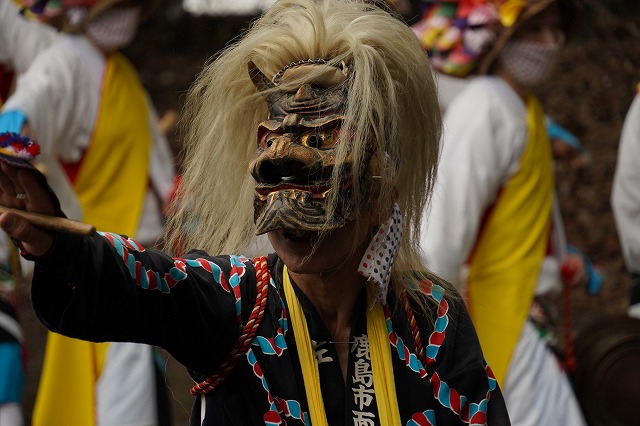
Memburyu consists of three groups of dancers. The main character is a kake-uchi, with Oni mask, hair (or hemp) called a shaguma, and a small Taiko (Japanese drum) hanging from it. There is no set number of performers. The average number is between 20 and 30, sometimes less than 10. All are men. Next is the ‘kane-uchi’, a group of people who beat the gong (kane). They are all women and strike a single gong in pairs at the same time. They wear hanagasa hats on their heads and the most colourful costumes. And the role of the beating the Oo-taiko (big drum). In addition, there are two pairs of people called ‘torige 鳥毛 ‘. They have a stick with hemp hair on the end and pass it between the two of them as they go. This is an imitation of the processions of feudal lords in old days.

‘Mem-buryu’ has one story to tell. First, the Oni challenge the god to a battle. To do so, they march valiantly towards the shrine where the god resides. Then, after the battle with the god, they are converted and dance a joyous dance. The Oni perform a dance to please the god and finally go down to the village to bring good fortune to the houses. As this story, ‘Mem-buryu’ consists of three main parts. The first is on the way to go into the presence of God. The next is the dance before the god, including the fight with the god. The last is a dance expressing joy.

And on the basis of these three parts, experts now classify ‘mem-buryu’ into three types. Those that retain the oldest form. Those that have become a completed performing art. And those that focus on the last part, part three.

The oldest type is from the Otonari 音成 area. In this district, the costumes are generally plain, with navy blue and yellow accents only on the strings of the drums. In contrast, the Hougaura 母ヶ浦, which belongs to the second type, wears a more flamboyant costume with a wave and anchor design. The more they change from old to new, the more entertaining they become. The masks and costume designs are slightly different in each district.

Hougaura distinct same next to

You can see Mem-buryu in many places outside Kashima 鹿島, so the dates vary according to each region, but most of them are held in September in Kashima city , which is most lively region.
The first and best place to start is the Kashima Performing Arts Festival at the Yutoku Inari 祐徳稲荷神社 Shrine on the second Sunday of September. On this day, you can see not only Mem-buryu but also other traditional performing arts. →https://saga-kashima-kankou.com/en/event/4256
In the morning of the same day, Mem-buryu is held at 3 shrines nearby. The group of many Oni moving along the paths through the golden fields of harvested rice is a unique sight in the area and attracts many photographers and tourists. But it’s a shame that you can’t see all of them because they are at similar times.
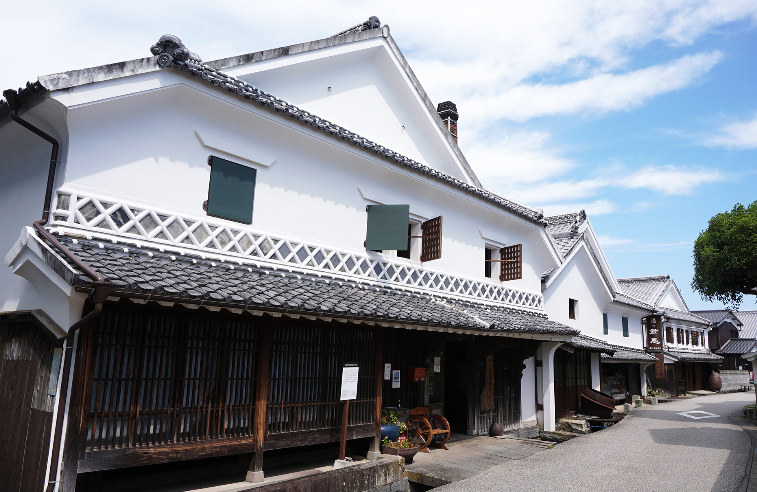
The Sake Festival at Hizen-hamajuku in late March is also a good opportunity. This area has retained its old townscape and has been designated by the national government as a conservation area. There are three sake breweries here, which open their warehouses at the same time and hold sake tasting events. Performing arts such as men-buryu are also performed at the same time. →https://saga-kashima-kankou.com/en/event/14439

We must not forget that this season also marks the beginning of Japan’s most brilliant cherry blossom season.

Welcome to Saga

Saga prefecture is not that big. There are many sightseeing spots scattered in a small area. Hizen-hamajuku is a nationally designated townscape that makes you feel old Japan. It is also a pottery kingdom, and there are many famous places such as Arita, Karatsu and Imari. The Yoshinogari ruins are ancient ruins that shocked Japanese people when they were opened to the public.

It is also very accessible, less than an hour by train from Fukuoka, the center of Kyushu.

→https://asobosaga.j-server.com/LUCASBSGP/ns/tl.cgi/https://www.asobo-saga.jp/firstvisit/?SLANG=ja&TLANG=en&XMODE=0&XCHARSET=utf-8&XJSID=0

 https://saga-kashima-kankou.com/spot/1114 https://www.hizenyumekaidou.info/attraction/#watch