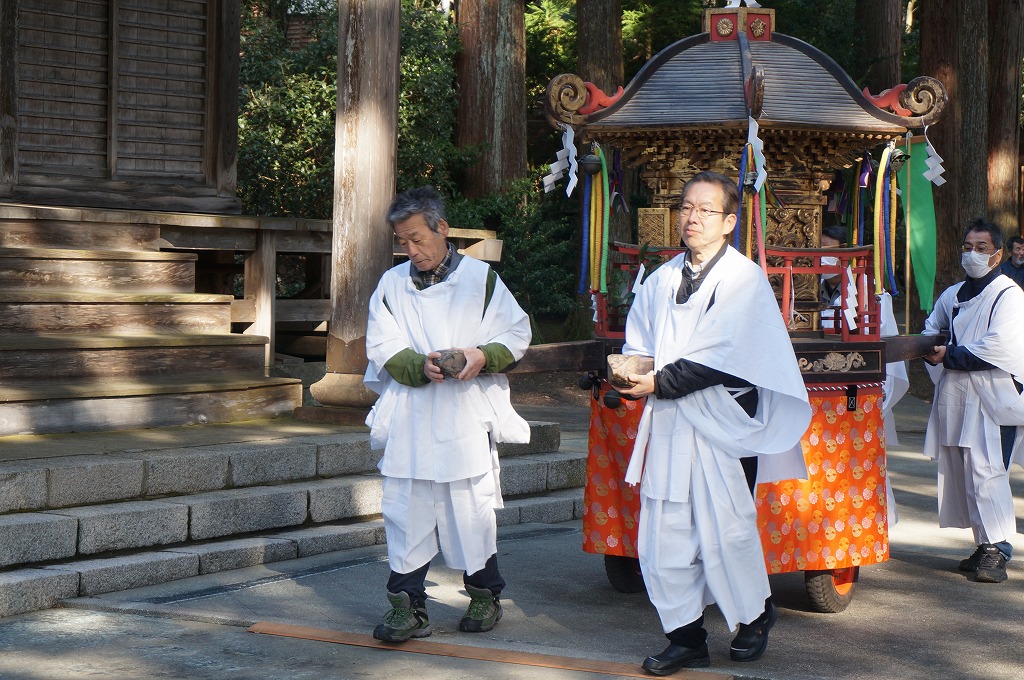
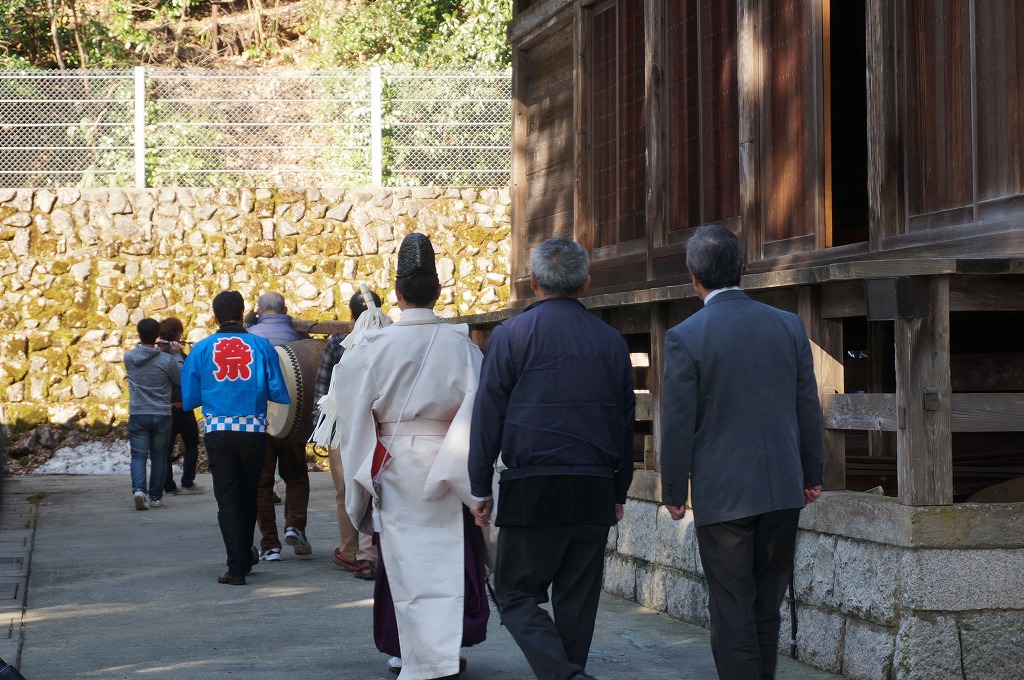
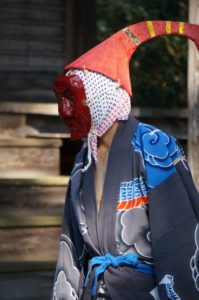
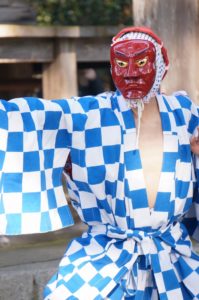
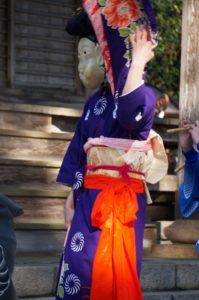
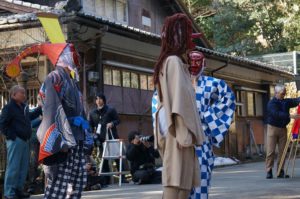
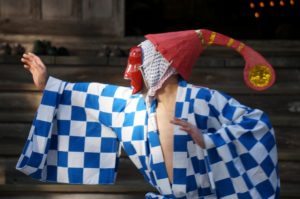
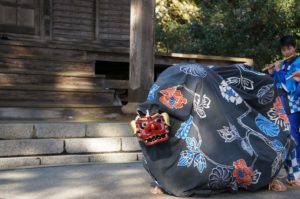
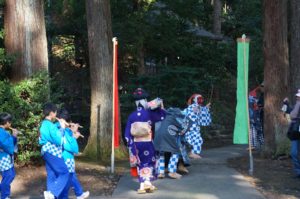
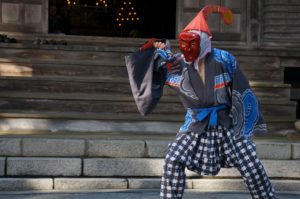
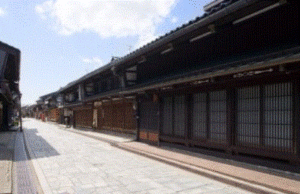
A Journey to Meet the Rice Field Gods: The Roots of Japan~ Kirishima shrine festival

A great revolution once took place in Japan that transformed society as a whole. That revolution was the introduction of rice cultivation. Rice became the standard by which people measured their wealth. The wealthy were those who could afford to eat rice. For a long time, Japan was a feudal society, and rice production served as a measure of the power of local lords. It was not until the mid-19th century that rice ceased to be the standard.

Naturally, people have always held the god of rice cultivation in the highest regard and loved him dearly. This god is known as “Inari”. As a result, there are countless shrines named Inari throughout Japan. The most famous of these is Fushimi Inari in Kyoto.

Surprisingly, however, there are very few deities dedicated specifically to rice paddies. Kagoshima Prefecture is one of the few places where such a deity exists—in fact, it’s the only place where it can be found. What kind of being is this deity of the rice paddies? We set out to find the answer at Kirishima 霧島Jingu, Kagoshima’s central shrine.


Date :The 4th day of the 2nd month of the lunar calendar
Location :2608-5 Kirishima-Taguchi, Kirishima City, Kagoshima Prefecture
Access :Access bus from Kagoshima Airport to Kirishima Shrine: Departs at 9:30 a.m., arrives at 10:15 a.m. (as of 2026) or
From Kagoshima Chuo Station to Kirishima Jingu Station (Limited Express Kirishima), then by bus or taxi. It is about 6 kilometers from the station to the shrine.

This article is based on 22th, March, 2026

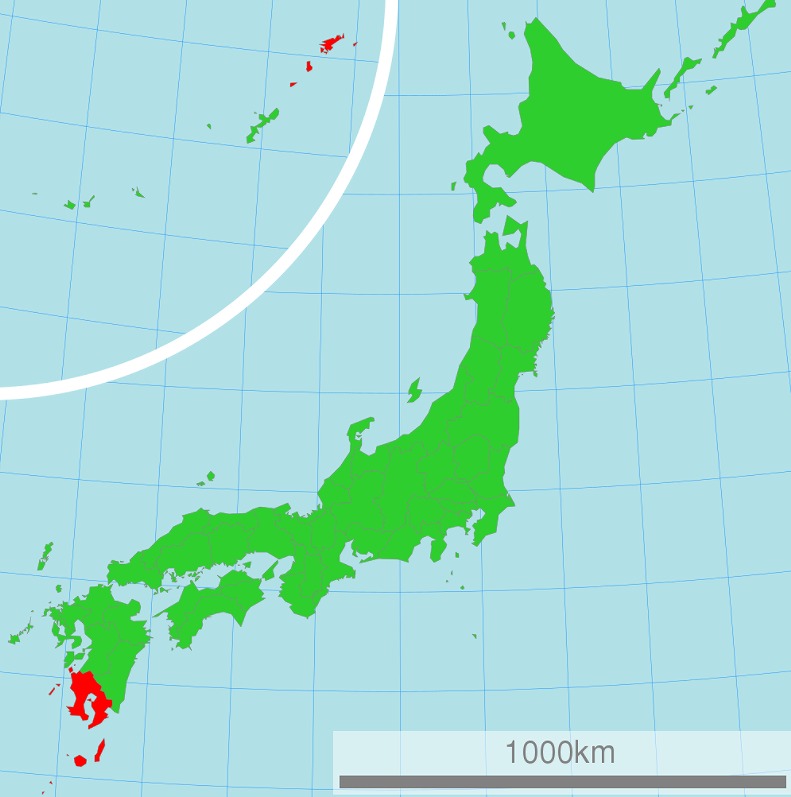
Kagoshima Prefecture is the southernmost point of Japan, excluding Okinawa. For example, from Tokyo, it takes two hours by plane plus 30 minutes by bus. By Shinkansen, it takes six and a half hours. But that’s not the end of it. It takes about an hour by limited express train from downtown Kagoshima to Kirishima-Jingu Station. Don’t be fooled by the station name—it’s still another 6 kilometers from there.

The view of Sakurajima island from Kagoshima City

Limited Express Kirishima

Kirishima Jingu Station

You’ll need to take a bus or a taxi, but keep in mind that the train and bus schedules don’t always connect seamlessly. Fortunately, there’s a bus at 9:51, so I’ll make it in time (as of 2026).
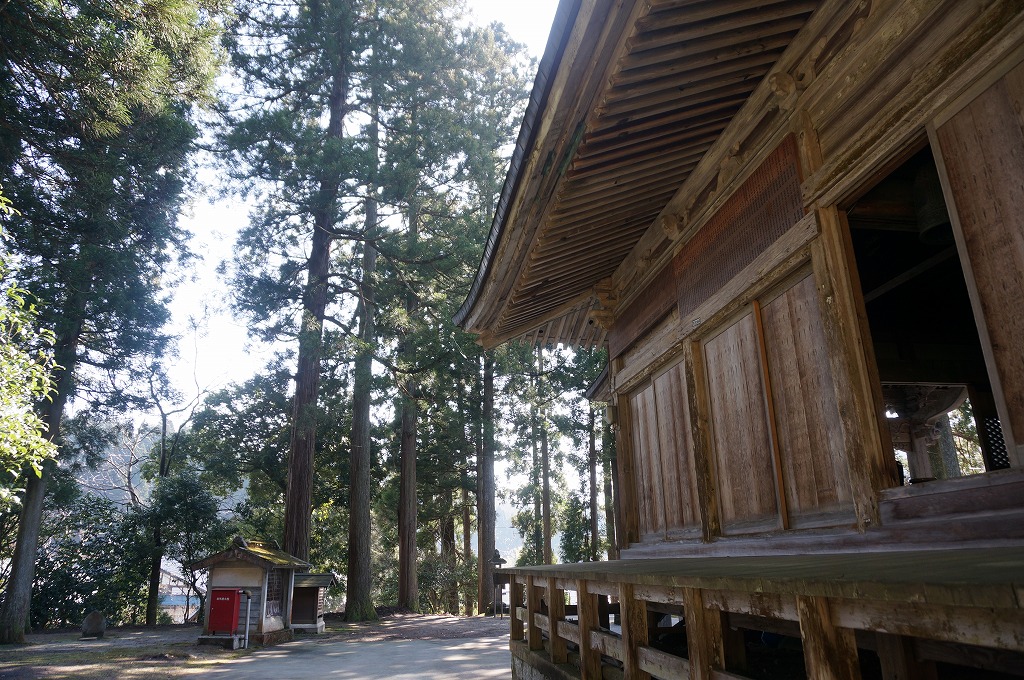
According to the information the author researched in advance, the Shinto ceremony was set to begin at 10:00 a.m. and the main event at 11:00 a.m., so I arrived a little after 10:00 a.m.
However, even though it’s early morning, there’s already a line of visitors. It certainly lives up to its reputation as one of Kyushu’s most famous shrines (and a power spot).
kirishima shrine https://www.kagoshima-kankou.com/for/attractions/10113

A cow welcomes you

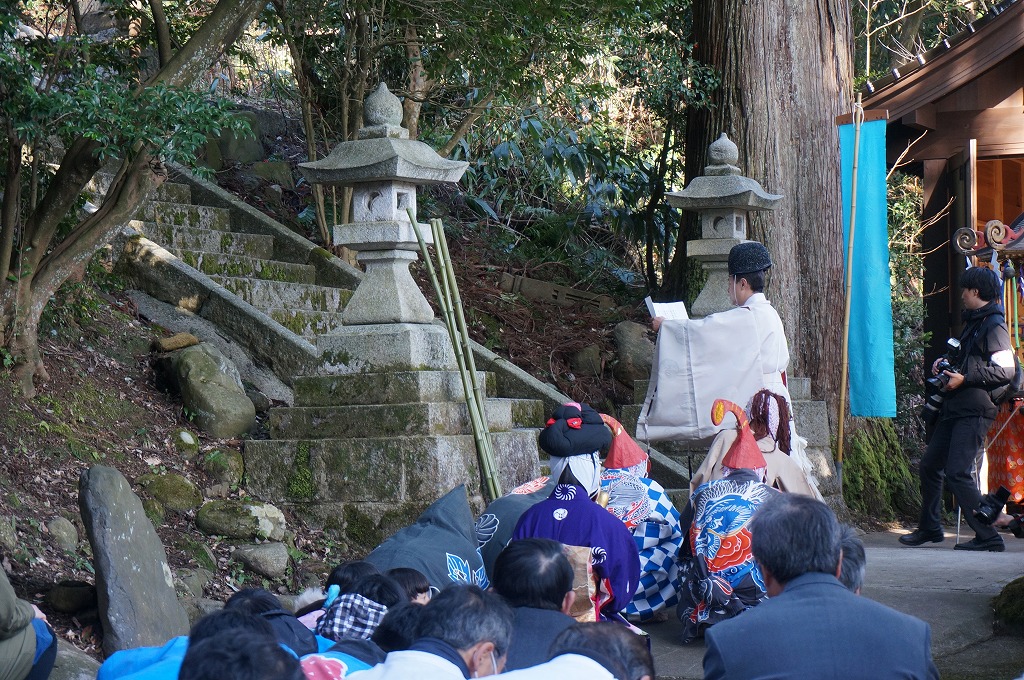
You can’t enter the venue until the Shinto ceremony is over. Think that’s a waste of time? Not at all—they’ve got that covered.
A cow will greet you. This is the cow that will appear in the farming ceremony to be held later.

When the time comes, the barriers blocking access to the plaza behind the main hall are removed, and visitors are allowed to enter.
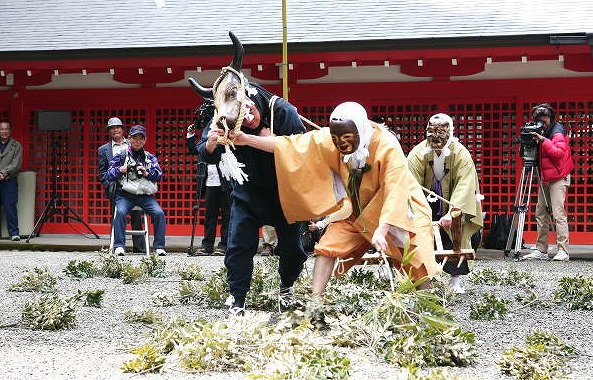
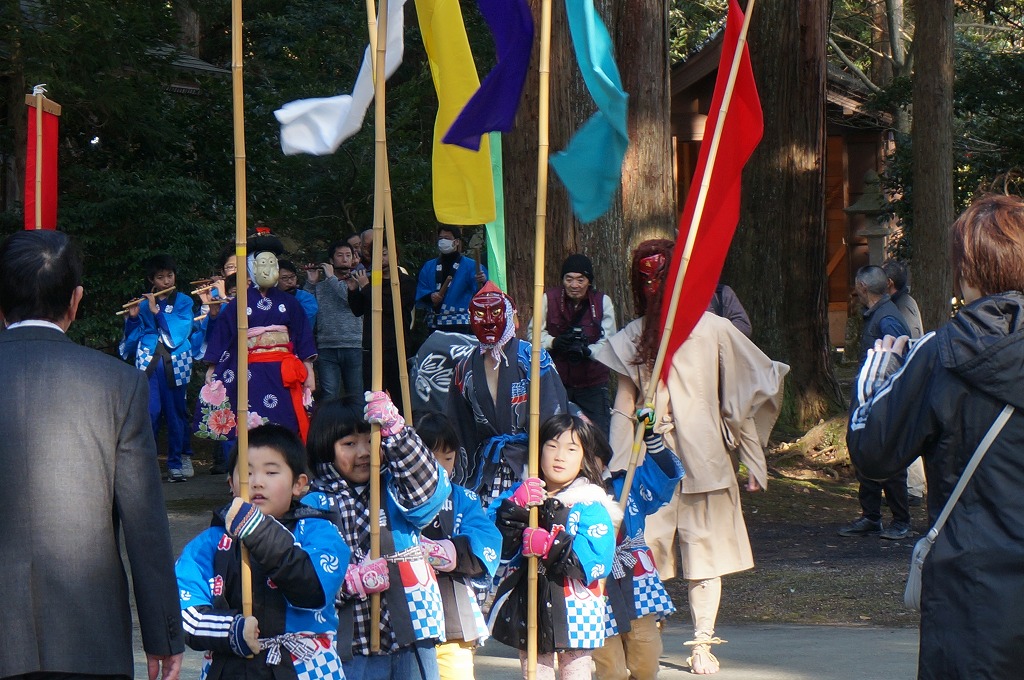
First, two groups carrying large trees run around the venue, led by oxen.
Afterward, they scatter the leaves from the trees all around. This is meant to represent a rice paddy.

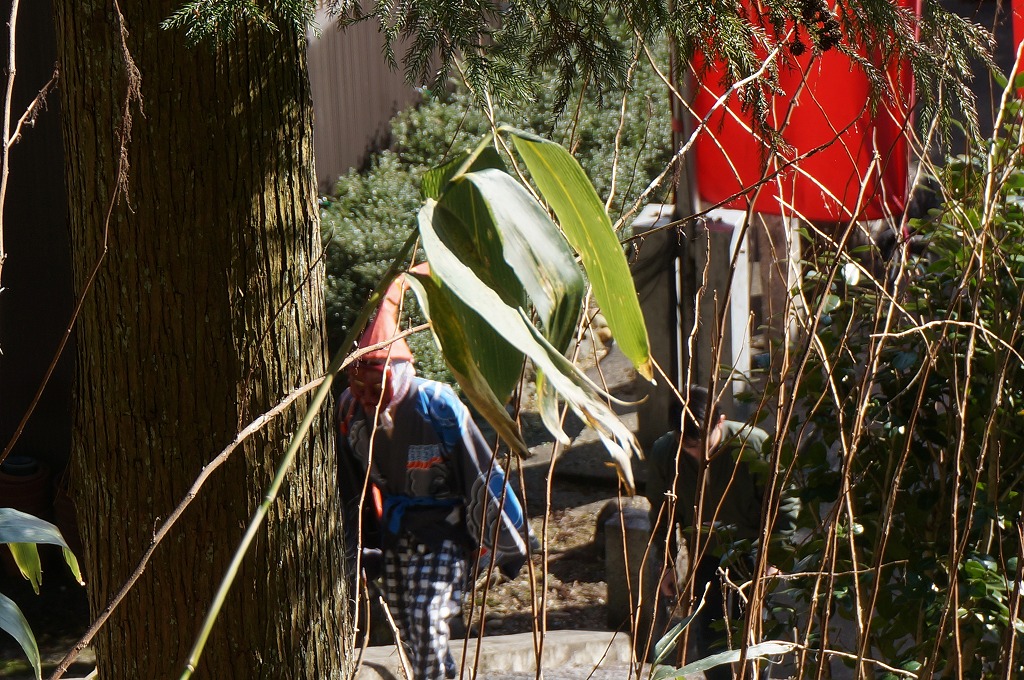
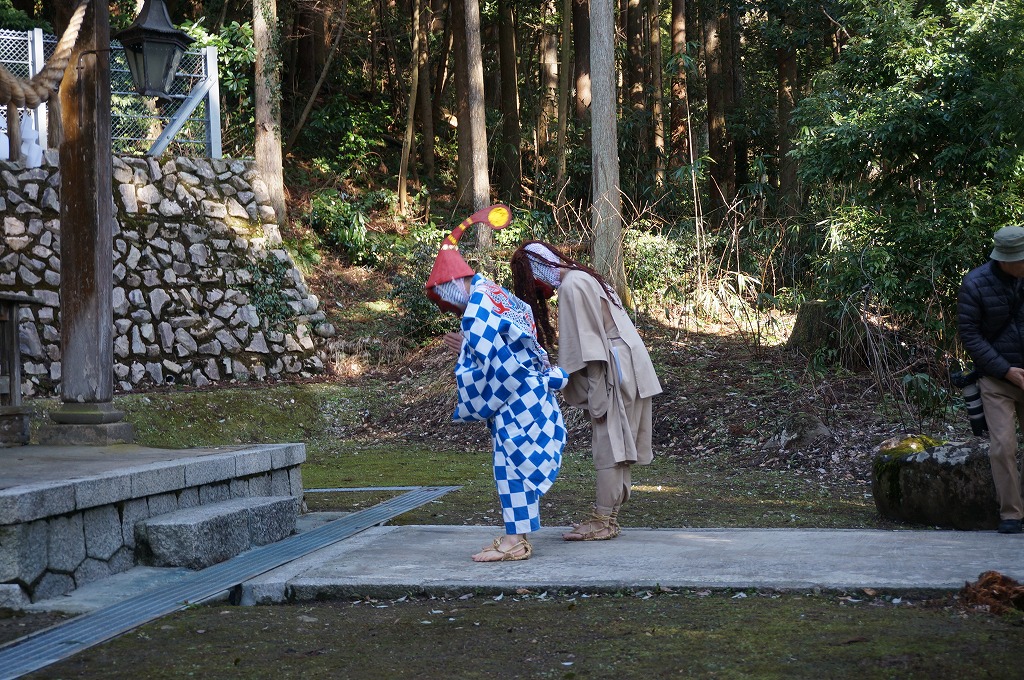
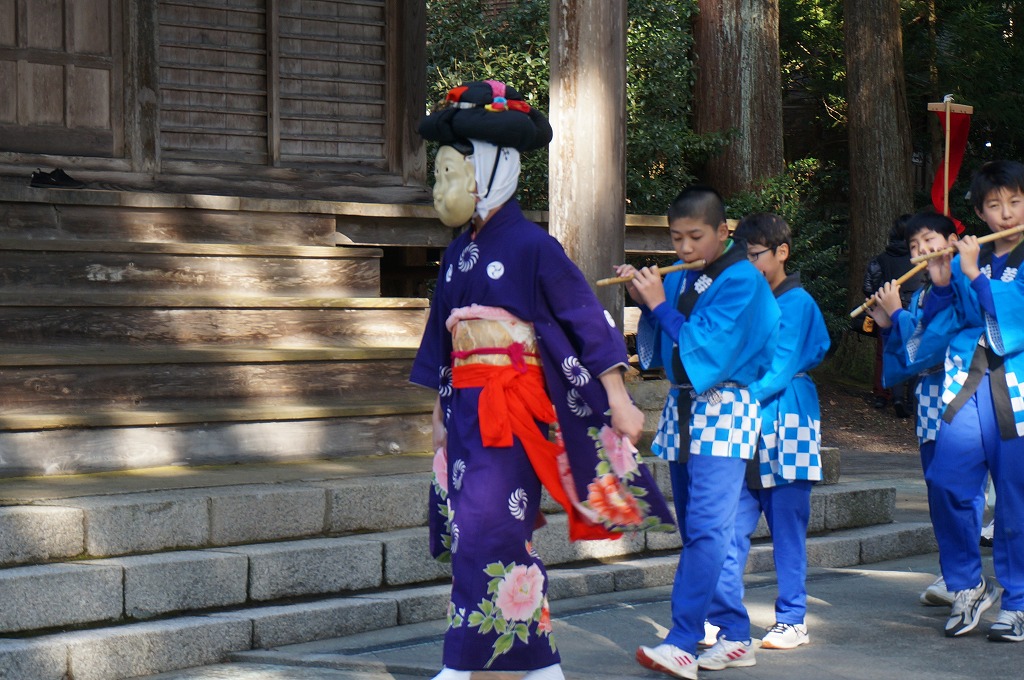
Here comes a farmer and his wife. They are about to start plowing the field.

They plow the fields by having oxen pull farm implements. This is the very same rural landscape that could once be seen throughout Japan. Just 100 years ago, this is what it was like everywhere in Japan. Or maybe that was true not just in Japan, but all over the world.

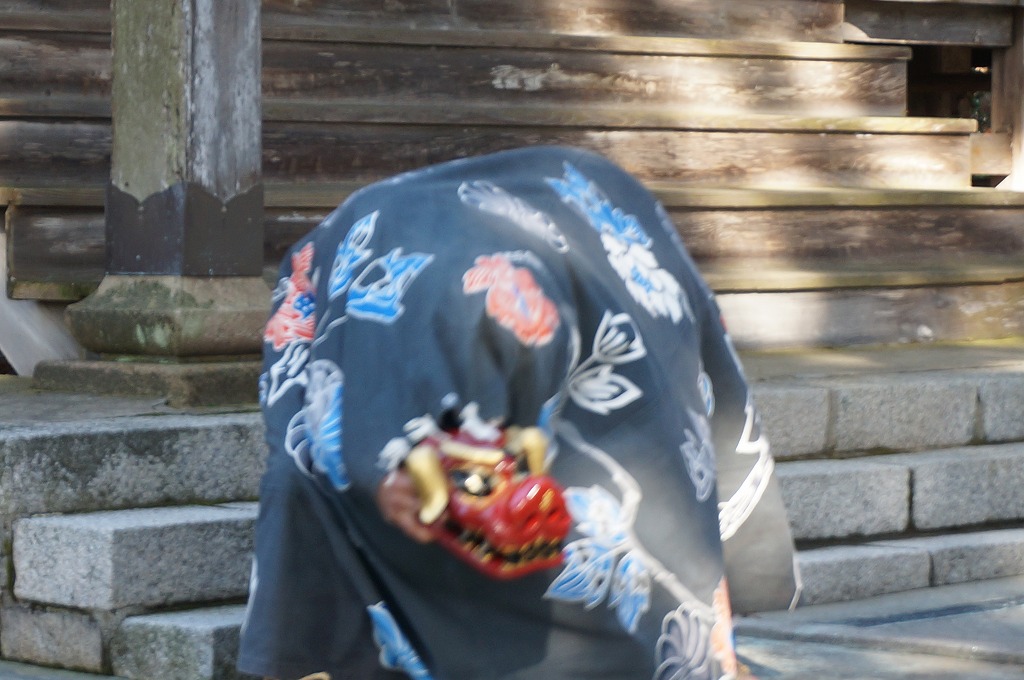
First, they have the ox pull the plow to begin plowing the field. However, this ox is a real handful. It suddenly starts running, comes to a complete standstill, or sometimes even charges toward the spectators. In short, it’s completely out of control. This is where the cow takes center stage.
“Grandma, this cow won’t listen to me. Isn’t she over there?”
“My, what a troublesome cow!”

The dialogue between the two characters, as well as the lines spoken by the Rice Field God who appears later, are all in the Kagoshima dialect. For this reason, a handout (in Japanese) explaining the general meaning of what they are saying is distributed—though you can generally understand the essentials even without it. Eventually, the two exit the stage while patting their waists.
“Hey, I’m heading back now. I’ll make some tea, so come back soon, okay?” As they say this, they both exit the stage.

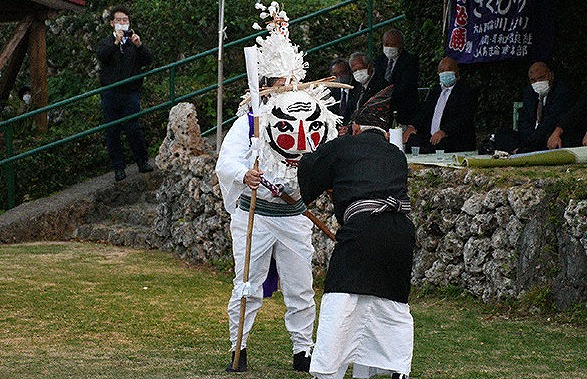
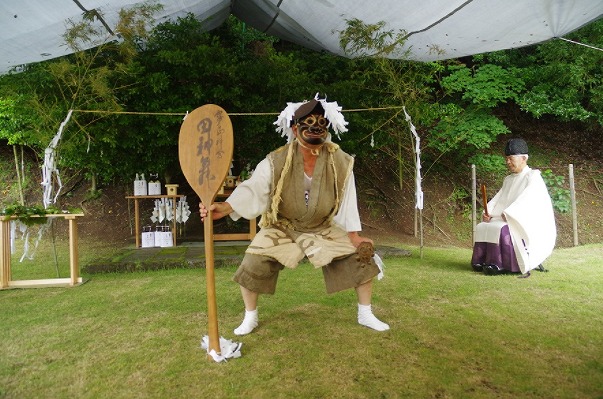
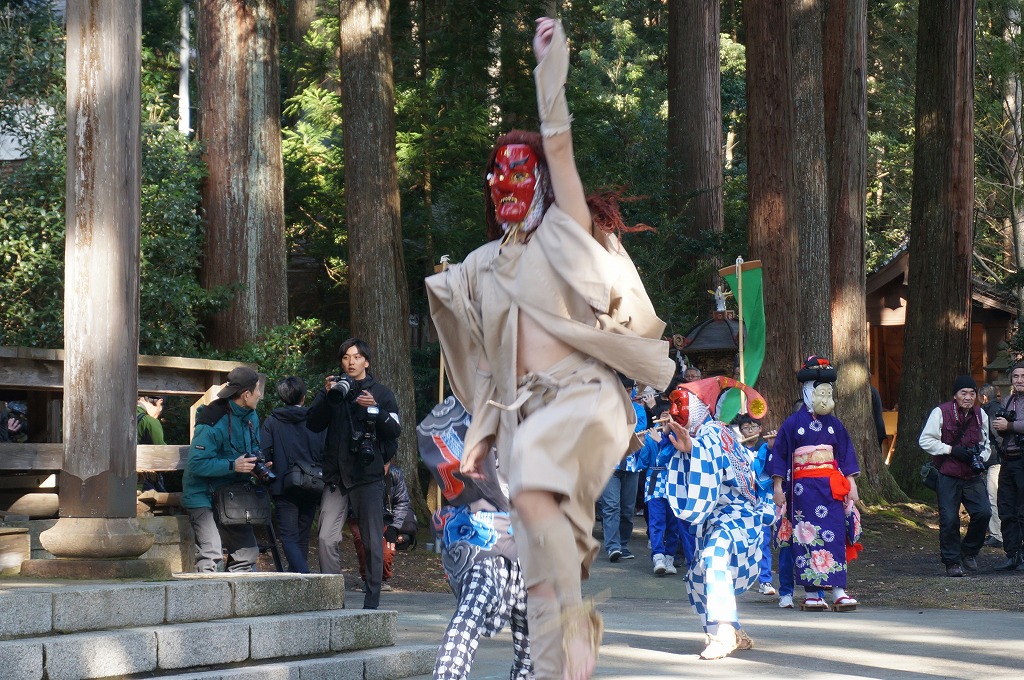
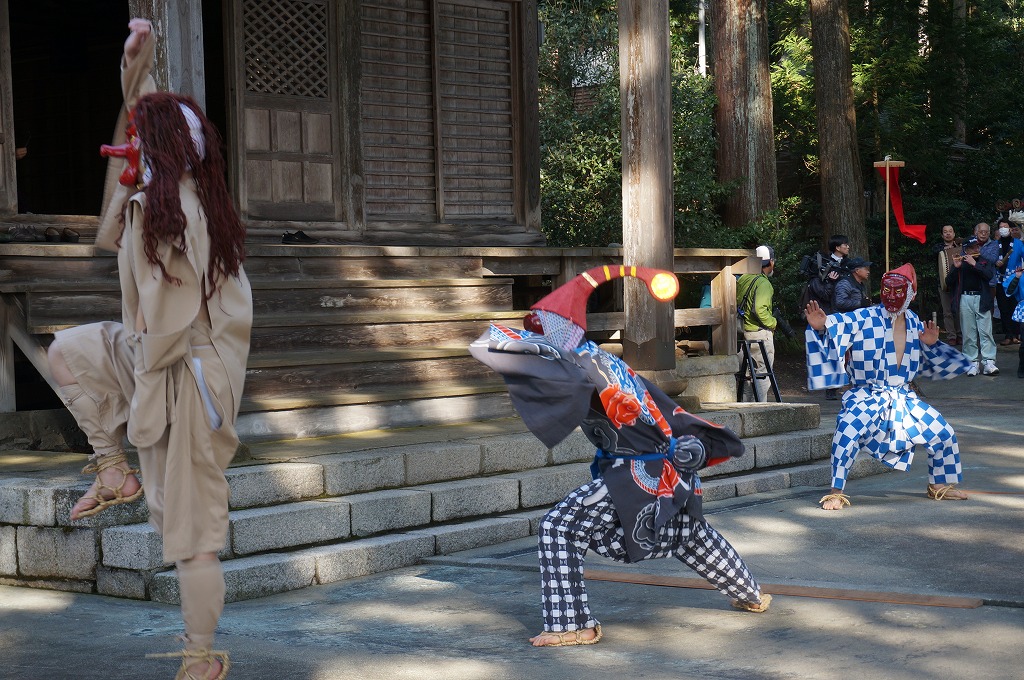
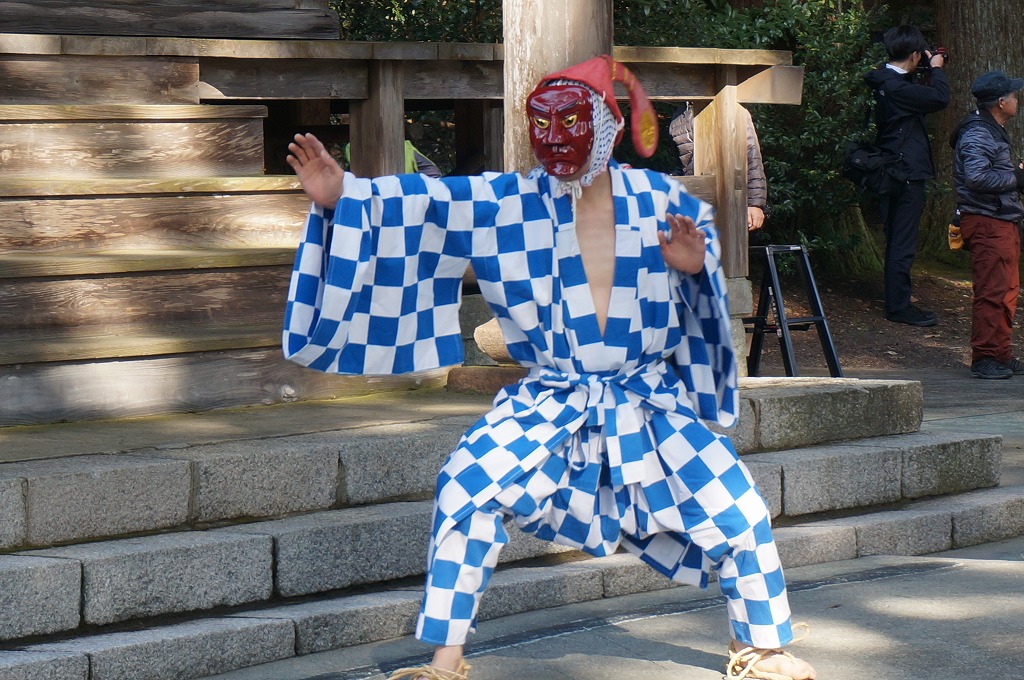
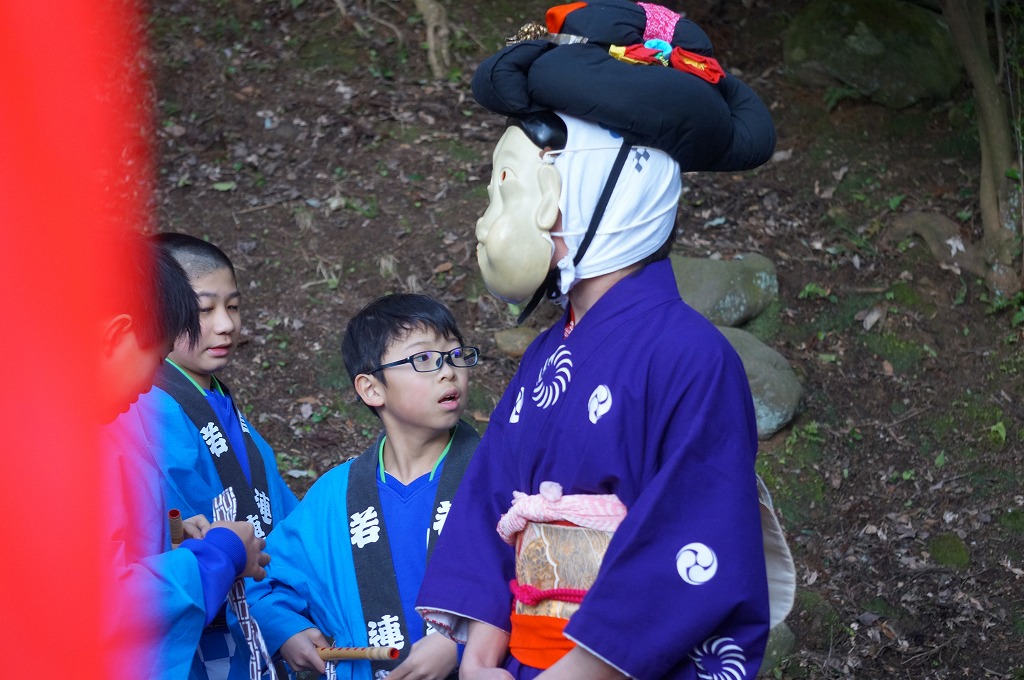
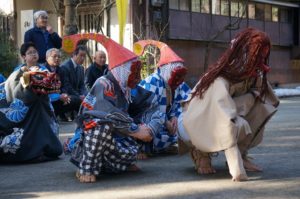
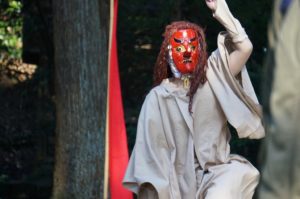
The god of the Fields makes his entrance—not in a grand manner, but slowly and quietly—and stands there with giving impression of broad mind.
He wears shabby clothes and holds a large rice paddle and a bell in his hands.
Then he delivers his speech in a very strong Kagoshima dialect.
“Well, today is the Rice Planting Festival at Kirishima Shrine, so I got invited and came out.”
He says something along those lines.

He explained the origin of the rice paddle he was holding, described his own appearance, and said something along the lines of, “If everyone works hard starting early in the morning, we’ll get a bountiful rice harvest.”
This god has a friendly face and speaks with a thick dialect. Just look at him, and you’ll understand. Even though he’s a god, people’s small, everyday wishes gave birth to the god of the rice fields.

This god is not a god who guides. He is a god who accompanies.

Commemorative Photo

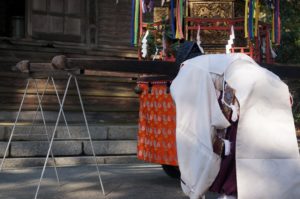
Each part lasts about 20 minutes. With a priest’s ceremony and other events interspersed throughout, the event ends shortly after 11:30.
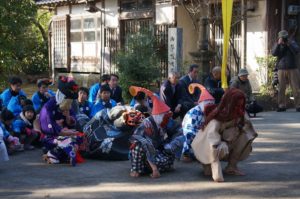
After that, the characters will all gather at the entrance to pose for a commemorative photo.

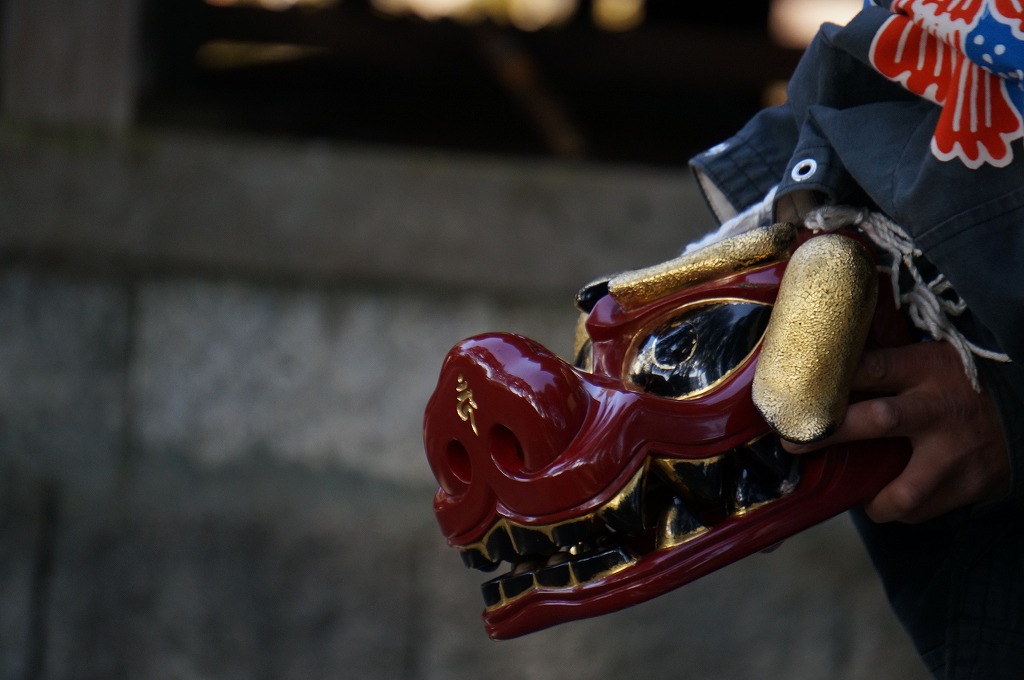
Don’t you think this sculpture has a certain warmth that makes you readily accept that this is what the “God of the Rice Fields” is supposed to be, while also conveying a sense of vast, boundless expanse?

Ending

After that, the author took the bus again to the station, waited an hour, and then took the limited express back to downtown Kagoshima.
Actually, if you’ve made it all the way to Kagoshima City and Kirishima Shrine, there’s a place this sight really want you to visit. It’s a place where you can gain a deeper understanding of the rice field deities. Unfortunately, however, we’ve run out of space here. Please check out the next article for more.
cf. https://discoverdeeperjapan.com/2026/06/21/two-must-see-2museums-when-visiting-kagoshima/
A unique cultural experience at the resort ~Yoron jugoya festival

Date: The 15th day of March, August, and October in the lunar calendar (about one month later in the new calendar)
Location: Gusuku, Yoron-town, Oshima-gun, Kagoshima prefecture 鹿児島県大島郡与論城
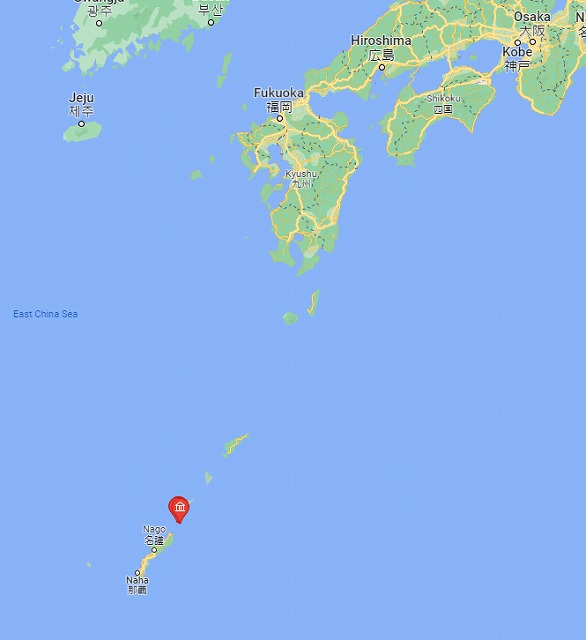
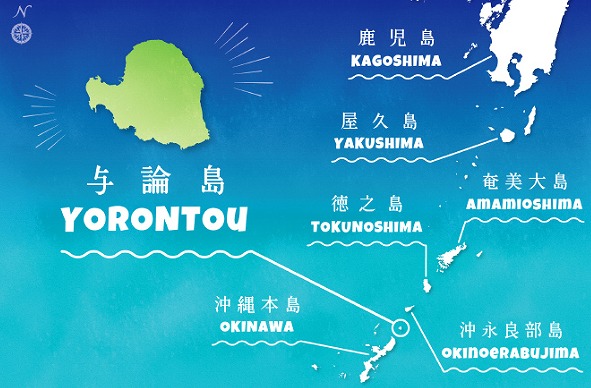
Access: About 10 minutes by car from Yoron Airport. It takes less than two hours to fly from Kagoshima Airport to Yoron. From Okinawa, it takes about 40 minutes by plane. There are also ferries.

To beaches with blue sea and white sand

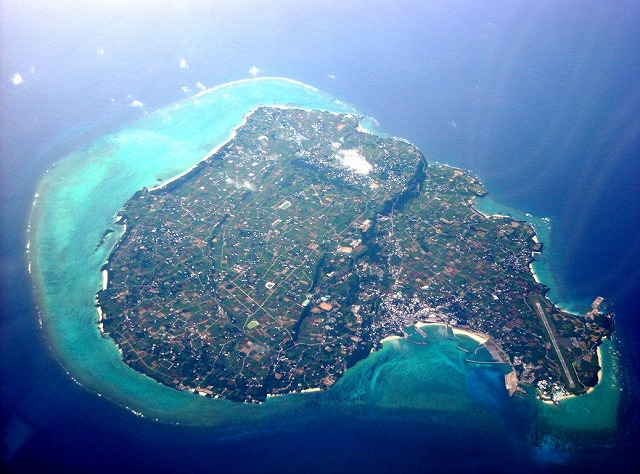
Maldives, Hawaii, Seychelles, Fiji. The blue sea, the white clouds, and if possible, the white sand beach would be great. The scenery with the beautiful sea has always been a dream of mankind, and many people would like to go there someday. There is such a place in Japan. That’s Okinawa. There are many Japanese who can’t go to New Caledonia or Phuket, but would like to go to Okinawa. Yoron Island, introduced today, is in Kagoshima Prefecture, but its location is almost Okinawan. A number of outlying islands lie to the south of Kagoshima Prefecture, the southernmost part of the Japanese archipelago. Half of them are in Kagoshima and the other half in Okinawa.
And Okinawa was once an independent kingdom. Its name is Ryukyu. It flourished through trade between China and Japan. However, it was invaded by the Shimazu clan in Kagoshima in the 17 century and became a vassal state, leaving only its name.
So, a hybrid culture has grown up in Yoron, which borders such Okinawa and is also Kagoshima. The two cultures – Okinawan, with its strong Chinese influence, and Japanese – merged on the island to create something that is not simply a cross between the two, but something unique and strange to the island.

Yoron jugoya festival

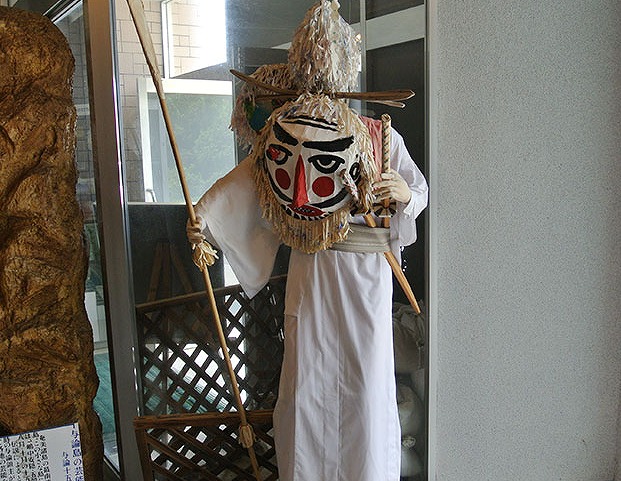
Because of this history, this Jugoya 十五夜 (Fifteenth Night Festival) will be divided into two major groups to put on the performing arts.
The first group performs Japanese mainland-style theater and the second group performs Ryukyu-style dance.

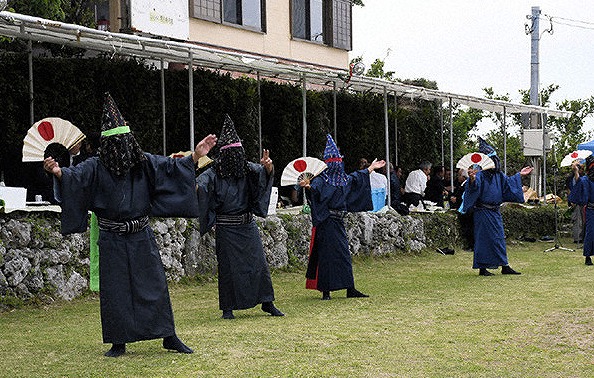
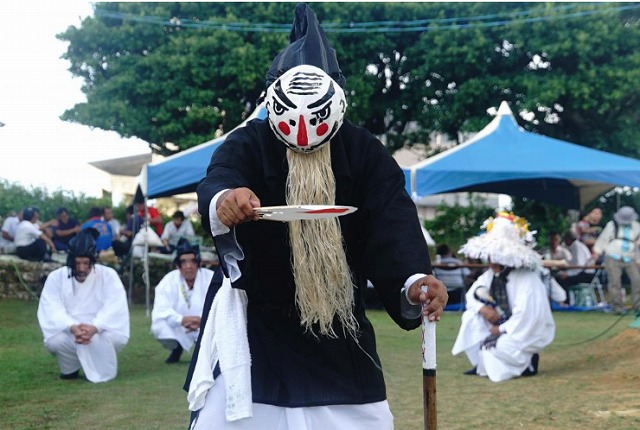
Ryukyu-style dancers perform various dances wearing shuppa and hoods. One is a rain dance, and it has been said that it always rains at that time.
With their faces completely covered by cloth, they look as if their ancestors have risen from the land of the dead as spirits.

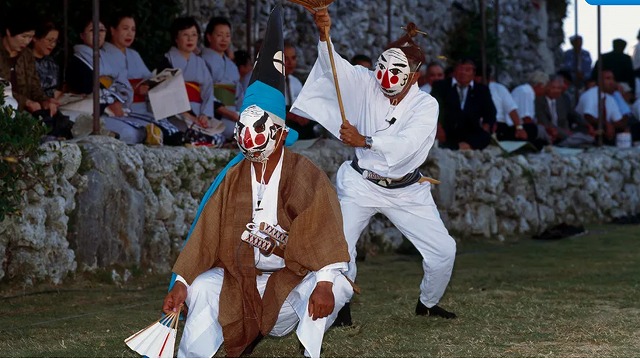
One is Yamato style. Yamato means the Japanese mainland. In other words, it means mainland style. Indeed, it is in the form of a play based on Kyogen. The relationship between daimyo and servants is truly a Kyogen.
However, even a single mask is quite different from the original kyogen. Whereas the original kyogen used masks carved out of wood, here they use ones made of bamboo and paper.
The original masks are like works of art, painstakingly made by craftsmen. In contrast, the masks here are simple and sometimes look like a joke. This gives them an originality that can only be seen here.

However, all the performers speak old dialects, so it may be a little difficult to understand without prior knowledge. Therefore, this website introduces some representative performances.

Sanbasu

To use in ceremonies, the daimyo made Taro buy something called Suehirogali (a fan). But Taro doesn’t know what it is. On the way, he meets an umbrella seller, who says, “This is the Suehirogali4,” and makes him buy a torn umbrella. The daimyo gets angry at Taro, who returned home without knowing that he had been deceived. However, Taro delighted the daimyo with the songs and dances he learned from the umbrella vendor, and the daimyo forgave him.

Okumagawa

Okumagawa Genzaemon, whose father was killed, plots to kill 1,000 people. Yamabushi(a mountain priest) appears there and accompanies him, chanting a Buddhist memorial service. Eventually, as Genzaemon tells the story of how his father was killed, he discovers that the Yamabushi himself is actually the avenger. However, Genzaemon was admonished by the Yamabushi that slaying a man would not help him in any way, and he became a disciple of Yamabushi.

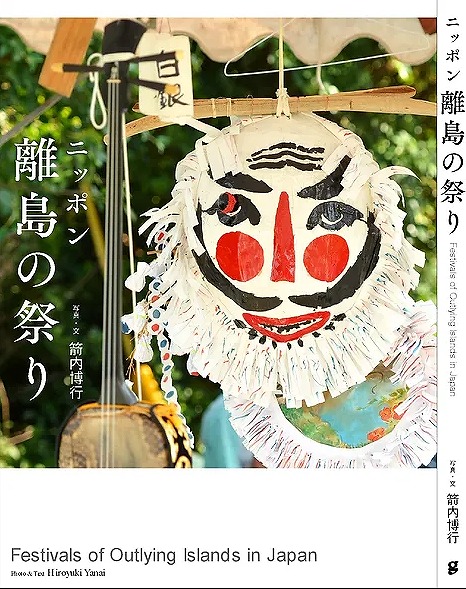
So here is the Genzaemon. He does not look like a great avenger, but he is a representative mask of Yoron here. It is no longer even a mask. It is in the wrong position and the face is too big. It has been used as the cover of a photo book and as a souvenir.
As you can see this, the masks here are generally laid back. There is a worldview unique to this place. In fact, The second show, which only wears a headdress, is more mysterious.

Originally, only the second group of dances were on the island. However, one day, someone brought the Kyogen (satirical plays) back from the Yamato mainland. Therefore, laughter is the main part of 1st groupe. So the masks are also laid back.

The festival is held three times a year, but the one in August (actually September) is the most spectacular. The lion dance is performed only at this time. Lions are different from those on the mainland and are more Okinawan. They put palmlike plants called shuro on their bodies and gnaw on the heads of islanders.
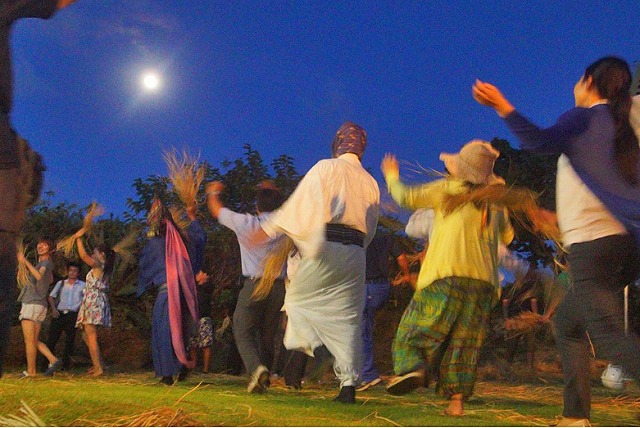
Everyone dances at the end of the festival. This night is called Jugoya 15 Nights and is said to be the most beautiful moon of the year. Listening to the sound of the waves, dancing, and admiring the moon, the festival continues, forgetting that it is late at night.

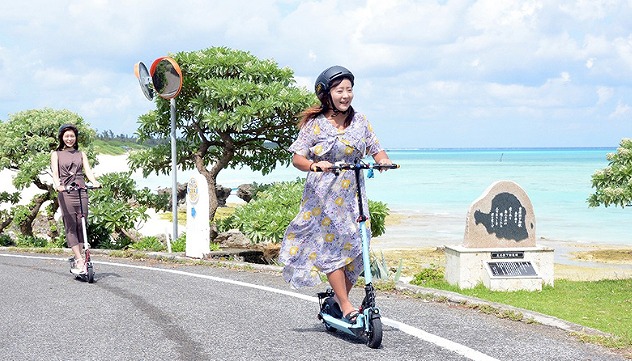
Yoron Island, near Okinawa, is one of the most beautiful places in Japan for its sea. Transportation is by bus with about 5 buses a day. Others are cabs, car rentals, and bicycle rentals. Recently, it seems that kickboard rentals have started. There are many other ways to enjoy the island, such as marine sports. There are many facilities where you can experience diving, snorkeling, sup and windsurfing. A festival where you can admire the ocean and interact with the islanders is highly recommended.

cf. https://www.yorontou.info/en/


Otaue(rice planting) festival at Kirishima Grand shrine

Date: February 4 of the old lunar calendar (In the new calendar, it is a month late, in mid-March)
Location: Kirishima taguchi 2605-5, Kirishima city, Kagoshima prefecture
Access: 10 minutes by bus from Kirishimajingu Station on the Nippo Line. (About 1 hour from Kagoshima)

鹿児島県

霧島神宮 位置

霧島神宮
Kirishima Grand shrinr 霧島神宮 https://www.kagoshima-yokanavi.jp/spot/20063

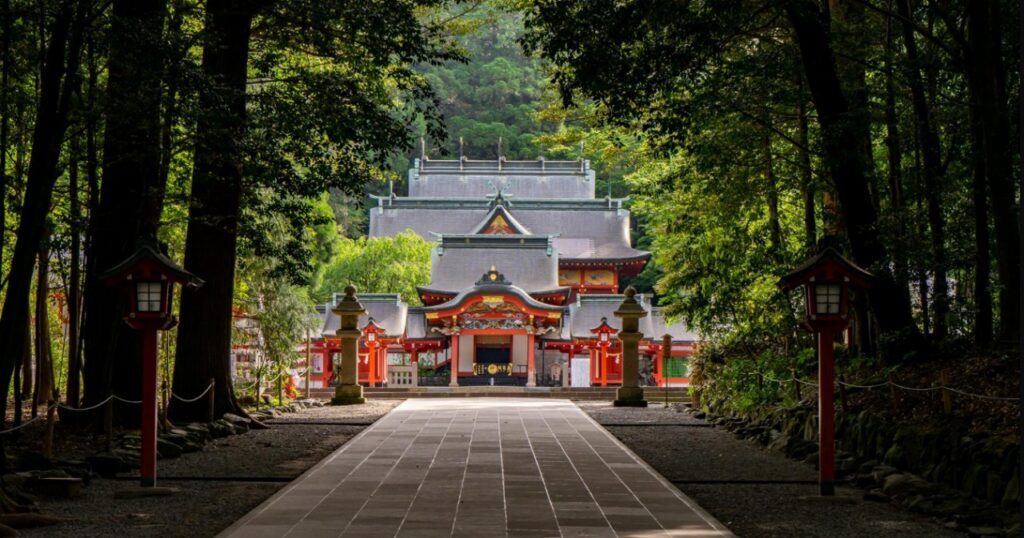
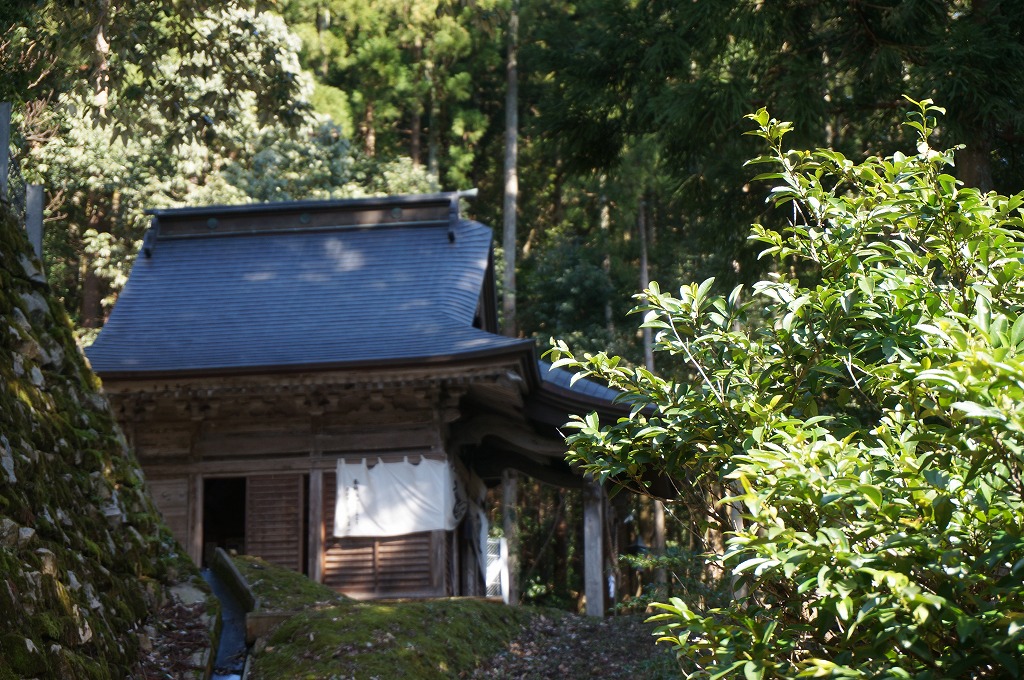
Kirishima Shrine is one of the most famous shrines in Kagoshima. However, it is located in a rather inconvenient place. It is about six kilometers away from the nearest station. There is only one bus every hour. However, it is also one of the places where Japanese mythology is handed down, with a history of over 1500 years. More than 100 rituals are held here every year. One of them is the “Rice Planting Festival”.

There are many rare statues in Kagoshima that are not found in other prefectures. They are called “Tanokansaa”. It means the deity of rice fields. In Japan, if you look at the side of the road, you may see a statue of “Jizo-san”. In Kagoshima, we have “Tanokansaa” like that.

It is said that there is a festival in which “Tanokansaa” appears at Kirishima Shrine, the home of Tanokansaa.

It starts at 10:00 on the day. After the Shinto ritual, the first thing to do is to bring in the shii tree with the cow in the lead and scatter the branches around the area. This is supposed to be fertilizer. After that, several rituals are performed, and then the old man and woman appear.

the aged husband

the aged wife

These two perform a skit.
“Do you know where the cow is?” “I don’t know where the cow is,” “That cow is always annoying me.” “It’s because you don’t take care of it,” and so on. Then the cow finally appears. But the cow doesn’t listen to them. It does everything on its own and annoys the couple.

After this, the “rice field gods,” who should be called the main characters, finally appeared.

It looks as if a roadside “tanokansa” has just stood up and walked away. He is holding a large rice ladle in his hand. After this, they say a few words and end with a dance. The performance is scheduled to end around noon. Japanese have always lived on the basis of agriculture. Rice has always been the staple food, and in the past, rice itself was the standard of national power, and salaries were paid in rice. This festival is a precious opportunity to experience the original scenery of Japan.

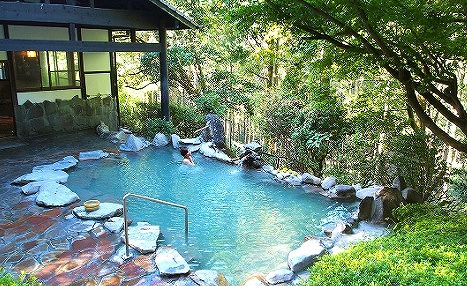
The area is also dotted with hot springs and an art forest. Above all, the shrine itself stands in the midst of a mythical setting. It takes an hour and a half from Fukuoka to Kagoshima by Shinkansen.

Enjoy the spiritual world of Japan and heal yourself in a hot spring. One way to enjoy Japan.


Report: Strange parade – Lion Dance in Ogawaji 小川寺の獅子舞

the parade of Japanese traditional folk performing art
strange parade of variants in Ogawaji, Uozu cuty

Date 4th January, 12th March, and 12th October pm 2:00~
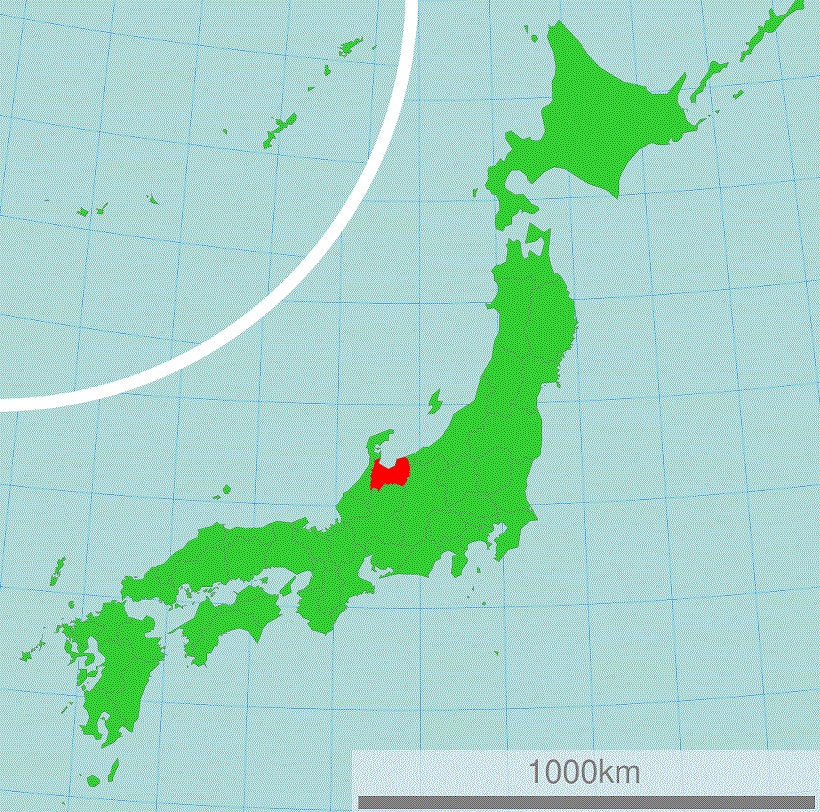
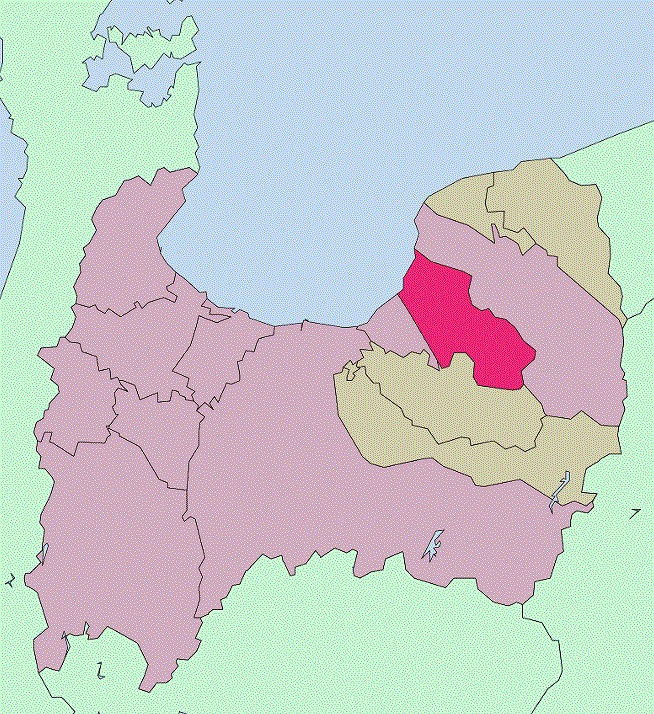
Location Senkoji-temple, Ogawaji, Uozu city , Toyama prefecture
How to get there It takes 20 minutes from Toyama station or Unazuki-kurobe station

Toyam prefecture
Toyama prefecture 富山県

Uozu city
Uozu city 魚津市

Introduction

 An event we’ll look at this time is “Lion Dance in Ogawaji”.
 This event is held on March 12th (and other days) in Uozu city in Toyama prefecture. Toyama prefecture is very prosperous region of Lion Dance, the performed number is over 850 now. There are a significant number of various kinds, and there are 10 main kinds we can break down into 3 categories. In that, the Ogawaji Lion Dance is classified as “Gyoudo Shishi” (Lion guiding the way), it follws the traditionl style.
 I went to see this event in 2018. The following is from then.

 If you want to go to Uozu ciity, you have two options, Shinkanswen or express bus.
*in all of the above routes, the starting point is from Tokyo
 In the case of a train, from Tokyo you will take the Shinkansen to KUrobe Unzuki-onsen (黒部宇奈月温泉), transfer Toyama local line (Dentetsu Toyama; bound for Dentetsu Toyama (電鉄富山) station , for Shin Uozu(新魚津) station.
It takes about 2~3 hours and costs about \ 14,000. If you take a bus, from Tokyo to Toyama station, and transfer to the local line (Ai no Kaze Toyama あいの風富山) line; bound for Tomari 泊) and stop at Uozu station. The Uozu station is in front of Shin-Uozu station. It takes 8 hours and costs about \ 8,000). After arriving in Uozu city, you can take local bus (Kurosawa 黒沢 line) and get off at Ogawaji bus stop. But, there is only one bus every 2 hours, if you take a bus, you must get on a bus at 11:50, Kurosawa line (as of January 2020).

Tokyo station
Tokyo station 東京駅

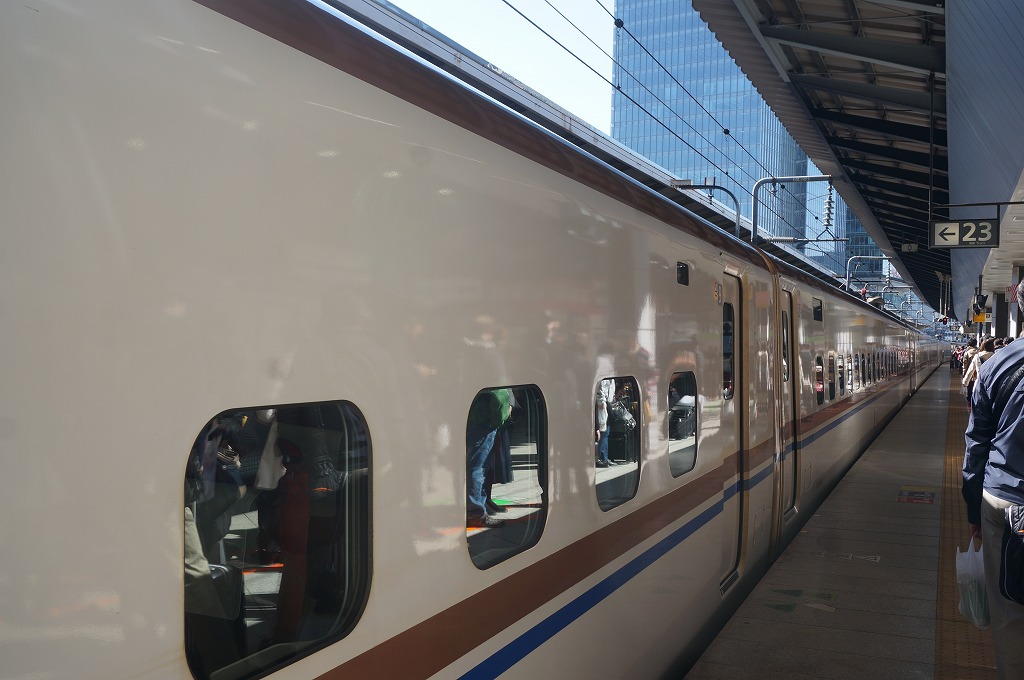
a Shinkansen
Shinkansen  新幹線

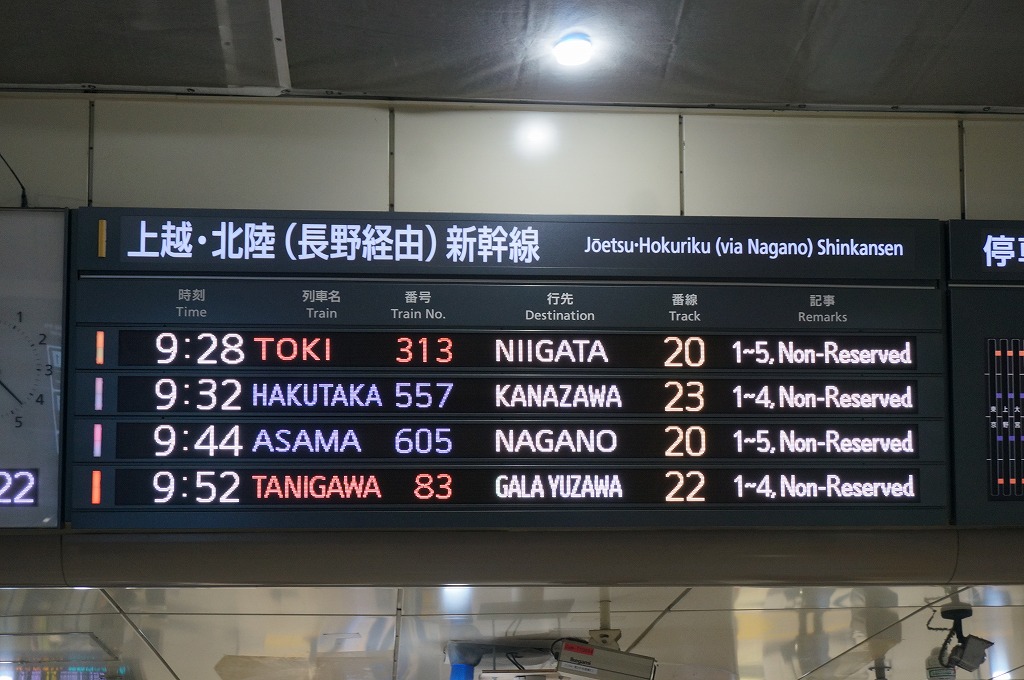
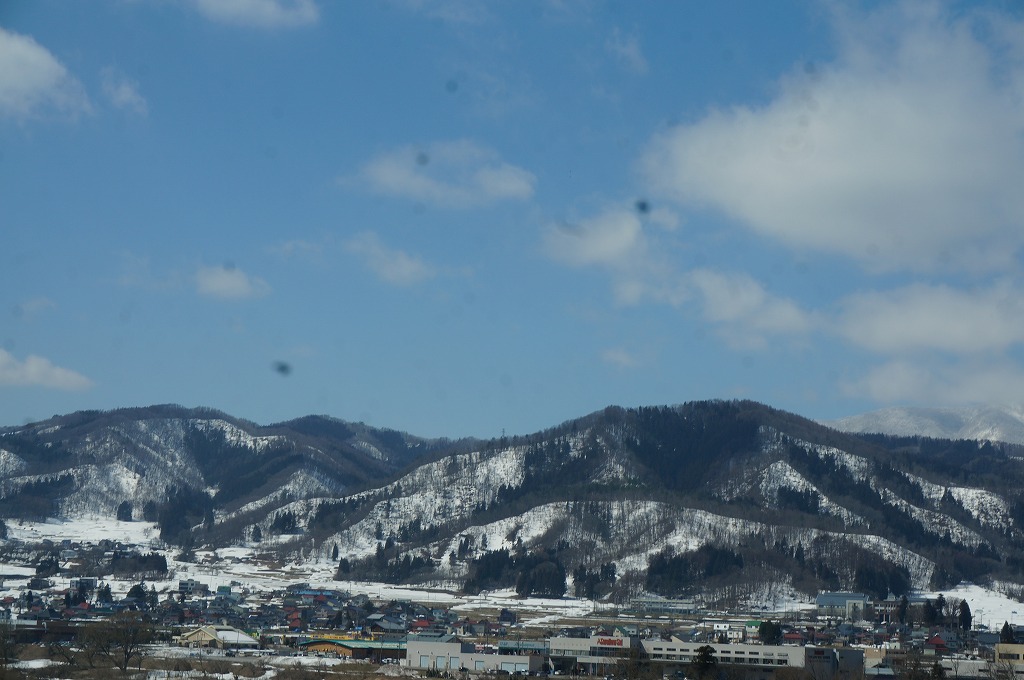
 When I went to this event, I took a Shinkansen at 9:38 (from Tokyo). the Shinknasen crossed Honshu, by way of the still snowy Nagano prefecture, after a little over 2 hours, I arrived at about 12 o’clock.

a iew of Nagano

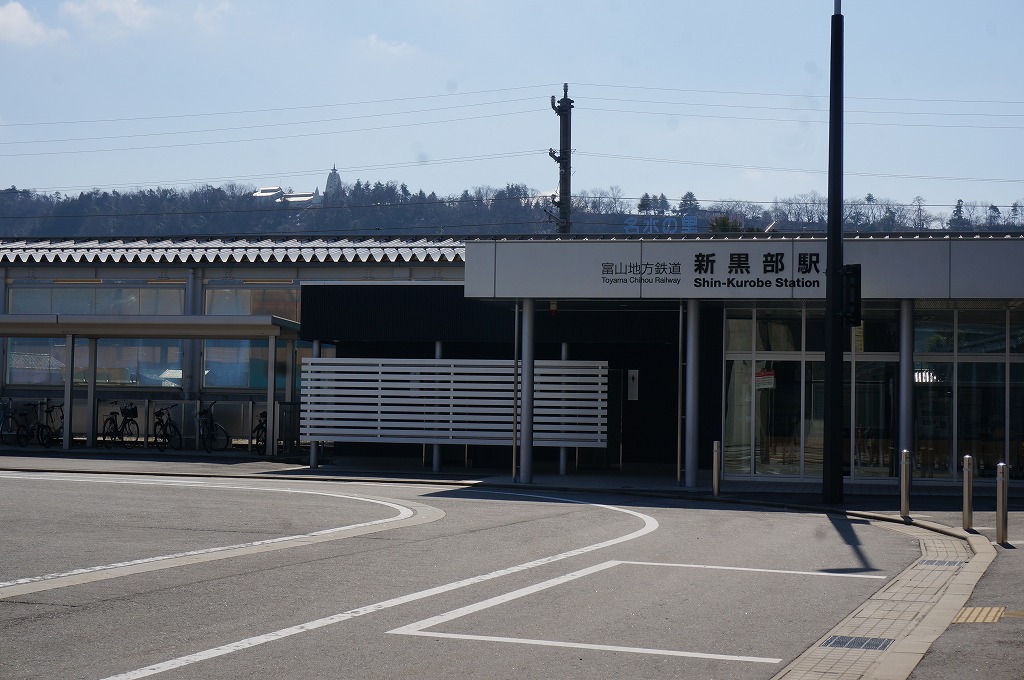
Shin Kurobe station
Shin Kurobe station 新黒部駅
is front of Kurobe Unzauki Onsen

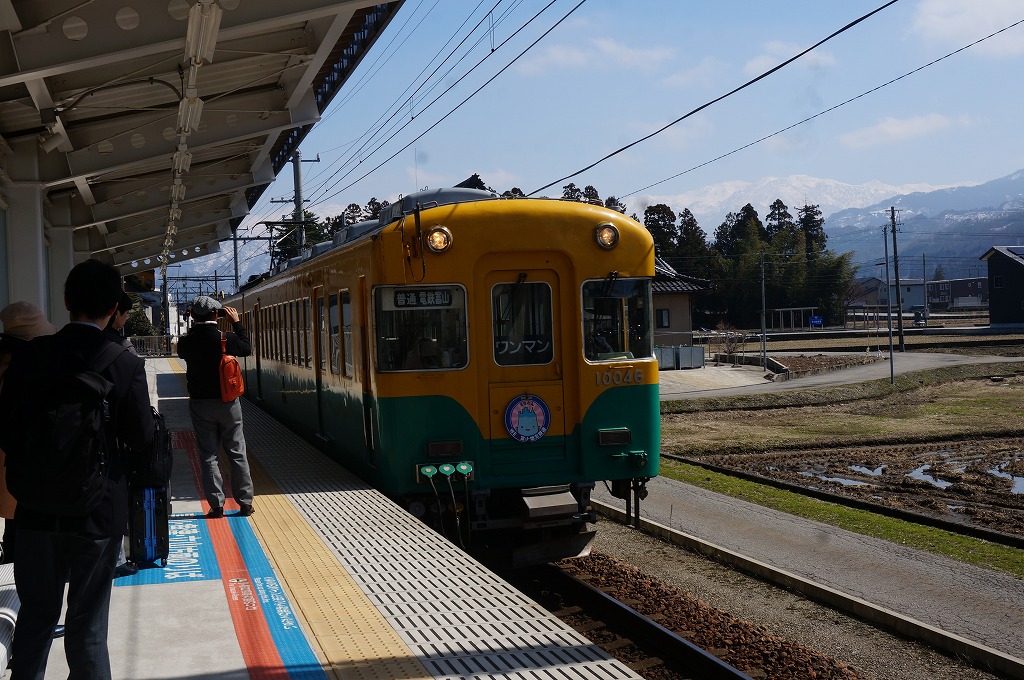
Dentetsu Toyama line
Dentetsu Toyama line 電鉄富山線

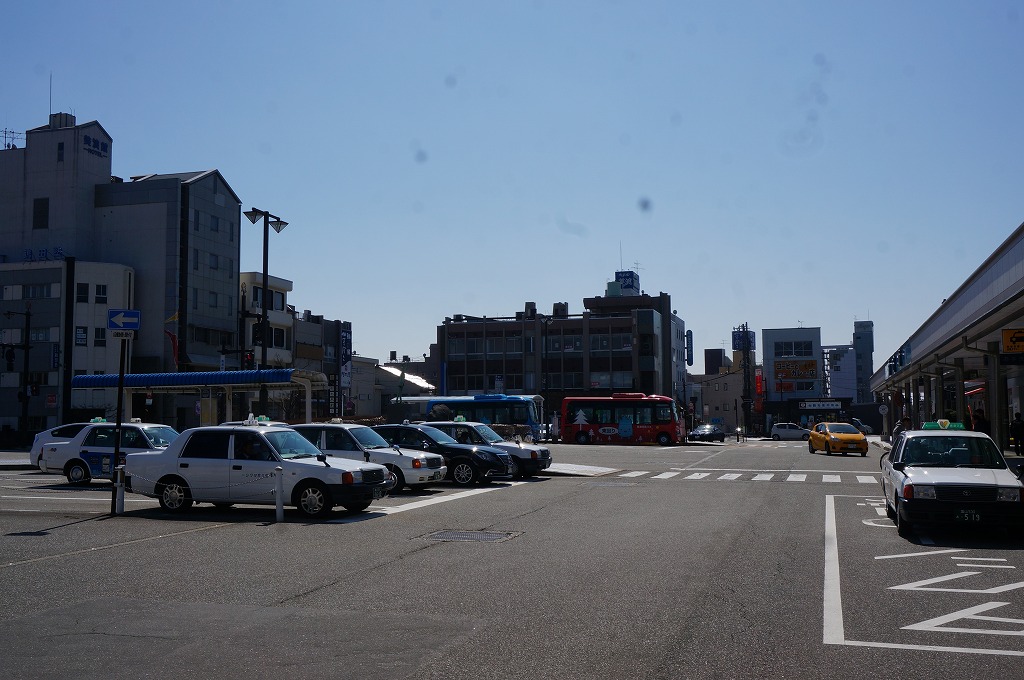
front of Uozu station

In Uozu city

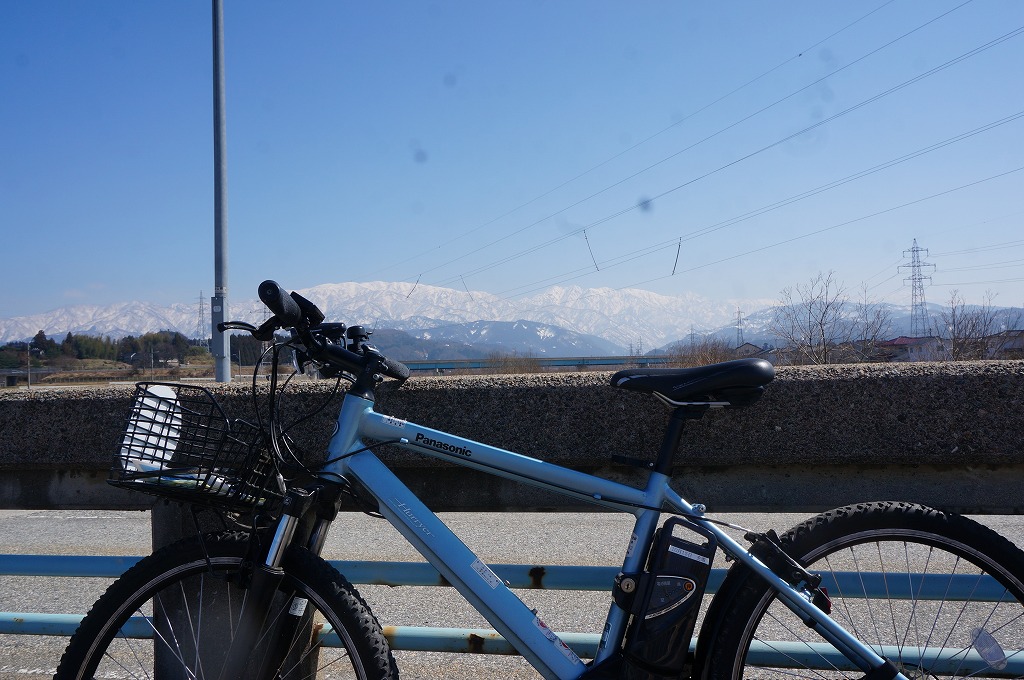
 The event starts at 2:00. The next bus will leaves at 12:38 (as in 2018). I had a little time, so I stopped by the tourist information center. A person working there was very kind and loved the city. I got a lot of information and many booklets. I heard that it’s about 4 kilometers from here to Ogawaji and road is flat. I decided to rent a bicycle. All are electric assist bicycle which are available from the information center, it costs \ 100~300.

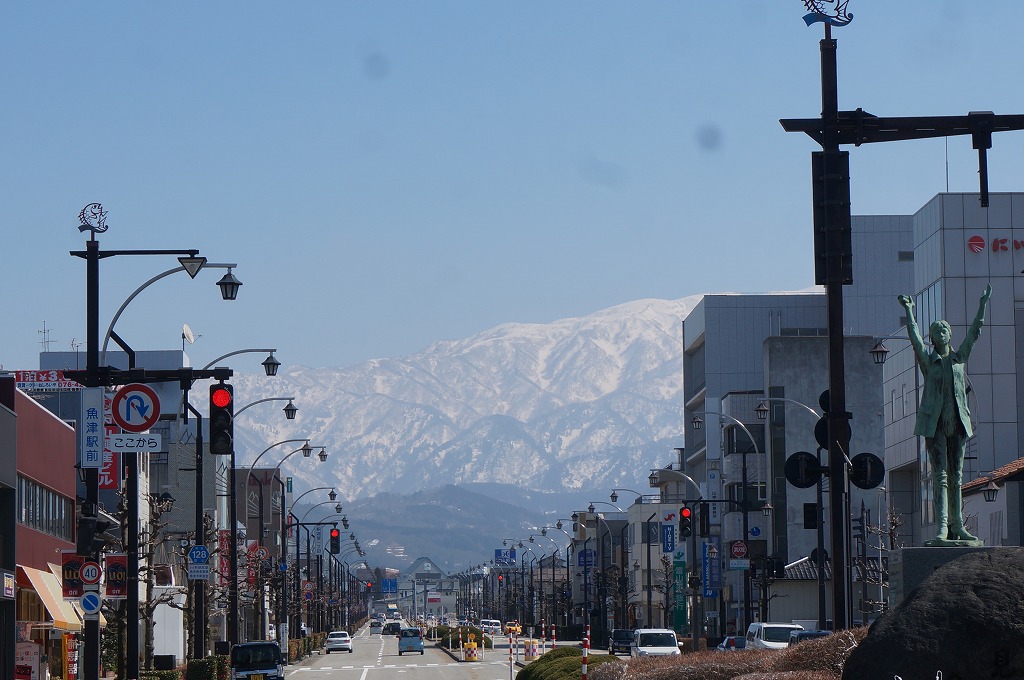
Uozu city and Tateyama mountain range

a rant bicycle

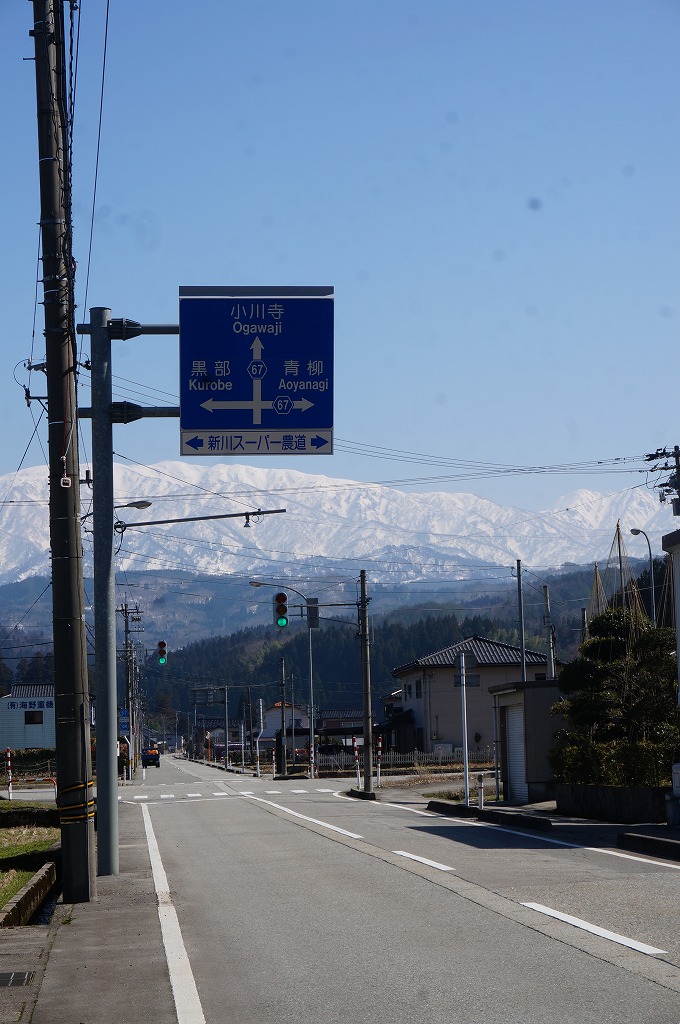
 It’s very fine, but the air is cold and feel chilly. Is this because it was still March or because this was Toyama? I was comfortable cycling, while seeing the snowy Tateyama mountain range. The city is very calm.

a road to Ogawaji
a road to Ogawaji

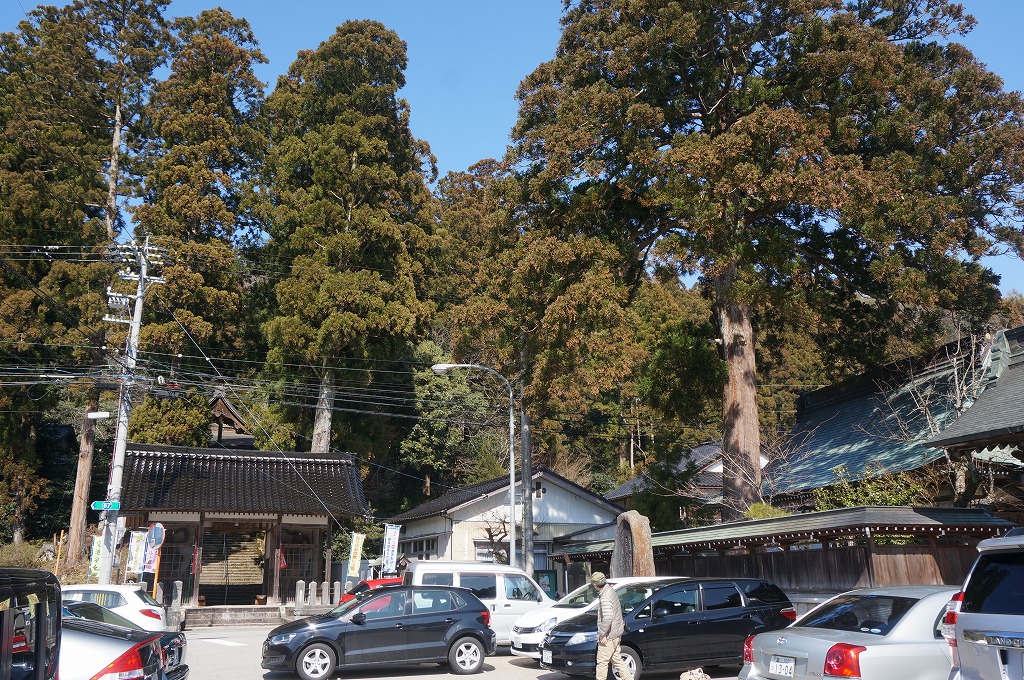
Senkoji-temple
Senkoji temple 千光寺

Senkoji-temple

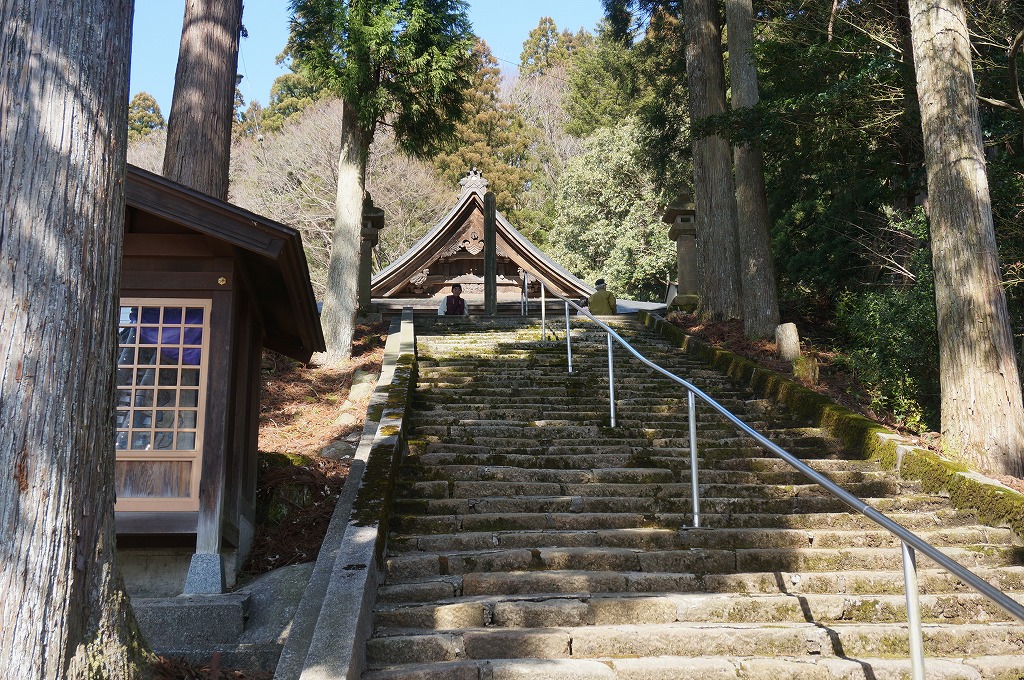
The Kannon-do
The Kannondo 観音堂

 I wonder, if I run some 2~30 minutes, I might finally arrive at the destination. It is the “Senko-ji temple”. There are steps for the “Kannon-do hall” right next to the building.

the Hakusan shrine
The Hakusan shrine 白山社

a strange man

 The precincts of the Kannon-do hall are unexpectedly large. About 2~30 people already were as if surrounding the Kannon-do hall. The neighboring building is the Hakusa shrine. As for the men, while the women gather in the Hakusan shrine, the men gather in Kannondo hall. In the Kannon-do hall a priest gives sutra-chanting, and Shinto priesthood gives a congratulatory address in the Hakusan shrine. This is a rare event, mixing Buddhism and Shintoism. In Japan, originally, the syncretism of Shinto and Buddhism was widely seen from the Heian period (9~10 C) until the Meiji restoration (1968), and Shinto and Buddhism were not distinguished from each other as a general rule. Therefore a trace is sometimes still seen in this way.

 A group is going to do seven laps here. On that day, the event was going to begin at 2:00 pm, but it was half past 2 and it started at 3:00 after all. A Buddhist priest seemed to be late for a funeral.

strange men at the shrine

before parade

 I looked at some strange people who come up the stairs between some trees. It may be finally beginning. First, they stopped at the Hakusan shrine 白山社 and gathered at the foot of the steps, they then received purification of the Shinto priesthood. Several children who hold the flags stood up. With them in the lead, a parade begin.

The parade has began

the parade has started

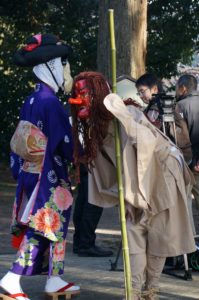
Tengu,a lead of the parade
Tengu 天狗

 Strange people appeared with flute and drums before us who were wating. At first, it is Tengu 天狗. The kind look that some mind seems to be weak here through Tengu is severe or it is a scary image. He come while jump up and down lightly.

many strange men

baba-men (masked character)
baba-men ばば面

 They walk with their hands and feet at same time. Next, two people following Tengu walk towards the same direction. They don’t jump, instead of push their hand up front powerfully with one step forward while glaring at front. They are called “baba-men(mask)”. Further more, they wear distinctive clothes characteristic. One is the pants of the striped pattern on showy clothes, and another is all striped. And after all, to catch the eyes is a strange headpiece. It seems like a crown. I have never seen anything like that. It is not Japanese -style at all. Where did this design come from?

the lion

the lion
Chinese Lion (Shishi) 獅子

 Next comes a lion. Even though I call a lion, this is a Chinese legendary creature, it is totally different from the real animal. Japanese call them Kara-jishi (Chinese Lion). In Japan, there are many folk performing art about this Chinese lion. They are called Lion Dance. Lion Dance has various kinds. In this Ogawaji, it is the oldest style. They are only walking. Though, it’s very tough to walk while lowering the body. Older men say that they cannot walk for a muscular.

anema-mask

an anema mask
anema-men (mask) あねま面

 And the lion following is a woman called “Anema”. She is coiffured old style and mouth bends for some reason and is walking while raising a sleeve by one step. And flute players, drum players and portable shrine. Though they say portable shrine (mikoshi 神輿), they pull it on a carriage. It is difficult for a few people to carry it on shoulder, so it become today’s style. They decided to concider it to walk around 7 laps for walk around all town.

mikoshi
mikoshi 神輿

a tale of the parade

 This event is only they repeat this 7 times. It seems very strange.


Tengu

baba-men

baba-men

anema

 Legend saya that both “baba-men” and “anema” was old heros and heroine. Name was Morimoto Sanemon, Joudou Rokubei and Omatsu. They fight with next village or avaricious feudallord. But now, we do not know the merely true meaning. Only this strange event has remained today.

parade is braaking

wating

a Shinto priest

many starange people

 A break time enters once on the way. They sit in front of Kannon-do, Shinto priest read a long address to the deities. After this, they walk aronud again.

Tengu

baba-men

the lion

 After they finished laps, they came back to the starting place, under the Hakusan shrine. The event is finished.

a parade
a strange man (masked character)

tengu and anema

 At the event, they accept taking a ceremonial photograph.
 Totally about 30 minutes, this event had finished.

 If you want to video, please click here.↓

   for your information
http://go-centraljapan.jp/lsc/lsc-upfile/pamphlet/01/33/133_1_file.pdf Pocket Guide Uozu

 If you have some time, I recommend sightseeing around Toyama. The place where there are old cityscapes, hot springs and natural. There are many places for sightseeing.

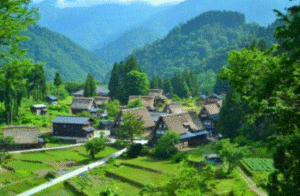
world heritage “Gokayama”

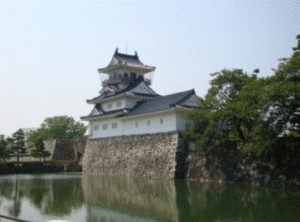
castle and park

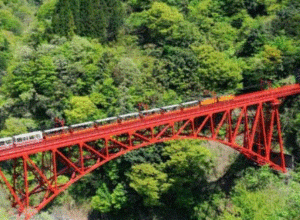
natural “Kurobe”

old town “Kanaya”

evry pictures from https://www.info-toyama.com/spot/21100/ Toyama prefecture とやま観光ナビ 

  Reference
https://foreign.info-toyama.com/en/ Tourism information in Toyama