What’s “Suneka”?~Cold winter, those guys will come again.~Suneka
Introduction
On a cold winter’s day. It is said that a mysterious monster appears along the coast of the Tohoku region—but only on that particular day, and only that night. Rumour has it that the monster enters people’s homes and attacks children. What’s more, the government is said to acknowledge the monster’s existence. Apparently, its name is Suneka. What on earth is it? I set out immediately to investigate.

Date: 15th January every year
Location: Yoshihama, Sanriku town, Ofunato city, Iwate prefecture
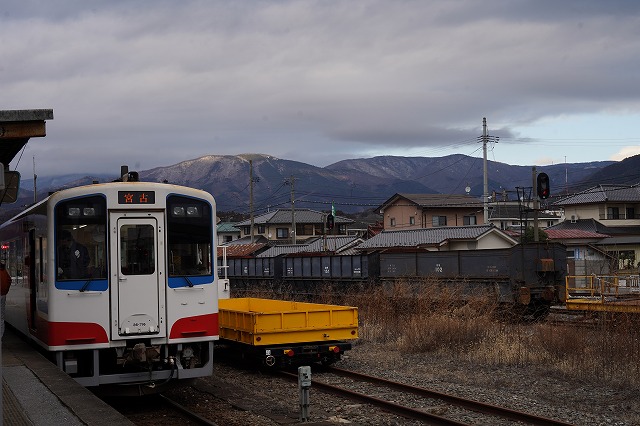
Access: Shin-Hanamaki 新花巻 by Shinkansen from Tokyo. From there transfer to the Kamaishi Line for Kamaishi 釜石. From there, transfer to the Sanriku Railway for Yoshihama 吉浜. Or take the Ofunato line from Ichinoseki 一関 to Kesennuma 気仙沼 and transfer to Mori 盛. From there, take the Sanriku Railway to Yoshihama. It takes about 3 hours from Tokyo to Shin-Hanamaki and Ichinoseki. From there, it is about 2 hours to the nearest Sanriku Railway station. Another 30 minutes to Yoshihama.
Flights to Hanamaki Airport are available, and shuttle buses run from the airport to Hanamaki Airport Station, Morioka Station, and Kitakami Station. The ride takes about 10 to 20 minutes to each destination.
What’s “Suneka”? What’s “Raiho-shin”?
Sneka is one of the visiting deities (Raiho-Shin) featured in the folklore of Iwate Prefecture. What exactly are visiting deities? A group of “Raiho-shin (visiting deity)” folk rituals were added at 2018 to UNESCO Intangible Cultural Heritage list. Raiho-shin are masked and disguised deities who visit the human village from the other world at certain times of the year. Namahage* in Akita prefecture is one of the good examples of Raiho-shin.
A total of 10 events were registered. Suneka is one of them. It appears in Iwate Prefecture, the neighbor of Namahage’s Akita Prefecture. It is an oddly shaped entity that is no less than a Namahage. Let’s take a closer look.
cf. https://discoverdeeperjapan.com/2020/02/07/namahage/
https://discoverdeeperjapan.com/2020/02/07/namahage-sedo-matsuri/
this article based on 2026 visit
Taking part in the SuneKa Tour
As the Suneka is an event rather than a festival, it is rather difficult to find out the details unless you know someone in the local area. However, I happened to come across something called the ‘Suneka Tour’. Apparently, it’s a new initiative that started this year. Preserving traditional events is becoming a pressing issue in many regions. Whilst securing people to carry on the traditions is the top priority, raising awareness is also a key factor.
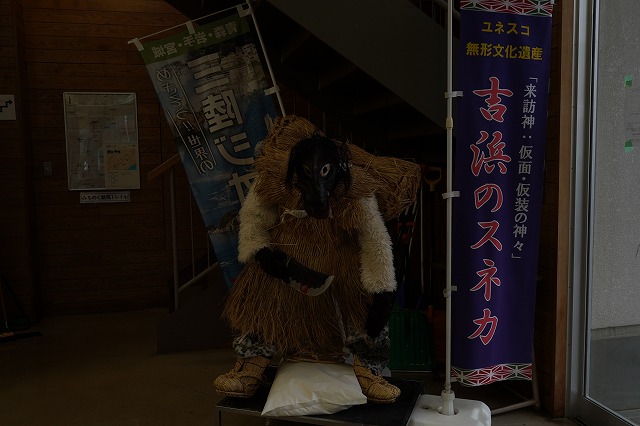
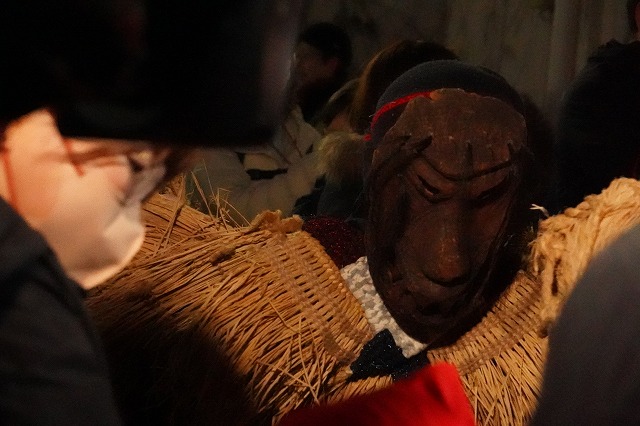
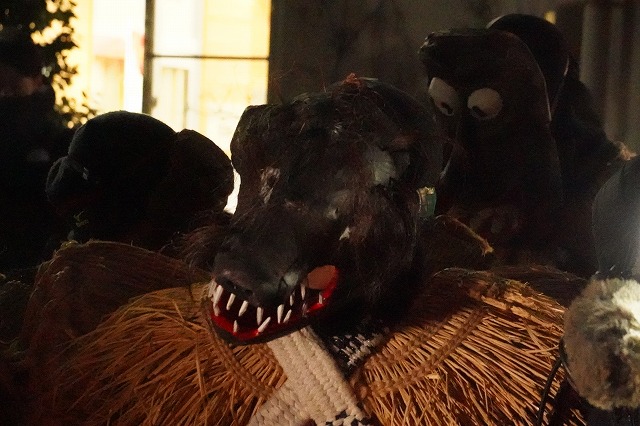
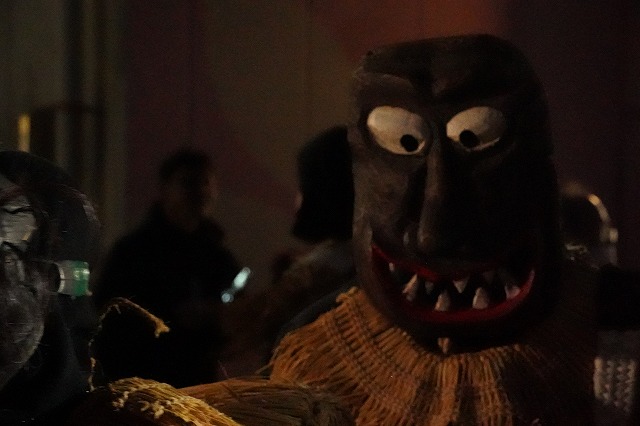
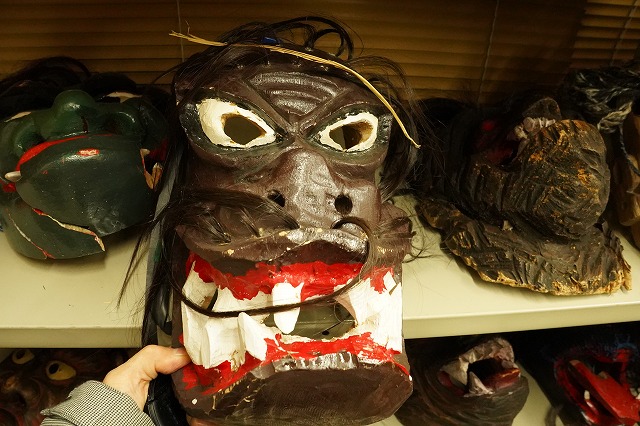
Suneka is supposed to appear on a cold night on the 15th of January every year. They wear a straw raincoat and have abalone shells hanging from their waists. The sound of the shells is an indicator of their arrival. They also wear a small sword (deliberately dipped in bloodstain) and, for some reason, only one pair of children’s shoes. And on their backs they carry heavy-looking bales. And most distinctive of all are their masks. The masks are not animals themselves, but rather strangely deformed, adding to the eeriness of the scene.
Where did that name come from?
The strange name Suneka comes from the word tagle for sunekawa. Sunekawa means the skin of the shin, and Taguru means to peel. It is the same as the name of the Namahage, which means to peel off the skin of the tibia. The difference is that on the Oga Peninsula, where the Namahage live, the shin skin is called Namomi, and here in the Yoshihama area of Iwate Prefecture, it is called Sunekawa.
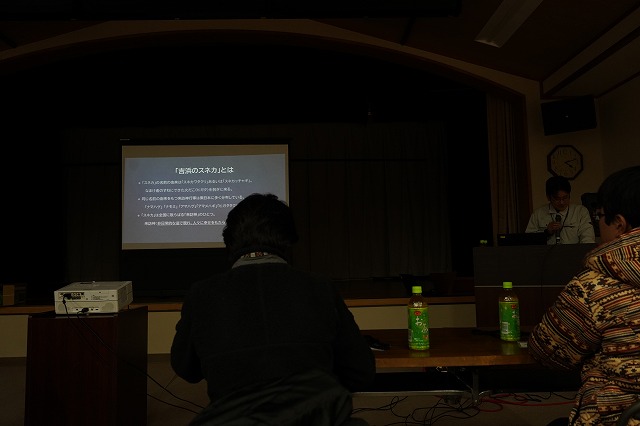
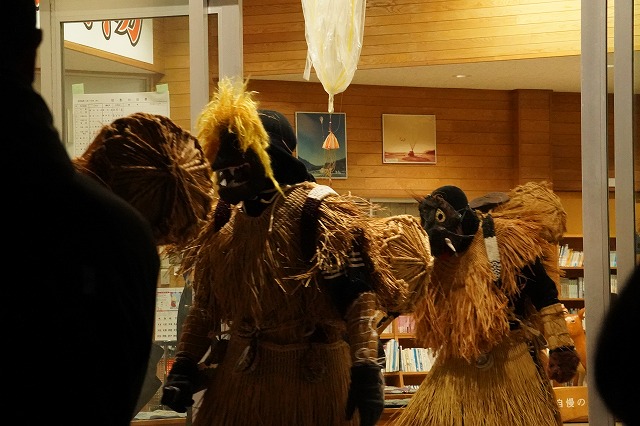
Before the Sneca event began, there was also a lecture given by an expert.
A brief ceremony in front of the hall
In the evening, Suneka gather and at 5:00 p.m. a departure ceremony is held at the station. About 25 members in total. They went from house to house in some groups. It takes about two hours to visit about 300 households.

On that day, several families had gathered in front of the hall to experience their first taste of Suneka. Though they’d prefer not to have visitors come to their home, these families want their children to get to know Suneca.
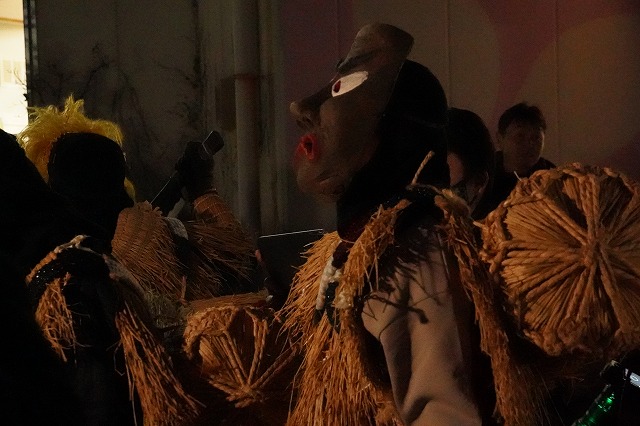
What does Suneka do?
In each house, a feast awaits them with their children. Then the sound of the shells of Sneeka and his friends begins to be heard, and even the sound of their sniffing comes closer. At this point, the children are already scared. They are almost afraid to even mention the name. When SUNEKA arrives, they scratches their nails in the yard and shakes the door. Then they come up to the house. Are there any crying children? Are they being good? Are you being a good boy? The children desperately appeal, “I’ll be a good boy. Then, when the time is right, a family member tells them, “Then we will give you some rice cakes and ask you to go home. It takes about 10 minutes, but for the children it seems like an eternity. Here is what makes Suneka unique. They never show their backs. So when they leave, they walk backward and head for the entrance.
In some areas, there are even child Suneka. Originally, this was done by a youth group, but due to a lack of manpower, the children began to take on this responsibility. They go around to kindergartens and nursery schools. Still, Suneka remains a formidable presence for the children in each place. We hear that older children sometimes stand up to him and say decisively, “No crying children, please go home.

In this way, children in this area grow up strong. According to the locals, this effect is valid for about three months.
Although the exact figures are unknown, its history dates back about 200 years., and although it was once interrupted by war, it was revived in the 1960s, and a preservation society was formed and continues to this day.
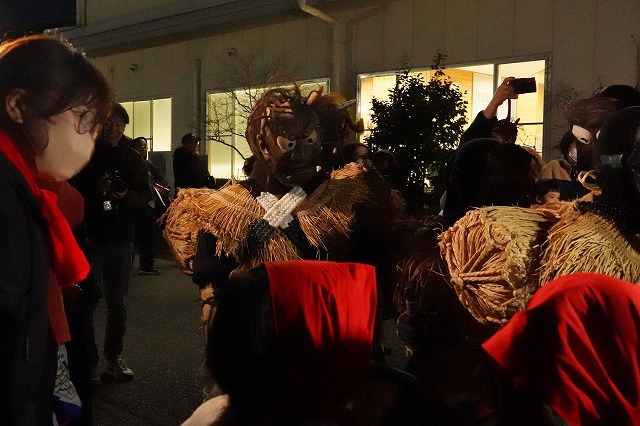
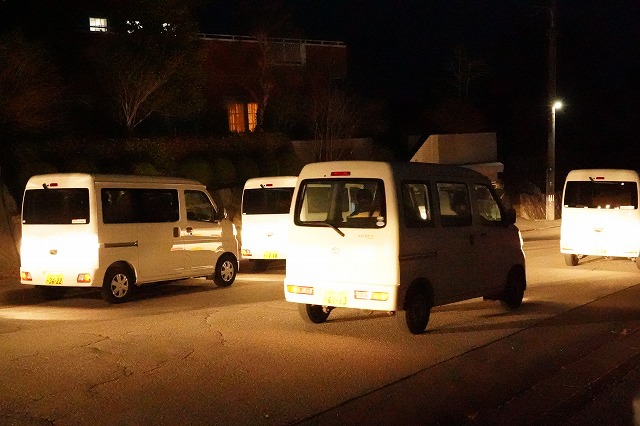
But the tour isn’t over yet
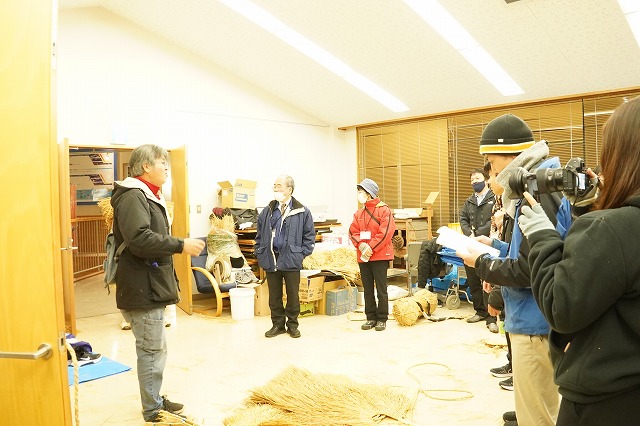
The Suneka members drove off to various locations. After they left, the chairman of the Preservation Society gave a detailed explanation to the remaining Suneka members.
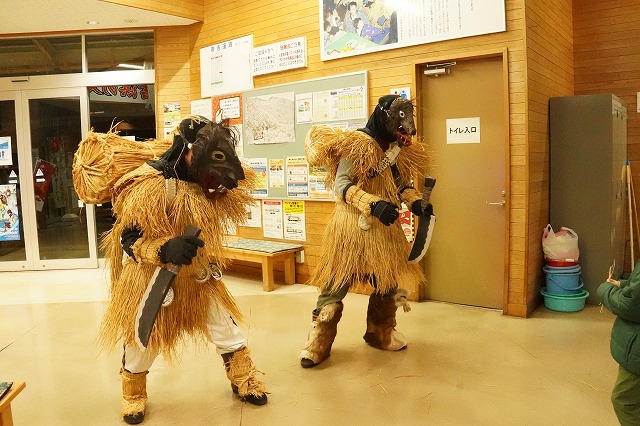
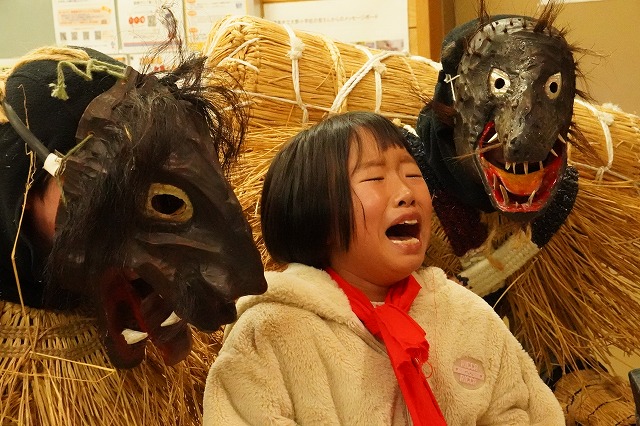
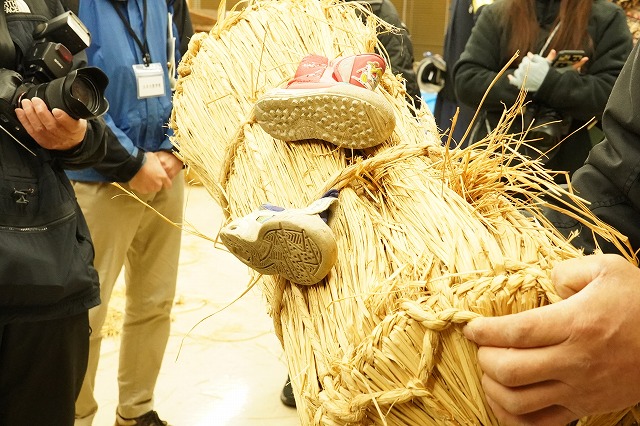
If you look closely at the straw bale on the back, you can see that a child’s shoe has been attached to it. This is meant to suggest that a captured child kicked through the bale from the inside while struggling. It’s quite a detailed touch.
However, he mentioned that it’s been difficult to source straw lately.
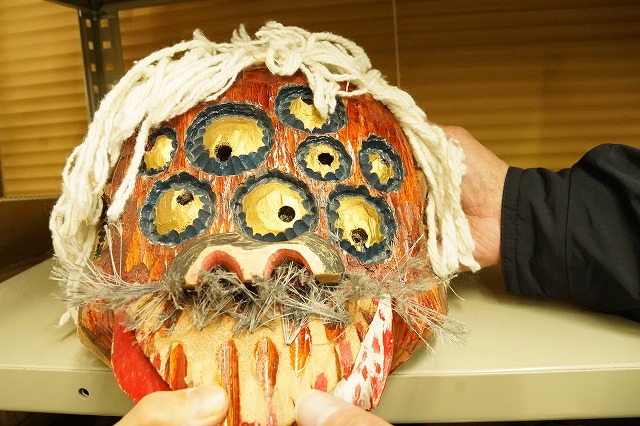
The chairman says that the masks are basically carved from wood. However, he adds that there are no set rules regarding what the faces should look like. The only rule, he says, is that they must be mysterious.
Fifteen people took part in the tour that day. The organizers said they were surprised to find that more than half of the participants were from outside the prefecture.
I spoke with a few of them myself, and they were quite a formidable bunch. People who travel exclusively to remote islands, people who went all the way to Bali just to see the Barong dance (a masked dance), and so on.
Sunehka isn’t over yet—and neither is Ofunato
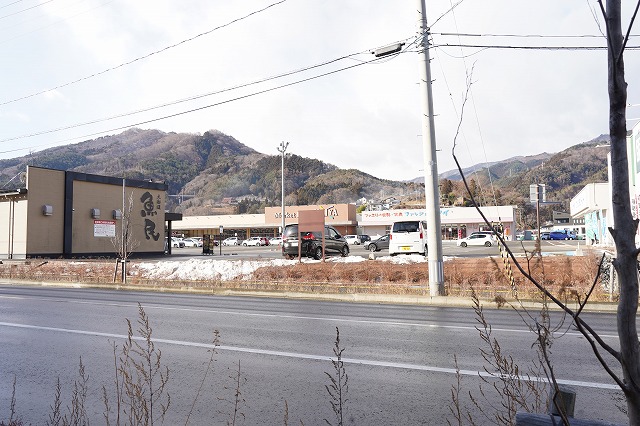
Visitors might find themselves thinking, “Huh?” They might notice that, despite being a central town in the area, there aren’t many houses, and it feels somewhat desolate. The town does have a hotel and a small shopping mall.
But if you look closely, your eyes are drawn to a sign. It reads: “Once upon a time, a town of this size existed here.” Yes, this is one of the places that suffered the worst tsunami damage in the 2011 earthquake . The people have rebuilt the town to this point. And the tradition of “Suneka” has been passed down through the generations. Suneka has also served as a symbol of reconstruction.