Japanese lion dance that can be seen in Tokyo~Tokumaru
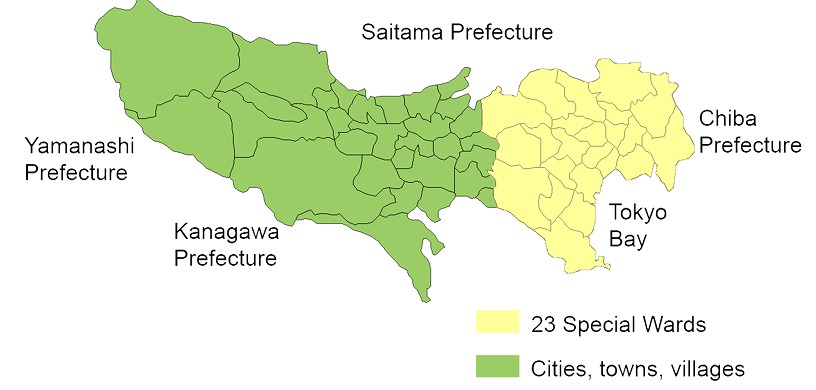
Tokyo, the capital of Japan, consists of two parts: the wards and the rest of the cities and villages. There are 23 wards in total, and people usually think of these wards while they think of Tokyo. Among them, the area facing the bay is the most popular place and land prices are high. Tokyo Station, Asakusa, Shinjuku, and Ginza are all located in this area.
Tokyo (then called Edo) has always been a place where people moved around a lot, and it was said that if one have lived in Edo for three generations, he or she was a native Edo resident. Nowadays, this is still the situation, and it is said that half of the people in Tokyo are of local origin with a slight irony .
The “Tokumaru 徳丸 no Shishimai” (lion dance of Tokumaru), which is the subject of this article, is a valuable lion dance that still remains in the district. This is because it takes more than three generations to carry on the lion dance.

Date: 5th May, every year
Location: 北野 shrine Tokumaru 徳丸 6-34-3, Itabashi 板橋 ward, Tokyo
Access: ① Get off at Narimasu Station on the Tobu Tojo Line, take the Kokusai Kogyo Bus bound for Akabane Station West Exit from the ‘Narimasu Station North Exit’ stop (approx. 10 mins), get off at ‘Koubai Elementary School’, then walk for approx. 5 mins
② Approx. 15 mins’ walk from Tobu Nerima Station on the Tobu Tojo Line
③ Approx. 15 mins’ walk from Takashimadaira Station on the Toei Mita Line
It takes about 10-20 minutes from Ikebukuro, the center of this area, to Nerima.
This article is based on a 2017 visit.
Let’s go !
Even in the 23 wards of Tokyo, the buses are not frequent here, because the area is located on the periphery of the city. This is especially true during the daytime. For example, there were times when you had to take the 2:00 p.m. bus even though the event would start at 2:00 p.m. That said, there’s no rush; it doesn’t start immediately at 2:00. The rituals will be performed first.
Few buses, but the sun is nice. The beginning of May is one of the best weather periods of the year. Spring is over and summer is beginning, so temperatures are starting to get a little warmer, but not too much, and it is very comfortable. This time of year is commonly known as “Golden Week” in Japan. This is because it is a period of consecutive vacations, and unusually long vacations in Japan (though they last from a week to 10 days at the most) are possible.
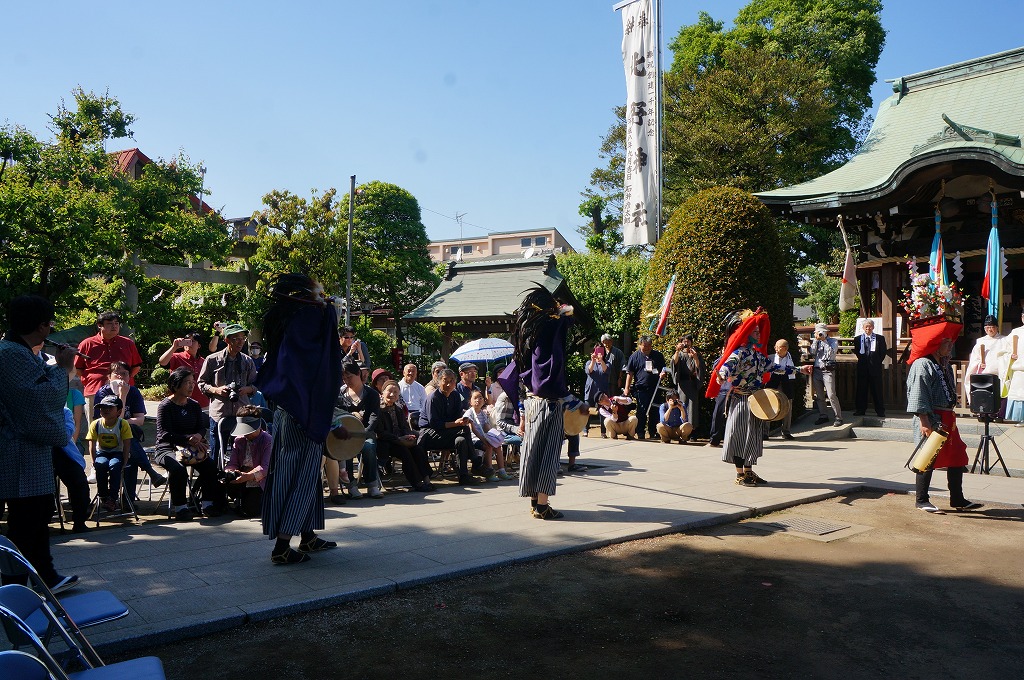
Koinobori and Children’s Day
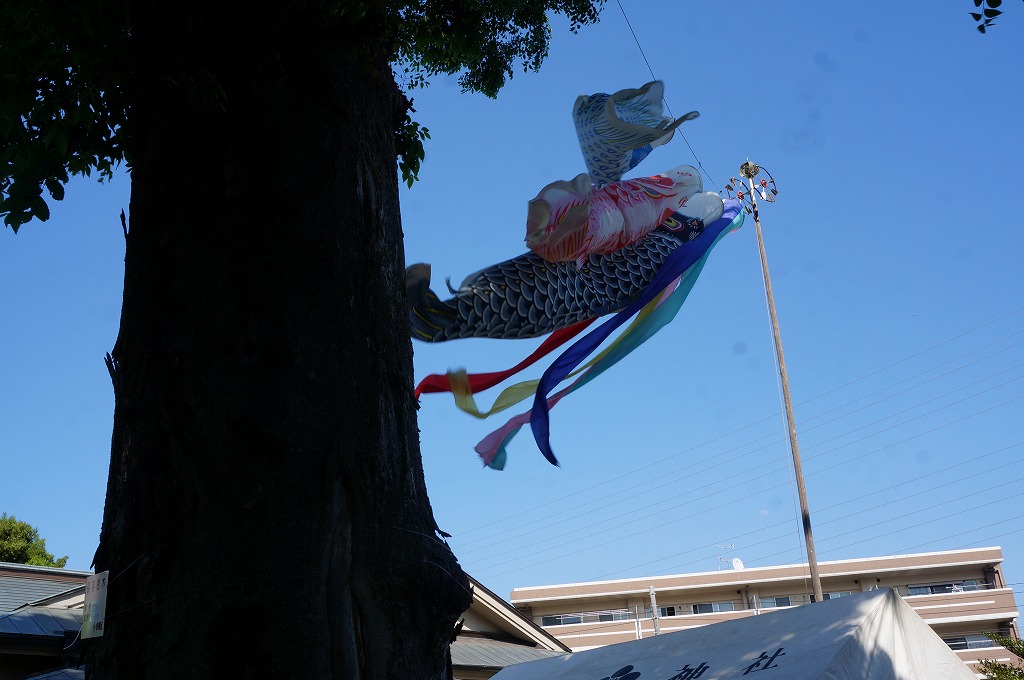
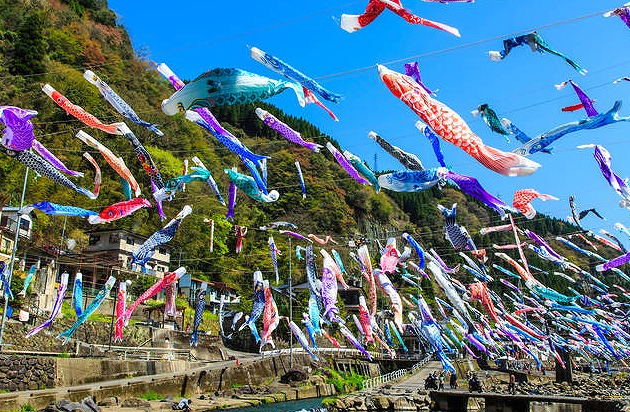
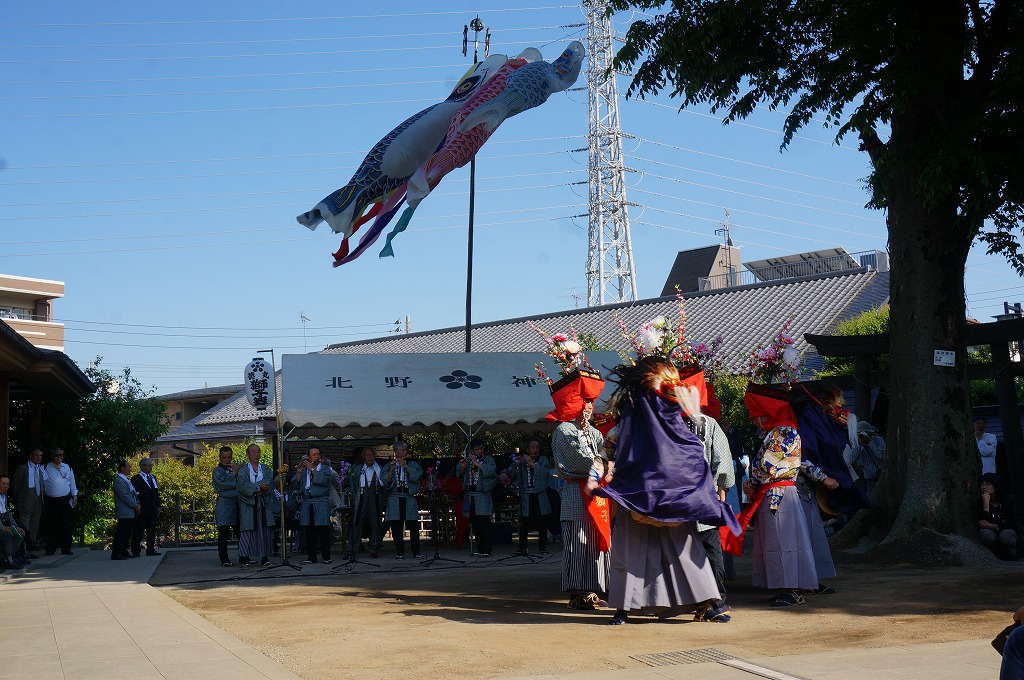
In the lion dance grounds, Koinobori, carp streamers held high flutter in the wind.
This is a digression from the main topic, but let me briefly explain about carp streamers. You may skip it if you like.
In fact, May 5 is Children’s Day or Boys’ Day, a national holiday to wish for the growth of children. The carp is a symbol of growth, based on a Chinese legend. The carp is never hung alone, but usually several of them. They express the father, the mother, and the children. In the city, there is no place to hang a large carp streamer, and many people put up small ones on windows, but in the countryside, there are still many magnificent ones. Parents also decorate their houses with dolls that resemble warriors. If you go to department stores, you will find many such dolls on sale during this season. Inside the house, parents display a heroic doll representing a warlord.
By the way, there is also a holiday for girls, which is March 3.
At this time, too, parents decorate their homes with dolls, sometimes as many as a dozen or more in a row for girls, in contrast to only one doll for boys, which costs a lot of money.
Outline of Shishimai
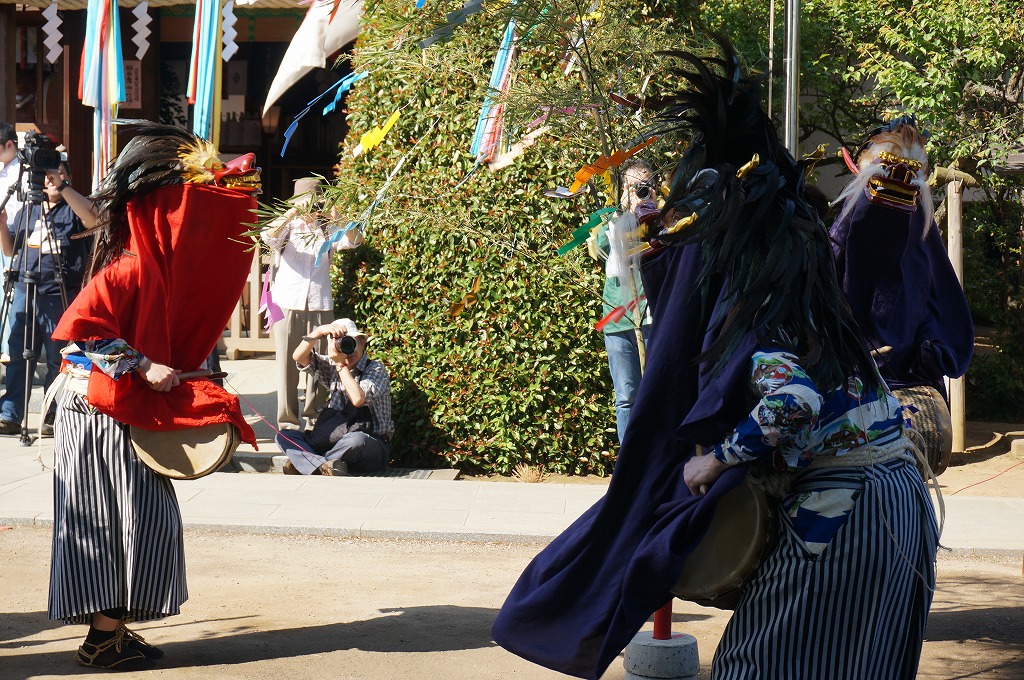
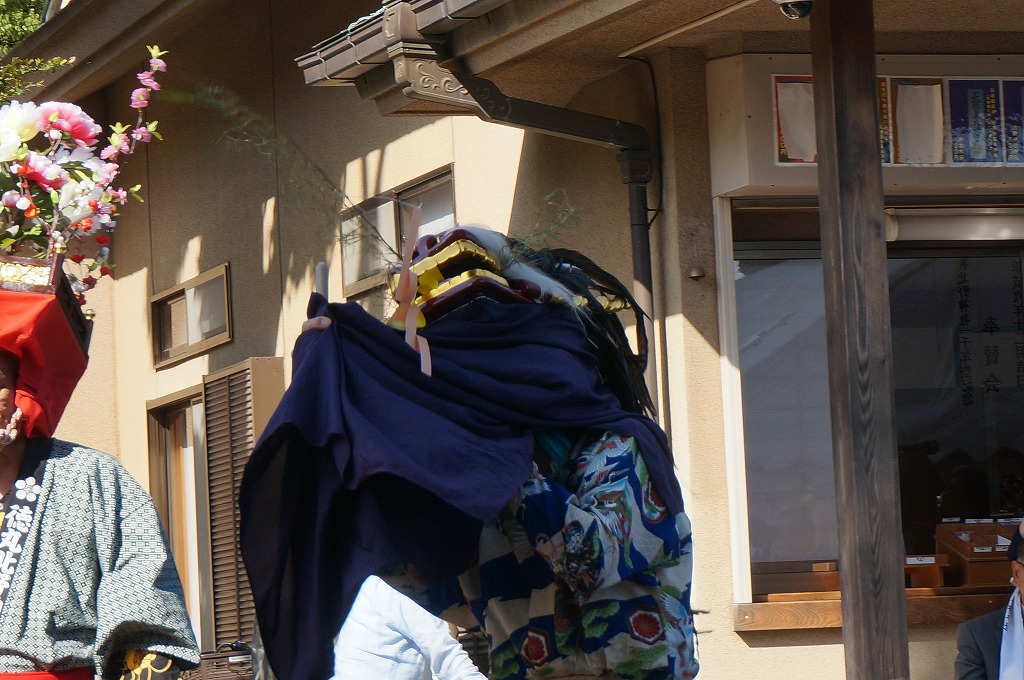
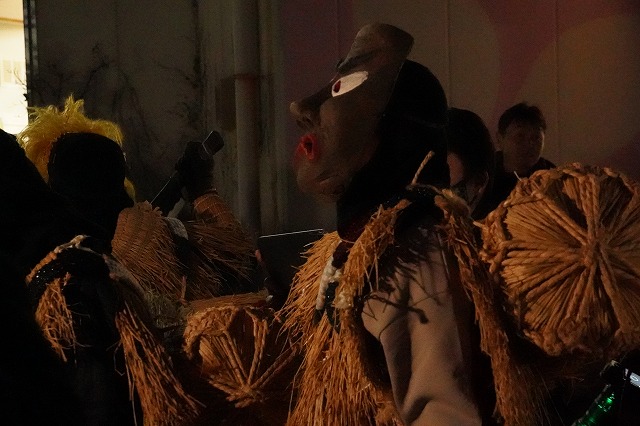
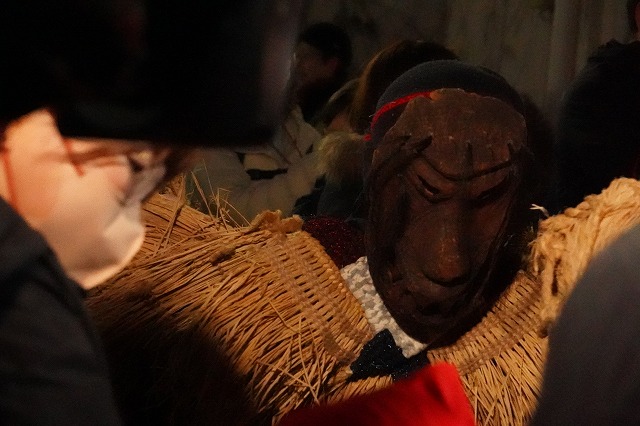
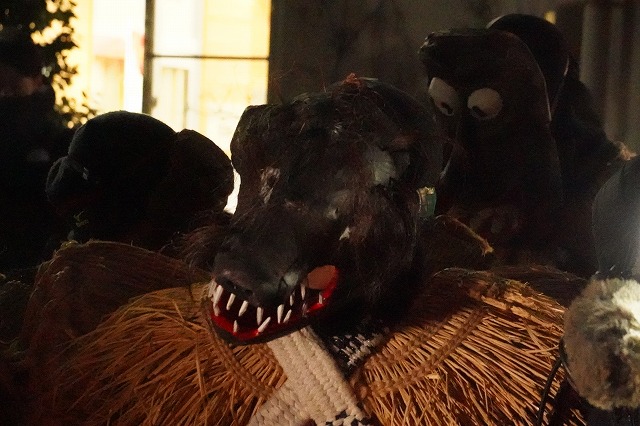
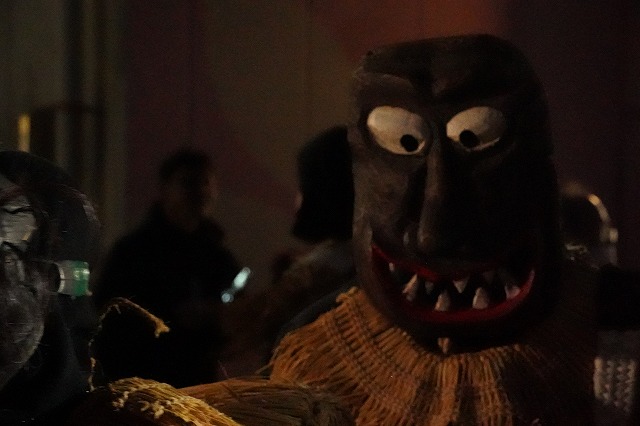
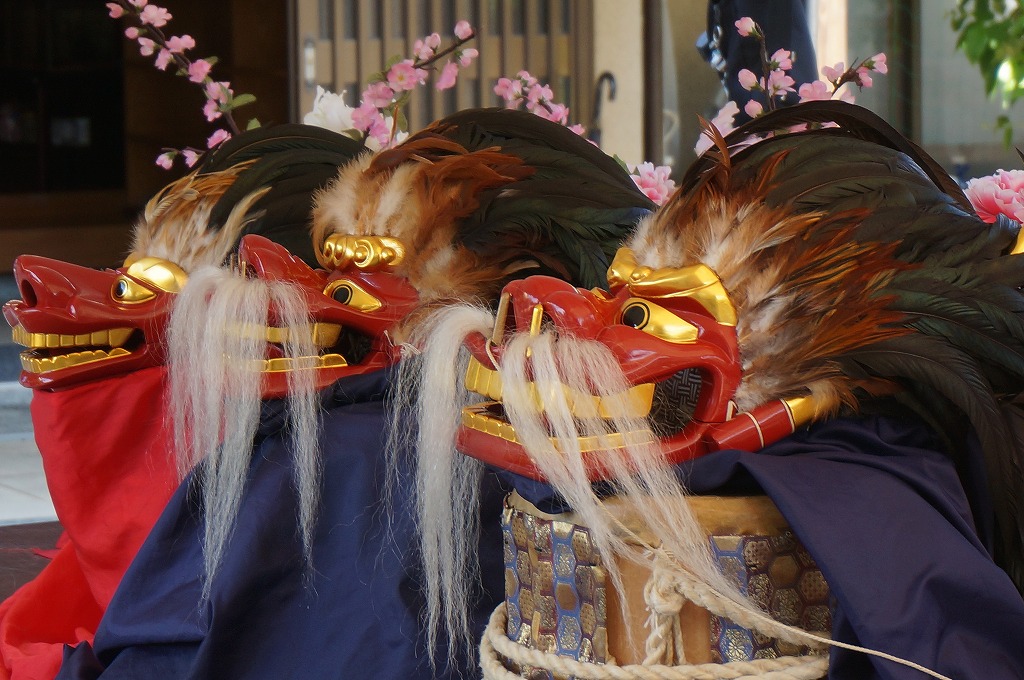
The lion dance is performed by a group of three lions, which is common in eastern Japan. One person is in charge of one lion, and the drum is attached to the front of the lion’s belly and struck by the lion himself.
The three lions are an adult lion (called Oh-jishi), a young lion (Naka-jishi), and a female lion (Me-jishi), respectively. The difference can be judged by the shape of the horns. In addition, there are Hanagasa (headgear with flower decorations), several flutes, and others.
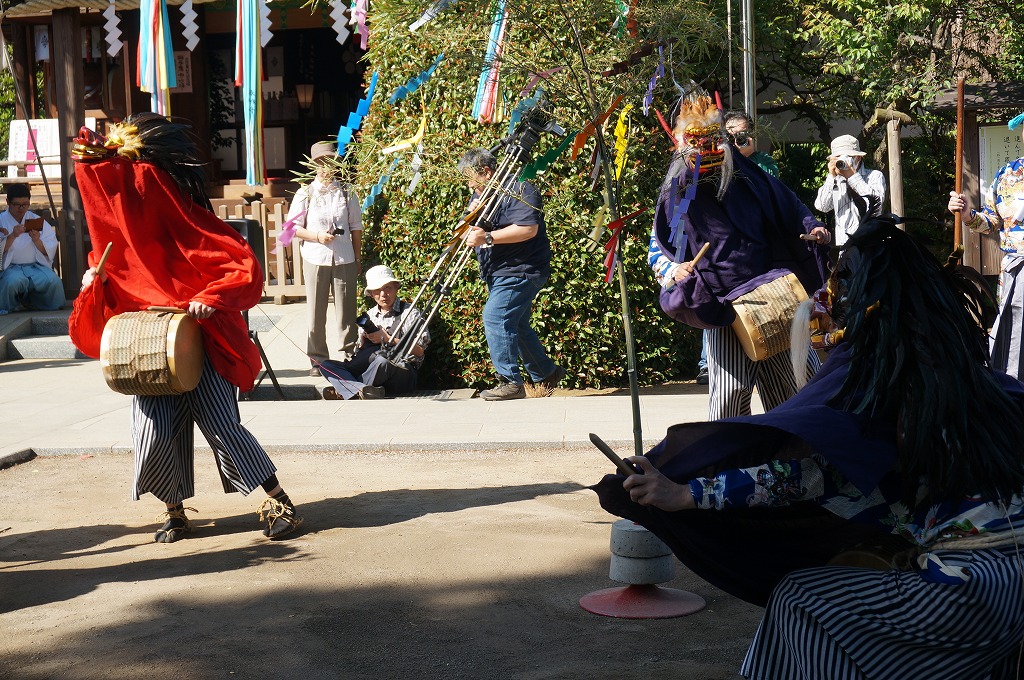
Around 2:30 p.m., the lion dance finally begins. There are a total of seven performances that have been handed down. The first dance is performed in front of the house of the chief priest next to the shrine. In the past, the dance used to go around the town, but the current trend has simplified it.
There are three main dances. They are ” Sasagakari,” “Hana-Meguri,” and “Makugakari. Kakeri” means to be involved with something, and “sasagakari” means to be involved with bamboo grass. Hanagasa stands in each of the four directions. This serves as a kind of boundary.
In this case, the bamboos represent all the diseases and calamities of the world, and Shishi swallowing them is expected to have the effect of dispelling the calamities. Shishi (lions) keep their posture low and exert themselves to drive away all the calamities.
Hana-meguri ~Garden of strife
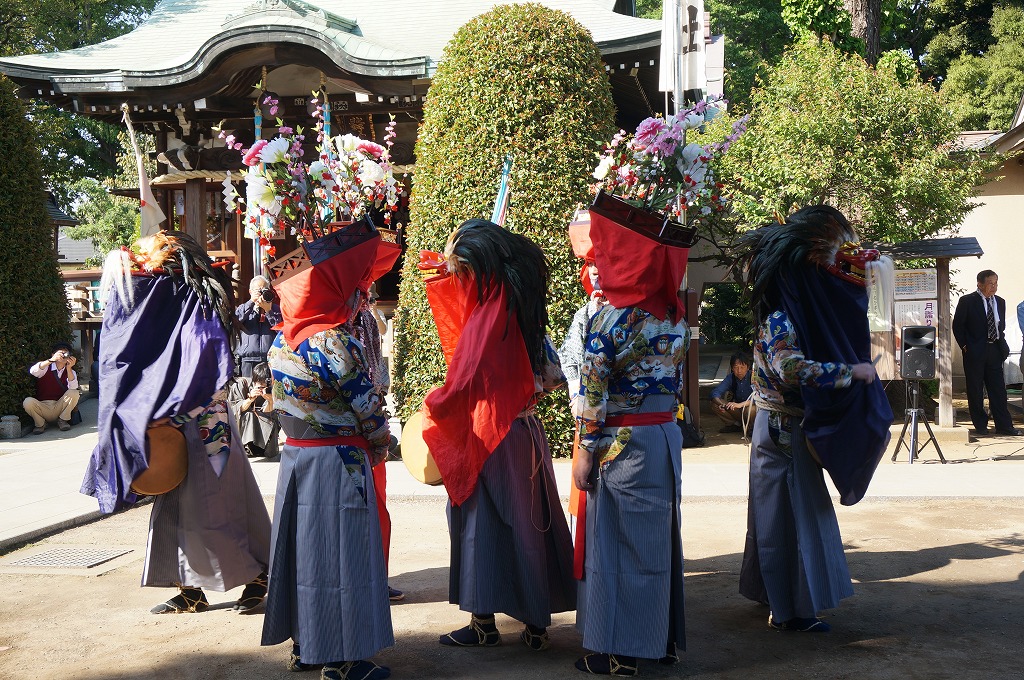
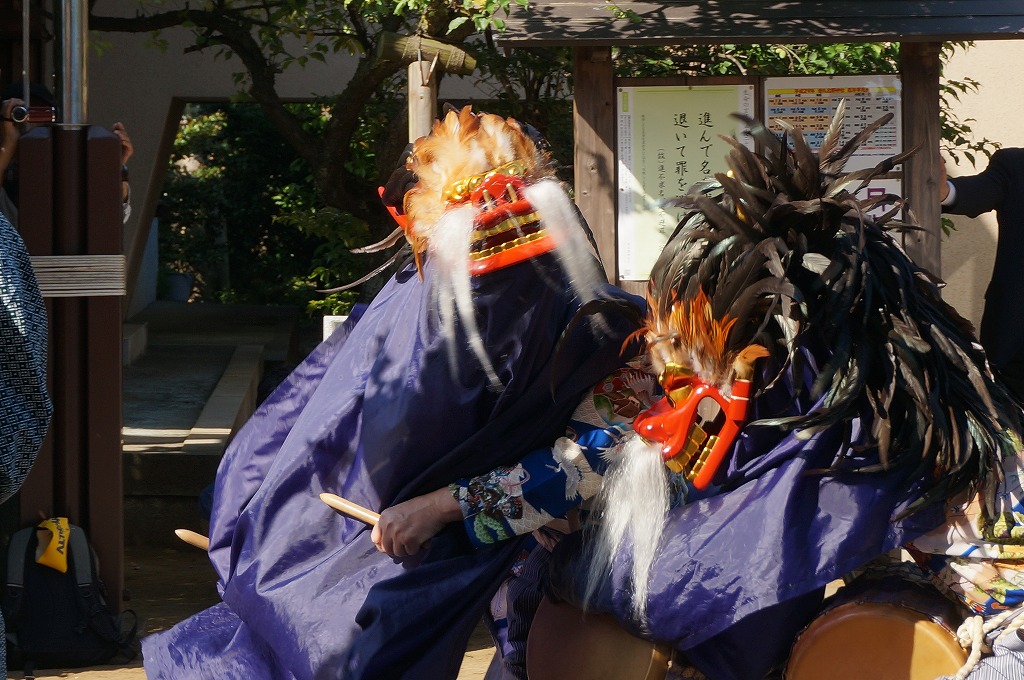
“Hana-Meguri” is a performance called “Female Lion Hiding,” which is a common part of lion dances in eastern Japan. In this performance, the three lions are initially friendly, but as soon as the female lioness disappears, a mood of disquiet envelops them. Here in Tokumaru, it’ s no exception. The three animals are in a state of friendly head-to-head contact. Eventually, only the female lioness disappears into the flower garden (hanagasa, or flower hats, are gathered together to form a flower garden).
What’s happening?” Two lionesses ask each other, “What happened? The two males split up and go looking for it. Then young male finds the female first, and although he could have just reported right then and there that she was there, he doesn’t. He tries to monopolize the female.
The older male lion comes later. Naturally, he’s not amused. A fierce battle ensues. This is repeated mutually. By the way, why did people in the past create such performances, and why did they continue to do so endlessly?
Maku-gakari ~beyond this world
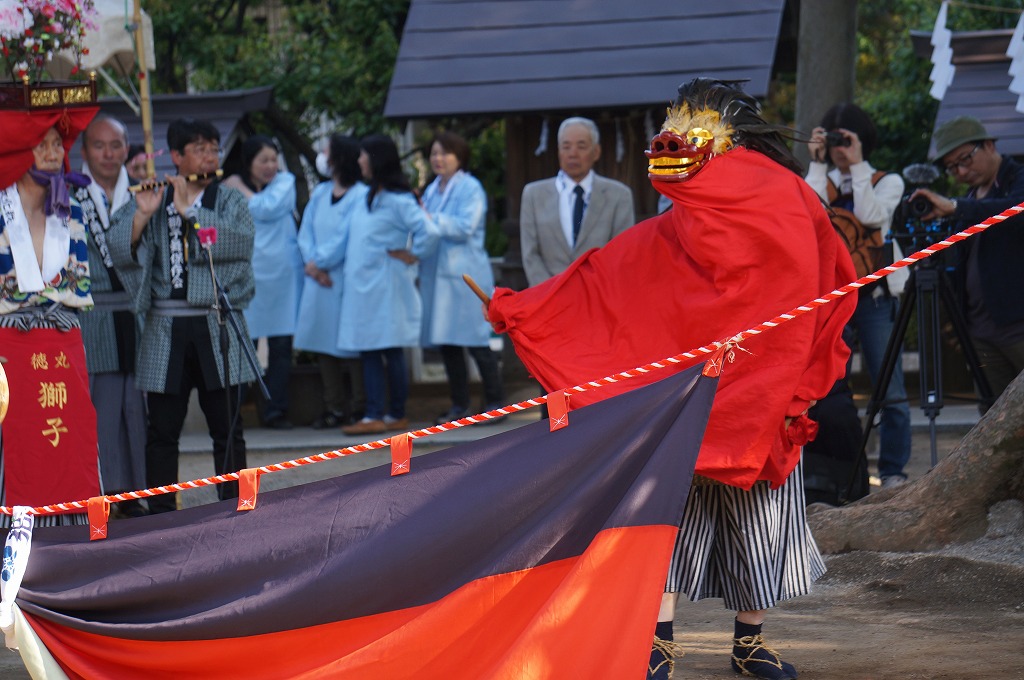
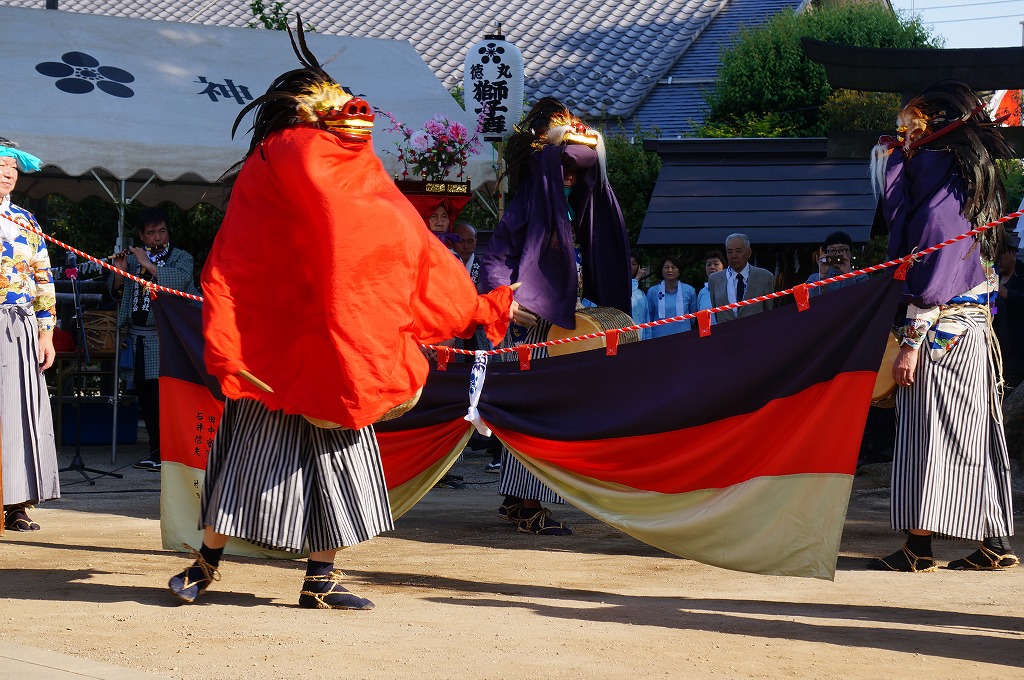
The last performance is called “Maku-gakari”. As far as I can see, this is the most important performance in this lion dance.
First, a curtain is placed in the center. In front of this curtain is a world filled with suffering. This is the world we are in now, or in Buddhist terms, this is the present world and the other side is the Pure Land. And they are interested in the world beyond. They timidly approach the curtain to see what appears to be going on.
The first to break through the wall is the lioness. Yes, the female always overcomes constraints with ease. At the time this was created, the restrictions on women were even stricter than today. Despite this, they may have seen that this is essentially what people are like. They seem to be sending a message that transcends time. “In fact, it is women who are the most free and courageous.”
It is the young male who will be the next to overcome. Youth gives us more power than anything else.
The oldest male lion is the last one left. The lions who went before them call out. “There is a wonderful world out there,” they say. “Come quickly.”
He is sure they know this. But he can’t cross over, can’t venture out. That’s what it means to grow older. The things one carries become heavier and heavier. So he must be thinking, “If I go on an adventure, I might ruin everything.”
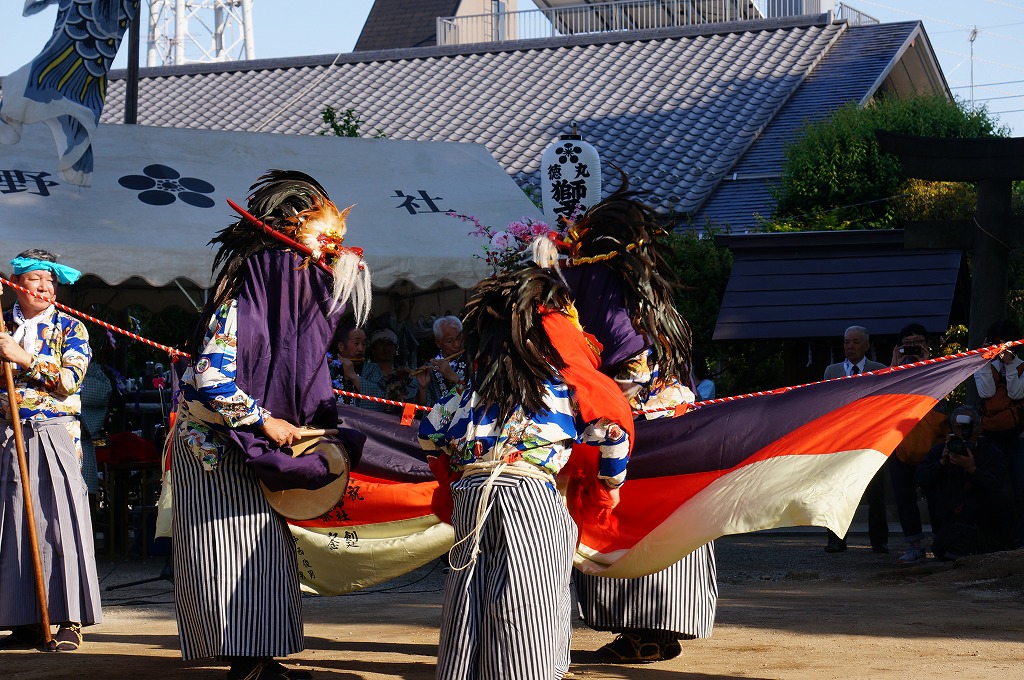
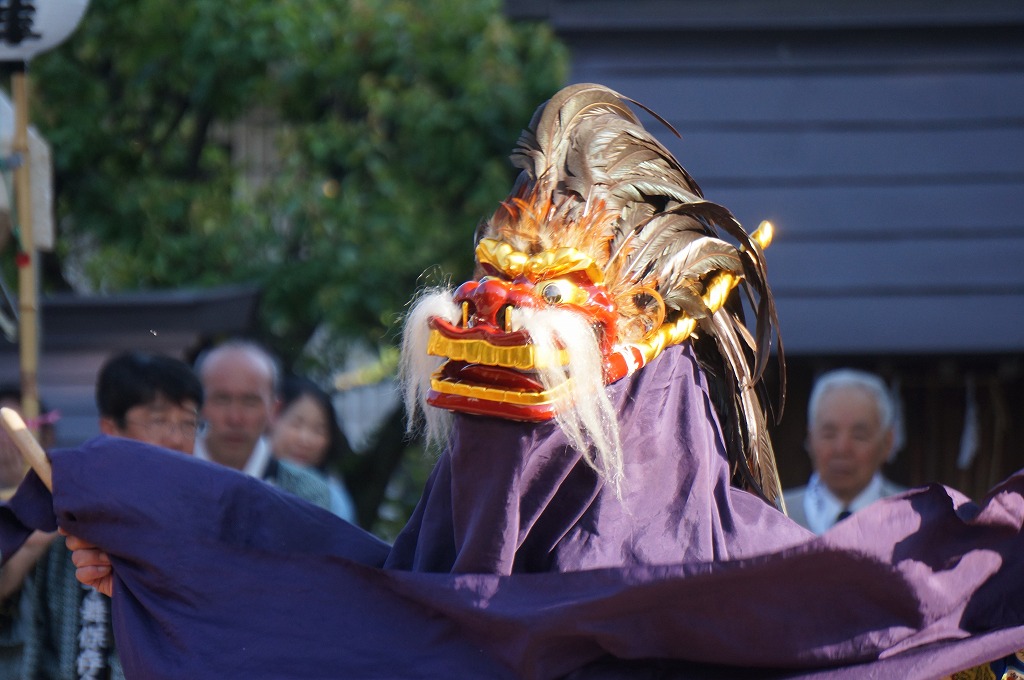
This “Ohjishi” is performed by the most seasoned veteran. The performers must have a certain amount of experience in order to express their anguish and conflict. So, when they overcome the difficulties, they are moved deeply.
”I can still do it. It is still too early to grow old. Only by continuing to boldly take on challenges will life shine brightly.” It seems that this Ohjishi are conveying to us the voice of those who lived long ago.
When this is over, it will be after 4:00 pm. It’s the end of all the performances. The early summer sun was already beginning to set.
The Official Website of Itabashi Ward https://itabashi-kanko.jp/event/detail?id=427