Discover the Rich History of Ashikaga’s Kagura Tradition
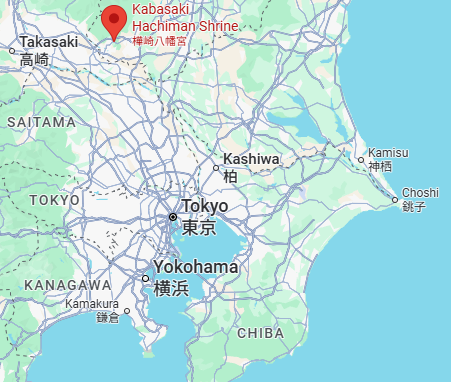


Location; 1723 Kabasaki-cho, Ashikaga City, Tochigi Prefecture

Date; the third Sunday in April and October

Access; It takes about two hours by local train from Tokyo to Ashikaga (JR) or Ashikaga City (Tobu Line). If travelling by Shinkansen, you will need to change at Takasaki. Approximately 6 km from Ashikaga, or Ashikaga Station.

*https://www-city-ashikaga-tochigi-jp.translate.goog/?_x_tr_sl=ja&_x_tr_tl=en&_x_tr_hl=ja&_x_tr_pto=wapp Ashikaga city official

Based on the visit on 16 April 2017

prologue

In brief, the history of Japan is that rice cultivation gave rise to large-scale political forces in various parts of the country, which eventually came together in armed struggle to form one united government. These are the ancestors of the present-day Emperors. Thereafter, a long period of political rule centred on the emperor, with influential aristocrats gathered around him. They stayed in the capital cities of Nara and Kyoto, and maintained power by siphoning off revenues from their local fiefdoms. but the territory is limited. Ownership disputes and other conflicts began to arise between neighbouring lands. The nobles then had their armed men settle the disputes. The armed forces rapidly became powerful. They were the samurai. Eventually, the samurai moved into the centre of power, eventually creating their own government in Kanto (Kamakura), far from Kyoto. At the centre at this time was the Hojo clan, who seized power by destroying other clans like a Mafia war. This period lasted for about 150 years. However, the number of people dissatisfied with the Hojo clan potentially increased, leading them to overthrow the Hojo regime and create a new one in Kyoto. The Ashikaga clan was central at this time and became shoguns in the new regime. Eventually, Ashikaga’s power waned and an era of divided warlords dawned; Japan was ultimately reunified by the Tokugawa shogun, but that is a story for another time.

The Ashikaga clan’s home town is now Ashikaga City. The kagura presented here takes place in a town with such a historical background.

Kabasaki Hatiman shrine
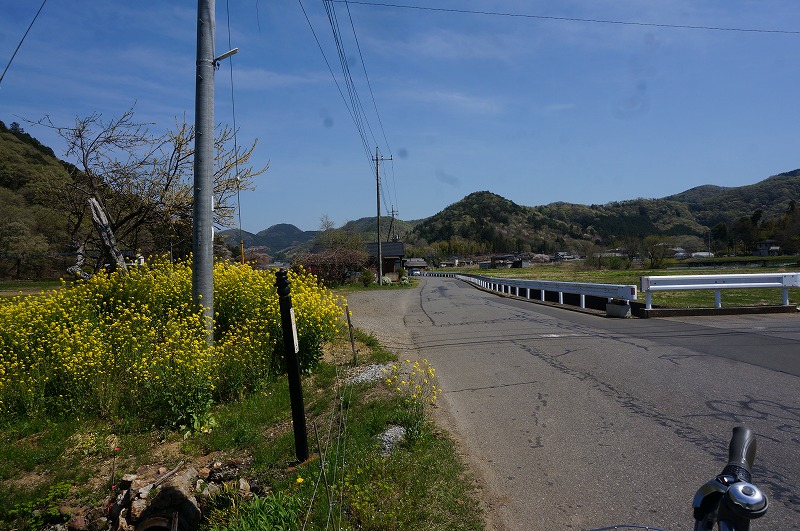
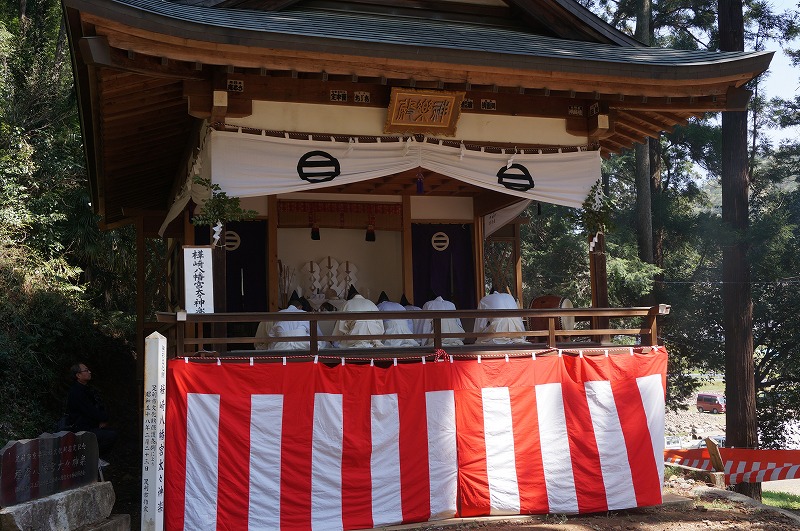
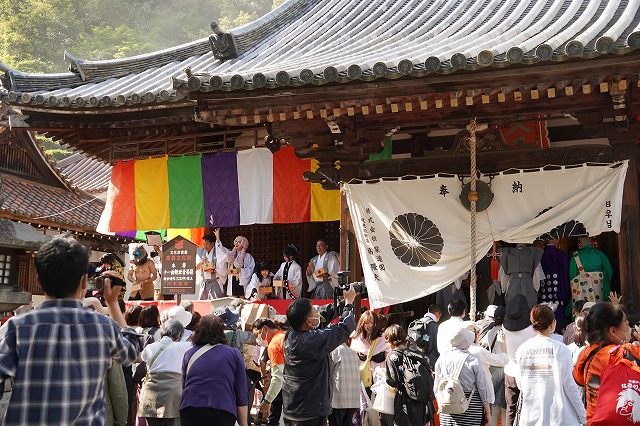
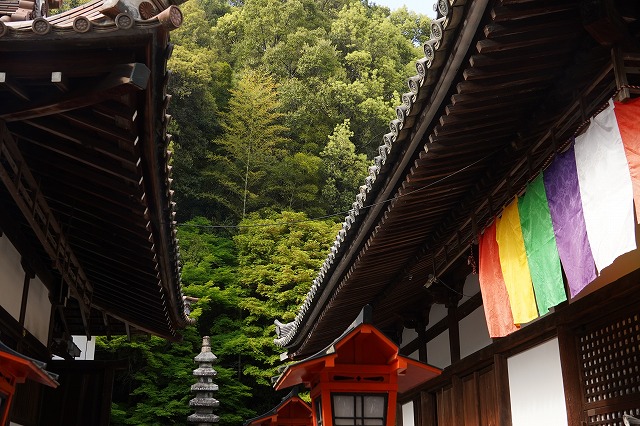
The Kabasaki Hachimangu shrine, where the story takes place, was founded by the Ashikaga clan. As proof, the shrine has a curtain with the Ashikaga family crest on it. This report is about the kagura performed here. It is a bit far from the station, so It is therefore a good idea to hire a bike at the station. The road is flat and straight. It is easy to find. About 45 minutes on a bicycle. The area is away from the city center and the scenery is much more idyllic. Kagura is also loosely in tune with the landscape. It was scheduled to start at 10.00 am, but actually started at around 10.30 am.

The Appearance of the Hachiman Deity
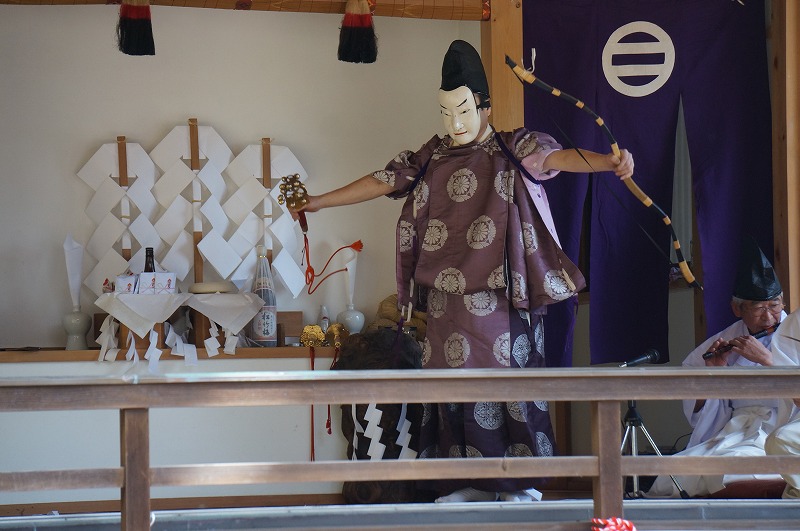
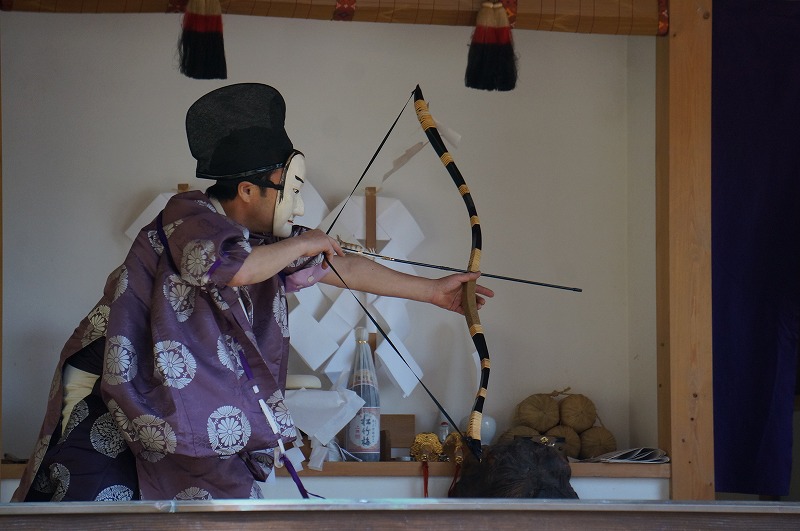
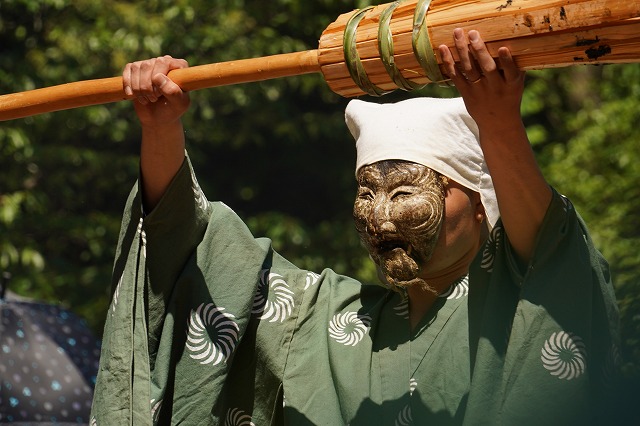
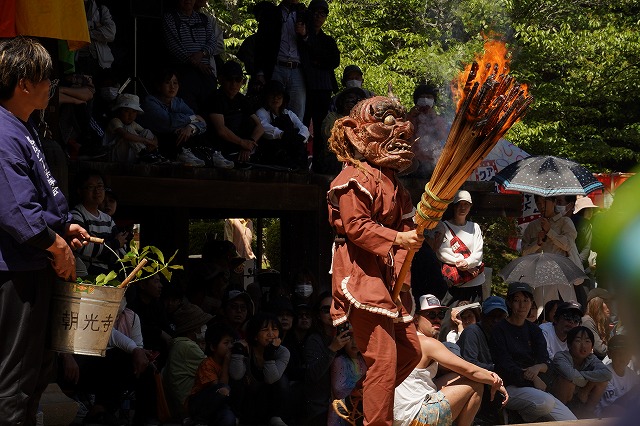
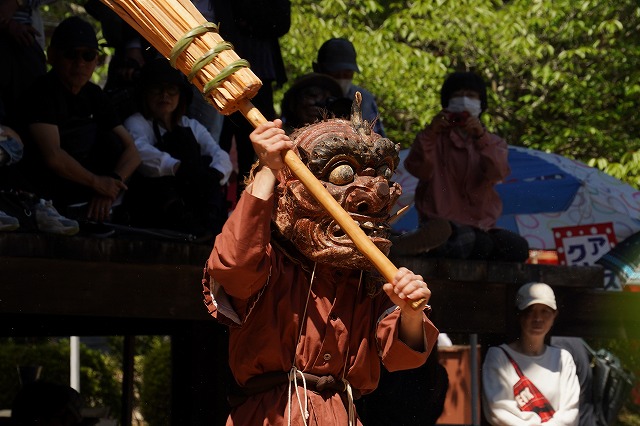
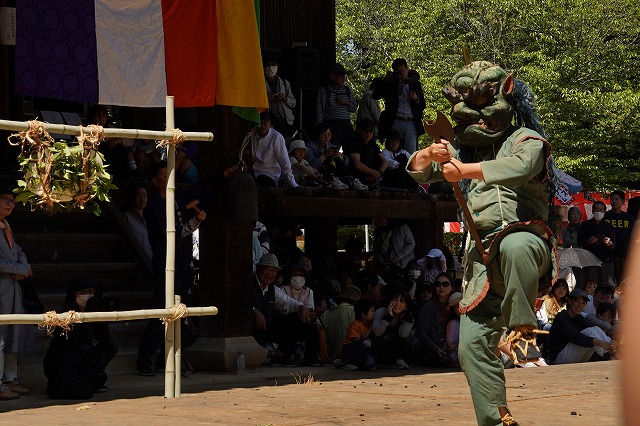
First, one program without a mask. After that was the dance of the god of war, Hachiman. As befits a god of war, he takes his bow and arrow and points it in all directions. This is not to glorify warfare, but to drive away the bad spirits that lurk in the area. He protects shrines, villages and people.
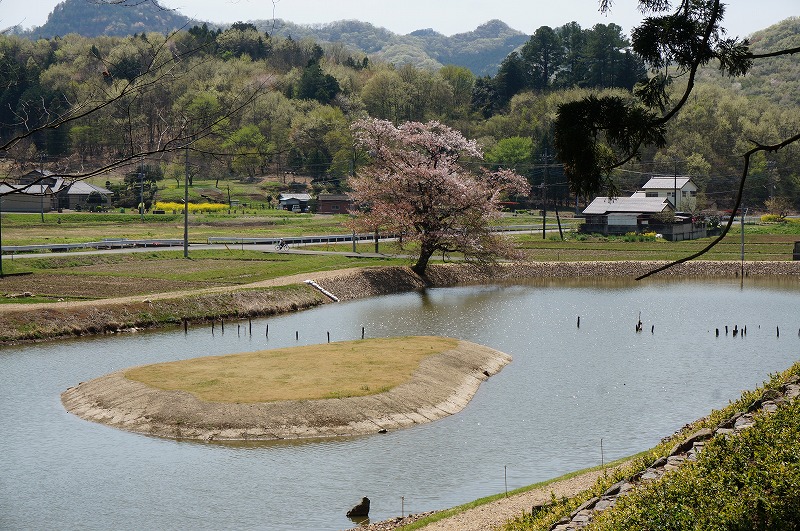
Lunch break here. The locals sold Yakisoba noodles the area for 100 yen. They are almost all volunteers. Cheap. That’s why they sell so well.
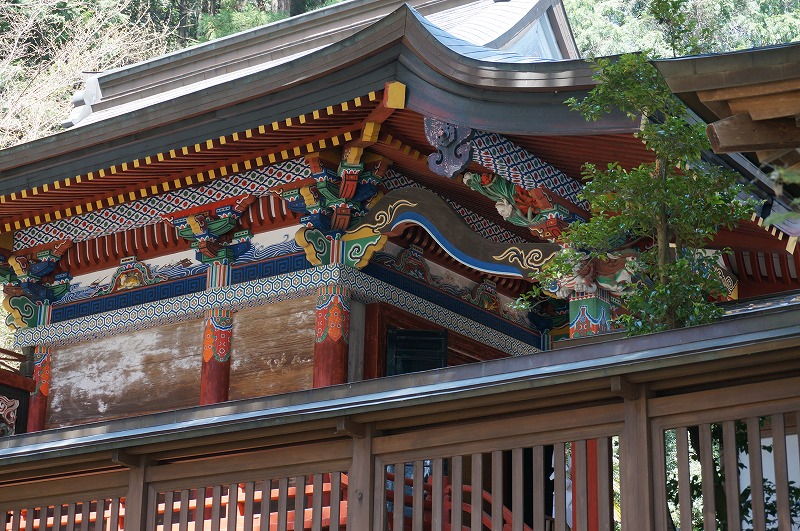
The shrine is said to be associated with the Ashikaga clan, but it is plain for a family that once ruled the country (from the early 14th century to the 16th century). It is said to have originally been larger and grander, but declined as the Ashikaga regime fell. However, the decoration is fine. There was a person who told me many details, and I thought he was a local historian, but to my surprise he was a descendant of the Ashikaga clan. There are many things that can only be understood by actually going there.

After lunch
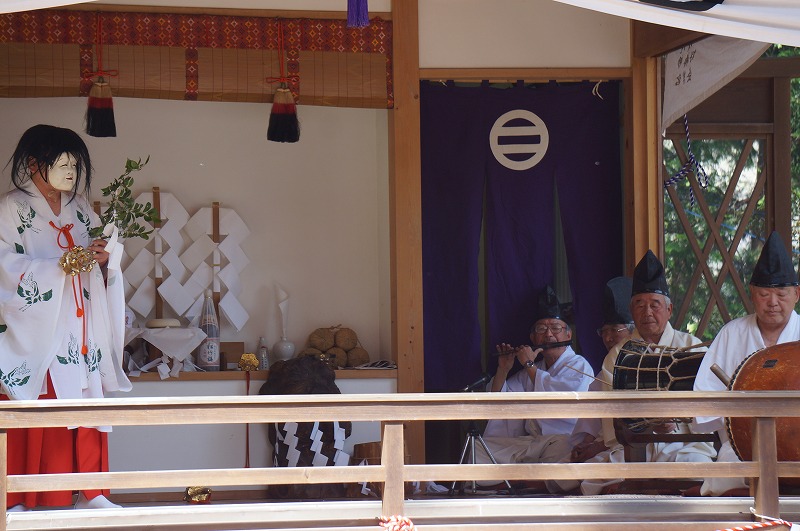
The next step is the famous opening of Ama-no-Iwato (the rock door inheaven), where the main actors are Ameno-uzume, Tajikarao and Amaterasu… Ameno-uzume only performs a short dance, and Amaterasu leaves the stage just as soon as she appears. In the end, only Tajikarao was the only prominent performer in the troupe. As village people handed down kagura, They probably omitted more and more parts that were not relevant to real life and Kagura gradually changes to a form more suited to the locality. The story of Amaterasu is important as Japanese mythology, but not so much for the people.

Let’s keep it casual and take it easy
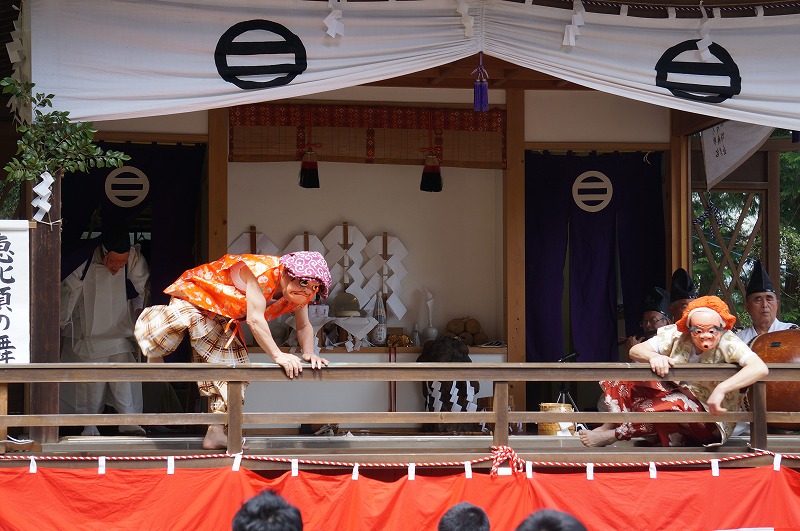
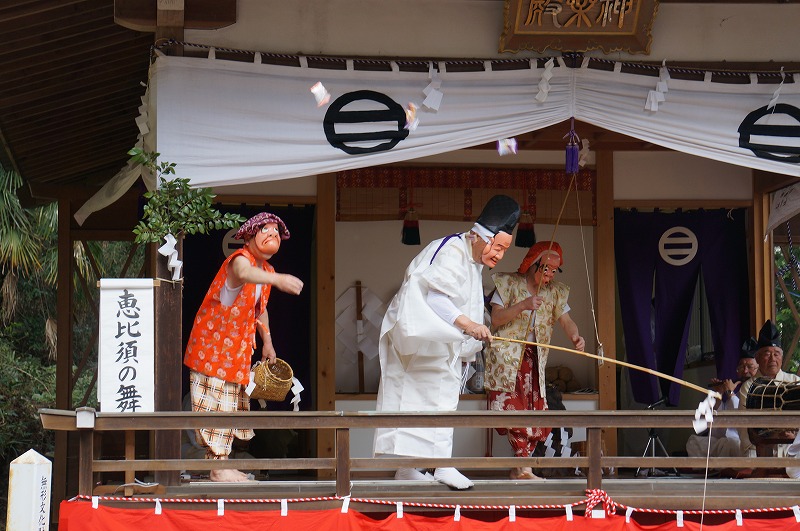
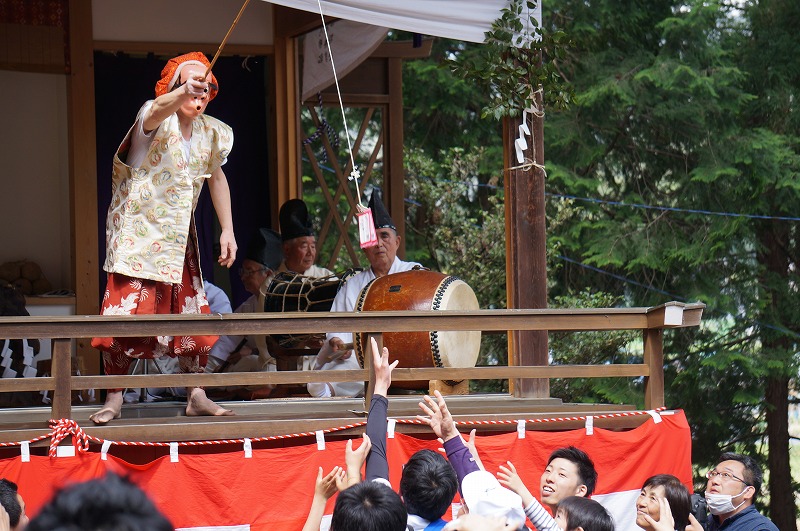
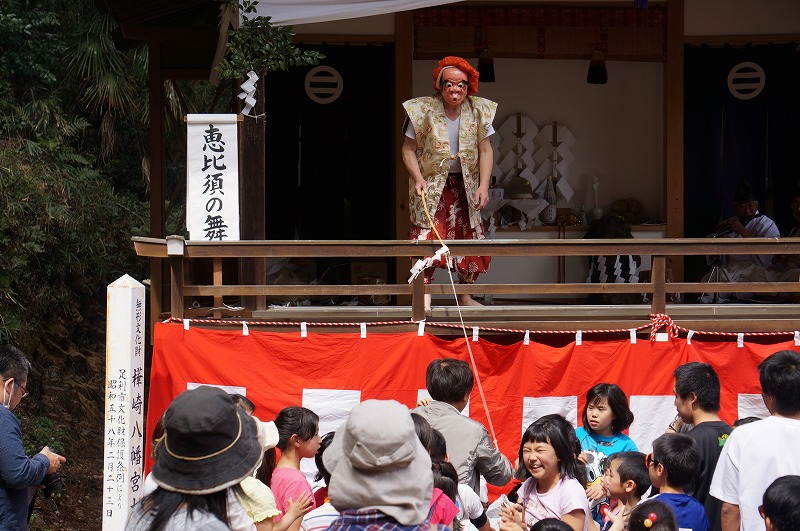
And finally, the common people’s group appears. In case , the god Ebisu (this god represents the common people’s group) is the star of the performance. Seven gods that common people have believed in since the Middle Ages. All of them bring happiness to people. Ebisu is one of the most popular among them. That is why Ebisu plays such an important role in this kind of kagura in the village. But in reality, the main attraction is a droll duo. So, these two people fish on behalf of Ebisu and throw snacks and treats. Many children gather, but for them, this is almost the main thing. That’s why it’s a big deal. But if you look closely, they don’t keep it to themselves. Is this another merit of God?
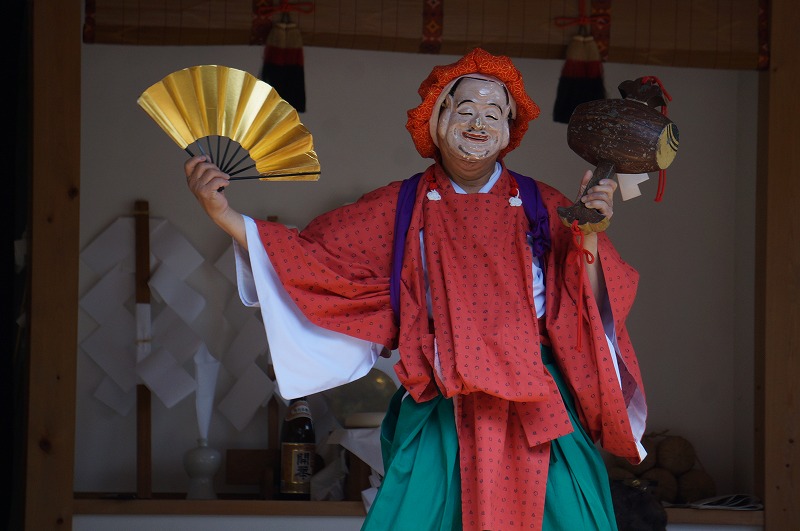
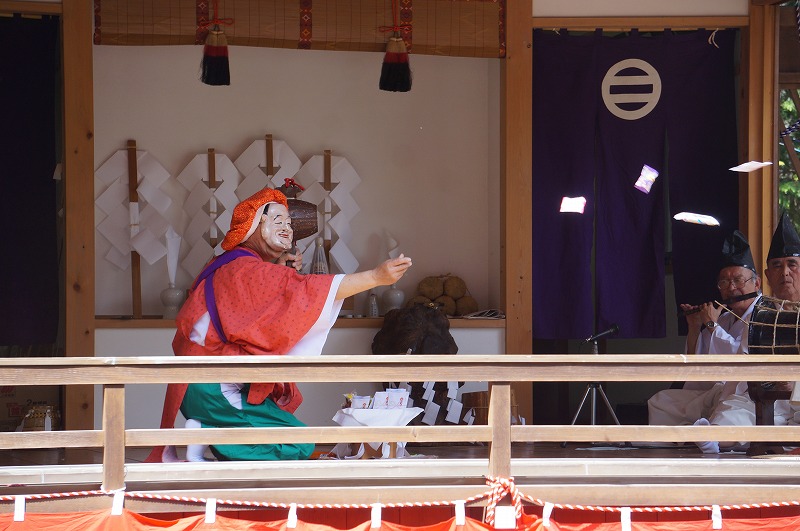
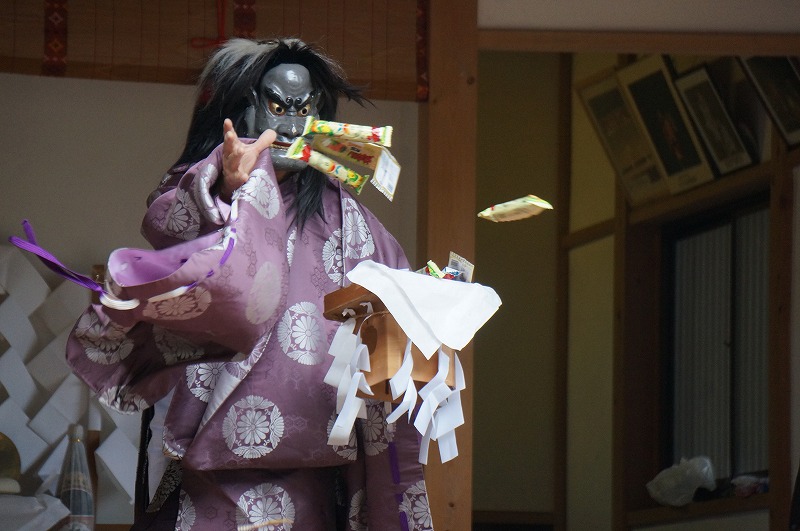
Next to Ebisu comes a deity named Daikoku, who is as popular as he is. He is able to bring forth treasures by waving a mallet in his hand. So here is another big treat of sweets.
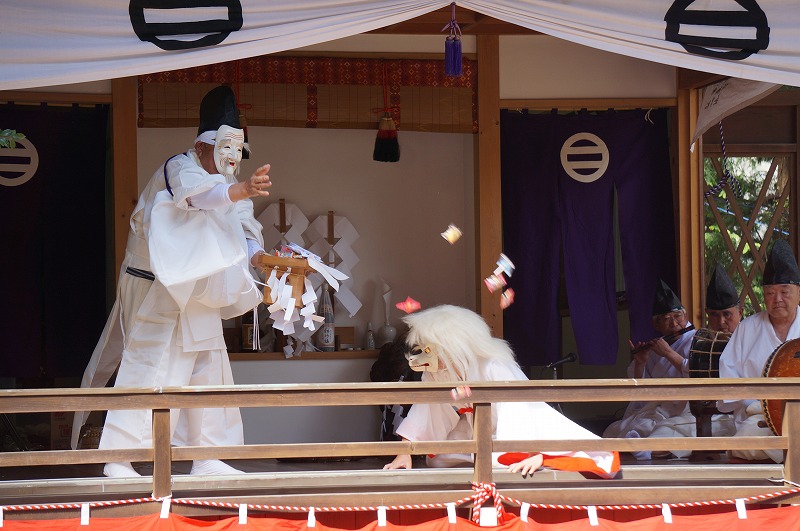
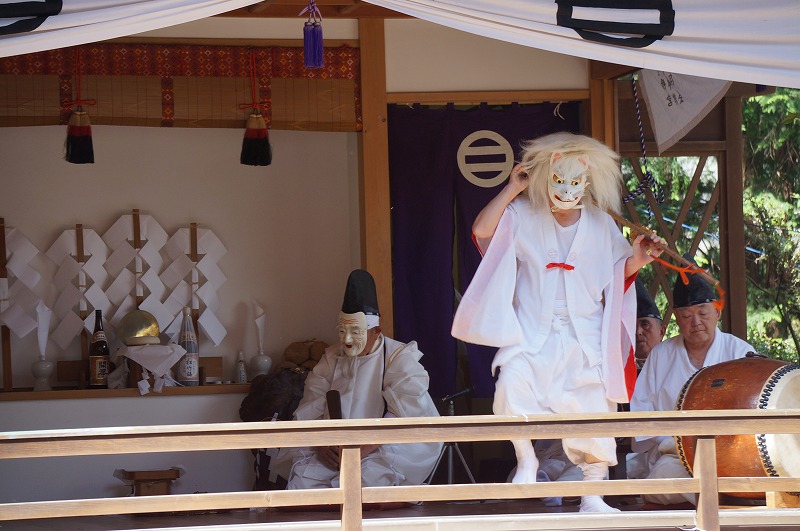
Next is Inari, another indispensable deity in the kagura of the village. Inari is the god of rice cultivation in general, and is served by a fox. However, in terms of order, they usually appear earlier. The audience is already in the mood for sweets, so they put rice cultivation aside and start scattering rice again. Since it is kagura, they dance on stage, but people’s attention has already turned to when they are going to throw things.
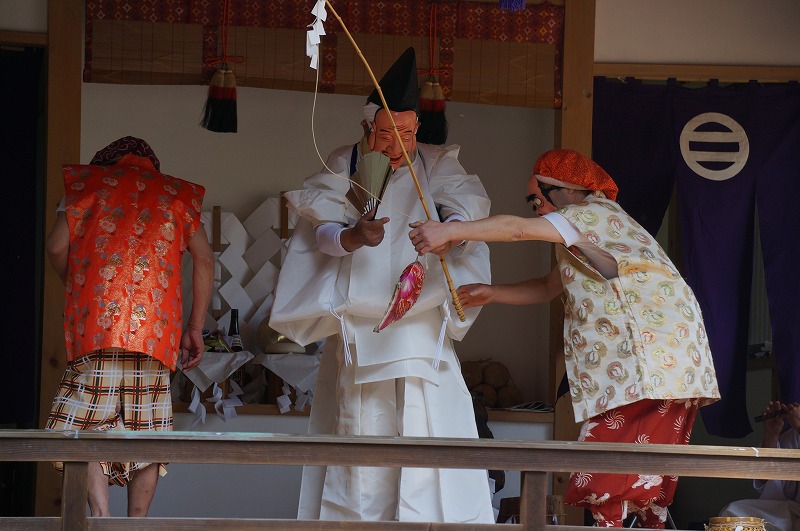
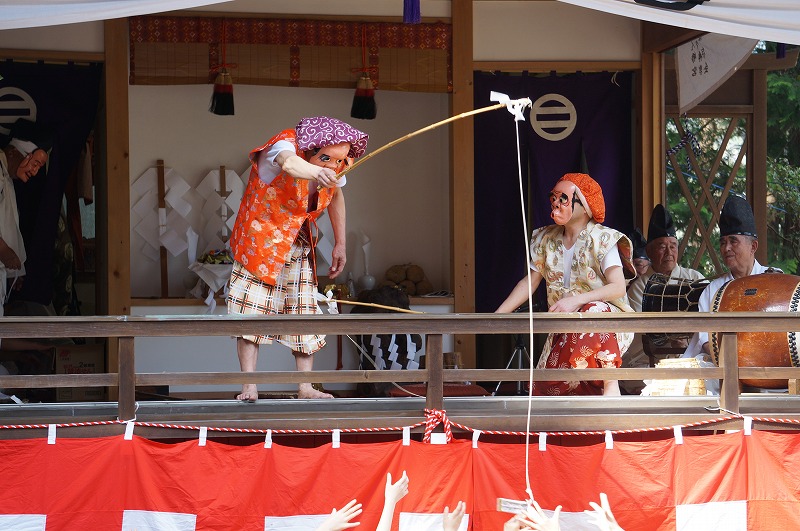
The stage is now in full “Mochi-nage (Originally, the name was derived from the throwing of rice cakes. Nowadays, various throws such as snacks or candy)” mode. The Ebisuza has begun again. Exactly the same program, exactly the same flow. This happens sometimes in kagura in the village.

Happiness for everyone
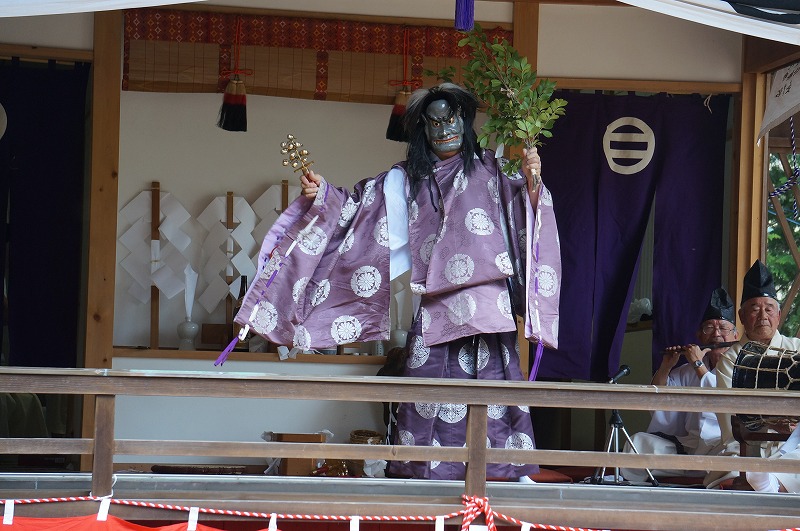
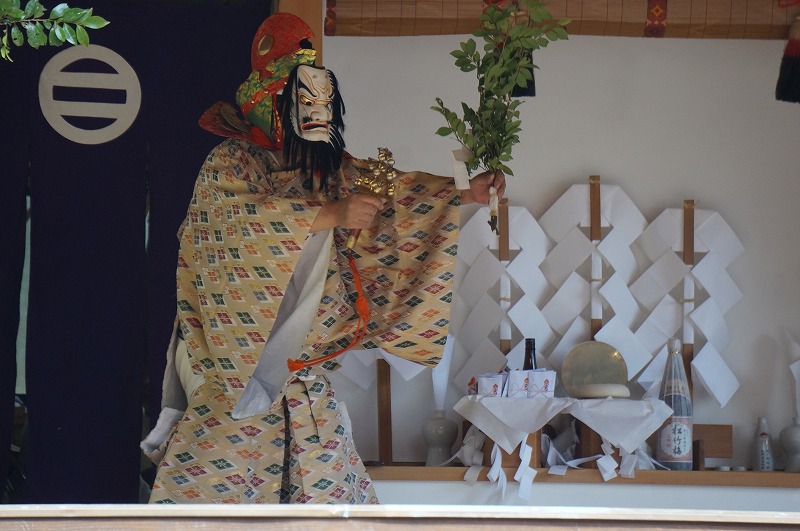
The performance ends with a purification of the stage by a mountain god called “Yama-gami” (mountain god). However, to the surprise of the audience, even the mountain deity do Mochi-nage. It is a great service. The people who had stayed until the very end were very satisfied. Good things come to those who wait. This is how kagura continues into the next year.

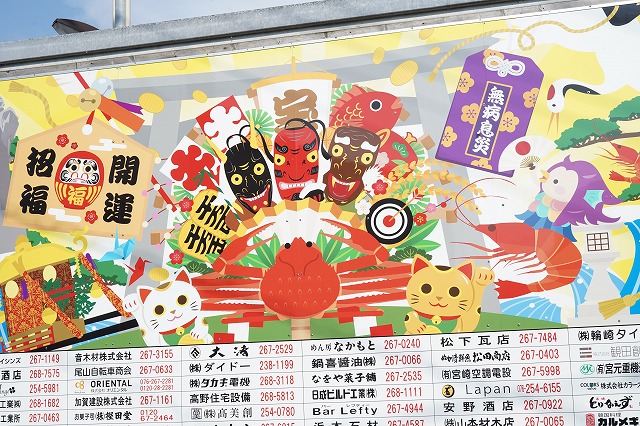
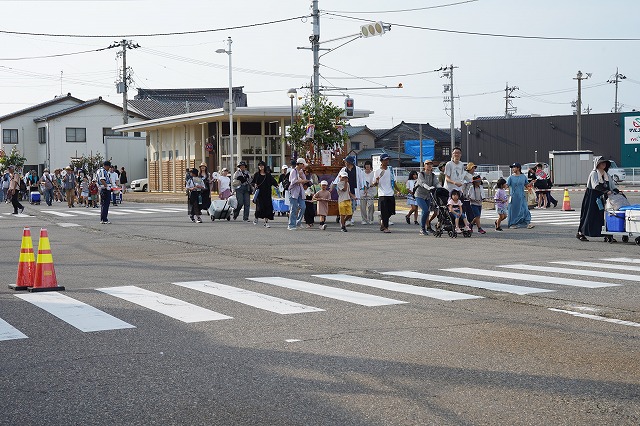
A Unique Kanazawa Experience: Ono Minato Shrine Festival


Date: Friday, Saturday and Sunday, ending on the first Sunday of August
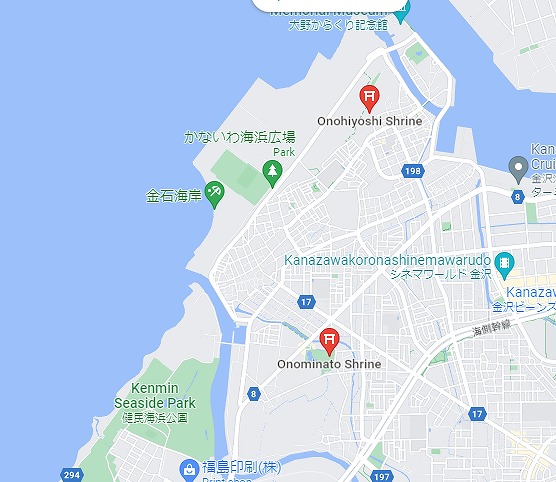
Location: Ono minato shrine 大野湊神社 163 Ha ハ, Teranaka-cho 寺中町, Kanazawa 金沢, Ishikawa, Japan
Access: 5-minute walk from Nishi Keisatsu Sho-mae bus stop on Hokuriku Railway buses bound for 60 Kanaiwa 金石, 61 Ono 大野 and 63 Ono.

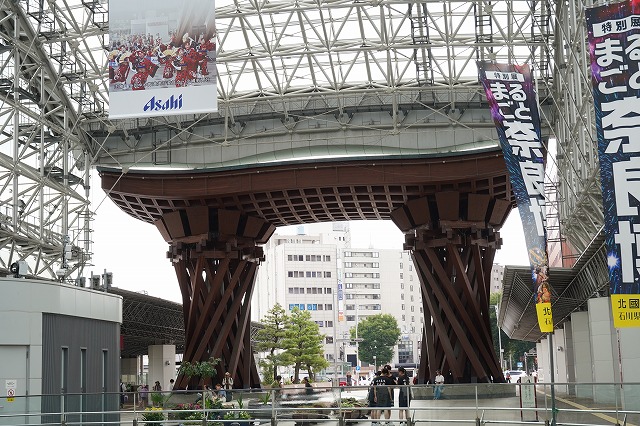
About 30 minutes from Kanazawa Station. About one bus every 30 minutes.

based on 2024.8.4.

Overview

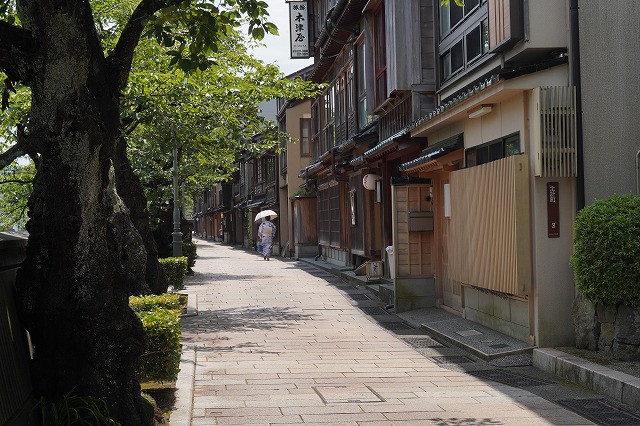
Kanazawa is a popular tourist destination in Japan. However, while many people visit the southern part of the city, almost no one visits the northern side (the seaside). That area is a place where people simply go about their daily lives. It is precisely because of this that a festivity has long been held there as a place of prayer for the community. This is the festival I would like to introduce today.

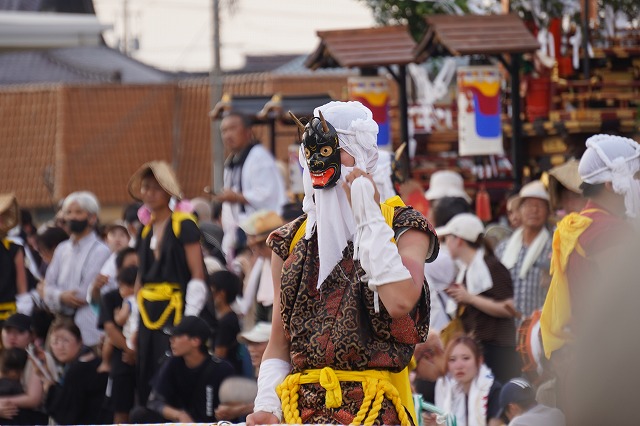
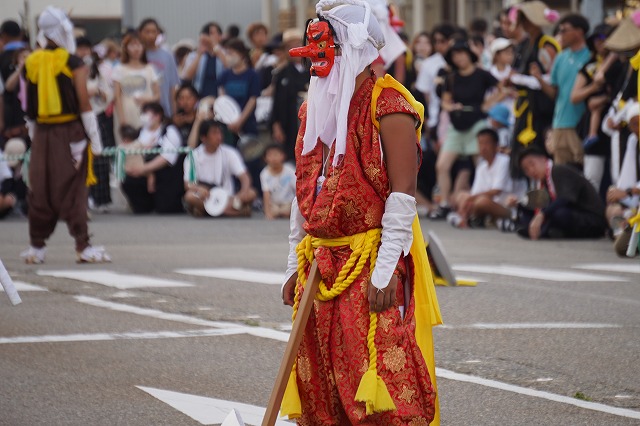
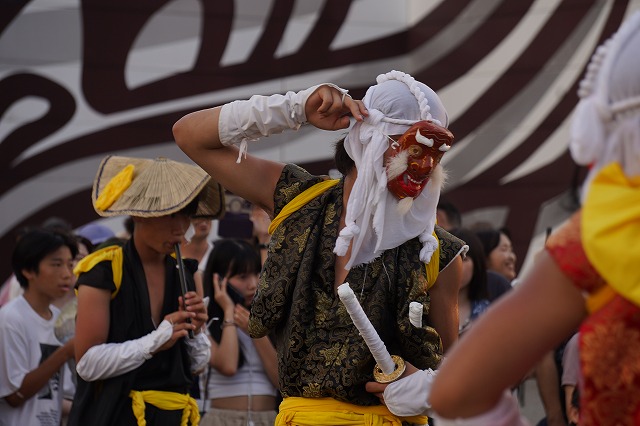
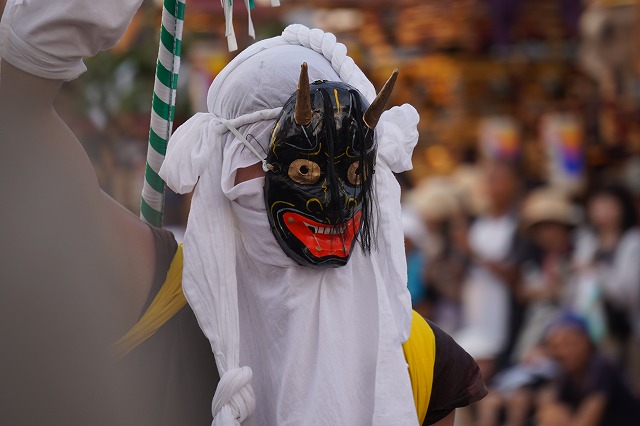
And the stars of this festival are, without a doubt, the three types of masks. You can see just how beloved these mask-wearers—who are said to ward off evil spirits—are simply by walking through the streets.

Throughout the festival, various events take place, including processions of portable shrines, boats setting out to pray for a bountiful catch, and fireworks displays. In addition, groups of exorcists perform exorcisms at various locations throughout the town. However, since only locals—and especially those directly involved—know which locations they’ll visit that year, the best choice is still to check out the event plaza on the final day.

Main Events begin

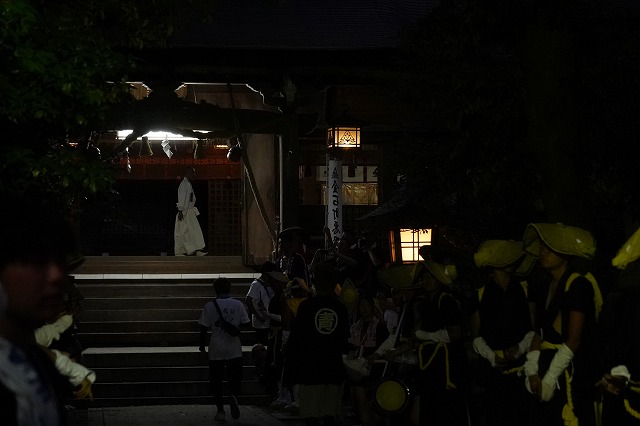
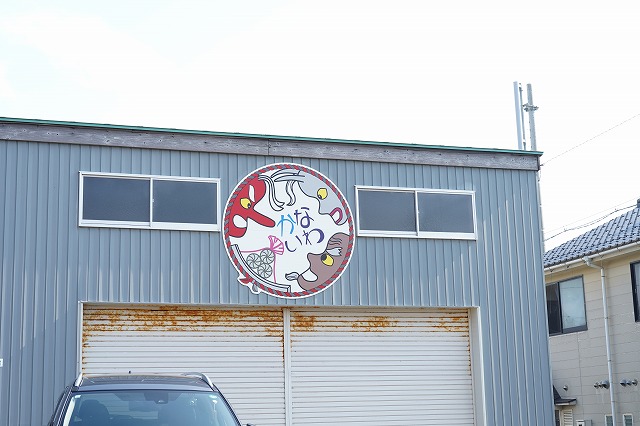
People gather at the main venue for the festival’s final day around 4:00 p.m. The main venue is located near the Kanaiwa Bus Terminal, where the central road is completely closed off to create two stages, one at the front and one at the back. Each group performs on the first stage and then moves to the second stage to do the same.

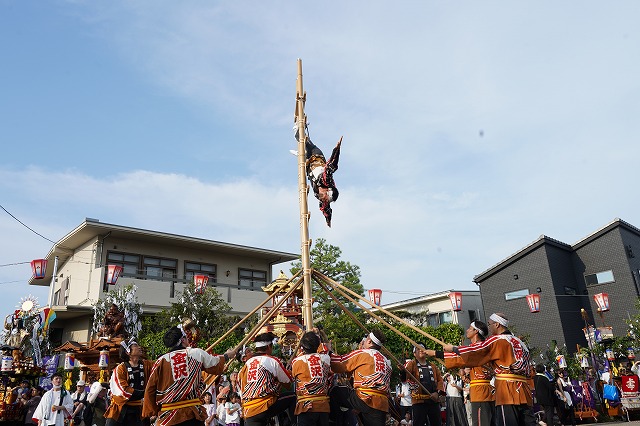
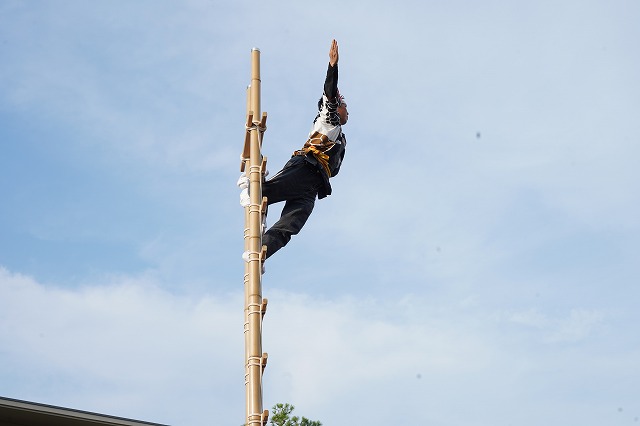
One of the highlights is the performance by the Kaga Tobi. “Tobi” is the name of a bird resembling an eagle, but it also refers to people who work at heights. However, in the past, the term referred to firefighters. During the Edo period (the age of the samurai), when fires were common, these firefighters were the target of popular admiration. In particular, here in Ishikawa Prefecture—specifically the region known as Kaga, which boasted the greatest national power outside of the shogun’s domain—the Kaga firefighters were as popular as actors even in Edo. Performing feats such as climbing onto roofs or scaling tall ladders to assess the situation of a fire was not a spectacle, but an essential part of their job. Even today, fire departments often demonstrate these skills at New Year’s ceremonies and other events across the country.

Around 5 o’clock, the crowd begins to move in a circle around the venue. The main event is about to begin. It’s the height of summer, so even at 5 p.m., it’s still bright out.

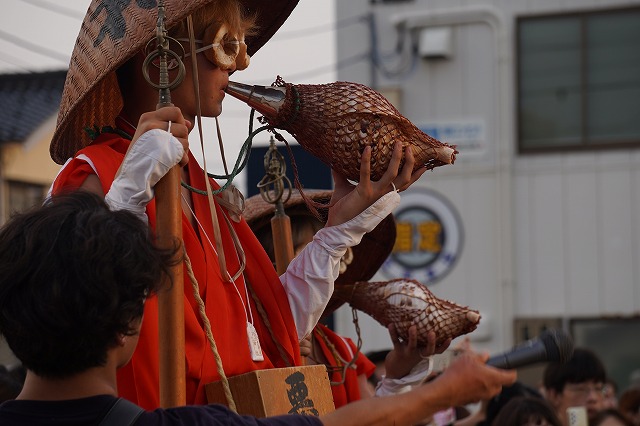
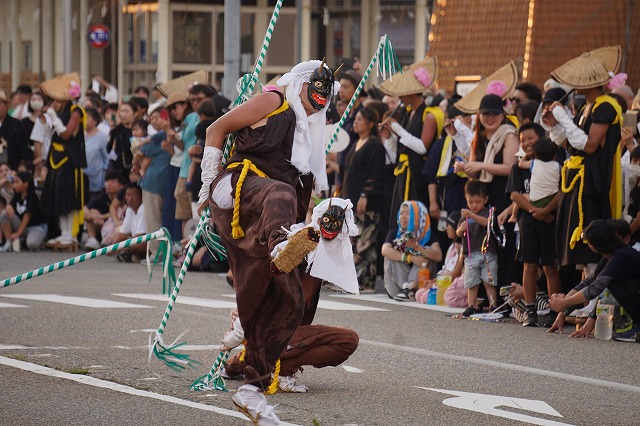
Two men dressed strangely like ancient yamabushi ( Buddhist monk) lead a group to ward off evil spirits. They wear high clogs, umbrellas and carry metallic canes. They lead the way first, reading out the names of the gods and chanting the sutra. Mysterious spectacles catch the eye.
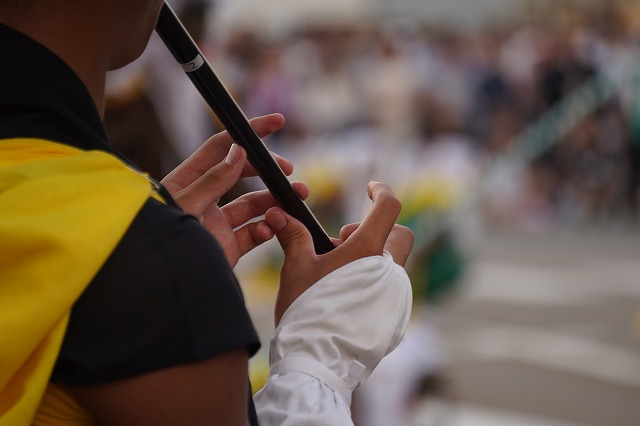
A group of flutes and drums around the area help to enliven the occasion.

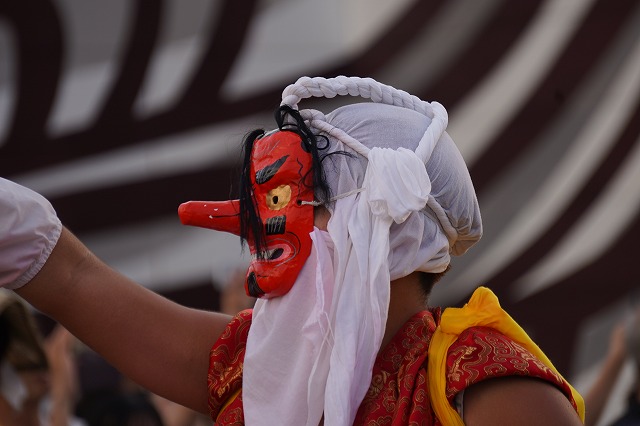
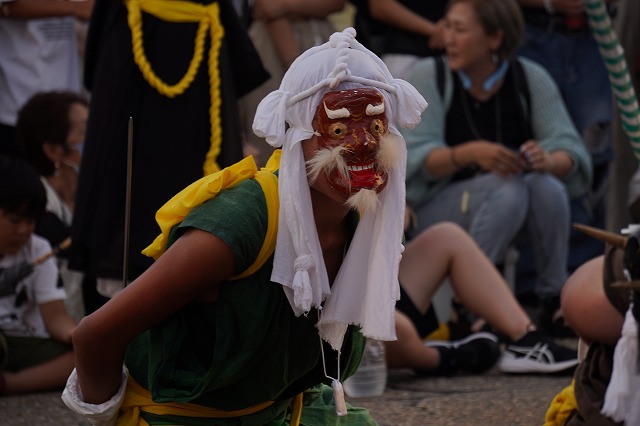
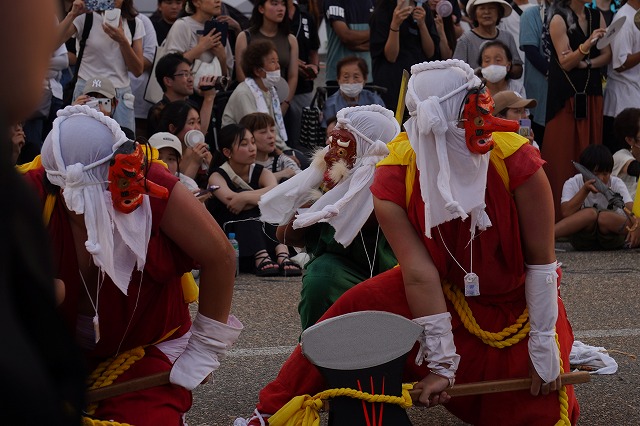
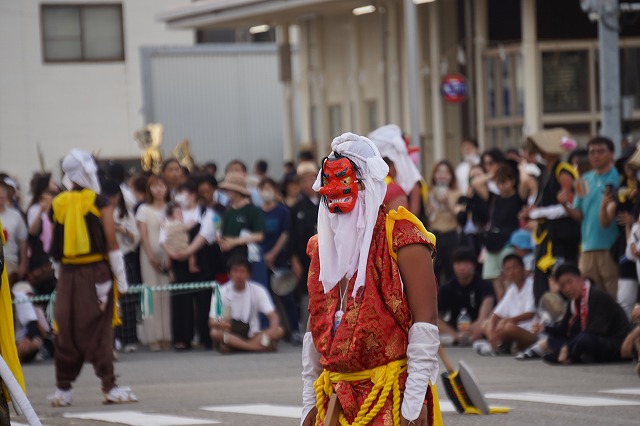
And there are three main actors. Black Hannya 般若, Red Tengu 天狗and Brown Okina 翁 (old man). They hold a broadax, a bow and a sword to ward off evil, each facing four directions, slashing evil with a sword or other weapon and stamping on the earth. The footwork also follows the secret methods of the mountain priests of the past. The footwork follows the secret method of Yamabushi in the past. Ninja also followed this method of walking without making noise.

High school students play all three of the main actors. No one knows why, but it has been a rule for some time. After the three years are up, the rest of the time they play supporting roles. In other words, the last performance is the final culmination for the third-year students.

They spend three days going from door to door in the town to ward off evil. On the way, many spectators crowd the crossroads, community centers and other large places. They split into several small groups, which can be powerful as they may all go together in large places. And finally, the original Ono Minato Shrine precinct. Around 7.30 pm.

Ono Minato Shrine is situated 15 minutes’ bus from Kanazawa city center towards the sea. It was founded around the 8th century. Fire destroyed it in the 13th century, after which a new shrine building was built nearby (current location). So, the people tried hard to get deities to return to them, but it was difficult to achieve this. The origin of this festival is that people began to pray for the deity to return to their original place at least once a year. The festival therefore begins with the construction of a temporary shrine building at the original location. Deities returns to their home shrine and then returns to the original shrine three days later. And during this time, various events take place in the town. The most popular of these is the ‘exorcism’ introduced here.
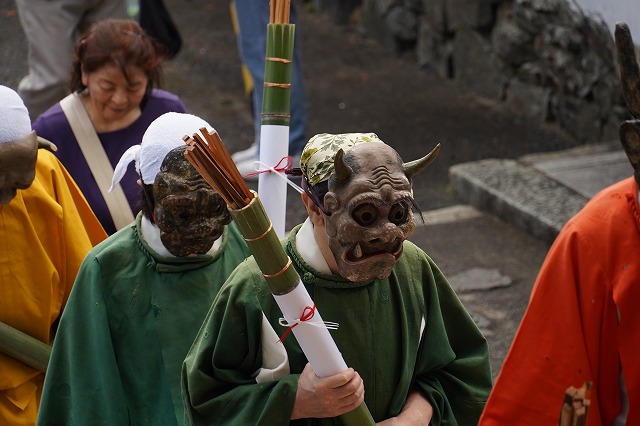
In Ono hiyoshi shrine, too

This is the festival of the Ono Minato Shrine, but in fact there is also another festival in the neighbor town of Hiyoshi 日吉 shrine, where a group of evil-dispelling people also take part. The summer in Kanazawa is hot from the end of July to August. This is the time of year when you can see the two faces of Kanazawa, the normal townscape and the festive town.

Ono minato shrine and Ono hiyoshi shrine

Date: Fourth Saturday to Sunday in July
Location: Ono hiyoshi shrine 大野日吉神社 5-81, Ono-cho, Kanazawa, Ishikawa, Japan
Access: Bus From Hokutetsu Bus Korinbo (5 mins walk from Ono bus stop)… approx. 30 mins
From JR Kanazawa Station (only a few buses) (5-minute walk from Ono bus stop)… approx. 20 mins.
On foot  From Hokutetsu 北鉄 Bus Kanaiwa 金石 rotary … approx. 20 mins.
From Kanazawa Port … approx. 15 mins.

cf. Ono minato shrine https://oonominato.or.jp/about/tradition/natumaturi/ sorry only Japanese
Ono hiyoshi shrine http://www.ohnohiyoshi.com/fes/summer
Kanazawa city https://visitkanazawa.jp/en/

Kanazawa is not only the heart of Ishikawa Prefecture but also the center of the Hokuriku region. It is not merely a modern city; it is a place rich in diverse charms, featuring a castle, one of Japan’s most iconic gardens, historic streets, and cutting-edge art museums. Kanazawa seems to encapsulate all the best of Japan in one place—it’s definitely a place you’ll want to visit at least once.


Report~Seeing an Oni in the Suburbs of Kyoto


Day; The third Saturday in April

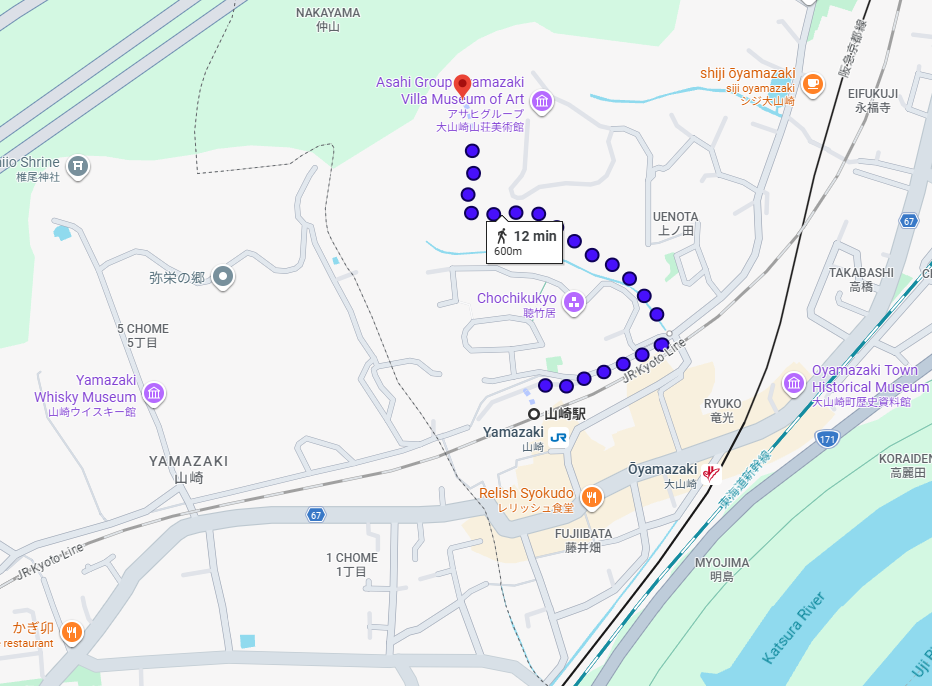
Location; Hoshakuji-temple 宝積寺, 1 Senbara, Ooyamazaki, Ooyamazaki-cho, Otokuni District, Kyoto Prefecture

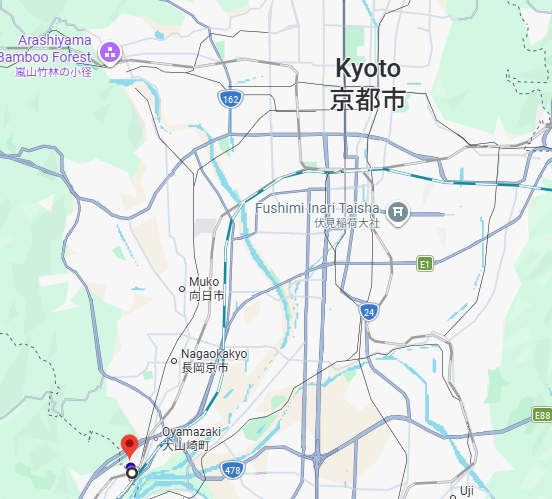
Access; About a 10-minute walk from JR Yamazaki Station, or a 15-minute walk from Hankyu Oyamazaki Station

From Kyoto Station, it’s about 15 minutes by JR line, or about 20 minutes from Karasuma Station (in Kyoto City) via the Hankyu Line; both routes head toward Osaka and Kobe. Trains run about once every 10 minutes.

Saturday, April 17, 2026

About Hōshaku-ji Temple

Founded in the early 7th century by imperial decree. Due to its near proximity to the capital, many wars ravaged the temple, leaving it in ruins time and again; however, it was rebuilt each time and has continued to stand to this day. In particular, it is famous as the site where, in the early 16th century, the armies of Akechi Mitsuhide—who overthrew his lord Oda Nobunaga, who was on the verge of unifying the country, by accusing him of treason—and Toyotomi Hideyoshi—who pursued Mitsuhide and later succeeded in unifying the country—clashed in a decisive battle.

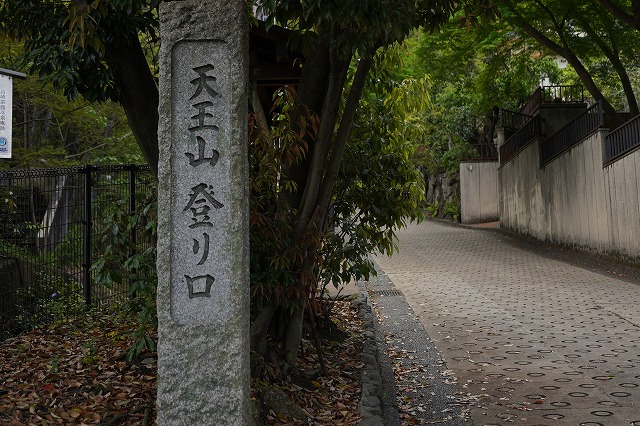
Because this temple is located halfway up a mountain called Tennozan, people still say things like “This is Tennozan” when they reach a critical juncture in a major undertaking. Though it’s not exactly a mountain, you do have to climb a fairly steep slope to get to the temple.

Oni’s Appearance

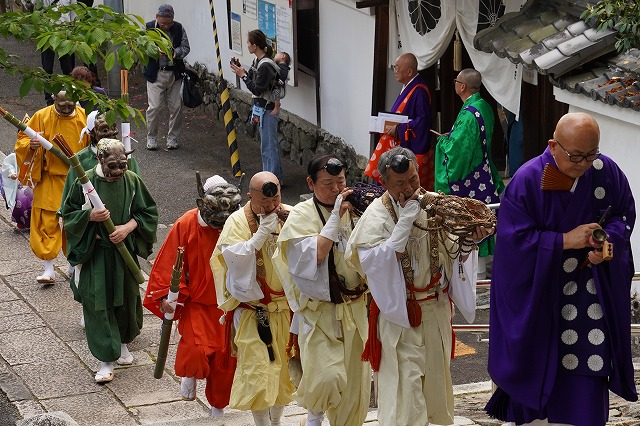
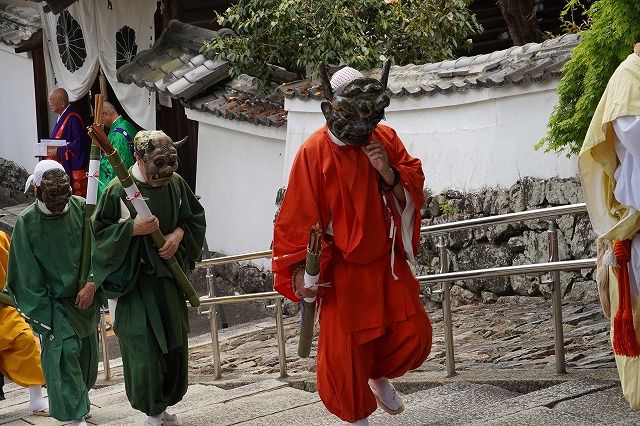
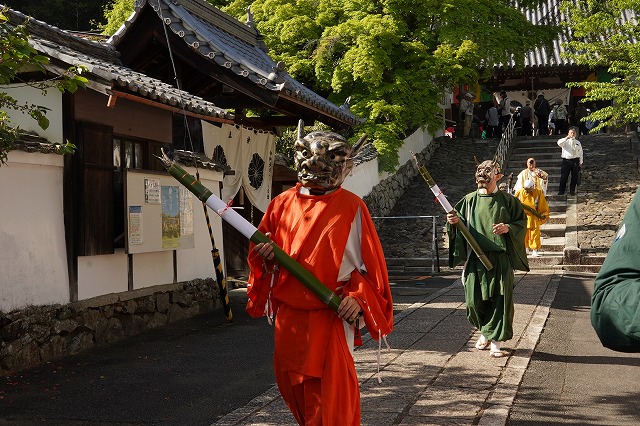
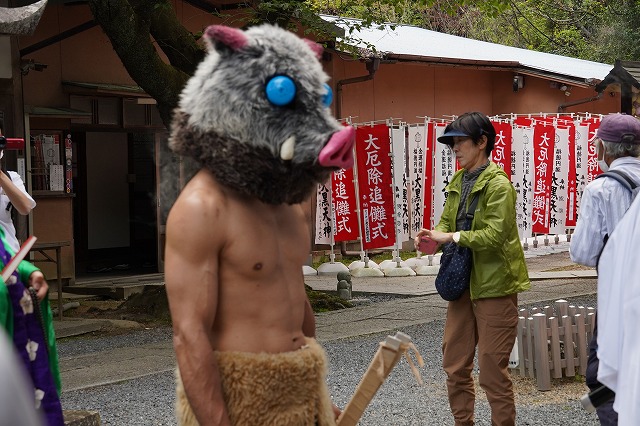
At 2:00 p.m., a procession of Onis, led by a monk, makes its way down the approach leading to the main hall.

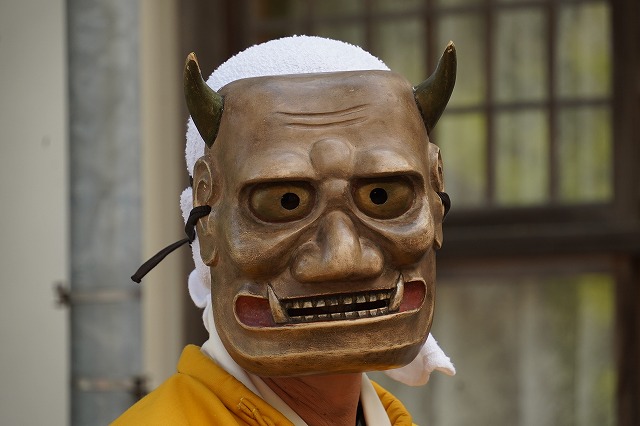
It is said that this has been performed since the temple’s founding as part of a ritual called Tsuina*, in which demons are exorcised through prayer; however, the fact that, in addition to monks and demons, people dressed as the Seven Lucky Gods*—and, for some reason, even anime characters—show up is a modern touch.

*The Tsuina ceremony is a Buddhist ritual that was introduced to Japan from the Asian mainland as a way to drive away the evils of the past year and welcome the new year. However, various elements have been incorporated over time, and today it is primarily celebrated on Setsubun in February (the day marking the transition from winter to spring), with a variety of events held across the country.
https://discoverdeeperjapan.com/2020/03/19/ceremony-to-drive-out-evil-spirits-in-nara-in-the-case-of-kofukuji-temple-and-horyuji-temple/

*→https://discoverdeeperjapan.com/2021/04/05/seven-deities-of-good-fortune-parade-celebrating-the-new-year-at-the-center-of-tokyo/

Buddhist Ceremonies

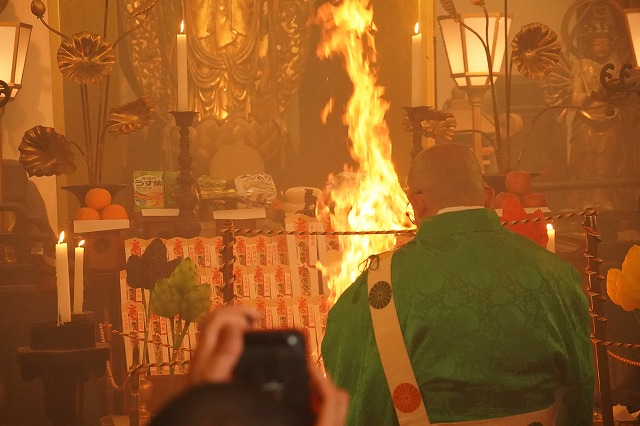
Following this, the participants enter the hall, where the monks continue their chanting. Here, a ritual known as a goma ceremony is performed. A goma ceremony is a ritual in which small pieces of firewood called goma are placed in the fire, along with offerings, as part of a prayer to the Buddha. Since the door is open, you can see inside from the outside. This allows you to confirm that the Oni is being smoked along with everything else.

At around 3:00 p.m., the ritual ends and the Onis come out. At this time, the Onis’ role is considered to be over.

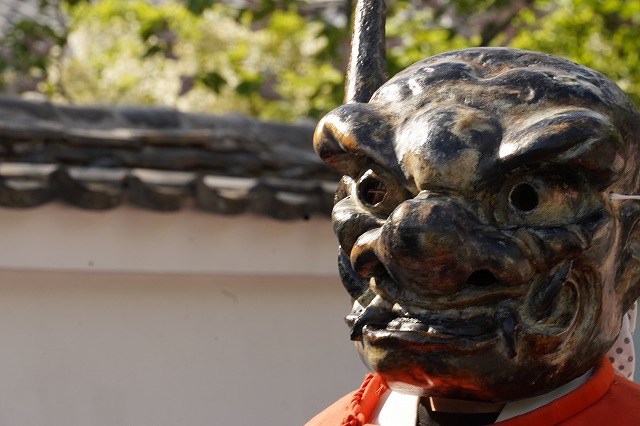
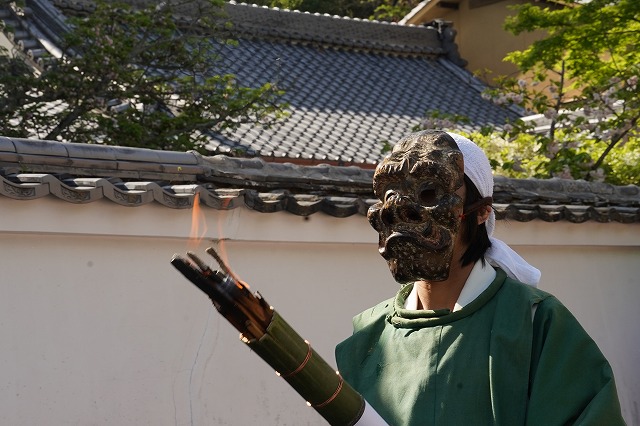
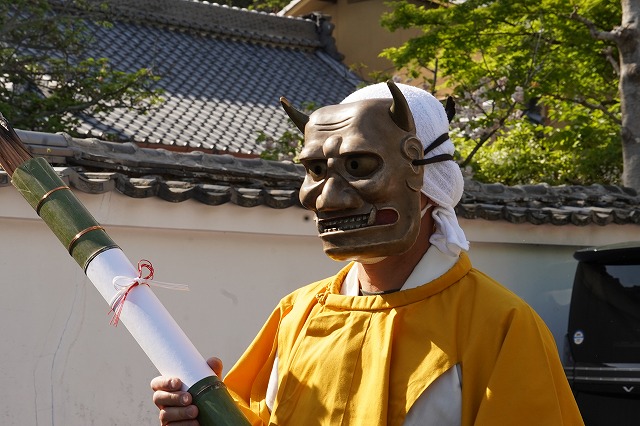
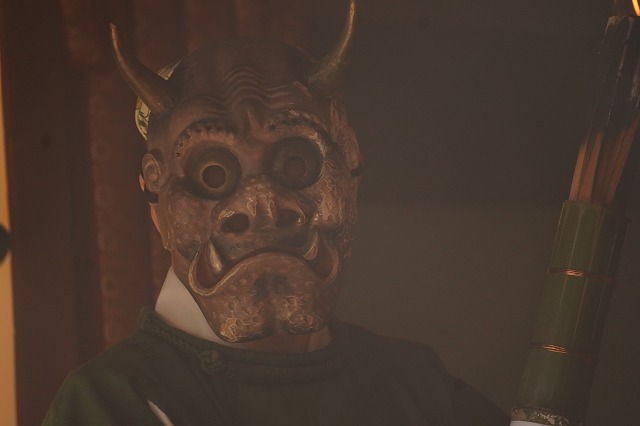
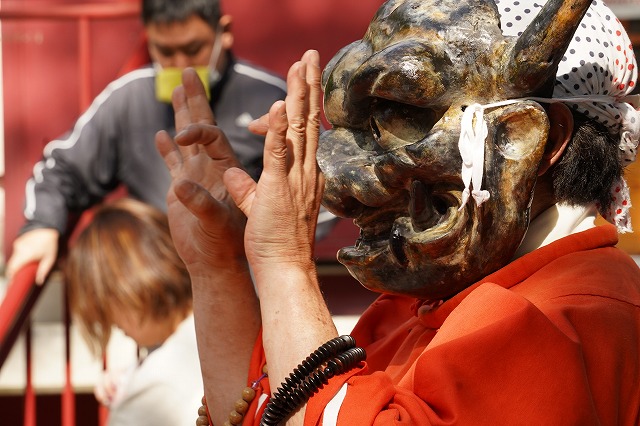
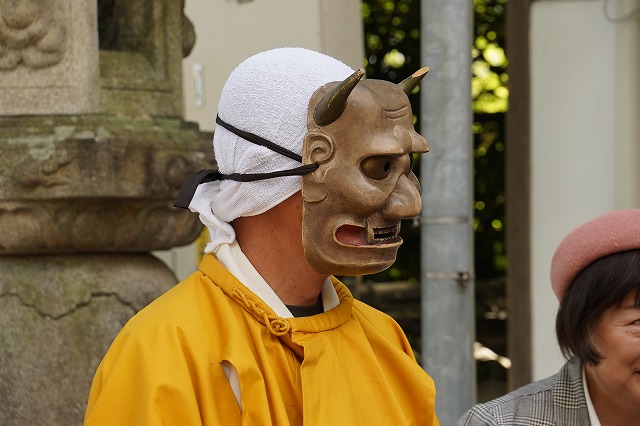
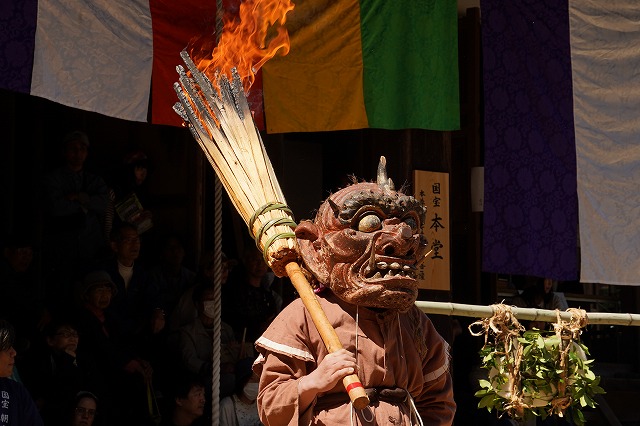
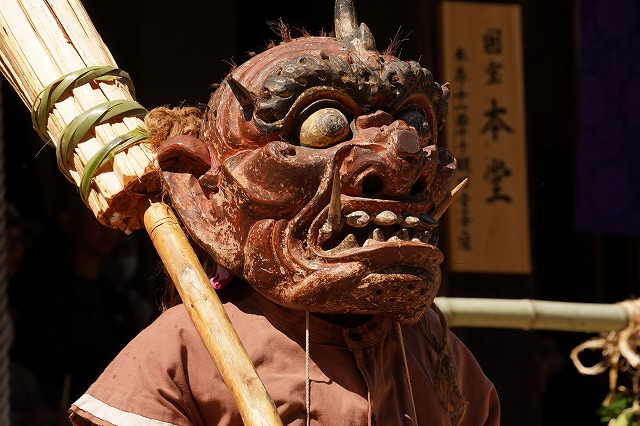
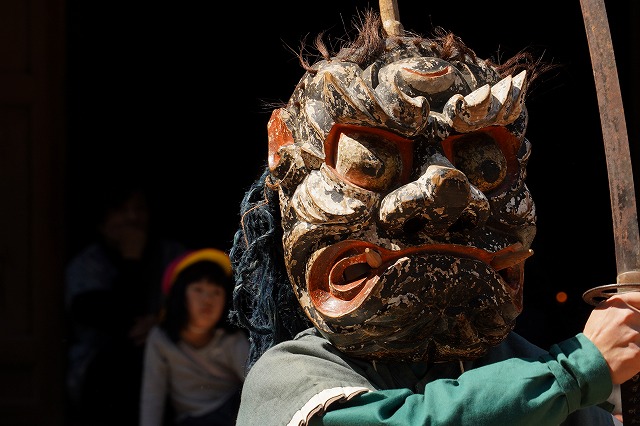
There are a total of four Onis featured. Although the exact date of their creation is unclear, each mask has a unique, aged appearance.

Epilogue

After that, there will be the traditional mochi-throwing ceremony and a photo session with the oni, and everything will wrap up by 3:30.
The mochi-throwing ceremony involves tossing mochi—and sometimes sweets—into the crowd. It is performed with the intention of sharing good fortune with everyone.

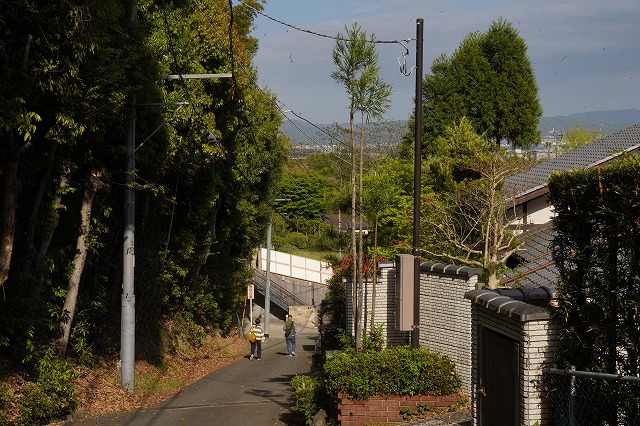
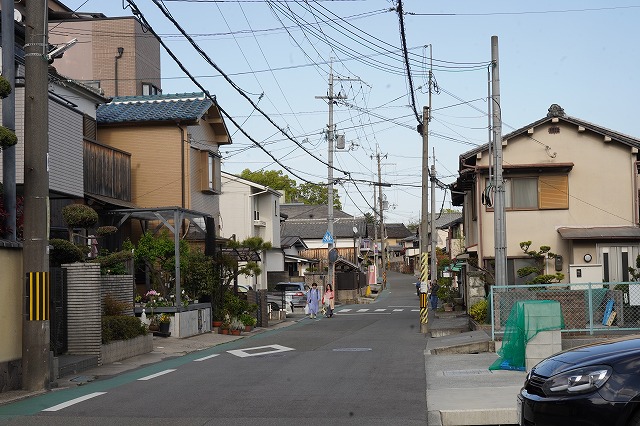
Visitors stroll down the hill at their own way. The town stands quietly, having absorbed a rich tapestry of history.
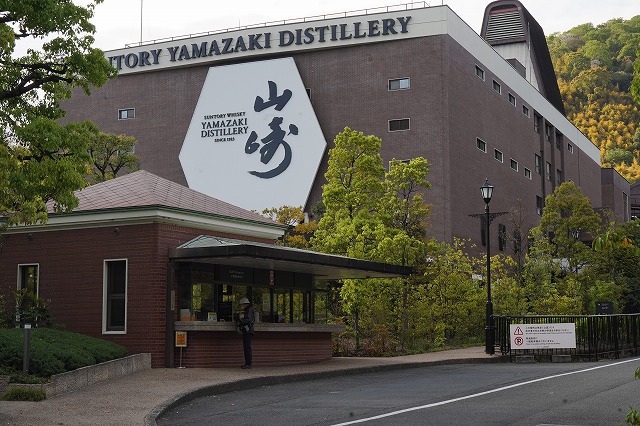
Nearby is the distillery for the Yamazaki brand, Suntory’s flagship whiskey*, which offers tours by appointment. It’s a must-visit destination for any whiskey lover.

*https://www.suntory.com/factory/yamazaki


Report; Simple, powerful Oni dance~at Hata Choukoji-temple


Date; Every year on May 5

Location; Hata Chokouji-temple 畑朝光寺、 609 Hata 畑, Kato City, Hyogo Prefecture

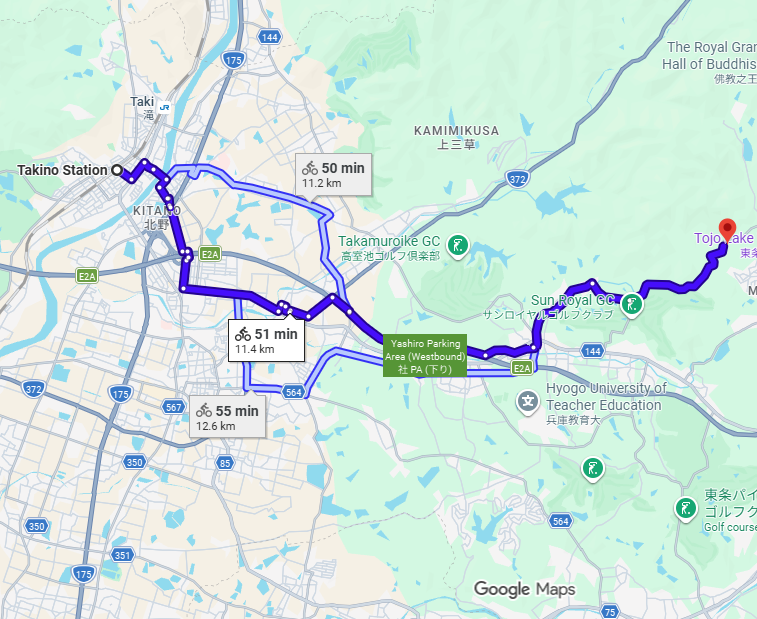
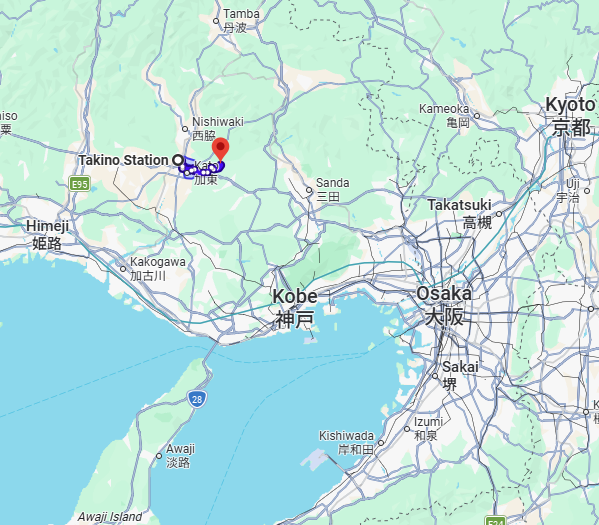
Access; The nearest stations are Takino or Yashiro. It is about 12 kilometers from there.
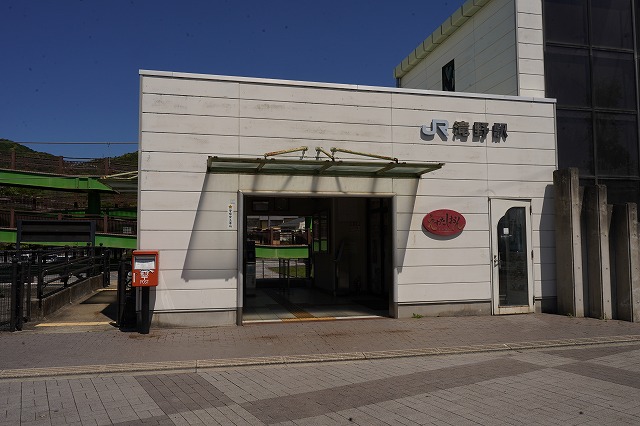
There is a tourist information center at Yashiro Station, and bike-sharing services are available at both Yashiro 社 and Takino 滝野 stations (Next to Yashiro Station), which anyone can use.

It takes about 40 minutes (one train per hour) from Kakogawa to Yashiro or Takino Station via the Kakogawa Line. It takes about 1 hour to get to Kakogawa from Osaka.

*visited on May 5, 2026

Prologue

Kato City in Hyogo Prefecture isn’t exactly a well-known town. When people think of Hyogo, they usually think of the port city of Kobe in the east, or Himeji in the west, home to the World Heritage Site Himeji Castle. Kato City is an inland town located roughly halfway between the two. In a rather remote part of that town stands a temple designated as a National Treasure, where a “Demon Oni Dance” is said to gather many people. What’s more, they still use “Oni” masks that were crafted over 400 years ago. I wondered exactly what kind of dance it was. I felt I had to go and see for myself, so I set out on a trip.

Let’s watch the “Oni” dance

The monks will enter at 1:00 p.m., and the Oni dance will begin at 1:30 p.m.

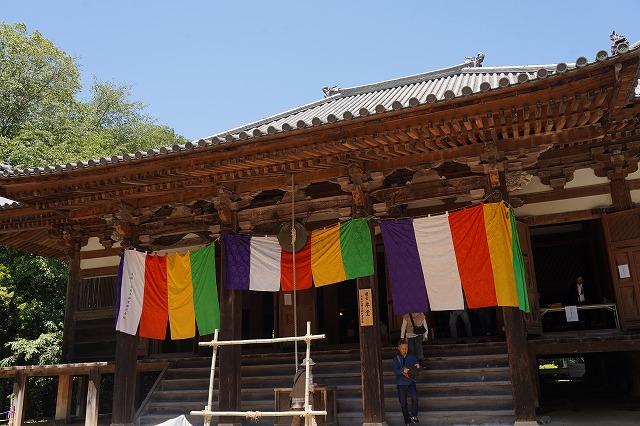
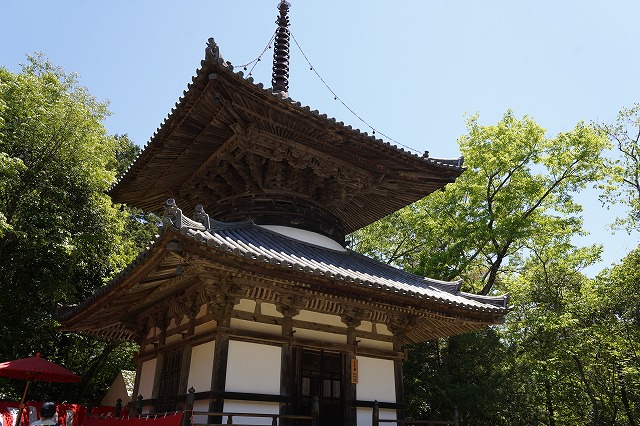
According to tradition, Chōkō-ji Temple was relocated to this site in the 12th century. The main hall, which records indicate was built in the early 15th century, is designated a National Treasure, and the bell tower is an Important Cultural Property.

A large crowd has been eagerly waiting for over an hour, as if every moment counts. Most of them appeared to be locals.
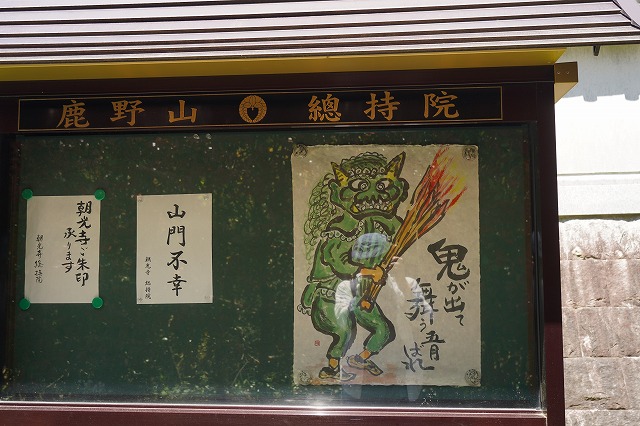
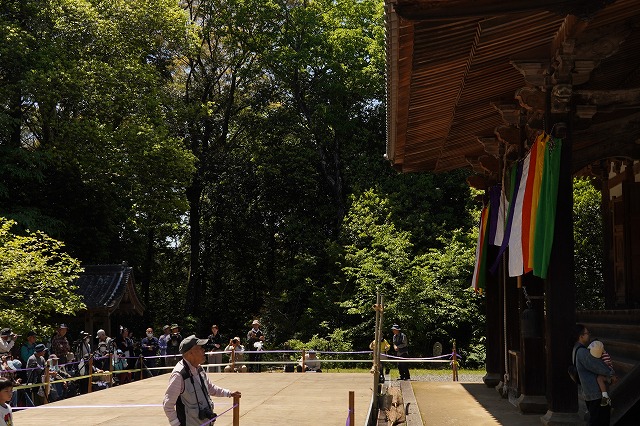
A stage has been set up in front of the main hall, and the audience is waiting, surrounding it on all sides. The poster of the “Oni” on the bulletin board also gets crowd exited.

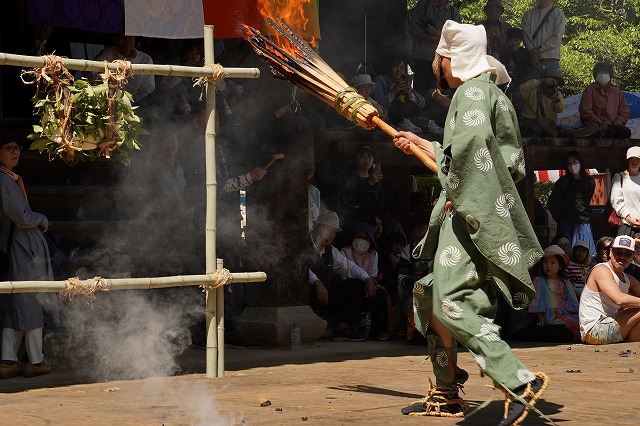
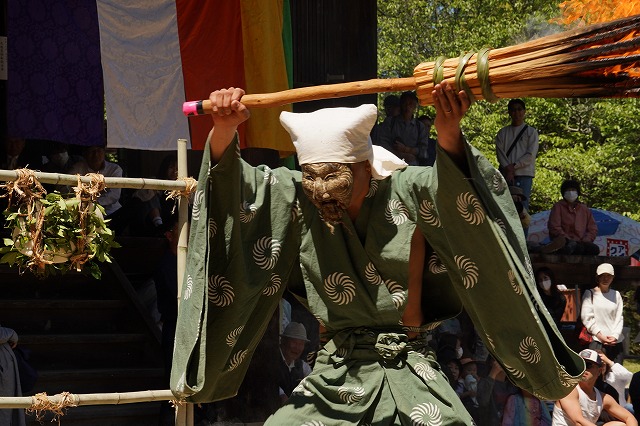
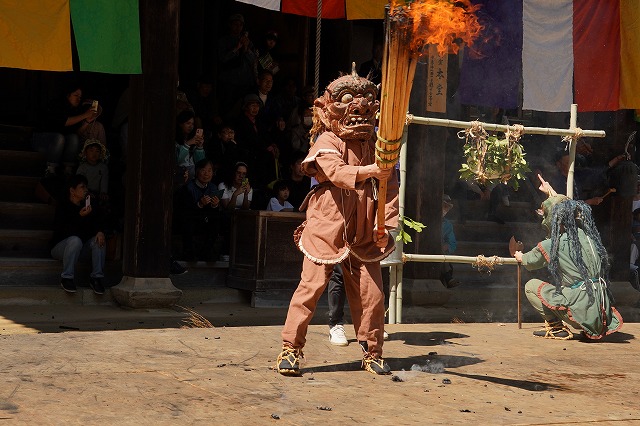
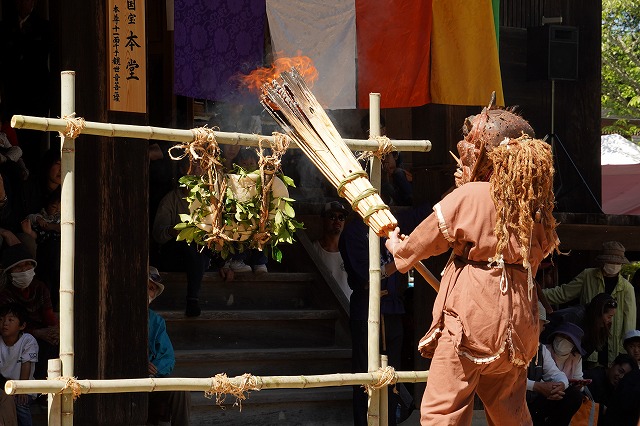
The dull, distinctive sound of a temple gong rings out. The first character to appear is “Okina.” While ‘Okina’ literally means “old man,” here he serves as a sort of harbinger of things to come. He comes out twice, holding a torch.

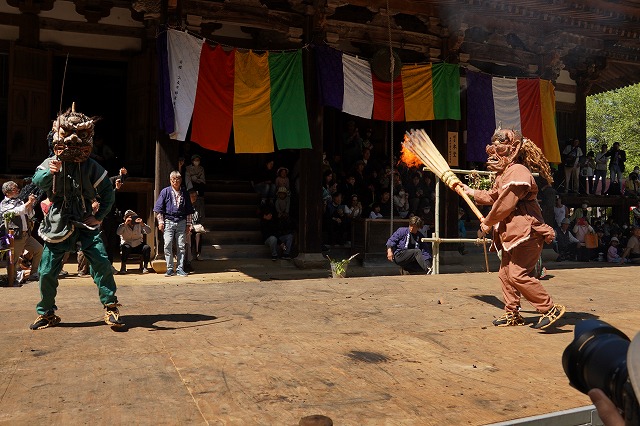
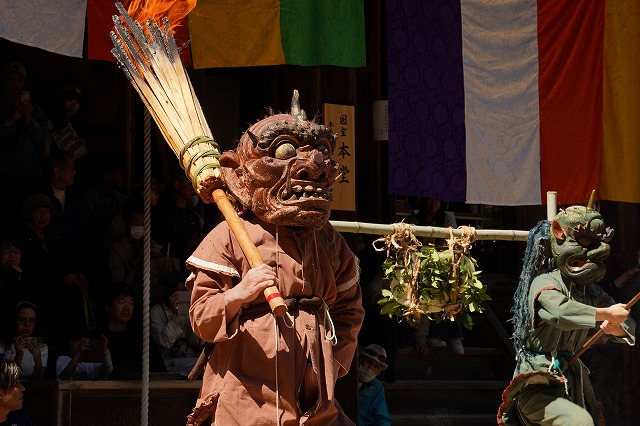
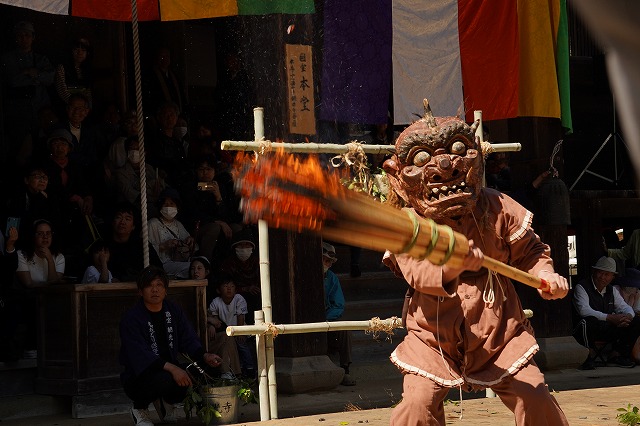
And then, finally, the “Oni” appear. At first, they come one by one. First, a red Oni holding a torch.
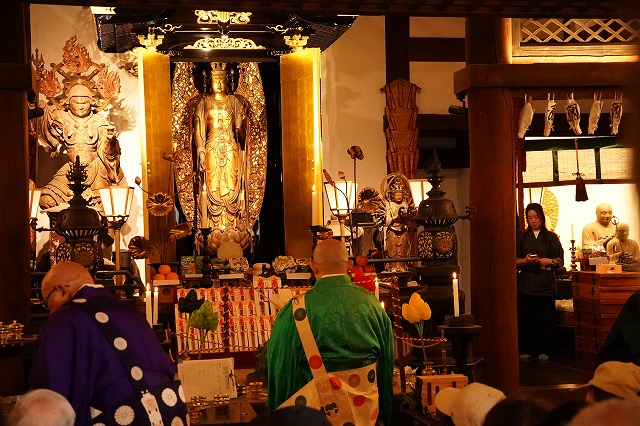
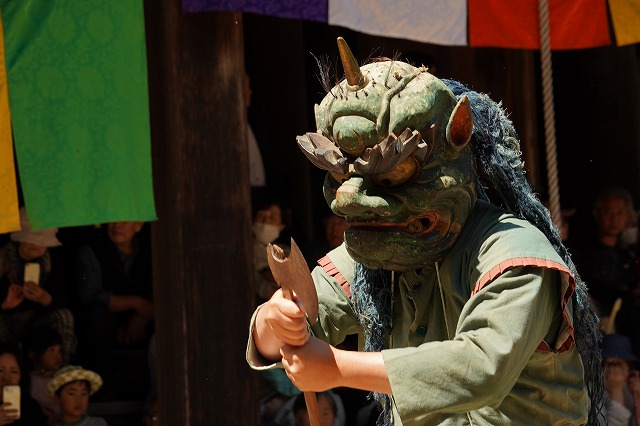
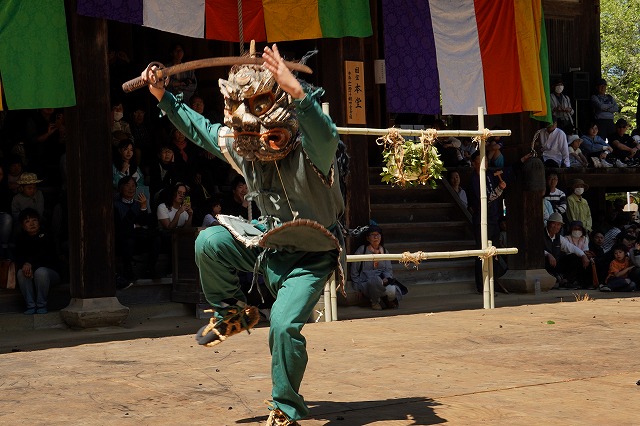
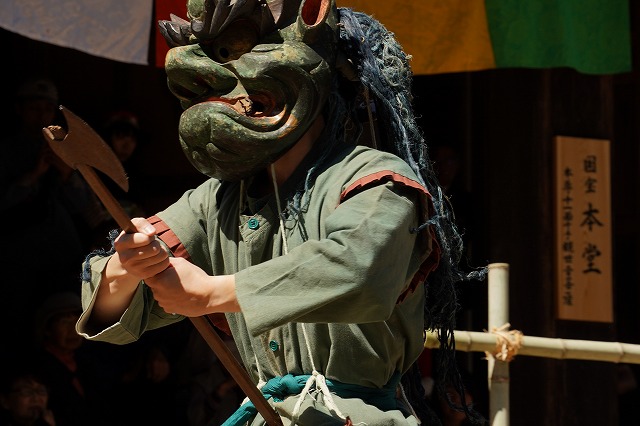
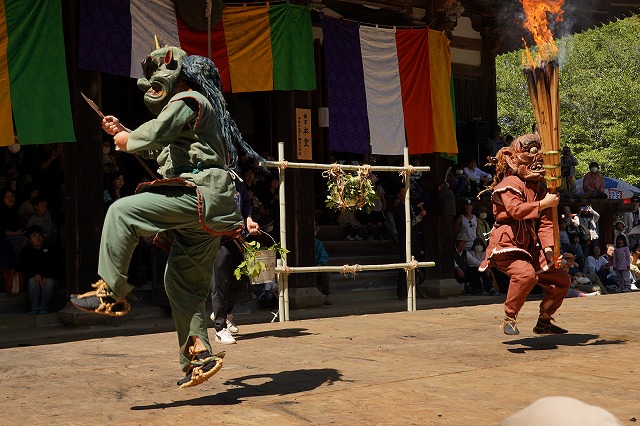
Next up is the blue Oni wielding an axe. All the Oni stomp their feet powerfully on the ground as they approach.

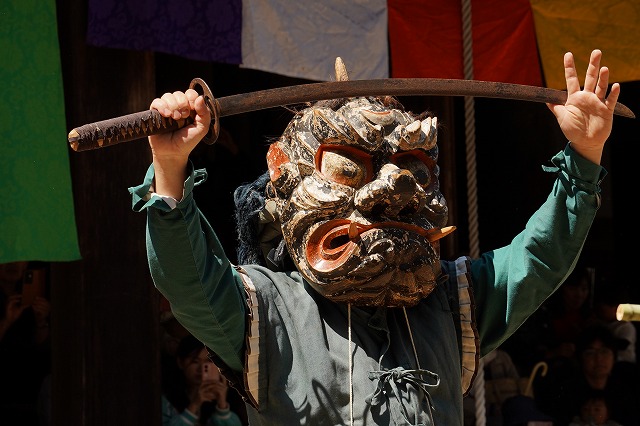
Finally, Oni wielding a long sword appears. All of the masks look quite old. That’s because they are still using the original masks, which were made around the 14th century. Although they would ideally like to create replicas, those involved say it would be far too costly.

One’s movements are simple. They just walk, jump, and leap while changing direction. They simply stomp the ground powerfully, thud, thud. This originally had the meaning of driving away evil spirits from the land by stamping one’s feet firmly on the ground.

Unfortunately, although there are supposed to be four characters, only three appear this time. That said, each one exudes the distinctive aura of a traditional mask.

Next, the three of them appear together and cast curses on the rice cake displayed in the center. This lasts about 40 minutes and ends around 2:10 p.m.
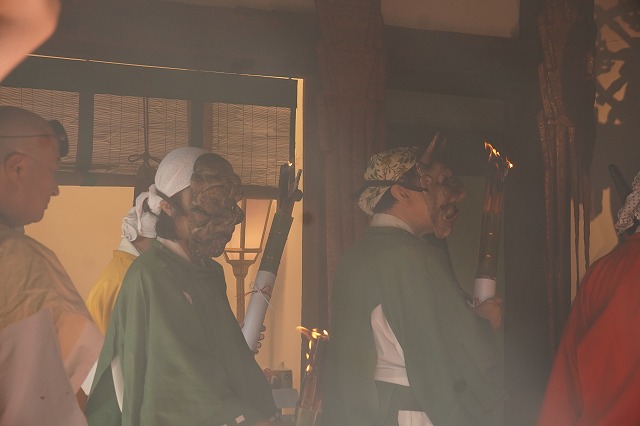
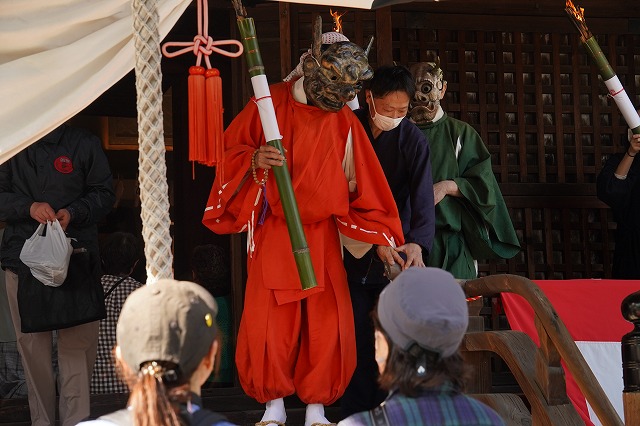
Afterward, the rice cake is cut into small pieces and distributed to anyone who wants some.

As for sound, there is nothing but the monotonous clang of a gong. The movements are equally simple: walking, stomping, and leaping. Yet despite this simplicity, the space has a mysterious quality that seems to be imbued with a divine presence. Perhaps this is due in part to the power of the ancient masks, or perhaps it stems from the weight of a tradition that has been passed down for hundreds of years. How one evaluates this experience can only be left to the impressions of those who have actually been there.

Incidentally, among the spectators surrounding the area, none of those seated on the steps of the main hall had set up tripods. Perhaps there is some unspoken rule.

Heading to Hata Chōkōji Temple

The only public transportation option for getting to the nearest station is the Kakogawa Line. However, the Kakogawa Line is a single-track local line with only one train per hour. Therefore, to make it on time, you need to leave Osaka shortly after 8:00 a.m. and transfer from the Kobe Line to the Kakogawa Line at Kakogawa Station. It’s quite inconvenient. The main event is scheduled to start just after 1:00 p.m., but just in case something comes up, you can safely assume that the 9:00 p.m. Osaka time is the latest you’ll need to be there. Additionally, even though it’s more than 10 kilometers from the station, there’s no public transportation. Tourists would have to go by bike or on foot, but since walking isn’t a realistic option, a bike is the only choice. Fortunately, however, there are bike-sharing services available at Takino Station and Yashiro Station. The bikes can be rented cheaply with a simple registration process. Yashiro Station also has a tourist information center, so while it’s a bit farther from the temple, it’s convenient for tourists who aren’t familiar with the area.

This time, I brought my folding bike. I set off from Takino Station around 10:30 a.m. For a while, I rode along busy city streets, but…

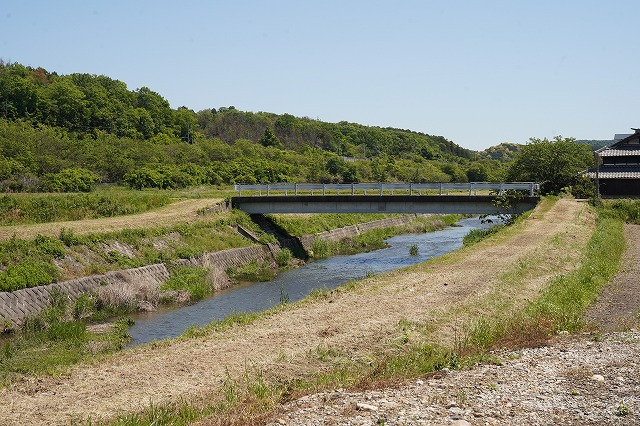
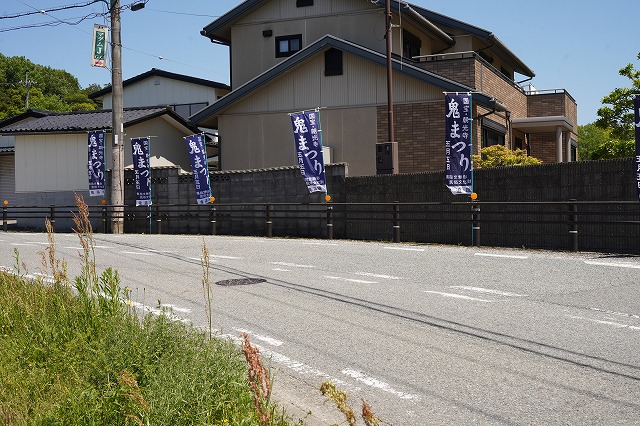
Soon the road turns into a peaceful country lane, and once you see the banners, the temple is just around the corner. The path is mostly flat, so it’s not tough going.

There are convenience stores dotted along the road for about 5 kilometers, and there’s one near the temple as well, so you can pick up just about anything there. Even taking it easy, I arrived just after 11:30. It took a little over an hour.