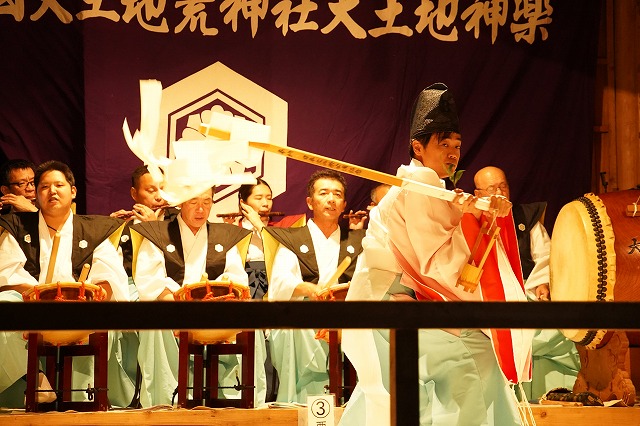
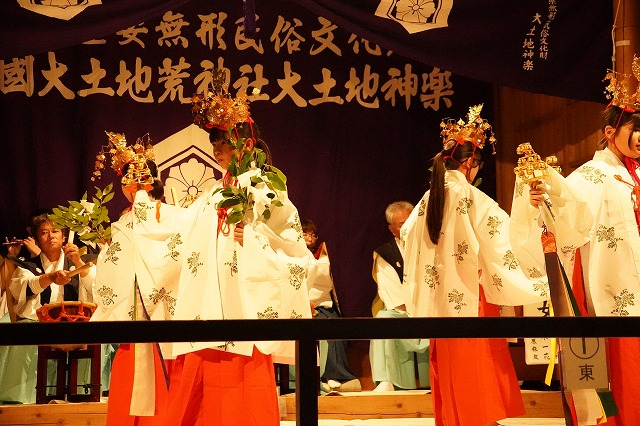
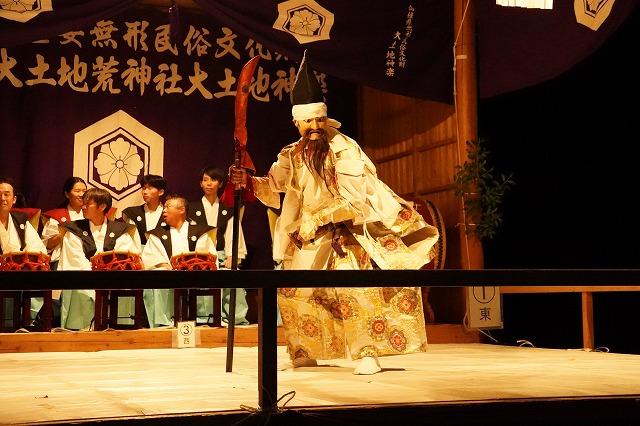
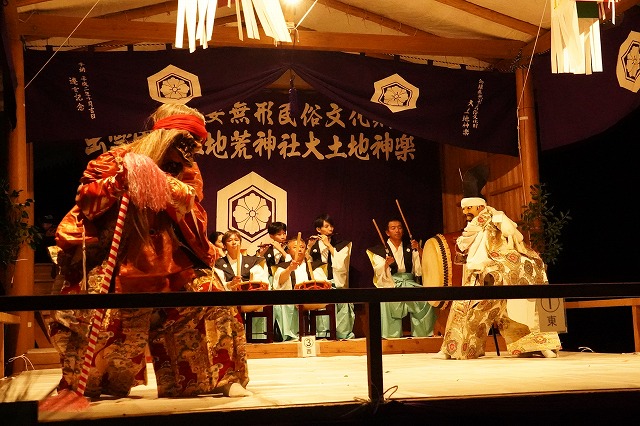
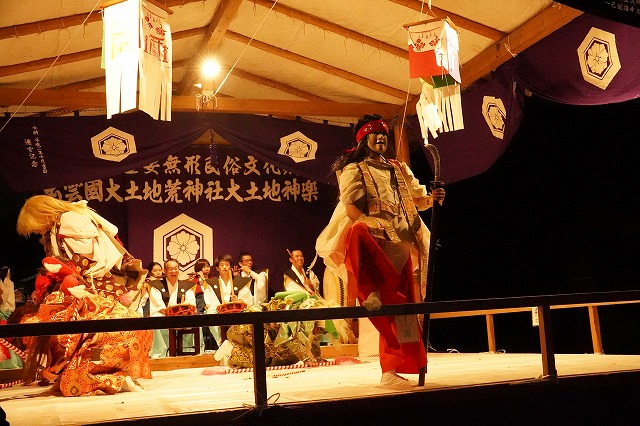
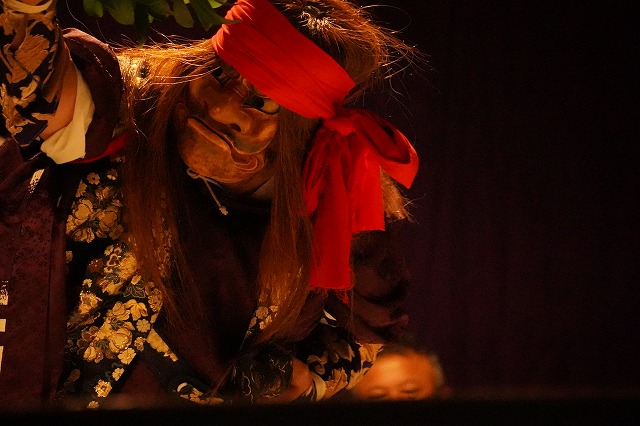
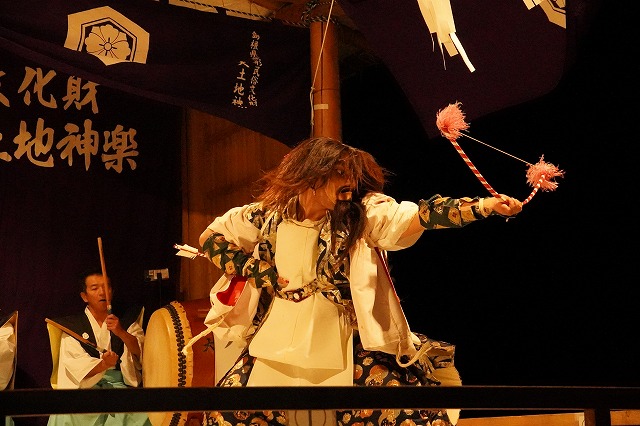
Experience the origins of Shinshu’s lion dance under the fully blooming cherry blossoms ~the Lion dance at Ruriji temple 瑠璃寺の獅子舞


Date; The second Saturday and Sunday of April every year
Location; 812 Ojimasan, Takamori Town, Shimoina District, Nagano Prefecture
Access; From Shinjuku in Tokyo, it takes about 4 hours to reach Takamori by express bus bound for Iida. From there, it’s a 15-minute walk. If you’re coming from the Osaka area, take the express bus from Nagoya.
By train, take the limited express from Tokyo to Okaya, then take the Chuo Line to Tatsuno. From there, transfer to the Iida Line and get off at Ichida or Motozenzōji Station. The trip takes about four and a half hours. From there, it’s about a one-hour walk.

This article based on 14th, April, 2024

A Trip to the Ina Valley in Search of the Origins of the Roadside Stall Lion Dance

All of the photographs shown here depict lion dances from the southern region of Nagano Prefecture (Shinshu), commonly known as the Ina Valley. A distinctive feature of these dances is that massive floats, representing lions, parade through the town. The lion dance at Ruriji Temple is the origin of all of these traditions.

A “yatai lion” is essentially a smaller version of a festival float covered with a curtain and fitted with a lion’s head at the front. Since it has wheels, several people can get inside to move it, and it can also be used to transport necessary items. For more details, please refer to the article below.
https://discoverdeeperjapan.com/2021/08/30/shishi-dance-in-ruri-dera-temple/

Head to Ruriji Temple

Here, we’ll introduce a route that involves walking uphill from a train station. The nearest stations are Ichida and Motozenzōji; while Motozenzōji requires a slightly longer walk, it has more restaurants and other eateries. From there, you simply walk straight up the country road.

You’ll sometimes find convenience stores in places where you’d think, “Here?” They’re truly the town’s aid stations.

Around noon. The event is scheduled to start at 1:00 p.m., but several booths have already been set up at the temple, offering everything from food to sundries. A fair number of people have gathered. It’s no wonder—this lion dance is very popular.

Messenger Monkey

The flowers are in full bloom. Actually, down below, the peak blooming season has already passed, but here at an elevation of 900 meters, it’s right at its peak right now.
Meanwhile, a bunch of monkeys were hopping around—some big, some small, and quite a few of them. Truth be told, at Hiyoshi Shrine near Ruri-ji Temple, the messenger is a monkey. That’s why monkeys play an important role in this lion dance. Here, children dressed as monkeys are seen paying their respects at the shrine.

Beginning

A curtain is draped over the assembled lion’s body, and preparations are nearing completion.

There’s a line in a song that goes, “Ina has seven valleys.” Below are the villages; across the way are the mountains.

Following the children in their festive attire, the monks make their entrance.
Once the monkey begins organizing the audience, the festival is finally about to begin.

Dance of Ryo-oh

2:00 p.m. The “Ryō-ō no Mai” dance is performed first. Although this dance had been discontinued for quite some time, a group of volunteers revived it to commemorate the 900th anniversary of the temple’s founding.
“Ryō-ō” is a piece from the traditional court dance and music tradition.

The lion dance is finally about to begin

Two demons suddenly burst onto the scene and intimidate the audience. The lion dance is finally about to begin. The demons’ role is to keep the audience from coming forward.

Then, the star of the day, Utenno, makes his appearance. He awakens this sleeping giant lion and leads it from Ruri-ji Temple to Hiyoshi Shrine.

“His shoes don’t quite fit right,” the monkey says as he adjusts them. The monkey does things like this, too. Quietly, quietly, Utenō faces off against the lion. Then, when Utenno steps on the cord, the lion, suddenly awakened from its slumber, begins to rampage. The tempo of the music also shifts to a faster pace.

At last, Utenō, accompanied by the lion, exits the gates of Ruri-ji Temple. After walking down a slight slope from Ruri-ji Temple and turning at a right angle, he enters the approach to Hiyoshi Shrine.

Walking along the approach path beneath the flowers in full bloom

“The blossoms are in full bloom this year—it’s the best yet,” said an organizer with a delighted smile. The demon roared, intimidating the audience. The monkey, with a composed expression, cleared a path along the approach.
The melody repeated over and over. The elegant lion dance of Utenno.

Arrival at Hiyoshi Shrine

After about an hour, they arrive at the grounds of Hiyoshi Shrine, bringing their long, long journey to an end. Even the children who had been shouting along with the oni wore expressions of satisfaction despite their exhaustion. Under the cherry blossoms in full bloom, this year’s theater of dreams has come to an end.

Ending

It’s already past 3:00 p.m. To get home, you have to go to the central station nearby, called Iida. From here, you head down another long, long hill.

Reference https://mg.minami.nagano.jp/group/ruriji (Japanese)


Kurashiki 倉敷~The town of historic warehouses is always a popular tourist destination


Location; Chuo, Kurashiki City, Okayama Prefecture
Access; From Tokyo by Shinkansen: 3 hours and 15 minutes (Okayama Station)
From Osaka by Shinkansen: 45 minutes (Okayama Station)
From Okayama Station by train: 17 minutes (Kurashiki Station)
From Okayama Momotaro Airport by car: Approx. 35 minutes (Kurashiki Station)
From Kurashiki Station on foot: Approx. 15 minutes (Kurashiki Bikan District)

Kurashiki web https://www.kurashiki-tabi.jp/
Okayama web https://www.okayama-kanko.jp/spot/detail_10226.html

In front of Kurashiki Station

A view of the city from the station

Kurashiki is one of the most popular tourist destinations outside of Kyoto, Osaka, and Nara. Takayama is a similar destination, but since Kurashiki is easier to reach, it attracts far more visitors. Given its location less than 20 minutes from Okayama, a major transportation hub, the area around the station is bustling. But just a 15-minute walk from there will take you to the scenic district, where rows of white-walled storehouses stand alongside beautiful willow trees lining the river.

Honcho street

It has been designated as a Preservation District for Important Groups of Traditional Buildings.

Small specialty shops and simple eateries are sure to make you stop in your tracks. However, unless you go early in the morning or at a similar time, you probably won’t be able to avoid the crowds.

But every few moments, as if you’ve encountered an air pocket, a quiet, deserted stillness appears—it comes and goes.

River side

Once you pass through the area with the sea cucumber-patterned walls, you’ll feel the breeze blowing along the river. Perhaps because you’ve just come through those narrow streets, you might suddenly feel as if you’ve been freed from the constraints of everyday life.

If it’s the “magic hour,” the town lighting up just as the name suggests might draw you even further into a fantasy world.

Even though the town simply stands there in silence, before you know it, it slips into people’s memories and begins to tell their stories.


Tracing the Origins of Kagura in the Holy Grounds of Izumo ~2. Akatsuka kagura 赤塚神楽


Date; The Saturday closest to October 25 each year
Location; 1894 Oaza Kitsuki-Nishi, Taisha-cho, Izumo City, Shimane Prefecture
Access;
official Instagram https://www.instagram.com/akatsukakagura/reels/
This article is based on 25th October, 2025

Another Kagura Performance Near Izumo Taisha (Grand Shrine)

It’s just a stone’s throw away from the shrine where the Ōdochi Kagura introduced in Section 1 is held. If you turn a wrong corner, there’s a good chance you’ll end up at the other shrine. Although the two are so similar, there are also many differences between them.
It starts at 3:00 p.m. The schedule here runs from daytime, with a break in the middle, until evening.

The shrine grounds are spacious, and the stage isn’t particularly elaborate. There aren’t any special decorations on it.

A distinctive feature of this kagura is the high proportion of young performers. In particular, the first half consists of a series of performances featuring only children.

Although it has a long history, it is said to have been interrupted once by war. Given this background, there is a strong movement to actively encourage local children to become familiar with it and to nurture them as future practitioners. Perhaps because of that, the audience—especially in the first half—consisted mostly of people involved in the production.

Masks used in this kagura are the rugged ones typical of Izumo Kagura. They give a very different impression from the flamboyant Iwami Kagura, even though both are from Shimane Prefecture.

Hino-misaki

“Misaki” means “cape.” Hinomisaki is one of Izumo’s tourist attractions by the sea, famous for its beautiful sunsets. The shrine located here is said to be the one that guards the night, in contrast to Ise Grand Shrine, which guards the day.
A performance unique to the local area, inspired by Hinomisaki. It’s a story of good triumphing over evil, in which the god of Hinomisaki defeats an evil deity attempting to invade the land. It’s easy to follow.
It was a little past 4:00 p.m. It was the perfect setting for Hinomisaki at sunset. From this point on, the kagura performances really began to pick up steam.

More enemies appear, and the action heats up. By this point, the audience has grown considerably.

Intermission

Kojin

“Kojin” is another play with roots in Izumo. The story is said to have actually taken place right here in this very place. Even though it’s just a play, watching it here in this place is deeply moving.
This myth, known as the “Transfer of the Country,” tells the story of how an envoy from Amaterasu arrived and demanded that Ōkuninushi, who ruled this land, cede it to her. It may seem unfair, but history is written by the victors.
The masks look just like those in Kabuki or Peking Opera.

*https://discoverdeeperjapan.com/reference/japan-mythorogy/okuninushi-hnded-over-his-own-country-to-amaterasukuni-yuzuri-%e5%9b%bd%e8%ad%b2%e3%82%8a/

Ōkuninushi is often depicted as the deity known as Daikoku-sama. Daikoku is one of the seven deities who bring happiness to people. However, the two are completely unrelated—they share only the same pronunciation of their kanji characters. Because of this, his son, “Kotoshironushi,” is also depicted in the form of the deity Ebisu. He makes his entrance carrying a sea bream, but—as is typical of Ebisu—he didn’t bring the gift specifically to curry favor with the messenger.
*about 7 of goods bringing fortune to people https://discoverdeeperjapan.com/2021/04/05/seven-deities-of-good-fortune-parade-celebrating-the-new-year-at-the-center-of-tokyo/

Okuninushi and Kotokishiro-nushi agreed, but their other son refused to comply. He challenged them to a contest of strength, but…
Eventually, he was defeated and, for some reason, fled all the way to Suwa (a region in present-day Nagano Prefecture). There is a large shrine here called Suwa Taisha, which consists of four separate shrines; it is a shrine filled with mysteries, and it remains unclear why such a massive shrine came to be built in this location.

Orochi

It was already nearing 8:00 p.m. After a performance by the children, the final act of the evening—and the grandest climax—was about to begin. A large crowd had already gathered. Food stalls selling soba and other items—there are several of them—are seeing a steady stream of customers.

When it comes to slaying the Orochi, Shimane Prefecture comes to mind. It’s truly a local tradition.

It is also a popular production, particularly throughout western Japan.

The scene begins with the parents lamenting in front of their beloved Princess Kushinada. Just then, Susanoo arrives. “Leave it to me,” he says.

Orochi makes an appearance. Here, it’s done entirely in the Iwami Kagura style. Four of them appeared that day.
The story remains the same: they make Orochi drink the poisoned sake they’ve prepared, and once they have drunk, he defeat them.

The performance ended around 9:00 p.m. Even though it was October, the performers were drenched in sweat from their passionate performance. They gave it their all with their youthful energy.

There are few places to stay near Izumo Taisha, and prices are high. You can think of it as being similar to a resort area. The area near Izumo City Station is a popular choice and has plenty of accommodations. Furthermore, since it takes just over an hour to get to Matsue, you might want to consider staying there as well.


Enjoy the Performing Arts in Hiraizumi, Where the Autumn Foliage Shines Brightly ~Fujiwara festival ~Day 2


Date; Every year from November 1 to 3
Location; Chuson-ji Temple, Motsu-ji Temple—Hiraizumi Town, Iwate Prefecture
Access; Take the Shinkansen to Ichinoseki Station, then transfer to a local train; it takes about 10 minutes to reach Hiraizumi. It’s about a 25-minute walk from the station to the entrance of Chuson-ji Temple, and about a 10-minute walk to Motsu-ji Temple.
https://discoverdeeperjapan.com/2026/07/08/enjoy-the-performing-arts-in-hiraizumi-where-the-autumn-foliage-shines-brightly-fujiwara-festival-day-1/

This article based on 2th~3rd November, 2025

Day 2 ~Schedule

Kawanishi dainenbutsu kenbai (sword dance) 10:00 a.m. (Chusonji temple Konjikido) 11:00 a.m. /1:00 p.m. (Chusonji templemain hall)
Noh 11:00 a.m./1:00 p.m. (Chusonji temple Noh stage)
Shishi odori (Deer dance) 10:30 a.m. (Hiraizumi station) 12:30 p.m. (Motsuji temple) 2:30 p.m. (Chusonji temple main hall)
Dance of Ennen 11:00 a.m. (Motsuji temple)
*While there aren’t usually any major changes from year to year, please check the website and other sources each time.

The Slope Leading to Chūson-ji Temple

The Gate of Mōtsū-ji Temple

The schedule is divided into very specific time slots, and the locations are spread out across Chūson-ji Temple, Mōtsū-ji Temple, and the area in front of the station. Furthermore, even within Chūson-ji Temple, the schedule is divided among the Main Hall, the Konjikido Hall, and the Noh stage.
It’s about 1.5 km from Chūson-ji Temple to the station, and from there you have to climb a steep hill to finally reach the main hall. Since the Konjikido Hall and the Noh stage are located beyond that, it takes quite a while. The distance from the entrance to Chuson-ji Temple to Motsu-ji Temple is about 2.3 kilometers. There are bike rentals available in front of the station, so using one of those is one way to shorten the trip. In any case, since getting around takes time, it’ll be tough unless you decide in advance where to go and what to see.

Chusonji temple Konjikido

A performance will take place in front of the Konjikidō Hall at Chūson-ji Temple starting at 10:30 a.m. As mentioned in the section on the Hounokizawa Nenbutsu Sword Dance, this is a type of sword dance.
There are more performances than in Hounokizawa, including solo dances and group dances. On this day, the program began with a solo dance.

This is a dance piece performed by three dancers. It incorporates some fairly complex movements and features many theatrical elements.
The performance lasts about 30 minutes.

Chusonji temple Main hall

It was just past 1:00 p.m. They moved to the area in front of the main hall for the next performance. First, everyone performed a dance centered around a monkey.
This is followed by a solo performance, which then leads into a performance by three people.

A performance lasting about 20 minutes.

11:00 a.m. for about 50 minutes, on the stage next to the Main Hall of Motsuji Temple

In short, the term “Ennen 延年” in the Ennen Dance refers to the wish for longevity. Its origins date back some 800 years. It reached its peak around the 12th century but began to lose popularity around the 14th century, along with the decline in the popularity of Noh. As a result, there are few remaining examples throughout Japan, and the one here at Mōtsū-ji Temple has been designated as an Important Intangible Cultural Property.

The long passage of time has caused many plays to be lost.
The most famous is the “Dance of the Old Woman.” This performance requires a high level of skill because the dancer bends his or her waist extremely low while dancing.

You can see it at the festivals on January 20, May 5, and November 3 https://iwatetabi.jp/en/spots/94710/

The event begins at 11:00 a.m. at the Noh stage. The photo shows the performance titled “Makura Jido,” which starts at 1:00 p.m.
Further back from the Konjikidō is Hakusan Shrine, and there is a Noh stage nearby. Although it was rebuilt in the early 19th century, it has a very atmospheric appearance.
It should be noted, however, that not all Noh performances are plays; some consist solely of singing, and others solely of dancing. If you look closely at the program or other materials, you’ll find this information there.

Shishi odori (Deer dance)

It starts at 10:30 a.m. in front of Hiraizumi Station, at 12:30 p.m. at Motsuji Temple, and at 2:30 p.m. in front of the main hall at Chuson-ji Temple. This photo was taken in front of the main hall at Chuson-ji Temple.
The finale is the deer dance, a familiar sight in the Tohoku region. This time, it’s the “Gyozan-ryu Miyako-dori” deer dance. They pound the ground, send the sound of the drums echoing to the heavens, and their songs—which seem to well up from the depths of the earth—are as vibrant as ever. The performance, which lasted about 20 minutes, thoroughly impressed the audience.
*The following article should be helpful for learning about the deer dance. https://discoverdeeperjapan.com/2020/11/30/michinoku-traditional-folk-performing-festival-the-deer-dance/


Enjoy the Performing Arts in Hiraizumi, Where the Autumn Foliage Shines Brightly ~Fujiwara festival ~Day 1


Date; Every year from November 1 to 3
Location; Chuson-ji Temple, Motsu-ji Temple—Hiraizumi Town, Iwate Prefecture
Access; Take the Shinkansen to Ichinoseki Station, then transfer to a local train; it takes about 10 minutes to reach Hiraizumi. It’s about a 25-minute walk from the station to the entrance of Chuson-ji Temple, and about a 10-minute walk to Motsu-ji Temple.

This article based on 2th~3rd November, 2025

the Hiraizumi station

the Konjiki -do (Chusonji-temple)

 Hiraizumi is one of the leading tourist destinations in the Tohoku region. This is thanks to Chuson-ji Temple, built here in the Middle Ages, and the National Treasure, the Konjikido Hall, located within the temple grounds. “Konjiki” simply means golden. True to its name, there is a temple that still stands today, with its entire structure covered in gold. For more details, please refer to other websites introducing Japan, but on this site, we’d like to introduce the Fujiwara Festival held at this temple.
  There are two Fujiwara Festivals: one in the spring (early May) and one in the fall. The spring festival mainly features performances by celebrities and reenactments of historical processions; it is a lively event that draws large crowds. As for autumn, while it may lack some of the showiness, it more than makes up for it with the many performing arts deeply rooted in this region.
Hiraizumi town official https://hiraizumi.or.jp/en/
Iwate prefecture official https://www.hiraizumi-heritage.pref.iwate.jp/

>

That day, starting at 10:30 a.m., the Hounokizawa Nenbutsu Sword Dance welcomed us right in front of the station.
Although “Nenbutsu Kenbai” literally translates to Buddhist chanting sword dance, it is a sword dance that, at its core, incorporates prayers for the deceased. While “Oni-kenbai*,” the representative sword dance of Kitakami City, focuses primarily on the performing arts, it can be said that Nenbutsu Kenbai has a stronger religious spiritual dimension.
However, an outsider wouldn’t be able to tell the difference.
*https://discoverdeeperjapan.com/2020/10/18/michinoku-traditional-performing-art-festivaloni-kenbai/

After their performance, which lasts about 20 minutes, they’ll pose for commemorative photos.
Following this, two more performances are scheduled—one in front of the Konjikidō Hall at Chūson-ji Temple and another at Mōtsū-ji Temple. Accordingly, this article will follow them as they tour the famous sights of Hiraizumi for the day.

Chuson-ji Temple is located on top of a mountain. Because of this, visitors must climb a very long slope to reach it. The slope is particularly steep in the first half, so there are even ropes along the side for visitors to hold onto.

That said, it’s autumn, and visitors forget their weariness amid the fiery autumn foliage.

Starting at 12:30 p.m., there was also a dance performance in front of the Konjikidō. Many tourists were delighted by this unexpected treat.

Mōtsū-ji Temple is located about a 10-minute walk from the station in the opposite direction from Chūson-ji Temple.
Mōtsū-ji is one of Hiraizumi’s most famous sights, alongside Chūson-ji. Its vast grounds, which feature a large pond, are said to be modeled after the Buddhist Pure Land, and they amply evoke the prosperity of the clan that once ruled this region.

At 2:30 p.m., the sounds of flutes and drums echoed as the group approached. As scheduled, the final performance took place in front of the main hall of Motsuji Temple.

To be continued in the next section, on the second day


Tracing the Origins of Kagura in the Holy Grounds of Izumo ~1. Odochi Kagura
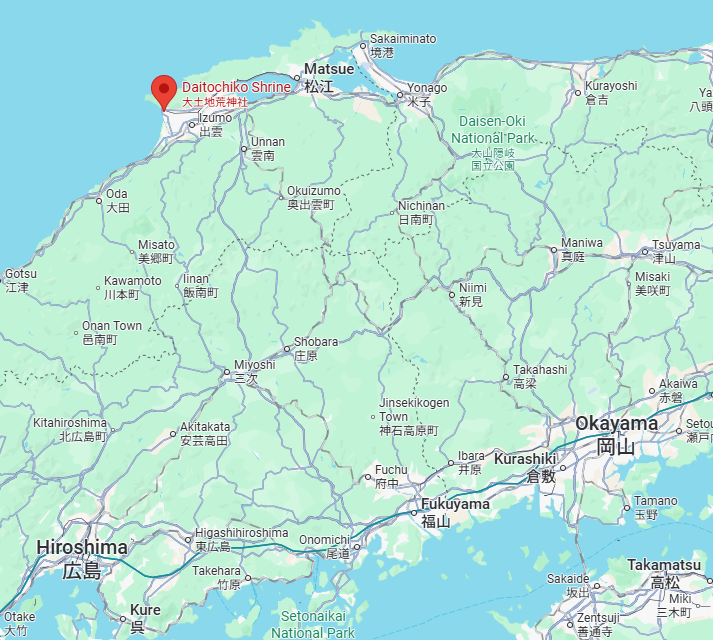


*Google Maps lists it as “Daitochi,” but the correct name is “Odochi”—it’s a mistake.

Date; One day during the Golden Week period in May: Kagura Dedication Ceremony at Izumo Taisha
Saturdays from late May to early June: Evening Torchlight Dance at Inasa Beach
The Friday and Saturday closest to 25 October
Location; Odochiko shrine 2425 Kizuki-Nishi, Taisha-chō, Izumo City, other

Access; About 1 kilometer from Izumo Taisha-mae Station, a 15-minute walk
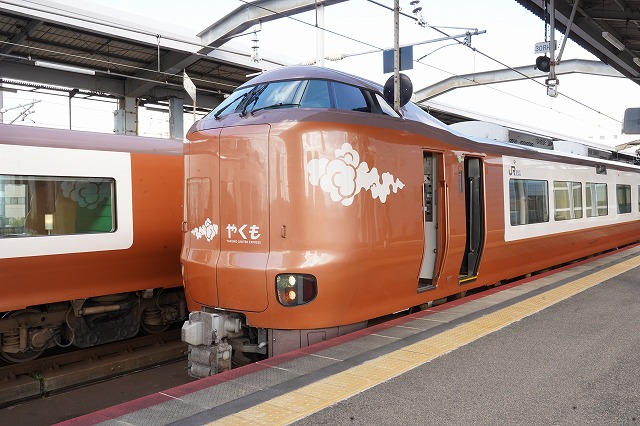
To get to Taisha-mae Station, take the Limited Express Yakumo from Okayama to Izumo City Station. From there, take the local line.
There are other overnight trains departing from Tokyo, but they’re as popular as concerts by famous singers, so it’s very difficult to get tickets.

This article is based on 24th October, 2025

Limited express “Yakumo”

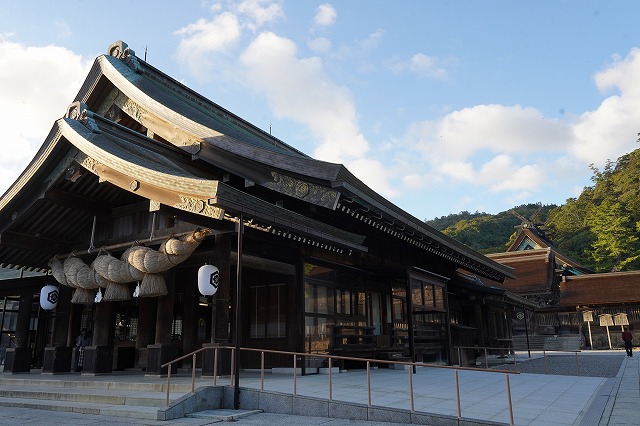
Izumo Taisha (grand shrine)

Shimane Prefecture is famous for Iwami Kagura. However, Iwami is in the western part of the prefecture, while in the eastern part—Izumo—there is another style of kagura known as Izumo Kagura. This article introduces the Odochi Kagura, one of the Izumo Kagura traditions.

Many Japanese people dream of visiting Ise and Izumo someday. These are the locations of Ise Grand Shrine and Izumo Grand Shrine, two of Japan’s most iconic shrines, and they are revered as Japan’s most powerful spiritual sites. In particular, Izumo Taisha is renowned as a shrine dedicated to the god of matchmaking, which is why it attracts so many visitors. Izumo is also a region where many ancient mythological tales have been preserved. It is also famous as a place where gods from all over Japan gather once a year. In other words, the land itself is imbued with divinity.

In fact, Izumo is not only the land of mythology, but also the birthplace of kagura.
Although it is said that the origins of Kagura date back to mythological times, the form we see today took shape hundreds of years ago.

The most famous of these is the Sada-shin noh at Sada Shrine, which is said to have been created by incorporating Noh theater techniques learned in Kyoto. Because it was of such high quality, it is said to have influenced many forms of Kagura in the surrounding areas and throughout the Kanto region.

And here is another form of kagura that is considered to be one of the origins of the tradition: the Ōdochi Kagura.
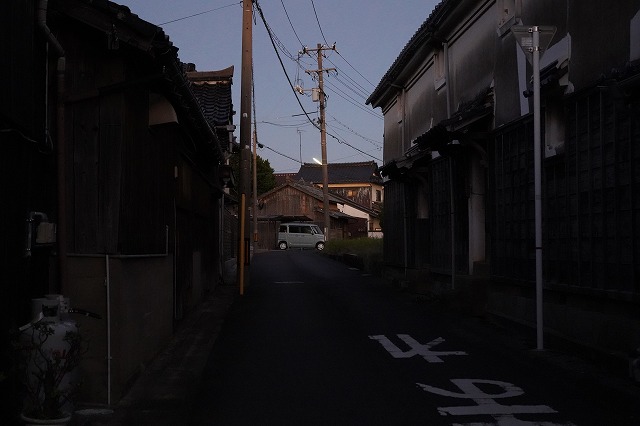
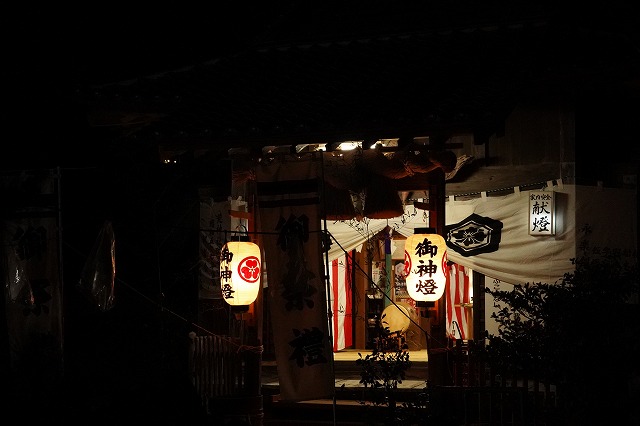
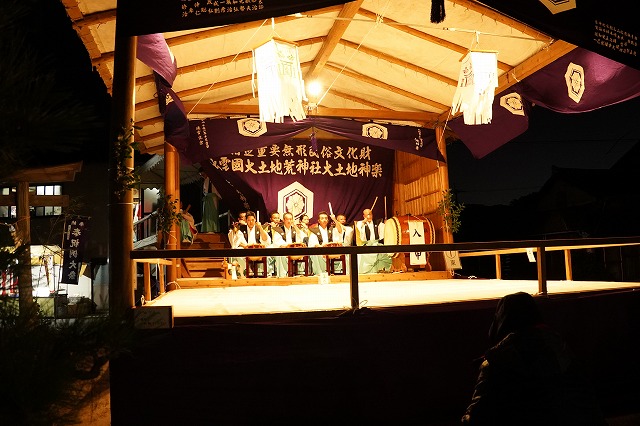
With winter fast approaching, the days are getting shorter. After walking for about 15 minutes through the old town as dusk falls, you’ll come to Ōdochi-ko Shrine. Actually, this Kagura performance is scheduled to start at 6:00 p.m. and end at 2:00 a.m.! (For questions like, “How am I supposed to watch it with so little time?”—I’ll explain that later, so please check that section.)
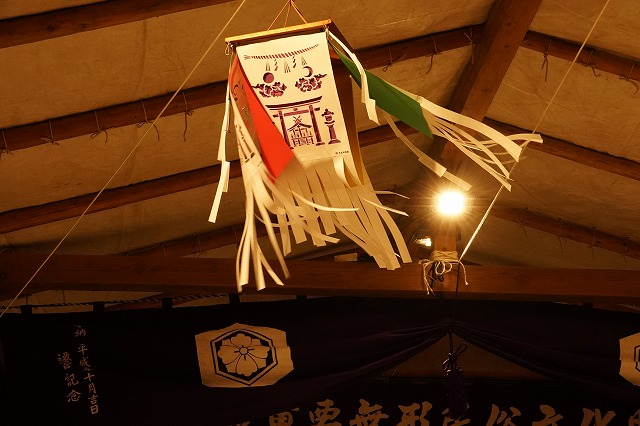
It’s such a small place that you’d never guess it’s a shrine that passed down the famous Kagura tradition. There is a stage in front of the shrine. As the surroundings grow completely dark, the audience is drawn to this spot, as if they had wandered into another world.

A total of 17 performances were presented that day. The program was particularly ambitious, featuring the revival of the Sarutahiko performance, among other highlights. Looking at the overall flow, the performance begins with ritualistic segments (which are performed without masks), and gradually becomes more theatrical as the children and the masked performers interact.
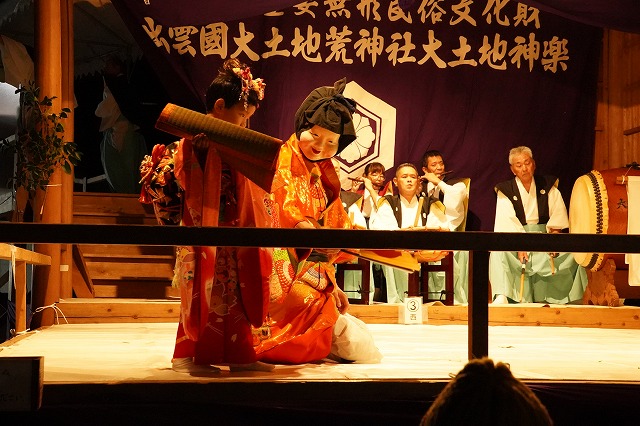
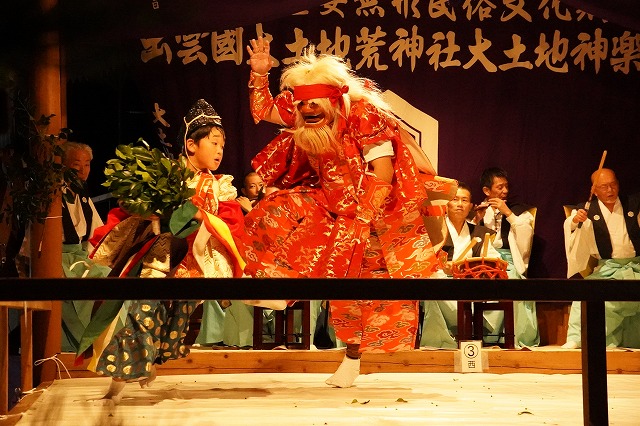
A play in which the mountain god chases a child and eventually catches him. The background story is that the child is actually a messenger of other gods who has come to summon the mountain god.

This is the story of a general named Sakanoueno Tamuramaro who fought against bandits entrenched in the mountains.
General Tamuramaro was a real historical figure who, acting on the orders of the emperor who established the Heian period (8C~12C), subdued the Tohoku region. He was the first person to be appointed general, and although he was a skilled warrior, he is said to have been deeply compassionate toward his enemies, which has made him very popular.
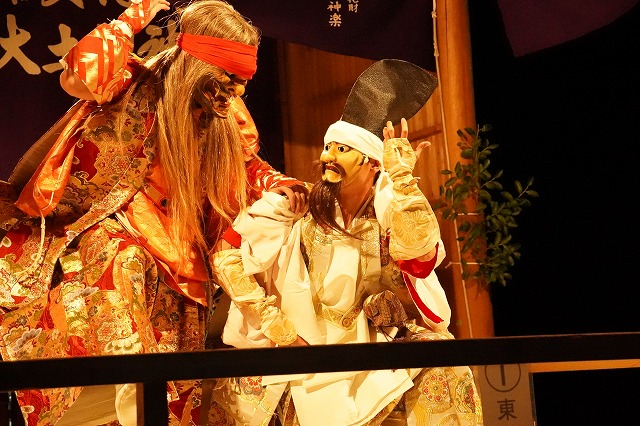
Sankan
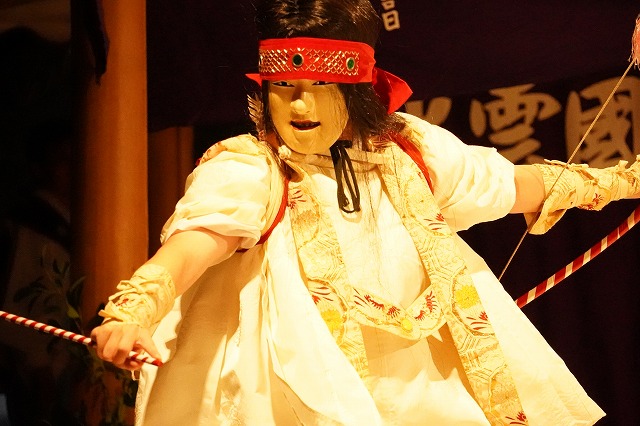
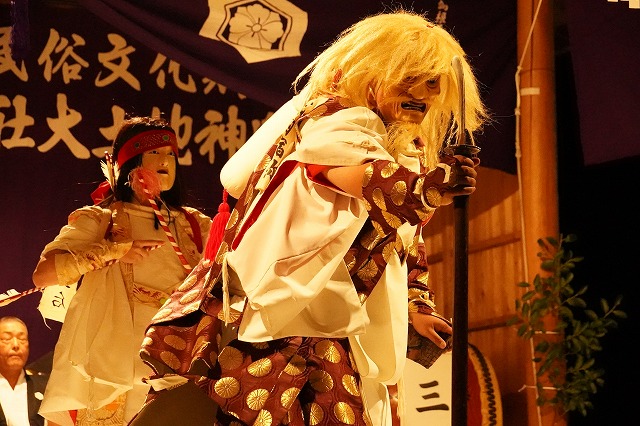
A play based on the legend of Empress Jingū* and her loyal vassal, Takenouchi no Sukune, who conquered the three kingdoms of the Korean Peninsula. One of the most popular performances in this kagura.
*Empress Jingu →Empress Jingu was also a real historical figure. Since she appeared during a time when the line between myth and reality was blurred, little is known about her in detail. However, despite being an empress, there are many stories about her, and her expedition to the Korean Peninsula is one of them. Furthermore, the fact that the Emperor is referred to using the character for “god” makes him a special Emperor, and the use of that same character for her, as Empress, is deeply mysterious.
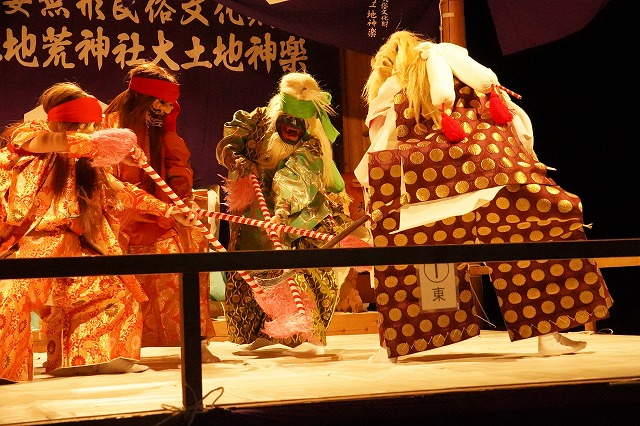
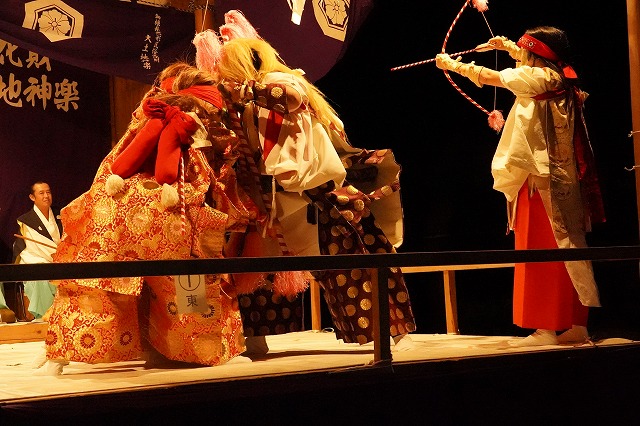
Just when you thought Empress Jingu was simply standing in the background…
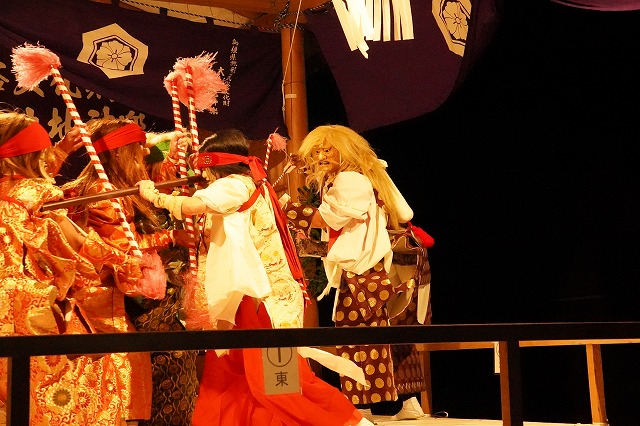
(Empress Jingū) as soon as she saw that the Sukune were at a disadvantage, rushed out herself and defeated all three of them in one fell swoop. Her gesture, as if to say, “How about that?” to the audience, was just like something out of professional wrestling. The audience couldn’t help but get excited.

Kojin
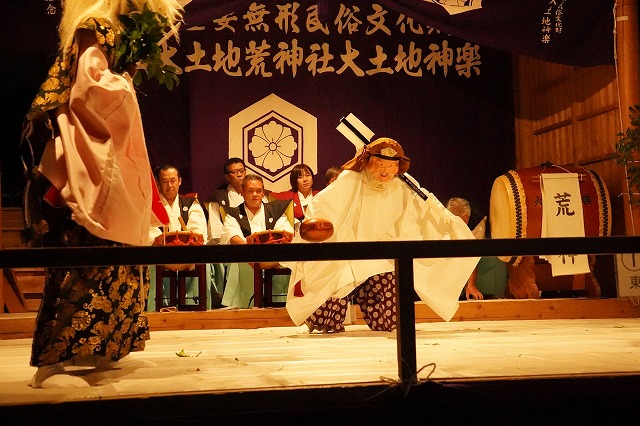
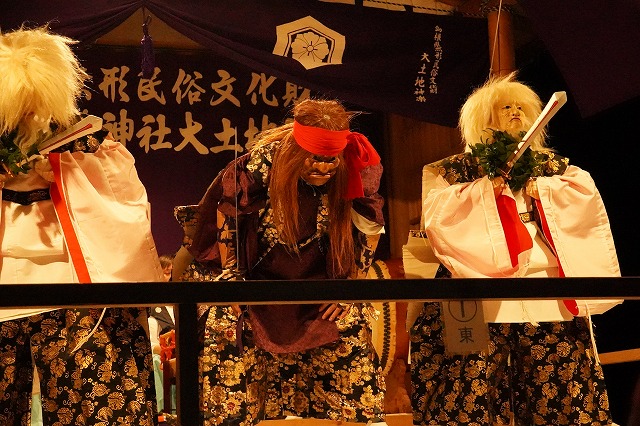
Messengers from Amaterasu came many times, but each time, Okuninushi remained loyal to her. Finally, Amaterasu sent a warrior named Takeminakata to subdue Okuninushi. However, her son refused to accept this and challenged them to battle, only to be defeated and forced to flee. This play is based on that myth.
https://discoverdeeperjapan.com/reference/japan-mythorogy/okuninushi-hnded-over-his-own-country-to-amaterasukuni-yuzuri-%e5%9b%bd%e8%ad%b2%e3%82%8a/

Yachihoko

This story is about the younger days of Okuninushi, who appeared in the previous performance. It tells the tale of how he was bullied by his brothers but eventually defeated his wicked older brothers and built a peaceful country.
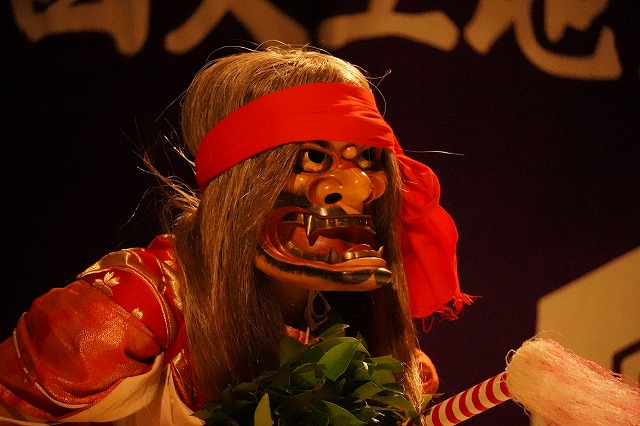
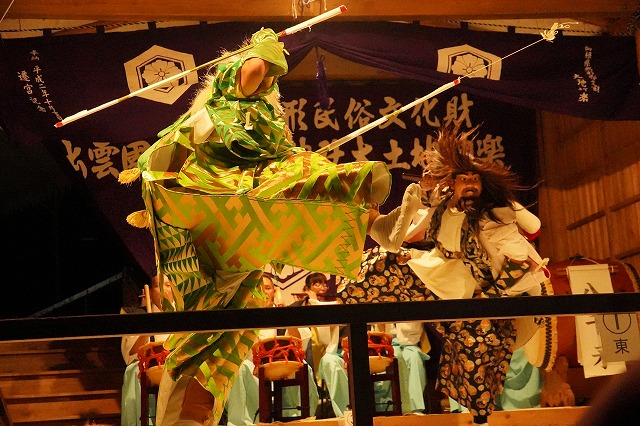
Yato

This performance depicts one of the most famous episodes in mythology: Susanoo’s battle against the (Orochi) eight-headed serpent. In a sense, this performance best exemplifies the defining characteristics of this kagura.
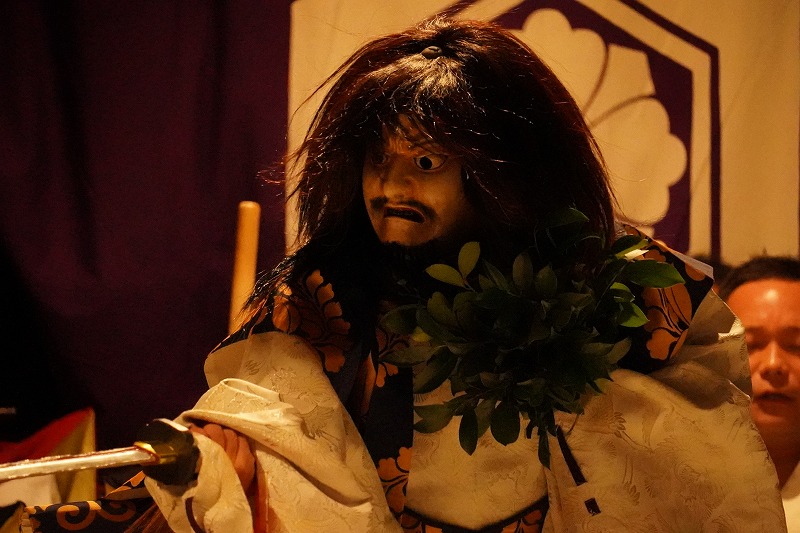
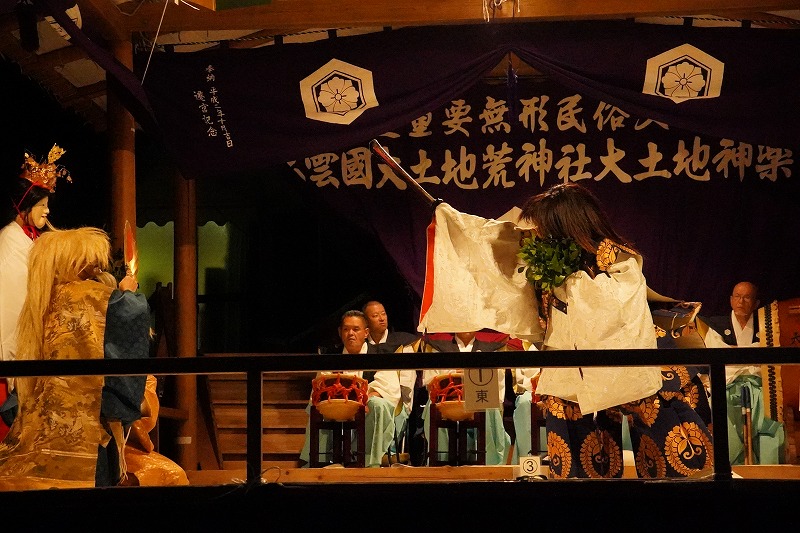
To briefly summarize the story: When Susanoo arrives in this land, he notices a parents and daughter crying. The father explains that every year, Orochi comes and they are forced to offer their daughter as a sacrifice. He adds that this year it is the turn of their eighth and final princess. Then Susanoo devises a plan and successfully defeats Orochi—that is the story.
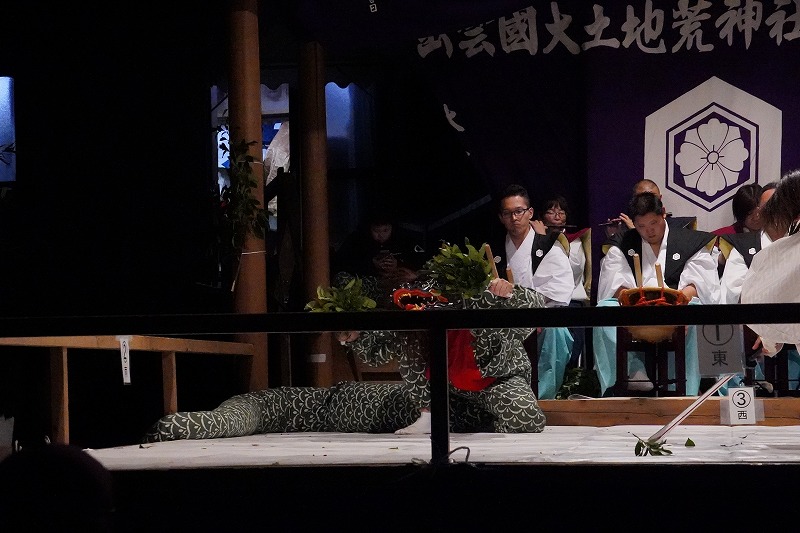
In recent years, in western Japan, the influence of Iwami Kagura—which originates in the western part of Shimane Prefecture—has been significant. In particular, the depiction of Orochi, the giant serpent coiled in a spiral, can be seen widely from Kyushu to Okayama.
However, here, the figure is simply depicted with a human-like body and a tail. This is a form commonly seen in Kagura performances in the Kanto region. Since it was introduced to the Kanto region before the Meiji era, it still retained this simple form at that time. And this kagura, too, continues to preserve its ancient form.
https://discoverdeeperjapan.com/2022/10/05/entertainment-by-the-name-of-iwami-kagura/
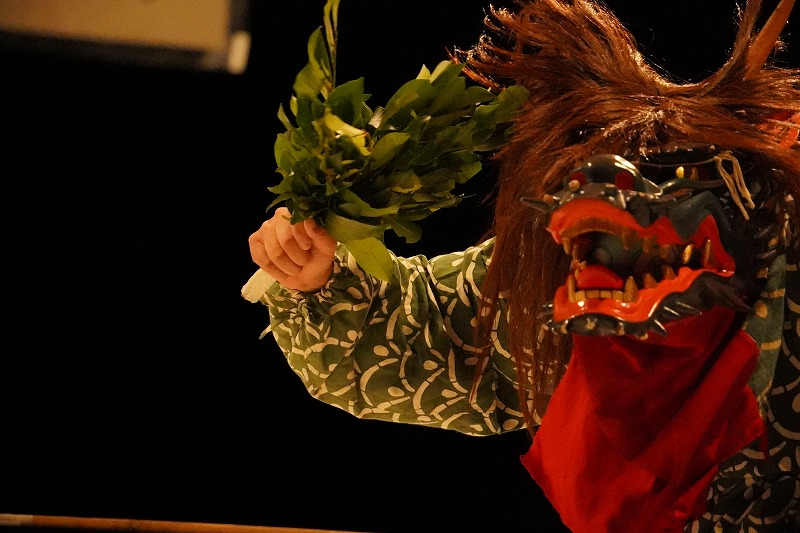
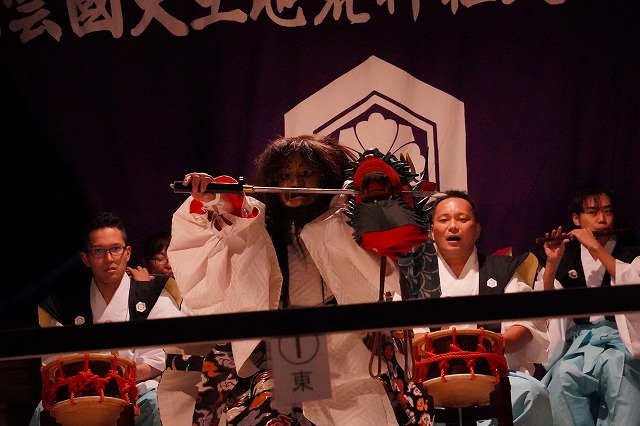
But putting that aside, it’s simply a fascinating form of Kagura to watch. The unique movements, the chants, and the lavish costumes reminiscent of Noh—everything is filled with a power that leaves the audience in awe. If you ever get the chance, you definitely won’t regret seeing it live.

The Kagura performance ends at 2:00 a.m. as scheduled. While locals may be fine, what are tourists supposed to do?
1. Of course, there are several places to stay near Izumo Taisha. However, since it’s a tourist destination, prices tend to be high.
2. Option 2: Stay near Izumoshi Station. There are more accommodations near Izumo shi Station. However, it is more than 8 kilometers away from Taisha-mae. Since it’s late at night, there is no public transportation. In such cases, I recommend using a bike-sharing service. You can rent a bike for a low fee, and it’s available even late at night. It’s also convenient because there are cycle stations at both Izumo-shi Station and Taisha-mae Station. The tourist information center at Izumo City Station will explain how to rent one.
For those who feel it’s a waste of money to stay at a hotel late at night, there’s always the option of a 24-hour café near the station. While it’s not as comfortable as a hotel, you can still take a nap in a private booth.

reference https://yuien-sharecycle.jp/en/
Shimane official https://www.kankou-shimane.com/en/
Tourist information center https://izumo-japan-travel.com/travel-tips/visitor-center/