Report~Seeing an Oni in the Suburbs of Kyoto
Day; The third Saturday in April

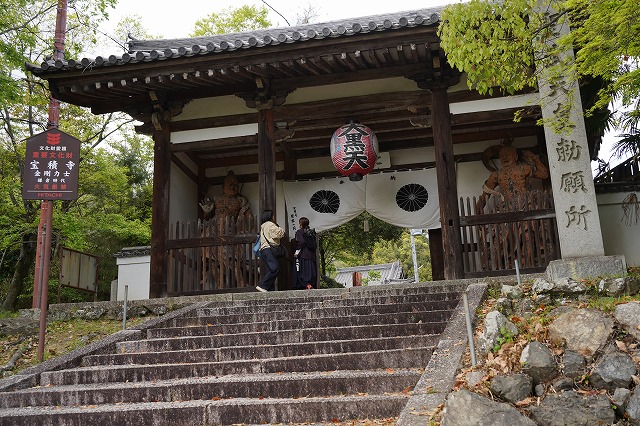
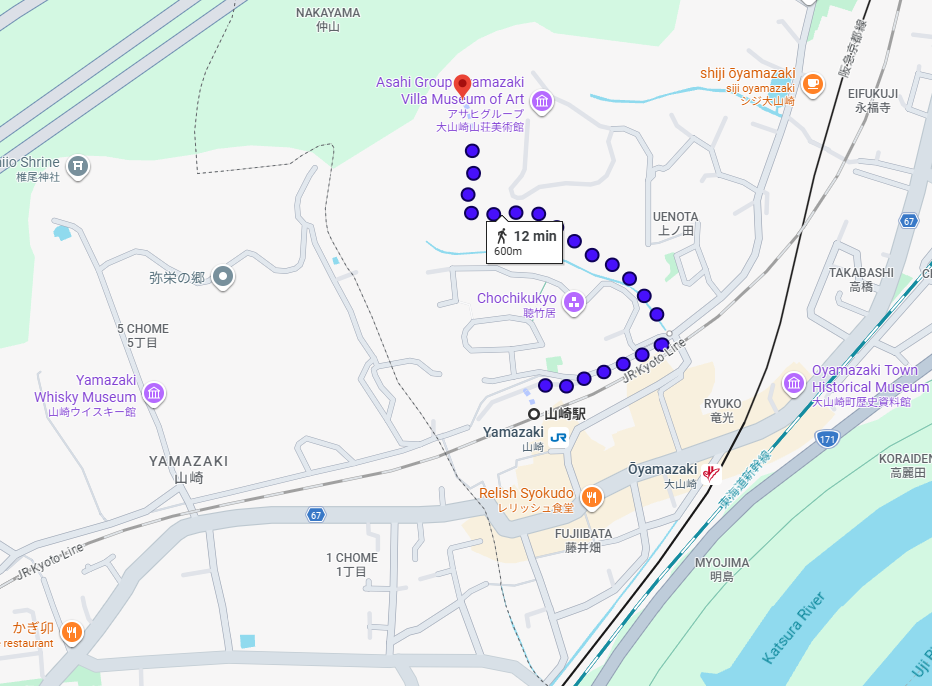
Location; Hoshakuji-temple 宝積寺, 1 Senbara, Ooyamazaki, Ooyamazaki-cho, Otokuni District, Kyoto Prefecture

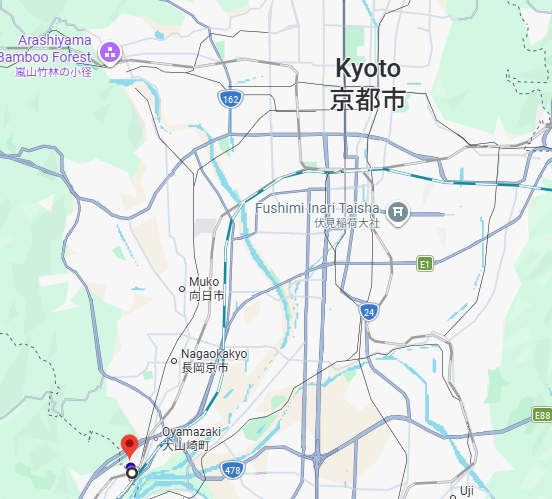
Access; About a 10-minute walk from JR Yamazaki Station, or a 15-minute walk from Hankyu Oyamazaki Station

From Kyoto Station, it’s about 15 minutes by JR line, or about 20 minutes from Karasuma Station (in Kyoto City) via the Hankyu Line; both routes head toward Osaka and Kobe. Trains run about once every 10 minutes.

Saturday, April 17, 2026

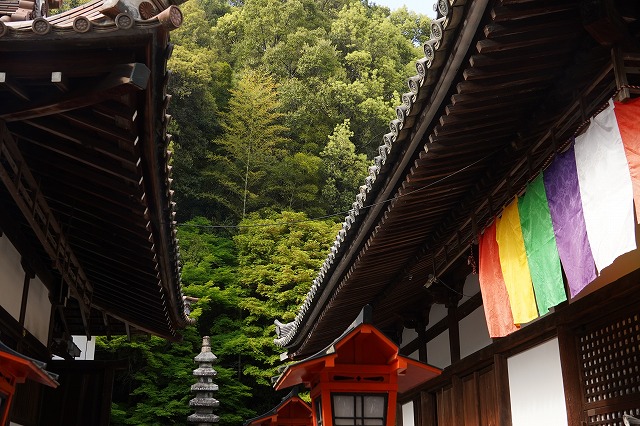
About Hōshaku-ji Temple
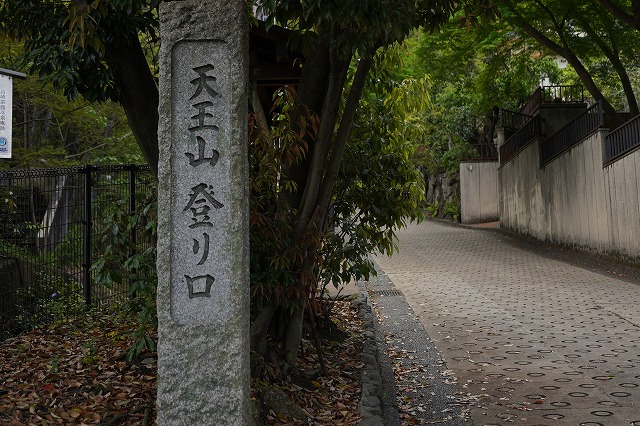
Founded in the early 7th century by imperial decree. Due to its near proximity to the capital, many wars ravaged the temple, leaving it in ruins time and again; however, it was rebuilt each time and has continued to stand to this day. In particular, it is famous as the site where, in the early 16th century, the armies of Akechi Mitsuhide—who overthrew his lord Oda Nobunaga, who was on the verge of unifying the country, by accusing him of treason—and Toyotomi Hideyoshi—who pursued Mitsuhide and later succeeded in unifying the country—clashed in a decisive battle.
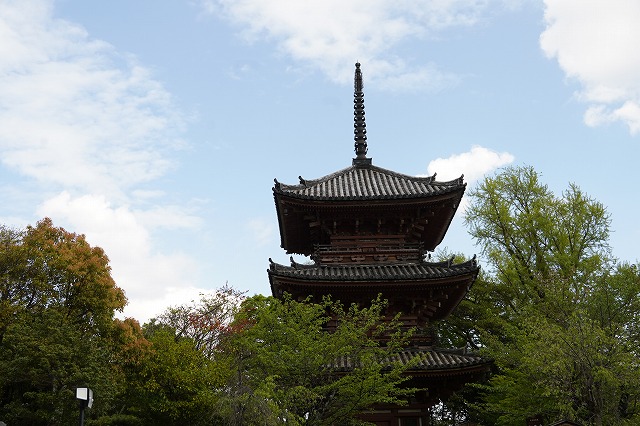
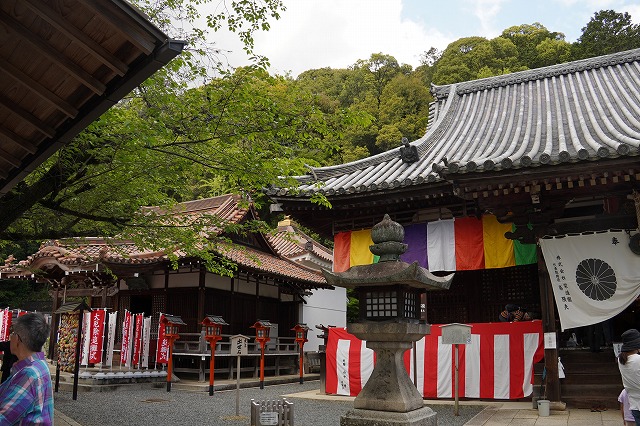
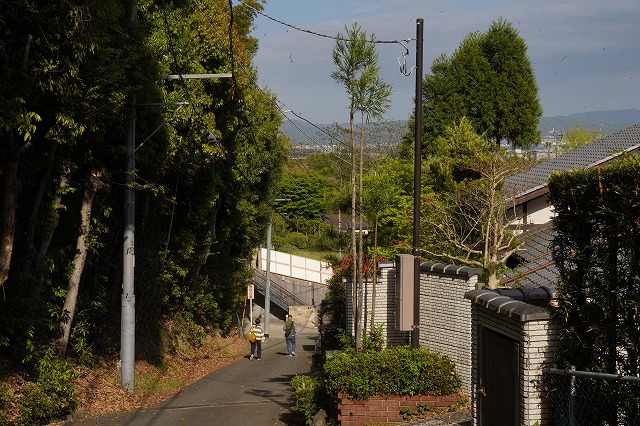
Because this temple is located halfway up a mountain called Tennozan, people still say things like “This is Tennozan” when they reach a critical juncture in a major undertaking. Though it’s not exactly a mountain, you do have to climb a fairly steep slope to get to the temple.

Oni’s Appearance
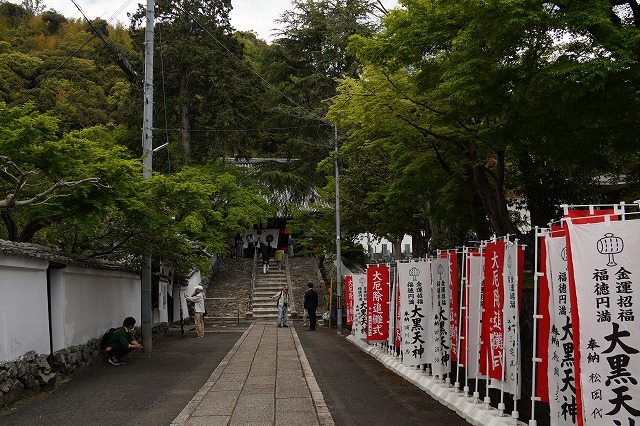
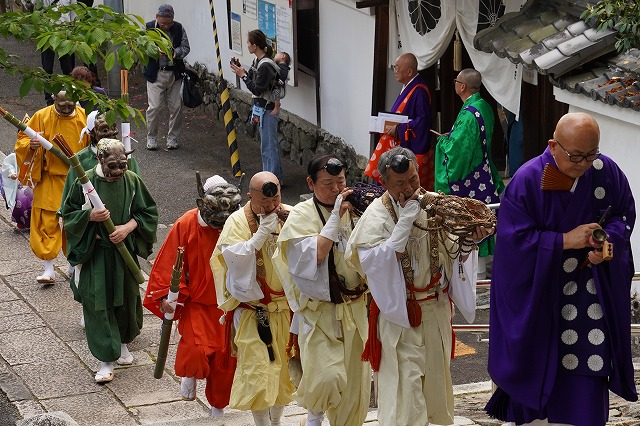
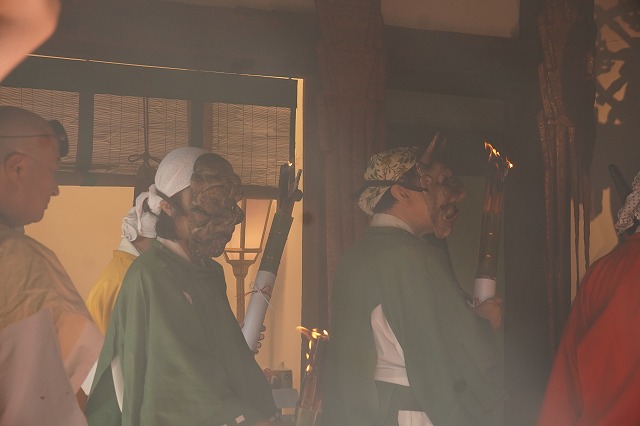
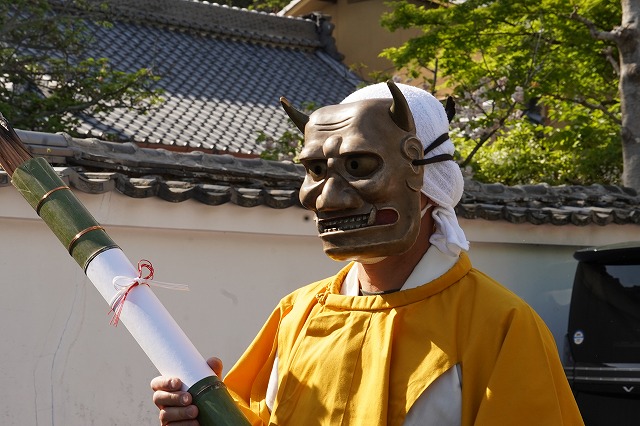
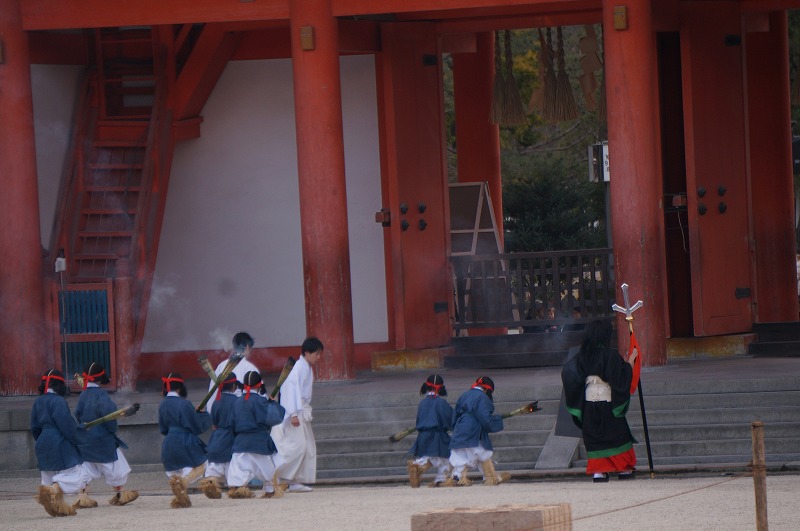
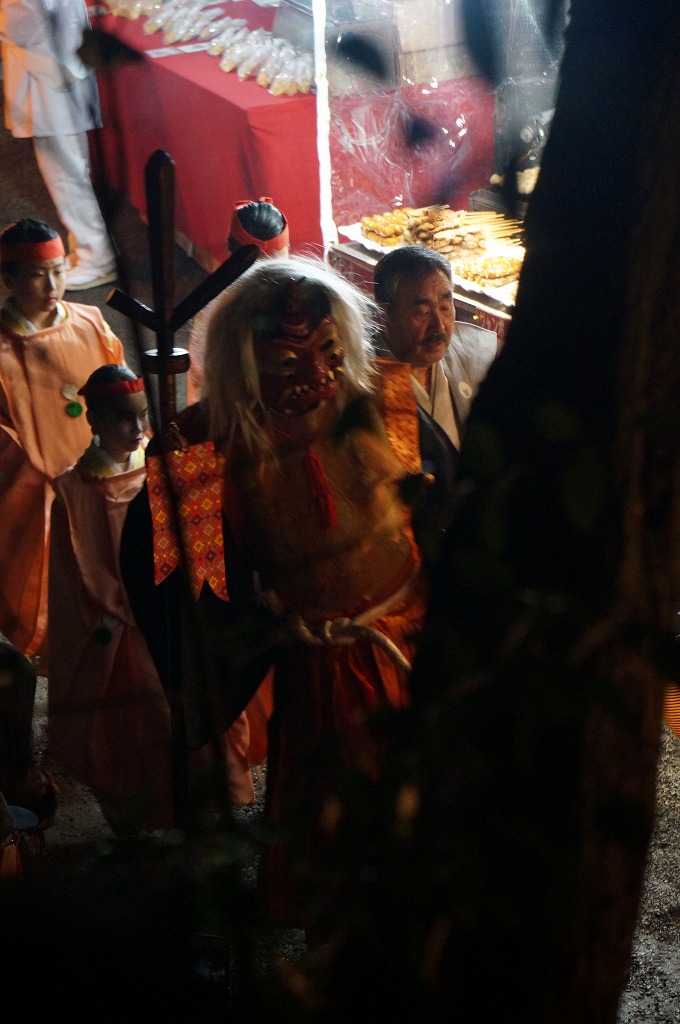
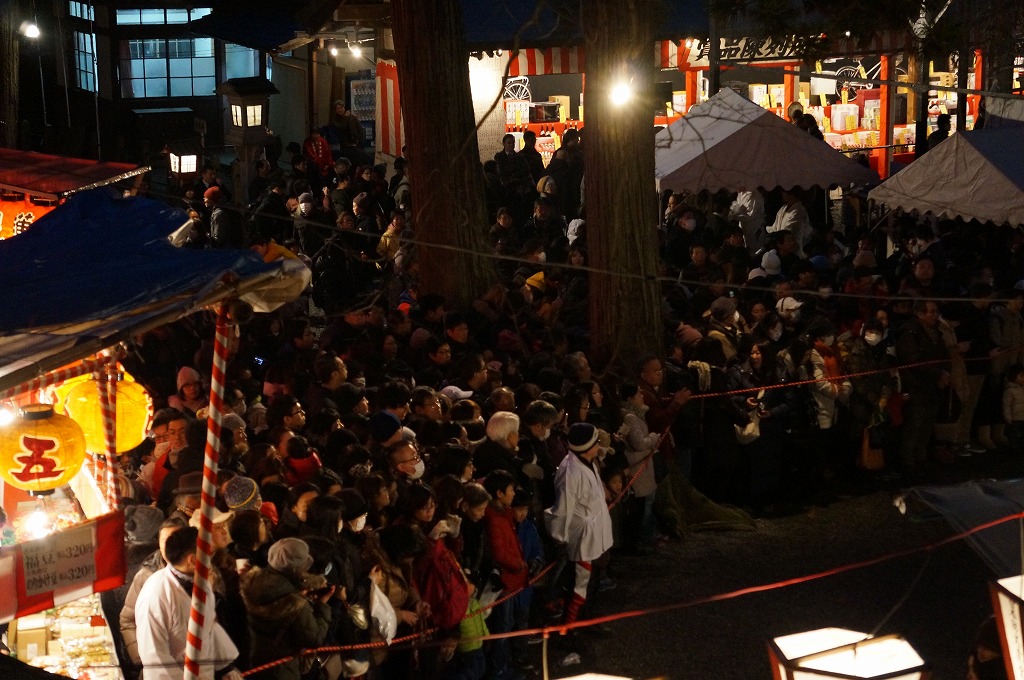
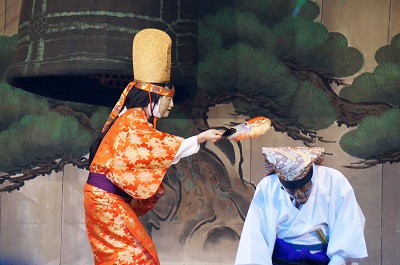
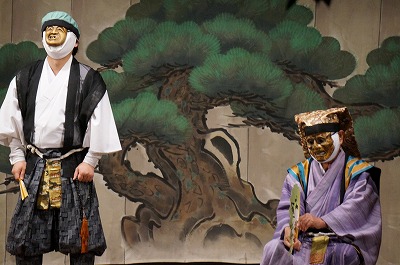
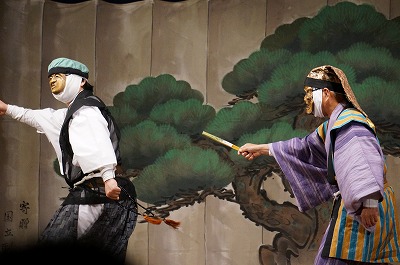
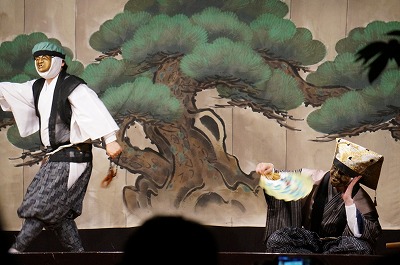
At 2:00 p.m., a procession of Onis, led by a monk, makes its way down the approach leading to the main hall.
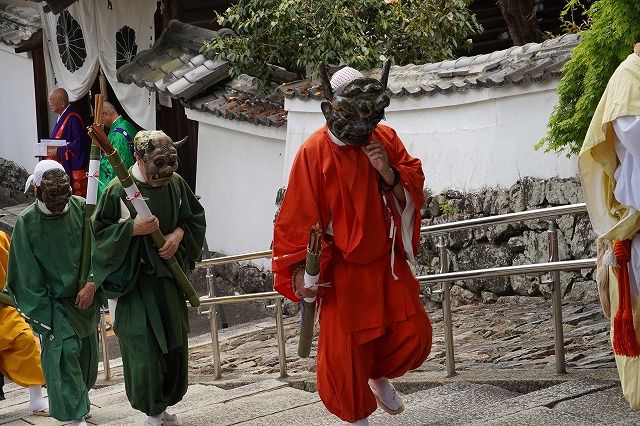
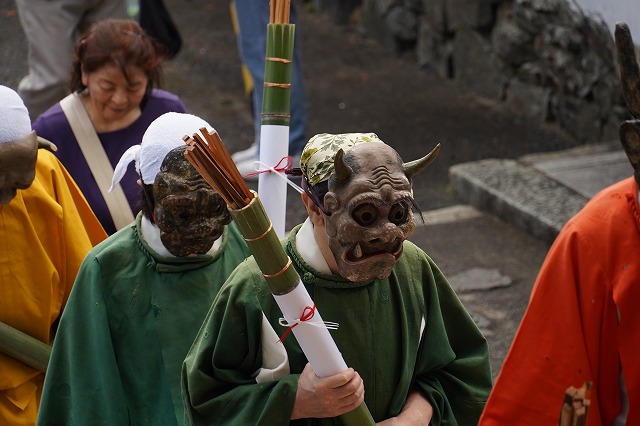
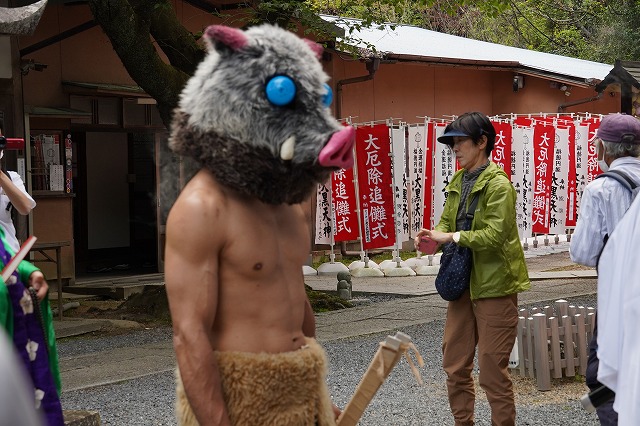
It is said that this has been performed since the temple’s founding as part of a ritual called Tsuina*, in which demons are exorcised through prayer; however, the fact that, in addition to monks and demons, people dressed as the Seven Lucky Gods*—and, for some reason, even anime characters—show up is a modern touch.

*The Tsuina ceremony is a Buddhist ritual that was introduced to Japan from the Asian mainland as a way to drive away the evils of the past year and welcome the new year. However, various elements have been incorporated over time, and today it is primarily celebrated on Setsubun in February (the day marking the transition from winter to spring), with a variety of events held across the country.

https://discoverdeeperjapan.com/2020/03/19/ceremony-to-drive-out-evil-spirits-in-nara-in-the-case-of-kofukuji-temple-and-horyuji-temple/

*→https://discoverdeeperjapan.com/2021/04/05/seven-deities-of-good-fortune-parade-celebrating-the-new-year-at-the-center-of-tokyo/

Buddhist Ceremonies

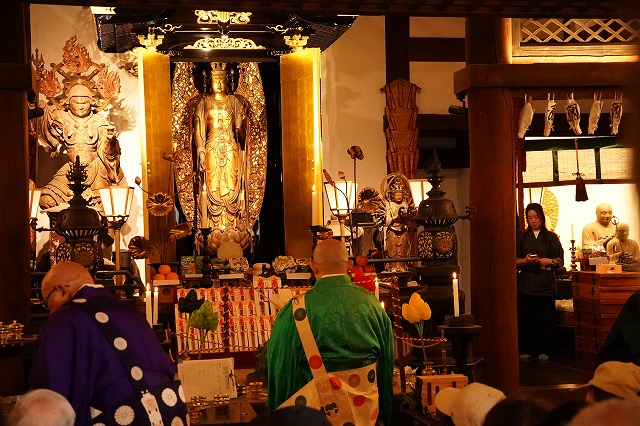
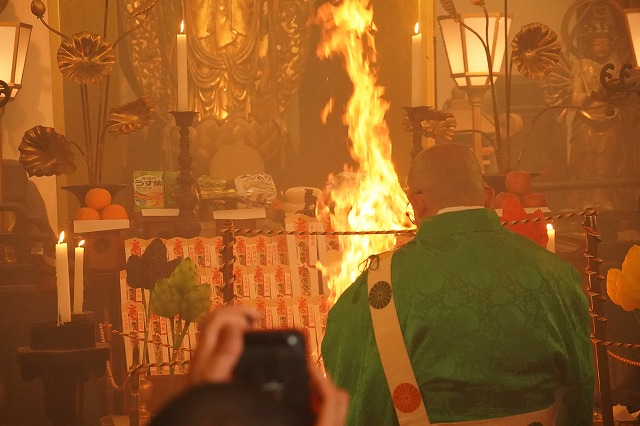
Following this, the participants enter the hall, where the monks continue their chanting. Here, a ritual known as a goma ceremony is performed. A goma ceremony is a ritual in which small pieces of firewood called goma are placed in the fire, along with offerings, as part of a prayer to the Buddha. Since the door is open, you can see inside from the outside. This allows you to confirm that the Oni is being smoked along with everything else.
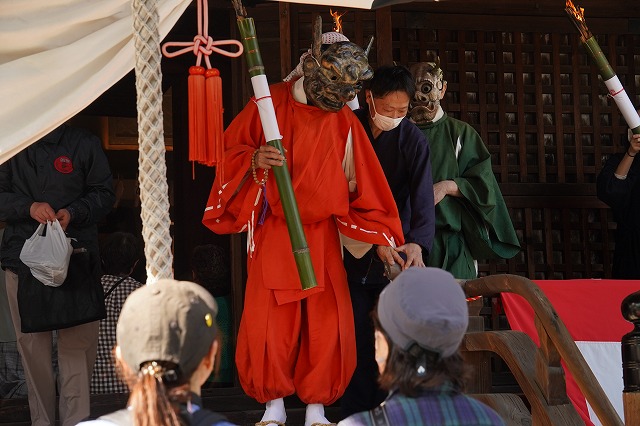
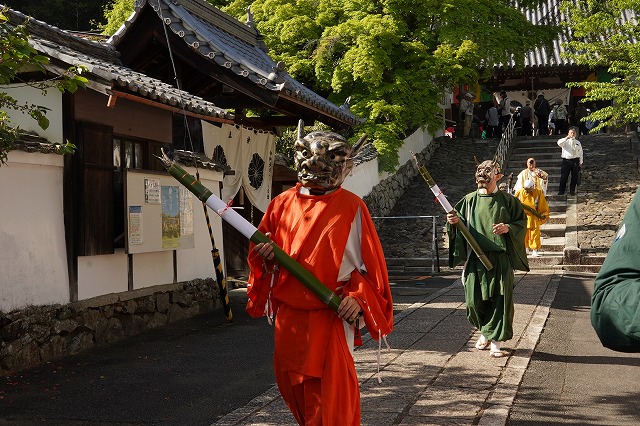
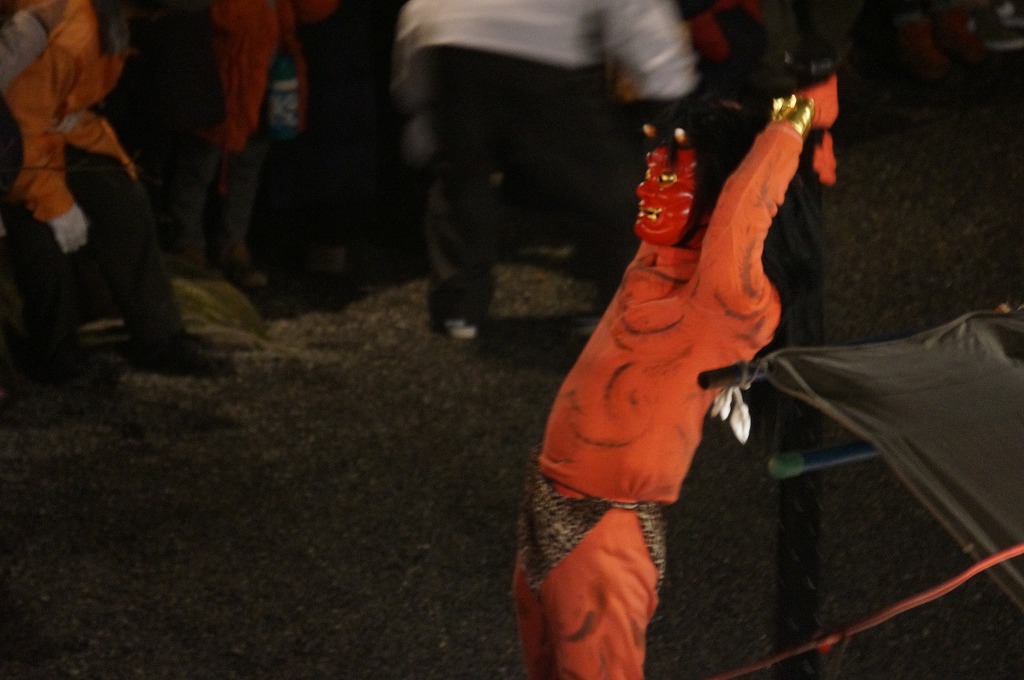
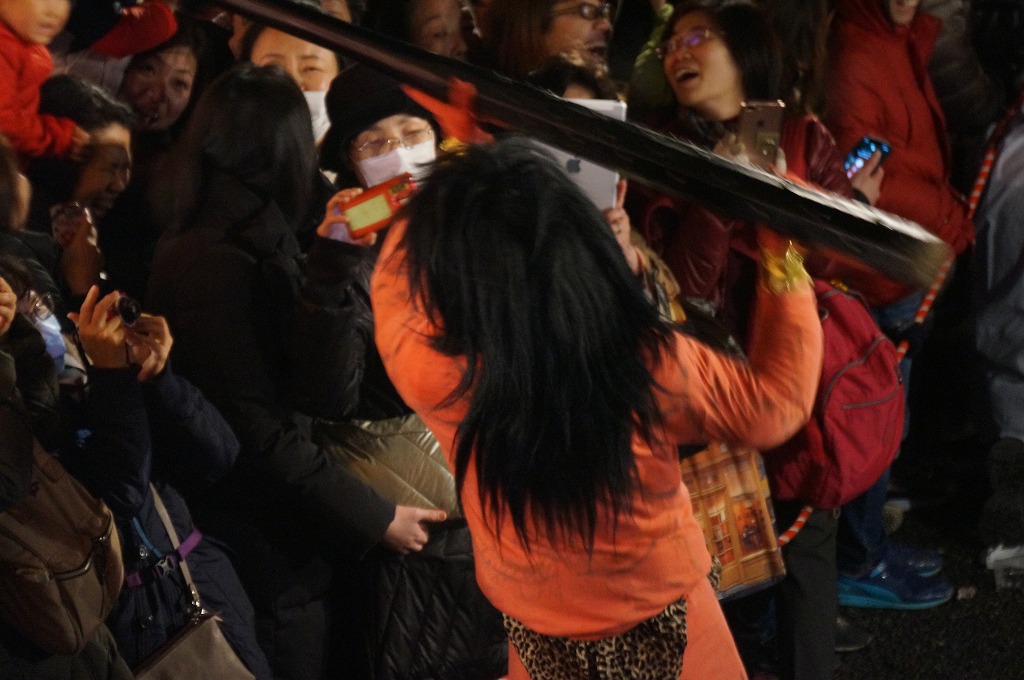
At around 3:00 p.m., the ritual ends and the Onis come out. At this time, the Onis’ role is considered to be over.
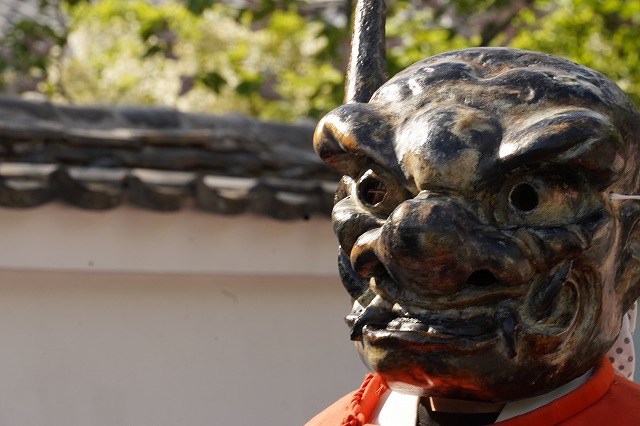
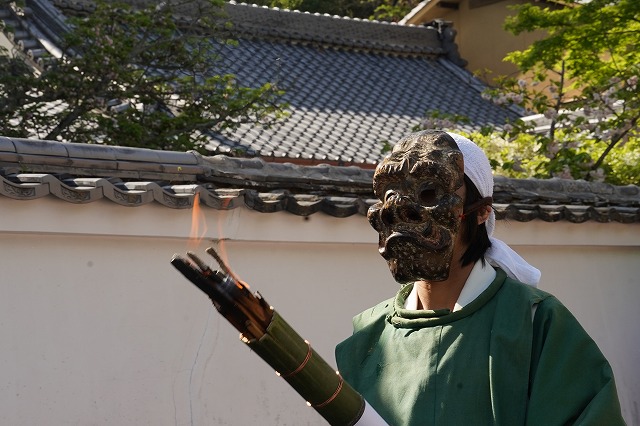
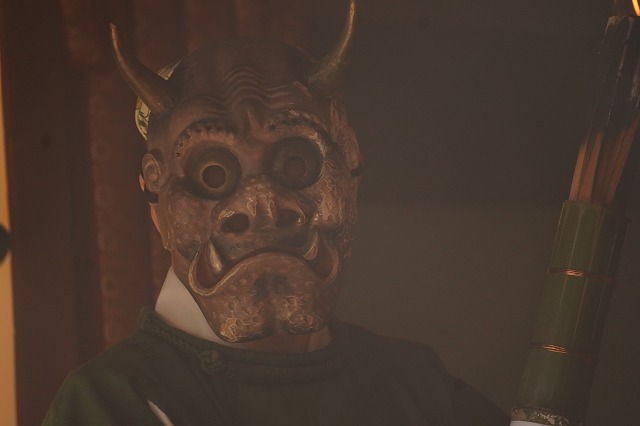
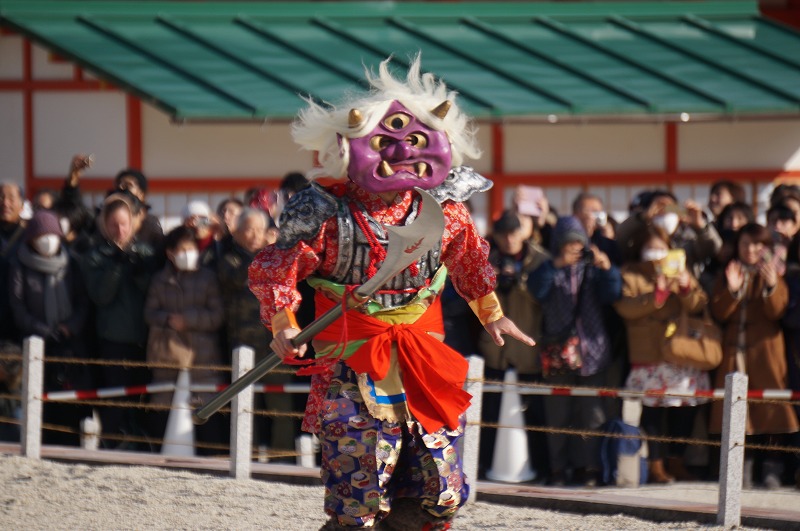
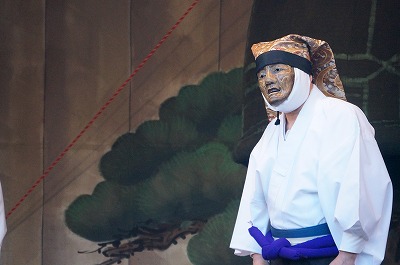
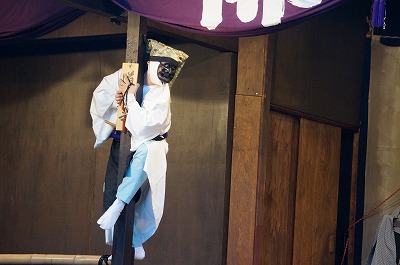
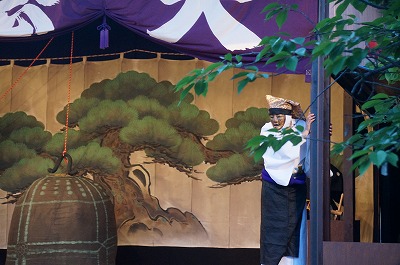
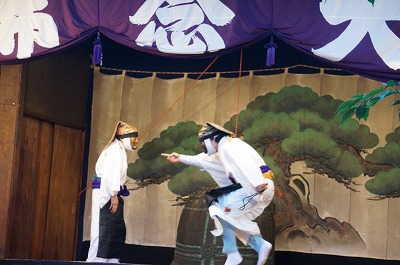
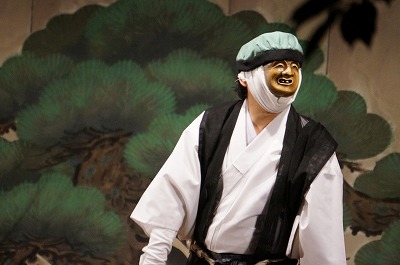
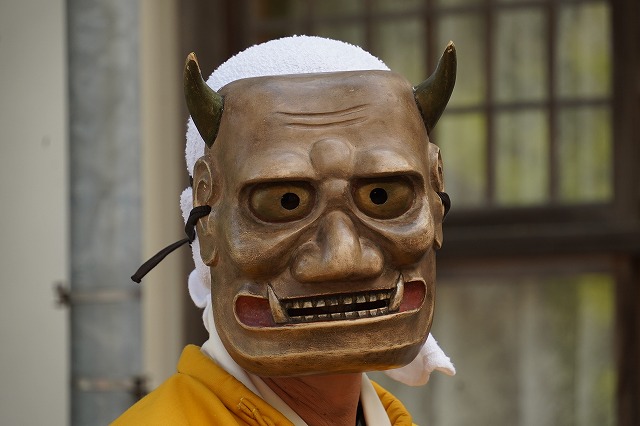
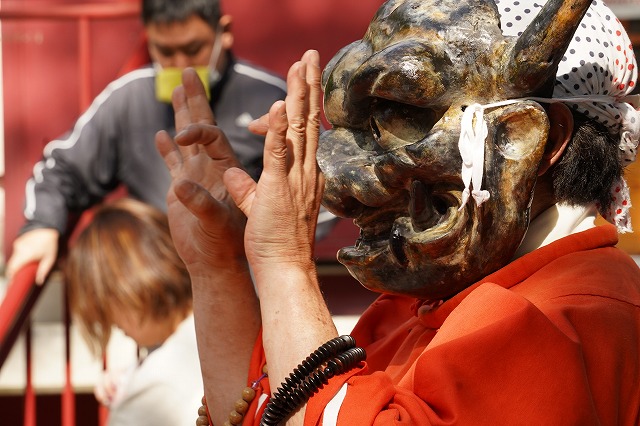
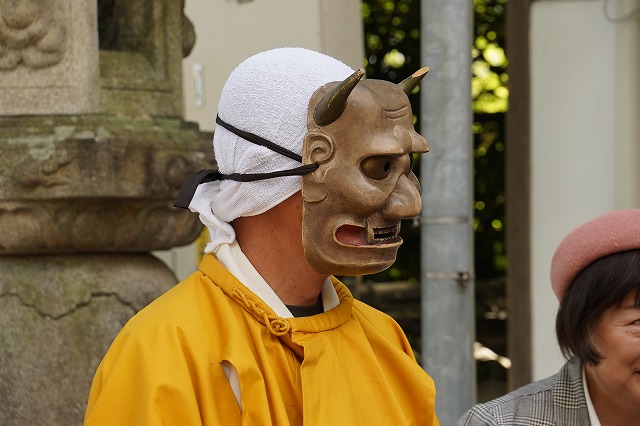
There are a total of four Onis featured. Although the exact date of their creation is unclear, each mask has a unique, aged appearance.

Epilogue
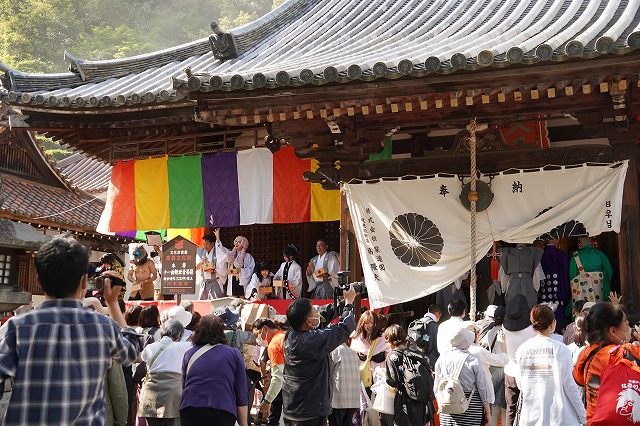
After that, there will be the traditional mochi-throwing ceremony and a photo session with the oni, and everything will wrap up by 3:30.
The mochi-throwing ceremony involves tossing mochi—and sometimes sweets—into the crowd. It is performed with the intention of sharing good fortune with everyone.
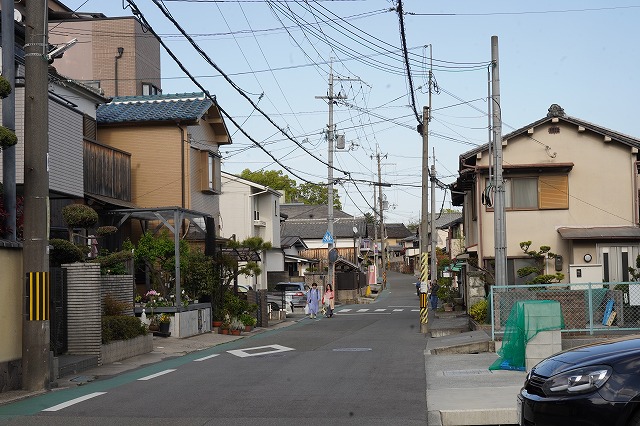
Visitors stroll down the hill at their own way. The town stands quietly, having absorbed a rich tapestry of history.
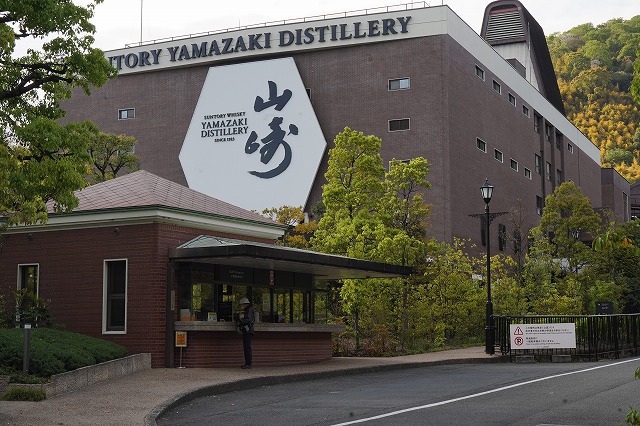
Nearby is the distillery for the Yamazaki brand, Suntory’s flagship whiskey*, which offers tours by appointment. It’s a must-visit destination for any whiskey lover.

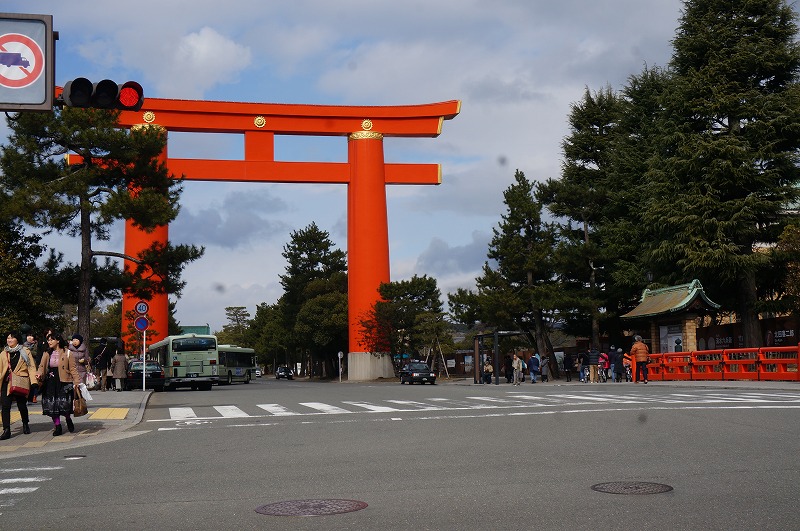
*https://www.suntory.com/factory/yamazaki


Take a dip in ancient times and ward off evil spirits~ Heian Shrine Ceremony


Date: 3 February every year
Location: 97 Okazaki Nishitenno-cho, Sakyo-ku, Kyoto
Access: From Kyoto Station, take city bus 5 or Raku Bus 100 for 30 minutes.

*This article is based on events in 2018.

Heian Jingu (grand shrine) 平安神宮

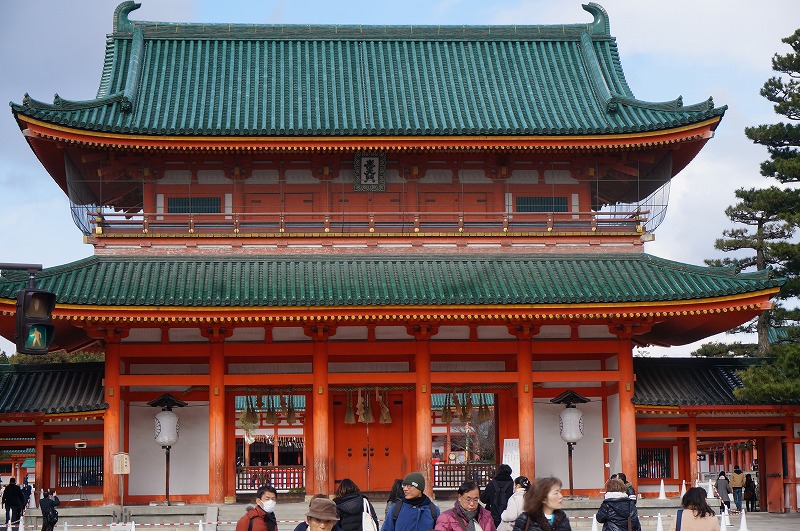
Heian Shrine is one of Kyoto’s most popular tourist attractions. In fact, its history is surprisingly recent, having been founded in 1895. It was around the time when the samurai regime, the Tokugawa family, was overthrown and the new era known as the Meiji period began. For the people of Kyoto, a major event occurred. The emperor is gone. Or, to be more precise, he went to the new capital, Tokyo. There was considerable resistance to this at the time, so the new government was reportedly bitter and convinced people that the Emperor was only going to Tokyo for a visit. The emperor never returned to Kyoto after that, and no government has yet issued a formal declaration of the capital. Of course, this does not mean that Tokyo was not the capital. However, the Kyoto people, who had long been the capital of the dynasty, were disappointed. Against this backdrop, a movement arose to recreate the time when the capital was first established in Kyoto, and the Kyoto people built this shrine. This is a five-eighths scale replica of the central location established by the regime at the end of the 8th century, when Kyoto was declared the capital of Japan. It was called Heian-kyo 平安京, and later became the source of the term Heian period. It remained the political center for a long time until the early 12th century, when powerful warriors established their own government in Kamakura in the Kanto region and brought Kyoto under their control.

(ceremony of) driving out evil spirits ~Daina-no gi 大儺之儀

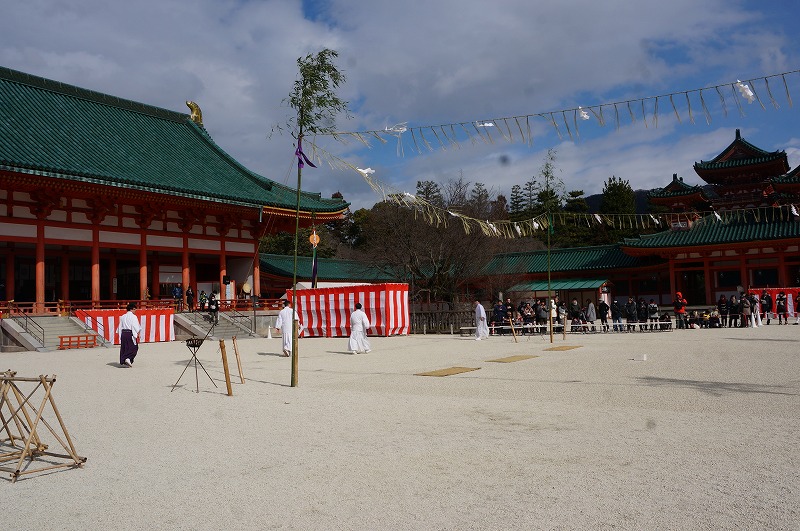
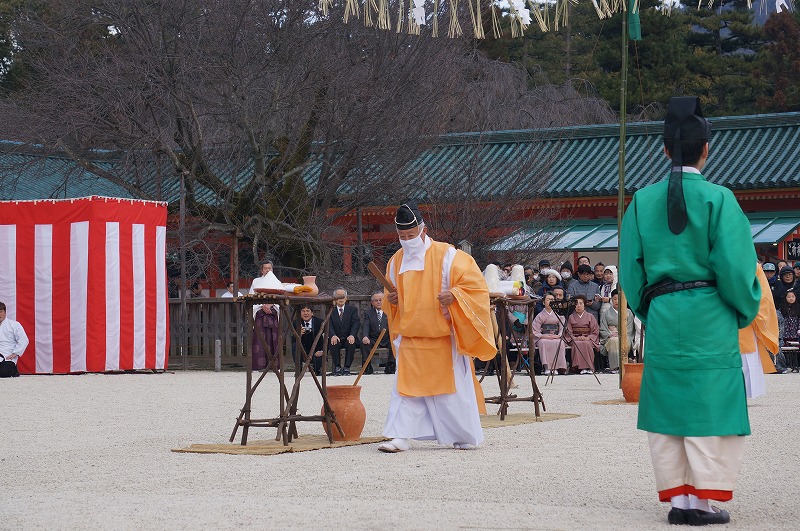
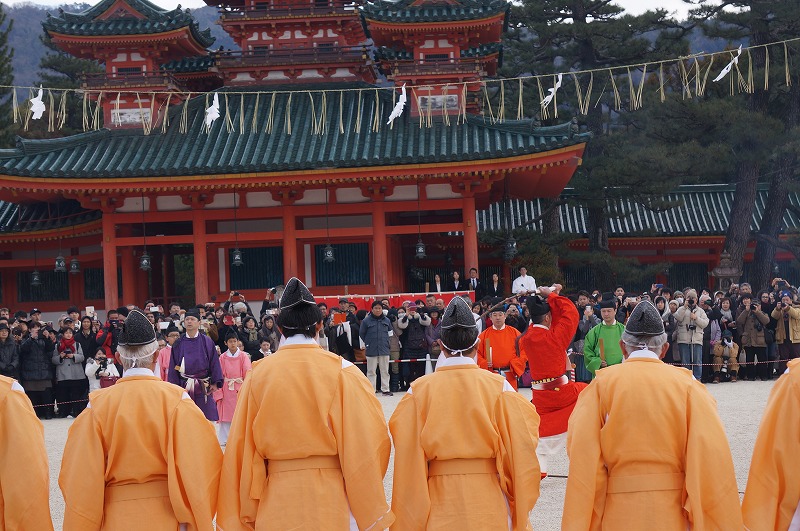
Rituals called Setsubun 節分 are held in many places around 3 February, but the ceremony here at Heian Jingu Shrine is different. Setsubun is a concept that originally came from China and refers to the division of the year into four parts, each of which is a turning point. And at the same time, it was mixed with a ceremony to drive away evil spirits called Tsuina 追儺 Ceremony. It used to be held at the end of the year at court. According to records of the time, it was solemnly held at 8pm with the Emperor in attendance and many nobles participating. The ceremony is called the ‘Daina-no gi’, which is held in the presence of the Emperor on a large scale. Dai” means big, “gi 儀” means ceremony. The Setsubun ceremony at Heian Shrine is a faithful adaptation of this ritual under the supervision of experts.

Onmyo-ji 陰陽師 and Houso-shi 方相氏

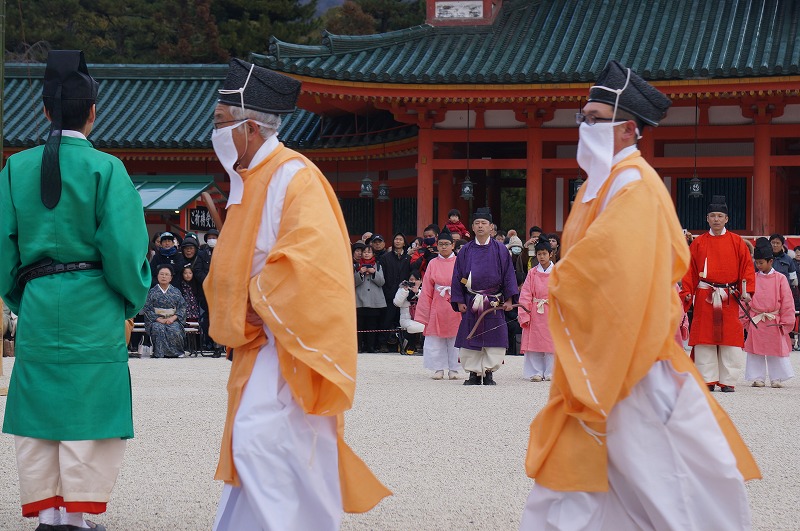
The ceremony begins with a gathering of people dressed in the clothing of the time. In the past, the emperor actually watched this, and it would have been performed in a more solemn atmosphere, as witchcraft was considered more important than it is today. The central figure in the ceremony is a person known as the ‘onmyouji’. The words ‘on’ and ‘myo’ stand for yin and yang. This is also a philosophy and science from China, which holds that the world is made up of the transitions of yin and yang. It was mixed with the idea that all matter in the world is made up of the five elements to form a single system of study. It was further developed in Japan in its own unique way, called onmyoudo, and onmyouji is the official in charge of it. Their work included astronomy and divination. The most famous Onmyo-ji (yin-yang master) was a man called Abe-no Kiyoaki 安倍晴明, to whom many legends have been attached. He is said to have been born between a fox and a man, or to have controlled at will a kind of yokai-like creatures called shikigam式神. Even today, he often appears in novels and dramas. The ceremony proceeds with this Onmyoji taking the lead. It involves using peach trees, shooting bows and arrows, and cutting hollows with swords. The bow, in particular, is believed to have the power to drive away demons with the sound of its strings alone, and can often be seen practised in other regions.

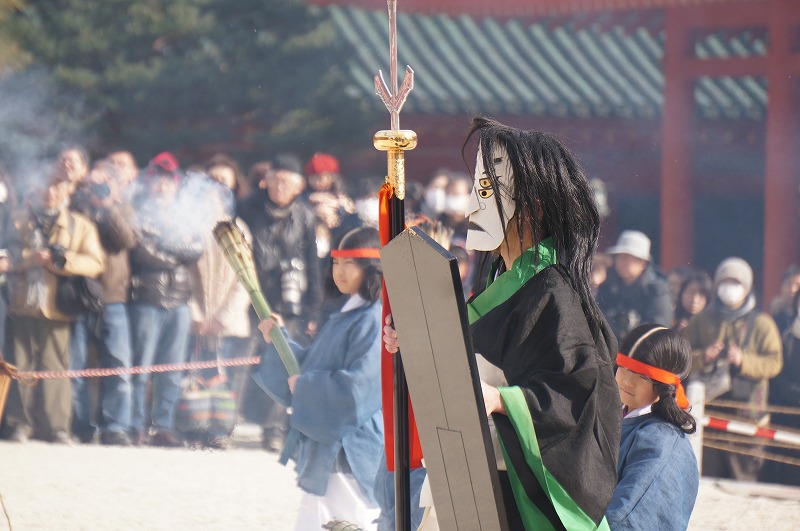
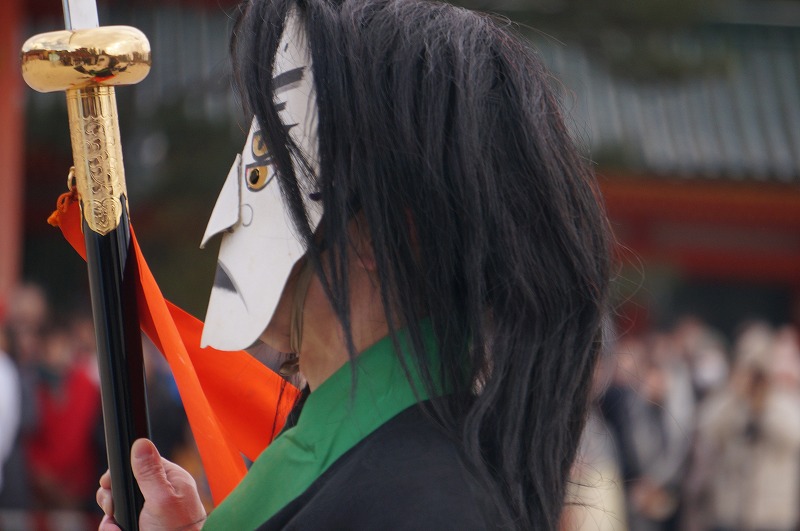
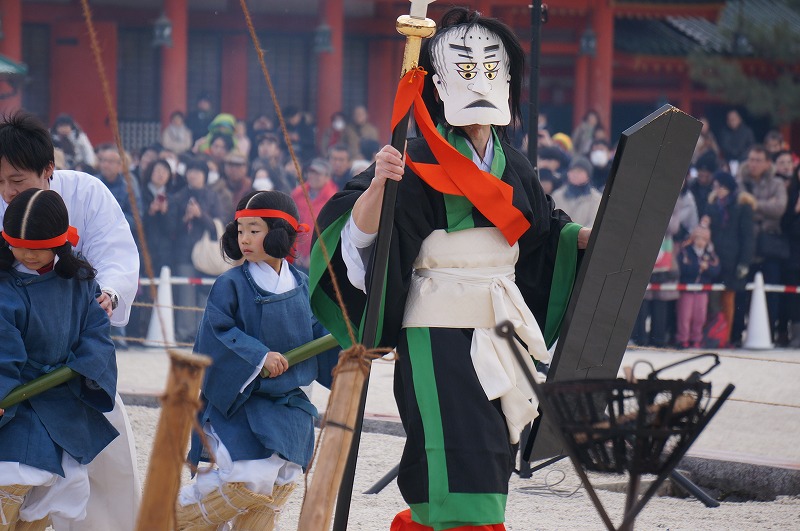
Another person who plays an indispensable and important role is the ‘Housou-shi’. This is a sorcerer with four eyes and the power to ward off evil. However, in later life, the four eyes are feared by people and eventually turn into demons.

The ‘Hōsō-shi’ strike the shields they carry, and with the children in tow, they exit the premises, saying ‘We’ll drive the demons away’. By this time the large Jingu is full of spectators. This is the first part.

Scare off Oni demons with a bean

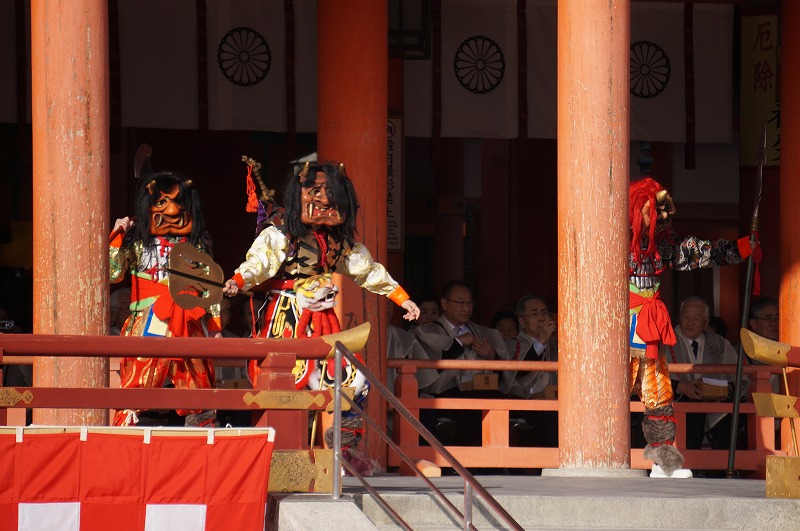
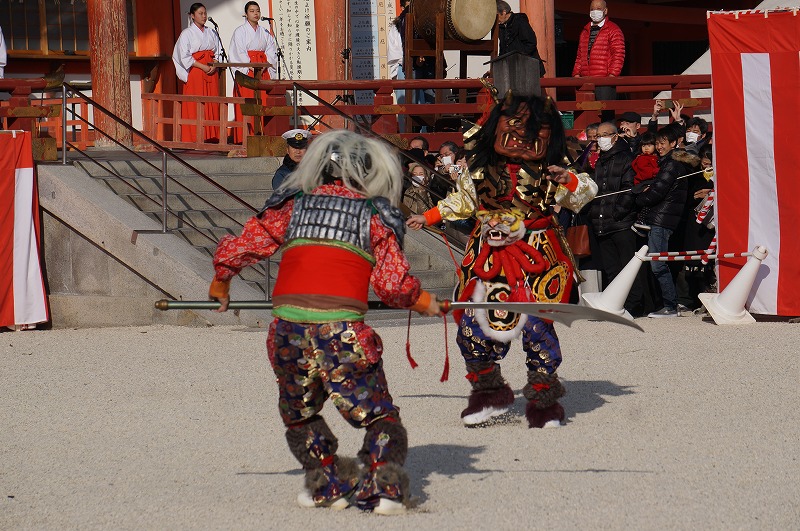
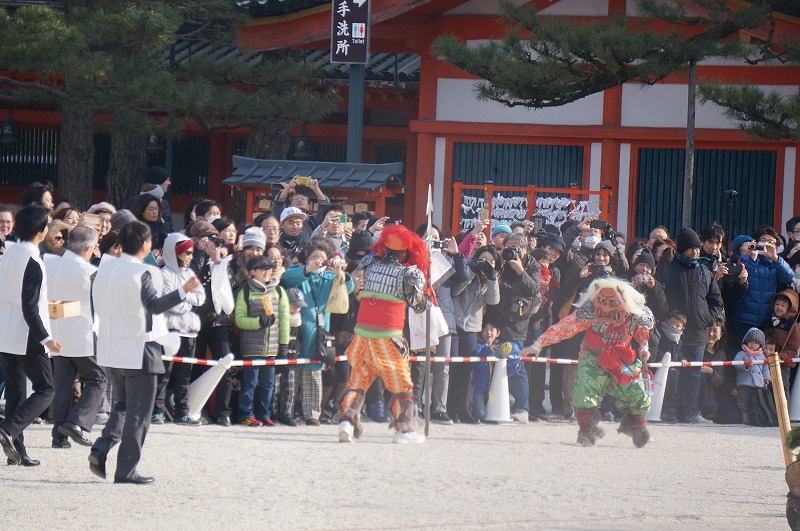
About 30 minutes of waiting. Suddenly the Oni demons that were supposed to have been chased away appear. This is a stage direction. After all, modern audiences are not convinced unless the Oni demons actually appear. Oni demons appear in the precincts or in the Daigoku-den Hall 大極殿 (Where emperors held political office in the past. Today, the main hall) and make strange noises to intimidate spectators. The Shigeyama 茂山 troupe, who specialists in kyogen, are in charge of the performance, so it is quite a powerful and interesting spectacle.

Eventually, the demons that went on the rampage are dispelled by the magical power of the beans scattered by the Toshi-otoko*. Afterwards, a bean-throwing event is also held for the spectators.
*Tosi-otoko 年男→In Japan, each year is named after an animal, followed by 12 more. The first starts with rat, the idea being that if you are born in the year of the rat, no matter how many years pass, the year of the rat is your year.

Places of interest nearby

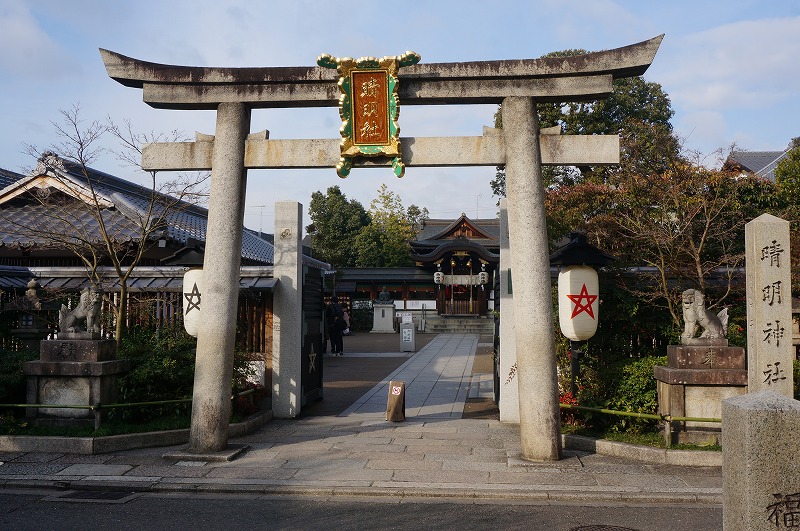
Seimei shrine 清明神社 This is shrine dedicated to Abe-no Seimei.

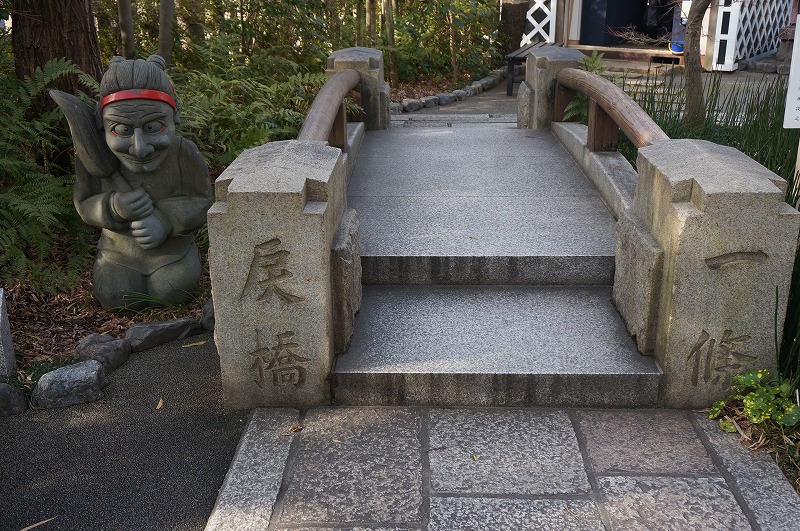
Although it is not a large shrine, the Ichijo-modori Bridge, where Seimei is said to have placed his shikigami (Tool of the sprits), has been recreated in the precincts of the shrine. The ruins of the actual bridge are also nearby. The bridge was believed to be a bridge between this world and the land of the dead, meaning a bridge of return. In recent years, figure skater Yuzuru Hanyu 羽生結弦, who won gold medals at two consecutive Olympic Games, has used a song based on the motif of Seimei, making it a popular destination for his fans.

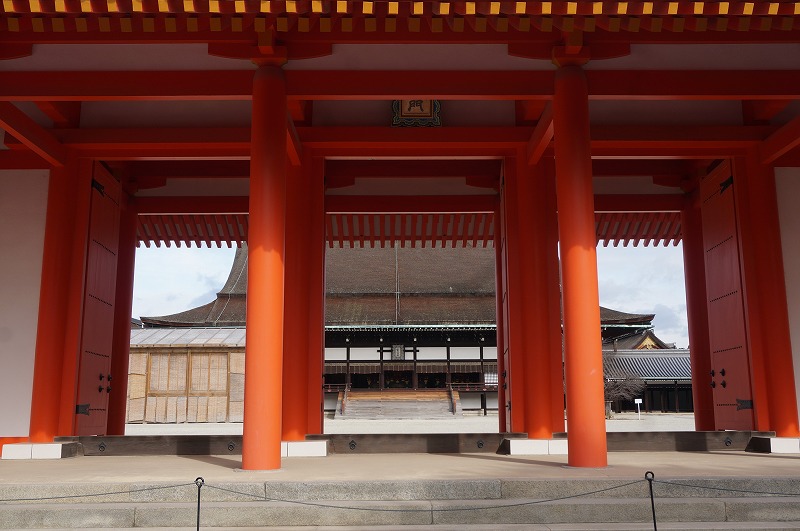
Kyoto gosho 京都御所

This is where the Emperor once actually lived when he was in Kyoto, and is now open to all to visit at any time.

cf.
Heian grand shrine http://www.heianjingu.or.jp/english/english.html
Seimei shrine https://en.japantravel.com/kyoto/seimei-shrine-in-kyoto/67855 etc.


Ogres vs four -eyed superman~ Setsubun at Yoshida shrine

Date: February 2nd of every year
Location: 30 Kaguragaoka-cho, Yoshida, Sakyo-ku, Kyoto-shi, Kyoto
Access: A 20-minute walk from Demachiyanagi 出町柳 Station on the Keihan 京阪 Railway. Or take the 206 bus from Kyoto Station, get off at”Kyodai Seimon -mae 京大正門前 (the main gate of Kyoto University), and walk 5 minutes.

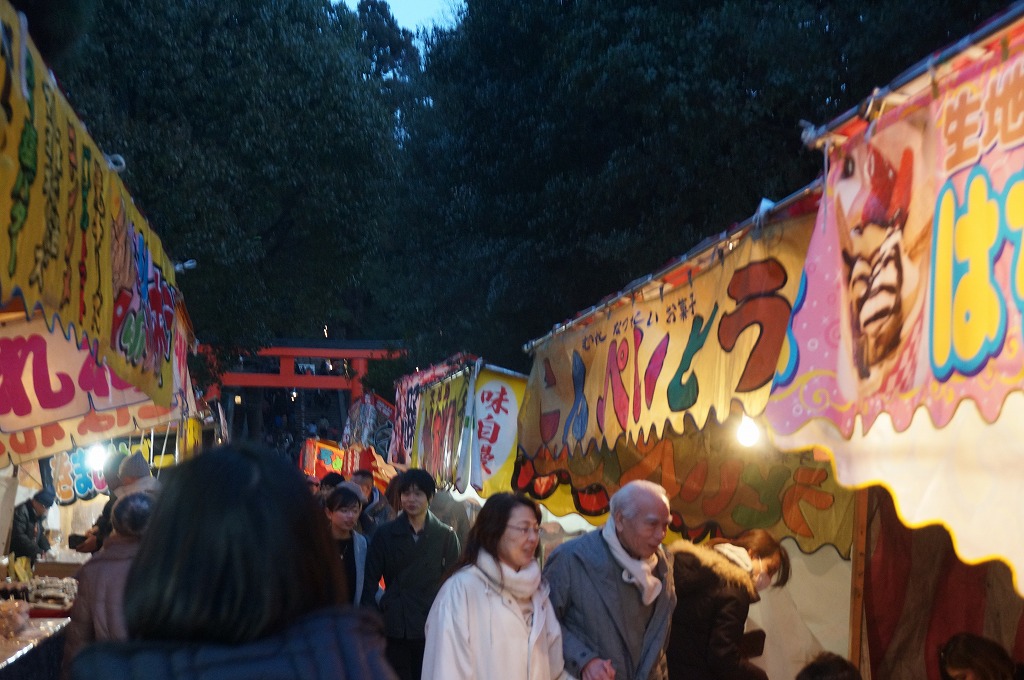
Setsubun rituals*¹ are one of the most popular winter traditions held across the country. Although it is becoming less common, people still perform it at home, at shrines and temples, and at schools. Basically, it is held on February 3rd, but in Hyogo and other prefectures, people often hold it in January, and in Hiei-zan*²,they do it on New Year’s Eve. Here at Yoshida Shrine, although the day is orthodoxly set for the 3rd, a performance takes place on the night of the 2nd. This performance is not particularly unusual, as they do it everywhere. It is just that the number of visitors here is tremendous. The approach in front of the shrine has about 800 street vendors. The next day, the shrine held a lottery where the first prize was a car. This website has yet to find out why Yoshida Shrine was the only shrine to hold such a large Setsubun event. However, considering that this kind of event would not have been possible outside of Kyoto, it makes me realize the power of Kyoto as a city.

*1:Setsubun 節分 A concept introduced from China, the word means to divide the seasons. It also refers to the events that take place at that time. Nowadays, however, Setsubun is used only for the border between winter and spring, and people are not aware of it in other seasons.
*2: Hiei-zan A holy place of Buddhism opened by Saicho 最澄 after he finished his studies in China in the 780s. It is located on the border between Kyoto and Shiga prefectures. This place is the center of Buddhism in Japan, along with Koya-san 高野山, which Kukai 空海 founded at the same time. In both cases, temples line the entire mountain (about 100 in the case of Hieizan).

Origin of the Ceremony

Kyoto became the center of Japan in both name and reality around the 780s. The Setsubun Festival at Yoshida Shrine is also famous for its ability to pass on to the present a large number of events from that time. This is supported by the existence of “Hosou-shi 方相氏”. This is a ritual that has been passed down from China, where it is believed that a kind of demon called “Hōsōu-shi” is able to exterminate evil spirits. The Chinese thought that in order to contain the demons, they needed a kind of psychic who also had the power of demons. That’s when they came up with the idea of “Hosou-shi”. The Japanese people imported it directly from China to Japan. Hence, the “Hosou-Shi” has four eyes. And he appears in a red costume, accompanied by a child. The color red has the meaning of protection against evil.

Houso-shi 方相氏

On the day

On the day of the event, the ceremony began at 6:00 p.m. First of all, three demons appear and rampage in front of the audience who stand inside the ropes in order to keep them from going out near the demons. However, they only waved their golden sticks around and shouted “Oh, wow! Then came the “Hōsōu-shi” with their children in tow. The demons resist. However, they are not the enemy of the overwhelmingly powerful “Hōsōu-shi”, and they repeatedly take a stance and get hit. In this way, they go around the building called Maidono 舞殿 three times. When the demon has left, the “hoosou-shi” strikes the shield he is holding and declares that he has driven away the evil spirit. Finally, the men in charge draw the bowstring. They believed that this sound would complete the protection against evil spirits.

Actual situation

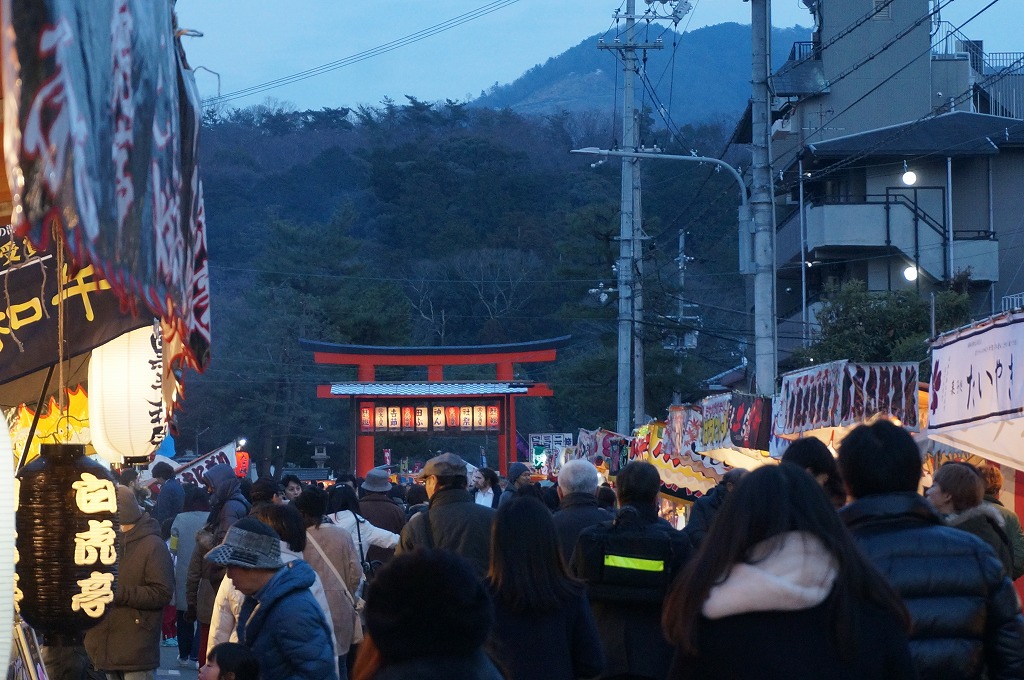
In fact, around 5:00 p.m. (when it is already dark) the area around the shrine is filled with people on their way to the shrine. The approach to the shrine looked as if it might be the site of a big concert. Steps are slow and unsteady. When you enter the shrine, the first thing you see is a place where you wash your hands and purify your mouth with water to cleanse yourself. There was already a long queue here. Naturally, the area in front of the dance hall is roped off, and it becomes so packed with people that there is no room to move. Reluctantly, people go to the slope of the mountain at the back. Like an outdoor concert, the slope got filled with people. From the top of the mountain, you cannot see the important part of the ceremony. The path leading to the maidono is also crowded with people, so even the people here cannot see the ceremony. The people who have secured the front row have already been there since around three in the afternoon. And the actual performance lasted less than an hour. If you want to know how scary Kyoto can be, you should definitely try it out. But only if you have plenty of time to spare.


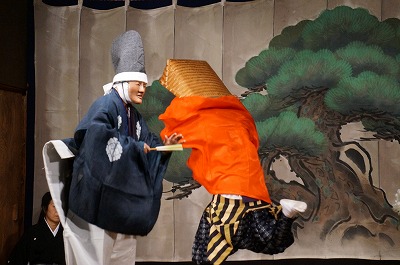
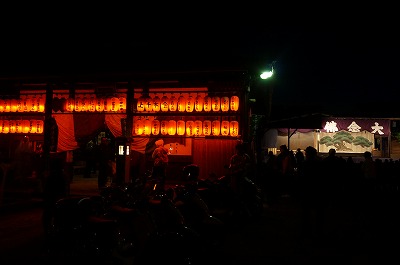
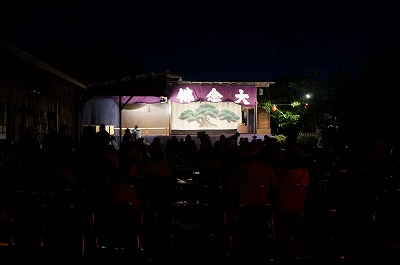
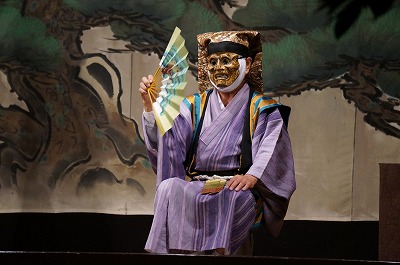
Report: Shall we watch a sketch comedy in Kyoto? ~Senbon Enma-do Dai Nenbutsu Kyogen 千本ゑんま堂大念仏狂言

 This time, we will go to Kyoto. One of the most popular cities in Japan. The No.1 sightseeing place that most tourists from other countries want to go to. I guess Kyoto is a kind of symbol of old traditional Japan. There are many tourist spots, temples, shrines, castles and old streets. Today we’ll talk about another special sight. This sight introduces traditional folk performing arts with masked characters.
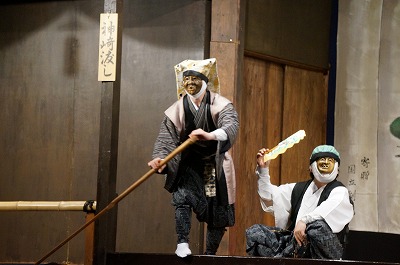
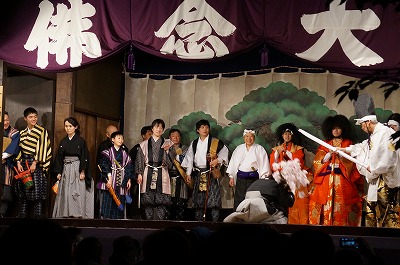
 There are three sketch comedies with masked characters, named “Nenbutsu Kyogen”. “Mibu Kyogen”, “Saga Nebutsu Kyogen” and “Senbon Enma-do Nenbutsu Kyogen”. “Kyogen” is performed in the intermission of Noh performances. In contrast to Noh, they tend to be comedic. It means just a play, too. And “Nenbutsu” is a Buddhist invocation. So, “Nenbutsu Kyogen” is a play in which stories are based on the daily lives of average people to propagate Buddhism. Two of these, “Mibu Kyogen” and “Saga Kyogen” are pantomime, but only “Senbon Enma-do Kyogen” has dialogue.

*Reference

 Mibu Kyogen 壬生狂言
Date: 3rd February, 29th April~5th May, 3 days around 10th October
Location: Mibudera-temple
refer→https://www.discoverkyoto.com/event-calendar/may/mibu-kyogen-mibu-dera/ discover Kyoto

Saga nenbutsu Kyogen 嵯峨念仏狂言
Date: 1st Sunday & 2nd Saturday & Sunday April, The Sunday nearest 26th October
Location: Seiryoji-temple
refer→http://www.greentour-kyoto.net/events/saga-kyogen/ green tour Kyoto

 Senbon Enma-do Kyogen 千本ゑんま堂狂言
Date: 3rd February & 1st~4th May
Location: Senbon Enma-do (another name, Injoji-temple)
refer→https://kansaifinder.com/event/senbon-enma-do-nenbutsu-kyogen/ Kansai Finder

  First, let to introduce today’s guide

 Now, I’ll call today’s guides. They are the most popular characters in Japanese National artwork treasures.

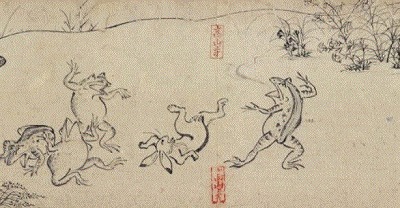
a part of National treasure
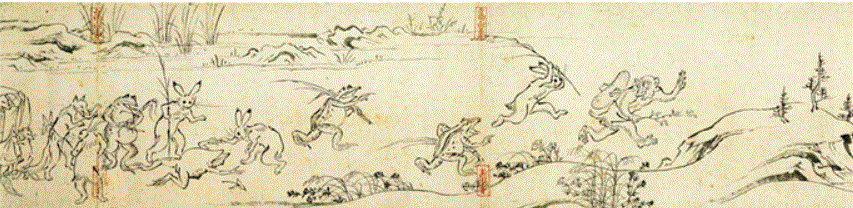
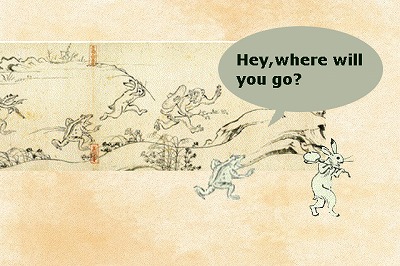
a part of National treasure “Chojyu-jinbutsu-giga”

 They seem to have come.

two characters come out from picture roll

Hi, I’m a rabbit.

And I’m a frog. But, why have we come here today?

To guide “Senbon Enma-do kyogen”.

Why?

Because we are born in Kyoto. Oh, we should introduce ourselves before we guide people. We are characters appearing in “Choju-jinbutsu-giga”. “Choju” means birds and animals. “Jinbutsu” means people. And “Giga” means “caricature” in Japanese. It has nothing to do with the capacity of a hard disk, “gigabyte”.

I didn’t know that at all.

Didn’t you know even though you are the important character? Oh,well. Anyway I’ll teach you, listen to me carefully. This is a picture roll which was painted only Sumi (Chinese calligraphy ink) without colors. It is said that this roll was painted about 800 years ago and the painter was Toba-sojo”. But that hasn’t been investigated in detail. The contents are caricatures. Especially, in the first volume, many animals are active like humans. People say this is the beginning of Japanese cartoons (Manga). So, this roll is the most popular in Japanese National art treasures. The Kozanji-temple in Kyoto stores it. So, we know most about Kyoto’s history from 800 years ago. Now, let’s go to Senbon Enma-do.

  Now, let’s go to the venue

*This article is written based on writer’s experience at 4th, May, in 2018 and a booklet.

Kamo river
the Kamo river

crowded in the city
the center of Kyoto city

There is the Kamo river. It always makes me feel good.
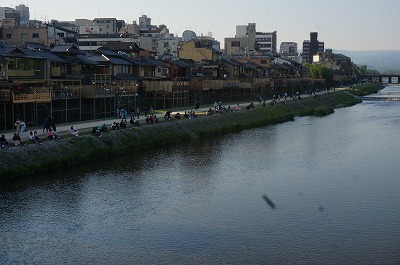
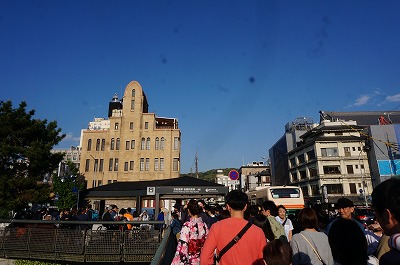
The center of the city is always crowded lately. Especially this week (from the end of April to the first of May) has consecutive holidays in Japan. There are many Japanese in addition many tourists from other countries. Hurry up. I can’t stand here.

Won’t you go to any sightseeing places? Kinkakuji-temple, Kiyomizu-temple, or Fushimi Inari shrine.

Where have you been? Are you a tourist? We have lived in this city for 800 years.

I think this is some nice occasion….

Injoji-temple
the entrance of the temple

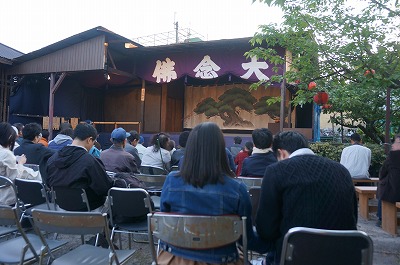
the venue
the venue

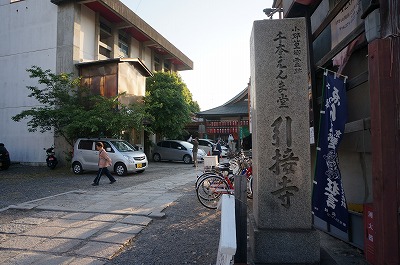
This is the Injoji-temple, and another name is Senbon Enma-do.

What are we going to do? We have no money.

Don’t worry. It’s free.

Free? Sounds good. A little boy and a little girl are walking around people. What are they doing?

They are selling a description booklet for \ 500 (as of 2018).

I want one.

I’ll buy you one.

Oh, why do you have money? Why did you pay \1,000?

The reason why I payed more than \ 500 is to make a donation. I want to support them. Oh, it’s six pm. The first program will begin tonight.

This booklet has a description in English, too.

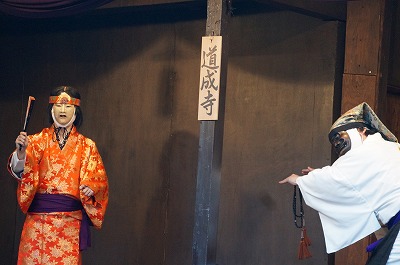
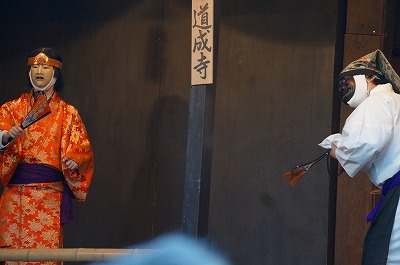
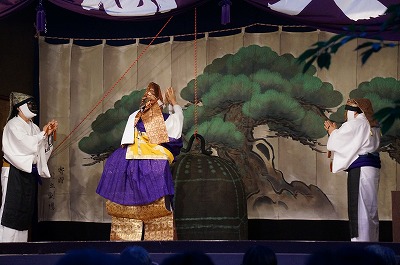
“Dojoji-temple”

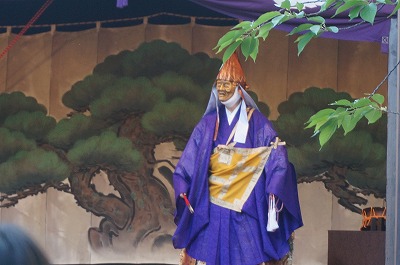
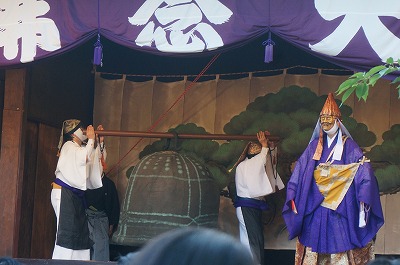
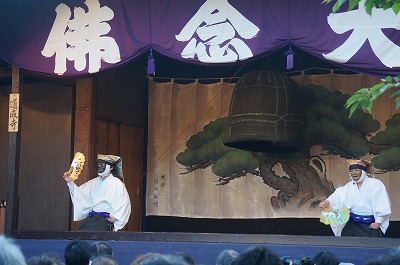
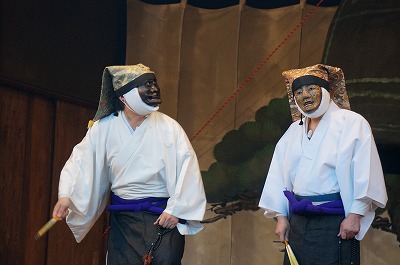
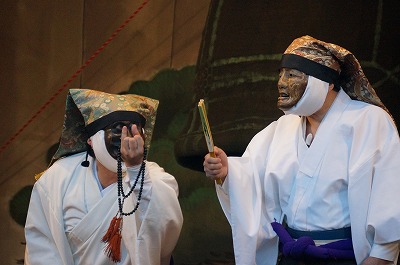
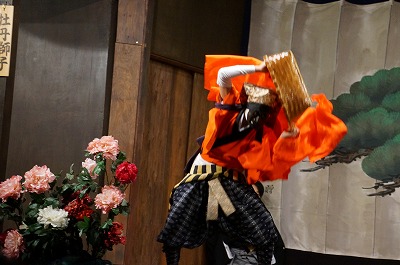
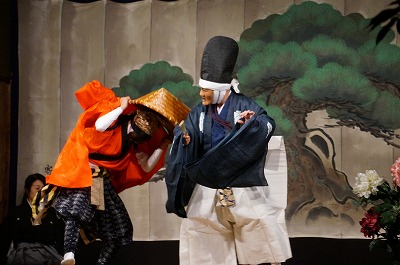
I am a monk of this temple. I shall hold a memorial service with a bell. So, I tell my apprentice monks to carry a bell here. Ichiro-bo and Dabutsu-bo, come here. Are you here?

Here we are.

Here we are. This bell is too heavy.

I’m pleased that you came so quickly. I have not held a memorial service with a bell for long time. So, I want to hold the ceremony. Then, there is something important I have to tell you. Women can’t come here. Do you understand?

Yes, my master.
Dabutsu-bo
Dabutsu-bo

Ichiro-bo
Ichiro-bo

Why did the master tell us that we must never invite any women?

I don’t know. But we must be obedient to my master.
Ichiro-bo and Dabutsu -bo
silence

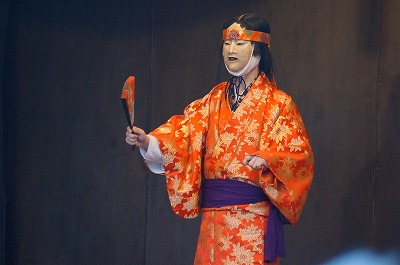
Shirabyoshi
Shirabyoshi (dancer)

Is anyone home?

Ichiro-bo had Dabutsu-bo get up

Shirabyoshi asks Dabutsu-bo

Hey, Dabutsu-bo, get up. This is no time for sleeping. There is someone behind the door. Go check quickly.
Who will come at such a time? May I ask your name?

Sorry for contacting you at this late hour. I am a shirabyoshi dancer and I live near. I have heard a memorial service with a bell. I was wondering if it would be possible for you to dance for a bell?

he surprised at looking at her

he told that beautiful woman is there

Oh, what should I do? Hey, dear Ichiro-bo.

You are noisy. What happened?

There is a shiradofu at the door!

Shiradoufu? What?

Do you happen to know shiradofu? It’s a dancer.

Stupid. If you said that, it would be a shrabyoshi.

Oh, my mistake. That is shirabyoshi. She is there.

No. We can’t invite any women.

But have you met a living Amida?*( like an angel in a sense)

Mmm…If you insist. If would be fine if dancing was all, but we have to return her as soon as possible after dancing.

She began to dance

and beautiful sounds

Oh, my gosh! What happened?

Oh, no. The bell has fallen down. Where has she gone? We have a situation! Go for Shisho-bo.

We have a situation

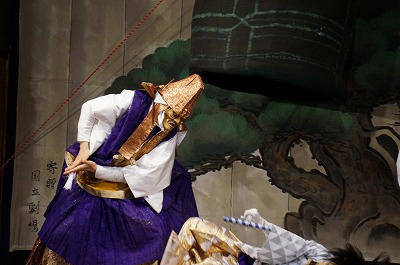
Shisho-bo prays

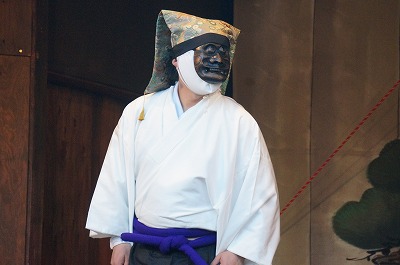
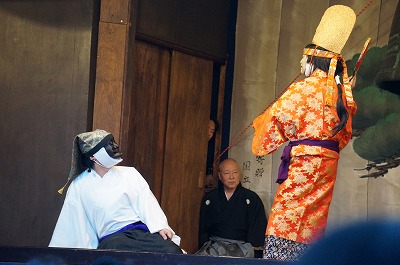
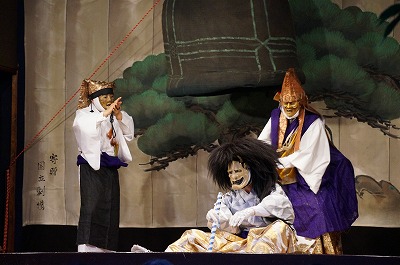
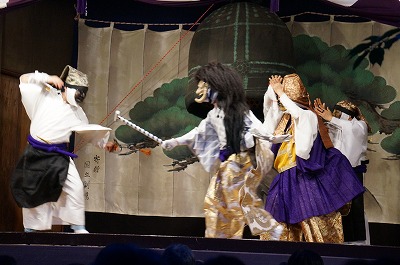
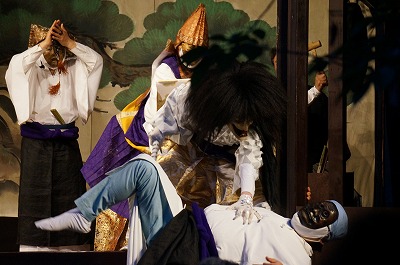
I thought so. The reason why I told you not to invite any women is that this bell is cursed by an ogre. Probably, The woman is an incarnation of an ogre. I shall break the spell.

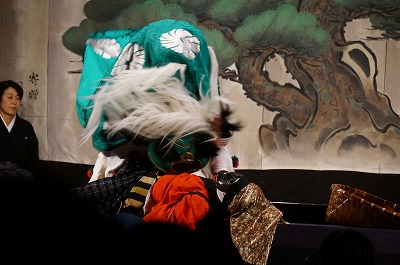
an ogre has appeared

a master charms

Wow! An ogre really has appeared.

Help me Buddha!

An ogre! Drive it away!

a master is praying

an ogre has come

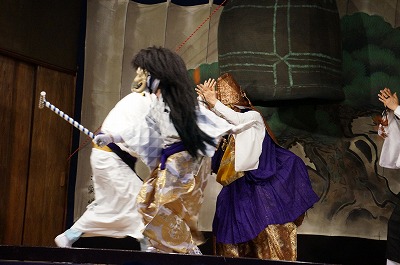
Oh,no! An ogre has come here. Help me!

ending

Help me!

Go away! Namu, Buddha.

Please Buddha! Namu Buddha! Namu ami dabutsu….

I won’t let you go. Yarumaizo! Yarumaizo!

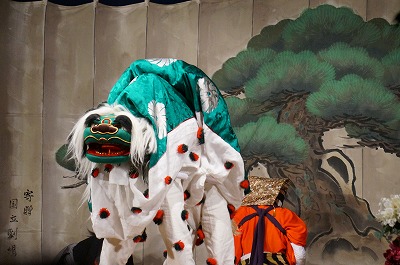
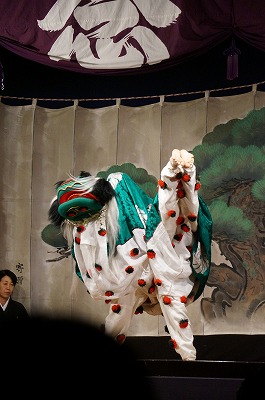
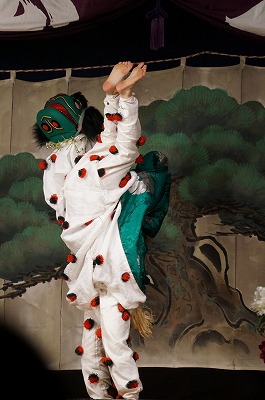
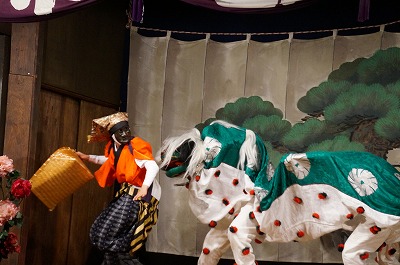
“Botan-jishi” (Peony Lion)

Daimyo and Taro-kaja

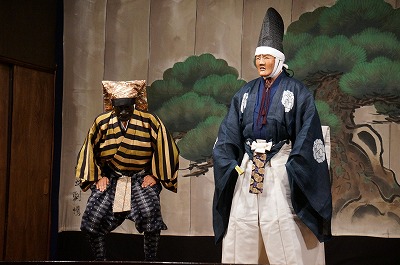
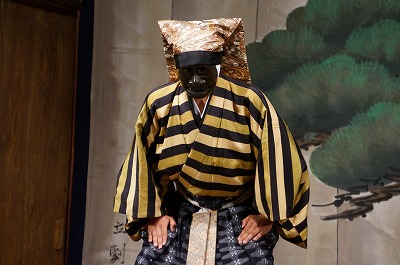
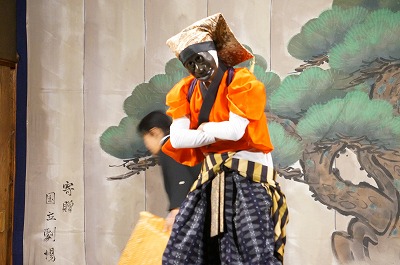
I am a Daimyo (Lord) living around here. Recently, I am in trouble because a Shishi (Chinese lion) has damaged the peonies in my garden. So, I will call my retainer, Taro-kaja and make him crush the Shishi. Are you here?

I am here.

I’m pleased that you came so quickly. Look at this garden.

How beautiful the peonies are.

Yes. But a Shishi came here and damaged the peonies. Catch the lion.

Yes, my lord.

Taro-kaja is thinking

a Chinese lion

This is difficult. I have to be patient.

a Chinese lion

a Chinese lion acts

It is stronger than I thought.

Taro try to catch a lion

a lion damages Taro

Yes. I’ll try to catch the lion with this device. Oh, it is stronger than I thought. I’m no match for a Shishi.

This is Taro thinking

Taro imitates a Shishi

Well, I wonder what am I going to do now? OK, I’ll try to imitate the Shishi.

Taro and his Load

A Load is in trouble

I wonder if he can catch the Shishi. How did it go, Taro-kaja? What are you doing? Why are you imitating the Shishi? Oh, no! Stop, this is me!

I won’t let you go. Yarumaizo! Yarumaizo!

Intermission

It has gotten quite dark. It still gets chilly at night although it is May.

How about the play?

Although the characters say lines, it is easy to get the basic idea. It is the same as a pantomime. But what does “Yarumaizo” mean?

This words mean “I won’t let you go” or “Anyone can catch him.”. It is set phrase in a Kyogen play.

“Kanzaki watashi” (Kanzaki river ferry)

a tea house owner

A monk  drop in a tea house

I am a tea house owner living around here. Would you like a cup of tea?

I would like to have a cup of tea. Anyway, is this the right way to go to Sakai?

Yes. You should take a boat on the Kanzaki river just ahead.

I have little money. How can I escape from here?

a monk tries escape

a monk

Hey! Where will you go? Wait! Yarumaizo!

I’m sorry. Please forgive me….

Do you have enough money? How will you cross the river?

I will walk around or swim across the river.

No. That river is not easy to swim across and it is very deep. OK. I’ll teach you how to ride on the boat for free. The boatman loves cleverness and Waka (Japanese poems). So, you may say to the boatman that so and so…..OK?

That’s good to know. Huh? Oh no! I have forgotten the words. Things will work out. Hey, may I ride on the boat please.

I can’t give a ride to such a poor monk.

I am with 3,000 people. Let’s go! Thank you.

Are you alone? Where are the rest of the 3,000 people?

I told you that I am with 3,000 people, it means I’ll pay for 3,000 people. Right?

I see. All right.

Then, Mr. boatman. What do I see over there?

Ah, those are the human bones of people who didn’t pay for the boat ride.

I got myself into a mess….

What will happen to the little monk?

It’s going to be a surprise. Please watch and see for yourself. The next program is the last.

“Sennin-giri” (Saving a Thousand souls)

The last program is the conclusion. This is the end of this four day program.

  Well, let’s start getting ready to go home

It was interesting. It’s already half past eight. Shall we stay in the city?

No. Don’t you know how much it costs to stay in a hotel in Kyoto city this week? The capsule hotel usually costs about \ 3,000, but it costs over \ 7,000 this week.

What is a capsule hotel?

It is a kind of the lodging facility. It called a capsule hotel because the rooms are very small like capsules. Usually 2 capsule bed are loaded vertically and many of them are placed in a row. Only curtains or blinds separate the rooms from the corridor. It’s a simple hotel just for sleeping.

I didn’t know. Where do guests put their bags?

In the corridor in front of their bed.

Aren’t their bags stolen?

No. If you worry about this, you should not stay there. Bedclothes, a light, alarm clock and radio are supplied in each capsule and the shower room is in another place, too. Anyway, if possible, I recommend you should stay in Nara city. Nara is within one hour by train from Kyoto, the accommodation cost doesn’t change even in this week.

Nara! Sounds good. It’s an older city than Kyoto. I want to go to Nara.

You’re stupid. We live quite near. Let’s go home quickly.

I think this is some nice occasion….Arrogant. Just you wait.

a part of National treasure
a part of “Chojyu-Jinbutsu-Giga”

Two guys!
We’re looking forward to you being our guide again if we have a chance. See you next time, bye!

  *Refer
Kozanji-temple
You can see the scroll “Choju-Jinbutsu-giga” (Unfortunately, it is a replica, though. The original is stored in Tokyo and the Kyoto National museum.) and you can get many copies of these paintings. And, this temple is famous for its beautiful autumn leaves.
Access: It takes about 50 minutes from the center of Kyoto by bus, and 15 minutes on foot from the bus stop.