Report: Yamadera-temple, haiku, and shishi dance ~or a feast of Yokai

Date: Sunday around August 8th
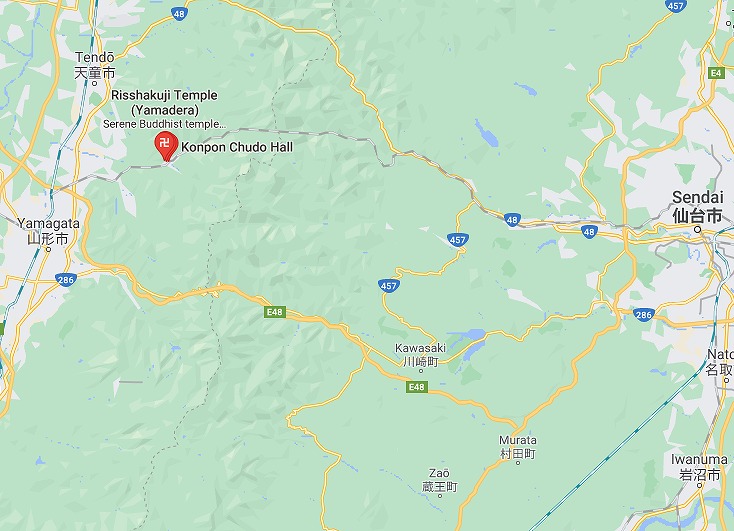
Location: Yamadera, Yamagata city, Yamagata prefecture, in front of the “Konpon chudo”
Access: It takes about one hour from Sendai by JR. About 20 minutes from Yamagata. About an hour from Tokyo to Sendai by Shinkansen, and 1.5 hours to Sendai

Haiku master ~Matsuo Basho
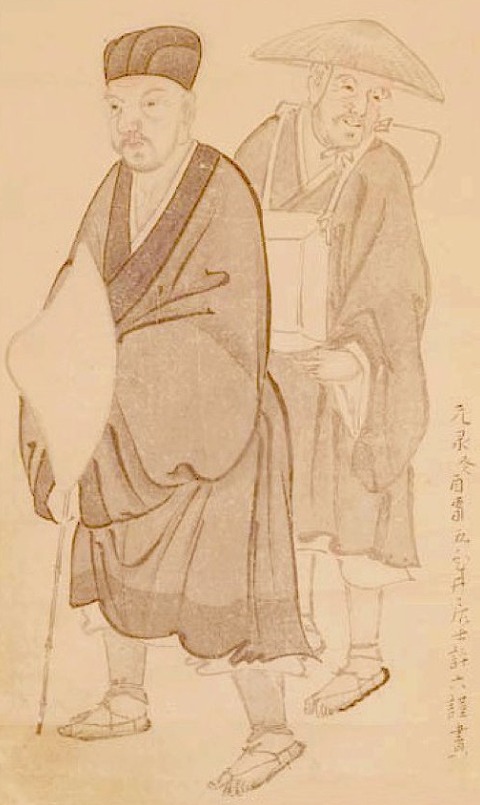
 芭蕉と曽良
Basho and Sora (disciple)
sorce: painting by Morikawa Kyoriku

The literary form of haiku is now very popular outside of Japan. It is said that there are people who enjoy haiku in their own languages.
Speaking of haiku, there is Matsuo Basho. Matsuo Basho (1644~1694) was the great poet in history who established this form as a literary art form that is still popular today and has become internationally accepted. Until then, haiku was a literary art form that emphasized fun and was more like a banquet game. It was Basho who transformed it into what we recognize today, and his achievement is quite remarkable.

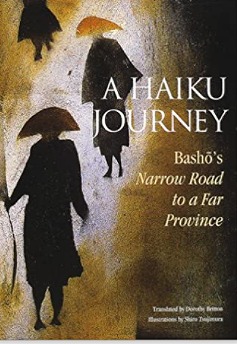
Okuno hosomichi~Haiku journey
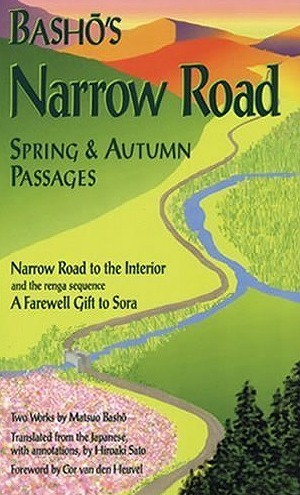
published by Shikosha

published by Kodansha

Many of Basho’s famous haiku are contained in his travelogue, “Oku no Hosomichi”. Basho recorded his long journey, which took about five months, in this book. At his old age, it was almost a life and death kind of trip. There are many various theories why he decided to make such a trip. There is an interesting theory that Basho was from Iga, which is famous for its ninjas, and that he may have been gathering information for the Shogunate, but this is not the subject of this article.
Among the many famous phrases, one of the most famous haiku is
“Shizukasaya 閑かさや
Iwanishimiiru 岩にしみいる
Seminokoe”. 蝉の声
It translates into English like this.
How still it is here--
Stinging into the stones,
The locusts’ trill.” (translated by Donald Keene)

Voice or buzz of locusts (cicadas)?

Speaking of cicadas, it’s summer. Japanese people know that summer has arrived when the cicadas begin to buzz, and think that autumn has arrived when they can no longer hear them. However, I dare to say that the word “buzz” is used, but Japanese people hear it as a voice. In various English translations, various expressions such as voice, echo, cry, etc. are used, but no one uses buzz. Why? There is a study by a Japanese scholar (Prof. Tsunoda of Tokyo Medical and Dental University) that tries to explain this, but it is not well received overseas, so I will not go into it here. I would like to add, however, that quite a few people are keen on various autumn insects just to listen to their sounds. The original direct translation of this haiku is also the “voice” of the cicadas.

Yamadera-temple

This poem was composed at Risshakuji Temple 立石寺, also known as Yamadera, in Yamagata Prefecture.

In the first place, Basho had not originally planned to stop here. When he tried to pass by without knowing it, he was asked by a local if he had been to the temple. When Basho replied that he had not, the local people said, “That’s a waste of time.” He was told that he should visit the temple if he came this far.
So he hurried back 4 kilometers to visit the temple. So what kind of temple is Yamadera (officially called “Risshakuji Temple”)? The temple was opened in 860. It was opened by a man named Ennin, the foremost disciple of Saicho, the greatest monk of the time. Ennin went through many hardships to study in Tang Dynasty (present-day China), and after returning to Japan, he opened more than 500 temples. About 900 years later, Basho visited the temple. The literal translation of the word “Yamadera” is “mountain temple”. As the name implies, it is a temple built in the middle of a steep mountain, and is one of the representative temples of this region.

Shishi odori

This area was once ruled by a hunter named Banzaburo Banji. Then, Ennin proposed to turn this land into a place of Buddhism. Banji accepted the proposal and stopped killing animals in this land. As a result, animals were said to have danced with joy. In commemoration of this, the Banji Festival has been held and the Shishi Dance has been dedicated.

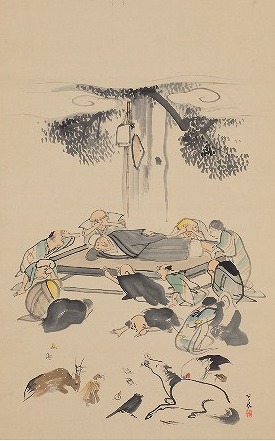
Painting of Basho Nirvana and animals

There is a painting called “Nirvana” which is a picture of Buddha’s death. Most of them depict the Buddha lying in the center of the painting, with people grieving around him. There are many sculptures and other three-dimensional statues, and even outside of Japan, you can see a large statue of Buddha lying down. The subject of this painting is so famous that it was imitated in the painting of Nirvana.
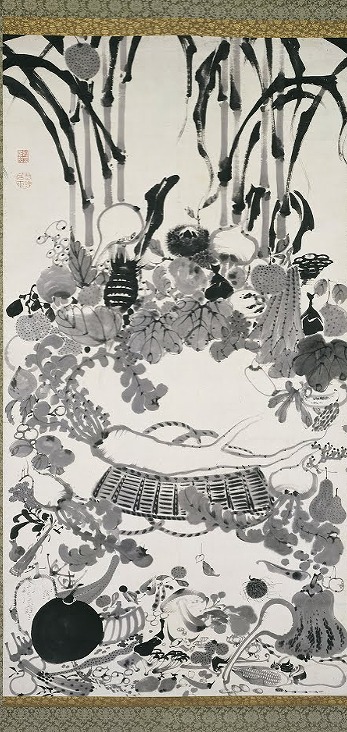
“Vegitable Nirvana” by Ito Jakuchu 伊藤若冲

Basho Nirvana by Ueda koucho 上田公長

Monkeys, horses, deer and crows gather for a trip to the Yamadera temple. Today is the day when those who have had their haiku composed by Basho go on a trip to the mountain temples. Sora is the guide.

Come on, everybody. Are you together?

We haven’t seen any snails yet. Oh, he’ s here. It looks like the members are all here.

So, let’s get going.

Wait, wait, wait, wait. Didn’t you forget someone?

Oh, it’s Mr. Frog

All right. I’ll tell you something. My haiku is the most famous of them all*. It’s one of Basho’s best. What’s the matter with you leaving me here? Besides, I’ve been loved in Japan since the days of the “Choju-Giga (Birds and Beasts Caricatures)”.

*Furuikeya 古池や kawazu tobikomu 蛙飛び込む mizuno oto 水の音 (Japanese)
The ancient pond- A frog leaps in- The sound of the water (translated by Donald Keene)

But I’m not in Ueda Koucho’s Nirvana…

He’s pretentious. Otherwise, he’s got amnesia. Besides, he’s not the only one who has painted the “Basho Nirvana”.

Let’s go with the frog. It’s almost time for us to go.

Banji-sai 磐司祭

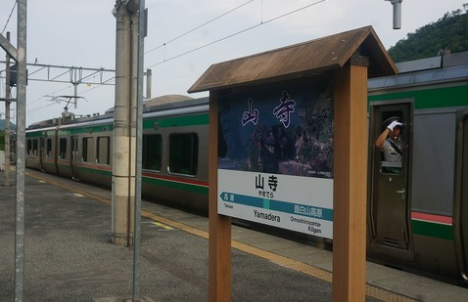
Yamadera station

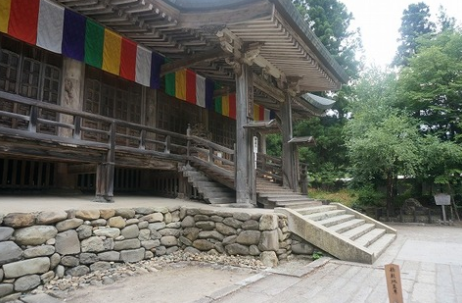
The Main Hall

As you go up the stairs, you will soon see the Hie Shrine. Next to it is the main hall of the temple. It is characteristic of Japanese religion where both God and Buddha are worshipped together.

Let me explain the “Pan priest”. A long time ago, a monk named Ennin 円仁 came to Japan for missionary work, and he thought this would be a good place. However, at that time, this was the territory of the Banji 磐司 clan. So, Ennin asked the head of the family, Saburo Banji, to let him use the land for the sake of Buddhism. The Banji clan accepted and set the land free. At the same time, he also stopped hunting in the mountains. The “Banji Festival” is held in honor of this achievement.

That’s why we can come to the mountain temple with a peace of mind.
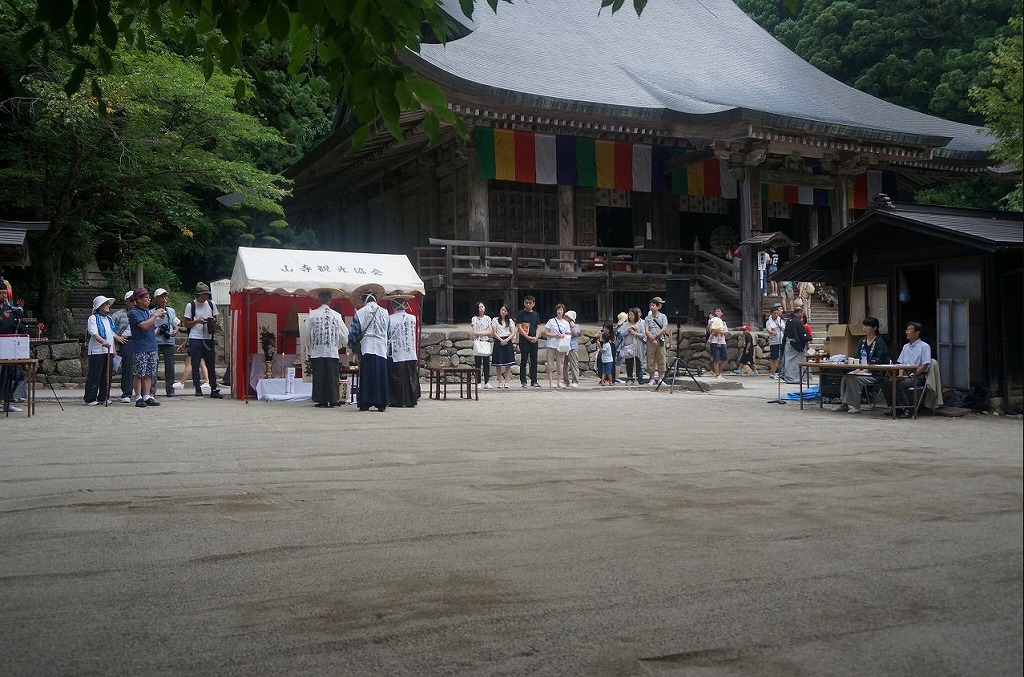
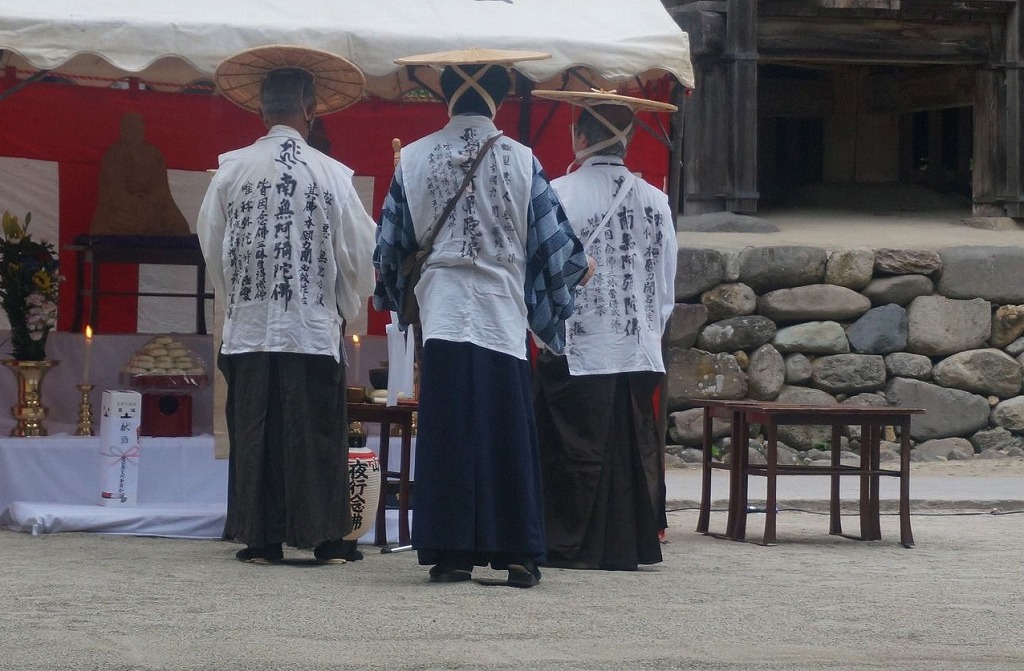
Nembutsu procession

The first thing that appears today is “the Nembutsu procession”. The first event of the day is the Nembutsu, an event to welcome the morning by chanting the Nembutsu at various places to make offerings to the dead. The fact that this is the first event of the day gives us an idea of the overall character of this festival.

Nagatoro deer dance 長瀞シシ踊り

The content can also be enjoyed on video→https://youtu.be/kjsezHGDJ0U

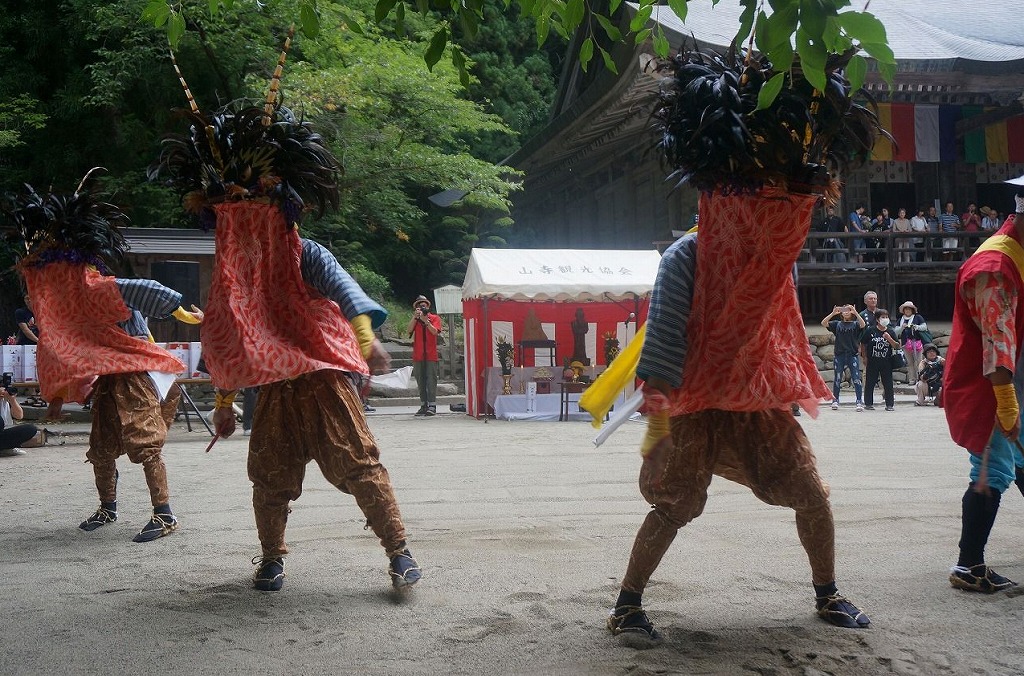
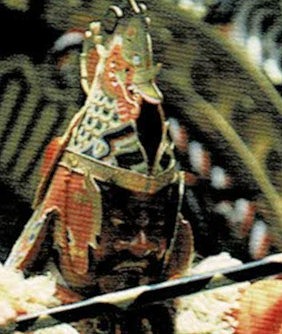
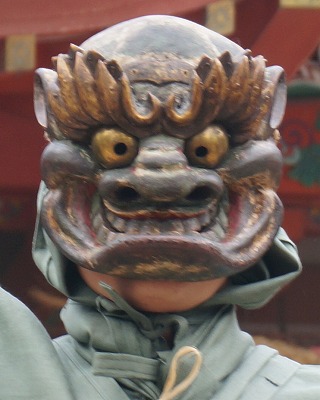
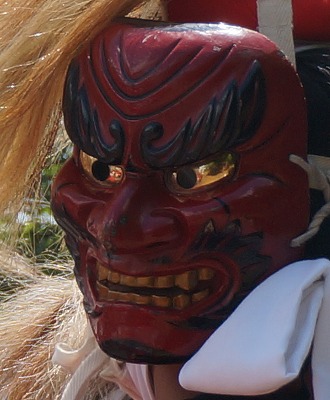
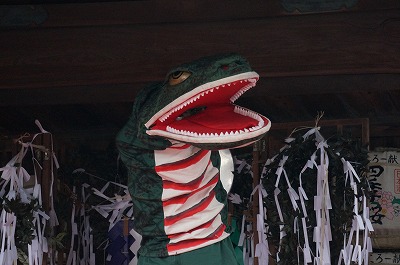
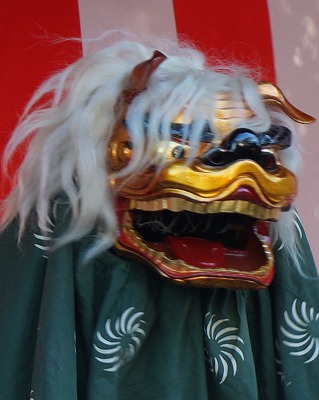
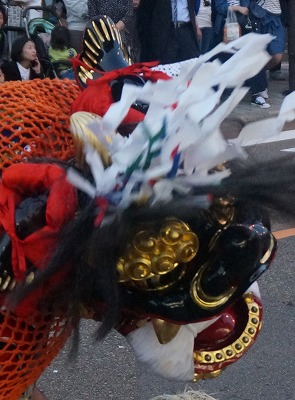
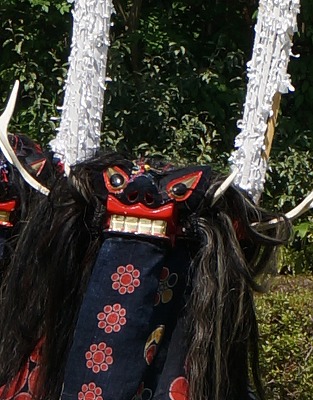
First up is the Nagatoro Shishi Odori in Higashine City. People also remember Nagatoro as the place where Ennin opened the land. Originally, there were eleven shishis in all, but recently there have been fewer due to a lack of manpower. There are also “sasara” and “gong striking. And flutes and drums. In total, there are 12 performances.

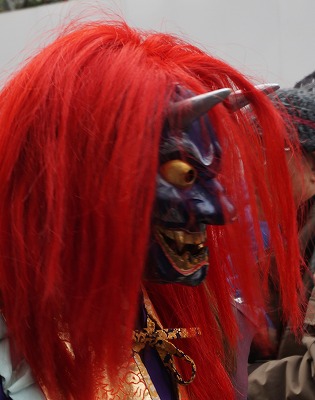
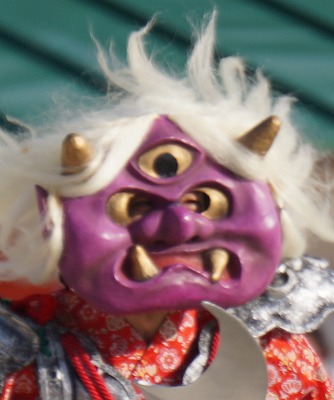
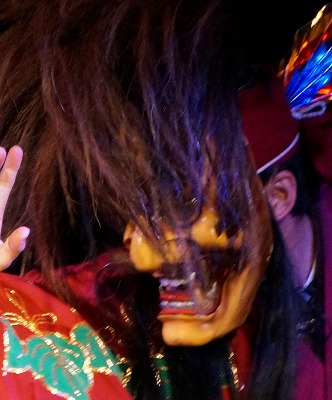
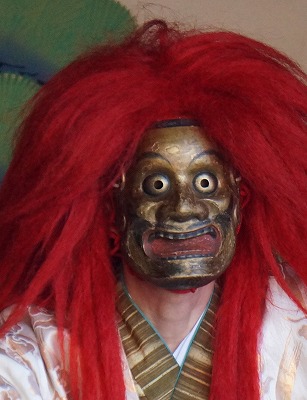
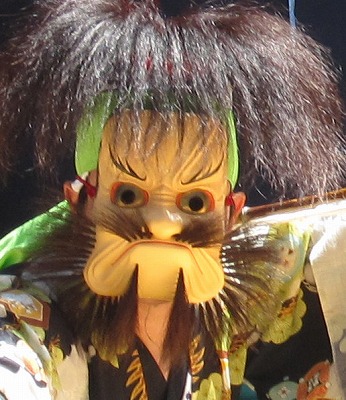
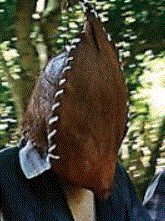
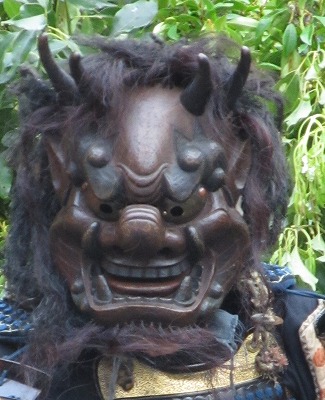
Wow, a yokai. It’s a monster.

Sasara

gong striking

He has a small drum in his stomach. It’s similar to the Kanto lion dance.

It’s a yokai. I’d be scared if I met one of these in the middle of the night.

They have 12 performances in total. but today, they’re over, because they are limited in time.

Absolutely scary.

Tsuchihashi deer dance 土橋シシ踊り

The content can also be enjoyed on video→https://youtu.be/2PNzMdXs2_Y
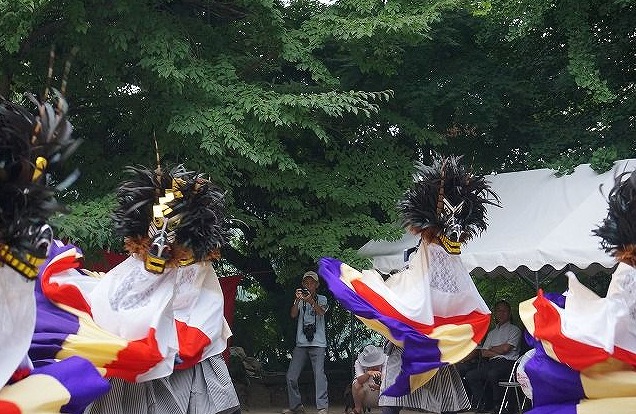
We have another awesome one coming up.

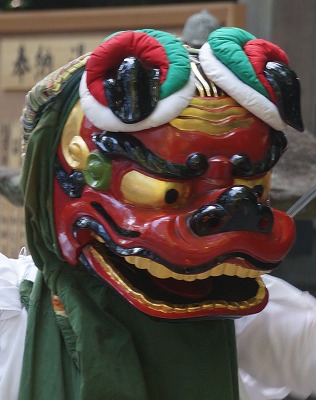
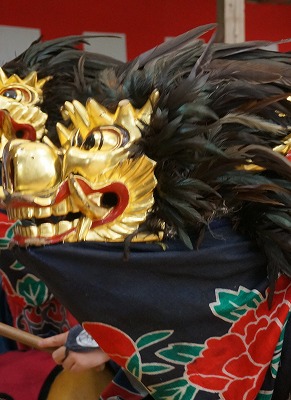
It’s a shishi dance from Nakayama Town. There are seven deer in all. They have a total of 19 programs. The names of the programs are interesting: “Hiya, hiya-ro, hiya-ro,” “degadan,” “dengarakatta,” and so on.

That’s a very intuitive way to name something.

I can’ t recognize the language of monsters.

The leader wears “the Gohei (A Shinto ritual object in which a deity dwells)” on his head, and the sub-leaders wear the sun and moon on each of their heads.
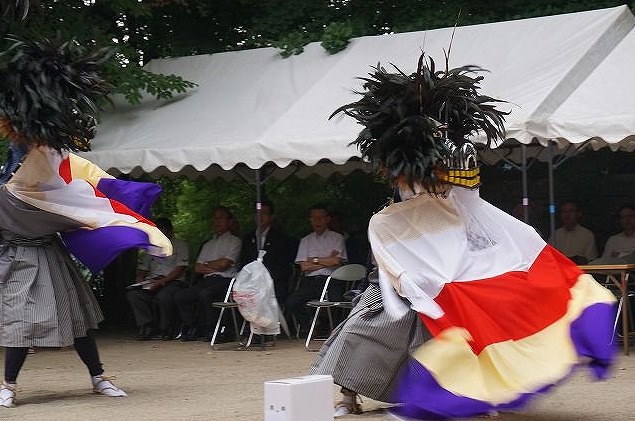
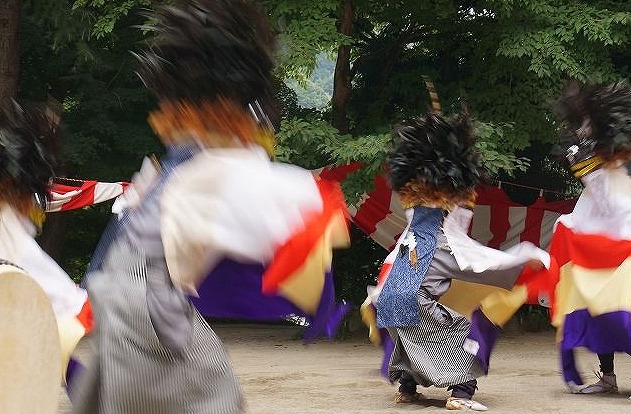
I guess it’s hard for a leader to move around all over the place.

Sawatari Shishimai 沢渡獅子舞
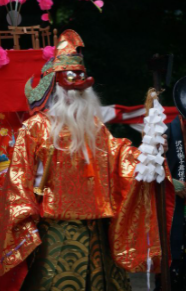
The content can also be enjoyed on video→https://youtu.be/XTSpuswiQMo

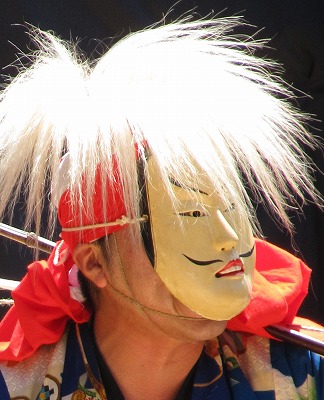
The Tengu are bringing in a bunch of weirdos.

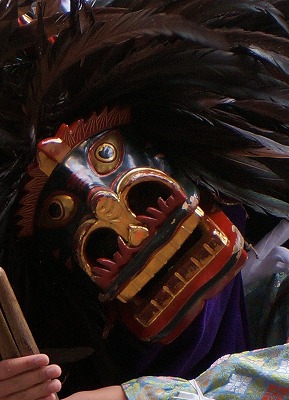
This is the Sawatari Shishimai from Higashine City. This is not a Tengu, but Sarutahiko, the god of guidance. It uses the character for “lion,” but it’s actually a deer or wild boar dance. It is said that people learned it from Yamadera in the past. However, the Sawatari area was the entrance to a nearby mountain for ascetic practices, so there is a high possibility that it was learned or created from there.

I think he would have said something like, “We’re from another planet.

I feel that frogs have no respect for traditional arts. It’s a joke.

Everyone has their own view.

There is a lot of crouching, so it’s harder than it looks!

Wow, a party of monsters.

After listening to the frog saying that for a long time, I felt like it was right.

Takadama-Shoryo-Bodai Shishi-odori 高擶聖霊菩提シシ踊り
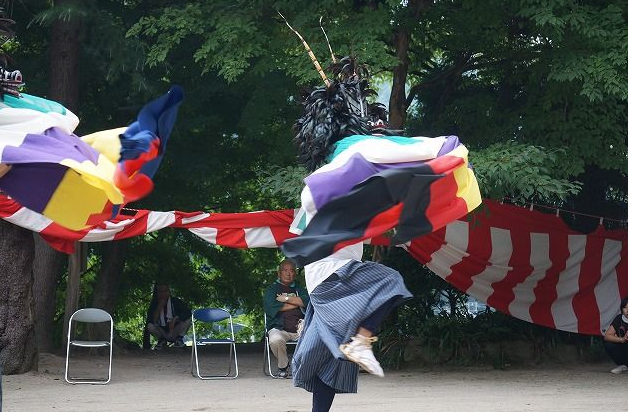
The content can also be enjoyed on video→https://youtu.be/iRQimsBP3HM

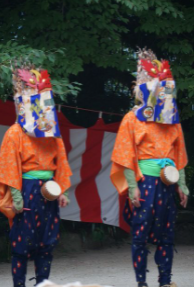
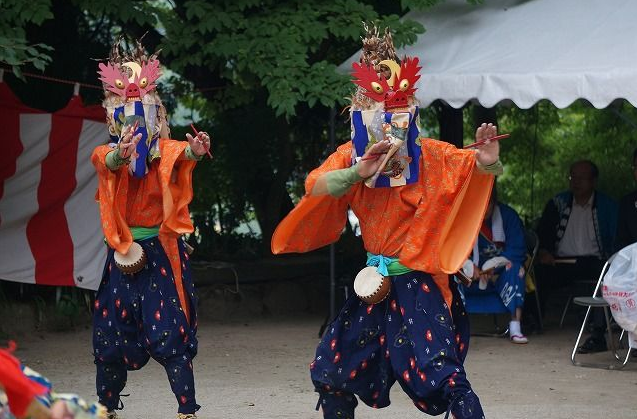
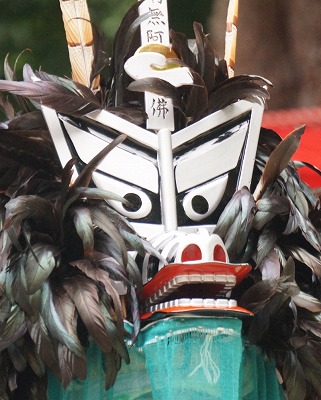
This is a shishi odori dance from the Takanashi district, south of Tendo city. It consists of a deer in the center, and two males, two females, and two children, for a total of seven deer. The word “Shoryo” means “soul” and “Bodai” means “pray for a departed soul”. As with other shishi dances, the original purpose of this dance is to go around to the houses in the district to make offerings at the district festival to hold a memorial soul.

I see that they have the words “Namu Amida Buddha 南無阿弥陀仏” at the top.

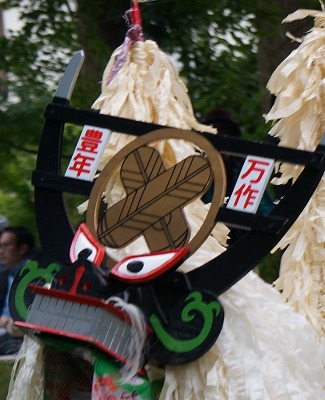
The most important performance is “Kakasu”. This is an accent of scarecrow. Its purpose is to exorcise demons.

Finally, they defeat this straw doll named Scarecrow. The person in the center of the stage is supposed to knock it down, but the performer decides when to do it. However, it is always a multiple of three, and often the ninth time. There must be a meaning to it, but they don’t know what it is anymore.

That’ funny that the monster can defeat the demon.

I mean, there are good monsters and bad monsters.

Hey, before you know it, we’ll be recognizing the arts as monsters.

Karaogi-Asahi Shishi-odori 唐楽招旭踊
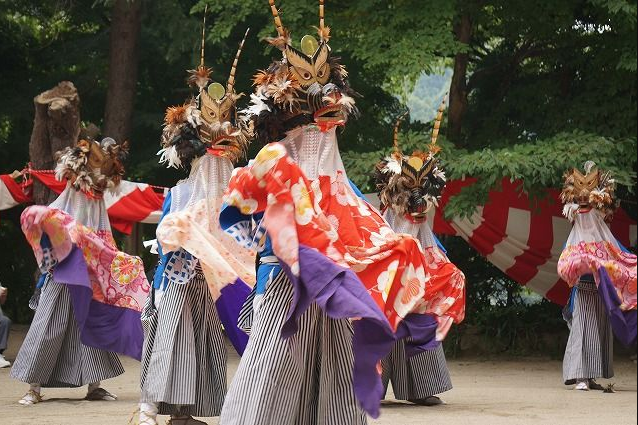
This is a shishi dance from Yamagata City. The composition and facial features are similar to the previous one. The performance is also similar.

They jump and bounce around so much that quite a bit of their feathers fall off.

Like other groups, they get their feathers from the hunters. If they run out of feathers, they ask the hunters in advance.

This is the end of all groups for today.

It’s already 12:00 noon. I’m starving.

Don’t forget to visit the Basho Memorial Museum, everyone!

Oh, Basho-sensei, when did you get here?

Let’s have lunch and then go sightseeing in Yamadera.

This time of year (first week of August) is “Hanagasa Odori” in Yamagata. Sendai’s Tanabata Festival, Aomori’s Nebuta Festival, Akita’s Kanto Festival, and many other festivals. It’s not a bad idea to visit all of them.

cf: https://yamagatakanko.com/en/yamadera
about Yamadera→https://discoverdeeperjapan.com/destination/hokkaido-and-tohoku-region/old-town-sightseeing/yamadera-risshakuji-temple/
The most detailed Japanese traditional mask

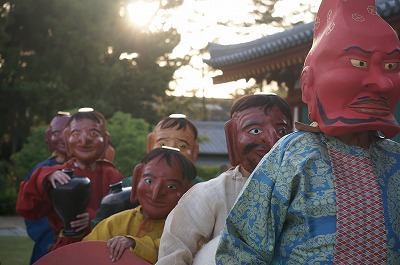
 Japan has created various masks in their culture of history. The numbers are too many to show all of them. This sight will try to explain Japanese traditional masks as much as possible from history and to classify. We won’t surgical masks or the masks of samurai.

History

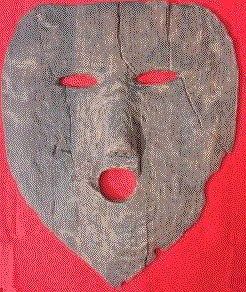
 The oldest mask remains in Nara prefecture. It was discovered from the old tomb (AD 3rd Century). It was made from wood. People suppose this was for some ceremony.

*the right side picture https://www.nippon-1.net/cgi-bin/database.cgi?tid=list_kiroku&print=1&equal2=%93%FA%96%7B%8D%C5%8C%C3%82%CC%96%D8%90%BB%89%BC%96%CA

the oldest mask in Japan

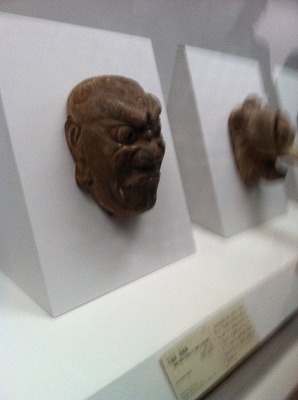
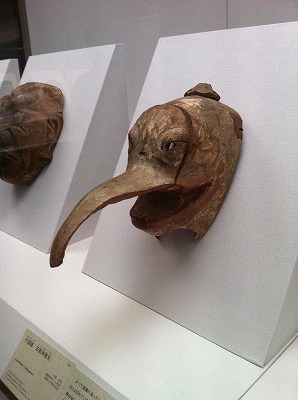
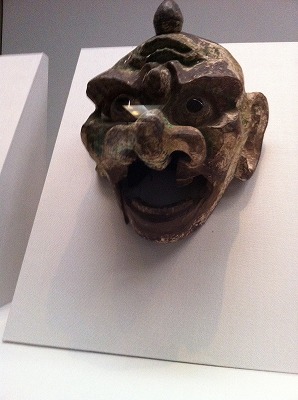
 It is said that the time the culture of masks started was Nara period (7~8th C). The culture was introduced from China through the Korean Peninsula with Buddhism. It is called “Gigaku” and “Bugaku (or “Gagaku”). It is said that “Gigaku” was played to let people know about Buddhism. Unfortunately, we don’t know exactly how they played it . Only the masks remain.

Gigaku mask for old play in Japan
Gigaku mask

Gigaku mask for old style play in Japan
Gigaku mask

Gigaku mask for old style play in Japan
Gigaku mask

 ”Bugaku (Gagaku)” has been played at the Imperial Court of Japan and shrine in annual events. They use many old instruments and play in old style.

"Gigaku"'s players at Yakushiji-temple
“GIgaku” in Yakushiji-temple

Bugaku play at Itsukushima shrine
“BUgaku” in Itsukushima shrine
https://www.hiroshima-kankou.com/event/9596

Bugaku at Hikawa shrine
“Bugaku” in Hikawa shrine
https://bunkakouryu.or.jp/archives/252/
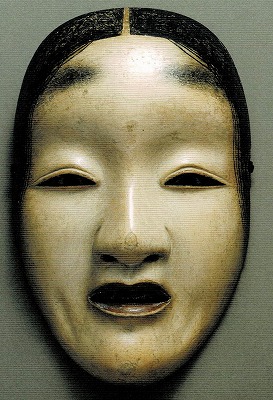
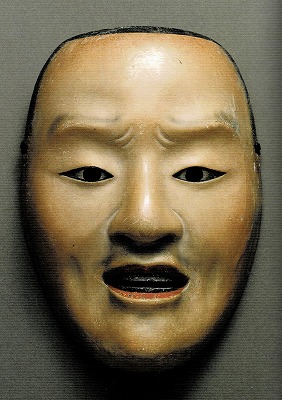
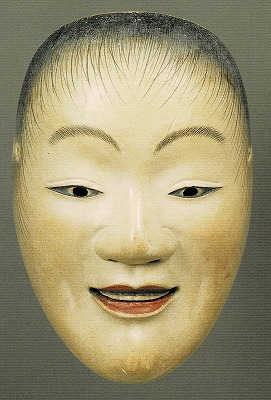
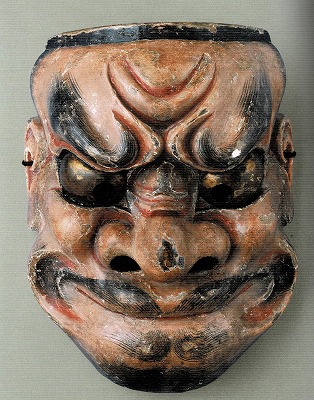
 In 14th century, folk performing arts and impersonation arts combined and blended many folk arts to “Noh”, and “Kyogen”. These are played on the stage until now, they are said to be the oldest remaining stage play in the world. In “Noh” play, ghosts play the main role, and players are represented by wearing masks. So, “Noh” created various masks. It is said that there are over 200 kinds.
  In 17th century, many experts made various masks because people desire fun and festivals to flourish in each region.

Kinds of masks~Noh

*All of these Noh mask pictures were taken from the book 「能面の世界」平凡社 2012

 There are currently more than 200 types of masks in Noh. Here are some of the most representative ones. Then, let’s show various Noh masks.

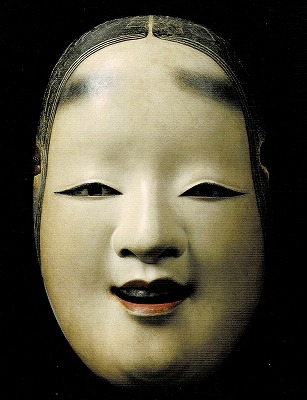
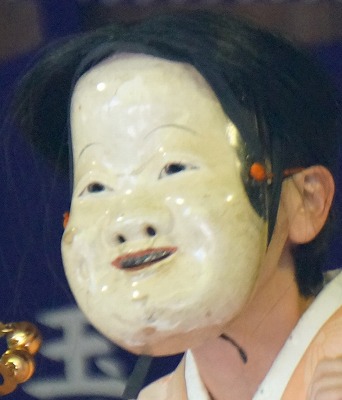
Koomote

Onna” (Koomote)
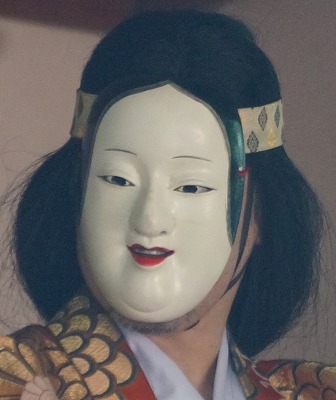
It means a woman. This mask represents a young woman. This is the most famous Noh mask. The mask many Japanese imagine when they think of “Noh mask” is this.

Onna

Onna
This mask represents an old woman.
There are various woman masks.

Otoko

Otoko
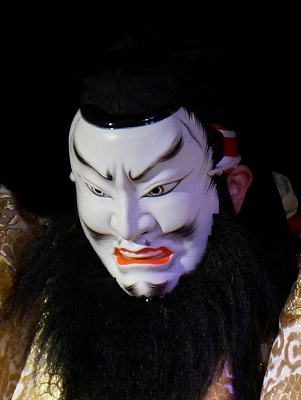
It means a man. The masks of men have various kinds, this is the typical one.

Doji

Otoko” (Doji)
Doji means a child.

Beshimi

Beshimi
This mask’s face represents the state of shutting the mouth tightly. It is often used to represent “out of human”.

Shikami

Shikami
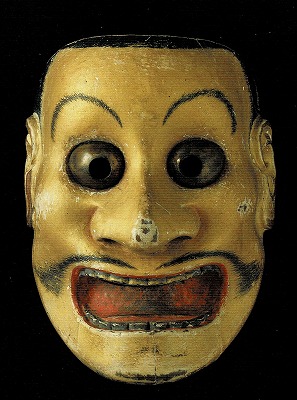
This mask opens it’s mouth widely. It makes a pair with “Beshimi”. It represents ogres and so on.

Tobide

Tobide
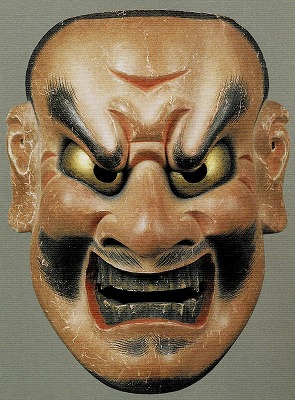
This mask’s eyes are popping out. It represents having extraordinary power. It is often used to represent a deity.

Hannya

Hannya
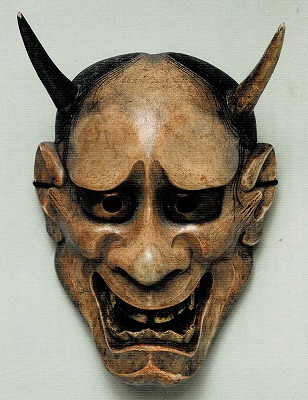
This mask is one of the most famous Japanese masks. This mask is, in fact, a woman. A woman who transformed into an ogre from grudge and jealousy.

Okina

Okina
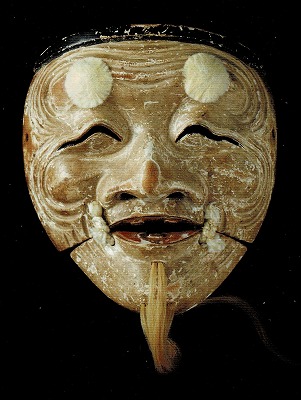
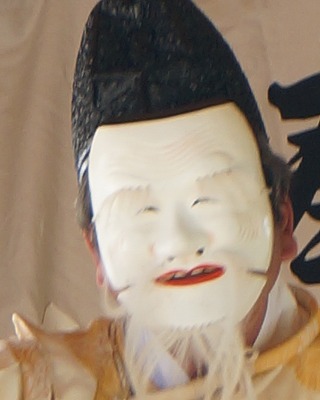
This mask’s face is an old man’s. This is the standard and special mask for Noh players. When they play wearing this mask, they are doing a special ceremony. His face symbolizes longevity and peace.

Kinds of Masks~Bugaku (Gagaku)

*All of these mask picture were taken from the book 「日本の伝統芸能 1 雅楽」小峰書店 1998

mask for Bugaku

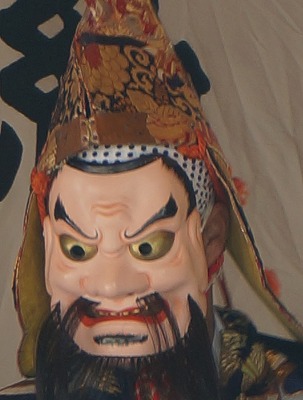
Ranryo-oh

mask for Bugaku

 ”Gagaku” is Japanese Imperial Court Music and Dance. “Bugaku” is the dance accompanied with various instruments. It is said that this music and dance came over from the Eurasian Continent through China and Korea in around the 5th Century. The elegant music needs various special old instruments. In addition it is held in the Imperial Court, in famous shrines or theaters. Itsukushima shrine (Hiroshima prefecture), Hikawa shrine (Saitama prefecture) and Shitennoji-temple (Osaka prefecture) and so on.

Various folk masks

 There are various kinds of masks used in scenes other than “Noh” and “Bugaku” in Japan. We can see them at festivals, annual events and Kagura events*.
*about Kagura→ReferenceWhat’s Kagura?

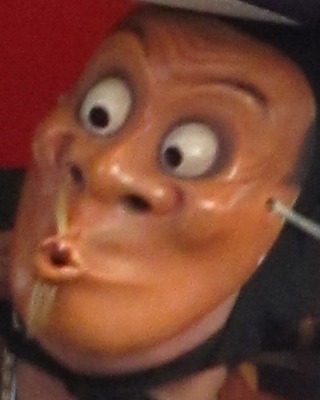
Hyottoko

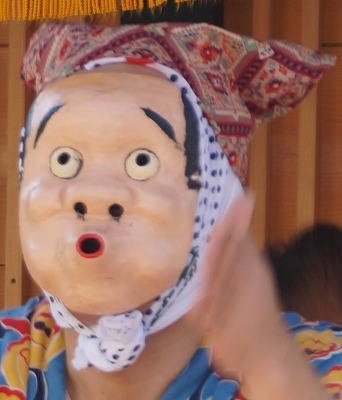
Hyottoko mask

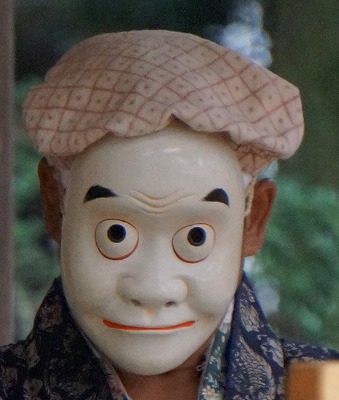
Hyottoko mask

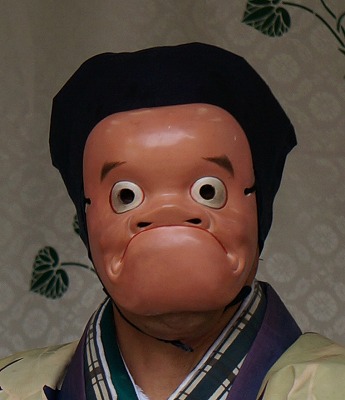
Hyottoko mask

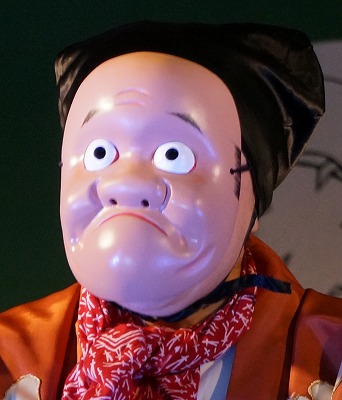
Hyottoko mask

Hyottoko mask

Hyottoko mask

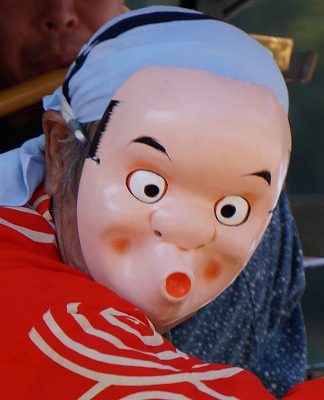
 ”Hyottoko” is a comedian like the clown. Originally, Hyottoko represented a man who blows fire by bellows to make iron, so he basically puckers up his mouth. In “Kagura” (traditional folk play), the comedian was called “Modoki“. It means to imitate and fail. They are lovely characters.

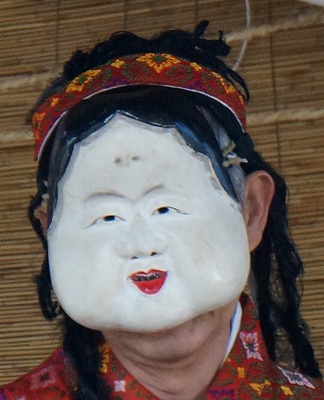
Okame (Otafuku)

Okame mask of Kagura

Okame as a deity , Uzume

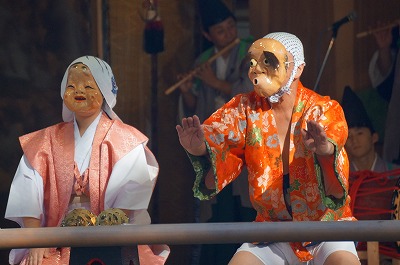
They are an ideal couple

 A mask of “Okame” is a face of a young woman. This mask is a pair of “Hyottoko“. People regard them as an ideal couple. In “Kagura”, this mask represents a deity, “Ameno-Uzume”.* Is “Okame” beautiful? I can’t answer this question. The standard of beauty changes time to time. But, there is one thing that is certain. She always smiles.
*Ameno-Uzume→ReferenceJapan mythorogy

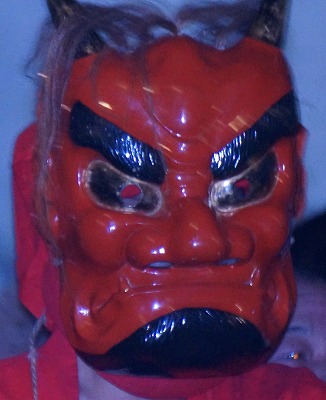
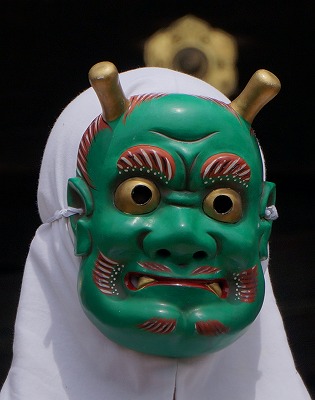
Oni (Ogre)

Ogre in Osaka
Osaka

Ogre in Kyoto
Kyoto

Ogre's mask in Nara
Nara

Ogre in Aichi
Aichi

Ogre in HYogo
Hyogo

Ogre in Aichi
Aichi

Ogre in Hiroshima
Hiroshima

Ogre in Ibaraki
Ibaraki

Ogre in Iwate
Iwate

Ogre in Shimane
Shimane

Ogre in Chiba
Chiba

Ogre in Oita
Oita

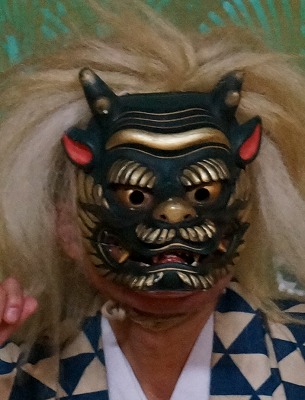
 The word “Oni” meant “hiding stuff or people”. “Oni” sometimes meant enemies against the power of the administration of the Emperor, and other times, it meant strange happenings. It came to mean unnatural power in more recent years. At the same time, when people started to hold events called “Setsubun” (annual event to drive away evil spirits) , they needed something concrete to represent evil spirits. And so, people had created “Oni”. So we can often see their figures at the event of “Setsubun“. Now, not all “Oni” have evil spirits, they sometimes tell fortune to people.

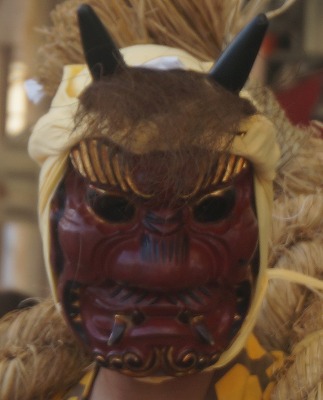
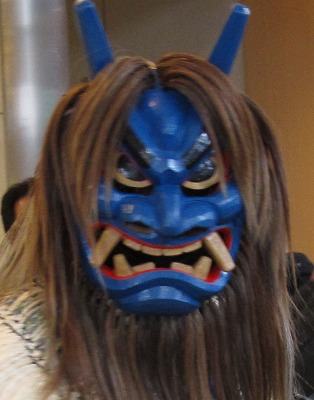
Namahage

“Namahage” is one of the most famous masks and characters. Even though they are sacred visitors only in Oga region, they have become characters representing whole Akita prefecture.
And their molding design is rich in variety.

For more information→another article, ”Namahage” or “Namahage Sedo festival” (Category Akita prefecture)

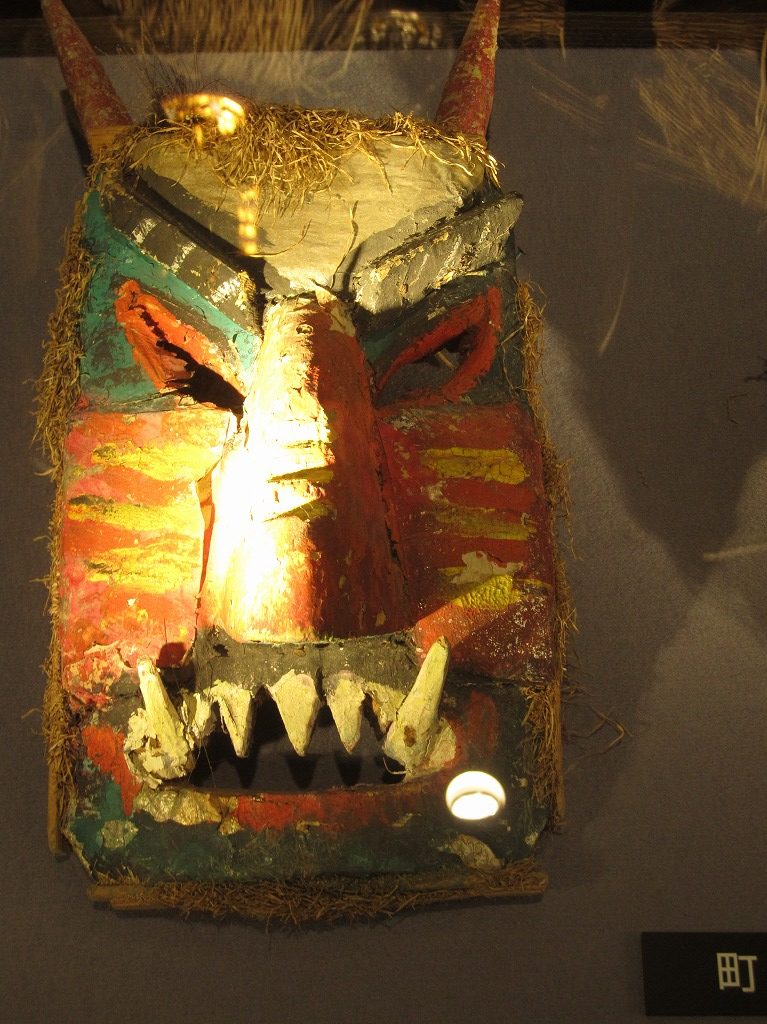
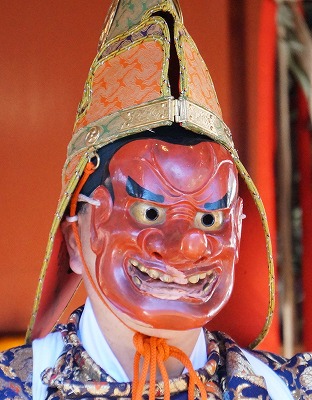
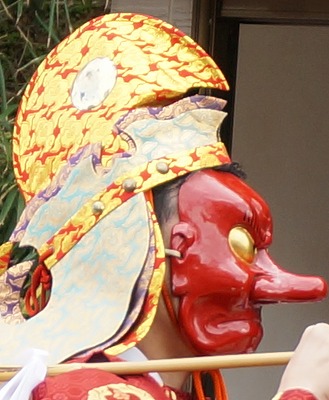
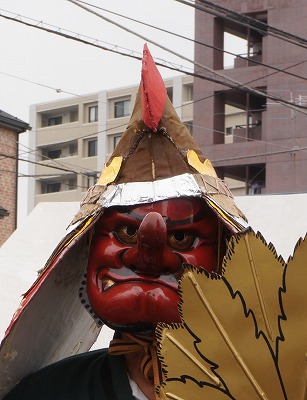
Tengu (Sarutahiko)

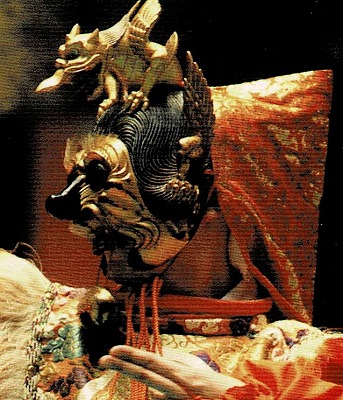
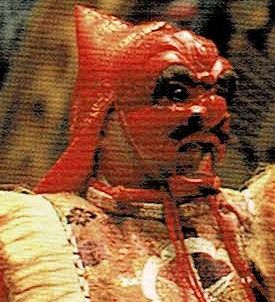
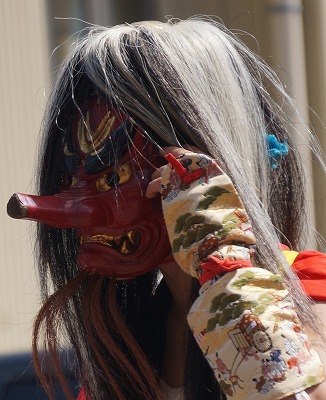
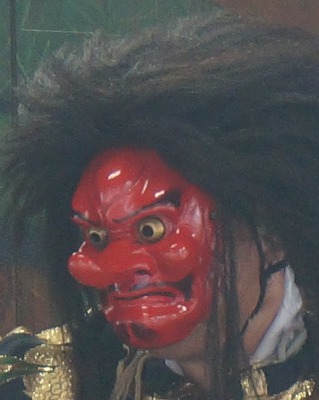
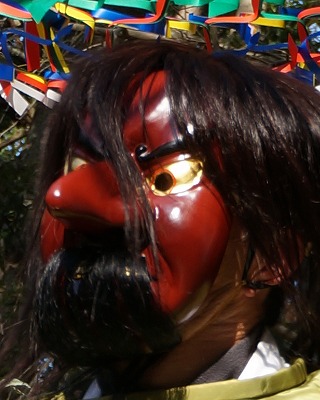
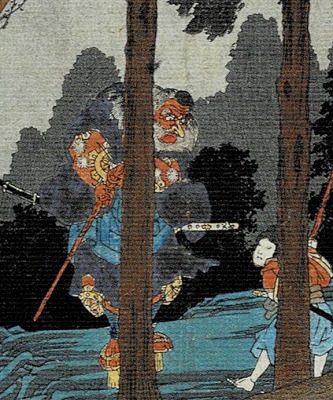
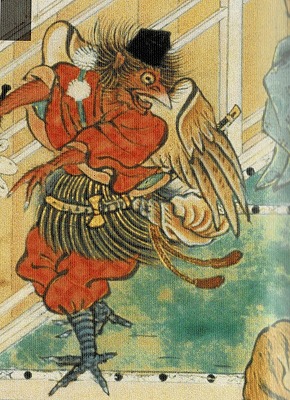
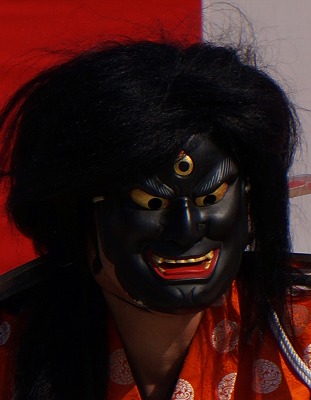
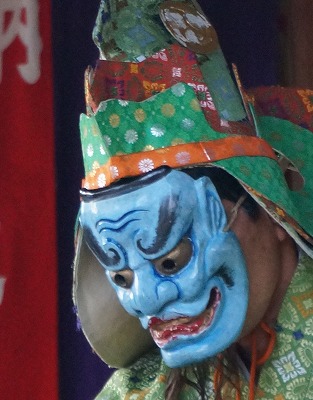
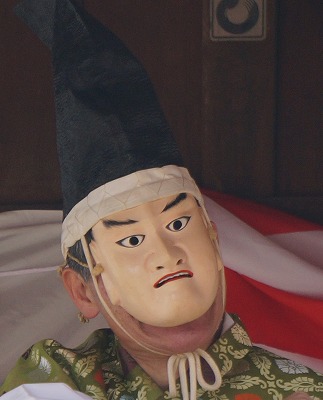
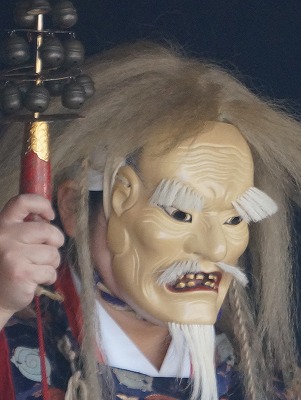
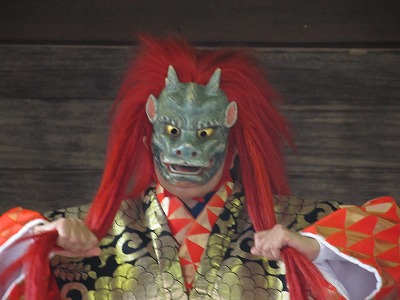
This mask’s feature is a red face and a long nose. It represents “Tengu” and “Sarutahiko“. Both are similar but completely different beings. “Tengu” is one of unnatural beings called “yokai“. He lives deep in the mountains and have super power. People believed that wars must be caused by Tengu. Tengu’s image came from monks practicing Buddhism in mountains.
 On the other hand, “Sarutahiko”* is a deity. He guided deities of Amaterasu’s clan, so he usually walks at the head of parades of festivals.
*Sarutahiko→RefferenceJapanese mythology and history “The grandson of Amaterasu comes down to this world”

Teng in the mountain

another image of Tengu

Sarutahiko leads a parad

*Tengu’s two pictures from the book 「特別展 天狗推参!」神奈川県立博物館 1990

Masks of deities in Kagura

 It is said that there are 8,000,000 (Yaoyorozu) deities in Japan. Japanese have assumed deities in everything. Many deities acted in Japanese mythology like Greek and Hindu mythology. “Kagura” is basically a play dramatizing mythology. So we can find various kinds of masks of deities on the stage of Kagura. When you travel to Japan and see Kagura events or festivals, you must see different deities all over Japan.

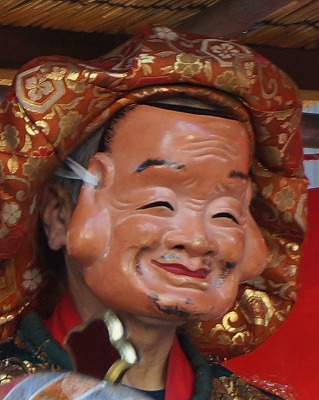
Ebisu

Ebisu

Daikoku

Daikoku

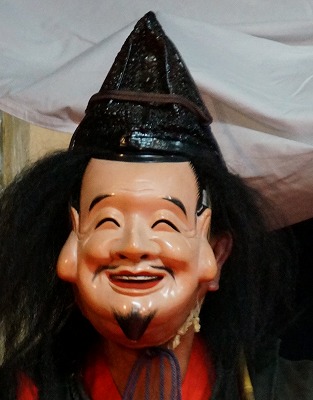
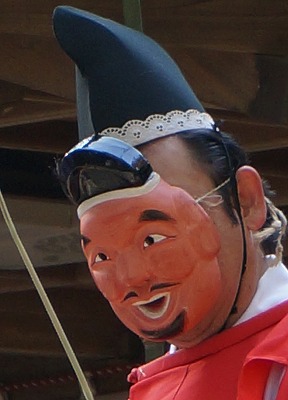
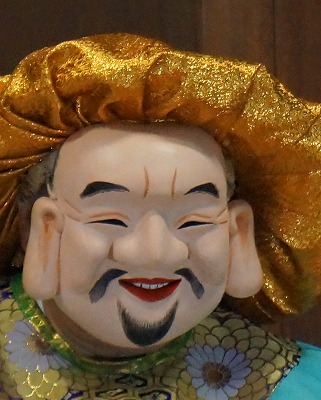
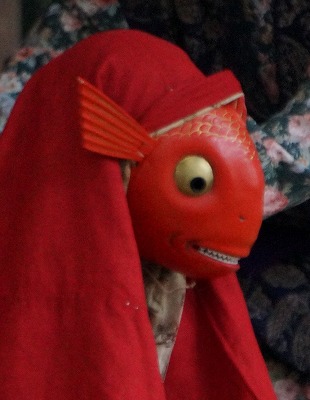
 Among deities, we also find a unit of multiple deities. They are seven deities giving people various fortunes called “Shichifujin 七福神”. They often emerge at the beginning of the year. Both “Ebisu” and “Daikoku” often emerge as a unit especially. Ebisu always has a fishing rod and is catching a big red snapper. On the other hand, Daikoku always has a little mallet and wears a special cap on his head. They say if he swings his mallet, people can get fortune. They are the most popular of many deities.

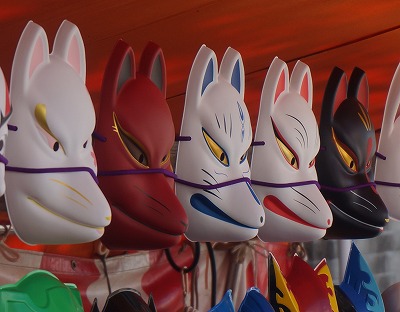
Kitsune (the fox)

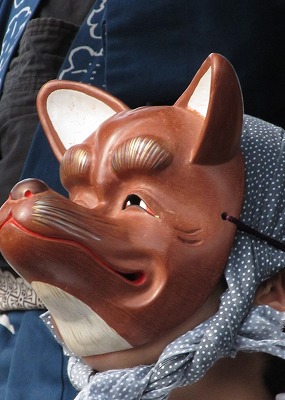
Many people may have an image like the left side picture.
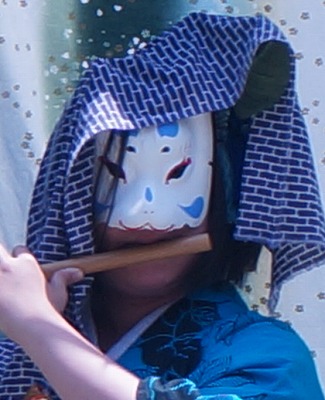
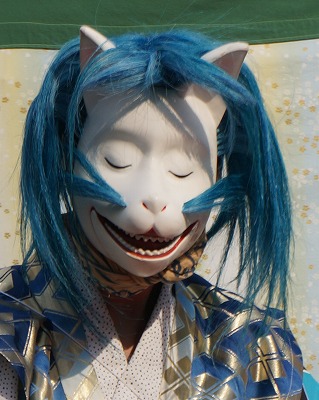
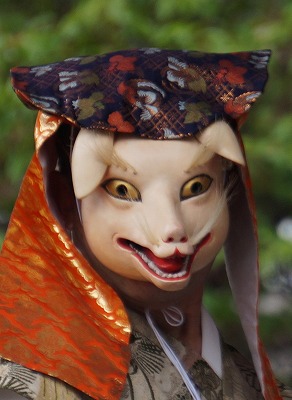
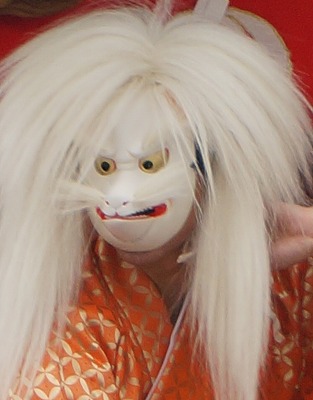
The fox is a very popular animal along with raccoon dog or monkey in Japanese old tales including mythology. In mythology, the fox is the messenger of the deity of rice planting. So many people can see fox figures in some shrines. In old tales, the fox and raccoon dog bewitch people. The fox often takes the shape of a woman and sometimes get married with people.

a fox playing a traditional Japanese flute

an image of Kagura

an image of fox in Kagura

an image of fox in Kagura

Others animals

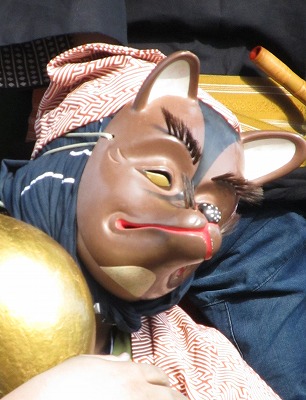
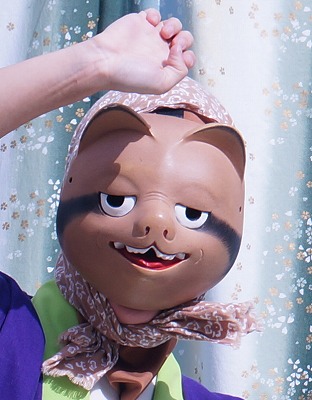
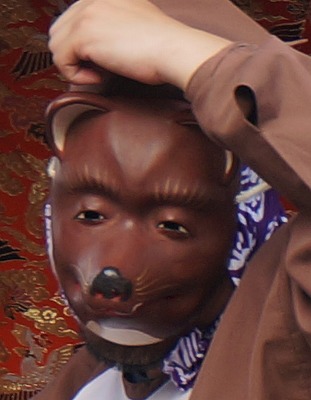
 Raccoon dog Raccoon dog is a popular animal in Japanese old folktales. They hardly appear in Kagura. We can often see them in festivals. It is said that this animal bewitches people, however, they have less power than the fox. There remain various legends all over Japan.

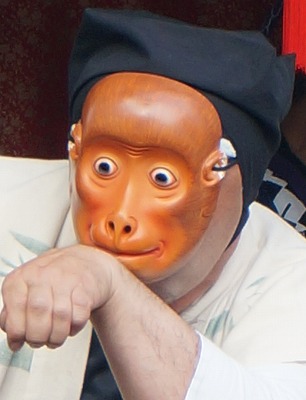
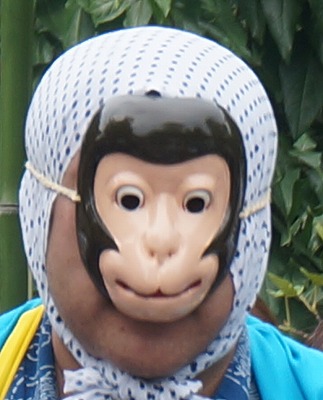
monkey mask in Japan
a monkey

a monkey mask
a monkey

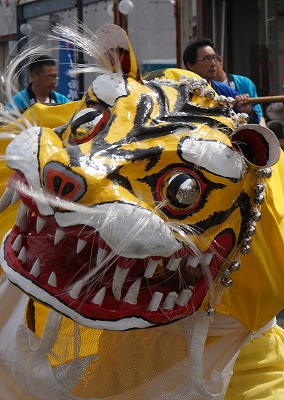
a tiger

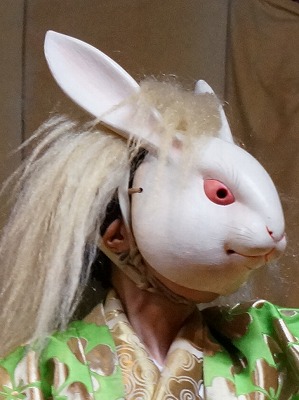
a rabbit mask
a rabbit

 Monkeys are very popular animals in Japanese old tales, too. If you want to see these masks, you should go to some festivals. We can see tiger masks in Iwate prefecture. “The Tiger dance” is similar to “the Lion dance”. Rabbits play an active role in Japanese mythology. In the story, the rabbit is very clever but that cleverness backfires on the rabbit, and it was injured.

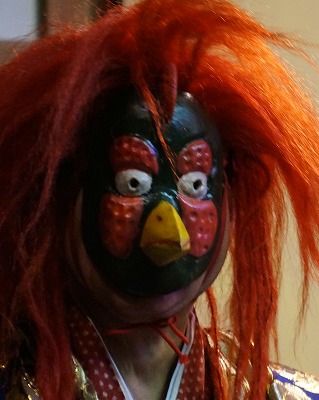
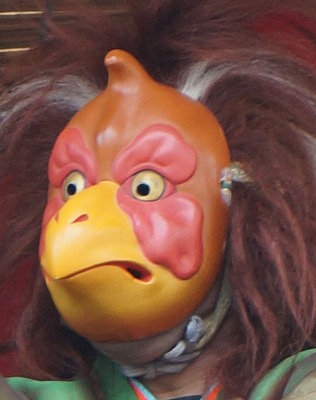
a pheasant

a pheasant

a red snapper

a shark

 The birds and the fishes are characters which emerge only in special programs in Kagura. In Japanese mythology, a pheasants and ravens play active roles too. According to a mythology in which a three-legged raven guided the first Emperor to victory in a battle, this three-legged raven is designed on the emblem of the Japan National football team.
 We hardly have a chance to see these masks.

Orochi

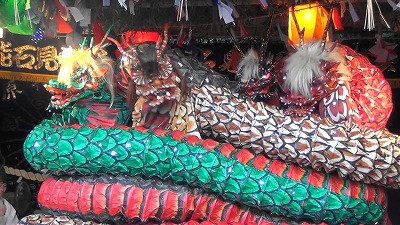
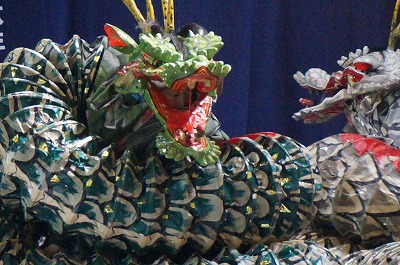
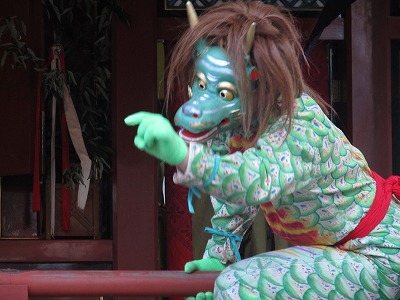
“Orochi” is the legendary monster. “Yamatano-orochi” is the correct name. Its image is similar to the dragon. This creature emerges in the famous myth. This legend tells that this monster had eight heads and eight tails. It came to a village every year, and devoured women. “Susano”, a deity, heard this, and slayed this monster. This legend is one of the highlights of Japanese mythology. This program of Kagura based on this tale is often played. Especially, the Kagura group in Iwami (Western region of Shimane prefecture) always plays a program about this monster. It is the most popular program in Kagura.

Shishi (the Chinese Lion)

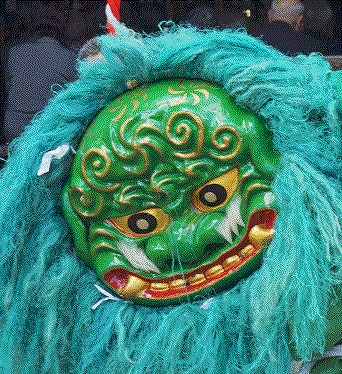
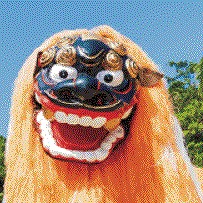
“Shishi” is the most popular legendary animal in Asia, especially Japan. In this area, there did not exist the lion. So, all molding designs are products of the imagination. It is difficult to determine a single image because there are so many varying images.

 The Lion dance of Hakone
Hakone, Kanagawa

The Lion dance of Toyama
Shinminato,Toyma

 The Lion dance of Tochigi
Tochigi

The Lion dance of Sado
Sado, Niigata

Shishi (dear)

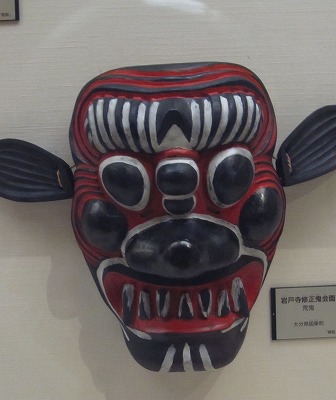
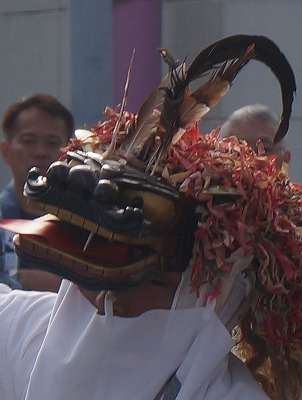
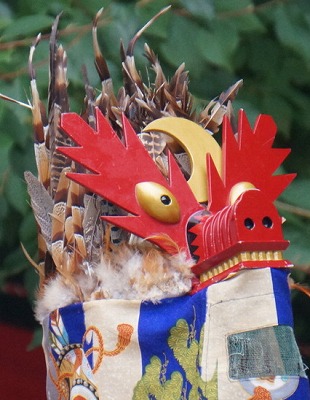
 The word “Shishi” had meant the animal collectively in ancient times. In Tohoku region (northern region of Japan), “Shishi-mai (dance) doesn’t mean the Lion Dance, but “the Dear dance”. “The Dear dance” has also many various kinds in each region.

Shishi of Yamagata
Yamagata

Shishi of Yamagata
Yamagata

Shishi of Iwate
Iwate

Shishi of Iwate
Iwate & Miyagi

Others

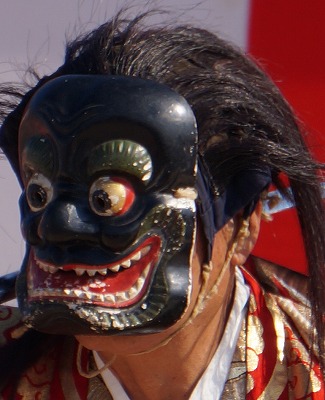
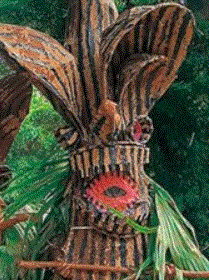
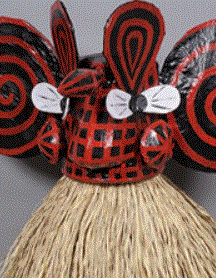
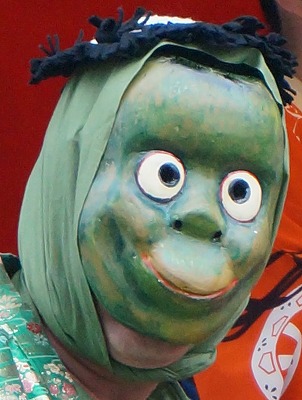
There are many kinds of masks other than the ones above. Some are creatures of imagination like “yokai“, some are creatures not classified into any group.

It is not too much to say that this country is a kingdom of masked characters. They appear on special days all over Japan. How are they active in festivals? This site will introduce each article in more detail. Please look forward to my next episode.