Cultural Significance of Lion Dances at Shikoda

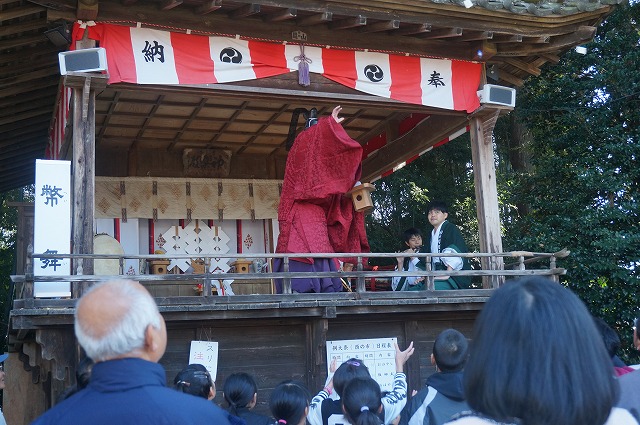
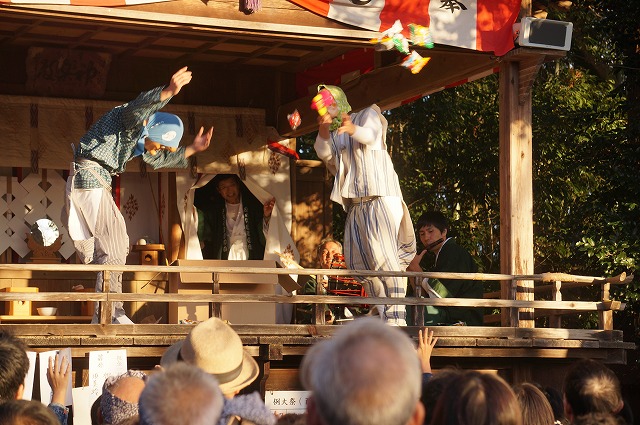
This is one of the three lion dances that can be seen north of the Kanto region. Although there are many similarities between the three lion dances, if you look closely, you will notice that the lion dance performers are different from each other and the performances are also different, which makes it interesting to see the characteristics of each region.
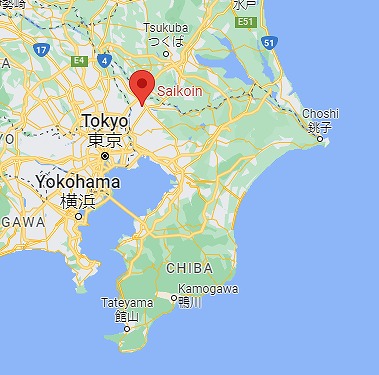


Date: August 16 every year
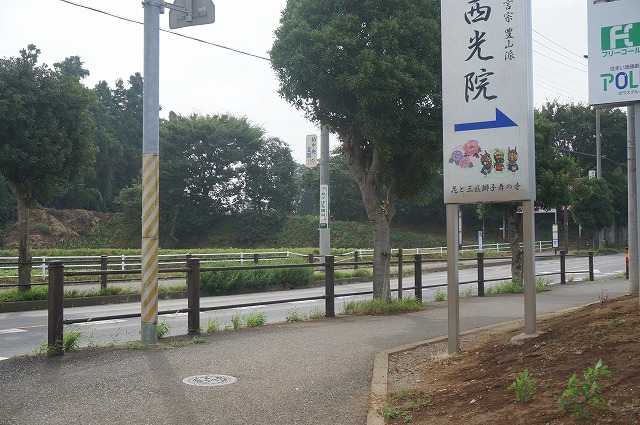
Location: Saikoin temple 西光院, 1214 Shikoda, Kashiwa city, Chiba prefecture, Japan
Access: 5 minutes by bus from the west exit of Kashiwa Station. Get off at Sangen bus stop. Approximately 40 minutes from Tokyo to Kashiwa on the Ueno Tokyo Line

This article is based on 2019 visit

The few days before and after August 15, centering on August 15, are called obon, and various ancestral memorial services are often held. People often return to their hometowns during this period. Originally, August 15 was July 15, but since the Meiji government changed to a new calendar, August has become common throughout the country.
The lion dance here is also held in conjunction with the Seikoin temple, where the event is held, as the Seikoin temple holds a memorial service.
3:30 p.m. Entrance
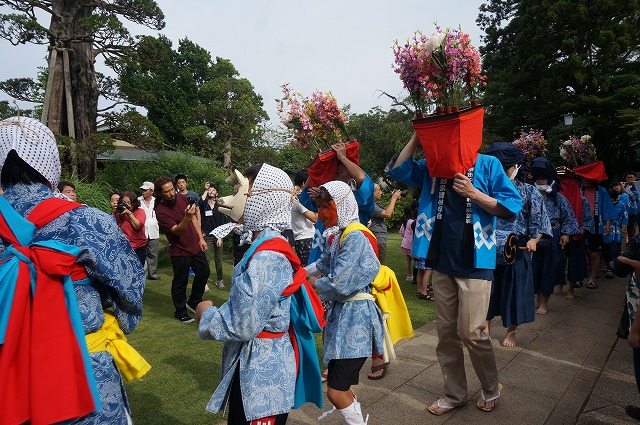
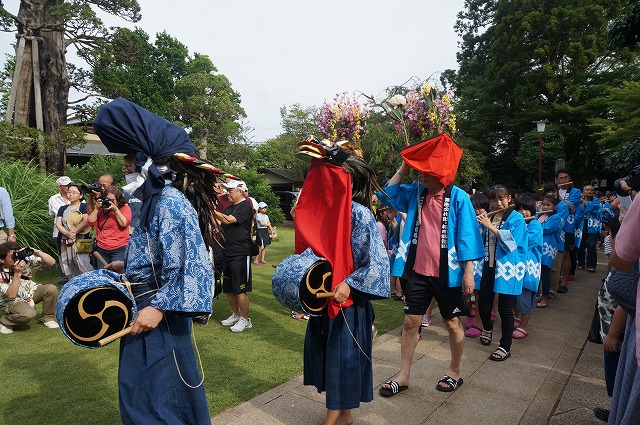
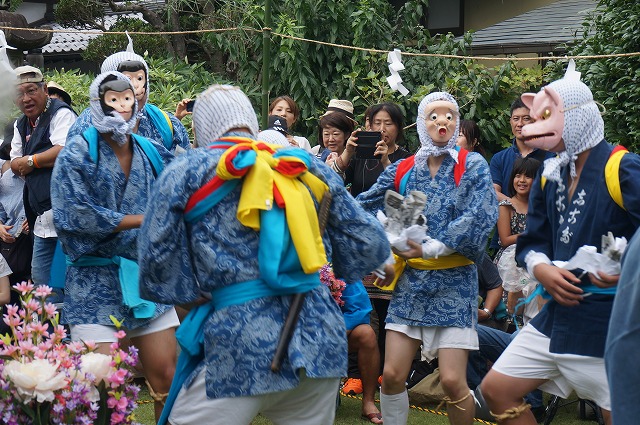
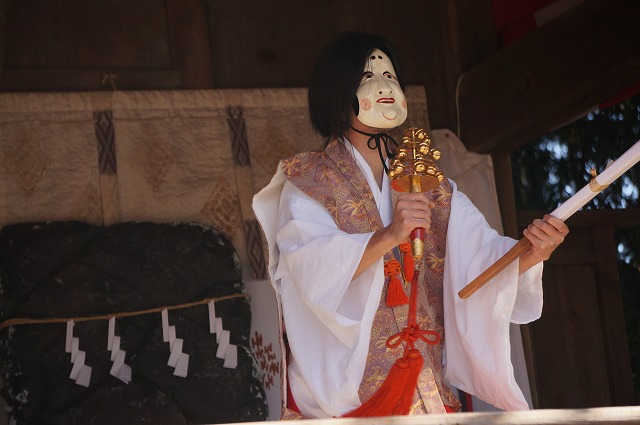
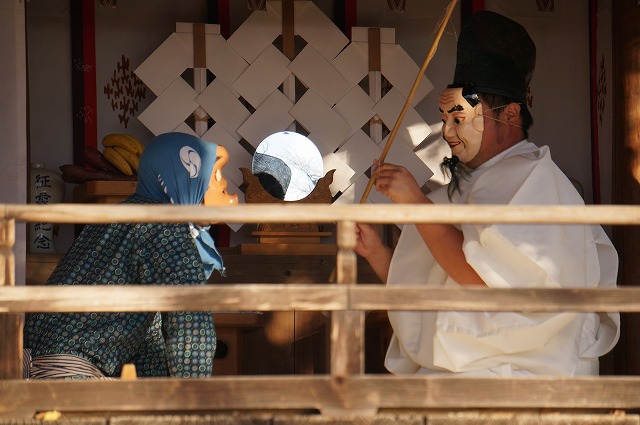
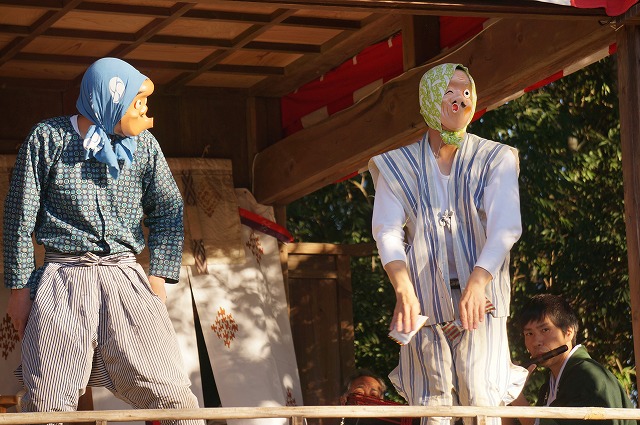
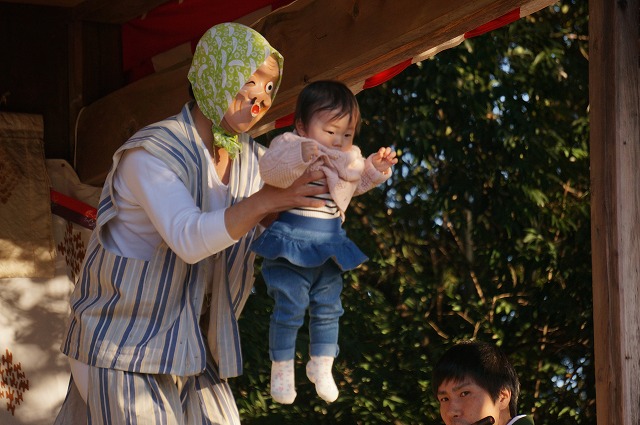
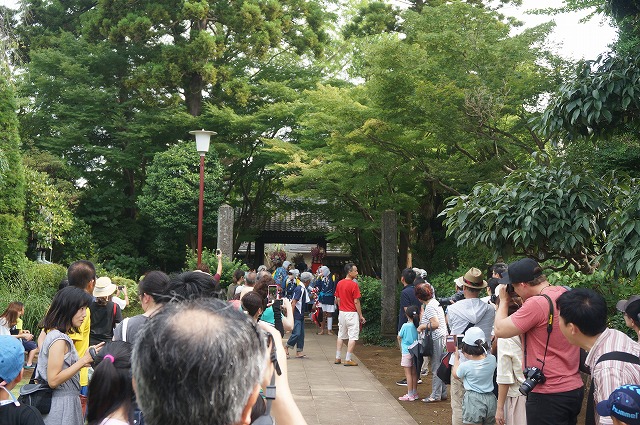
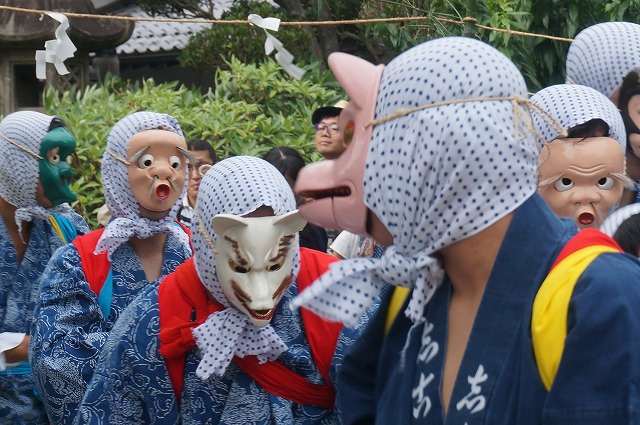
At this time of the day, when you get off the bus and head toward the temple grounds, they are already full of people. After passing through the gate, there is a straight line of stone pavement from the gate to the main hall. In front of the main hall, bamboos are erected on all four sides, and ropes are tied between them to form a boundary. This is today’s dance stage. People from both sides of the street crowded around the dance space, eagerly waiting for the main actors to appear on stage. Soon, the lively sound of a flute echoes, and the dancers appear. Normally, the three lions would be the first to enter, but here, there is a strange group in front of them. Hyottoko, foxes, monkeys, etc. This group is commonly known as “sarumai (monkey dance)”.

Sarumai
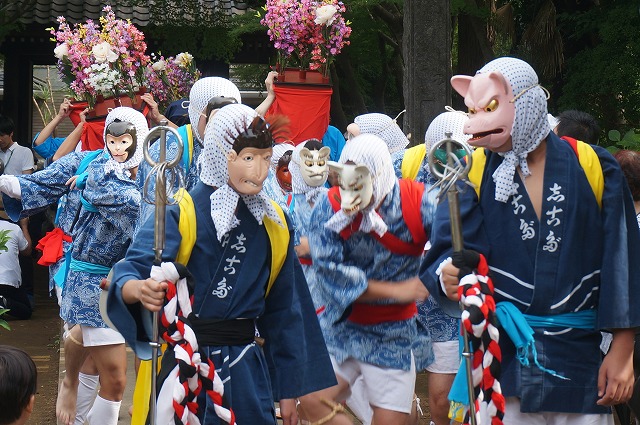
They dance joyfully, making odd noises. The musical group that followed behind them sits on a prepared blue sheet. The musical group that followed behind them was seated on a prepared blue sheet. The lions take a short rest.
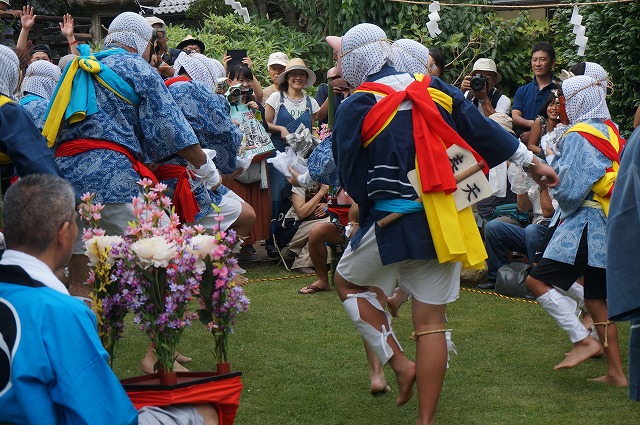
The boundary stage is covered with grass, so everyone is barefoot. A group of people who were dancing happily on the lawn suddenly started sprinkling white powder in their hands in all directions. What was it? It was salt. A lot of salt. Spectators ran for cover, and those with cameras rushed to cover them with towels and other items. A large amount of salt is showering down on them like a rainstorm. If a child dancer left some of the sprinkled on the ground, the people around him or her would say, “Keep sprinkling”. When there is still some left over. The salt is said to be spread about 5 kilograms in all. When they finish rolling, they quickly disappear. When the audience flaps their clothes, a large amount of salt spills out. Legend has it that bathing in salt will bring good health.
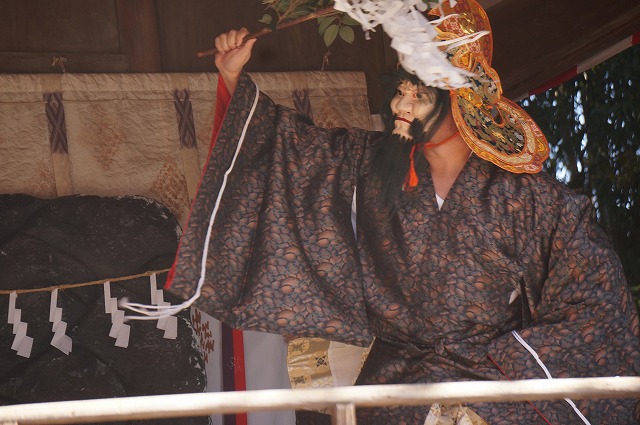
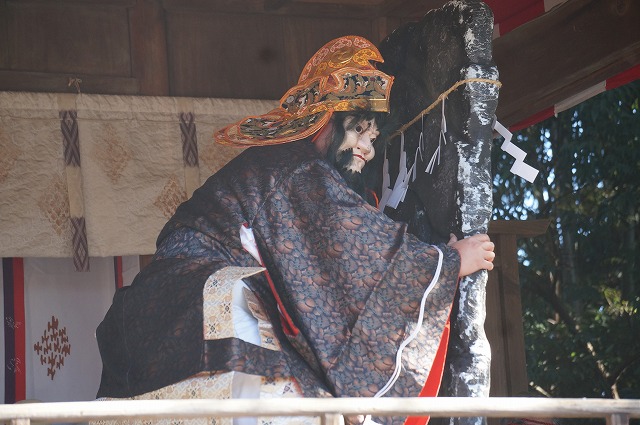
Shishimai (Lion dance)
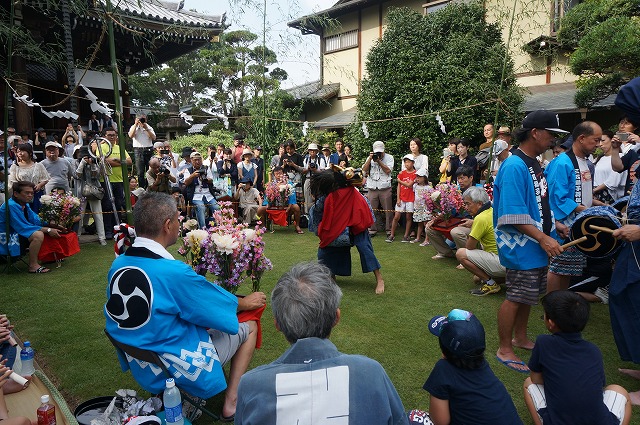
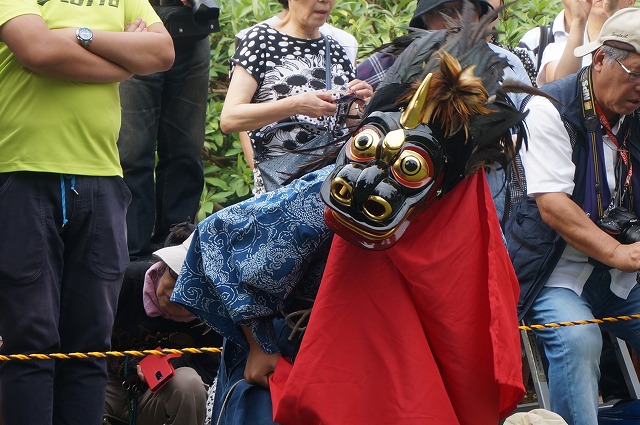
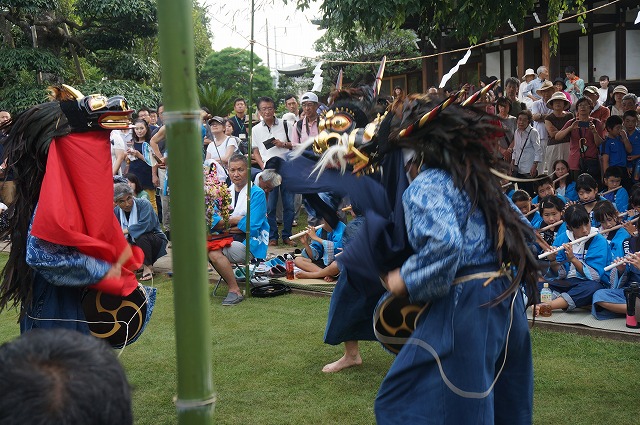
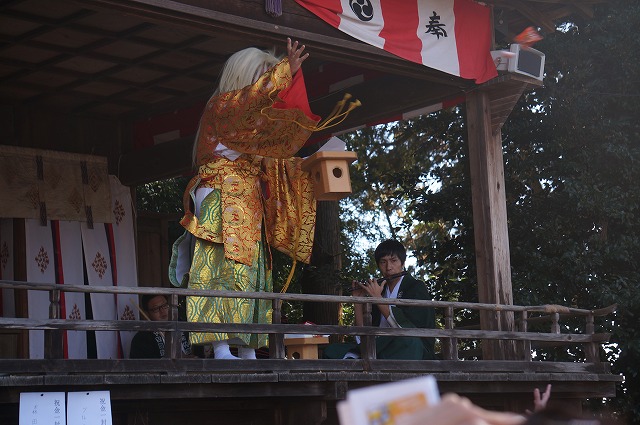
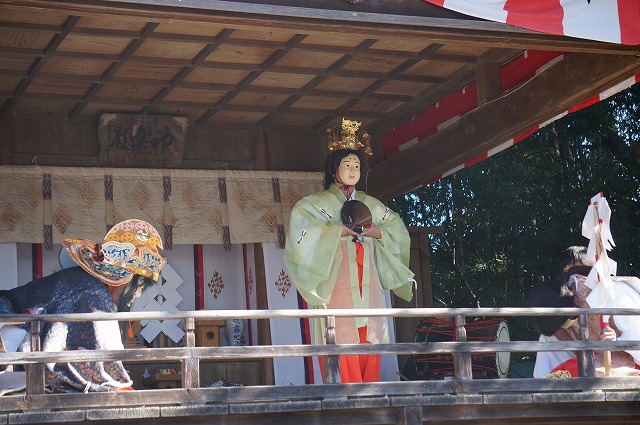
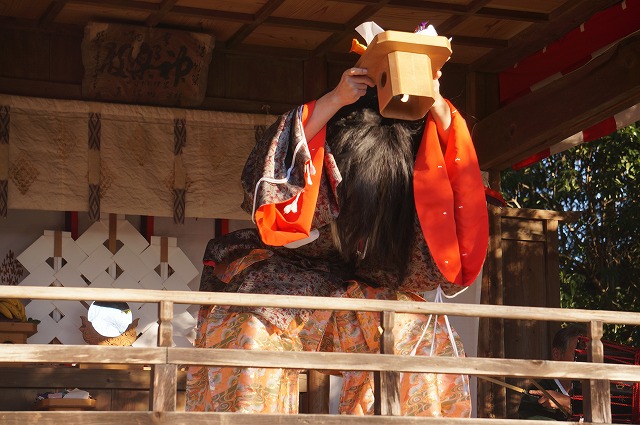
Once the sarmai guys are gone, the lions finally appear. At first, each performs a solo dance. First is the female lioness. Hanagasa (flower hat) stand on all four sides of the stage, adding to the stage’s splendor. The female lioness wears a red cloth and has one small horn. Until recently, there used to be a performance in which a fox with a stick behind female lion would follow lion at this time, but this was not done when the author visited there (2019). Perhaps the trend of the times is to abolish such sexual performances.
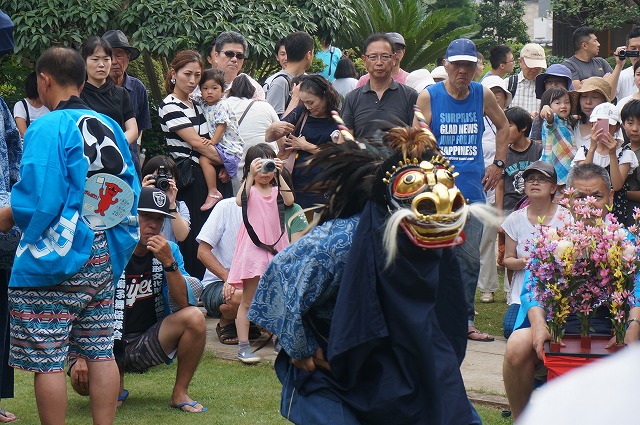
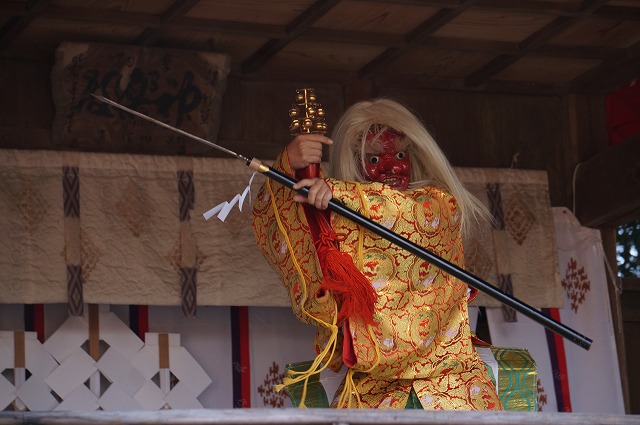
Next comes the “Nakajishi”. This is a young and energetic lion, so the dance is also energetic. It has two twisted horns.

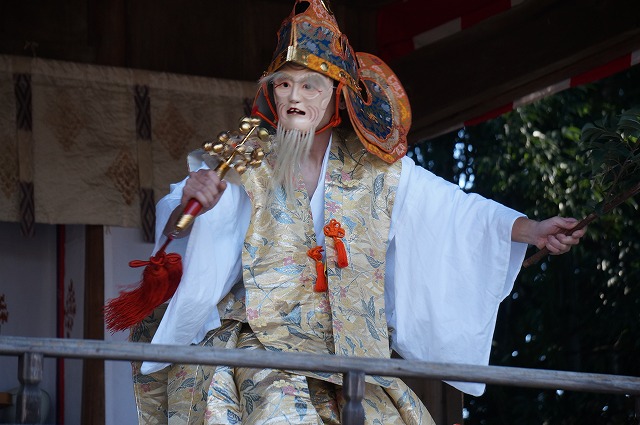
The last one to appear is “Ojishi,” who is an experienced chief who controls the family. He is actually the most experienced dancer in the company. He has two straight horns. The dancer has to appear majestic.
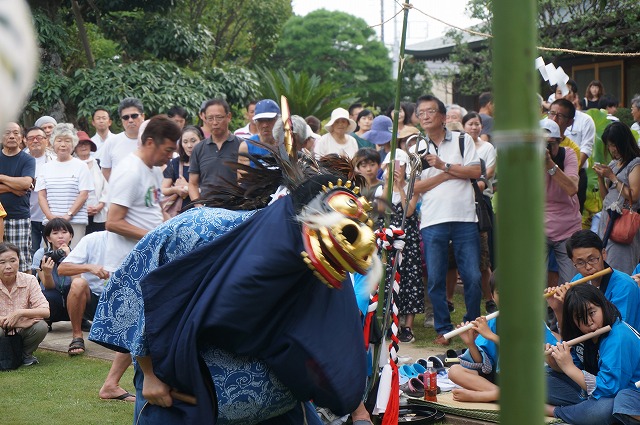
After each solo dance, the hanagasa are lined up in a row, and now the three animals move around in between them.
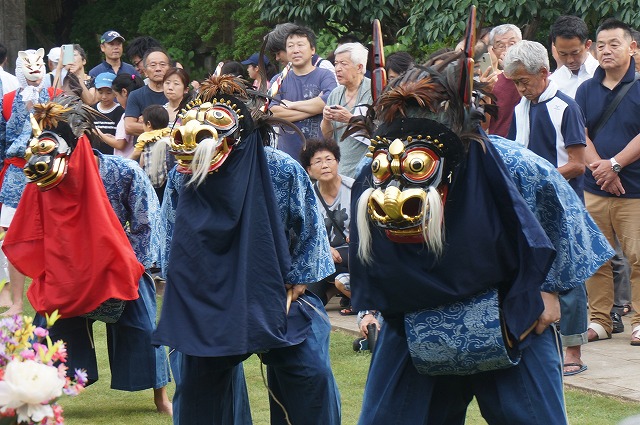
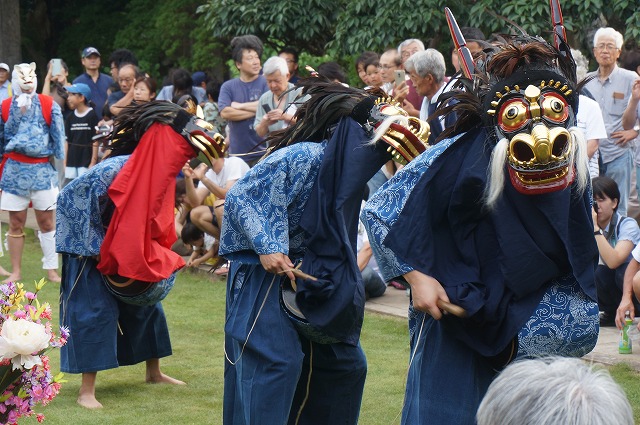
After the lion dance is over, the three lions gather for a final time to sing a song. The song is a kind of Buddhist prayer, and the lion dance originally served as a prayer for rain. It takes about one hour to complete the dance. The group disbanded at 4:30 p.m. People leave the shrine, paying salt to the lions.

cf. https://matsurito.jp/news/memories4/index.html Canon Marketing Japan Inc. Supported by the Agency for Cultural Affairs
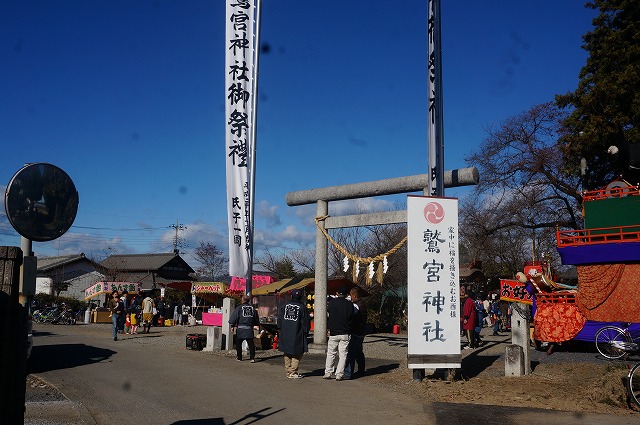
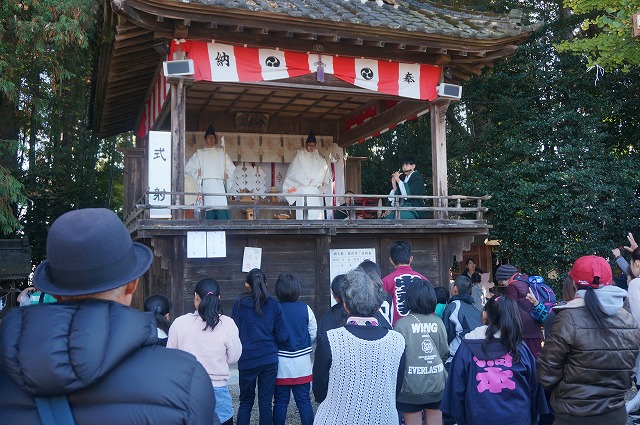
Forced egg eating ceremony and Kagura


Date: Every year on November 23
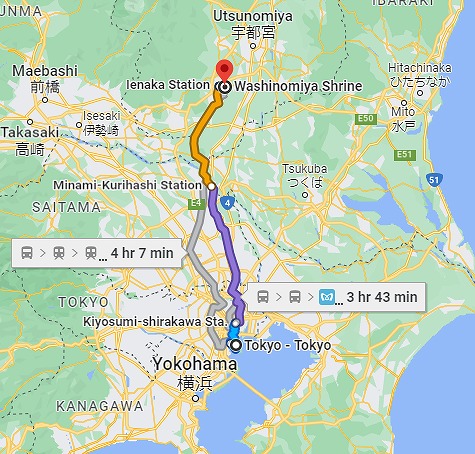
Location: 451-2 Tsugamachi Ienaka, Tochigi city, Tochigi prefecture
Access: About 2.5 km from Ienaka, Tobu Nikko Line. 2 km walk from Noshu Otsuka, Tobu Utsunomiya Line.
     →cf. https://www.tobu.co.jp/foreign/en/news/pdf/201703-01_route%20map.pdf Tobu line route map

prologue

Today we also have two of our guides on the show for the first time in a long time. For those of you who do not know them, please refer to this page. →https://discoverdeeperjapan.com/2020/04/09/4kaguras-in-kanto-area-in-spring-vol-1/

It seems that Sarutahiko invited Hyottoko on a journey, using the ritual of ‘mochi-nage’—where rice cakes and sweets are thrown into the crowd—as a lure, in the hope of deepening his understanding of Kagura…

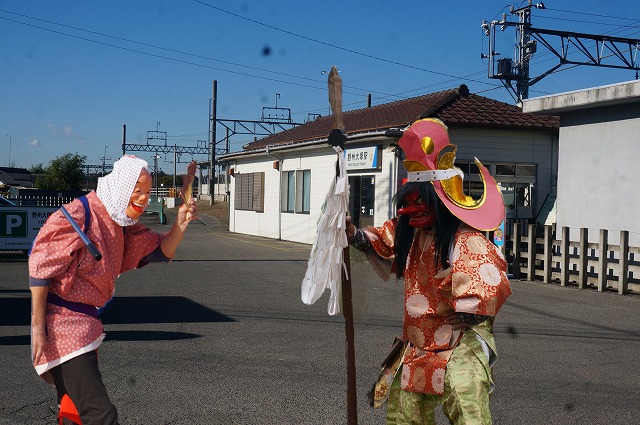
Long time no see. Are we at Yashu-Otsuka 野州大塚 Station? It is a very quiet and unpopular station, isn’t it?

You’re the one who loves getting souvenirs from the “Mochi Nage”, right? So I’ll guide you to a place where you can get a lot of them today.

I appreciate that, but…

Besides, this time there is a rare ritual called “Goranshiki” in the set.

Let’s go then. It’s close to the station, right?

You have to walk about half an hour.

Doh, doh, doh.

It looks like they finally arrived.

It’s pretty crowded, isn’t it?

There is something going on at the festival for a day and the “Goranshiki” is quite popular!

10:30 am ~kagura starts

Unusually, people have already gathered from the beginning. Usually, it is only in the latter half of the day that people start to gather in droves.

Just watch and you’ll see.

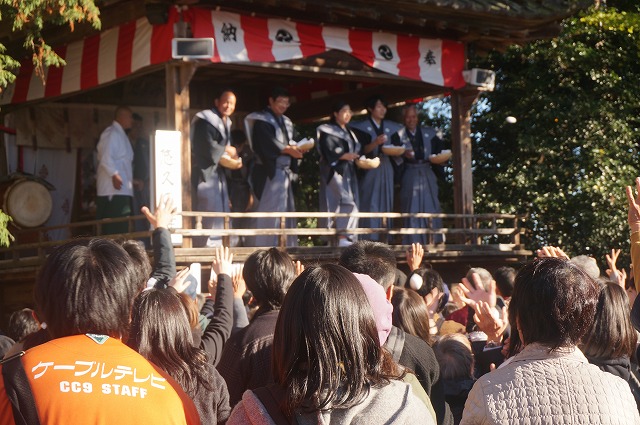
Oh, it’s already “mochi-nage”. Are they okay like this from the start?

Although it’s called a “mochi-nage (ricecake toss)”, it’s really just a candy toss.

Okina (the god of Kasuga)

Sarutahiko

Every time one of the acts is over they throw it every time.

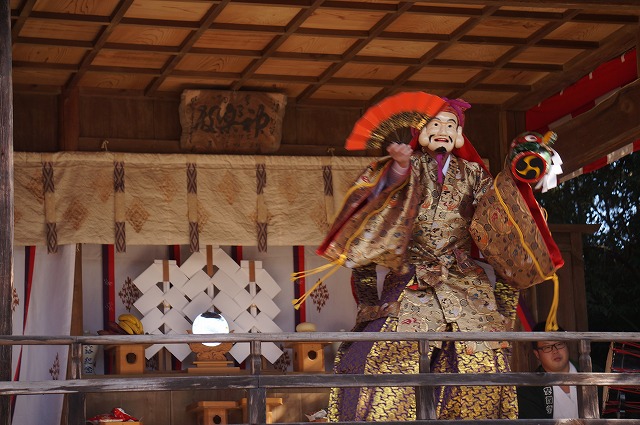
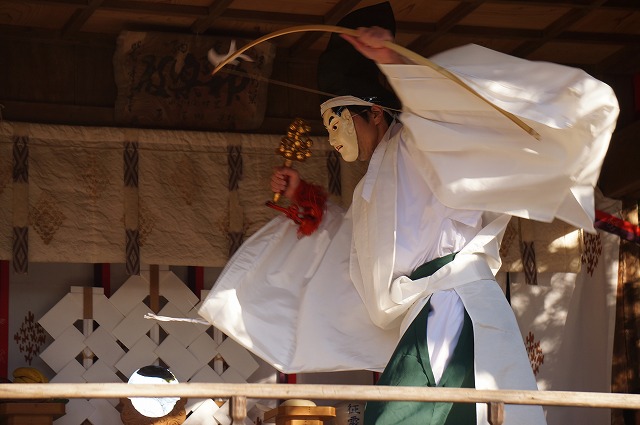
You may rejoice in the mochi nage, but you should also keep the kagura content. Old man plays a dance to appease the four directions of the earth. The red face and long nose of Sarutahiko* is, of course, the god of guidance.

*https://discoverdeeperjapan.com/reference/japan-mythorogy/japan-mychology-and-history/

Ameno-Uzume

Tajikaraono-mikoto

Oh, if the Okame-type masks have appeared, is this the Amenouzume of “the Opening Iwato*” ?

*https://discoverdeeperjapan.com/reference/japan-mythorogy/amano-iwatobirakithe-revival-of-the-deity-of-sun/

It’s the most important event in Kagura, or Japanese mythology. In ancient Japan, where there was a belief in the sun god, the resurrection of the sun god Amaterasu was of the utmost importance!

So, following Uzume, Tadikarao comes out and opens the Iwato, right?

Tajikarao open the “Iwato (the door of rock)

resurrection of Amaterasu

Here comes Amaterasu. Amaterasu is often represented by a mirror. In some places, only mirrors are placed. This depends on how important the kagura and the local community consider the Iwato opening to be.

Fox as a messenger of Inari

Daikoku-sama

The fox has come out.
So, from this point on, the performance leaves mythology behind and becomes rooted in the lives of ordinary people.

That’s the standard progression of kagura. You know that the fox is a messenger of the god Inari, the god of rice cultivation, right?

Of course I do, but I think there are quite a few people who think Inari is the fox. I didn’t even know about it until recently. But I know Daikoku-sama. When Daikoku shakes that mallet, treasures are piling up. Well, here it comes.

1:00 pm ~Goranshiki 強卵式

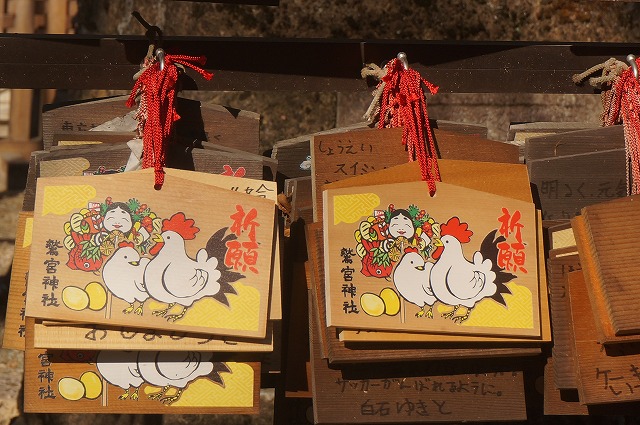
Ema 絵馬

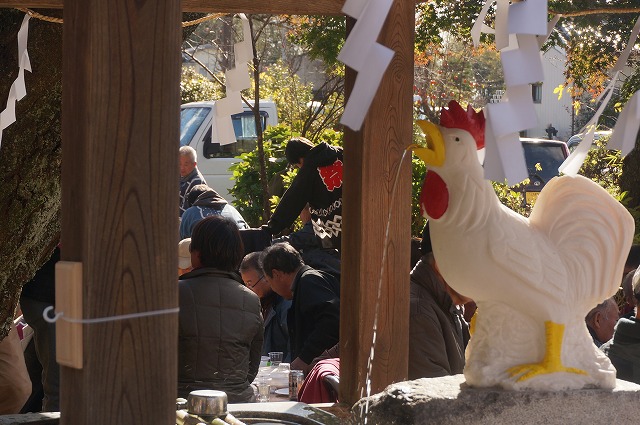
Looking again at the shrine grounds in this way, there are many bird designs. I had no idea that the place to wash hands and the ema (votive picture tablet) are also birds.

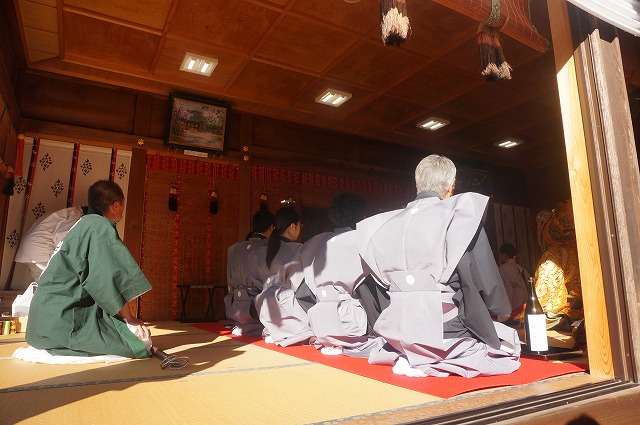
The Goran ceremony will be held at the main shrine. Here.

People wearing kamishimo (ceremonial kimono) are already sitting there. In front of them are bottles of sake. Is a banquet about to begin?

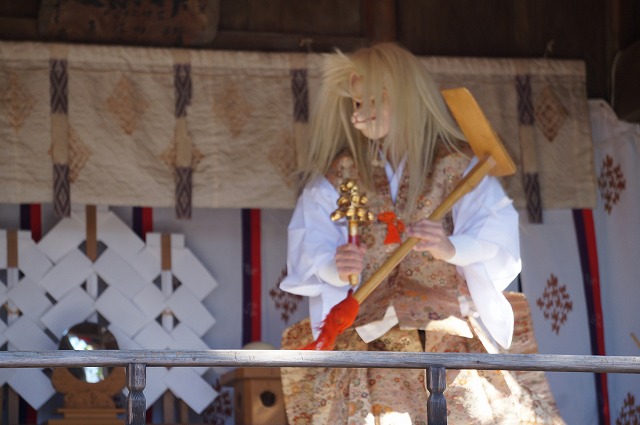
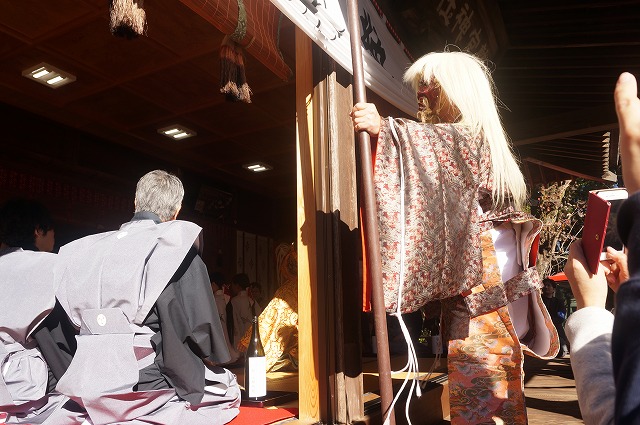
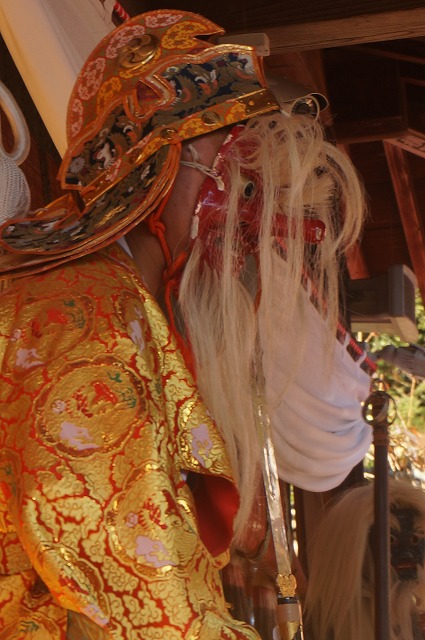
Finally, the tengu are ready.
It’s the main tengu and two attendants.

At first, three tengu were supposed to perform the ceremony, but they thought it was too messy and hard to see, so they settled on the current form.

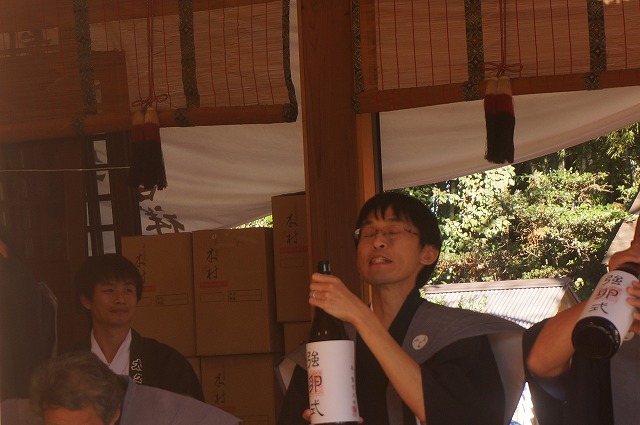
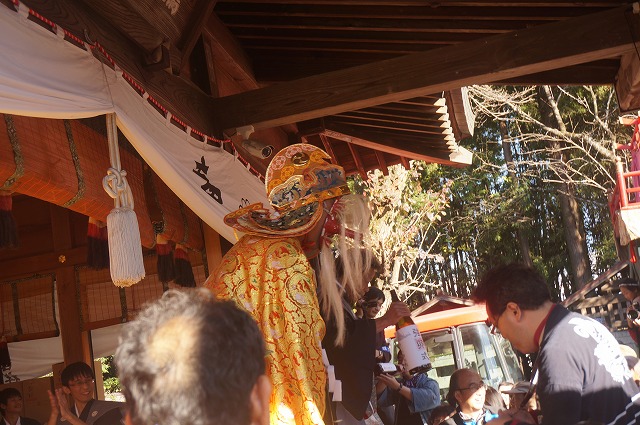
Oh well, it’s turned into a drinking contest. Tengu is forcing participants to drink sake.

With a issho bottle (1.8litter) of sake, even I would have a hard time drinking it all up. The jerks are so yelling for me to drink, or drink more.

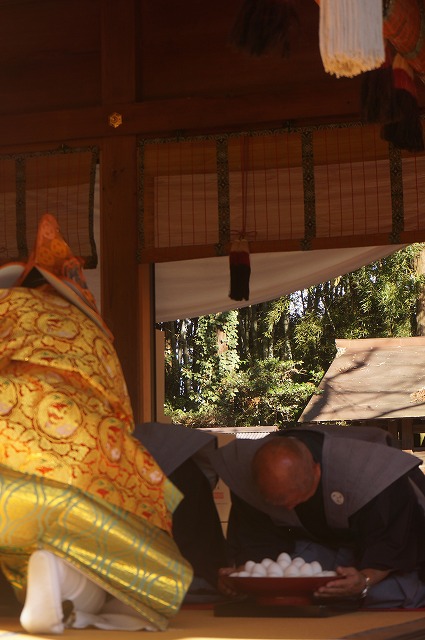
A heaping pile of eggs on a small wooden stand was brought.

Here’s how it all begins.
Here in the Tochigi Prefecture area, there are similar ceremonies such as the Nikko Gohanshiki and Hokkouji Gohanshiki, but the Gohanshiki here is a bit different. Nikko’s Gohanshiki originated as a way to show appreciation for rice, but here they really do it to show that it is not to be eaten.

In the past, based on a legend at the time of the shrine’s founding, it was forbidden to eat chicken at shrines, but this has not been made known to the public. This is why they decided to start this event, which started as recently as 2001.
So, in the ritual here, you are forced to eat however much you want and refuse to eat until the end. The tengu praises them for it.

So no grilled chicken or anything like that in the food stalls?
By the way, what are they going to do with all these eggs?

Eggs are thrown to the audience. However, if the egg is thrown as it is, it will break, so another ball is thrown to replace it later… Where did it go, Hyottoko?
Oh, he’s already gone to get the egg!

3:00 pm ~second half of Kagura

Hachiman (war of god) and Sanjin (mountain god), they’ re still throwing as usual.

Ebisu and two Hyottoko. Your fellos have come out.

We Hyottoko are entertainers. We make people laugh with our comical antics and help to lighten the mood. They’ll certainly perform.

They do it, don’t they? It has to be this way.

Well, I’ve got loads of sweets and some eggs again today—I couldn’t be happier!

Am I really conveying the charm of kagura with this? sigh

The autumn sun sets early. Hurry, train, come on!

cf. Tochigi TV https://www.tochigi-tv.jp/news2/page.php?id=294709