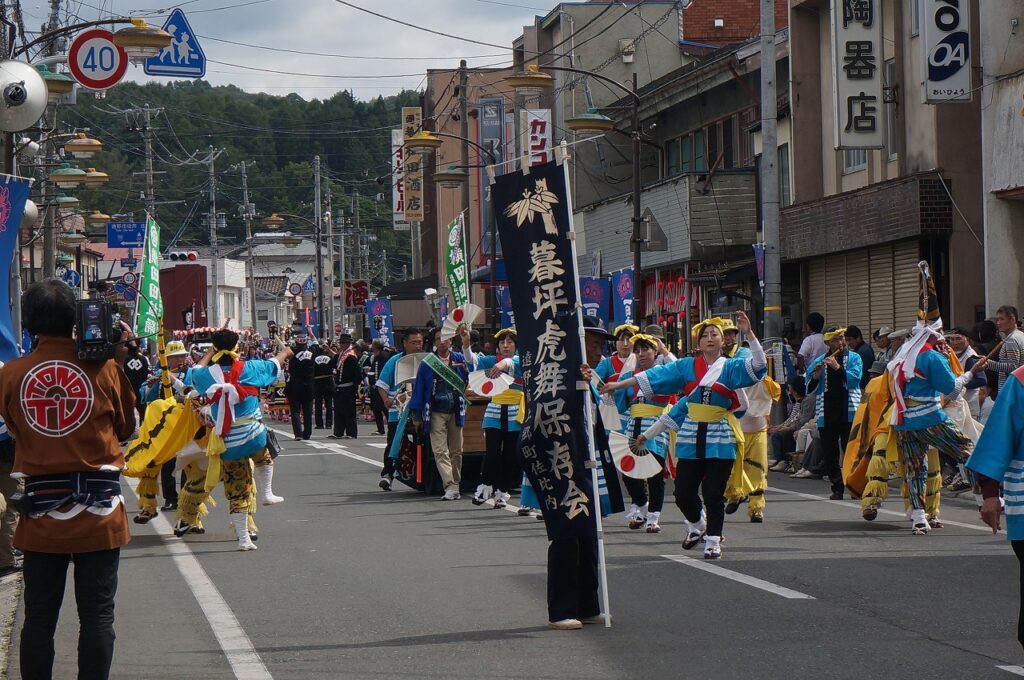
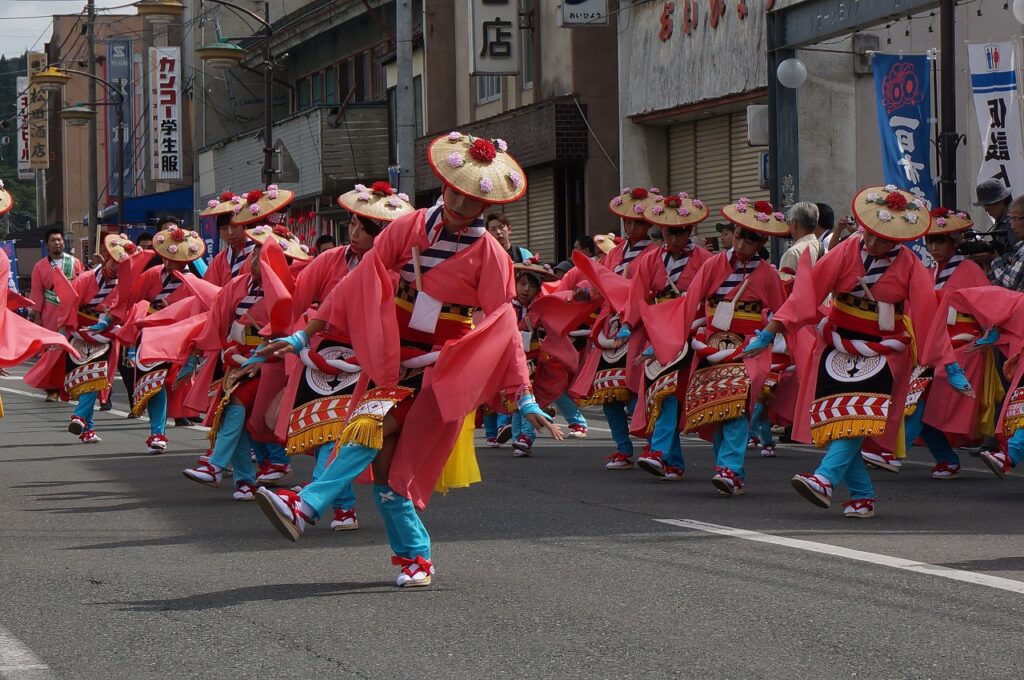
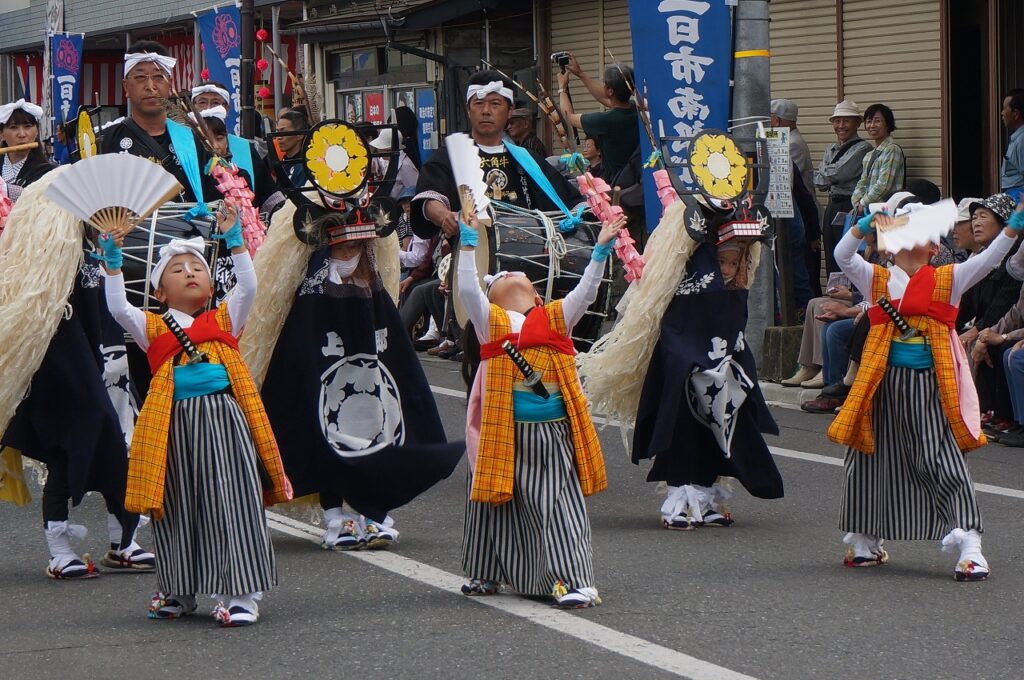
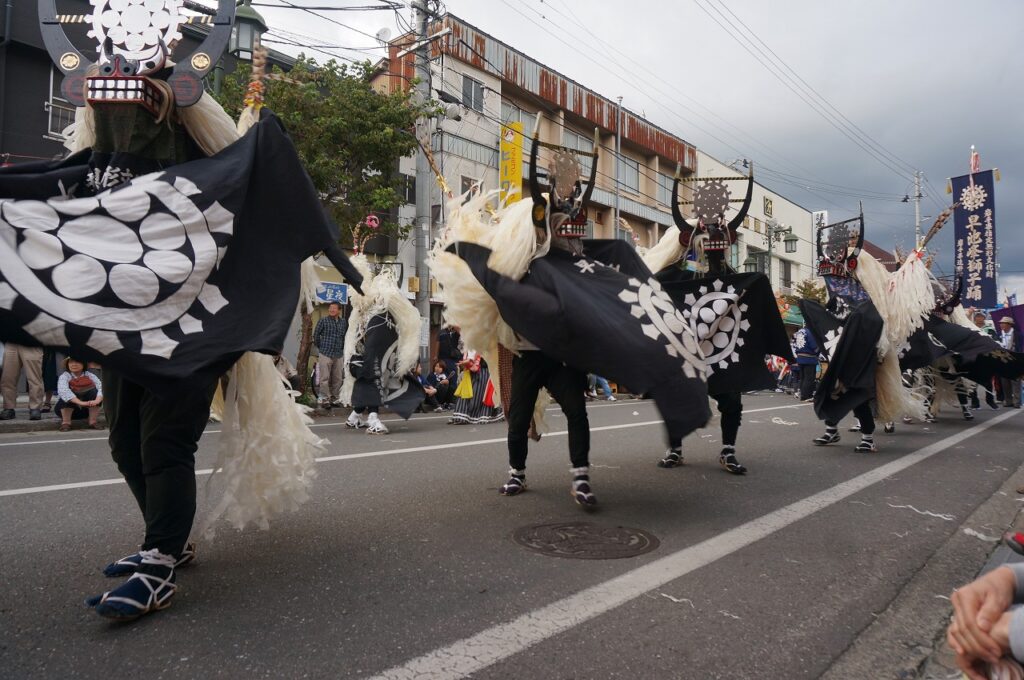
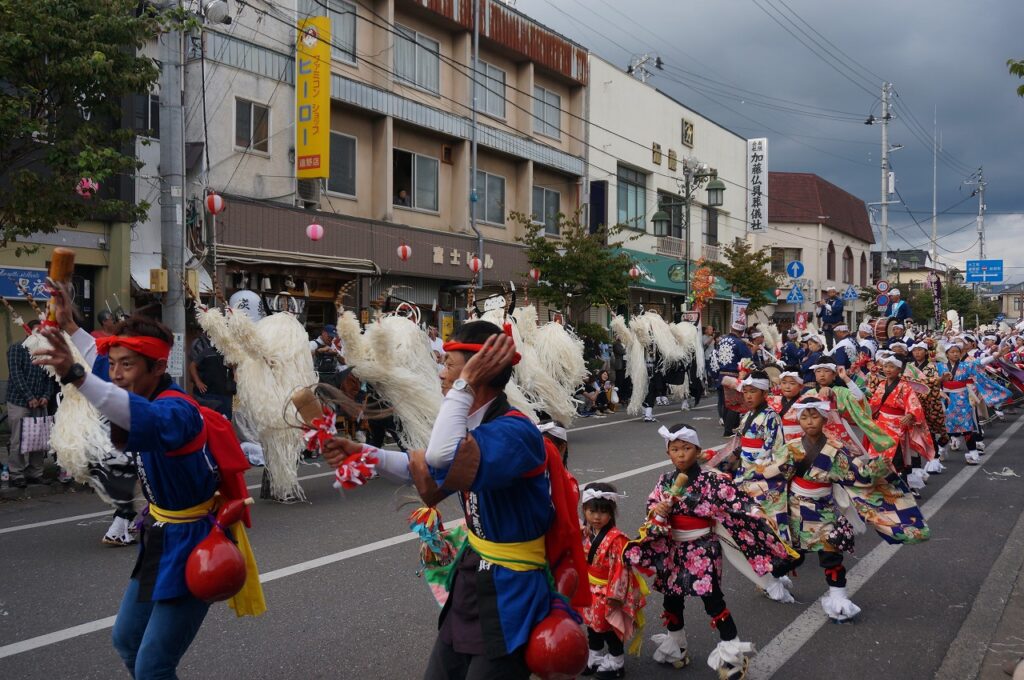
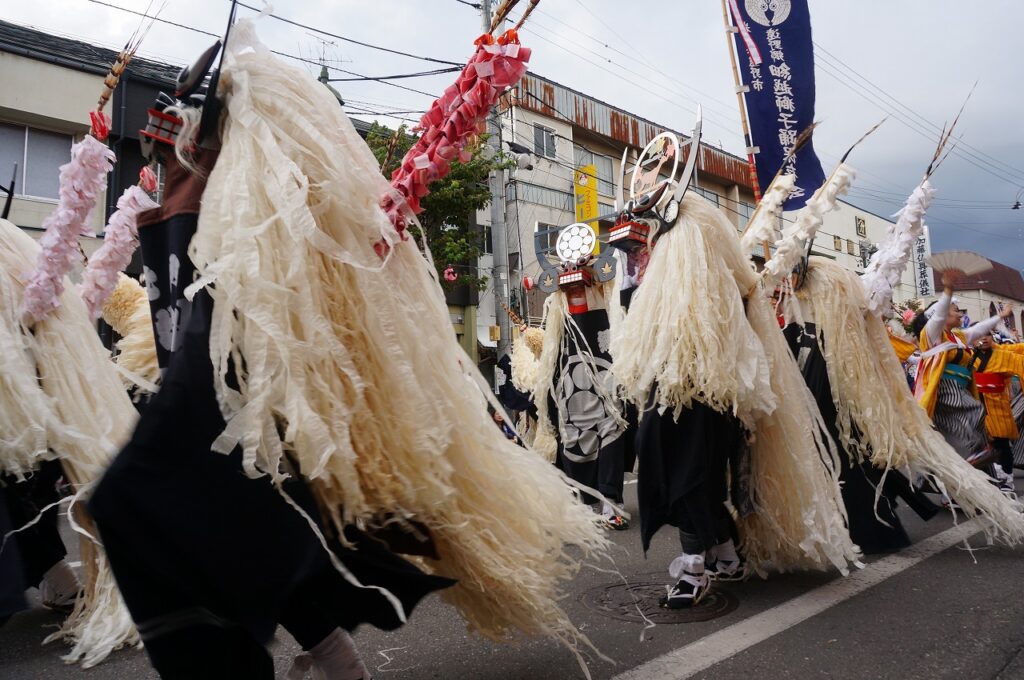
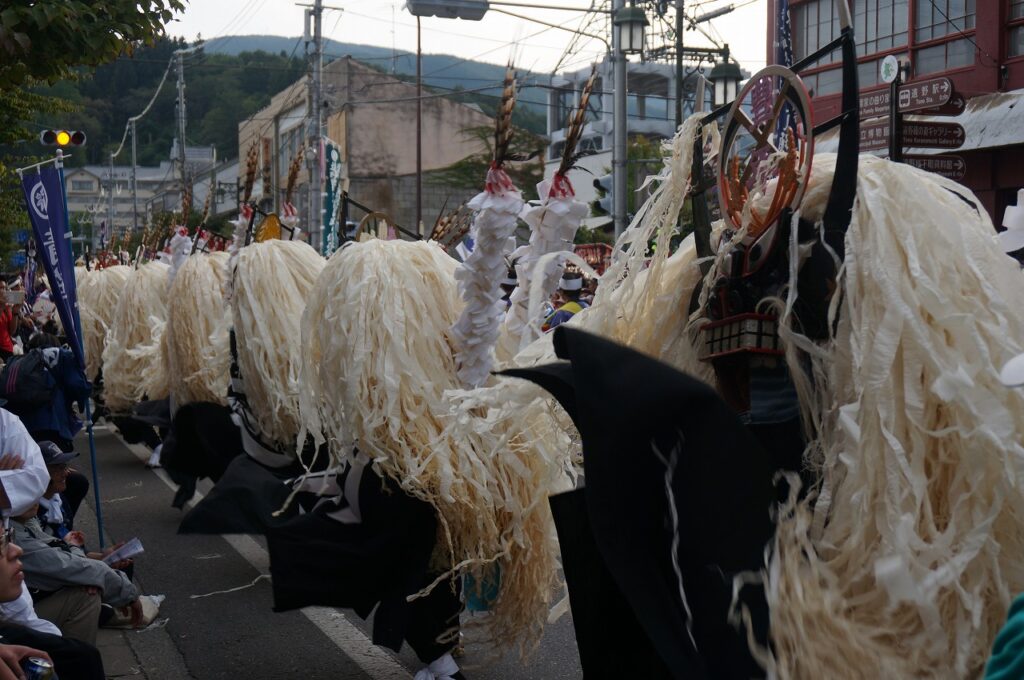
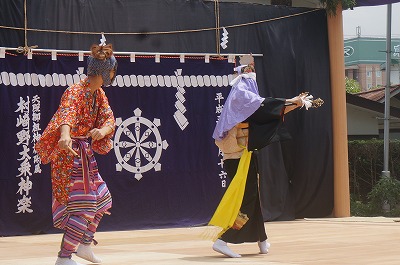
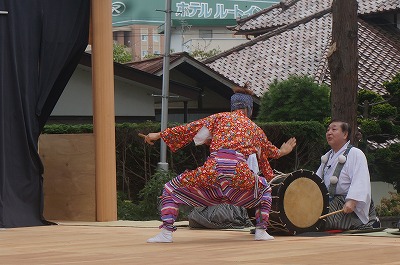
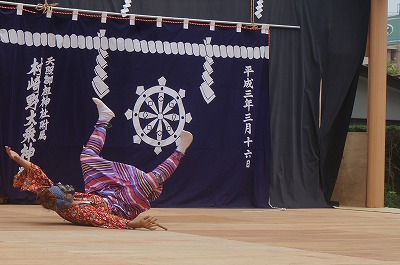
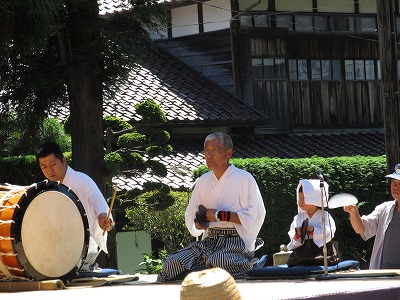
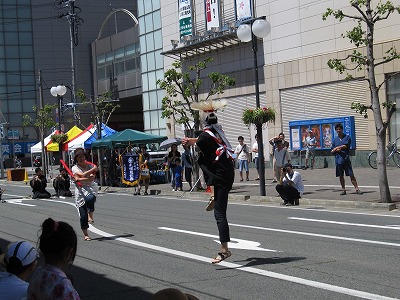
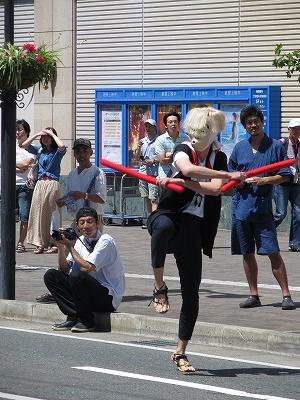
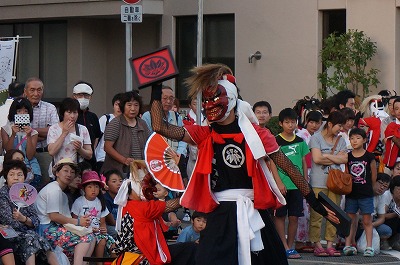
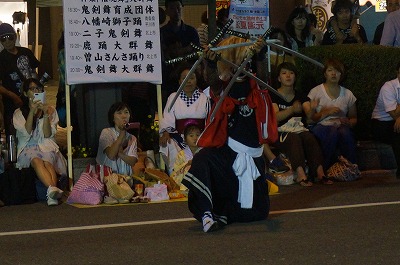
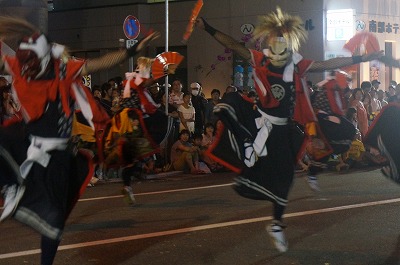
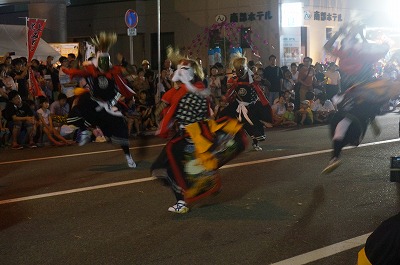
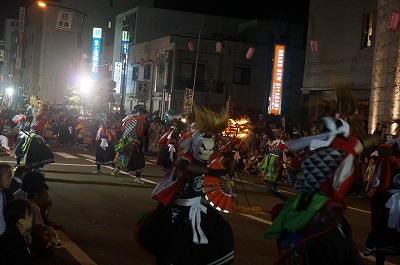
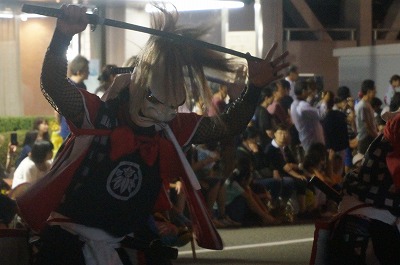
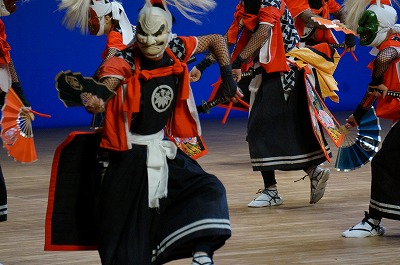
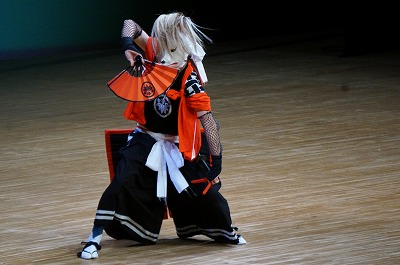
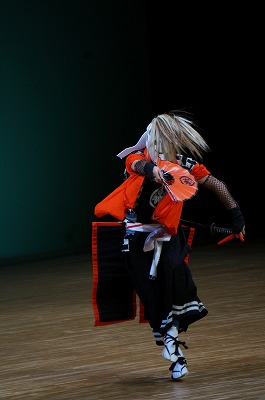
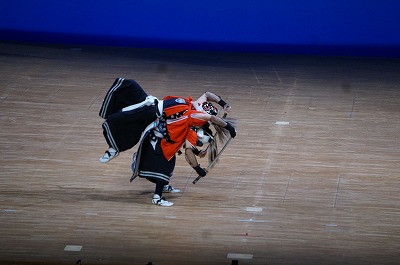
A Festival of Remembrance, Performing Arts of Remembrance ~The Sanriku Minato Festival 三陸港まつり
Date; 16th August every year Location; Enmamji-temple and Okirai fishing port Namiita, Okirari, Sanriku-chō, Ofunato City, Iwate Prefecture Access; It takes about two and a half to three hours to get from Tokyo to Shin-Hanamaki by Shinkansen (bullet train). From there, it takes about two hours to get to Kamaishi by conventional train. From there, change to the Sanriku Railway to reach Sanriku. The journey takes about 30 minutes.
This article is based on visit of 16th, August, 2018
The memory of the earthquake will never fade
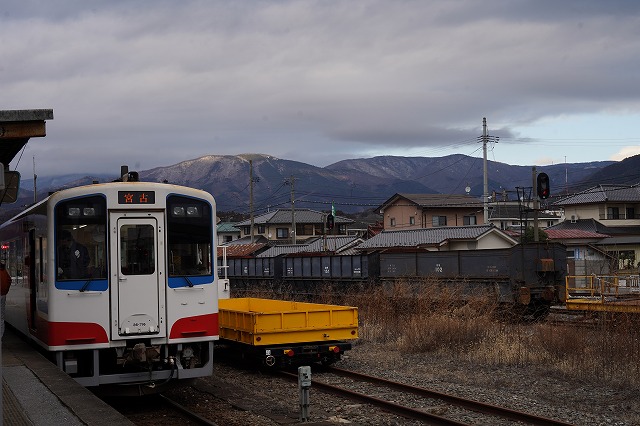
Sanriku railway
From Kamaishi, I set off for Sanriku on the local Sanriku Railway. This area is famous for its rias coastline, and the rugged terrain is clearly visible from the train window. These areas suffered extensive damage in the 2011 tsunami; in the regional centre, Ofunato City, the town was almost completely destroyed.
Okirai coast
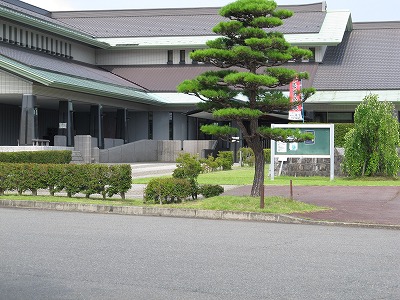
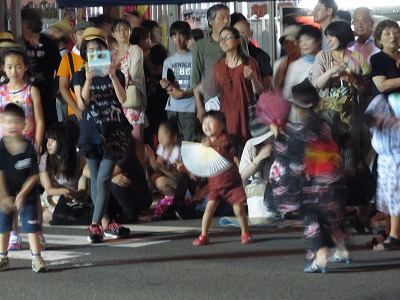
Unfortunately, it was raining that day. With the event in doubt, people gathered at the community centre, which served as the alternative venue in case of rain. Inside the centre, paintings depicting local folk arts from the surrounding area were on display.
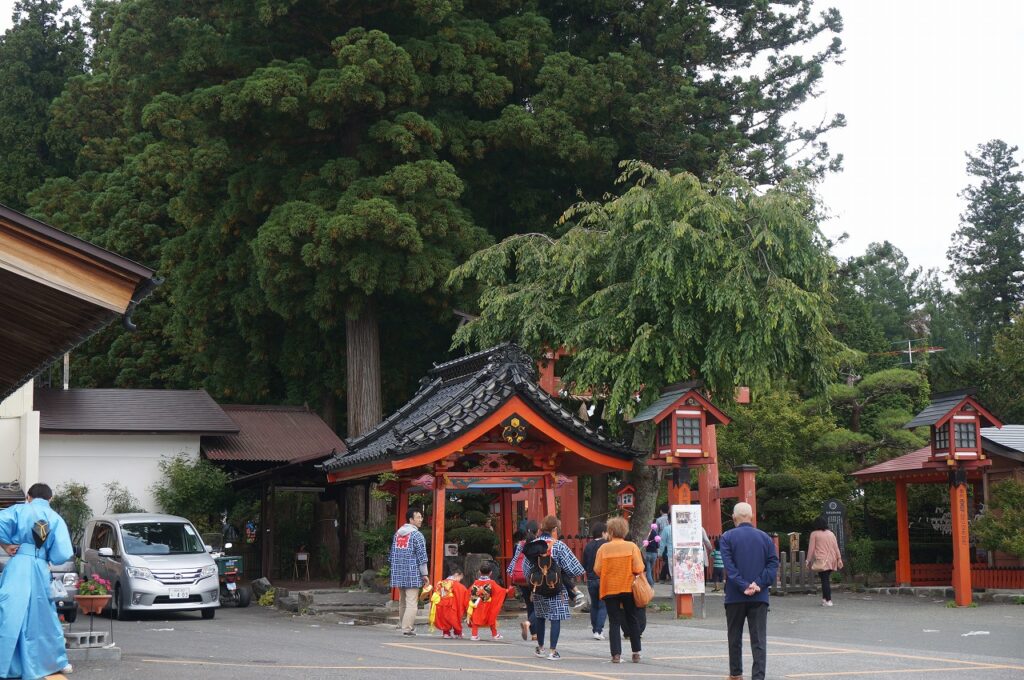
Enmanji -temple
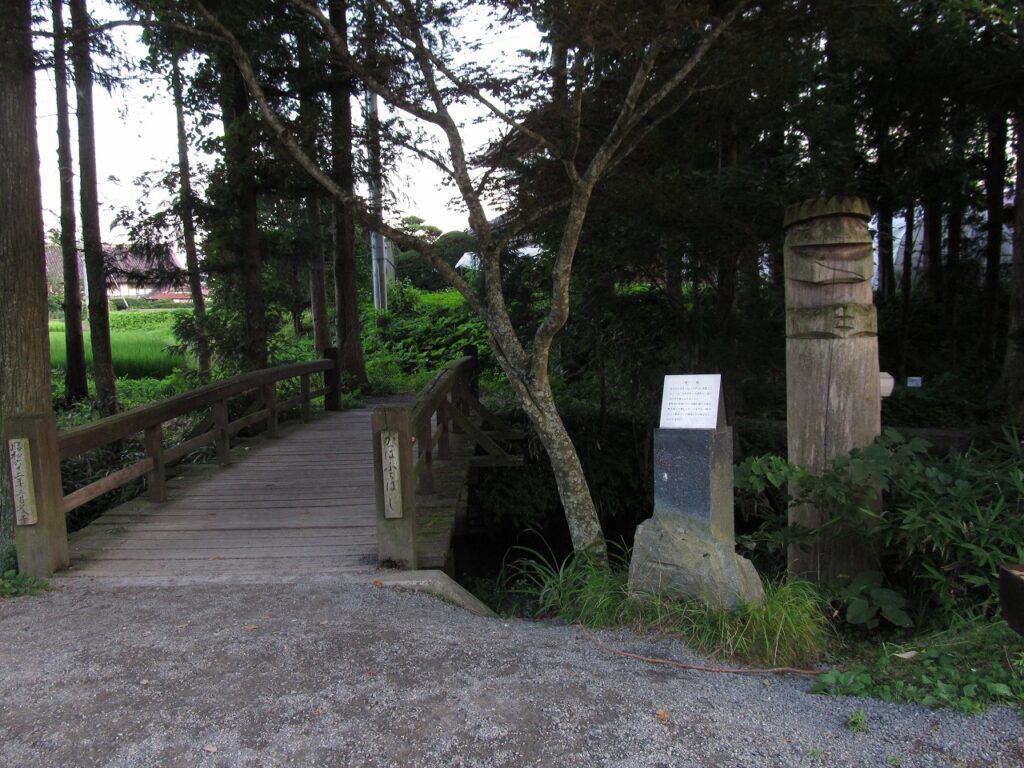
The entrance of Enmanji -temple
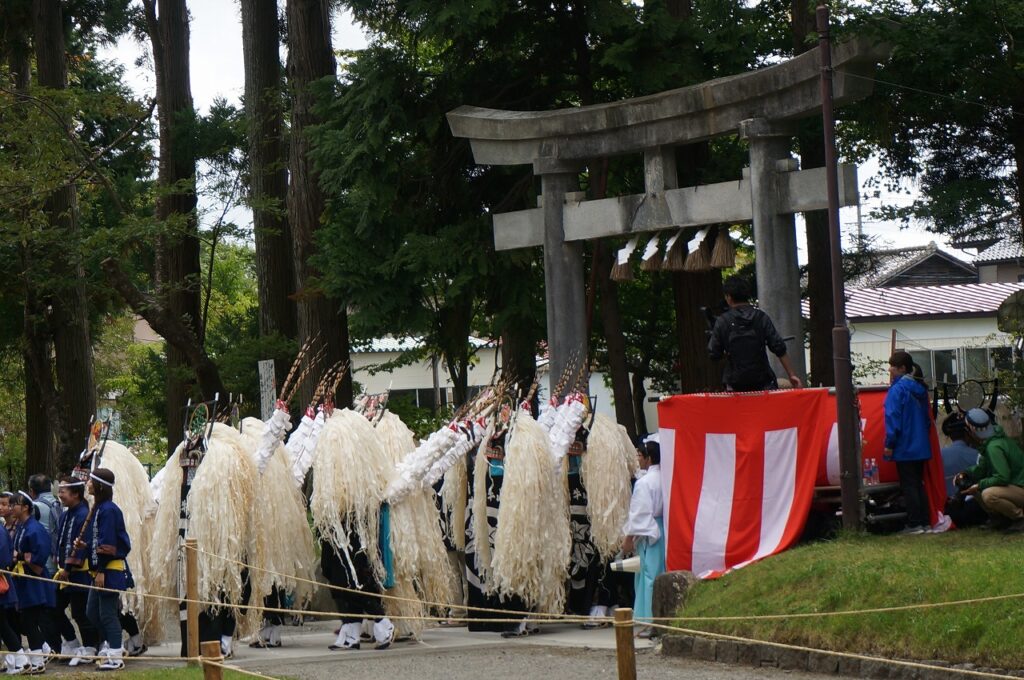
Following the Noh performance at the community centre from half past three in the afternoon,, the rain fortunately stopped, and the event moved to the neighbouring Enman-ji venue, where the local folk arts performance began around half past four..
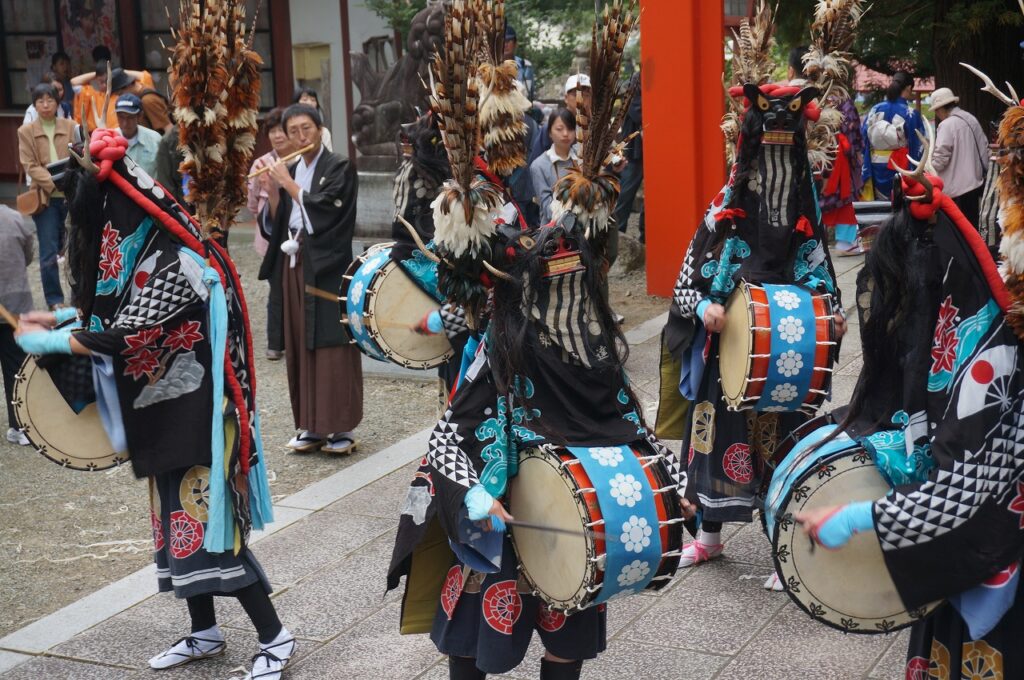
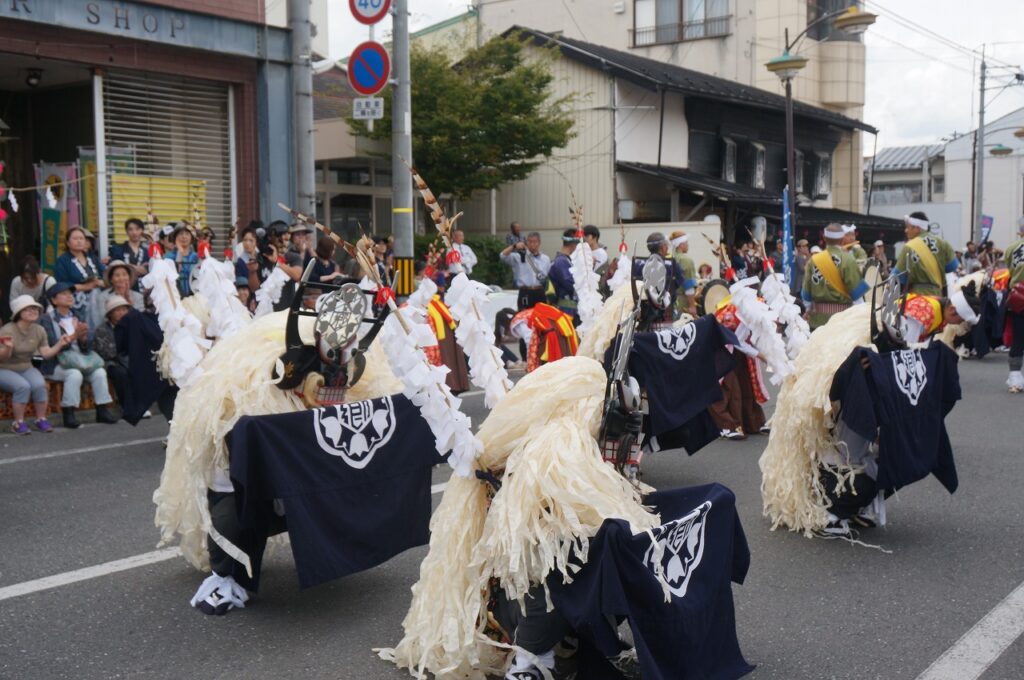
Urahama deer dance
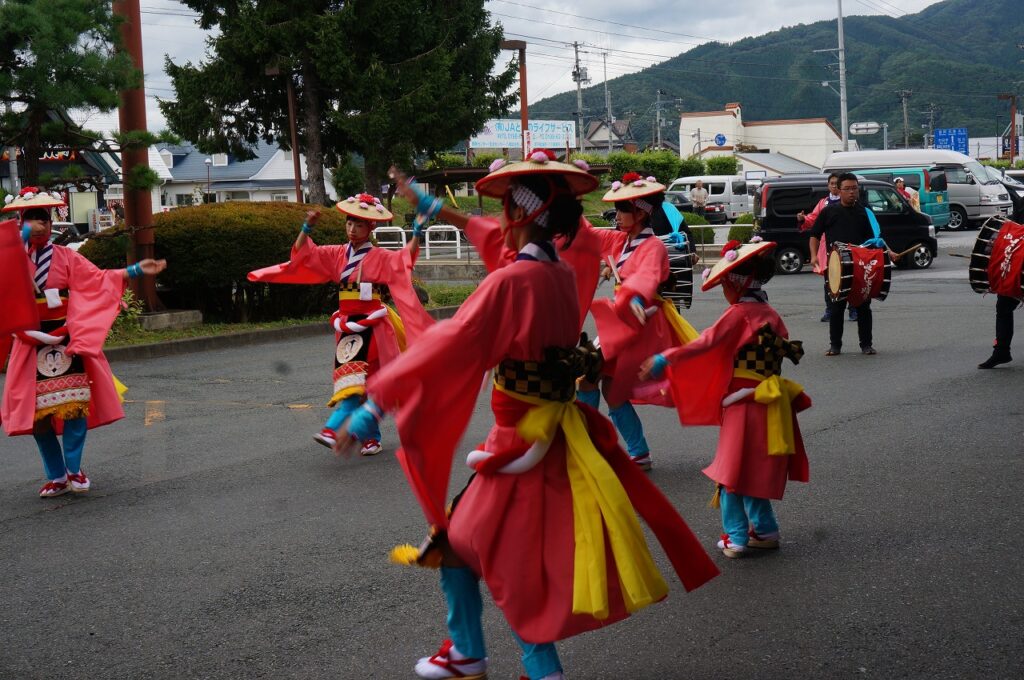
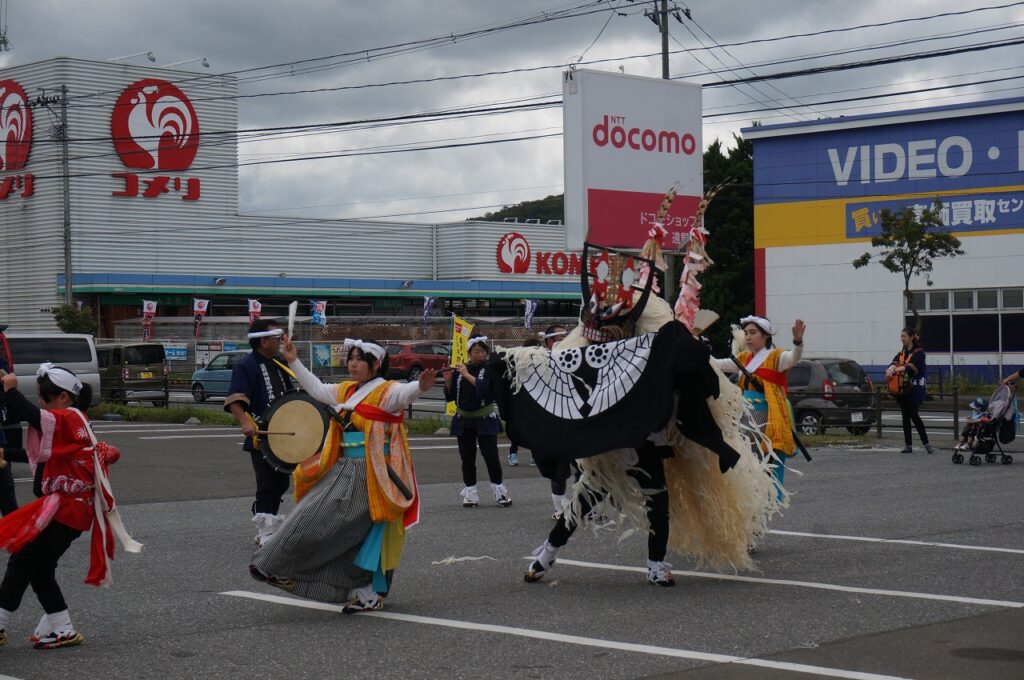
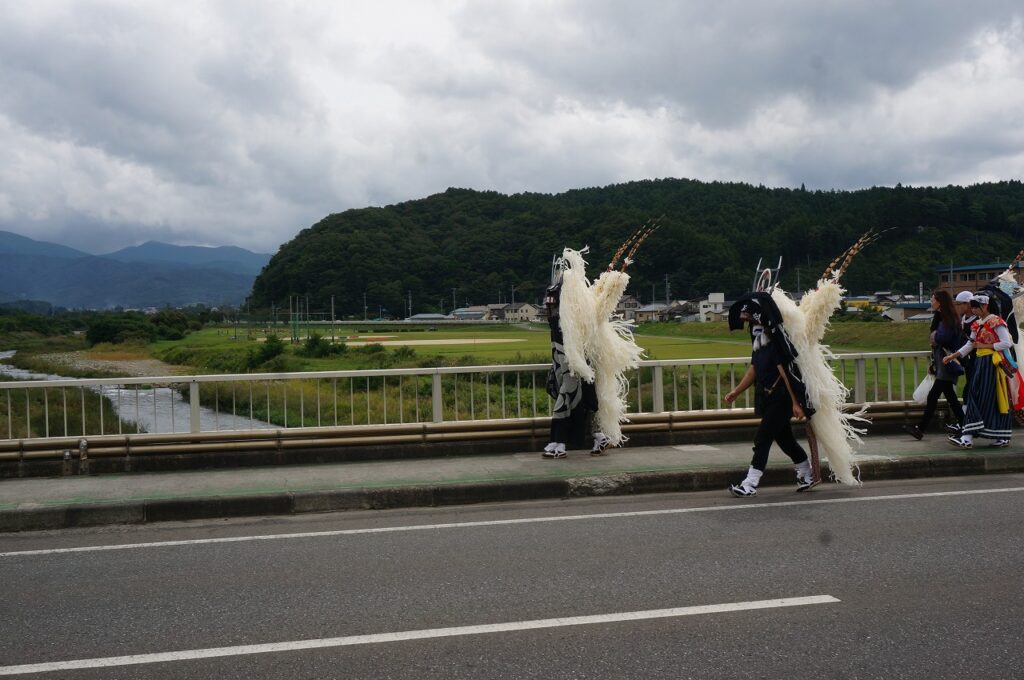
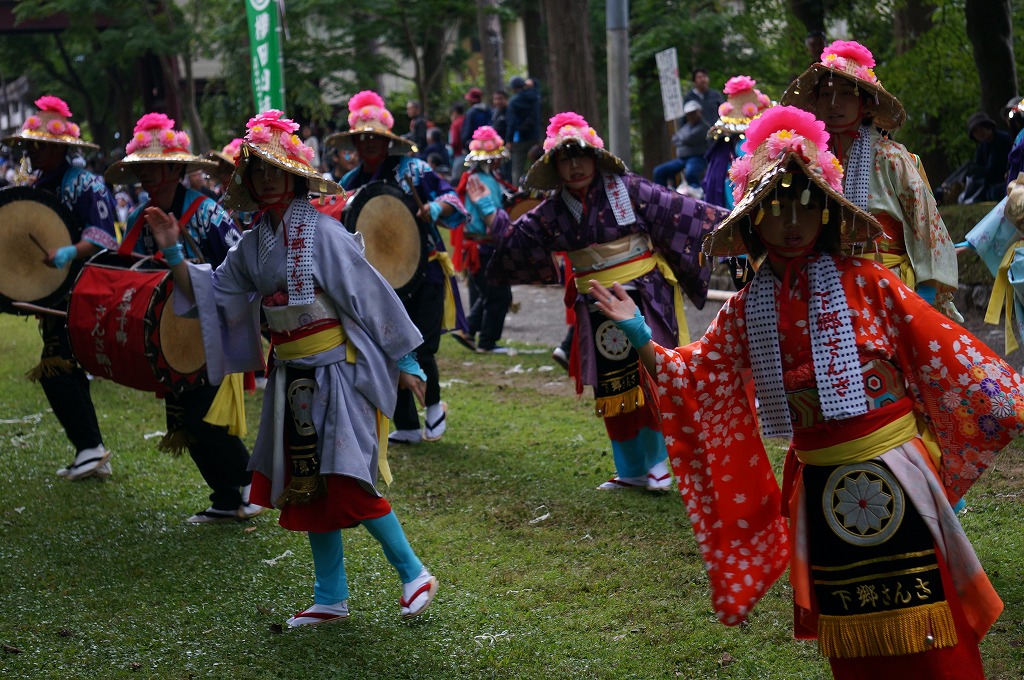
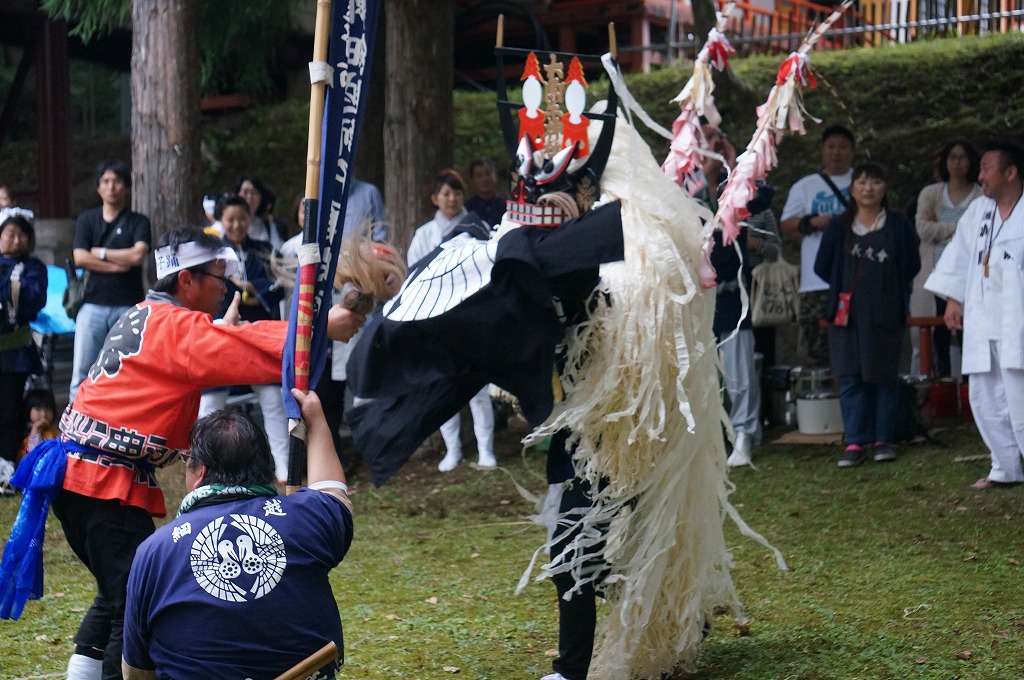
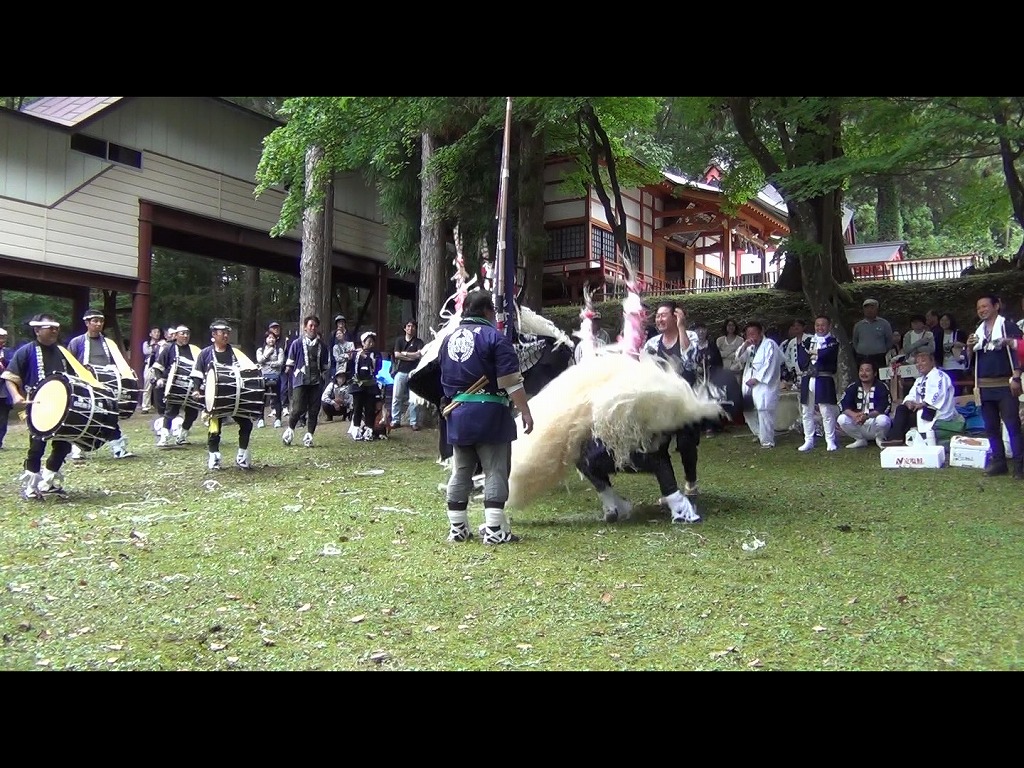
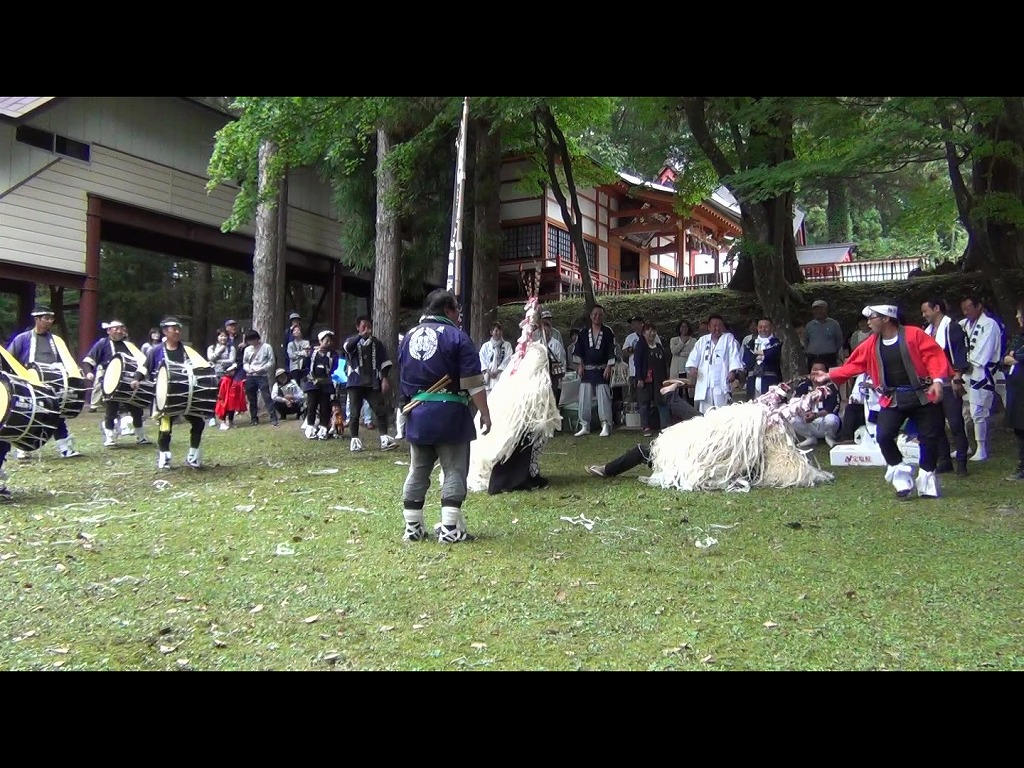
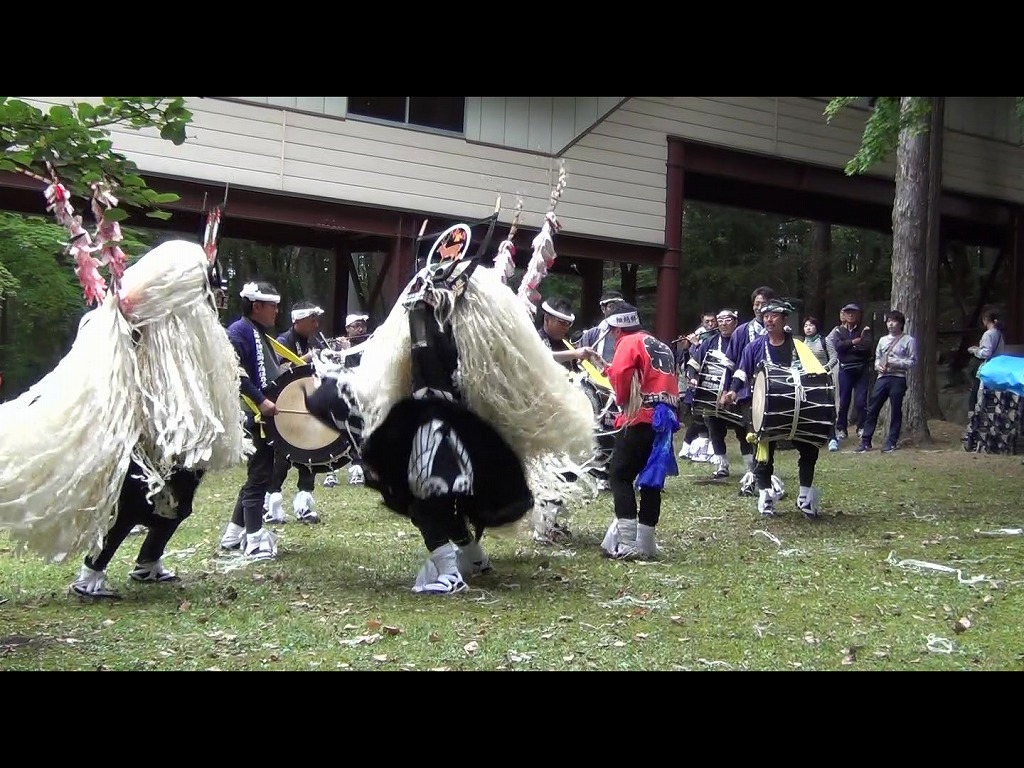
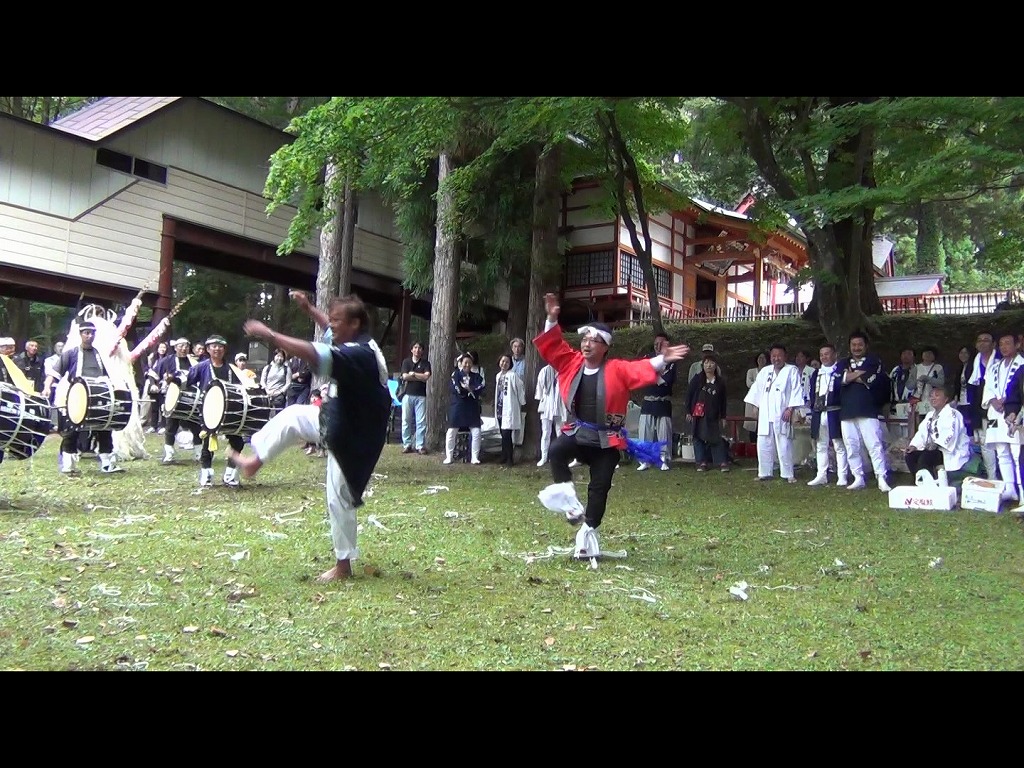
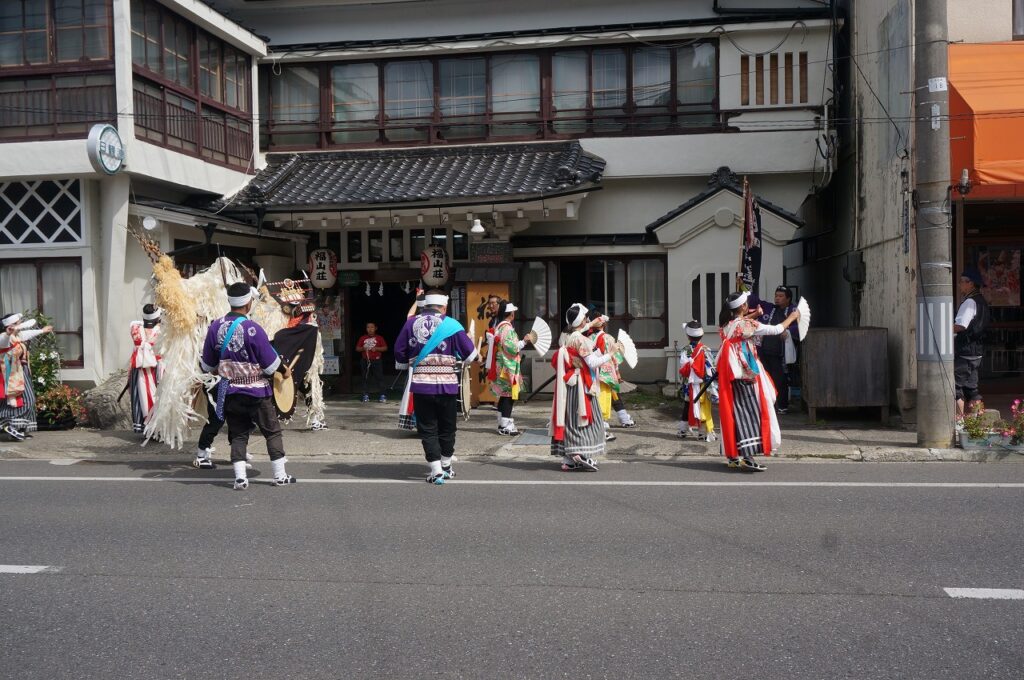
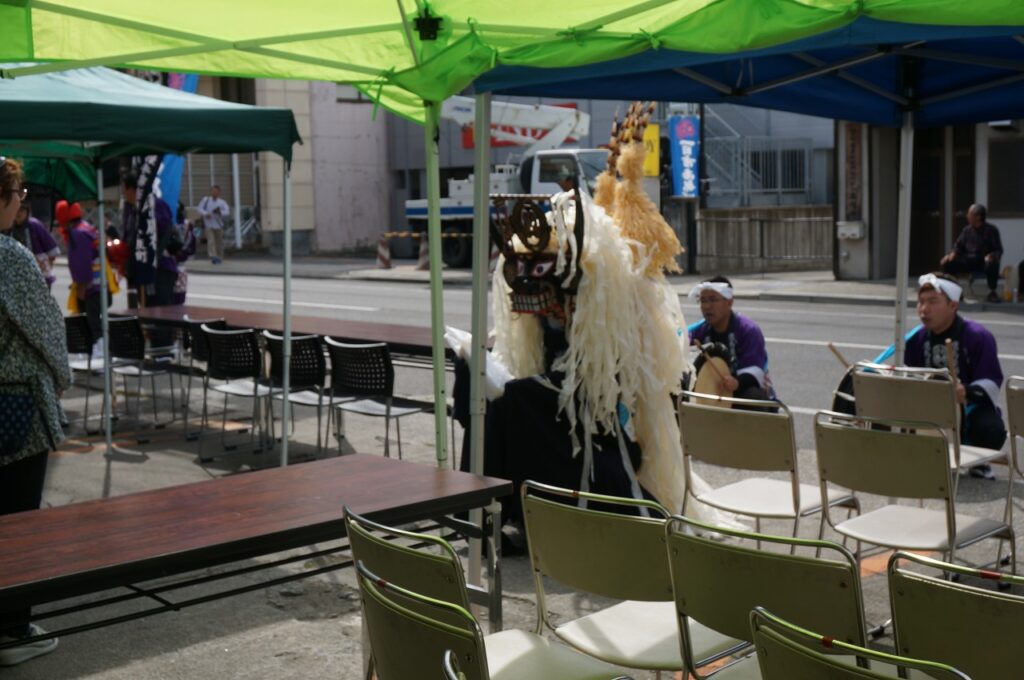
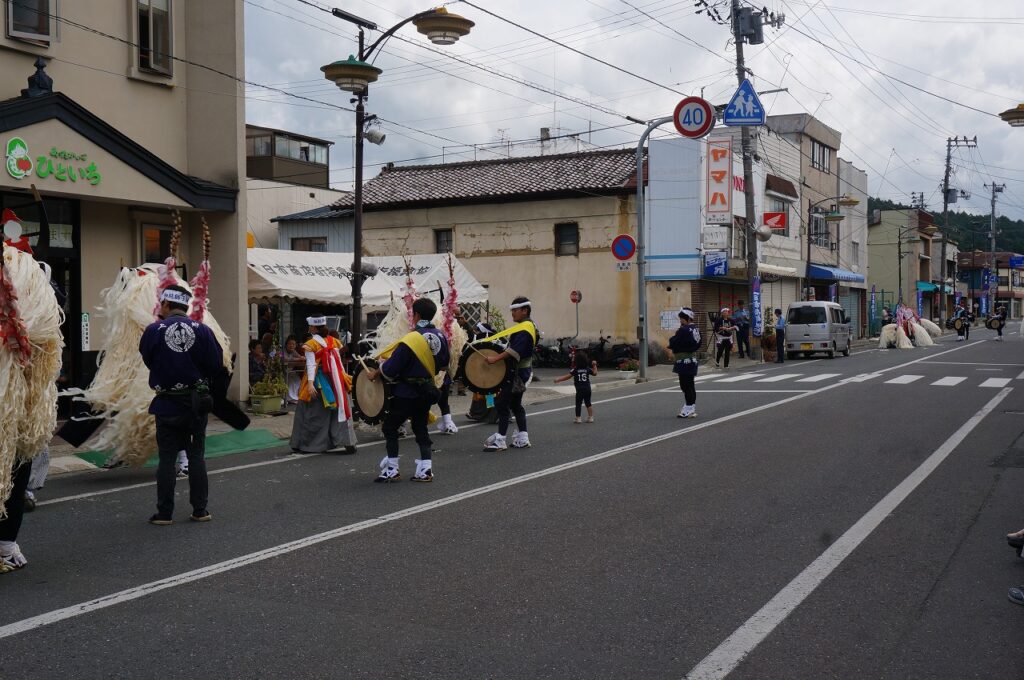
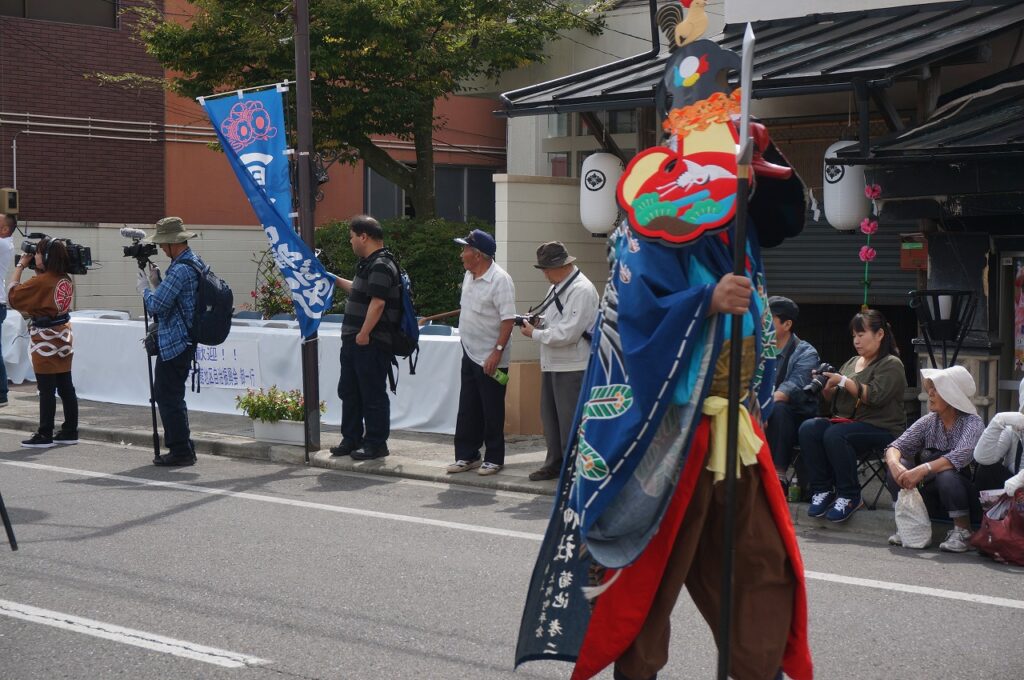
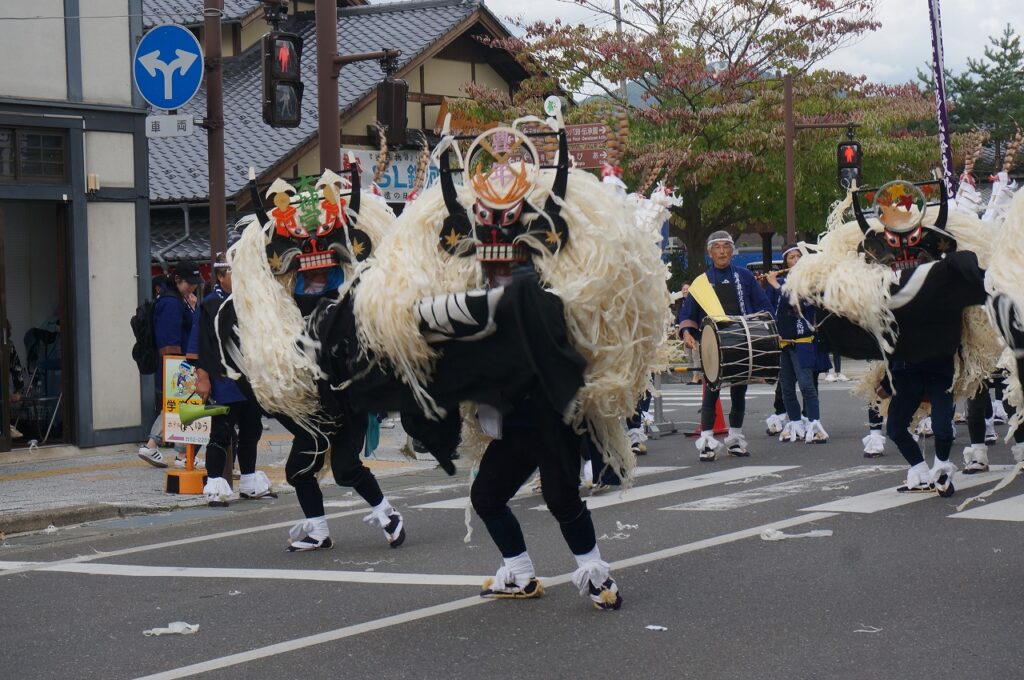
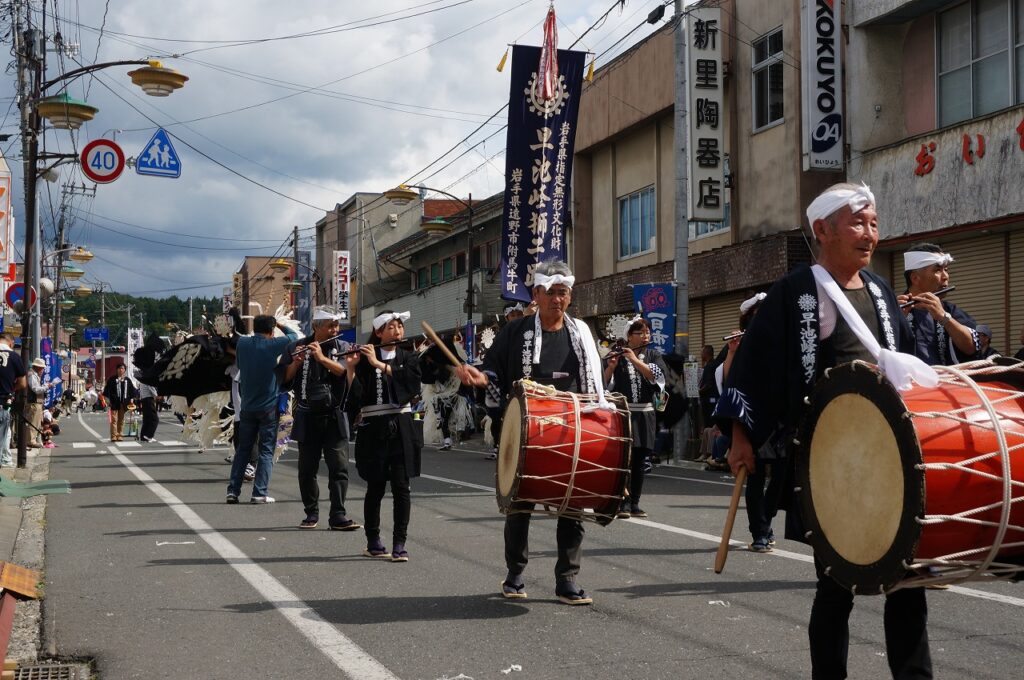
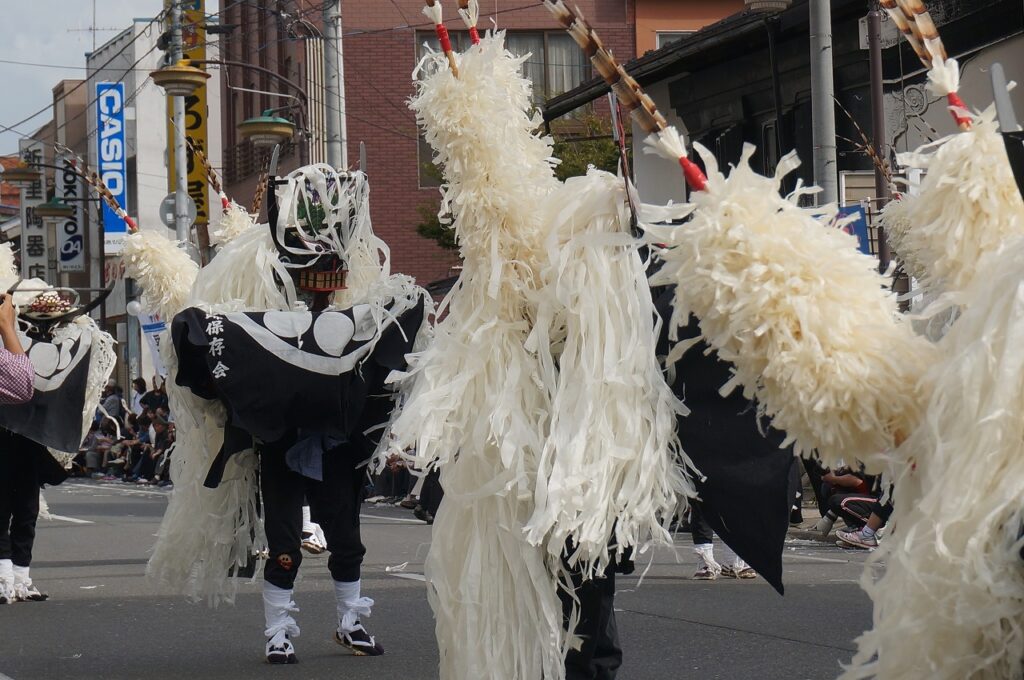
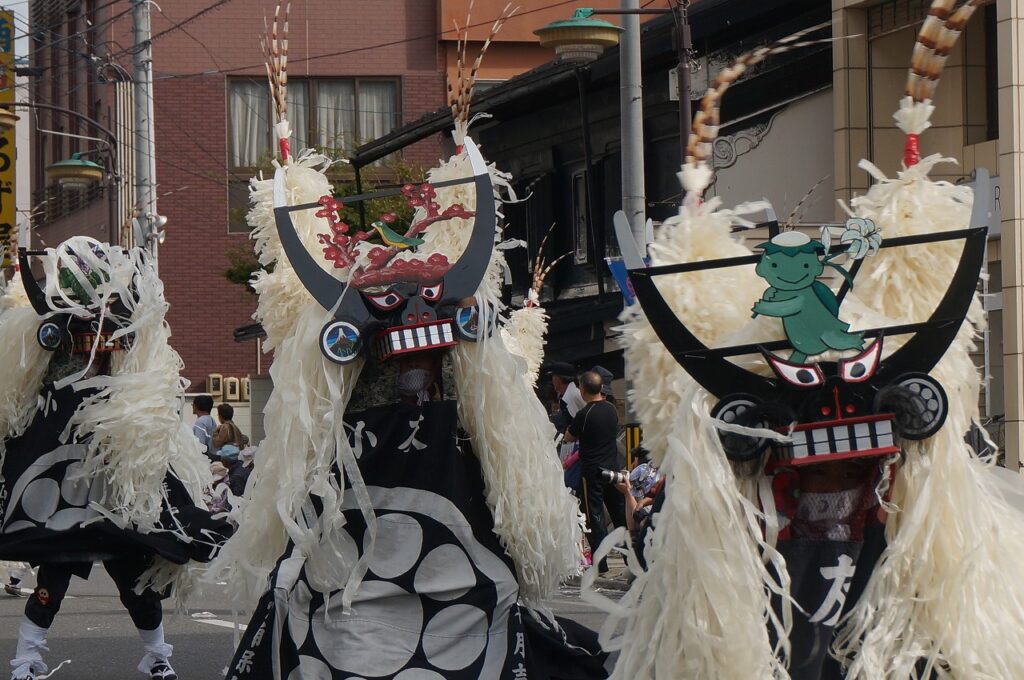
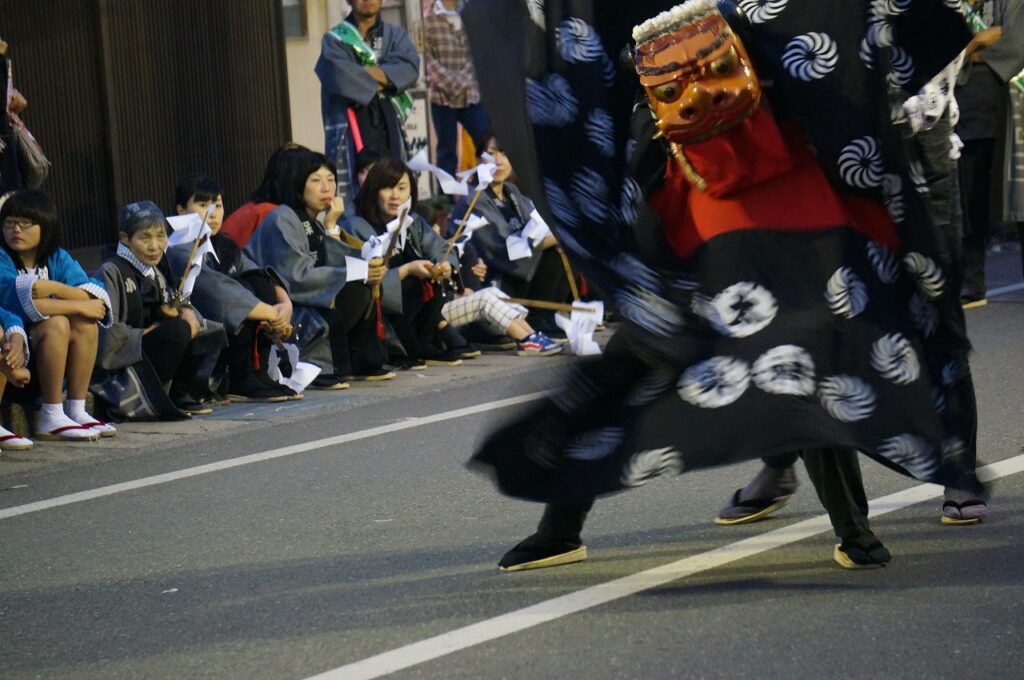
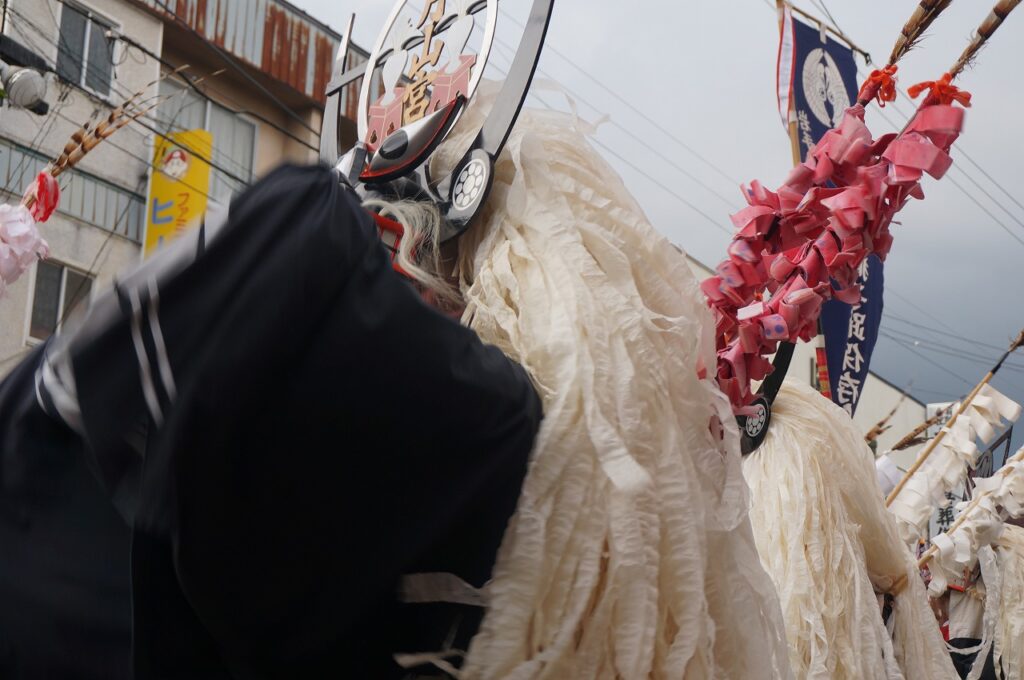
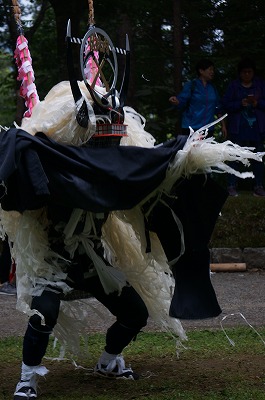
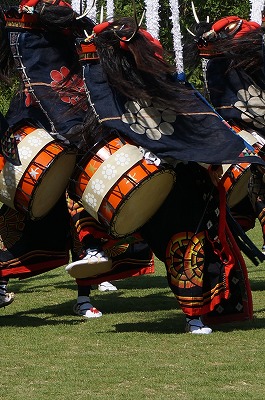
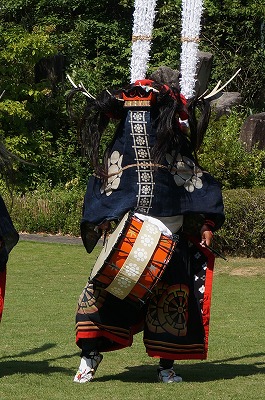
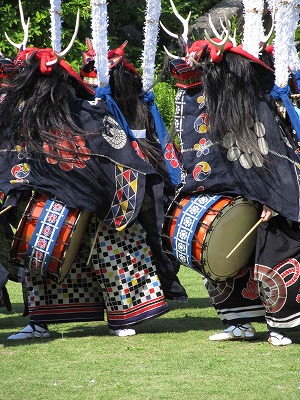
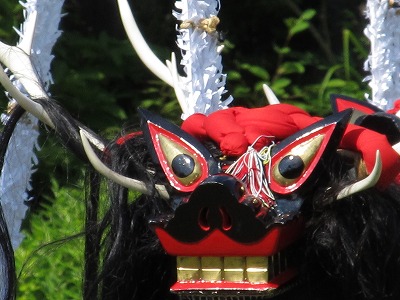
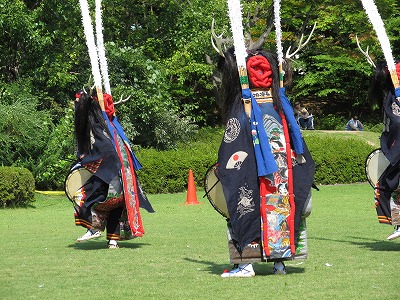
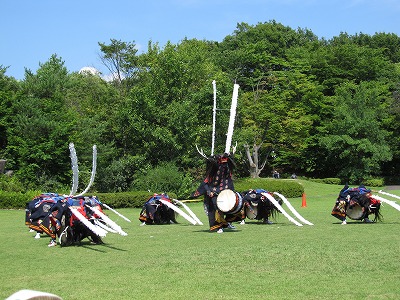
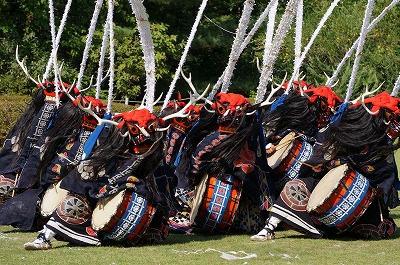
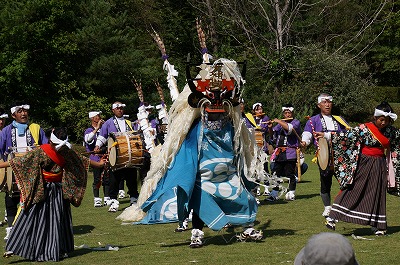
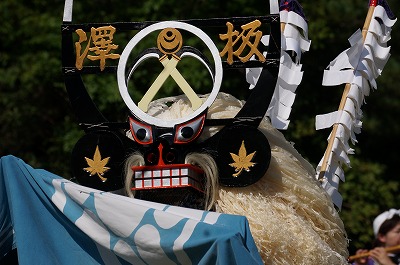
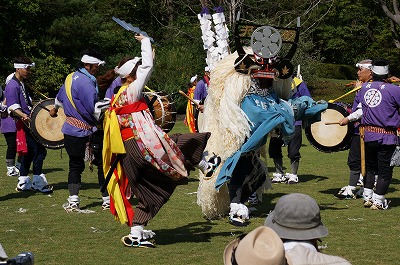
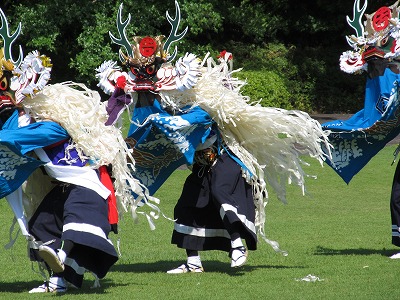
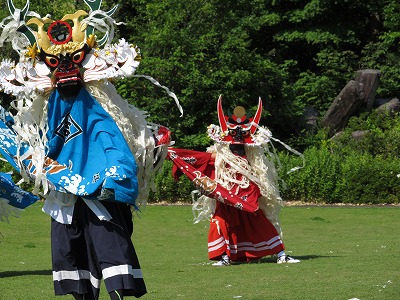
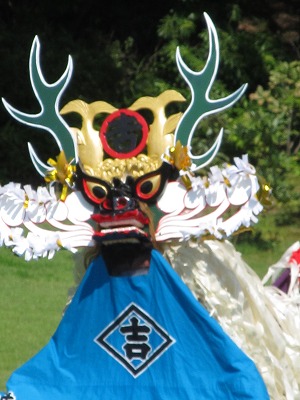
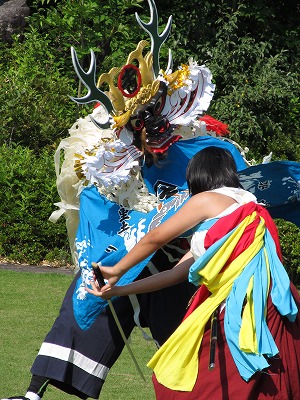
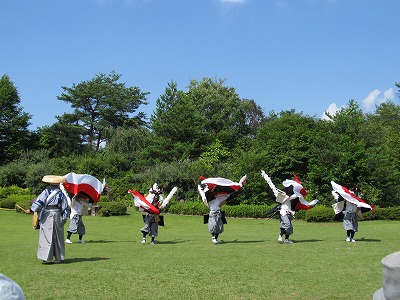
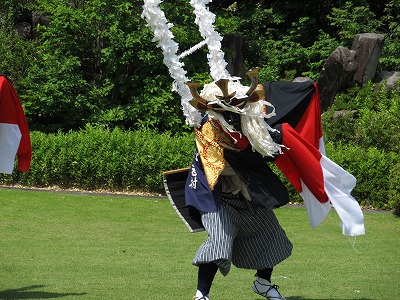
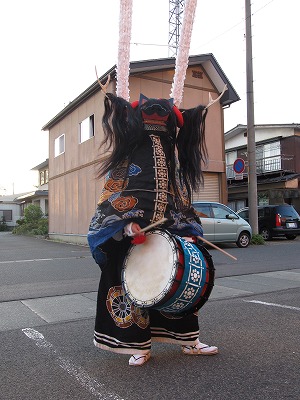
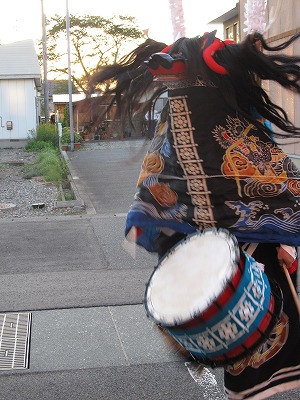
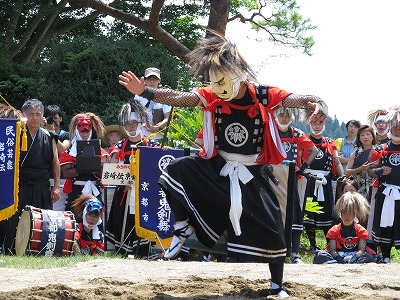
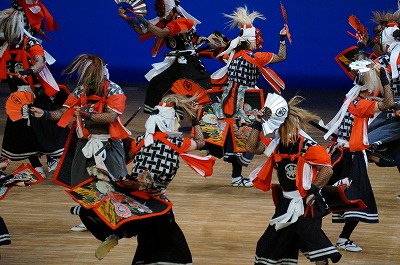
First up is the Urahama Deer Dance. The Deer Dance is broadly divided into two styles: one where the performers carry drums and one where they do not; here, the performers carry drums. Although the costumes and dance styles are similar across the drum-carrying tradition, the sheer power of the performance never fails to impress, no matter how many times one sees it. *For further details https://discoverdeeperjapan.com/2020/11/30/michinoku-traditional-folk-performing-festival-the-deer-dance/
Kawahara yoroi kenbai (Armoured Sword Dance)
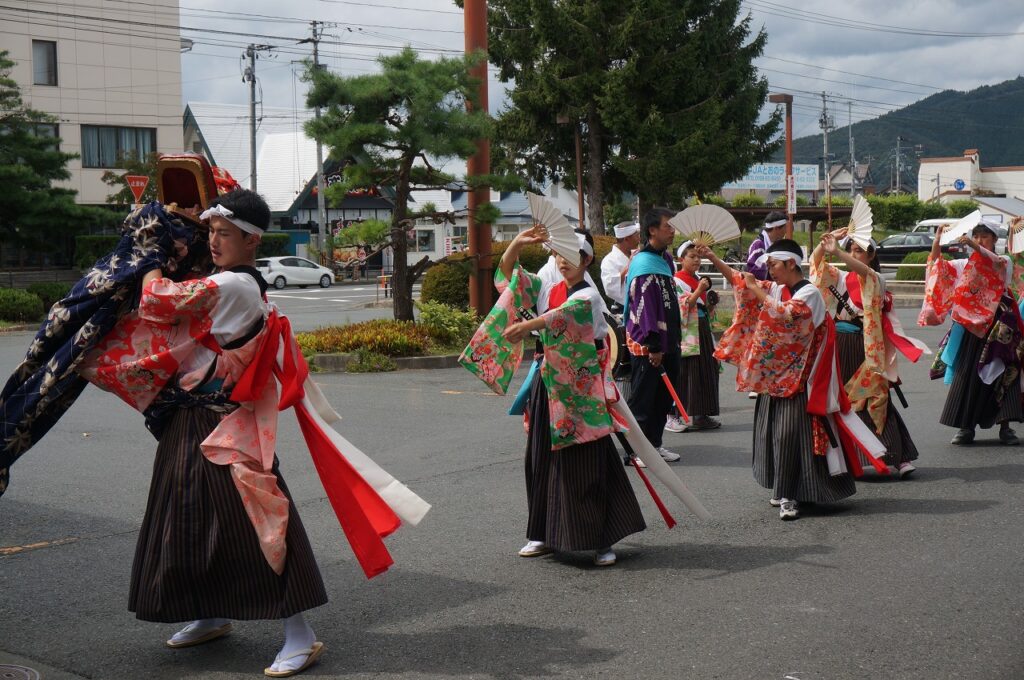
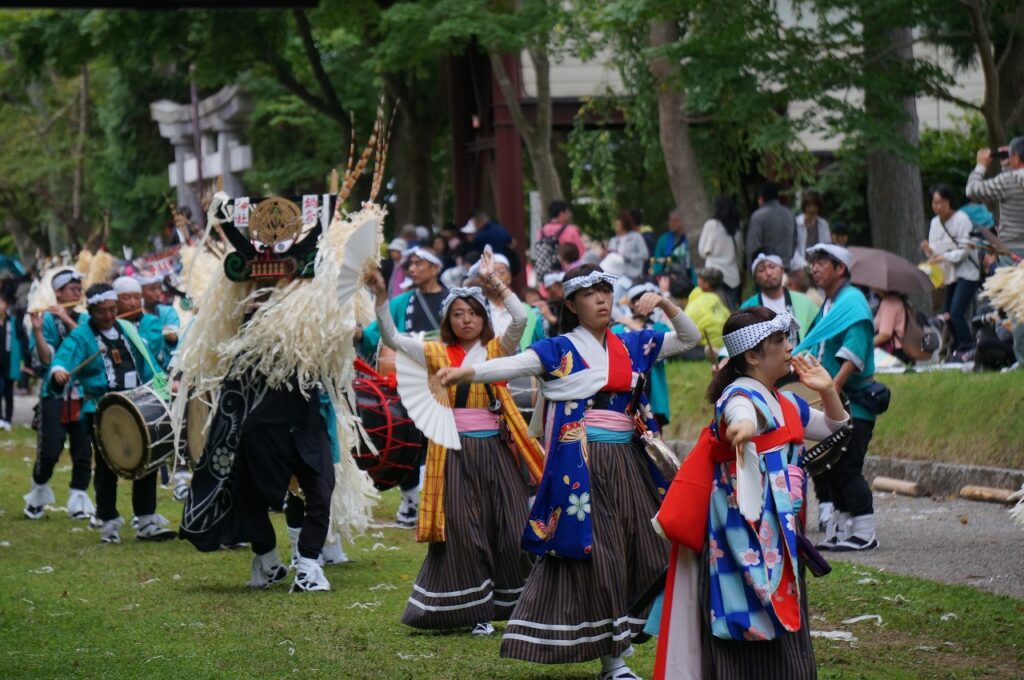
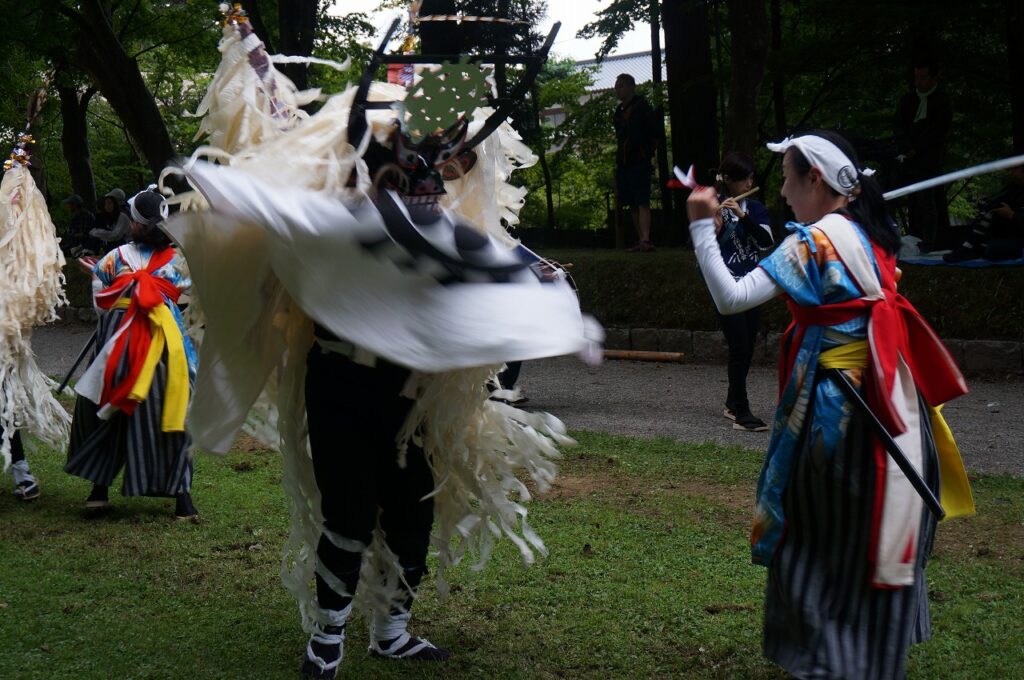
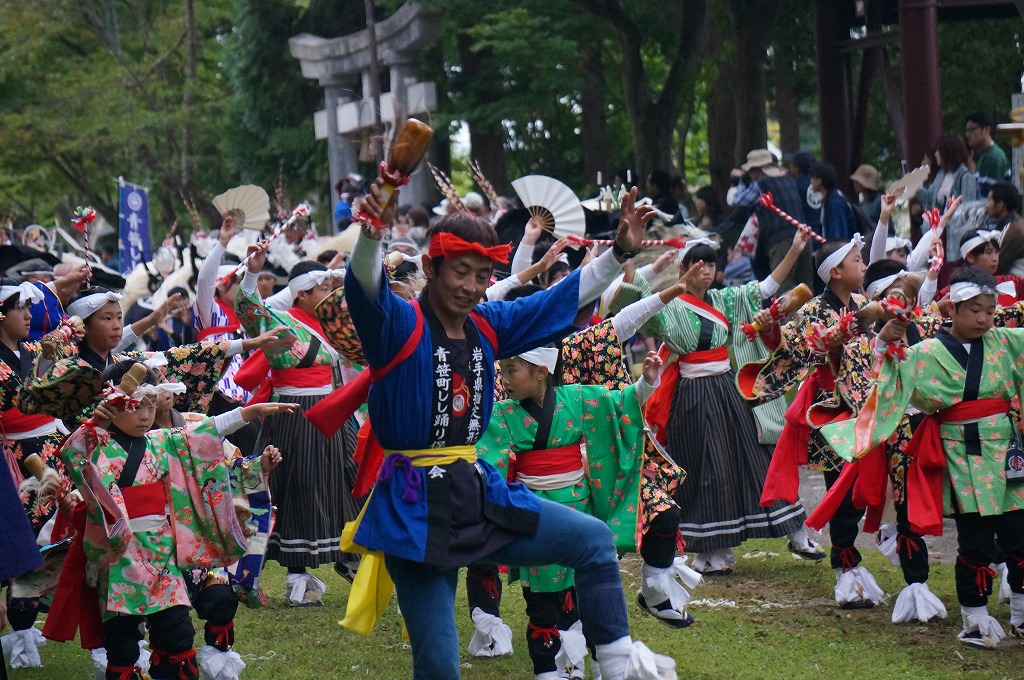
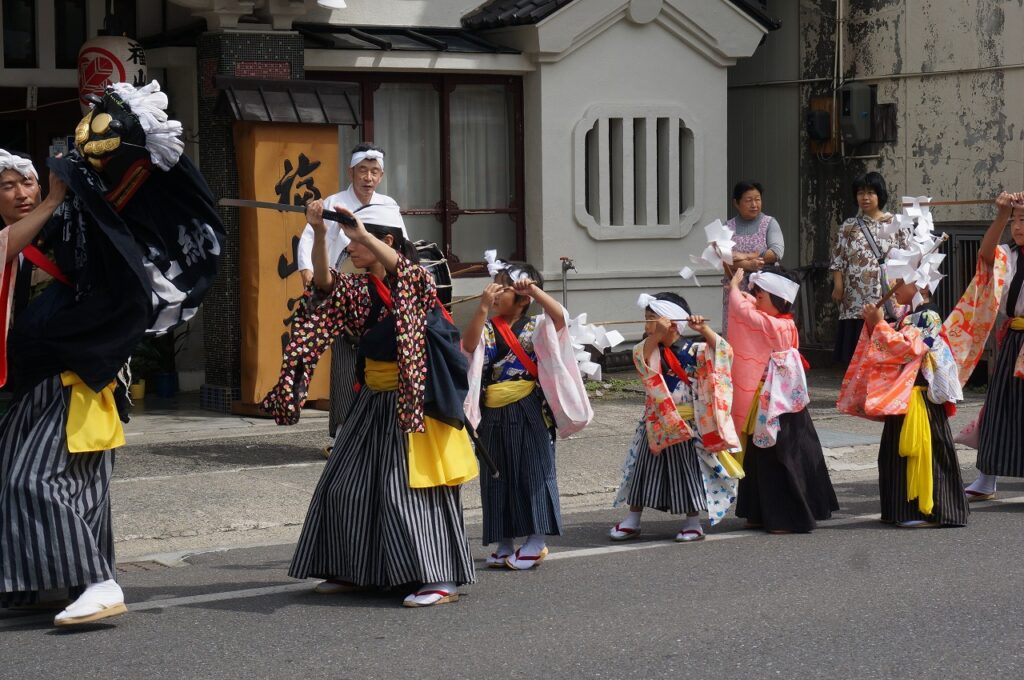
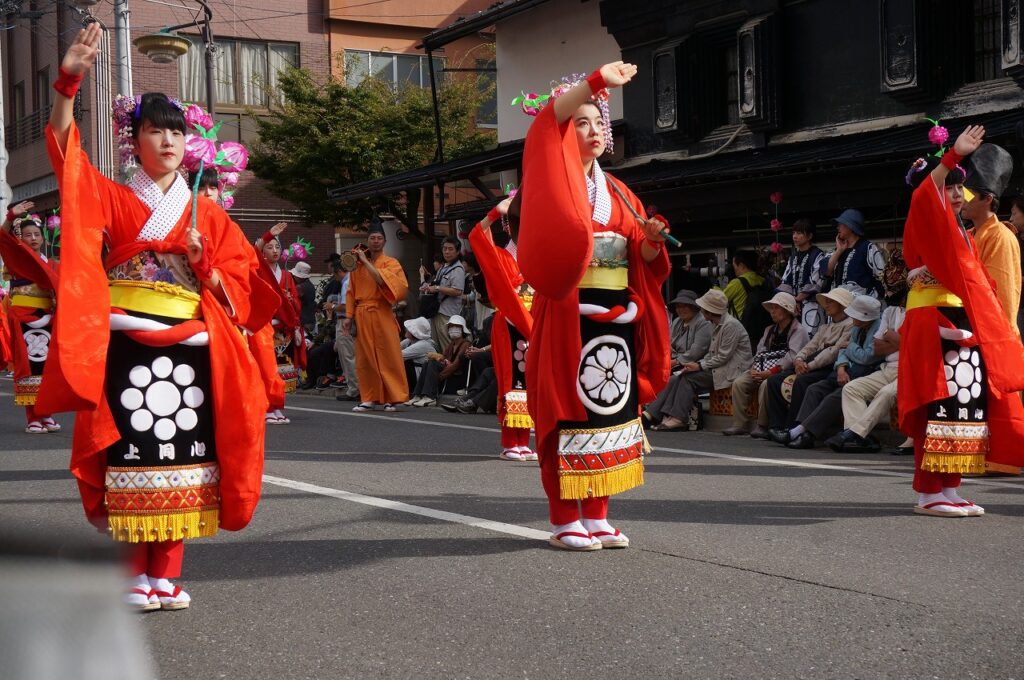
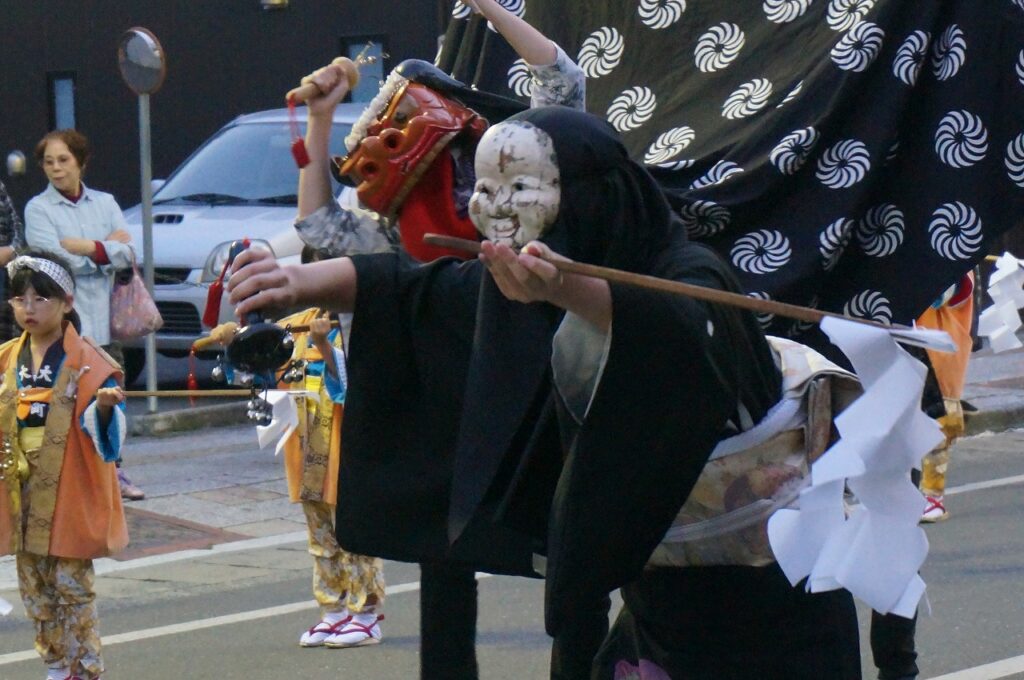
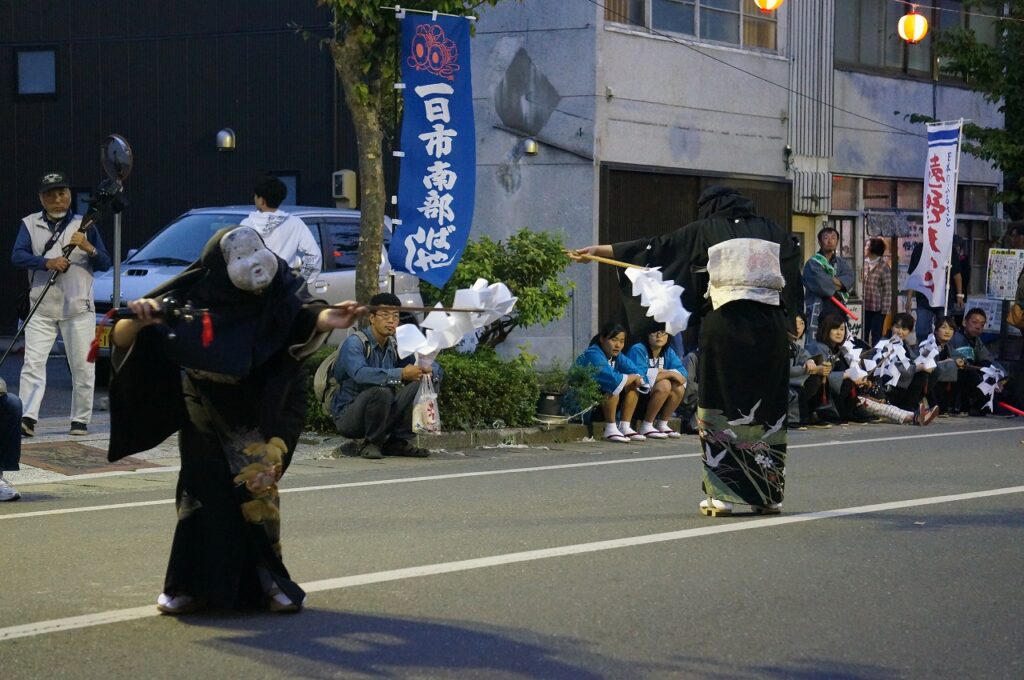
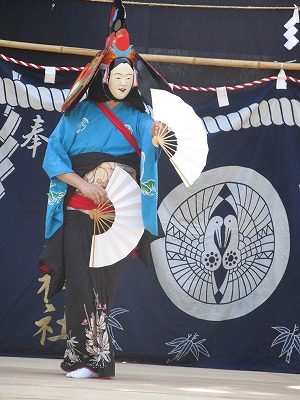
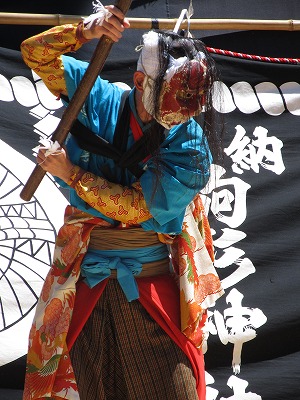
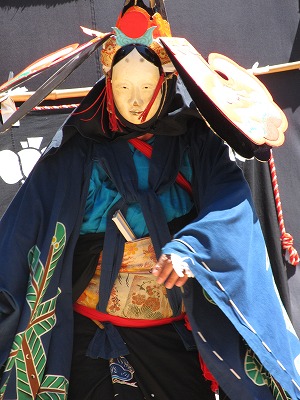
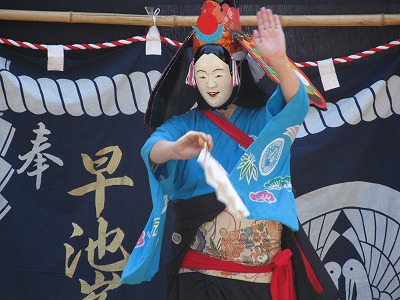
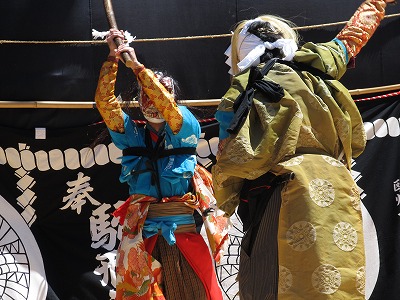
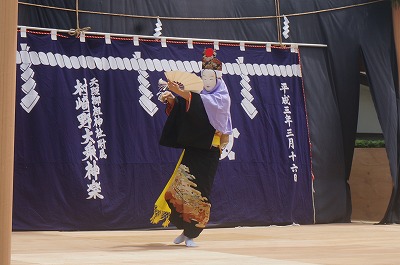
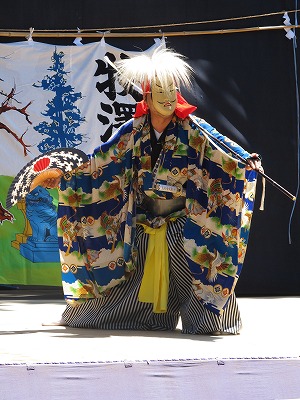
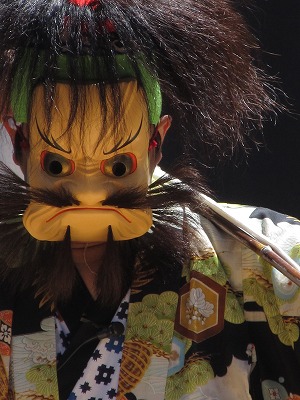
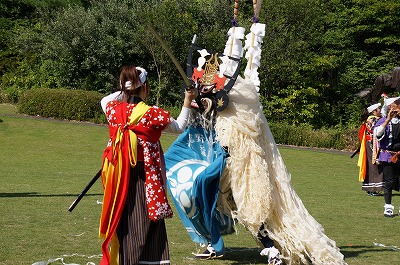
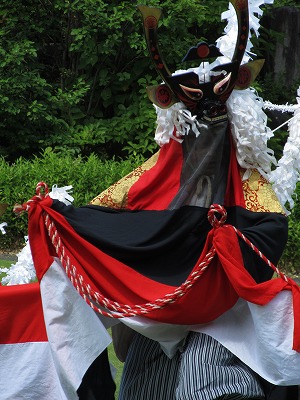
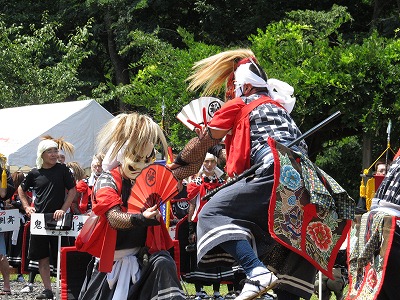
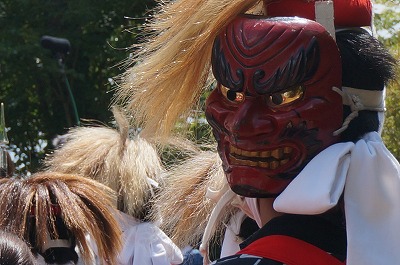
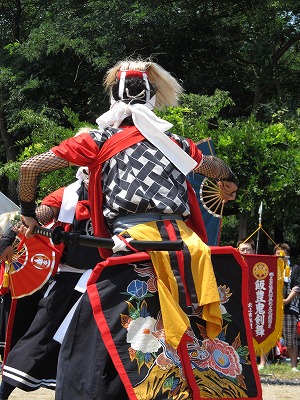
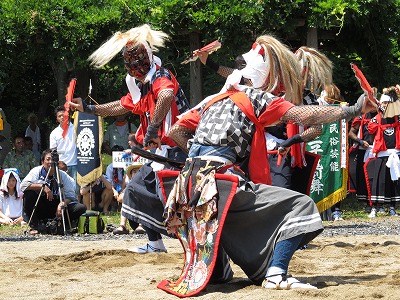
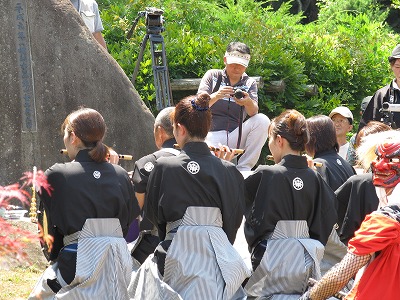
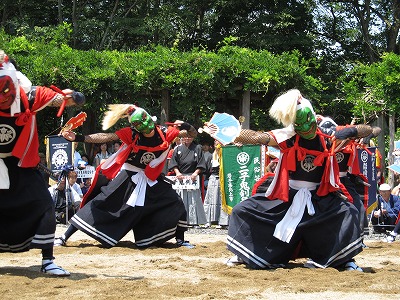
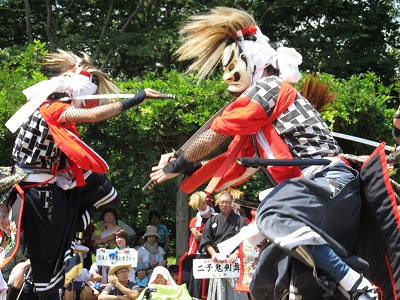
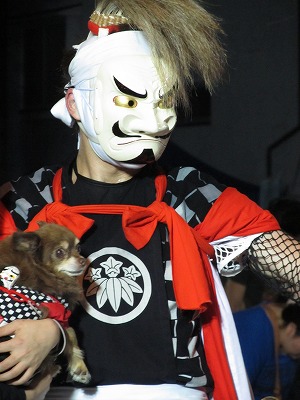
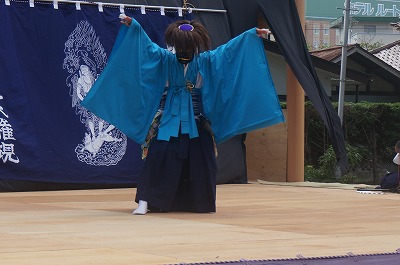
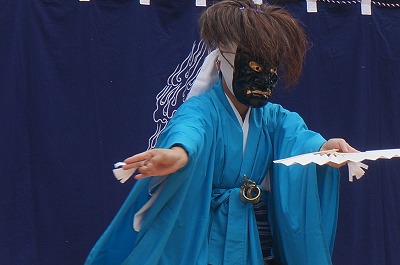
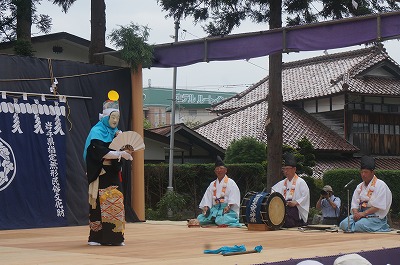
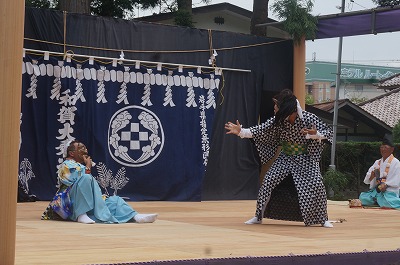
There are two distinct styles of sword dance: one with a strong emphasis on performance, and the other with a pronounced focus on mourning. This Kawaharara Kenbai (sword dance) is a performing art with a strong memorial character. It is often referred to as ‘Nembutsu Kenbai’. Whilst its origins are unclear, it is frequently described as a ritual to honour the souls of samurai who fell in battle.
Consequently, towards the end, the spirits often line up in a single file and attack the central figure performing the memorial rites, but the story usually concludes with each spirit being laid to rest one by one before departing.
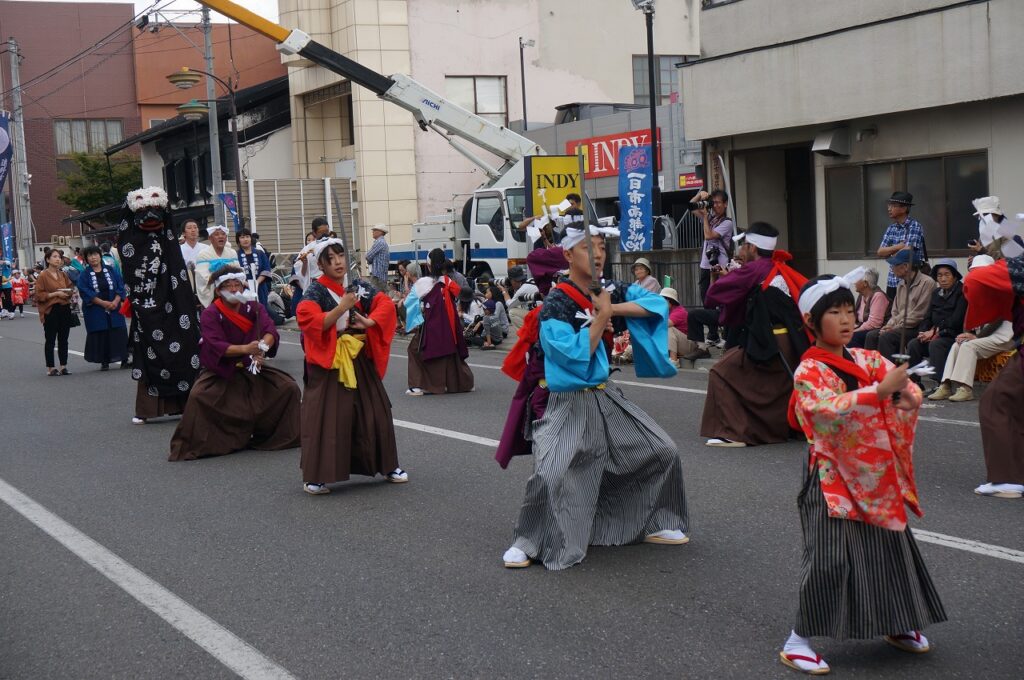
Urahama nenbutsu kenbai (Prayer Sword Dance)
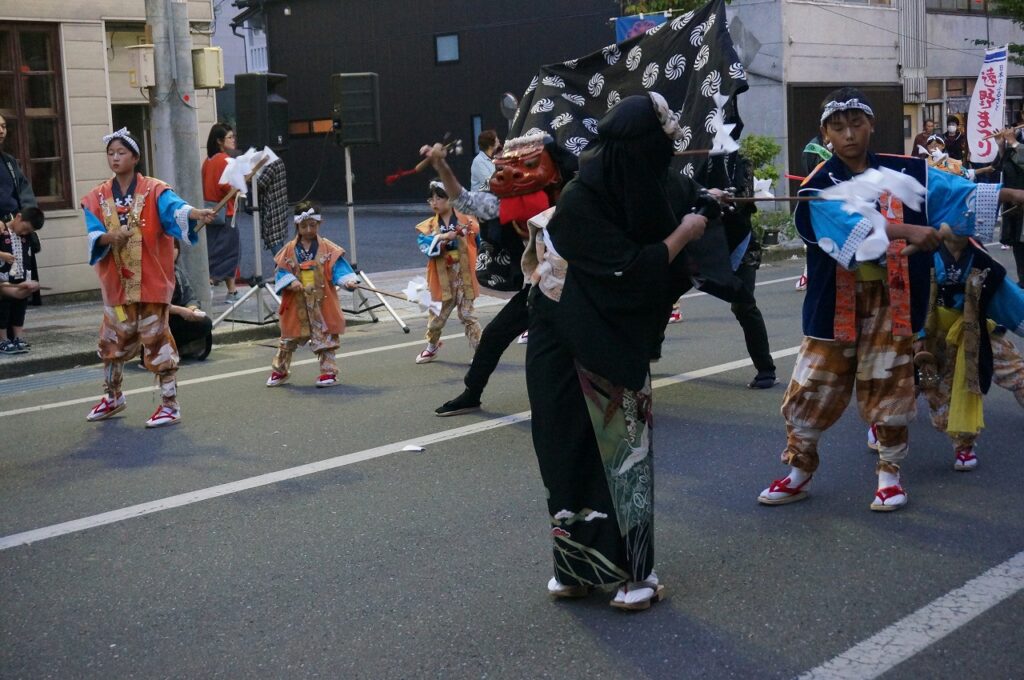
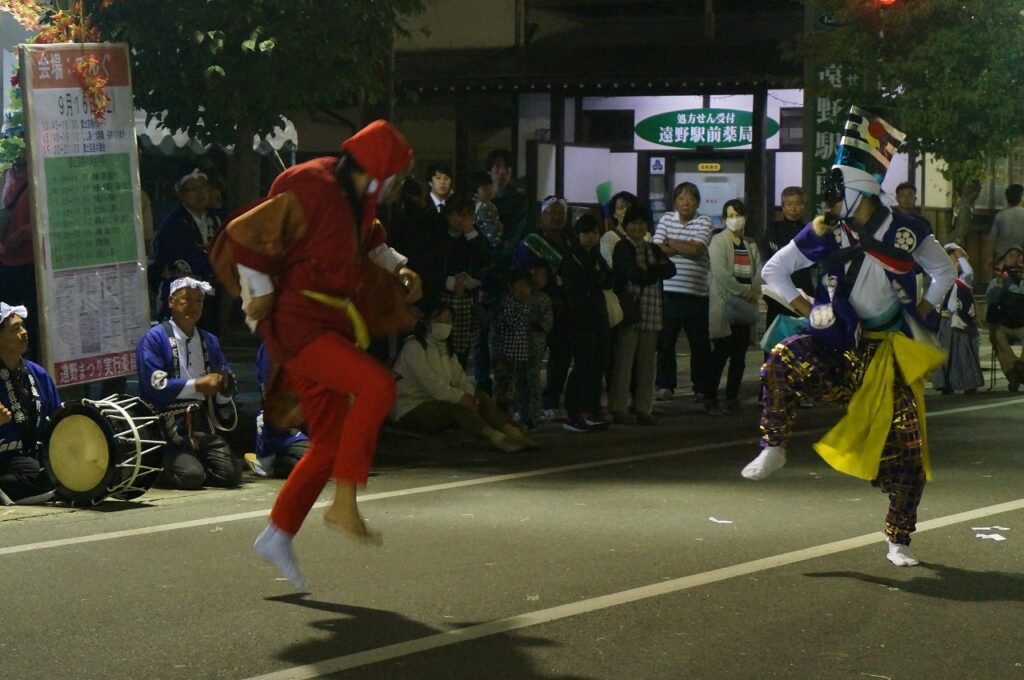
The Urahama Sword Dance is, without a doubt, the local traditional art form. It is said that these traditional local performing arts were the first to spring into action after the earthquake, offering encouragement to the local people.
Okirai fishing port
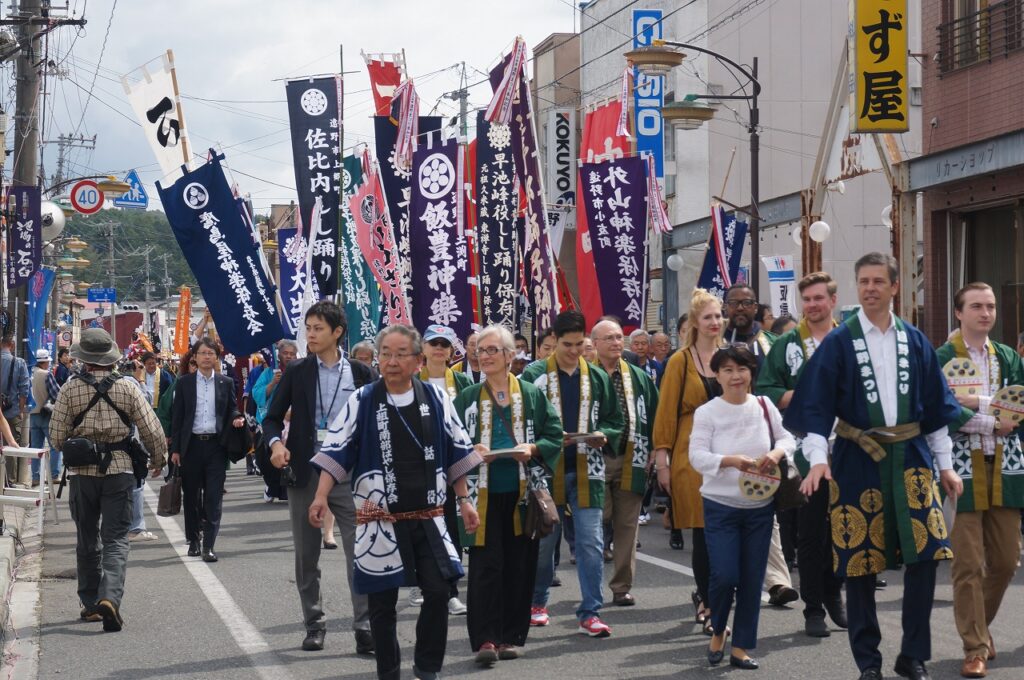
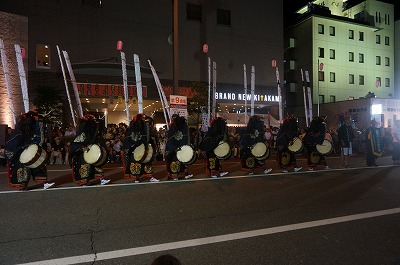
Shortly after 6 pm, the group set off for their next destination, Okirai Fishing port.
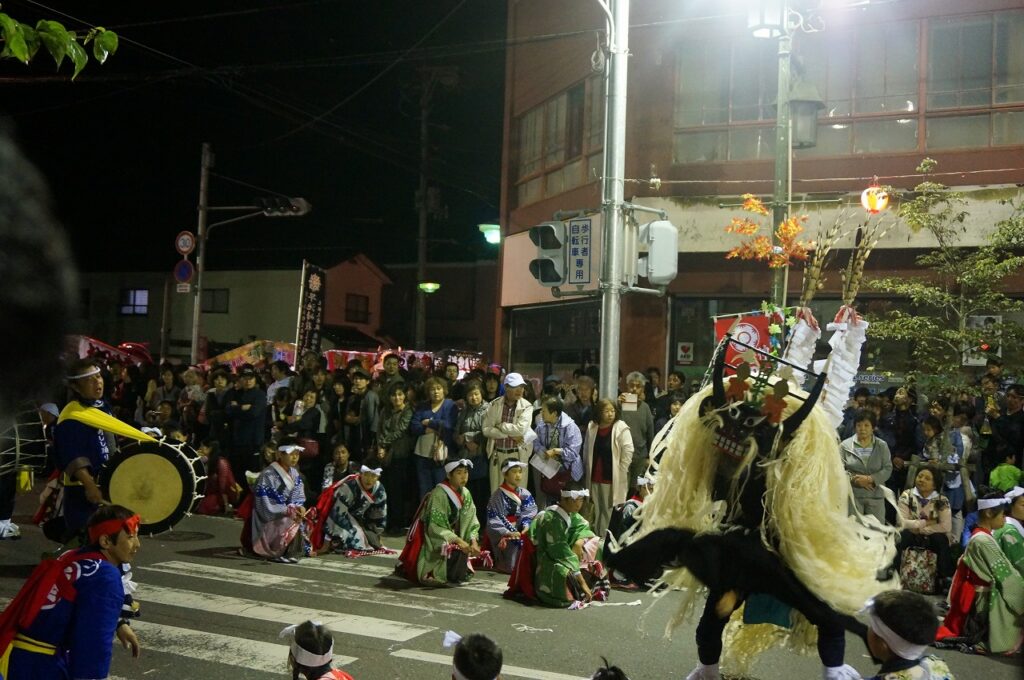
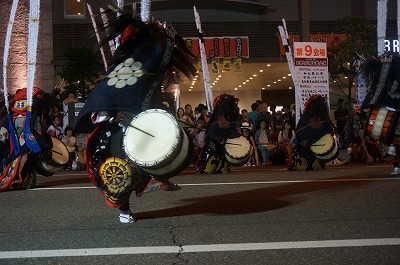
As the sun was setting, the memorial ceremony began.
Urahama nenbutsu kenbai (sword dance)
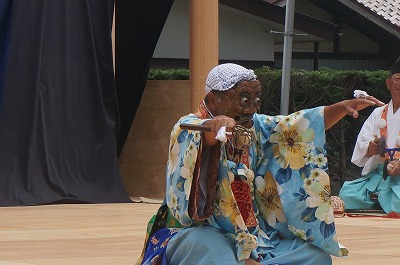
In a truly rare occurrence, they performed a dance that ritualised the offering of incense. This, one might say, is the very essence of the Nenbutsu sword dance.
Urahama deer dance
Kawahara yoroi kenbai (Armoured Sword Dance)
Others
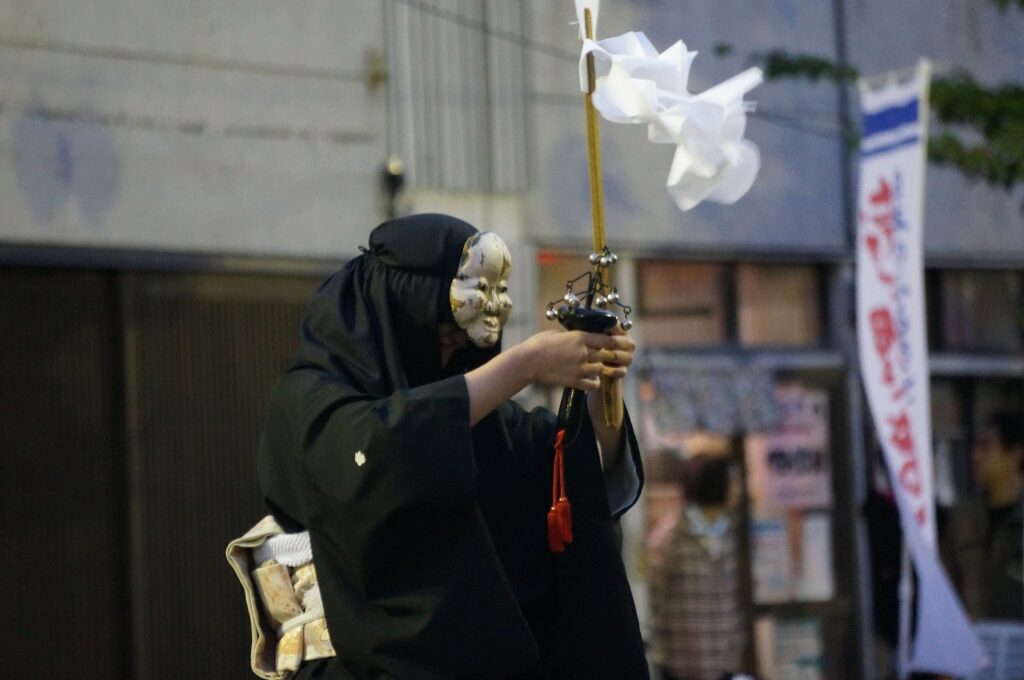
The programme featured special performances by artists from South Korea, as well as new Noh plays incorporating the local dialect.
By the time the event draws to a close with another performance of the local Urahama sword dance, it is already past nine o’clock. However, for the tourists, this is where the last train departs. It’s about time we were to take our leave. I’m sure I’ll have sweet dreams.
*Although the performing groups change each time, it seems that the Urahama Kenbai, Urahama deer dance and Kawahara Kenbai appear at every event.
Enjoy the Performing Arts in Hiraizumi, Where the Autumn Foliage Shines Brightly ~Fujiwara festival ~Day 2
Since it’s the final day, there are many performances scheduled for today. First, let’s check the schedule of performances you can see today. (The schedule is announced in advance by the organizers, so you can check it on their website or in the pamphlet.) *Hiraizumi town official https://hiraizumi.or.jp/en/
Kawanishi dainenbutsu kenbai (sword dance) 10:00 a.m. (Chusonji temple Konjikido) 11:00 a.m. /1:00 p.m. (Chusonji templemain hall) Noh 11:00 a.m./1:00 p.m. (Chusonji temple Noh stage) Shishi odori (Deer dance) 10:30 a.m. (Hiraizumi station) 12:30 p.m. (Motsuji temple) 2:30 p.m. (Chusonji temple main hall) Dance of Ennen 11:00 a.m. (Motsuji temple) *While there aren’t usually any major changes from year to year, please check the website and other sources each time.
The Slope Leading to Chūson-ji Temple
The Gate of Mōtsū-ji Temple
The schedule is divided into very specific time slots, and the locations are spread out across Chūson-ji Temple, Mōtsū-ji Temple, and the area in front of the station. Furthermore, even within Chūson-ji Temple, the schedule is divided among the Main Hall, the Konjikido Hall, and the Noh stage. It’s about 1.5 km from Chūson-ji Temple to the station, and from there you have to climb a steep hill to finally reach the main hall. Since the Konjikido Hall and the Noh stage are located beyond that, it takes quite a while. The distance from the entrance to Chuson-ji Temple to Motsu-ji Temple is about 2.3 kilometers. There are bike rentals available in front of the station, so using one of those is one way to shorten the trip. In any case, since getting around takes time, it’ll be tough unless you decide in advance where to go and what to see.
Kawanishi dainenbutsu kenbai (sword dance)
Chusonji temple Konjikido
A performance will take place in front of the Konjikidō Hall at Chūson-ji Temple starting at 10:30 a.m. As mentioned in the section on the Hounokizawa Nenbutsu Sword Dance, this is a type of sword dance. There are more performances than in Hounokizawa, including solo dances and group dances. On this day, the program began with a solo dance.
This is a dance piece performed by three dancers. It incorporates some fairly complex movements and features many theatrical elements. The performance lasts about 30 minutes.
Chusonji temple Main hall
It was just past 1:00 p.m. They moved to the area in front of the main hall for the next performance. First, everyone performed a dance centered around a monkey. This is followed by a solo performance, which then leads into a performance by three people.
A performance lasting about 20 minutes.
Ennen no mai (Everlasting Dance)
11:00 a.m. for about 50 minutes, on the stage next to the Main Hall of Motsuji Temple
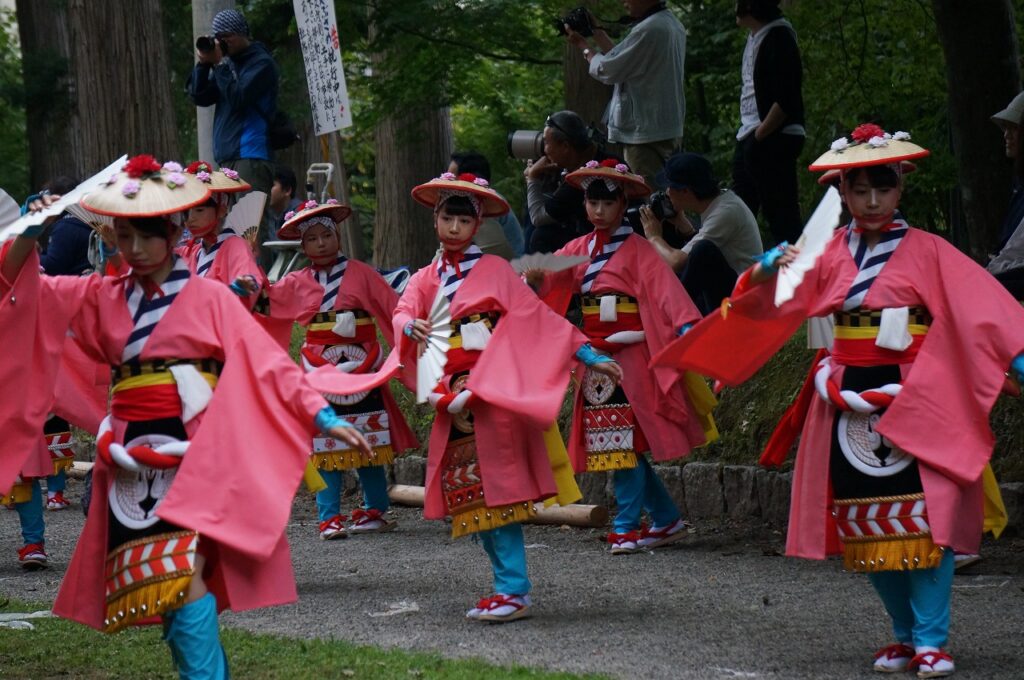
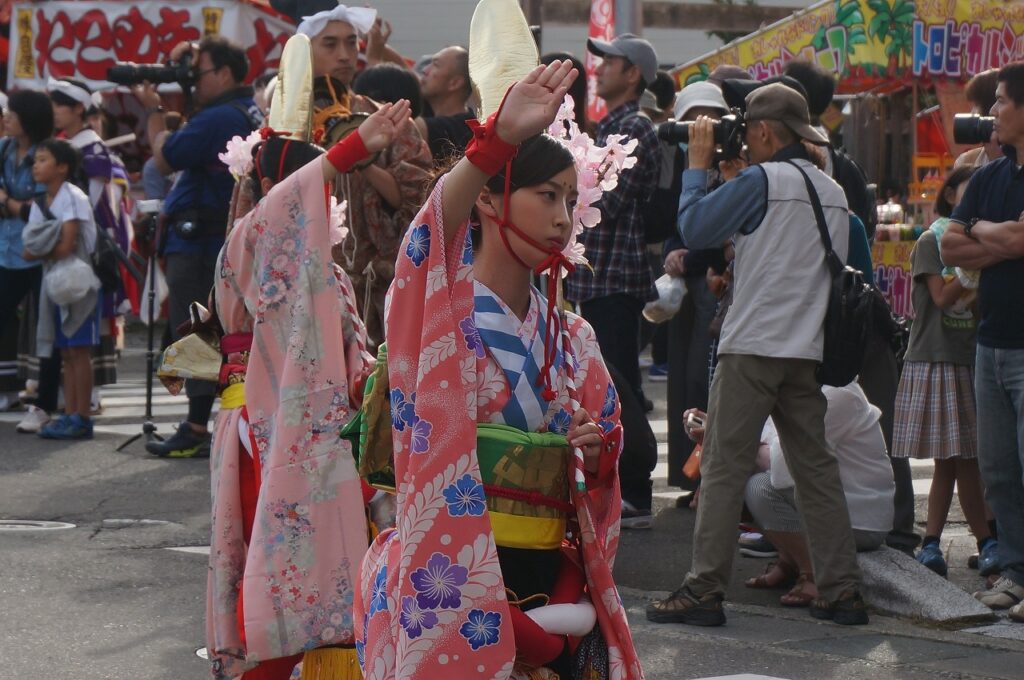
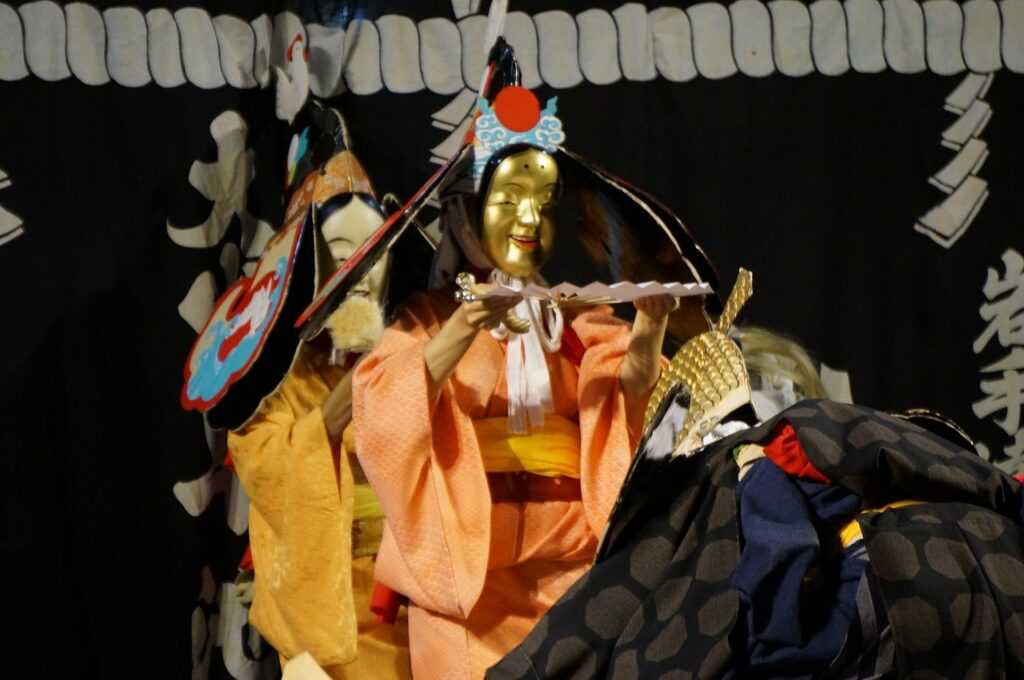
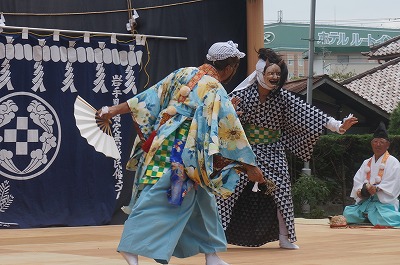
In short, the term “Ennen 延年” in the Ennen Dance refers to the wish for longevity. Its origins date back some 800 years. It reached its peak around the 12th century but began to lose popularity around the 14th century, along with the decline in the popularity of Noh. As a result, there are few remaining examples throughout Japan, and the one here at Mōtsū-ji Temple has been designated as an Important Intangible Cultural Property.
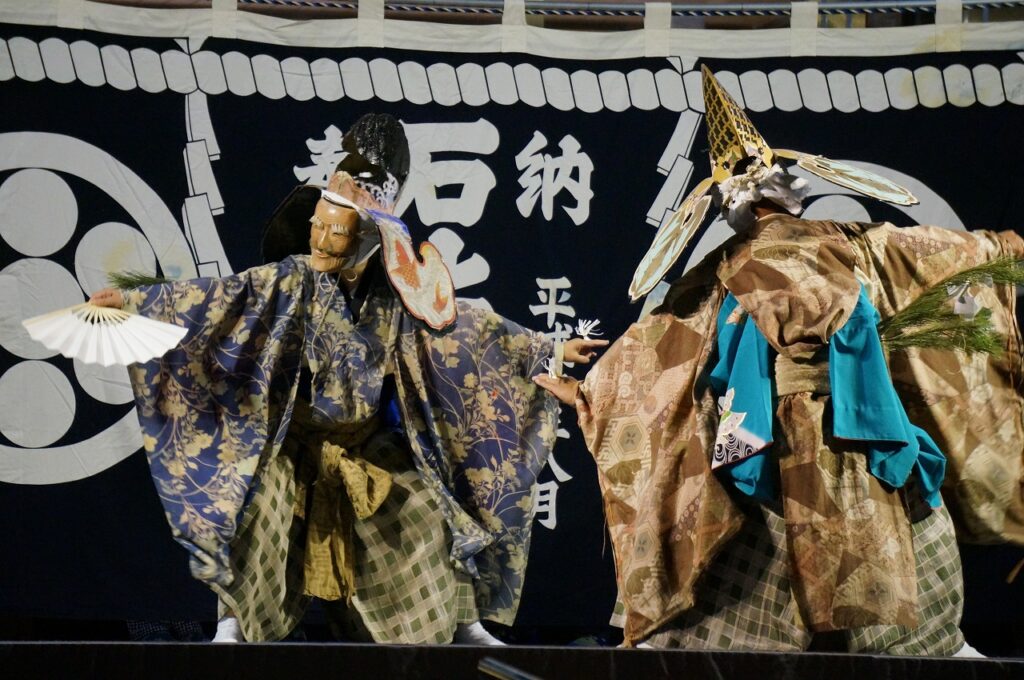
The long passage of time has caused many plays to be lost. The most famous is the “Dance of the Old Woman.” This performance requires a high level of skill because the dancer bends his or her waist extremely low while dancing.
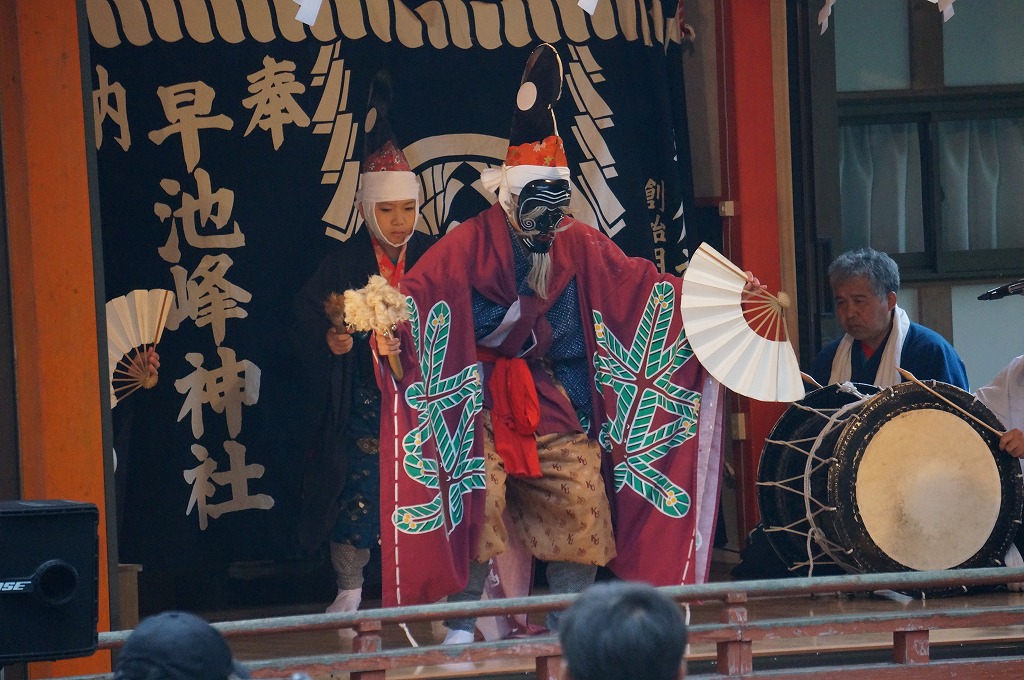
The event begins at 11:00 a.m. at the Noh stage. The photo shows the performance titled “Makura Jido,” which starts at 1:00 p.m. Further back from the Konjikidō is Hakusan Shrine, and there is a Noh stage nearby. Although it was rebuilt in the early 19th century, it has a very atmospheric appearance. It should be noted, however, that not all Noh performances are plays; some consist solely of singing, and others solely of dancing. If you look closely at the program or other materials, you’ll find this information there.
Shishi odori (Deer dance)
It starts at 10:30 a.m. in front of Hiraizumi Station, at 12:30 p.m. at Motsuji Temple, and at 2:30 p.m. in front of the main hall at Chuson-ji Temple. This photo was taken in front of the main hall at Chuson-ji Temple. The finale is the deer dance, a familiar sight in the Tohoku region. This time, it’s the “Gyozan-ryu Miyako-dori” deer dance. They pound the ground, send the sound of the drums echoing to the heavens, and their songs—which seem to well up from the depths of the earth—are as vibrant as ever. The performance, which lasted about 20 minutes, thoroughly impressed the audience. *The following article should be helpful for learning about the deer dance. https://discoverdeeperjapan.com/2020/11/30/michinoku-traditional-folk-performing-festival-the-deer-dance/
Enjoy the Performing Arts in Hiraizumi, Where the Autumn Foliage Shines Brightly ~Fujiwara festival ~Day 1
Date; Every year from November 1 to 3 Location; Chuson-ji Temple, Motsu-ji Temple—Hiraizumi Town, Iwate Prefecture Access; Take the Shinkansen to Ichinoseki Station, then transfer to a local train; it takes about 10 minutes to reach Hiraizumi. It’s about a 25-minute walk from the station to the entrance of Chuson-ji Temple, and about a 10-minute walk to Motsu-ji Temple.
This article based on 2th~3rd November, 2025
Chusonji temple and Fujiwara festival in autum
the Hiraizumi station
the Konjiki -do (Chusonji-temple)
Hiraizumi is one of the leading tourist destinations in the Tohoku region. This is thanks to Chuson-ji Temple, built here in the Middle Ages, and the National Treasure, the Konjikido Hall, located within the temple grounds. “Konjiki” simply means golden. True to its name, there is a temple that still stands today, with its entire structure covered in gold. For more details, please refer to other websites introducing Japan, but on this site, we’d like to introduce the Fujiwara Festival held at this temple. There are two Fujiwara Festivals: one in the spring (early May) and one in the fall. The spring festival mainly features performances by celebrities and reenactments of historical processions; it is a lively event that draws large crowds. As for autumn, while it may lack some of the showiness, it more than makes up for it with the many performing arts deeply rooted in this region. Hiraizumi town officialhttps://hiraizumi.or.jp/en/ Iwate prefecture officialhttps://www.hiraizumi-heritage.pref.iwate.jp/
Hounokizawa Nenbutsu Kenbai
in front of Hiraizumi station
>
That day, starting at 10:30 a.m., the Hounokizawa Nenbutsu Sword Dance welcomed us right in front of the station. Although “Nenbutsu Kenbai” literally translates to Buddhist chanting sword dance, it is a sword dance that, at its core, incorporates prayers for the deceased. While “Oni-kenbai*,” the representative sword dance of Kitakami City, focuses primarily on the performing arts, it can be said that Nenbutsu Kenbai has a stronger religious spiritual dimension. However, an outsider wouldn’t be able to tell the difference. *https://discoverdeeperjapan.com/2020/10/18/michinoku-traditional-performing-art-festivaloni-kenbai/
After their performance, which lasts about 20 minutes, they’ll pose for commemorative photos. Following this, two more performances are scheduled—one in front of the Konjikidō Hall at Chūson-ji Temple and another at Mōtsū-ji Temple. Accordingly, this article will follow them as they tour the famous sights of Hiraizumi for the day.
To Chuson-ji Temple
Chuson-ji Temple is located on top of a mountain. Because of this, visitors must climb a very long slope to reach it. The slope is particularly steep in the first half, so there are even ropes along the side for visitors to hold onto.
That said, it’s autumn, and visitors forget their weariness amid the fiery autumn foliage.
in front of Konjikido Hall
Starting at 12:30 p.m., there was also a dance performance in front of the Konjikidō. Many tourists were delighted by this unexpected treat.
at Motsuji temple
Mōtsū-ji Temple is located about a 10-minute walk from the station in the opposite direction from Chūson-ji Temple. Mōtsū-ji is one of Hiraizumi’s most famous sights, alongside Chūson-ji. Its vast grounds, which feature a large pond, are said to be modeled after the Buddhist Pure Land, and they amply evoke the prosperity of the clan that once ruled this region.
At 2:30 p.m., the sounds of flutes and drums echoed as the group approached. As scheduled, the final performance took place in front of the main hall of Motsuji Temple.
To be continued in the next section, on the second day
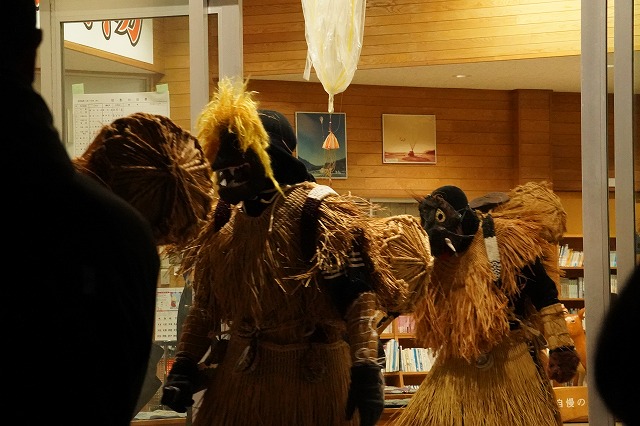
What’s “Suneka”?~Cold winter, those guys will come again.~Suneka
Introduction
On a cold winter’s day. It is said that a mysterious monster appears along the coast of the Tohoku region—but only on that particular day, and only that night. Rumour has it that the monster enters people’s homes and attacks children. What’s more, the government is said to acknowledge the monster’s existence. Apparently, its name is Suneka. What on earth is it? I set out immediately to investigate.
Date: 15th January every year Location: Yoshihama, Sanriku town, Ofunato city, Iwate prefecture Access: Shin-Hanamaki 新花巻 by Shinkansen from Tokyo. From there transfer to the Kamaishi Line for Kamaishi 釜石. From there, transfer to the Sanriku Railway for Yoshihama 吉浜. Or take the Ofunato line from Ichinoseki 一関 to Kesennuma 気仙沼 and transfer to Mori 盛. From there, take the Sanriku Railway to Yoshihama. It takes about 3 hours from Tokyo to Shin-Hanamaki and Ichinoseki. From there, it is about 2 hours to the nearest Sanriku Railway station. Another 30 minutes to Yoshihama. Flights to Hanamaki Airport are available, and shuttle buses run from the airport to Hanamaki Airport Station, Morioka Station, and Kitakami Station. The ride takes about 10 to 20 minutes to each destination.
What’s “Suneka”? What’s “Raiho-shin”?
Sneka is one of the visiting deities (Raiho-Shin) featured in the folklore of Iwate Prefecture. What exactly are visiting deities? A group of “Raiho-shin (visiting deity)” folk rituals were added at 2018 to UNESCO Intangible Cultural Heritage list. Raiho-shin are masked and disguised deities who visit the human village from the other world at certain times of the year. Namahage* in Akita prefecture is one of the good examples of Raiho-shin. A total of 10 events were registered. Suneka is one of them. It appears in Iwate Prefecture, the neighbor of Namahage’s Akita Prefecture. It is an oddly shaped entity that is no less than a Namahage. Let’s take a closer look.
As the Suneka is an event rather than a festival, it is rather difficult to find out the details unless you know someone in the local area. However, I happened to come across something called the ‘Suneka Tour’. Apparently, it’s a new initiative that started this year. Preserving traditional events is becoming a pressing issue in many regions. Whilst securing people to carry on the traditions is the top priority, raising awareness is also a key factor.
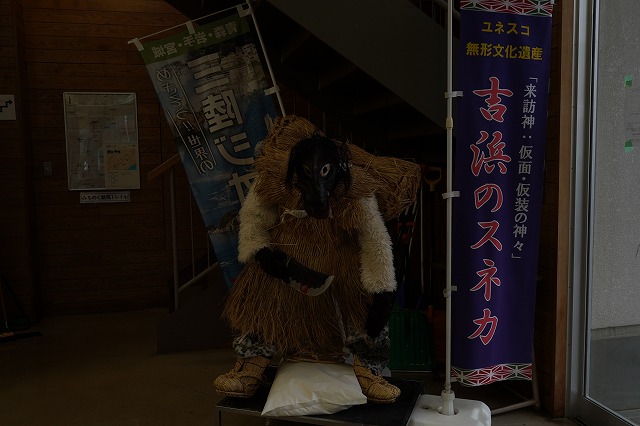
in the Yoshihama station
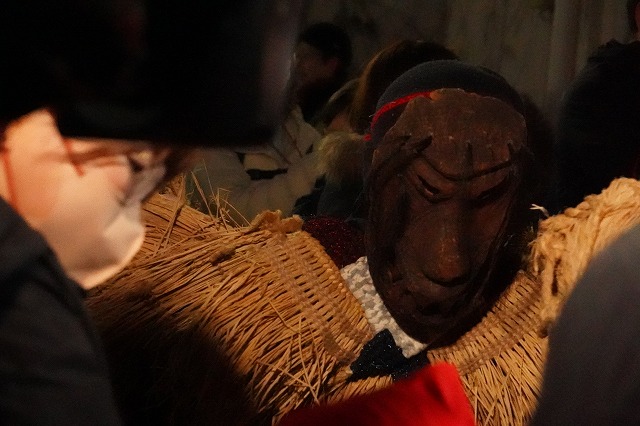
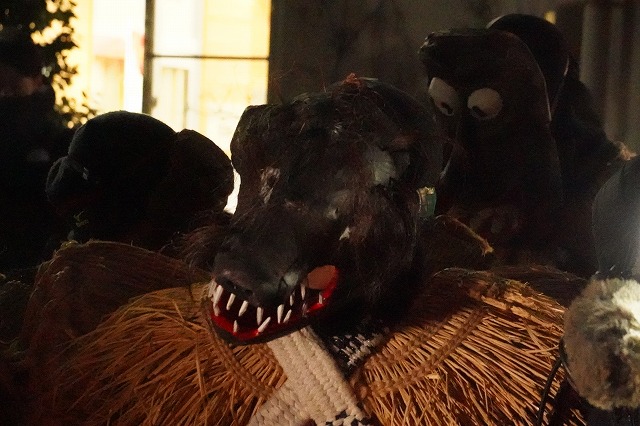
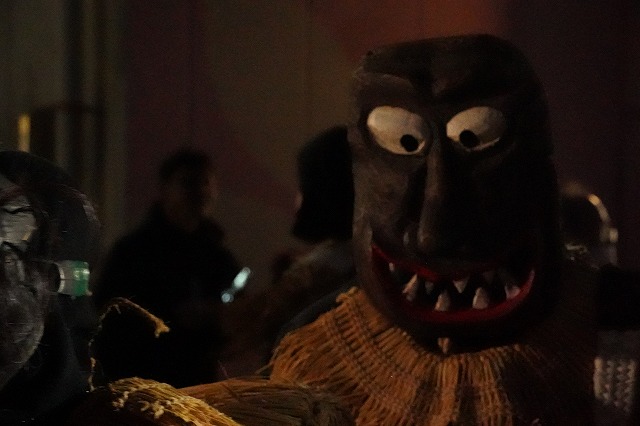
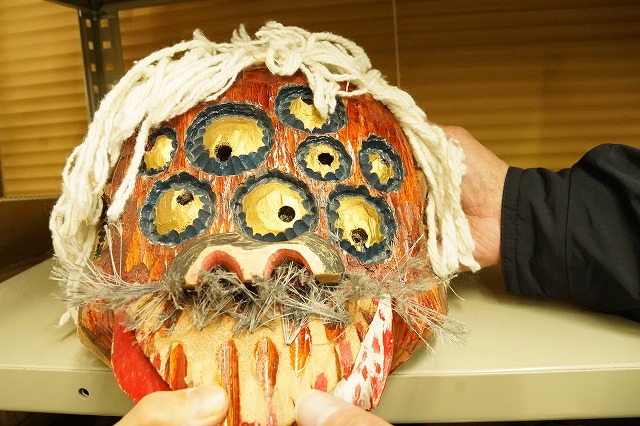
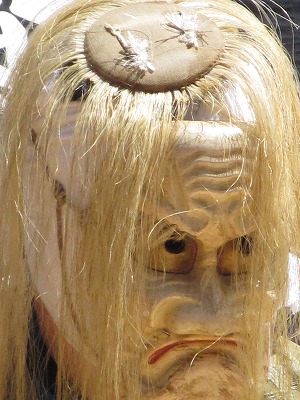
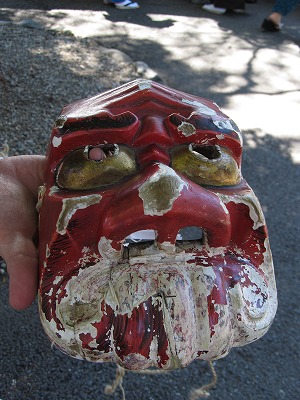
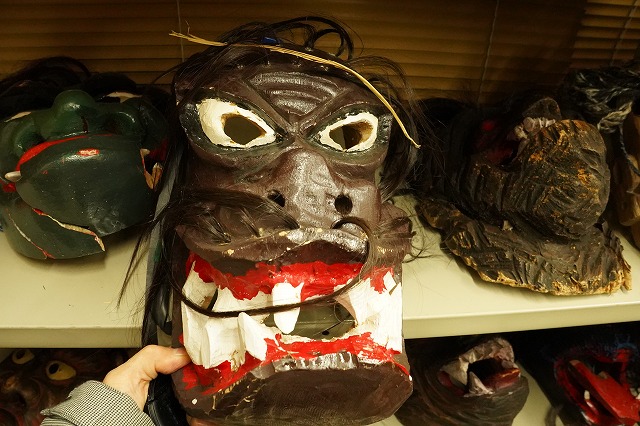
Suneka is supposed to appear on a cold night on the 15th of January every year. They wear a straw raincoat and have abalone shells hanging from their waists. The sound of the shells is an indicator of their arrival. They also wear a small sword (deliberately dipped in bloodstain) and, for some reason, only one pair of children’s shoes. And on their backs they carry heavy-looking bales. And most distinctive of all are their masks. The masks are not animals themselves, but rather strangely deformed, adding to the eeriness of the scene.
Where did that name come from?
The strange name Suneka comes from the word tagle for sunekawa. Sunekawa means the skin of the shin, and Taguru means to peel. It is the same as the name of the Namahage, which means to peel off the skin of the tibia. The difference is that on the Oga Peninsula, where the Namahage live, the shin skin is called Namomi, and here in the Yoshihama area of Iwate Prefecture, it is called Sunekawa.
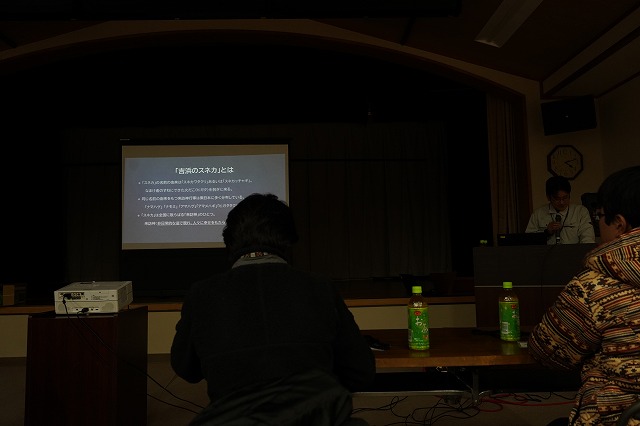
lecture from specialist
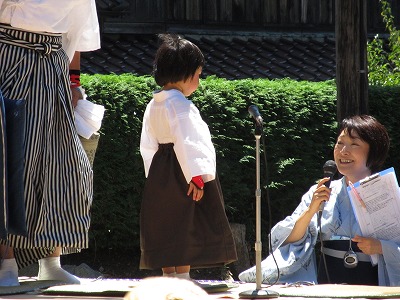
Before the Sneca event began, there was also a lecture given by an expert.
A brief ceremony in front of the hall
In the evening, Suneka gather and at 5:00 p.m. a departure ceremony is held at the station. About 25 members in total. They went from house to house in some groups. It takes about two hours to visit about 300 households.
On that day, several families had gathered in front of the hall to experience their first taste of Suneka. Though they’d prefer not to have visitors come to their home, these families want their children to get to know Suneca.
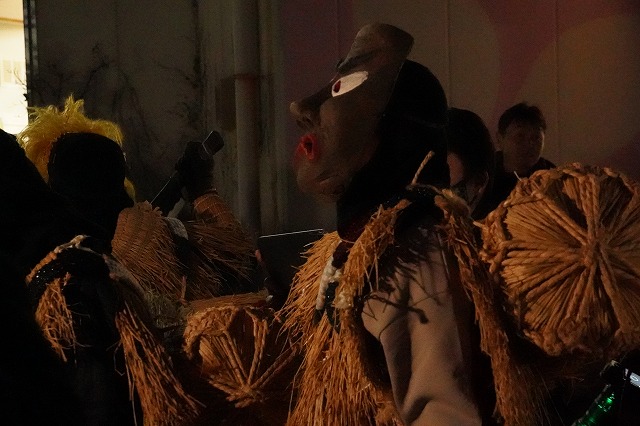
What does Suneka do?
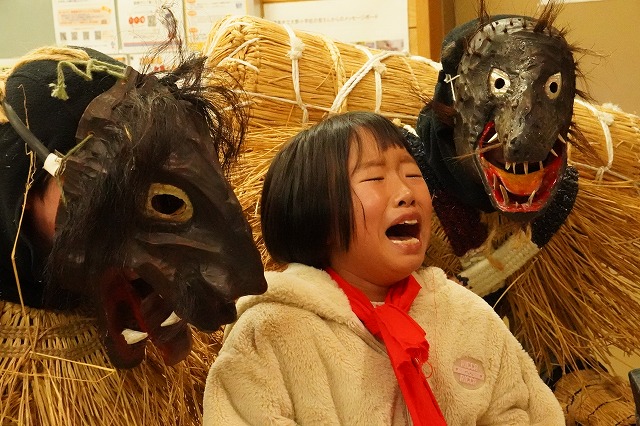
In each house, a feast awaits them with their children. Then the sound of the shells of Sneeka and his friends begins to be heard, and even the sound of their sniffing comes closer. At this point, the children are already scared. They are almost afraid to even mention the name. When SUNEKA arrives, they scratches their nails in the yard and shakes the door. Then they come up to the house. Are there any crying children? Are they being good? Are you being a good boy? The children desperately appeal, “I’ll be a good boy. Then, when the time is right, a family member tells them, “Then we will give you some rice cakes and ask you to go home. It takes about 10 minutes, but for the children it seems like an eternity. Here is what makes Suneka unique. They never show their backs. So when they leave, they walk backward and head for the entrance. In some areas, there are even child Suneka. Originally, this was done by a youth group, but due to a lack of manpower, the children began to take on this responsibility. They go around to kindergartens and nursery schools. Still, Suneka remains a formidable presence for the children in each place. We hear that older children sometimes stand up to him and say decisively, “No crying children, please go home.
In this way, children in this area grow up strong. According to the locals, this effect is valid for about three months.
Although the exact figures are unknown, its history dates back about 200 years., and although it was once interrupted by war, it was revived in the 1960s, and a preservation society was formed and continues to this day.
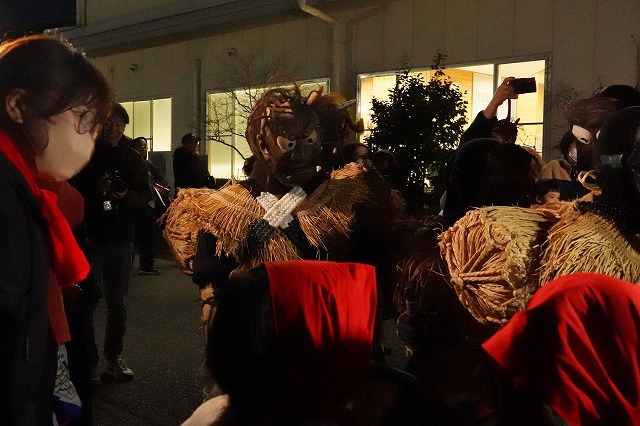
But the tour isn’t over yet
The Suneka members drove off to various locations. After they left, the chairman of the Preservation Society gave a detailed explanation to the remaining Suneka members.
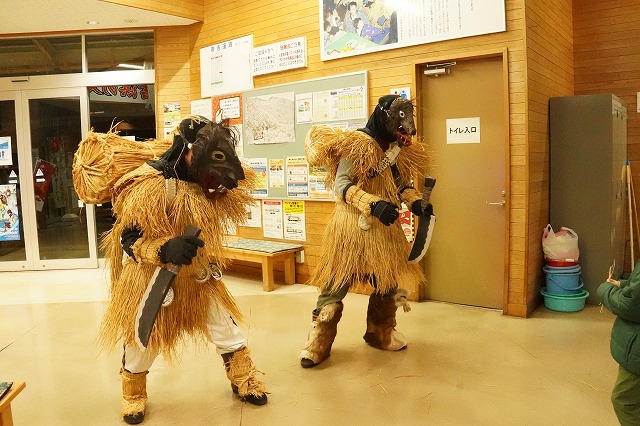
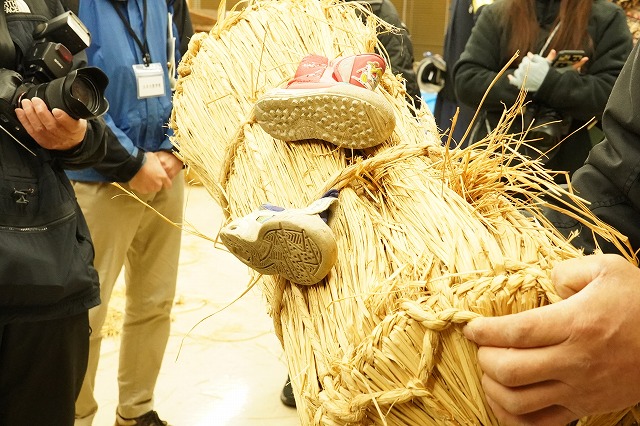
If you look closely at the straw bale on the back, you can see that a child’s shoe has been attached to it. This is meant to suggest that a captured child kicked through the bale from the inside while struggling. It’s quite a detailed touch. However, he mentioned that it’s been difficult to source straw lately.
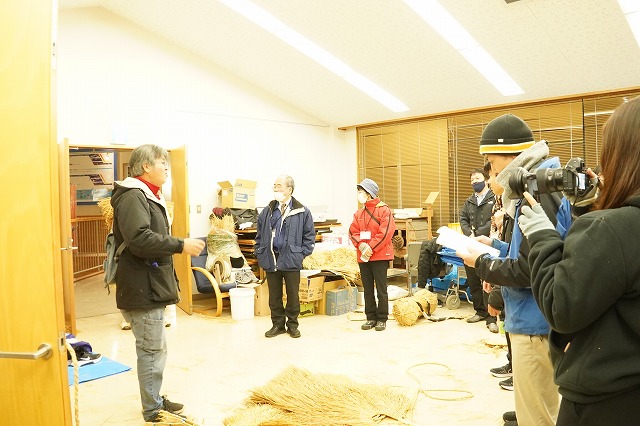
The chairman says that the masks are basically carved from wood. However, he adds that there are no set rules regarding what the faces should look like. The only rule, he says, is that they must be mysterious. Fifteen people took part in the tour that day. The organizers said they were surprised to find that more than half of the participants were from outside the prefecture. I spoke with a few of them myself, and they were quite a formidable bunch. People who travel exclusively to remote islands, people who went all the way to Bali just to see the Barong dance (a masked dance), and so on.
Sunehka isn’t over yet—and neither is Ofunato
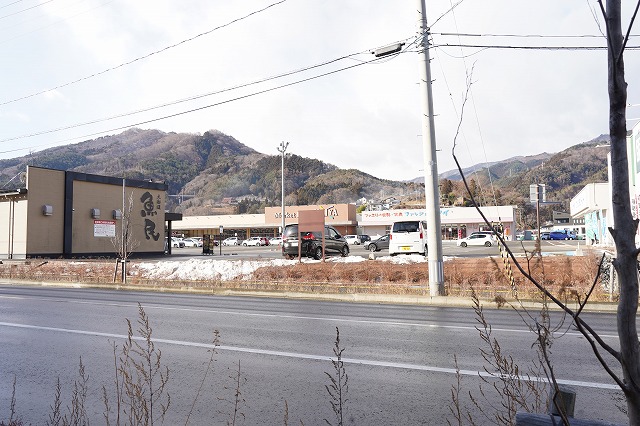
Visitors might find themselves thinking, “Huh?” They might notice that, despite being a central town in the area, there aren’t many houses, and it feels somewhat desolate. The town does have a hotel and a small shopping mall. But if you look closely, your eyes are drawn to a sign. It reads: “Once upon a time, a town of this size existed here.” Yes, this is one of the places that suffered the worst tsunami damage in the 2011 earthquake . The people have rebuilt the town to this point. And the tradition of “Suneka” has been passed down through the generations. Suneka has also served as a symbol of reconstruction.
Report: Tono festival ~Day 2
Did you sleep well last night?
It was fun meeting you all. I also got to hear a lot of old stories.
I’ll have some time today to show you around town a bit.
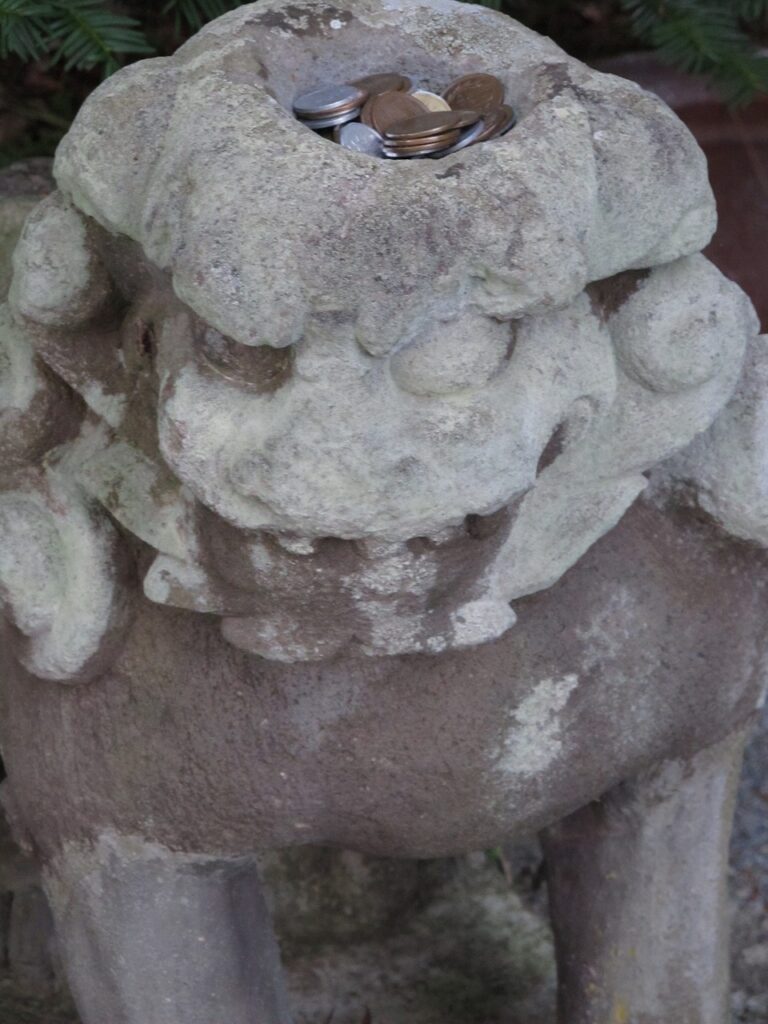
I didn’t notice it yesterday, but Komainu (the guardian dogs) here have kappa-like plates on their heads.
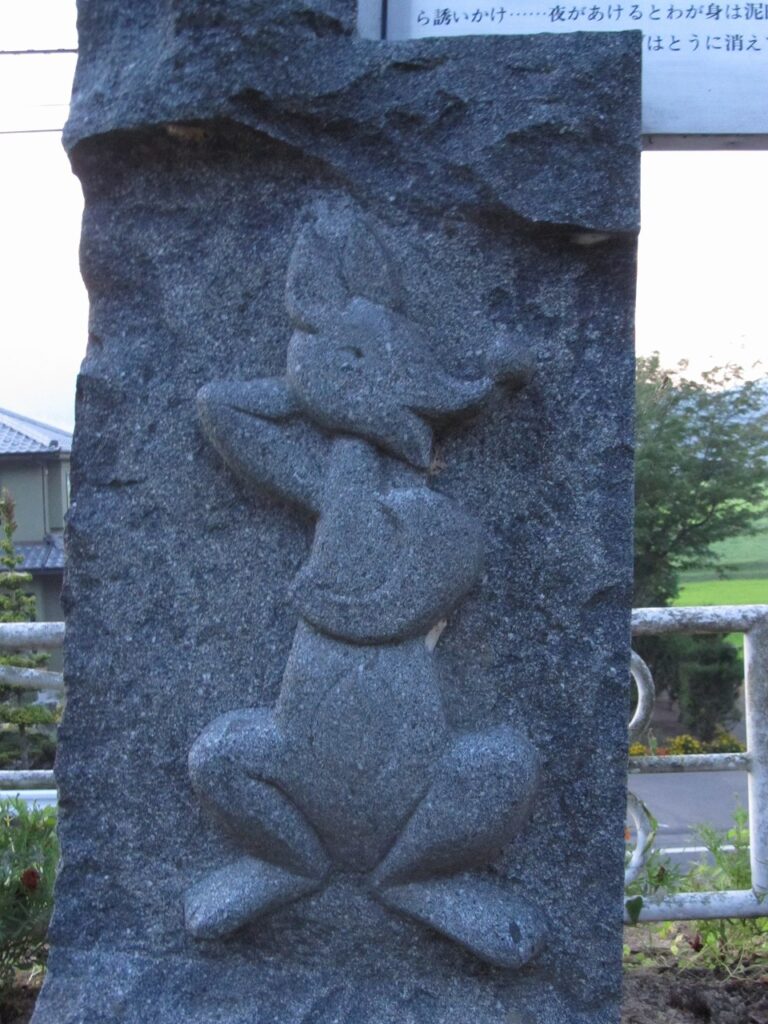
It is commonly known as “Kappa Komainu. After all, kappa are the biggest stars in Tono. Tono is also famous for having many other mysterious legends in the region. This stone monument commemorates a legend about a fox.
Perhaps it was because I had seen too much of the deer dance, even the clouds looked like deer horns.
Well, we’d better get back. Today’s main event is the dedication of the performing arts at the Tono Hachimangu Shrine on the other side of the station.
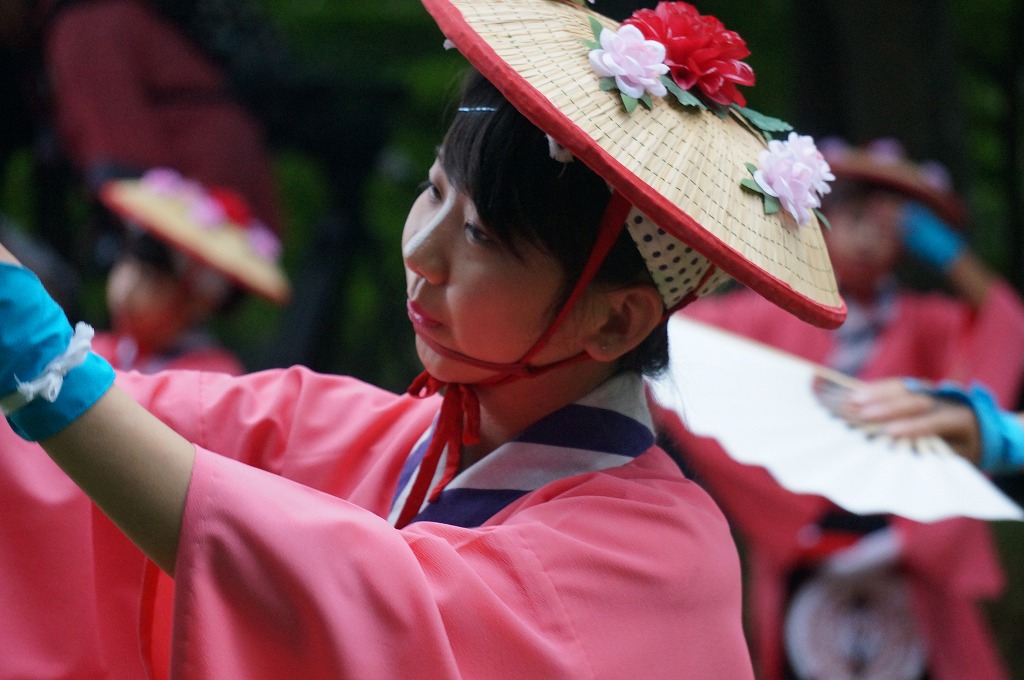
But that starts at noon, doesn’t it?
The performing arts groups are going to the shrine, to present their art and do “Kadozuke” again.
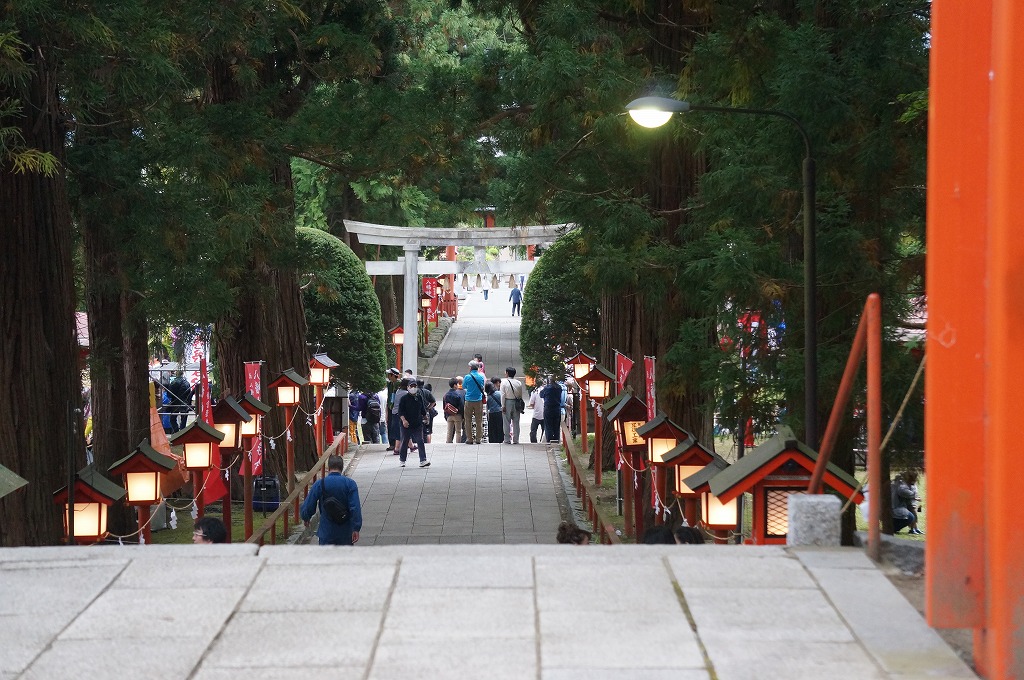
Road to Hachimangu Shrine
This is how they slowly made their way to the shrine, performing tricks from about 10:00 am.
In large facilities such as hospitals, groups come in one after another. It’s a sort of ”Kadozuke”.
Still, I found it a strange sight to see deers, a kind of demonic transformation, walking around the city in broad daylight. Yokai and demons usually appear at night, don’t they?
That’s the charm of a festival, isn’t it? On the day of the festival, even if there are demons and kappa next to you, they won’t notice, just like us. While I was saying this, I realized that we were already at the shrine.
At the shrine
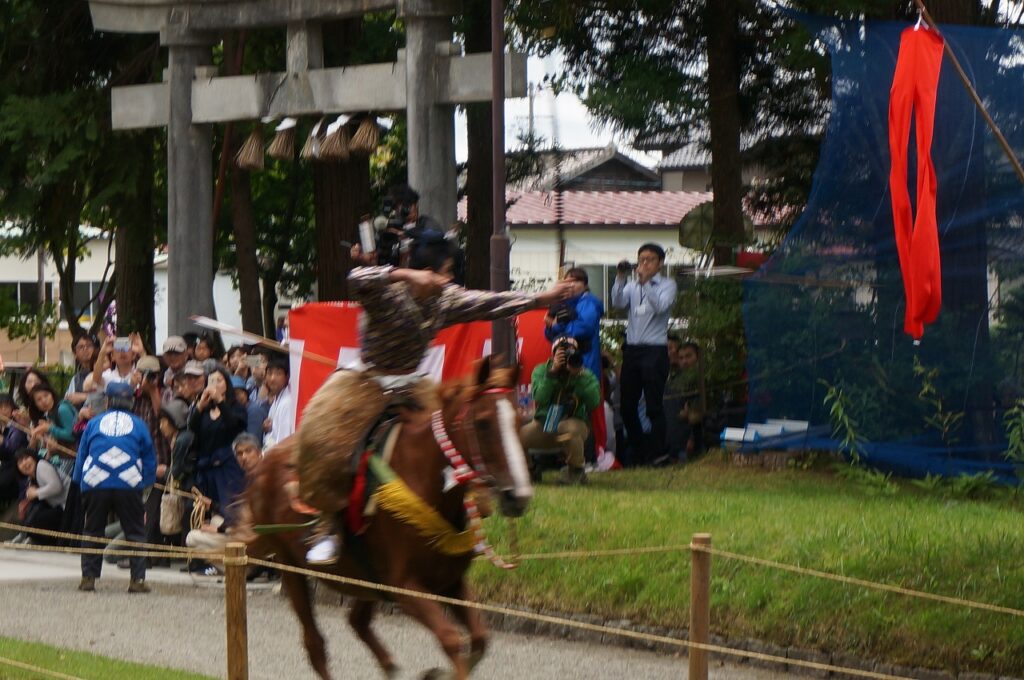
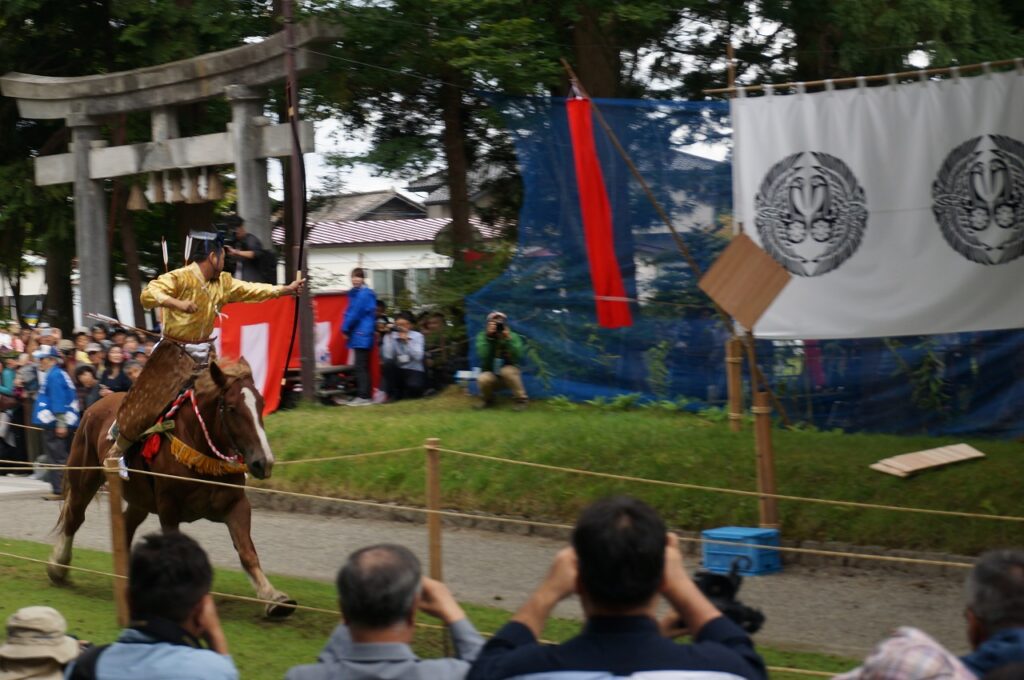
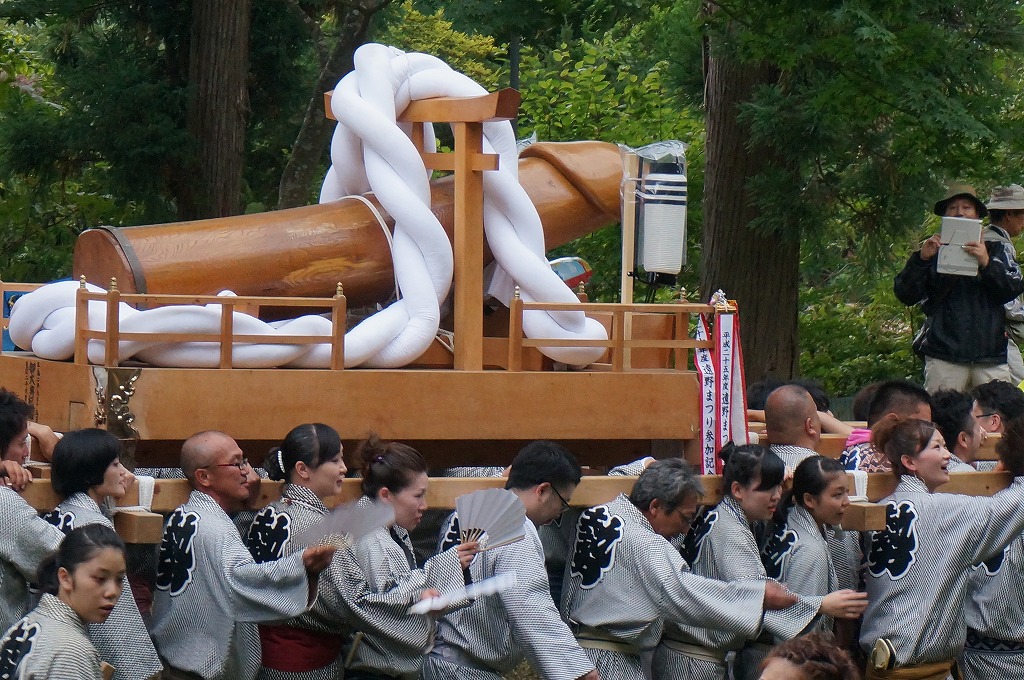
The first thing that takes place here is “yabusame” (horseback archery). The three most popular folk tales in Tono are Kappa, Zashiki-warashi (the strange child who brings good fortune to the house he dwells in) and Oshirasama. Do you know the story of Oshira-sama?
I haven’t heard that one.
In Tono, horses and people used to live together. Horses were like family. One day, a girl fell in love with a horse. But her father didn’t approve of it. Finally, he cut off the horse’s head and killed it. The grieving daughter ascended to heaven with the horse in front of her father. When her father saw what had happened, he regretted his actions and enshrined her as “Oshira-sama” for a long time.
Yabusame
Yabusame is a game in which horseback riders run and shoot at targets with arrows. In the old days, it was a requirement for samurai. It is held all over Japan, but Tono is special because it is a horse producing area.
I hear a familiar sound coming from upstairs.
In front of the main hall of the shrine
I thought I could hear sounds coming from upstairs, but there is also a performance going on in front of the main shrine during the yabusame.
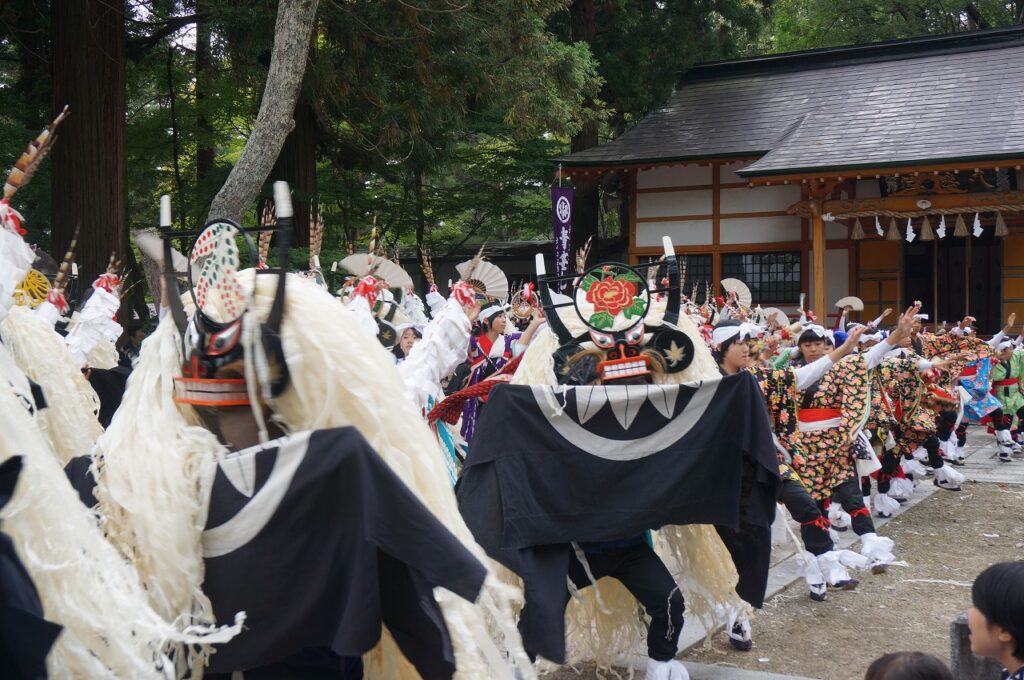
Look. Here comes the “Wakumizu deer dance,” the only self-drumming style deer dance in Tono.
Unlike other drumming style groups, the performer has a short-hemmed costume. In addition, the feathers on their back are also bird feathers.
It is an art form that has been handed down from the nearby Esashi district and has a history of 150 years.
Parade at the riding ground
After the yabusame, the parade finally started.
There were so many people watching.
Not only the spectators, but also the people from the groups that are not in the parade are waiting together.
Free session
There was some kind of drumming coming from up there again.
Yes. During the parade, there are also various performances going on up there. This sound is the deer dance, right? Let’s go see it.
It’s all very exciting. It’s full of free movement that we don’t usually see.
That’s the power of the “Tane fukube” as a leader.
The deer performers seemed to be very spontaneous. The deer’s antlers were almost hitting Tane fukube, but he was able to avoid them at just the right angle. It’s amazing.
Now he is drawing another performer into the dance. This one didn’t seem to be a very good dancer.
He is always in charge of the taiko drumming.
The deer are taking advantage of this and are overwhelming him. Oh, the deer have finally eaten him. The dance itself is just a simple movement, but it’s amazing how good or bad it can be. I guess there are masters of everything.
A deer dancer I know told me about it. He is the son of a former master of the dance, but he said that lately it has become a little less interesting. He said that the master was a person who could improvise and perform various free movements. I guess that’s exactly what he was like.
It is incredible. Everyone in the audience called for an encore.
I’m glad I was able to show you something good today. Now it’s time to go back down and watch the parade.
Others
Kagura is also performed at the same time at Kagura-den.
Today, we have a rich variety of Tono traditional performing arts at Tono shrine. We can pick and choose whatever we want.
Konsei-sama
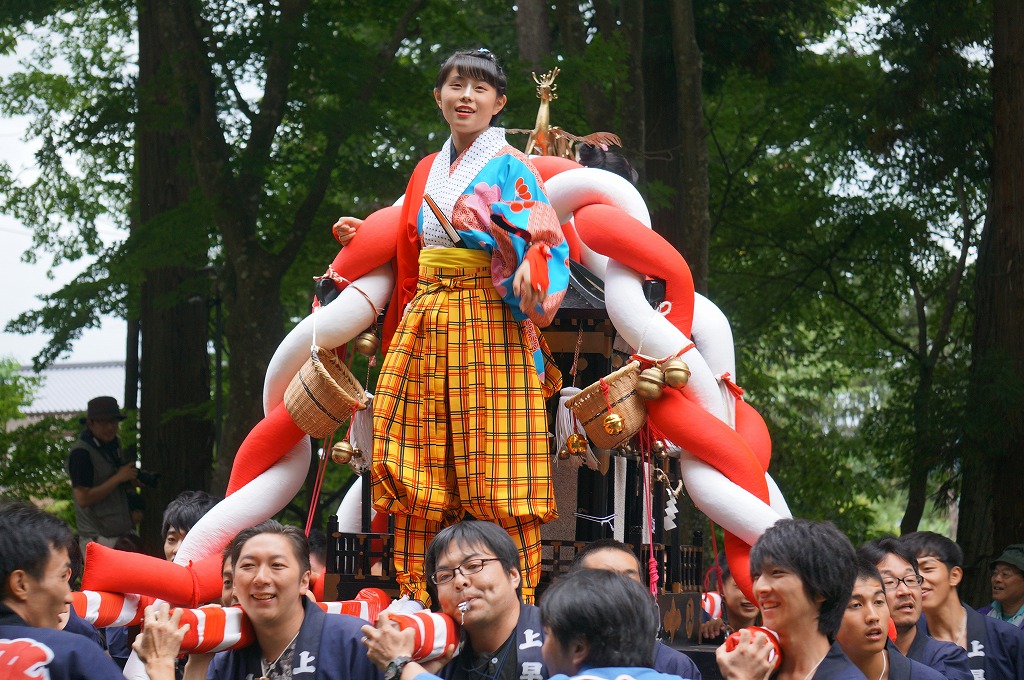
So it’s the women who ride the mikoshi here. How unusual.
All the girls are cute too.
Stop it, stop it. That’s why people misunderstand kappa as rather lewd.
And Good-bye time
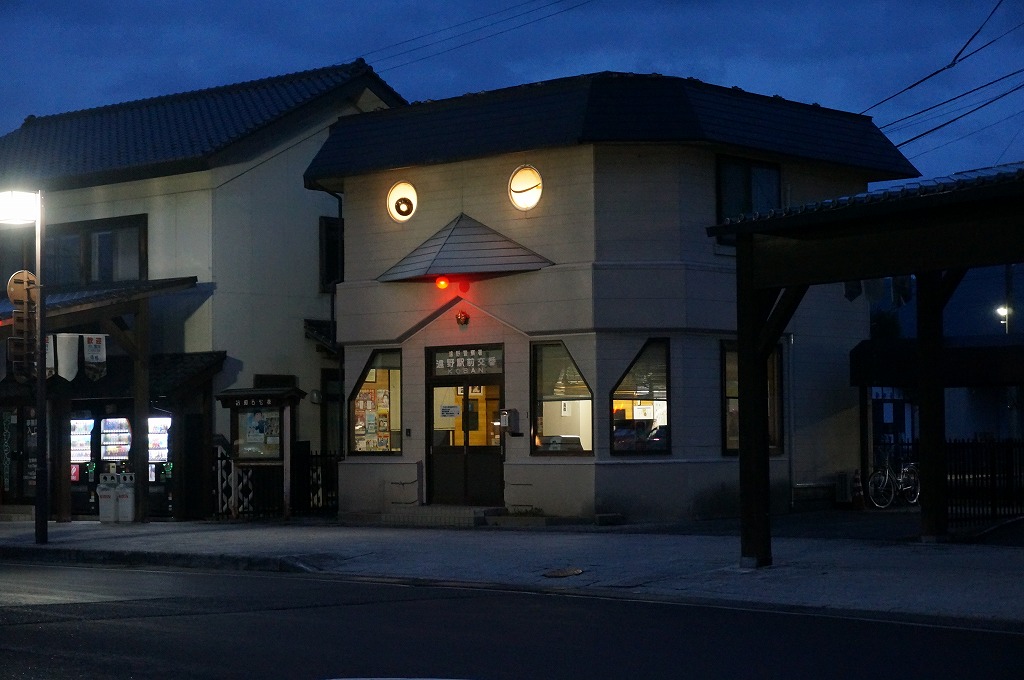
police box
It’s time to say good bye.
It’s been fun. I hope you’ll come to Fukuzaki someday.
In Tono, the trees are already beginning to change color. Once the festival is over, winter will be just around the corner. But the festival season will come again. Please come and visit this typical region in Japan. You might even be able to meet a kappa!
Report: Tono festival ~Day 1, at the city
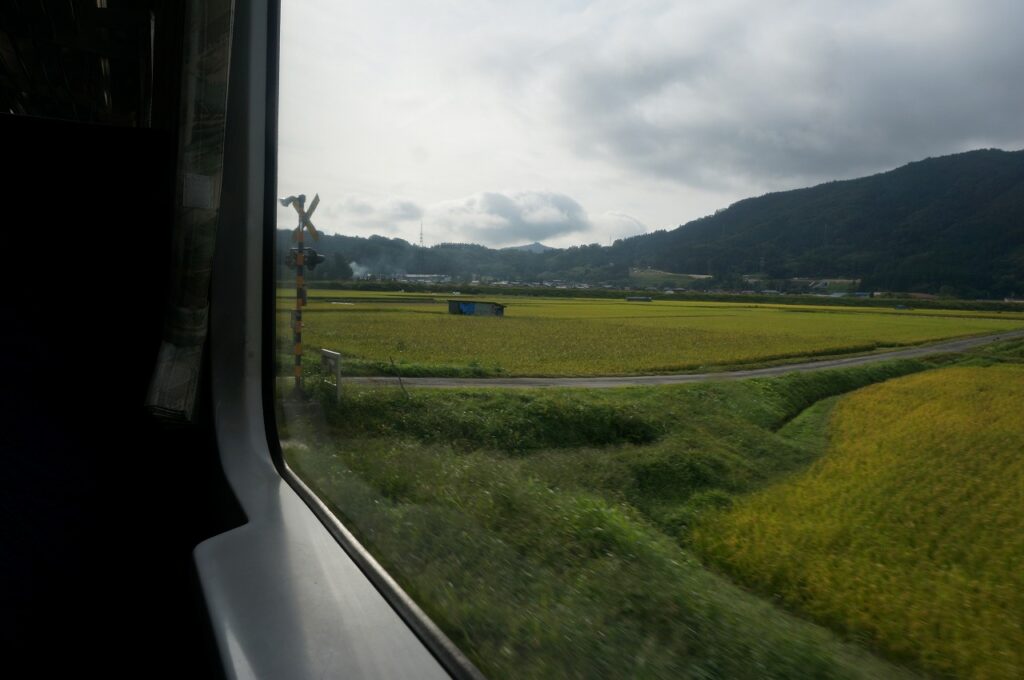
Date: the 3rd Saturday and Sunday, September, every year Location: Tono city and Tono Hachiman shrine, Iwate prefecture Access: 1 hour from Kitakami, 2 hour from Morioka by local train. 3 hours from Tokyo by Shinkansen and change at Shin-Hanamaki, 1hour by local train.
Tono has many strange stories
Tono is a small mountain village about an hour’s train ride away from the center of Iwate Prefecture. Its main industry was agriculture for a long time, but in recent years, tourism and hospitality services have been increasing in proportion. Tono has the largest cultivation area of hops, the raw material for beer, in Japan.
Tale of Tono
When Japanese people hear the name Tono, the first thing that comes to mind is “Tono Monogatari 遠野物語 (the tale of Tono)”.
About 100 years ago, there was a scholar named Yanagita Kunio 柳田国男. He was amazed at the number of legends and folk tales in the region, and compiled them into a book. In the preface to the book, he wrote enthusiastically, “Let the stories of this mountain village make the people of the plains shudder”. In fact, the book became a bestseller, and it still holds a place in people’s hearts. Yanagita thus became the founder of Japanese folklore. The “Tale of Tono” contains many strange stories, such as the story of a girl who was married to a horse, and the story of a man who spent time with a giant in the mountains. The most famous of these characters is the kappa. Even today, there are still many places in Tono where legends about kappa remain. This is the reason why Tono is called the home of folk tales.
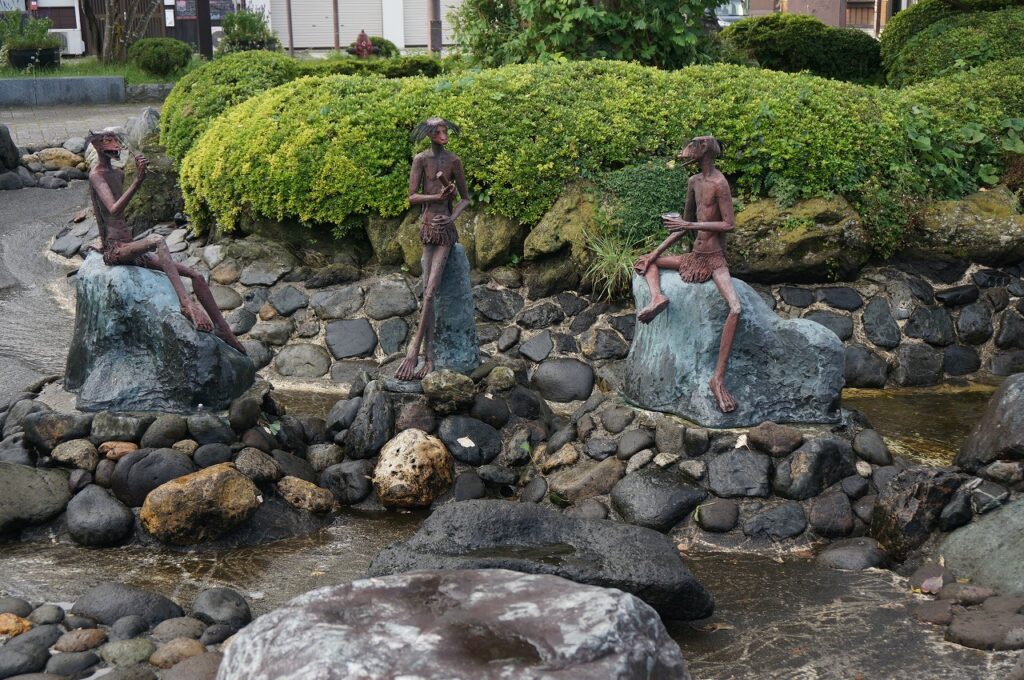
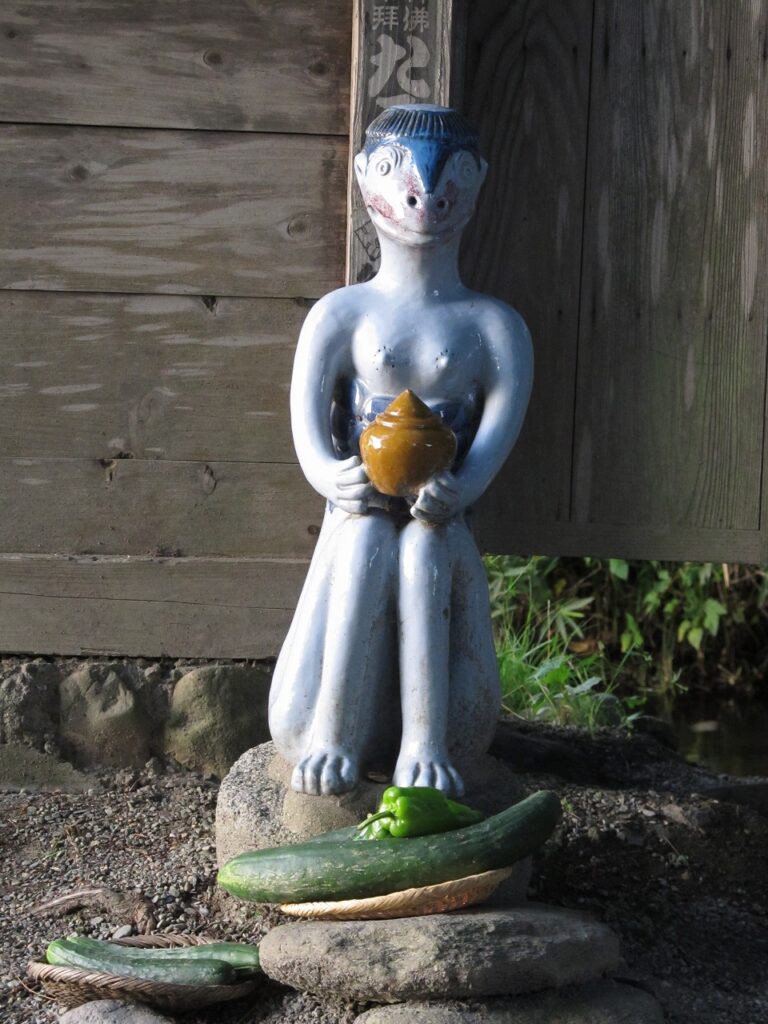
Kappa
*Kappa is one of the most famous Japanese “yokai”. The approximate image of a kappa is that it lives in a river, has a shell on its back, hair on its head, and a dish in the center of its head. When the water in the dish runs out, it dies. They have waders on their hands and feet and are good swimmers. They are about the size of a child. They lean out of the river and drag people and horses into the river. Sometimes they come out at dusk and say, “Let’s play Sumo”. Their favorite foods are human liver and cucumbers. Since they are all over the country, they are called by different names in different places. “Gataro” is one of them.
Written by Toriyama Sekien (1718~88)
Written by Akutagawa (famous novelist)
Let’s go with Kappa
Tono is also a treasure house of folk performing arts. All of them come together once a year to perform at the Tono Festival. The festival takes place over two days. On this day, the normally quiet mountain village welcomes a large number of people and becomes spectacular. If a kappa from this area were to guide us through the festival, it might look something like this.
Day 1
Welcome guests
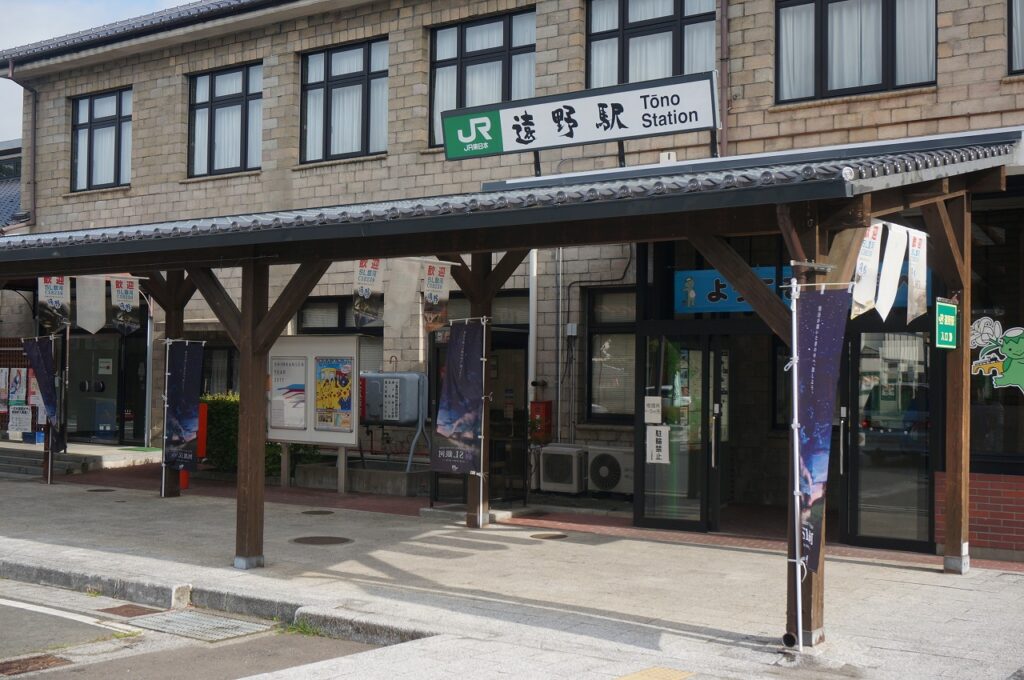
scene: in front of Tono station
Today is the long awaited day of the annual festival. Now, it looks like Kappa living in Tono (named Wooden) is going to welcome guests soon.
8:00 in the morning. It’s almost time for the guests to arrive. Oh, here he is.
Hey, I’ve finally arrived at the Kappa Sanctuary. I’ve been looking forward to it.
Welcome from far away Fukusaki-town, Hyogo prefecture.
*Yes, he is Gajiro, a kappa from Fukusaki town in Hyogo Prefecture. There is a little explanation as to why he appeared this time. Fukusaki town is actually the hometown of Yanagita Kunio, who wrote “The Tale of Tono”. In his memoirs of his hometown, he wrote about the existence of a kappa named “Gataro” in the town. In Fukusaki Town, Gajirō, who is set up as Gatarō’s younger brother, plays an active role.
I have heard you’re busy every day.
That’s right. I work at the pond showing up every fifteen minutes during the day from nine in the morning until five in the evening every day.
*Explanation again. Fukuzaki town has installed objects of kappa and other yokai (Japanese strange monsters) throughout the town to promote the town. In particular, the main pond and the station in front of the station are attracting a lot of attention because of the kappa jumping out of the pond. cf. http://www.fukusakikankou.jp/ https://www.youtube.com/watch?v=Hix5SerE19g
It sounds tough. A lot of kappa friends are waiting for you, too. Take your time and enjoy yourself.
Kappa in front of the Tono station
Kappa at the “Kappa pond”
Door-to-door entertainment
scene: Tono town
There’s still time to walk around town a bit. Today I’ll show you the south side of the station. This is the area where the museums are. Most of the travelers stay here first.
Where is Kappa-pond, where are kappa said to be?
It’s on the north side of the station. It’s a bit far, so you should rent a bicycle or drive.
I’m starting to hear some amusing sounds.
It’s already nine in the morning. It might have started by now. Let’s go back.
There are people all over the place. What are you doing?
This is a custom called “Kadozuke 門付け,” in which people go from house to house to bless and receive congratulations. This used to be a very common custom in the past, but now we can see very few places where this custom still exists.
Not only the deer dance, but also the Kagura groups do the gating. The group holding the lion’s head is the kagura group. In Tono, the lion’s head is not worn on the head, but is usually held in the hand.
The first tengu with long noses came strolling in.
This is not a Tengu, but a Sarutahiko, a god of guidance. The Sarutahiko of each kagura group lead the procession together.
But that’s a lot of people. And there are a lot of foreigners, too.
Currently, Tono City has friendship cities with Salerno, Campania, Italy, and Chattanooga, Tennessee, USA. And Tono has about 60 performing arts groups.
But there are so many banners, aren’t there?
There are about 60 performing arts groups active in Tono.
Deer dance
Kagura
Nambu dance
Sansa dance
All things aside, the main thing is the deer dance. In addition, the Kagura dance with a shishi head, the Nambu dance with gorgeous costumes, and the Sansa dance are active. You can see many other interesting things.
But I heard that the deer dance is the most famous.
Structure of the Deer Dance
Yes. There are two types of deer dances in Iwate Prefecture, one is the self-drumming style and the other is the drape-curtain style (the dancer are holding a drape-curtain while performing). And Tono is the representative of the drape-curtain style.
Tane-fukube and Nakataiko
Katanakake
Let’s look at the basic structure. At the head of the group is the leader, called “Tanefukube,” who oversees the entire group. The “Fukube” group follows him. Behind them is Nakataiko group. They are holding a tassel in their hands. Next is “the Katanakake”. They have a sword on their waist, and sometimes play with a deer (shishi).
Nakadate
And finally, Shishi appears. First comes the “Nakadate”, a few people in the group who have exellent skills. Then comes the flutes and drums.
Finally, a large group of Shishi arrive. All roles are based on 12 people. So if you were to perform as traditionally done, you would need 60~70 people, but there are hardly that many nowadays. In addition, I want you to pay attention to the top of Shishi’s head. There are various designs between the horns, which are fun to look at.
That’s so Tono as can be expected. There are also kappa.
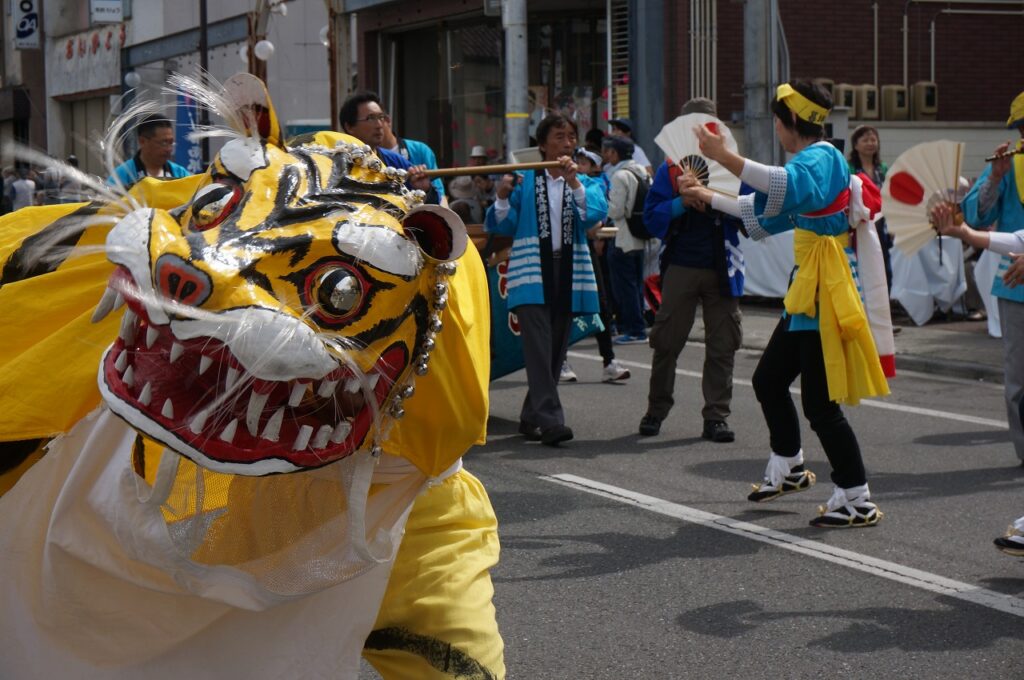
It’s a tiger dance. It’s performed mostly in coastal areas, but there are also some in Tono. It looks like a lion dance.
I’m wondering why the tiger dance has been handed down to people who aren’t in Japan.
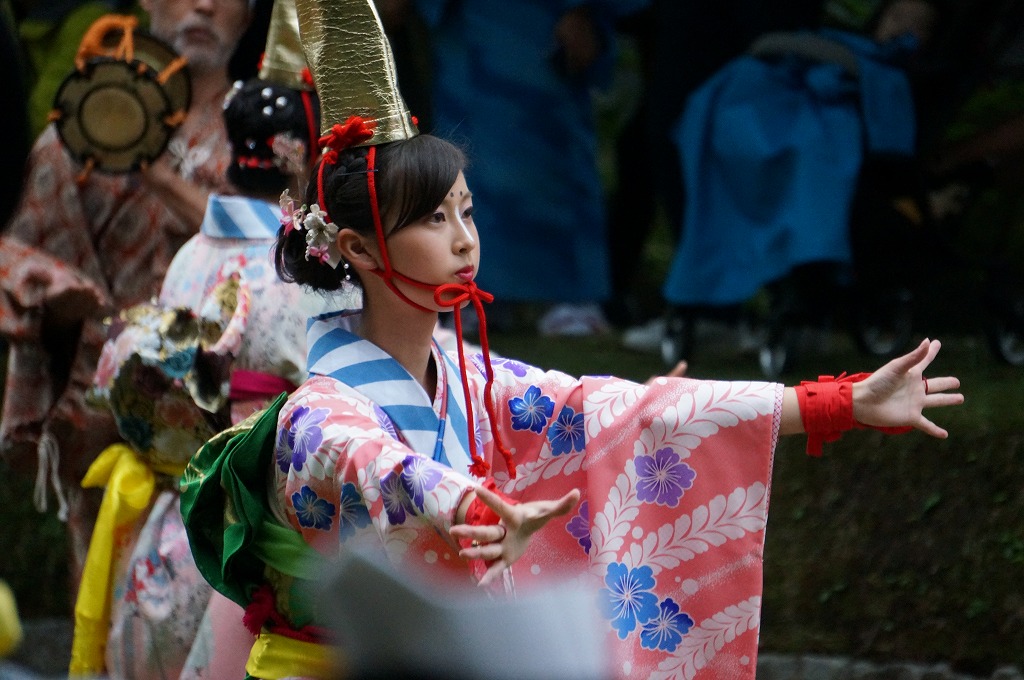
Sansa Odori and Nanbu Odori, right? The Sansa dance is based on drums and flutes and has a light-hearted feel, while the Nanbu dance is characterized by its elegance. The Nanbu Odori in particular is said to have been created by inviting a performing artist from Kyoto.
All women look pretty, and men look rugged and dynamic.
For example, in the same way that children in Tokyo learn English or swimming , girls in Tono yearn to dance the Sansa or Nanbu Odori dance, and boys try the deer dance.
There are so many different generations here, it’s a good social learning experience.
Tono daikagura
What a strange group of people we have here.
It’s Tono Daikagura. There used to be masters of the dance, and it is still handed down to this day.
It’s such a strange music. It seemed to add to the suspicious atmosphere.
Corps de Deer Dance
You’re not tired yet? The biggest highlight of the day is the big deer dance that will start around three in the afternoon. All the groups of deer dancers from the previous day perform their dances at the same time. You can’t miss this.
I can now hear the sound of loud drums and flutes.
Wow, here it comes. They seem to spring up from behind me.
The town is completely occupied by deer right now, isn’t it? People are now just a supporting cast.
My head is already dizzy. I don’t know if I’m awake in real life or just dreaming.
This is the festival. During this time, no matter how much we make noise, no one will pay attention to us.
In the evening, there’ll be a kagura performance in front of the city hall by the street. There are more than 20 groups in the city alone.
That’s Tono, known as a treasure of folk performing arts in Iwate prefecture.
End of the 1st day
It’s still crowded, isn’t it?
There’ s a lot of fooling around until past nine at night.
This makes it hard to stay in the town of Tono.
I guess people have to book at least a month in advance to stay here.
What if they can’t stay here?
In that case, I think it would be safer to stay in the surrounding areas. Kitakami, Hanamaki, Kamaishi, etc. All of these places are about an hour away by train. I recommend Kitakami. Kitakami is the economic center of the region and many businessmen come here, so there is no shortage of accommodations.
What about us?
Of course, there will be a welcome party at Kappa Pond this evening. Oh, and don’t touch the cucumbers. It’s a trap to catch kappa. Let’s get going.
to be continued….
Report: Michinoku Folk performing Arts Festival~Kagura
Michinoku Folk Performing Arts Festival. Kagura is the centerpiece of the festival, along with the Oni Sword Dance and the Deer Dance. Here in the Tohoku region, there are many unique kagura performances. One of the pleasures of this festival is to be able to see some of them all at once.
The first thing that comes to mind when talking about Iwate’s Kagura is the “Hayachine Kagura”, which is dedicated to the Hayachine Shrine located between the cities of Hanamaki and Tono, next to Kitakami City. This form of kagura, which is said to have been spread by “yamabushi” in the past, is now listed as a UNESCO Intangible Cultural Heritage. The surrounding area is dotted with a number of kagura performances that follow in its footsteps (Its number is more than 100). It is so popular that many people come at one time mostly using tourist buses to the annual festival at the original Hayachimine Shrine. Its greatest feature is the good tempo of the dance. The dancer dances at a good tempo by the sound of drums and “tebiragane” (Palm-sized cymbals), which is beaten without a break, bending slightly forward and slumping at the waist. And sometimes the sound of feet stamping on the floor works as a perfect accent. The costumes are also distinctive, the most noticeable being called “torikabuto” like the “Eboshi”(an old hat, long and narrow and high) with a bird on top of it. And underneath, feather-like things hang from both sides, flapping up and down in response to the dance. It is also common to leave the jacket hanging below the waist.
“Daijo kagura”
Since there are many forms of Kagura in Iwate Prefecture, it is up to luck what kind of Kagura can be seen at any given time, but there are also many forms of Kagura that are a fusion of Buddhism and Shinto. Due to Japan’s polytheistic beliefs, the country is tolerant of foreign cultures in terms of religion. Where there was originally Shinto, Buddhism was introduced. At that time, the Japanese handled it like this. The theory was that the Japanese gods were the manifestation of the Buddhist gods in different forms. These are called “Daijo Kagura” or “Hoin Kagura” and are characterized by their strong influence on Buddhism compared to other types of Kagura.
However, the degree of this varies greatly from one kagura to another and from one performance to another. First of all, I would like you to see a performance called “Maou”. This is performed by Kamiyado Kagura, not a demon, but a Buddha who has the power to exterminate demons in Buddhism.
The next play, “Kanemaki” is based on the story of a woman who desperately wants to visit a Kanemaki temple where women are not allowed to worship. However, according to tradition, if she breaks the rule something terrible will happen. Will it happen? A visiting, slightly unreliable-looking monk is suddenly attacked by a monster. This was a woman’s altered form. The monk managed to dispatch the monster with his magical powers.
The next show is called “Teito”. First, an attractive young woman appears. Then a strange man with a comedic mask appears. He has been chasing after the woman. From there, a funny exchange with the drummer begins. The man dances, but at first his rhythm is too fast and he dances riotously. The man asks him to slow down, but this time the rhythm is more leisurely. The man eventually collapses and falls asleep. By this point, it has almost nothing to do with Buddhism. Some of these performances are for entertainment.
“Makisawa kagura” (one of “Nambu kagura”)
Finally, I would like to introduce “Makisawa Kagura” of Nambu Kagura. Nambu Kagura is structured like an opera, with drummers singing a song and advancing the story. When the characters appear on stage, they themselves sing and talk as if they were singing. Then the song continues, and so on. And if you look closely, you will see an old man next to him striking hand cymbals, and next to him is another young child striking hand cymbals single-mindedly. Worried about the heat, he was just beating the gong incessantly, with a towel on his head. I asked him about it, and he said he was three years old. There are probably three generations of parents and children standing in a row. When he grows up, he will follow in the footsteps of his grandfather and father. This is not a rare sight in Tohoku. There is no doubt that the economic development of the large city of Kanto is advancing, and its convenience is unrivaled. But here in the Tohoku region, I feel that something that has been forgotten in the big city is definitely alive and well preserved. I am very jealous of the Tohoku region.
Report: Michinoku traditional folk performing Arts festival ~The Deer Dance
Shishi Odori (Deer dance) has 2 groups in Iwate prefecture
using drape style
self drumming group
In Iwate Prefecture, the Deer Dance can be broadly divided into two groups. One style involves the performer playing the drums and singing themselves; this is known as the “self drumming style.” The other style consists of a group in which the performer only dances, while others in the group take on various roles, including drumming; this is known as the “using drape group.”
The most unique aspect of the Deer Dance is its visuals. When transforming as an animal, Europeans often try to be the animal itself, wearing furs and such. In Africa or Papua New Guinea, they try to cover their bodies with leaves and other natural materials to appear as something other than this world. The Japanese tend to try to leave behind a human figure. They may use part of the animals, but only a little. More often than not, they don’t use them. Shishi odori (Deer dance) is one of the few exceptions to this rule.
The position of the deer dance in this festival
The Deer dance is one of the most popular performance of this festival along with the Ogre Sword Dance. It can be seen at several venues, but the best place to see it is in the “Shiika no Mori Park*” on Saturday afternoon. “The Shiika no mori park” means “the poem park”. There is no doubt that it is a beautiful park, covered with lawn and lush with trees. The event starts at 1:00 p.m. Each group will perform every 20 minutes. In previous years, all of them have performed the Deer Dance. In fact, one of them includes a high school group. It is unique in this area that there is a Deer Dance club in the school, just like baseball and soccer. You just don’t see it anywhere else, especially in Tokyo. Let’s start with the Deer Dance, in which the deer beats the drum himself. (This style is called “self-drumming style.)
*Access to “Shiika no mori park” About 1.5 kilometers from Kitakami Station
The self-drumming style deer dance ~The song of the earth echoing from the depths of the earth
Ookuchi
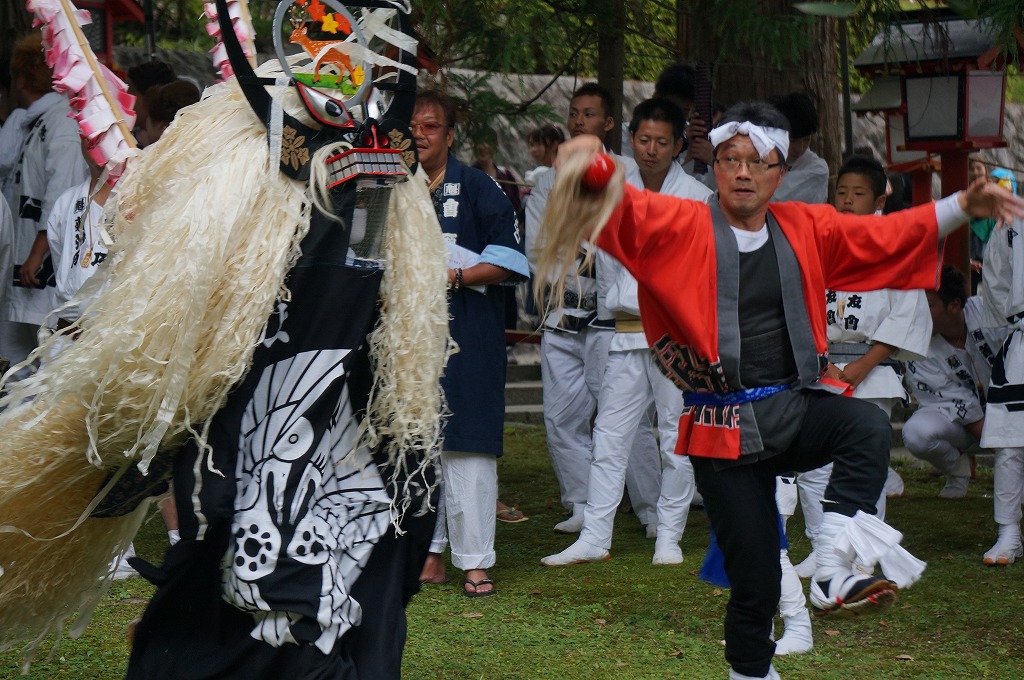
This self-drumming style is characterized by the long antlers on its head. They are made from real deer antlers. If it is broken, they will be provided by the hunter. Originally, the antlers had to be split into four pieces, but nowadays it is difficult to get the right ones. And the raised eyes. He carries a long pole (called “Sasala) on his back. There is a piece of paper wrapped around it. It is said that this is the gohei, in which dwells the deity. A drum is tied around his belly, and behind it, just like in the ogre sword dance, hangs an “ookuchi”. Basically, it consists of a group of eight people. It is said that the dance is handed down to the next generation in a group of eight people. The weight of the entire costume is about 15kg. In summer, the temperature is said to be around 40 degrees Celsius. However, one can only admire their light and harmonious movements that do not make you feel that at all. There are also several schools of the art, but they are mostly the same in appearance.
Like the ogre sword dance, each performance lasts about 10 minutes, and there are several different types, but I won’t go into details here. However, one of the features of the dance is that at the beginning of the performance, there is always a program called “Niwa-home” which means “praise the place you visit.” When they visit a shrine or a mansion, that performance is performed first, and then the rest of the performances follow. The Sasara is bent at the back and slammed onto the ground with force. It is believed that this is meant to drive away evil spirits of the land. Here, the host introduces the name and the program before it begins, but people who have never seen it before do not understand it well. A deep bass of the drumming seems to echo from the depths of the earth. And the occasional singing voice enters, adding to the effects–a visual that overwhelms the viewer. It was as if the cries of the souls of the Tohoku region could be heard.
Drape-style deer dance ~inland areas
For a change, this time there will be a deer dance performed by a large group of people. This dance is called “drape-style” because the whole body is covered with a kind of drape. The appearance of the dance is also very different from the “self-drumming style”. First of all, they do not use real antlers. It involves an extremely inspirational design. The design also differs from region to region. The most representative one is the one in Tono City, which is located east of Kitakami City. The design is quite different except for the fact that it has raised eyes and a stick-like object on its back. Its most distinctive features are that it has a large amount of wood shavings called “kannagara” on its back, and the dance that causes the drape to rise and fall violently. Moreover, each group has its own role after the leader. There are more than 60 people in total (officially). However, it is difficult for all the groups to get that many people together, so the number can be increased or decreased as needed. Unlike the “self-drumming style ,” there are separate drums and flutes, and the shishis focus on dancing. Men play the role of the deer, and many women play the role of “Nakataiko” or “Katanakake”. However, in the olden days, all the roles were performed only by men and none were taught to women because women might eventually leave to other areas. This was because they were afraid that other communities would copy their methods.
Katanakake and Shishi
Nakataiko and Shishi
Drape-style deer dance ~coastal area
The dance is done in such a plaza with the whole thing going around in a circle. Basically, drums and flutes are often set aside. And the shishis raise the drape violently and shake their heads from side to side while squatting down. Those who are good at it have a keen sense of how to handle the drape. In the role called “Katanakake”, the actor dances holding his sword in the air while facing the shishi. It looks as if they are confronting the shishi.
Drape-style Deer dance outside of Tono also makes an appearance. Unlike the taiko style, the drape style has many variations. For example, the shishi in Kamaishi City, on the coast, use really flamboyant colors. Their bodies are bright blue and their heads are more ornamental. There are also doe that are clearly recognizable by different colors, like the lion dance in Kanto. There is also a performance called “Tsunagakari,” in which the performers go over a single tight rope through trial and error, which is also in the Kanto style. If you ask the origin, you’ll find out that it was learned from fishermen who finally arrived after drifting from Chiba (Kanto) in the olden days.
Others
There are also other much performed deer dances. On the other hand, there are also more designed and impressive and slender deer dances like the ”Hakoishi” deer dance (Miyako city). A slender figure and a bright contrast of red and black costumes. It’s really unique.
Thus, the drape style can be enjoyed in a variety of designs. On the other hand, the self-druming style is not as interesting, but its dignity cannot be imitated. You can feel its awesomeness on the main street on Saturday night. If the finale of the festival is the ogre Sword Dance group dance, what should be called the “Deer Dance Group Dance” will take place shortly before that.
Corps de deer dance ~Night part
Although it is not like the demon sword dance where everyone dances the same program at the same time, it is very powerful to see as many as 10 deer dancing groups performing at the same time. Especially it is overwhelming to watch the drummers. Of course, the Maku-kei is nothing less impressive than those performances. The sound of the drums shaking the earth and the singing voice echoing in the depths of the stomach. The power to make the earth tremble. In reality, though, the earth doesn’t shake because it’s on concrete. It is possible to move around to see several groups, but the 20 minutes go by very quickly. I recommend you to take your time and focus on just one or two, if possible.
For those who want to learn more
The Shishi Odori (the deer dance) is a performance unique to the Tohoku region. There are many theories about its origin but it is not well known. Some scholars (mainly around Kyoto) say that it was modified by the propagation of some of the performing arts from the capital , while others from the northeast claim that it developed on its own. The word “shishi” is often compared to “shishi-mai” (lion dance), but in this region the “lion dance” is called “Gongen-mai” and exists separately. The word “shishi” generally refers to an imaginary animal of Chinese origin, but it also meant animals themselves in general (although it is rarely used today). In Kanto, the “wild boar” is called “shishi”, while in the Tohoku region, the word “shishi” came to mean “deer”, because the deer was the most accessible prey in the Tohoku region (this is also confirmed by relics). Legend has said that this dance was started to make offerings to the prey. It can be said that this kind of thinking was not common in the capital because the division of labor was well developed in the city. The people who ate did not think about the people who caught and dressed it. It was different in Tohoku. Animals were closer to them. It can be said that this is why people had a strong sense to make offerings.
A Miraculous Experience of the Deer Dance
Finally, I would like to share two interesting experiences I had. When I was about to leave the hotel to watch the night session, I found a self-drumming style deer dancing man standing in the backyard. Apparently, he had just finished getting dressed there and was about to go to the venue. I was so surprised that I was allowed to take a picture of him up close. When he asked ”where did you come from?”, I replied, “From Tokyo area”. He was delighted and said, “Good to see you from afar. I am grateful to you for visiting me from such a distance. Then I said, “Well, let’s have a dance,” and he beat the drum in front of me and danced lightly. It is impossible to describe the power of this performance in words. I remember that the surprised hotel staff came out of the hotel to see what was going on. And then the deer dancer walked away leisurely. I remember it as vividly as if it was yesterday. And here is one more episode. I was watching the Deer Dance in the daytime, not wanting to miss a second of it. I had taken a camera and videotaped it. Halfway through, my batteries ran out. But the dance wasn’t over yet at all. I hurriedly took out my cellphone and filmed the remaining part. When I was relieved that I could record till the end, I remembered something. Probably from the impact of dropping it, I remembered that the smartphone’s camera function had been disabled for a while now. But I was able to take a picture safely. And ye after this one moment my camera hadn’t recovered until I changed it to a new one.
You have to actually visit the place to see it. Miracles don’t happen just by looking at images and photos. I highly recommend you to visit the place and experience it for yourself.
Report: Michinoku traditional folk performing art festival~Oni-kenbai
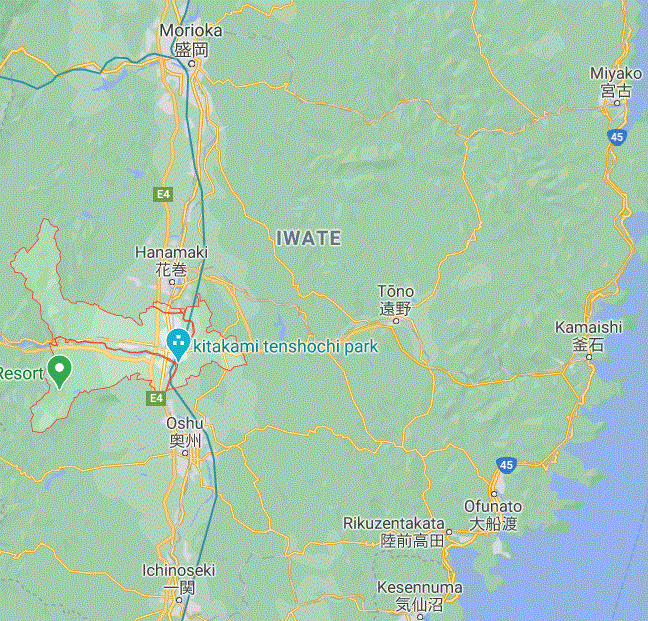
Date; The first Friday, Saturday, and Sunday of August every year (3 days) Location; Main Street in front of Kitakami Station and other locations Access; It takes between two and a half and three hours to get to Kitakami Station from Tokyo by Shinkansen. By air, fly to Hanamaki Airport from any airport. The shuttle bus from Iwate Hanamaki Airport to JR Kitakami Station covers a distance of about 20 km (about 50 minutes).
Tohoku Region is a Treasure Trove of Festivals
When we say “Tohoku” (the Northeast) region of Japan, there is a kind of plaintive image. Japan has developed mainly around the western part of the country. Since ancient times, the capital was located near Nara and Kyoto, and the Kyushu region continued to have a large influence as a point of contact with the continent. The Kanto region, where the current capital city of Tokyo is located, did not appear on the historical stage until the 10th century, and it was not until the 18th century that Tokyo became the center of the country. Tohoku, on the other hand, had long been considered a land to be conquered. When Tohoku region had come on the historical stage several times, each had ended with a pathetic story. But on the other hand, it was also a land that produced a lot of rice and, above all, gold, which the central government wanted to acquire at all costs. The Tohoku region was seen as just a gold mine. At the time of the Great East Japan Earthquake, it was the Tohoku region that was far more affected than the Kanto region. At the same time, the supply of agricultural products is abundant and plentiful, making it a fertile region, which many people think of when they think of rice and sake. It is also a place where a lot of folklore has been handed down from generation to generation.
Summer in the Northeast is short. Long winters come earlier than in other parts of Japan. For this reason, summer in the Northeast is the season when people are passionate about their momentary emotion. Especially in the first week of August, several of Japan’s most iconic festivals are held. These include the Nebuta Festival in Aomori, the Kanto Festival in Akita, the Tanabata Festival in Sendai, and the Hanagasa Festival in Yamagata
What is the Michinoku traditional folk performing arts festival ?
At the same time, the Michinoku Performing Arts Festival is being held in Kitakami City, Iwate Prefecture. Iwate Prefecture is the largest prefecture in Japan and is said to have the largest number of traditional performing arts in Japan. The Ohshu 奥州 Kaido (a highway road), the most important road from ancient times, runs through the center of the city, leading north to Morioka, the capital of the prefecture, east to the Pacific Ocean, south to Hiraizumi, famous for its Golden Temple, and west to Akita. During the three days from Friday evening to Sunday, various traditional performances, said to be more than 100, will be held throughout the city. In this article, I would like to focus on the performing arts using masks. Official site https://geinoumatsuri.com/
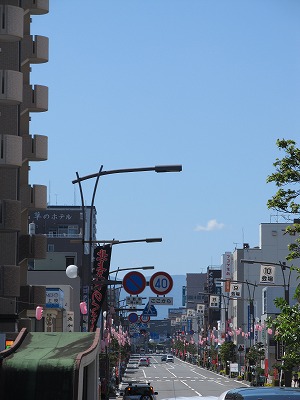
front of Kitakami station
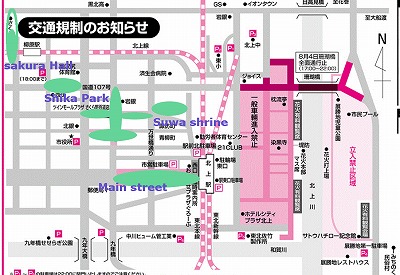
venues
The area is divided into several locations and varies by time of day. On Friday, the first day of the festival, there is a parade on the main street in front of the station and a dance troupe called “Onikenbai,” which is the most popular form of entertainment in the city. On the next day, in the morning, there are performances at the site of Iwasaki Castle and Nyoirin-ji Temple. In the afternoon, various places such as squares, parks and shrines are used for the performances. At night, The festival reaches its first highlight. More than 50 performing arts will be performed in a little over two hours on the main street in front of the train station. On Sunday, most of the performances end in the morning. In the afternoon, the Oni-kenbai (ogre sword dance) is performed in the hall. And on the last night, a fireworks display finishes the whole schedule. As for transportation, there is a city bus service (500 yen per day), which is the most convenient. However, the Iwasaki Castle, Oni no Yakata and Nyoirinji-temple are not included in the route, so you have to take another city bus (about 30 minutes from the station). There are several rental bicycles in Kitakami City, so it may be easier to use them. By the way, it took us about 30-40 minutes by bicycle. As for the other venues, they are well within walking distance. Despite this it is certainly limited to the performing arts of the Tohoku region, especially around Kitakami City, it is perhaps the festival that provides the most direct insight into Japanese folk arts. There are two main performing arts, “ogre sword dance (Oni-kenbai 鬼剣舞) and “dear dance (Shishi-odori 鹿踊). But I’ll focus on the former this time, and at last, I’d introduce the rest.
Oni-kenbai (Ogre sword dance) 鬼剣舞
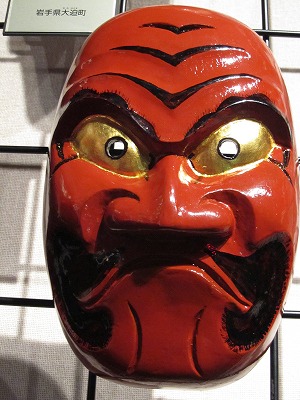
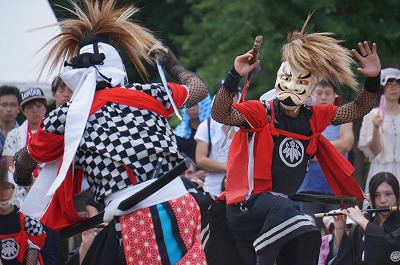
It is impossible to see this festival without mentioning “Oni-kenbai” 鬼剣舞 (the ogre sword dance). Sophisticated movements and elaborate figures. The dance is a seamless, well-trained dance. The most impressive feature of the dance is the masks. Although the mask is called an ogre mask, it is said to be an incarnation of a Buddha. The evidence of this is that it has no horns, which a ogre should have. Oni Kenbai is one of the sword dances. It is just one of the forms of sword dance that incorporates elements of various predecessors and refines the dance and design. This may be due to the fact that this dance had been performed in front of the lords of the time. In other words, at that moment, it was transformed from a mere folk art to an official art form.
The Waga 和賀 clan reigned as the lords of this area until about the 17th century. After that, the Nambu 南部 clan replaced them, but the dance is still loved by the lords, and it has remained so to this day. Although Iwate Prefecture is a large area, each region has its own performing arts that are representative of the region. Morioka City has the “Sansa”, Tohno City has the “Deer Dance with a large group”, and Hanamaki City has the “Hayachine Kagura” and “Deer Dance with its own drum”. And most of all, Kitakami City is famous for its “鬼剣舞 ogre sword dance”. That’s why the people of Kitakami City are so passionate about this dance, that they have become connoisseurs. Children learn it the same way they learn to play soccer or baseball (which are the two most popular sports in Japan). Motifs related to the ogre sword dance can be found throughout the city. Currently, there are 12 organizations active in the city. Therefore, this dance is very much a part of this festival.
Oni-kenbai ~feature~
As I mentioned earlier, the feature of this dance is the use of masks. There are four types of masks. They are white, red, blue, and black, and each one has its own meaning. And a pair of eight masks is the basis of the form. White is a special color, and only one person who is skilled in the art is allowed to wear it. On the head, they wear hairs called “zai”. This is made of horse hair. It is considered good to have this “zai” standing during the dance. They also wear a sword at the waist. Now a fake sword is used, but it is said that in the past a real sword was used. In addition, the “Ohguchi 大口” draped from the waist in the back, and a small jacket draped over it. This is remnant of the past where it was taken off and draped over the waist. The “Ohguchi” is decorated with pictures of heroes who once ruled the land and fought fiercely against the central government. On the chest is drawn the crest of a Chinese bellflower, the crest of the Waga family, who once ruled this area. When the lord of the castle in this land invited the Waga family to his castle, he showed them a performance of the ogre sword dance. It is said that the lord of the Waga was so pleased with the dance that he allowed the dance group to use this crest. In addition to this, there are people who are in charge of the accompaniment. They support the dance with drums, bells and flutes under a leader called “Dotori 胴取り”.
Oguchi 大口
Watch “Oni-kenbai”1 ~The Iwaski castle ground and the museum of Ogre
You can enjoy the ogre sword dance in several venues. The main venues are the main street throughout the city, the site of Iwasaki Castle grounds, Oni no Yakata (the museum of ogre), and Sakura Hall. On the first night, if you want to learn the charm of the ogre sword dance, you should wait for it on the main street. You will see a big group dance of the junior group (junior high school students and under) ogre sword dance. They are only a select few who are allowed to dance here. You may underestimate them as juniors, but they will surely show you breathless and impressive dancing. Every year, after the opening parade, the dance starts at 8:00 pm and lasts for about 30 minutes. Next morning, you should go to the Iwasaki castle ground. This place is near “Oni no Yakata (the museum of ogre). The museum opens at 9:00 a.m., so you’ll have an hour or so to visit before the sword dance starts at 11:00 a.m. The museum has a display of goods related to demons (ogre) not only from the ogre sword dance, but also from all over the country and even abroad.(500 yen for adults, as of October 2020)
*Access to Oni no Ykata Since it’s just under 5 kilometers from the nearest station, you can either take the shuttle bus that runs during the festival, rent a bike at the station, or take a taxi.
Oni-no-Yakata (Demon museum)
The site of Iwasaki Castle is located on top of a small hill a short distance up from the museum. For about an hour, several groups will perform a ogre sword dance here. This is said to be a memorial service. The first thing to do is to pray in front of a stone monument in honor of the Waga clan.
There are about 15 to 18 different kinds of ogre sword dances being handed down, depending on the group. One of the most noteworthy performances is the one in which dancers dance alone. This is a special dance that only those wearing a white mask are allowed to dance. Since the basic performance of “Oni-kenbai” is a group dance, there are not many opportunities to see this dance in detail. There are many groups in the venue, but only a few of them dance, partly because of time constraints. It is not difficult to imagine the honor and pressure of dancing alone in the midst of all that attention. It will all be over by 12:00. If you want to get back to the city after this, you’ll have to hurry. Most of the events will start at 1:00 in the afternoon. If you want to enjoy the Oni-kenbai more, there will be another one hour performance in front of the “Oni-no-Yakata (ogre’s museum). However, there are some opportunities to see the Oni-kenbai in other parts of the city.
Watch the Oni-kenbai 2 ~on the street
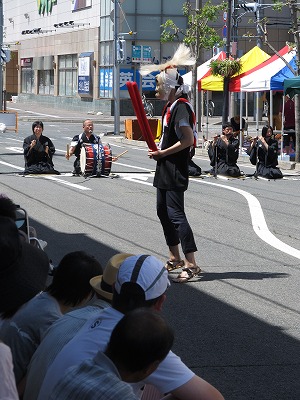
When the dance takes place on a street corner, there is another way to enjoy it compared to a genuine performance. The proximity between the performers and the audience adds a kind of street performance element. Some of the performances are acrobatic and others are very exciting, such as the use of many swords. One of the most noteworthy is the program called “Kakkata”. I have already mentioned that there are four basic types of masks used in “Oni-kenbai”. Each of them represents the north, east, west and south, but this “Kakkata” represents the center. The expression on the mask is also much different. The expression on the mask is rather droll. Unlike other performers who use fans or swords, this Kakkata uses a long stick. He put it between his legs and swings it up and down. This suspicious performance the audience laugh. He also invitees one from the audience out onto the stage and makes them laugh even more with his joking motions, as he lies down to watch. His role is like that of a circus clown. But that doesn’t mean he should be underestimated. This is a special role that can only be played by someone who knows it all. If you see him on a street corner, I would like you to enjoy his performance.
Watch the Oni-kenbai 3~Saturday night
Saturday night is when the performances are at their best; every 20 minutes starting at 6:00 p.m., The main Street will be filled with local entertainment. Among them, you can see the “Oni-kenbai”. The sideshow-like performances are especially performed. Many of them are fun to watch, such as the one in which the dancer dances so as not to drop the flat tray in his hands, and the one in which the number of swords in his hand is increased one after the other. And at the end of the day, the time is usually 8:00 a.m. The biggest highlight of the festival comes at 8:00 a.m., when about 20 groups of eight people perform a dance in unison. A bonfire is lit at regular intervals, and the performers begin to dance in unison as the musical accompaniment set up on the stage in the center of the street begins to sound.
Local audiences will stay in front of their favorite (often local town) groups before them. There’s hardly any moment breathing during the “Oni-kenbai”. It just resembles an intense aerobic dance. It is done with masks on and swords in hand. It’s not hard to imagine the intensity of the dance. In the darkness of the night, the figures that emerge from the bonfire, filling the main street, is sure to leave a strong impression. When it’s over, they become temporary heroes. Children begin to dance with pamphlets in their hands as if they were swords. People are so excited and they want to shake hands and take pictures with them. Of course, anyone who asks them to do so will do so. The town of Kitakami is filled with the “Oni-kenbai” fever. On the way home, the melody of the dance echoes in our heads forever.
Watch the Oni-kenbai 4 ~Sakura Hall
More performing arts exhibits will continue until the final day, Sunday morning. If you walk around the city, you can expect to see “Oni-kenbai” at every corner. In the afternoon, the Oni-kenbai will be performed at Sakura Hall. This is where all the groups will perform and all the acts will be performed. If you are interested in “Onikenbai”, you can’t miss it. There is a fee of 1,000 yen for advance purchase and 1,500 yen at the door, but it is worth it. Advance tickets are available at all time until the show starts, so you can buy them if you arrive at the hall a little earlier.
There are thirteen to eighteen different types of “Oni-kenbai”, depending on the group. The basic group is made up of eight performers and is called the “Niwa”. There are also other forms that alter the basic form.
The number of people in the dance is not limited, so the number of dancers can be as small as one or two. I’ve already mentioned the one in which the dancer dances without dropping holding trays, and the one in which the dancer rotates his body while increasing the number of swords which he holds. There are also other movements that look like gymnastics. Lastly, I would like to introduce the “Kitsune-kenbai (Fox Sword Dance)”. It is a part of the “Oni Kenbai” and uses a fox’s mask and moves in a slightly different way. Once upon a time, there was a man who could not come to the dance due to illness. This is based on a mysterious legend that a god disguised himself as a fox and joined the dance. The performance lasts about three hours, and then all the performances are finished. Next time I would like to introduce the dances other than the Oni-kenbai.
Access to Sakura Hall About a 10-minute drive from the West Exit of Kitakami Station (approximate travel time by taxi) About a 7-minute walk from Yanagihara Station on the JR Kitakami Line