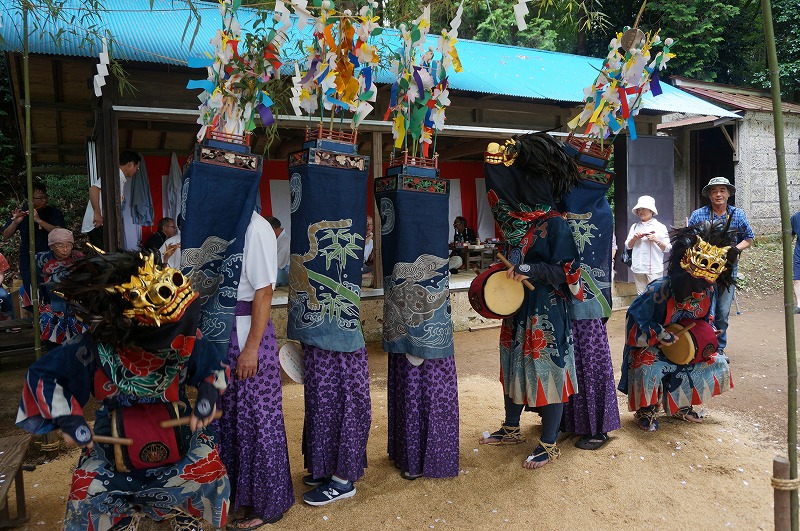
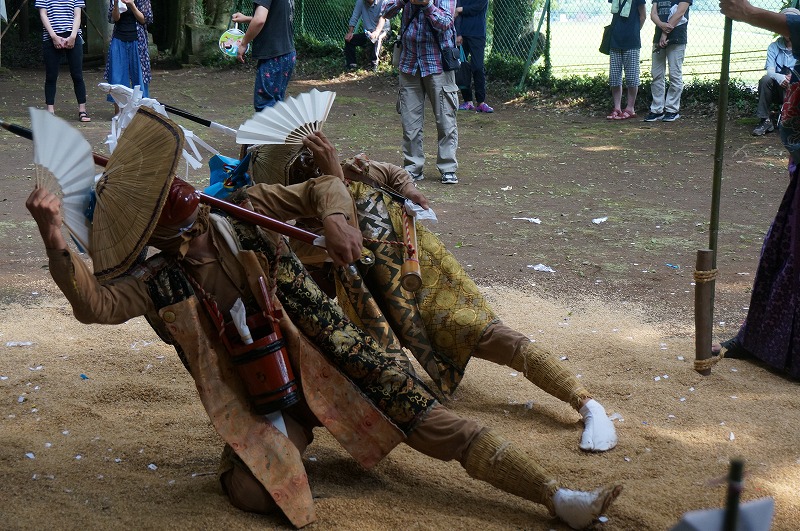
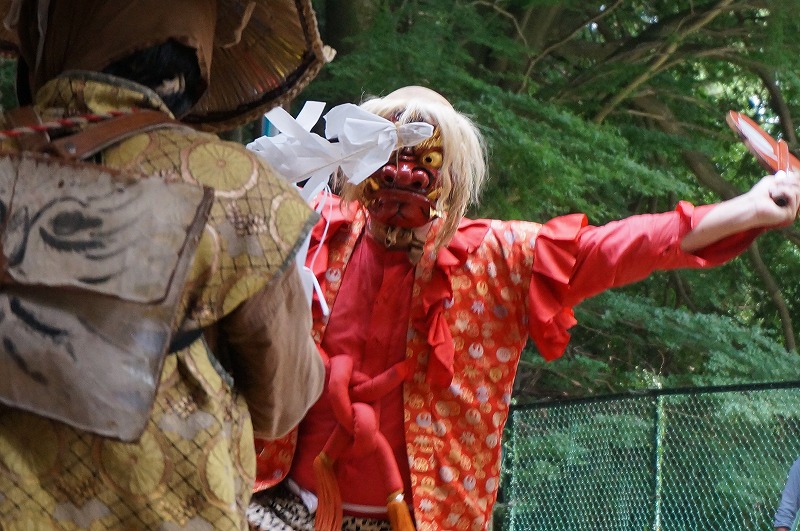
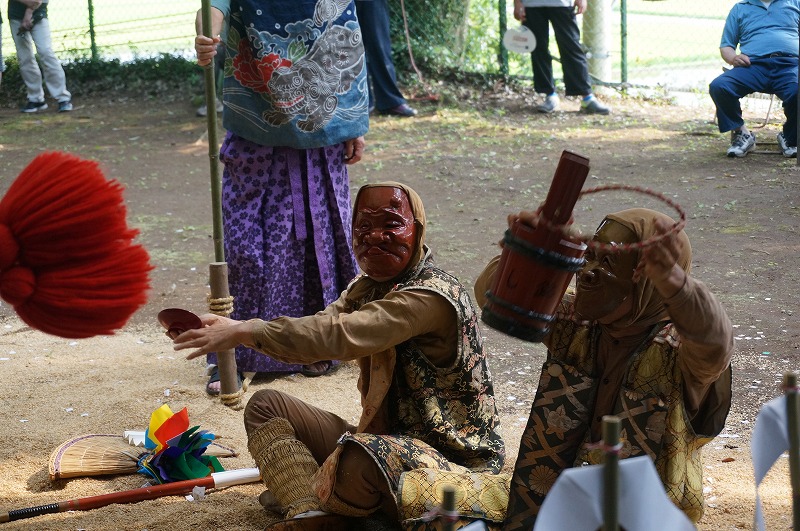
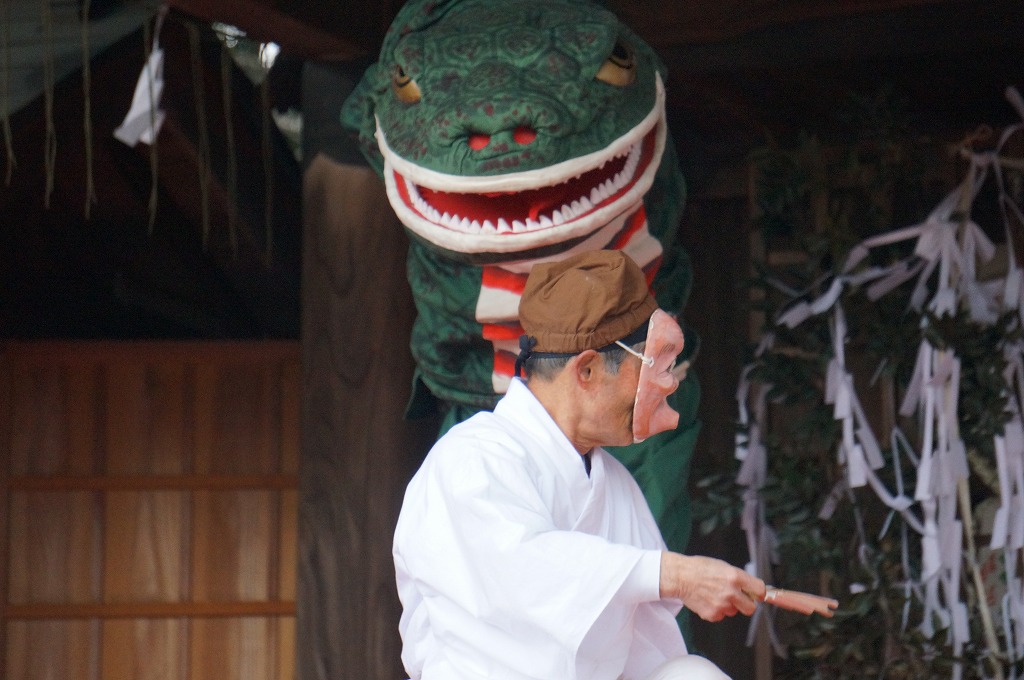
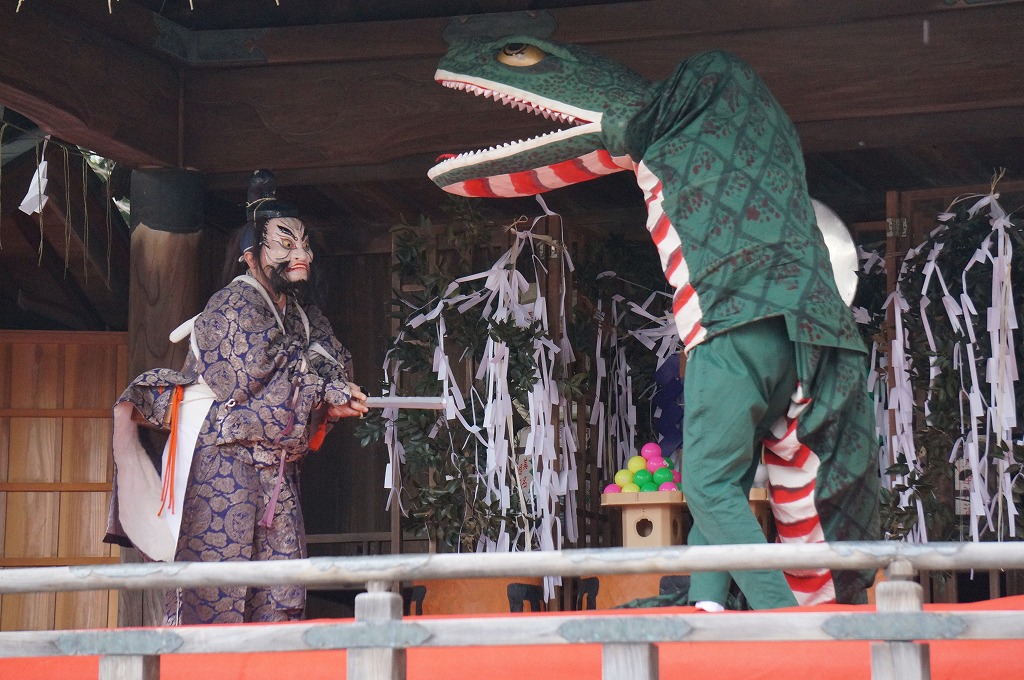
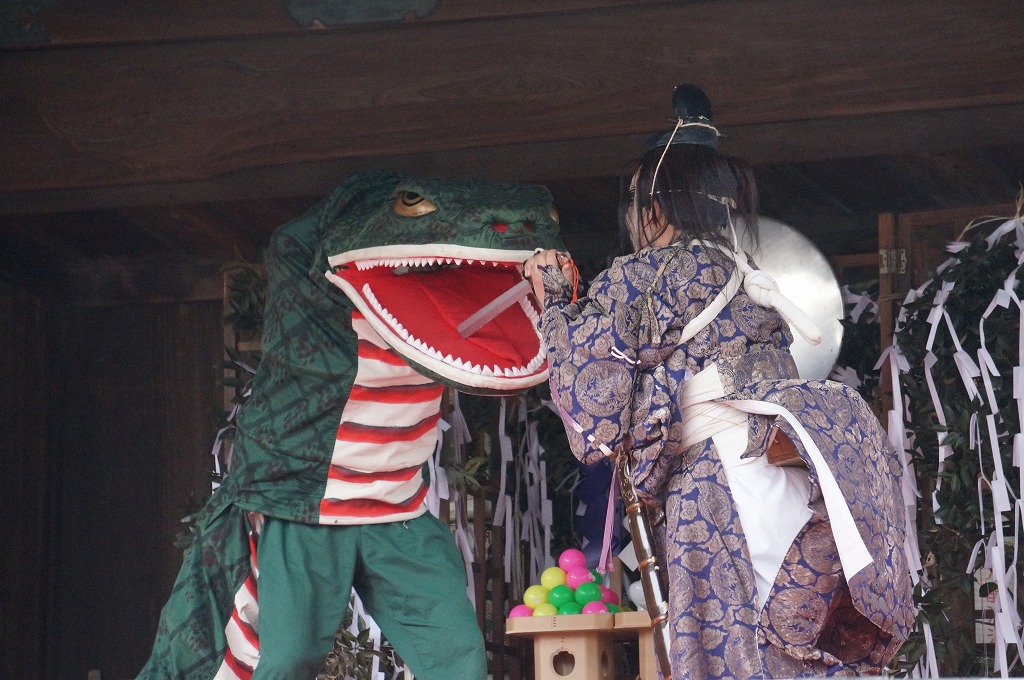
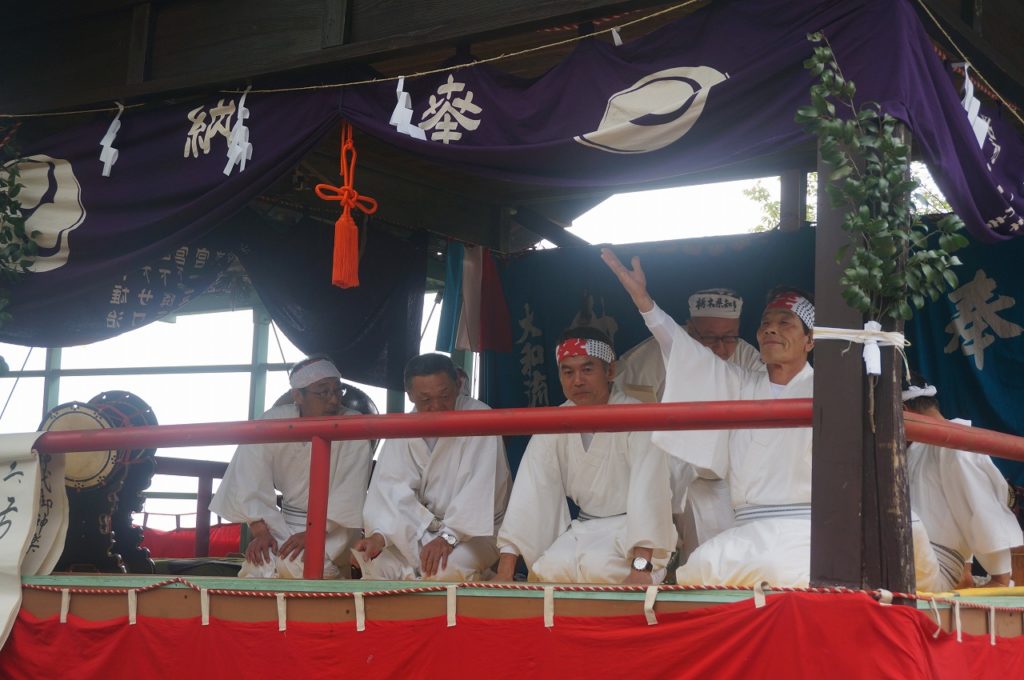
Discover the Rich History of Ashikaga’s Kagura Tradition
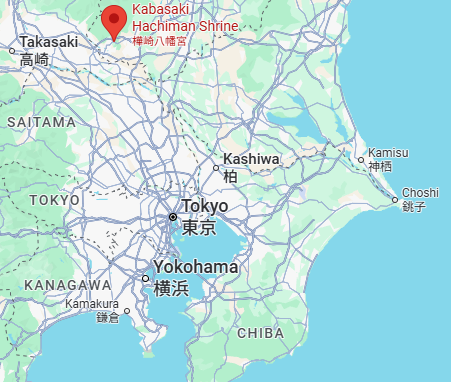


Location; 1723 Kabasaki-cho, Ashikaga City, Tochigi Prefecture

Date; the third Sunday in April and October

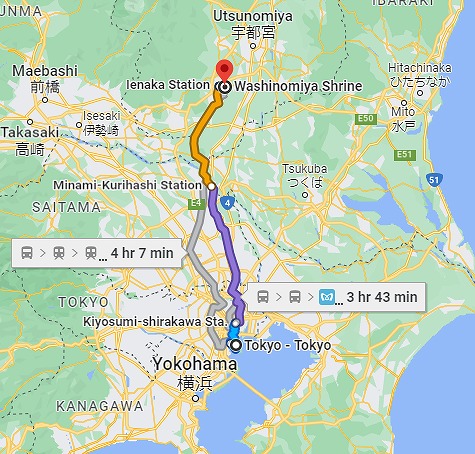
Access; It takes about two hours by local train from Tokyo to Ashikaga (JR) or Ashikaga City (Tobu Line). If travelling by Shinkansen, you will need to change at Takasaki. Approximately 6 km from Ashikaga, or Ashikaga Station.

*https://www-city-ashikaga-tochigi-jp.translate.goog/?_x_tr_sl=ja&_x_tr_tl=en&_x_tr_hl=ja&_x_tr_pto=wapp Ashikaga city official

Based on the visit on 16 April 2017

prologue

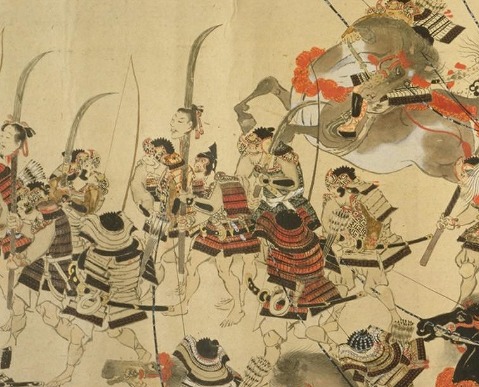
In brief, the history of Japan is that rice cultivation gave rise to large-scale political forces in various parts of the country, which eventually came together in armed struggle to form one united government. These are the ancestors of the present-day Emperors. Thereafter, a long period of political rule centred on the emperor, with influential aristocrats gathered around him. They stayed in the capital cities of Nara and Kyoto, and maintained power by siphoning off revenues from their local fiefdoms. but the territory is limited. Ownership disputes and other conflicts began to arise between neighbouring lands. The nobles then had their armed men settle the disputes. The armed forces rapidly became powerful. They were the samurai. Eventually, the samurai moved into the centre of power, eventually creating their own government in Kanto (Kamakura), far from Kyoto. At the centre at this time was the Hojo clan, who seized power by destroying other clans like a Mafia war. This period lasted for about 150 years. However, the number of people dissatisfied with the Hojo clan potentially increased, leading them to overthrow the Hojo regime and create a new one in Kyoto. The Ashikaga clan was central at this time and became shoguns in the new regime. Eventually, Ashikaga’s power waned and an era of divided warlords dawned; Japan was ultimately reunified by the Tokugawa shogun, but that is a story for another time.

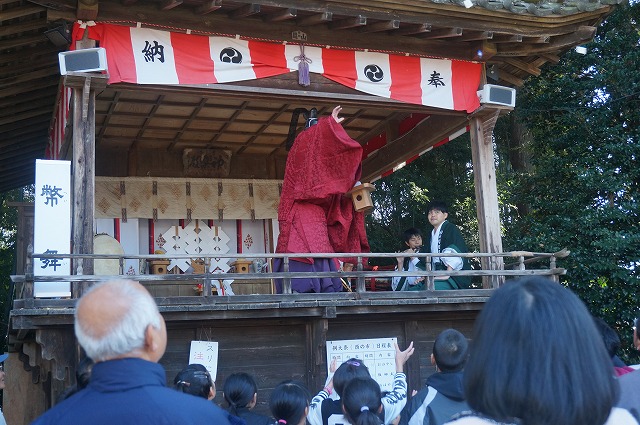
The Ashikaga clan’s home town is now Ashikaga City. The kagura presented here takes place in a town with such a historical background.

Kabasaki Hatiman shrine
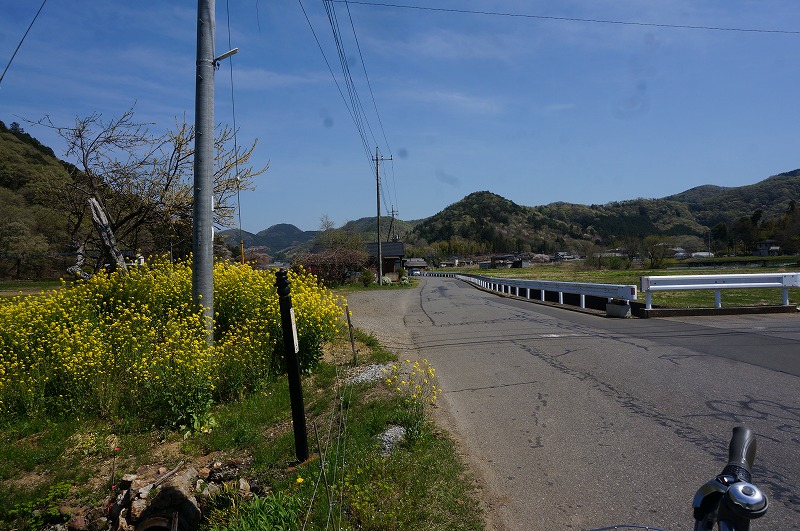
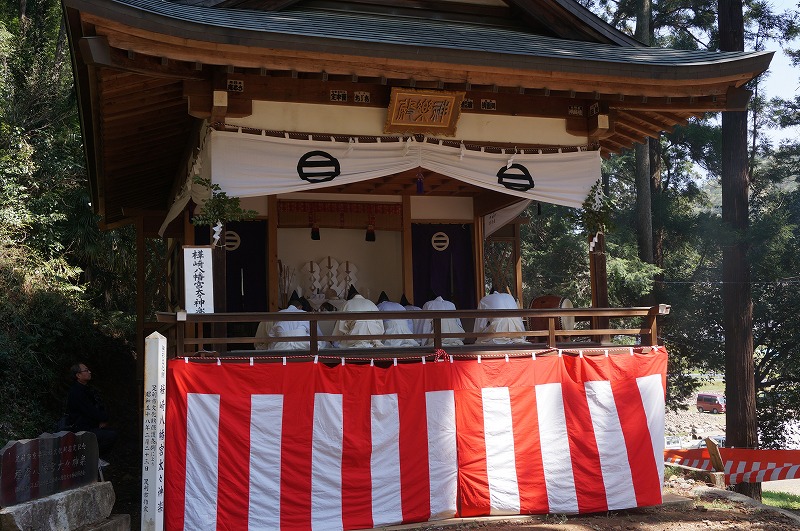
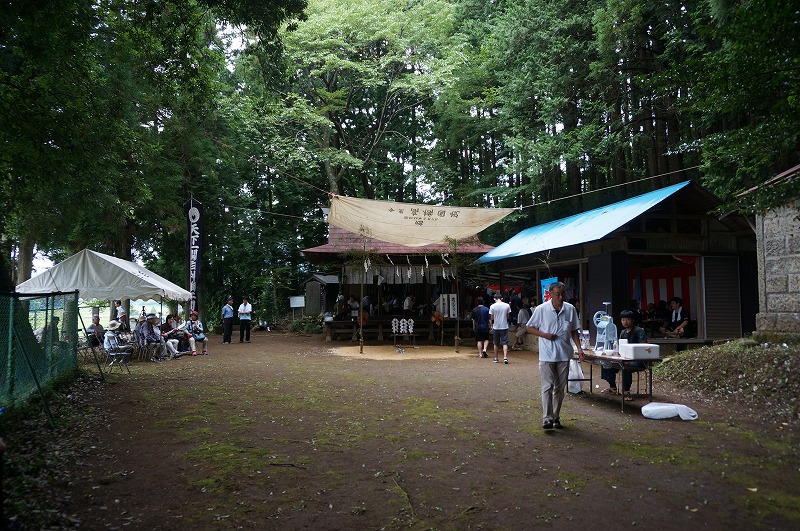
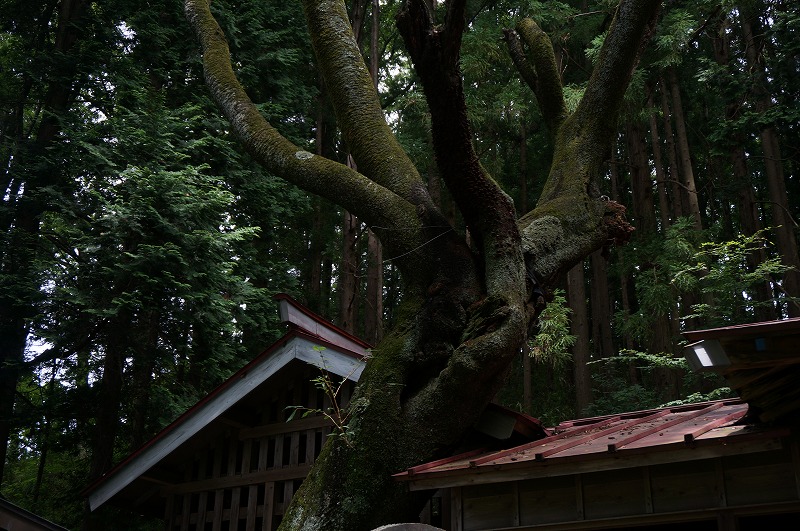
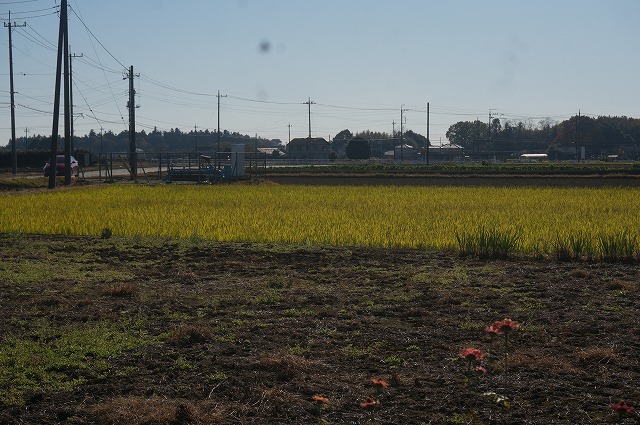
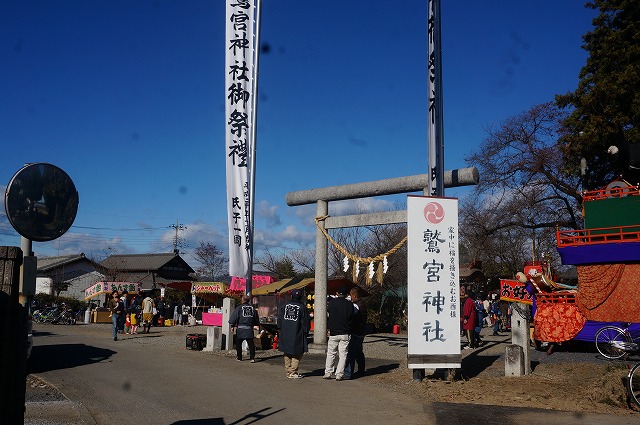
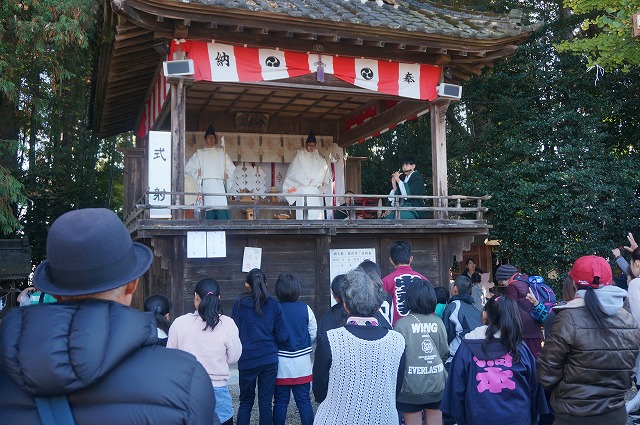
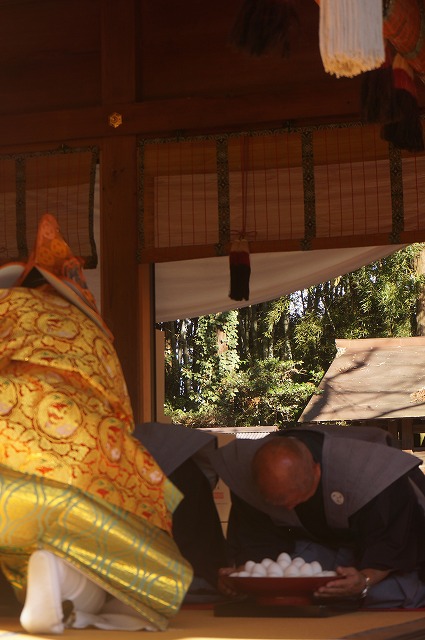
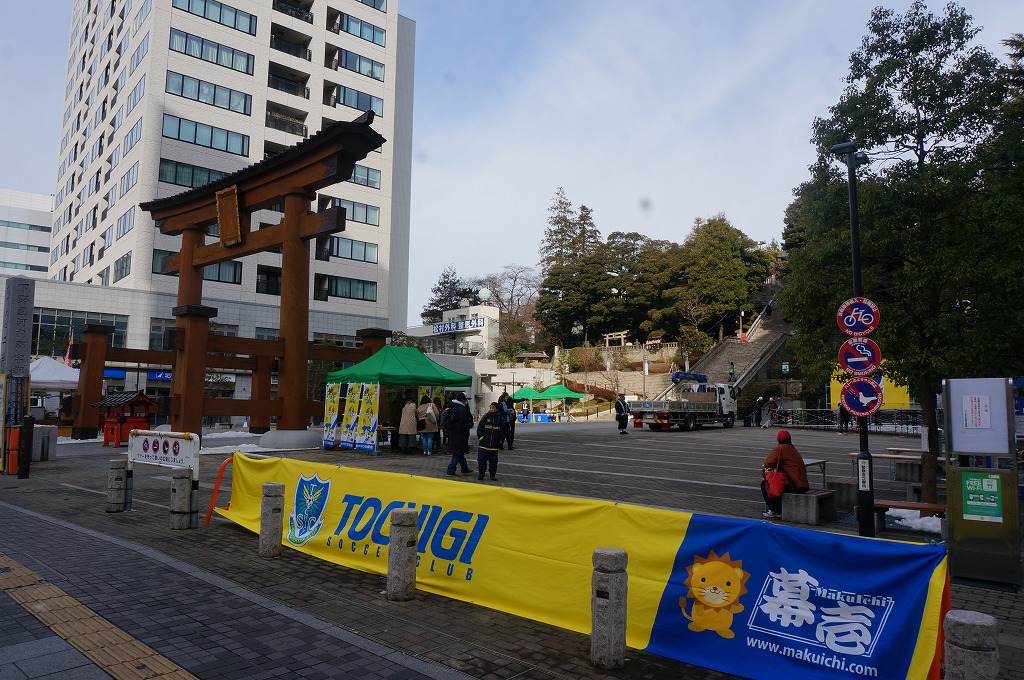
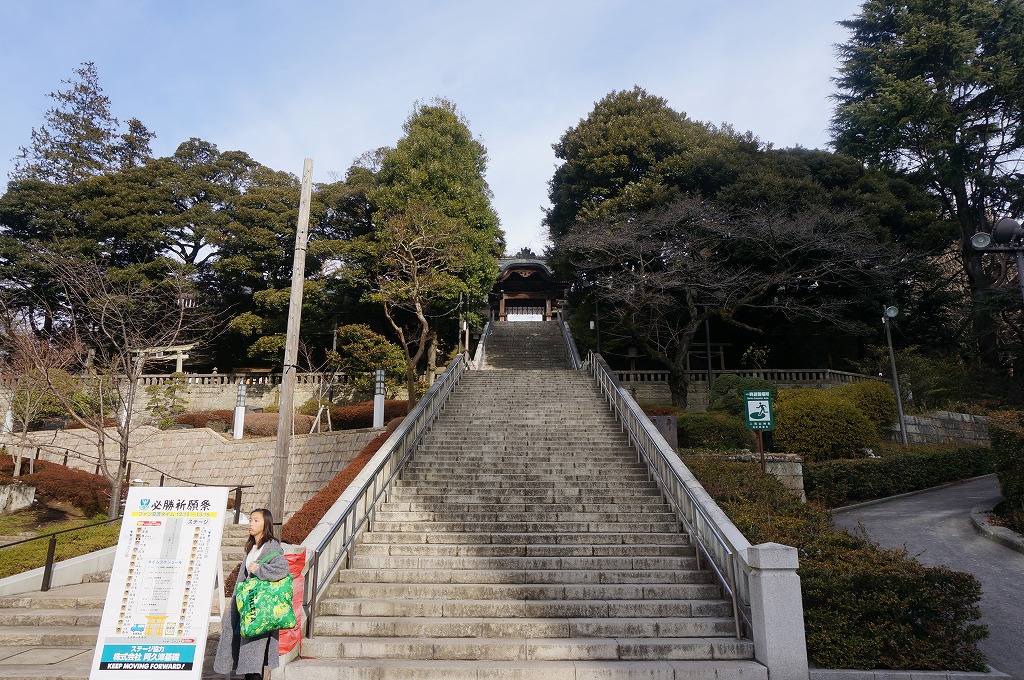
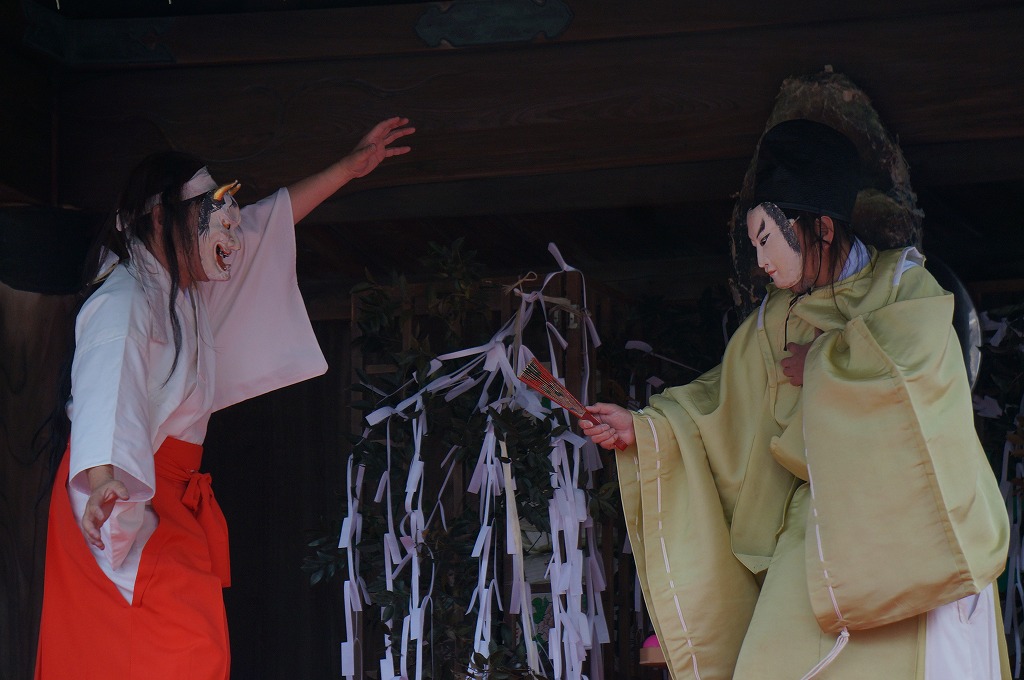
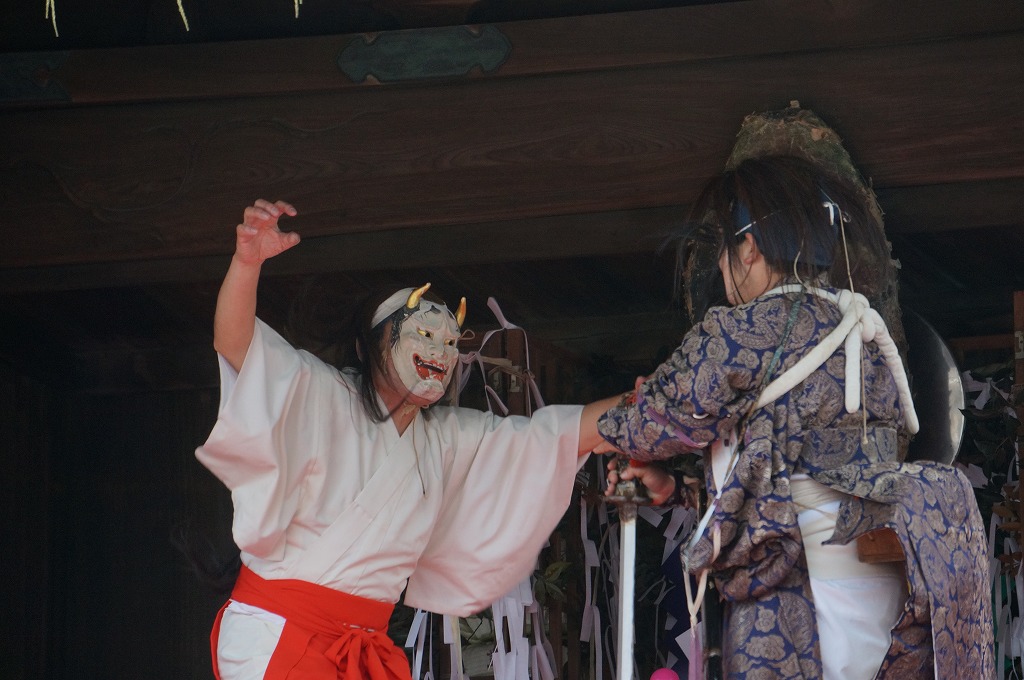
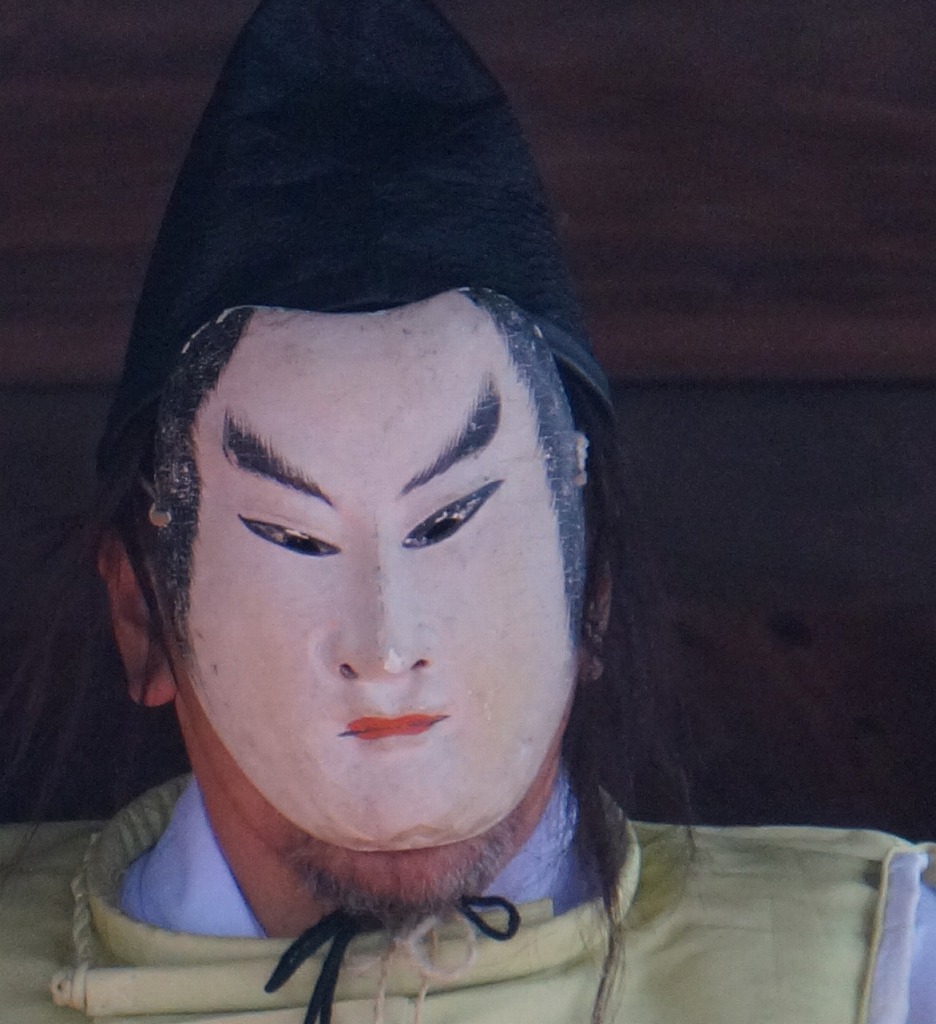
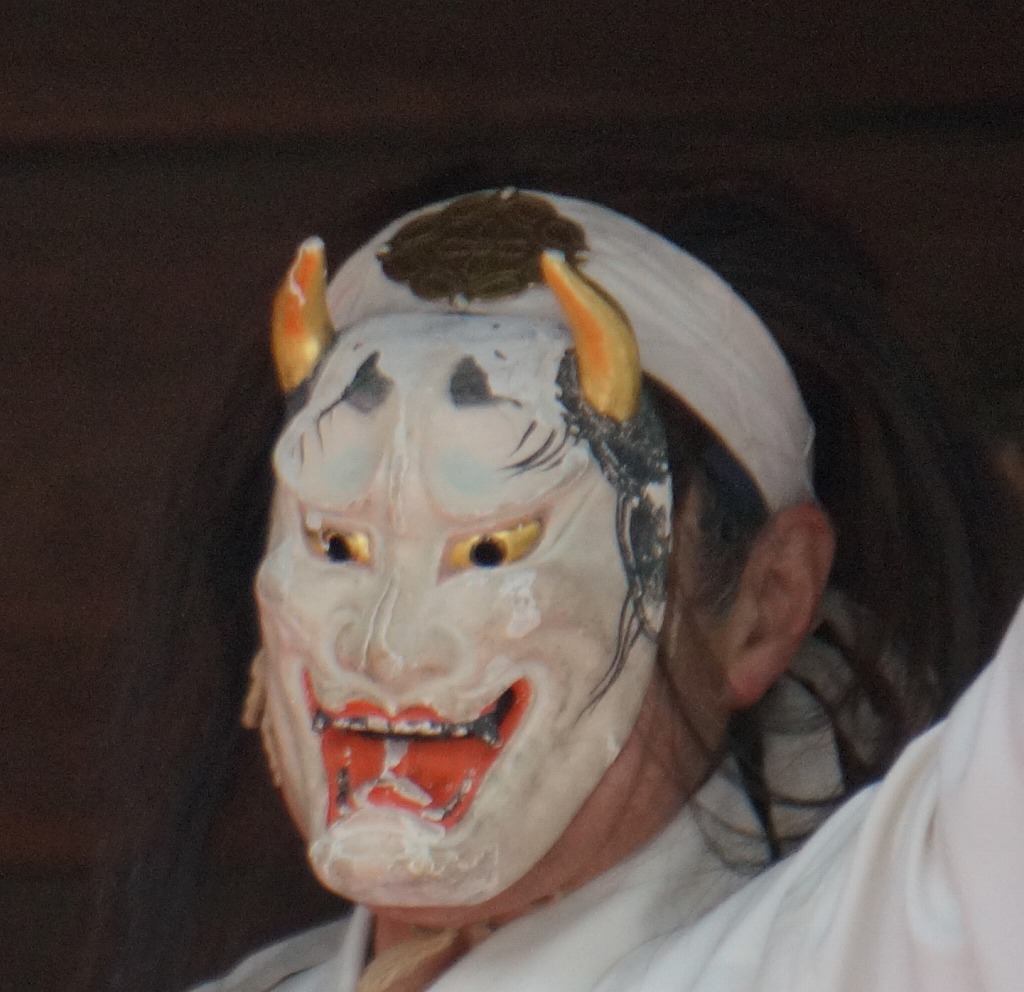
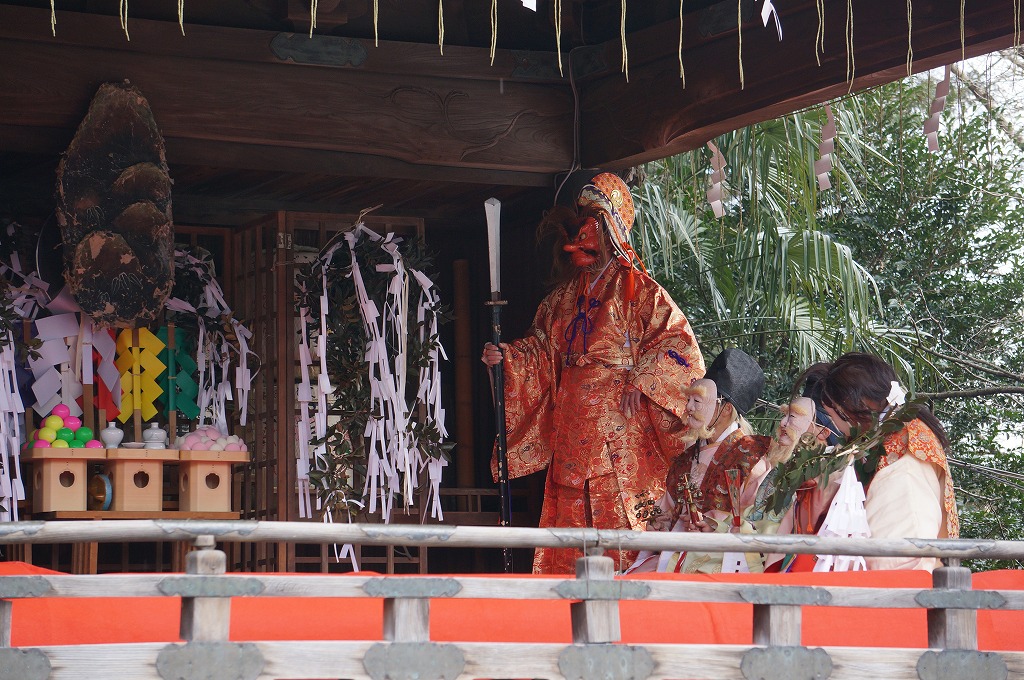
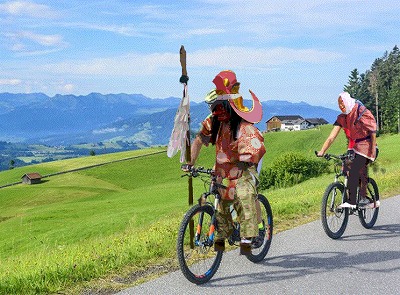
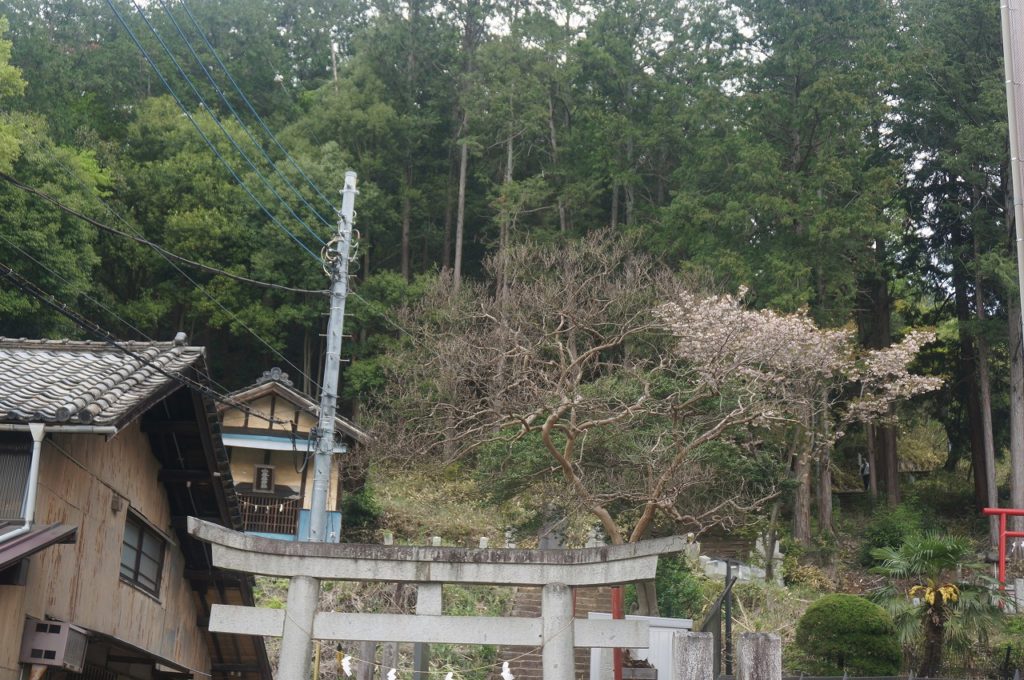
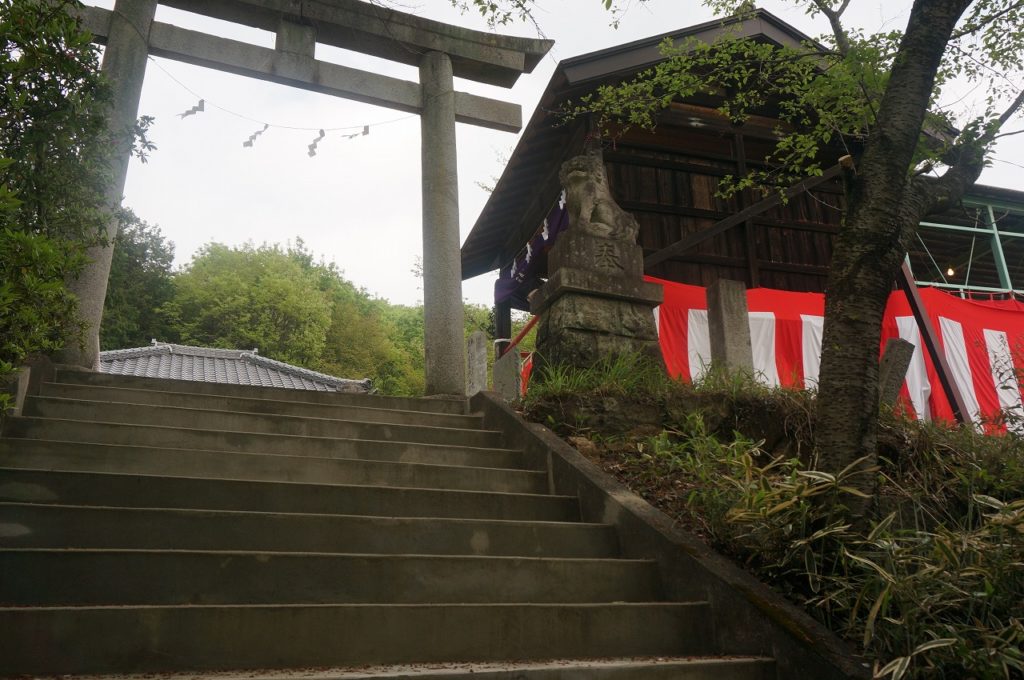
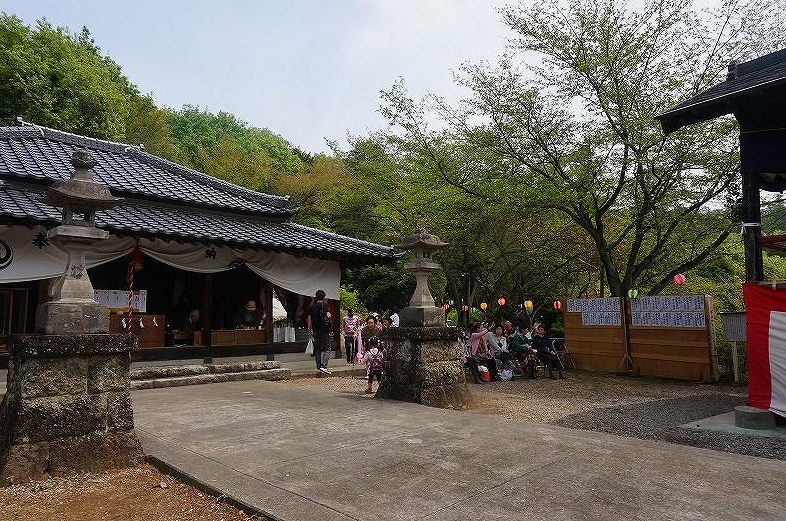
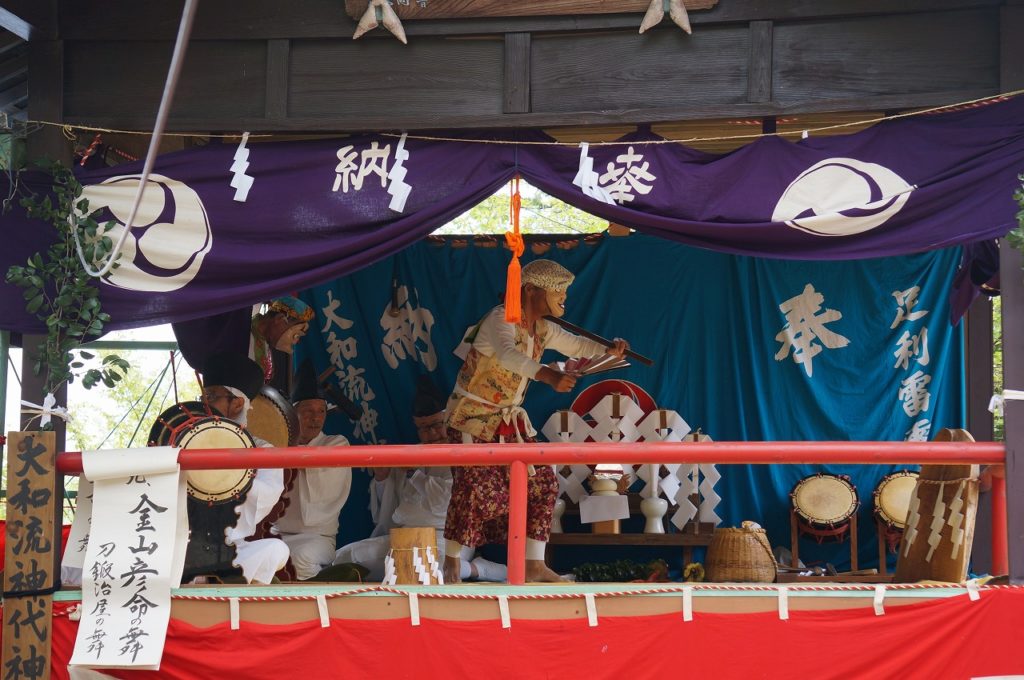
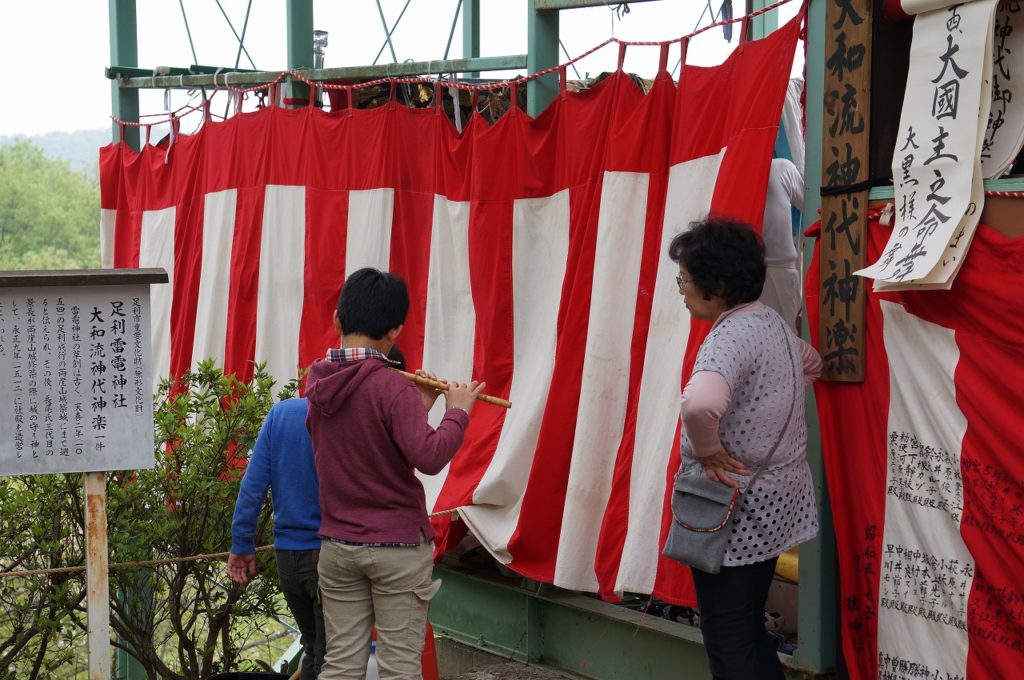
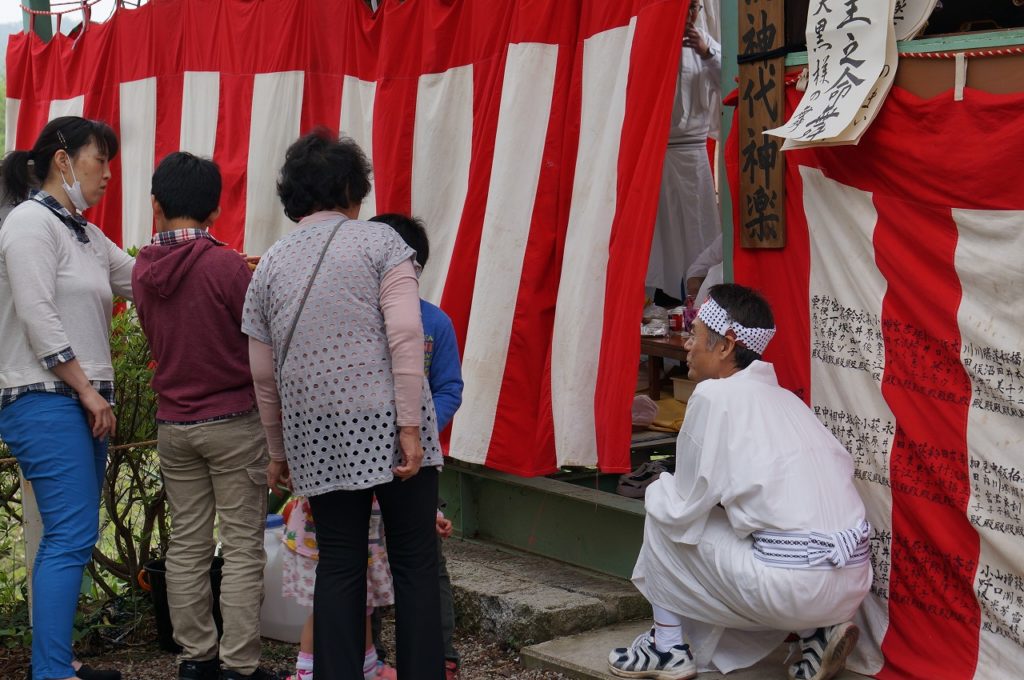
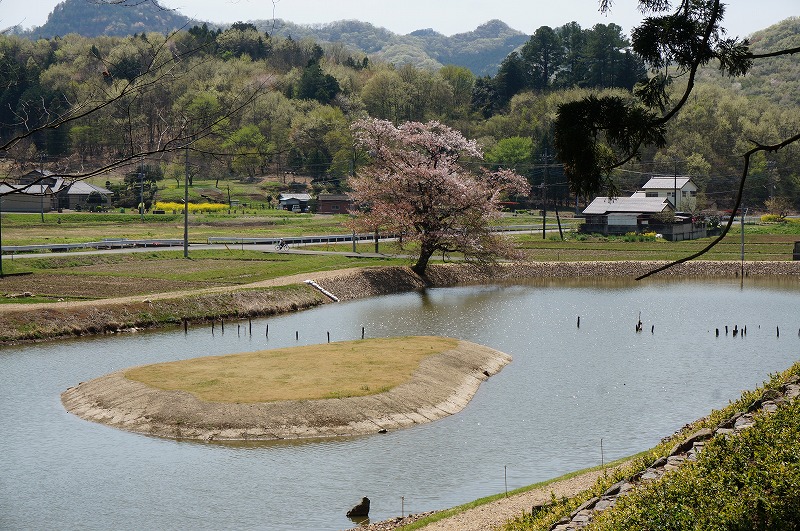
The Kabasaki Hachimangu shrine, where the story takes place, was founded by the Ashikaga clan. As proof, the shrine has a curtain with the Ashikaga family crest on it. This report is about the kagura performed here. It is a bit far from the station, so It is therefore a good idea to hire a bike at the station. The road is flat and straight. It is easy to find. About 45 minutes on a bicycle. The area is away from the city center and the scenery is much more idyllic. Kagura is also loosely in tune with the landscape. It was scheduled to start at 10.00 am, but actually started at around 10.30 am.

The Appearance of the Hachiman Deity
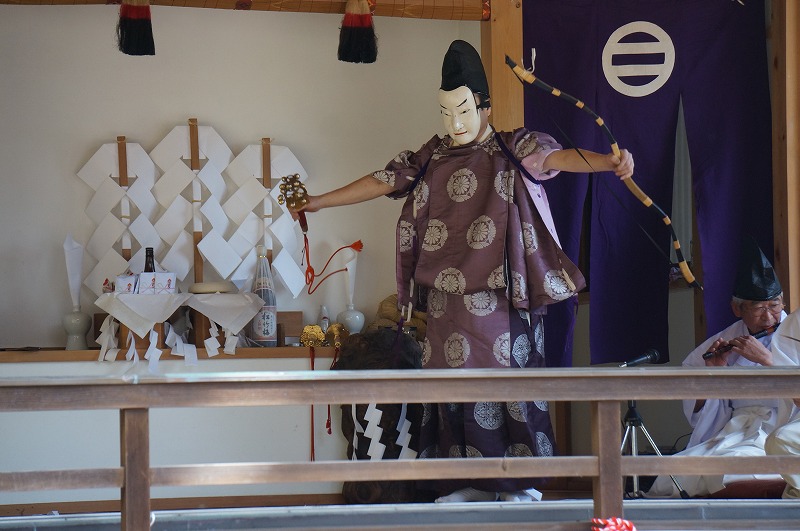
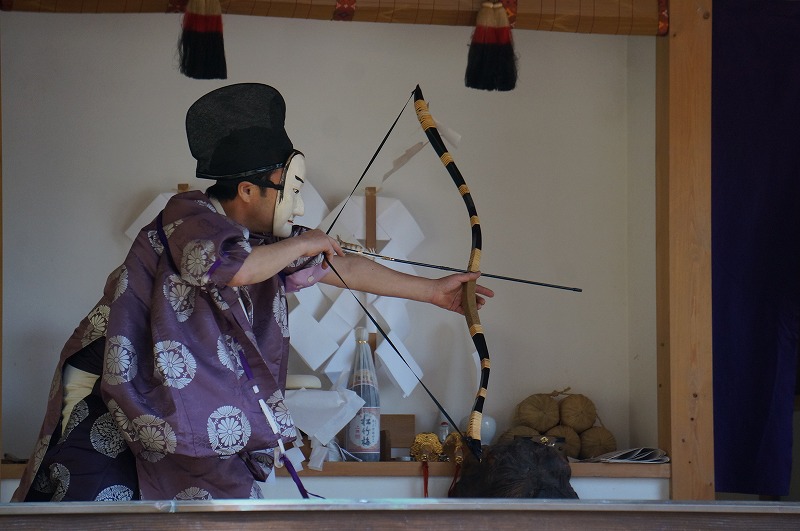
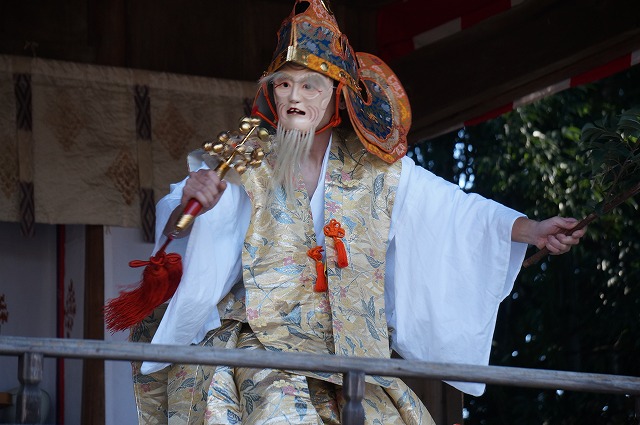
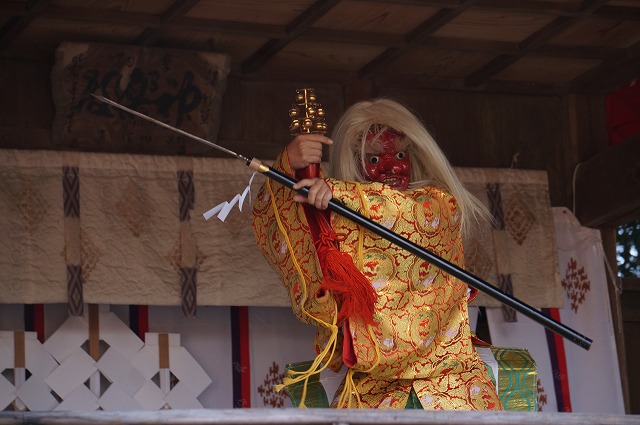
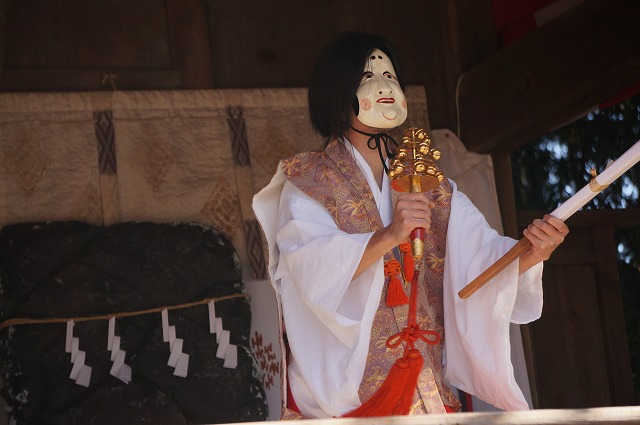
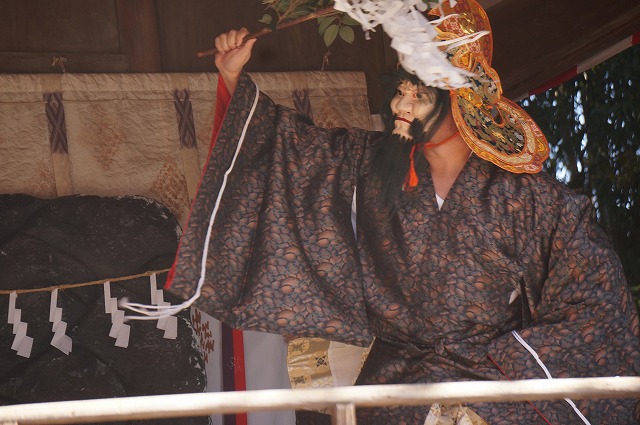
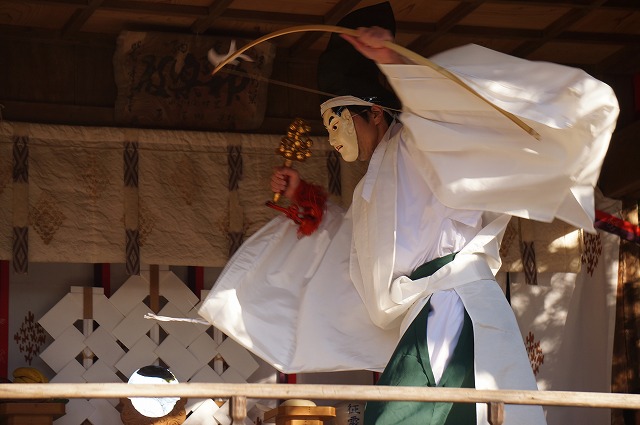
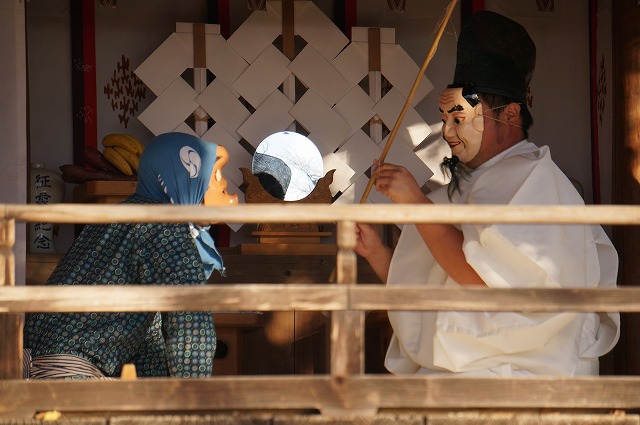
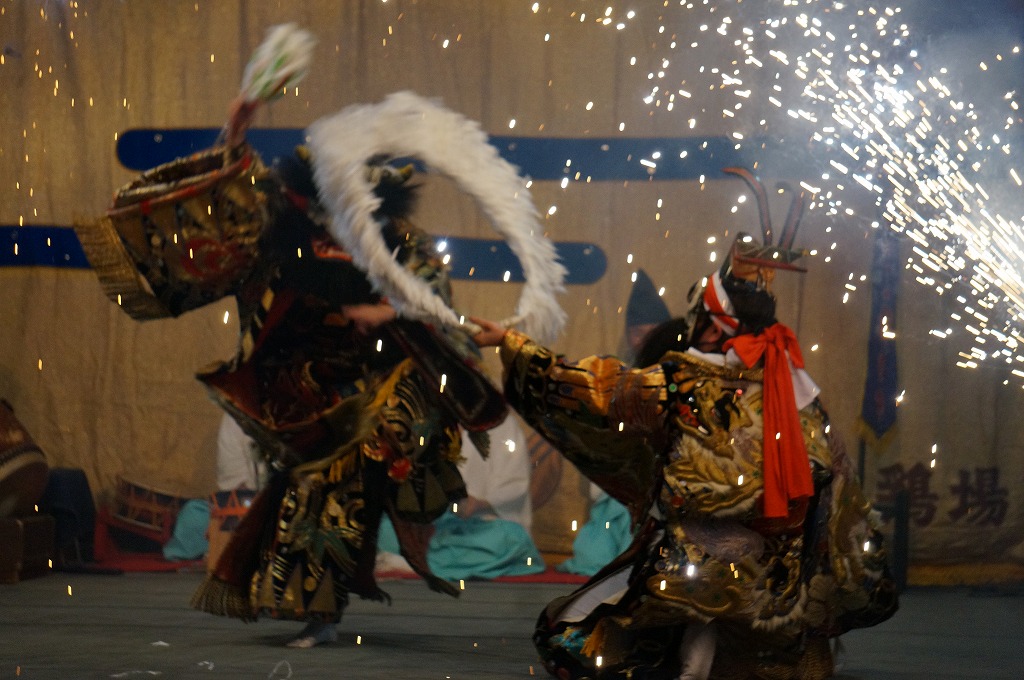
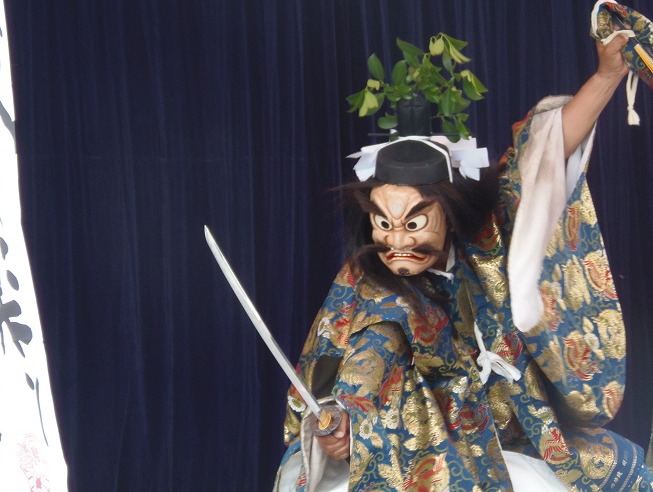
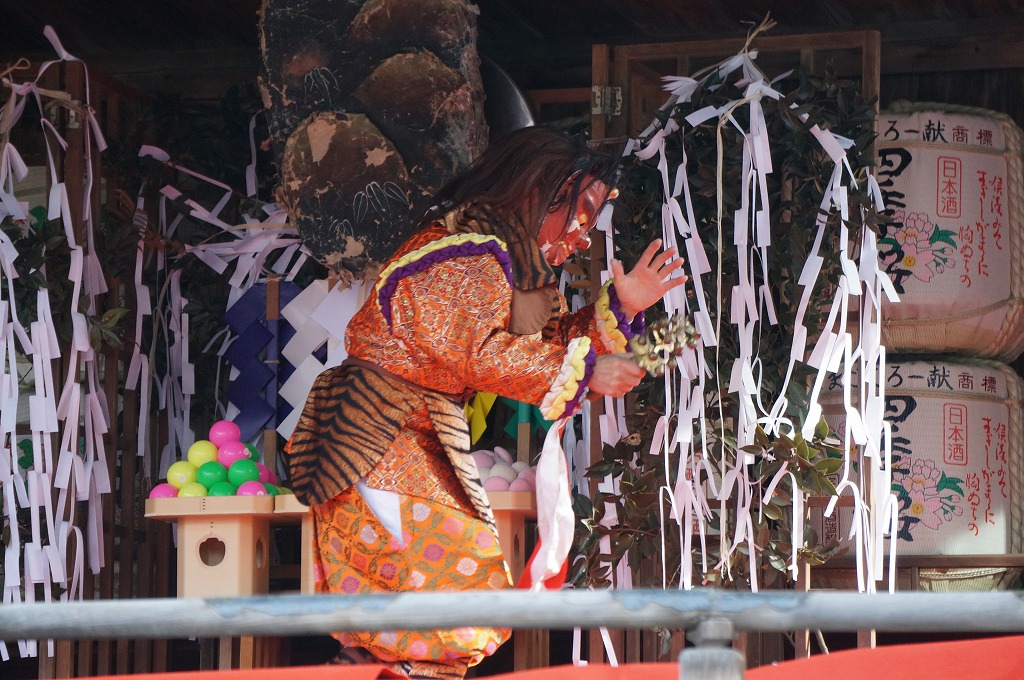
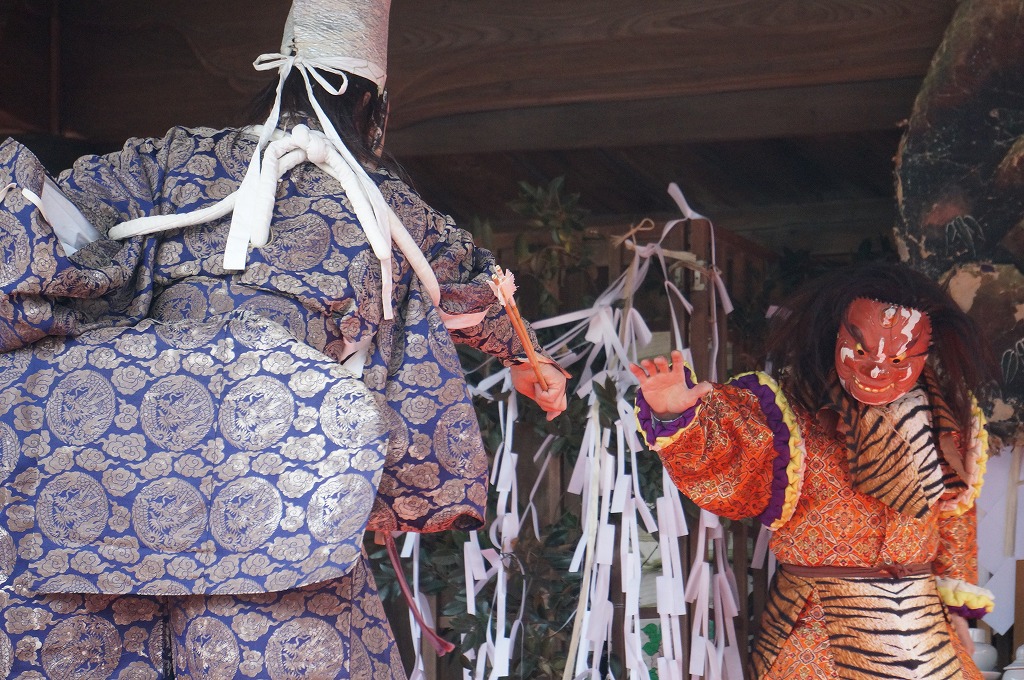
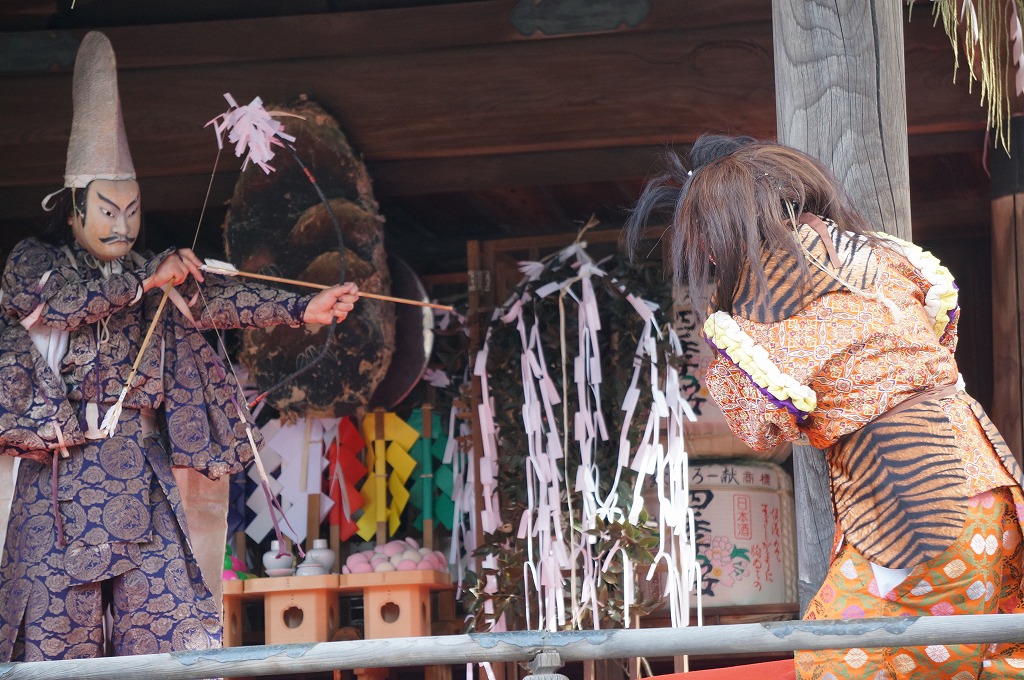
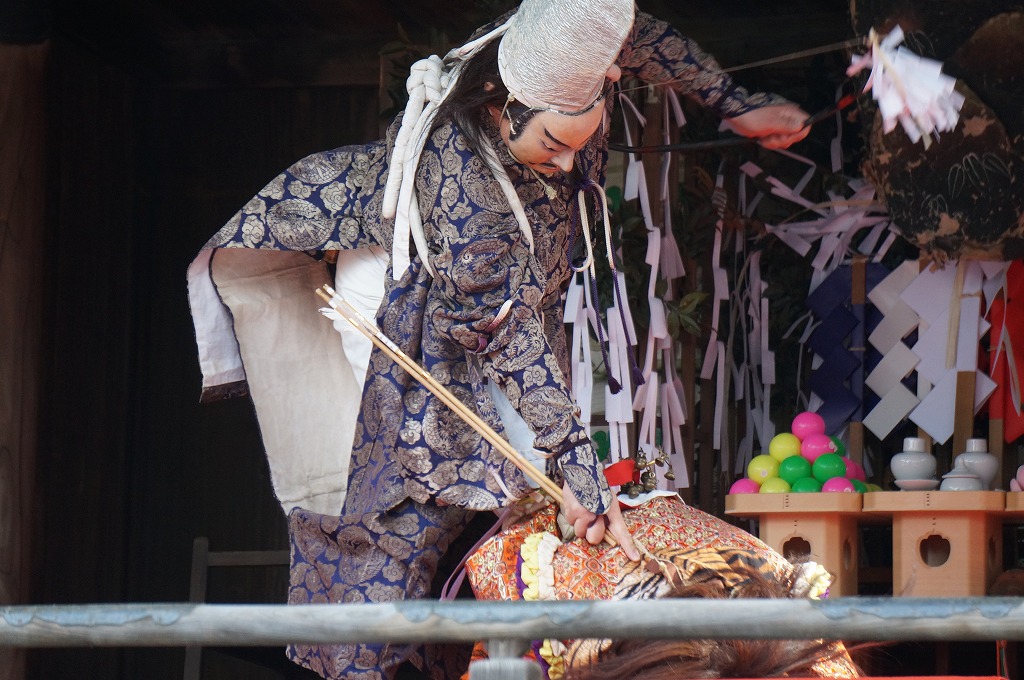
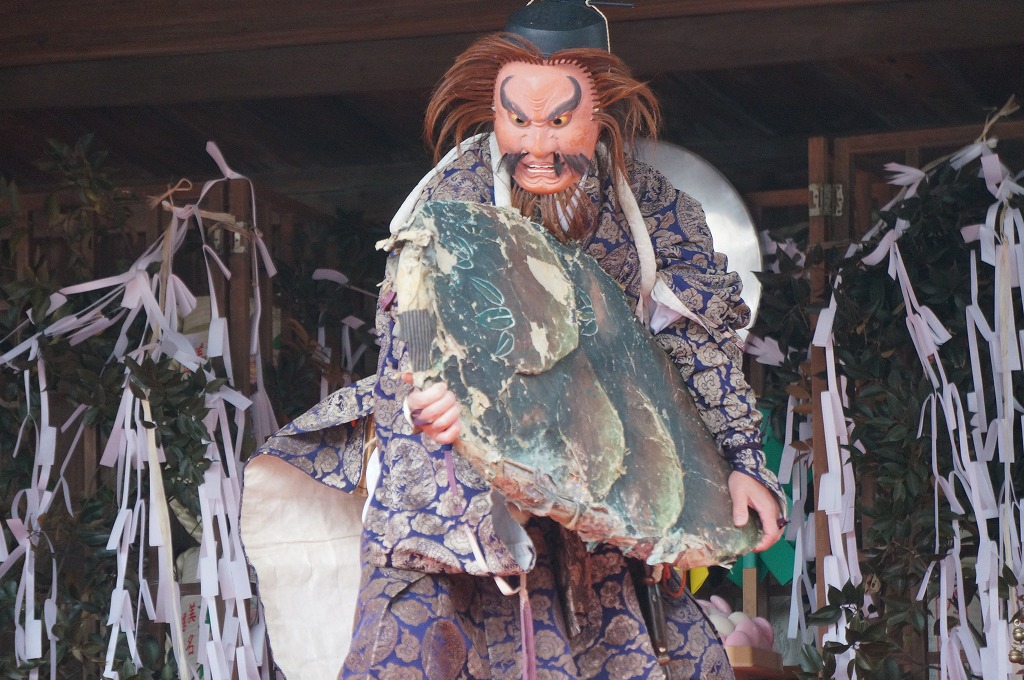
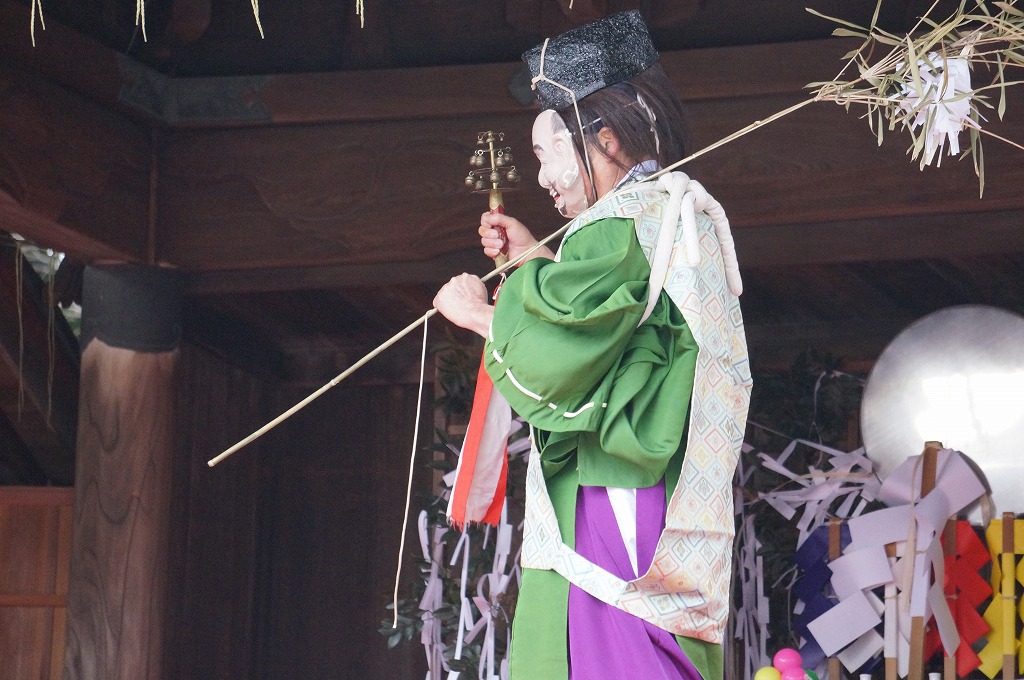
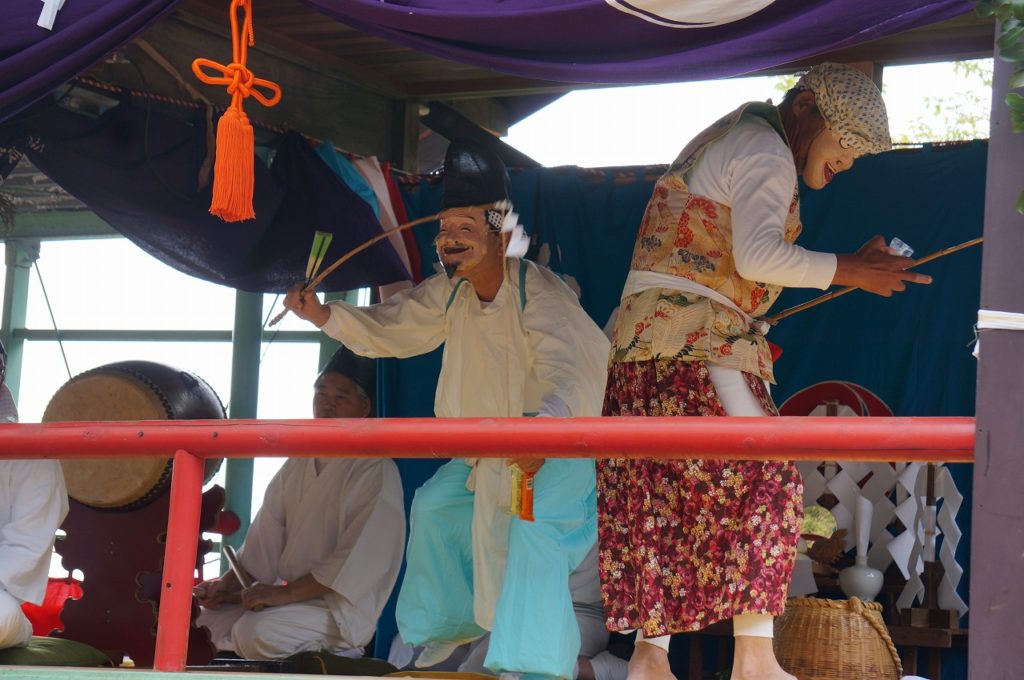
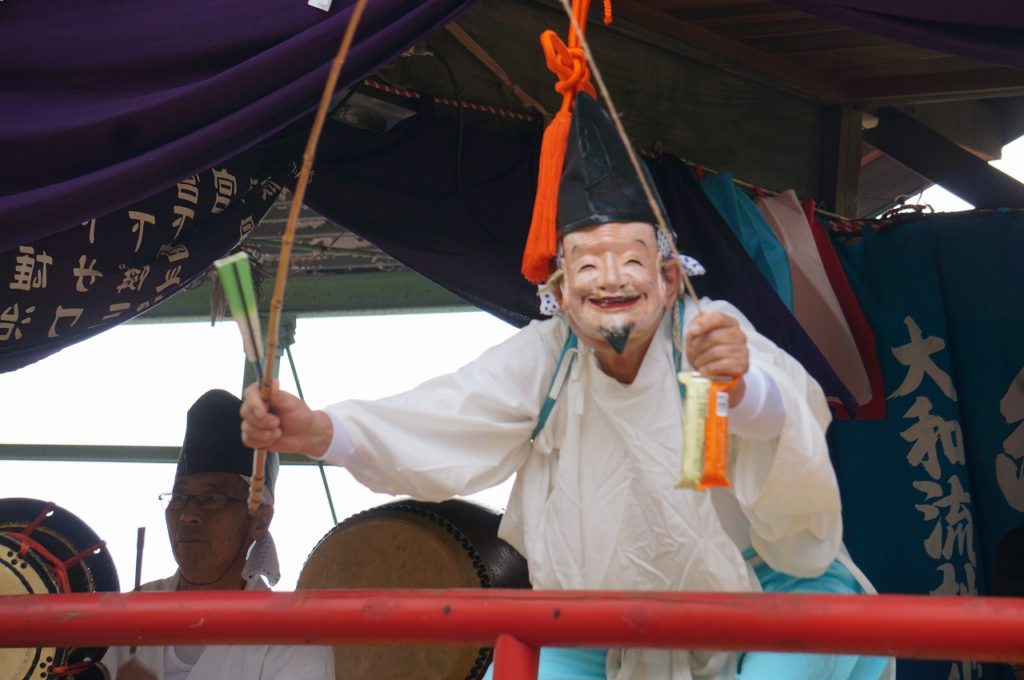
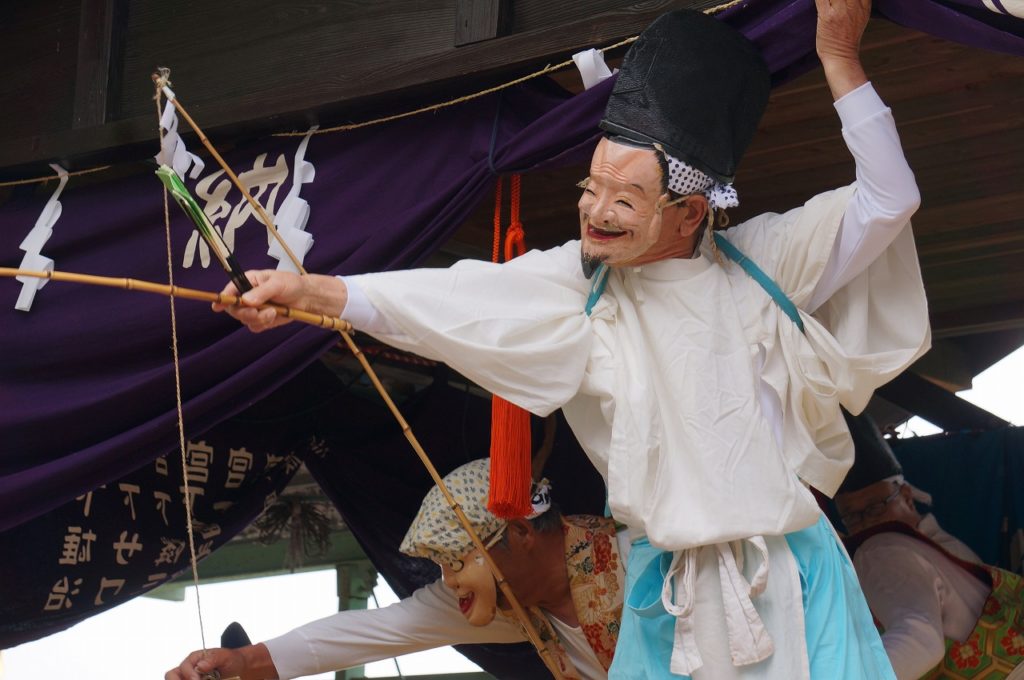
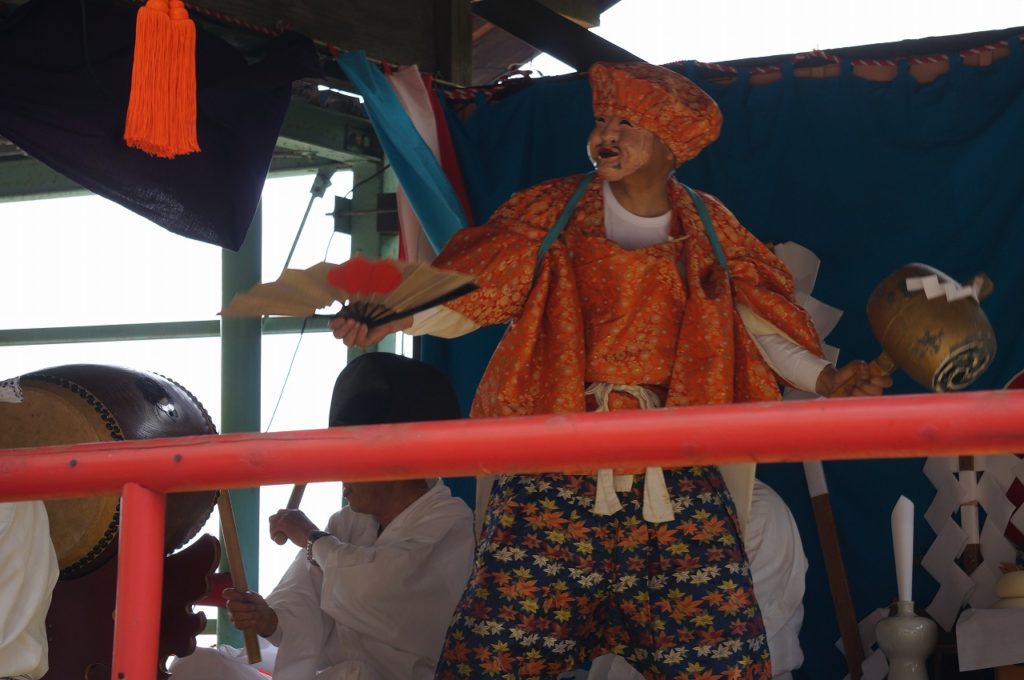
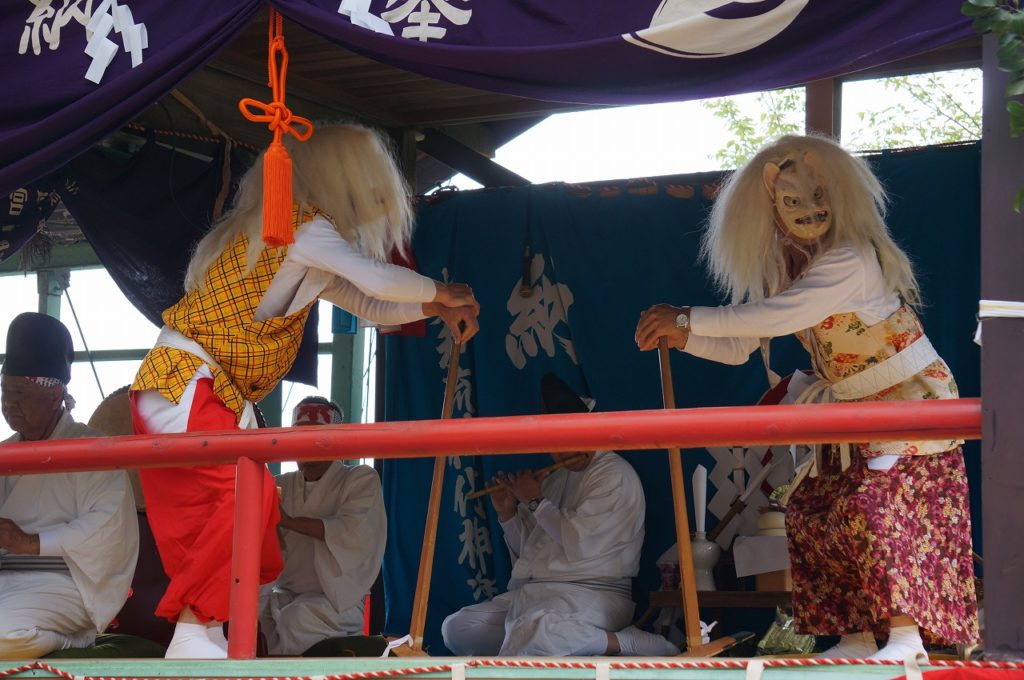
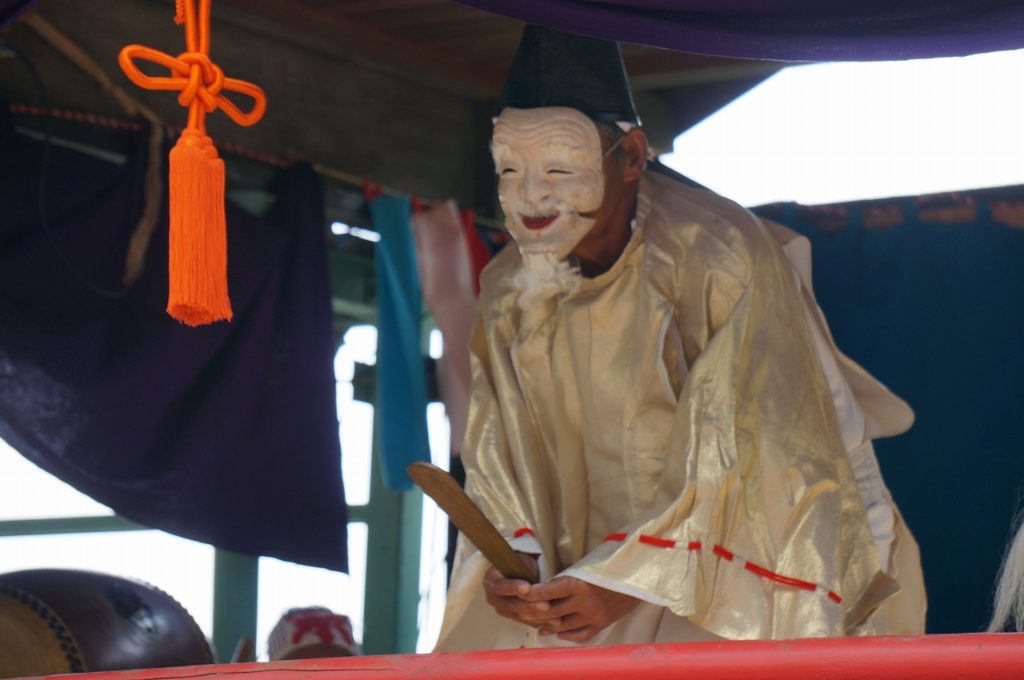
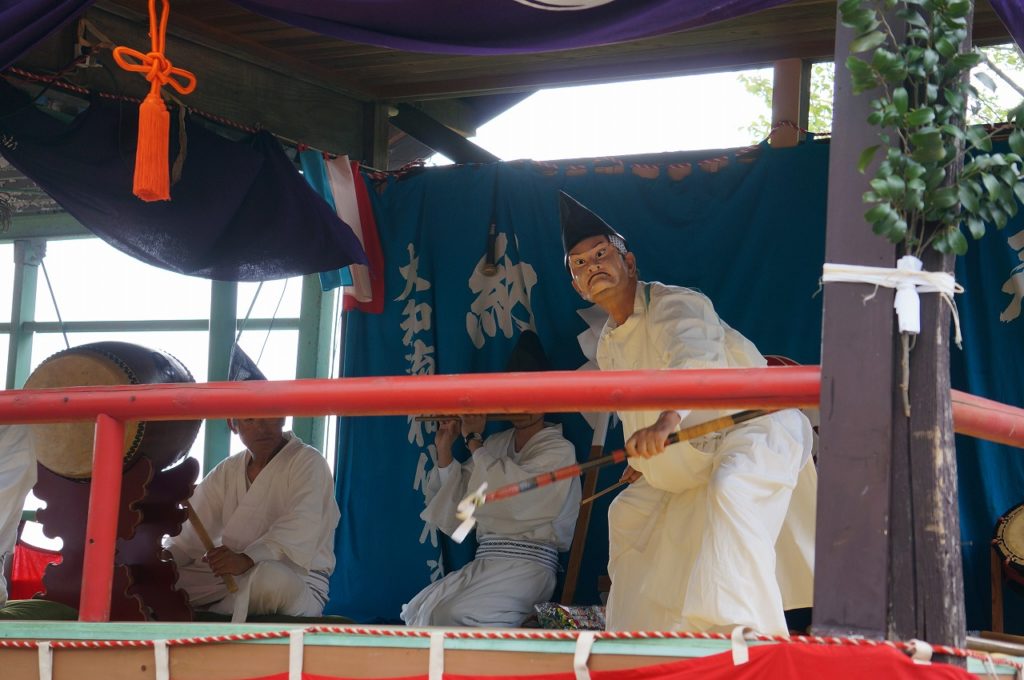
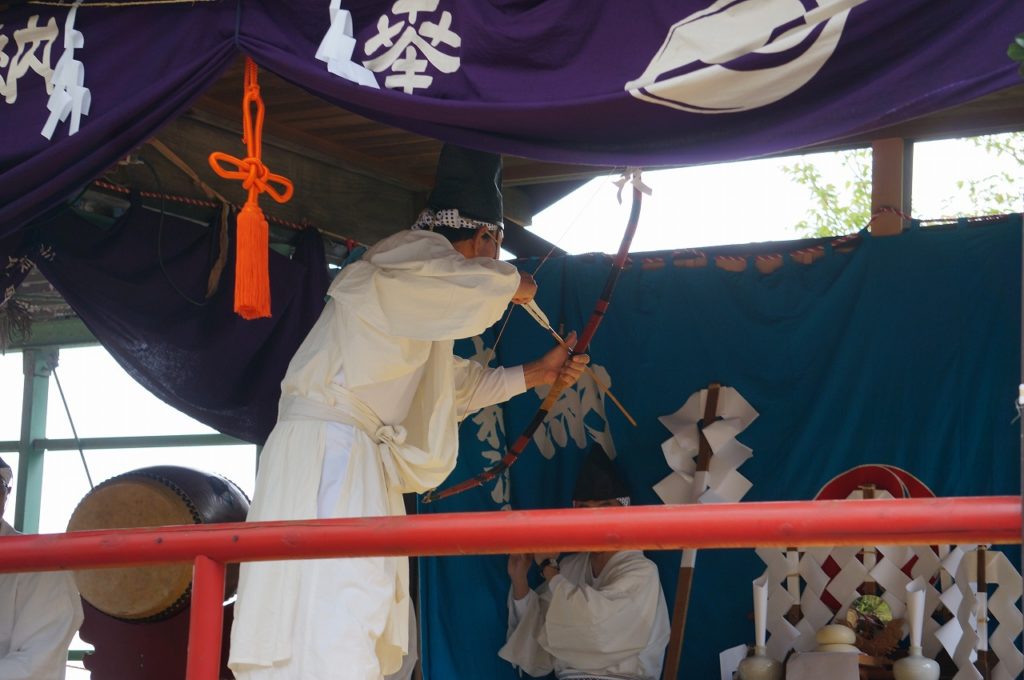
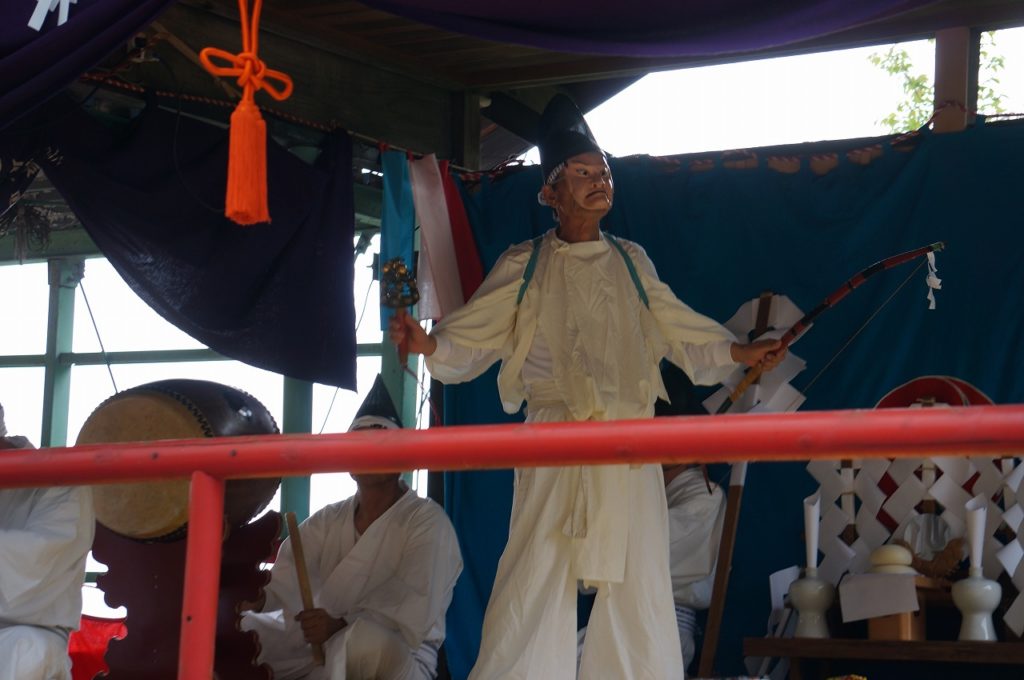
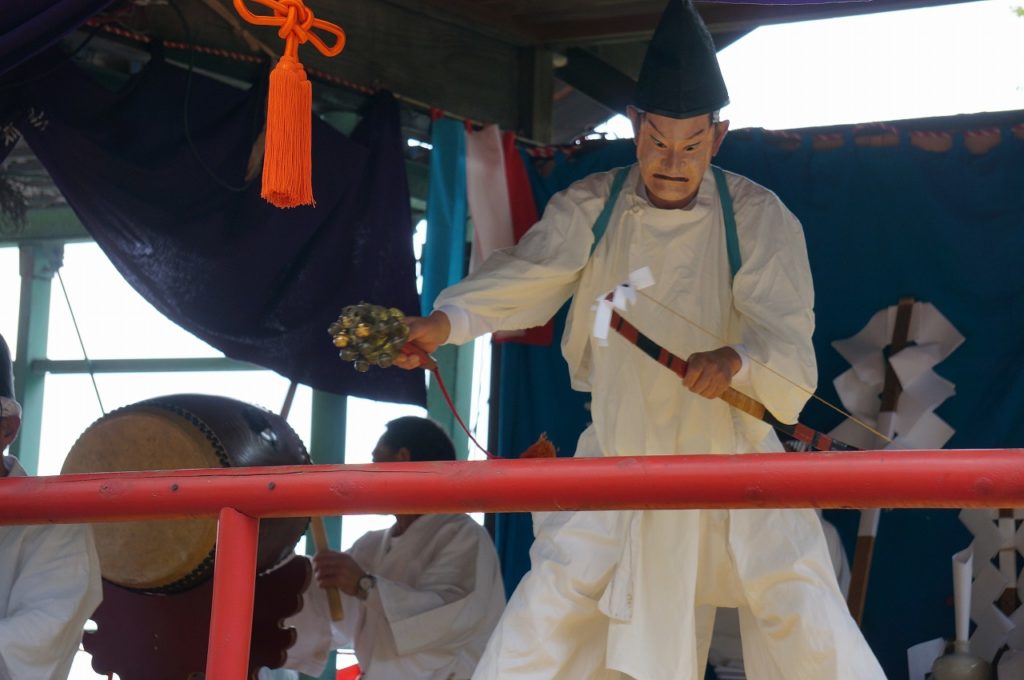
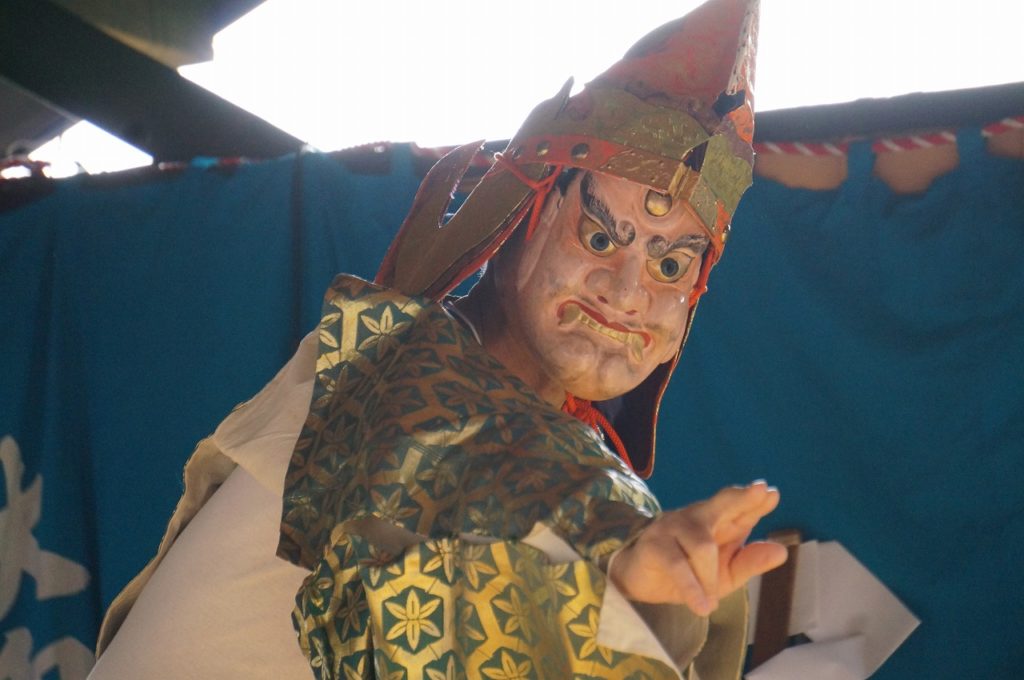
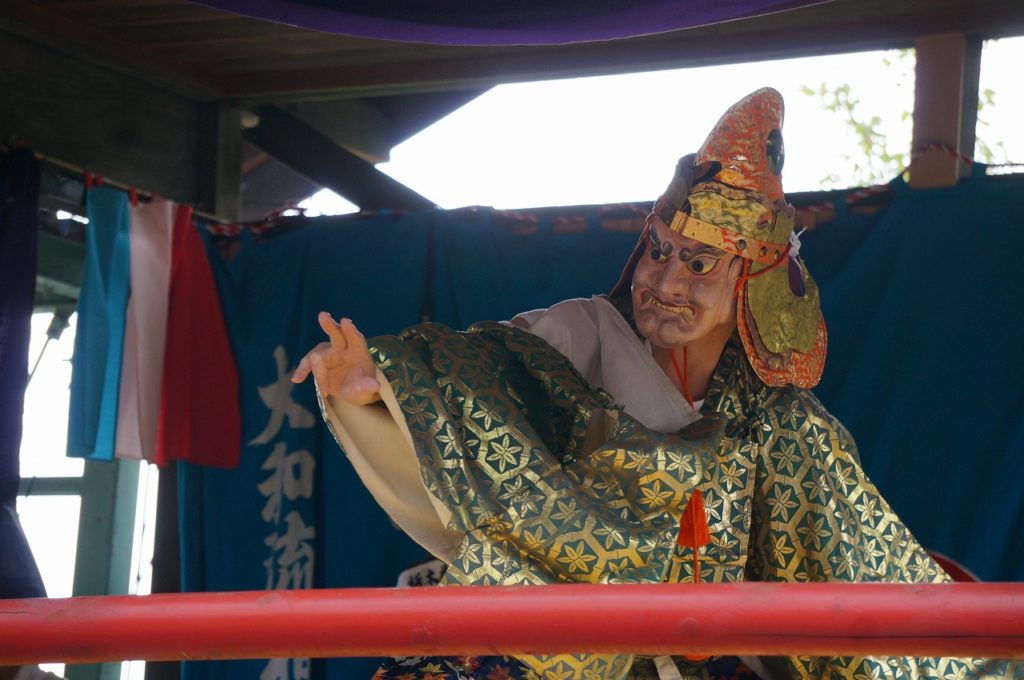
First, one program without a mask. After that was the dance of the god of war, Hachiman. As befits a god of war, he takes his bow and arrow and points it in all directions. This is not to glorify warfare, but to drive away the bad spirits that lurk in the area. He protects shrines, villages and people.
Lunch break here. The locals sold Yakisoba noodles the area for 100 yen. They are almost all volunteers. Cheap. That’s why they sell so well.
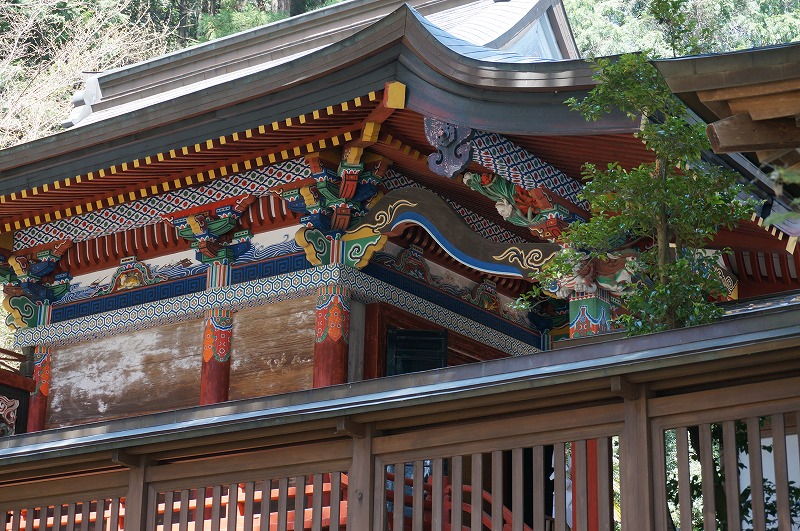
The shrine is said to be associated with the Ashikaga clan, but it is plain for a family that once ruled the country (from the early 14th century to the 16th century). It is said to have originally been larger and grander, but declined as the Ashikaga regime fell. However, the decoration is fine. There was a person who told me many details, and I thought he was a local historian, but to my surprise he was a descendant of the Ashikaga clan. There are many things that can only be understood by actually going there.

After lunch
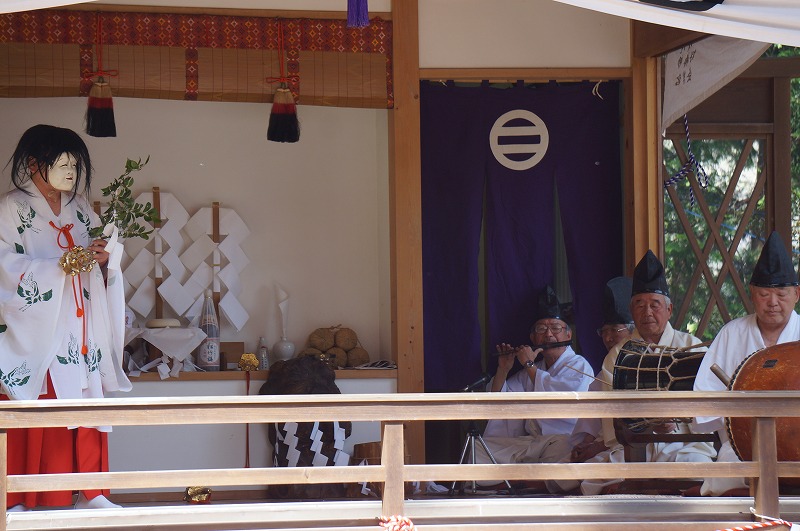
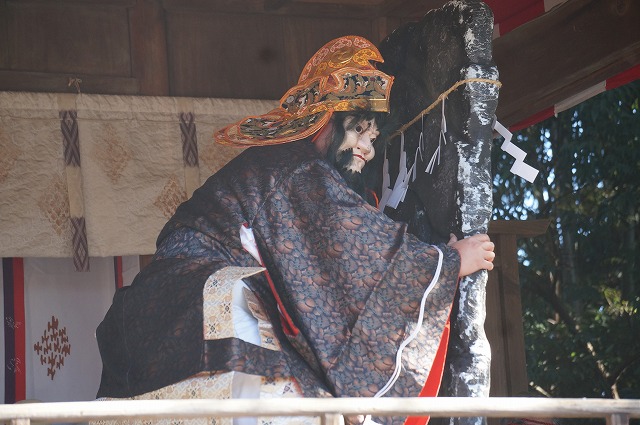
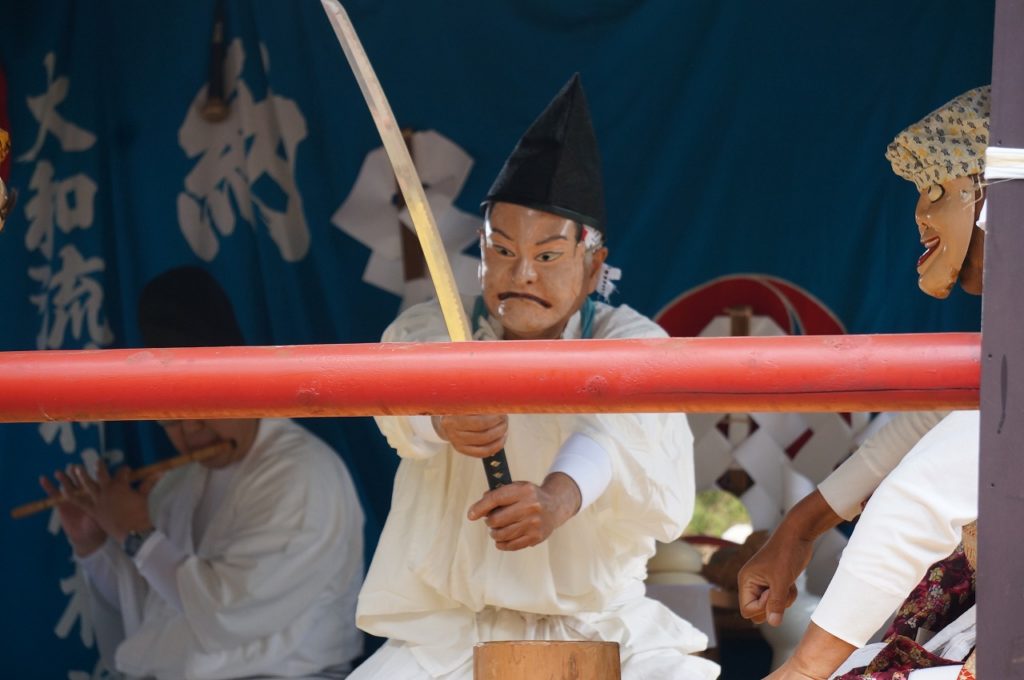
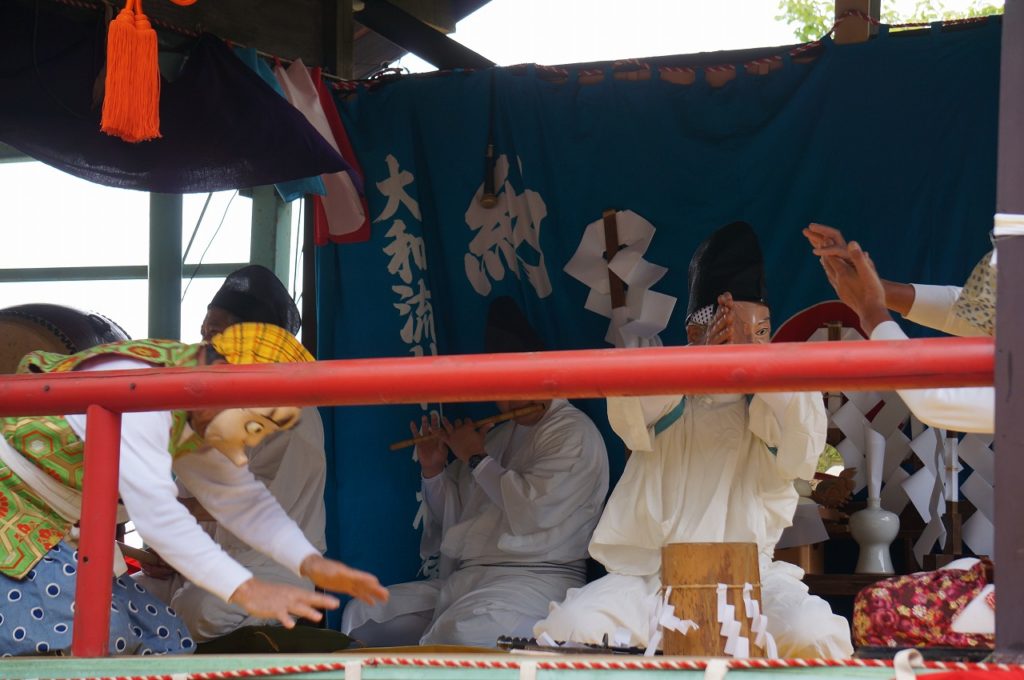
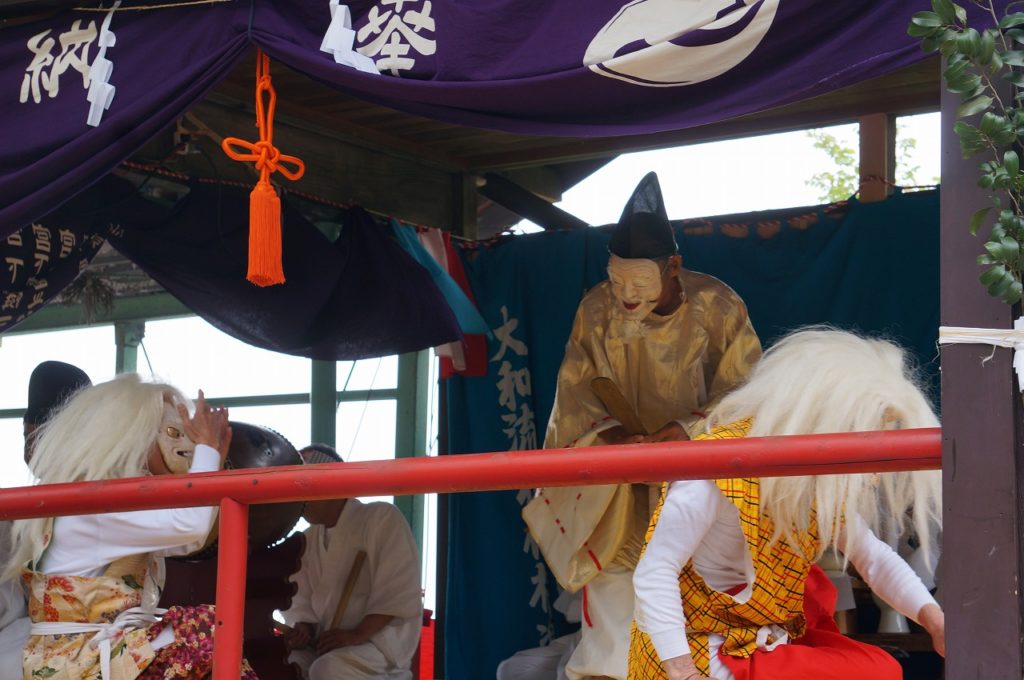
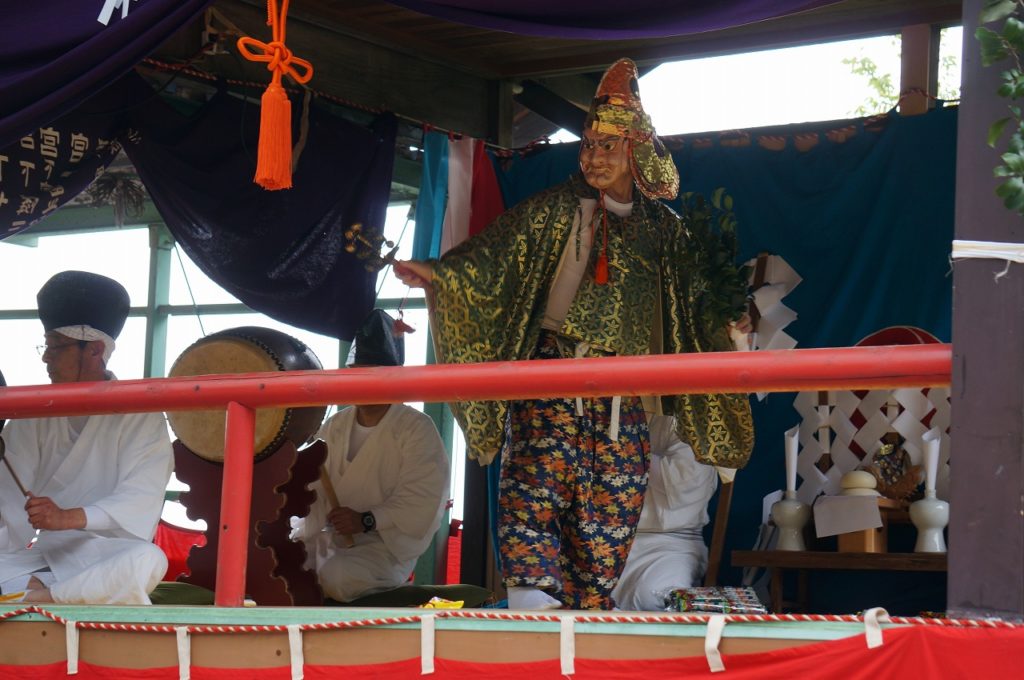
The next step is the famous opening of Ama-no-Iwato (the rock door inheaven), where the main actors are Ameno-uzume, Tajikarao and Amaterasu… Ameno-uzume only performs a short dance, and Amaterasu leaves the stage just as soon as she appears. In the end, only Tajikarao was the only prominent performer in the troupe. As village people handed down kagura, They probably omitted more and more parts that were not relevant to real life and Kagura gradually changes to a form more suited to the locality. The story of Amaterasu is important as Japanese mythology, but not so much for the people.

Let’s keep it casual and take it easy
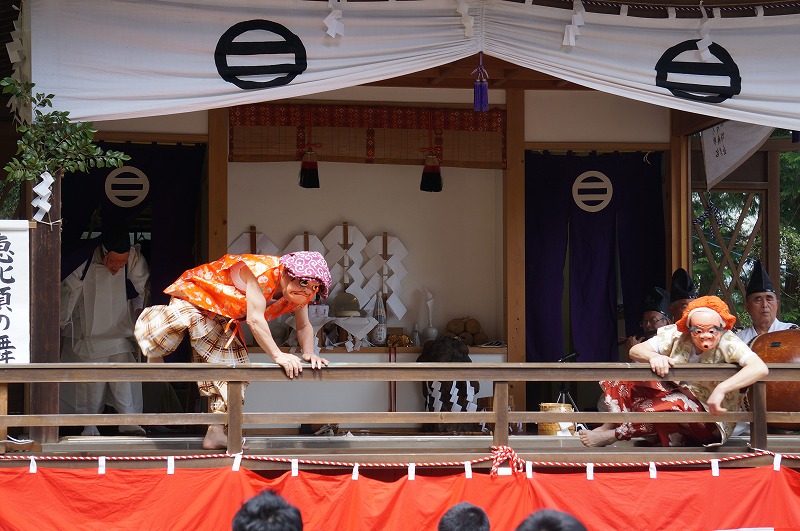
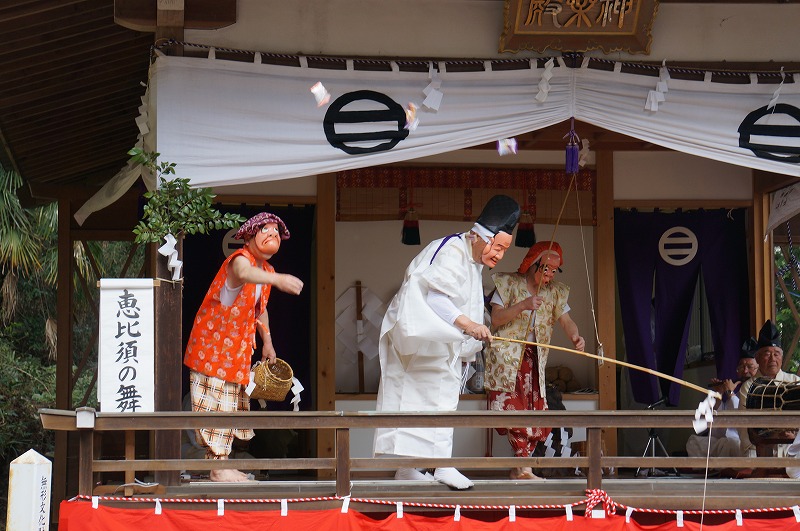
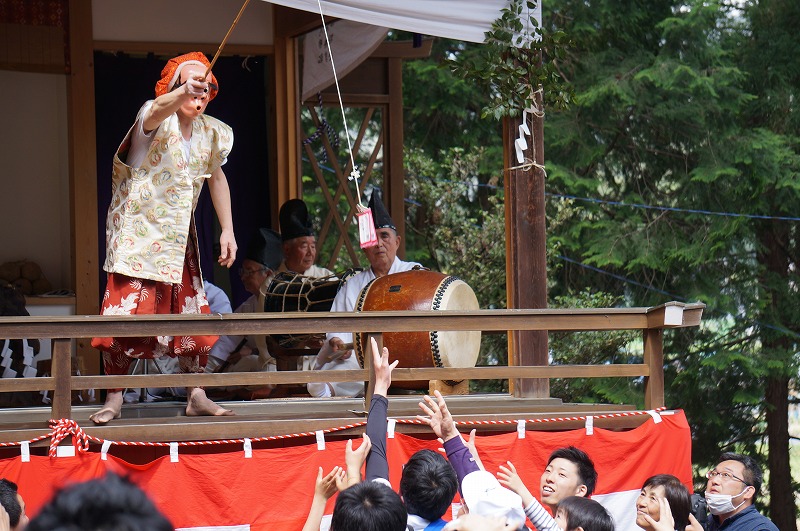
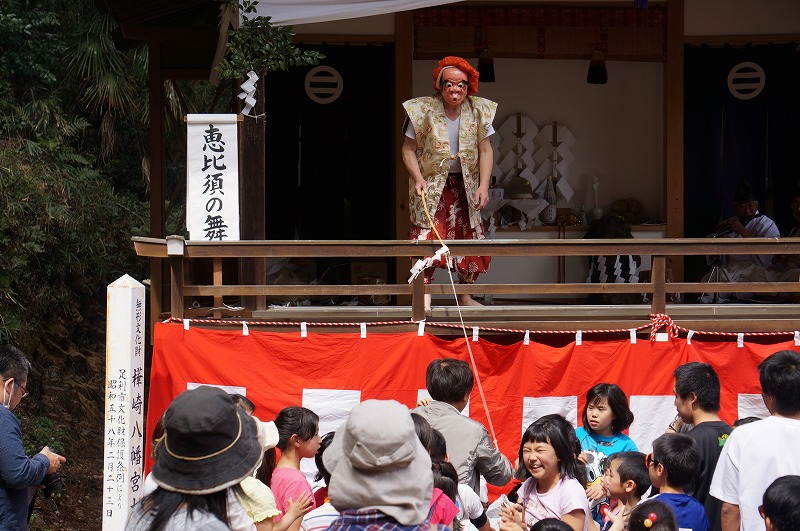
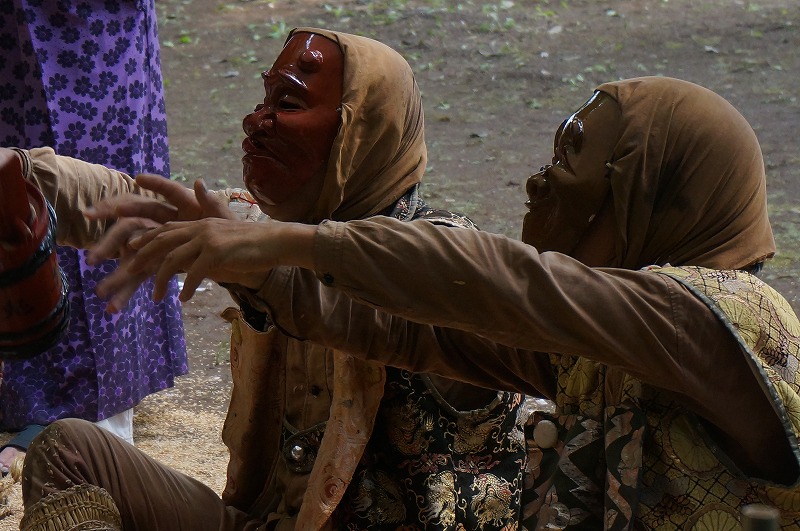
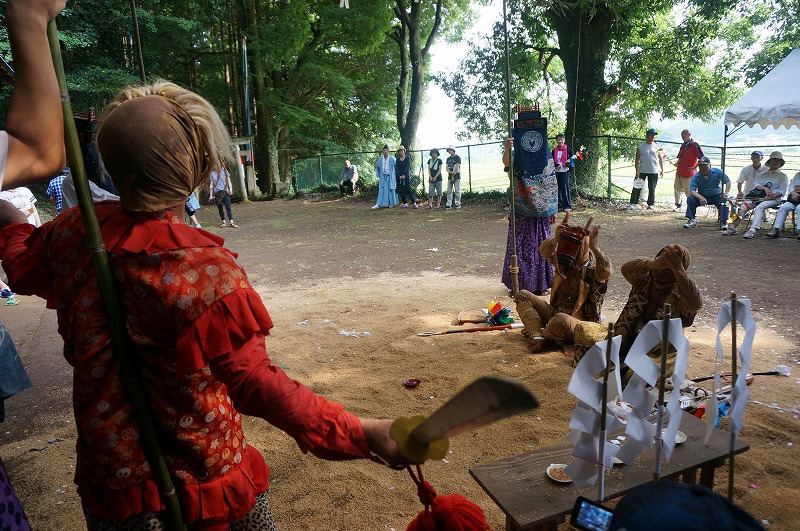
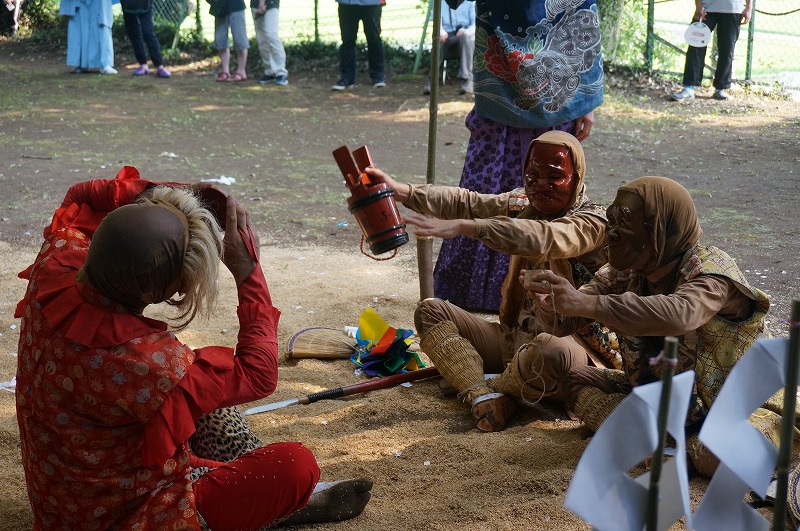
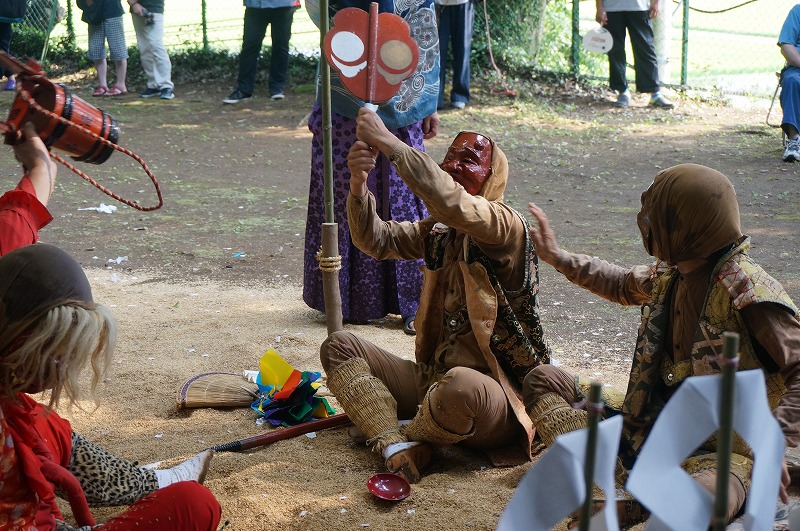
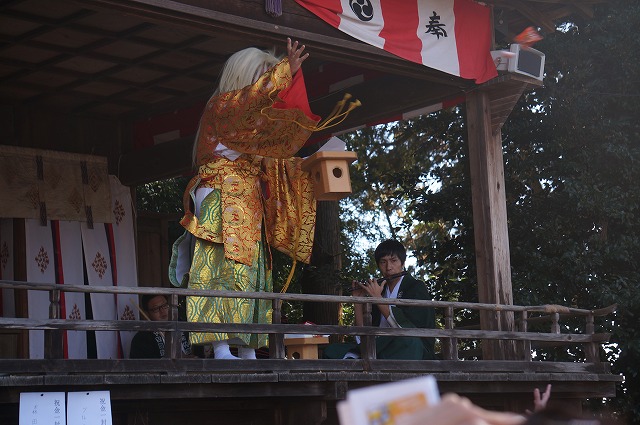
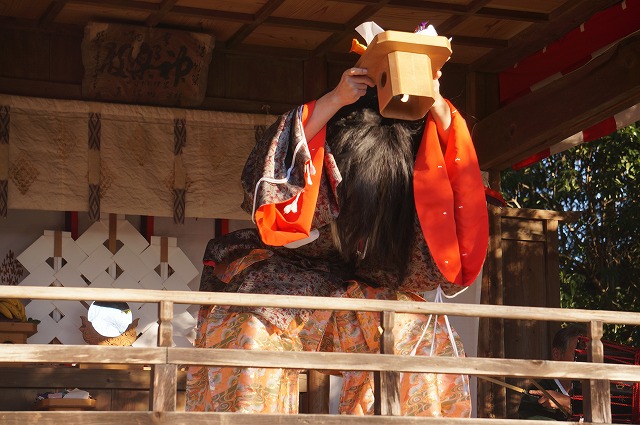
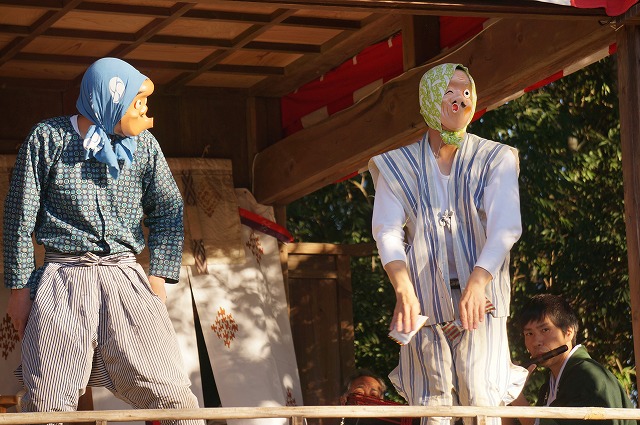
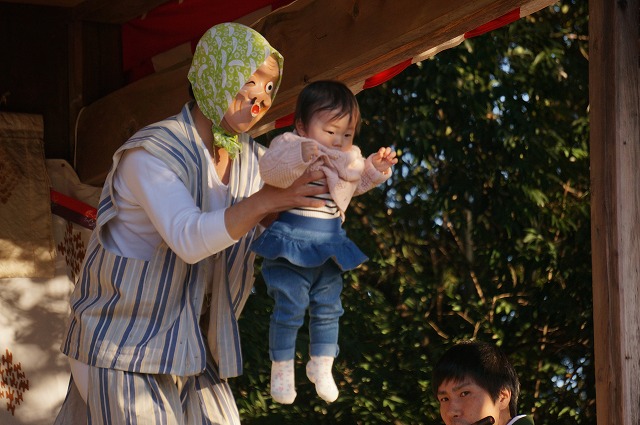
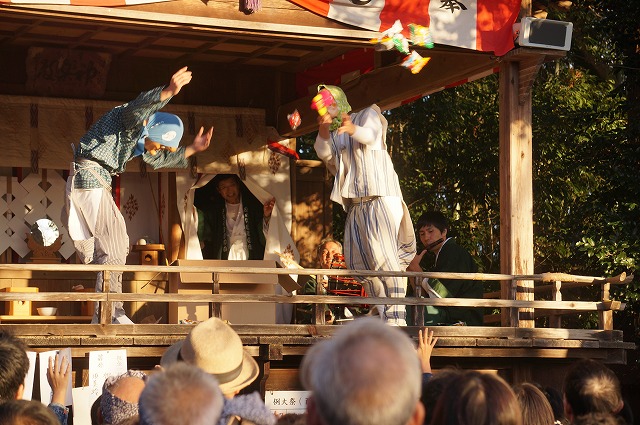
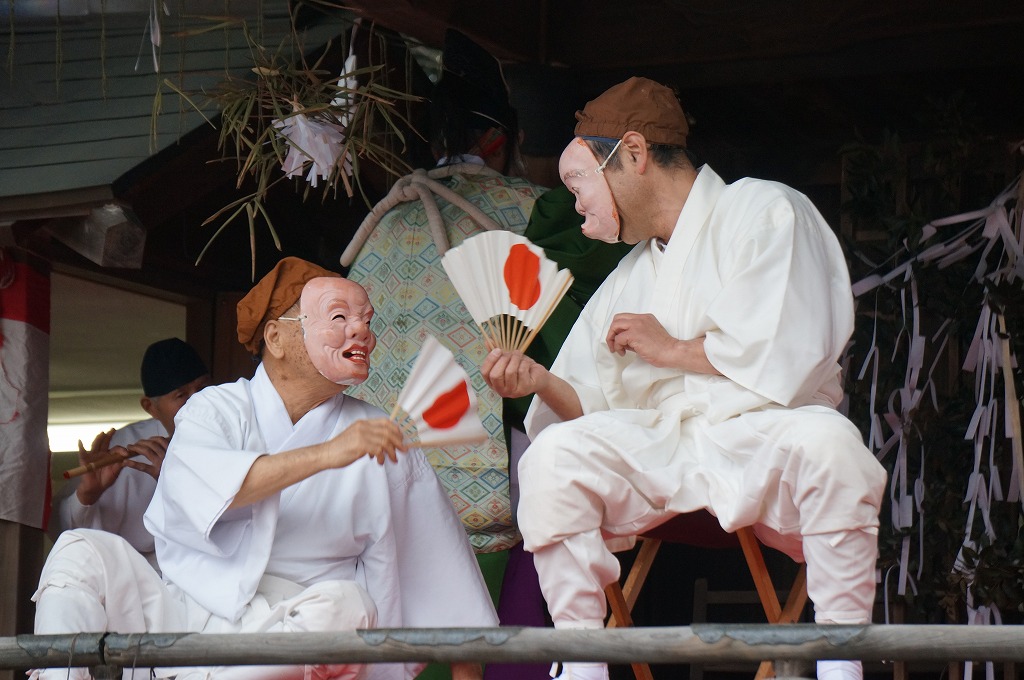
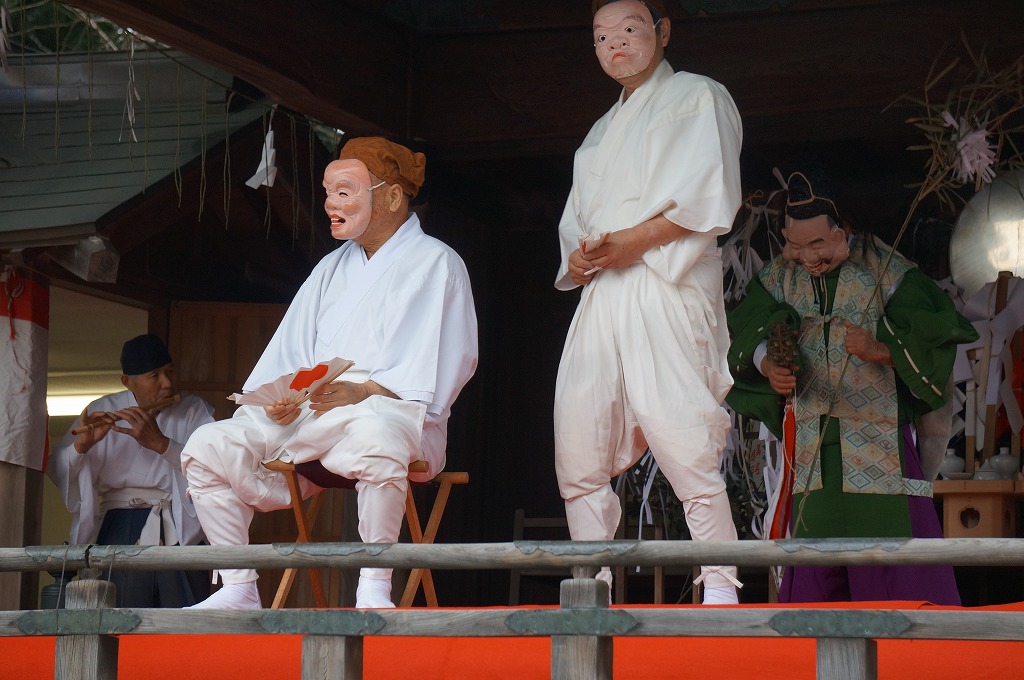
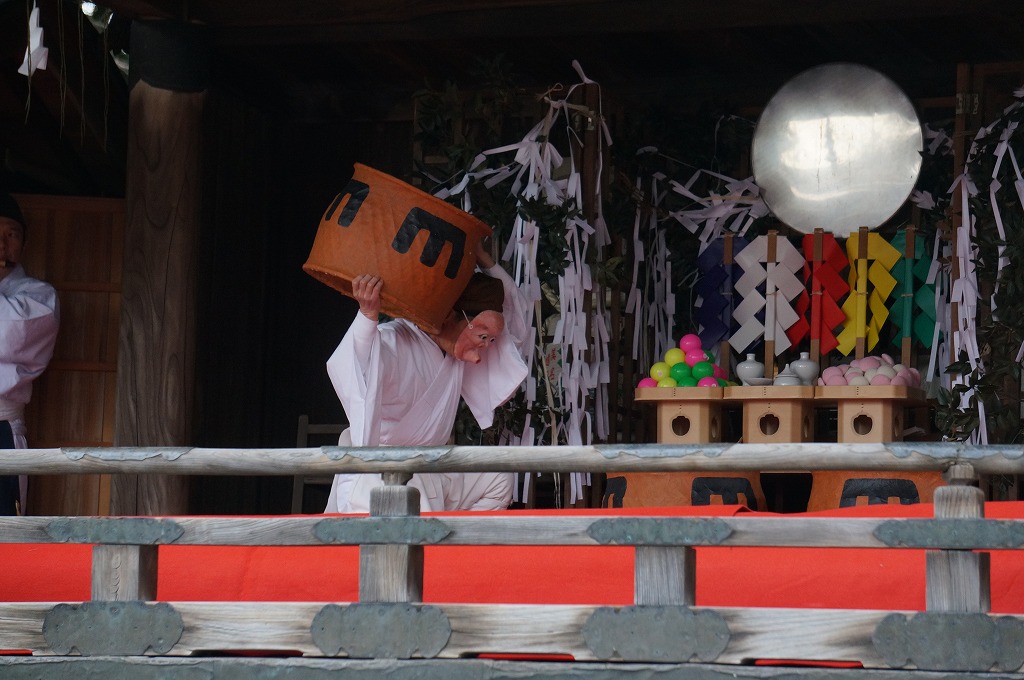
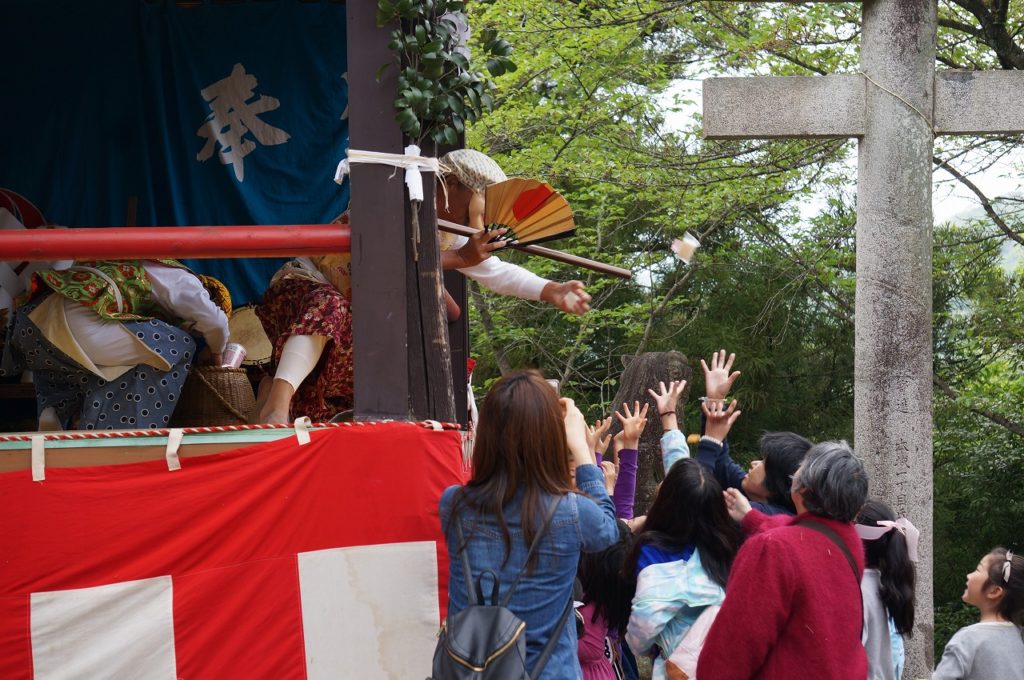
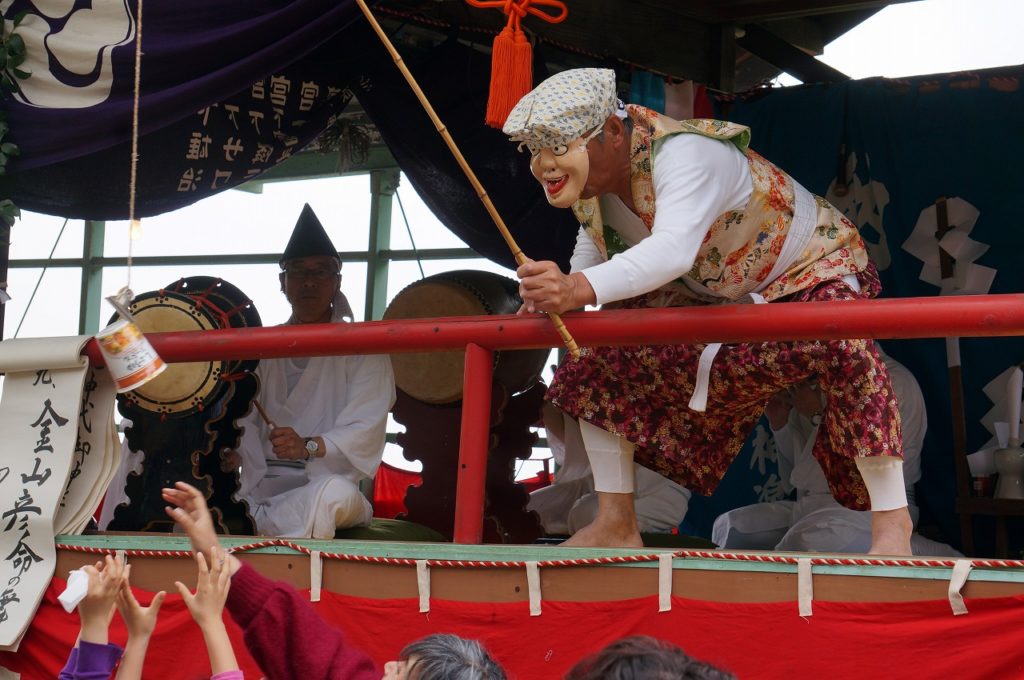
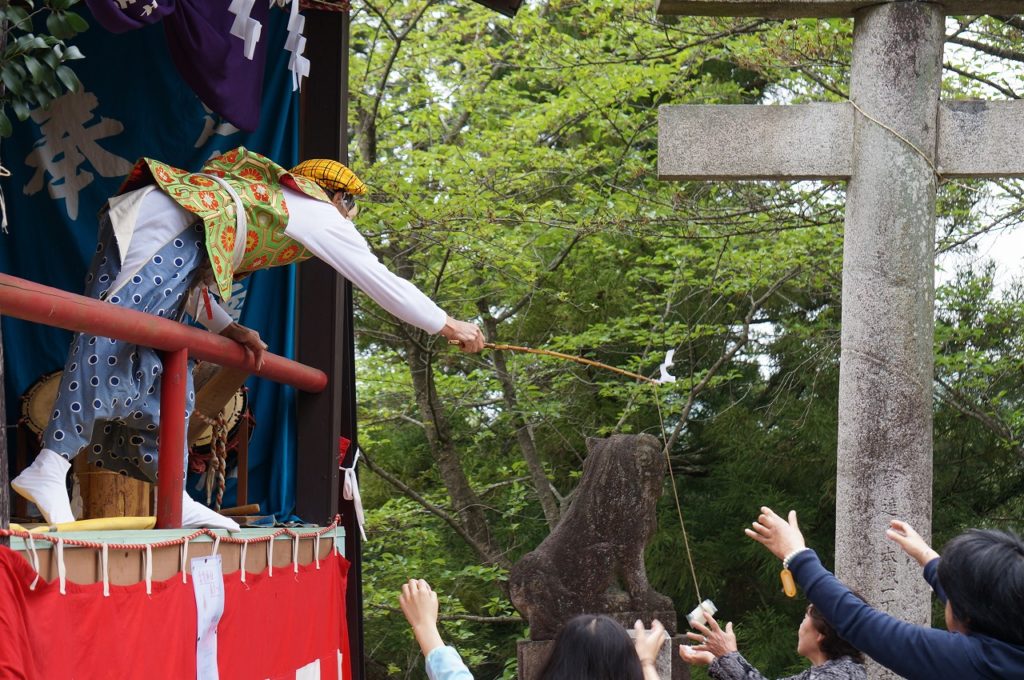
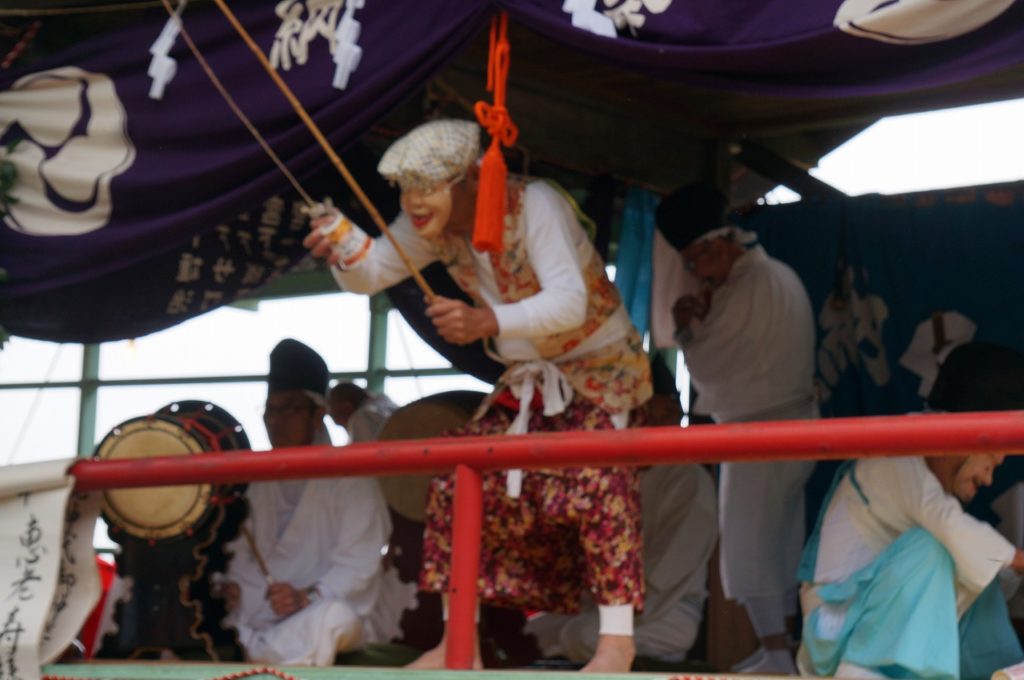
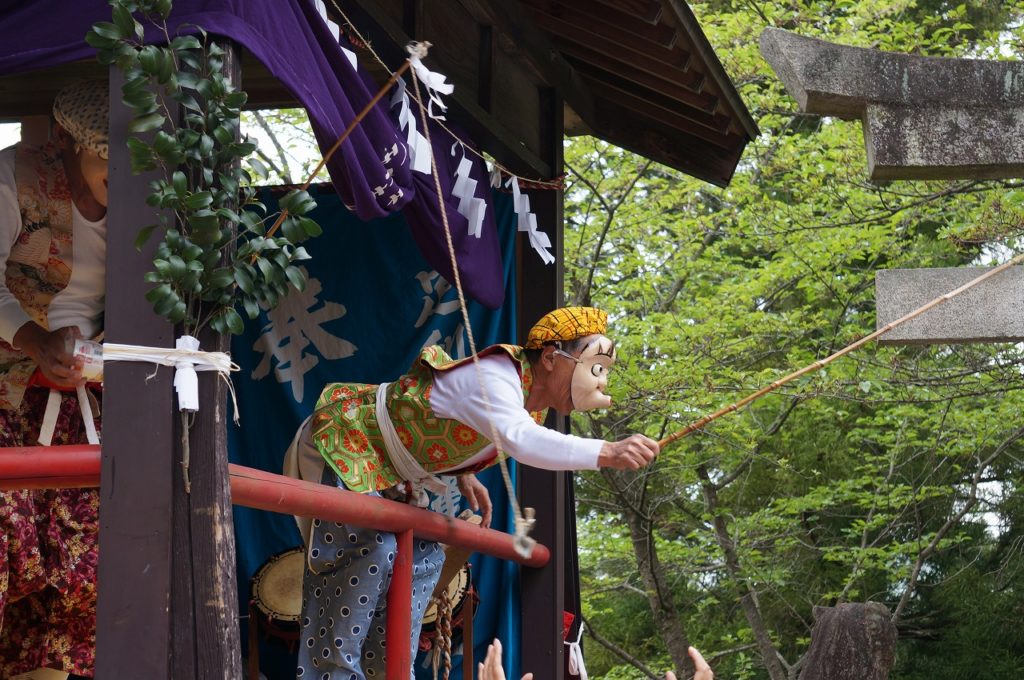
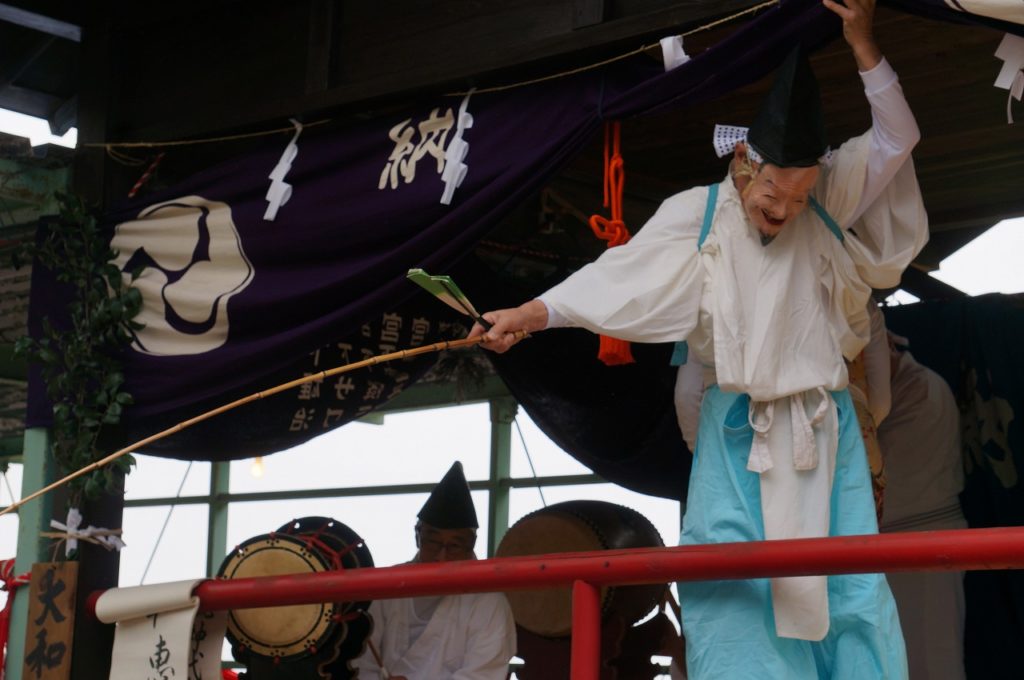
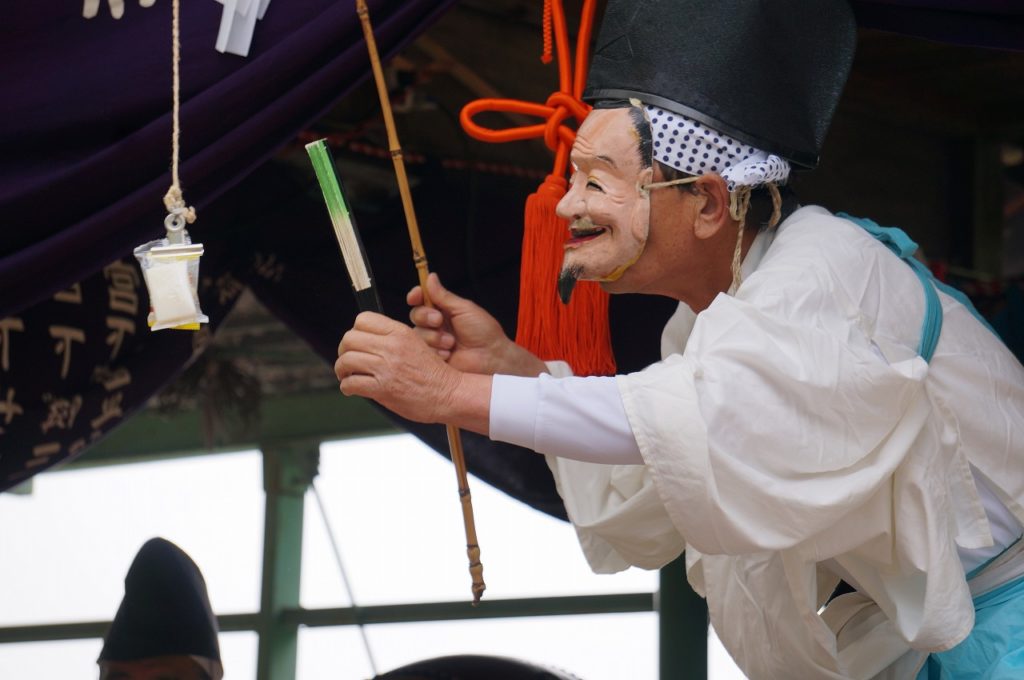
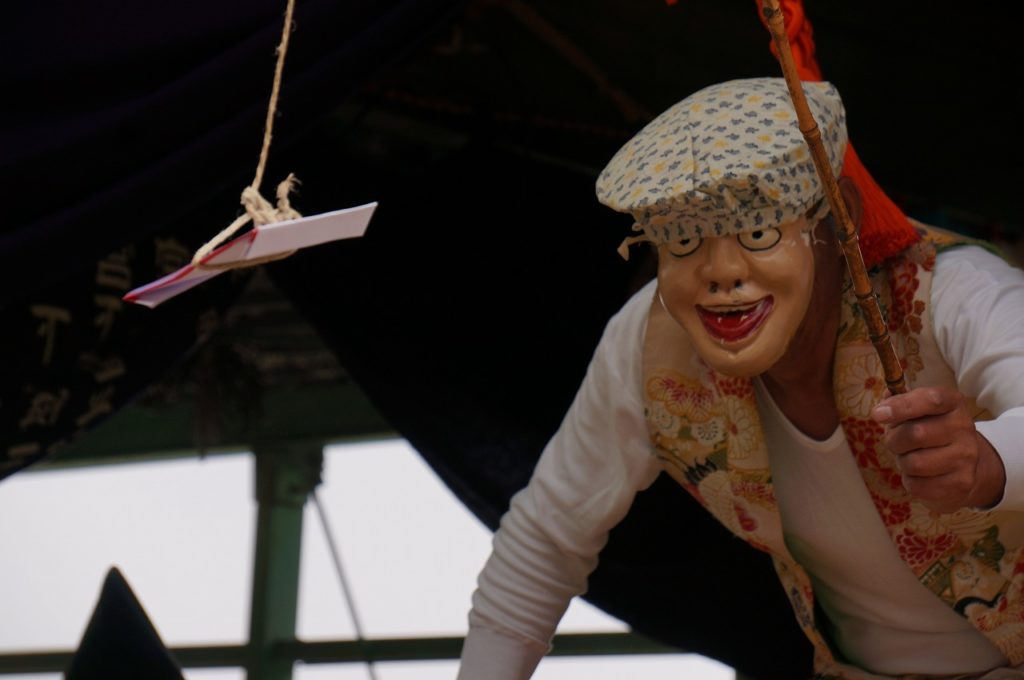
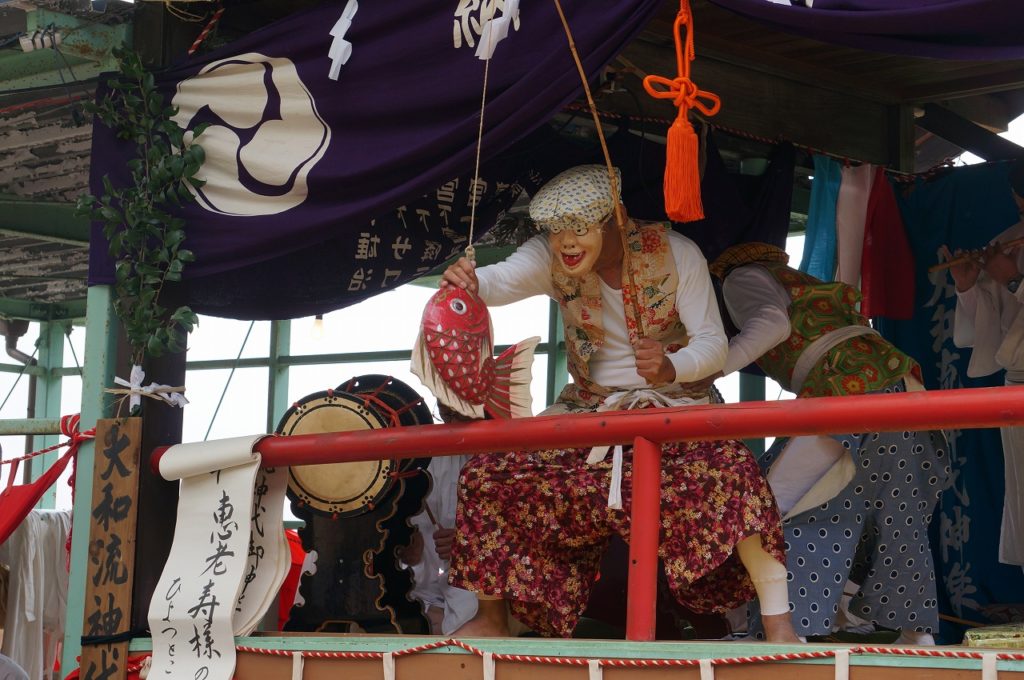
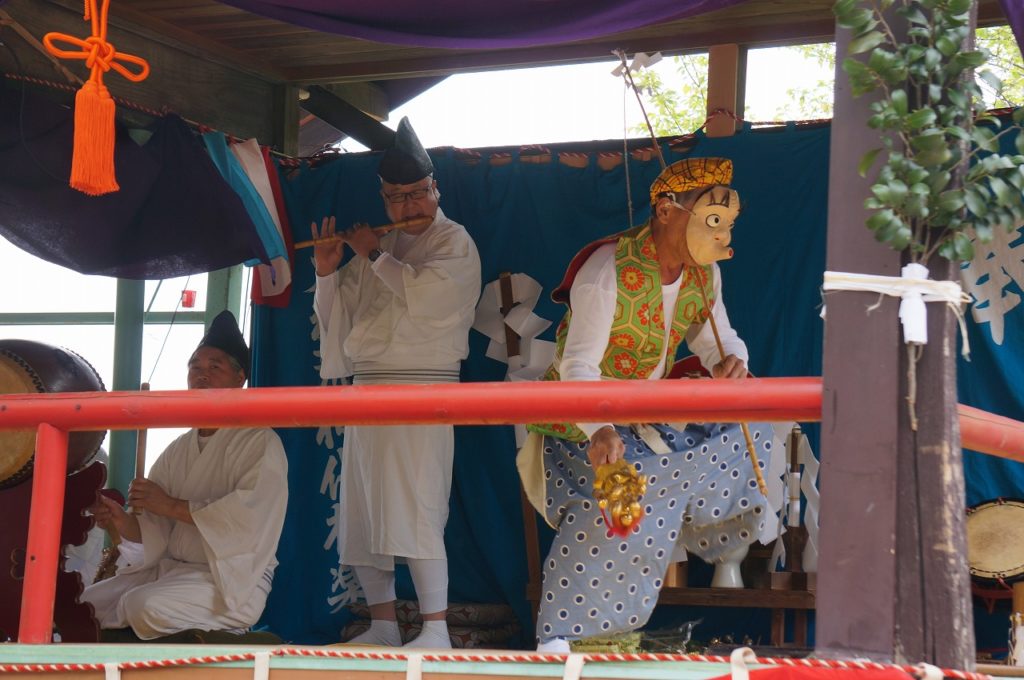
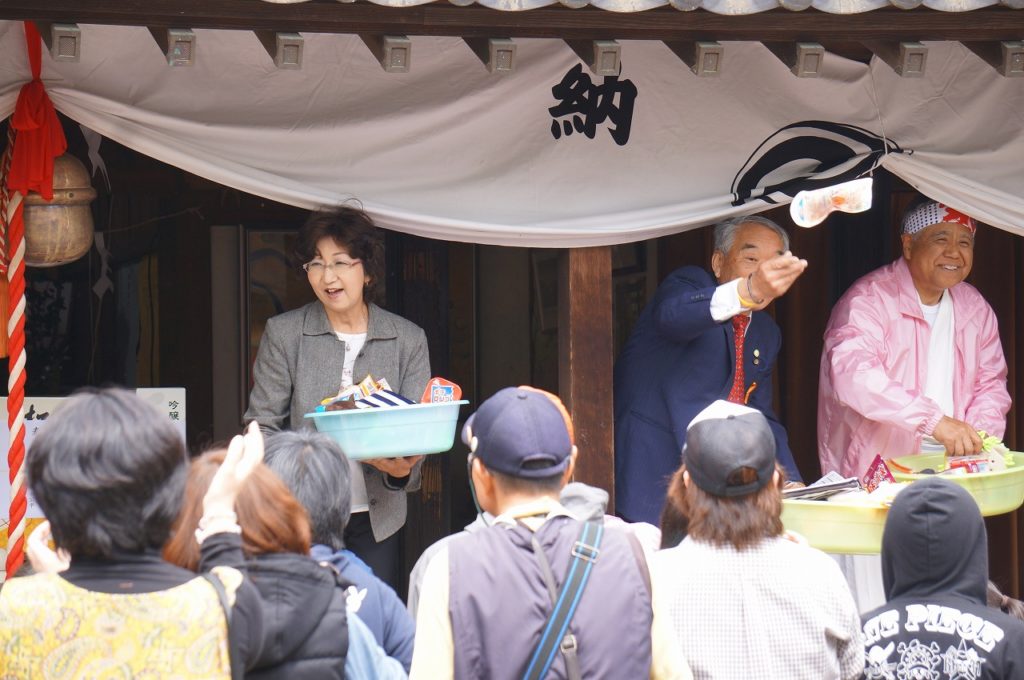
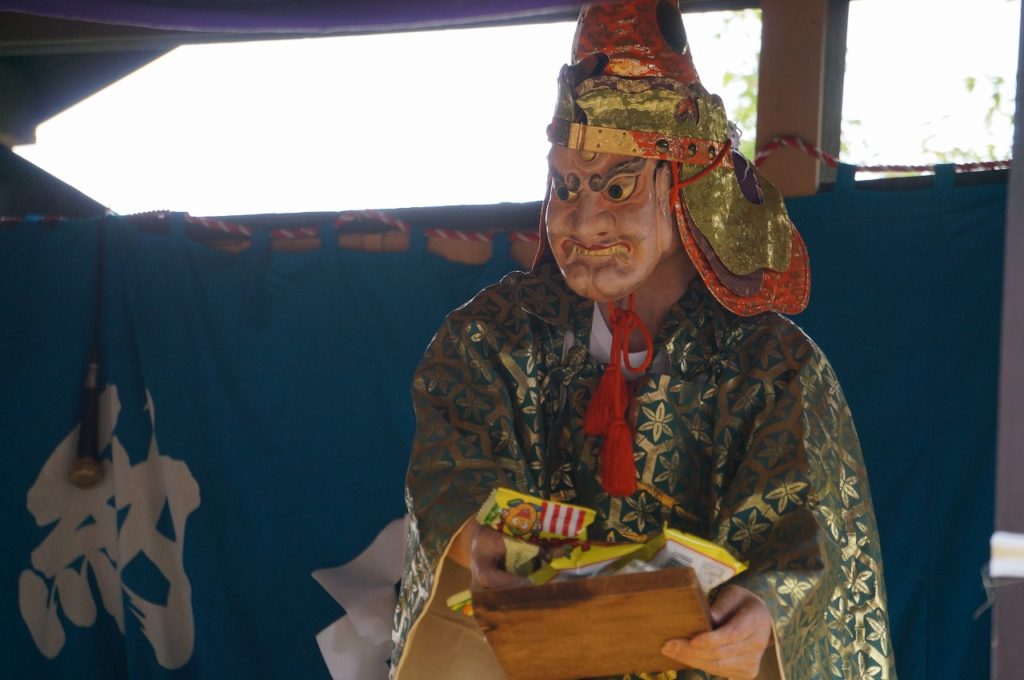
And finally, the common people’s group appears. In case , the god Ebisu (this god represents the common people’s group) is the star of the performance. Seven gods that common people have believed in since the Middle Ages. All of them bring happiness to people. Ebisu is one of the most popular among them. That is why Ebisu plays such an important role in this kind of kagura in the village. But in reality, the main attraction is a droll duo. So, these two people fish on behalf of Ebisu and throw snacks and treats. Many children gather, but for them, this is almost the main thing. That’s why it’s a big deal. But if you look closely, they don’t keep it to themselves. Is this another merit of God?
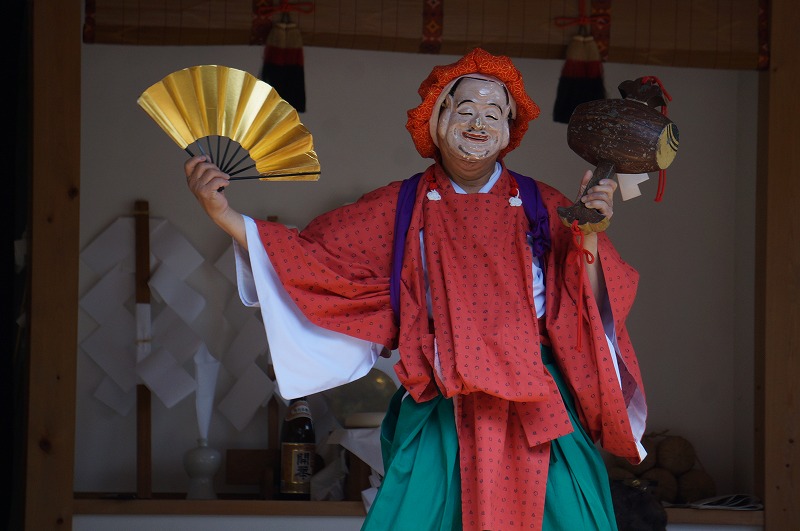
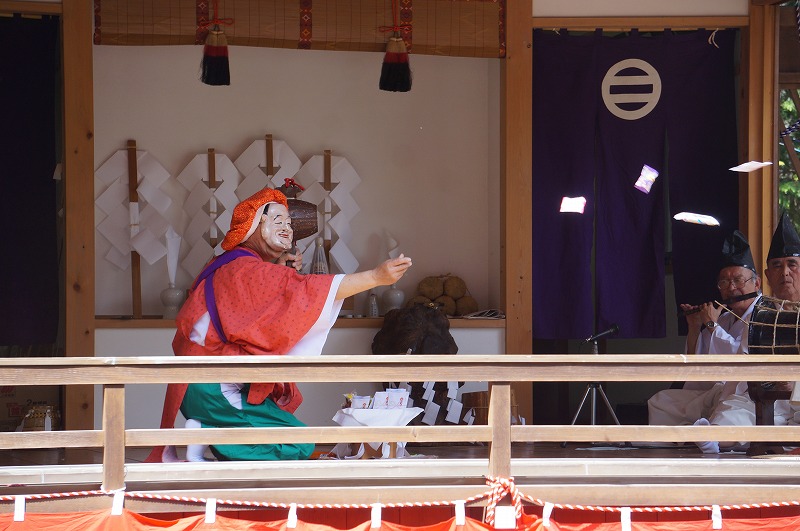
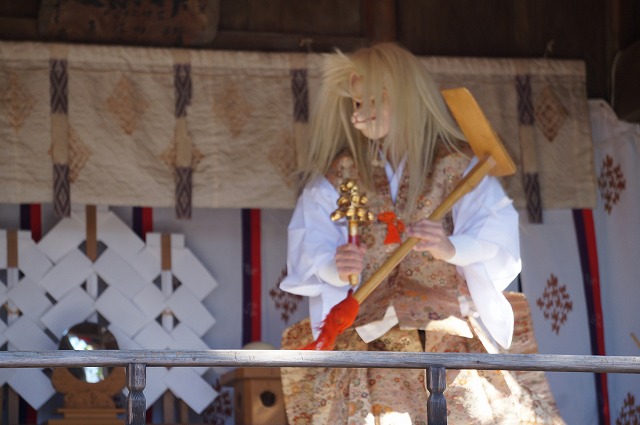
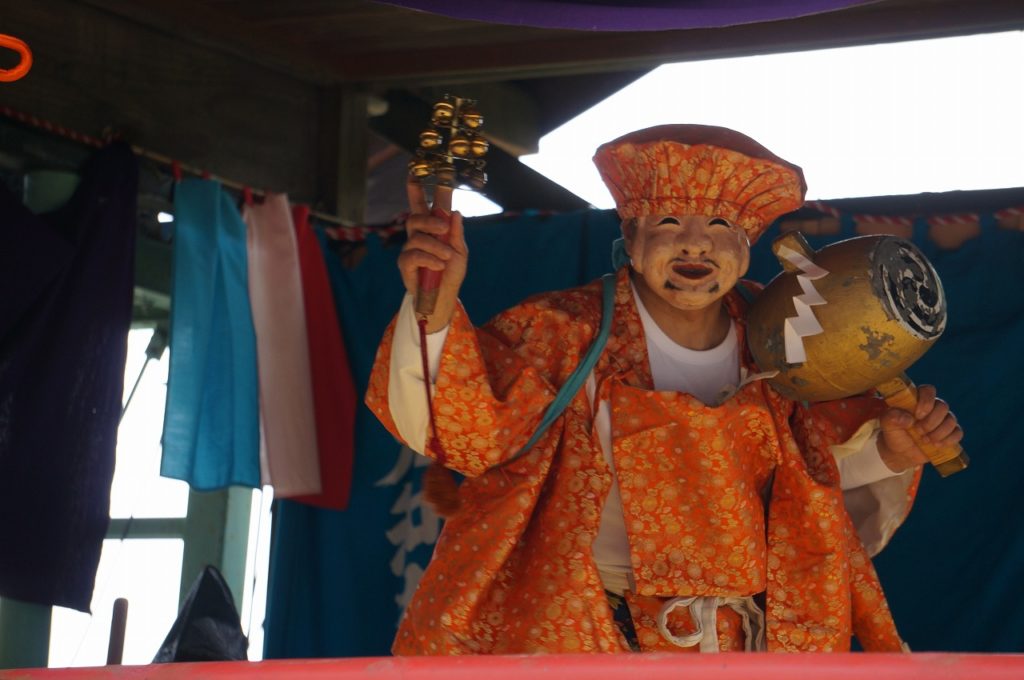
Next to Ebisu comes a deity named Daikoku, who is as popular as he is. He is able to bring forth treasures by waving a mallet in his hand. So here is another big treat of sweets.
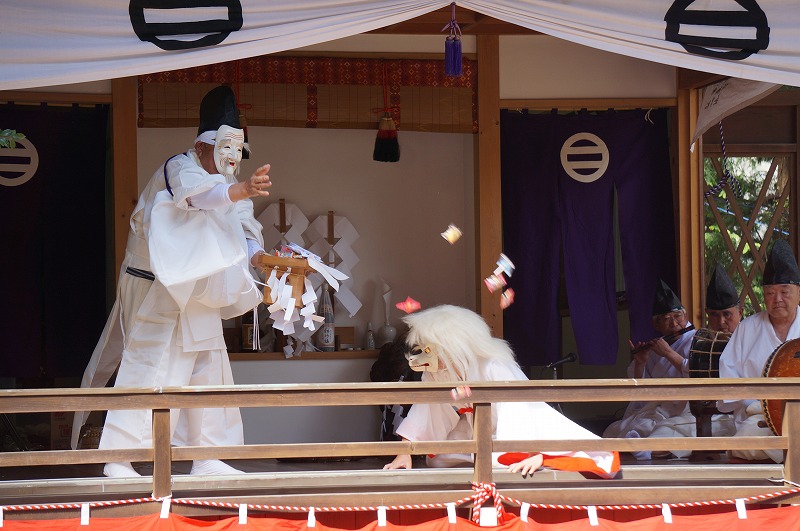
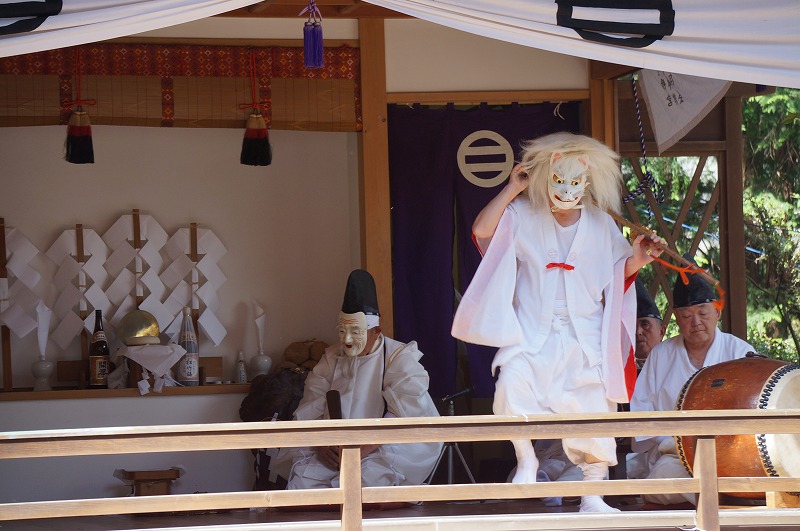
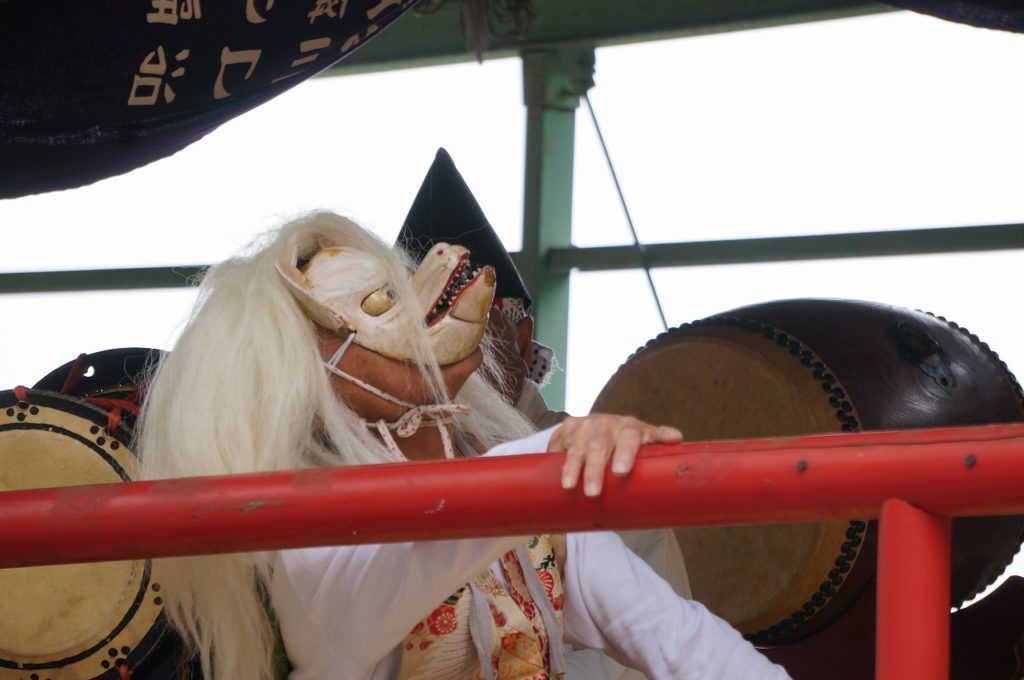
Next is Inari, another indispensable deity in the kagura of the village. Inari is the god of rice cultivation in general, and is served by a fox. However, in terms of order, they usually appear earlier. The audience is already in the mood for sweets, so they put rice cultivation aside and start scattering rice again. Since it is kagura, they dance on stage, but people’s attention has already turned to when they are going to throw things.
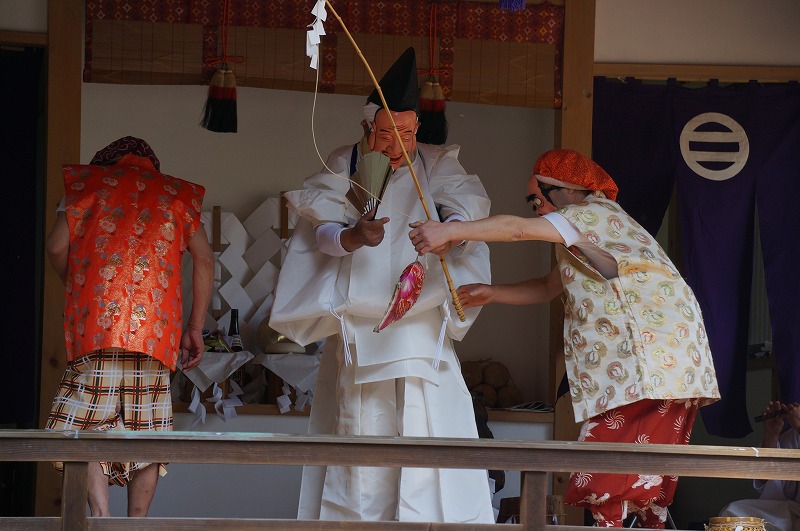
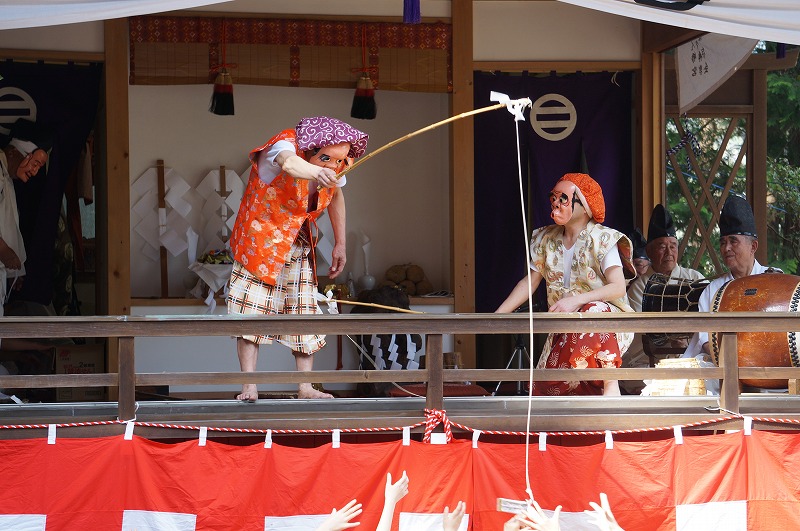
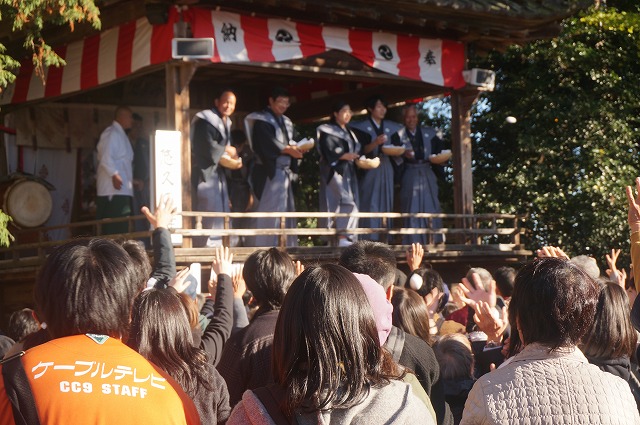
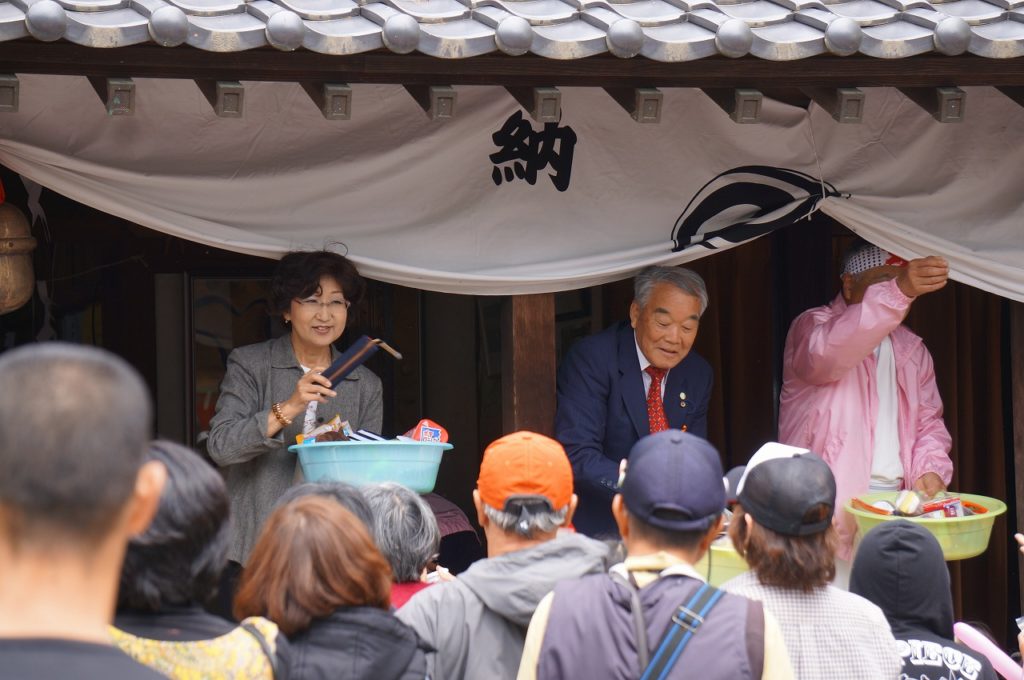
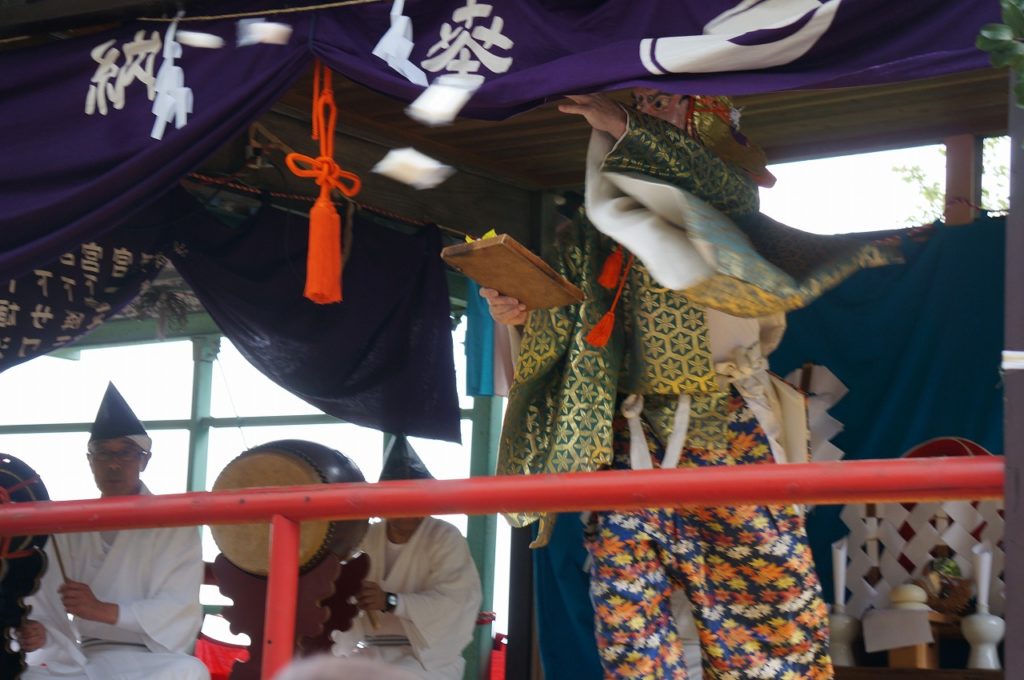
The stage is now in full “Mochi-nage (Originally, the name was derived from the throwing of rice cakes. Nowadays, various throws such as snacks or candy)” mode. The Ebisuza has begun again. Exactly the same program, exactly the same flow. This happens sometimes in kagura in the village.

Happiness for everyone
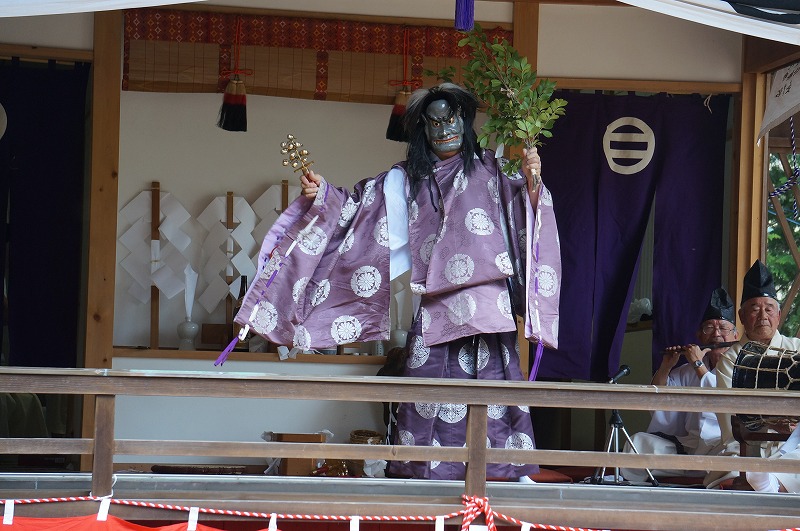
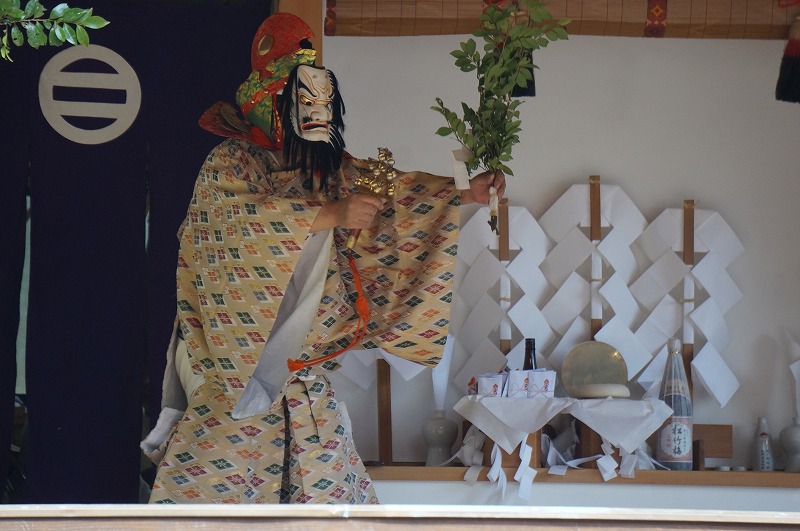
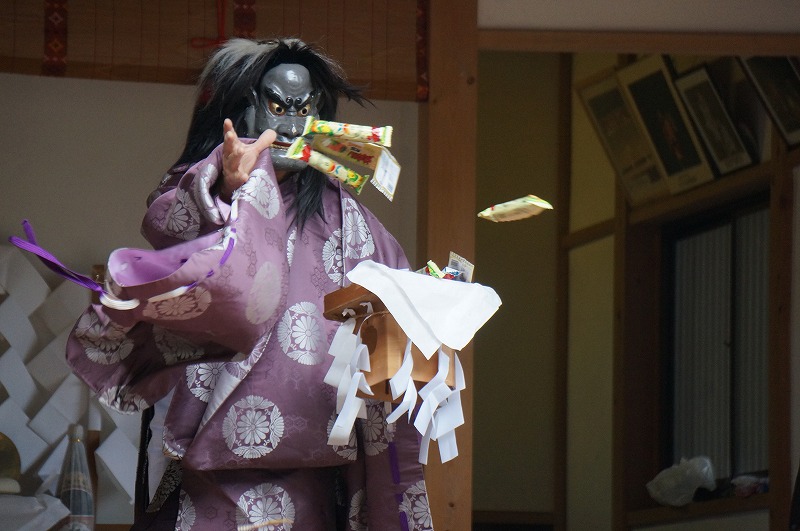
The performance ends with a purification of the stage by a mountain god called “Yama-gami” (mountain god). However, to the surprise of the audience, even the mountain deity do Mochi-nage. It is a great service. The people who had stayed until the very end were very satisfied. Good things come to those who wait. This is how kagura continues into the next year.

Shishimai as a hero that carries the legend to the present~ Kanpaku Shishimai


Date: First Saturday of August
Location: 667, Kanpaku-cho, Utsunomiya, Tochigi, Japan
Access: Bus from Utsunomiya.
Get off at Kamikouchi West Elementary School Entrance by city bus. 3-minute walk.
Take Kanto Bus bound for Tamao or Imazato, 30 minutes. 20-minute walk from Kamikawachi Jichi Centre.

Access

Buses are the best way to get there, but unfortunately they are extremely infrequent. If you are physically fit, we recommend cycling. Utsunomiya used to host Asia’s only road cycling world championships. There is a place in front of the station where you can rent a full-fledged sports bicycle. Of course, regular bicycle (including electric) hire places are also located close by. Once out of the city centre, the road is surrounded by greenery and not too much traffic, so it is recommended.
The journey from Tokyo to Utsunomiya takes around 50 minutes on the Tohoku Shinkansen.
If travelling by conventional rail, take the Ueno-Tokyo Line and change at Ōmiya or Akabane, then take the Shonan-Shinjuku Line; the journey takes around two and a half hours.
The Shinkansen fare is roughly double that of the conventional rail service.

ttps://www.city.utsunomiya.tochigi.jp/kurashi/kotsu/jitensha/1006123.html

prologue

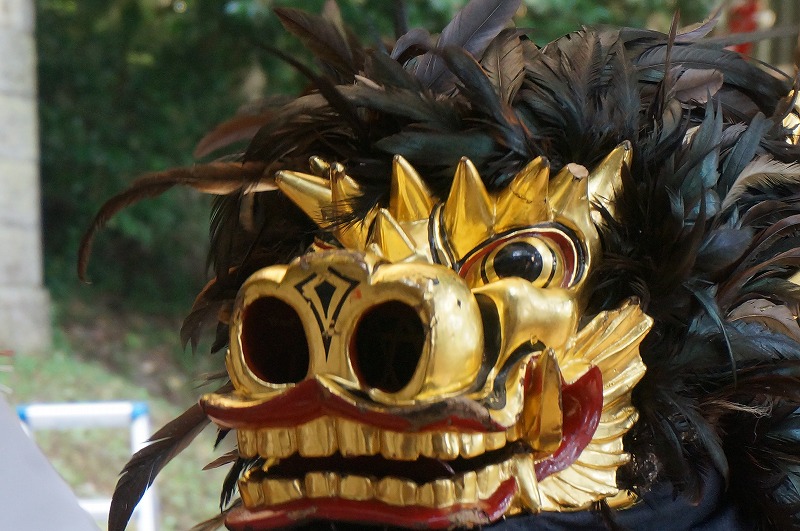
A lion is a strange being. Sometimes they are treated as spirit animals, and sometimes they are beings to be exterminated. Originally, it was propagated from mainland China, but while the original Chinese version specialized in entertainment elements, in Japan, it was introduced along with Buddhism, which added many religious elements to it, and various other elements were added. In order to establish their own authority, each of the various lion dances established in various regions began to call themselves a school of their own, and even created a book of secrets not to be shared with anyone outside the school. As for the lion dance introduced here, it is called “Kanpaku style”. The lion dance in this article is called “Kanpaku-ryu,” but it is also called “Tenka-ichi,” which means “the best in the world” in Japanese. There is a reason for this, and it is said that the third shogun of the Edo period praised it as “the best in the country”.

legend

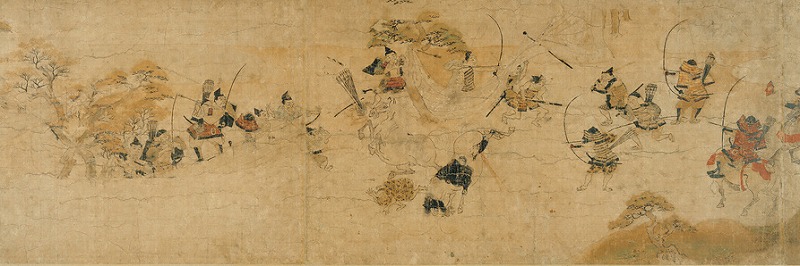
Long ago, bandits from the Tohoku region settled in this area. They robbed the residents of their money, goods, and grains. They also used the people like cattle and horses, and many of them died. The people repeatedly petitioned the capital to conquer the bandits, but received no response from the capital. However, in 911, a conquering army led by Toshihito Fujiwara 藤原利仁 finally arrived. The bandit army fought against the attack of elite troops from the capital, but finally abandoned the residence and retreated into the mountains. The government forces were unable to attack the mountain, but Lord Toshihito read the sky and predicted snowfall in the near future. He secretly sent out scouts to check on the enemy forces. When the snow fell as predicted, he took advantage of the enemy army’s inattentiveness and attacked them in one fell swoop. After fulfilling his role, Lord Toshihito suddenly became ill and died in this place as he was about to return home. His men, grieving, tried to bury him, but the sky suddenly became overcast and it was dark all day and night. After fulfilling his role, Lord Toshihito suddenly became ill and died in this place as he was about to return home. His men, grieving, tried to bury him, but the sky suddenly became overcast and it was dark all day and night. They made a golden lion’s head in the shape of a dragon by various curses and used thousands of bird feathers, which they put on the head and made it dance. Later, the Kanpaku 関白, the chief priest of the time, visited this place and erected a stone monument, claiming that it was the land of his ancestors. The village was then designated as Kanpaku Village.

About Shishimai

A person named Fujiwara Toshihito 藤原利仁 is a real person, not famous today, but who was once granted various legends. The lore is quite specific, and he may have actually conquered the bandits in this area. However, the lion dance itself must have originated much later, so it is assumed that it was probably created in the guise of a legend. However, there is a performance in which the lions exterminate demons, and this is certainly a rare performance that cannot be seen in other lion dances.

The shrine where the event is held is surrounded by mountains and is still somewhat dark during the day.
The shrine grounds are quite large, but the area for dancing is limited to one place, which is small. Okara (soy pulp) is laid out there. Hanagasa hats stand on all four sides. The hanagasa here are solid and carved out of wood.

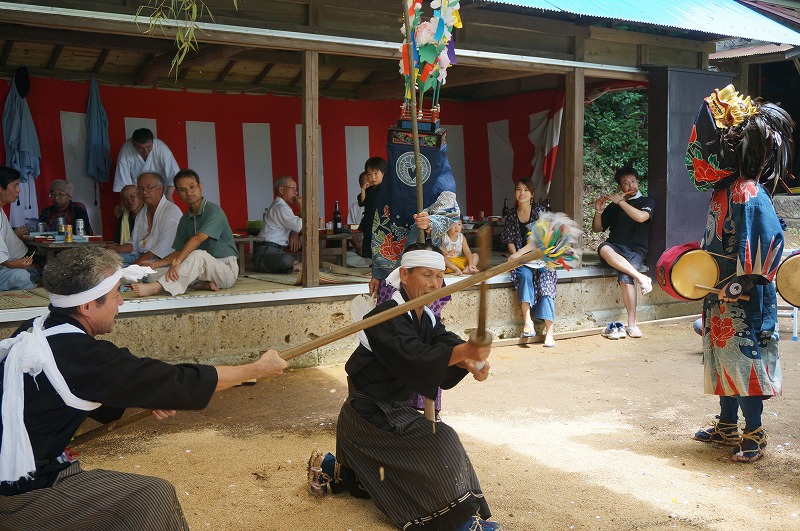
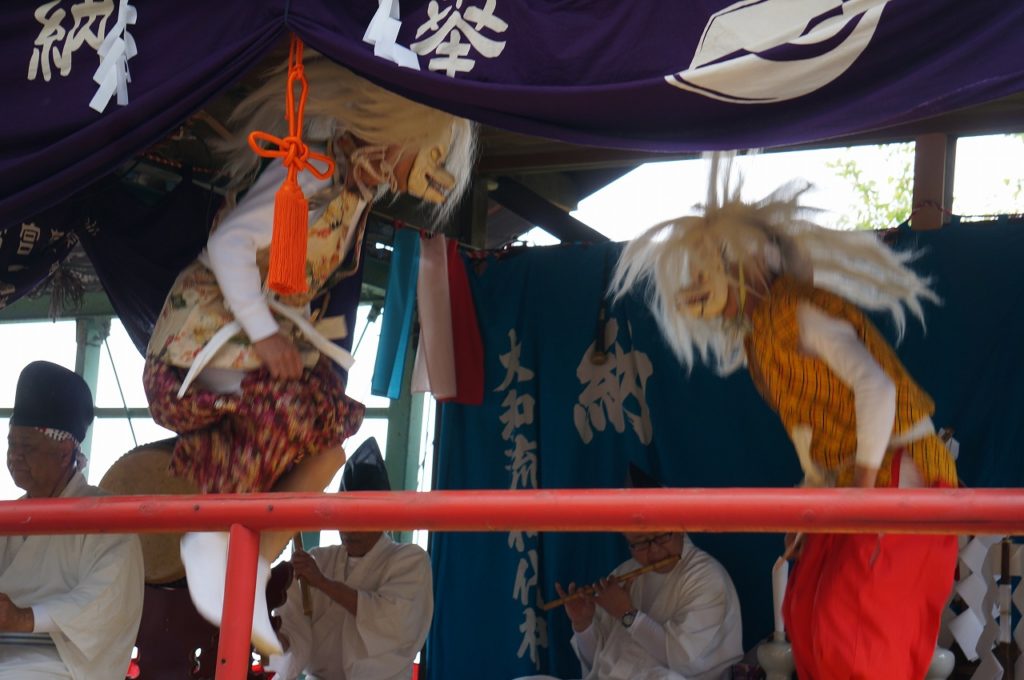
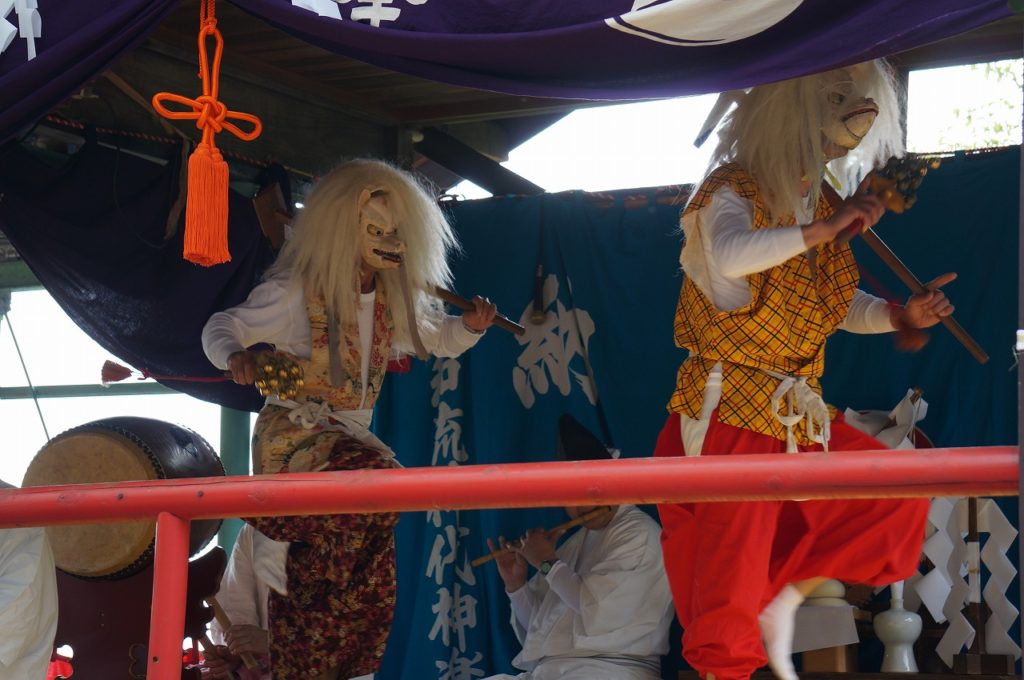
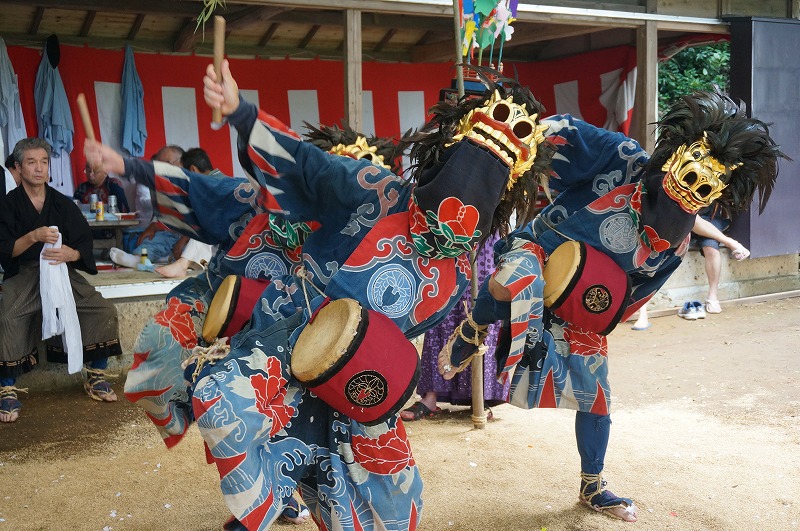
The first part of the performance always starts with a performance of swordsmanship with sticks. After that, the lions waiting in the background rush into the dance space.
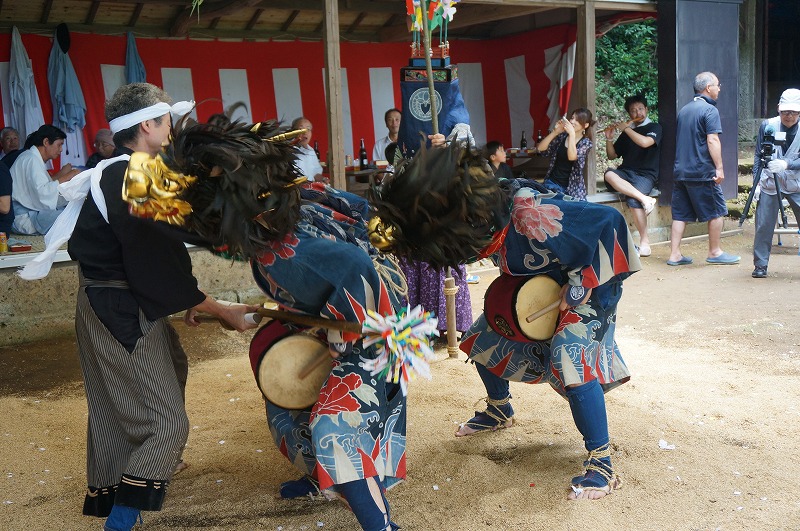
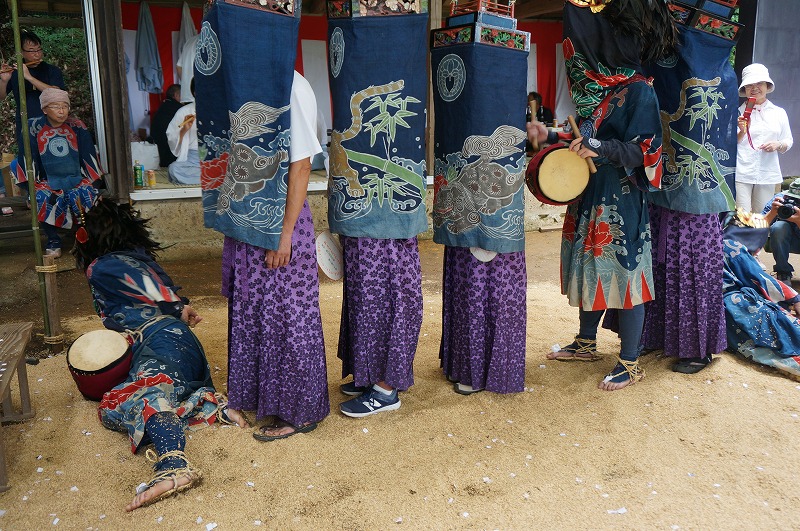
There are other ways in which the lion dance here is different from others. For example, the main part of the performance, called Mejishi Kakushi (Female Lion Hidden), is a fierce confrontation and fight between two male lions over a female lioness. And yet here they search jointly, but do not confront each other afterwards. In fact, they even sleep together.

Exterminate Oni

The lion dance began at 11.00 am and the final and biggest highlight, the demon extermination, comes to an end at around 2.30 pm.

First, the two hunters appear. Then suddenly a demon arrives. This represents the bandits in the legend.

The two manage to get rid of the demons at least once. But then, for some reason, they start drinking. Still, they are good masks with a lot of flavour. The masks of the lion and the hunter seem to have been made by craftsmen of a certain calibre.

Then the demons, which were supposed to have been chased away, appeared again. Perhaps attracted by the smell of alcohol, they come peeping in greedily. The hunters notice this and invite the ogres to a feast. They drink heavily and start playing some kind of game.

The two men take up the Oni’s belongings. So this was the aim. The two men quietly leave. The Oni falls asleep with a cask of sake. Then…

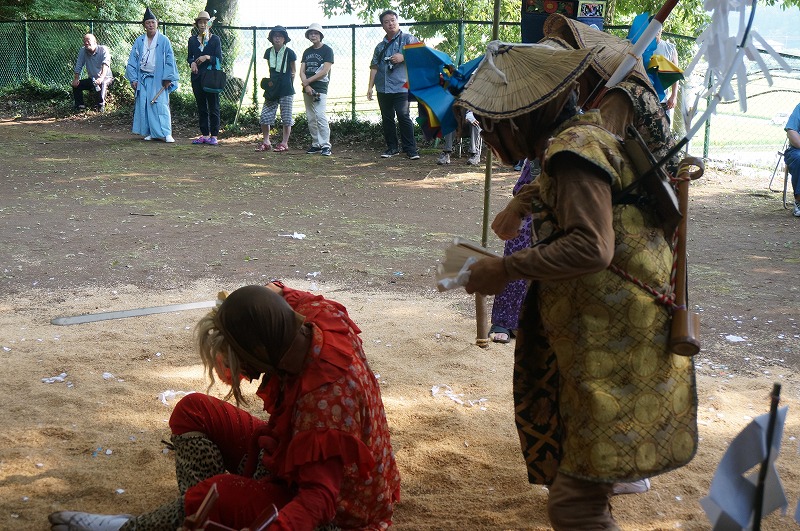
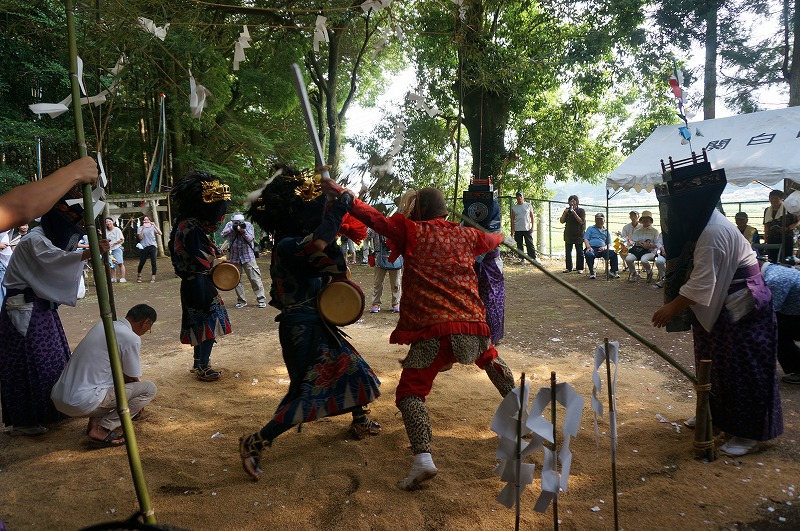
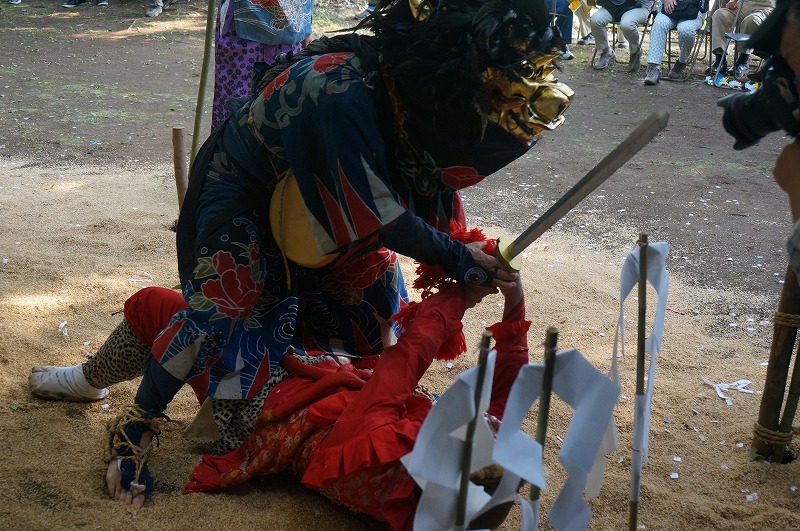
The Shishi army is coming. The Oni are no match for them, and a fierce battle ensues. In the end, the Oni meet their end with a single thrust from the Shishi. This performance alone lasts about 40 minutes. Only this performance is quite powerful because it leaves the dance arena and uses the entire place as a large area. Regardless of the authenticity of the legend, it is assumed that it was entertaining enough for people in the past.

The lion dance started at 11am and continued until about 3.30pm in the afternoon with a lunch break. A different kind of lion dance, if you get the chance.

Various other lion dances

This time we introduced the lion dance of Utsunomiya City, but in fact there are several similar lion dances performed in this area.

Date; Every year on 23 September
Location; Gasoyama shrine 713 Iriwano, Kanuma City, Tochigi Prefecture
Access; Approximately 60 minutes by th *Ribus Iri-Awa-no-kami-Satsuki Line from Kanuma Station on the JR Nikko Line
Alternatively, approximately 50 minutes by the Ribus Iri-Awa-no-kami-Satsuki Line from the entrance of Shin-Kanuma Station on the Tobu Nikko Line; get off at ‘Ozaku-yama Shrine’ and walk for approximately 2 minutes *community bus
https://www.tochigiji.or.jp/event/e16030/

Date; Every year on 15 August
Location; Hakusan shrine 2059 Nakazato-cho, Utsunomiya City, Tochigi Prefecture
Access; From JR Utsunomiya Station, take the Kanto Bus bound for ‘Imazato’ for approximately 30 minutes, get off at ‘Nakazatohara Jumonji’, then walk for about 30 minutes

https://www.utsunomiya-cvb.org/event/detail_20040.html

Date; Every year on 15 August
Location; Hakusan shrine 678 Sakagami-cho, Utsunomiya City, Tochigi Prefecture
Access; From JR Utsunomiya Station, take the Kanto Bus bound for ‘Imazato’ for approximately 25 minutes, get off at ‘Kakinoki’, then walk for about 10 minutes

https://www.utsunomiya-cvb.org/event/detail_20020.html

This Kanpaku lion dance is mainly found in Utsunomiya and Kanuma; in Utsunomiya it can be seen in August, whilst in Kanuma it takes place in autumn, from September through to October.


Forced egg eating ceremony and Kagura


Date: Every year on November 23
Location: 451-2 Tsugamachi Ienaka, Tochigi city, Tochigi prefecture
Access: About 2.5 km from Ienaka, Tobu Nikko Line. 2 km walk from Noshu Otsuka, Tobu Utsunomiya Line.
     →cf. https://www.tobu.co.jp/foreign/en/news/pdf/201703-01_route%20map.pdf Tobu line route map

prologue

Today we also have two of our guides on the show for the first time in a long time. For those of you who do not know them, please refer to this page. →https://discoverdeeperjapan.com/2020/04/09/4kaguras-in-kanto-area-in-spring-vol-1/

It seems that Sarutahiko invited Hyottoko on a journey, using the ritual of ‘mochi-nage’—where rice cakes and sweets are thrown into the crowd—as a lure, in the hope of deepening his understanding of Kagura…

Long time no see. Are we at Yashu-Otsuka 野州大塚 Station? It is a very quiet and unpopular station, isn’t it?

You’re the one who loves getting souvenirs from the “Mochi Nage”, right? So I’ll guide you to a place where you can get a lot of them today.

I appreciate that, but…

Besides, this time there is a rare ritual called “Goranshiki” in the set.

Let’s go then. It’s close to the station, right?

You have to walk about half an hour.

Doh, doh, doh.

It looks like they finally arrived.

It’s pretty crowded, isn’t it?

There is something going on at the festival for a day and the “Goranshiki” is quite popular!

10:30 am ~kagura starts

Unusually, people have already gathered from the beginning. Usually, it is only in the latter half of the day that people start to gather in droves.

Just watch and you’ll see.

Oh, it’s already “mochi-nage”. Are they okay like this from the start?

Although it’s called a “mochi-nage (ricecake toss)”, it’s really just a candy toss.

Okina (the god of Kasuga)

Sarutahiko

Every time one of the acts is over they throw it every time.

You may rejoice in the mochi nage, but you should also keep the kagura content. Old man plays a dance to appease the four directions of the earth. The red face and long nose of Sarutahiko* is, of course, the god of guidance.

*https://discoverdeeperjapan.com/reference/japan-mythorogy/japan-mychology-and-history/

Ameno-Uzume

Tajikaraono-mikoto

Oh, if the Okame-type masks have appeared, is this the Amenouzume of “the Opening Iwato*” ?

*https://discoverdeeperjapan.com/reference/japan-mythorogy/amano-iwatobirakithe-revival-of-the-deity-of-sun/

It’s the most important event in Kagura, or Japanese mythology. In ancient Japan, where there was a belief in the sun god, the resurrection of the sun god Amaterasu was of the utmost importance!

So, following Uzume, Tadikarao comes out and opens the Iwato, right?

Tajikarao open the “Iwato (the door of rock)

resurrection of Amaterasu

Here comes Amaterasu. Amaterasu is often represented by a mirror. In some places, only mirrors are placed. This depends on how important the kagura and the local community consider the Iwato opening to be.

Fox as a messenger of Inari

Daikoku-sama

The fox has come out.
So, from this point on, the performance leaves mythology behind and becomes rooted in the lives of ordinary people.

That’s the standard progression of kagura. You know that the fox is a messenger of the god Inari, the god of rice cultivation, right?

Of course I do, but I think there are quite a few people who think Inari is the fox. I didn’t even know about it until recently. But I know Daikoku-sama. When Daikoku shakes that mallet, treasures are piling up. Well, here it comes.

1:00 pm ~Goranshiki 強卵式

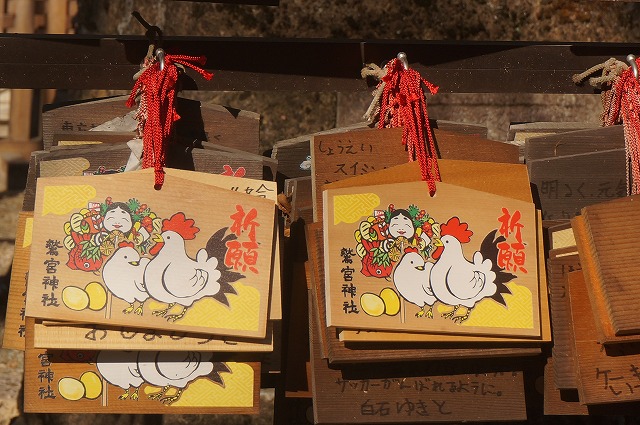
Ema 絵馬

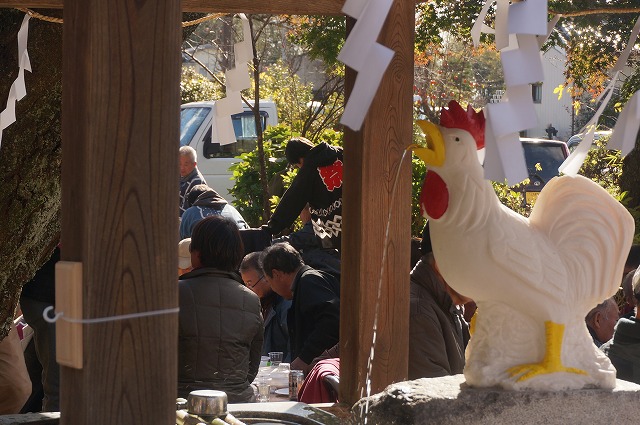
Looking again at the shrine grounds in this way, there are many bird designs. I had no idea that the place to wash hands and the ema (votive picture tablet) are also birds.

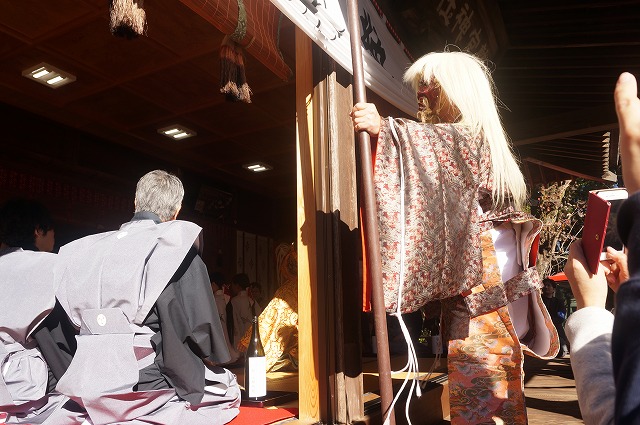
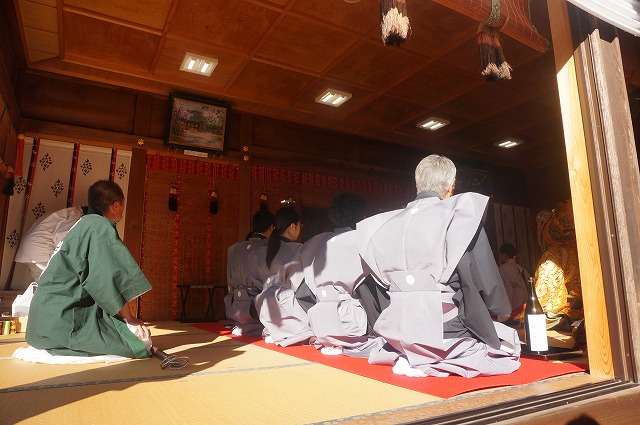
The Goran ceremony will be held at the main shrine. Here.

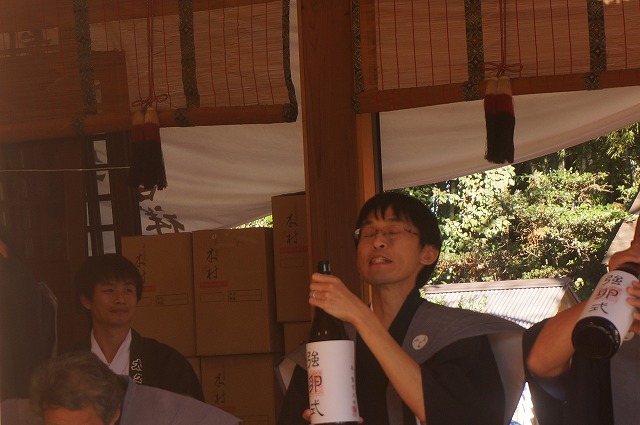
People wearing kamishimo (ceremonial kimono) are already sitting there. In front of them are bottles of sake. Is a banquet about to begin?

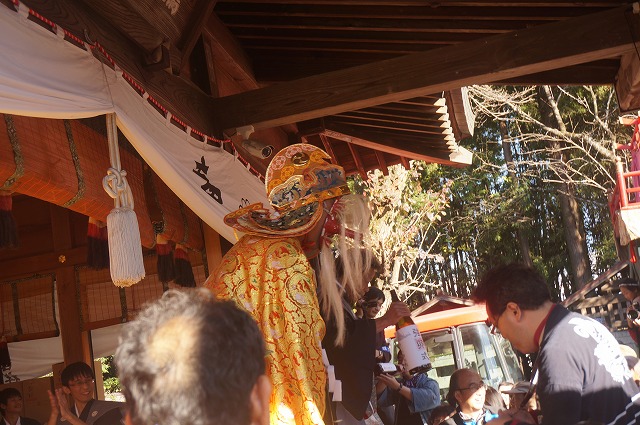
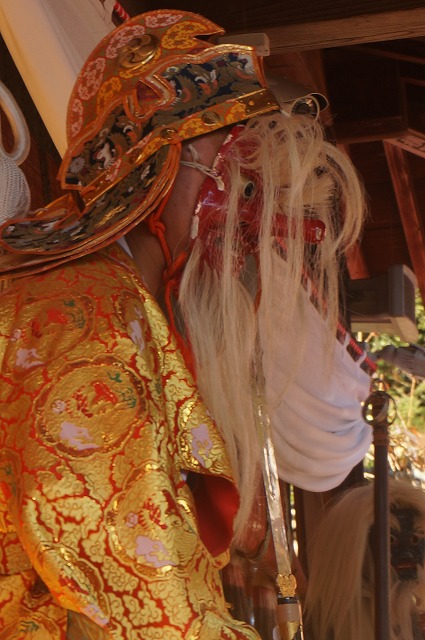
Finally, the tengu are ready.
It’s the main tengu and two attendants.

At first, three tengu were supposed to perform the ceremony, but they thought it was too messy and hard to see, so they settled on the current form.

Oh well, it’s turned into a drinking contest. Tengu is forcing participants to drink sake.

With a issho bottle (1.8litter) of sake, even I would have a hard time drinking it all up. The jerks are so yelling for me to drink, or drink more.

A heaping pile of eggs on a small wooden stand was brought.

Here’s how it all begins.
Here in the Tochigi Prefecture area, there are similar ceremonies such as the Nikko Gohanshiki and Hokkouji Gohanshiki, but the Gohanshiki here is a bit different. Nikko’s Gohanshiki originated as a way to show appreciation for rice, but here they really do it to show that it is not to be eaten.

In the past, based on a legend at the time of the shrine’s founding, it was forbidden to eat chicken at shrines, but this has not been made known to the public. This is why they decided to start this event, which started as recently as 2001.
So, in the ritual here, you are forced to eat however much you want and refuse to eat until the end. The tengu praises them for it.

So no grilled chicken or anything like that in the food stalls?
By the way, what are they going to do with all these eggs?

Eggs are thrown to the audience. However, if the egg is thrown as it is, it will break, so another ball is thrown to replace it later… Where did it go, Hyottoko?
Oh, he’s already gone to get the egg!

3:00 pm ~second half of Kagura

Hachiman (war of god) and Sanjin (mountain god), they’ re still throwing as usual.

Ebisu and two Hyottoko. Your fellos have come out.

We Hyottoko are entertainers. We make people laugh with our comical antics and help to lighten the mood. They’ll certainly perform.

They do it, don’t they? It has to be this way.

Well, I’ve got loads of sweets and some eggs again today—I couldn’t be happier!

Am I really conveying the charm of kagura with this? sigh

The autumn sun sets early. Hurry, train, come on!

cf. Tochigi TV https://www.tochigi-tv.jp/news2/page.php?id=294709


Wishes and amusements of average people ~Utunomiya Futaarayama shrine


DAte: 28 days in January, May, and September each year
Location: Babadori 1-1-1, Utsunomiya City, Tochigi Pref
Access: 10 minutes walk from JR Utsunomiya station, 5 minutes walk from Tobu Utsunomiya station. 5 minutes by bus from JR station. Get off at Babacho Futaarasanjinja-mae bus stop. Utsunomiya is about 2 hours from Tokyo (1 hour by Shinkansen)

This article is based on 2018

Kanto kagura

Here we introduce a typical form of regional Kagura from the Kanto region.
Since kagura is often based on mythology. So it can be divided into two main categories depending on which mythology is the focus. The first is the Opening the Ama-no-Iwato, the resurrection of Amaterasu, the sun goddess. The second is the extermination of the Orochi by the malevolent god Susanoo. In western Japan, Iwami Kagura in Western Shimane Prefecture (Iwami district), which is rich in entertainment value, has had a great influence. The extermination of Orochi, giant snakes is very popular. On the other hand, in eastern Japan, including Kanto, which is also influenced by the eastern part of Shimane Prefecture (Izumo district). In Izumo (and Kyushu region), opening the Iwato is often regarded as important. And while Iwami Kagura has thoroughly devised ways to enhance its entertainment value and keep up with the times, Kanto Kagura has carefully maintained the original Izumo form.

Utsunomiya Futaarayama shrine

cf. Futaarayama shrine HP →http://futaarayamajinja.jp/en/futaara/

This time we would like to introduce the kagura that has been handed down by Futaarayama shrine in Utsunomiya. The shrine is located almost in the center of Utsunomiya City, the prefectural capital. This shrine is the cultural center of the city where numerous events are held. The character for 二 in Futaarayama 二荒山 means 2. This is derived from the fact that it once sat on a mountain with two peaks. However, as the area developed, the mountain was split in two, and today it is no longer a mountain. This is proof of the prosperity of the area.
official site of the shrine http://futaarayamajinja.jp/schedule-e/

Kagura is said to have originally been learned from Edo (present-day Tokyo). However, whereas the Edo version retains a prestige that could be mistaken for Noh, this version remains in a truly rustic form.
For example, there is a performance called “Hachiman-no-mai, Hachiman’s story” in which demons appear. According to the commentary, this is the story of Hachiman Maro’s extermination of a great demon king who has come from a foreign land and is tormenting the people of this country. Hachiman is the name of a well-known god of war. It is easy to guess that Hachiman Maro is the personification of this god. On the other hand, the demon is set as the Devil King. If this were Iwami Kagura, it would spew fire and rampage violently. However, the demon here rubs its hands together, as if shivering from the cold. And when the hero Hachiman appears, he is easily outwitted. He was simply taken by surprise. The ogre then shows a fighting posture. But what do you think? The demon is cornered and hides behind a pillar. Isn’t this the place where the clown, Hyottoko, is supposed to be?

In the end, the demons are easily subdued and dispersed without any good points. The battle, which would have lasted nearly an hour in Iwami Kagura, was over in only about 10 minutes here. This simplicity and unsophisticated style is both a bad point and a good point of Kanto Kagura.

a young woman

a young man

Ogre woman transformed

Stronger demon also appears. A woman who is fascinated by a mirror of a young man turns into an ogre. First of all, the face is simple. They are not as artistic as Noh masks, nor do they have the power of a master craftsman who has poured his heart and soul into his work. This is not to say that this is a bad thing. On the contrary, it can be said that we can sense the pure appeal for entertainment of the people of that time.

Break before 12:00 after digesting four performances; resumes at 1:00. The shrine is in the middle of town, so there is no need to eat.

The second half of the show continues with a slightly longer performance. The opening of daytime is “Ama-no-Iwato-Open*”. This performance is an all-star show, so even if you missed the first half, you can get a general idea of what is going on by watching this performance.
In this performance, Amaterasu is replaced by a mere mirror. For the common people, they would rather see the scene where Tadikarao (the most powerful man of the gods who opened the door of the rock where Amaterasu hid and threw it far away) throws Iwato away than the myth that the sun has returned.

*https://discoverdeeperjapan.com/reference/japan-mythorogy/amano-iwatobirakithe-revival-of-the-deity-of-sun/

After that, the Ebisu is already out. I am sure this is familiar to those of you who read this site. To explain briefly, Ebisu is a representative of the god who brings good luck to people. He is popular in kagura because he often actually brings good fortune (goods). Catch a fish anytime
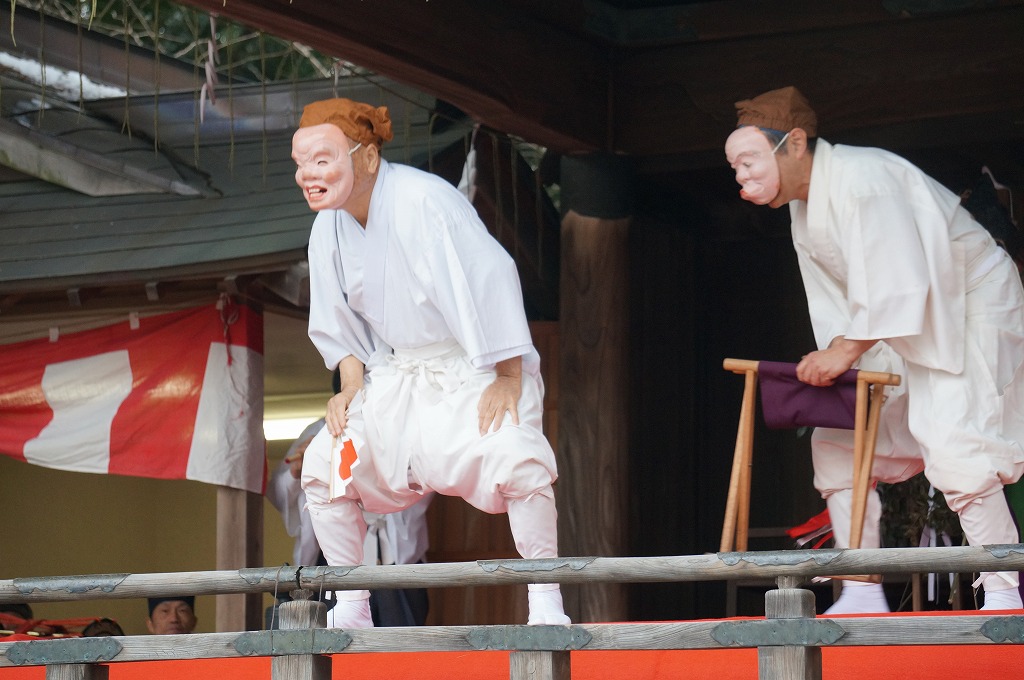
Here, the Hyottoko (the comedic characters in kagura) appear, and they seem to be more the stars of the show.

As soon as one Hyottoko stands up, the other pulls out a chair. That’ s classic comedy. This kind of performance seems to be common all over the world.

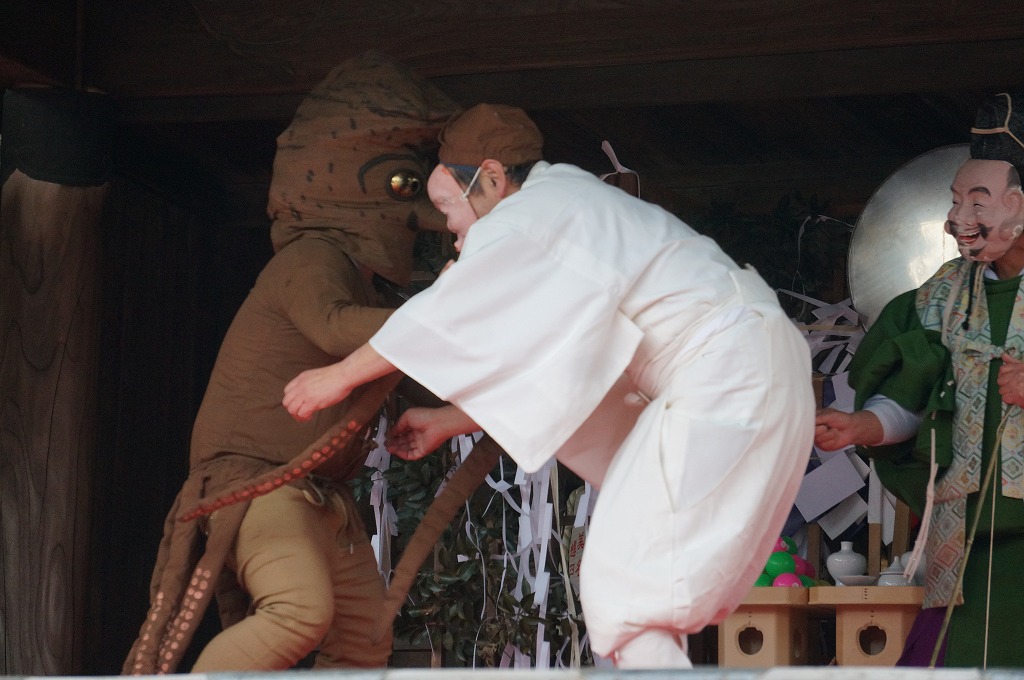
Sumō wrestling with a Hyottoko octopus

The performance becomes incomprehensible when the Hyottoko catches an octopus while he is supposed to catch a sea bream. Then they play Sumo (Japanese wrestling) with the octopus. Moreover, Ebisu, who is supposed to play the leading role, acts as the referee. Anything is possible.

When it’s over, it’s time to go. Susanoo’s extermination of the serpent. The officials threatened the children who were misbehaving under the stage, saying, “You will be eaten by the snake if you stay there. It seems to have that effect.

Here, “Orochi” is called “O-hebi-sama. It is not wrong to say hebi (snake), since in mythology it is a serpentine monster with eight heads and eight tails. O” and ” sama” are honorific titles.
Briefly, the story begins with Susanoo’s encounter with an elderly couple who are sadly doomed to dedicate their daughter to Orochi every year. Susanoo plans to give them poisoned sake to drink and exterminate them while they are at it. So the old man come out first. So far so good. But then, for some reason, a sake brewer who does not appear in other kagura appears. And he is Hyottoko. Nor does this hyottoko just make sake. It also plays a very active role in being attacked by the Orochi that appear. Normally, the main cast would be the princess and her parents, but for some reason, the main cast here is the sake brewer, who is a third party, so to speak. Although simplified, the main characters on this stage are the father, Orochi, Susanoo, and Hyottoko. And only Hyottoko is on the stage the whole time!
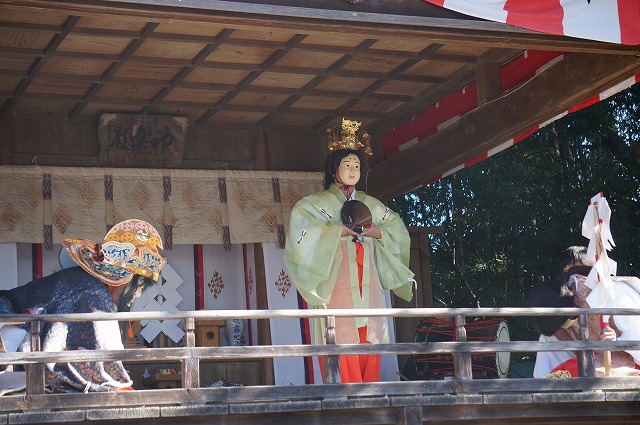
Finally, “Orochi” is here. It looks like something out of an old monster movie. Hyottoko is oblivious. This is another classic performance. The children shout, ” Orochi is right behind you!
After such a classic exchange, Susanoo defeats Orochi. Easily. After Susanoo leaves, it is again Hyottoko who ends the stage by imitating him. Every place is different, and every item is different. It is clear that the importance of each performance changes depending on the region.

At the end, people involved in the event hand out mochi (rice cakes) to the audience. The event ends around 3:30.
There were five performances in the morning and three in the afternoon. There are now thirteen different types of performances being preserved.


Report: Watching Kagura in historical town ~Ashikaga Raiden shrine Kagura

a map

a map 2

Date: 4th Sunday, April (Spring festival) & 4th Sunday, October (Autumn festival)
Location: Honjo 1-1562, Ashikaga city, Tochigi prefecture
Access: From Tokyo, take the JR Ueno-Tokyo Line to Ueno. From there, change to the Joban Line and go to Kuki. From there, take the Tobu Railway to Ashikaga-shi Station. It is about 4 km from there. About two hours from Tokyo.

*This article is based on my visit in April, 2016.

introduction

This time, we had the same guides as before. If you want to know who they are, please read this article.

Long time no see. I hope you are well

Really. I was looking forward to seeing the Kagura with you again for the first time in a while.

Today, I heard that we are going to visit the Raiden Shrine in Ashikaga City, aren’t we?

That’s right.

By the way, do you know that Ashikaga City is a very historic city?

Yes, I did.

Then do you know why it is so?

No, not that much…

Ashikaga city’s history

I thought it would be something like that. I’m going to give you a brief explanation, so you’d better listen up.
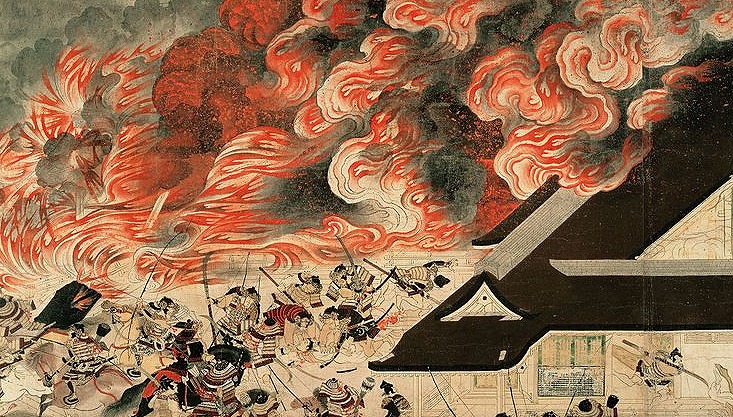
In the beginning, this country was ruled by the emperor, and the nobles held the actual power of politics. But then the samurai came to power. Originally, the samurai were only a kind of bodyguard to protect the aristocrats’ territories. However, as they gradually gained actual power in the countryside, battles between samurai began to occur. Their power was not to be underestimated, and the struggles between the nobles needed their help. Eventually, powerful leaders emerge to unite them. The two major groups were the Heike (平家) and the Genji (源氏). The two sides faced off and Yoritomo, the leader of the victorious Minamoto clan (Genji), created the first ever samurai government.

nobles

battle

戦乱
battle

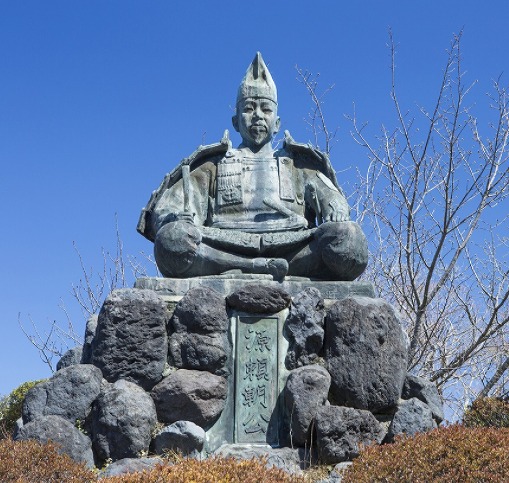
 源頼朝
Minamoto no Yoritomo (first shogun of Kamakura shogunate)

From then on, the power of the samurai prevailed over that of the nobles. This was called the Kamakura (鎌倉) Shogunate, around the 12th century. However, around the 14th century, the forces that held the power of the shogunate became increasingly despotic rulers, and a rebellion finally broke out. They overthrew Kamakura shogunate and established a new government in Kyoto. This was called the Muromachi (室町) Shogunate, and the Ashikaga (足利) clan was the one who created it. The Ashikaga clan’s original hometown is here in Ashikaga.

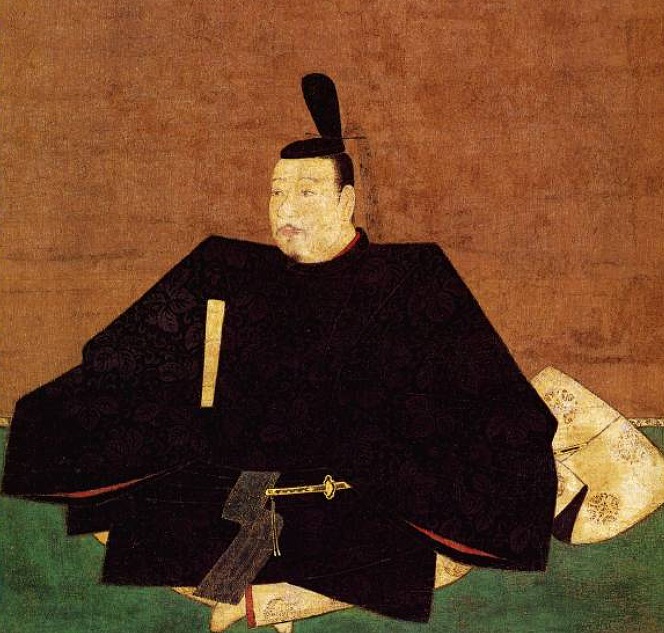
足利尊氏
Ashikaga shogun (the first)

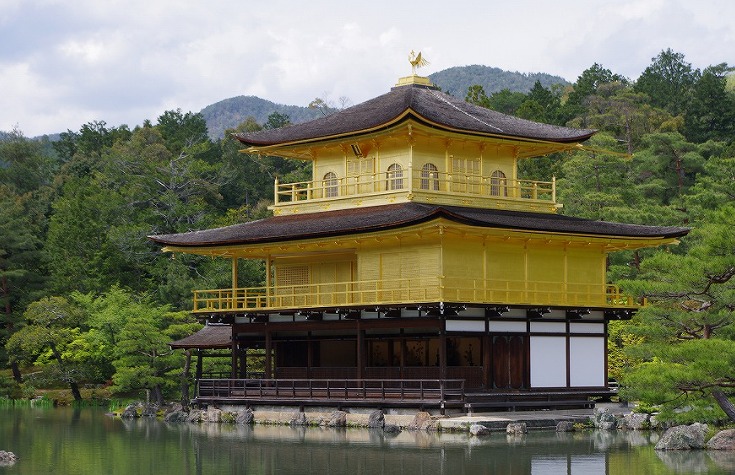
金閣寺
Kinkakuji-temple (Kyoto)

The Kinkakuji-Temple, one of the most famous tourist attractions in Kyoto, was built by the Ashikaga Shogun.

Come to think, I just talked to an old man who was looking into the shrine and he said he was a descendant of the Ashikaga clan. It’s a town with a long history.

By the way, will you be able to make it to Kagura?

It starts around 11:00, so you’ll have plenty of time to get there.

*Actually, it turned out to be a terrible mistake. This is the author’s actual experience.

But it’s far, isn’t it? I can fly there.

There are bicycles for rent at Ashikagashi Station, so I’ll take this.

Again?!

Well, let’s go!

Let’s go to shrine

Ashikaga city
Ashikaga city

the photo is an image
The photo is an image.

the entrance of Raiden shrine

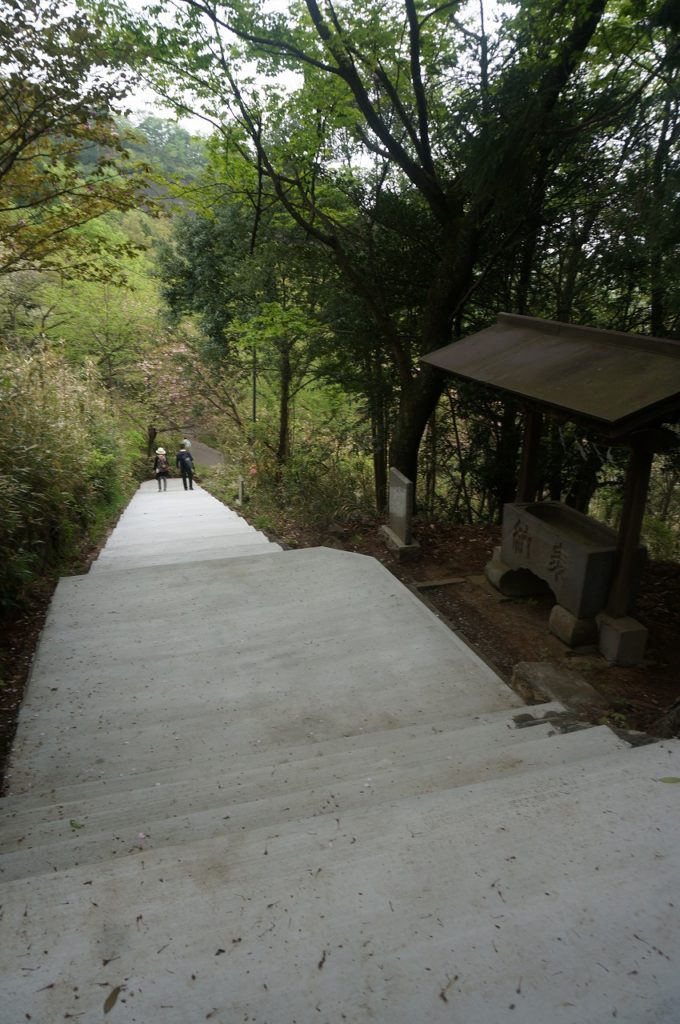
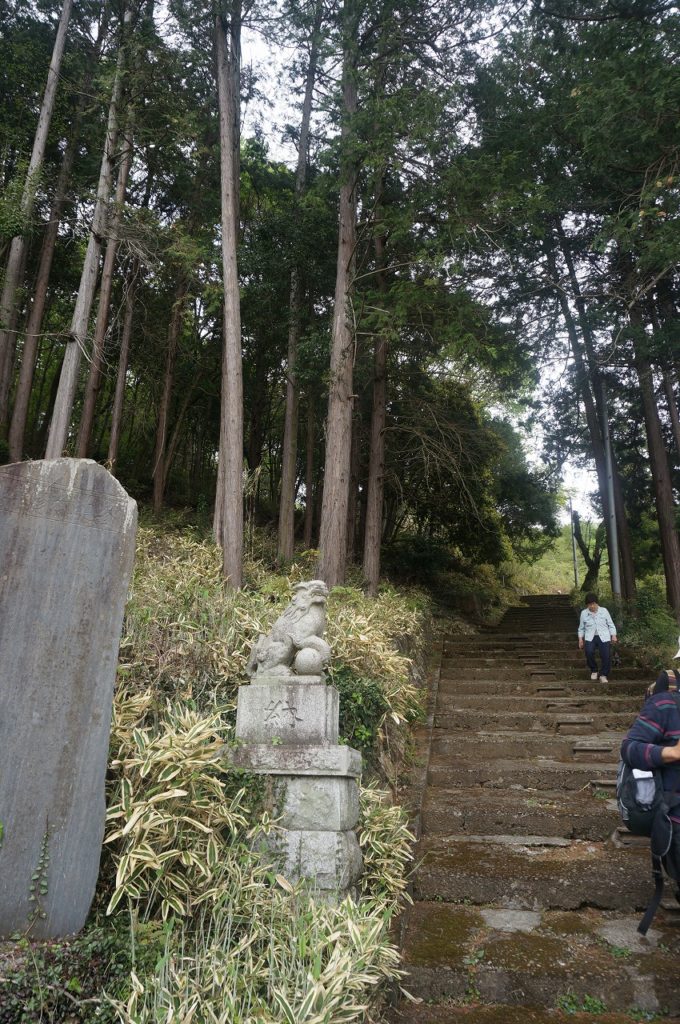
long stairs

la long stairs

There are so many steps…

We humans have to go up here to meet deities.

That sounds good. You should feel the greatness of our deities.

the entrance of shrine

Ashikaga Raiden shrine

Whew. We’re finally here.

We’re right in the middle of a ritual. Hasn’t the kagura started yet?

It’s past eleven now, so it should start in a little while.

But wait. The sign says that the next one starts from the 8th program. I thought it’s already started.

Oh, my God! I think I misunderstood that the Shinto ritual started at 11:00 and the Kagura started at 11:00.

*The actual start was at 9:00.
It’s no use crying over spiled milk. Let’s get ourselves together.

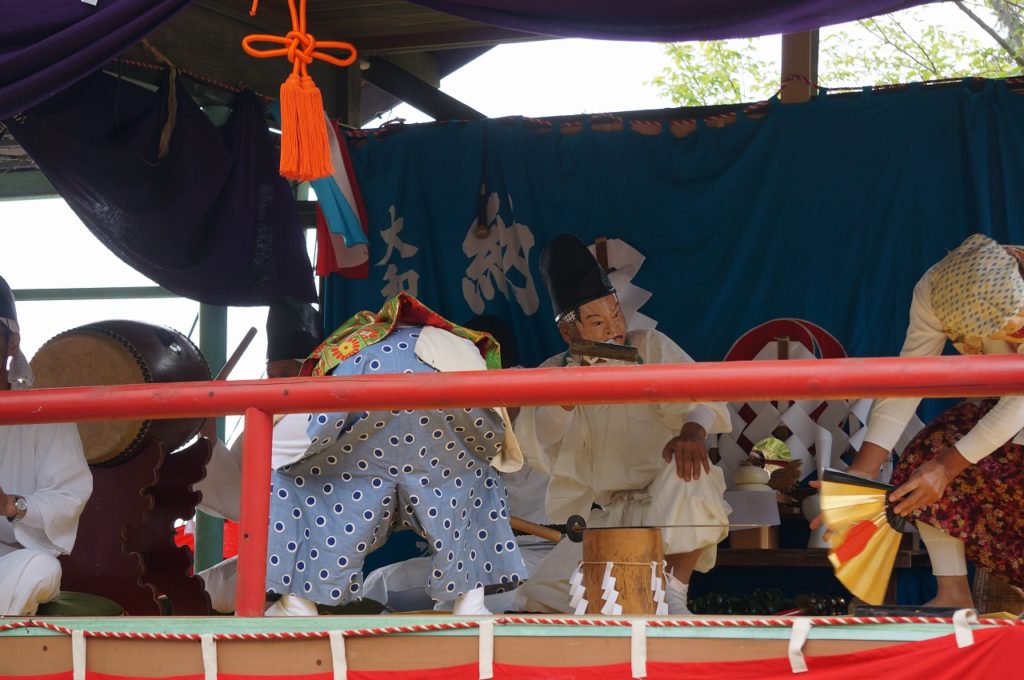
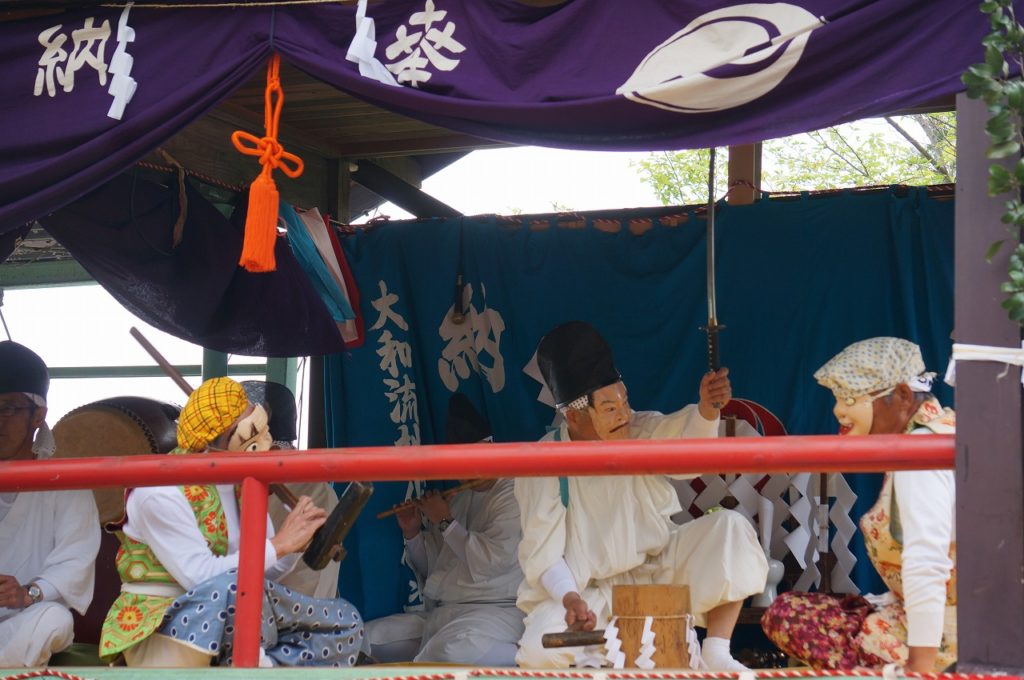
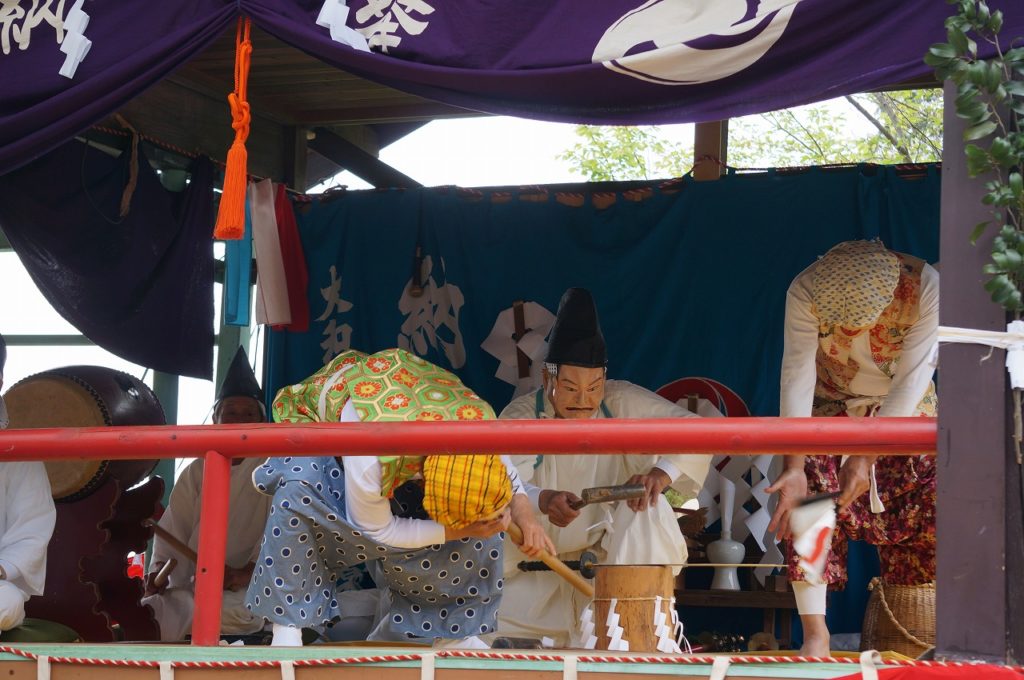
8th program “Kanayamahiko”

Look! your colleagues are coming out here. They are always noisy, aren’t they.

This is what we do, you know. It’s what we’re so called “mode makers”. But, everyone misses us when we’re not here.

It’s a perfect day for forging sword. Now, let’s get started.

We’ll do our best to help you, sir.

*The following dialogues of the characters are only imaginary. The actual Kagura is performed entirely in pantomime.

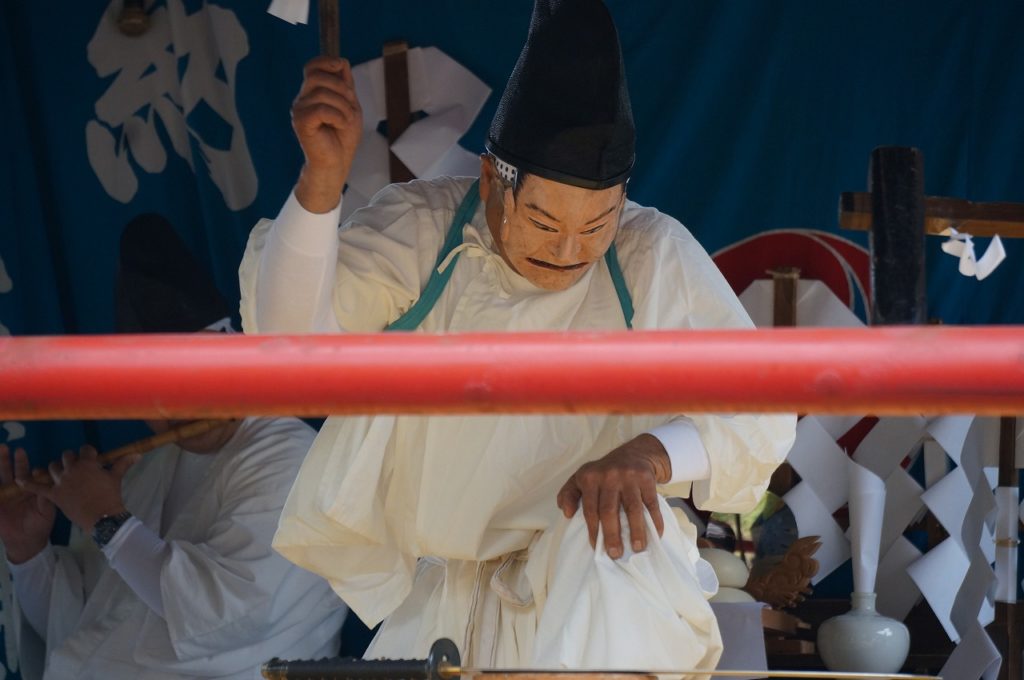
But the principal character of the show is this one. It’s Kanayamahiko. He’s the deity of the blacksmith’s ancestors.

He seems so strait-laced.

In the old days, the ability to work metals, whether copper or iron, was the cutting edge of technology.

It looks like it went pretty well, don’t you think?

We agree with you completely, sir. It looks great.

Kanayamahiko is looking at the finished sword, and Hyottoko are saying things like, “It’s pretty good,” but do they really know what makes a sword good or bad?

No, I doubt they don’t understand at all. It’s all okay. That’s our role. We are here just to make it lively.

No, not quite enough.

Yes, it is. (Good grief. Isn’t that enough? )

Yeah, it turned out pretty well.

As we expected of you, Sir. Kanayamahiko. You always do such a great job. It was worth our while to help you.

While this was going on, Kanayamahiko left the stage, as if he finally had a sword that he was satisfied with.

9th program “Ebisu”

Well, they abruptly started fishing, what a surprise without interuaption?

So, it’s that deity again,

I’ve been waiting for you! The crowd is already in an uproar. Most of the bait are practical things like cup noodles.
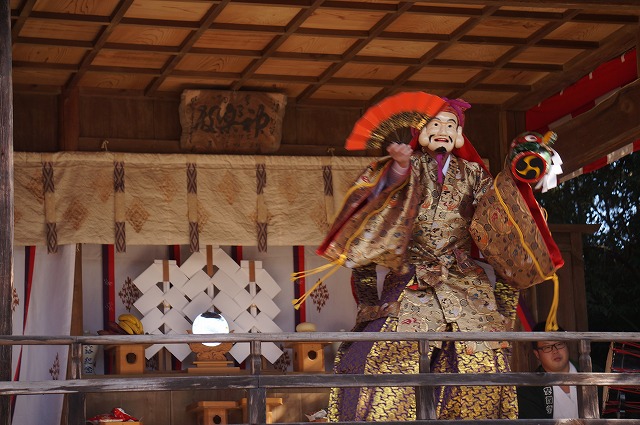
The adults were more fascinated than the kids. Is that okay?

*Here’s a little additional explanation. Ebisu is the deity of fishing and also the god of prosperity. He is known for always carrying his fishing gear and a sea bream.

恵比寿の釣り

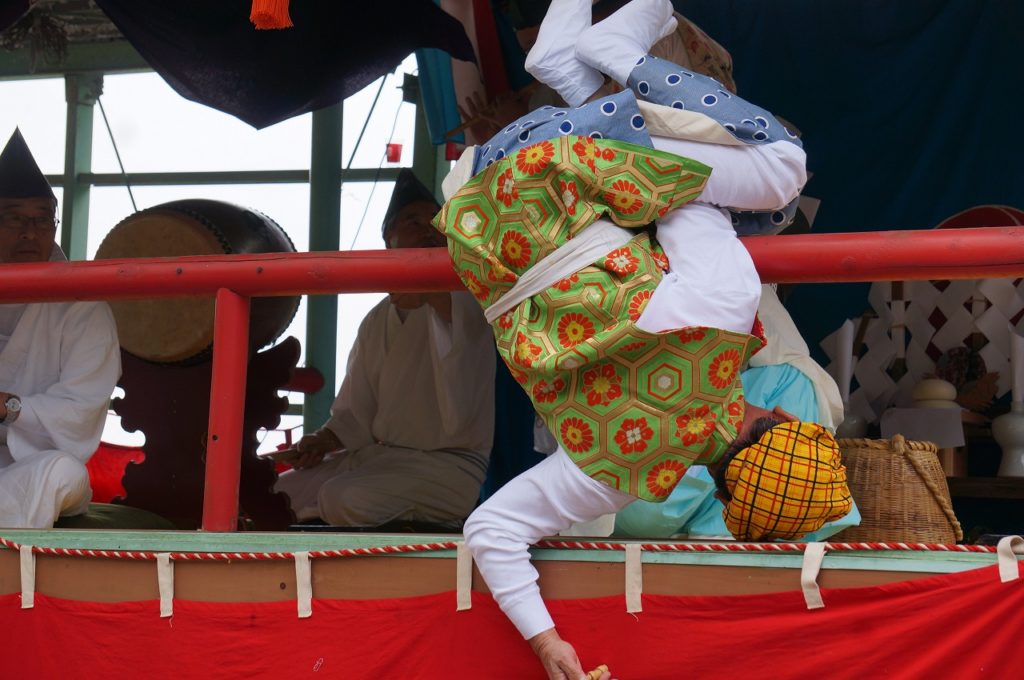
アクロバティックなひょっとこ

Here’s an amazing tactic coming up.

I mean, he’s not just a mood maker. He is truly an entertainer.
恵比寿

ひょっとこがご祝儀を釣り上げる

With rice cakes and cup noodles, they can fish for gift money all they want. This is the true *Ebisu face!.

*Ebisu face means smiling face. It is often used to describe the smiling faces that people make when something good happens, especially in business.

ひょっとこ、鯛を釣り上げる

ひょっとこの舞

Oh, it’s rare to see a Hyottoko fishing for sea bream instead of Ebisu, isn’t it?

Intermission

中入り

中入り

It’s your favorite time of the day.

This is the best part of kagura. In addition, yakisoba noodles are 300 yen, and a plastic bottle of tea is 50 yen. I bought one for you.

Is it really that cheap? It’s already past midday.

10th program “Daikoku”

大黒

大黒

When Ebisu comes out, Daikoku is supposed to be next. It says in the brochure that he carries a hammer and a fan and sprinkles gold and silver around the country.

Where’d you get a brochure like that?

A person concerned gave it to me because he said I was eager to see even though I wasn’t a local. He said “I hope you will spread the word about this kagura”.

*This is a fact. I would like to express my sincere gratitude to all those involved.

練習する少年

見守る人々

Look at that. That’s a kid learning to play the flute.

Oh, I’m so glad that the next generation is interested in it and passing it on.

“Inari and White foxes”

two foxes

Inari and foxes

a fox, servant of Inari

Inari, a deity

This is another standard of kagura. This program is the deity “Inari” who cultivates rice with his servants, the foxes.

foxes are dancing

Foxes are dancing

Speaking of foxes, they jump. But it’s hard to play the fox.

Even the role of Inari, which looks so easy, is not easy because you have to show your dignity and integrity.

“Hachiman”

The brochure says that this “Hachiman” is a dance to exterminate evil spirits with a bow.

The Hachiman is the deity of war, and warlords have worshipped since ancient times. In Kamakura city, which was the center of the Kamakura Shogunate, Hachiman Shrine, which enshrines the Hachiman deity, is still an object of worship for the people.

Ending “Sanjin”

The fact that “Sanjin” is out there means it’s over. Oh, I didn’t expect the rice cake throwing.
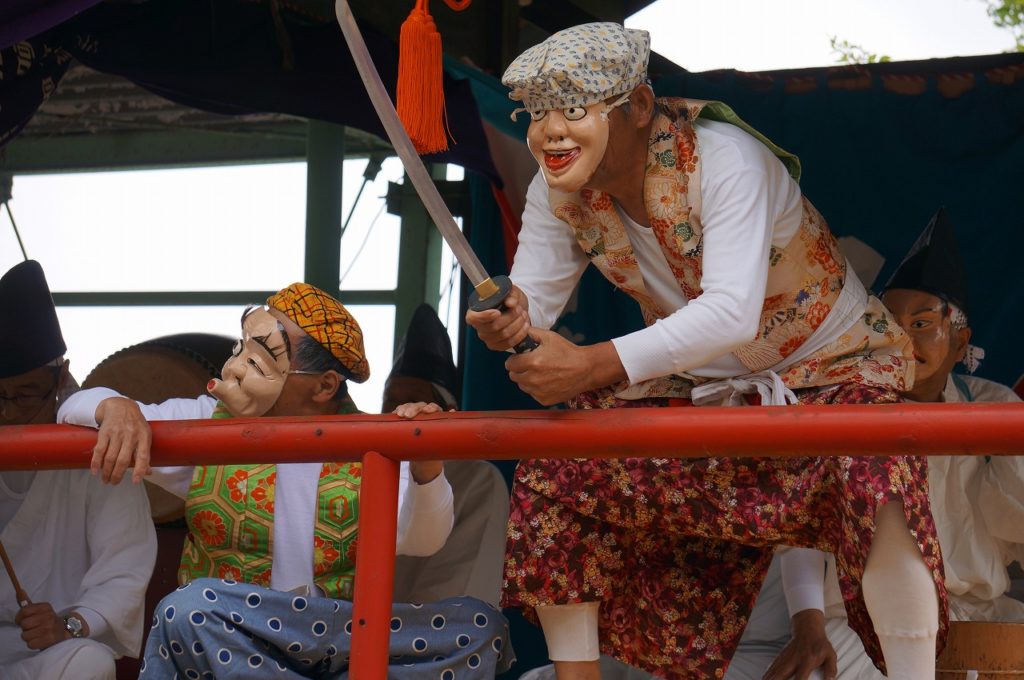
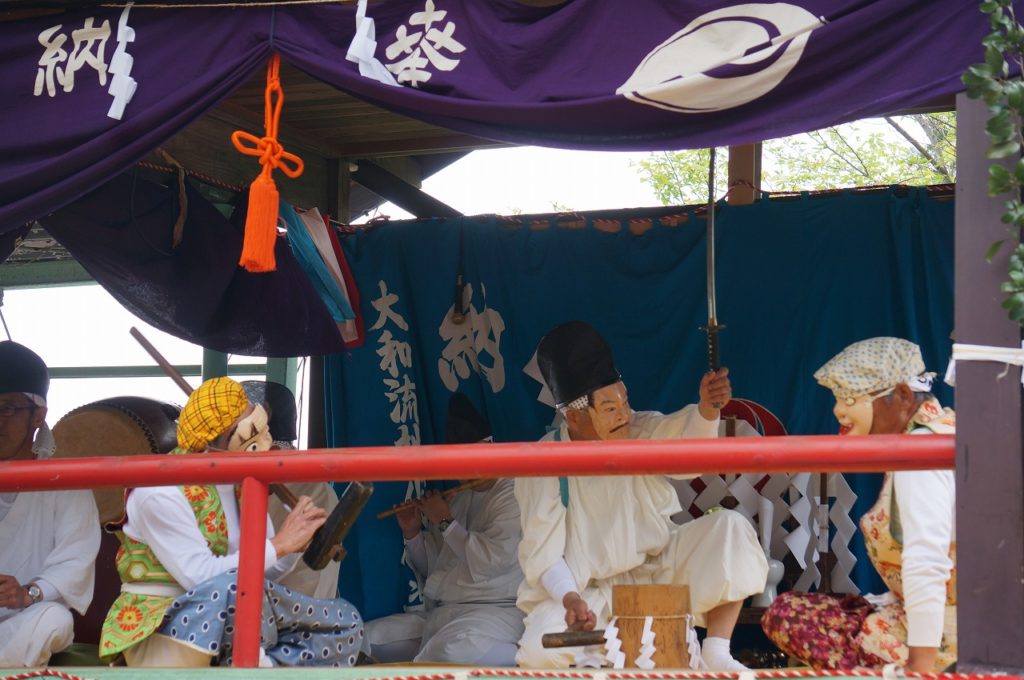
Finally, the Kagura people greeted us. By the way, where’d that guy go?

Hehehe, I’ve gotten a lot of them.

You, when did you…?

The number of audience has decreased after the intermission, so the competition had gone down a lot. After all, there’s good fortune in leftovers. Good things come to those who wait. Everybody has to see the kagura until the end.

What a guy.

I’ll give you a piece of candy. The time is 2:30. Isn’t it just the right time for a snack? Now, let’s go home. I’m looking forward to the next kagura. I look forward to seeing you again.

Mmmmm……

After this, I heard they went for a walk around Ashikaga City.

reffer→Ashikaga City Tourist Association site