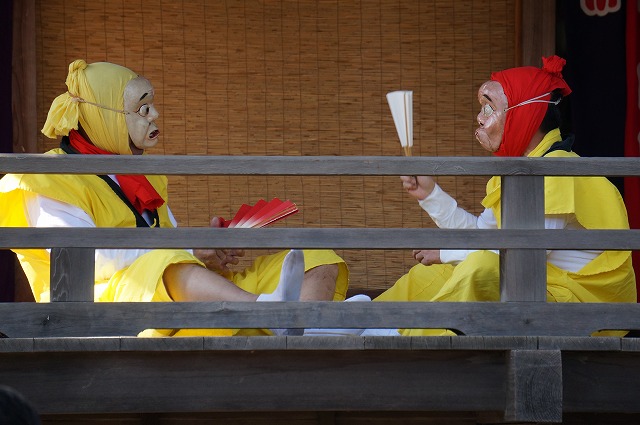
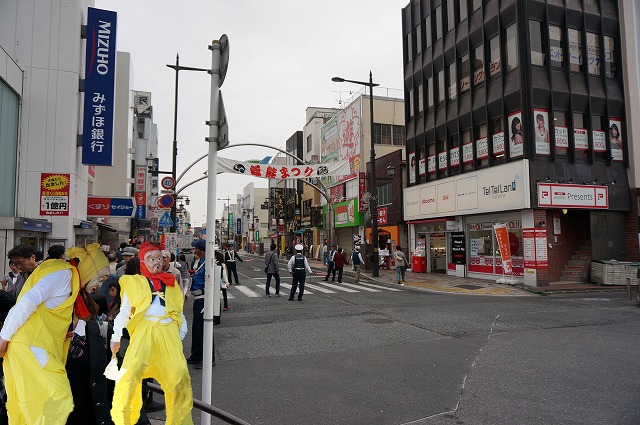
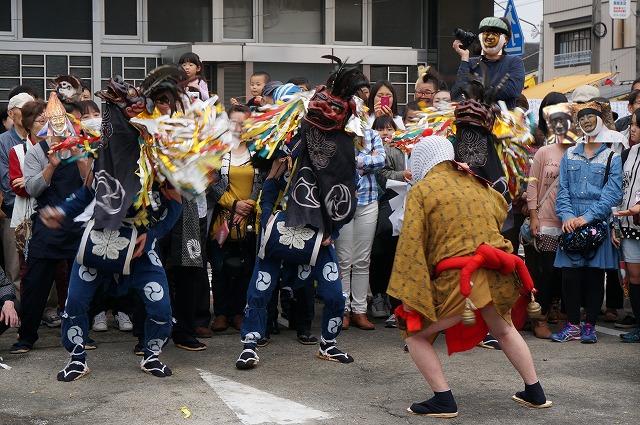
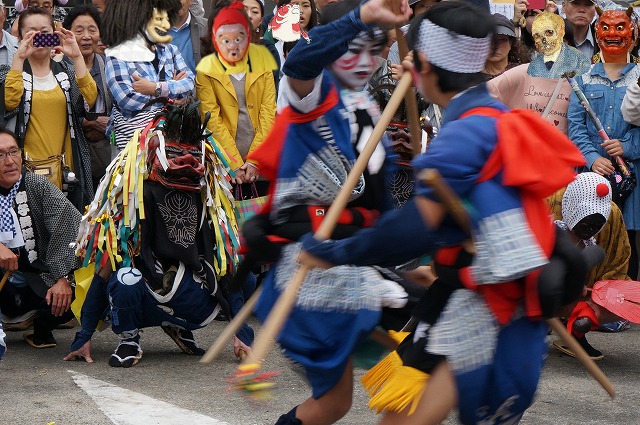
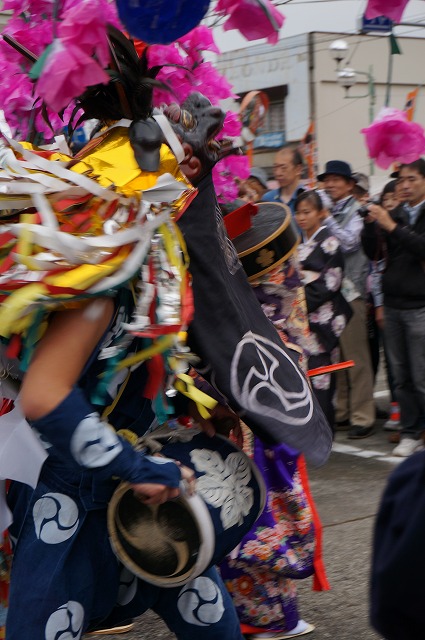
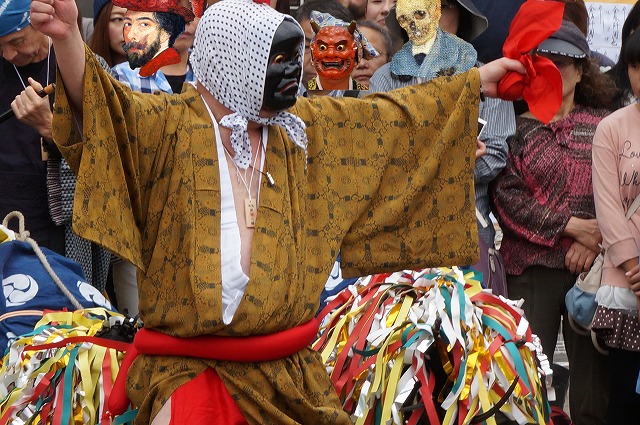
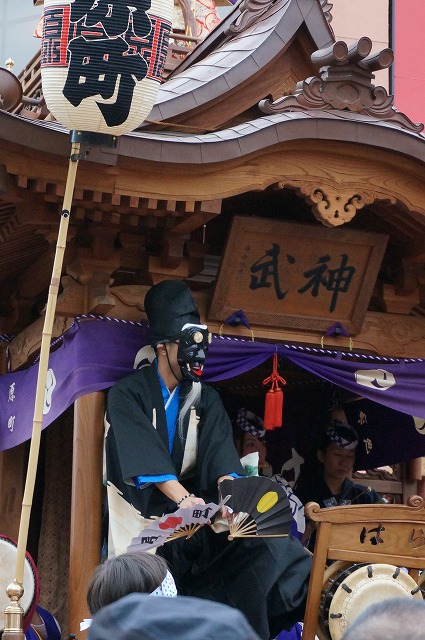
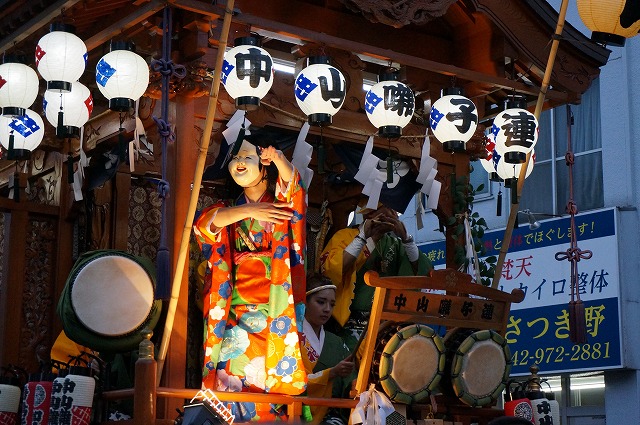
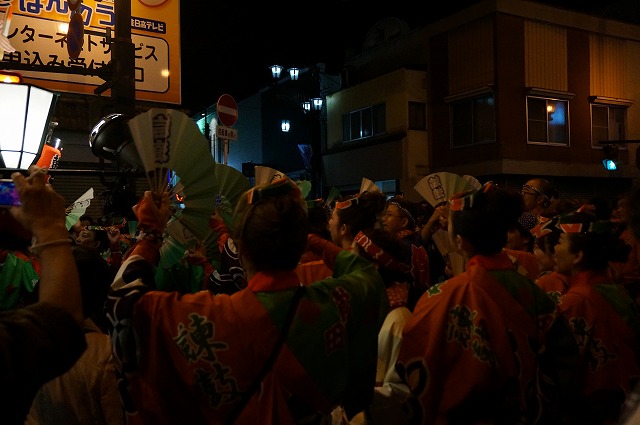
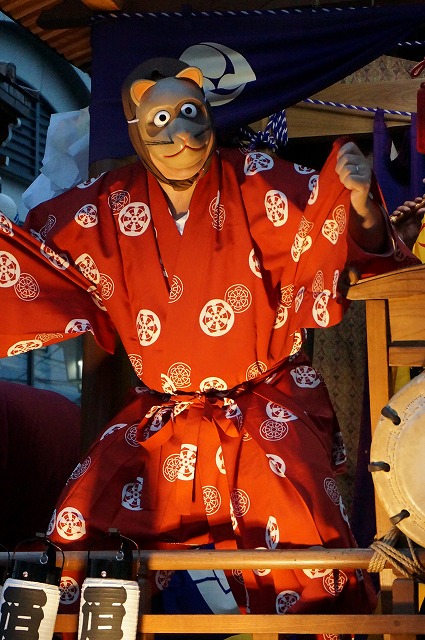
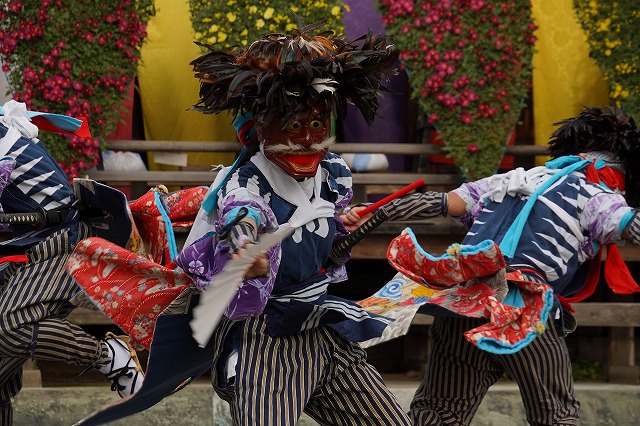
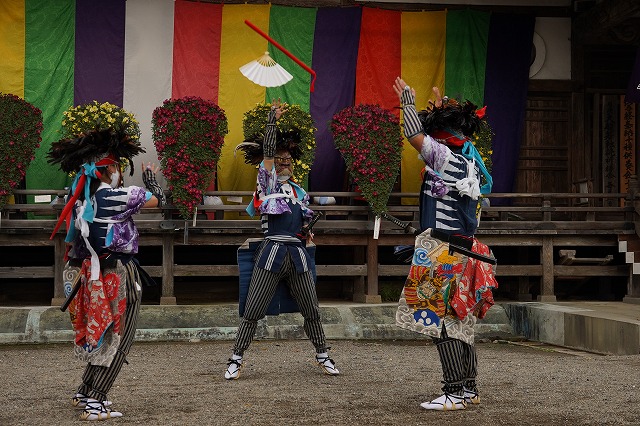
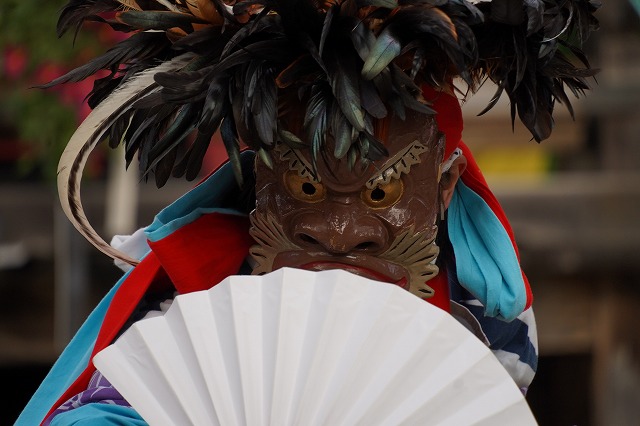
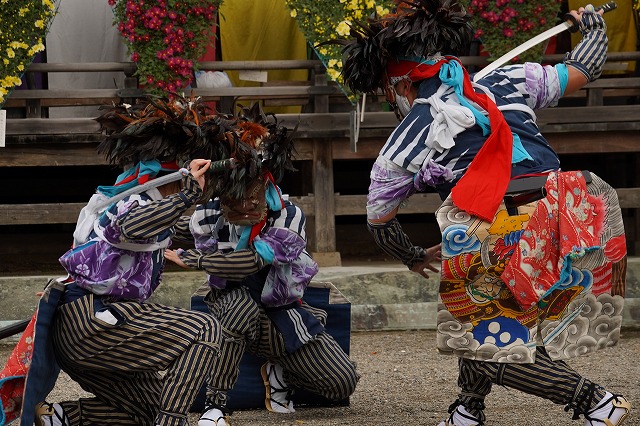
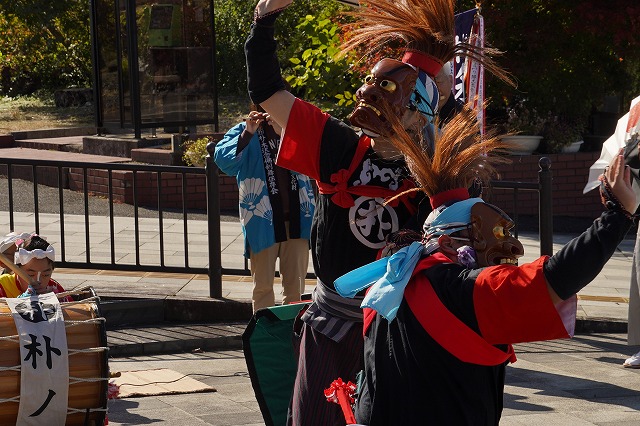
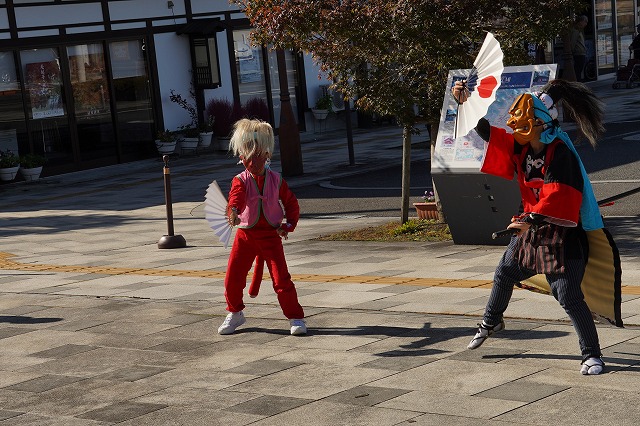
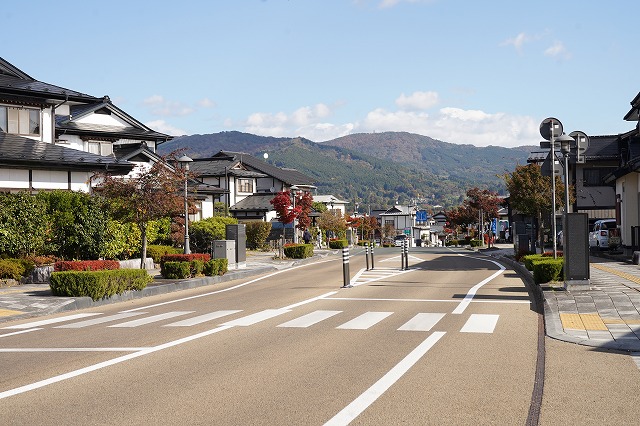
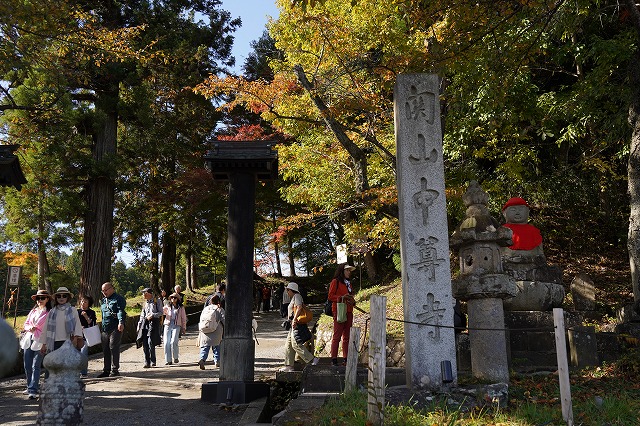
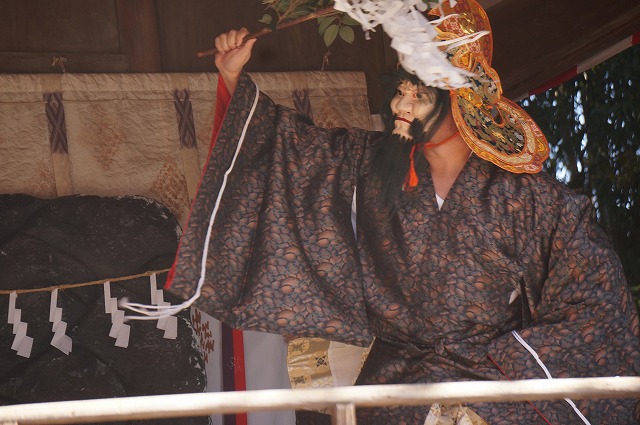
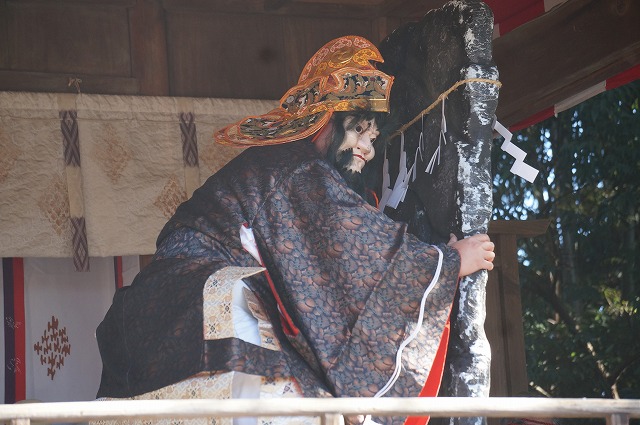
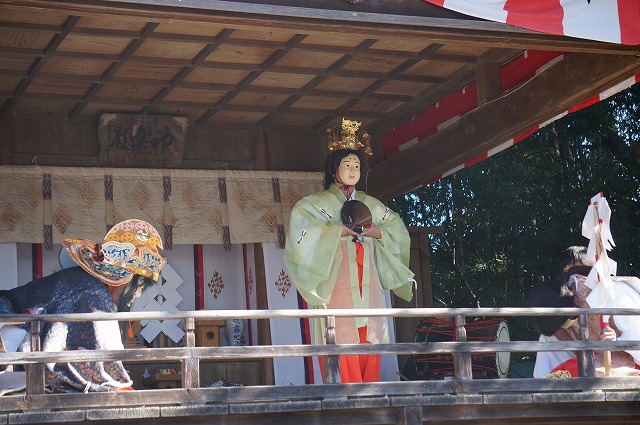
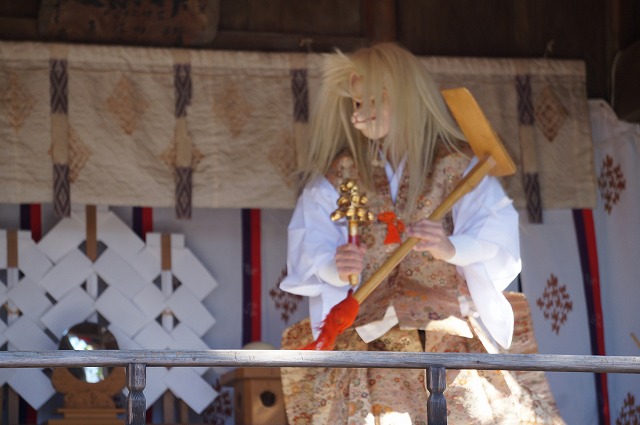
A Showdown of Masked Characters ~Hannou festival 飯能祭り
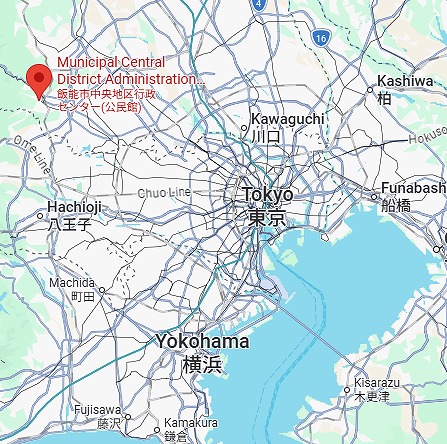
Date; The first Saturday and Sunday in November Location; Hanno, Hanno City, Saitama Prefecture The city centre area stretching from the North Exit of Hanno Station on the Seibu Ikebukuro Line and the West Exit of Higashi-Hanno Station on the JR Hachiko Line to the Hanno City Central District Administrative Centre Access; Right next to the North Exit of Hanno Station on the Seibu Ikebukuro Line; a 2-minute walk from the West Exit of Higashi-Hanno Station on the JR Hachiko Line It takes about one hour to one and a half hours to get to Hanno Station from Tokyo or Ikebukuro.
This article is based on a visit of 4th, November, 2025.
Since it’s the final day, there are many performances scheduled for today. First, let’s check the schedule of performances you can see today. (The schedule is announced in advance by the organizers, so you can check it on their website or in the pamphlet.) *Hiraizumi town official https://hiraizumi.or.jp/en/
Kawanishi dainenbutsu kenbai (sword dance) 10:00 a.m. (Chusonji temple Konjikido) 11:00 a.m. /1:00 p.m. (Chusonji templemain hall) Noh 11:00 a.m./1:00 p.m. (Chusonji temple Noh stage) Shishi odori (Deer dance) 10:30 a.m. (Hiraizumi station) 12:30 p.m. (Motsuji temple) 2:30 p.m. (Chusonji temple main hall) Dance of Ennen 11:00 a.m. (Motsuji temple) *While there aren’t usually any major changes from year to year, please check the website and other sources each time.
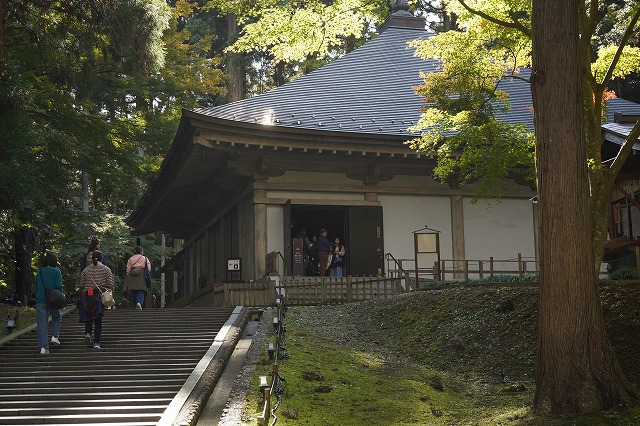
The Slope Leading to Chūson-ji Temple
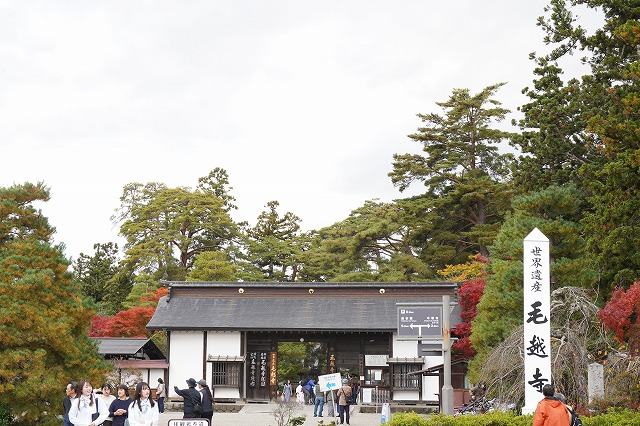
The Gate of Mōtsū-ji Temple
The schedule is divided into very specific time slots, and the locations are spread out across Chūson-ji Temple, Mōtsū-ji Temple, and the area in front of the station. Furthermore, even within Chūson-ji Temple, the schedule is divided among the Main Hall, the Konjikido Hall, and the Noh stage. It’s about 1.5 km from Chūson-ji Temple to the station, and from there you have to climb a steep hill to finally reach the main hall. Since the Konjikido Hall and the Noh stage are located beyond that, it takes quite a while. The distance from the entrance to Chuson-ji Temple to Motsu-ji Temple is about 2.3 kilometers. There are bike rentals available in front of the station, so using one of those is one way to shorten the trip. In any case, since getting around takes time, it’ll be tough unless you decide in advance where to go and what to see.
Kawanishi dainenbutsu kenbai (sword dance)
Chusonji temple Konjikido
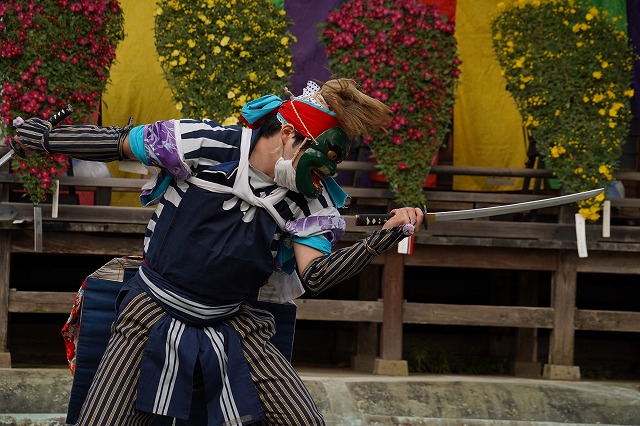
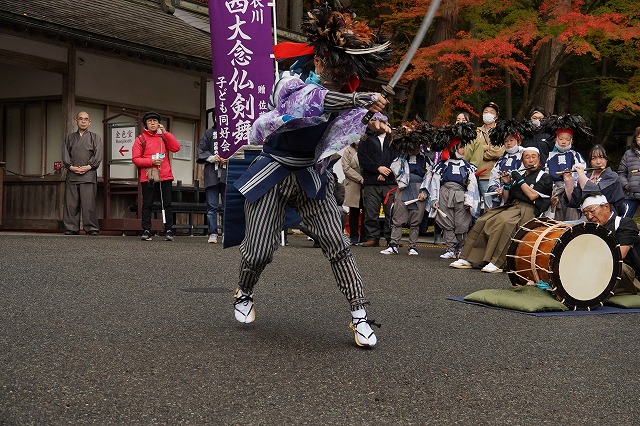
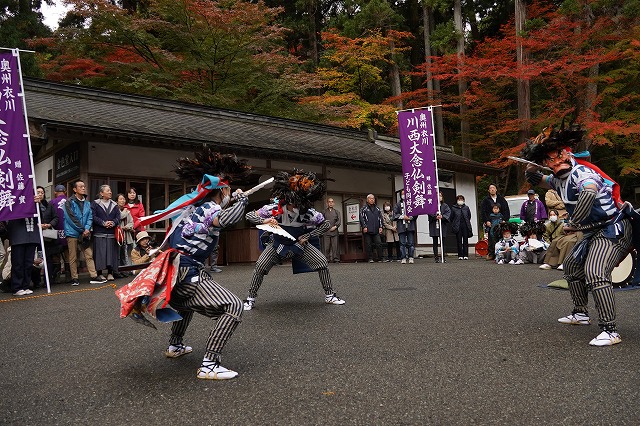
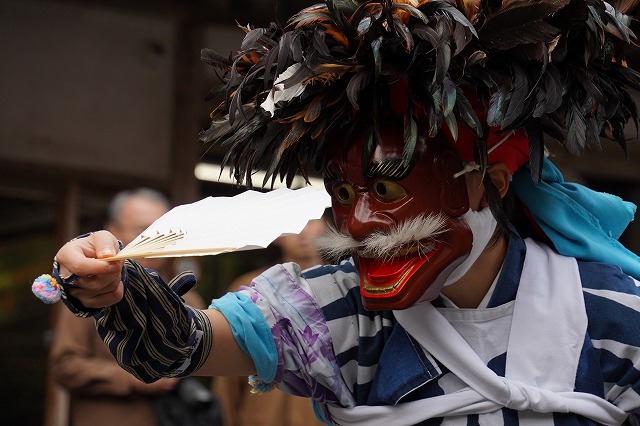
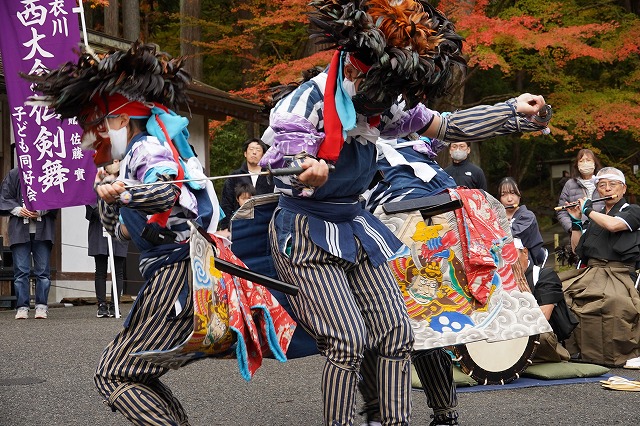
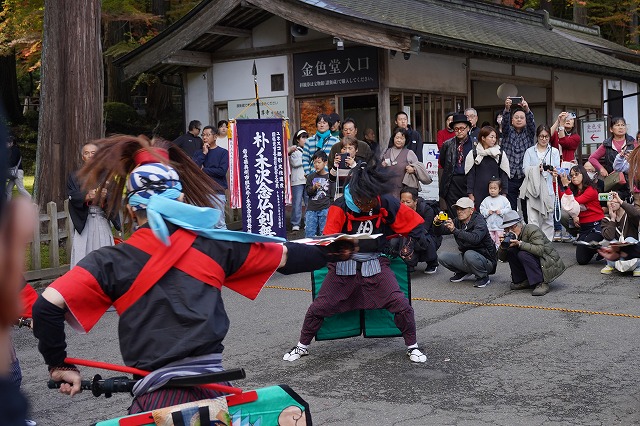
A performance will take place in front of the Konjikidō Hall at Chūson-ji Temple starting at 10:30 a.m. As mentioned in the section on the Hounokizawa Nenbutsu Sword Dance, this is a type of sword dance. There are more performances than in Hounokizawa, including solo dances and group dances. On this day, the program began with a solo dance.
This is a dance piece performed by three dancers. It incorporates some fairly complex movements and features many theatrical elements. The performance lasts about 30 minutes.
Chusonji temple Main hall
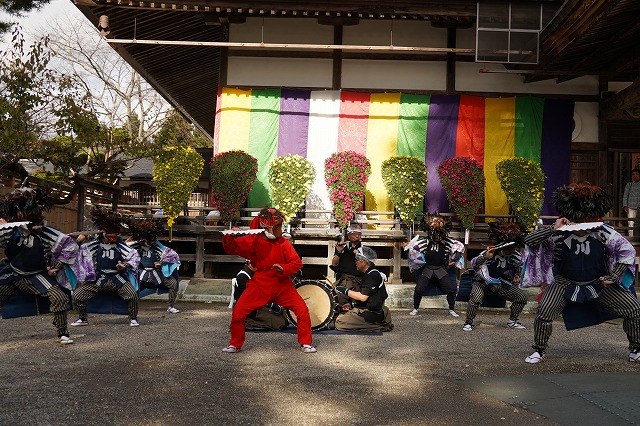
It was just past 1:00 p.m. They moved to the area in front of the main hall for the next performance. First, everyone performed a dance centered around a monkey. This is followed by a solo performance, which then leads into a performance by three people.
A performance lasting about 20 minutes.
Ennen no mai (Everlasting Dance)
11:00 a.m. for about 50 minutes, on the stage next to the Main Hall of Motsuji Temple
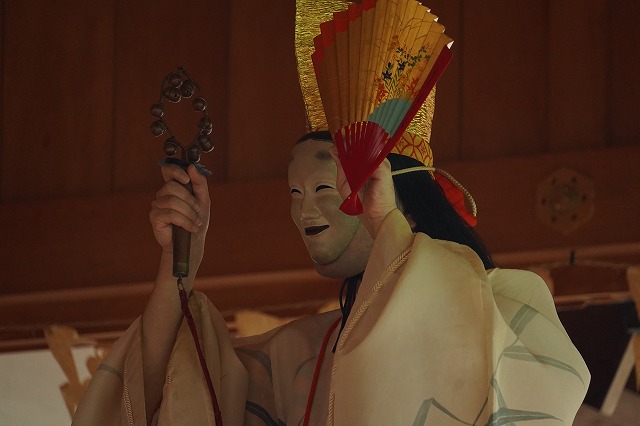
In short, the term “Ennen 延年” in the Ennen Dance refers to the wish for longevity. Its origins date back some 800 years. It reached its peak around the 12th century but began to lose popularity around the 14th century, along with the decline in the popularity of Noh. As a result, there are few remaining examples throughout Japan, and the one here at Mōtsū-ji Temple has been designated as an Important Intangible Cultural Property.
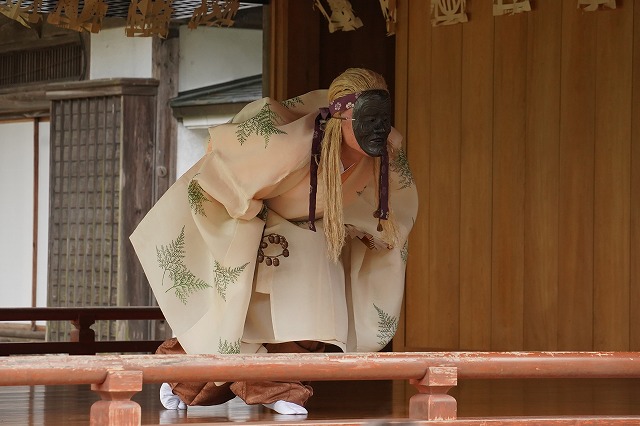
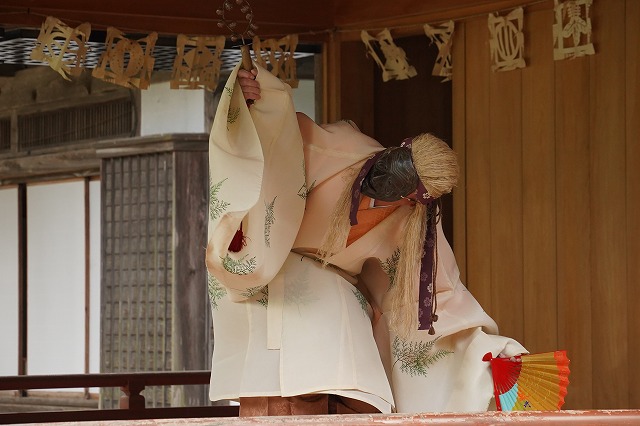
The long passage of time has caused many plays to be lost. The most famous is the “Dance of the Old Woman.” This performance requires a high level of skill because the dancer bends his or her waist extremely low while dancing.
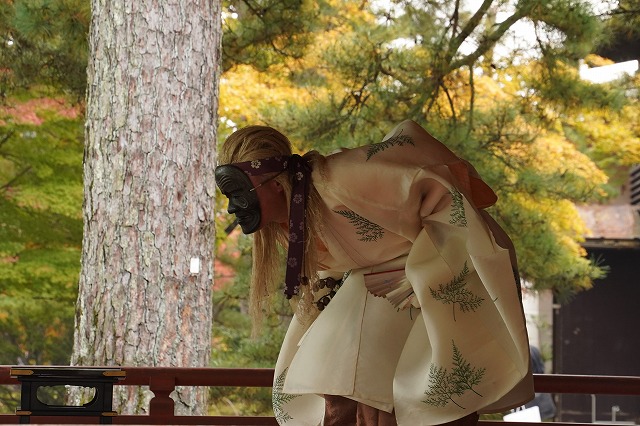
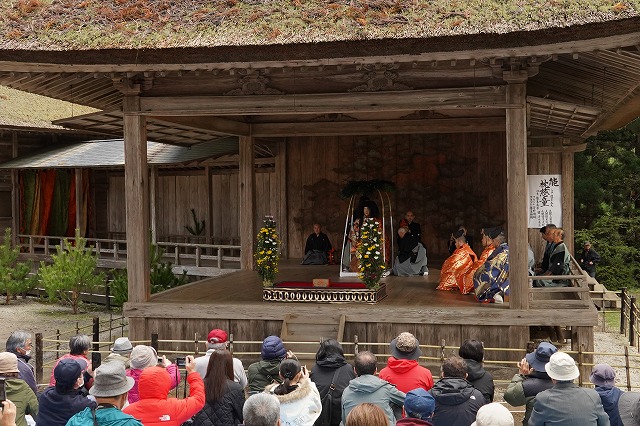
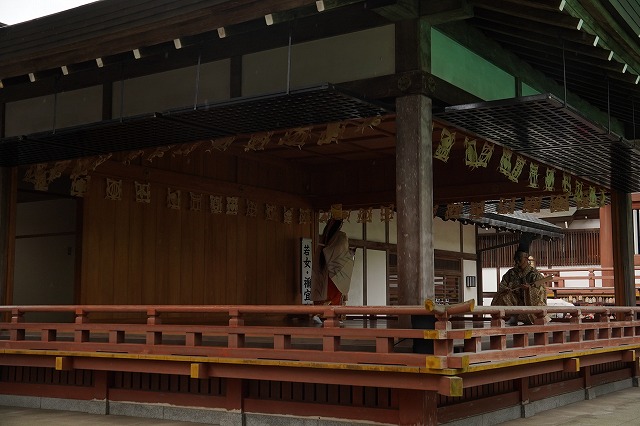
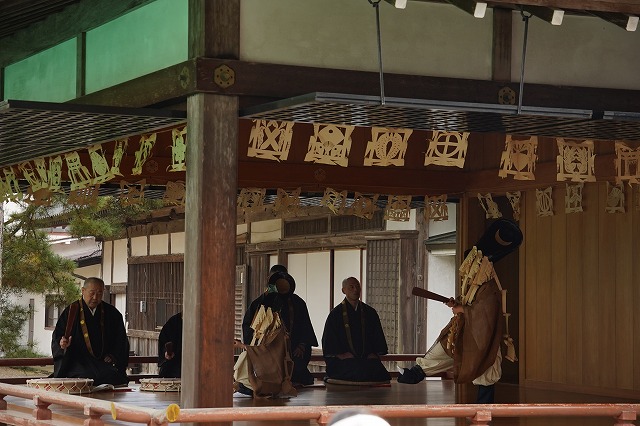
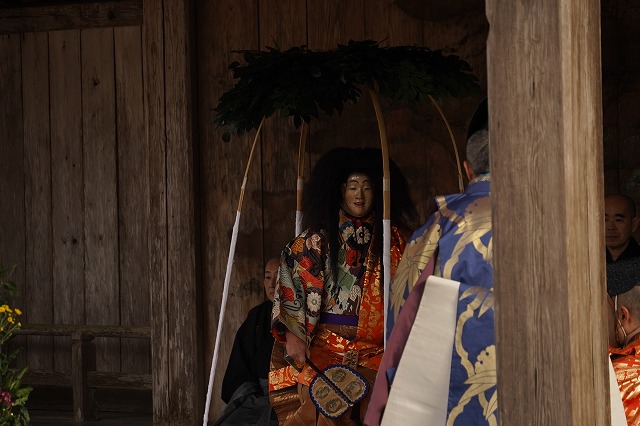
The event begins at 11:00 a.m. at the Noh stage. The photo shows the performance titled “Makura Jido,” which starts at 1:00 p.m. Further back from the Konjikidō is Hakusan Shrine, and there is a Noh stage nearby. Although it was rebuilt in the early 19th century, it has a very atmospheric appearance. It should be noted, however, that not all Noh performances are plays; some consist solely of singing, and others solely of dancing. If you look closely at the program or other materials, you’ll find this information there.
Shishi odori (Deer dance)
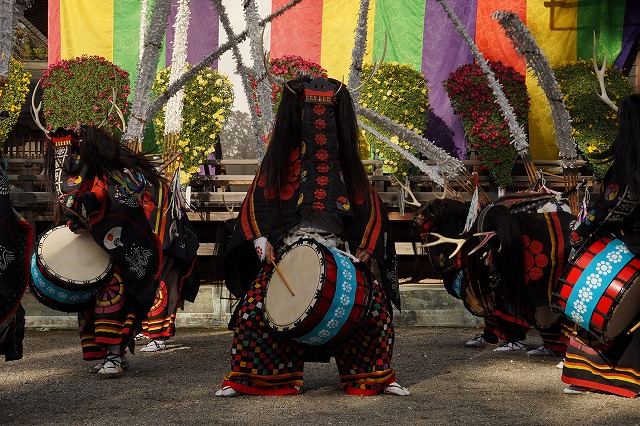
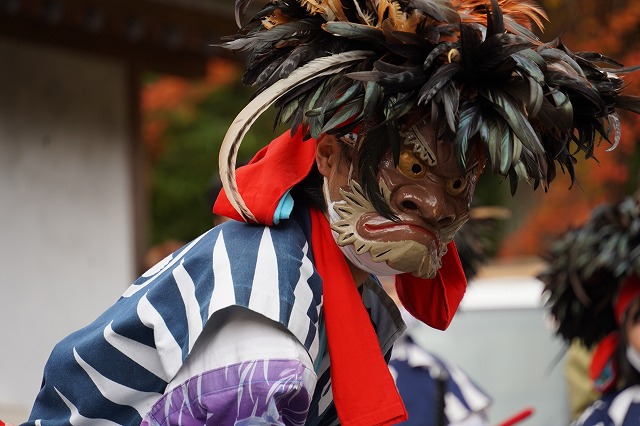
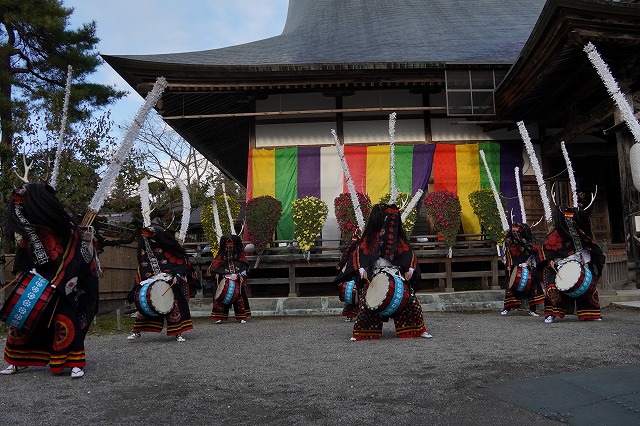
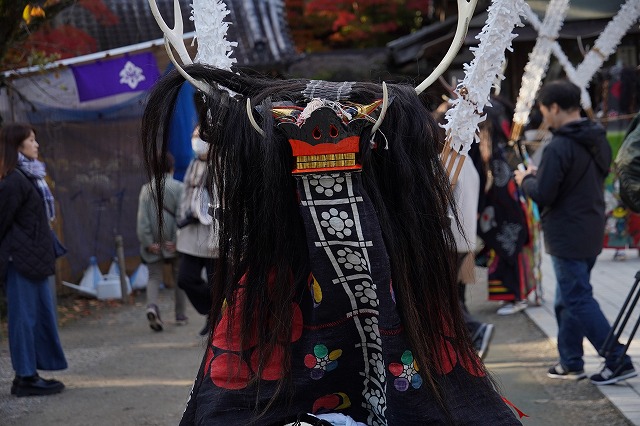
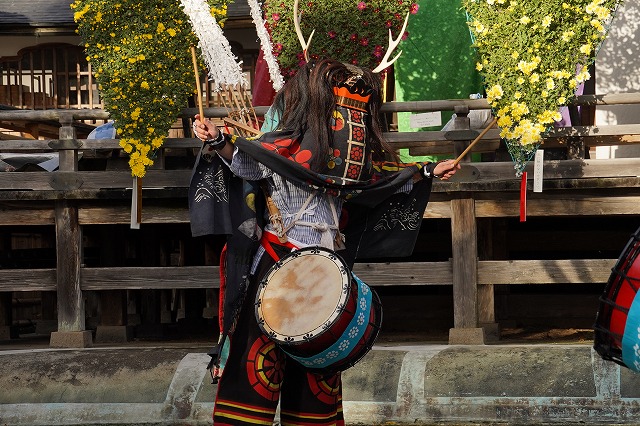
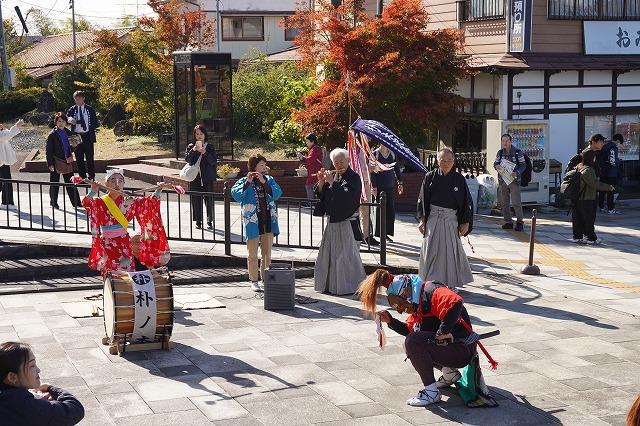
It starts at 10:30 a.m. in front of Hiraizumi Station, at 12:30 p.m. at Motsuji Temple, and at 2:30 p.m. in front of the main hall at Chuson-ji Temple. This photo was taken in front of the main hall at Chuson-ji Temple. The finale is the deer dance, a familiar sight in the Tohoku region. This time, it’s the “Gyozan-ryu Miyako-dori” deer dance. They pound the ground, send the sound of the drums echoing to the heavens, and their songs—which seem to well up from the depths of the earth—are as vibrant as ever. The performance, which lasted about 20 minutes, thoroughly impressed the audience. *The following article should be helpful for learning about the deer dance. https://discoverdeeperjapan.com/2020/11/30/michinoku-traditional-folk-performing-festival-the-deer-dance/
Enjoy the Performing Arts in Hiraizumi, Where the Autumn Foliage Shines Brightly ~Fujiwara festival ~Day 1
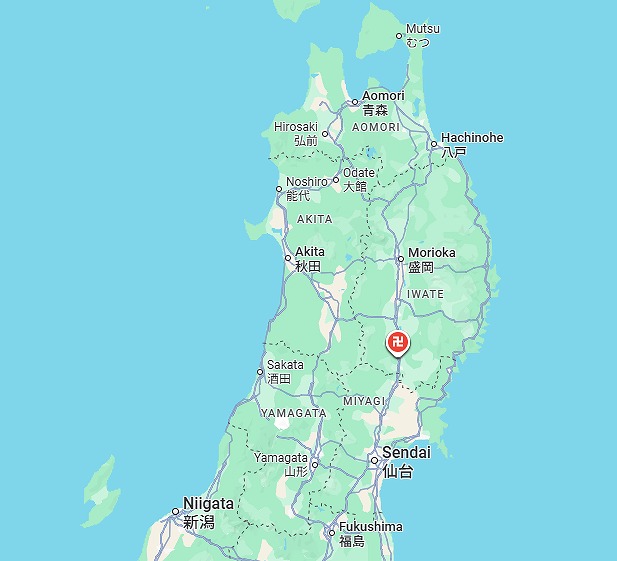
Date; Every year from November 1 to 3 Location; Chuson-ji Temple, Motsu-ji Temple—Hiraizumi Town, Iwate Prefecture Access; Take the Shinkansen to Ichinoseki Station, then transfer to a local train; it takes about 10 minutes to reach Hiraizumi. It’s about a 25-minute walk from the station to the entrance of Chuson-ji Temple, and about a 10-minute walk to Motsu-ji Temple.
This article based on 2th~3rd November, 2025
Chusonji temple and Fujiwara festival in autum
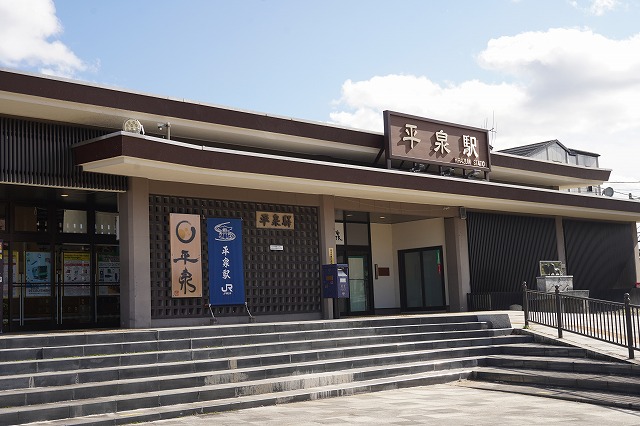
the Hiraizumi station
the Konjiki -do (Chusonji-temple)
Hiraizumi is one of the leading tourist destinations in the Tohoku region. This is thanks to Chuson-ji Temple, built here in the Middle Ages, and the National Treasure, the Konjikido Hall, located within the temple grounds. “Konjiki” simply means golden. True to its name, there is a temple that still stands today, with its entire structure covered in gold. For more details, please refer to other websites introducing Japan, but on this site, we’d like to introduce the Fujiwara Festival held at this temple. There are two Fujiwara Festivals: one in the spring (early May) and one in the fall. The spring festival mainly features performances by celebrities and reenactments of historical processions; it is a lively event that draws large crowds. As for autumn, while it may lack some of the showiness, it more than makes up for it with the many performing arts deeply rooted in this region. Hiraizumi town officialhttps://hiraizumi.or.jp/en/ Iwate prefecture officialhttps://www.hiraizumi-heritage.pref.iwate.jp/
Hounokizawa Nenbutsu Kenbai
in front of Hiraizumi station
>
That day, starting at 10:30 a.m., the Hounokizawa Nenbutsu Sword Dance welcomed us right in front of the station. Although “Nenbutsu Kenbai” literally translates to Buddhist chanting sword dance, it is a sword dance that, at its core, incorporates prayers for the deceased. While “Oni-kenbai*,” the representative sword dance of Kitakami City, focuses primarily on the performing arts, it can be said that Nenbutsu Kenbai has a stronger religious spiritual dimension. However, an outsider wouldn’t be able to tell the difference. *https://discoverdeeperjapan.com/2020/10/18/michinoku-traditional-performing-art-festivaloni-kenbai/
After their performance, which lasts about 20 minutes, they’ll pose for commemorative photos. Following this, two more performances are scheduled—one in front of the Konjikidō Hall at Chūson-ji Temple and another at Mōtsū-ji Temple. Accordingly, this article will follow them as they tour the famous sights of Hiraizumi for the day.
To Chuson-ji Temple
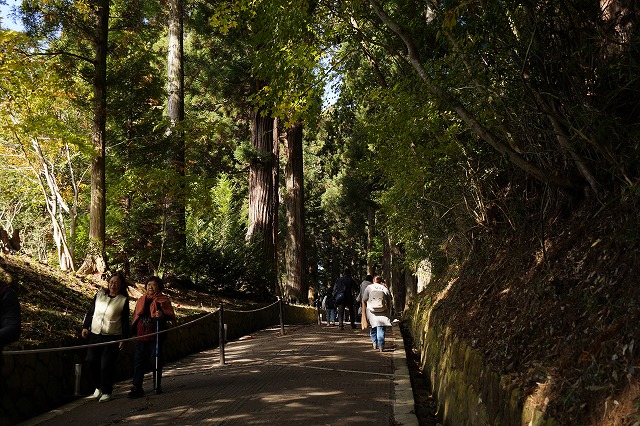
Chuson-ji Temple is located on top of a mountain. Because of this, visitors must climb a very long slope to reach it. The slope is particularly steep in the first half, so there are even ropes along the side for visitors to hold onto.
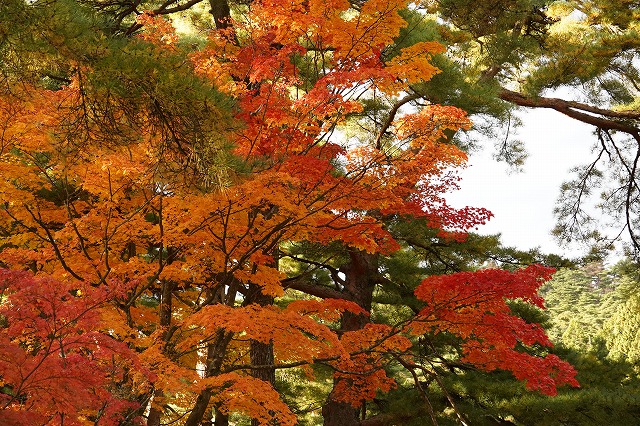
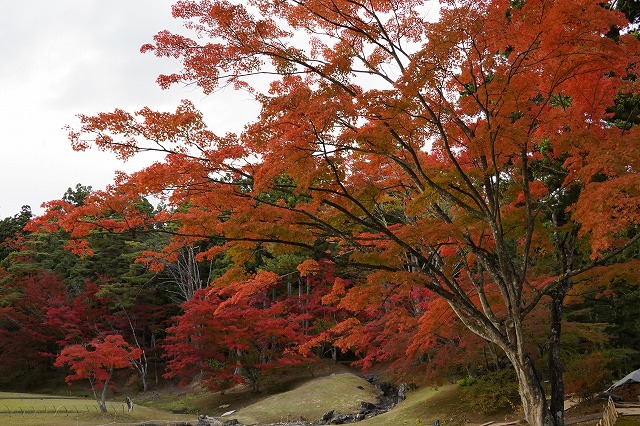
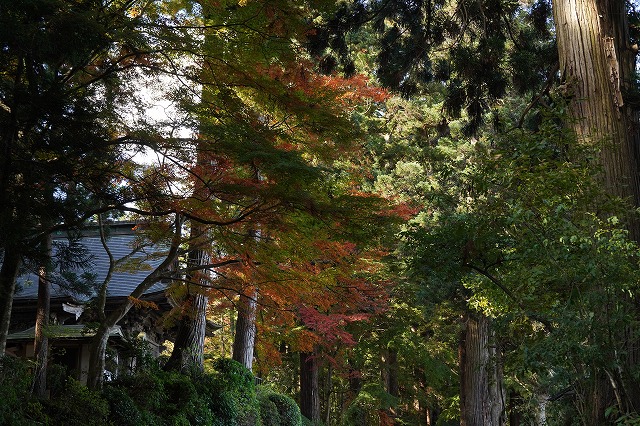
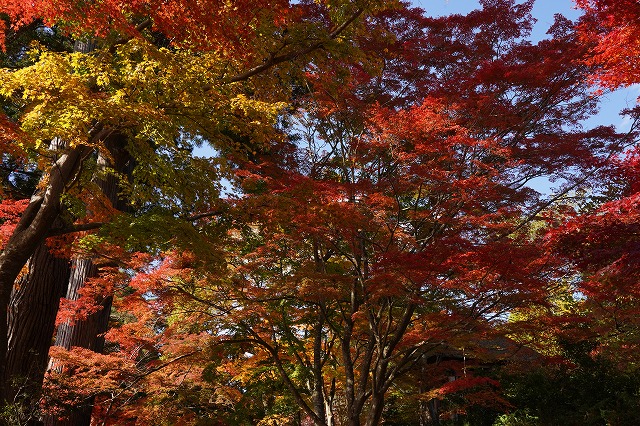
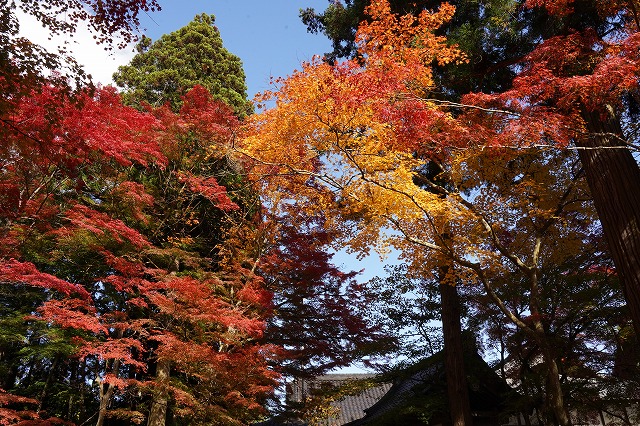
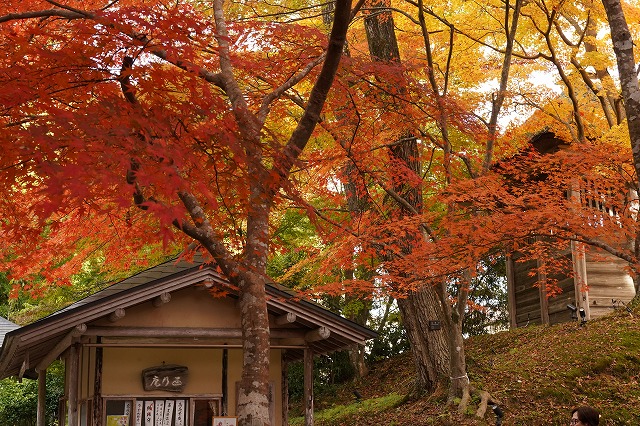
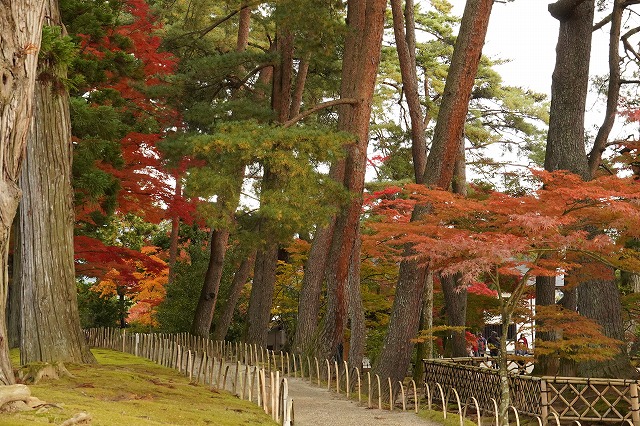
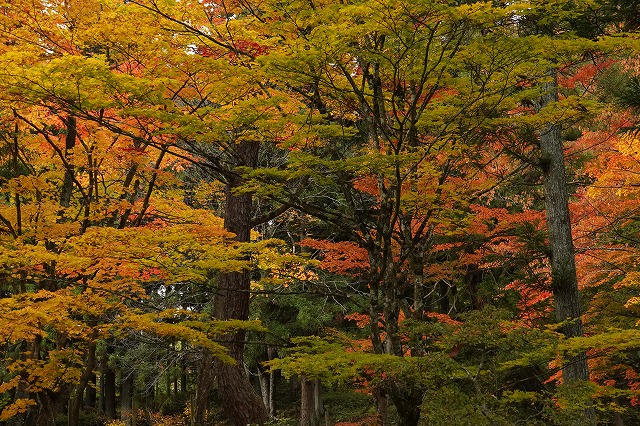
That said, it’s autumn, and visitors forget their weariness amid the fiery autumn foliage.
in front of Konjikido Hall
Starting at 12:30 p.m., there was also a dance performance in front of the Konjikidō. Many tourists were delighted by this unexpected treat.
at Motsuji temple
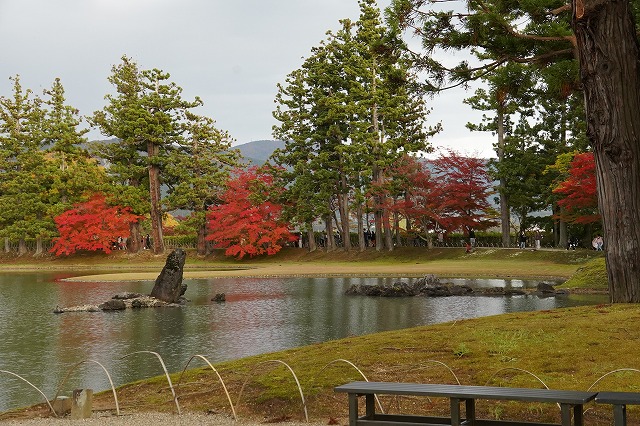
Mōtsū-ji Temple is located about a 10-minute walk from the station in the opposite direction from Chūson-ji Temple. Mōtsū-ji is one of Hiraizumi’s most famous sights, alongside Chūson-ji. Its vast grounds, which feature a large pond, are said to be modeled after the Buddhist Pure Land, and they amply evoke the prosperity of the clan that once ruled this region.
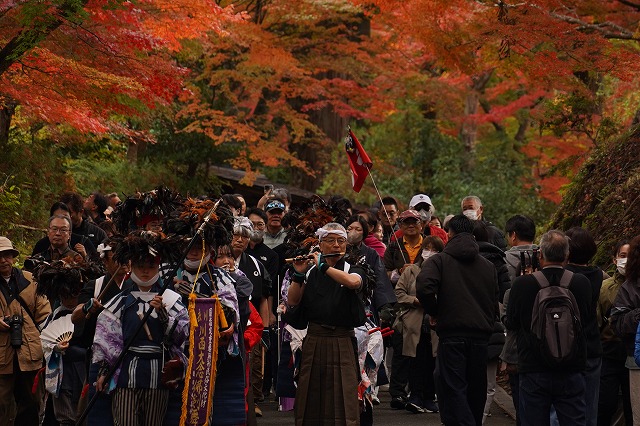
At 2:30 p.m., the sounds of flutes and drums echoed as the group approached. As scheduled, the final performance took place in front of the main hall of Motsuji Temple.
To be continued in the next section, on the second day
Report~Oni dance in a mountain village~ Hana-matsuri
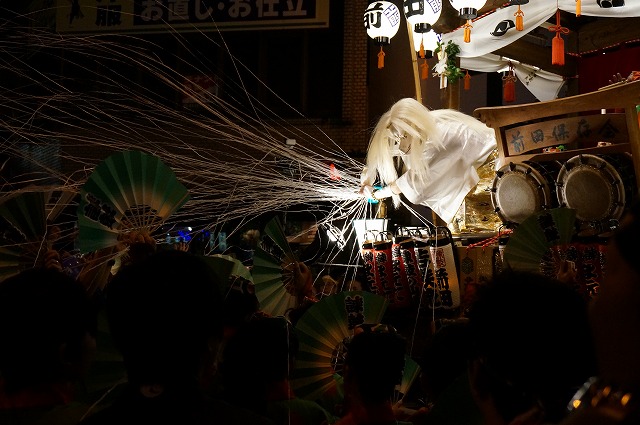
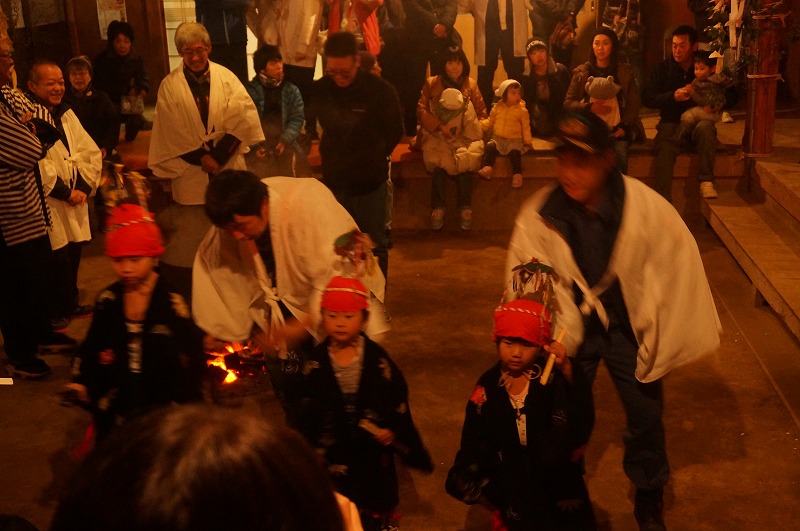
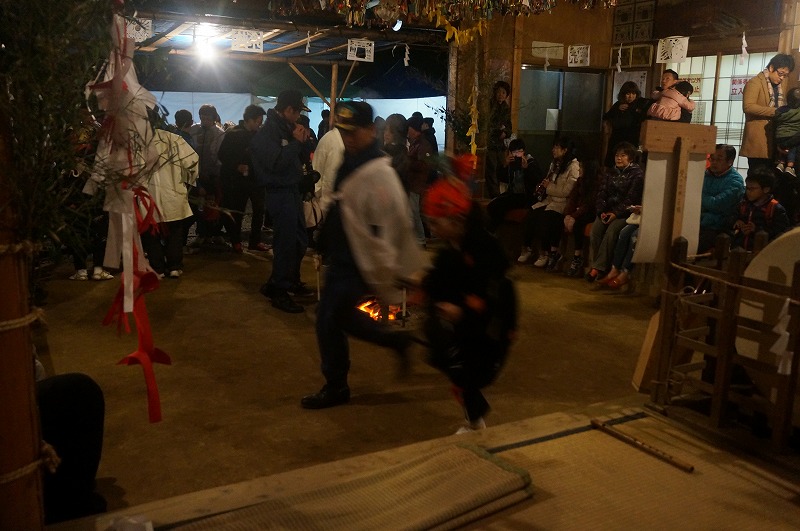
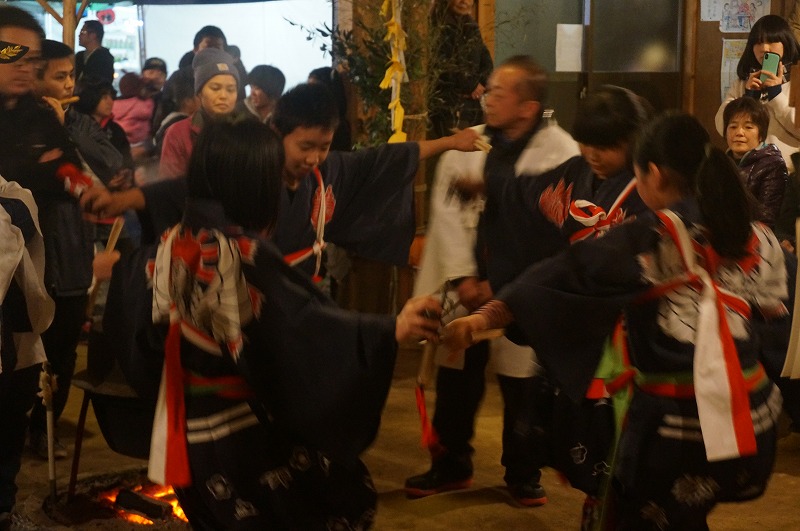
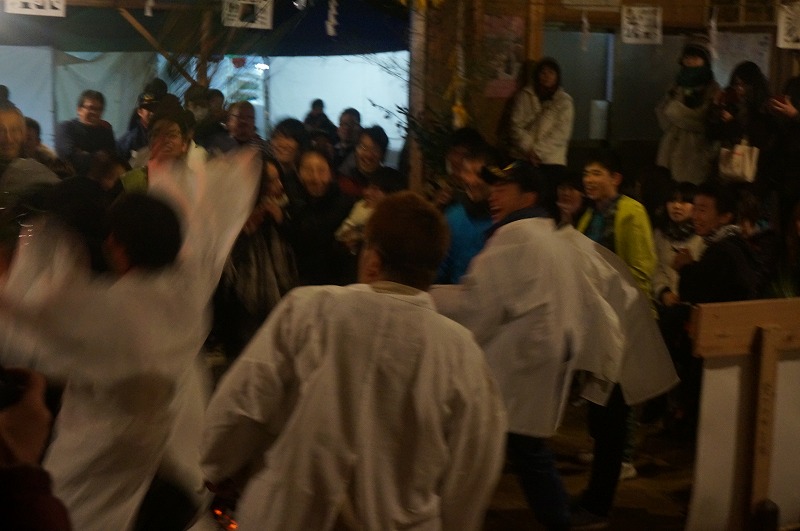
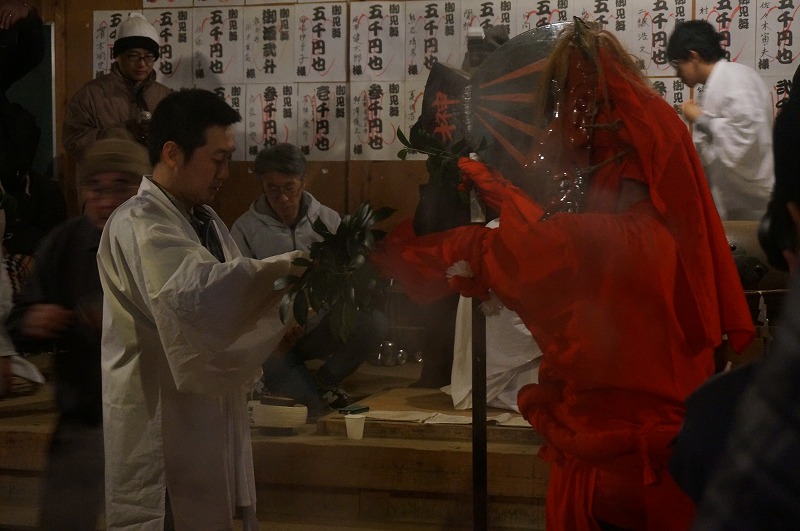
Hana Matsuri is a festival of rebirth. During the season when the days are at their shortest, people prayed for the rebirth of the sun. It is an ancient festival. You can experience such a festival in Aichi Prefecture. The centre of Aichi Prefecture is Nagoya City, which can be described as a major city second only to Tokyo and Osaka. Toyota’s headquarters are also in Toyota City. That’s the sort of place it is. But it’s actually quite a struggle to get to the venue for this Hana matsuri (festival). The Hana Festival is currently held at 15 locations across Aichi Prefecture, but all of them are deep in the mountains, in places that can only be reached by driving endlessly up long, narrow, winding roads. As a result, travel agencies now organise tours to the area. Consequently, travel agencies now organise tours to the event. The Hnamatsuri festival runs from November to March. It is said to have once lasted a whole week, but it has since been shortened. Even so, it can still go on for a day and a night.
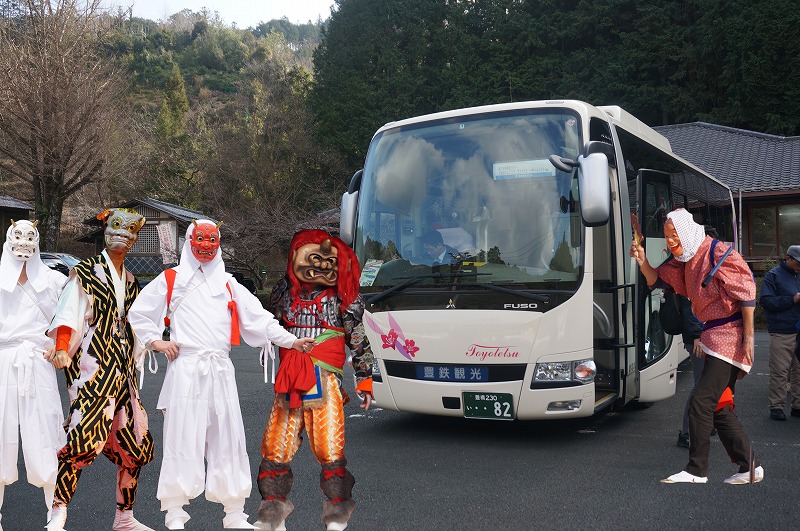
Toyotetsu Sightseeing has also begun to offer tours. Even with a car, it is dangerous to go to a mountainous sight-seeing area at night. We recommend that those who wish to visit join a such a tour.
“Hanamatsuri” is a festival centered on Oni (ogres). So maybe there used to be a tour like this.
This article is based on the 2018 tour at Sakauba.
Date; The weekend in late November Location; 29-4 Miyanoshima, Sakauba, Toyone Village, Kitashitara District, Aichi prefecture Access; Approximately 1 hour and 5 minutes by car from the Shinshiro Interchange on the Shin-Tomei Expressway
Hello and welcome to the tour
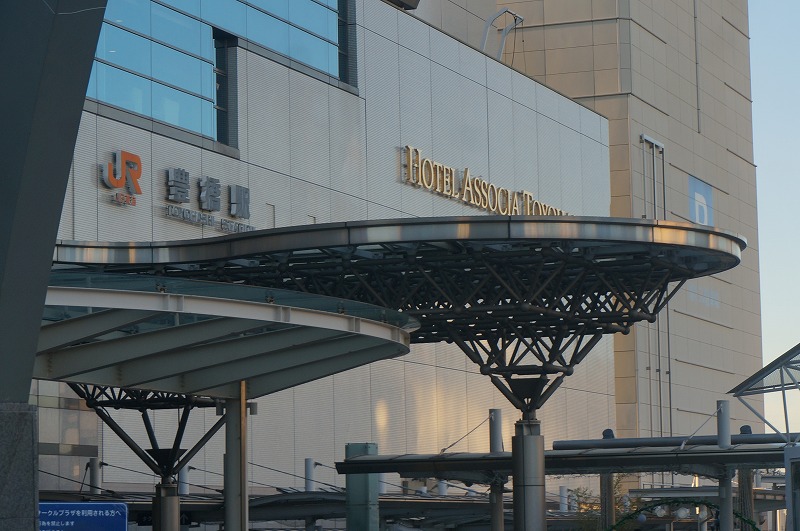
Toyohashi station
Hello everyone, are you all here? Thank you for joining us on this “Hana Matsuri” tour. This time, you will visit a festival in the Sakauba 坂宇場 area. This tour is perfect for those Oni who are tired of being pelted with beans and exterminated on a daily basis.
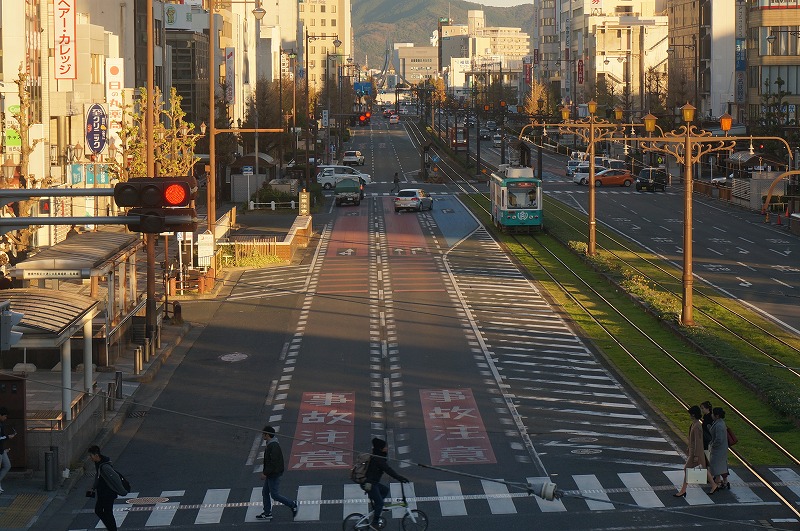
front of Toyohashi station
Although the place we are about to visit is administratively part of Shinshiro 新城 City, more than 40,000 of Shinshiro City’s population of approximately 50,000 live at the foot of the mountain. It takes about 4 hours with a stop at a roadside station along the way.
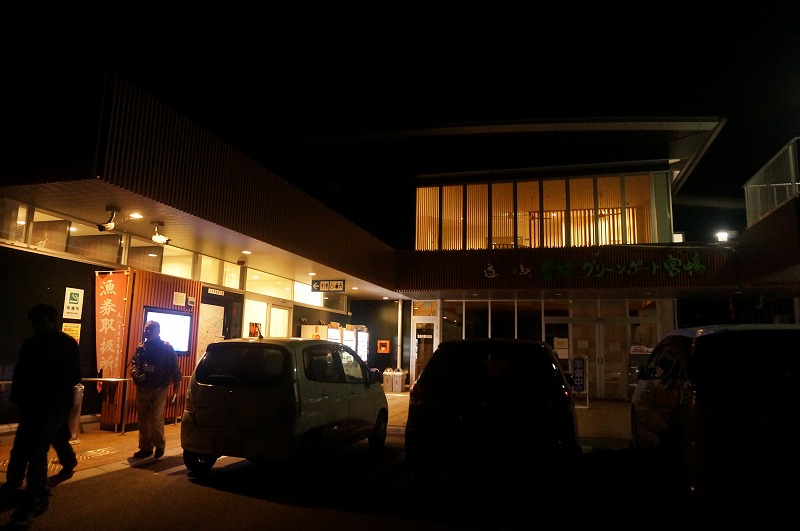
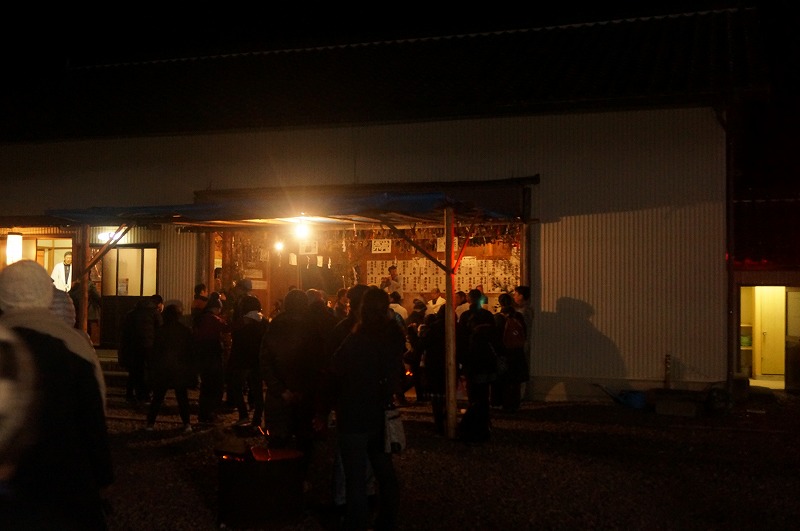
Well, we’ve arrived. It’s already 8:00 PM. You will see the festival here until next morning. It’s a long night, so if you are tired, you can take a rest in the resting room here. It is a roadside station during the daytime, but we rent it only during the nighttime, so please make yourselves at home. Now, let me take you to the festival site.
Here comes the festival at last
Tehohe Tehohe, Tewotole Tole
Oh, I’ve heard this sound before. It’s a shout unique to the Hana-Matsuri.
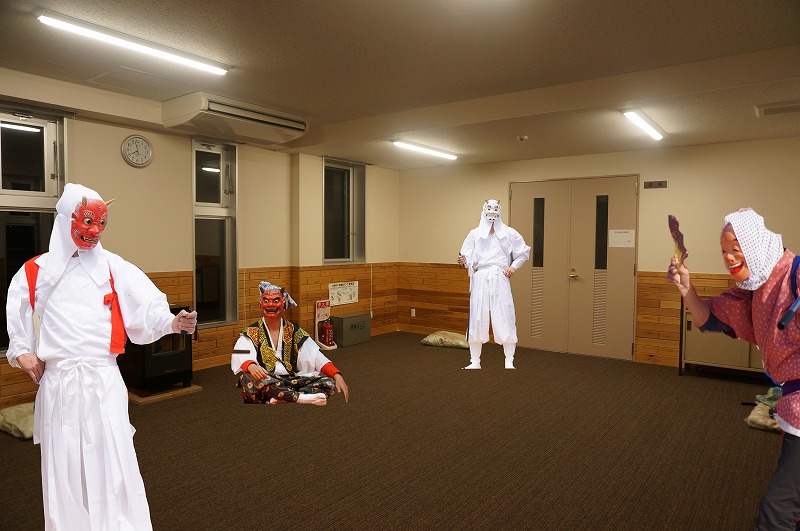
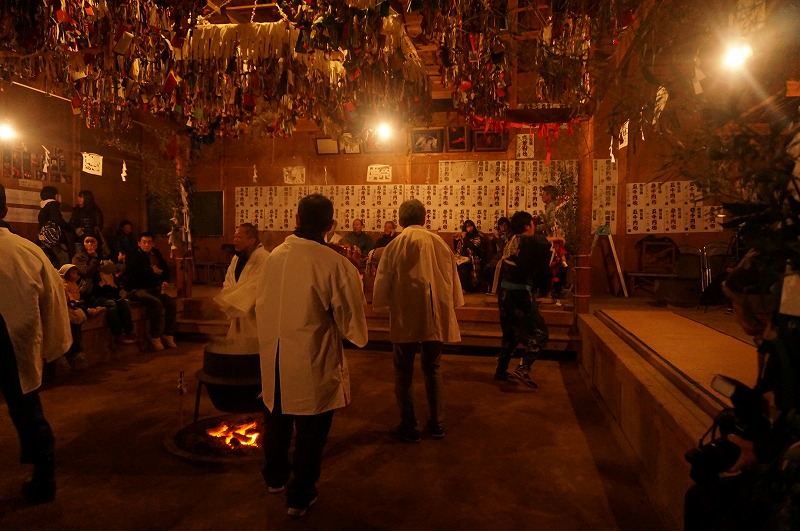
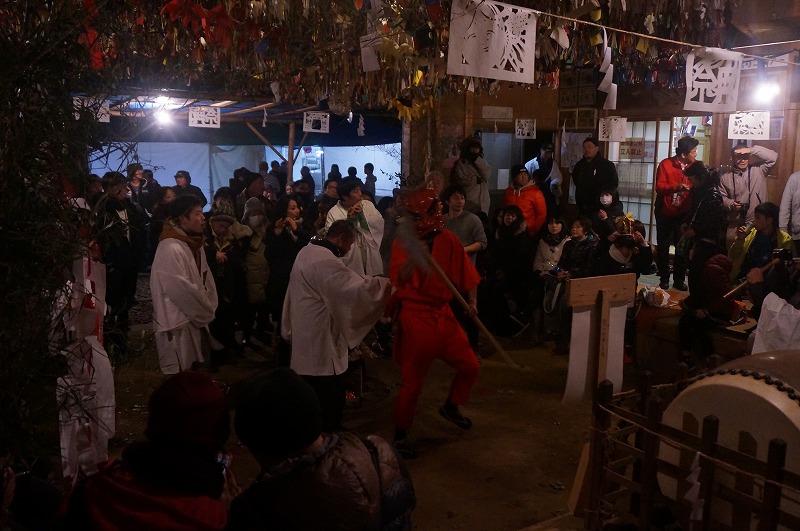
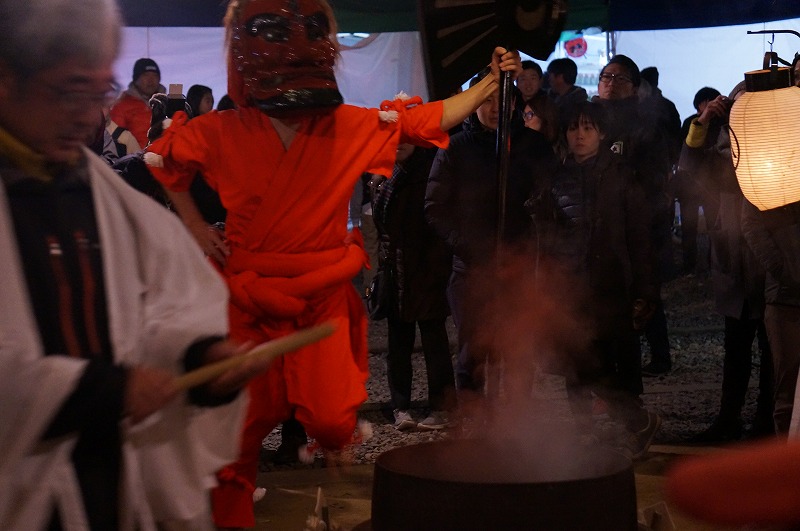
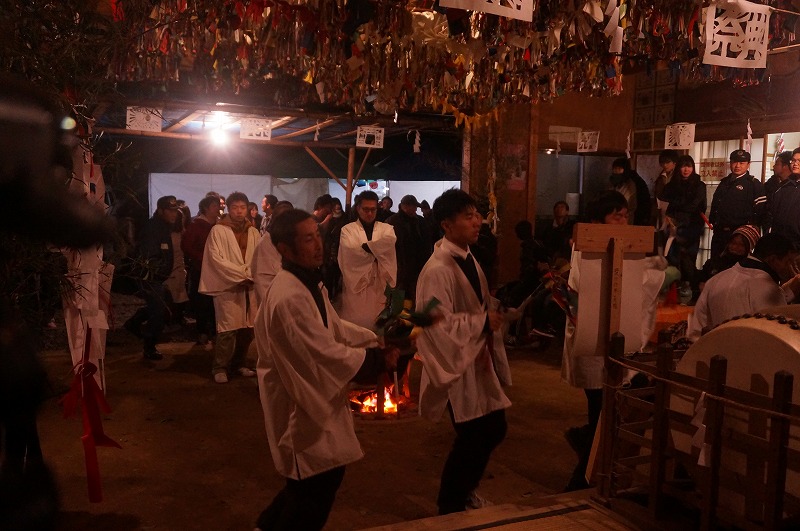
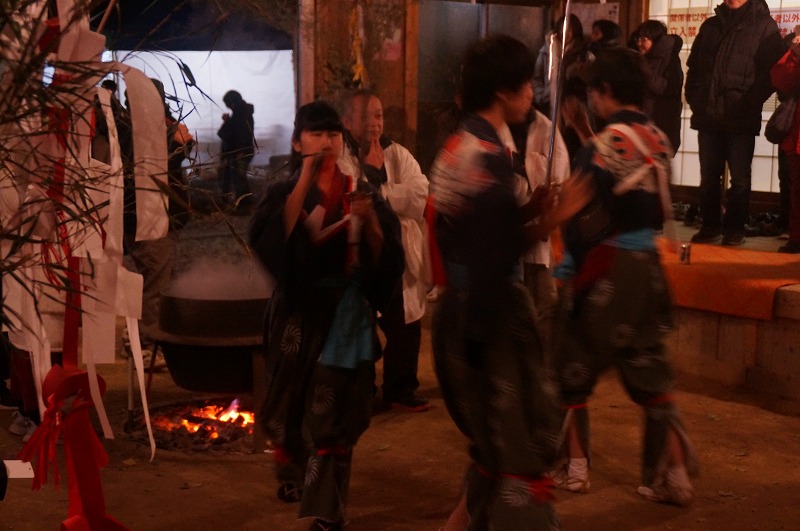
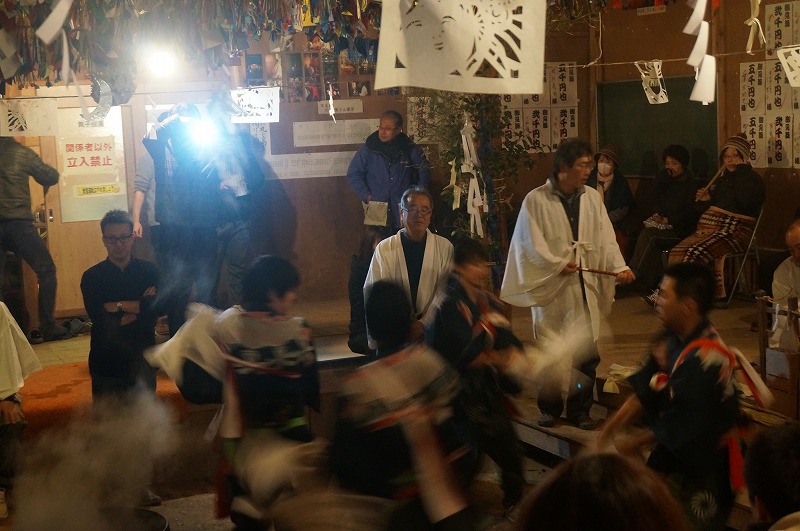
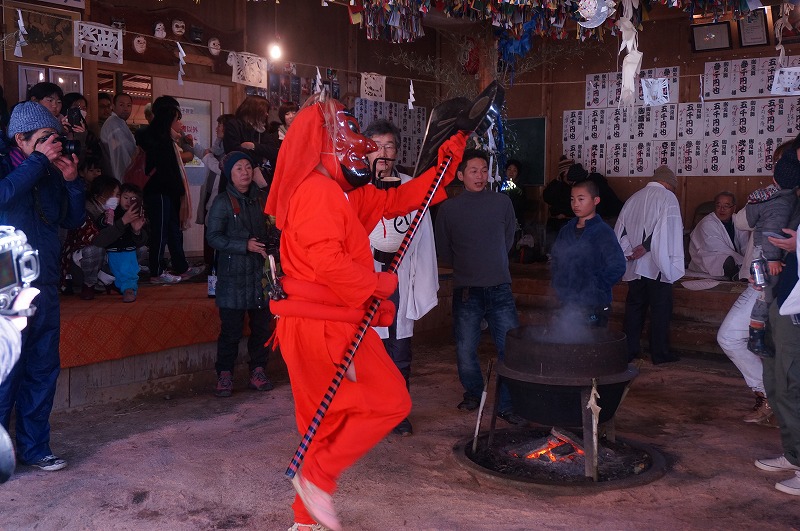
Let’s go inside. First, in the center is a large cauldron, the symbol of the festival, where the water boils all night long. This place is called “maido. It means a stage for dancing.
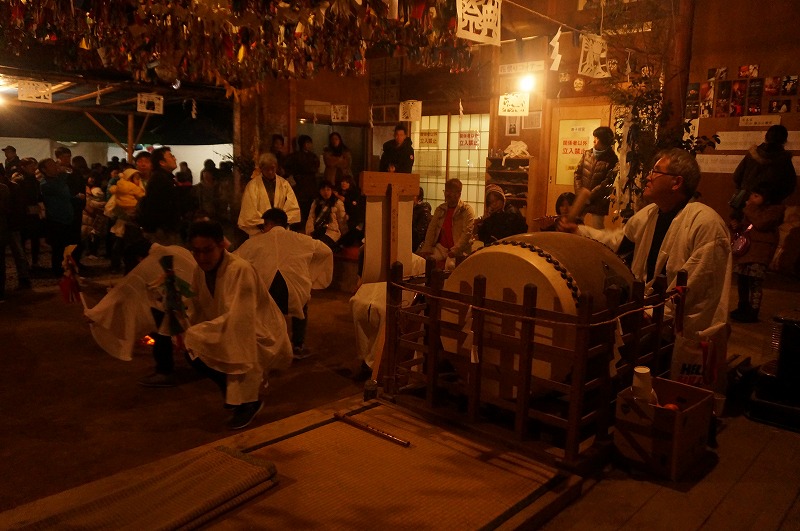
In front of the “maido” is a drummer. This drum sets the rhythm for the whole thing. Also, there are various decorations hanging from the ceiling. These are the gods’ Spirit-dwelling object. On the wall are the names and amounts of those who donated. Please be assured. The donation is included in the price of this tour.
There are several types of dances, which gradually increase in age and proficiency from children, boys and girls, to young men and women. You can see the complexity of the dances gradually increase.
Adults accompany each child. I wonder if this is how they learn all the time.
Isn’t everyone cold? There is a brazier in the front seats of the stage, though. It gets below 0 degrees Celsius at midnight, so please be careful not to catch a cold. Or, please warm up in the break room mentioned earlier.
Hi, I bought a warm Chinese bun outside.
Sounds good. I’ll go buy it later.
Light food are sold at cheap prices outside.
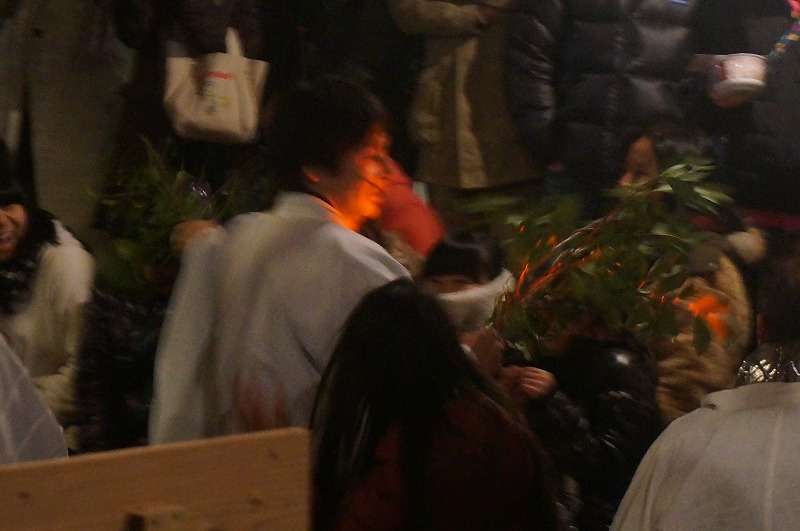
We see a man holding a sakaki tree. Since ancient times, sakaki has been famous as a tree in which God dwells. It is said that if you are struck with it, you will be free from disease. By all means, everyone.
I always get hit with beans on Setsubun. Besides, we Oni are also members of the gods.
It’s already around 11:00 p.m. It’s almost time for the first Oni to make his appearance.
Yamami-Oni 山見鬼
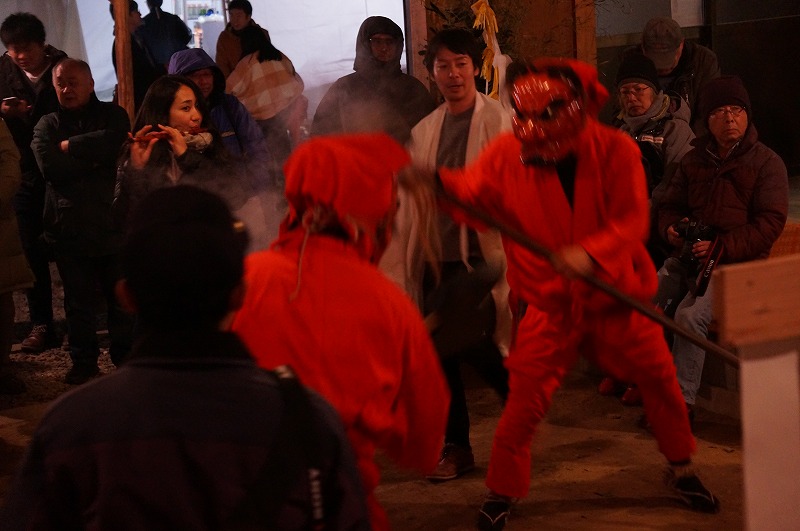
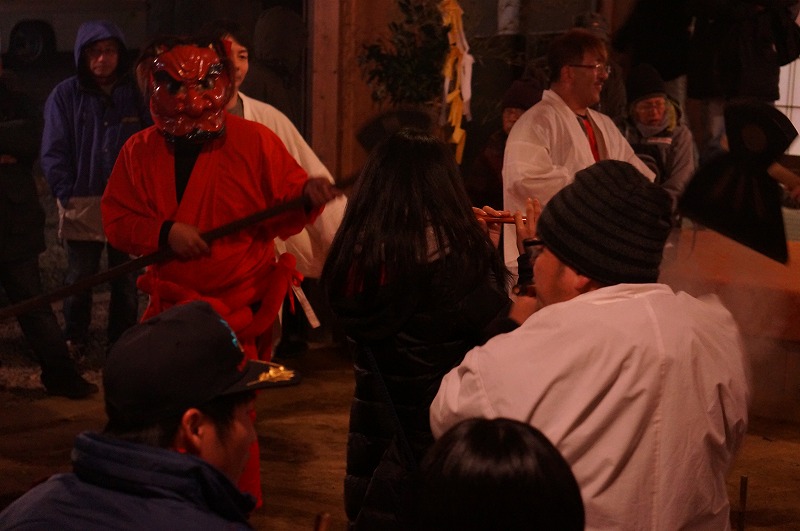
Here it comes at last: the first of the three Oni, the Yamami-oni 山見鬼. This is the companion Oni to the Yamami-oni.
Tehohe, Tehohe,. Tewotole tole
Listening to this melody for a long time puts me into a kind of trance.
This is Yamami-oni.
He looks magnificent, doesn’t he?
He’s the star of the show.
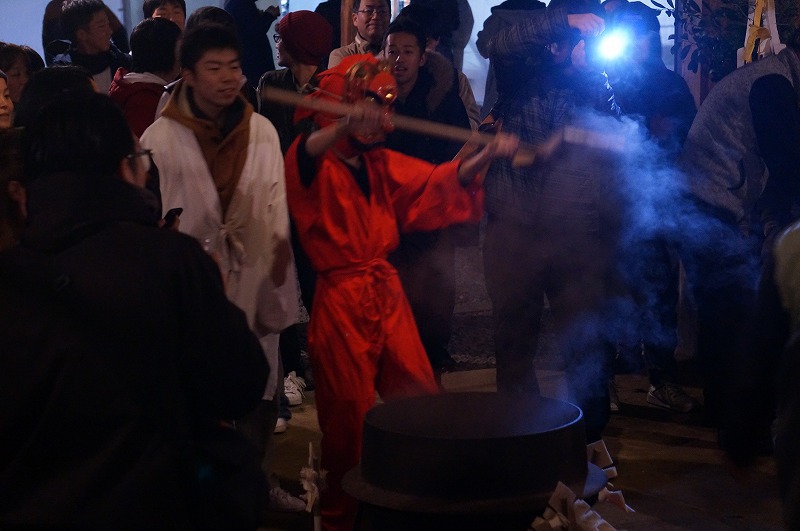
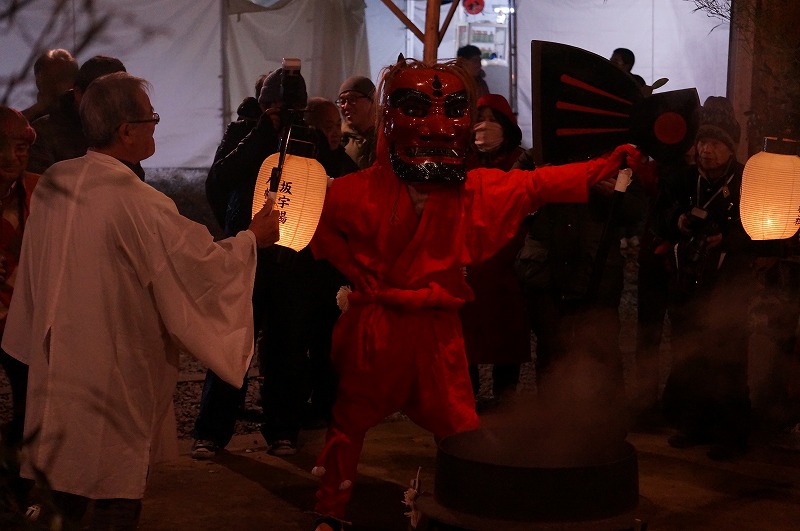
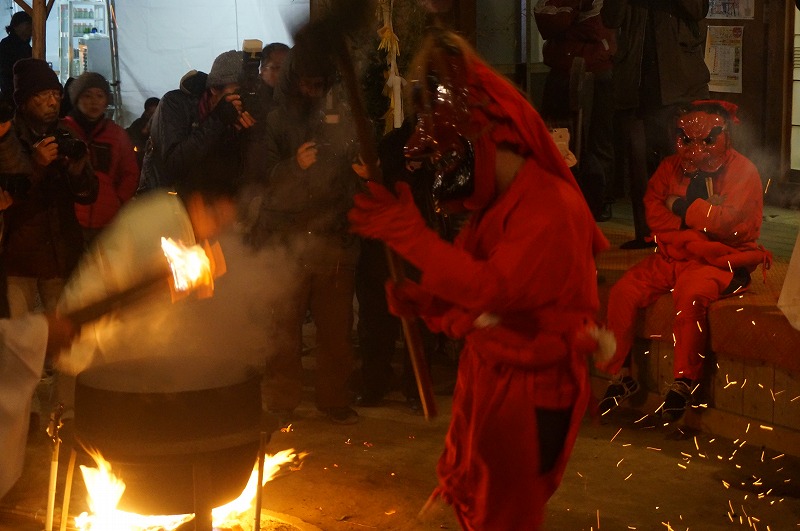
Yamami-oni is an Oni that breaks mountains. They drive away evil spirits with their powerful spells and encourage the rebirth of life by breaking up mountains. He does not actually break anything, but rather swings the hoe he is holding over the hot water pot in a large gesture to dispel the evil spirits.
I have also heard. It seems to have that kind of meaning in winter festivals that wish for rebirth.
Experts say it’s because that’s when the sun’s power is at its weakest.
In the past, this Yamami Oni was the most important Oni.
As expected, I started to feel a little sleepy. I’ll sleep a little until the next Oni comes out.
I’ll get some coffee from the vending machine too.
Sakaki-Oni 榊鬼
It was around 3:30 in the morning when the Sakaki Oni, the main character of the Hana Matsuri, made his appearance.
First, the dance of the accompanying Oni enlivens the occasion.
Now, it’s time for the real deal, Sakaki Oni to make his appearance. Oh, there are a few people missing.
It’s past 3 a.m., so some of members are sleeping in the break room.
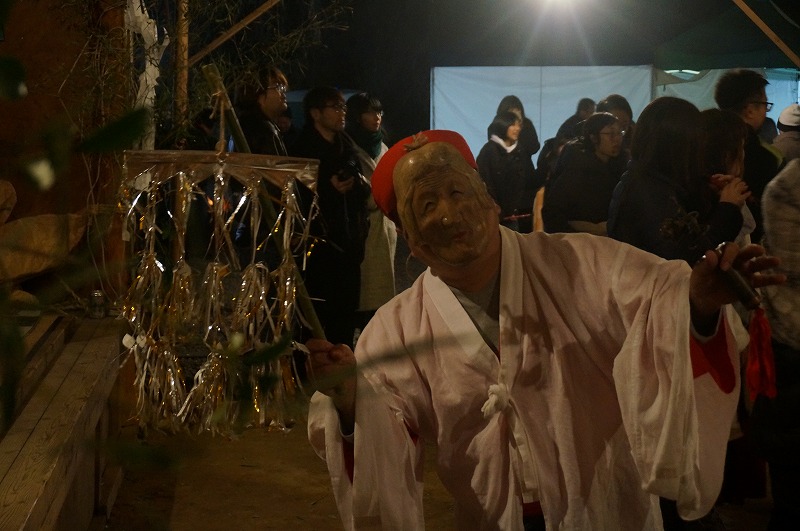
Sakaki Oni is a “Araburu kami” (raging god) who lives in this land. So people ask and answer questions to this Sakaki-Oni. “Why did someone like you come here?”
What’s a raging god?
Dictionaries describe him as a “violent god” or a deity not subject to the rule of the emperor. If myth is a projection of reality, it is a projection of history from the ruling side. However, there have always been people who resisted such things, and this can be said to be a symbol of that.
I often say that we demons are also people who do not obey the imperial court. Hey, Sakaki Oni, keep up the good work!
There’s a word ”Many kiss the hand they wish to cut off”.
Two-faced?
Yes. For people, the rules of their own land are more important than the rules of people in power. No matter what the powers that be say, if you offend the gods of the land, you can’t make a living. So it is only natural that they treat the local deity with the utmost care.
And they say we Oni are also the people who resisted and were discriminated against. We should be more proud of being Oni.
More on that later. From now ,the gods are coming to bless the people.
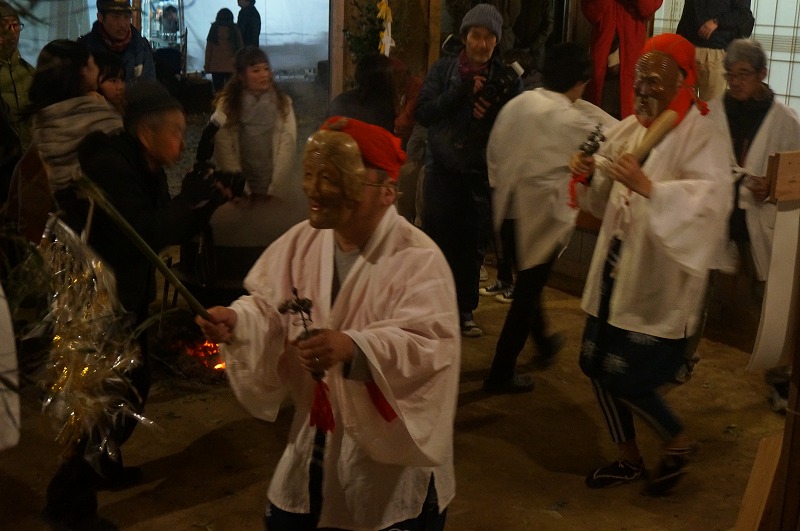
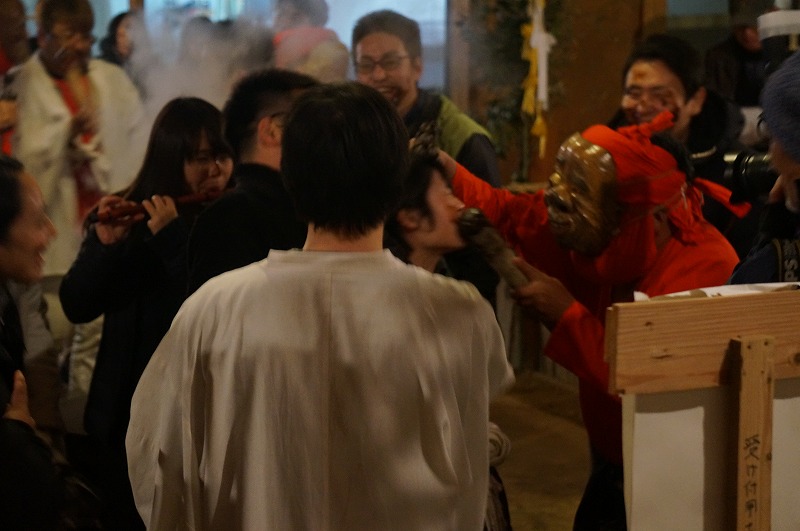
Negi, Okina, Miko (or Oturuhyala) 禰宜、翁、巫女(おつるひゃら)
What are they doing? They’ve got something in their hands.
The stick has a miso paste on it, and if you put it on your face, it will bring you good health for a year. How do you like it?
Oh,no!
Breakfast, and Yubayashi 湯ばやし
It is indeed getting cold. You have some time before the yubayashi, and there is time for breakfast, so get some rest.
Breakfast starts at 6:00 a.m. Bread is main and soup, salad, etc.
And the time is around eight o’clock. It’s getting light around here. This is when the “yubayashi,” the biggest spectacle of the festival, begins.
Finally, the yubayashi begins. The scheduled departure time was 8:00 a.m., but we will move it back one hour.
It’s already past 8 o’clock. I’ve totally fallen asleep. But the dancers are amazing, even though they’ve been doing it all night. They are full of energy.
The festival started the other evening and has already lasted over 15 hours. Even after arriving on the tour, it has been more than 10 hours. Since the population is small, the same person appears in several dances, which puts a considerable burden on them. Even so, there is not the slightest sign that their energy is waning.
We slept and ate breakfast on the way, so we are fine, but why do these people have so much energy and stamina when they dance here almost all night long?
Is this the power of the festival? Still, I feel that the festival is becoming more and more exciting.
Now, it’s time!
The dance moves toward the center as if to send chi toward the already extinguished hot water pot. To-hore, sanya, to-hore, sanya
Like a wave that comes and goes, excitement rises to a peak and then settles down again. This is repeated over and over again, and finally the time comes.
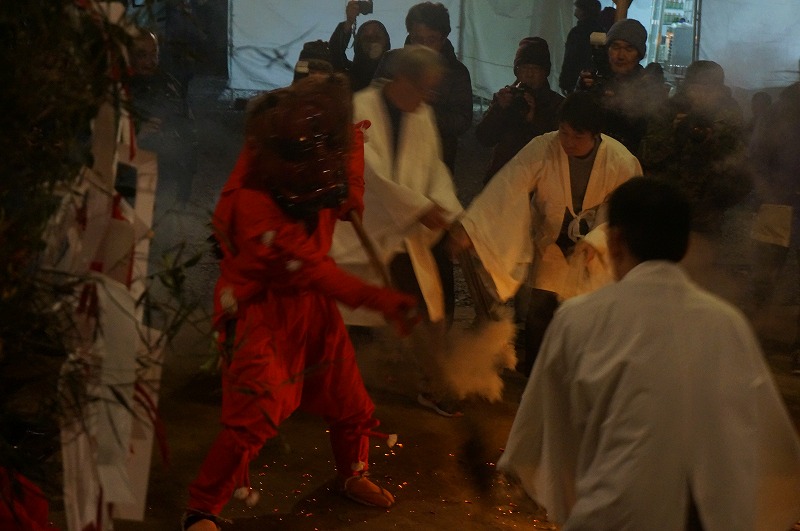
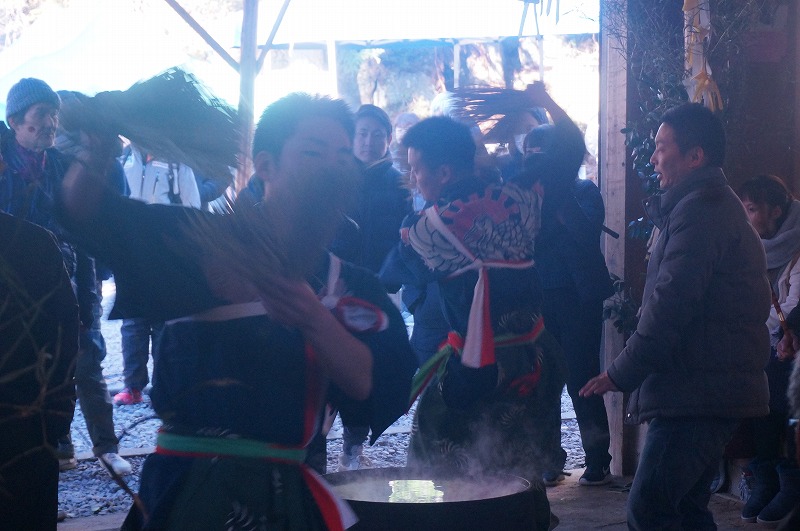
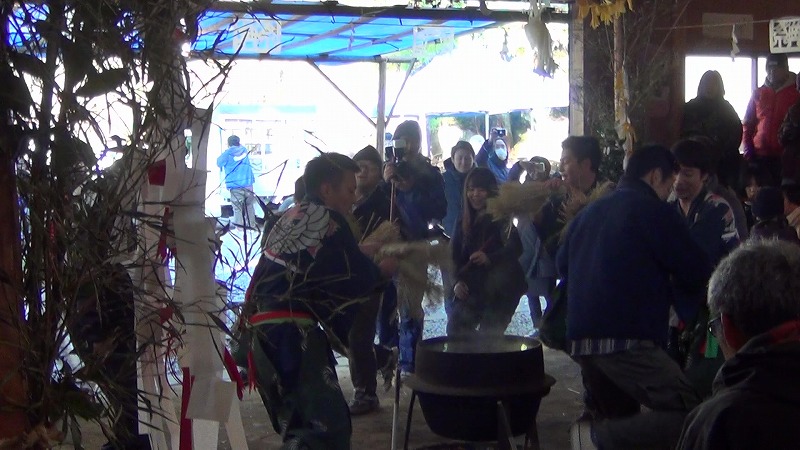
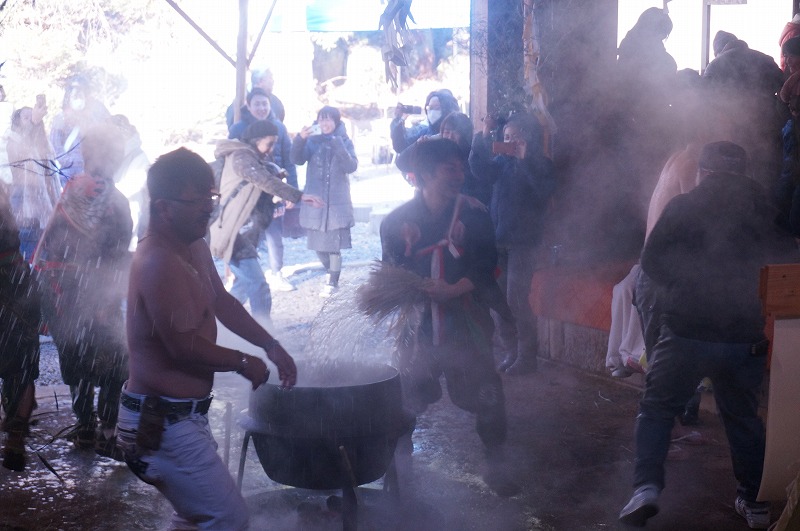
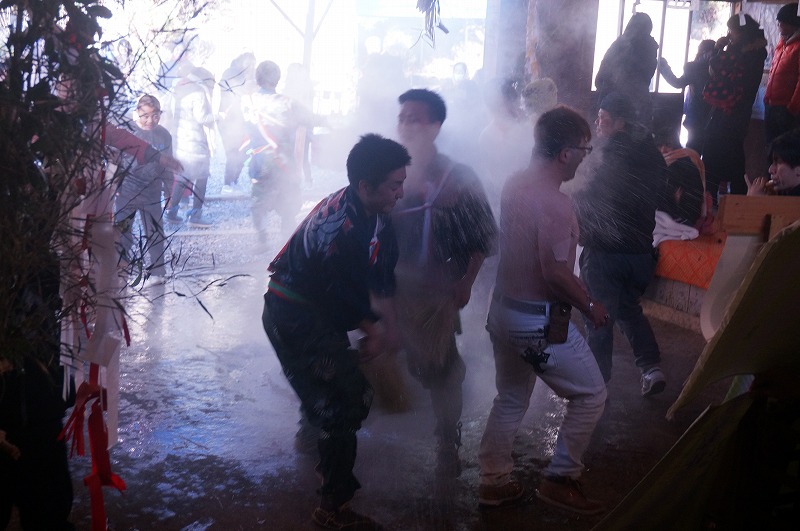
The dancers dip a bundle of straw in their hands with plenty of hot water from the cauldron and sprinkle it vigorously.
Wow, everywhere is soaking wet.
The fire has been out for a while, so the heat must have diminished considerably, right?
That’s not the point.
Asa-Oni 朝鬼~ ending
After the Yamami-oni and Sakaki-oni, the last Oni appears. That is the “Asa-oni”. The literal translation is “morning oni. The Asa-oni knocks off the symbol of the gods that is suspended from the “maido”. Next, a lion appears to purify the scene. After that, People return the deities they invited back to where they came from, and all festivities come to an end. But it’s time for us to leave.
After this, we will stop at a hot spring on the way back to Toyohashi Station. You must be tired overnight. Please take a long soak in the hot spring and recover your energy!
I’m lucky as “Oni” to watch this festival.
Fifteen Hana Matsuri have survived throughout the region, and although the people in each community suffer from a shortage of labor, they held between November and March of the following year. In order to support the festival, buses run late at night from the nearest station to each area on the days when the festival is concentrated, and travel agencies offer tours such as the one introduced in this article. It is one of the festivals where you can feel the original landscape of the Japanese people.
I would like to conclude with a comment posted on Instagram by a young woman who lives in the area. She commented, “Life in general is inconvenient here, too, but I think it’s okay to continue living here because of the Hanamatsuri.”
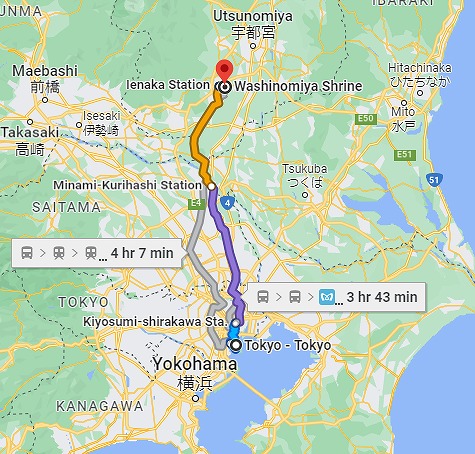
Date: Every year on November 23 Location: 451-2 Tsugamachi Ienaka, Tochigi city, Tochigi prefecture Access: About 2.5 km from Ienaka, Tobu Nikko Line. 2 km walk from Noshu Otsuka, Tobu Utsunomiya Line. →cf. https://www.tobu.co.jp/foreign/en/news/pdf/201703-01_route%20map.pdf Tobu line route map
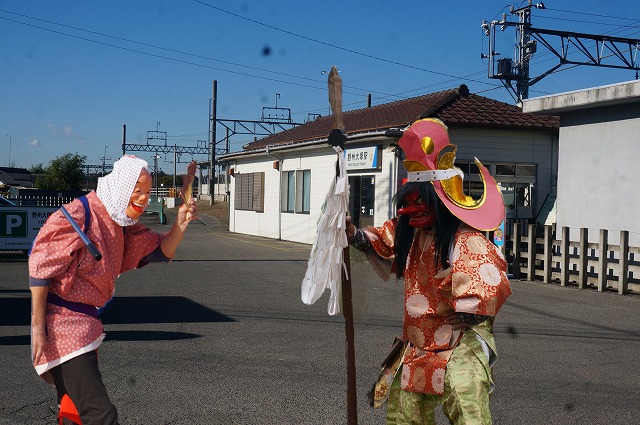
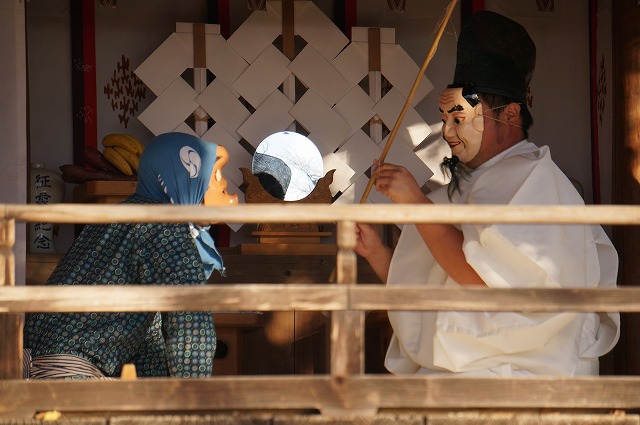
It seems that Sarutahiko invited Hyottoko on a journey, using the ritual of ‘mochi-nage’—where rice cakes and sweets are thrown into the crowd—as a lure, in the hope of deepening his understanding of Kagura…
Long time no see. Are we at Yashu-Otsuka 野州大塚 Station? It is a very quiet and unpopular station, isn’t it?
You’re the one who loves getting souvenirs from the “Mochi Nage”, right? So I’ll guide you to a place where you can get a lot of them today.
I appreciate that, but…
Besides, this time there is a rare ritual called “Goranshiki” in the set.
Let’s go then. It’s close to the station, right?
You have to walk about half an hour.
Doh, doh, doh.
It looks like they finally arrived.
It’s pretty crowded, isn’t it?
There is something going on at the festival for a day and the “Goranshiki” is quite popular!
10:30 am ~kagura starts
Unusually, people have already gathered from the beginning. Usually, it is only in the latter half of the day that people start to gather in droves.
Just watch and you’ll see.
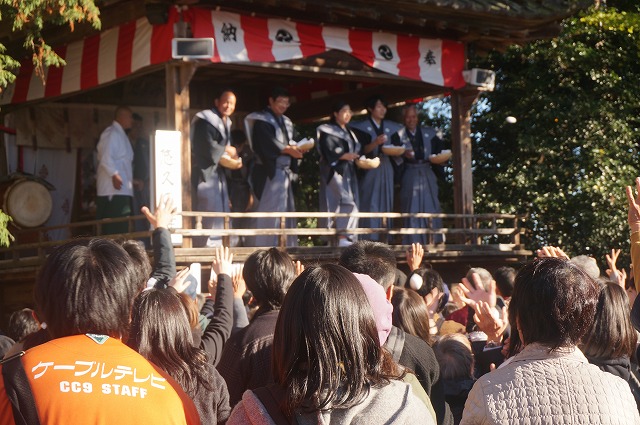
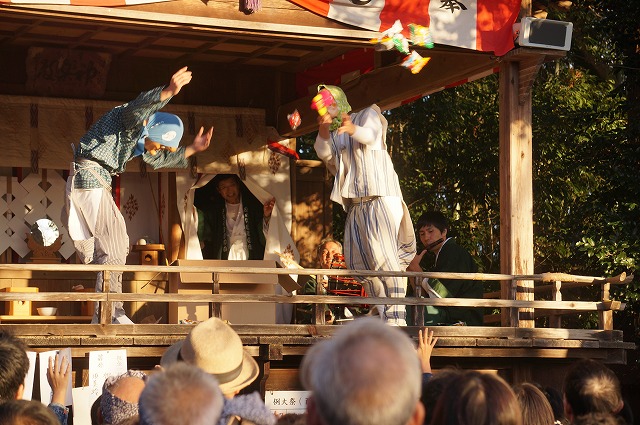
Oh, it’s already “mochi-nage”. Are they okay like this from the start?
Although it’s called a “mochi-nage (ricecake toss)”, it’s really just a candy toss.
Okina(the god of Kasuga)
Sarutahiko
Every time one of the acts is over they throw it every time.
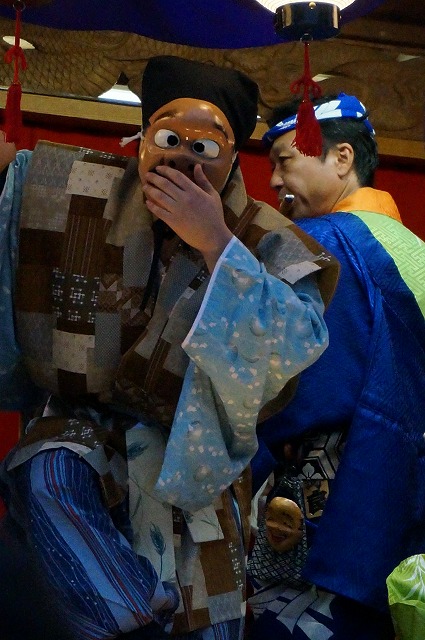
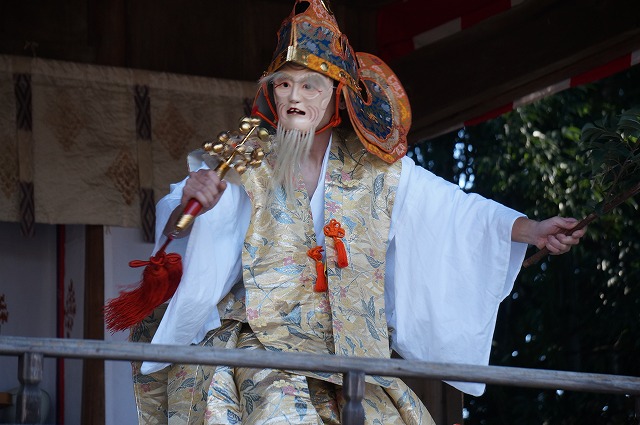
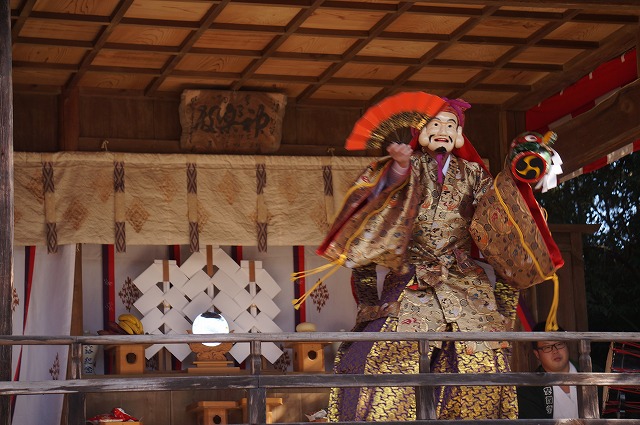
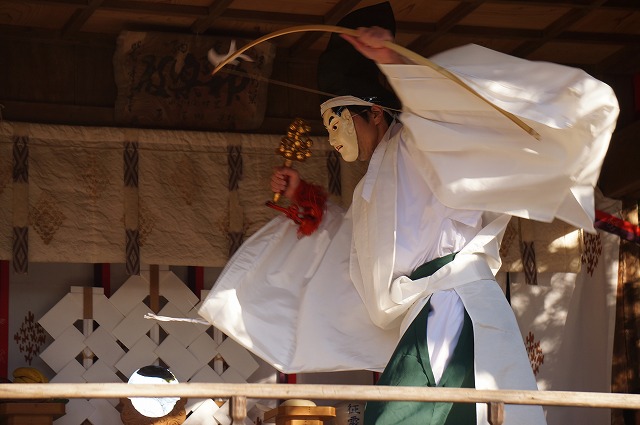
You may rejoice in the mochi nage, but you should also keep the kagura content. Old man plays a dance to appease the four directions of the earth. The red face and long nose of Sarutahiko* is, of course, the god of guidance.
It’s the most important event in Kagura, or Japanese mythology. In ancient Japan, where there was a belief in the sun god, the resurrection of the sun god Amaterasu was of the utmost importance!
So, following Uzume, Tadikarao comes out and opens the Iwato, right?
Tajikarao open the “Iwato (the door of rock)
resurrection of Amaterasu
Here comes Amaterasu. Amaterasu is often represented by a mirror. In some places, only mirrors are placed. This depends on how important the kagura and the local community consider the Iwato opening to be.
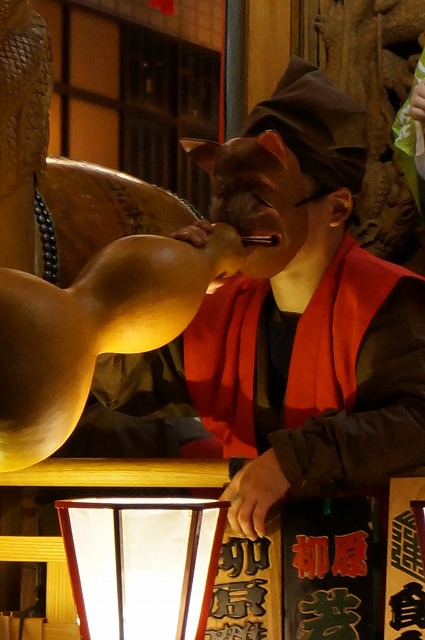
Fox as a messenger of Inari
Daikoku-sama
The fox has come out. So, from this point on, the performance leaves mythology behind and becomes rooted in the lives of ordinary people.
That’s the standard progression of kagura. You know that the fox is a messenger of the god Inari, the god of rice cultivation, right?
Of course I do, but I think there are quite a few people who think Inari is the fox. I didn’t even know about it until recently. But I know Daikoku-sama. When Daikoku shakes that mallet, treasures are piling up. Well, here it comes.
1:00 pm ~Goranshiki 強卵式
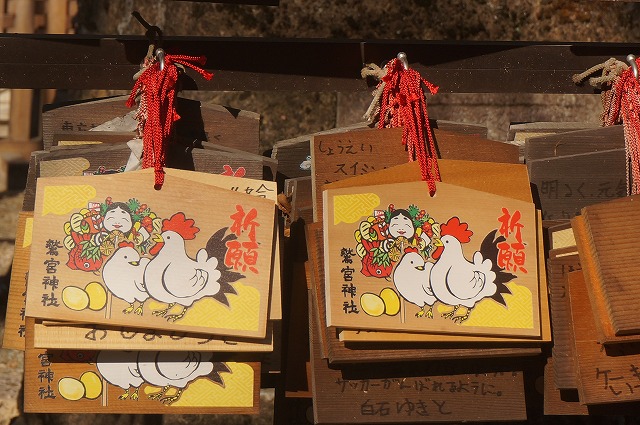
Ema 絵馬
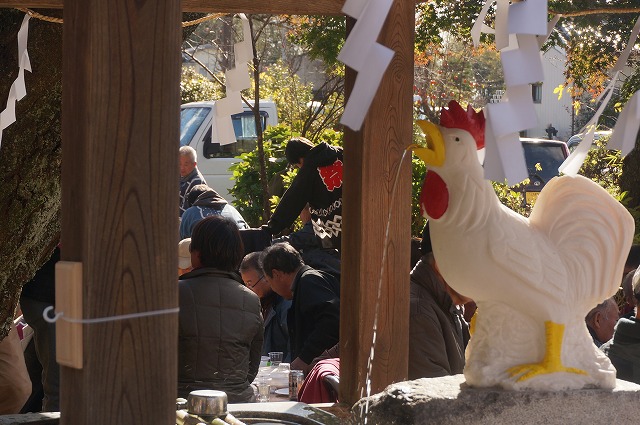
Looking again at the shrine grounds in this way, there are many bird designs. I had no idea that the place to wash hands and the ema (votive picture tablet) are also birds.
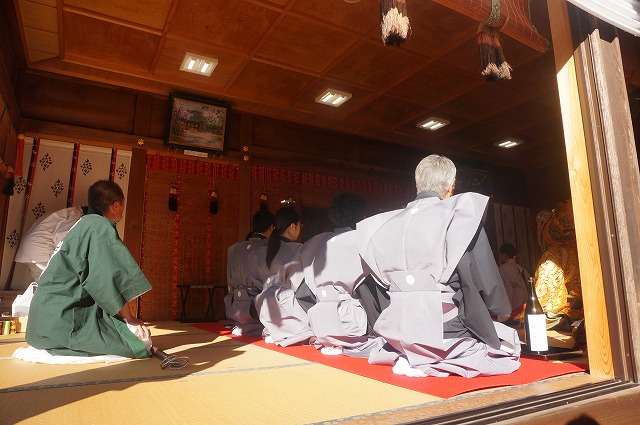
The Goran ceremony will be held at the main shrine. Here.
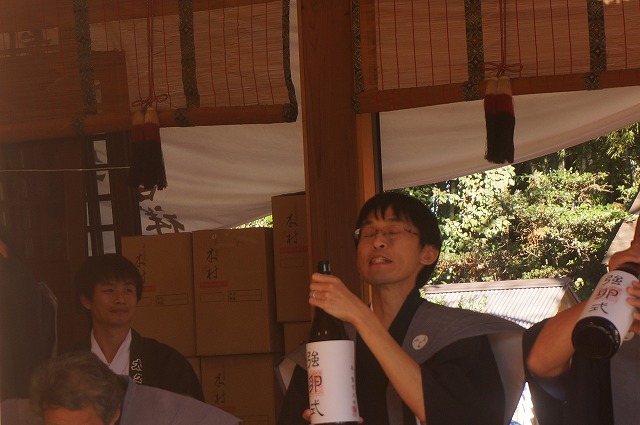
People wearing kamishimo (ceremonial kimono) are already sitting there. In front of them are bottles of sake. Is a banquet about to begin?
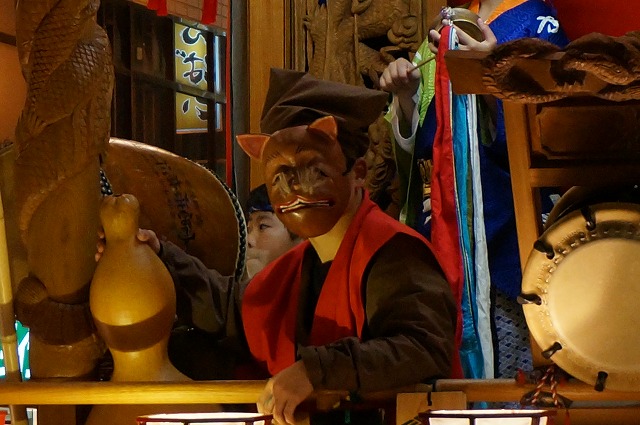
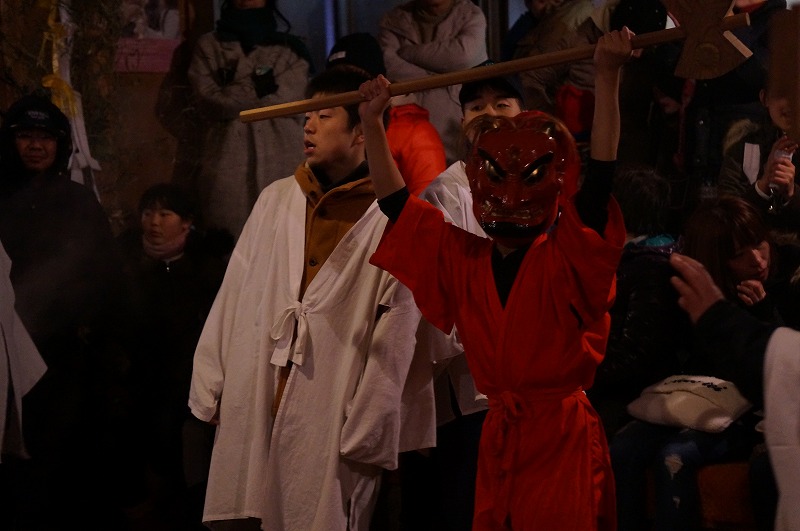
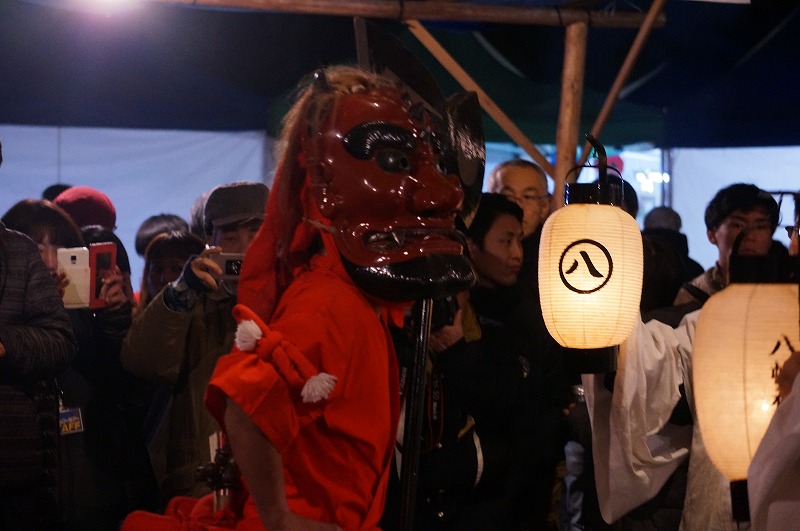
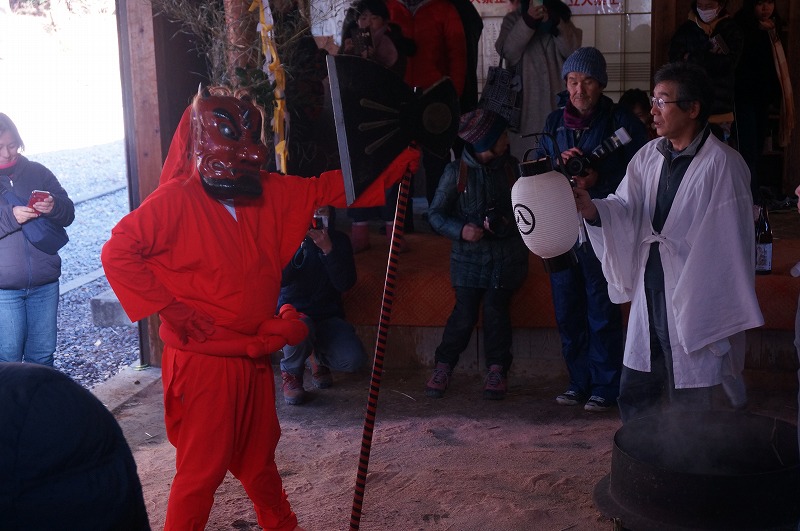
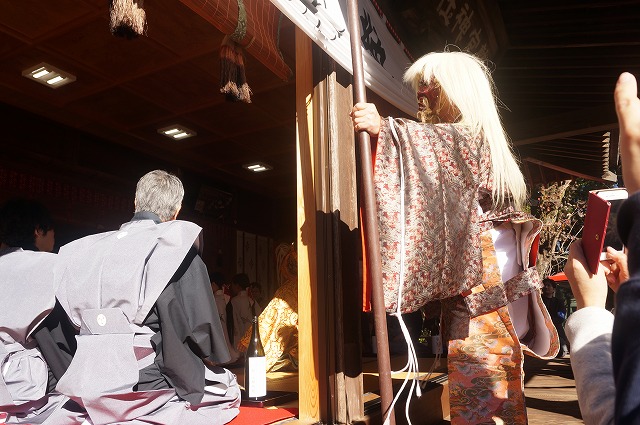
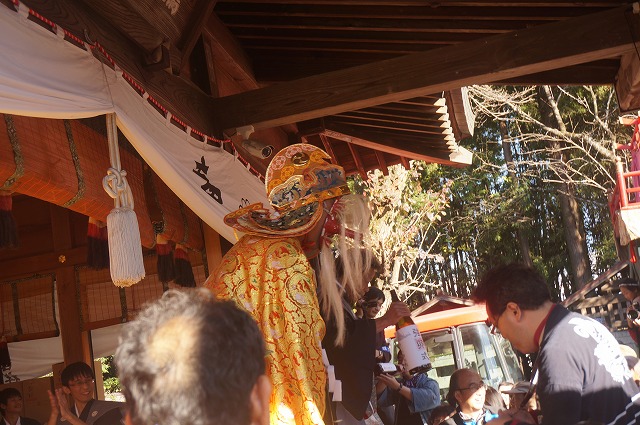
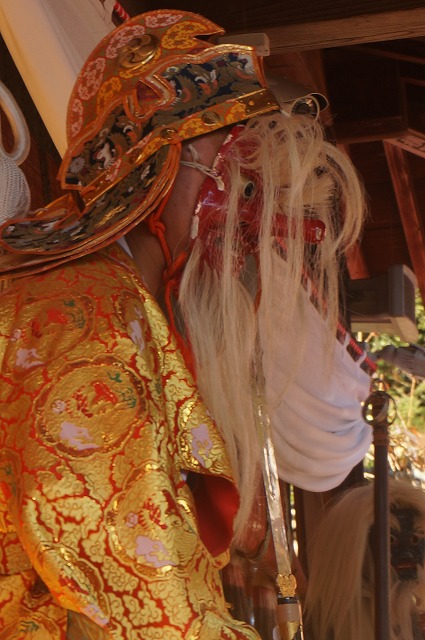
Finally, the tengu are ready. It’s the main tengu and two attendants.
At first, three tengu were supposed to perform the ceremony, but they thought it was too messy and hard to see, so they settled on the current form.
Oh well, it’s turned into a drinking contest. Tengu is forcing participants to drink sake.
With a issho bottle (1.8litter) of sake, even I would have a hard time drinking it all up. The jerks are so yelling for me to drink, or drink more.
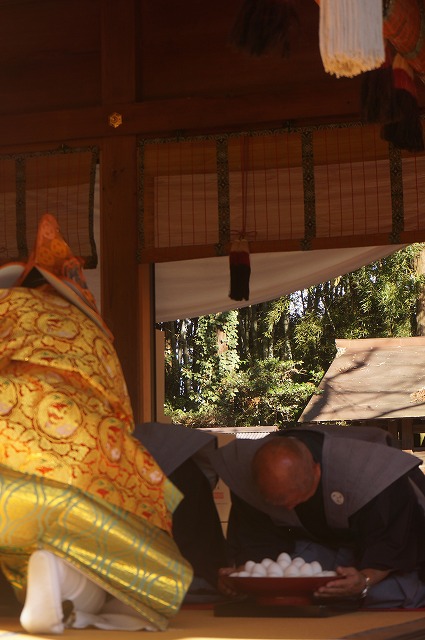
A heaping pile of eggs on a small wooden stand was brought.
Here’s how it all begins. Here in the Tochigi Prefecture area, there are similar ceremonies such as the Nikko Gohanshiki and Hokkouji Gohanshiki, but the Gohanshiki here is a bit different. Nikko’s Gohanshiki originated as a way to show appreciation for rice, but here they really do it to show that it is not to be eaten.
In the past, based on a legend at the time of the shrine’s founding, it was forbidden to eat chicken at shrines, but this has not been made known to the public. This is why they decided to start this event, which started as recently as 2001. So, in the ritual here, you are forced to eat however much you want and refuse to eat until the end. The tengu praises them for it.
So no grilled chicken or anything like that in the food stalls? By the way, what are they going to do with all these eggs?
Eggs are thrown to the audience. However, if the egg is thrown as it is, it will break, so another ball is thrown to replace it later… Where did it go, Hyottoko? Oh, he’s already gone to get the egg!
3:00 pm ~second half of Kagura
Hachiman (war of god) and Sanjin (mountain god), they’ re still throwing as usual.
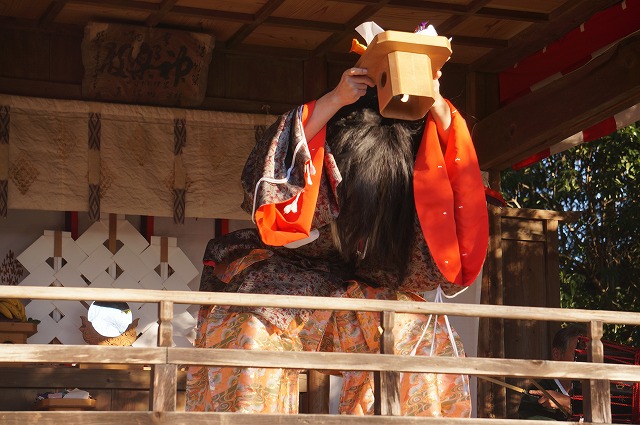
Ebisu and two Hyottoko. Your fellos have come out.
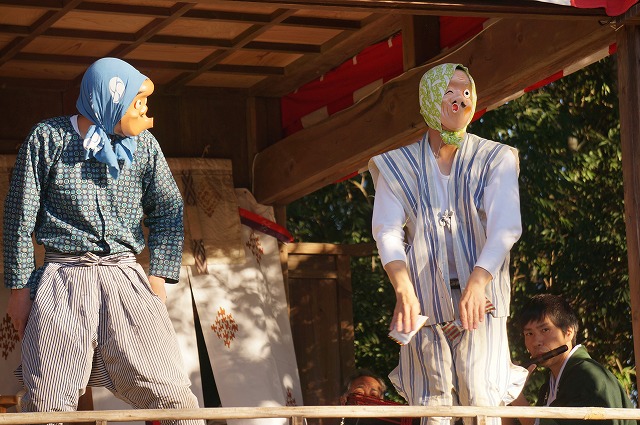
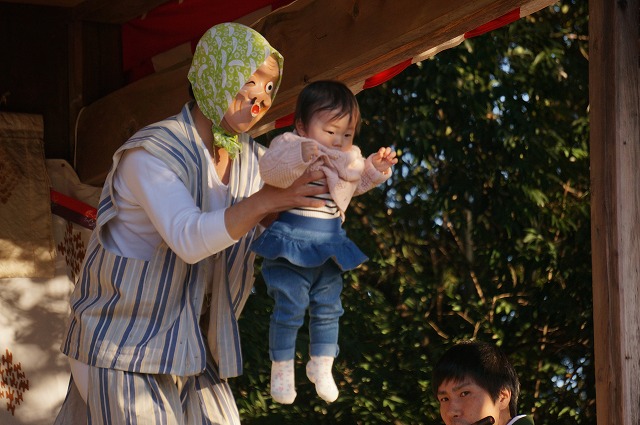
We Hyottoko are entertainers. We make people laugh with our comical antics and help to lighten the mood. They’ll certainly perform.
They do it, don’t they? It has to be this way.
Well, I’ve got loads of sweets and some eggs again today—I couldn’t be happier!
Am I really conveying the charm of kagura with this? sigh